Gaultheria (Latin: Gaultheria) is a unique small shrub named after the French botanist and zoologist Jean-François Gauthier. Any gardener or plant lover won't miss the chance to add it to their green collection.
Description of Gaultheria
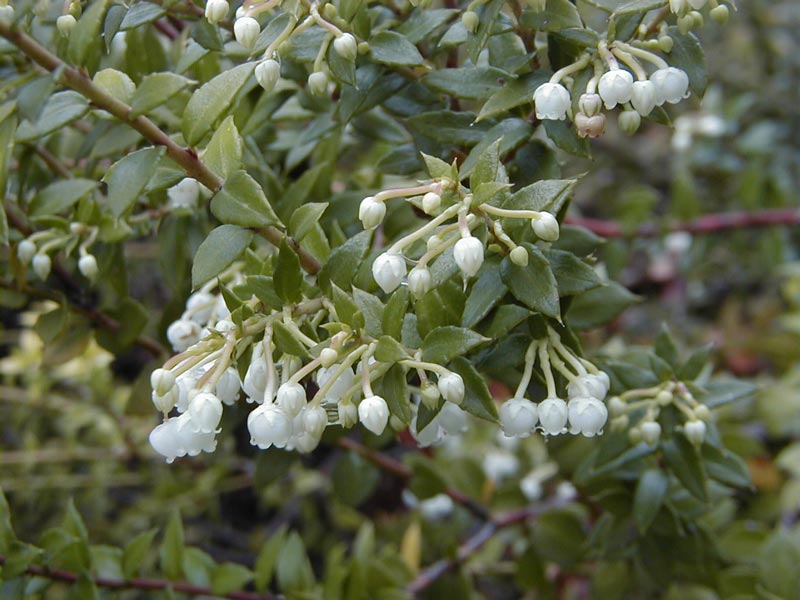
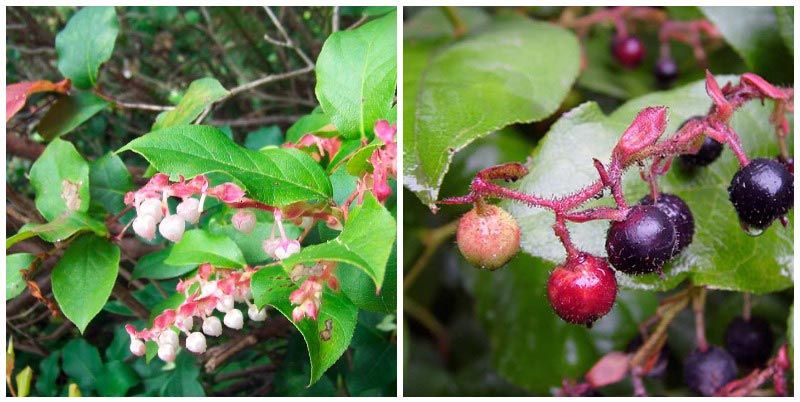
Gaultheria is an evergreen plant in the Heather family. This shrub with dense, upright, reddish stems reaches a height of 25 cm. The oval, glossy leaves, 1-4 cm in size, are bright green with distinct veins.
Flowers and fruits of Gaultheria
In June, when the plant blooms, clusters of white flowers, reminiscent of lily-of-the-valley, appear on the bush. Bright scarlet, red, white, or dark blue berries ripen in the fall and often survive the winter. This cold-hardy shrub often remains untouched by animals and birds, as its fruits are inedible and unpleasant to the taste.
Types of Gaultheria
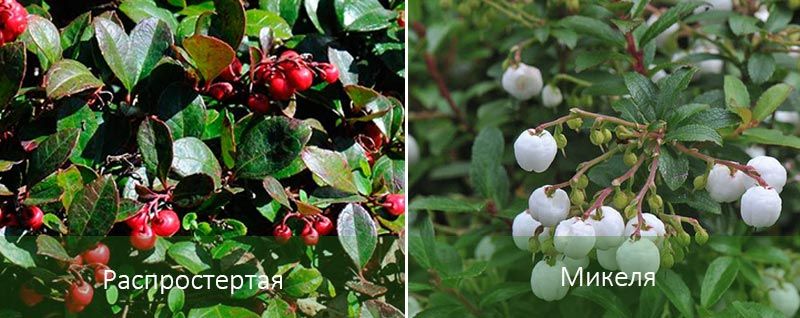
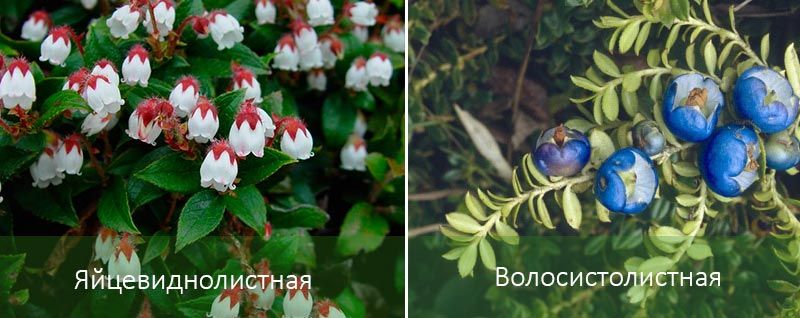
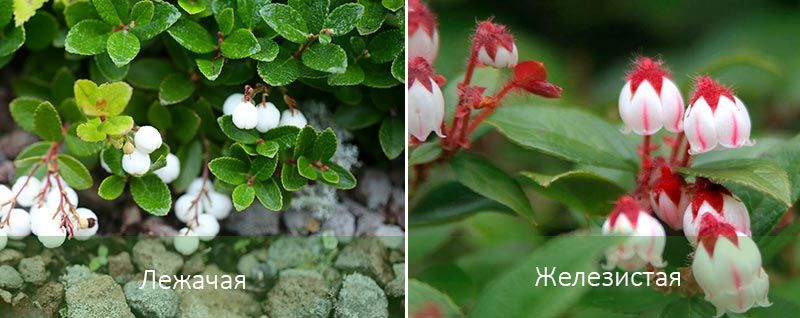
The genus comprises approximately 180 species of shrubs. Native to the mountainous regions of northern America, Asia, and Australia, it easily thrives in gardens in central Russia. Let's look at the most popular species of this plant.
| View | Description / Leaves, size (mm) / Fruits | Flowers, diameter (mm) | Height (cm) |
| Hairy-leaved or hairy | Cultivated in Europe since 1897. Grey-green, oblong shape with hairs along the edge, 50-100. Blue or purple. |
Pink, 40. | 10 |
| Ovate-leaved | Brought from the West Coast of the United States in 1890.
Greens, 35. Bright red. |
White with red perianth, 5. | 30 |
| Outstretched | Cultivated since 1830, native to North America. Round or oval, serrated edges, 20. Scarlet up to 7 mm. |
Single axillary up to 50. | 10 |
| Glandular | First found on the Japanese islands.
Oval with serrated edge, 30 long, 20 wide. Red with small glandular spots. |
Single or in groups of 2-3, white outside and pinkish inside, 8. | 30 |
| Mikel | It grows in Japan and Sakhalin. Its creeping roots and erect branches can withstand low external temperatures.
Dark green, 25. White. |
White, 10, collected in brushes. | 25 |
| Challon | The most popular species, brought from America, has been cultivated since 1826.
Oval, soft green, 120 long. Black. |
White-pink, up to 10. | 50 |
| Lying down | First discovered in eastern North America, it forms a groundcover clump up to 40 cm in diameter, formed by medium-length creeping stems. It has been cultivated since 1762.
Dark green, round, smooth, 40. Bright red, 10. |
Single white 10. | 15 |
Growing Gaultheria at home
To ensure a beautiful and easy-to-grow compact shrub delights the eye in your home, you need to know a few simple growing rules. If you're looking for a specific plant species, it's best to avoid sowing seeds, as a similar shrub could grow. Buying ready-made cuttings or branches with roots is ideal.
For planting or transplanting you will need:
- high-quality soil suitable for indoor plants with soft fertilizer;
- a pot with drainage holes slightly larger in diameter than the root system;
- a hole in the soil of a new flowerpot, filled to 5 cm from the top;
- thorough watering;
- replant every 2 years as the root system grows.
For daily care you will need:
- watering plants at the roots if the soil layer is dry at 5 cm;
- a bright place with sunlight.
Top dressing:
- purpose – for ornamental foliage plants, in the form of preferably granulated or liquid with slow release;
- frequency – no more than once a month.
Trimming:
- permanent for foliage and flowers to prevent root development;
- periodically for branches in order to give the bush a neat, well-groomed appearance.
Growing Gaultheria in open ground
Wintergreens thrive in partial shade to prevent them from drying out in the sun or dying in the shade. Highly acidic and well-drained soil is beneficial for the shrub's growth. To increase the soil's acidity, add peat and sand. Plant in holes 30-35 cm deep, adding a drainage layer of pebbles and rotted pine needles. The root collar can be deepened by 1 cm or left at ground level.
Growing this plant outdoors is not difficult, but gardeners should keep in mind that it's best to plant the bushes in groups of several, spaced 20-25 cm apart. Water sparingly and thoroughly, misting the foliage in the evening.
Reproduction of Gaultheria
Seed propagation is highly undesirable for this shrub, as it cannot accurately reproduce the variety's characteristics. Vegetative propagation is considered the best and fastest method for propagating wintergreen. One or more branches of the shrub are bent down, covered with soil, and thoroughly watered. By autumn, the shoots will develop roots, and then they are replanted.
Cuttings are another method of propagating wintergreen. After cutting the top woody stems, they are planted in pots filled with sand, watered generously, and placed in full sunlight. Once the cuttings have grown and developed healthy roots, they are transplanted into open ground.
Diseases and pests
Ornamental trees and shrubs, including wintergreen, require highly acidic soil to thrive. Abundant moisture and alkaline soil are the shrubs' primary enemies. Diseases such as black mold and powdery mildew occur with frequent watering and poorly nutrient-rich soil. Leaves infected with mites and bacteria should be immediately removed and burned to prevent the entire shrub from becoming infected.
It is also necessary to periodically treat plants with antifungal preparations.
Top.tomathouse.com recommends: the beneficial properties of wintergreen
The shrub's primary function is considered ornamental, as its vibrant fruits, contrasting with the rich green foliage, make a striking addition to any home or garden. Furthermore, the leaves and stems of Gaultheria procumbens are used to prepare medicinal infusions, oils, and powders.
Oil from the young shoots and foliage of the shrub has analgesic and anti-inflammatory properties. It is applied topically by rubbing into the affected area. It can relieve rheumatic pain, neuralgia, and joint disorders. Warming ointments with this oil can also help ease muscle strains. The soothing effect of the extract from the green parts of the wintergreen bush is used to treat skin inflammations.
In aromatherapy, wintergreen essential oil is used as an invigorating and fatigue-relieving agent. The pleasant scent lifts the mood and fills the room with freshness.
An anti-cold tea is prepared from the leaves of the shrub, relieving sore throats and headaches.
The leaves are considered edible: to quickly relieve signs of fatigue, you can chew them raw.
The berries and seeds of the plant contain poison and have no medicinal value, so they are not used in the preparation of medicines.
Methyl salicylate is the main active medicinal component of wintergreen. The extract from the leaves and shoots of the shrub also contains components such as tannins, formaldehyde, the antiseptic arbutin, and organic acids. Together, these components provide beneficial effects, including analgesic, diuretic, and antirheumatic properties.
Contraindications for the use of medicinal wintergreen extracts, like most medications, include children under 6 years of age, pregnancy, and individual intolerance. It is not recommended to take it in combination with aspirin-containing medications. Only a doctor can prescribe the dosage and method of administration of this medication.