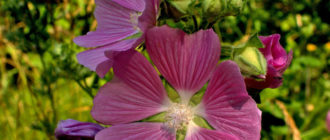
Heuchera gardenia has won the hearts of gardeners thanks to its decorative qualities and low maintenance requirements. Its variety of shapes and colors allows you to create vibrant and unusual compositions in your garden, even in shady corners.
Content
- 1 Description of Heuchera
- 2 Features of growing heuchera in the table
- 3 Types and 22 varieties of heuchera by color with photos and descriptions
- 3.1 6 Burgundy and Purple Heuchera Varieties with Photos and Descriptions
- 3.2 3 varieties of red heucheras with photos and descriptions
- 3.3 3 varieties of pink and orange heucheras with photos and descriptions
- 3.4 Two varieties of green heucheras with photos and descriptions
- 3.5 4 varieties of yellow heucheras with photos and descriptions
- 3.6 4 varieties of silver heuchera with photos and descriptions
- 4 Planting Heuchera in open ground
- 5 Caring for Heuchera
- 6 Reproduction of Heuchera
- 7 Diseases and pests of Heuchera
- 8 Using Heuchera in Landscape
- 9 Tips from Top.tomathouse.com on growing heuchera
- 10 Reviews of Heuchera from gardeners
Description of Heuchera
This plant belongs to the Saxifrage family and is a perennial that retains its original appearance even in winter. The flower was named after the renowned German botanist Johann von Heucher.
The perennial's homeland is considered to be North America; in the wild it is found in Mexico and Canada.
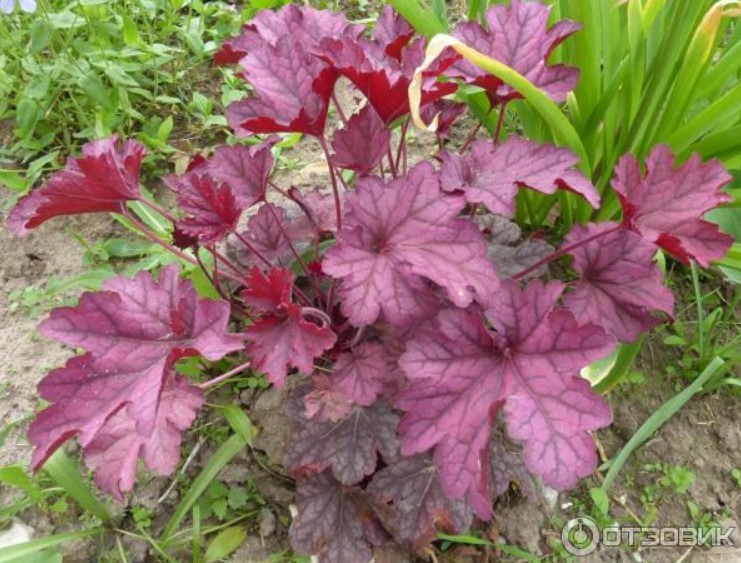
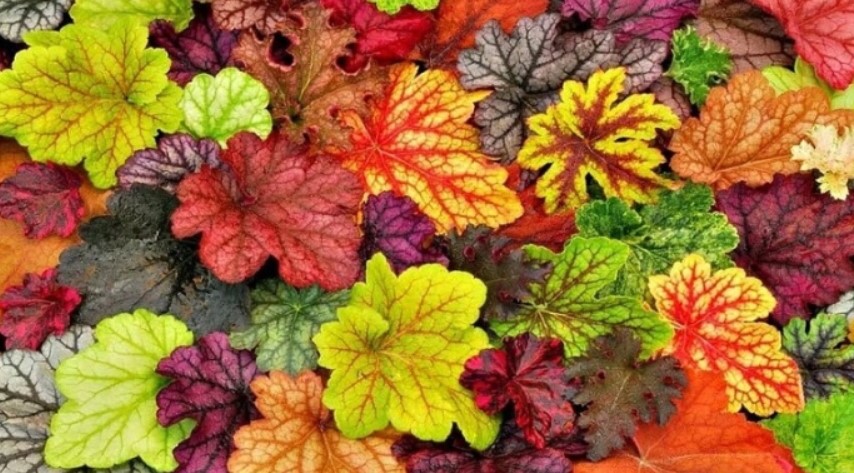
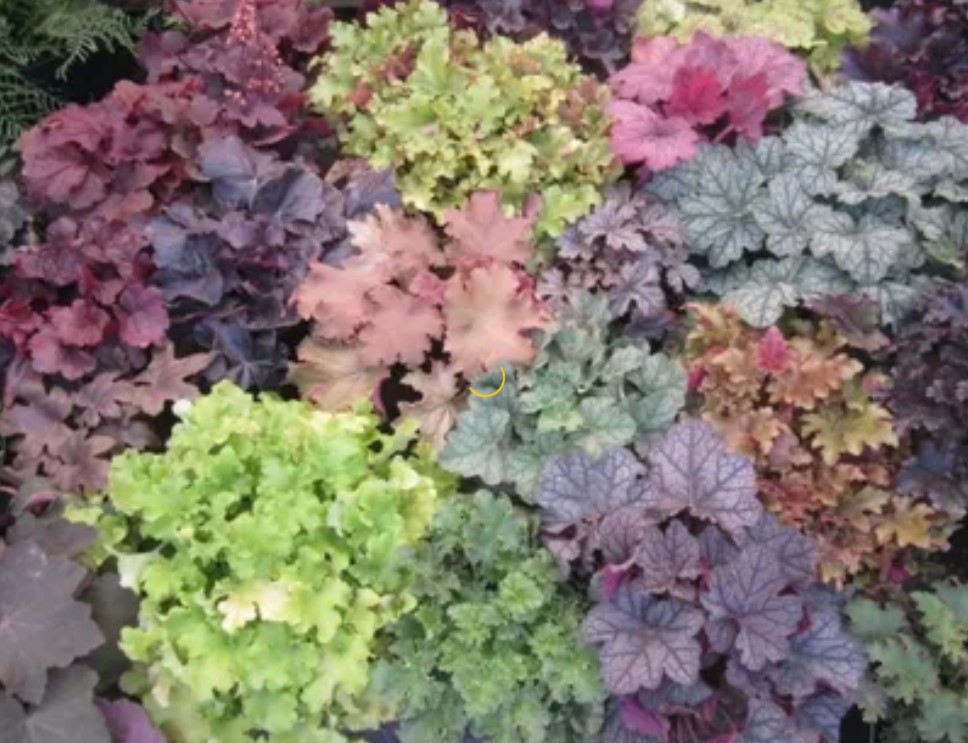
Heuchera's decorative appeal comes from its round or heart-shaped leaves on long petioles. Depending on the variety, they can take on a variety of unusual shapes. Colors include yellow, red, blue, purple, and green. Some varieties feature patterns and designs on their surface. The plant grows to a height of no more than 45 cm, and its densely packed leaves, which give it a voluminous and fluffy appearance, make it particularly attractive.
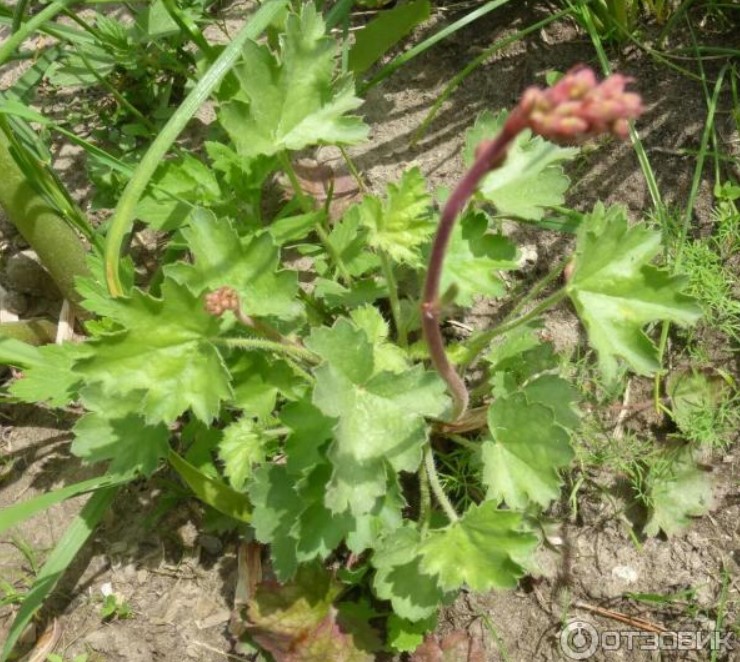
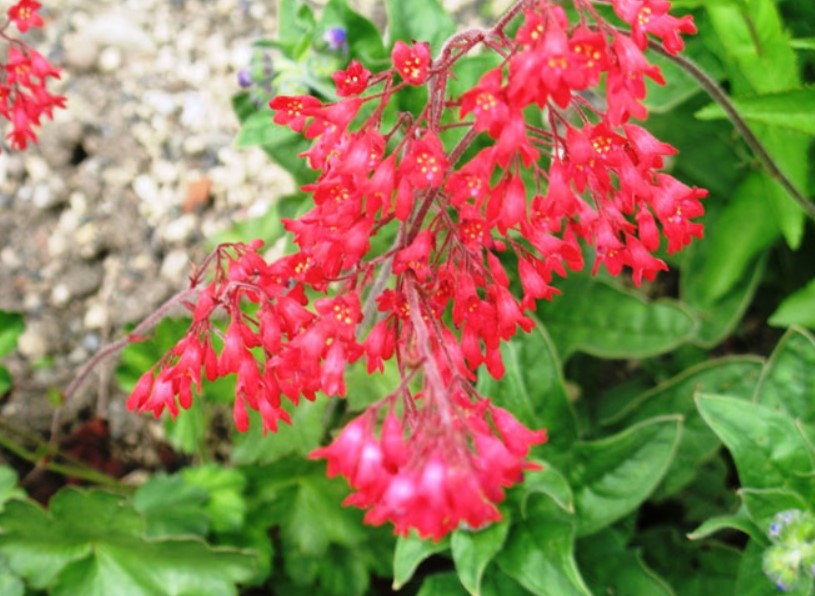
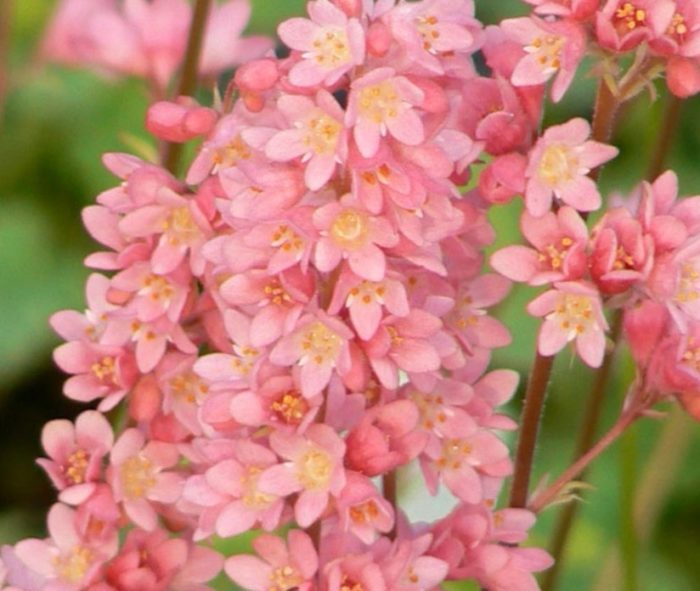
Heuchera blooms from June to August, but its paniculate inflorescences do not make it more attractive.
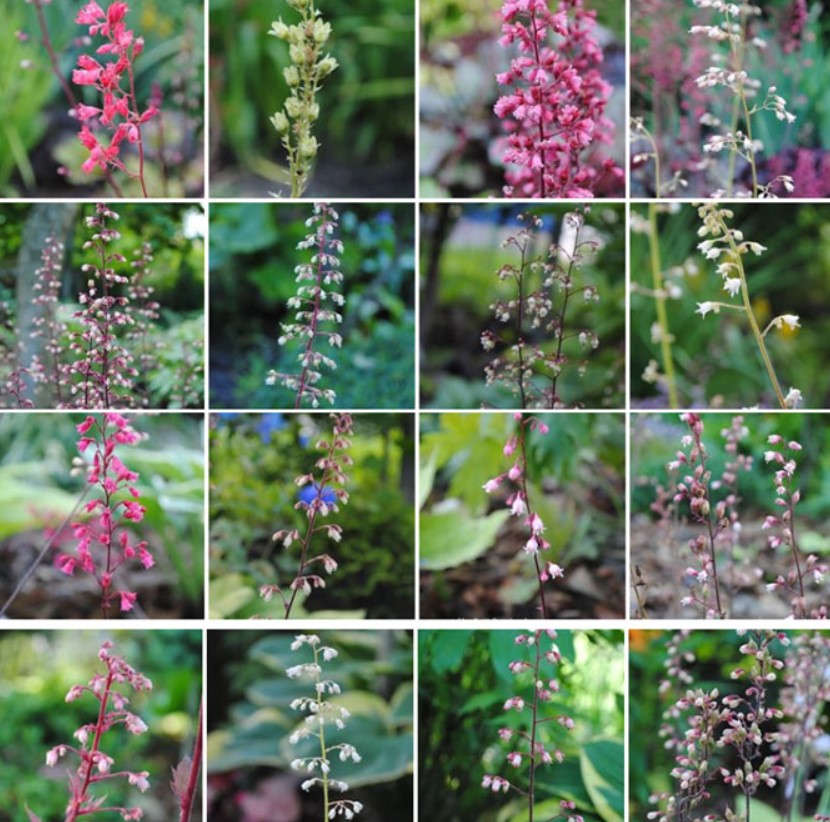
They have small bell-shaped flowers in pink, white, or green. The only variety with decorative blooms is Heuchera quakingosa.
Features of growing heuchera in the table
The table below describes the main features of growing heuchera.
| Landing | March-April |
| Bloom | June-August. Flower stalks are cut off if they are not planned for seed production. |
| Illumination | Prefers shaded areas or places with bright but diffused light. |
| Priming | Water-retentive, lush, with good aeration. |
| Watering | Watering is done once every 2-3 days. In hot weather, the frequency of watering is increased. |
| Top dressing | Fertilizers are applied in the second year of the plant’s life before flowering and after it has finished. |
| Reproduction | By seeds, cuttings, division of the bush |
| Care Features | Hilling twice per season, removing lower dead leaves. |
| Pests | Snails, slugs. Butterfly caterpillars, weevils, and leaf nematodes. |
| Diseases | Powdery mildew, gray mold, rust, spotting. |
Types and 22 varieties of heuchera by color with photos and descriptions
The genus Heuchera includes approximately 70 plant species. Most of them are occasionally found in wild forests of the United States and Mexico. All heucheras can be roughly divided into forest and mountain varieties, depending on their habitat. Only a small number of flowers are used for ornamental purposes. Their descriptions are provided below.
6 Burgundy and Purple Heuchera Varieties with Photos and Descriptions
It is recommended to grow these varieties in the shade, as their bright leaves quickly fade in the sun.
- Forever Purple. Plant height: 30 cm; bush diameter: 55 cm. Purple leaves with dark veins. Flowers are a soft pink.
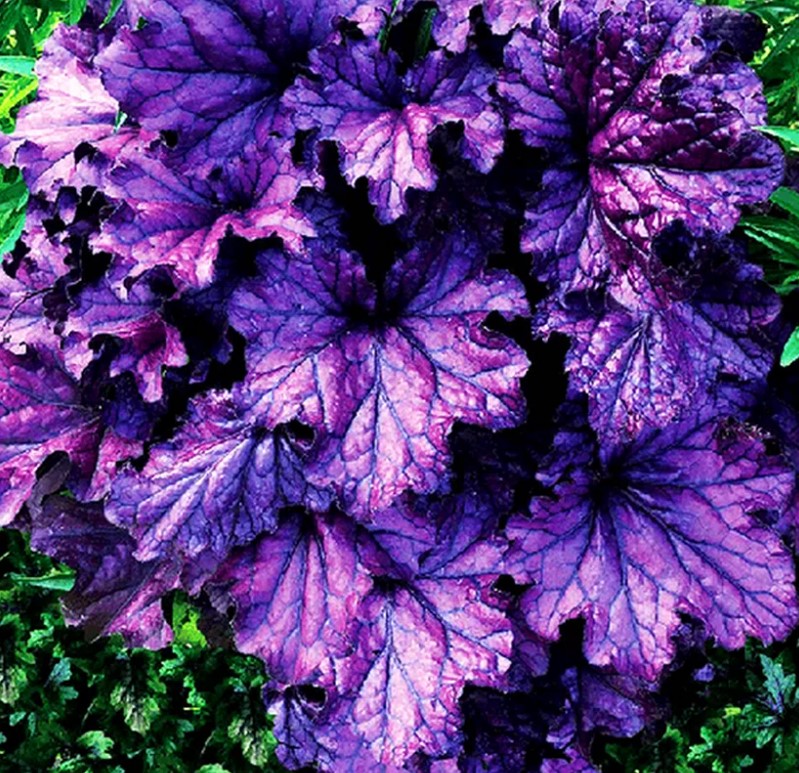
- Georgia Plum. The bush grows to 30 cm tall and 40 cm in diameter. The leaves are silvery-pink-plum with purple veins. The flowers are the same shade as the leaves, unlike most other varieties.
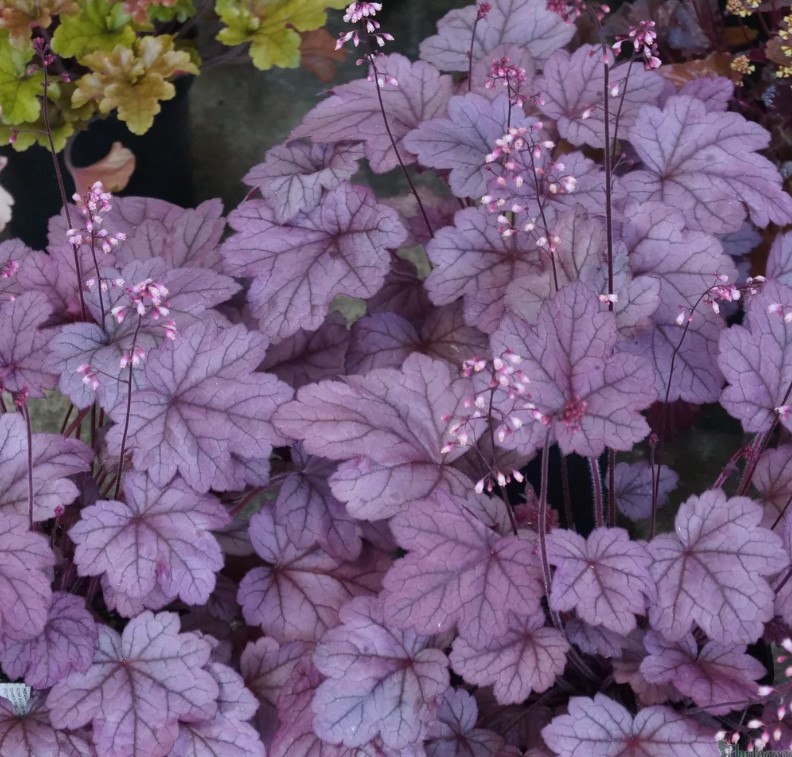
- Chocolate Ruffles. One of the most decorative varieties. The leaf edges are ruffled, the undersides are purple, and the tops range in color from chocolate to dark green. The bush grows to a height of 35 cm and a diameter of 45 cm.
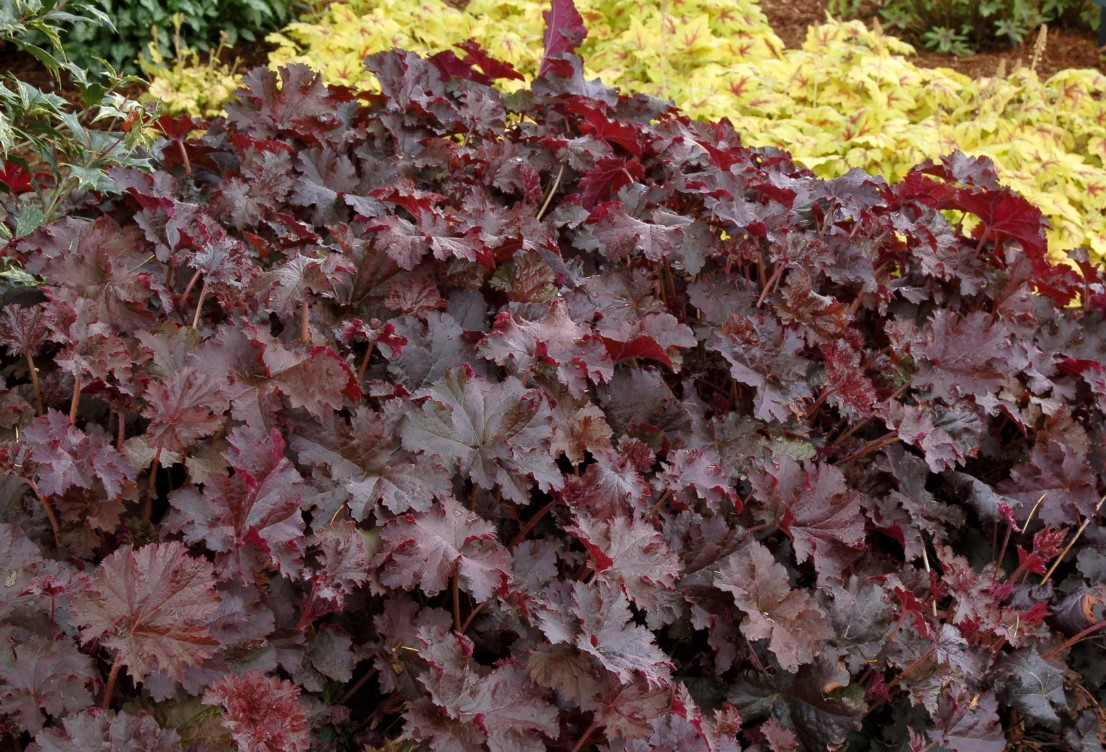
- Purple Petticoats. The leaves are initially purple, then turn green on the upper side. The edges are ruffled and textured. Heuchera looks especially impressive after the first frost, when frost settles along the edges of the foliage. The height and diameter of the bush are 30 cm.
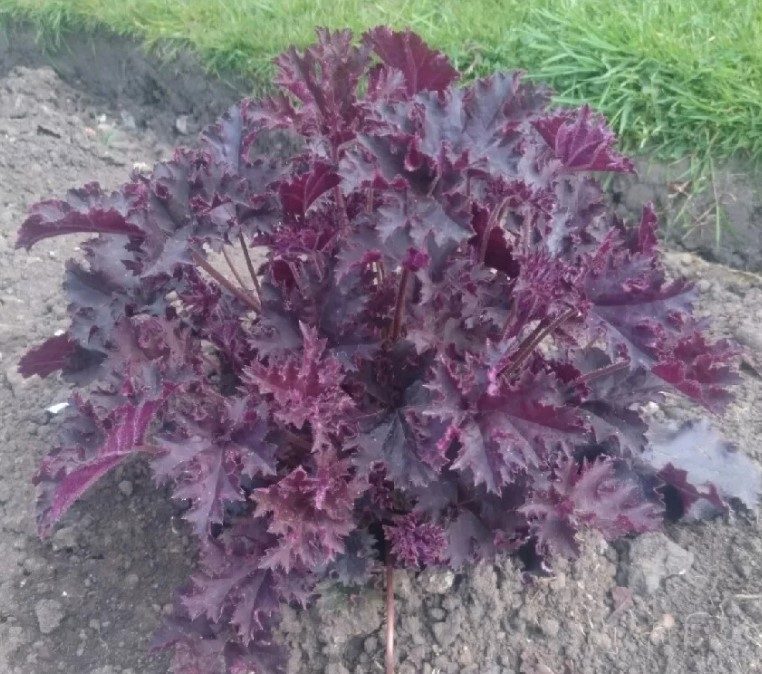
- Black Taffeta. The leaves are dark purple, almost black, with ruffled edges. The flowers are soft pink and small, giving the bush a beaded appearance. The height and diameter are 30-35 cm.
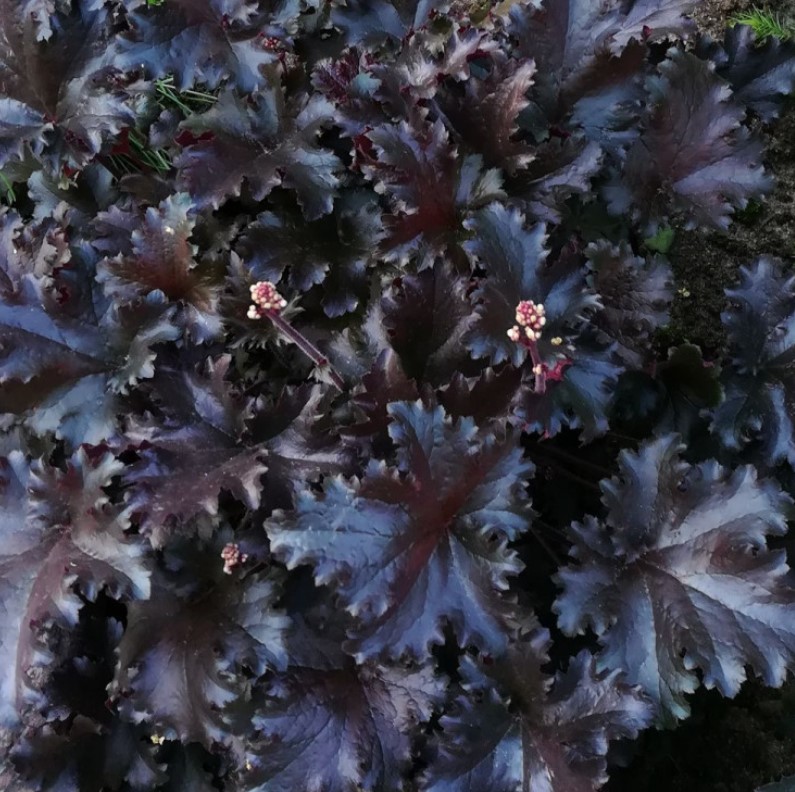
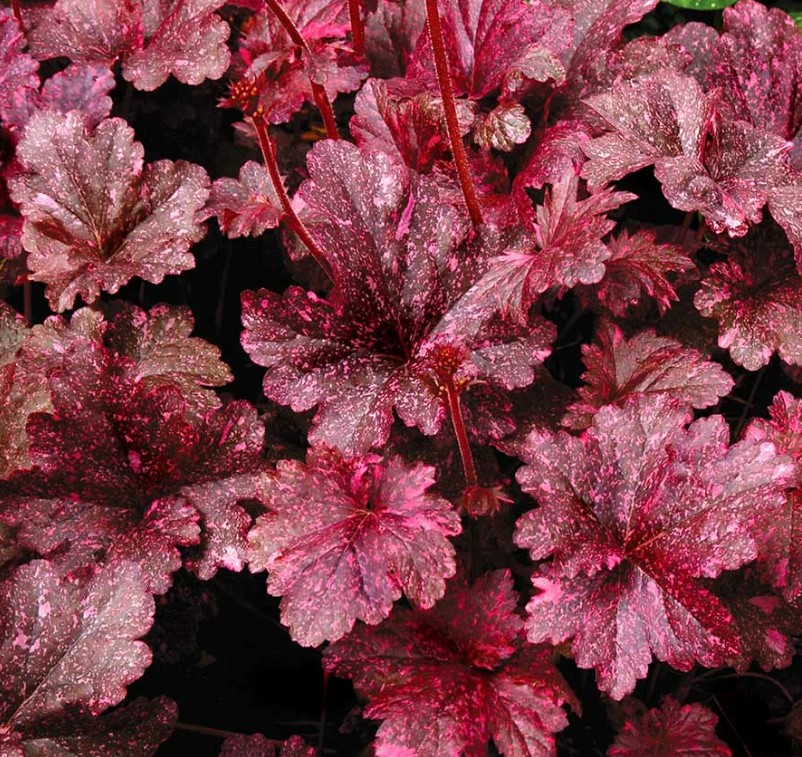
- Midnight Rose. Pink splashes are scattered across the dark purple leaf surface. Depending on the season, the leaf becomes paler or brighter. The bush grows to a height of 30 cm and a diameter of 40 cm.
3 varieties of red heucheras with photos and descriptions
Red heuchera varieties require special attention when choosing a planting site. Their color fades in the shade, and in full sun, their foliage begins to dry out. It's best to choose a site that receives bright sun for a few hours in the morning, then fades, leaving the flowers in partial shade from other plants.
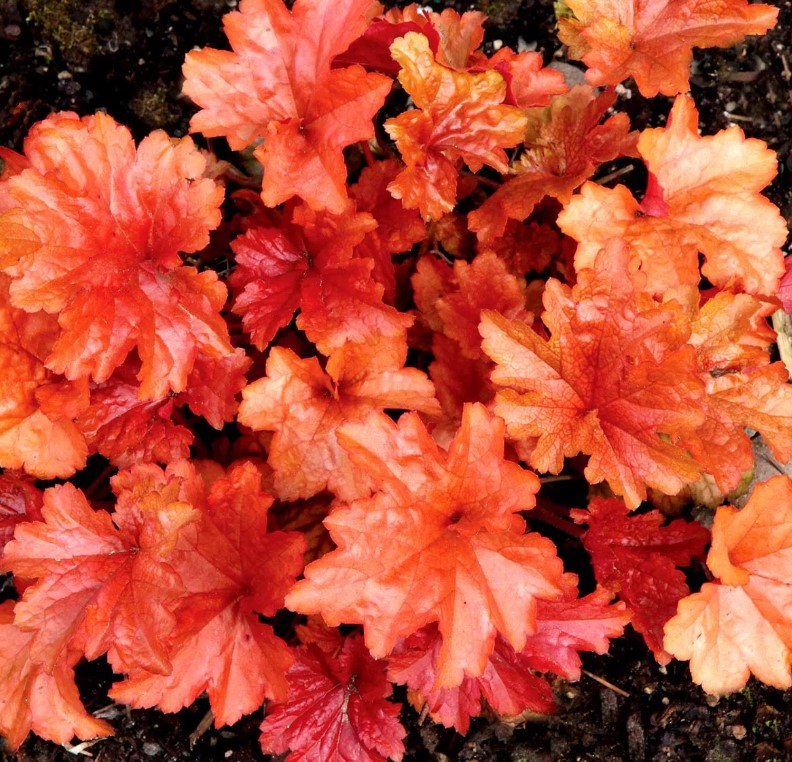
- Paprika. The leaves are vibrant, with wavy edges. Initially, they are salmon-colored, later turning coral. Dark pink veins appear prominently on the surface, giving the foliage volume. The underside of the leaf blade is tinged red. The bush grows to a height of 20 cm and a diameter of 40 cm.
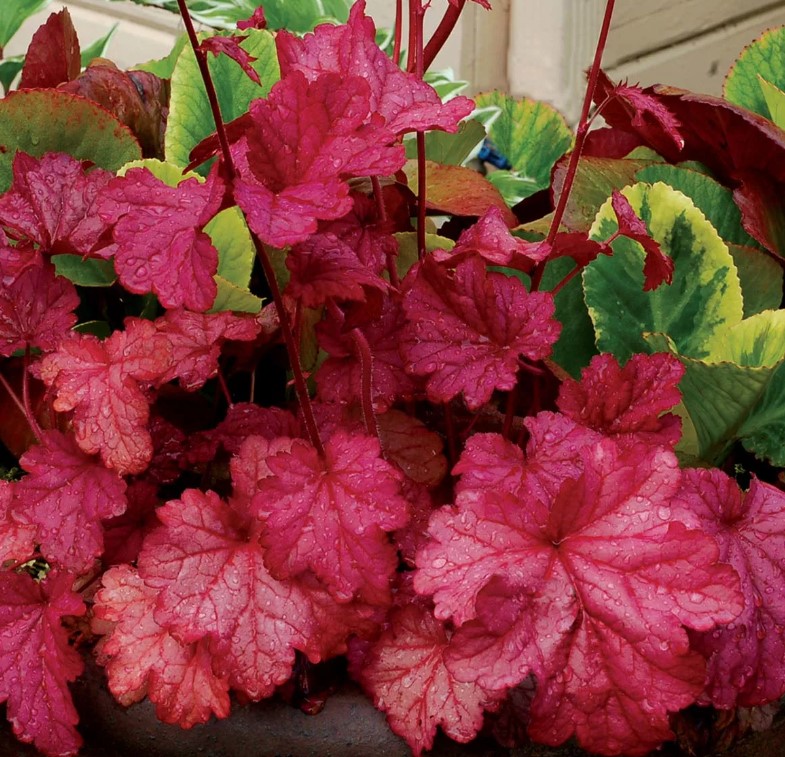
- Berry Smoothie. Young leaves are pinkish at first, but as they mature, their color changes to purple. The bush grows 30-40 cm in height and diameter.
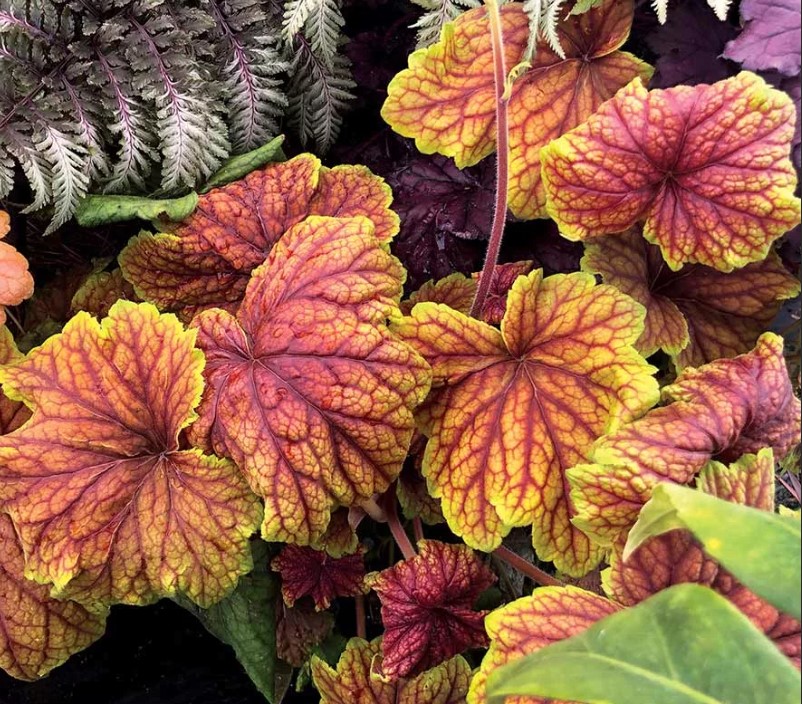
- Delta Dawn. Young leaves are light green, but as they mature, a reddish-brown spot spreads across their surface. Mature leaves are reddish with a green border and dark pink veins. The height of the bush is 35 cm, the diameter is 50 cm.
3 varieties of pink and orange heucheras with photos and descriptions
Orange heucheras, like red ones, have a low chlorophyll content, so it is better to plant them in an area with daylight and diffused light in the afternoon.
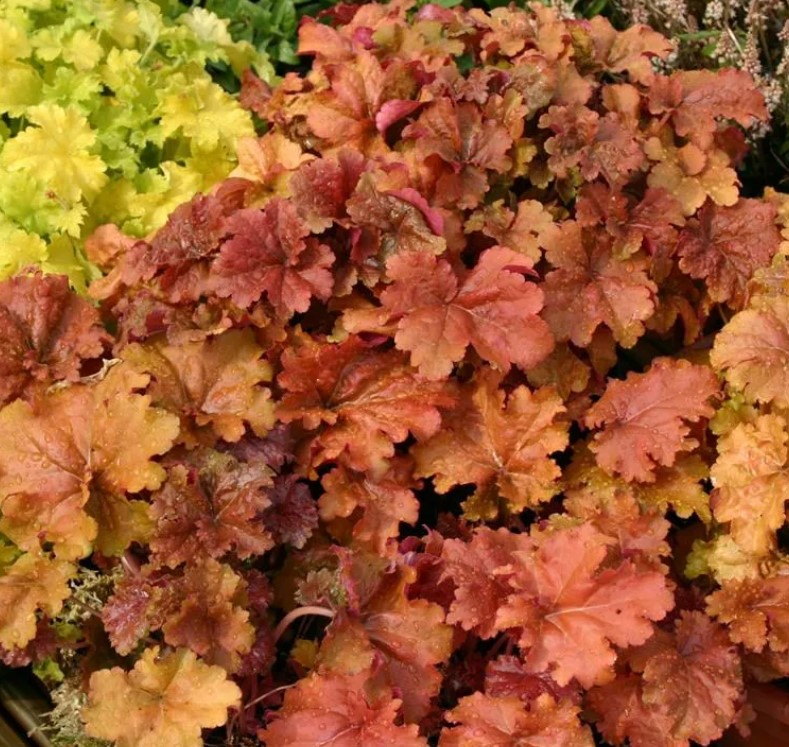
- Caramel. The leaf color changes as the heuchera grows: initially, it's reddish. Then, amber hues begin to emerge, and then yellow becomes clearly visible. The underside of the leaf blade is purple, visible through the corrugated margin. The height and diameter of the bush are 30 cm.
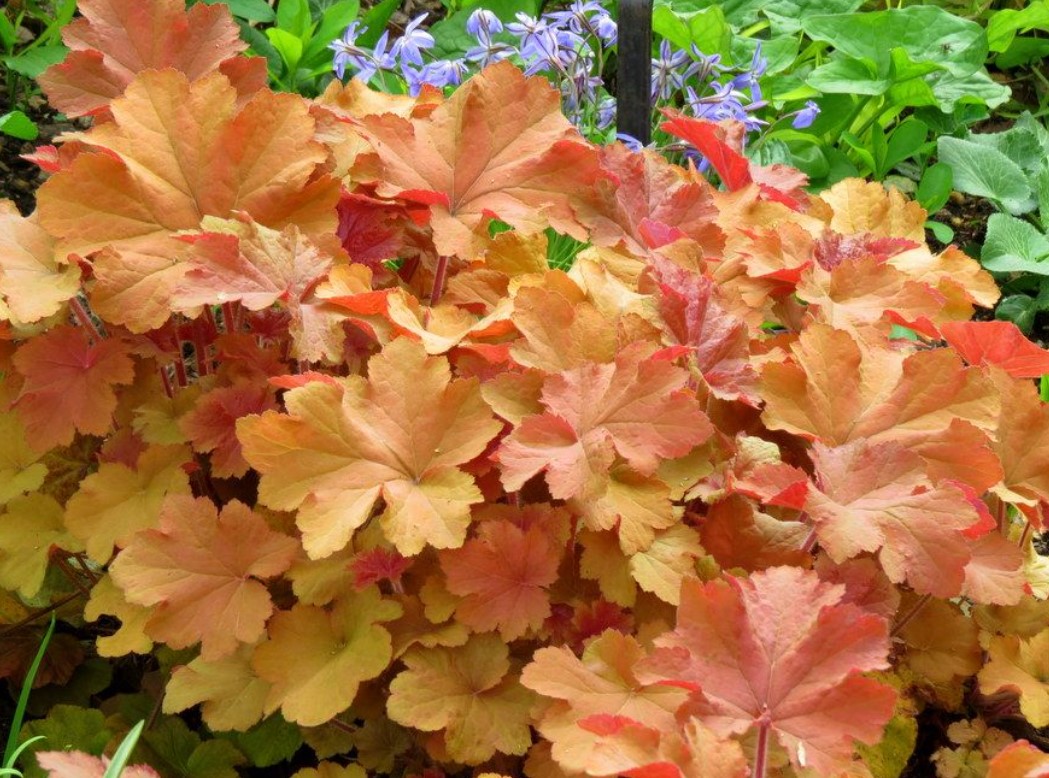
- Marmalade. The leaves are a vibrant orange with a purple underside and a ruffled edge. The leaflets themselves appear to curl upward along the veins, giving the plant a striking texture. The plant grows to a maximum height of 25 cm and a diameter of 45 cm.
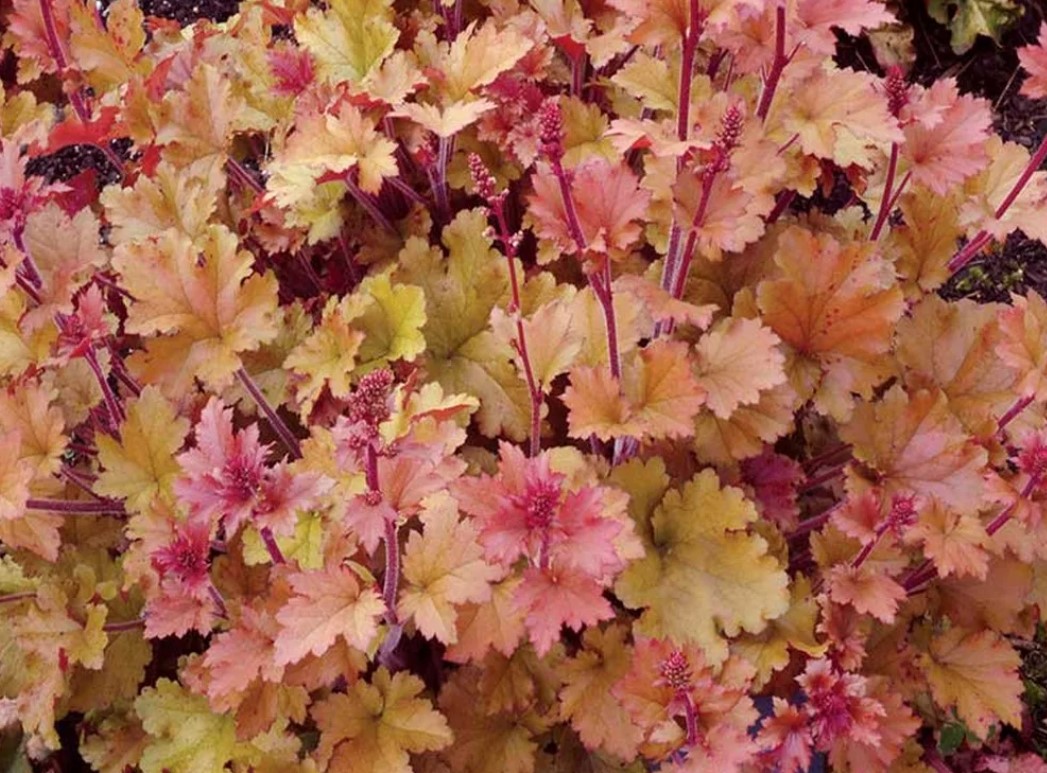
- Creme Brule. The leaves change color as they grow, from pinkish to orange, with veins that are almost the same color as the base color.
Two varieties of green heucheras with photos and descriptions
Green heucheras are the most low-maintenance. Flowerbed light isn't particularly important for them; they thrive in both shade and sun. However, it would be a mistake to assume there aren't any worthy specimens among them.
- Apple Crisp. This variety features green leaves that change color as they grow. The edges are ruffled, giving the bush an even more airy appearance. The flowers are white. They reach a height of 15 cm and a diameter of 30 cm.
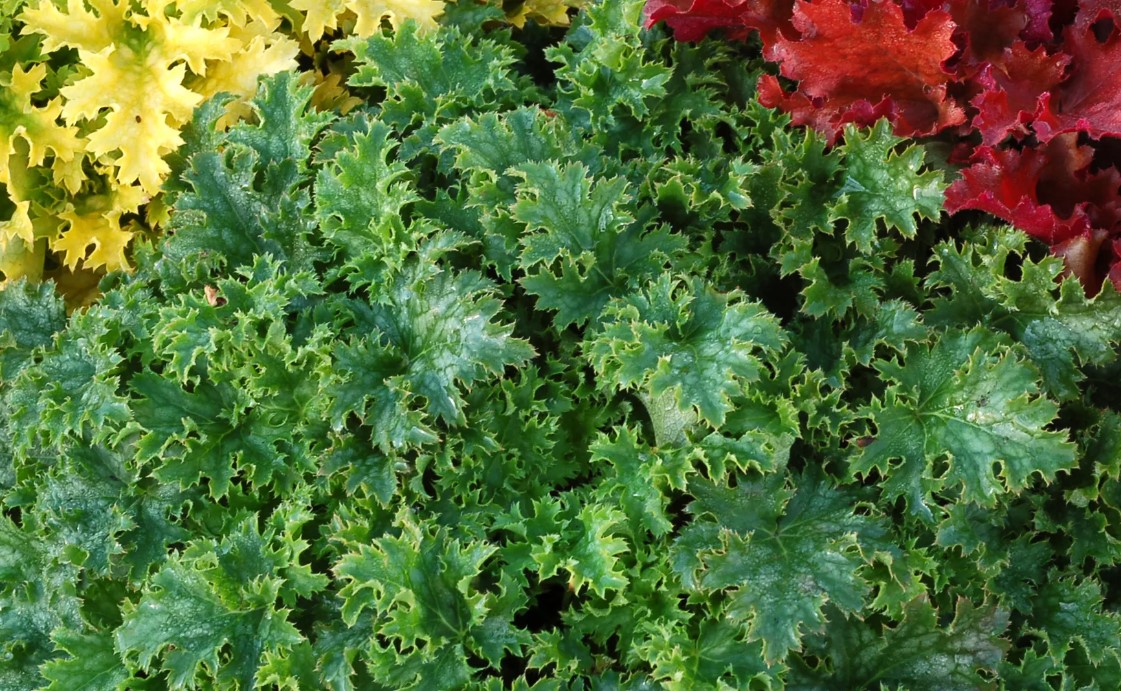
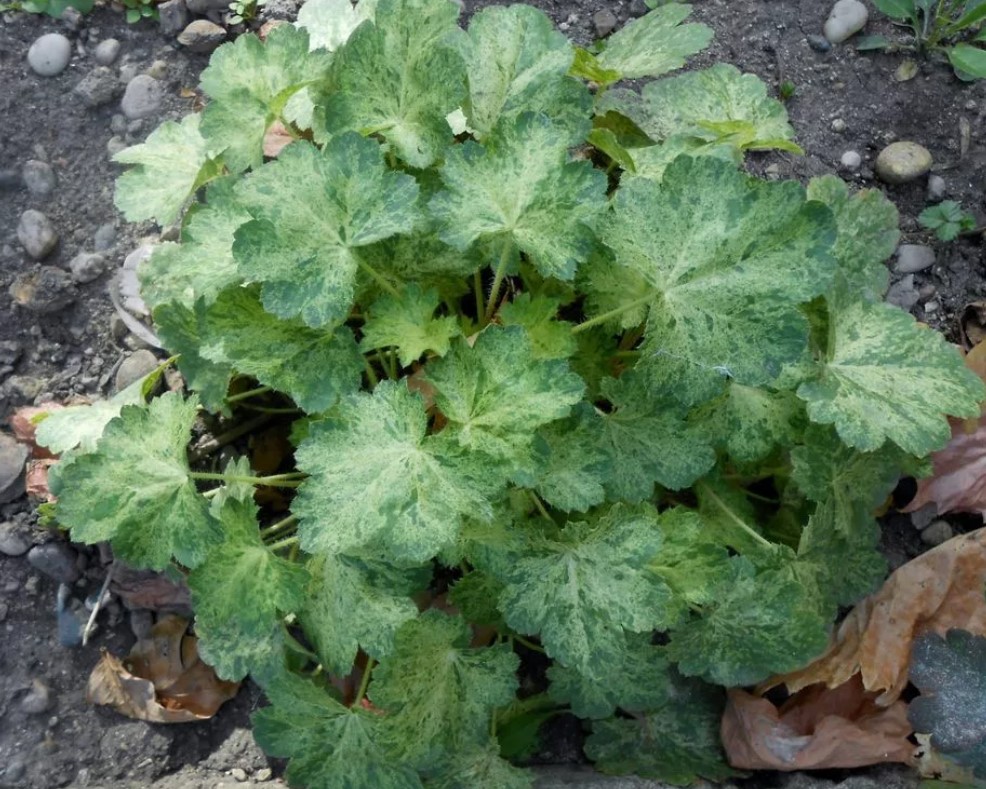
- Hercules. Distinguished by its unusual leaf coloring, which from a distance resembles malachite: light green patterns blur across the dark green surface.
4 varieties of yellow heucheras with photos and descriptions
Yellow heucheras are often used in flower arrangements, as their delicate color provides an ideal backdrop for other flowering plants.
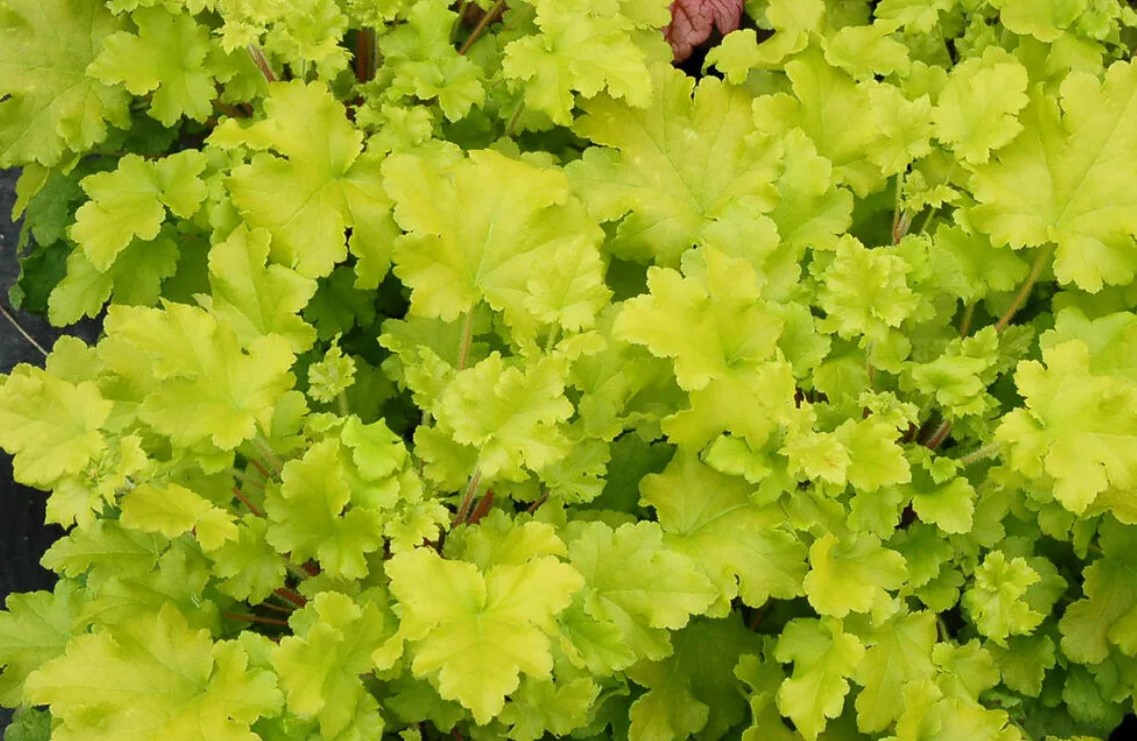
- Lime Marmalade. The leaves are a soft green-yellowish color, slightly corrugated, and airy. The flowers are tall, small, and white. The bush grows up to 25 cm tall, with a diameter of up to 50 cm.
- World Caffé Romano. Heuchera leaves are lemon-hued, while the light coffee color is revealed by veins that darken with age, becoming slightly more saturated in color. The height of the bush is 35 cm, and the diameter is 45 cm.
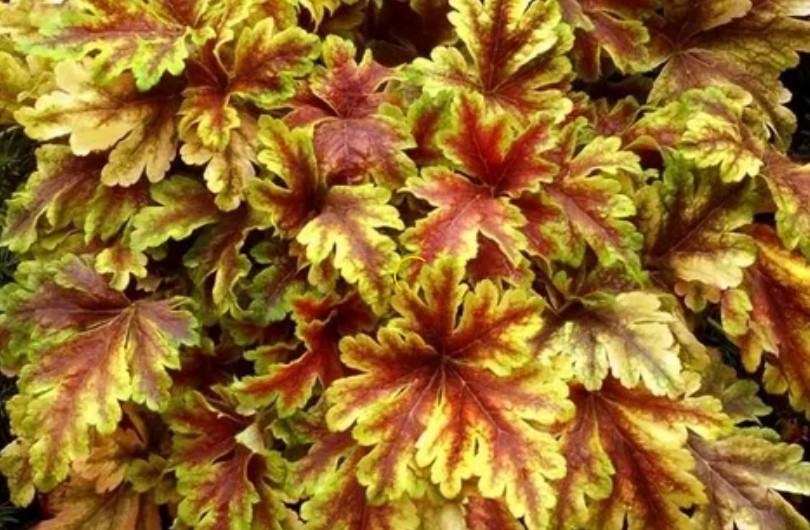
- Mojito. Yellow-green leaves with a reddish spot in the center. The color shade and spot size may vary. The height of the bush is 20 cm, the diameter is 35 cm.
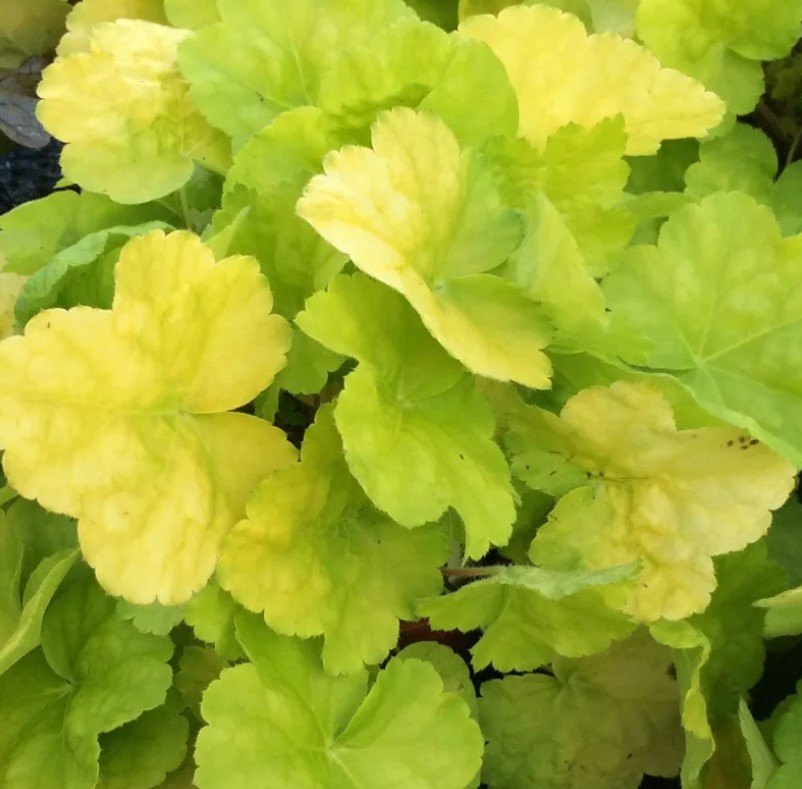
- Golden Zebra. A hybrid of the heuchera family, known as Heucherella, it features zebra-like striped leaves. However, the shades are not black and white, but reddish-yellow, and they radiate from the center of the leaf blade to its edges.
4 varieties of silver heuchera with photos and descriptions
Silvery varieties can serve as a background for other plants, or they can highlight specific areas of the garden on their own, accentuating them.
- Paris. The leaves are green, with silvery zones between the veins. Blooms profusely, with tall, bright pink flower stalks.
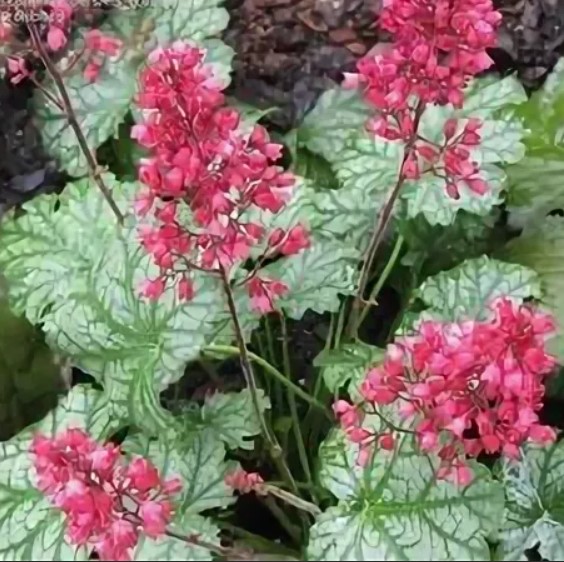
- Prince of Silver. Young leaves have a distinct purple hue over their silvery color, which completely disappears as they mature, leaving only dark green veins on the surface. The height and diameter of the bush are 30 cm.
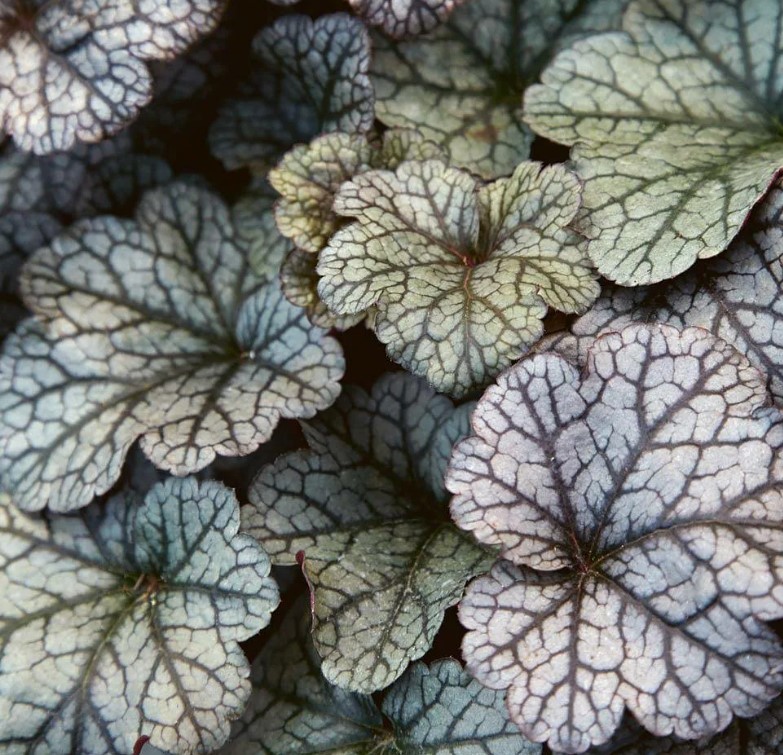
- Silver Scrolls. The most silvery of the heuchera varieties in this shade. Young leaves may have a purple tint on the surface, but this completely disappears as they mature. The underside of the leaf blade is purple. The inflorescences are pink. The height is small, only 18 cm, and the diameter is 30 cm.
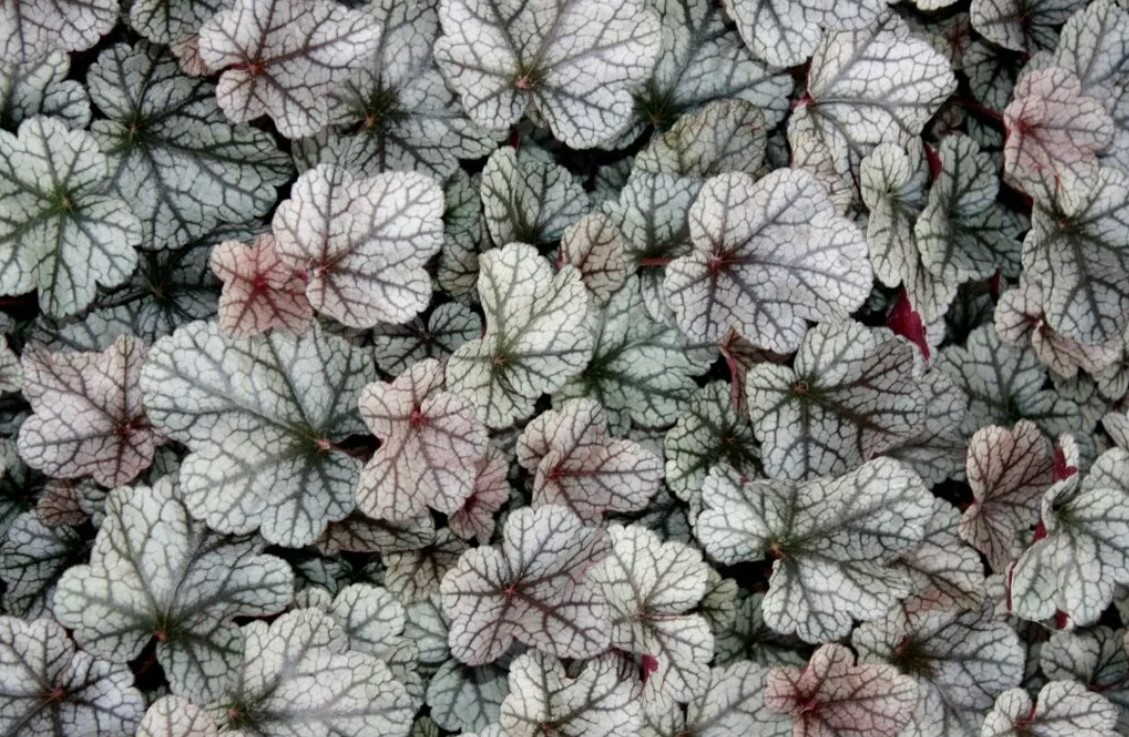
- Glitter. The leaves appear to be scattered with glitter. This effect is created by the combination of the silvery leaf blade and purple veins. The underside of the leaf is purple. The inflorescences are pink. The bush grows to a height of 35 cm and a diameter of 45 cm.
Planting Heuchera in open ground
Planting heuchera in open ground will not be particularly difficult if you take into account all the subtleties of the chosen variety.
Timing for planting heuchera
Heucheras are planted in March-April, after the snow has melted and the ground has warmed slightly. In the south, this work is done in the first ten days of March, or early spring. In northern latitudes, under unfavorable conditions, the planting period may shift to late April or early May.
Selecting a location
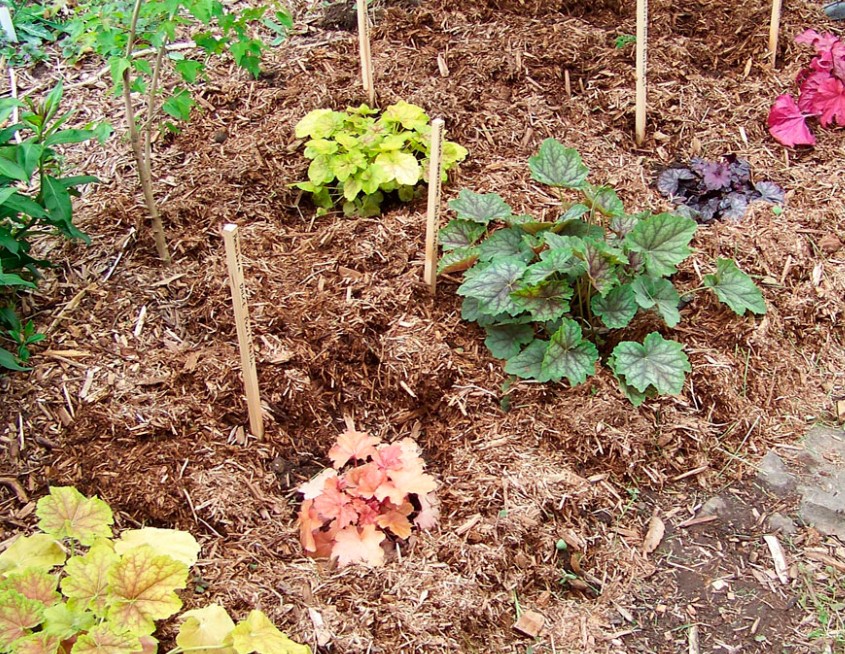
Despite their ease of cultivation, some heuchera varieties do not tolerate shade or bright light. In full sun, the leaves begin to dry and wilt, and in the shade, the vibrant colors fade. The shoots become elongated, and the leaf blades become smaller. Only green and yellow heucheras are considered completely undemanding in this regard. All other varieties are recommended to be planted so that they receive a few hours of sun in the morning, and then the flowerbeds are shaded from other plantings.
Soil for heuchera
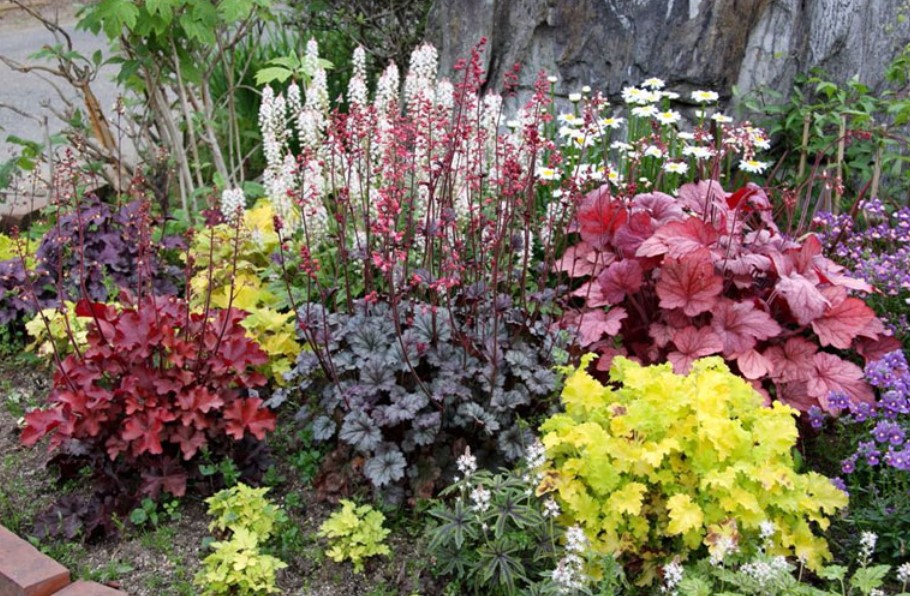
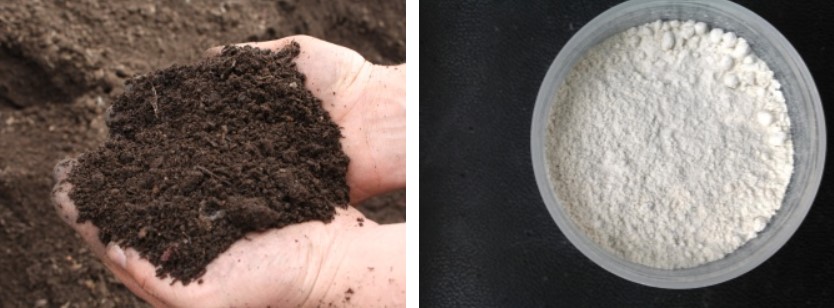
Heucheras can grow in a variety of soil types, but a location with light, well-drained soil and free access to moisture and air is ideal. However, the soil should not become stagnant, as this can cause root rot. The optimal pH level is 6.0; if the soil pH is not ideal, dolomite flour or ash can be added. Broken brick or crushed stone can be used to create a drainage layer to control moisture levels.
Step-by-step planting process
Heuchera is planted in mid-spring. You can use purchased seedlings or grow your own vegetatively.
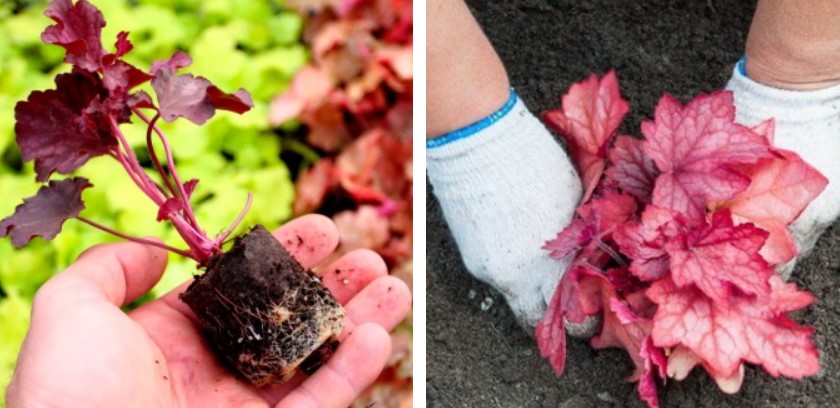
The step-by-step planting process is as follows:
- The plant's stems are trimmed back to young tissue. Dried shoots are cut back to the leaf axils.
- Diseased or damaged roots are removed and the cut areas are sprinkled with charcoal.
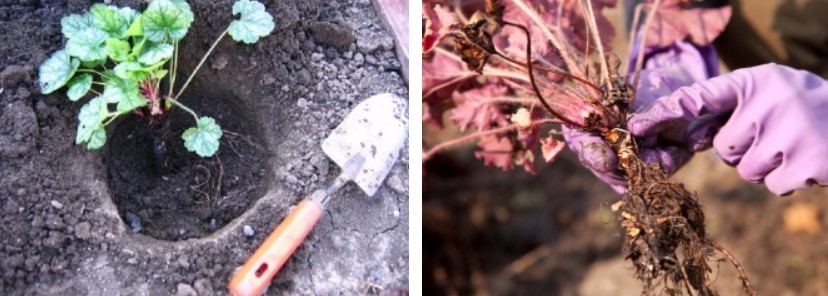
- Holes are dug in a checkerboard pattern, 30 cm deep and the same in diameter, with a distance of 50 cm between them.
- A drainage layer is placed at the bottom of the hole and covered with soil on top.
- Organic fertilizers are added.
- A seedling is placed in the center and covered with soil on all sides.
- The soil is compacted and watered at a rate of 3-5 liters per plant.
- For the first few days after planting, the heuchera is shaded.
Caring for Heuchera
To the delight of gardeners, heuchera requires minimal care.
Top dressing
During the first year after planting, heucheras don't require additional feeding; they are perfectly adequate with the nutrients added during planting or already present in the soil. All additional feeding is done in the second year. When growing flowering ornamental heucheras, it's best to use fertilizers designed for flowering plants. If the flowers don't affect their decorative appearance, it's best to use specialized fertilizers for foliage plants.

Watering
Heucheras tolerate temporary drought much better than standing water at the roots, so overwatering is not recommended. It's recommended to water three times a week as the top layer of soil dries out. If it's hot outside, increase the frequency of watering. Conversely, during rainy weather, additional soil moisture is not necessary.
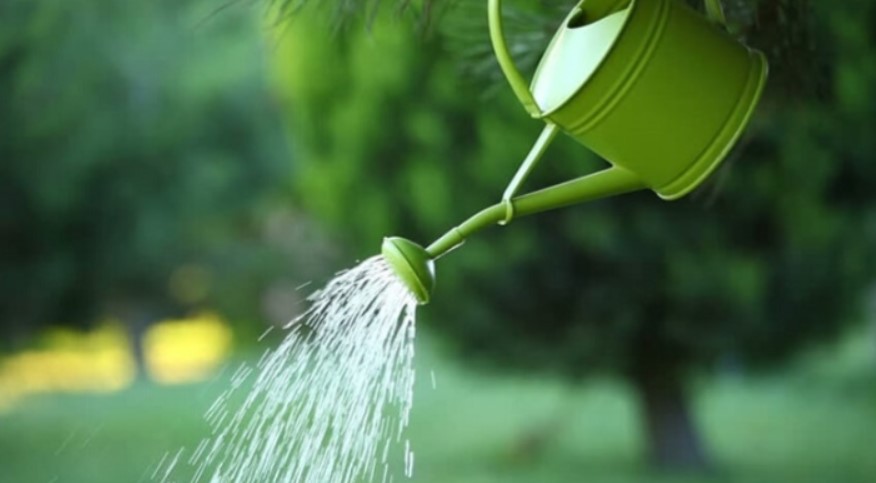
Plants should be watered early in the morning or in the evening to avoid sunburn. Experienced gardeners recommend covering the flowerbed with mulch, which will help retain moisture and reduce weed growth.
Trimming
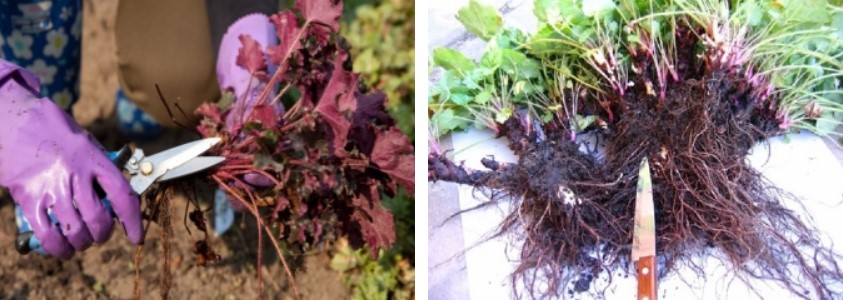
Heucheras are pruned in the spring before active growth begins. Removing dead shoots allows new growth to emerge. Some gardeners trim off the lower leaves as they begin to die back, and also remove flower stalks if they don't add to the plant's beauty.
Wintering
Heuchera tolerates Russian winters well, which is why it's so popular among gardeners. The key is to properly prepare the plant for winter.
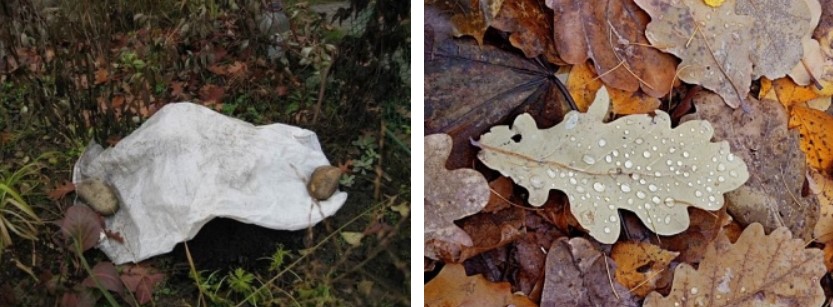
Don't remove all the withered leaves from the bush at the end of the season, as they will serve as cover for the heuchera during frosts. Subsequently, cover the plantings with spruce branches or fallen oak bark.
Reproduction of Heuchera
There are several ways to propagate Heuchera:
- Seeds. This is the most labor-intensive method. Collecting planting material yourself is very difficult, so you'll have to buy seeds from a store. Furthermore, you could end up with an unscrupulous grower and end up with something completely different from what you were expecting. Therefore, it's best to opt for simpler options.
- Cuttings. This method is advantageous because it eliminates the need to dig up the entire bush and damage the roots. The healthiest shoots with leaves are selected and cut from the bush along with the "heel"—a portion of the main plant. The cut site is then soaked in a growth stimulant and buried in a pre-prepared soil mixture. The plant is then covered with a jar and watered periodically. As soon as roots or sprouts appear, the cover can be removed. This usually happens within 4-6 weeks.
- Dividing the bush. To divide, dig the bush out of the ground and divide it using sharp pruning shears so that each part has strong, healthy roots. This procedure is performed once every four years, ideally separating each rosette.
Diseases and pests of Heuchera
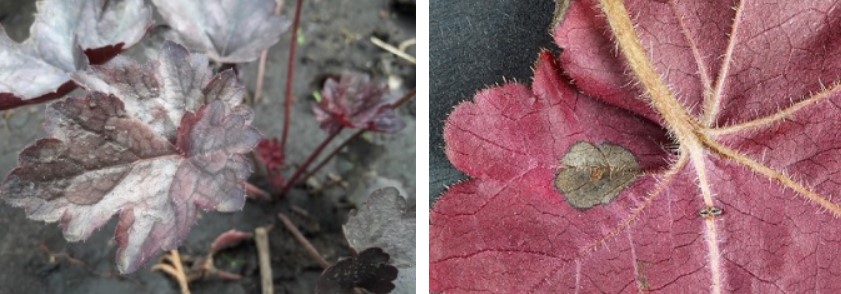
If grown under improper conditions, heucheras may suffer from the following diseases:
- Spotting.
- Rust.
- Gray rot.
- Powdery mildew.
To prevent diseases, it is necessary to follow watering rules, avoid stagnant moisture, especially in cold weather, and also feed the plants without excess to strengthen the immune system.
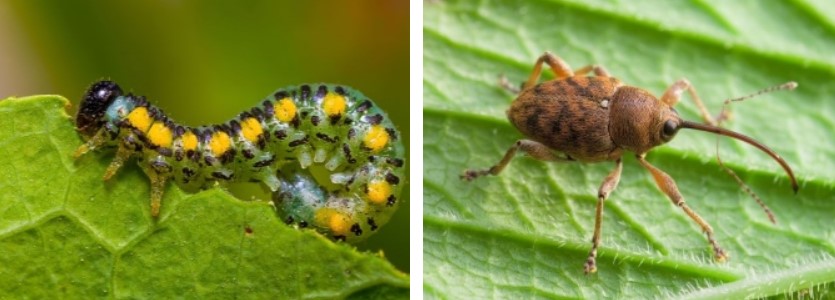
Among the most dangerous pests for heuchera, several insects can be identified:
- Slugs.
- Weevils.
- Caterpillars.
- Snails.
- Foliar nematodes.
At the first sign of pest infestation, treat your plantings with specialized products. To prevent slugs from appearing in flowerbeds, gardeners sprinkle crushed eggshells or ash over the surface.
Using Heuchera in Landscape
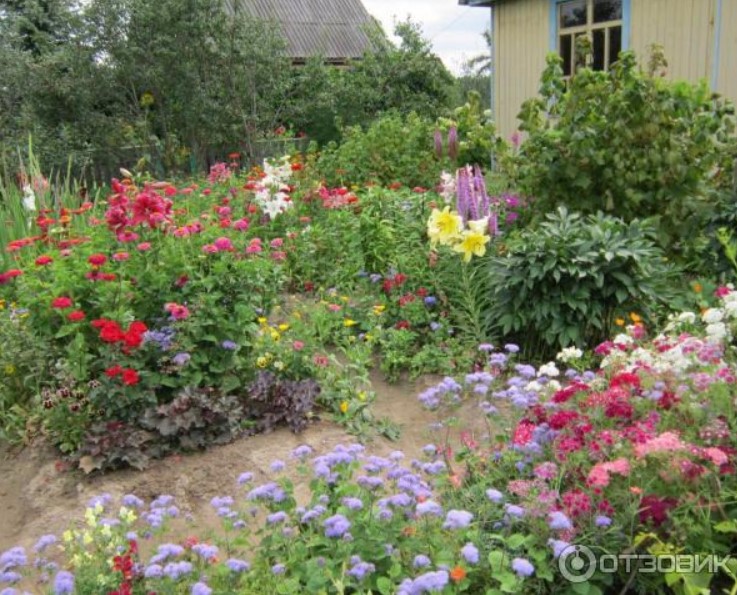
Heuchera can beautify any space, either alone or in combination with other plants. It looks great with certain perennials:
- phlox;
- astilbe;
- iris;
- dragon's beard;
- bergenia;
- host;
- fern.
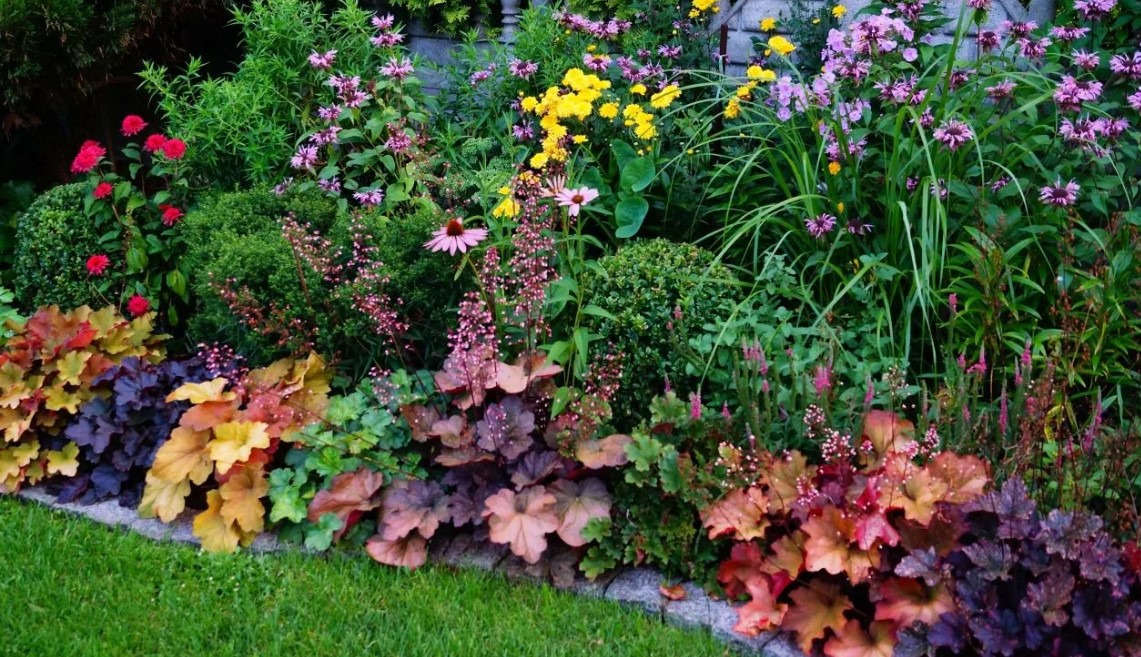
Brightly colored heuchera varieties make a wonderful addition to bulbous flowers or ornamental grasses, creating a vibrant and summery composition.
Photo gallery of Heuchera in the landscape
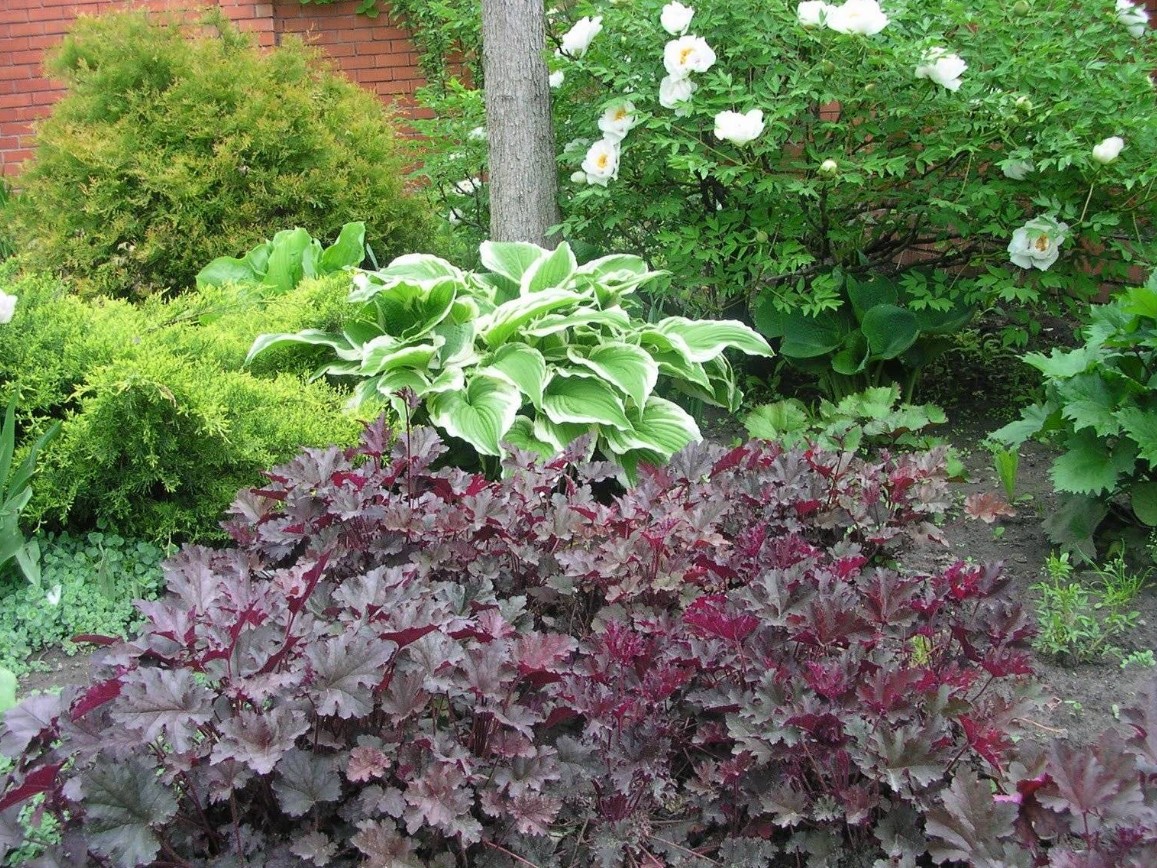
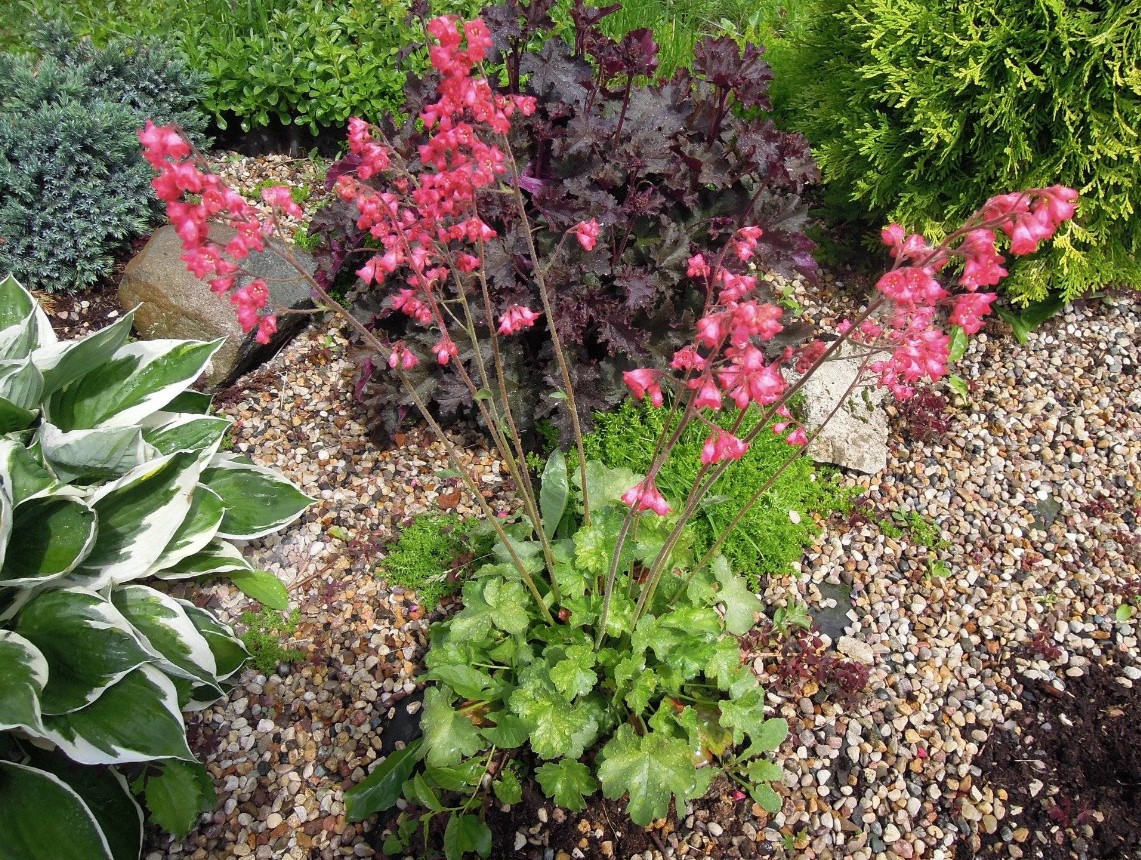
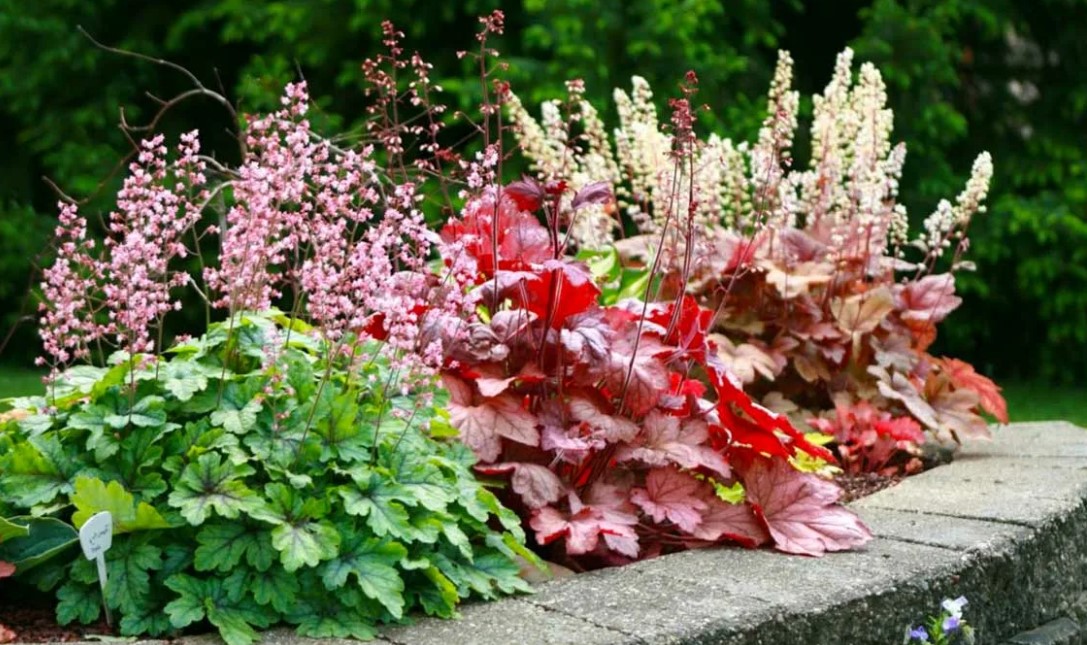
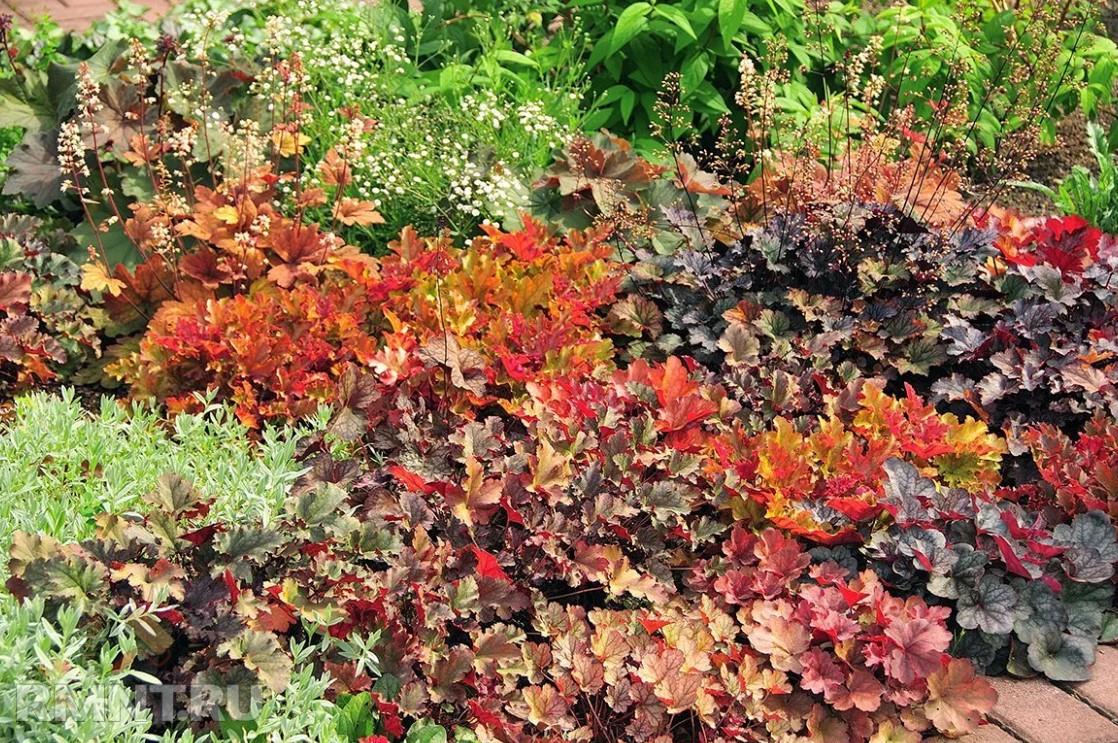
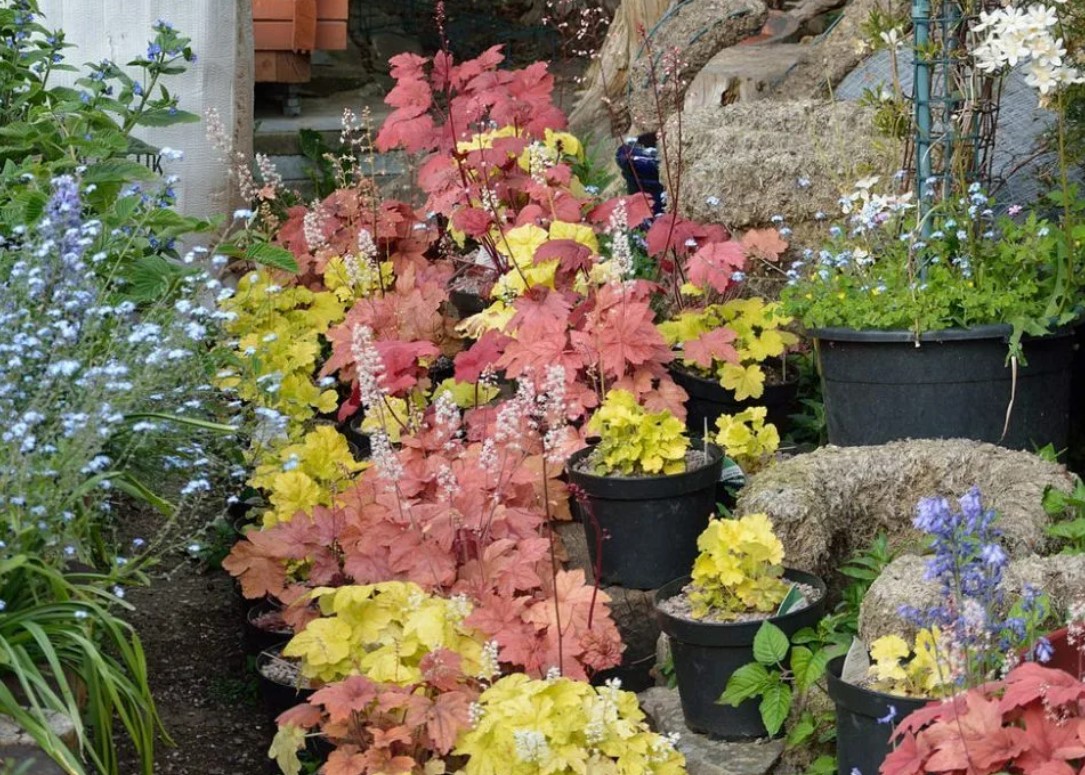
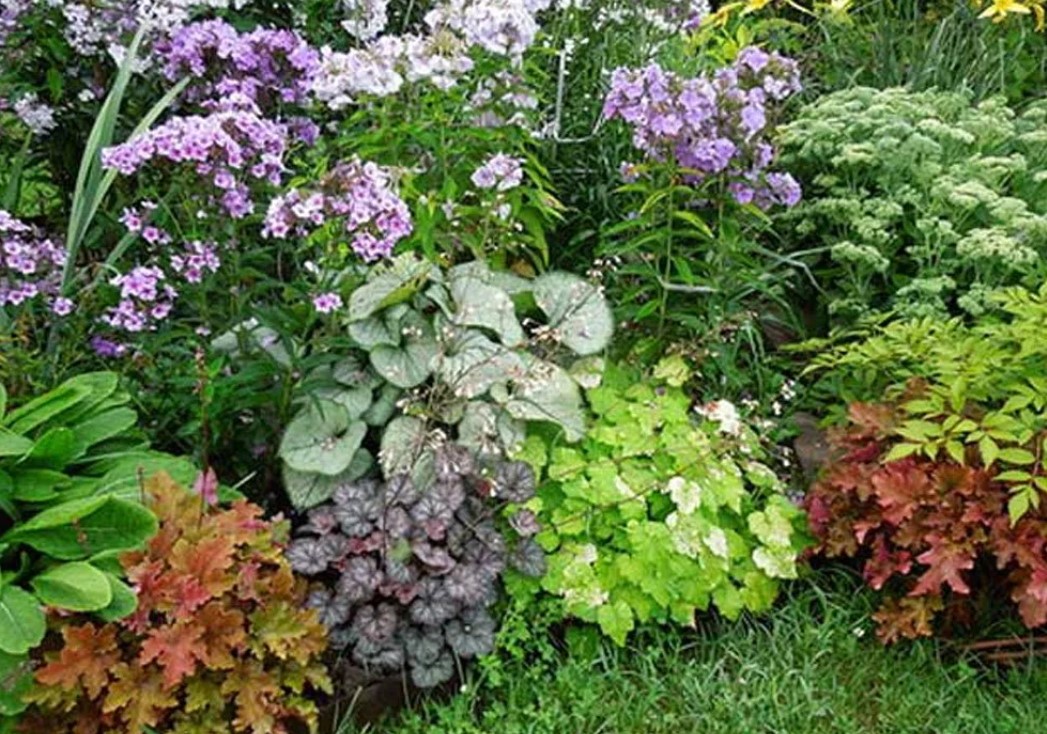
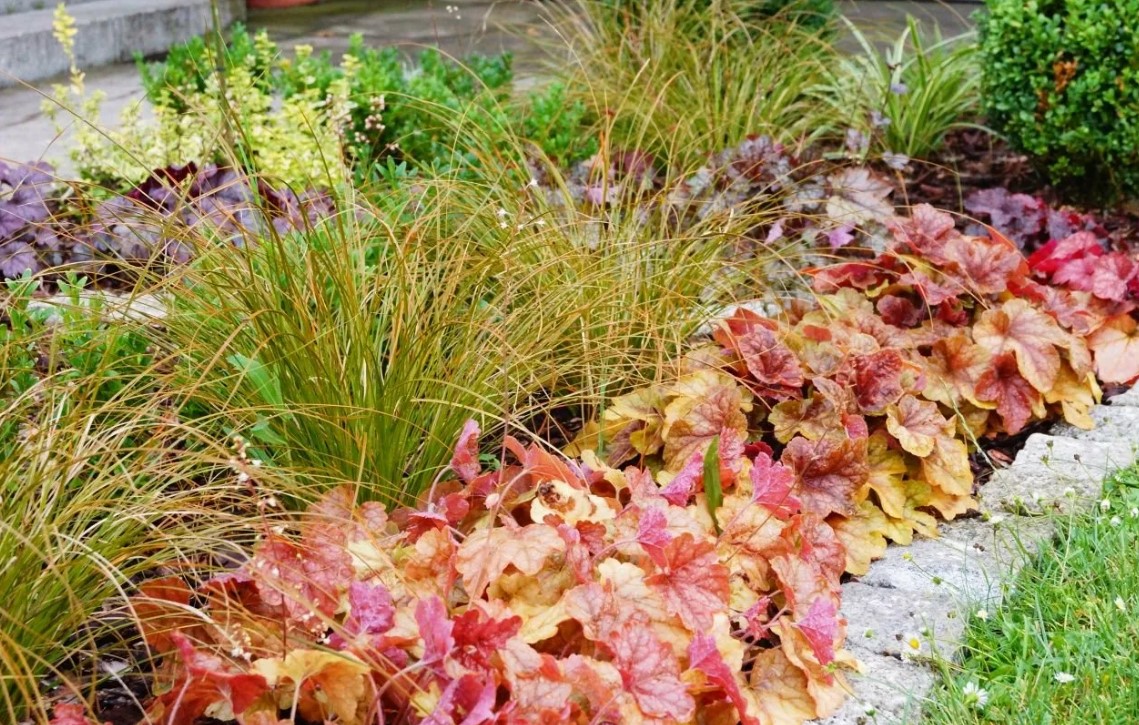
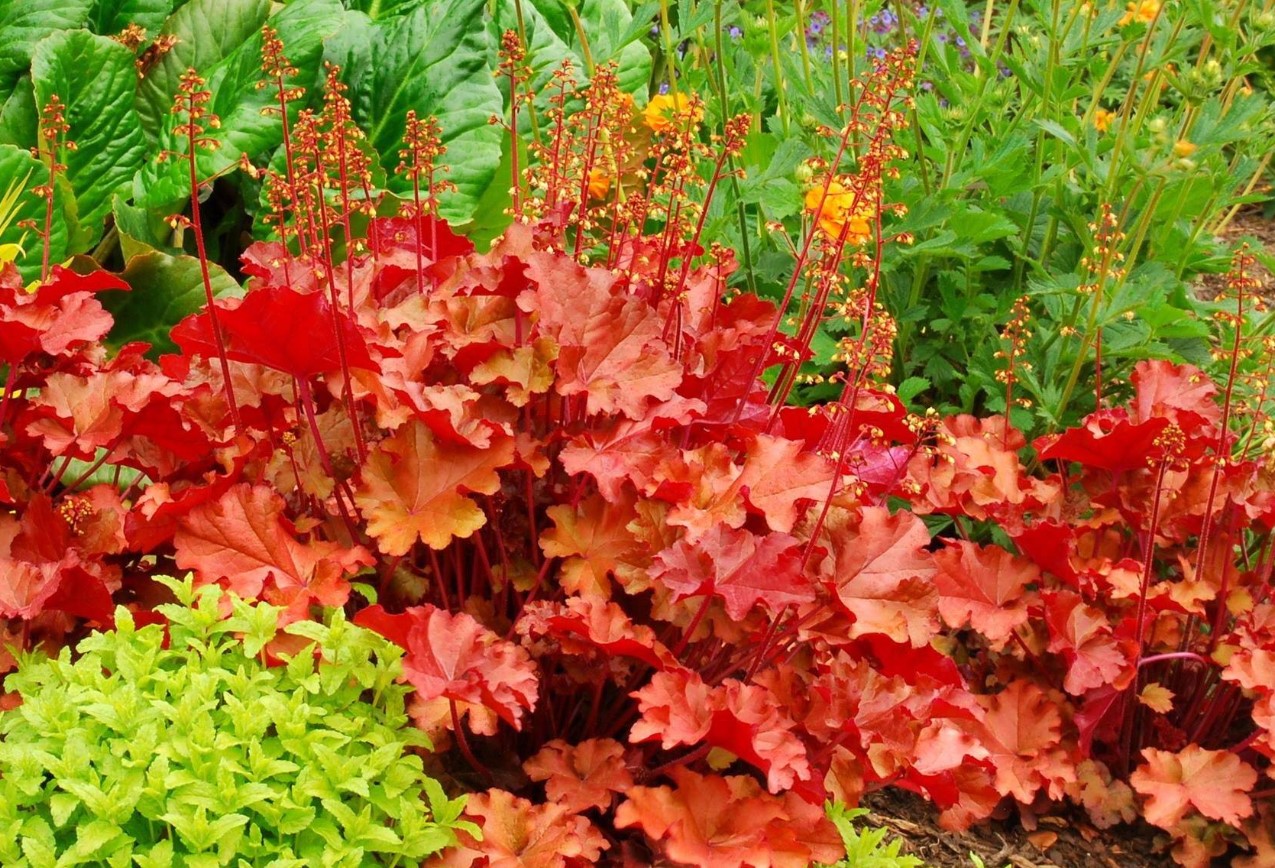
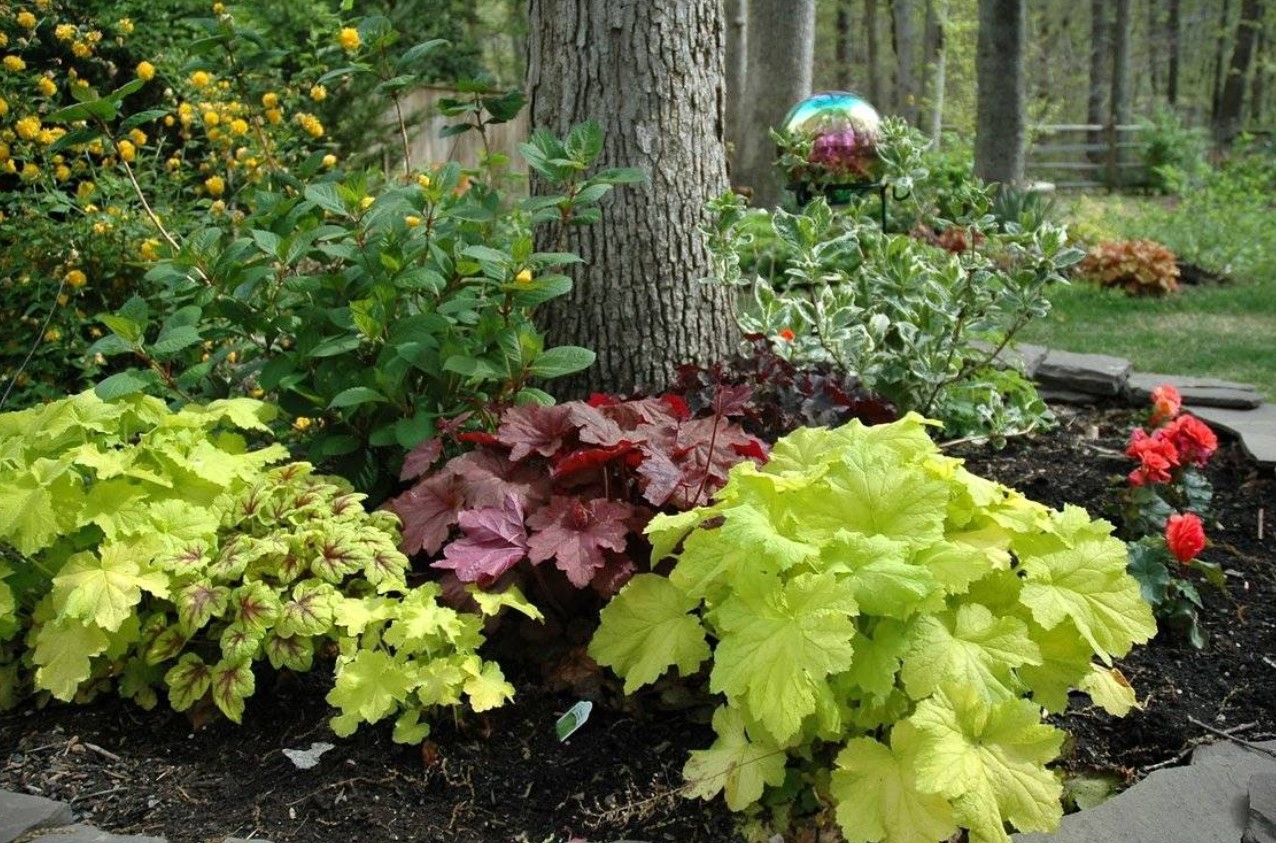
Many gardeners prefer to combine heucheras with conifers. Large-leaf varieties look spectacular when planted alone, or alongside ferns and hostas.
Tips from Top.tomathouse.com on growing heuchera
If you want your heucheras to delight you with a riot of color, just follow a few simple tips:
- Heuchera is fed strictly before or after flowering.
- Do not allow water to stagnate near the roots.
- Mulching will help reduce the number of weeds and retain water in the soil.
- It is better to use settled water for watering.
- When planting seeds, the soil is disinfected by baking in an oven or pouring boiling water over it to destroy pathogenic organisms.
- Plants are pruned only at the beginning of a new season, and not before wintering.
- For better growth, all existing inflorescences are removed.
- Periodically, the bushes are hilled up so that the soil covers the rosette.
- When dividing a bush, do not damage the roots, as this will reduce the bush's survival rate.
Reviews of Heuchera from gardeners
Heuchera is my favorite plant. It's native to North America, but it's thrived in Russian gardens. It's named after the botanist who discovered it. Heuchera is famous for its unusual, colorful leaves. They range from pale green to almost black. Some leaves have double flowers. Heuchera's leaves also come in a variety of shapes. I have several varieties of heuchera. One of them is a species, Heuchera sanguinea. It's named so not for the color of its leaves, but for its bright, attractive flowers. I grew it from seed. I've written about this before. Again, it's easy to grow from seed, too.
I also have heucheras with red leaves.
Unfortunately, I don’t know the names of their varieties.
There is a heuchera that has leaves of a very interesting shade.
The seller called it "caramel".
I'm not sure, of course, but I think this variety of heuchera is called "lime".
And this is my favorite.
This heuchera is a hybrid of heuchera and tiarella. Growing heucheras is easy. The key is to choose easy-to-grow varieties that are suitable for local use. Hilling is essential. Water and weed as needed. The plant will be in full bloom during the winter. In the spring, inspect the plant and remove any dead leaves.
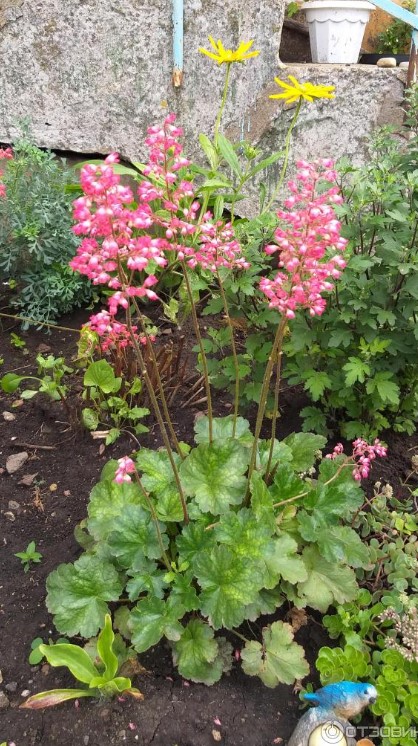
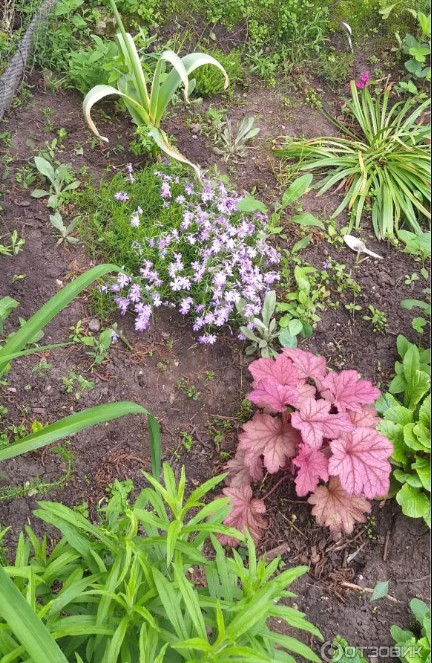
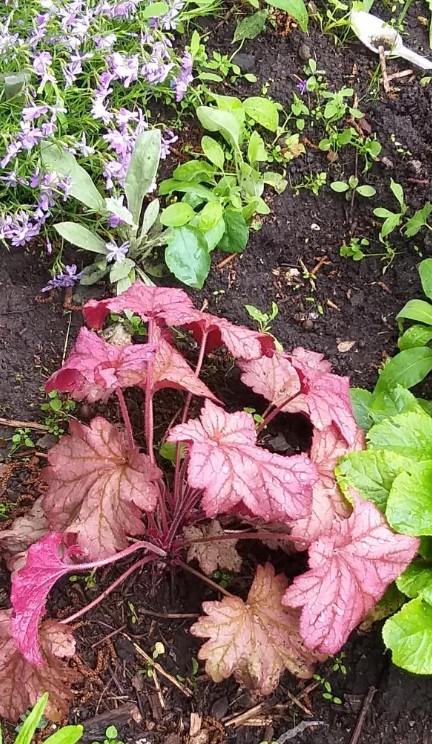
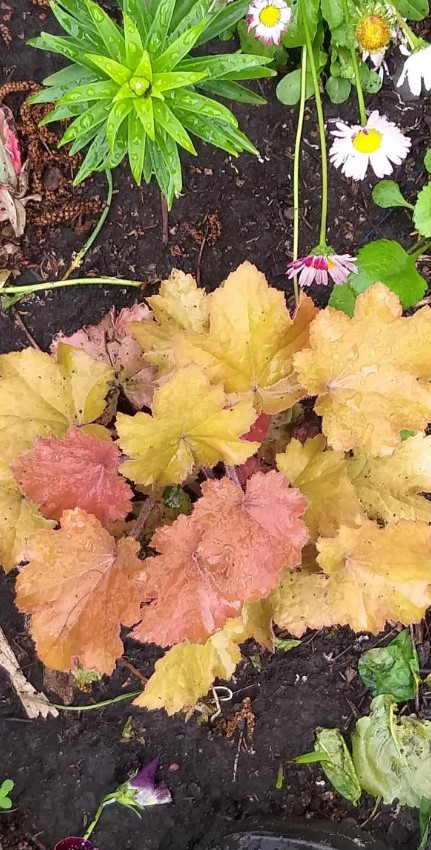
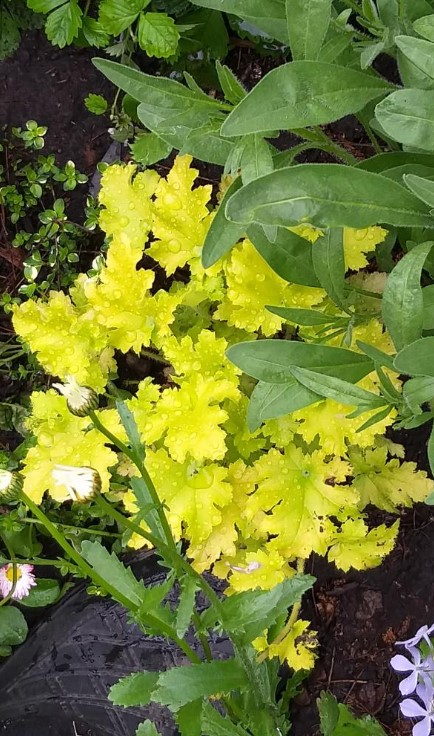
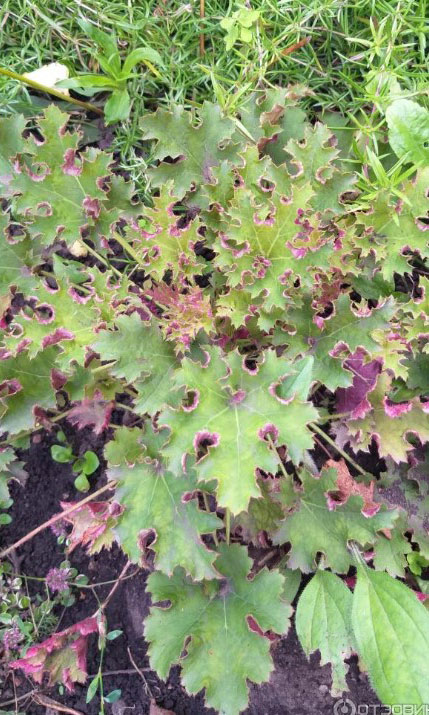
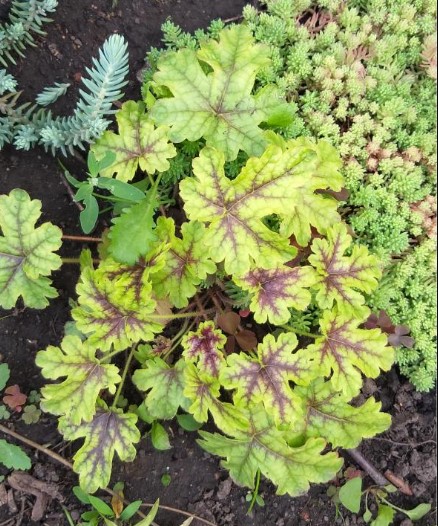
Review: Garden plant "Heuchera" - The charm is not in the blossoming flowers, but in the bright, shiny leaves.
ADVANTAGES:
Perennial, beautiful, bright leaves, no problems in growing.
FLAWS:
Didn't find any.
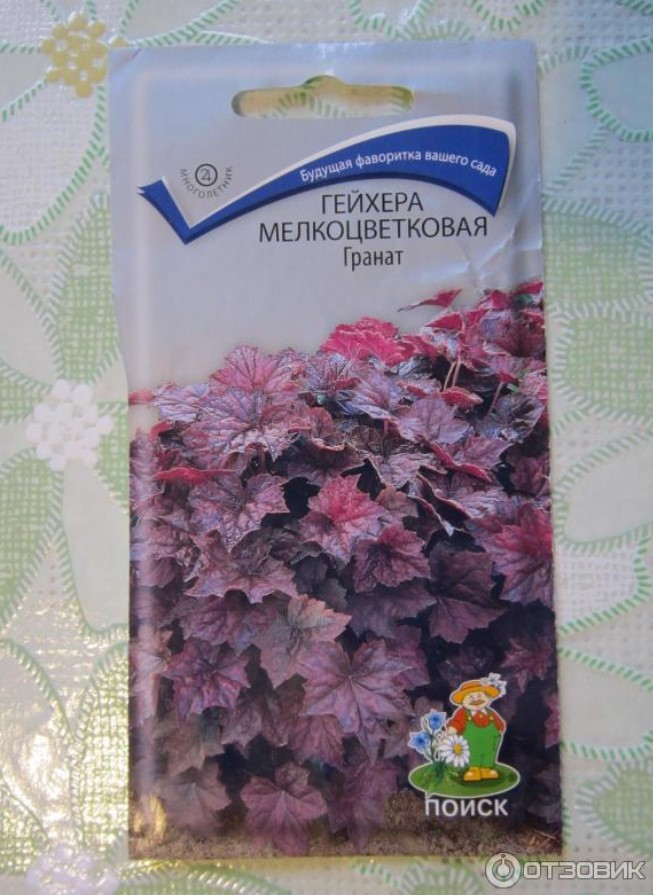
Good day, visitors of Otzovik!I'd like to tell you about another garden favorite of mine. It's a heuchera. It's not distinguished by the showy beauty of its blooms. Rather, its foliage makes it stand out and attracts attention. It doesn't need flowers; it's beautiful on its own. When I saw this wonder at a friend's, I absolutely had to have one. While researching heuchera online, I learned about several methods of propagating it. One of them is growing it from seed. To try it out, I bought some "Pomegranate" heuchera seeds at the store.
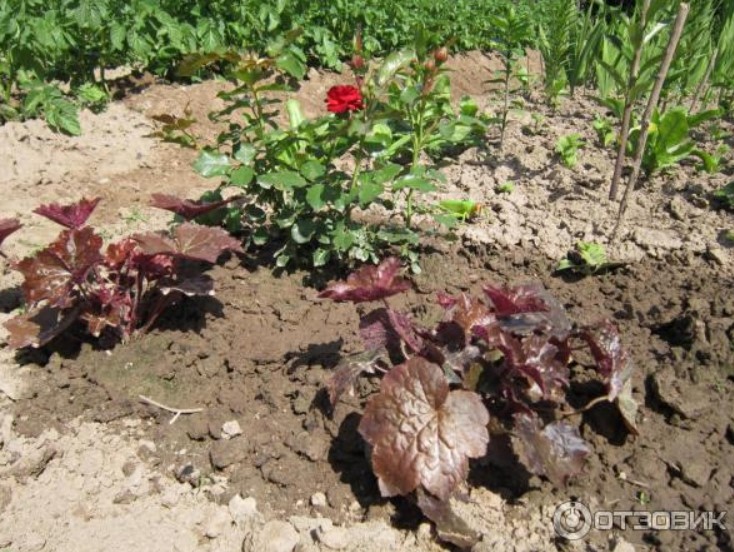
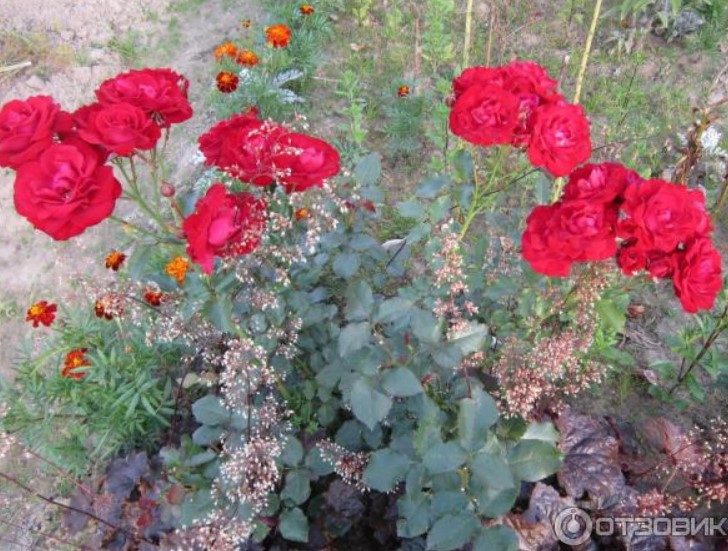
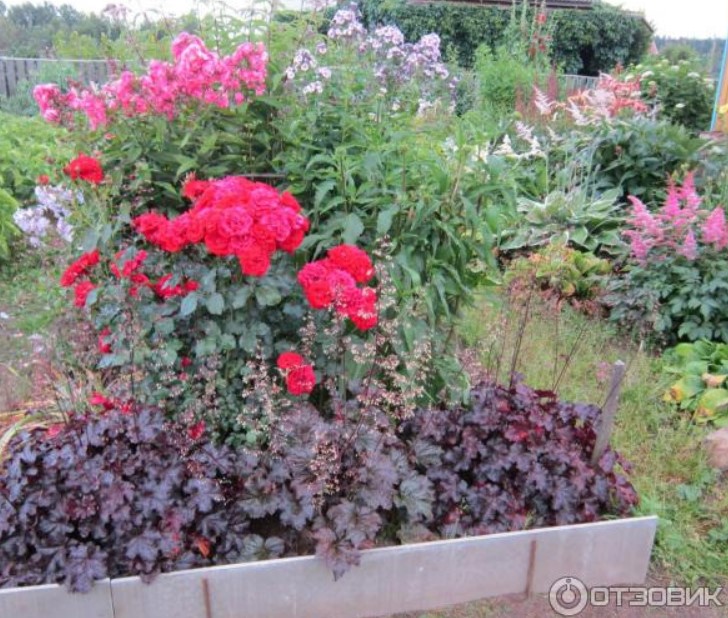
I sowed the plants in the spring, as usual, using the surface method. I covered them, uncovered them, watered them, and tended to them. I waited a long time, but still saw no sprouts. Ultimately, my first experience with heucheras from seed was a failure. In May, I went to the market and bought two small heuchera bushes, the 'Purple Castle' and 'Storm on the Sea' varieties. That's how I got these wonderful flowers in 2012. I planted them along the edge of the flowerbed, next to my favorite rose, 'Nina Weibull,' which I've already reviewed. This is what the bushes looked like in June the year they were planted. The left bush is 'Purple Castle,' and the right one is 'Storm on the Sea.'
The bushes quickly began to develop roots and leaves. By fall, they were fully formed. I even divided the "Purple Castle" bush into two and planted them side by side. I now have three heuchera bushes. Here they are in the photo.
With these photos I want to show you how quickly heuchera grows and how easy it is to grow good, large bushes from a bush with just a few leaves.Heuchera doesn't require much attention. I fertilize it infrequently, usually once in the spring with a complex fertilizer. The bushes are planted in a sunny spot; they never experience shade. Since they're located far from a water source, I water them occasionally, and mostly only when rain comes.
What I want to draw attention to.
The plant's structure is very similar to that of a strawberry plant. Small roots grow upward along very short stems. Therefore, the bushes need to be hilled up periodically. Over time, the bush begins to protrude significantly from the ground. This is a sign that it needs to be refreshed and replanted. I refresh and replant at any time. Heuchera tolerates transplanting very well. Dig up the bush and divide it into sections with a knife. Add fertilizer and compost to the hole, water, replant the bush, water again, and the bush grows. Cuttings that are broken off from the common root also take root well. If necessary, if I want to give a heuchera to someone, I can simply chop off part of the rhizome with a shovel and replant. The main plant won't feel so mercilessly treated.
One more thing. Usually in the fall, when we prepare perennials for winter, we trim the tops. This is not the case with heucheras. We leave all the leaves on the bush. They cover the upper roots and provide winter shelter for the bush. I don't cover them with anything for the winter. Sometimes I place a spruce branch on the bushes if any are left over after covering the lilies.
Heucheras are actually valued not for their blooms, but for the beautiful color of their leaves. They can be purple, dark green, light green, yellowish, or pinkish-yellow. And the bushes always look very impressive. Some websites online recommend removing the protruding flower stalks so they don't spoil the bush's appearance. I never do this. On the contrary, I really like these modest panicles. If you're making a bouquet, they complement it beautifully. The photo below shows how a natural bouquet of roses and heucheras turned out in a flowerbed.
This year's heucheras look like this. The outer bushes are "Storm on the Sea," and the middle bush is "Purple Castle."
I'd like to conclude here and reiterate that the heuchera is a very beautiful and showy flower, which delights me not with its blooms, but with its bright, shiny foliage. If you don't have one yet, try growing one; you won't regret it.
Review: Garden plant "Heuchera" - A beautiful, but capricious plant.
ADVANTAGES:
Beautiful multi-colored leaves.
FLAWS:
It may not survive the winter.
I'll continue talking about the flowers growing in my garden. One of them is the heuchera, or heuchera. However, I don't consider heuchera a flower; to me, it's a plant with beautiful leaves.
There are many varieties of heucheras. They vary in leaf color, shape, and size. Grocery stores and garden centers sell a wide variety of varieties, including yellow, red, and all shades of green, but they are all expensive.I think it's a very capricious plant, but maybe I just don't know how to handle it. When I fell in love with these flowers, I bought several specimens with brightly colored leaves.
In the very first year, my plant with orange leaves did not survive the winter.This plant with burgundy leaves has already survived three winters.
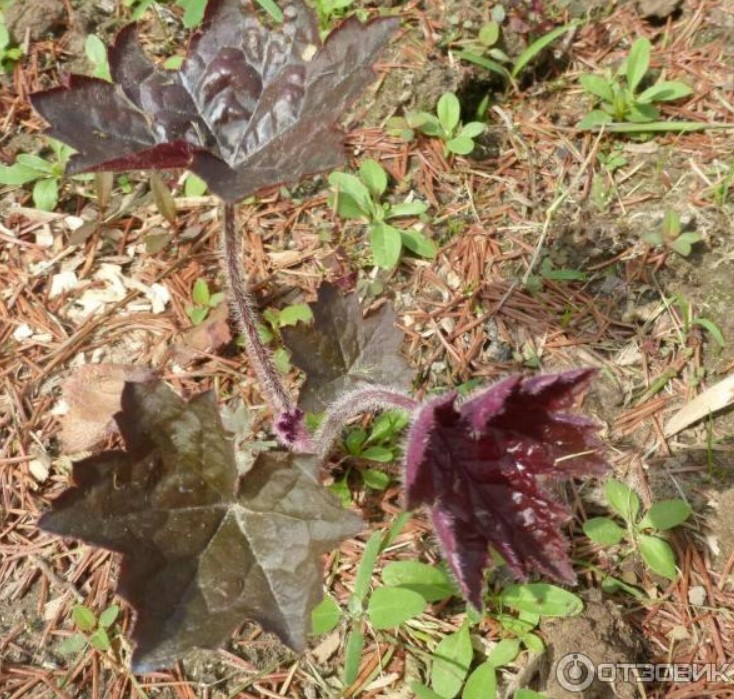
This chocolate-leafed plant was a large, vigorous bush last summer. After this winter, a few half-dead shoots remained, but I'm glad for that; I have something to replant.
I don't buy these plants anymore. But when I visited a friend's dacha, I saw large, lush bushes of green heucheras with red flowers and asked for cuttings. They overwintered successfully and will soon be blooming.
Heuchera flowers are small, in panicles on tall, thin stalks. They come in red and an indefinitely light color. They don't make much of an impression on me. I like the leaves.
They recommend planting heucheras in full sun, though they can be planted in partial shade, which is what I do. After a few years, the plants need to be divided. It's a good idea to hill the plants for the winter; I wish I'd known that before.
I'm unlikely to increase the variety of heucheras in my garden, but I will take more careful care of the ones I have.
I know gardeners who successfully grow these plants and say they're easy to care for. I recommend trying this beautiful plant in your garden; maybe you'll succeed.