Helenium (Latin: Helenium) is a perennial plant native to the West Coast of the United States. It belongs to the Asteraceae family. Carl Linnaeus first described Helenium autumnale in the early 18th century; today, 39 species are recognized.
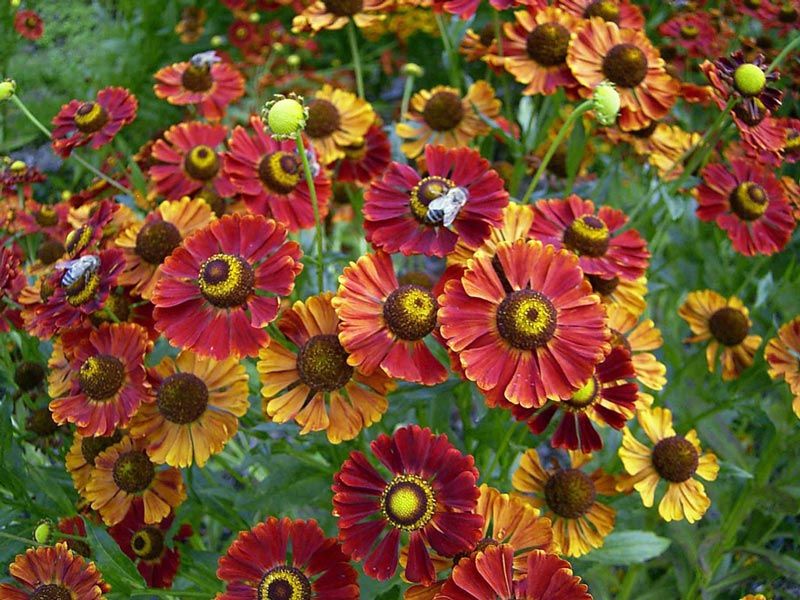
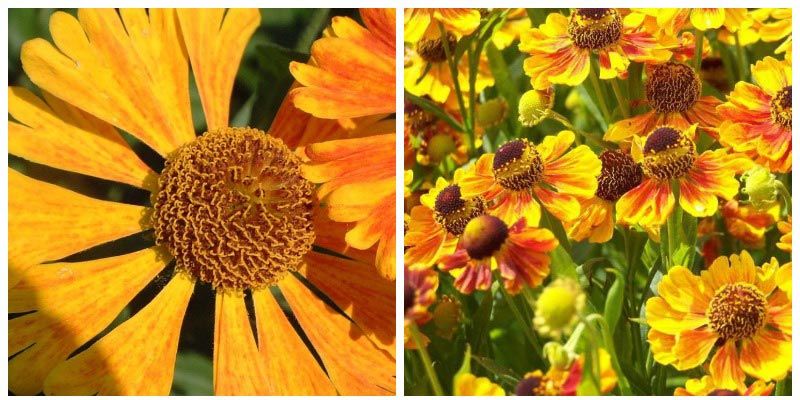
It gained its popularity for its blooms in July and August, filling the garden with red, brown, golden-yellow, and blue "chrysanthemums."
Content
- 1 Description of Helenium
- 2 Helenium autumnale and other species
- 3 Hybrid Gilenium varieties: Rubinzwerg and others
- 4 Growing Helenium from Seeds: Step-by-Step Guide
- 5 Planting helenium seedlings in the ground
- 6 The nuances of caring for helenium
- 7 Collecting seeds and preparing for winter
- 8 Transplanting and dividing the rhizome
- 9 Pests
- 10 Top.tomathouse.com recommends using helenium in landscape design.
Description of Helenium
It has a straight stem, branching at the top, reaching heights over 1.5 m. Its leaves are lanceolate (oblong in shape with pointed tips). Inflorescences are either solitary with an oblong fruit or clustered. The root dies back in winter, but produces shoots that begin to emerge from the ground in the spring.
Helenium autumnale and other species
| View | Description | Leaves | Flowers, their diameter |
| Bigelow (Helenium bigelovii) |
It grows in North America and is not widely cultivated. It grows up to 80 cm. Flowering time is June-July. | Lanceolate, elongated at the edges. | The median (tubular) ones are brown, the ligulate ones are yellow. 6 cm. |
| Spring (Helenium vernalis) |
About 1 m high, blooms towards the end of May. |
The medial ones are like Bigelow's, the reed ones are orange. 7 cm. |
|
| Gupes (Helenium hoopesii) |
Grows up to 90 cm. Flowering time as per Bigelow. |
The same as the first two species, greyish-green in colour. | Single, have yellow hues. From 8 to 9 cm. |
| Autumn (Helenium autumnale) |
Quite popular, growing up to 1.6 m tall. Woody stems. Blooms for 8 weeks, from July to September. | The shape is jagged. |
The ligulate ones are yellow or reddish-yellow, the tubular ones are dark yellow. 7 cm. |
Hybrid Gilenium varieties: Rubinzwerg and others
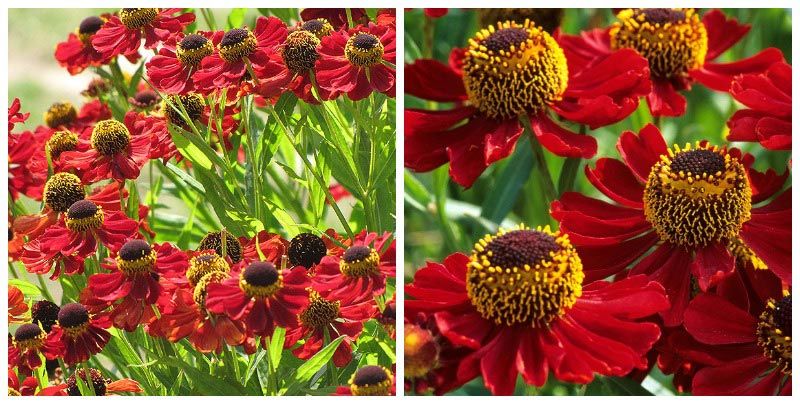
Hybrid (Helenium x hybridum) is a composite species, the original of which is autumn.
| Variety | Description | Flowers/Blooming Time |
| Rubinzwerg | Quite popular, 65 cm. |
Reddish. At the end of July. |
| Cockade | Up to 1.2 m. |
The tubular flowers are brownish-yellow, the ligulate flowers are red with a brownish tint, the edges are yellow, but the flowers become redder towards the center. Diameter 4.5 cm. It lasts 6 weeks and starts in August. |
| Moerheim Beauty | A popular variety. Up to 1.2 m in height. |
When they open, they can be yellow, copper, red, golden, and then, as they open, they become brownish-red. July and November. |
Growing Helenium from Seeds: Step-by-Step Guide
Seed germination is low. This plant is best propagated by leaf rosettes or division.
- You can sow the seeds in the fall in the ground in a garden plot, or you can plant them in a pot or box in the spring, but be sure to stratify them (keep the seeds in a humid environment for 2 weeks in the refrigerator), spread them over the surface, wrap them in a plastic bag and put them in the refrigerator for six weeks.
- Then remove the bag and transfer the box to a warm room up to +22 °C, placing it under artificial lighting.
- When three leaves appear, you can plant them.
Only specific species should be grown from seeds; those already growing in the garden are best propagated by dividing the bush; the maternal characteristics are not passed on to the grown seedlings through seeds.
Planting helenium seedlings in the ground
Plant the seedlings in late May or early June, when there's no longer any risk of nighttime frost. Neutral, well-drained soil is ideal, with some compost added. Dig a hole a spade deep, slightly larger than the roots.
First, place the seedlings in a container of water, roots only, then plant them 30 cm apart. Then, sprinkle the soil with peat. Young heleniums can be planted in either a shady or sunny location.
A plant grown from seeds will not bloom until the second year.
The nuances of caring for helenium
When the weather is hot, be sure to water the plant generously, but avoid stagnant water. Heleniums don't like drought or overwatering.
It's best to loosen the soil and remove weeds after watering. Also, feed the plant with mineral and organic fertilizers over the summer.
Effecton is a good choice in May, while Agricola-7 or Agricola-Fantasy are good during flowering. At the end of October, dissolve a tablespoon of potassium sulfate and superphosphate in a bucket and water thoroughly with this solution. Before budding, spray with Bud (10 g per bucket of water).
As the plant grows, it's best to divide the bush every three years in the spring. To make the helenium appear more bushy, pinch off the tips of the stems, and to promote flowering, remove wilting inflorescences.
Collecting seeds and preparing for winter
The fruits are harvested before the autumn rains begin. If the tubular flowers have turned black and the ray florets have darkened, the seeds are ripe. It's best to plant store-bought seeds; those collected from flowering plants in the garden won't replicate the parent variety's characteristics.
For the winter, plants are cut back to 15 cm from the ground, sprinkled with peat and covered with lurasil to protect them from frosty winters, whether snowy or snowless.
Transplanting and dividing the rhizome
Once every five years, the bush should be repotted and rejuvenated by dividing the rhizome. Carefully dig up the plant and pull it out, dividing it into several pieces with a shovel. Plant in 30 cm deep holes, adding humus first. Tamp the soil down and water thoroughly.
Sometimes helenium is divided by digging out the edges and cutting them with a shovel, leaving an untouched part in the center, which will begin to bloom and grow again in the spring.
Pests
Helenium will not get sick if you take proper care of it.
| Problem | Signs | Methods of elimination |
| Chrysanthemum nematodes | Leaves and stems turn brown and dry out. | Remove affected areas and sprinkle the soil with slaked lime or ground sulfur. It's best to water the plant regularly. |
Top.tomathouse.com recommends using helenium in landscape design.
The plant is planted near buildings, next to asters, in flower beds in the background, so it grows tall.
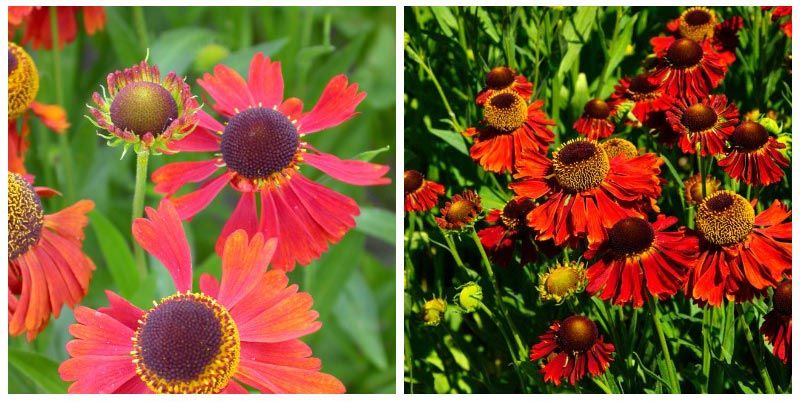
Cut for flower arrangements, stands well in a vase with water.