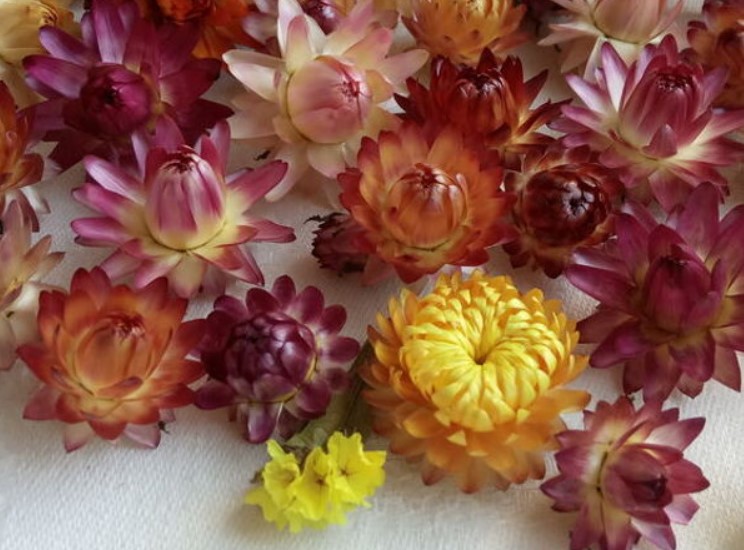
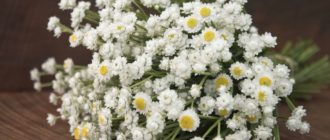
Helichrysum has many other names, including immortelle, everlasting flower, goldenrod, immortelle, and yellowwort. It is a genus of perennial (rarely annual) herbs, subshrubs, and shrubs belonging to the Asteraceae family. In their natural habitat, these plants grow in tropical and subtropical regions. The genus comprises over 450 species, but only about thirty are cultivated.
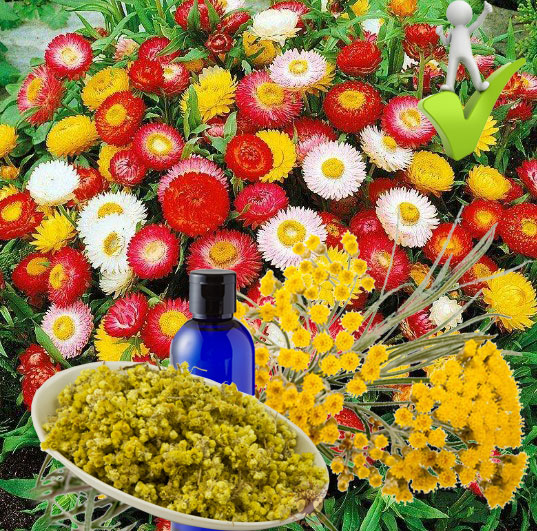
Content
- 1 Types and varieties of immortelle
- 2 Sowing immortelle
- 3 Features of growing helichrysum
- 4 Reproduction of immortelle
- 5 Medicinal properties of sandy immortelle
- 6 The benefits of immortelle for women
- 7 The benefits of immortelle for men
- 8 How to use immortelle
- 9 Contraindications for use
- 10 Reviews of helichrysum cultivation from gardeners
Types and varieties of immortelle
Let's take a closer look at the main species that gardeners grow in their plots.
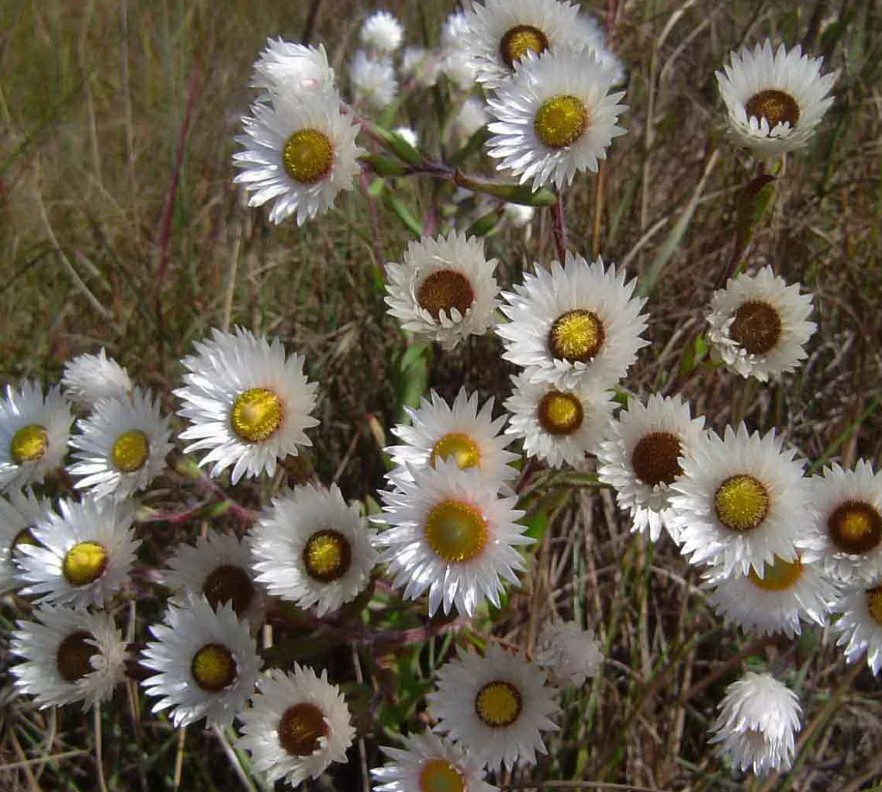
Araksinsky
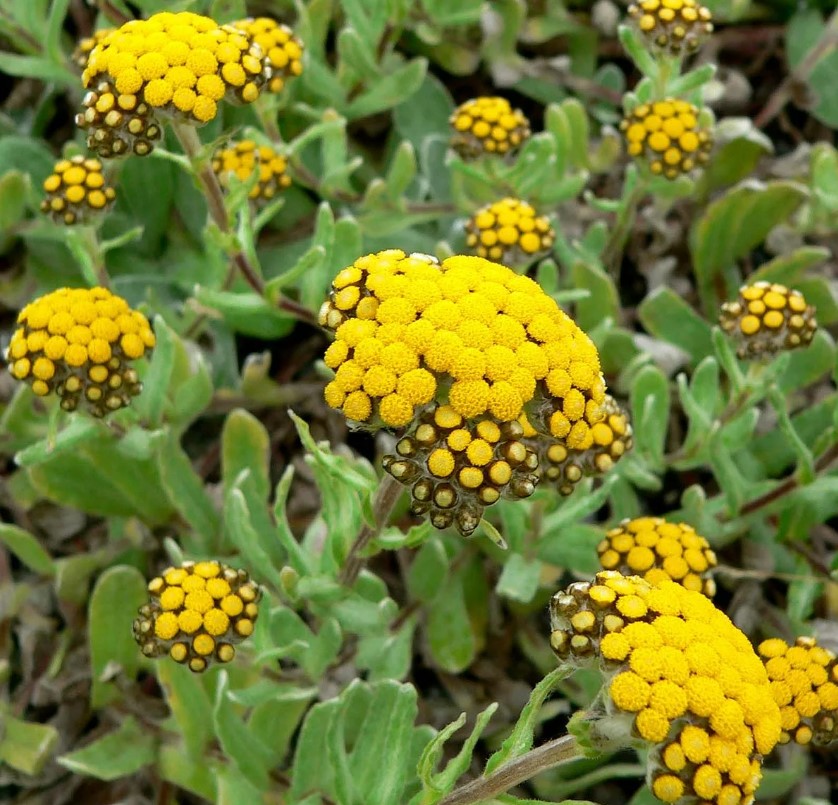
| Description | A perennial herb reaching 40 cm in height. The root is woody, multi-headed, and slender. Numerous stems arise from it. The leaves on flowering shoots are linear or lanceolate, pubescent, grayish-green, sessile, pointed, and sometimes with glandular hairs. Leaf shoots on sterile stems are white-tomentose, linear or narrowed spatulate. Inflorescences are small baskets, reaching no more than 0.5 cm in diameter, and can be elliptical, conical, or goblet-shaped. Inflorescences are located on short peduncles, gathered in loose, or less commonly, dense and highly branched, corymbs. Involucral leaflets are present in large numbers – 40-45. They can be white with a green stripe or yellowish. The outer surface is pubescent. They are arranged in a tile-like pattern of up to 7 rows. |
| Features of cultivation | To ensure the plant thrives, it needs regular watering. However, avoid overwatering, as excess moisture will cause root rot and death. The plant is very demanding when it comes to fertilizing. It should be applied at least three times per season: in early spring, during flowering, and after flowering. For the first feeding, use organic and complex mineral fertilizers; for subsequent feedings, use only minerals and mullein. To maintain the plant's decorative appearance after flowering, remove any blooms and wilted leaves. Regular weeding is also recommended. Weeding should be done manually, not with chemicals, to avoid damaging the root system. The plant will demonstrate good resistance to infections and insect pests. However, preventative treatments are a good idea. It is recommended to periodically inspect the Helichrysum for insects and signs of disease. |
| Application | Cut flowers are used to create summer and winter bouquets and ikebana arrangements. Even when dried, they retain their shape perfectly.
The plant is also used in alternative medicine. Its composition gives it choleretic, cleansing, antibacterial, antispasmodic, anti-inflammatory, and antidiabetic properties. It is used as part of a comprehensive treatment for gallbladder and bile duct disorders, kidneys, and liver problems, as well as various types of allergies. Helichrysum has a general healing effect and stimulates the body's natural defenses. It is often recommended for gynecological conditions and gastrointestinal problems. For stomach upset, steep the herb in boiling water for 60 minutes. After this time, strain the mixture through a sieve and drink 200 ml before meals. |
Sandy
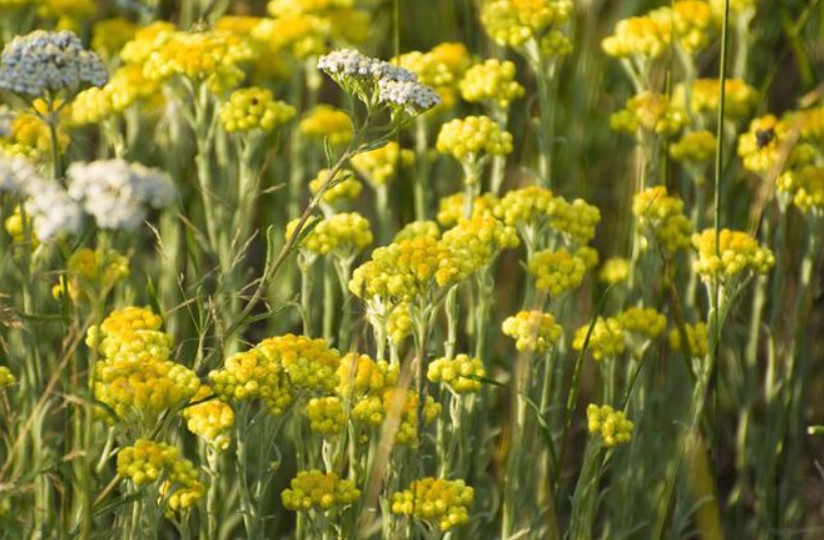
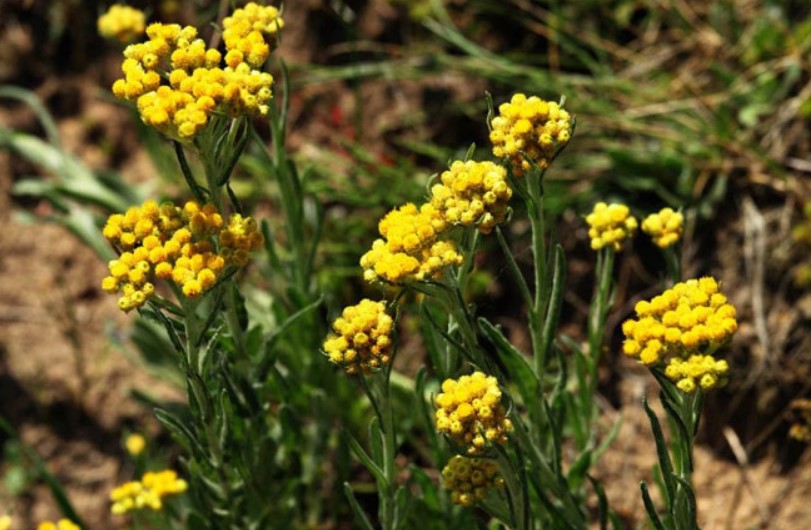
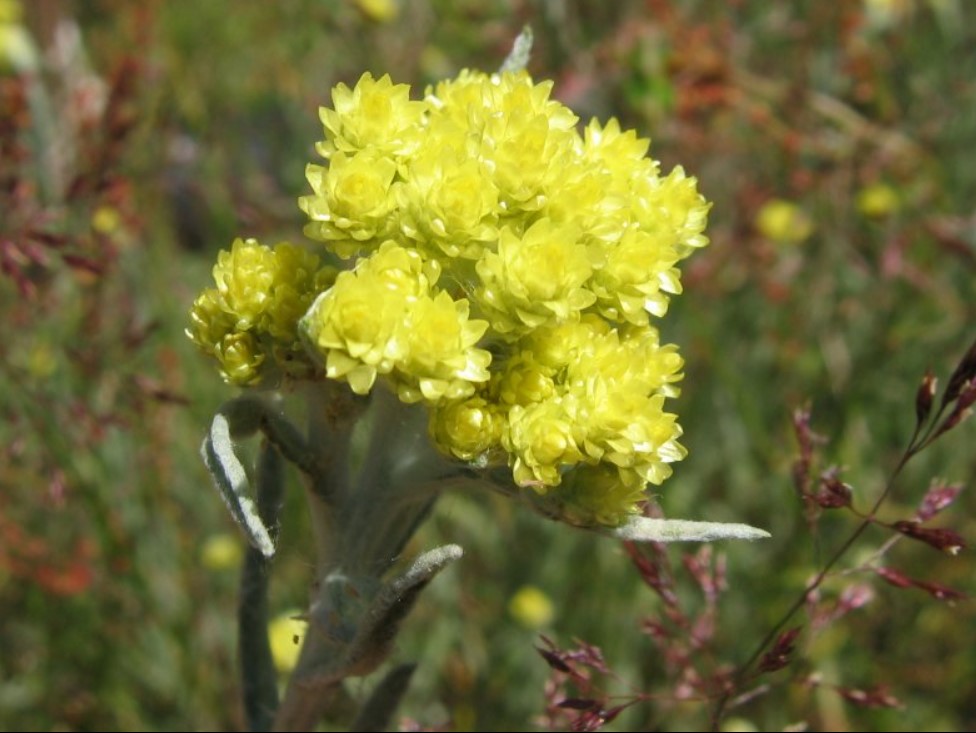
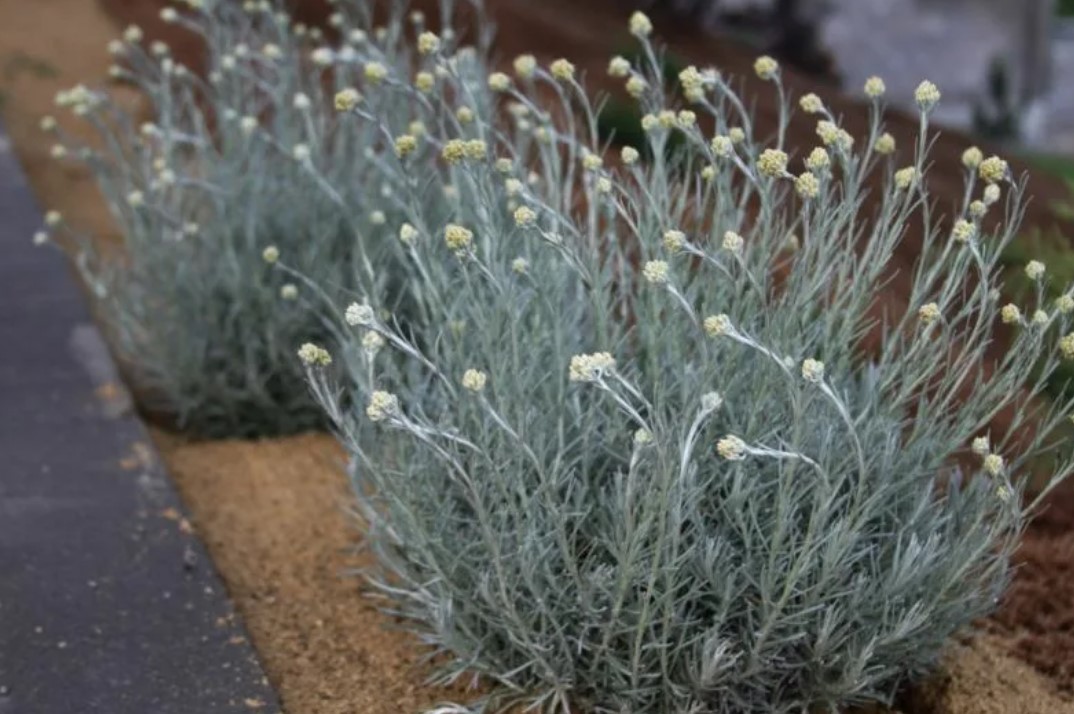
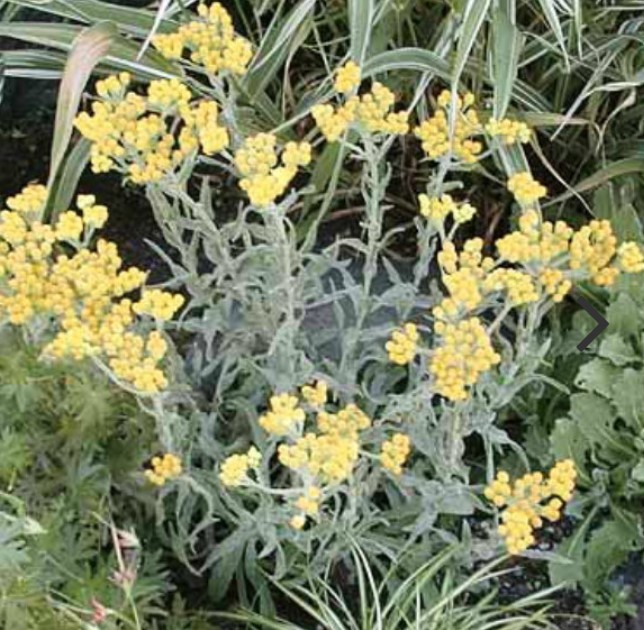
| Description | The rhizome is woody and dark brown. Unbranched stems grow from it, reaching a height of 15-30 cm, sometimes reaching as much as 60 cm. If lateral shoots appear, they will not bear fruit. The apical leaf blades are alternate, up to 60 mm long. The basal leaves are spatulate-linear or obovate. The middle and upper leaf blades are sessile, linear, or linear-lanceolate. The plant has a silvery sheen due to the white felt-like pubescence on the leaves and stems. At the top are spherical yellow, or occasionally orange, inflorescences, grouped into corymbose panicles of 10-30. The bracts range in color from bright yellow to reddish, and are either stiff or rustling. After flowering, drupes form. |
| Variety | Golden - has larger inflorescences.
|
| Features of cultivation | For good growth and flowering, plant in a sunny spot. It prefers light, sandy soil (hence the name) with good drainage. It does not tolerate overwatering.
Propagation by division is preferred. The division quickly adapts to a new location. It is recommended to repot a mature bush every 3-4 years, removing the basal rosettes. |
| Application | The immortelle is grown as an ornamental plant, reaching its peak beauty in June and July. It blooms during this period. However, its attractive foliage maintains its decorative appeal from spring to fall.
The plant looks beautiful in rock gardens and rockeries against a backdrop of small stones. It can also be planted in containers to decorate balconies and terraces. Helichrysum is often planted along soft-surfaced paths. It can be planted in the foreground of a Moorish lawn or in mixed borders. Helichrysum arenarium is also used for medicinal purposes. It has hemostatic, diuretic, choleretic, analgesic, tonic, disinfectant, and anthelmintic properties. In alternative medicine, the flowers and leaves are used to treat erectile dysfunction. Infusions and decoctions are prepared from the plant. The raw material for these is harvested at the beginning of flowering. Due to its unique chemical composition, helichrysum is a natural antibiotic, effective against bacterial blight in cultivated plants. It can be planted near them to prevent this disease. |
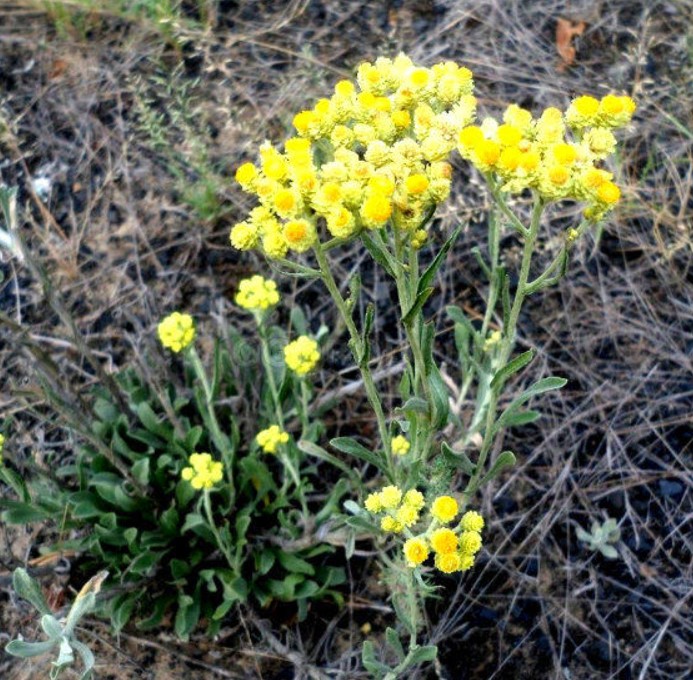
Photo gallery of Helichrysum arenarium in the landscape
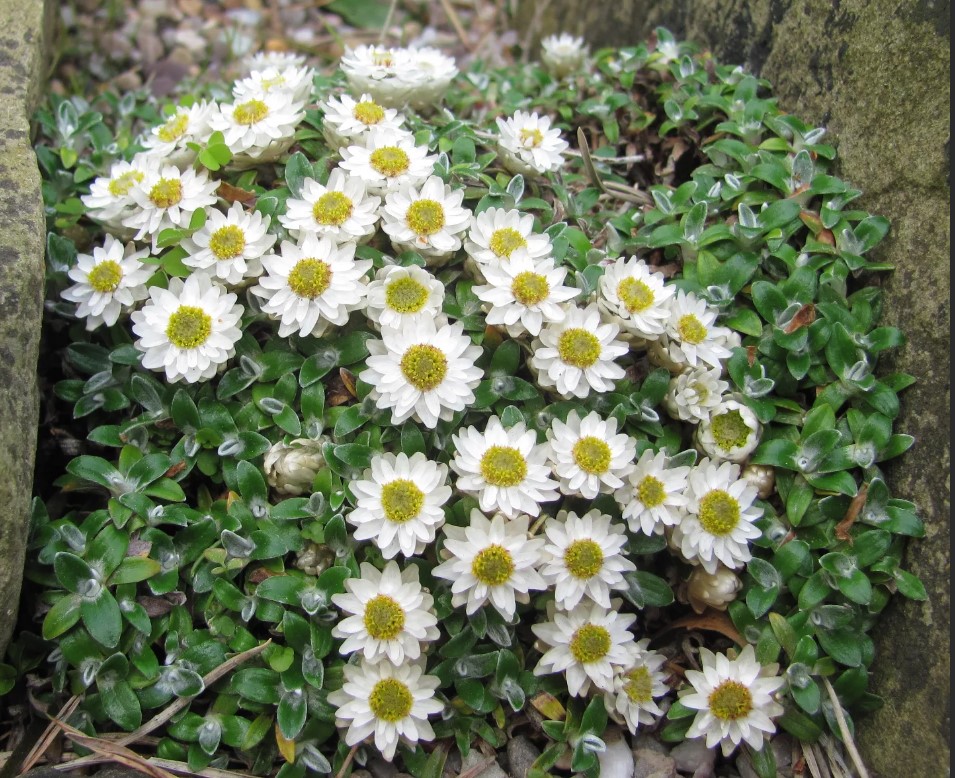
Daisy-flowered
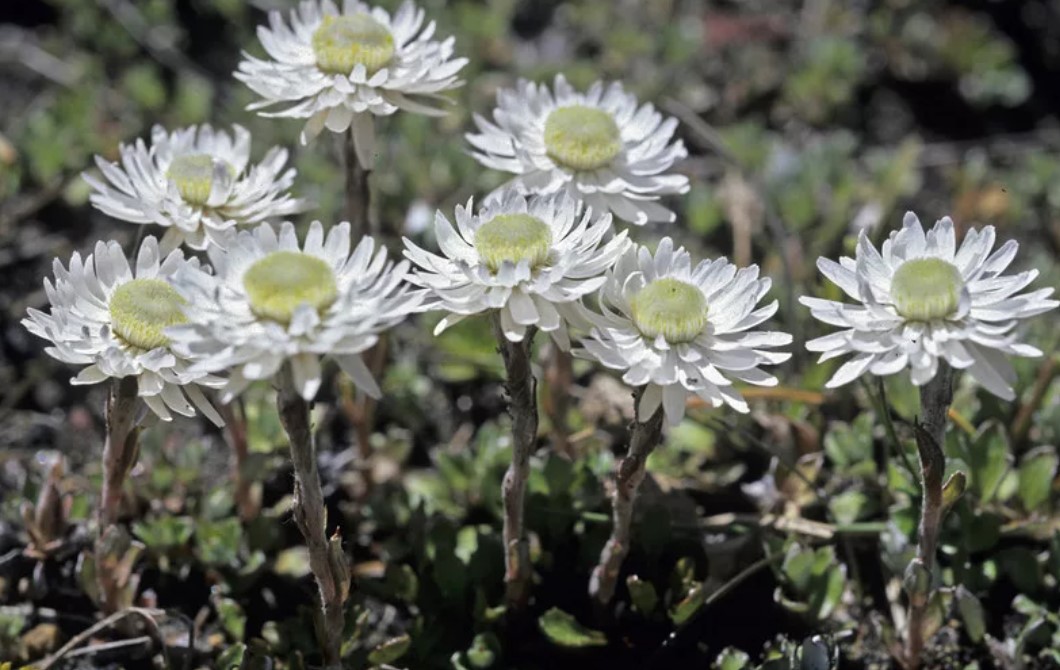
| Description | When young, the stem is lightly pubescent. Later, it becomes smooth and reddish-brown. It reaches 15 cm in height and 60 cm in width. The leaf blades are obovate, no more than 10 mm long. The inflorescences are capitate, up to 30 mm in circumference, snow-white, solitary, and resemble daisies. |
| Features of cultivation | It tolerates temperatures down to -15°C. If covered for the winter, it can be grown in the central part of our country. The most important thing is to avoid stagnant moisture. It's best to plant it in raised beds or on a terrace. This will help prevent overwatering. |
| Application | It is grown in gardens as an ornamental plant. When planted densely and trimmed regularly, it can be used as a border plant. It is suitable for gravel gardens. |
Photo gallery of Helichrysum marguerite in the landscape
Bract
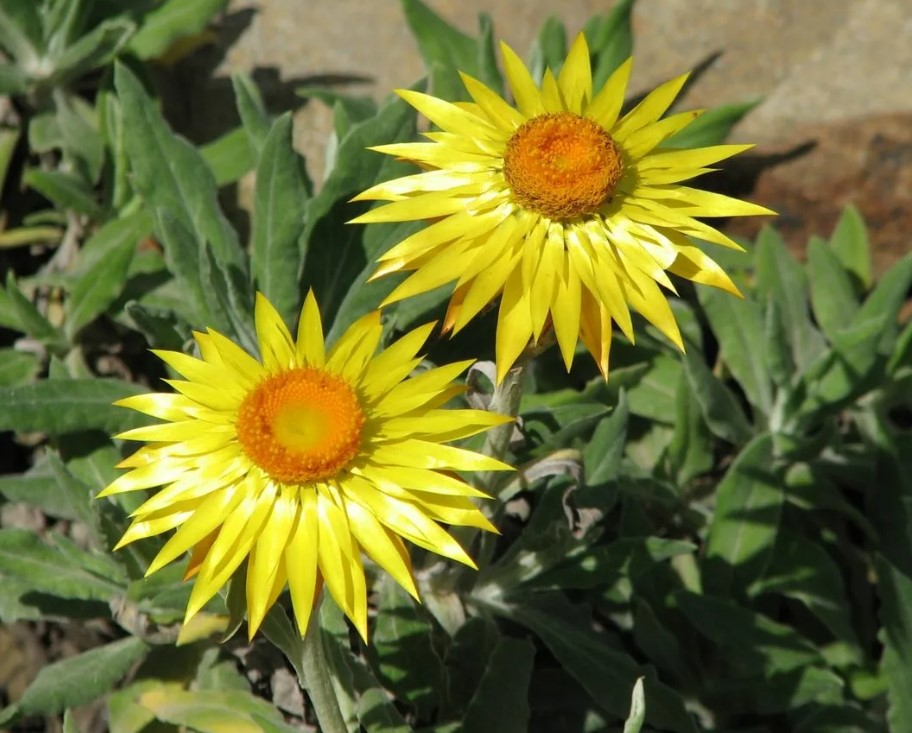
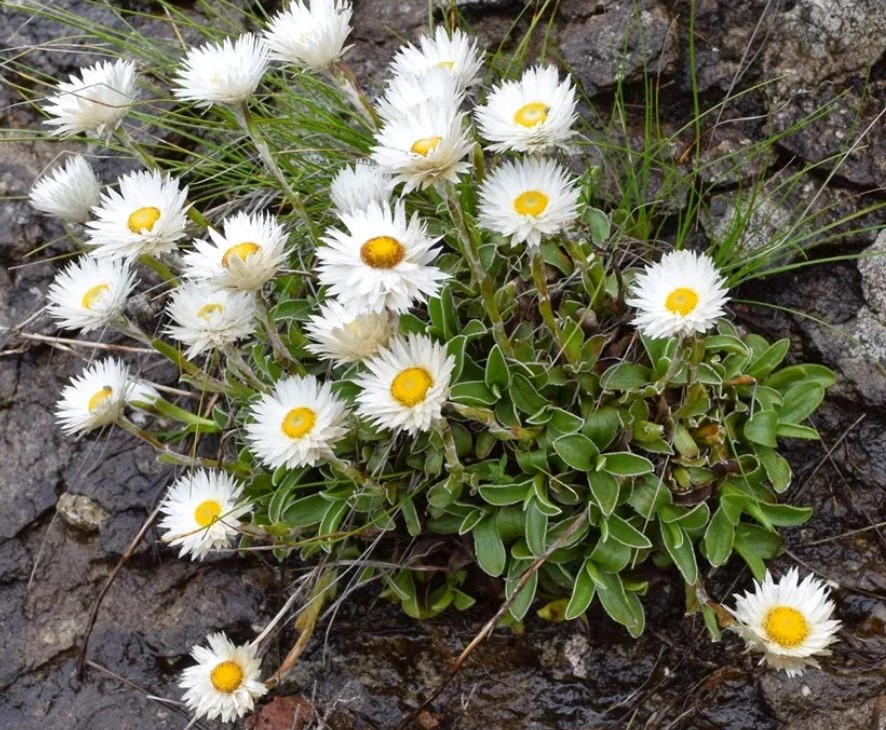
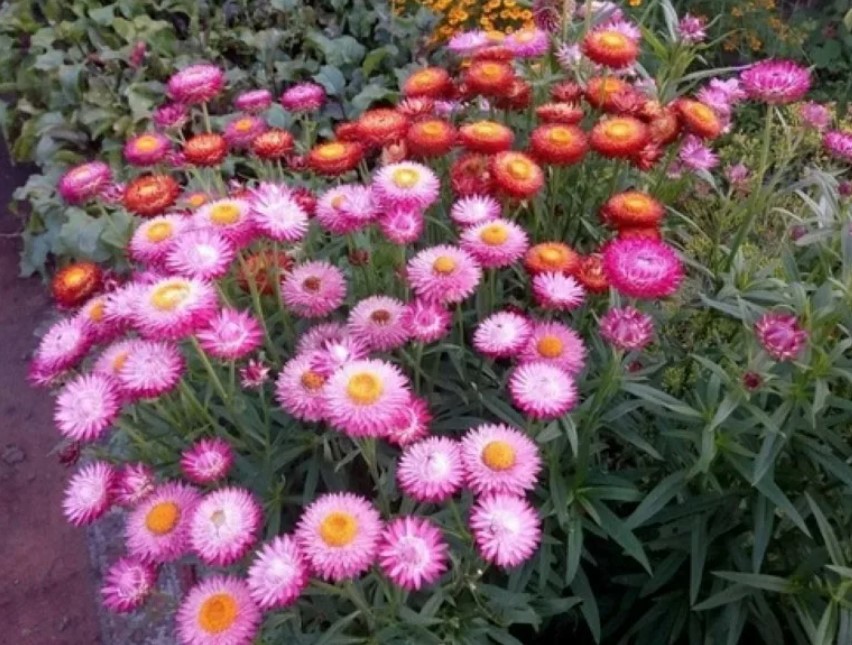
| Description | An erect perennial, rarely an annual plant. Sometimes branched at the base. Typically, it reaches 20-80 cm in height, but in open areas it may have the appearance of a subshrub. The shoots are rough and covered with hairs (more durable than those of other species). The leaves are lanceolate, elliptical, or oblong. They are 1.5-10 cm long and 0.5-2 cm wide and also covered with hairs. Yellow flower heads are located on high shoots above the foliage. They are 3-7 cm in diameter. Sometimes several headlets can form on a single stem. |
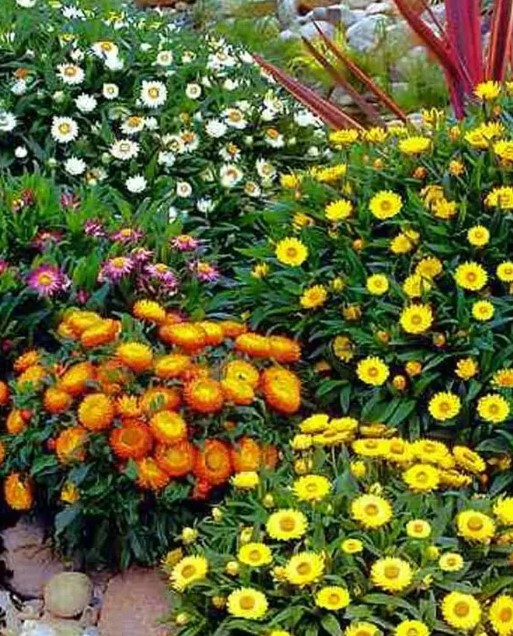
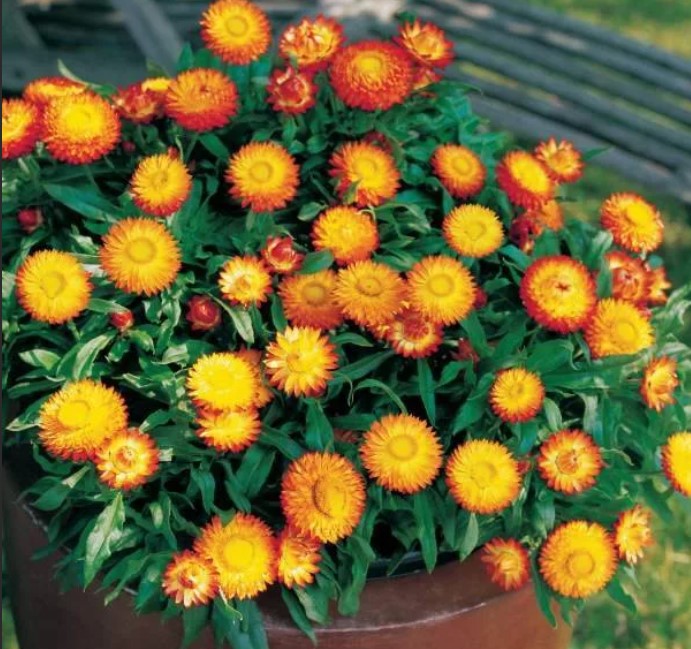
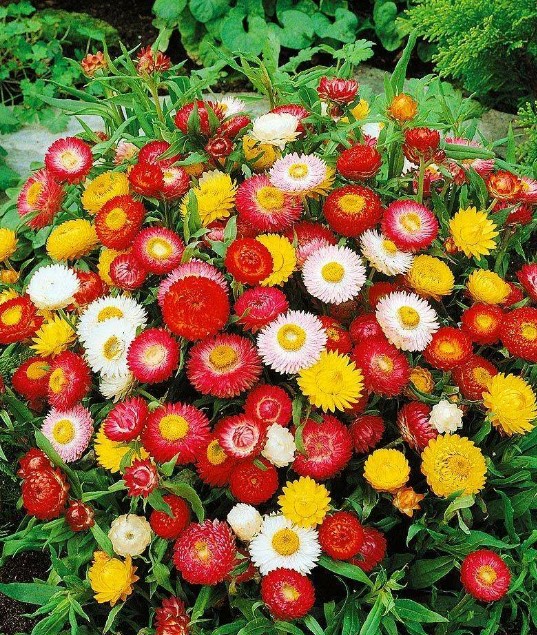
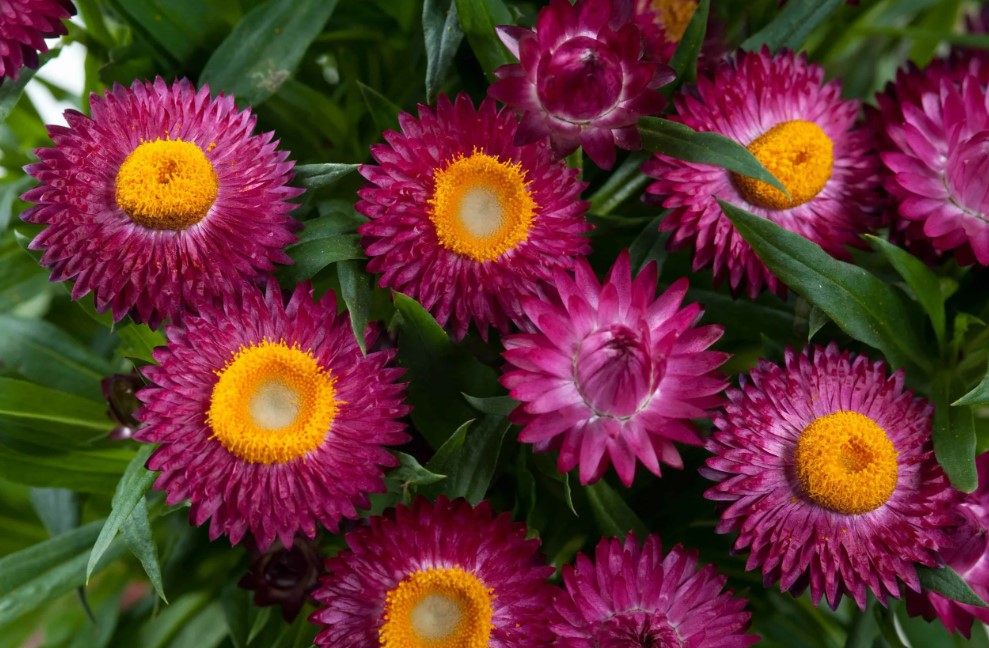
| Varieties | Varieties come in a variety of colors: white, bronze, purple, pink, red, and others. These are the most interesting. Copper Red is a red flower with a bright yellow center.
Salmon Rose - flowers are delicate salmon-colored.
Strawburst Yellow - with yellow flowers with an orange center. Golden Yellow - bright orange and yellow flowers.
Flobrafla - orange-colored bracts that turn yellow towards the orange center. Double White - with white flowers with a yellow center.
|
| Features of cultivation | This species can be grown from both seeds and cuttings. The stems should be pruned before wintering. This will allow new fruiting shoots to grow in the spring, resulting in more flowers.
When grown from seed, seeds germinate in 3-20 days, but require preliminary treatment. This species prefers acidic soil with a pH of 5.5-6.3, low phosphorus content, and good aeration. The plant is sensitive to iron deficiency, which can be identified by yellowing of young leaves. However, their veins remain green. |
| Application | The plant is often grown in pots and containers. It makes an excellent pioneer plant in the garden until other plants have established themselves. Low-growing varieties are suitable for hanging baskets and borders. During flowering, immortelle attracts butterflies to the garden.
The inflorescences are beautiful in bouquets. Even when dried, they retain their shape for several years. |
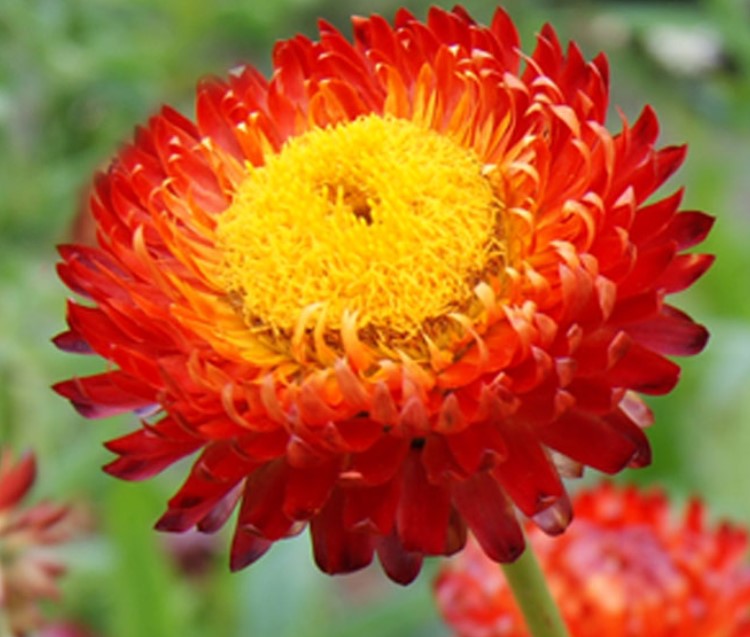
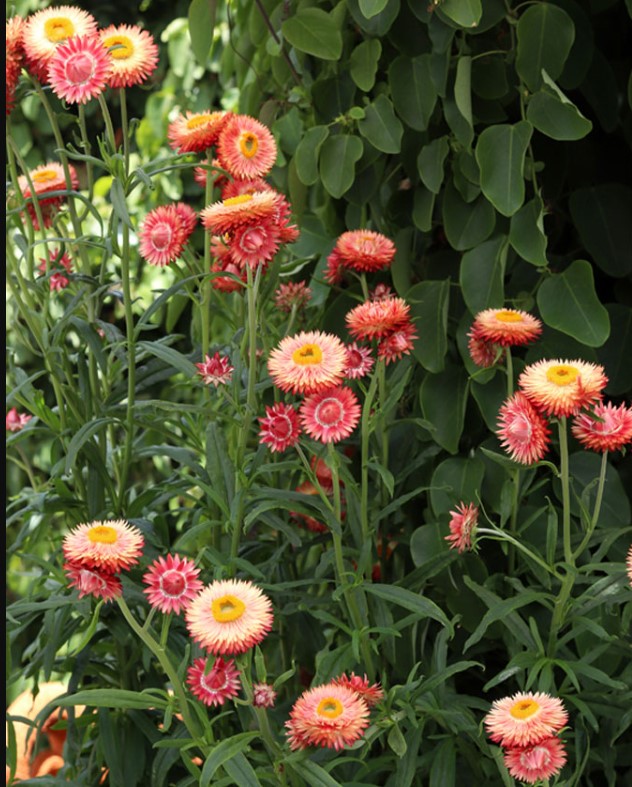
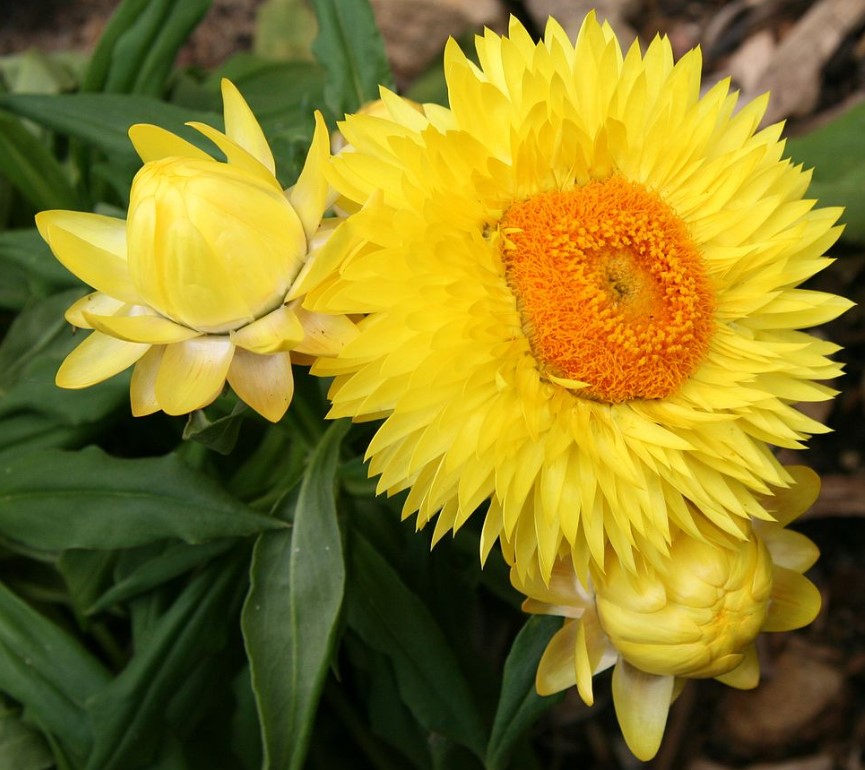
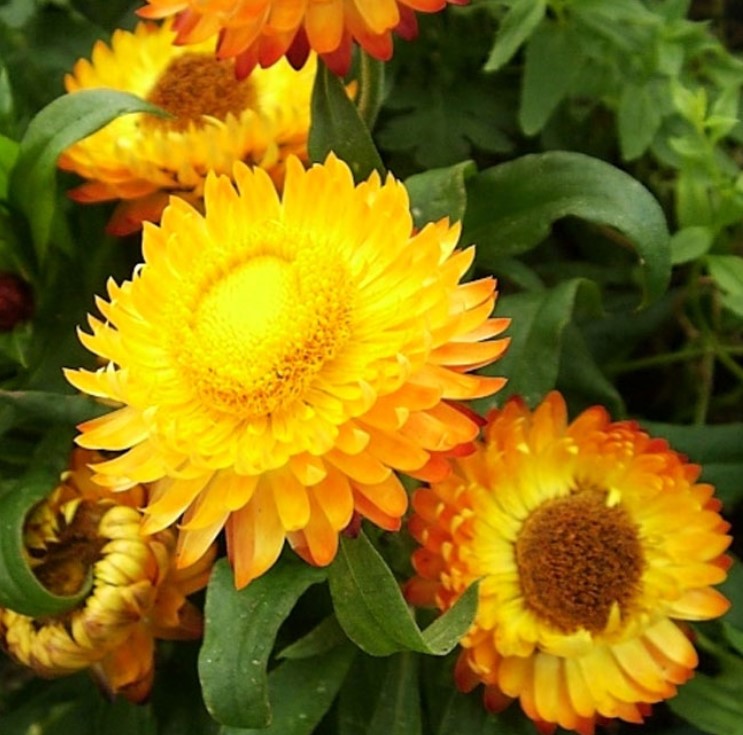
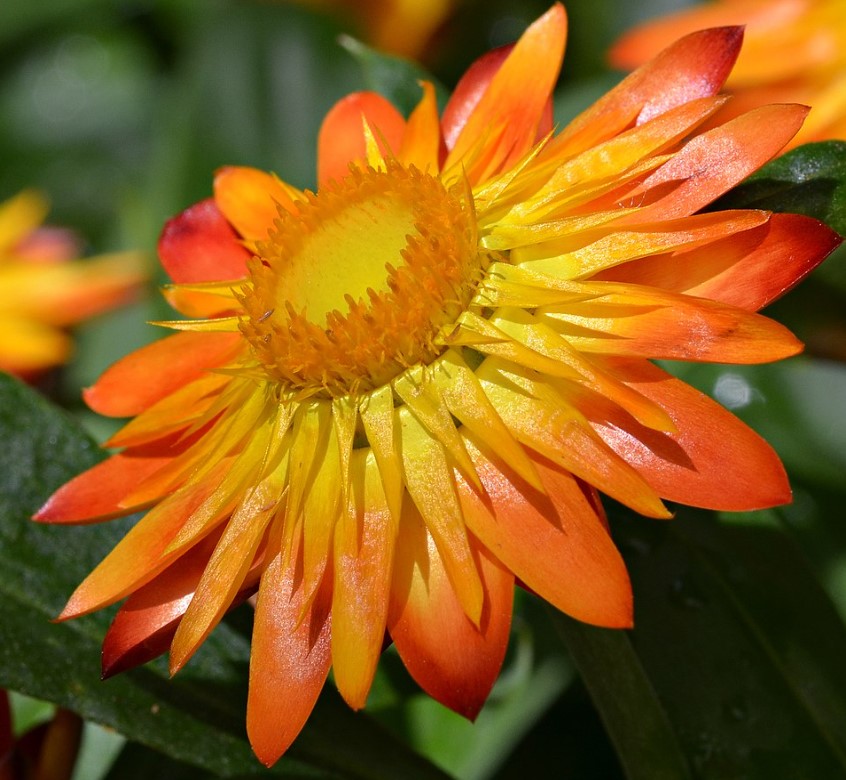
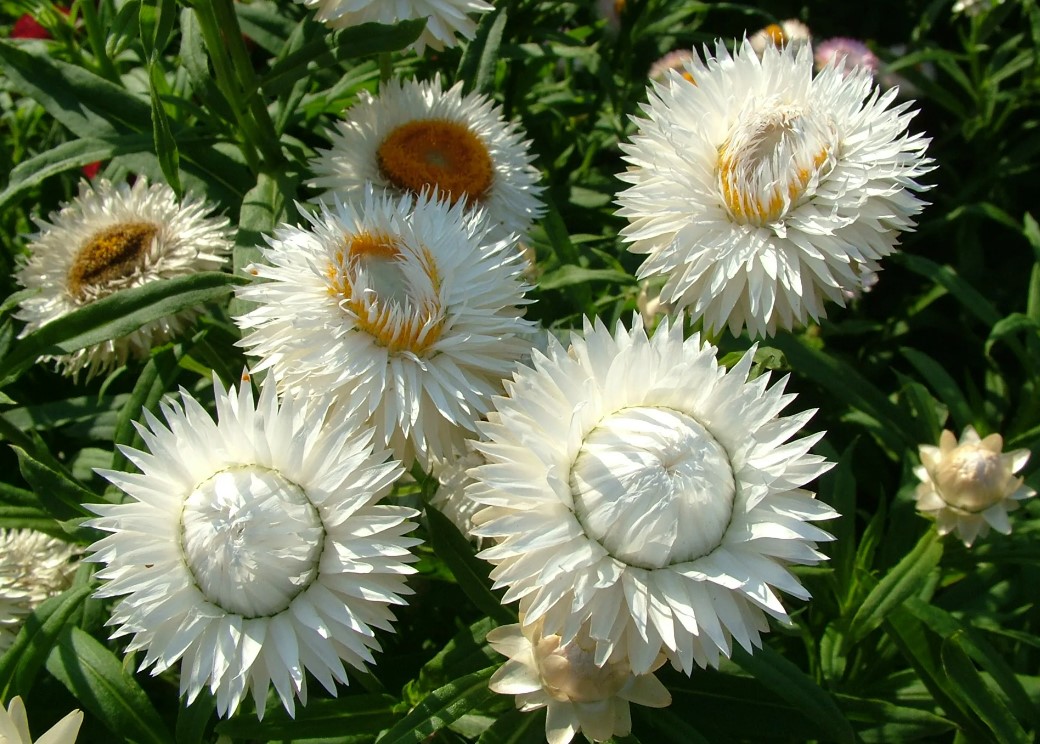
Photo gallery of Helichrysum bracteatum in the landscape
Italian
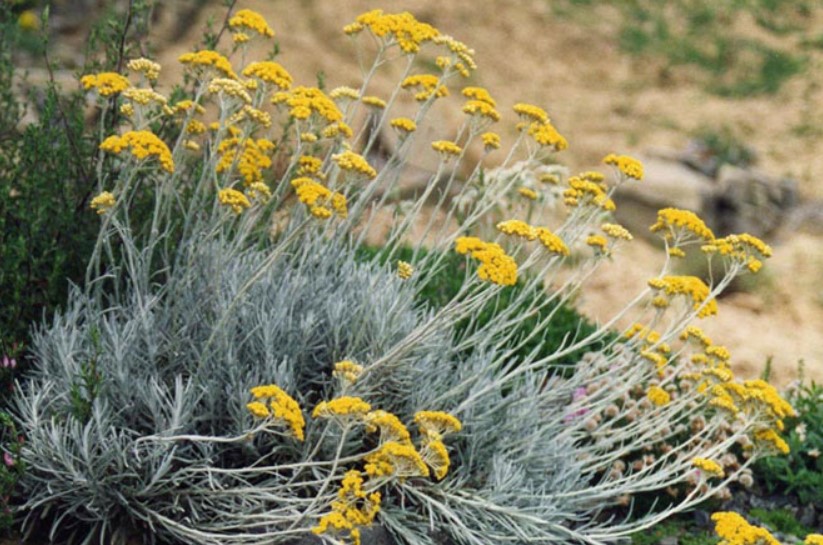
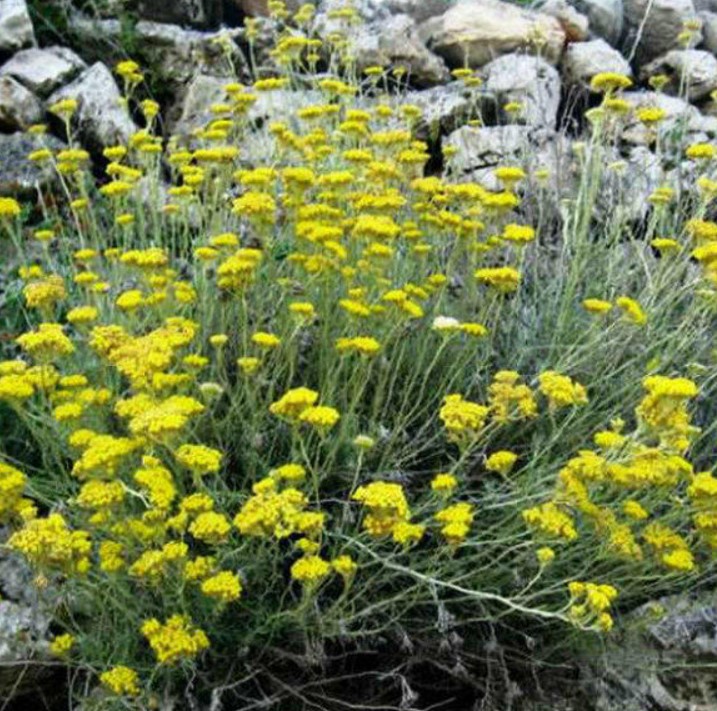
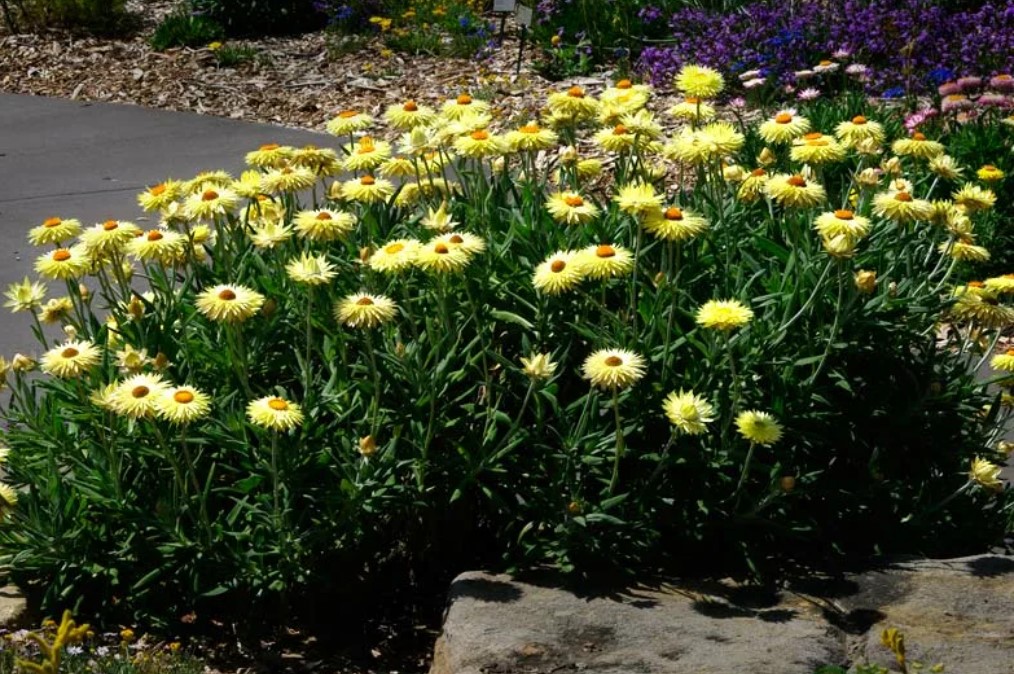
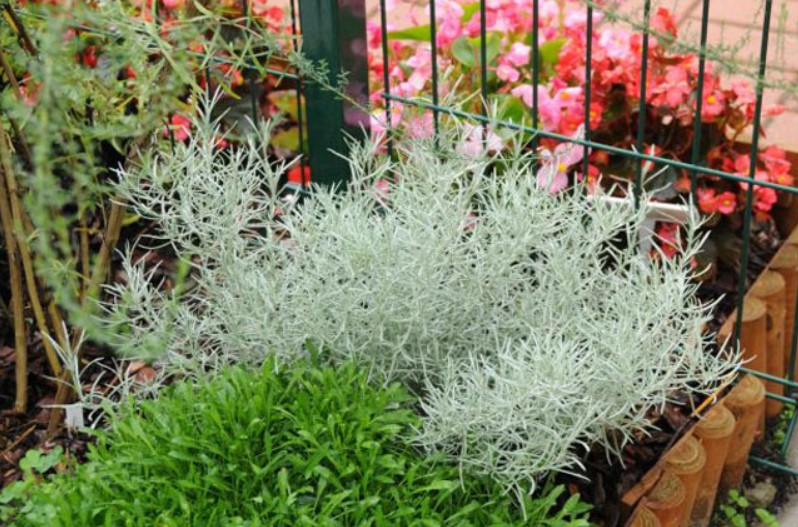
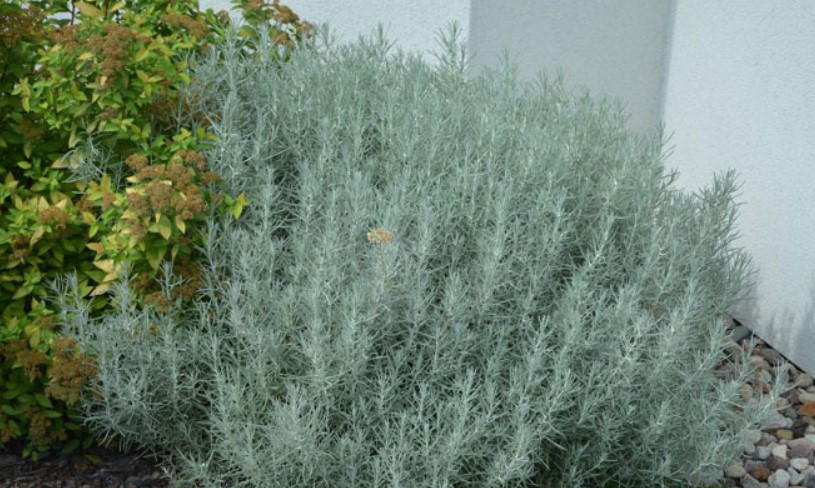
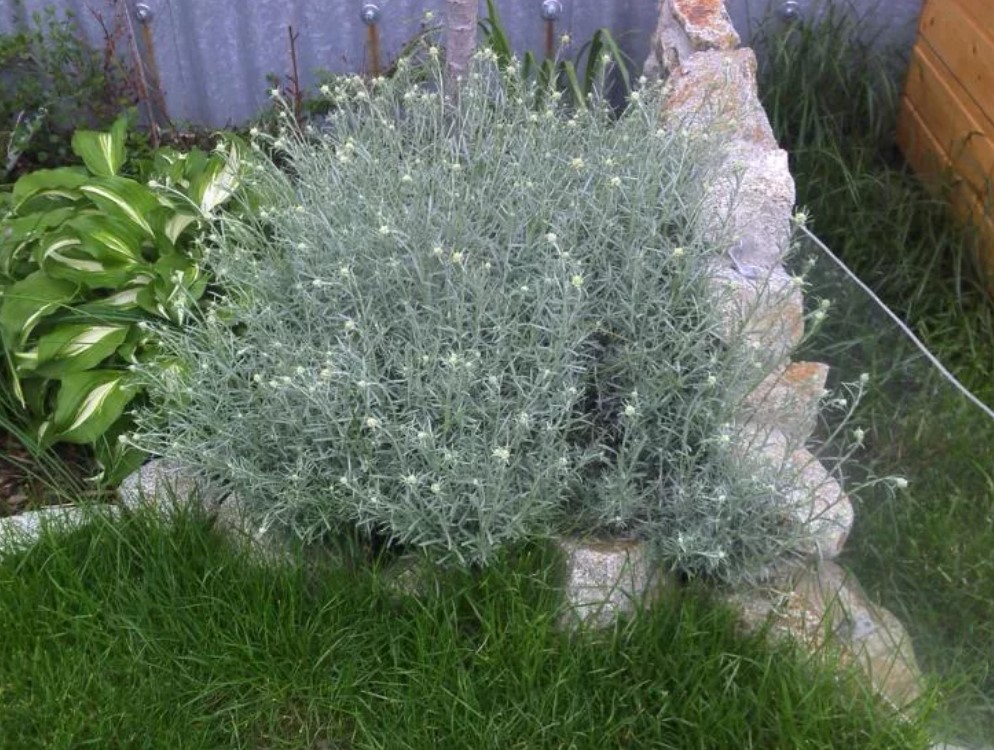
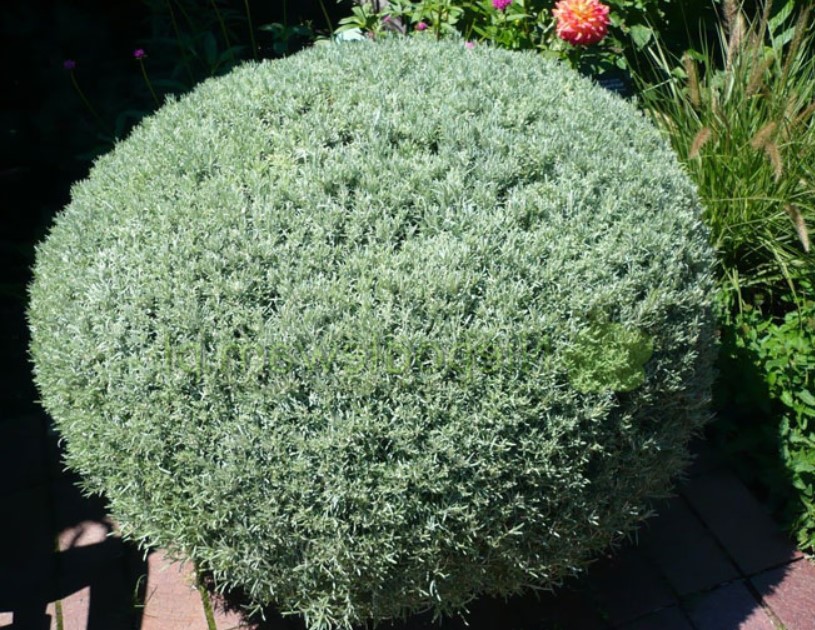
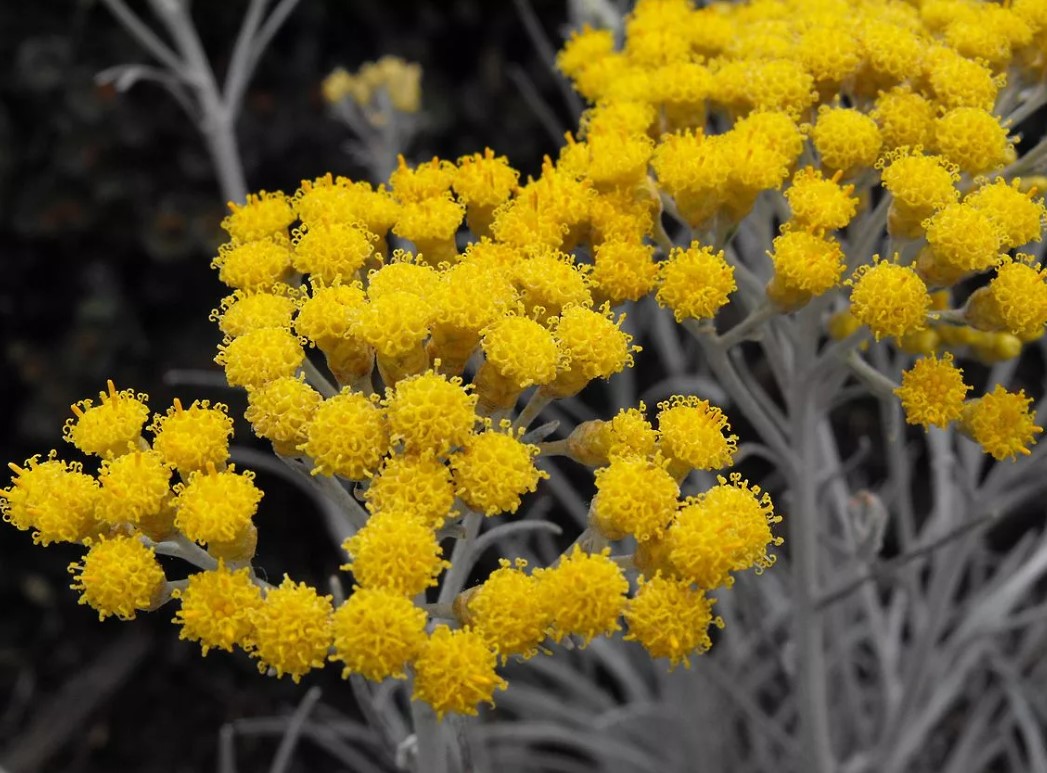
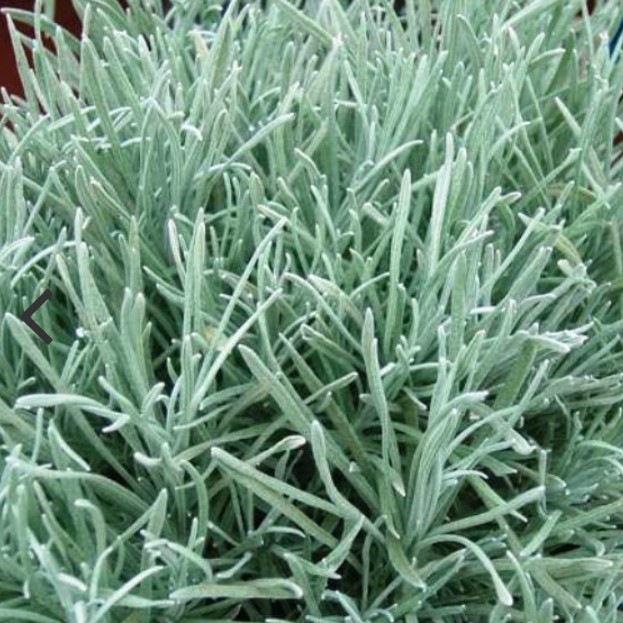
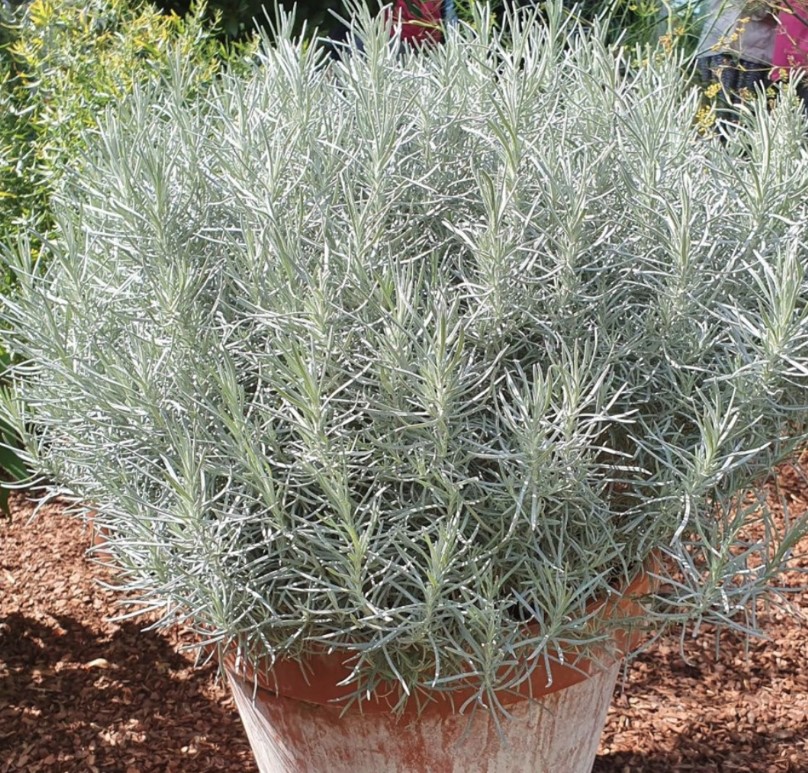
| Description | The leaves and stems are pubescent, giving them a silvery sheen. It reaches 40 cm in height and 60 cm in width. The inflorescences are spherical, yellow, and have a tart honey aroma. |
| Varieties | Silvery White is a small plant about 40 cm tall, with thin, silvery-white leaves that exude a strong scent. It thrives in warmth and requires shelter. It grows in rocky, sandy soil in full sun.
|
| Features of cultivation | The plant thrives in warm conditions but can withstand temperatures down to -10°C. It tolerates drought well. It requires pruning during flowering and before wintering. Dividing the bush is necessary every 3-4 years. |
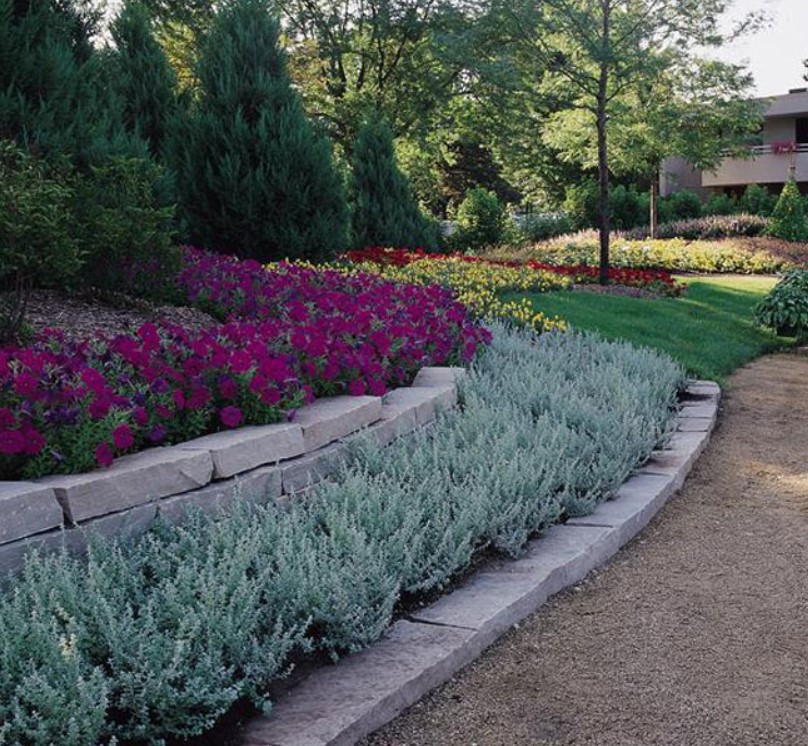
| Application | Looks great in Mediterranean-style mixed borders. It's also stunning in a herbaceous flowerbed. It also grows beautifully in pots. |
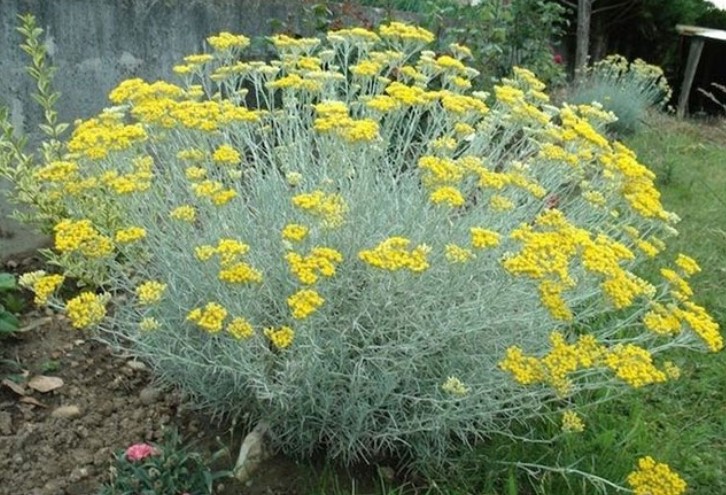
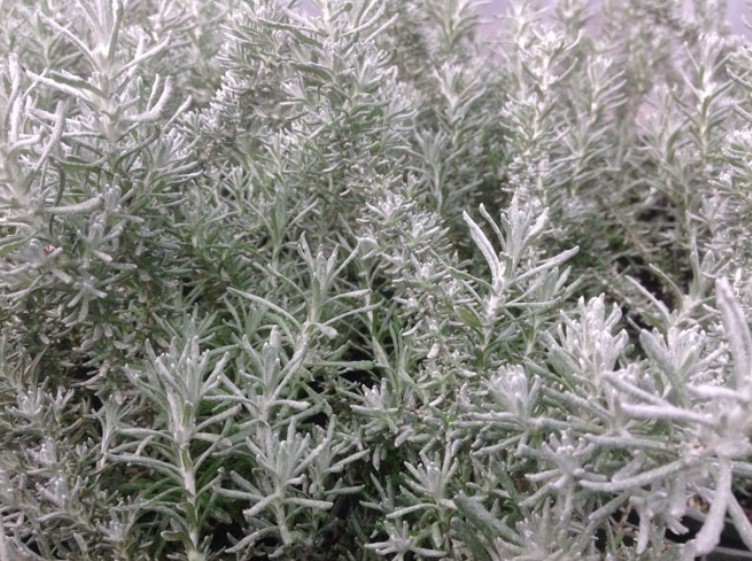
Photo gallery of Helichrysum italica in the landscape
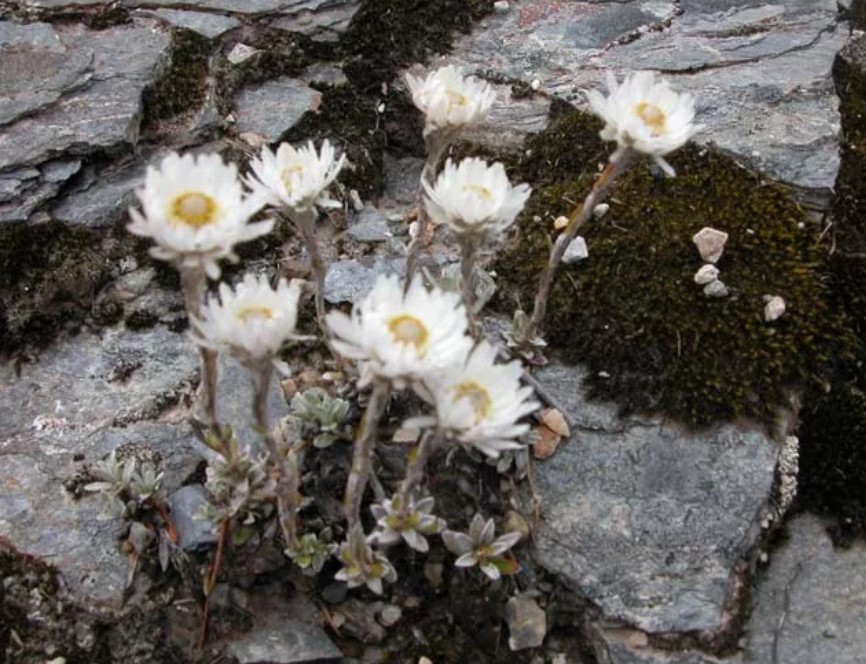
Milford's
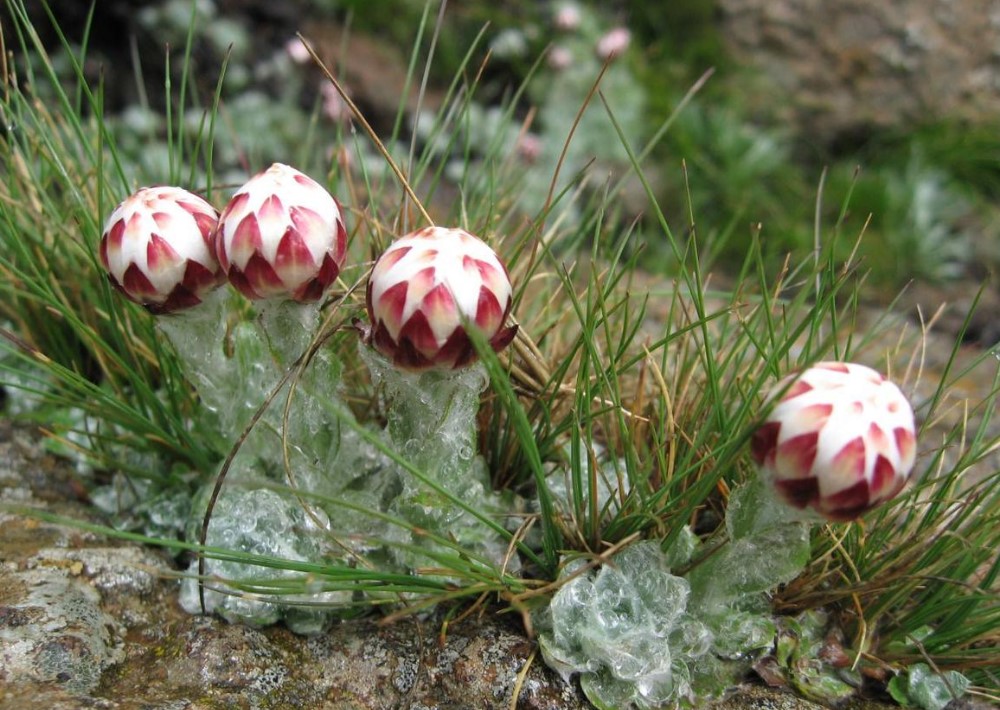
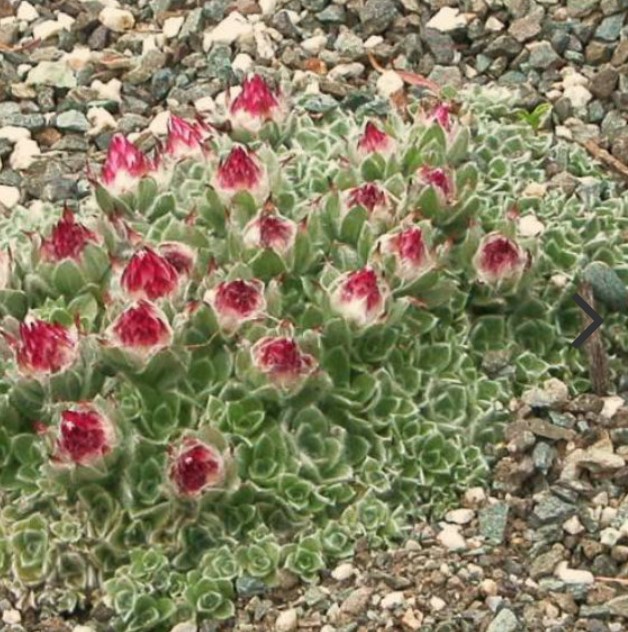
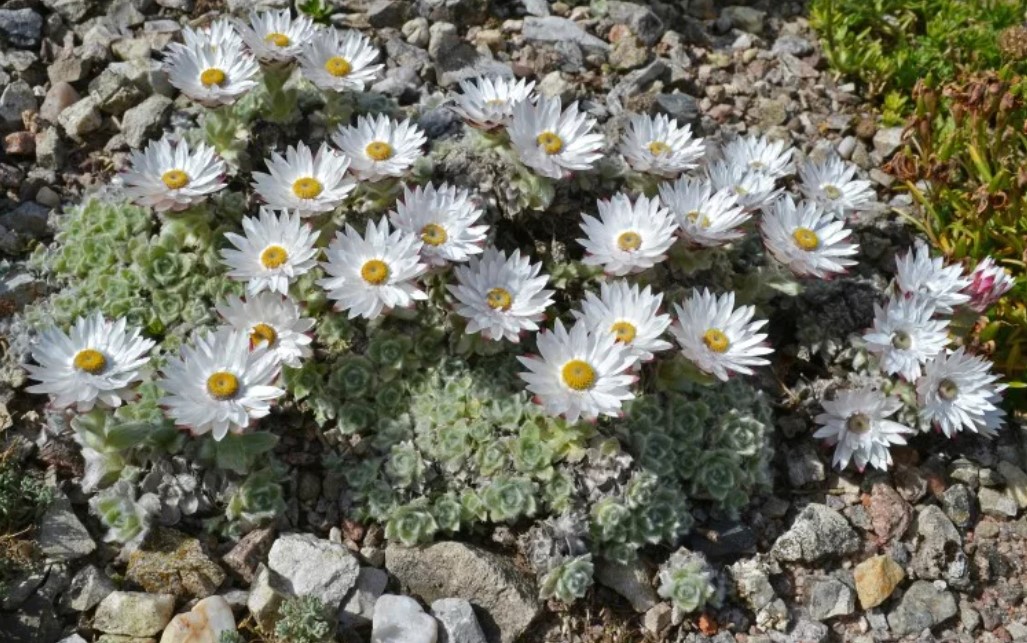
| Description | An evergreen perennial with a cushion-shaped form, 5-10 cm tall and 15-20 cm wide, it has rosette-shaped lateral shoots. The leaf blades are obovate, with a silvery sheen, and 1.5 cm long. The inflorescences are solitary. At the beginning of flowering, they are snow-white-pinkish, becoming almost white with age. The flowers reach 2.5-3 cm in circumference. Flowering begins with the arrival of spring. |
| Features of cultivation | Temperatures drop to -10°C are critical. Therefore, it is recommended for growing in the southern regions of Russia. However, even in this case, winter protection is required in the first year of planting. In other regions, it can also be grown if desired, but in pots, placed outdoors from spring to late fall. Please note that the plant does not tolerate overwatering. |
| Application | When growing the plant in a pot, it can be placed in a rock garden or in a more attractive wide container on a south-facing terrace. In the south, immortelle can be used in rock gardens and in open, sunny, dry areas as a groundcover. It is planted against a backdrop of agave, yucca, and dasylirium. |
Photo gallery of Helichrysum milfordiana in the landscape
Petiolate
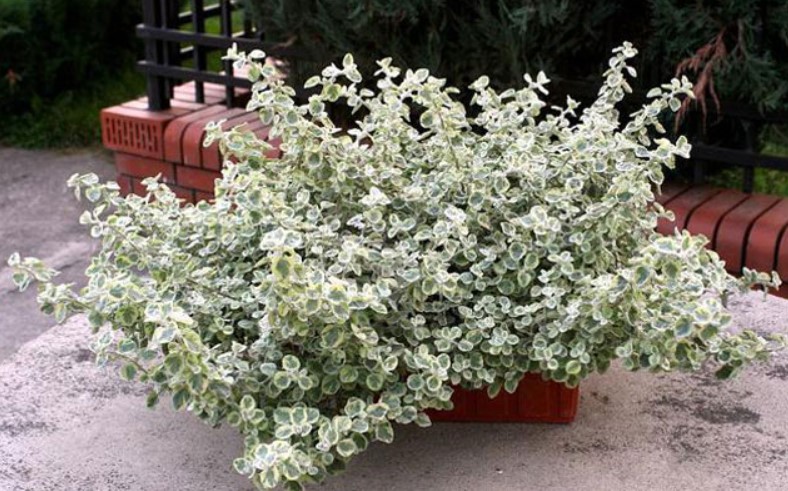
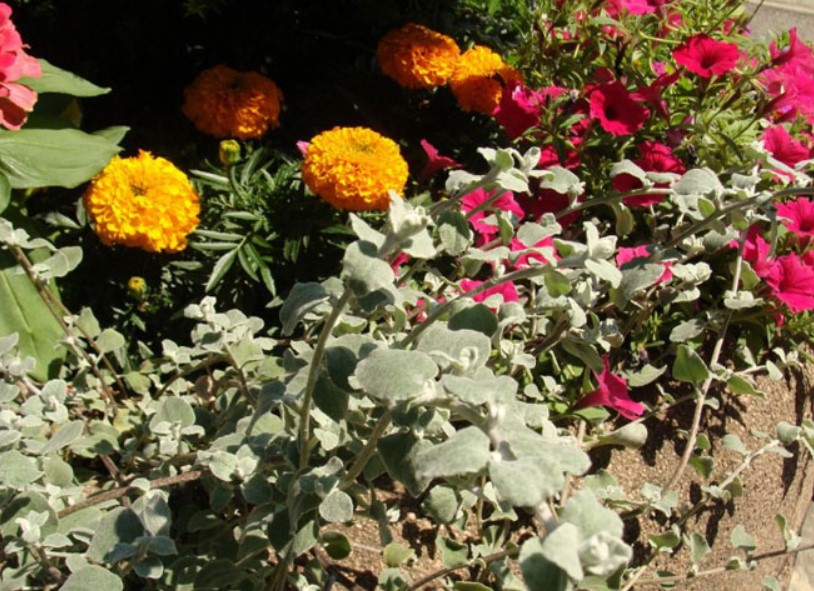
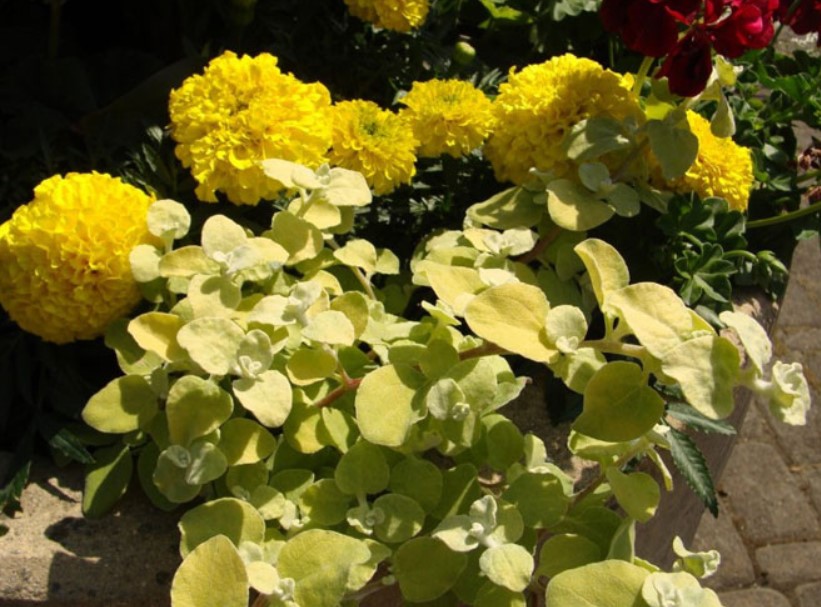
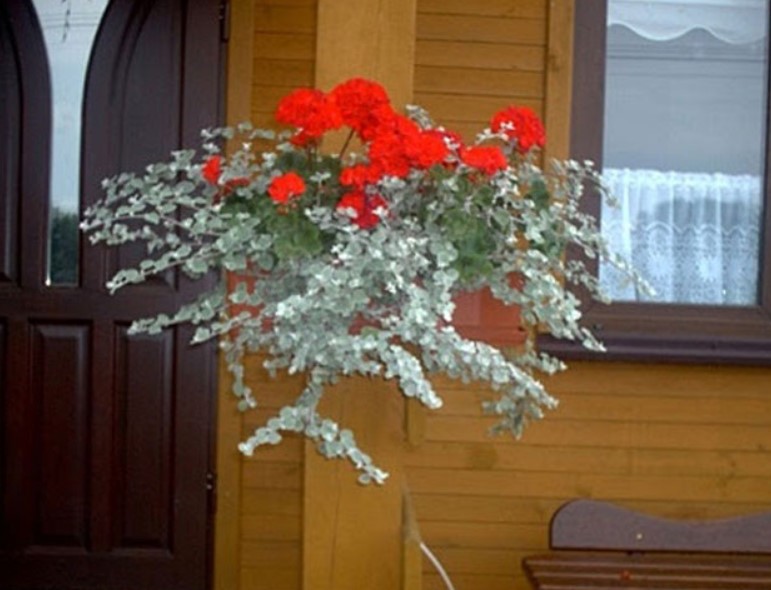
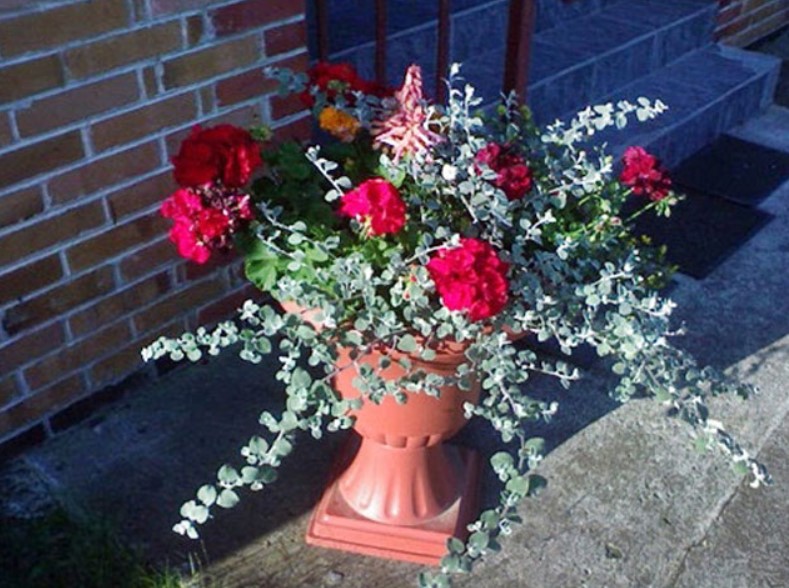
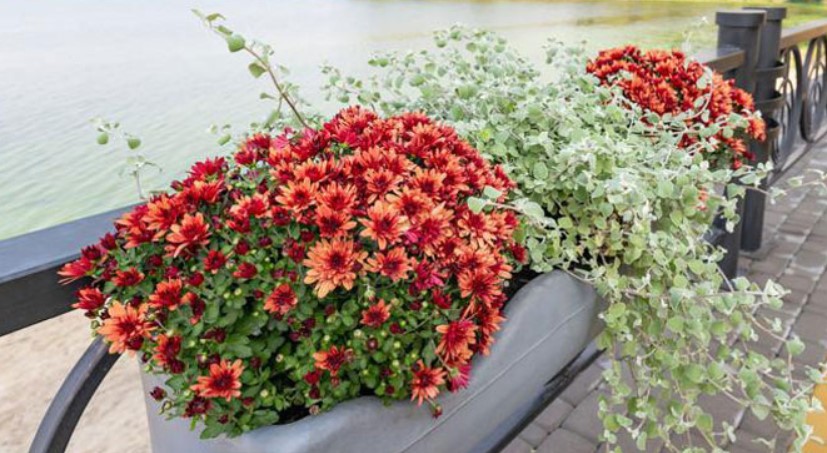
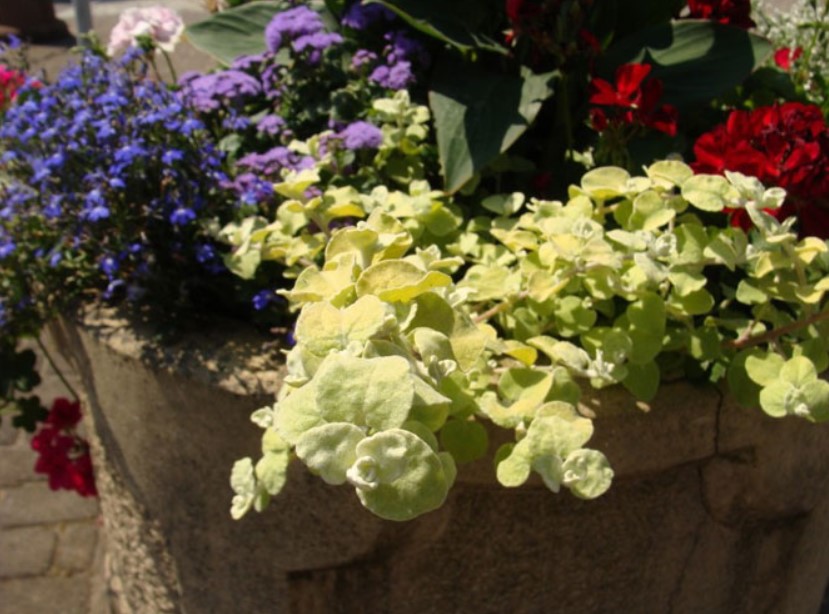
| Description | A perennial evergreen subshrub with a cushion-shaped habit. However, in Russia, it is grown as an annual. It reaches a height of 0.5 m and a width of up to 2 m. The leaf blades are heart-shaped, up to 3.5 cm long. Dense pubescence gives them a silvery sheen. The inflorescences are capitate, creamy, and inconspicuous. |
| Varieties | Silver - silver leaves.
|
| Features of cultivation | It thrives in both sun and shade. It requires good drainage. It tolerates drought well, but can die from overwatering. |
| Application | In southern Russia, it's grown as a groundcover or trailing plant. It pairs well with other drought-tolerant species, such as lavender, monarda, catnip, and so on. It tolerates pruning well, and a decorative appearance can be achieved by trimming the bush into a ball shape. However, note that this trimming should be done only with pruning shears. |
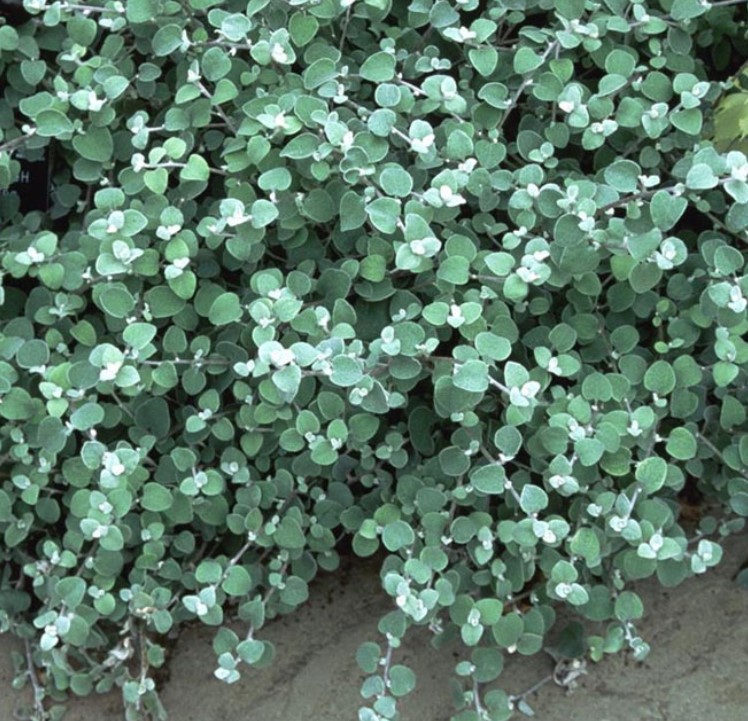
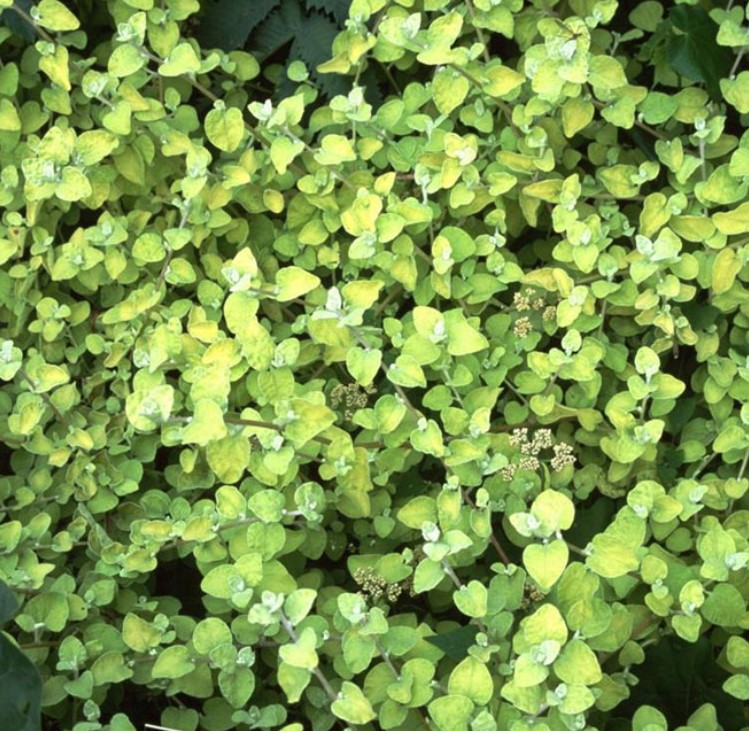
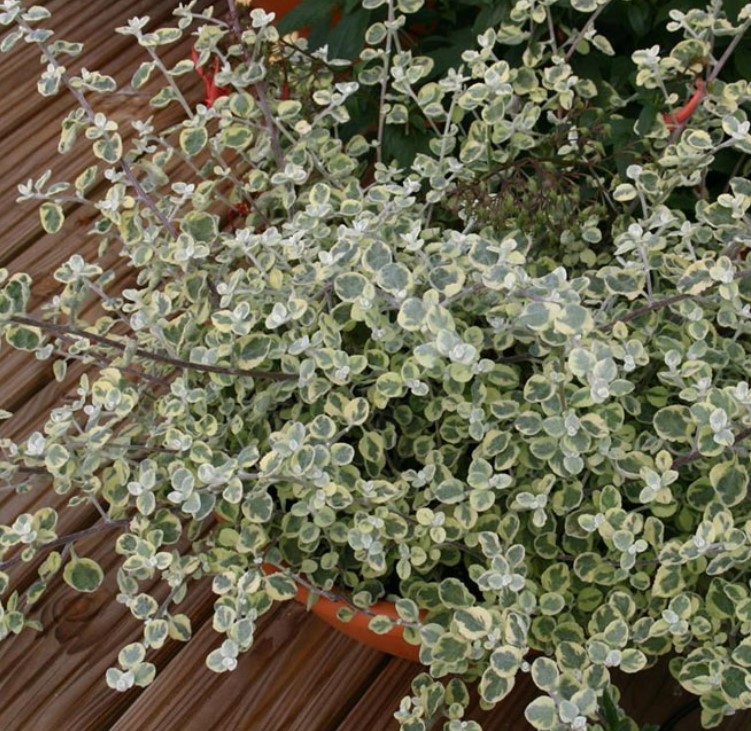
Photo gallery of helichrysum petiolate in the landscape
Tien Shan
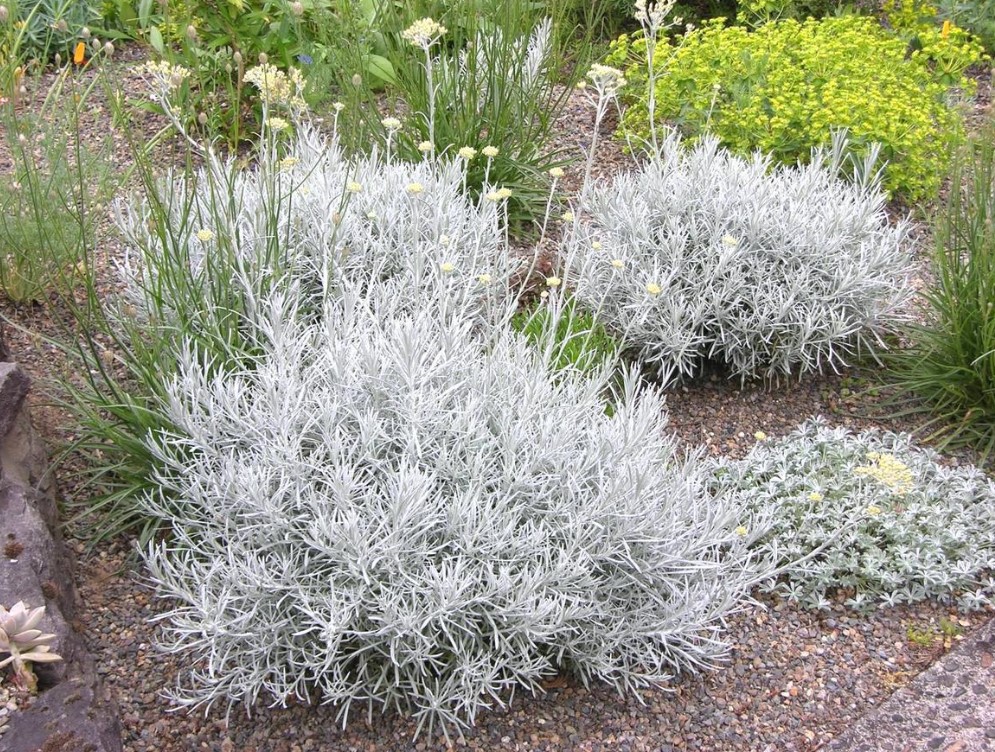
| Description | A cushion-shaped perennial, reaching 40 cm in width and height. The leaf blades are elongated-lanceolate, silvery, up to 10 cm long. The inflorescences are lemon-colored, up to 10 mm in circumference, collected in 8 cm corymbs. Flowering begins in early and ends in mid-summer. |
| Varieties | Icicles – intensely emerald leaves.
|
| Features of cultivation | It tolerates winter well in central Russia if shelter is provided. |
| Application | Looks great in sunny flowerbeds and containers. It makes an excellent backdrop for other drought-tolerant plants. Suitable for rockeries and mixed borders. |
Photo gallery of Helichrysum tiensis in the landscape
Sowing immortelle
The seeds of this plant can be sown either for seedlings or directly outdoors.
For seedlings
Immortelle seeds can be sown for seedlings using material from previous seasons, thanks to their good germination rate. A mixture of black peat and sand is used for sowing. Avoid pre-soaking the seeds to prevent them from rotting. Spread them on the soil surface and press them lightly into the soil.
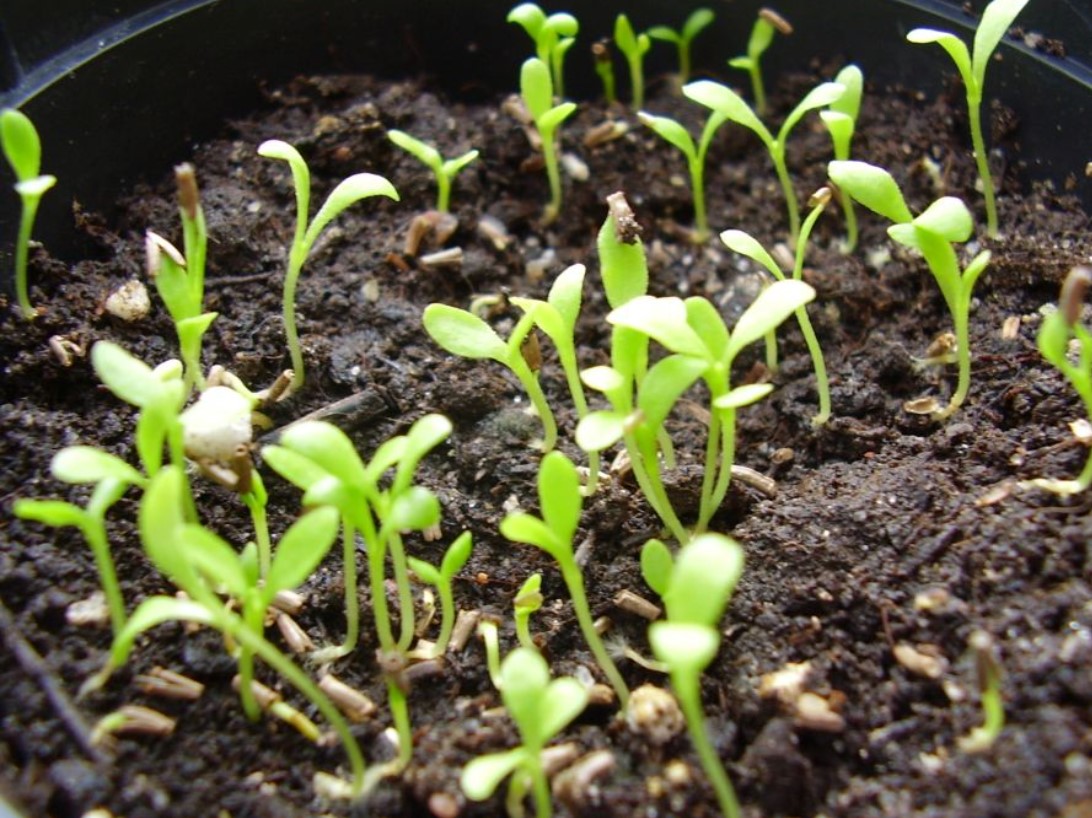
After 7-14 days, the first shoots will begin to appear. After the second true leaf forms, the plants are transplanted into small individual containers. Peat pots are preferred, as they can be used to transplant the seedlings to their permanent location.
Into open ground
Immortelle is a heat-loving plant, so seeds are sown in late April or early May. Bushes grown this way begin flowering later, typically not until the second year.
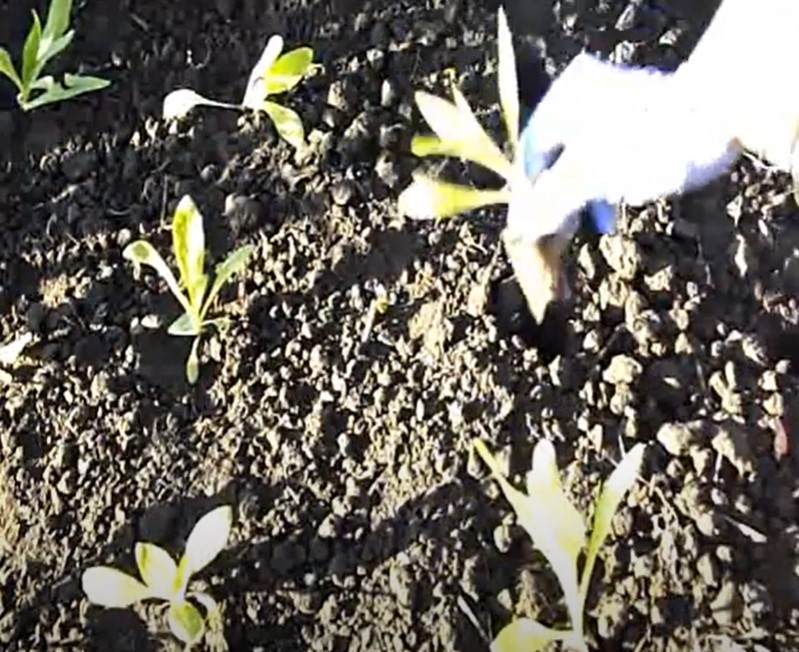
Once the seeds have sprouted, the plantings are thinned twice. This is necessary to prevent the seedlings from inhibiting each other's development. Water the immortelle seeds using a diffuser. Otherwise, the seedlings may be washed away by the water pressure.
Features of growing helichrysum
This plant is classified as a clump plant, meaning it's relatively undemanding in terms of environmental conditions and care. However, to ensure vibrant blooms and a decorative appearance, a few rules should still be followed.
Location
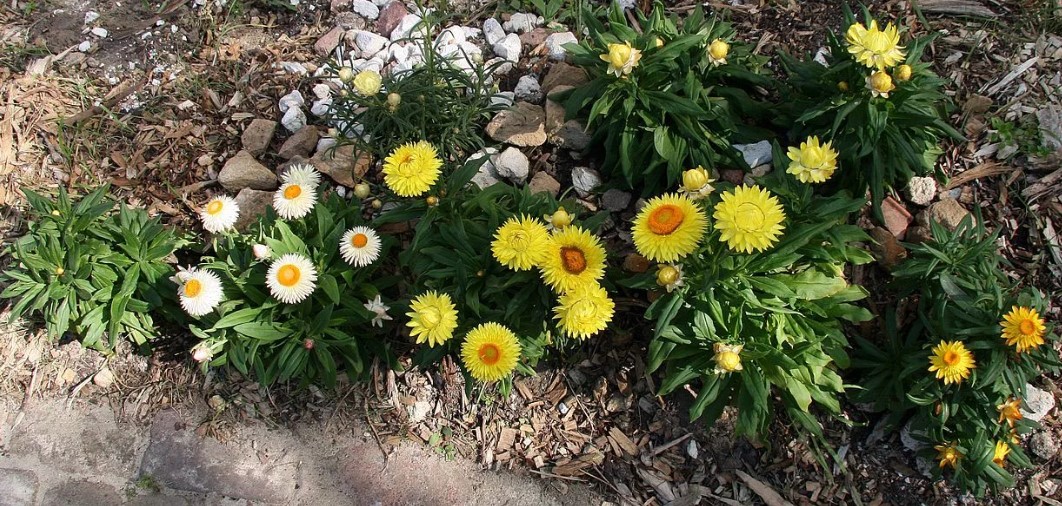
For optimal plant development, it's important to choose the right location. The site should have good lighting, no drafts, nutritious soil, and no areas where moisture stagnates.
Soil
The soil should be thoroughly prepared. To improve its structure and drainage, add quartz sand. Compost is added to enrich the soil with nutrients. After this, the soil is dug to a depth of 25-30 cm. Expanded clay or coarse gravel is placed at the bottom of the holes to a depth of 4-6 cm.
Landing
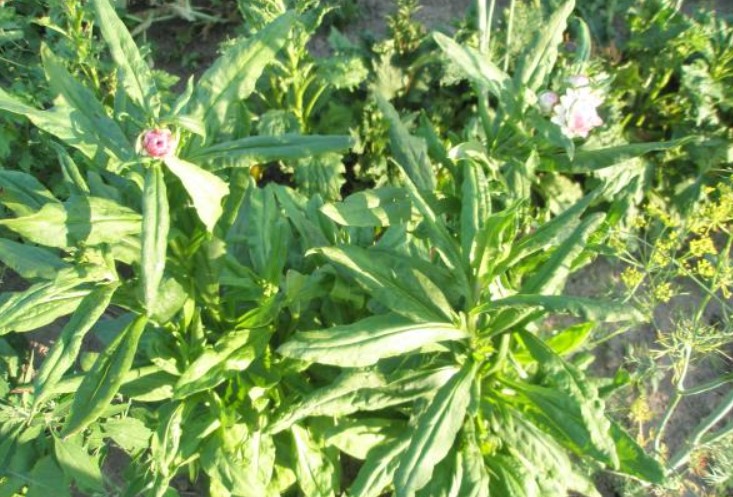
To prevent bushes from interfering with each other's growth, avoid planting them too close together. Medium-sized varieties should be spaced 30 cm apart, while taller varieties should be spaced 40-50 cm apart. Plants should be planted no deeper than they were previously. Otherwise, the shoots may rot.
After planting, the plant can be watered immediately. It's important to ensure the soil doesn't dry out during the first week.
Watering
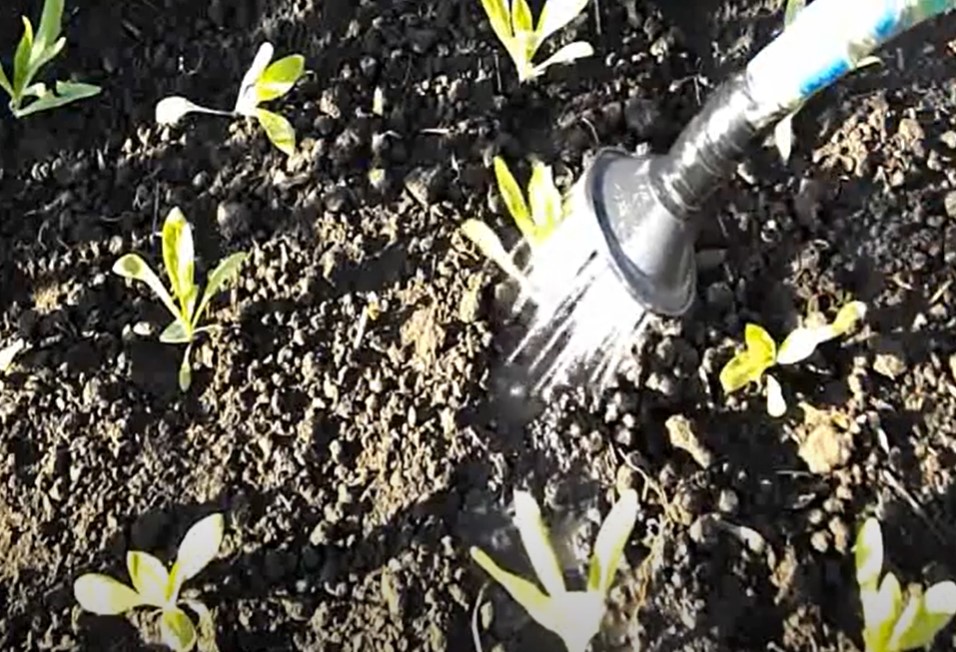
Immortelle should be watered only when the top layer of soil is completely dry, as the plant suffers from excess moisture during rain and overwatering. Settled, softened water at ambient temperature is best. Water with a watering can or spray hose in the early morning hours, when there is no direct sunlight, or in the evening as the sun sets.
Top dressing
Fertilizing is necessary if the immortelle is grown as a perennial. No fertilizer is needed during the first year.
Starting from the second, the soil may be depleted, so fertilizing is carried out at least three times per season:
- the first is carried out in March - nitrogen fertilizers are applied to ornamental foliage plants;
- the next one is carried out in June - phosphorus fertilizers for flowering crops;
- The third time they fertilize in September - with potassium complexes.
Sometimes, additional feeding with diluted mullein can be carried out in summer and autumn.
Trimming
To maintain the plant's beautiful appearance, periodically remove dried and damaged shoots and faded inflorescences. For taller varieties, pinch the tops before buds begin to form. This will make the bushes more luxuriant.
Weeding
Weeding should only be done if mulch has not been applied. Weed carefully to avoid damaging the plant's roots.
Pests
Helichrysum is rich in bitter essential oils, so most pests are harmless. Nematodes are an exception. It's important to inspect the plant's leaves and branches for these pests. If they are found, the affected bush should be dug up and burned away from the area.
Reproduction of immortelle
The easiest way is to buy a mature bush from a store, but if you plan to plant several at once, this can be expensive. In this case, it's easier to propagate your own bush by cuttings or division.
Cuttings
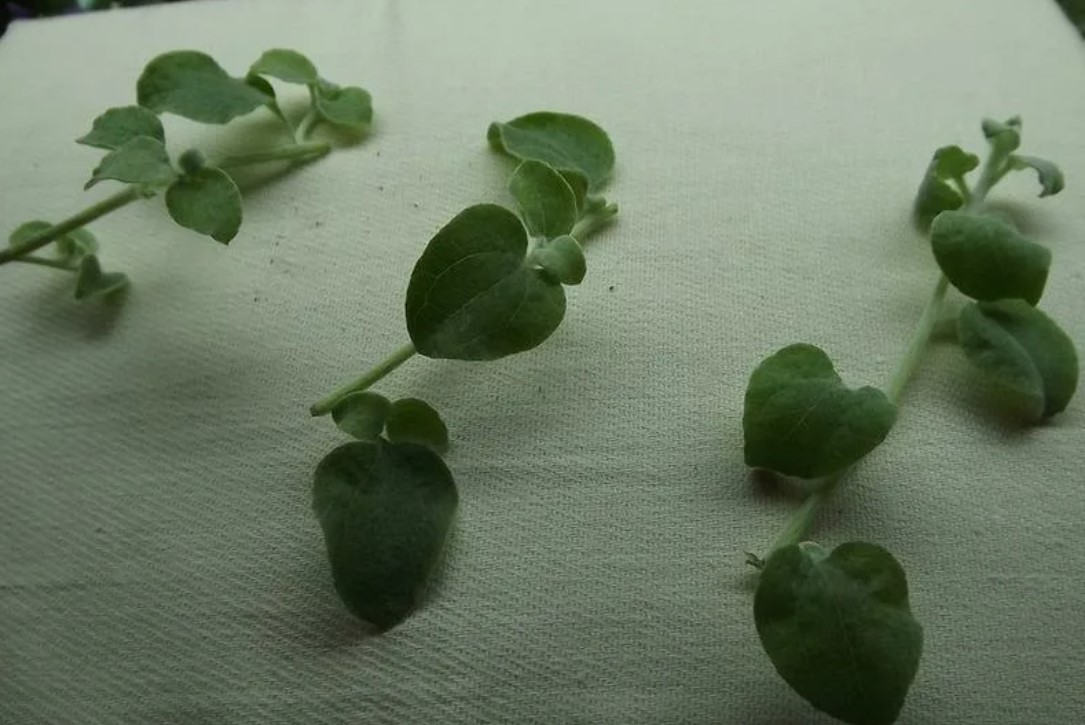
Cuttings should be prepared in the summer. For this, select healthy, large shoots. Cut off the top 10-15 cm. The cuttings are planted in boxes with a mixture of moist sand and soil. They are then left outdoors in the shade to minimize moisture evaporation from the foliage while the roots grow.
When the nighttime air temperature drops below 10°C, the cuttings are moved indoors. The recommended temperature is 10 to 15°C. Water as the top layer of soil dries. With the arrival of April, you can begin planting the young plants.
Dividing the bush
Perennial immortelle varieties propagate well by division. This should be done in late April. To do this, select a large bush about 10-15 cm in diameter and dig it up, root system included. Then, using a sharp shovel, divide it into several sections, leaving at least three buds on each.
Medicinal properties of sandy immortelle
Let's take a closer look at the medicinal properties of immortelle.
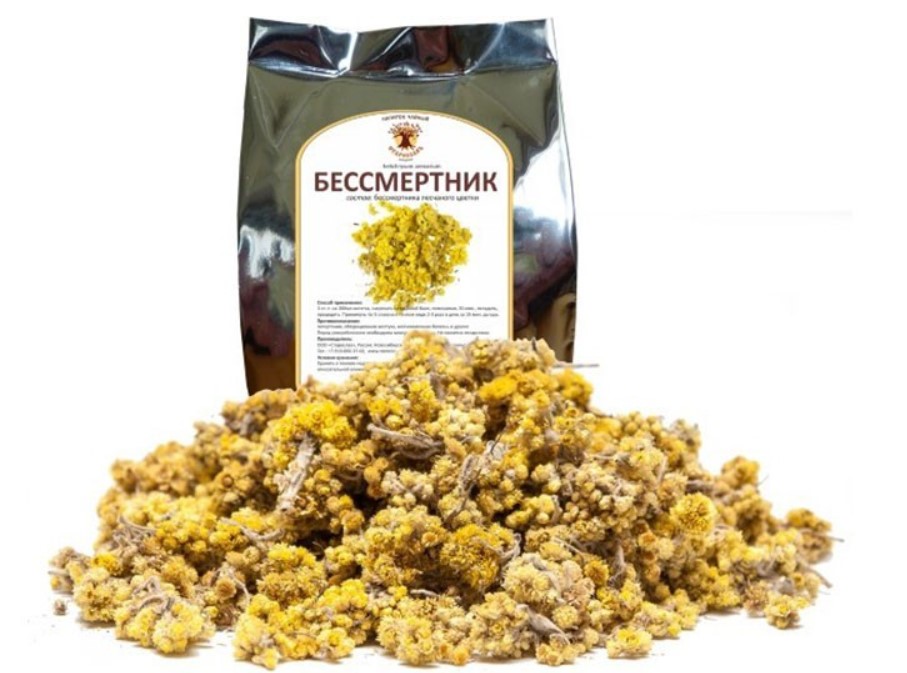
Sand immortelle has the following properties:
- relieves inflammation in the kidneys and bladder;
- liquefies and helps remove phlegm;
- stops bleeding, including internal bleeding;
- destroys helminths;
- improves the patient's condition in urolithiasis;
- improves metabolism;
- has a calming effect;
- removes "bad" cholesterol;
- soothes cough.
The plant also benefits the cardiovascular system. Decoctions and infusions made from it improve the tone and elasticity of vascular walls, preventing the development of atherosclerosis.
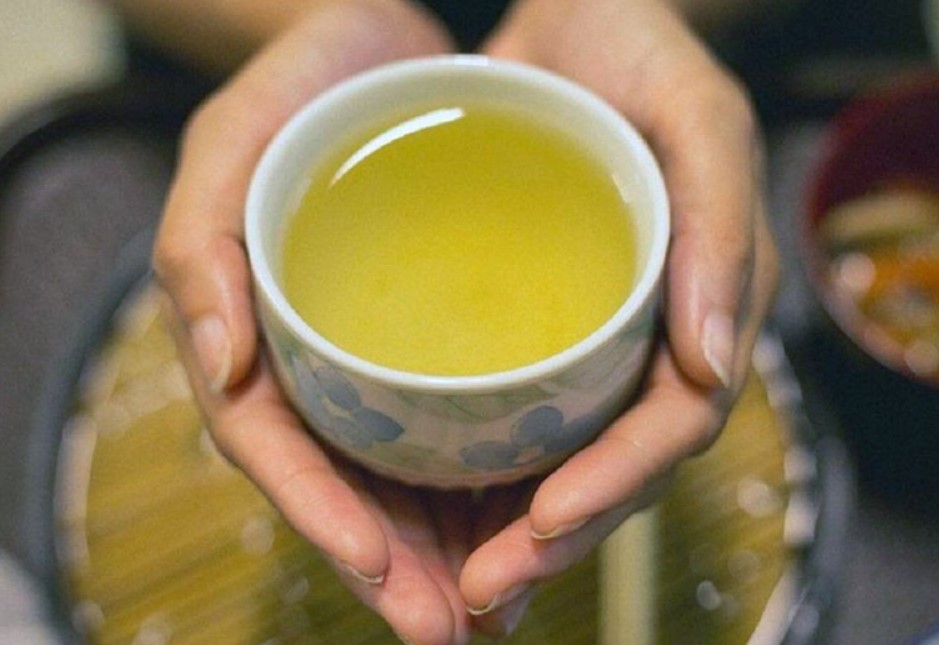
The benefits of immortelle for women
Immortelle can help with pelvic disorders. Dried flowers stop uterine bleeding, normalize the menstrual cycle, and regulate hormonal balance.
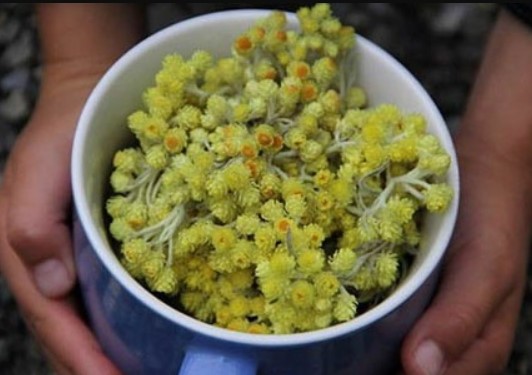
In alternative medicine, the plant is used to treat ovarian dysfunction, as well as relieve symptoms of PMS and menopause. Dried flowers are also used to treat cystitis in women.
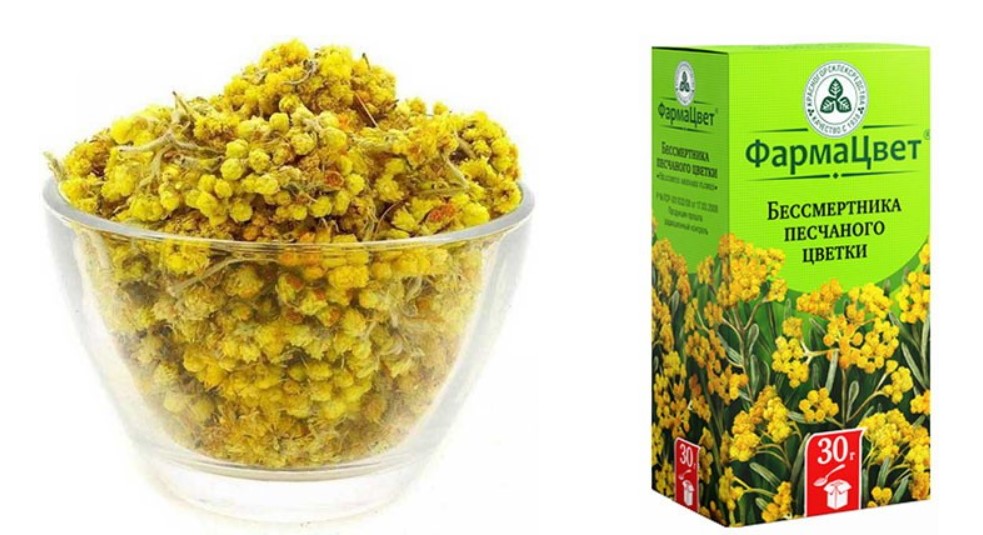
The benefits of immortelle for men
The plant helps with genitourinary disorders. It helps reduce pain associated with kidney stones and accelerates the removal of small stones from the kidneys.
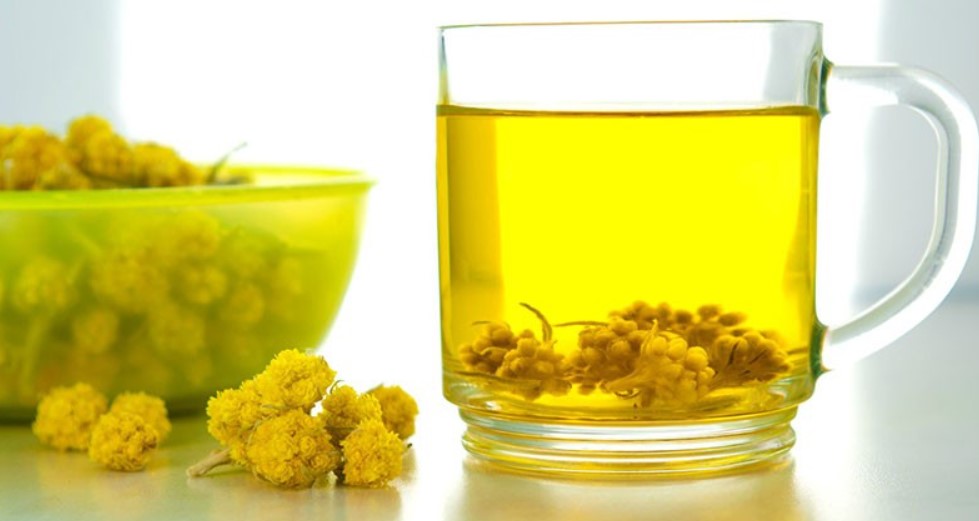
Also, immortelle is indicated for the following pathological conditions:
- physical and mental overstrain;
- inflammation of the prostate gland;
- deterioration of potency;
- decreased sexual desire.
Decoctions and infusions effectively cleanse the liver of toxins, including alcohol breakdown products. They promote accelerated hepatocyte regeneration. Dried flowers are used as part of a comprehensive treatment for hepatitis.
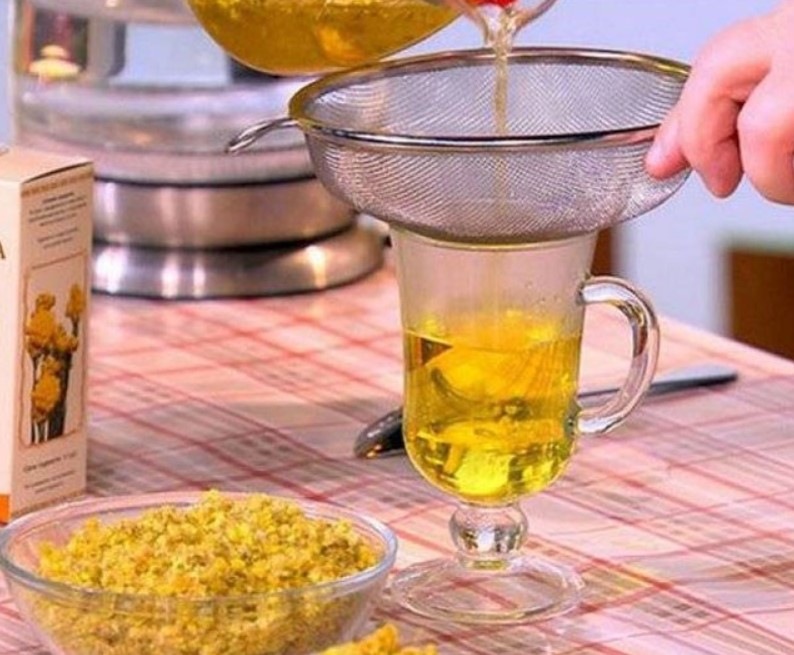
How to use immortelle
In folk medicine, immortelle is used to prepare various remedies for the treatment of various diseases and pathological conditions.
Decoction
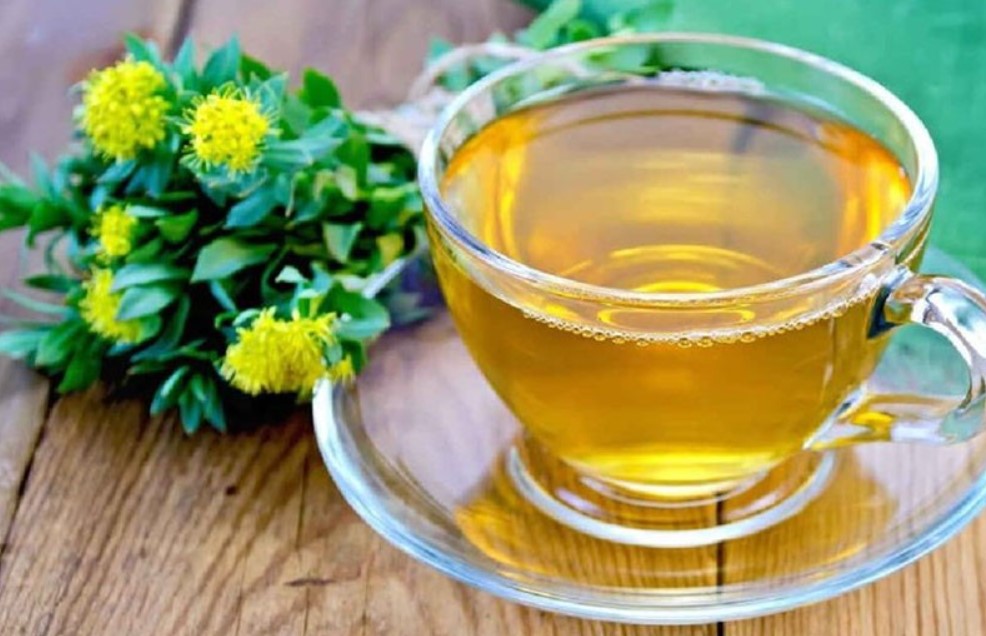
There are several recipes for its preparation:
- Pour 20 grams of flowers into 500 ml of water. Heat over low heat and bring to a boil. After cooling, strain through a sieve and take 100 ml three times daily. This remedy is effective for liver, gallbladder, and urinary tract problems.
- Pour a glass of water into a saucepan and bring to a boil. Add 1 tablespoon of dried flowers and simmer for a couple more minutes. Remove from the heat and let steep for half an hour. Drink 3 times a day, 30 minutes before meals, for liver and gastrointestinal conditions.
- Add 10 g of inflorescences to 200 ml of water. Steep in a water bath for half an hour. Strain, add boiling water, and leave in a cool place for 2 days. For helminthiasis, take 100-120 ml 2-4 times a day.
- Pour 60 g of inflorescences into a glass of water. Simmer over low heat for 30 minutes. Add enough boiled water to make a volume of 250 ml. Divide the infusion into 3 parts and drink 20-30 minutes before meals for pancreatitis and gastrointestinal problems.
For your information! To enhance the effect, you can add coltsfoot, chamomile, lemon balm, or peppermint to the decoction.
Extract
This remedy helps reduce coughing during colds, improves blood clotting, strengthens vascular walls, and acts as a preventative for atherosclerosis.
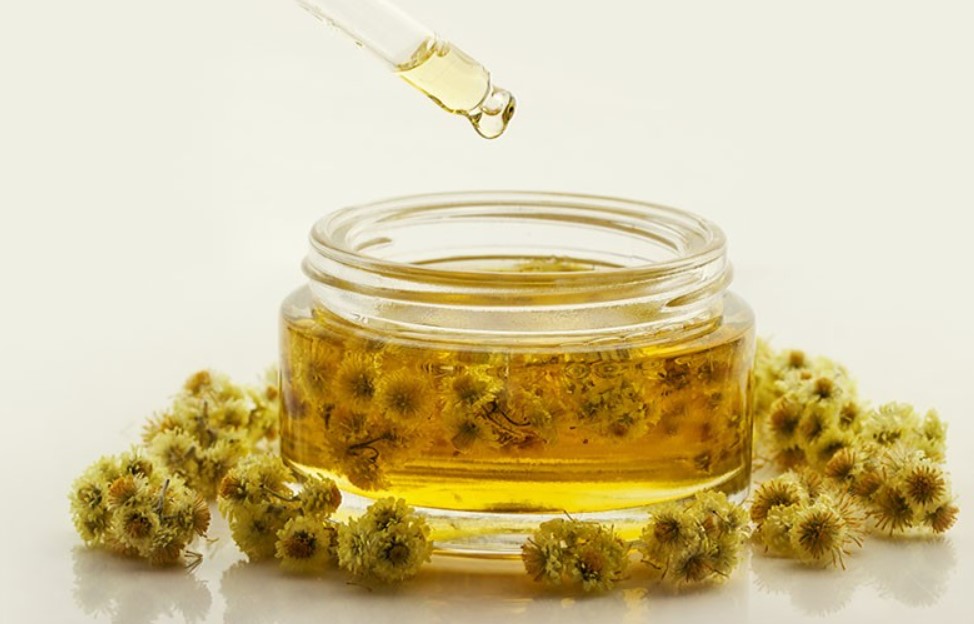
To prepare the extract, pour 25 grams of flowers into a glass of freshly boiled water. Cover and let steep for 20 minutes. Drink 50 ml three times daily.
Tincture
It can be prepared with either alcohol or water. It helps with bladder, kidney, and liver conditions. It is recommended for wiping the skin with wounds, abrasions, and acne.
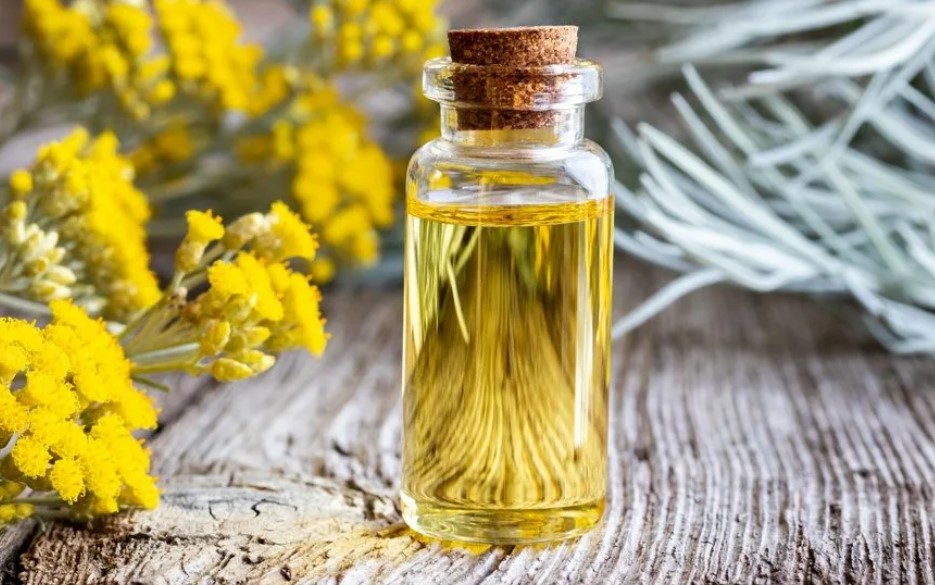
To make the tincture, crush 10 grams of inflorescences and add ½ cup of vodka. Pour into a bottle and seal tightly. Let it steep for two weeks in a dark place, then strain through cheesecloth. Take 20-30 drops, diluted with water.
Contraindications for use
Remedies from this plant have the following contraindications:
- high blood pressure;
- thrombophlebitis;
- varicose veins;
- pancreatitis and gastric ulcer in the acute stage;
- increased acidity;
- pregnancy (at all stages);
- breast-feeding;
- allergy to a plant.
Even if there are no contraindications, consult a doctor before using the plant. Although its ingredients are natural, they may cause adverse reactions.
Reviews of helichrysum cultivation from gardeners
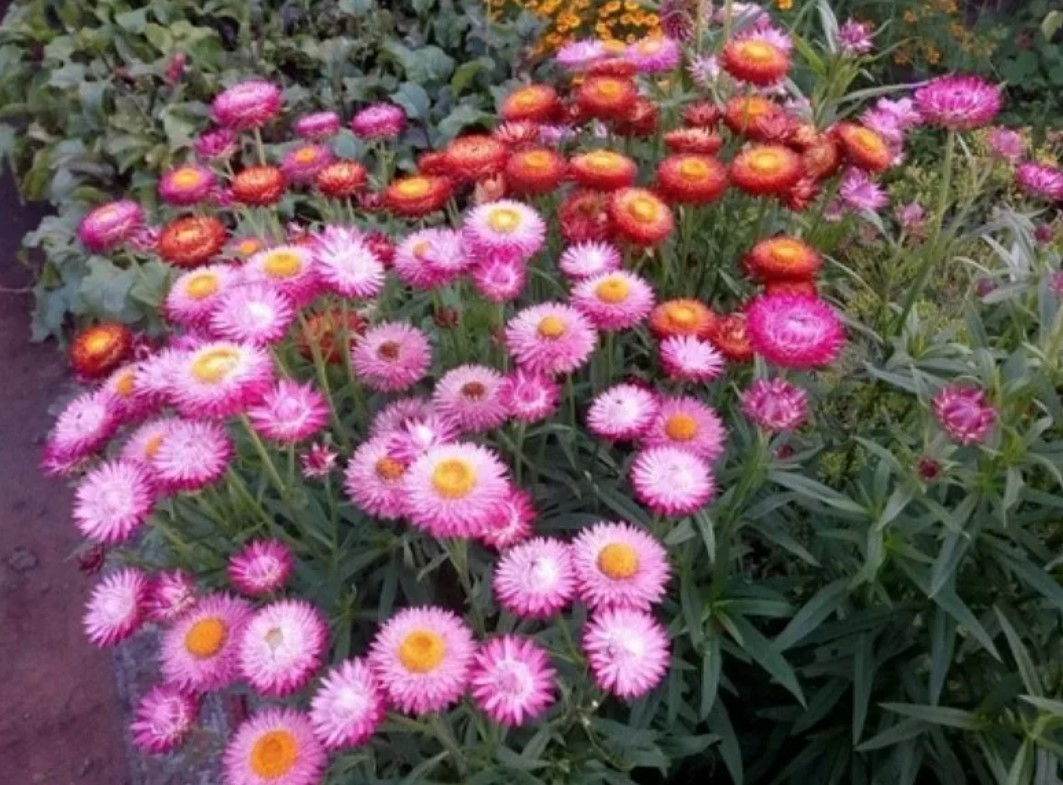
Helichrysum (immortelle) is the brightest and most colorful dried flower that will delight you all winter long.
Helichrysum (also known as immortelle) is a very interesting plant. It has excellent ornamental value, blooms for a long time, can be used in landscape design, and is also perfect for flower arrangements. When dried, helichrysum retains its beauty and can last for several years.In my childhood, I often dried these flowers myself; they made lovely bouquets that were a joy to behold in winter, and I used the inflorescences for crafts.
A couple of years ago, I decided to start growing dried flowers again, but this time for photo compositions. Winter is a time when I miss my favorite flowers, and dried flowers come to the rescue.
Planting helichrysum in 2020 was unsuccessful. I bought seeds from Euro-Seeds, planted them directly in the ground, and they… didn't sprout. I should also mention that other dried flowers also failed to sprout; of the four varieties I planted, only the haretail and a couple of small acroclinum plants grew.
In 2021, I purchased seeds from another producer, Agroholding Poisk.
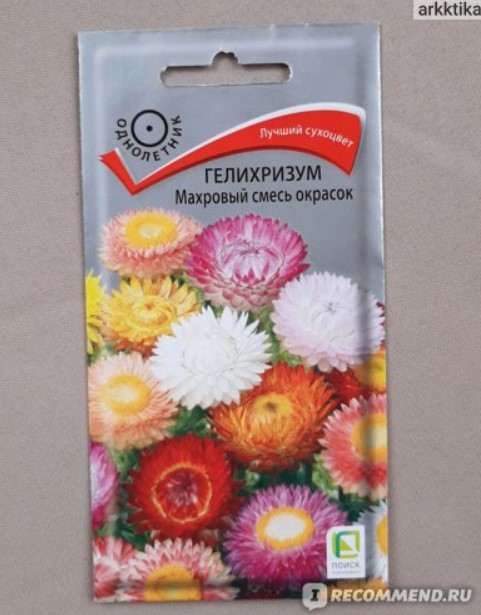
The seeds are packaged in a standard way, in a sealed bag made of thick glossy paper.
The picture shows a beautiful, vibrant mix of colors. The image perfectly matches the final result; I even think the flowers turned out even better in real life.
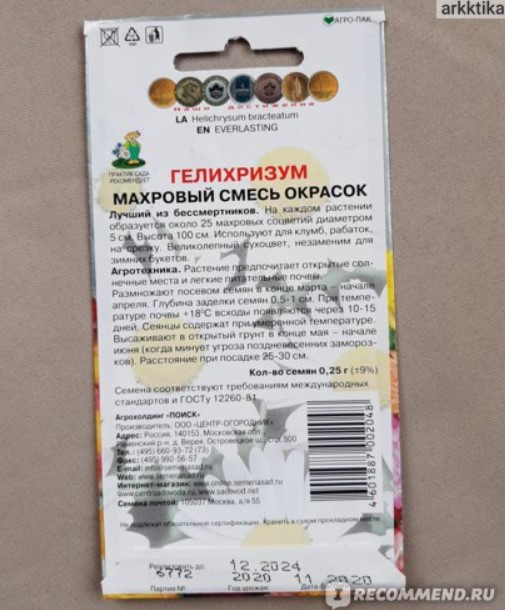
On the back of the packet there is a description of the plant and recommendations for growing.
The harvest year, packaging date, and expiration date are printed at the bottom of the packet. The seeds were fresh (harvested the previous season) at the time of purchase/planting.
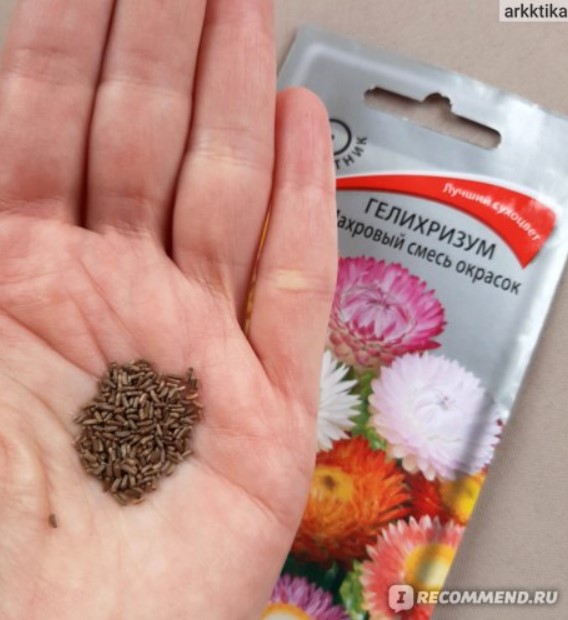
The seeds weigh only 0.25 grams, but since the seeds are quite small and light, there are actually a lot of them in the pack.
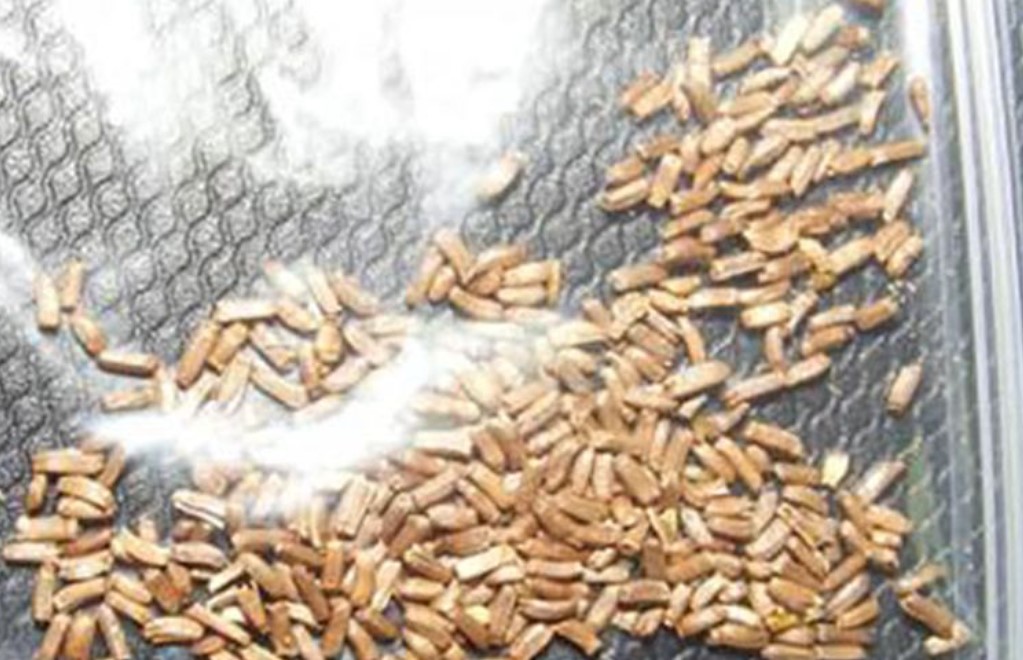
The seeds are elongated, elliptical in shape with multiple facets. They appear neat and unbroken, and there was no debris in the bag.
Landing
Helichrysum is an annual. In southern latitudes, it grows as a perennial, but the plant won't survive the Moscow region's winter.
It's recommended to grow helichrysum from seedlings. In this case, the seeds are sown in March-April. As with the previous year, I had no opportunity to tend to the seedlings, so I sowed the immortelle in early May in a greenhouse (I decided not to risk growing it in the open ground). Later (a month later), some of the seedlings were transplanted into the open ground, but the majority of the helichrysum remained in the greenhouse, where it bloomed.
Helichrysum prefers light, moist soil. In our greenhouse, the soil is nutritious (we added manure two years ago), light, and we used drip irrigation since we weren't at the dacha every weekend.
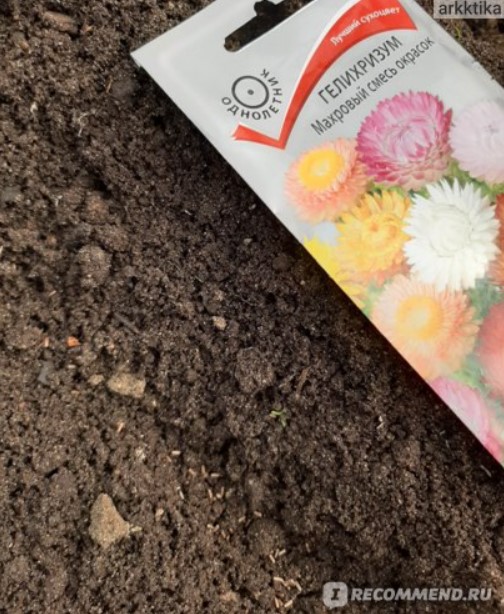
Before planting, I moistened the soil, as it had been too dry in the greenhouse, and made three furrows about 1.5 cm deep. I sprinkled the seeds all over the soil, trying to spread them evenly, but it didn't work everywhere.
Planting helichrysum. May 5, 2021.
The first seedlings were discovered two weeks later, but since the bed had become overgrown with woodlice by that time, they had to be searched for. The seed germination rate was quite high, with about 80% of the seeds sprouting.In June, we were at the dacha regularly, almost every weekend and sometimes on weekdays, so the helichrysum was watered regularly. At the end of June, when we were leaving the dacha, we set up drip irrigation from a barrel for cucumbers growing in the same greenhouse, but on the opposite side. But since there were two watering hoses in the greenhouse, the second one was placed under the helichrysum. We were gone for two weeks, but due to illness, it ended up being a month and a half. During this time, my husband only visited the dacha twice to fill the barrel for the drip irrigation.
Despite challenging conditions and a near-drought, the helichrysum thrived and bloomed profusely. This is what it looked like in early August:
The tallest plants reached a meter in height (as promised by the seed producer), but there were also flowers shorter than 50-70 cm.
But the diameter of the flowers was about 3 cm.
The seed producer advertised a mix of double colors. The variety of colors was accurate. We grew red-yellow ones (brick-colored outer petals and yellow centers).
as well as deep pink with yellow centers and soft pink.
These are so cute
Among the flowers there were pure white ones, slightly pinkish ones, and lemon yellow ones.
But not all the flowers turned out to be double; there were also some that were quite simple, like daisies.
Helichrysum grew best in a greenhouse. However, specimens transplanted to open ground were stunted (about 40 cm tall) and bloomed later and less profusely than in the greenhouse. This may have been due to the effects of transplanting or a lack of watering (no one watered the open-ground plants in July).
When growing this plant, it's important not to miss the cut-flowering season. If the flower opens too much, the seeds will fall out after drying, and the decorative effect will be lost.
For example, the top flower in the photo is already on the verge, while the bottom one, which has not fully opened, is more suitable for cutting.
This is what happens when flowers are cut late. You can keep them for seeds (which is what I did), but you can't put them in a vase.
Since the flowers bloom one after another, not simultaneously, cutting is also done in several stages.
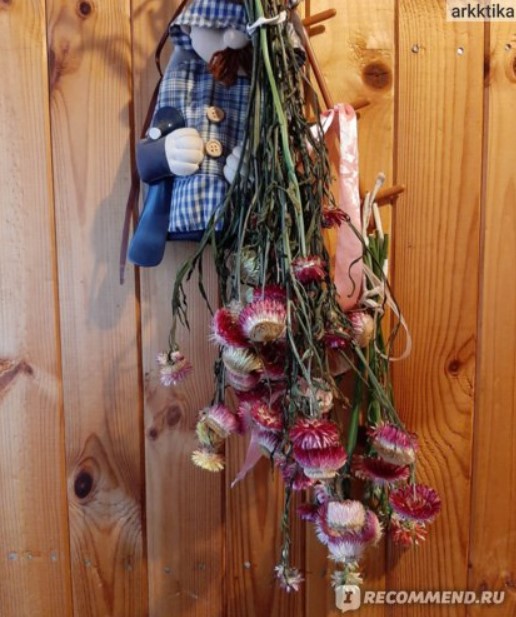
After cutting, the flowers are tied into bunches and hung upside down in a shaded area to dry. Before drying, remove the leaves, otherwise they will fall off and crumble. I didn't remove all the leaves right away, and then had to deal with the bouquet debris.
Flowers take a long time to dry, about a month. Once completely dry, you can arrange them in a bouquet.
My drying process wasn't quite successful. Apparently, due to the high humidity, the flowers weren't completely dry, or they reabsorbed moisture later due to the high humidity in the apartment before turning on the heating. After I held the flowers upright, some of the flower heads drooped. Nevertheless, I still managed to make small bouquets from them. And there were enough blooms for my needs.
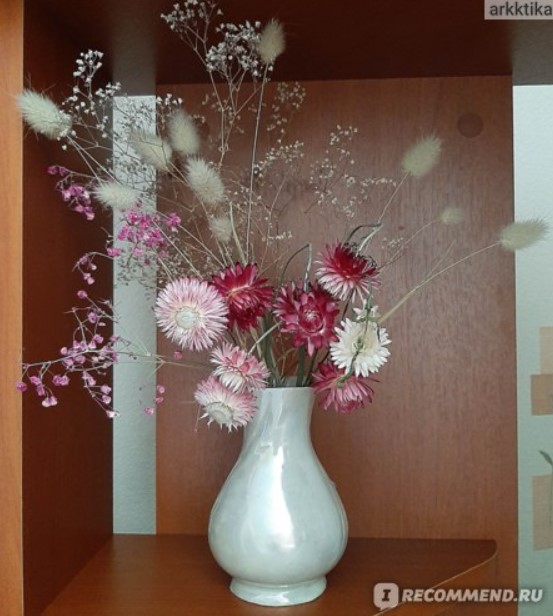
Helichrysum goes well with gypsophila and hare's tail, especially flowers in soft pink shades.
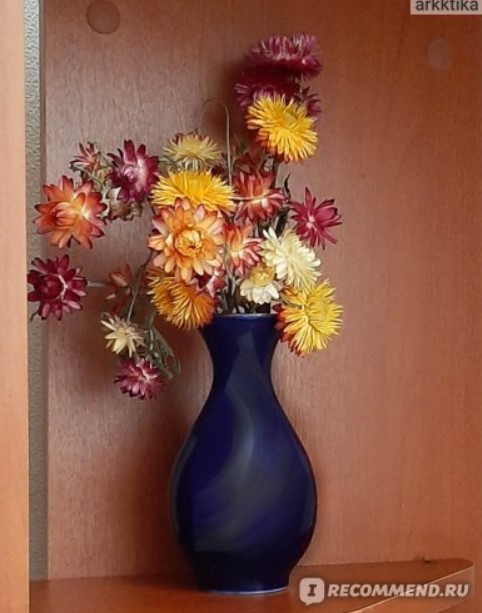
And the rich red-orange and yellow flowers look great on their own.
I was delighted with the helichrysum from Agroholding Poisk. The manufacturer did not disappoint with the filling. The flowers truly grew in a wide variety of colors, probably every conceivable shade was represented. I appreciated the diversity. The seeds germinated well. But most importantly, the helichrysum survived and bloomed profusely in challenging conditions of minimal care and insufficient watering.
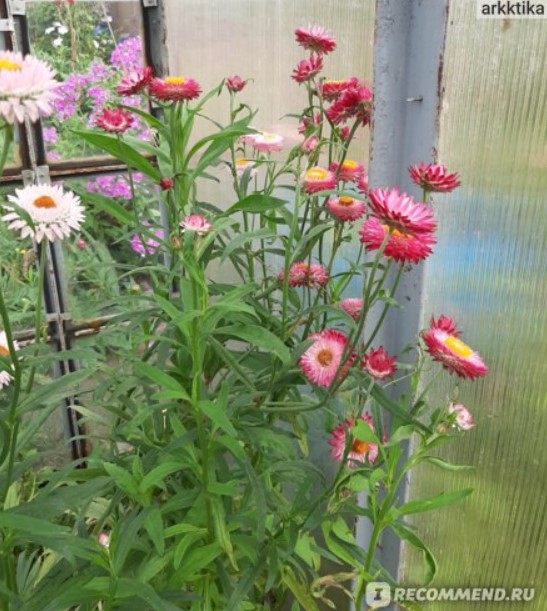
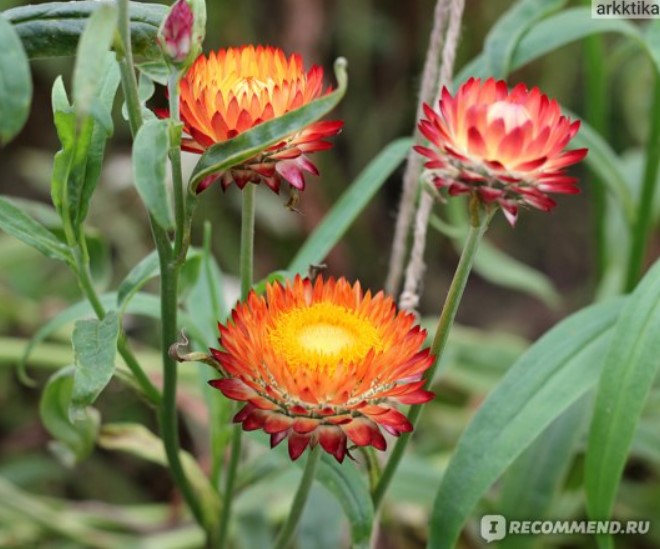
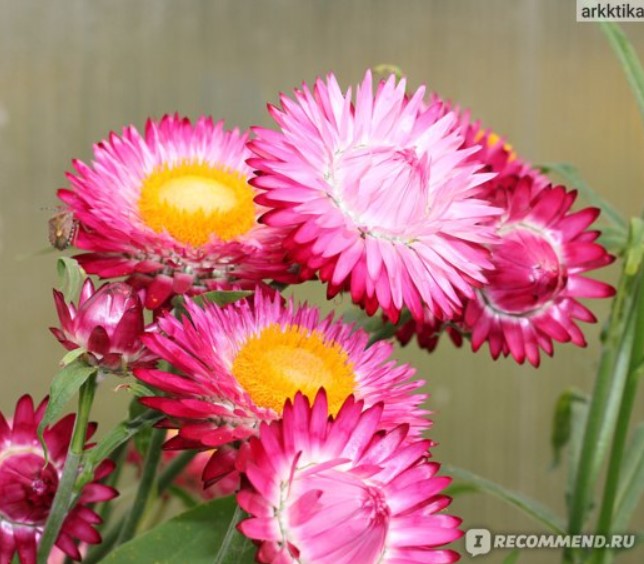
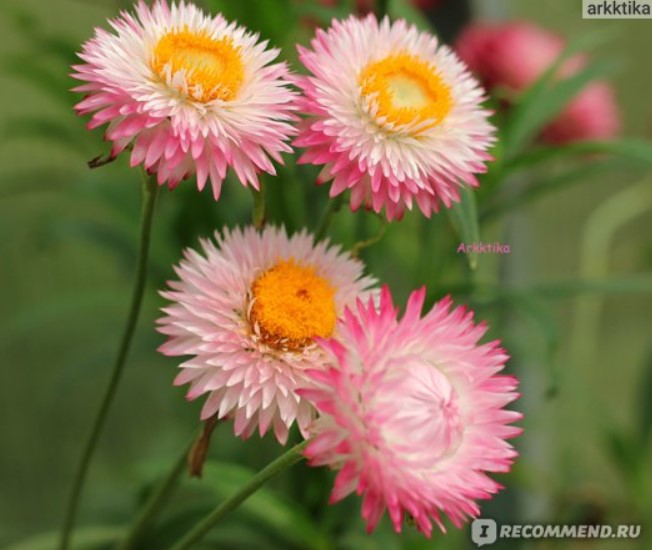
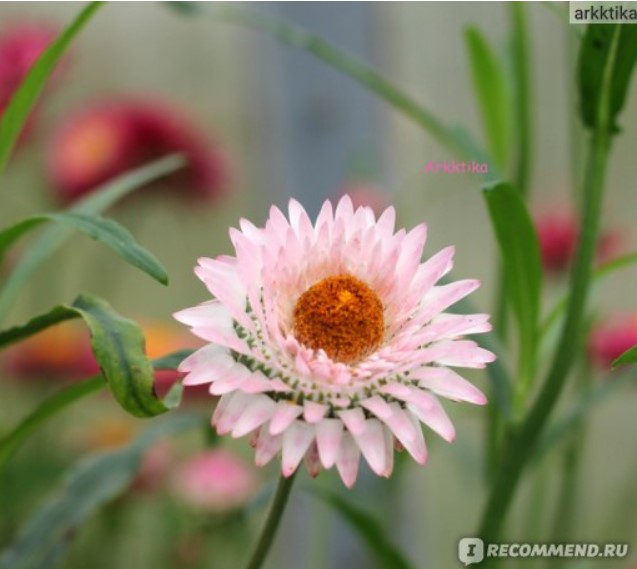
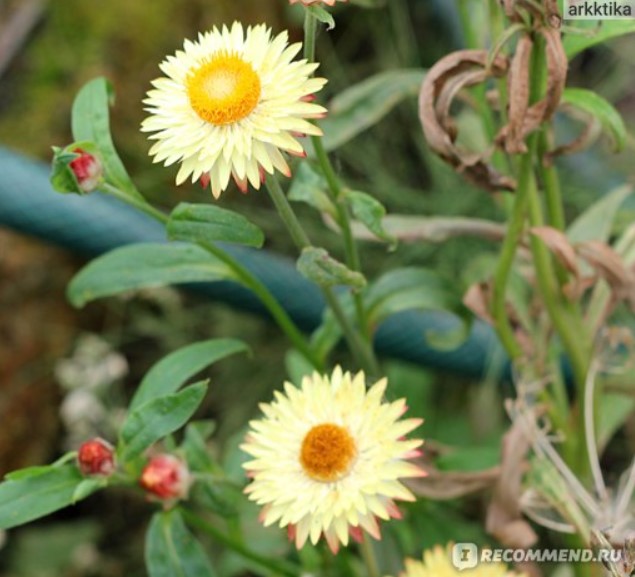
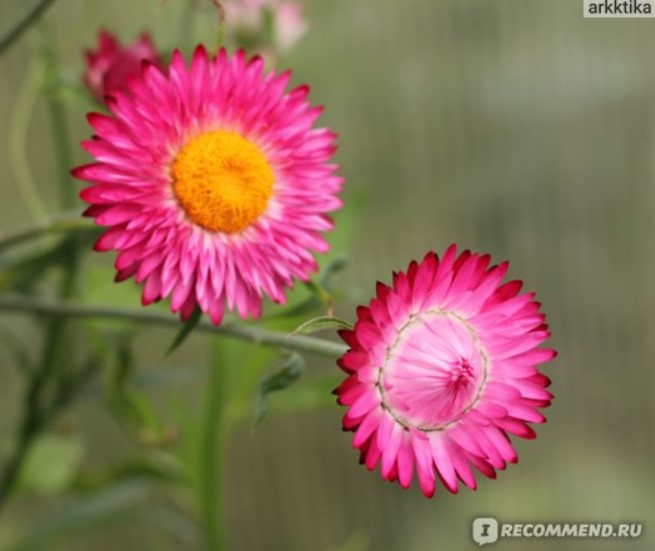
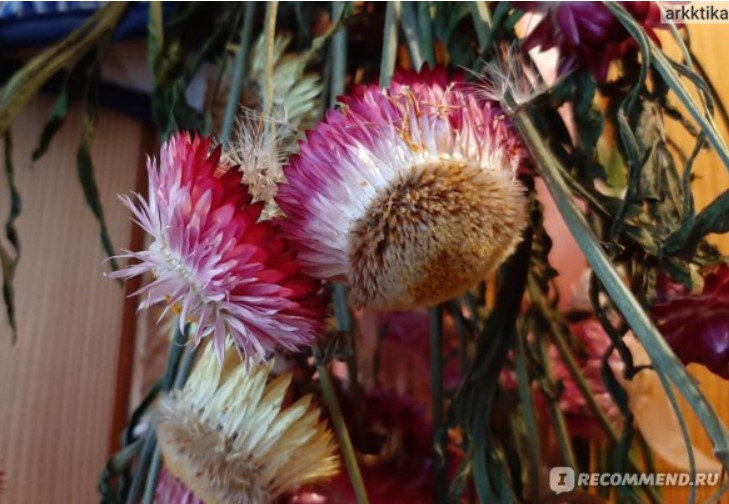
I fell in love with this helichrysum this year, too. I saw it at the garden center and loved the silvery leaves so much, I bought three pots. I hadn't expected it to grow so luxuriantly, so I planted it in a bedding plant. But it grew so vigorously, in the full sun, that by fall it had completely covered the bedding plant. It was so beautiful and easy to grow, though, that I decided to save it. I carefully dug up one root and planted it in a pot. But when I got it to my windowsill at home, it died; the leaves dried up and that was it.
Before the frost killed the other two plants, I took cuttings. From the middle and the ends of the shoots. I planted some in soil, some in water. In the soil, they wilted immediately. In water, they initially came back to life and became more cheerful, but then their tips turned black and their leaves also fell off. So I couldn't make friends with it.
So easy to grow in the soil, yet so demanding to propagate. That's what I thought.
I was really into them. It's great to give dried bouquets to friends in winter. I dried the bouquets upside down on clothespins in August.
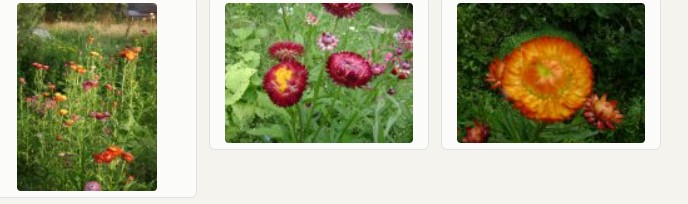
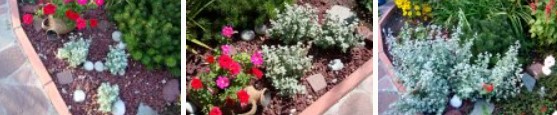
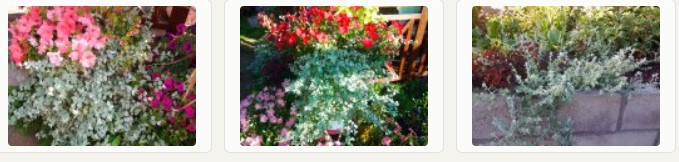
I really liked the helichrysums, in the 1st and 2nd photos they were planted from small cuttings and grew so much over the summer, I didn’t even expect them to grow so fast:aga: in the 3rd photo, in the open air it was grown from seeds, at first it developed very slowly, but outside it came to its senses, :aga: there is only one plant here.
Hello, dear readers!
I'm sure some of you have heard of the dried flower helichrysum. This spring, I was inspired to plant this beautiful flower in my garden. I use dried flowers in my art and had already purchased dried helichrysum flowers. But I wanted to grow them myself. And here's the result (at the end, there's a video demonstrating the work).
In the winter, I bought Helichrysum bracteatum seeds. This perennial in its native Australia is grown as an annual in our garden, and it's best to do so from seedlings. The plant has a straight, densely foliated stem up to 100 cm tall, according to the seed package, but mine has grown to 150 cm. The stem is branched, and the flower heads are massive, up to 5 cm in diameter. The inner leaflets are brightly colored, a variety of colors, except blue.
The seeds for seedlings should have been sown at least in mid-April, or even early, but I didn't do it until May 11th... Of course, that was too late. But, as they say, better late than never (or next year), after all, I'm experimenting and growing for fun. So May didn't stop me, and the hot summer helped the sun-loving and drought-tolerant plants.
Seven to eight days after sowing the seeds, seedlings emerged, and they were quite dense. On June 15th, 25 helichrysum seedlings were transplanted into the ground. They looked frail, and I thought too little time had passed and the plants weren't ready for this turn of events. But there was no time to wait. After all, they were supposed to be planted outdoors at the end of May.
I chose an open, sunny spot with fertilized soil. I was away from the dacha all of July, and entrusted its care (at least minimal watering in the heat) to relatives. By the time I arrived, the helichrysum had strengthened and stretched, and in early August, the first buds appeared. I picked them at the very beginning of flowering, when the bottom one or two rows of petals had opened. Whenever possible, I cut them with the stem, as this native stem can serve as the basis for creating extended stems when creating arrangements. I dried the buds in a dark, ventilated room.
I've already made five cuttings of helichrysum since the flowers first bloomed. It's late October, but the flowers are doing great and have produced many tiny buds ready to grow. But that's only until the first frost. And here's where I come to an important conclusion: the sooner, the better. In other words, if I'd planted the seedlings a month earlier, I would have harvested more. But overall, I'm pleased with the results. I'm a little sad that the flowers are ending their season. However, I'm comforted by the thought: how many vibrant blooms are lying in my box, waiting for their moment, and my creative moment is still ahead!
Do you like dried flower arrangements?
Here is the promised video