Heliotrope belongs to the Boraginaceae family. It is native to the Mediterranean coast and the tropics, subtropics, and temperate zones of the Americas. There are approximately 300 species, but not all are cultivated.
Content
Heliotrope flower: properties, benefits, and harms
Popularly known as "dyeing litmus" and "the herb of God," the flower has found its use in landscape design, medicine, and the perfume industry.
Reaches 20-60 cm, with erect shoots. Emerald leaves with a glaucous tint are obovate and pubescent. They are located on short petioles and can be wavy or wrinkled.
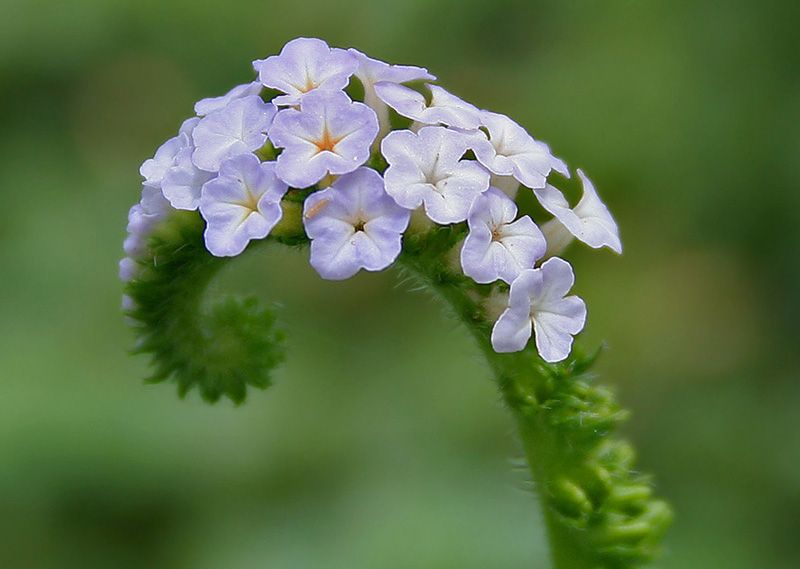
Flowers are violet or deep blue. Varieties with snow-white and soft blue buds have also been developed. They contain aromatic compounds used by perfumers. Flowering lasts for about four weeks. After flowering, a fruit, called a coenobium, develops in place of the inflorescence. When ripe, it splits into four parts containing the seeds.
Some varieties are poisonous and can paralyze the central nervous system. They are not grown as garden or indoor plants. The poisons (cynoglossine, lasiocarpine, heliotropin) are used in traditional medicine to treat:
- worms;
- prostate adenomas;
- urolithiasis;
- lichen;
- benign neoplasms;
- open wounds;
- warts.
This remedy is not used in traditional medicine. Any treatment should be discussed with a doctor to avoid harm.
In greenhouses, the flower can grow for several years. In gardens, it is planted as an annual because it is not particularly winter-hardy.
Types and varieties of heliotropes
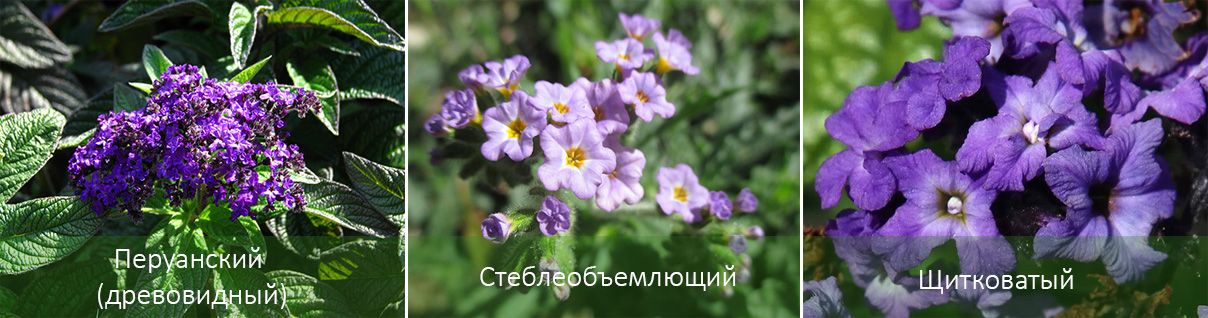
Despite the diversity of species, only 3 of them are cultivated:
| Name | Description | Varieties |
| Peruvian (tree-like) | Up to 0.6 m. With wrinkled, wide plates. Flowers are blue or purple in dark tones (except for White Lady). |
|
| Clasping | Low-growing, about 40 cm tall. The leaves are wavy along the perimeter. The flowers are soft lilac with a yellow dot in the center. The fragrance is less pronounced than that of the previous variety. Usually planted in pots. | |
| Shield-shaped | Tall, approximately 120 cm. The underside of the leaves is lighter than the outer ones. Blooms until October. |
Growing heliotrope from seeds
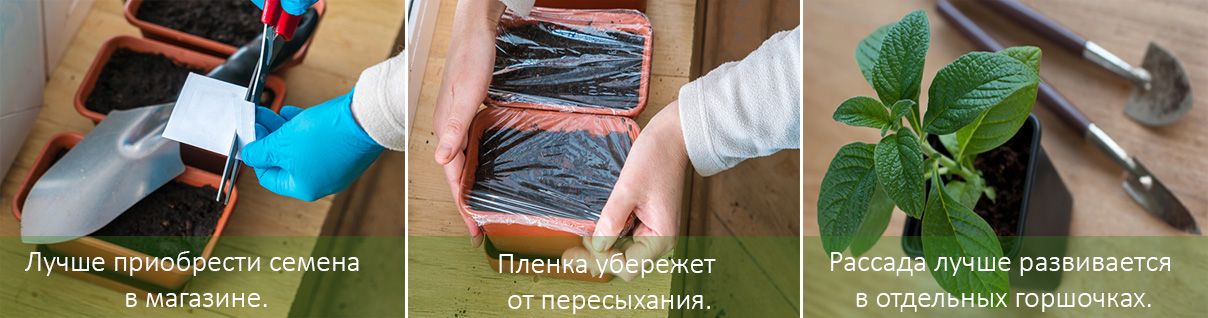
Seeds should be purchased from flower shops. Manufacturers guarantee high quality and variety. Flowering occurs within 12-16 weeks.
When growing from seeds collected directly from the bush, be prepared for the possibility that most of them will fail to germinate. The plants will be short, with small inflorescences. Flower buds will begin to form in August.
Correct sowing of seeds
Heliotrope is sown for seedlings in late winter-early spring:
- Mix peat and sand (4:1).
- Disinfect the soil mixture to prevent diseases (for example, heat it in the oven).
- Pour it into a container and compact it.
- Soak the seeds for 24 hours in Zircon, silver (6 drops) or Kornevin.
- Spread them over the surface and sprinkle with a thin layer of soil.
- Cover with a glass jar to create greenhouse conditions and place at a temperature of +19…+21 °C.
- When the first shoots appear, remove the covering and place the seedlings near a window. The room temperature should be between 20 and 22°C. Bright light is not necessary.
Caring for seedlings
After the formation of 2 pairs of true leaves, you need to do the following:
- Plant in separate pots with a circumference of 9 cm, filled with the same soil mixture.
- Water generously.
- After half a month, apply fertilizer to the seedlings.
Planting seedlings in open ground
Young bushes need to be hardened off. A week before planting, take them outside for a couple of hours.
Optimal planting times
Young bushes are planted in the spring, when the ground stops freezing at night. In central Russia, this occurs in May.
Selecting a site and preparing the soil
Choose a well-lit location for planting, away from stagnant water. Litmus tinctorius thrives in nutritious soil rich in humus. The soil should be loose and crumbly. If the soil is poor, add leaf mold or rotted manure to the bottom of the planting holes.
Correct fit
Leave 30-40 cm between the holes. Step-by-step planting:
- Add humus to the hole
- Replant the bush with its root ball. This method will help the litmus plant adapt more quickly and accelerate growth.
- Leave the root collar at the same level.
- Press down the tree trunk circle with your palms.
- Pour a small amount of warm water.
Caring for heliotrope in open ground
Planting and caring for this flower isn't as difficult as it might seem at first glance. The key is to follow a few rules and complete all tasks in a timely manner.
Moisturizing
Excessive watering will be harmful, as will under-watering. It's important to ensure the substrate is always moderately moist and not allowed to dry out. Misting will help create conditions similar to the plant's natural habitat.
Mulching and loosening the soil
Good growth requires airy soil. Therefore, loosening should be done regularly to prevent a hard crust from forming.
The tree trunk area can be mulched with compost or peat. This will slow down weed growth and improve soil moisture retention.
Top dressing
Before flowering, apply mineral fertilizer (such as Ideal) every two weeks. Once buds appear, stop fertilizing.
Pinching heliotrope
This is essential for the bush to remain lush and maintain its decorative appearance. Removing the top growth point stimulates vigorous growth of lateral branches.
The flower is pinched when it reaches 10 cm. This is done above the 5th or 6th leaf. The bush will stop growing for a week, but then it will begin developing at an accelerated rate.
Plant maintenance in winter
When litmus tinctorius is grown as an annual, the bushes are destroyed in the fall. The soil in which they grew is fertilized and dug over.
If you decide to save the plant, you need to move it to a warmer room. Dig up the bush, place it in a container, and bring it indoors before frost sets in. Provide bright lighting, extending daylight hours with phytolamps. Maintain a room temperature of 16–18°C.
When and how to collect seeds
The seeds are collected after flowering ends, before winter dormancy. The seeds are ready for harvesting when the inflorescence withers, dries, and darkens.
The seeds are carefully removed, as they are small and easily scattered. They are sorted, dried, and placed in a cardboard box for storage.
Propagation of heliotropes by cuttings
Cuttings are taken from perennial mother plants kept indoors during the winter. Propagation occurs from late February to May:
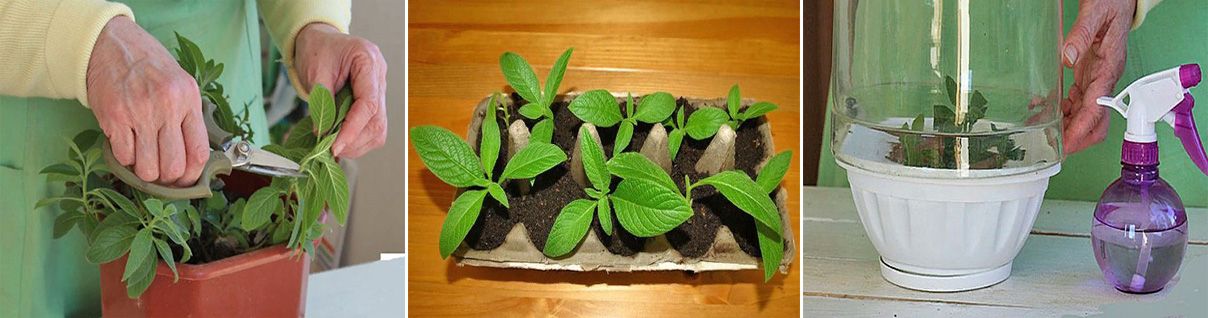
- Cut off cuttings with 3-4 nodes (places where the plates are attached to the stem).
- Remove the leaves and treat the ends of the shoots with Kornevin.
- Plant in containers with humus and sand (2:1).
- Sprinkle with sand, water with a weak solution of potassium permanganate.
- Cover with film.
- Maintain temperature at +21…+24 °C.
- Remove the cover daily for ventilation and watering.
- After rooting (after 2-3 weeks), plant in pots with peat, turf and sand (4:2:1).
- Add mineral mixtures.
- For the first week, protect from direct ultraviolet rays and spray two to three times a day.
- When the seedlings get stronger, plant them outside.
Plant diseases and pests
Like any other garden flower, litmus can be affected by insects and infections:
| Disease/pest | Signs | Prevention/control measures |
| Spider mite |
|
|
| Aphid |
|
|
| Whitefly |
|
|
| Gray mold |
|
|