The dahlia (dahlia) is a perennial relative of the asters. It is named after the Swedish botanist Anders Dahl, and the Russian version is named after the researcher from St. Petersburg Johann Georgi.
The plant's homeland is South America, where the Indians still call it "chichipatl", "acocotle", "cocoxochitl".
Content
Description
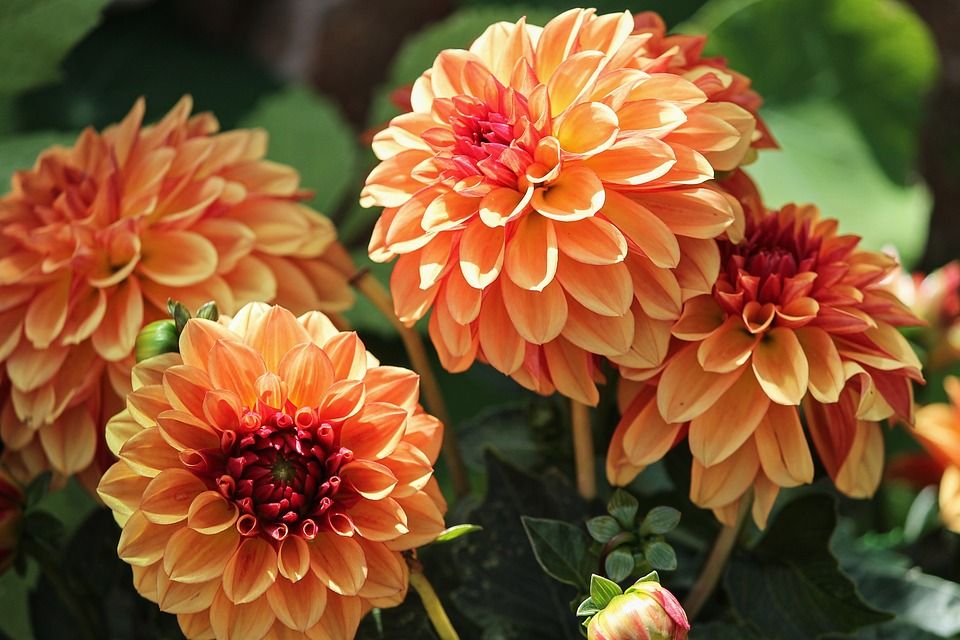
Dahlias planted near the house look impressive. Height: 0.5-2 m. Large, oblong, dissected leaves. Flower heads come in a variety of shades, beautifully shaped, with petals in multiple rows or simple ones.
The petals vary depending on the dahlia group. The center is dominated by tubular flowers, with ray florets up to 40 cm long at the edges. Blooms from June to October. The bushes are vigorous and have tubers. Annually, restoration buds form on the root collar. In temperate and cold climates, these are dug up.
Annual dahlias
Dahlias come in both annual and perennial varieties. The former are grown from seed and last for one season.
With their help, you can quickly cover unsightly spots on your property or an empty part of a flowerbed before other flowers have a chance to grow.
Varieties of annual dahlias
Annual dahlias are divided into more than 10 groups.
| Variety | Bush
Height (cm) |
Inflorescence |
Petal type Bloom |
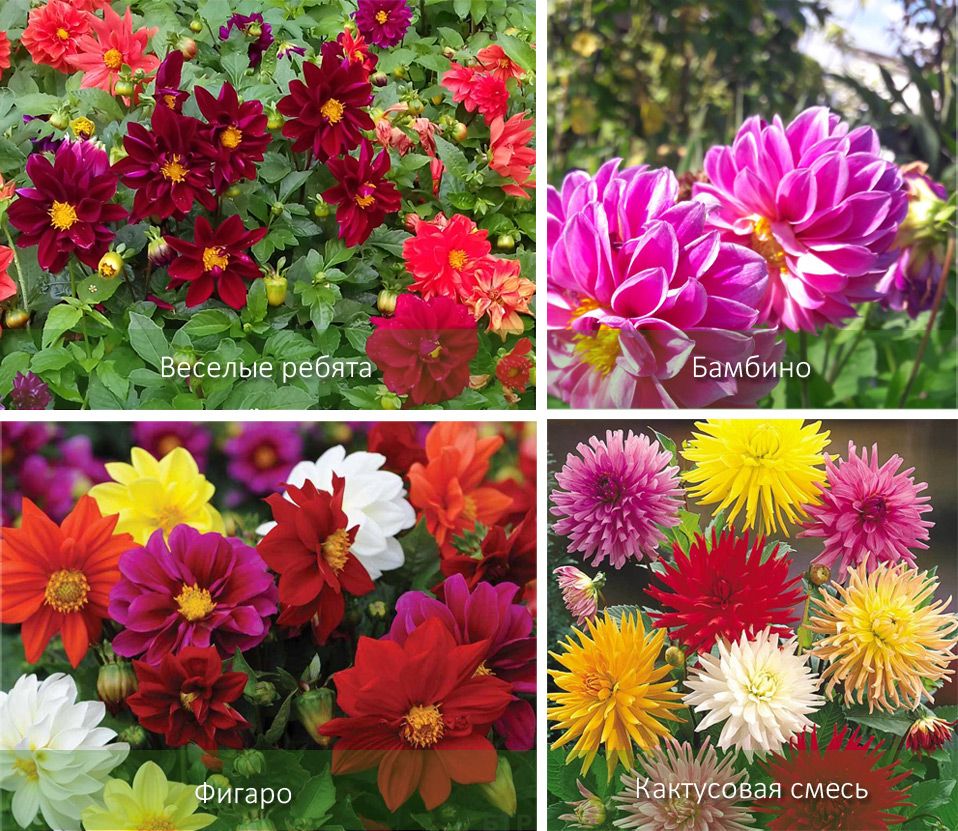
| Figaro | Not spreading, dwarf, 40. |
About 7 cm in circumference, in various colours. |
Multicolored with a yellow center. July-October. |
| Cactus mix | With a large number of peduncles. 60. |
Approximately 30 cm of various colors. |
They resemble needles, twisted, tongue-shaped, narrow and sharp. June-September. |
| Funny guys | Many stems, highly branched. 50. |
Flat, various shades, golden core. |
Slightly twisted. Midsummer-autumn. |
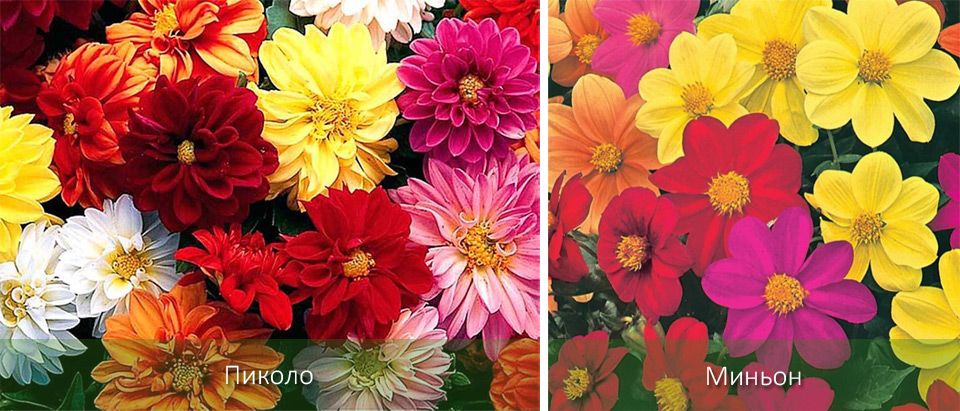
| Picolo | Compact. 45. |
Approximately 9 cm, multi-colored. |
Many shades. July-October. |
| Bambino | Small. 25. |
About 8 cm. |
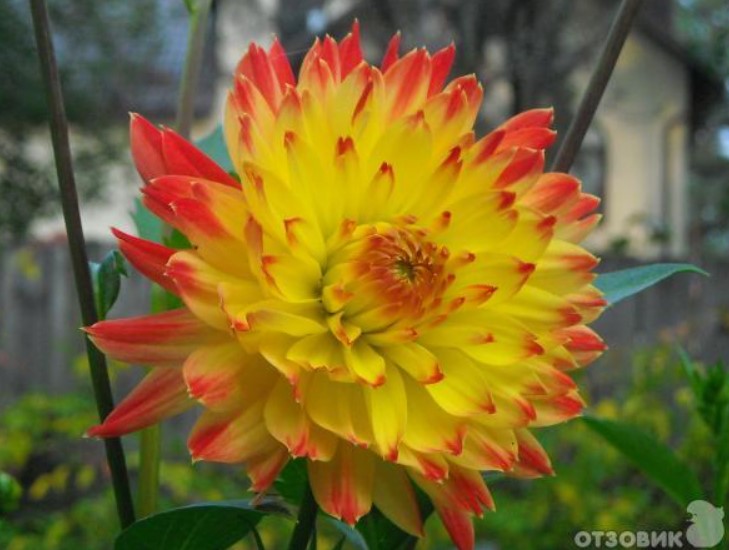
Bright, yellow and red. Summer-autumn. |
| Opera | Short. 35. |
From white to cherry. |
Wide, spatulate. July-October. |
| Minion | Compact, with a large number of flower stalks. 35. |
Simple, buds appear early. |
Oval. July-October. |
Growing annual dahlias from seeds
Dahlias are grown from seed in two ways: either through seedlings in March or directly into the ground in May. Follow these planting guidelines:
- Prepare containers by treating them with a solution of manganese.
- Mix humus, peat, and sand.
- The seeds are soaked for 24 hours.
- Sow 3 seeds per pot, planting no more than 1 cm deep.
- Water until the soil is moist, but not overwatered. Cover the soil to create a greenhouse-like environment.
- Place in a warm place, with an air temperature of around 25°C. Inspect and ventilate periodically, avoid over-watering, and check for mold.
- Two weeks after the emergence of shoots, picking is carried out.
- When 4 true leaves have grown, the seedlings are planted in a greenhouse or garden.
Planting annual dahlia seedlings in a flower bed
The soil is prepared in advance, dug, and mineral fertilizers are added. Then, planting holes are dug, leaving 30-50 cm between them, paying attention to the plant's characteristics.
Flowers are transplanted using the transshipment method, without damaging the delicate roots. Water them regularly, and cover the soil with sawdust or dry grass. Tall varieties are tied to a support such as a stick or tall pole with wide ribbons or fabric.
How to collect seeds from annual dahlias
To collect and store planting material, very strong plants are marked, allowing them to mature for about six weeks. They are labeled for future use, taking care not to lose any flower among the others.
Harvesting takes place in early autumn, on a windless, sunny day. The seeds are placed in paper envelopes labeled with the variety.
If the seeds are collected from hybrids, their varietal qualities will differ next year.
Perennial dahlias
Perennial varieties have the same names as annuals; they are distinguished by their inflorescences rather than by their growing season. They are also distinguished by their propagation methods. Perennials are planted from tubers. Dahlias are classified by flower shape into the following types:
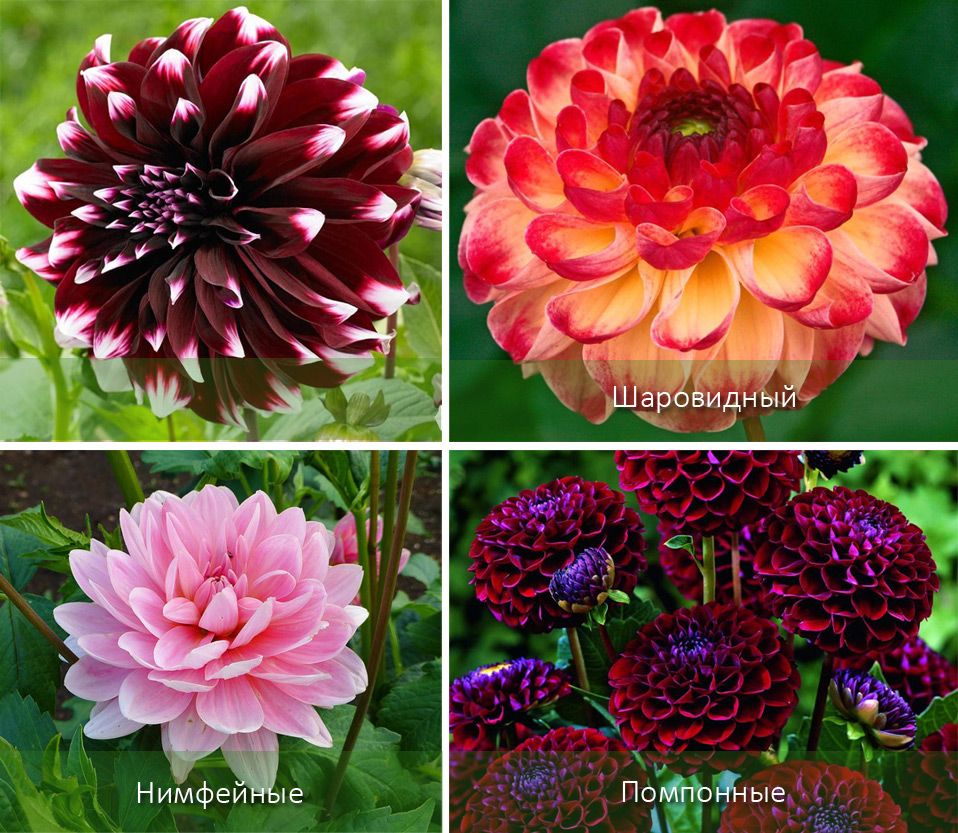
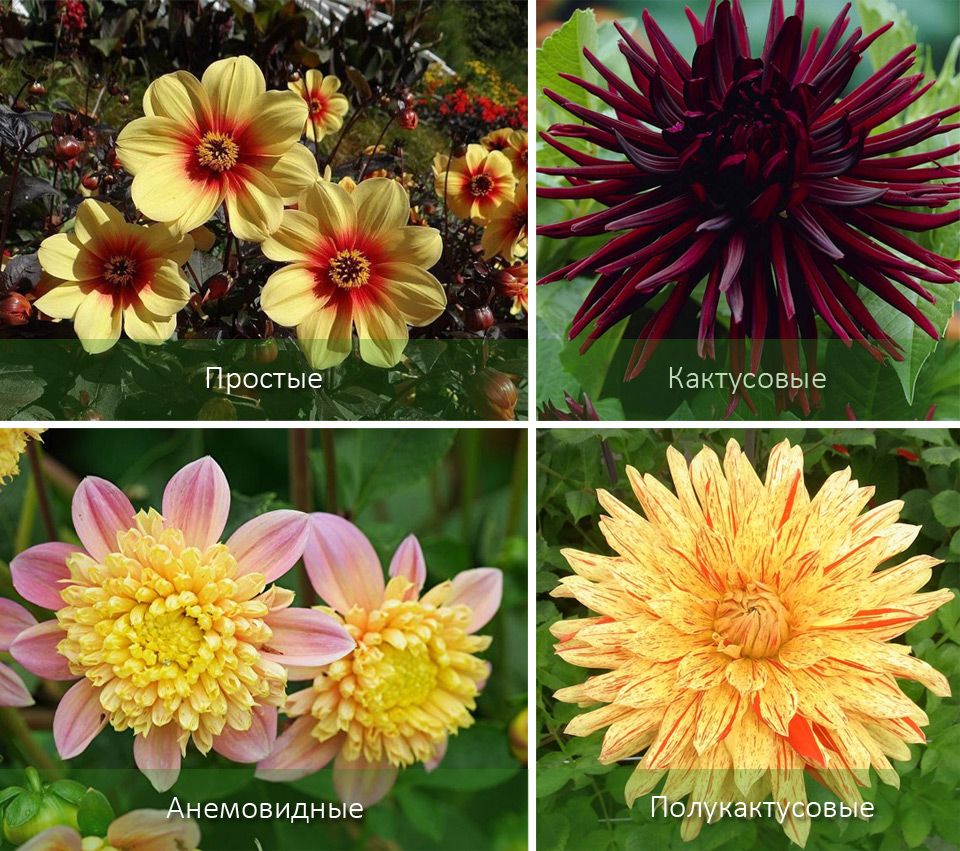
Simple
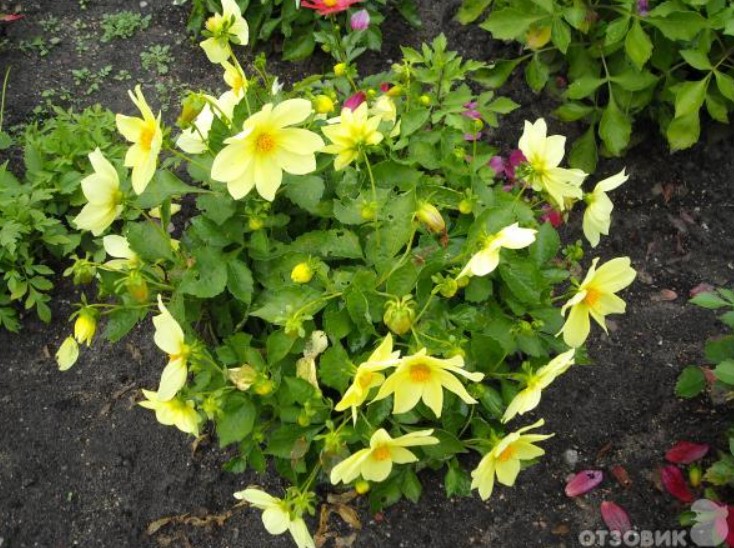
They have single-row petals, are short, have a yellow center, and grow only 0.6 m tall with straight, branched stems. Varieties: Princess Maria, Yellow Hammer, Orange, Cupid, and Collerette.
Anemone-like
Double and semi-double flowers, petals rayed, tubular in the center. This tall perennial grows over 100 cm. Looks beautiful in a mixed border.
It has the following varieties: Inca, Mambo, Polka, Comet, Lambada.
Peony-shaped
Large, semi-double or double, reminiscent of peonies. Tall. En Rouge, Redcoat, Bendall, Beauty Chic, Opera.
Collar
Large flower heads, 10 cm wide, are topped by narrow white petals resembling a collar. Tall varieties grow up to 120 cm. They bloom from midsummer until the first frost. Popular varieties, beloved by gardeners, include: Gioconda, Knight, Granato, Butterfly, and Danko's Heart.
Spherical
Multiple petals of varying colors, over 9 cm long, with wide, blunt-tipped outer petals. Tall, branched bushes, used for cutting. Varieties are varied, with the best being Kenora Fairball, White Aster, Gypsy Night, and Bayadère.
Pompom
They got their name from their small flowers, which resemble small pom-poms. They are double, 5 cm long, with blunt-tipped outer petals, tubular, and folded like tiles.
Available in a variety of colors, except blue. The bushes are dense, with strong branches. The following varieties have been developed: Viking, Little William Rocco, and Amber Queen.
Cactaceae
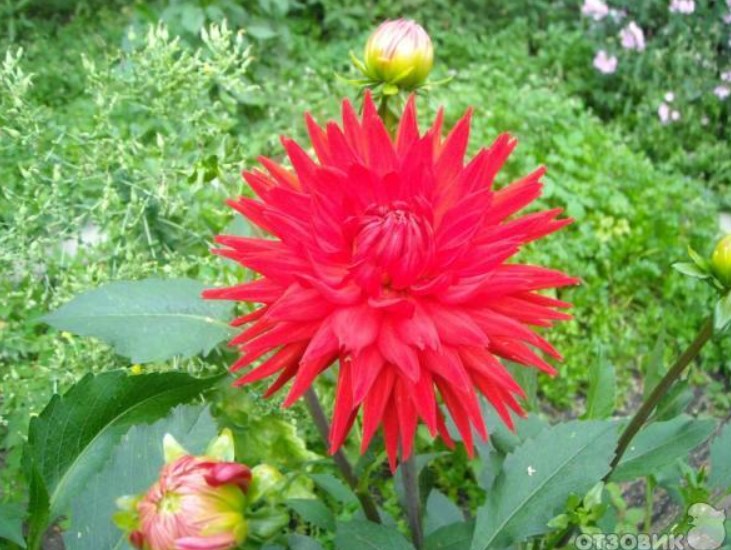
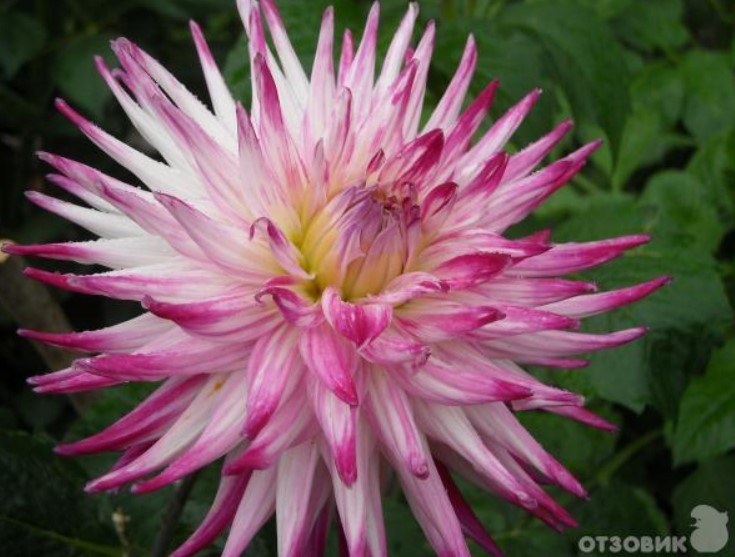
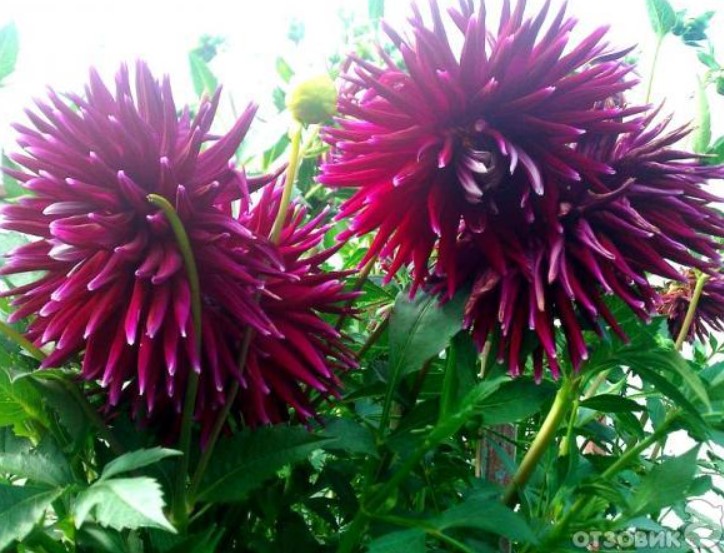
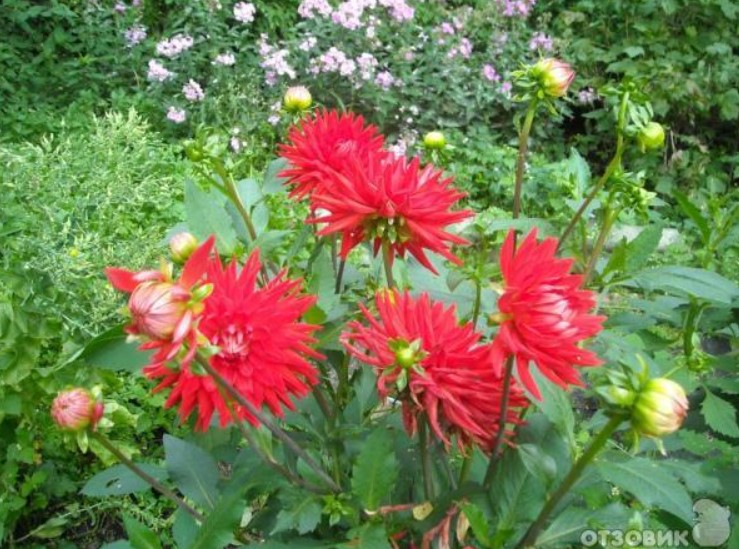
A bushy plant producing up to 15 flower stalks. The flowers are dense, 10 cm in diameter, with pointed, needle-like petals. Suitable for growing in groups or individually. Stunning varieties include Black Wizard, Favorite, Princess Park, and Blackberry.
Semi-cacti
A transitional group of medium-sized asters. It grows to a height of 130 cm, with lush foliage. The inflorescences are double, large, partially tubular, and pointed. Best varieties: Meteor, Island Delight, Peips Pink, Just Peachy.
Nymphaeaceae
Enormous, branched bushes. Leaves are dissected into several parts. The flower is 18 cm, reminiscent of a water lily, consisting of petals tilted toward the center. The roots are tuberous. Well-known and popular varieties include Twinny, Ken's Flame, and Rapallo.
Decorative
The largest class of dahlias with double flowers. The leaves are opposite. Blooms from July to September. The flowers bend toward the stem, creating a stunning effect.
Planting tubers in open ground
In temperate climates, dahlias are not left in the ground. To ensure annual blooming, the rhizomes are dug up in the fall, stored properly during the winter months, and then replanted in the spring. This can be done in two ways. For earlier bud formation, the tubers are planted in large pots for germination, then placed in the ground. Alternatively, they are planted in the garden immediately after the threat of frost has passed.
This method of propagation has advantages. The roots retain all the characteristics of the mother plant.
Preparing tubers for planting
The tubers are germinated in a greenhouse or indoors on a windowsill, in prepared containers with soil treated as for seedlings. Before planting, the roots are inspected and dried roots are removed. They are planted shallowly, leaving 3 cm above the surface, preferably with buds. When the buds begin to sprout, they are removed from the soil, shaken, and divided with a knife, leaving one young bud on each section. The cut sections are treated with a biostimulant.
The divided sections are buried back in the containers for further growth. If any extra shoots appear, they are cut off and the cuttings are rooted in the soil. After the last frost, around the end of spring, they are planted in the garden.
Planting holes are prepared in advance, spaced 60 cm apart, and phosphorus, potassium, and magnesium are added. The tubers are placed in the soil so that only the sprouted shoots are visible above the surface, and the roots are buried 5 cm below the surface.
Selecting a site
Dahlias are heat- and moisture-loving flowers. These qualities are taken into account when choosing a planting site. Choose a site that is level or slightly elevated, sheltered by plantings or buildings, and sunny. Avoid planting in low-lying areas. The soil should be fertile and permeable. If the soil is heavy, add sawdust, humus, or sand. Dahlias prefer neutral or slightly acidic soil. Gardeners deacidify the soil in the fall by adding slaked lime.
Flowerbeds are not made near trees so that they do not take moisture from the dahlias.
Caring for Dahlias
Dahlias are cared for like any other plant. The soil is hilled periodically and weeds are removed. Excess stems are pinched as they grow, achieving a bushier bush. Some branches are pruned to prevent airflow, and cuttings are taken from these branches and rooted. Removing weak shoots allows for ventilation and prevents diseases such as gray mold and fusarium. Faded flowers are pinched off.
Check for diseases periodically, as powdery mildew can appear during wet summers. To prevent problems, apply potassium and phosphorus fertilizers and fungicides.
Watering
Water weekly, pouring 10 liters of water under the bush. Then, when the soil dries out, hill it up.
Top dressing
The first time they are fed is when planting flowers in the ground, then every 2 weeks, alternating mineral and organic fertilizers.
During feeding, add 15 g of ammonium nitrate, as well as superphosphate and potassium at a rate of 30 g per 10 liters. Organic fertilizers include manure, cow dung, or bird droppings, diluted heavily with water to avoid burning the roots. Apply 1 liter per plant.
Supports
Tall dahlia varieties are tied to a trellis or a stake every 35-40 cm. Don't tighten the tying material too tightly, so it doesn't dig into the plant. Use ribbons, special wide ties, or old rags. Wire and rope are not suitable.
How to dig up tubers and store dahlias in winter
Dahlia stems and leaves droop at the first frost. Dig a hole about 30-40 cm deep from the main shoot and dig up the plant. Remove any remaining soil from the tubers, rinse them under running water, and dry them for a month in a ventilated area at a temperature no higher than 12°C. Then treat them against disease and rot and store them until next summer.
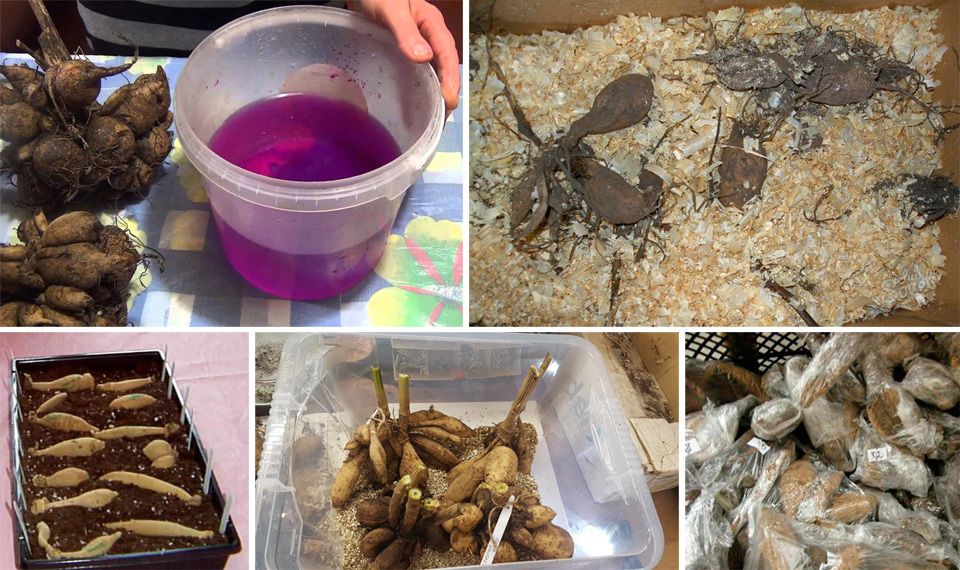
The rhizomes are packaged in cardboard boxes or paper bags, or left in paraffin and a sand bed in a cellar or refrigerator vegetable drawer. The substrate should be slightly moist.
The root tubers are periodically inspected for damage and rot. Diseased specimens are destroyed.
Propagation of dahlias
Propagation is carried out by cuttings or division of tubers.
Cuttings
The branches are cut off at the heel and treated with a biostimulant. During the winter, they are kept in a cool place to prevent sprouting. When planting in the summer, they are rooted in boxes.
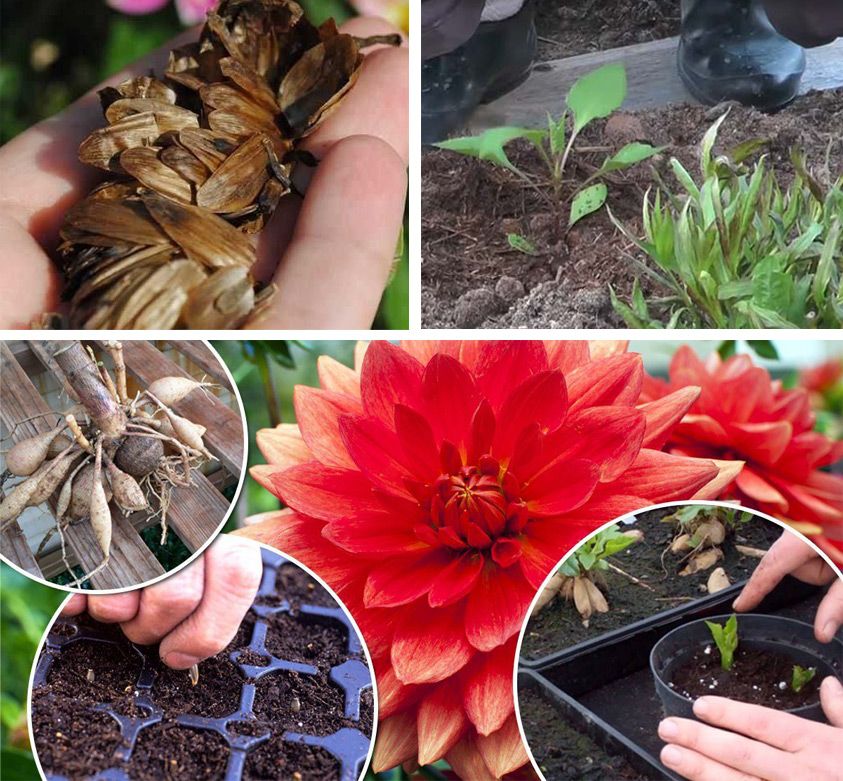
Place the cuttings at an angle to the soil surface, moisten the soil, and cover with plastic or covering material. Once a good root ball has formed, transplant the sprouted plants into the soil.
Dividing rhizomes
This is done in the fall, after the plant has been dug up. The healthiest tubers are selected, separated, and stored. The next propagation stage takes place in the spring. It is described above.
Pests, diseases
| Problem | Elimination measures |
| Brown leaf spot | The leaves are treated with a solution of Bordeaux mixture or other preparations containing copper. |
| Blackleg | Water with a solution of onions, every week. |
| Root rot | The roots are treated with special fungicides. |
| Fusarium | Pouring the soil with solutions that disinfect it. |
| Cucumber mosaic | They destroy the plant completely. |
| Earwig | Spray with insecticide. |
| Slugs | Ash is scattered around the flowers to prevent pests from crawling over them. |
| Aphid | Cut off damaged stems and leaves and spray them with an infusion of biological preparations and laundry soap. |
| Spider mite | Remove the cobwebs with a cloth and wipe the leaves on both sides with oil-containing preparations. If you have an ultraviolet lamp, shine a light on the underside. |
Reviews of dahlias from gardeners
DAHLIAS - the most beautiful and unpretentious flowers
Price: 150 rubles
Good day to all readers of my review!I want to write a review of the most beautiful and unpretentious flowers I've found for myself: Dutch dahlias. This wasn't the first time I'd seen them or planted them; I'd bought seeds and seedlings from both grandmothers and stores, but they were all the same age, and the flowers themselves, while beautiful, are, in my opinion, simple compared to the ones I'm about to show you.
Unfortunately, I don't have the packaging anymore, but they come in a plastic bag with small holes for airflow, and a sample of the resulting flower is included. The photo on the package is so stunning, you wonder if it's embellished or Photoshopped. The first time, I only picked one flower to try, and to my surprise, it looked exactly like the picture.
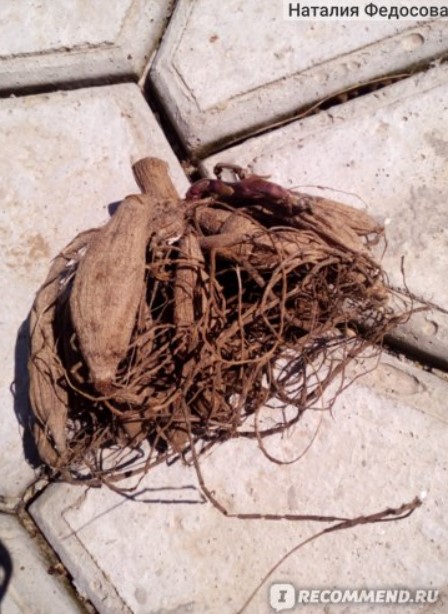
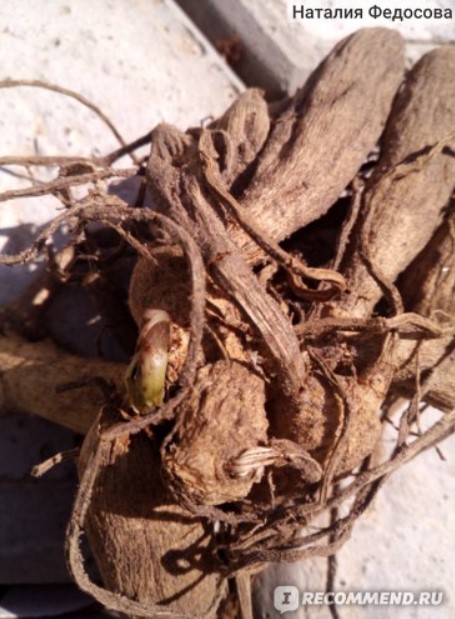
The bag itself contains these snags; you should select them in the spring and watch for the shoots to appear, then you will be sure that the flower will take root.
dahlia bulb
The flower needs to be planted in warm soil, as it dies at even -1 degrees Celsius. Within a week, you'll see the first shoots. And within a month, it will grow gigantic before your eyes.
Here are several varieties that I bought this year and they have already been blooming for four months and will bloom until September or October, the main thing is that there is no frost.
The most important thing is to preserve them later, as they MUST be dug up for the winter. They don't overwinter in the ground. They need to be washed to remove dirt, dried thoroughly, and put in a cool, dry place. Last year, my seedling died because it was in the shed and apparently froze. This year, I'll try to put them in the refrigerator (not in my
rosette)
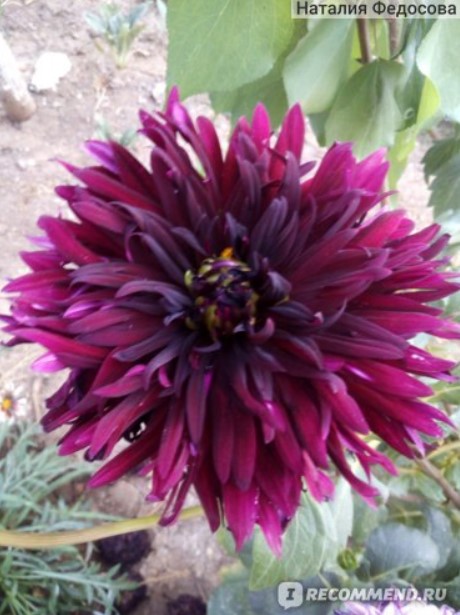
The most important thing is that this flower will bloom for a very long time, delighting you with flowers for about six months. If you manage to save the bulbs, they will be there next year and even multiply. I recommend everyone buy these flowers. They are beautiful and will delight not only you but also surprise your friends.
Advantages
Decorative all season long
Cheap seedlings
They bloom for a long time
Can be sown in open ground
Do not require garters
Extraordinarily beautiful
Variety of colors
Flaws
Storing tubers
Natalia Fedosova
recommends
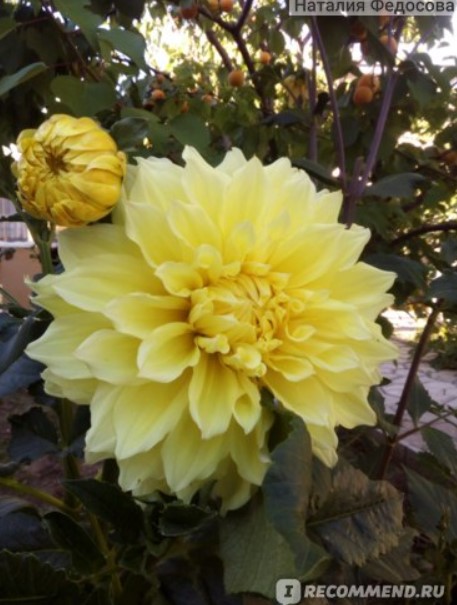
Review: Garden flower "Dahlia" - Creates a festive feeling in the garden
Advantages: Large, bright flowers
Disadvantages: There are difficulties with storing tubers
I can't imagine an autumn garden without dahlias. Their large, bright blooms create a festive atmosphere in the garden.I take the dahlia tubers out of the cellar at the end of April and lay them out to germinate. When the sprouts reach 7-8 cm, I cut them off with a piece of the tuber and root them. This will then become an independent plant.
Meanwhile, the tuber produces new shoots. In May, I plant the dahlias in specially prepared planting holes filled with good, nutritious soil. I place poles nearby so I can tie the flowers to them later.
They usually bloom in the second half of July and continue to bloom until frost. I always rejoice at the first bright flower.
I plant them both in the flowerbed and in the vegetable garden, among the vegetables—I like it that way. Most of my dahlias are tall, and they look impressive. But the low-growing plants are no less beautiful and decorative. They make such a neat clump and their profusion of blooms, making them a wonderful addition to any flowerbed. There are even potted dahlias available.
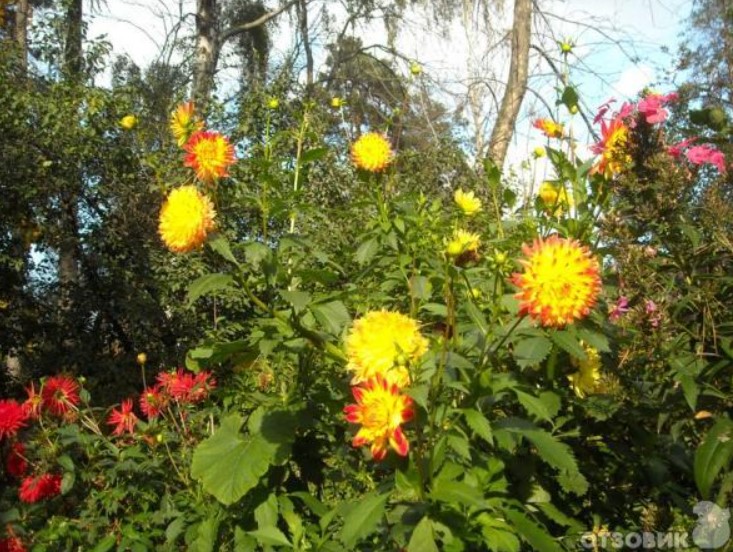
I also love these "funny guys".
Dahlias prefer abundant but infrequent watering and good fertilizing. It's best to immediately apply a long-lasting fertilizer, such as "Ispolin," to the planting holes.
In the fall, the tubers must be dug up. Disinfect them in a strong solution of potassium permanganate and dry them. I store the tubers in a basket, cover it completely with sawdust, and take them to the cellar.
I have such an optimistic flower.
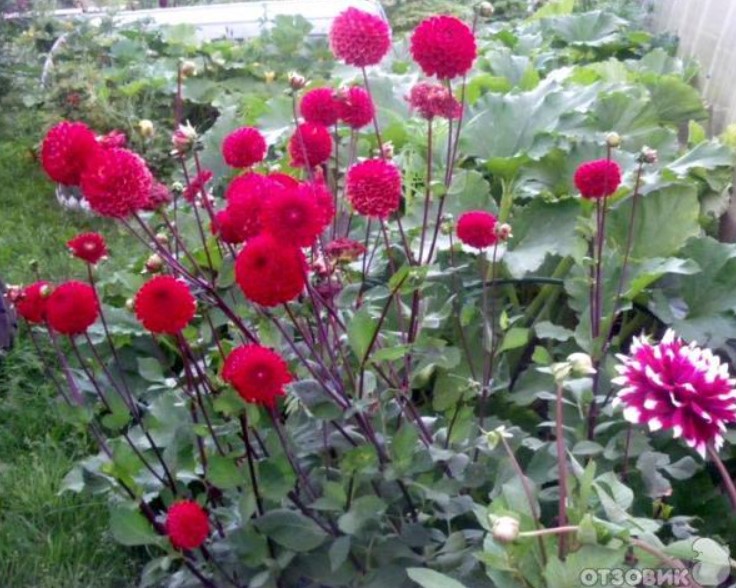
And such "serious" ones
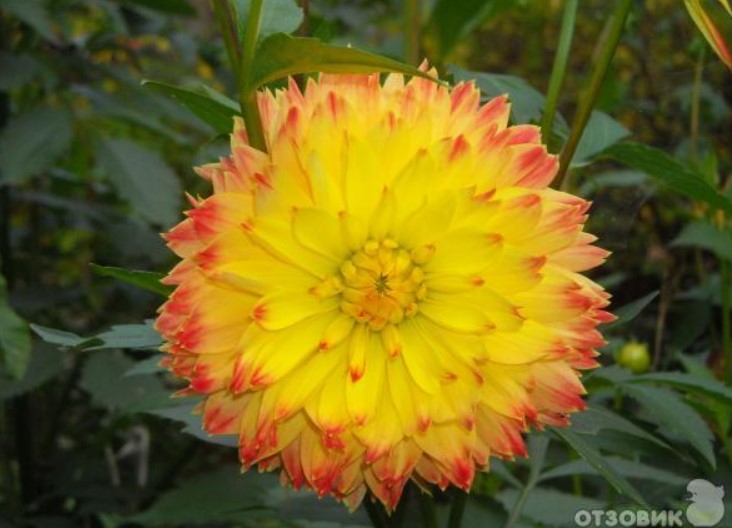
And this one reminds me of a fire.
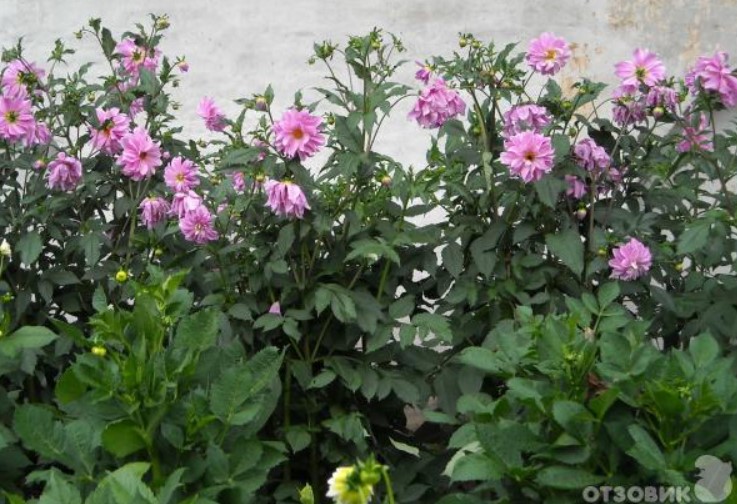
Tall dahlias can be planted along a fence, provided they receive sufficient sunlight. They beautifully enhance otherwise unsightly areas of the property.
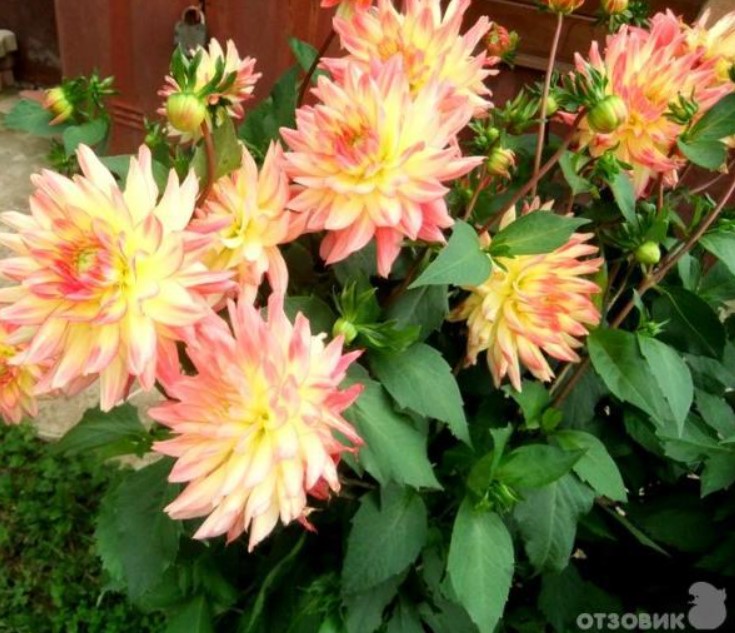
Here is my favorite.
It was as if the lanterns had come on.
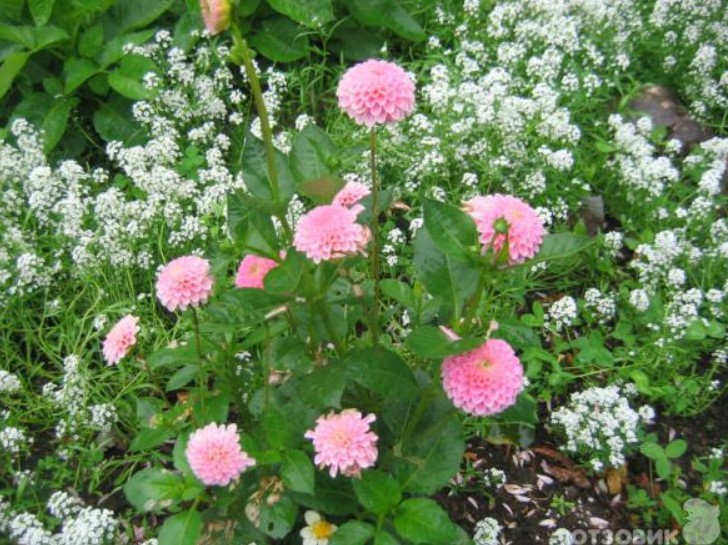
And these “pompoms” framed with alyssum are lovely.
And these too
Growing dahlias is quite simple, but certain conditions must be met. Dahlias prefer a well-lit location, fertile soil, and ample watering, and they absolutely cannot tolerate frost.
Unfortunately, despite all precautions, some tubers still die during winter storage, and new ones have to be purchased.
If someone has difficulty preserving tubers, then it is worth growing annual dahlias; they are no less beautiful and bright.
Overall impression: Creates a festive feeling in the garden
My rating
5
I recommend it to friends YES