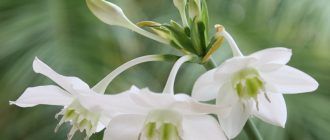
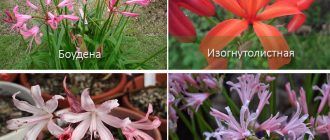
Hippeastrum is a flower belonging to the Amaryllis family. It is native to tropical and subtropical regions of the Americas and the Amazon River basin. The plant first appeared in Europe in the 16th century.
Content
Description
The flower is classified as a bulbous perennial. The bulb is cone-shaped, with a short, thick stem and closed scales. Its size depends on the plant species and can range from 50 to 100 mm.
The leaves are linear, 50-70 cm long, and arranged oppositely in two rows. The foliage is green, but there are varieties with crimson leaves. The inflorescences are umbel-shaped and consist of two to six flowers of both sexes.
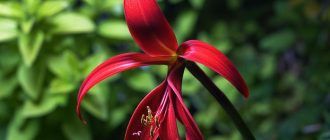
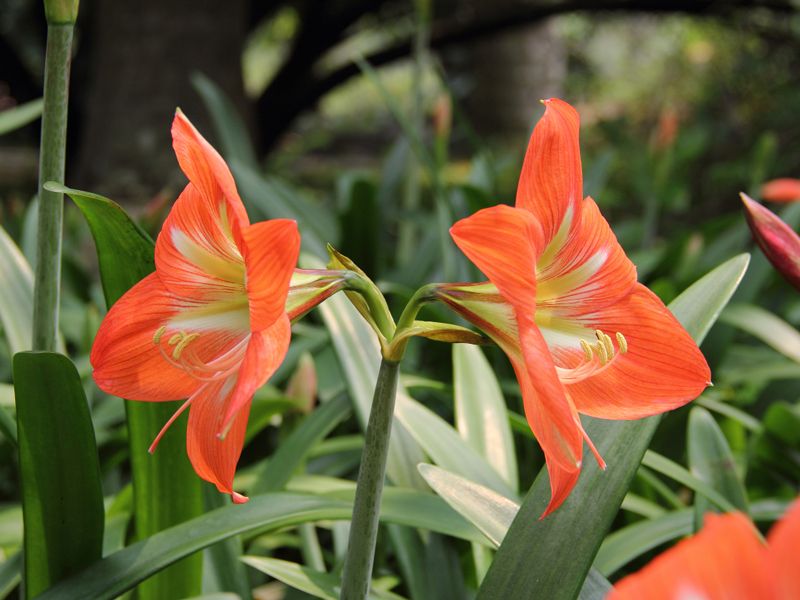
The flowers are tubular or funnel-shaped, ranging in color from dark red to white. The fruits are three-valved capsules in which the hippeastrum seed matures, with a nearly 100% germination rate.
Comparison of hippeastrum and amaryllis
Beginning gardeners often fail to distinguish between hippeastrum and amaryllis, or even consider them the same plant. These plants are indeed related and classified in the same family, but they belong to different genera.
Despite a certain similarity between the flowers mentioned, these plants have many differences:
| Peculiarity | Hippeastrum | Amaryllis |
| Time of rest | From September until the end of winter. | From June until the end of summer. |
| Bloom | February-March. | Autumn (if grown indoors – closer to the beginning of winter). |
| Reproduction | When grown indoors, babies are practically not formed. | New babies are formed every year. |
| Appearance of the peduncle | Hollow. | Full-bodied. |
| Number of flowers in an inflorescence | From 2 to 6. | From 8 to 12. |
| Smell | It doesn't feel like it. | Saturated. |
| Formation of the peduncle | After the formation of the fourth leaf blade or in parallel with it. | Initially, a peduncle is formed, and at the end of the growing season, foliage is formed. |
| Possibility of life cycle change | It is permitted to artificially send plants into dormancy at any time of the year, as well as to stimulate flowering at a specified time. | The cycle of life cannot be changed. |
Types and varieties of Hippeastrum
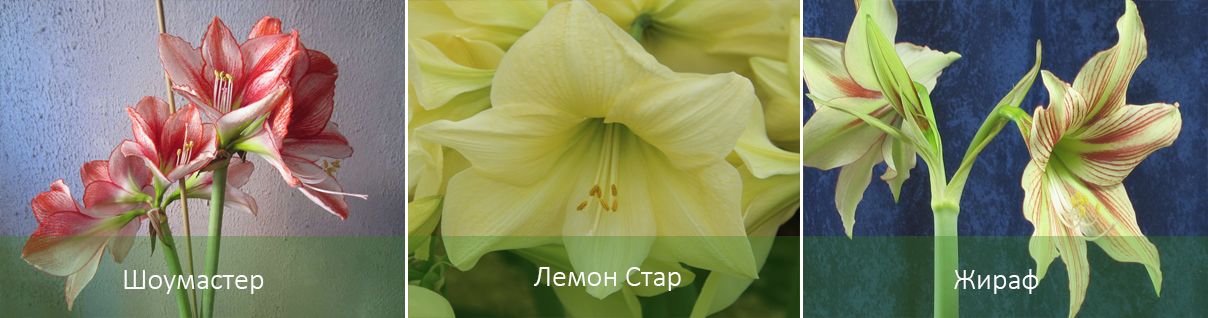
The plant comprises ninety species and approximately 2,000 cultivars, but the hybrid hippeastrum is most commonly grown indoors. Based on the plant's size and shape, a special classification system has been developed in Russia that divides all varieties of the flower into nine groups:
| Group | Varieties |
| Large-flowered |
|
| Mid-flowered |
|
| Small-flowered |
|
| Large-flowered terry |
|
| Medium-flowered double |
|
| Double small-flowered |
|
| Sibister |
|
| Orchidaceae |
|
| Tubular |
|
Home care at different stages of flower development
When caring for a flower at home, it is recommended to pay attention to the season of the year:
| Season and period of development | Temperature conditions | Lighting and location | Humidity |
| Mid-September – end of January (rest period) | +10…+12°C. | It does not require lighting; it is recommended to place it in a dry, dark area. | Moisturizing is carried out once every 7 days. |
| Late January – early February (leaf formation) | +25…+30°C. | Dim light, it is recommended to place it in a darkened room. | Light watering (the soil is almost dry) |
| Beginning of February (formation of flower stalk) | At temperatures above +20°C, the development of the peduncle accelerates; at temperatures below +18°C, this process slows down. | Bright diffused light, the plant is placed on the windowsill. | Gradually increase the moisture level, the soil should be slightly damp. |
| Late February – mid-March (growing season) | +16…+20°C. | Place the plant on a south-facing windowsill in bright, indirect light. Rotate the plant periodically to prevent deformation. | Regular watering. |
| Mid-March – November (active foliage emergence) | +18…+22°C. | Bright lighting, recommended to be placed outdoors, in a place where there is no direct sunlight. | The frequency of moisture application is gradually reduced until it stops completely. |
Watering
The plant requires generous watering only during the flowering stage, but avoid overwatering. As the dormant period approaches, reduce the frequency of watering, and stop completely once all the foliage has died back. Only a small amount of water should be added to the tray to ensure the root system remains viable.
During the dormant period, the soil where the flower is grown should be dry, as high moisture levels can cause the appearance of new foliage, which will negatively affect the condition of the flowers.
Top dressing
It's recommended to feed the plant immediately after flowering. Fertilizing is necessary to build up strength for the following year. After flowering, rapid foliage growth and the formation of bulb scales, which subsequently facilitate the emergence of new buds, are observed. At this stage, it's recommended to move the plant outdoors.
During the growth of foliage, the plant should be fed once every ten days; the best fertilizer is considered to be a mullein solution (1 liter of the product is diluted in 10 liters of clean water).
Transfer
Repotting the flower requires annual maintenance; only then will the plant maintain its majestic appearance. The following are considered the best times for repotting:
- before placing into storage during the dormant period;
- after the end of hibernation;
- before flowering;
- after flowering has finished (if this applies only to a purchased plant).
Once you have chosen the right time and decided to carry out the transplant, you should first perform a number of steps:
- Dead scales are carefully removed from the bulb;
- The rhizome is inspected, areas with dead or rotten roots are trimmed if necessary, and the cut areas are treated with fungicides.
For planting hippeastrum, choose loose, light soil with low acidity and plenty of nutrients and mineral salts. When purchasing soil, choose a soil specifically designed for bulbous plants, then mix it with sand or vermiculite.
When preparing the soil yourself, you should mix leaf soil (3 parts) and humus (one part).
To grow hippeastrum, use a pot with walls that are approximately 3 cm away from the bulb. A drainage layer must be placed at the bottom of the container.
When planting the bulb, you need to make sure that most of it is on the surface.
Reproduction
The simplest method of flower propagation is considered to be the use of bulblets, but gardeners are increasingly dividing the bulb.
To divide the bulb efficiently, prepare a strong, healthy bulb and cut it in half, ensuring both halves have an equal amount of stem and scales. The cut area is sprinkled with charcoal or activated charcoal. The bulb is then planted in a peat mixture.
In about two months, new shoots will form. When spring arrives, they will need to be repotted.
The plant can also be propagated by seed, but to obtain flowers, artificial pollination is required. It's important to remember that during the first two years, the seedling almost never blooms and lacks the maternal traits.
Care mistakes
When caring for hippeastrum, novice gardeners can make a number of mistakes:
| Mistakes in care | Signs | Elimination |
| There is no dormant period (temperature above +18°C, watering or fertilization is not stopped). | There is no formation of buds and, consequently, flowering. | It is necessary to follow the specified watering rules, control the temperature and humidity levels at each stage of the plant's life. |
| Inappropriate temperature conditions during the flowering period (less than +17°C). | ||
| Insufficient lighting during vegetation. | ||
| Failure to comply with the rules for fertilizing and watering. | ||
| Over-hydration. | The plant suddenly stops growing, the bulbs rot, and pests appear in the soil. | The bulb needs to be dug up, cleared of soil, and examined for damage. The flower should be replanted in new soil. |
| Low temperature or high humidity. | Hippeastrum turns black. | Remove affected buds and move the hippeastrum to a warm, dry place. |
| Potassium deficiency or keeping the plant in a room with dry air during the growing season. | The tips of the leaves take on a brown tint. | Apply fertilizer and adjust the feeding schedule, humidify the air. |
| Strong lighting. | The flowers are fading. | Place the plant in a place with diffused light, where there is no risk of exposure to direct sunlight. |
Diseases and treatment
One of the most dangerous diseases for hippeastrum is red bulb burn. If streaks or spots of this color are detected, the affected areas should be cut out immediately. Remove all affected foliage and dead root tissue. Treat all cut areas with Fundazol, Maxim, or Fitosporin. Allow the treated bulb to dry for a week and then re-examine it for any remaining lesions. If none are present, repot it.

Additionally, the plant may be suffering from fusarium wilt or anthracnose. Treatment is similar to that for the previous disease. All affected areas must be removed, and then the cut areas must be treated with products that promote healing.
It should be remembered that diseases are formed due to improperly selected soil, excessive nitrogen content, non-compliance with the watering regime, and insufficient lighting.
If all the above conditions are met correctly, the plant will delight its owners with a healthy appearance and good flowering for a long time.