Nerine is a perennial flower native to South Africa, belonging to the Amaryllis family. It is named after the sea nymph Nereis (a heroine of ancient Greek mythology). Other common names include Guernsey lily, spider lily, and nerine.
In temperate regions, sea nymphs are grown indoors. Where winters are mild, they are planted in the garden. Planting and caring for nerines has its own specific requirements. When grown properly, they will delight you with vibrant blooms and a delicate fragrance in the fall, after most other plants have finished blooming.
Description of Nerine
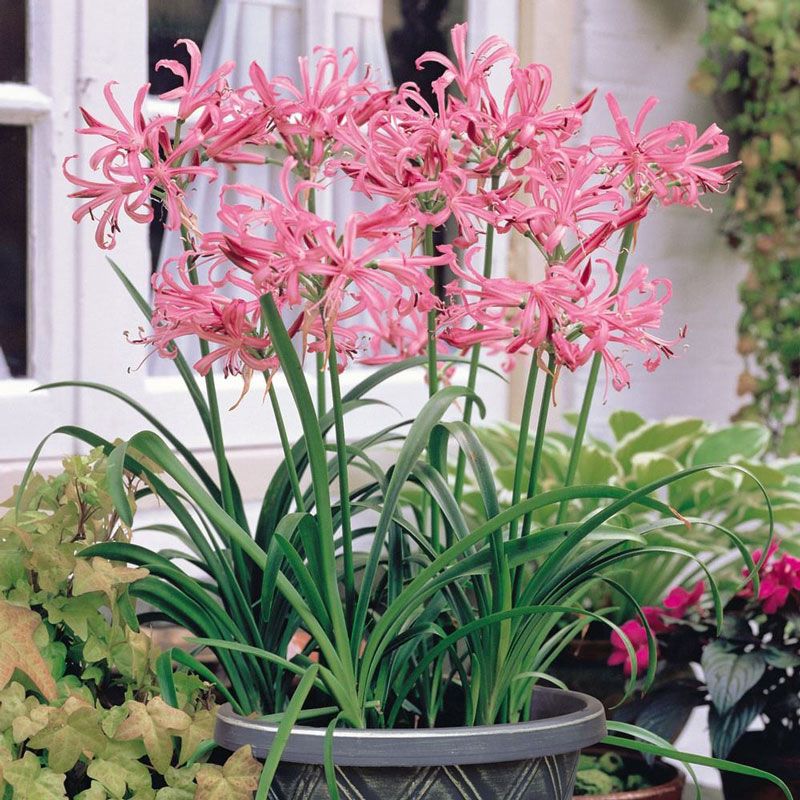
The bulb of Nerine lily is 3-5 cm long and oblong. The leaves are linear. The peduncle is thin and stable, growing up to 50 cm.
Funnel-shaped flowers with long, narrow petals are gathered into an umbel. The flowers are white or come in various shades of red. The graceful blooms exude a pleasant scent.
Nerine species
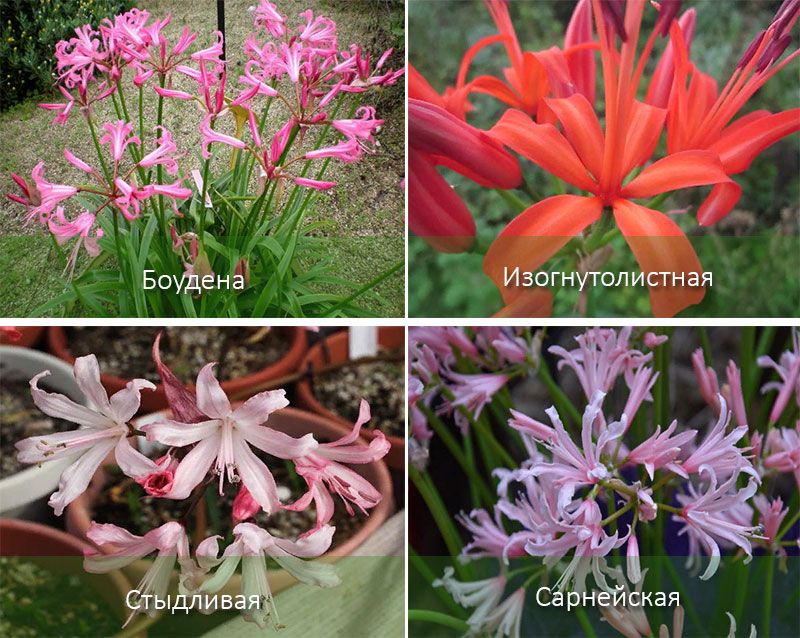
There are up to 30 species of Nerine. The most popular are:
| View | Description |
| Curved-leaved | It has large, bright red flowers. |
| Shy | It got its name from its slightly drooping white flowers. |
| Sarneyskaya | It has a wide variety of colors. |
| Bowden | It has high cold resistance, making it suitable for growing in open ground. |
Home care for nerine
Spider lilies have periods of dormancy and activity, which affect how they are cared for when growing the plant.
Peculiarities of care in different seasons:
| Periods/care | Winter dormancy | Summer calm | Vegetation |
| Conditions | Cool, dry, lighted place. | Warm, dry, well-lit place. | |
| Temperature | +8 °С…+10 °С | +23 °С…+25 °С | +15 °C |
| Watering | Reduce gradually, stop after the leaves fall. | At the end of the period during transplantation. | Moderate, frequent. |
| Top dressing | 1-2 times a month. | Not needed | Once a week. |
Nerine requires loose, slightly acidic soil. You can mix turf with humus and coarse sand (1:1:1). It's important to ensure proper drainage.
When planting, do not bury the bulb head. Use small pots or space the bulbs 3-4 cm apart. This will promote flowering. Flower stalks and buds will appear in 4 weeks. If rooted well, all buds will open. Feed with liquid amaryllis fertilizer.
Growing, caring for and propagating Nerine in open ground
They are grown outdoors in regions where winter temperatures do not drop below -10°C. Otherwise, the bulbs should be stored on the balcony for the winter.
Choose an elevated location, well-lit by the sun, protected from direct rays.
The soil should be loose and light. Sand mixed with compost or humus can be used. Plant in late July or early August, spacing the plants 7 cm apart. Ensure good drainage to prevent overwatering and rot.
Water moderately but frequently, avoiding waterlogging. Fertilize every two weeks during active growth with a fertilizer for flowering plants.
Reproduction is possible in 2 ways:
- Seminal.
- Vegetative.
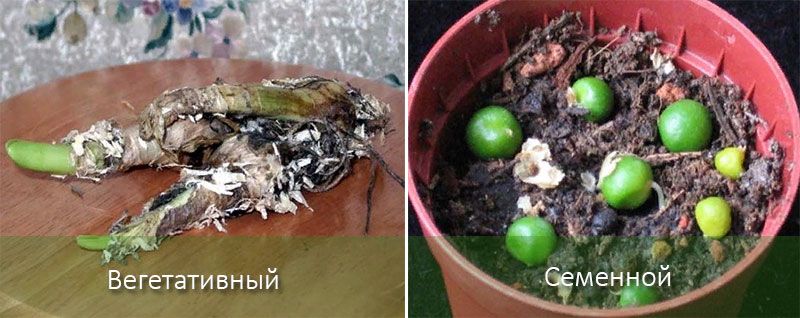
The first method is difficult and time-consuming. Sow the seeds in containers. Vermiculite can be used as a growing medium. Cover the seeds with glass or plastic. Grow at a temperature of at least 22°C. Sprouts will emerge in three weeks. When two true leaves appear, transplant them into nutrient-rich soil. Provide diffused light. There are no dormant periods for the first three years.
Vegetative propagation using bulblets is easier. Carefully separate the bulblets from the mother bulb. Plant in the ground in late July or early August. Water once and cover with a layer of mulch. Flowering can be expected in October.
Diseases and pests of Nerine
Nerine is sensitive to poor care but fairly disease-resistant. However, there are some pests it can suffer from.
Small parasites that feed on plant sap include mealybugs and aphids. A soap solution and a special pesticide will help get rid of them. Less commonly, the plant is affected by powdery mildew. In this case, treating it with a fungicide (Fitosporin) will help.
Top.tomathouse.com warns: Nerine is poisonous
When caring for this graceful beauty, be careful, as its sap is poisonous. It's important to wear gloves and avoid contact with exposed skin and mucous membranes. Wash your hands with soap after handling. Keep children and pets out of reach of the plant.