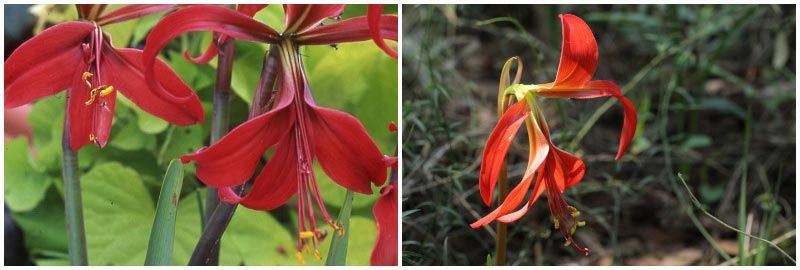
Sprekelia is a flower in the Amaryllidaceae family. It is found in Guatemala and Mexico. The Aztec tribes used it to decorate their festive ceremonies.
Description of Sprekelia
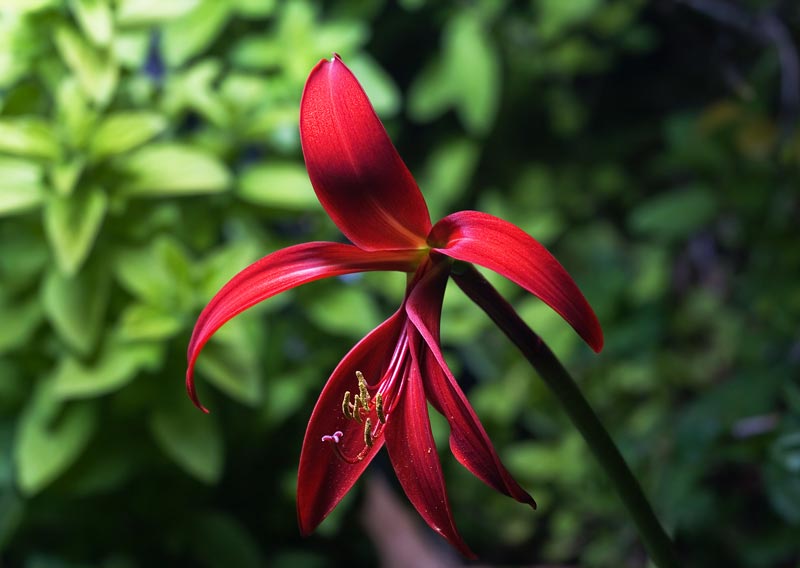
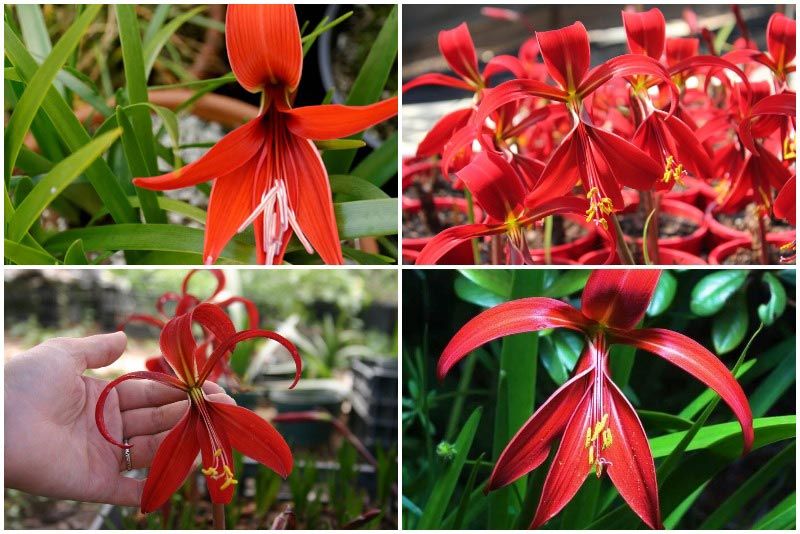
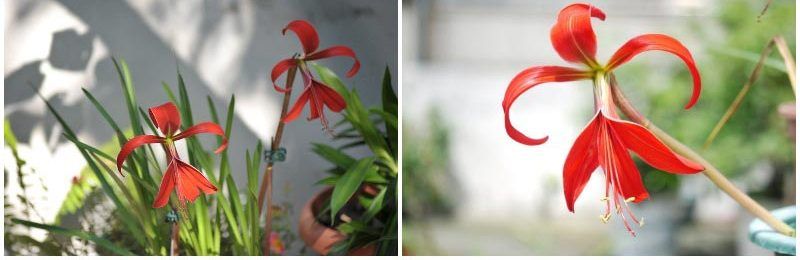
Sprekelia (Sprekelia formossissima) is distinguished by long linear leaves up to 50 cm long and tall peduncles, each with one large, bright red, velvety flower and six curved petals up to 13 cm in diameter. It blooms in early spring for three weeks.
The plant's leaves emerge after flowering and begin to fall in early autumn. The root is a long, round, black bulb with red stripes, its outer surface covered with membranous scales.
Types of Sprekelia
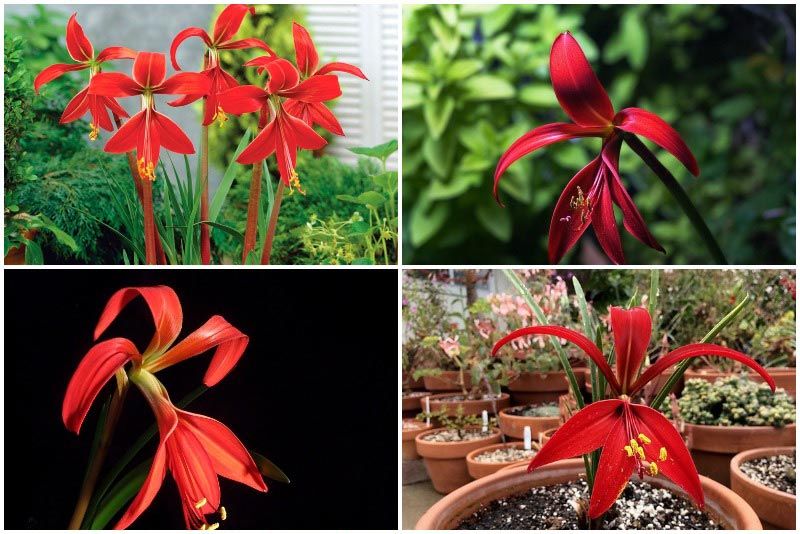
The most beautiful - several varieties with different colors have been bred from this species.
| Variety | Flowers |
| Karvinsky | Raspberry with white trim. |
| Orient Red | Red with white stripe. |
| Peru | Dark red. |
Large-flowered – a hybrid with several peduncles, large flowers 15 cm in diameter. It has a vanilla aroma.
Caring for Sprekelia at home
Gardeners love the decorative indoor sprekelia. Growing conditions:
| Parameters | Spring / Summer | Winter / Autumn (November – March) |
| Lighting/Location | Bright sun rays in the morning and evening, except at noon. | Not required. |
| Temperature | +22…25 °C | +16…18 °C |
| Watering | Regular, generous watering with warm, soft water. Water without touching the bulb or leaves (on the tray or edge of the pot). | Reduce when all the leaves dry out and do not water. |
| Top dressing | Once the flower stalk appears, apply liquid fertilizer for flowering plants once a week until early September. Do not use mullein or bird droppings. | Not needed. |
| Humidity | High temperature is not required, wipe off dust with a cloth or take a warm shower. | Not required. |
Growing and care vary depending on the conditions: from late fall to early spring, the bulbs are removed, placed in dry peat, and kept at a temperature of 12–13°C, or left to overwinter in their containers. After the dormant period ends, they are returned to the pot. They are brought into the light and watering resumed only when flower stalks have formed.
Transplanting and propagating Sprekelia
An adult plant is repotted every three years, while a young plant should be repotted annually. Choose a container with a diameter 3 cm larger than the bulb. The soil can be purchased ready-made or mixed: a mixture of turf, humus, peat, and sand (2:1:1:1). Add a little superphosphate or bone meal. Place a drainage layer of gravel or expanded clay on the bottom. Add one centimeter of sand under the bulb, deepening it to half its height, leaving the top intact.
For rooting, the temperature required is + 20…25 °C.
In warm climates, they are planted outdoors in the spring, when the soil has warmed up well and the temperature has stabilized. Choose a sunny location, and add humus to the soil. The bulbs are planted 10 cm deep.
Sprekelia is propagated by cuttings. Small bulbs are cut from the mother plant, the cut ends are treated with activated charcoal, and the bulbs are planted in light peat soil. Seed propagation is used by professionals.
Diseases and pests
The plant can rot if overwatered, exposed to stagnant water, or if manure is used as fertilizer. Pests that attack sprekelia include spider mites, scale insects, and mealybugs.