Wood sorrel (oxalis) is a herbaceous plant belonging to the Oxalis family. It is native to the southern regions of America, Africa, and Mexico.
Content
- 1 Description of Oxalis
- 2 Types of wood sorrel and how to care for them
- 3 Caring for oxalis at home
- 4 Caring for oxalis in open ground
- 5 Reproduction of oxalis
- 6 Mistakes in caring for wood sorrel
- 7 Diseases, pests of oxalis and their control
- 8 Useful properties of wood sorrel, its use, and contraindications
Description of Oxalis
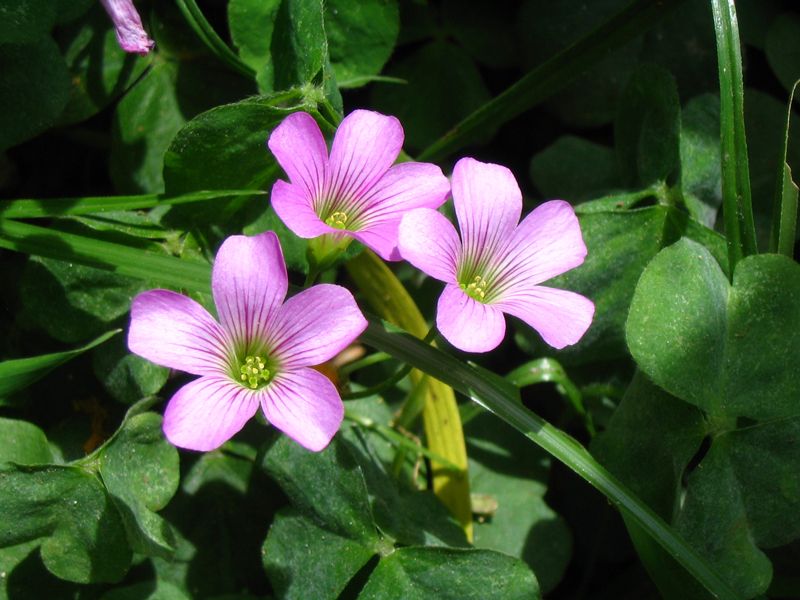
A perennial plant, 15-35 cm tall. Instead of a trunk, it has a creeping rhizome. It resembles clover in appearance, as the leaves are also small and trifoliate.
The fruits are shaped like five-chambered capsules, light brown, 1 cm long and 50 mm wide. The flowers are single, white and light pink, with a yellow center.
Types of wood sorrel and how to care for them
The following varieties of wood sorrel can be grown at home:
| View | Description | Flowers | Care Features |
| Indoor | |||
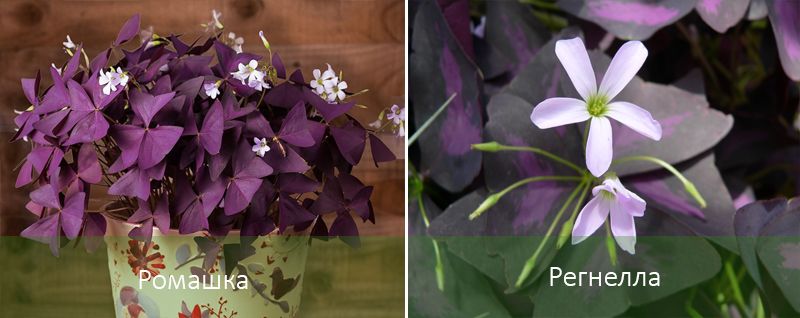
| Triangular | The palmately arranged trifoliate leaves droop and rise depending on the time of day (the oscillation of the leaves resembles the flapping of a butterfly's wings). The color is dark purple. | Small, purple. | It's low-maintenance and has no dormant period. Avoid allowing the soil to dry out or waterlogging. To promote growth, provide forced wintering during the fall and winter. This is accomplished by reducing watering frequency, pruning the stems, and moving the plant to a cool room. |
| Regnella (triangular butterfly) | 3-lobed, rich green foliage. | Small, white. | An easy-to-grow plant, it can go about 10 days without watering. Regular foliage pinching is recommended to keep the plant bushy. |
| Garden | |||
| Ferruginous | The most popular garden variety, it grows up to 10 cm. It is a compact shrub with decorative glaucous-green foliage. | Pinkish-lilac with raspberry veins. | Provide moderate watering and regular pinching. |
| Depp | The stalk has four green leaves with a dark pattern at the base. They grow up to 35 cm. | Deep pink, collected in inflorescences. | In winter, provide shelter, as the plant does not tolerate subzero temperatures. Watering is moderate. |
| Variegated | Candle-shaped, white with a scarlet border. | They require regular pruning and thrive in dry areas. | A perennial with needle-like foliage. |
| Horn | Brown-cherry foliage. | Small, yellow. | It's considered a weed, so it requires no maintenance. Gardeners simply monitor its growth to prevent it from becoming overgrown. |

Caring for oxalis at home
When caring for wood sorrel, you should focus on the season of the year:
| Factor | Spring-summer | Autumn-Winter |
| Lighting and location | Place garden oxalis in a window facing west or east, preferably in partial shade. The light is soft and diffused; direct sunlight can cause sunburn. | Partial shade. No need for additional lighting. |
| Temperature | +20…+25 °С. | +14…+18 °С. |
| Humidity | Spray in the morning and evening. | Humidity level 45-50%. Do not spray. |
| Watering | Water generously, immediately after the top layer of soil dries out. Once every 2-3 days. | Once every 14 days. |
| Top dressing | Once every 2-3 weeks. Use universal fertilizer. | They don't contribute. |
Rest period
Wintering lasts 1-1.5 months. Flowers stop growing, but the foliage does not fall. At this stage, watering is reduced or stopped completely (depending on the plant's condition). Indoor varieties are transported to a cool, dry room.
Bloom
Flowering can begin at any time of year if the wood sorrel is provided with adequate lighting. To achieve this, after the usual budding period has ended, an artificial wintering is created. After a month, the wood sorrel is transplanted into new soil, watered generously, and placed in a well-lit area. Flowering occurs within 30-40 days.
Features of transplantation
Wood sorrel is a fast-growing plant and therefore requires annual repotting. The optimal time is late February or early March.
At the same time, replace the soil and handle the bulbs as carefully as possible. Oxalis is thoroughly cleaned of debris and dry leaves.
Wood sorrel requires the lightest possible substrates. When creating your own soil mix, it's recommended to use the following components in a 1:1:1:2:1 ratio:
- leaf, sod, humus and peat soil;
- fine sand.
Wood sorrel bulbs cannot be grown individually, so 8-10 bulbs are placed in a container. The planting material is buried 1 cm into the soil.
A drainage layer of expanded clay is essential in the pot. After repotting, move the plant to a cool room and water it carefully.
Caring for oxalis in open ground
Oxalis grows equally well in partial shade and in open areas. Select fertile, loose, and breathable soil. Neutral or slightly acidic soil is preferred. If necessary, till the soil before planting, then add peat and compost. Plant the seedlings at a depth of 3-4 cm, spacing them 10-12 cm apart. Planting is recommended in mid-April, during warm but cloudy weather.
Most often, oxalis has enough natural precipitation, but if a drought is observed, the bushes are watered in the morning or evening with a small amount of warm water.
Once every few months, the plant is fertilized with diluted mineral fertilizers or mullein.
In the fall, the plant needs to be prepared for winter. To do this, mulch the soil around the rhizome. There's no need to worry about the above-ground portion of the oxalis, as it will dry out anyway, but the tubers will remain alive and healthy until next spring.
Reproduction of oxalis
To propagate wood sorrel, the following planting materials are used:
- bulbs;
- tubers;
- cuttings;
- seeds.
The simplest method is considered to be the use of bulbs:
- the rhizome is removed from the container and washed in water at room temperature;
- the bulbs are carefully separated from each other;
- The resulting planting material is placed in any growth stimulator for 15 minutes; Kornevin is considered a popular remedy;
- several bulbs are placed in pots, and then the containers are transported to a warm place;
- After the sprouts appear, the vessel is moved to a bright room.
Propagation by tubers is carried out according to the same algorithm.
If the choice falls on cuttings, then the following manipulations are performed:
- the stem is cut off at the base;
- remove excess leaves, there should be only 2-3 of them left on the cutting;
- the shoot is placed in water;
- After 2-3 weeks, the first shoots appear; when they reach 1.5 cm, they are transplanted into loose soil.
The seed propagation method is not popular among gardeners, since indoor varieties increase their numbers vegetatively, while garden plants increase their numbers by self-seeding.
Mistakes in caring for wood sorrel
When caring for oxalis, novice gardeners can make mistakes that, if not identified in a timely manner, can even lead to the death of the flower:
| Effect on foliage | Cause | Elimination |
| Color change. | Poor lighting. | The container with wood sorrel is moved to a more illuminated place. |
| Withering. | Overwatering. | When repotting oxalis, ensure good drainage in the pot to remove excess moisture. Adjust the watering schedule. Water the oxalis thoroughly only after the soil in the pot has dried out. |
| The appearance of spots. | Burn. | The plant is moved to partial shade. Garden varieties are covered with tulle. |
| Dry ends. | Lack of moisture, high temperatures, exposure to direct sunlight. | During the warm season, the flower is occasionally sprayed with water. |
| Stretching of leaves and trunk. | Lack of light. | The elongated foliage is cut off, and the wood sorrel is moved to a well-lit room. |
| Drying and dying. | Natural process. | The entire above-ground portion of the flower is trimmed off, and the oxalis is transported to a cool, darkened room. In the spring, the oxalis will begin to grow. |
Diseases, pests of oxalis and their control
During the growth of wood sorrel, it can be subject to attacks by insects and diseases:
| Pest/disease | Symptoms. External manifestations on leaves | Cause | Struggle |
| Spider mite | Twisting, on the inside there is a thin white web. | Dry air. | Treat the flower with Actellic diluted in water. Repeat after a week. |
| Aphid | The shape changes, and on the reverse side a cluster of small greenish insects is observed. | Add a tablespoon of liquid soap to a glass of water and stir. Soak a cotton swab in the resulting solution and wash all affected areas of the flower. | |
| Fusarium | Wilting, white coating present at the base of the stem. | Over-hydration, water stagnation. | The wood sorrel is removed from the pot and the roots are thoroughly washed. Rotten areas are trimmed back to healthy tissue. The plant is treated with Fundazol and repotted in a new container with a good drainage layer. |
Useful properties of wood sorrel, its use, and contraindications
Among the beneficial properties of oxalis, the following actions are noted:
- diuretic and choleretic;
- antiparasitic;
- cleansing and wound healing (for external use);
- anti-inflammatory and hemostatic (common wood sorrel is used);
- antipyretic;
- diuretic and antitoxic.
But, despite the great benefits of the plant, there are a number of contraindications to its use:
- liver and kidney diseases;
- gout;
- problems with blood clotting;
- urolithiasis;
- pancreatic diseases.
The plant not only has medicinal properties, but also produces quite tasty fruits, which is why oxalis is widely used in cooking:
- added to vegetable salads instead of sorrel;
- cabbage soup is cooked on its basis;
- Fresh herbs are added to refreshing drinks, which helps to quickly quench thirst.
Wood sorrel contains the following elements:
- Oxalic acid. Has a positive effect on increased pancreatic and gastric secretions. It plays an important role in hematopoiesis and provides the body with magnesium, iron, and potassium.
- Malic acid. Relieves constipation, improves metabolism, and has a positive effect on vision.
- Succinic acid. Prevents cholesterol formation and improves the body's resistance to the negative effects of medications. Reduces uric acid levels, which improves joint health.
- Folic acid. Participates in DNA formation, increases performance, normalizes central nervous system function, and is involved in hematopoiesis.
- Vitamin A. Strengthens cells and the immune system. Helps fight cancer and rapidly regenerate skin cells.
- Vitamin C. Activates the immune system. It has an anti-inflammatory effect and eliminates various viruses and microbes.
- Starch. It is a highly digestible carbohydrate that is converted into glucose, which is essential for energy synthesis in the body.
- Rutin. Strengthens capillaries, dissolves atherosclerotic plaques, and restores heart rhythm.
- Carotene. Prevents harmful substances from entering the body and fights premature aging.
It has a beneficial effect on the cardiovascular system. And these are far from all the beneficial components found in wood sorrel.