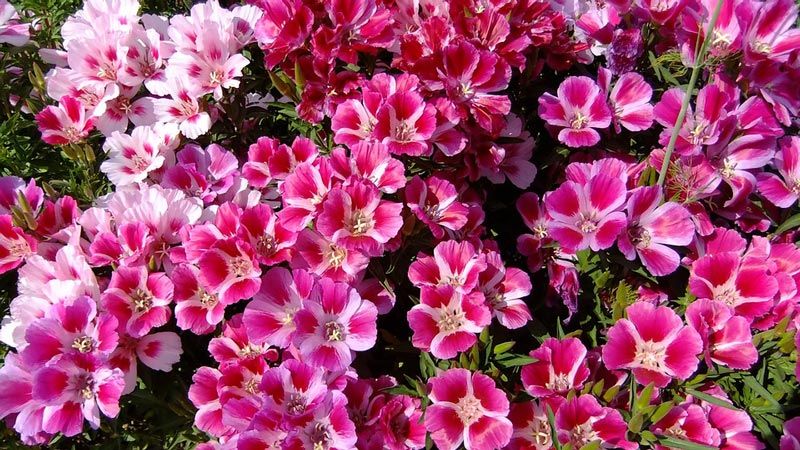
Godetia is an annual flower in the Onagraceae family native to North America, where it is known as the "California rose." It is found in forest edges, meadows, and along the banks of bodies of water. It is named after the Swiss botanist Godet, who first described the plant. It has been popular in Europe since the mid-19th century. Bright and attractive, it decorates flowerbeds, borders, and mixed borders, is popular in landscape design, and thrives indoors. The plant is undemanding, tolerates temperature fluctuations, and tolerates frost.
Content
- 1 Features of Godetia
- 2 Types and varieties of Godetia
- 3 Godetia varieties
- 4 Growing hordetia from seeds
- 5 Planting seedlings in open ground
- 6 Caring for Godetia in the open ground
- 7 Diseases and pests
- 8 Top.tomathouse.com recommends: tips for growing godetia outdoors
- 9 Features of caring for Godetia at home
Features of Godetia
Godetia bushes grow upright and resemble a pyramid, although some are spreading. The shoots are smooth, branched, up to 60 cm long, erect, or sometimes prostrate. In early summer, they are herbaceous, later becoming woody. The leaf blades are bright green, oblong, narrow, pointed at the tip, arranged alternately on the stem, and are 4-10 cm in diameter. The plant's root is shallow, with small branches. The flower stalks are very short.
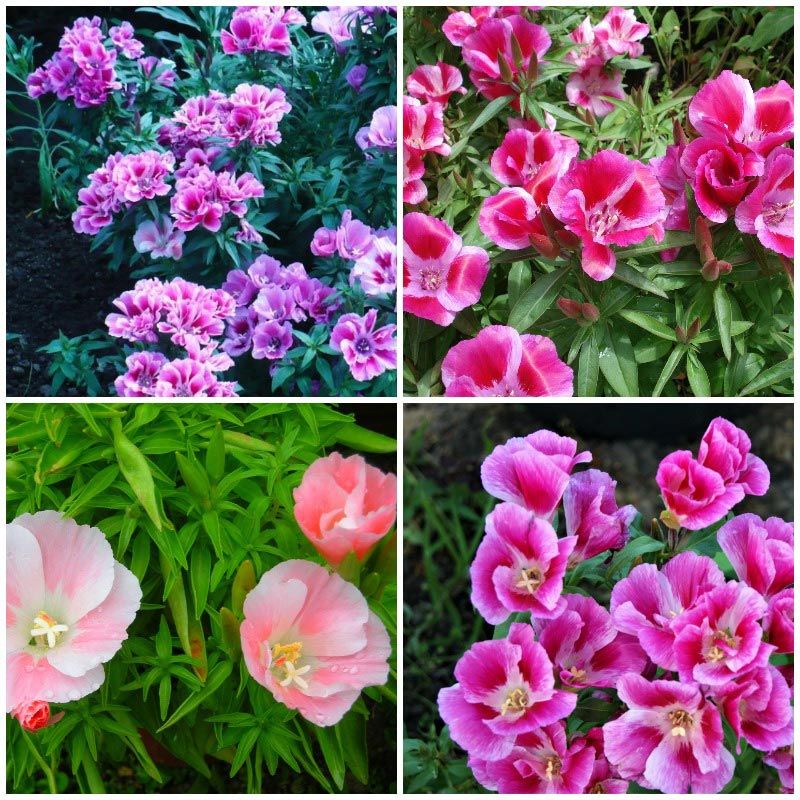
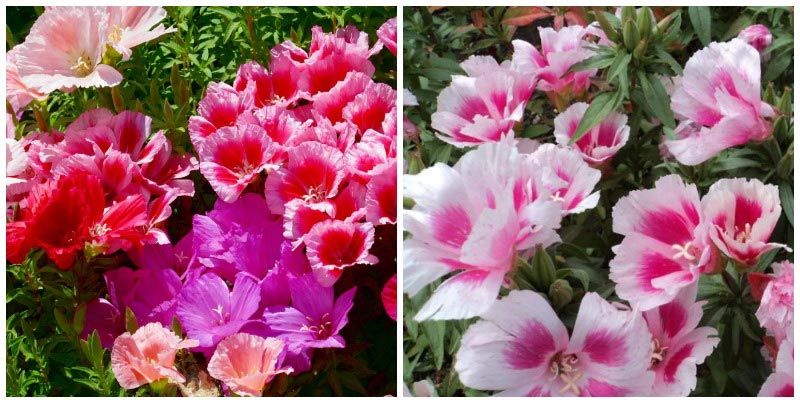
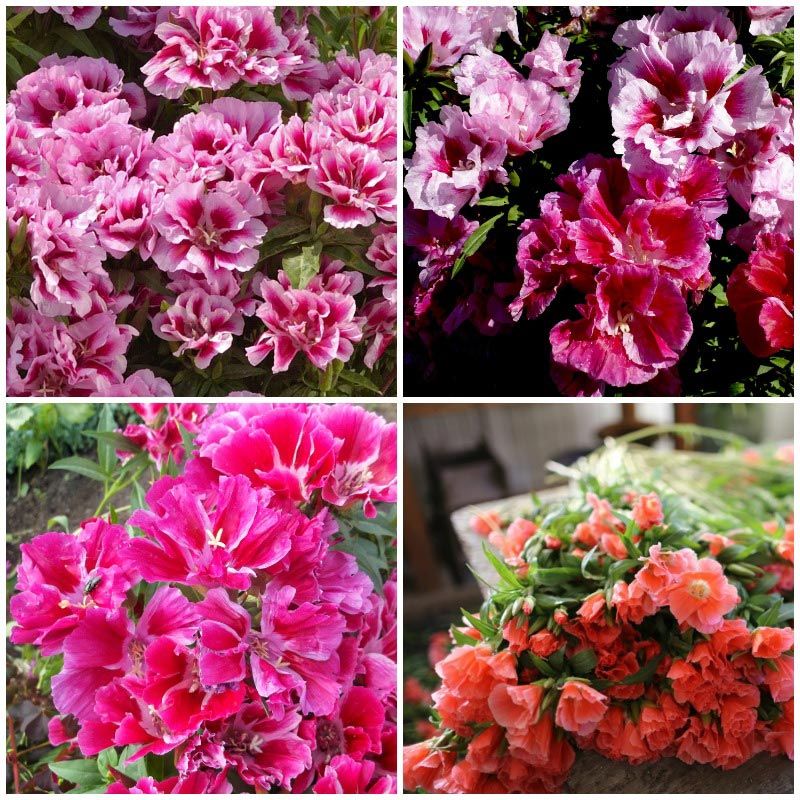
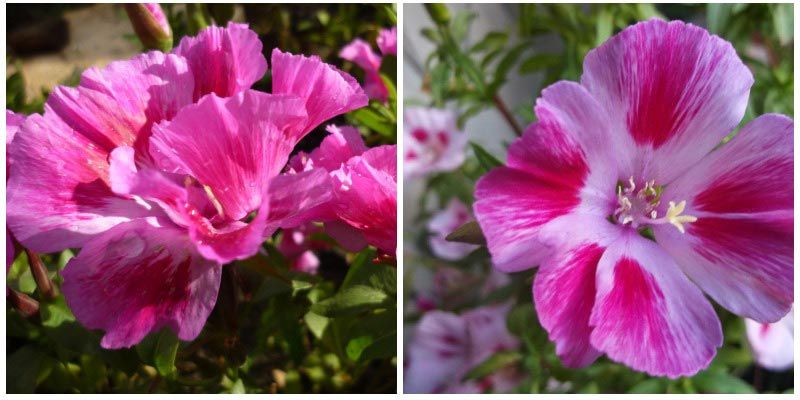
Bell- or cup-shaped flowers with a pleasant, rich vanilla aroma. They have four petals, which can be single, satin, silk, double, or wavy, and can be single-colored or multicolored. They bloom from July to late October. Colors vary widely: pink, purple, coral, white, red, and lilac. They remain open in all weather conditions, retaining their decorative appeal until late autumn. The fruit is a cylindrical capsule containing small seeds.
Types and varieties of Godetia
There are more than 20 classified species of Godetia, from which different varieties have been bred.
|
View |
Description |
Flowers |
| Large-flowered | Fragile, pubescent shoots grow to 20-40 cm, becoming woody at the end of the growing season. The leaves are tapered at the base. Racemose inflorescences are located at the ends of the shoots. Blooms from mid-July until the first frost. | Up to 10 cm in diameter, silky, funnel-shaped, lush, double, single. Color range: cherry, lilac, pink, white. |
| Pleasant (Lovely) | Up to 60 cm tall, medium-branched, upright. Leaves are petiolate and arranged alternately. Flowering period: July to September. | Cup-shaped, funnel-shaped, and sometimes double or satin. Color: all shades of red-pink, white. |
| Terry | Hybrid, does not exist in the natural environment. | Terry of varying degrees and colors. |
| Azalea-flowered | Tolerates low temperatures, reaches 25 cm. | Bell-shaped, pink in color, large. |
Godetia varieties
|
Name |
Height (cm) |
Flowers |
| Weisser Schwann | 35 | Satin, white, cup-shaped, entire. |
| White swan | 30 | Simple, white. |
| Orange Glory | 40 | Non-double, orange. |
| York | 35-40 | Wine colored and white at the base. |
| Blitzstrahl | 45-60 | Bright red. |
| Sybil Sherwood | 40-50 | Bright coral with white border. |
| Rembrandt | 30-35 | Terry, tomato-colored in the center and edged with white. |
| Meteor | 25-30 | Dark red, burgundy with purple, white at the base, large. |
| Summer Paradise | 40-50 | Pink, white. |
| Memoria | 45-60 | Snow-white, terry. |
| Maiden Blush | 45 | Large, soft pink at the edges, red in the middle. |
| Red wine | 40 | Raspberry-burgundy. |
| Rosea | 60 | Purple-pink, dark in the middle. |
| Crystal snowflake | 75 | Snow-white. |
| Kirshkenigin | 60 | Pink-red. |
| Butterfly | 50 | Terry, wavy, pink-carmine. |
| Orange Glory | 45 | Silky, bright, salmon. |
| Maiden Blush | Red, light pink, with scarlet dots in the middle. | |
| Kiss of Summer | Pink, with red in the middle, wavy, shiny. | |
| Diamond | 30-40 | Red with white spots. |
| Gorgeous | 30-45 | Delicate, silky, scarlet. |
| Stained glass | 40 | Wavy, salmon, yellow in the center. |
| Monarch | 20 | Bell-shaped, pink, lilac with blue, white with red. |
| Fire King | 25-30 | White in the middle, scarlet at the edges. |
| Feuerkenig | 25 | Scarlet, with a white spot in the center. |
| Honey Moon | 35 | Pink, white, cherry. |
| Lava | 40 | Large, wavy, carmine red. |
Growing hordetia from seeds
The flower is propagated by seeds; two methods are used to grow godetia.
Into the ground
In warm regions with heavy snowfall and temperatures ranging from -15 to -20°C, sowing the seeds in late autumn is acceptable. First, soak them in a weak solution of potassium permanganate for half an hour. Godetia prefers fertile, neutral, loamy, and slightly acidic soil. Make furrows 10-12 cm apart and 5-6 cm deep in advance. Seeds planted in winter are not watered, but rather densely sown and covered with peat and protective material. Seedlings emerge in May. When the plants reach a height of 7 cm, thin them out, maintaining a 20 cm spacing, or transplant them to a permanent location.
Flowers are sown outdoors in April, covered with plastic to speed germination. The seedlings are then thinned or replanted. Care is the same as for seedlings. Flowering takes a long time, up to three months.
Seedling
In northern regions, it's best to grow godetia from seeds using seedlings, as this will help them bloom earlier. Sow in late March in trays. Prepare the soil using equal parts peat, sand, and garden soil, or use store-bought soil.
For convenience, small seeds are mixed with sand. To prevent disease, the containers and substrate are disinfected by rinsing with boiling water and disinfecting with Fundazol. Water the soil; when the water has been absorbed, scatter the seeds, and cover with a thin 0.5 cm layer of soil. Cover with plastic wrap and ventilate periodically. Moisten with a spray bottle. Germination occurs within 10 days, after which the plastic wrap is removed.
They require 12 hours of light per day and moderate watering. The temperature should be maintained at 20 to 22°C. In early May, they are hardened off by taking them outside for two hours, increasing the time each day. Once the threat of frost has passed, they are left outside overnight.
Water, preventing the soil from drying out. Fertilize for the first time after sprouts emerge, and again a week before planting. Prick out the seedlings after two true leaves appear. Peat pots, trays, and tablets are best for this purpose. Trim the roots by 2-3 cm. Fertilize with a complete flower mix every other week.
If the sprouts are stretching, the reason is a lack of light; you need to move the plants to a more illuminated place or provide additional lighting artificially.
Planting seedlings in open ground
Godetia is planted in the garden at a height of 6 cm, after the last frost. Choose an open, well-lit site; flowers will not grow large in the shade. The day before planting, dig the soil twice and add a mineral fertilizer containing humus and wood ash. Plant using the transverse method, with the root ball still attached, as godetia does not respond well to transplanting. Choose early morning or evening for planting. Water generously for the first week, and mulch the soil around it. Maintain a spacing of 20 cm for low-growing varieties and 40 cm for taller varieties.
Caring for Godetia in the open ground
To enjoy the blooming appearance of godetia, it is important to follow all the rules of care - watering, fertilizing, weeding.
Watering
Water the bushes moderately and frequently, without allowing the soil to become over-watered or dry, and not with cold water.
Top dressing
Depending on the soil composition, fertilize the plants once or twice a month. Initially, a week after planting. Once buds form, apply mineral fertilizers. Avoid excess nitrogen, as this will lead to excessive foliage growth, but the flowers will be small. Fertilize with Nitrophoska (12 liters of water and a tablespoon of the product), Agricola, and Ideal.
Weeding
The bushes are constantly weeded and the soil is loosened after watering.
Formation
Wilted flowers are removed to prolong flowering. Dried leaves are also removed, and overly tall plants are tied to supports to prevent them from sagging under the weight and becoming unsightly.
After flowering
The seeds ripen four weeks after the godetia finishes flowering. When the seed pods darken, they are cut off, then dried, and the seeds, which remain viable for four years, are extracted. When frost sets in, the bushes are removed, root and burned to prevent the spread of disease, and the soil is dug up.
Diseases and pests
If care rules are not followed, Godetia may become sick or be attacked by pests.
|
Disease/Pest |
Manifestations |
Elimination measures |
| Root rot | The root system turns black and the leaves dry out. | Infected parts are removed, burned, and the soil is treated with copper sulfate. |
| Powdery mildew | White coating. | Treated with Topaz and Fundazol. |
| Peronosporosis | Small spots on the leaves. | The following medications are used: Abiga-Peak, Oxyhom, Previkur. |
| Rust | Brown spots. | Spray with 1% Bordeaux mixture. |
| Aphid | Green insects. | Folk remedies and solutions are used: soap, wood ash, and tobacco. In severe cases, insecticides (Tanrek, Aktara) are effective. |
Top.tomathouse.com recommends: tips for growing godetia outdoors
To ensure active flower growth, it is important to remember the following special care features:
- Choose a place without drafts, possibly with light partial shade.
- The seedlings are planted outside only before the buds form, not before flowering.
- Peat and urea are added to alkaline soil before planting.
- Along with digging, add charcoal, humus, and compost.
- Drip irrigation is preferred; abundant watering is needed during drought; at other times, excess moisture can lead to disease.
- In hot weather, spray the bushes only after sunset.
- The excess ovary is pinched off.
- To ensure better flowering, white clay is added to the soil.
During severe drought, the bushes should be shaded. Containers for growing the plant outdoors should be light-colored to avoid excessive heat buildup, and drainage should be provided to prevent excess water retention.
Features of caring for Godetia at home
Low-growing godetia varieties are suitable for indoor windowsills. They can be placed on a south or east side, providing some shade from the scorching sun. A temperature of 23°C and humidity of 55-60% are ideal. Choose a pot with a drainage layer. You can purchase or prepare the substrate yourself. Water the plant with soft, settled water at room temperature. If the plant is tall, provide support. Feed it twice a month with a low-nitrogen fertilizer, and loosen the soil periodically.