Gomphrena is a dicotyledonous herbaceous flowering plant of the Amaranthaceae family. Both annual and perennial species are found. It grows in tropical latitudes, most commonly in South America.
Gomphrena globulosa is grown worldwide as an ornamental garden flower. Some species are also grown indoors. In East Asia, it is eaten. In some regions, it is used for medicinal purposes.
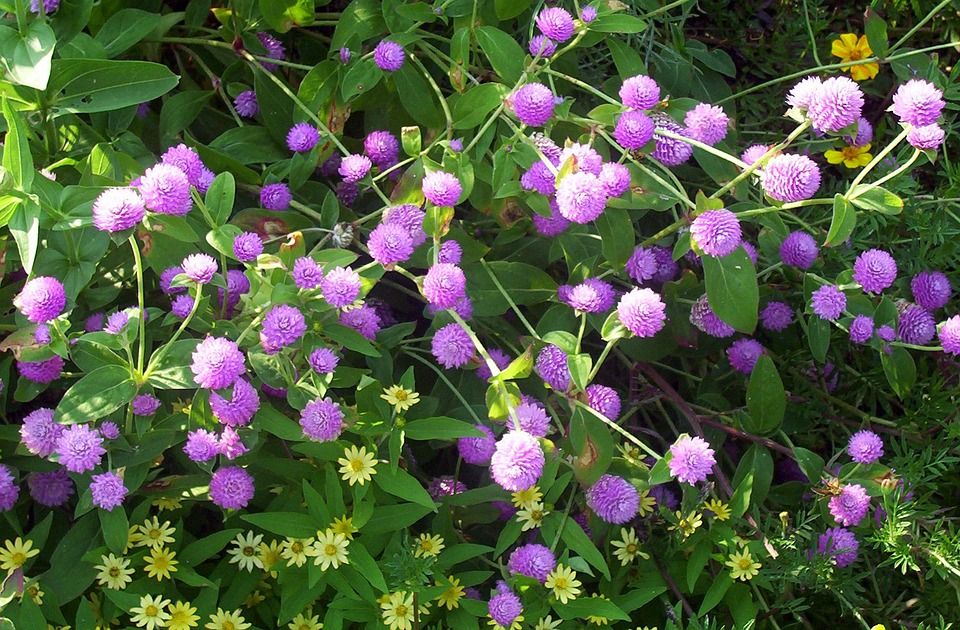
The plant's advantages include its unpretentiousness, long flowering period—until frost sets in—and its flowers retain their aesthetic appeal even when dried.
However, cultivation, especially at the first stage from germination to planting in the ground, is quite labor-intensive.
Content
Description of the Gomphrena flower
The stems are straight, the leaves are oblong, pointed, with smooth edges, located opposite each other.
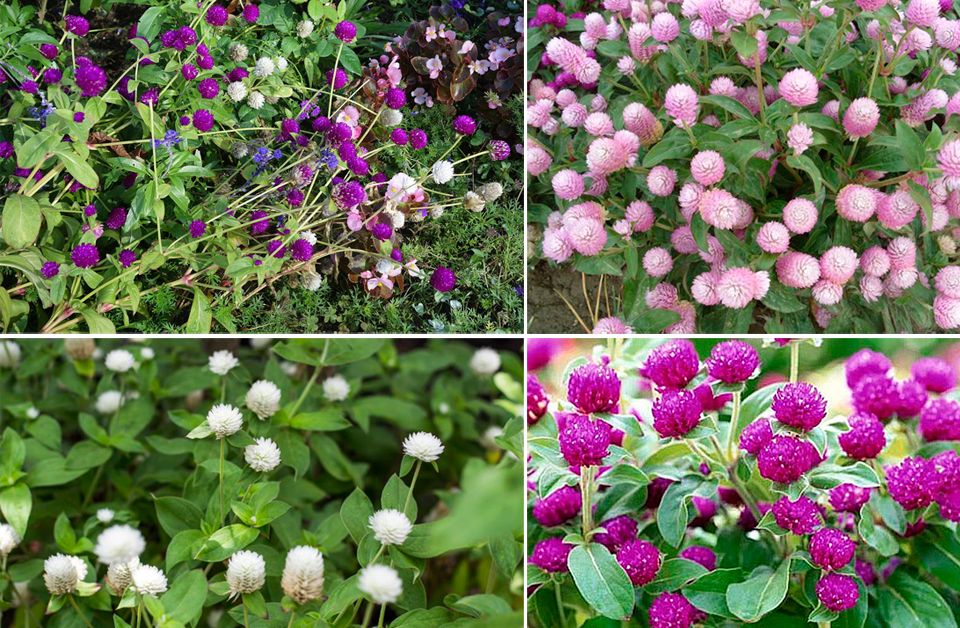
It blooms profusely, producing buds in shades of purple, white, yellow, and pink. They resemble clover flowers. They are 3-4 cm in diameter.
Types and varieties of Gomphrena
There are about 100 known species of this plant. Each one is beautiful in its own way.
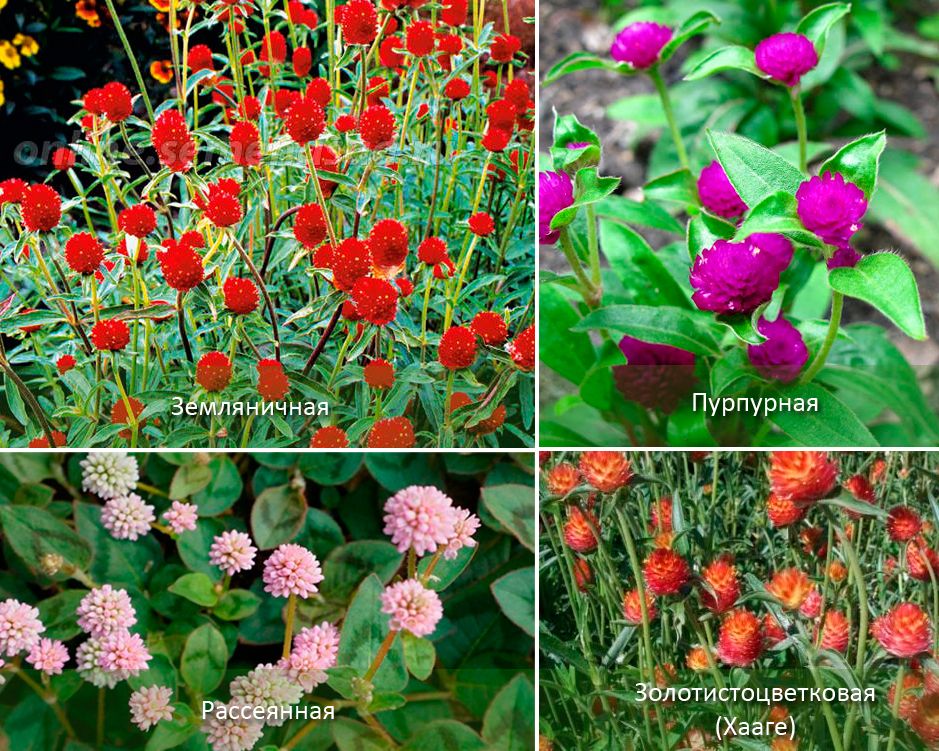
| View | Description/Varieties |
| Spherical | The most common species. The leaves are hairy, giving them a silvery appearance. The ball-shaped inflorescences give the species its name. There are several cultivars in different shades. Together, they look striking in flower beds and offer scope for floral design. Tall – up to 35 cm. Dwarf varieties, up to 15 cm, are also available. The most famous varieties:
|
| Absent-minded | The inflorescences resemble carnations. The plants are drooping and creeping. Their appearance is particularly appealing in rock gardens and hanging pots—where a cascade of flowers is desired. The Pink Pinheads variety retains a beautiful soft pink color even when dried. It is used in dried flower arrangements and floral crafts. |
| Goldenflower (Haage) | Large inflorescences. Complex coloration, fading from crimson at the tips to golden within. Height 30-40 cm. Long, narrow leaves with a silvery sheen on the underside. Very sensitive to cold. In cool summers, it may not bloom at all. |
| Dwarf (Gnome) | It grows no taller than 10-15 cm and comes in white, orange, and pink colors. Its short stems make it popular in borders and outdoor pots. |
| Purple | The rich green leaves highlight the beauty of the bright pink flowers. It grows up to 30 cm tall and spreads widely, carpeting any space allotted to it. It can also be grown in pots. |
| Strawberry | When in bloom, it resembles a ripe strawberry due to its scarlet, round buds. It reaches 50 cm in height and blooms from June to October. |
Growing Gomphrena from Seeds
Florists in Russia prefer annual varieties, simply because they do not tolerate the harsh winter climate well.
It's easier to sow new plants every year than to wait for them to survive the winter.
Preparing seeds for planting
Preparing seeds for seedlings is somewhat different from the traditional method.
- The seeds are poured with a sufficiently large amount of warm water (about a glass).
- Infuse at room temperature for three days, changing the water and stirring every day.
- Then, drain the water using a sieve. Rinse the seeds under running water and place them in a glass container with a lid in the refrigerator.
- There they are stratified for a week.
Time for sowing seedlings
It rarely grows from seeds directly into the ground, as it requires warmth and a long growing period. Therefore, it is grown by propagating seedlings.
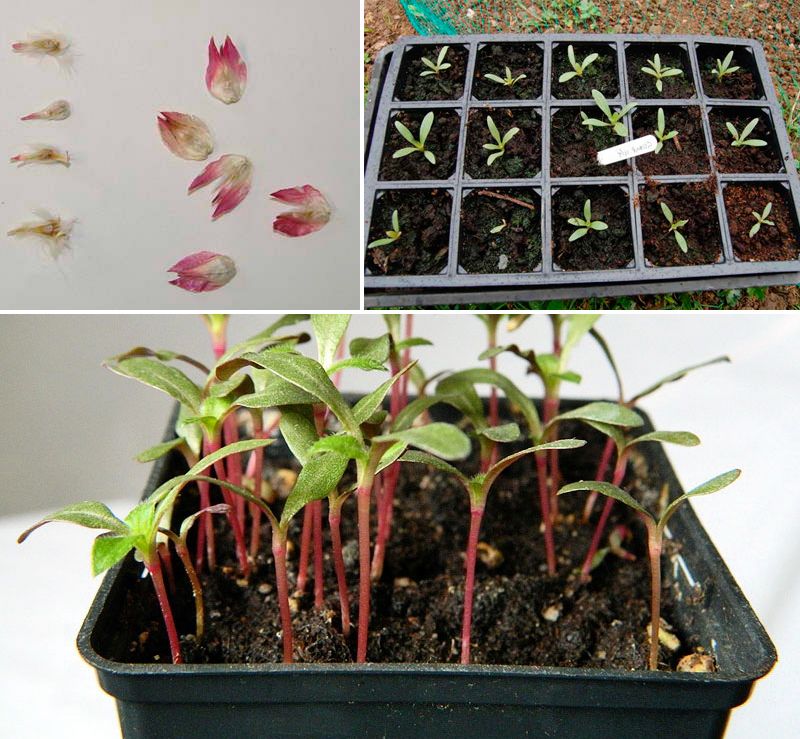
They are sown in February, early March in boxes with prepared soil.
Sowing rules
There are several conditions for sowing gomphrena seedlings that are easy to follow:
- Prepare a soil mixture of equal parts garden soil and compost. Alternatively, use a 1:1 mixture of all-purpose potting soil and vermiculite.
- Moisten the substrate so that it is moist but does not stick to your hands.
- Fill the planting boxes. It's best to use cassette ones.
- Compact the soil.
- Make a hole in each cassette using a wooden stick, knitting needle or pencil.
- Carefully water the holes with filtered water. This is most easily done with a used medical syringe without a needle or a bulb syringe. After planting, there is no need to water the soil.
- Place the prepared seeds from the refrigerator, one or two at a time, into the holes. Even two seedlings in one container will not interfere with each other's growth.
- Level and lightly compact the soil, cover with film or glass.
- Be sure to place the seed tray in a bright, very warm place—directly above or near a radiator, or on a south-facing windowsill that gets plenty of sun. The optimal temperature for germination is +30…+40°C. °C.
The seedlings will appear in three days. If the temperature is below the optimum (but not less than +20…+22 °C), germination will occur in about two weeks. - After the seeds have sprouted, remove the covering and protect the planting from direct sunlight.
- If you used a common container for the seedlings, rather than a cassette container, you will have to transplant them after 2-3 true leaves appear.
- While seedlings are growing, it's crucial not to overwater them. Excess moisture will kill the delicate seedlings.
The sprouts can be fed with a universal composition for seedling growth, for example, "Krepysh".
Planting gomphrena in open ground
Gomphrena prefers light, not heavy soil. To achieve this, you can add sifted river sand to the soil before digging.
But the soil is not as important as the lighting.
Moreover, you should not add organic or mineral fertilizers before planting.
The main thing is to choose a sunny place and avoid open, windy areas with drafts.
What time to plant
Gomphrena is planted only when the ground has thawed and warmed, and stable, warm weather has set in. This is possible in May, and sometimes, in more northern latitudes, as early as June.
Landing rules
The grown seedlings are transplanted into prepared soil. For this, holes are made 30 cm apart for standard varieties and 20 cm apart for dwarf varieties.
Each plant is well kneaded and watered.
Caring for Gomphrena in the Garden
Gomphrena loves warmth and light. It requires plenty of space to fully develop, grow, and bloom. Flowerbeds should be free of larger plants that could obscure or crowd it out.
Tolerates drought and heat well. Does not require much watering.
Formative pruning is recommended during flowering. Cut flowers last well in vases.
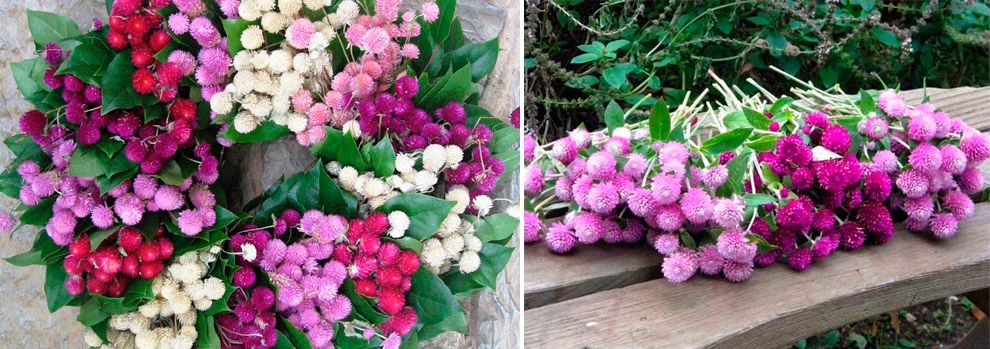
And the gomphrena in the flowerbeds will bloom even more densely and luxuriantly.
Watering and fertilizing
Two to three days after planting in open ground, you can apply a liquid mineral fertilizer, such as potassium-phosphorus and nitrogen. Ready-made complex mixtures are also suitable.
Fertilizing should be done twice, but only before flowering begins.
Excessive amounts of fertilizer can result in the plant not blooming at all, or blooming sparsely, and the entire space being filled with leafy green mass.
Therefore, during flowering, regular but moderate watering will be sufficient.
If there's intermittent rainfall in the summer, gomphrena won't need any watering at all. It will only need moisture during short periods of drought.
Wintering
If there is a need or strong desire to plant a perennial gomphrena, you will have to make an effort to provide it with safe wintering conditions.
The first and most reliable method is to transplant the plant for the winter, along with the root ball, into a spacious pot and place it in a warm, dry place.
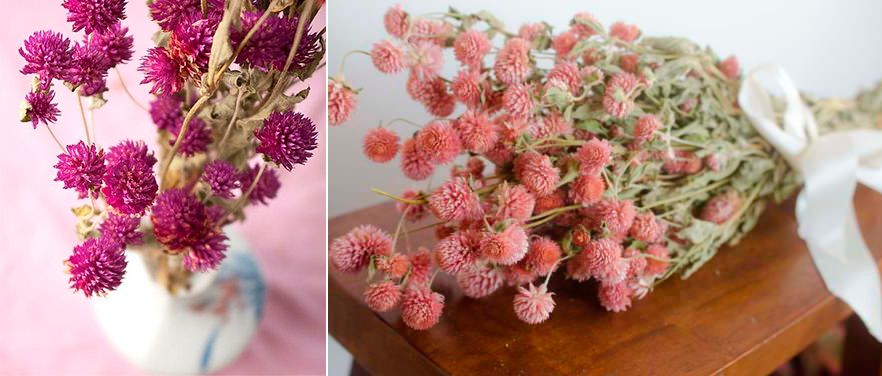
Second: Trim the above-ground parts, mulch with dry leaves or straw, cover with non-woven covering material, and then with plastic film. Remove the covering only after the threat of morning and night frosts has passed.
Diseases and pests of Gomphrena
In general, gomphrena is relatively resistant to disease. It is only occasionally susceptible. But even then, the situation can be salvaged.
| Disease/pest | Symptoms | Elimination measures |
| Blackleg | Blackening of stems, loss of turgor. | Stop watering for a while. Sprinkle the soil with wood ash and loosen it. |
| Aphid | The appearance of sticky coating and insects on the leaves. | Spray with soap or ash solution. In severe cases, use insecticides. |
| Cercosporiosis | Dark spots, leaf deformation. | Treat with fungicides (Fundazol, Agat, Vectra, Thanos). |
Top.tomathouse.com recommends: the medicinal properties of gomphrena
Gomphrena flowers are often used in folk medicine to treat:
- tuberculosis;
- bronchitis;
- cough.
Flowers can be used dried or fresh, just picked from the flowerbed.
Among the beneficial properties of gomphrena are: increased immunity, a large amount of vitamins, liver cleansing, and the removal of toxins from the body.
It is very useful for seriously ill, weakened people who have undergone surgery, provided that there is no individual intolerance.
The flowers are used to make a decoction or added to tea when brewing.
Recipe No. 1 – for coughs and colds.
A tablespoon of dried flowers per cup of boiling water produces a rich, slightly sweet infusion. Drink it in small portions throughout the day.
Recipe No. 2 – for immunity and tone.
Brew the flowers in a teapot with green or black tea, depending on your taste. Drink like regular tea 2-3 times a day.