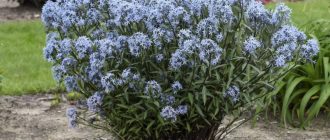
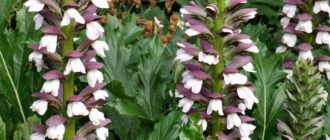
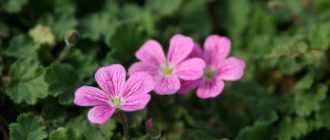
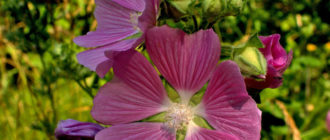
Gentian is a perennial, sometimes annual, low-growing, beautiful herb with blue-and-light blue petals. Yellow-violet petals are also found. Its popularity dates back to ancient Rus'. It is renowned for its medicinal properties, bestowed upon it by nature. Studies have been conducted at many major medical institutions, confirming that gentian can help with certain ailments. The plant is undemanding and can easily be grown in your own garden. Its bitter taste, hence the name.
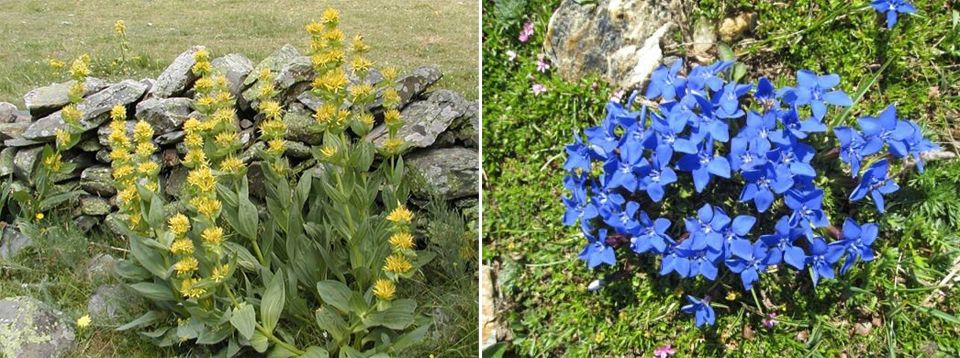
The plant itself is represented by a large number of species distributed throughout the world, but in some countries it is rare and even listed as endangered.
Features of gentian
Even though the plant is completely undemanding of climate and soil, it still has its own characteristics. It is most often found in alpine meadows, at an altitude of at least 1 km above sea level. It can also be found lower down, but much less frequently. It is quite hardy, but does not like direct sunlight.
It thrives best on rocky soil and reproduces by seeds, spread by the wind.
Yellow gentian, narrow-leaved gentian, pulmonary gentian and other species
The plant is widespread in numbers; over 90 different species can be found throughout the CIS.
| View | Description
Height (cm) |
Leaves | Flowers Bloom |
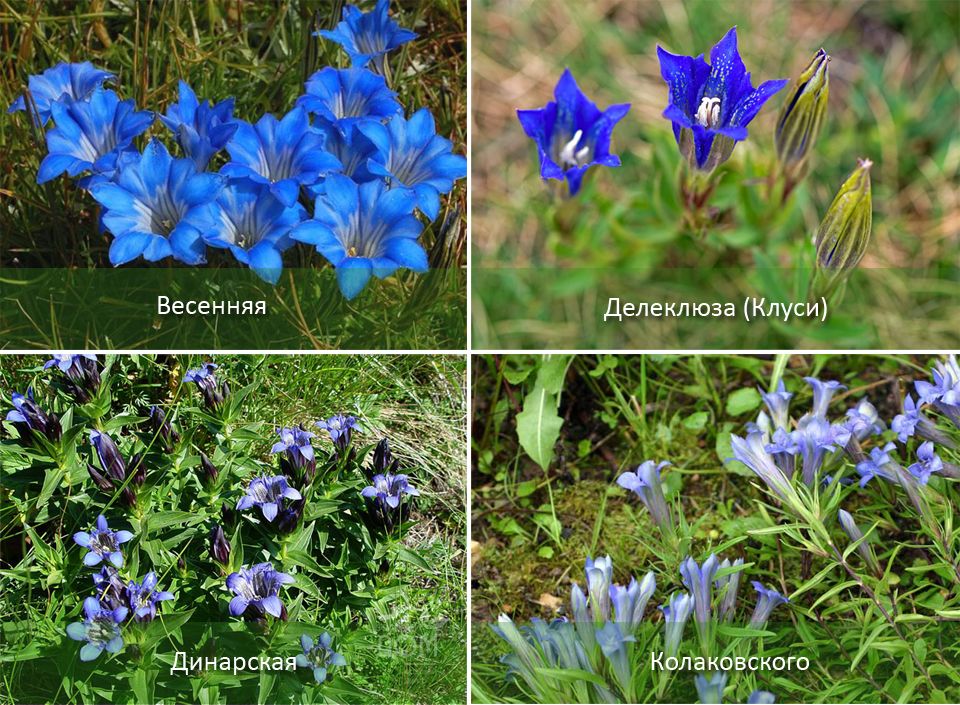
| Spring | A low-growing perennial. The plant stem is short.
3-5. |
Elongated, oval in shape. Color bluish-white, predominantly blue. | Has 1 bud with a diameter of 2 cm.
It starts at the beginning of summer, in June. |
| Delecluse (Clusy) | It is most commonly found in the alpine mountains. Like most species, it is perennial. It grows best in silty soil and responds well to fertilizer.
Not high, no more than 5. |
Pointed, lanceolate. | They are bell-shaped and bright blue, becoming slightly lighter toward the center of the bud.
Midsummer. |
| Kolakovsky | A decorative species distinguished by its tall stem.
25-30. |
Elongated, long and narrow. | Very large compared to other species, reaching 5 cm in length. The color is light blue. Clusters of up to four buds are most common, but single buds are also common.
At the end of summer. |
| Dinara | It has Western roots and tolerates winter well without additional shelter.
Reaches 15. |
Oval-elongated, green in color. | The petal color is bright blue, with a bluish tint closer to the middle of the bud.
It starts in late spring. |
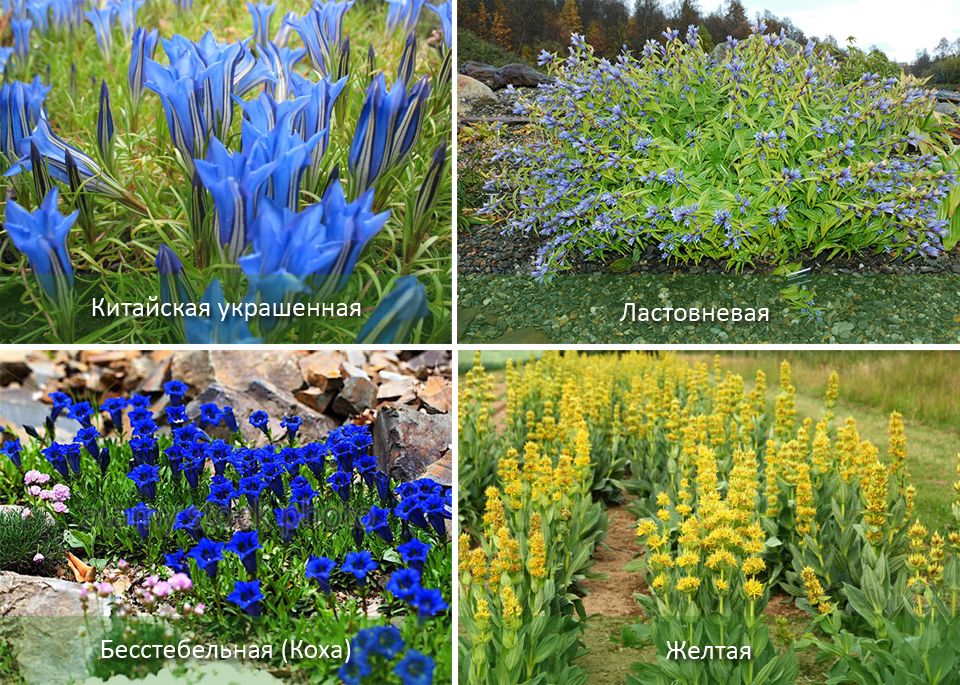
| Chinese decorated | The soil footprint is 30 cm. The stem is densely covered with leaves. It does not tolerate hot weather very well.
Has an average stem height of 15. |
Elongated and pointed. | 5 cm, blue. The base of the bud has a striped pattern. Mid-autumn. |
| Stemless (Koha) | It is found in mountains and gorges. It is rarely found elsewhere, except in areas with mountains nearby.
10, has no stem. |
Sharp, smooth, bent lengthwise. | The flowers are blue and located on a peduncle. Green coloring can be seen on the inner side of the petals closer to the center. A distinctive feature of this species is that its flowers close when rain approaches, a fact often exploited by botanically savvy tourists.
Midsummer. |
| Lastovnevaya | The stem is straight, without bends. 60. |
Formed at the end of the stem, it has bell-shaped, pointed petals. The color is blue-violet.
At the beginning of August. |
|
| Yellow | Completely unlike the previous species, it has a very long stem. It's long-lived, and with the right conditions and care, it can easily live for half a century.
150. |
Located only at the base. | It has a yellow form, and up to six buds can grow simultaneously on a single shoot, arranged one above the other.
Midsummer. |
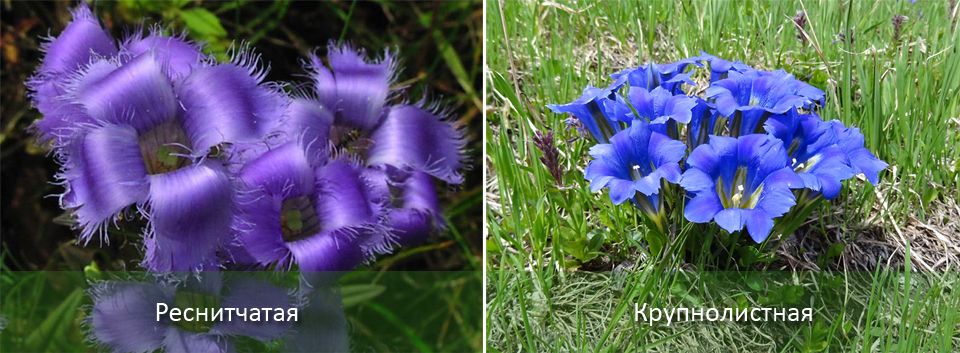
| Large-leaved | A perennial herbaceous plant. The shoots are slightly drooping. Can reach 80. |
The largest part is located at the base. It can be up to 40 cm long and at least 25 cm wide. | Bell-shaped flowers, bright blue, are arranged in clusters at the top of the stem.
Towards the end of summer |
| Ciliated | Up to 30. | Large. 6 cm in diameter. Its shape is unique, unlike others. It grows in ribbon-like, drooping masses. At the ends of the petals are small, eyelash-like appendages. The plant comes in two color variations: purple and white.
At the beginning of autumn. |
|
| Daurian | Perennial. Stems are straight and covered with leaves. No more than 40. |
Quite long and narrow, they grow densely on the stem. | Group growth type, bell-shaped, blue color.
Midsummer. |
| Large-flowered | Decorative appearance. Reaches no more than 10. |
Elongated. | They grow singly and are quite large, reaching no more than 4-5 cm in length. It begins at the end of spring and lasts for a month. |
| Pulmonary | Also aesthetically pleasing. The stem is tall. 60. |
High frequency of location on the shoot. | They are bell-shaped, reaching no more than 5 cm in length. They are characterized by a dark blue hue. Green stripes are visible on the petals.
Towards the end of summer. |
| Seven-partite | An ornamental plant capable of growing for many years. The stems are numerous and erect. No more than 30. |
Small in size. | Dark blue in color, large in shape, up to 4 cm in radius. They grow exclusively in groups of eight.
The total duration, starting in mid-summer, can be up to 1.5 months. |
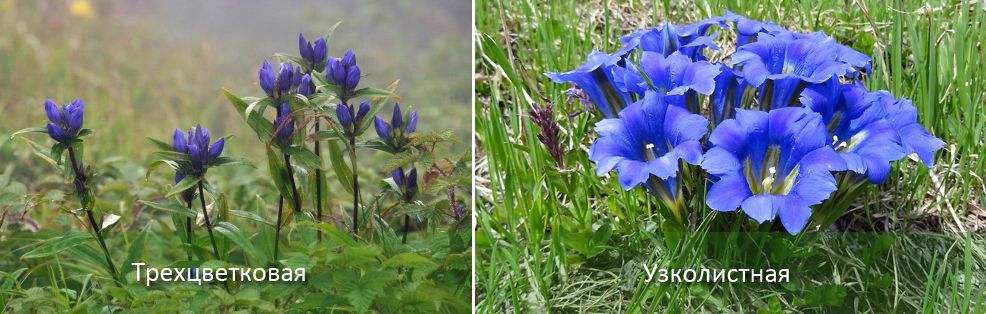
| Narrow-leaved | Perennial. Grows well in clayey calcareous soils.
20. |
Very narrow, they cling to the entire stem. |
Blue bells. Late spring-early summer |
| Three-flowered | Prefers swamps and moisture. Roots are creeping. 60-80. |
They are located densely near the base, then in pairs. | Goblet-shaped, collected 3-4 on a stem.
Second half of August - first of September. |
Planting gentian in open ground
Due to its aesthetic appearance, medicinal properties and abundance of color variations and forms, many people grow gentian in their gardens.
When to disembark
The most effective method is from seeds, planted in mid-spring or fall. Species that bloom in May and later are not recommended for planting in areas without additional cover, as they do not tolerate direct sunlight.
Autumn species are planted near bodies of water, in places with high air humidity.
Landing rules
Preparing for sowing takes a long time. First, the seeds undergo a stratification process. They must be kept in a well-ventilated area for at least two months. The duration of this process varies by species and is not universally accepted. For example, seeds grown in the mountains require at least 80 days of treatment.
Before placing plant seeds in a vegetable box, they must be mixed with peat and fine sand in a ratio of 1:3.
However, if you plan to sow before winter, there's no need to treat the seeds. After planting, the temperature will be just right, and everything will take place naturally.
An important feature regarding the size of seeds:
- Small ones should never be sprinkled with soil on top; it is enough to scatter them on level ground, pressing them down lightly.
- Large ones, on the contrary, need to be covered with soil on top.
Caring for gentian grass in open ground
If you adhere to all the site conditions during planting, taking into account sunlight, care won't be difficult. It's important to keep the soil around the planted plants constantly moist; regular watering is recommended, either manually or using specialized systems.
After watering, loosen the surrounding soil. Pay special attention to nearby weeds and promptly remove dried flowers.
The plant is unpretentious in terms of fertilizers; a little peat at the beginning of spring, with the addition of horn meal and limestone gravel, will be enough for it.
Diseases and pests of gentian
| Cause | Manifestation | Elimination |
| Gray mold | Spots are brown-gray. Mold. |
Infected areas are cut out disinfected instrument. Then the wounds are treated with a solution of Fundzol. |
| Brown spot | The appearance of brown spots with purple rims small size. |
Spray with a product containing copper. Copper sulfate, Bordeaux mixture. |
| Rust | Chemically resistant mushrooms. Pustules are dark orange in color. |
Infected parts are cut out and destroyed. mandatory. After this, all district The plants are sprayed with a fungicide. |
| Thrips | Insects suck out the cellular juice At the puncture sites, colorless spots are formed points. |
A solution of insecticidal preparation is used. |
Top.tomathouse.com recommends: Gentian – a healer in the garden
The plant gained its popularity due to its medicinal properties, which are widely used in both traditional and professional medicine. Gentian root contains alkaloids that help suppress cramps and muscle spasms. They are also excellent for coughs and have antipyretic properties.
The roots of many species contain phenolic acid, which has the ability to enhance intestinal evacuation.
The most popular are water infusions of these flowers, which can be used both externally and internally. The problem doesn't have to be severe; a decoction can help with sweaty feet, for example. For festering wounds, it's recommended to sprinkle the powder. It's prepared from a 1:1 ratio of the plant's roots and chamomile.
One type is a compress. It is prescribed for muscle and joint pain. It is prepared from a paste of both plant organs (above-ground and underground). Various medicinal forms of this plant are used to treat problems such as constipation, flatulence, heartburn, diathesis, achylia, throat ailments, and tuberculosis. Its beneficial effects on cancer and chronic hepatitis have been proven.
Naturally, like any medicinal product, gentian has contraindications. Use of decoctions, powders, infusions, and compresses is not recommended for pregnant women or those with an individual intolerance to components such as bitterness. It is also not recommended for people with duodenal ulcers, stomach ulcers, or hypertension. The optimal daily dose for a special alcohol tincture is 35 drops. Exceeding the daily dose may cause headaches, dizziness, and facial flushing.