The white truffle is one of the most common varieties of this mushroom found in our country. It began to gain particular popularity about 15 years ago. It's rare in forests, but if you know where to look and how to harvest it, you can easily treat yourself to a basket of delicious truffles.
Content
- 1 What a miracle the White Truffle is!
- 2 What is the White Truffle called?
- 3 Description of the White Truffle (Choiromyces venosus, Choiromyces meandriformis)
- 4 When does the White Truffle grow?
- 5 How and where does the white truffle grow?
- 6 How to Find White Truffles
- 7 When, where, and how to find white truffles in Russia
- 8 Comparison of White and Black Truffles
- 9 8 mushrooms that look like white truffles
- 9.1 Choiromyces magnusii
- 9.2 Sand truffle (Terfezia arenaria)
- 9.3 Soft-bodied truffle (Terfezia leptoderma)
- 9.4 Italian truffle (Tuber magnatum)
- 9.5 Bianchetto truffle, white March truffle ((Tuber borchii)
- 9.6 White Duron truffle (Tuber excavatum)
- 9.7 White variegated truffle (Tuber maculatum)
- 9.8 White truffle (Tuber puberulum)
- 10 3 Inedible White Truffle Lookalikes + Photos
- 11 Culinary evaluation of the White Truffle
- 12 Calorie content and benefits of white truffle
- 13 How to buy Russian truffles and their price
- 14 What is interesting about the White Truffle?
- 15 White truffle in medicine and cosmetology
- 16 How and what to cook with white truffles
- 17 Recommendations and contraindications for the consumption of white truffles
- 18 How to grow white truffles yourself
- 19 What else do you need to know about the White Truffle?
- 20 White Truffle Reviews and Finding
What a miracle the White Truffle is!
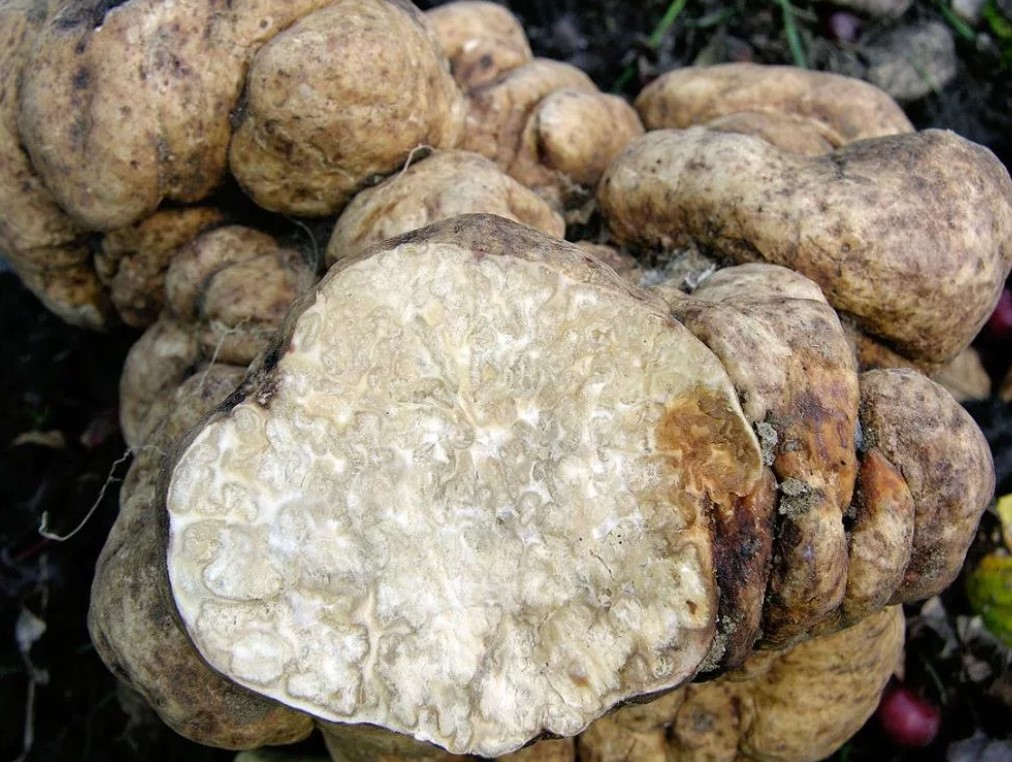
The white truffle is an unappealing mushroom, similar to the Jerusalem artichoke. For many years, mushroom pickers avoided it until they discovered its extraordinary flavor.
This mushroom has many varieties; in our country, the Polish truffle is found.
The mushroom itself is a convex fruiting body up to 14 cm in diameter. It grows underground, so specially trained animals are often involved in its search. Only very ripe specimens may eventually emerge above ground.
What is the White Truffle called?
The white truffle has several other names by which this mushroom is known throughout the world:
There are several other names for the mushroom known around the world:
- tradesman;
- White Russian;
- fat woman;
- Tuscan;
- Trinity;
- Polish.
Description of the White Truffle (Choiromyces venosus, Choiromyces meandriformis)
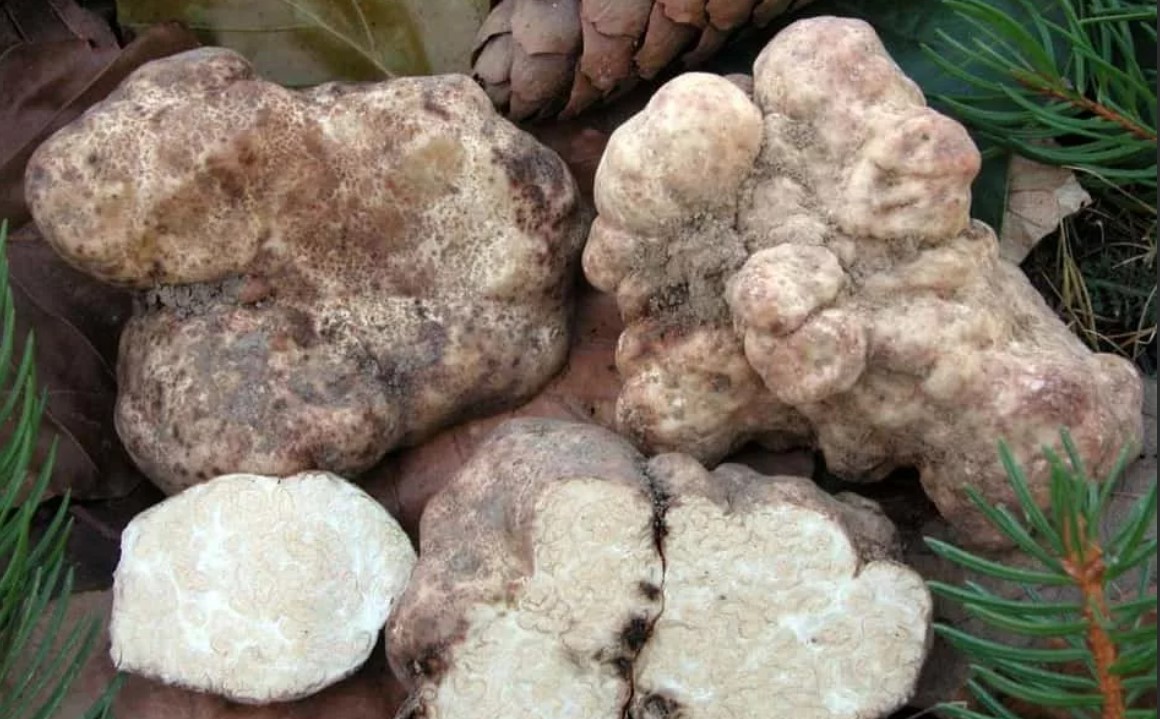
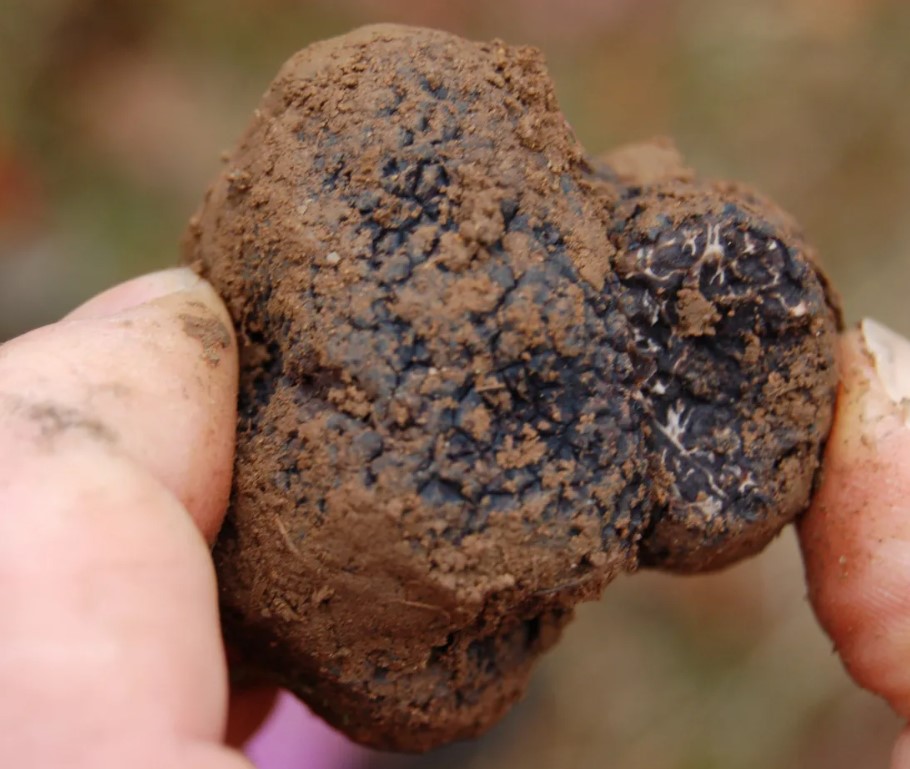
The white truffle's appearance is completely unlike that of a typical mushroom: it lacks a stem and cap. And it grows in a very unusual way—underground.
Fruiting body
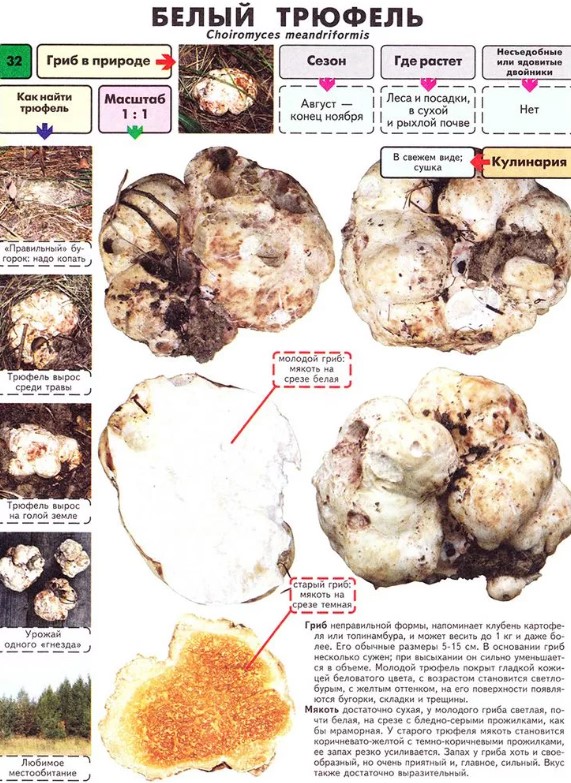
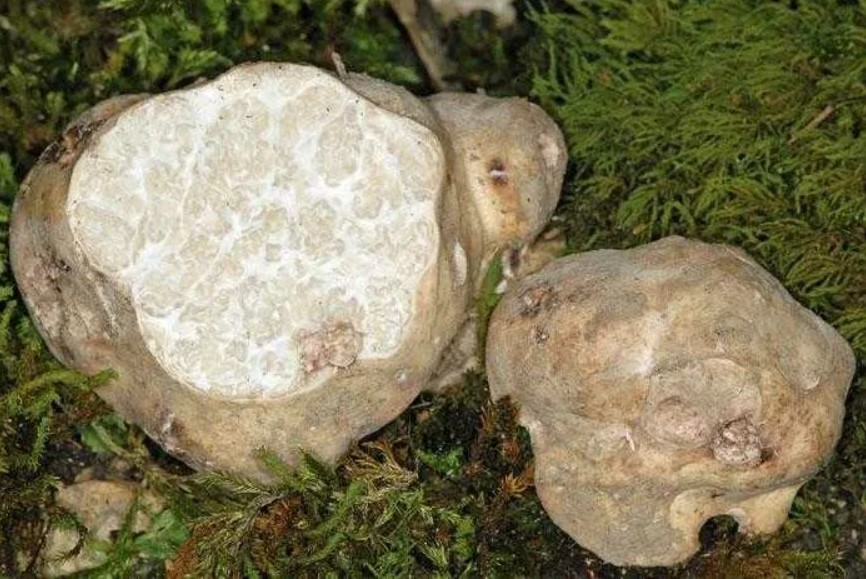
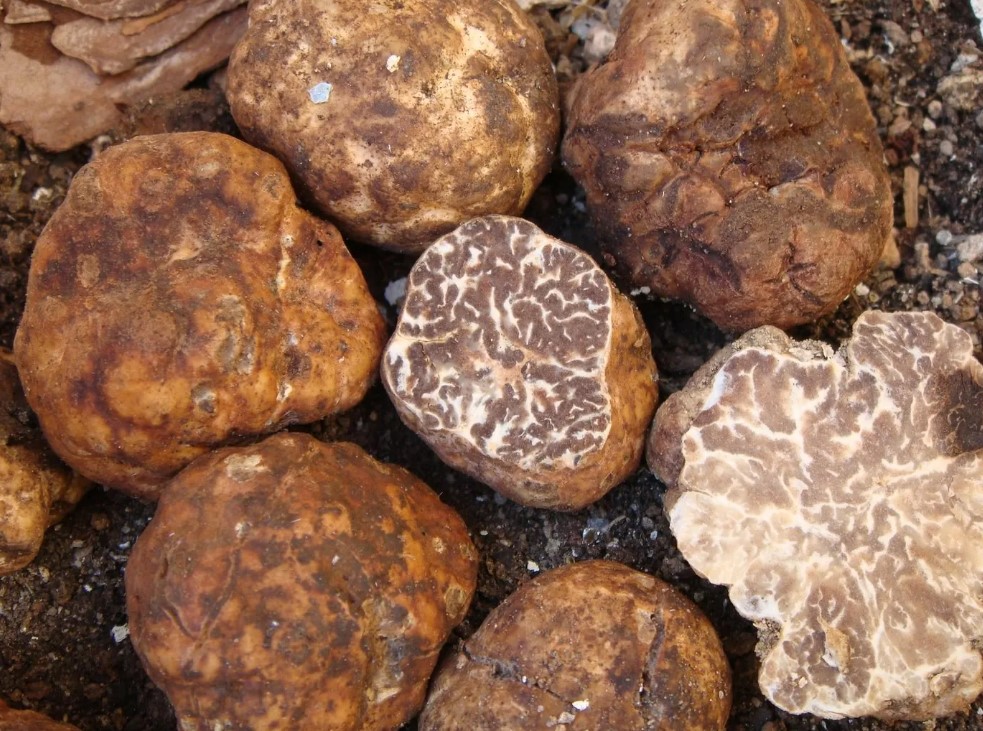
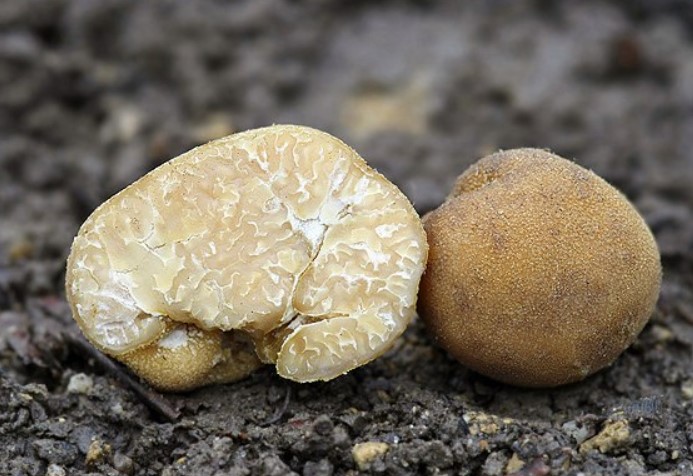
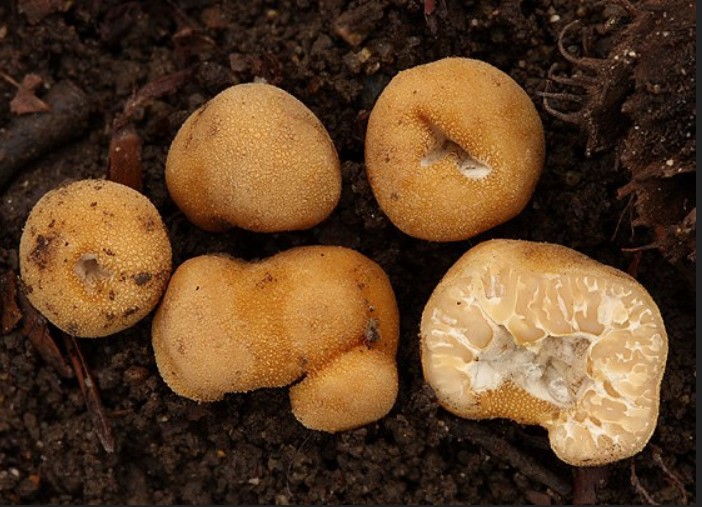
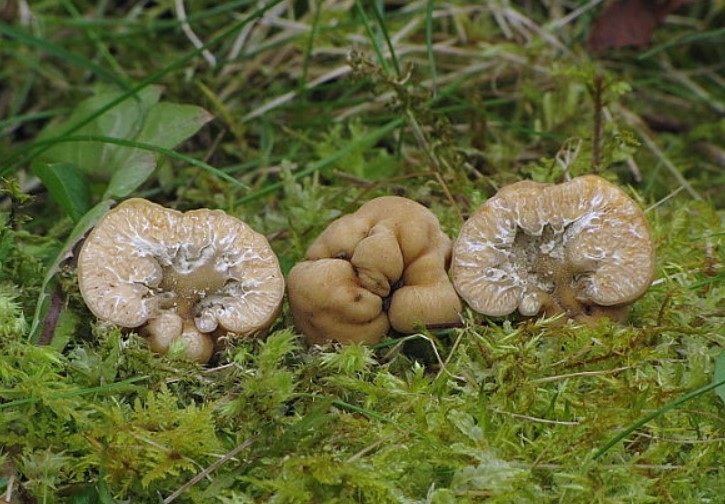
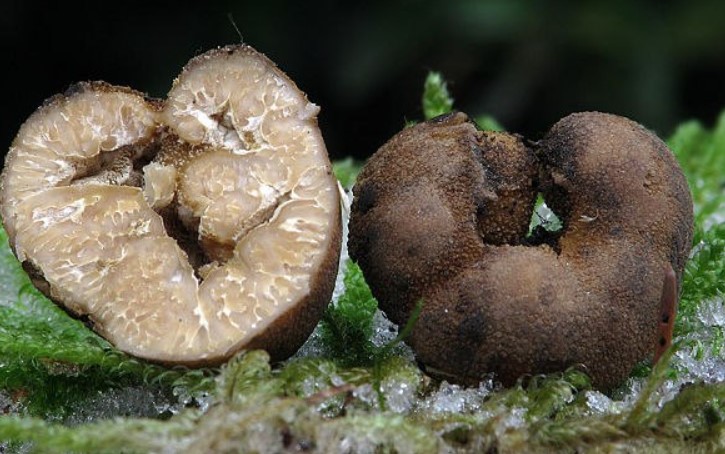
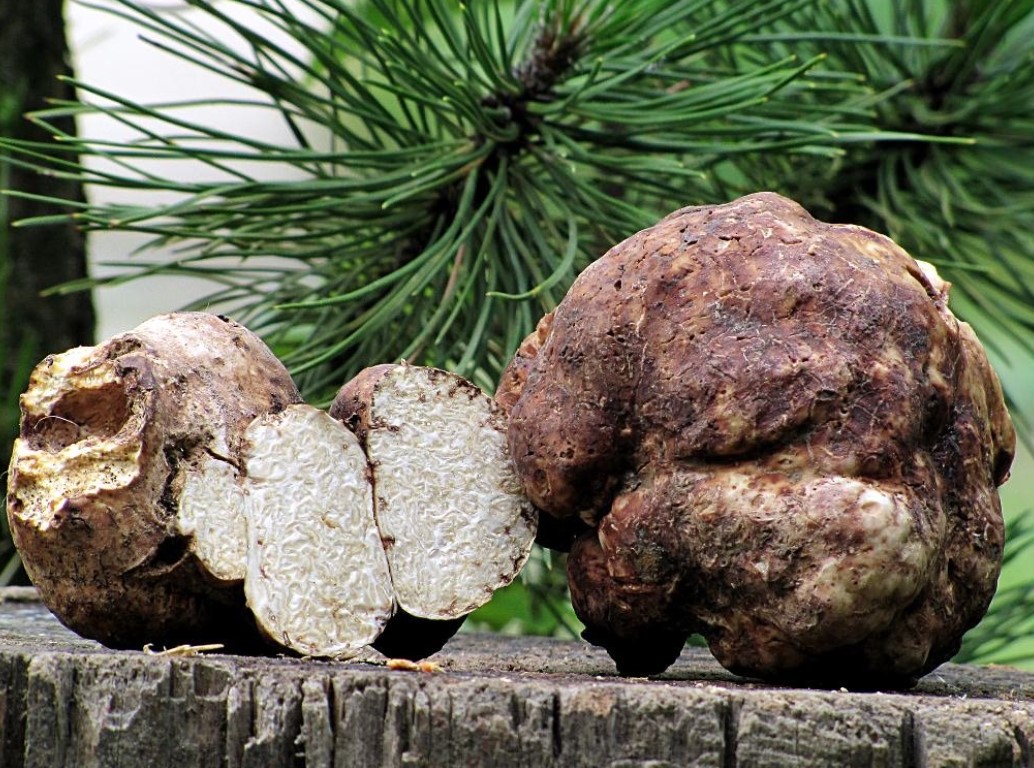
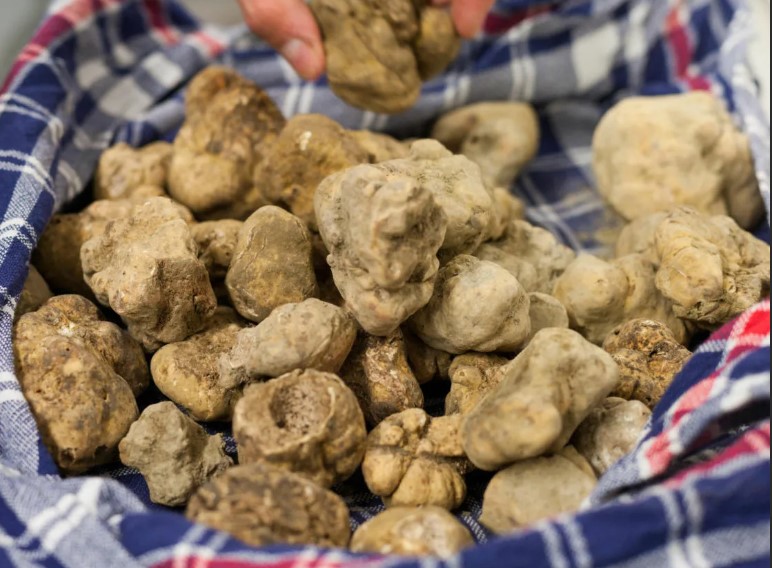
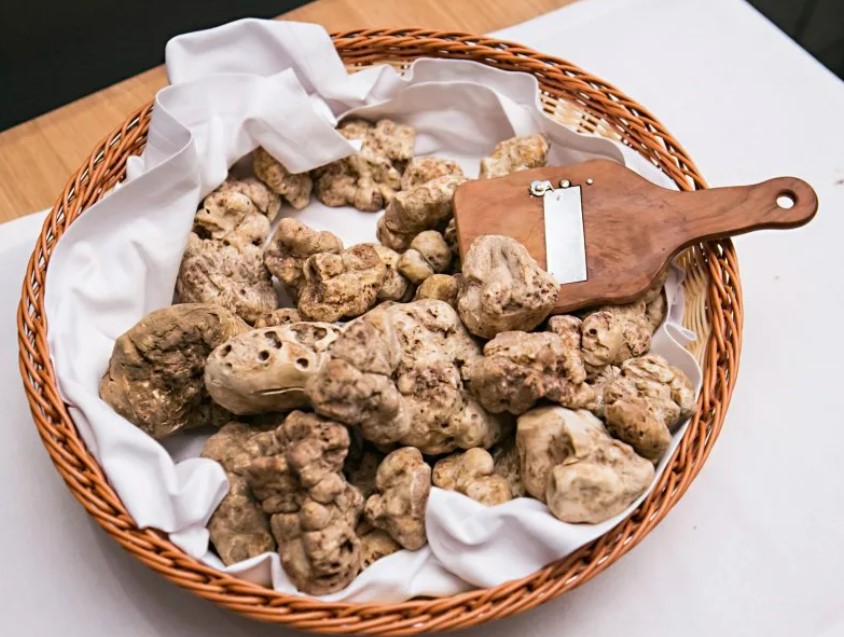
The fruiting body closely resembles a potato tuber or Jerusalem artichoke. This shape has the scientific name apothecium. The surface is almost smooth, and the diameter reaches 14 cm, but the average truffle size is 9-10 cm.
At the first stages of growth, the mushroom is white, but over time it begins to darken and becomes brownish.
Pulp
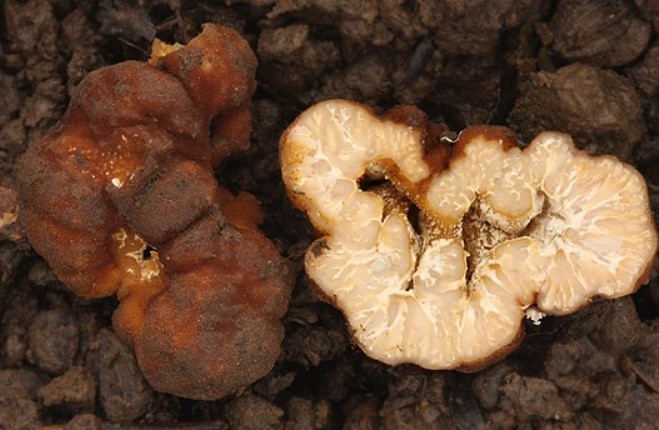
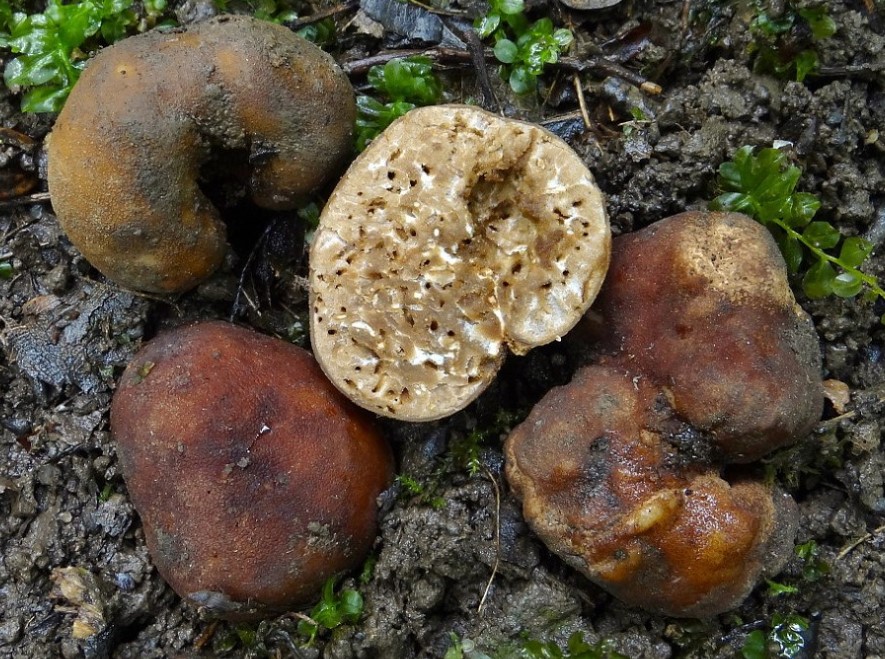
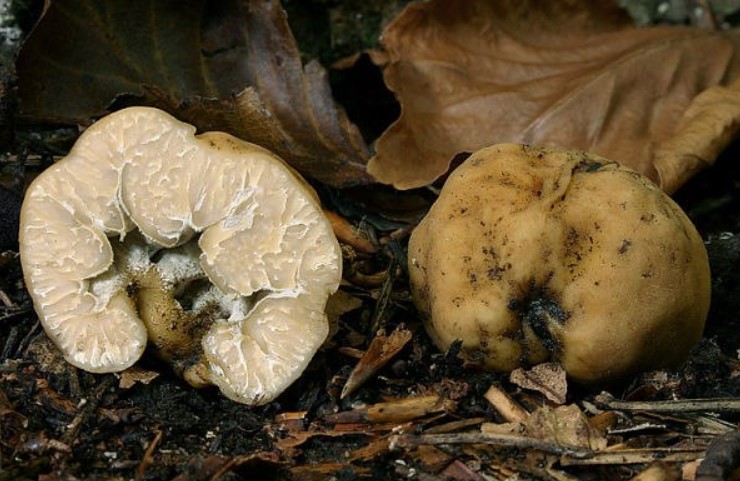
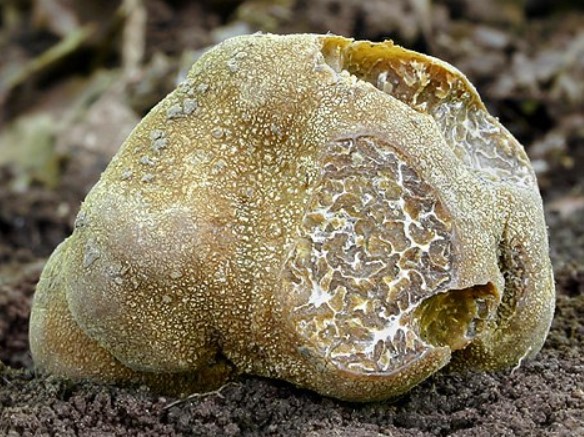
The white truffle's flesh is light-colored, but when cut, the veins are clearly visible, creating a marbled effect. The texture is firm, the aroma is nutty, and when overripe, it becomes woody. The taste of the white truffle is similar to meat with hints of sunflower seeds.
Disputes
The entire inner surface of the truffle is covered with hymenium, a spore-bearing layer that forms a kind of sac.
When does the White Truffle grow?
White truffles are quite rare because they don't bear fruit every year. The ripening period lasts from July to November, and this is when you can find delicious, ripe white truffles.
How and where does the white truffle grow?
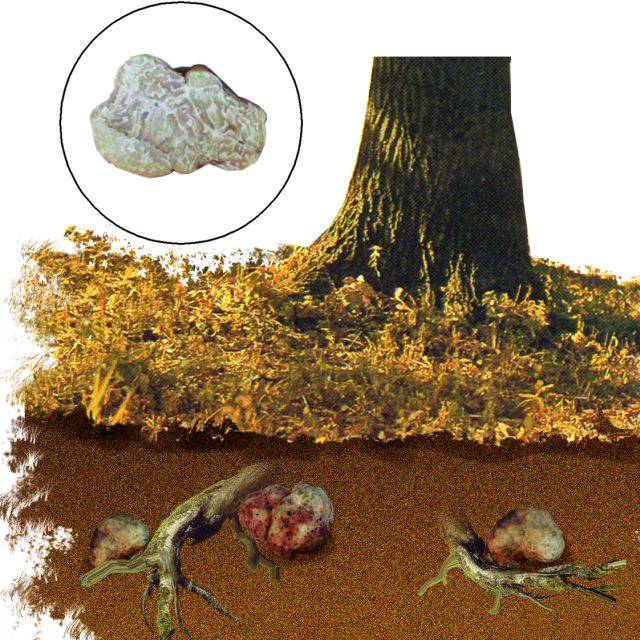
White truffles grow near birch, oak, pine, spruce, and some other rare coniferous trees. They can be found in Europe, the northern United States, and even in Russia.
The mushroom is located at a depth of 8-10 cm; adult specimens can slightly raise the ground above themselves, forming an elevation where valuable prey can be found.
How to Find White Truffles
White truffles are very difficult to find. Not only are they hidden underground, but the mycelium produces very few specimens—just 3-4 mushrooms.
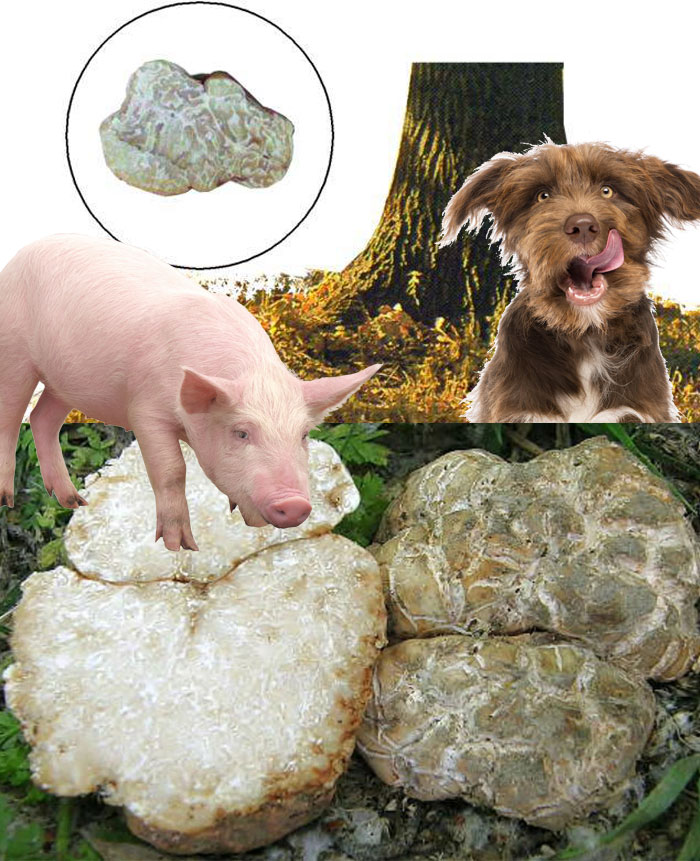
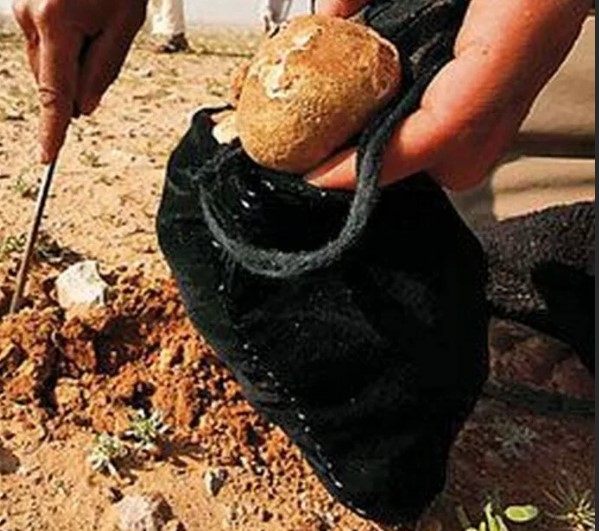
Since ancient times, pigs, bears and specially trained dogs have been used to collect truffles.
It's practically impossible to stumble across a mushroom in the forest by accident. To do so, you need to know special places, information about which is carefully guarded by other mushroom pickers.
In a clearing where truffle mycelium grows, mature specimens can be identified by a slight rise above the ground. Typically, there is no vegetation around this rise, but flies may swarm, attracted by the mushroom aroma. Carefully dig up the truffle to avoid damaging the mycelium. Otherwise, no more mushrooms will grow in that spot the following season.
When, where, and how to find white truffles in Russia
The mushroom is quite common in Russia, although in some other countries it is even listed in the Red Book.
The mushroom can be found in almost every region – Moscow, Vladimir, Smolensk, Leningrad, Nizhny Novgorod, and so on.
The main thing is to find a warm forest with loose, calcareous soil, where birch, aspen, hazel and young coniferous trees grow.
Read more about truffles that can be found in Russia and where to find them in this article.Where truffles grow in Russia, regions, and tables with mushroom descriptions.
Comparison of White and Black Truffles
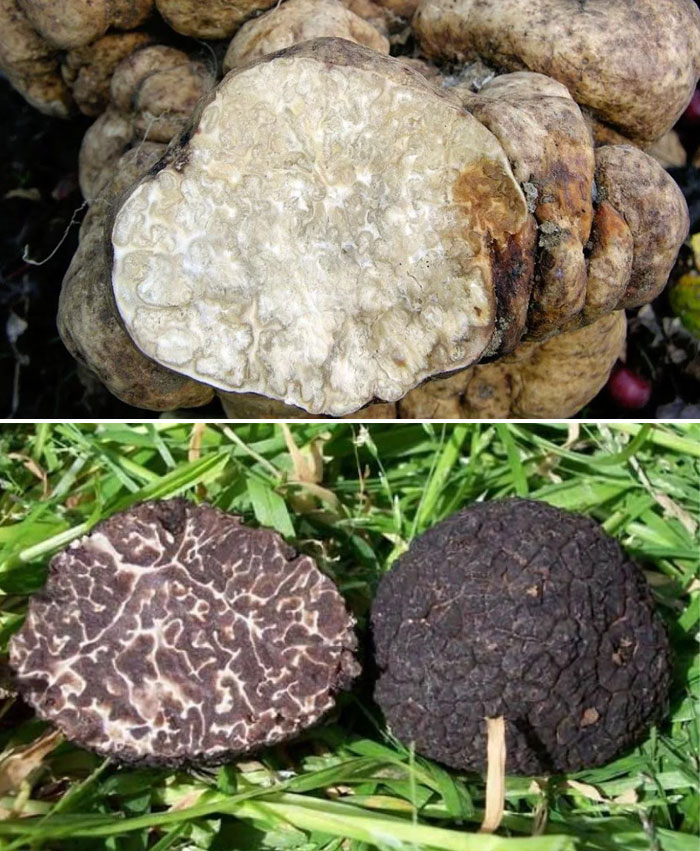
The white truffle is considered more refined. Its price is significantly higher than other truffle varieties. This is not surprising, as, unlike the black truffle, it can only be grown in the wild.
White truffles ripen from late July to November. The black variety can be found from November to early March.
Regarding taste, the white truffle is not cooked and is used raw in cooking. The black truffle has a more pronounced flavor, making it ideal for making various sauces and other gourmet dishes.
Read more about black truffles in the articleBlack truffle mushroom: 48 photos, 8 species, descriptions in tables, where it grows and how much it costs in Russia.
8 mushrooms that look like white truffles
Let's look at mushrooms that look like white truffles.
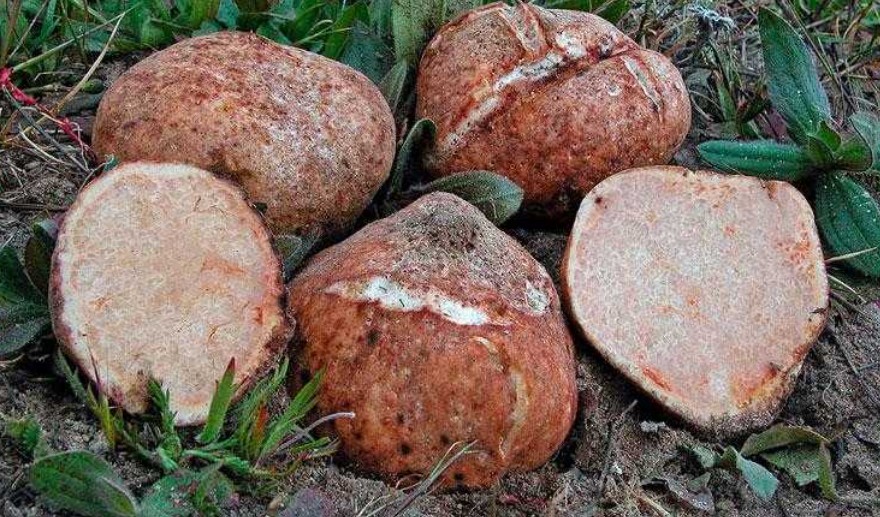
Choiromyces magnusii
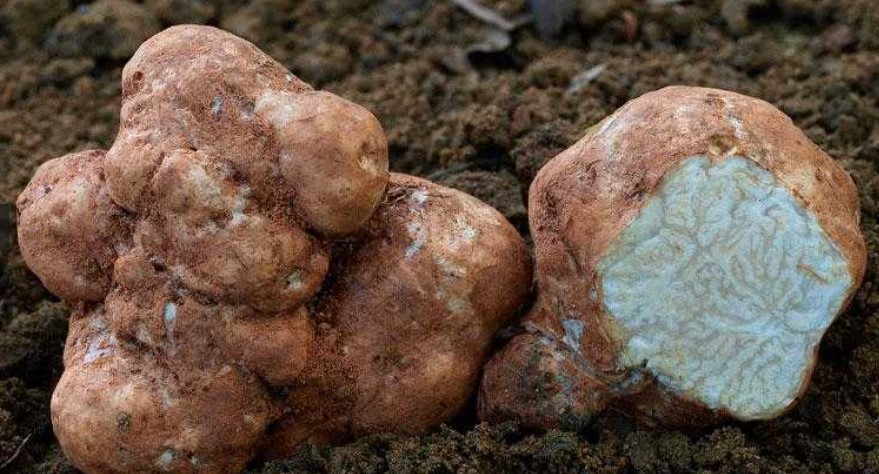
The fruiting body is spherical, approximately 8 cm in diameter, and brownish in color. The flesh is marbled, initially light, then turning brown. The skin is warty. It grows near rockroses and is prized in Italy.
Photo of the white truffle Choiromyces magnusii
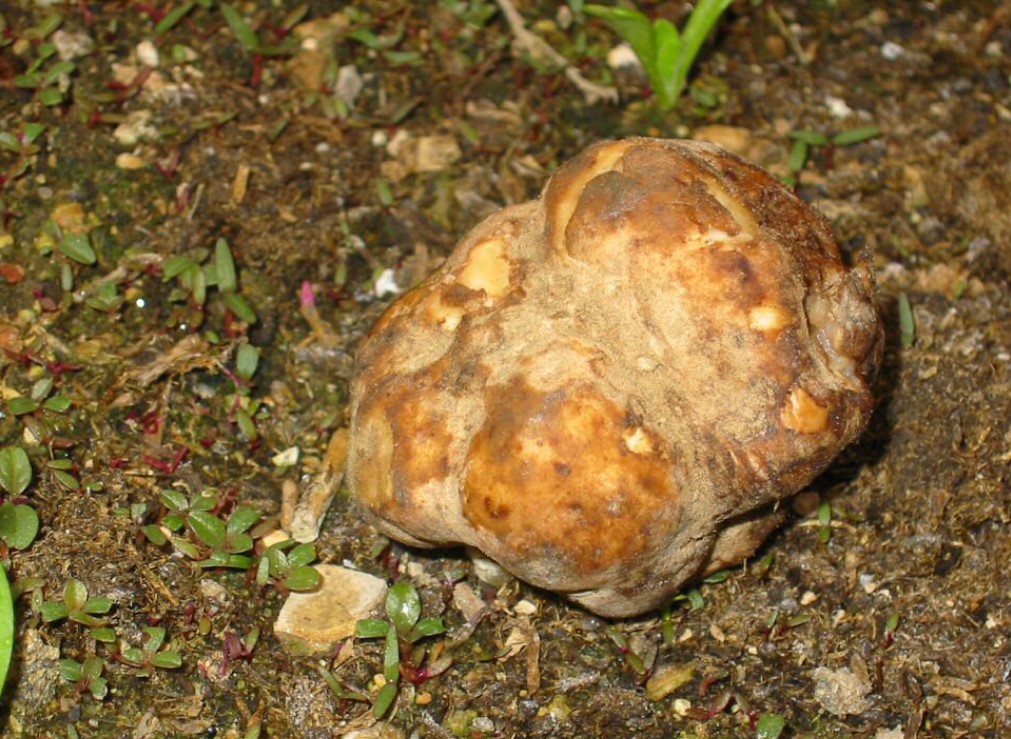
Sand truffle (Terfezia arenaria)
The fruiting body is a regular, round-oval shape, with a smooth, even surface. It can be eaten raw.
Sand Truffle Photo Gallery
Soft-bodied truffle (Terfezia leptoderma)
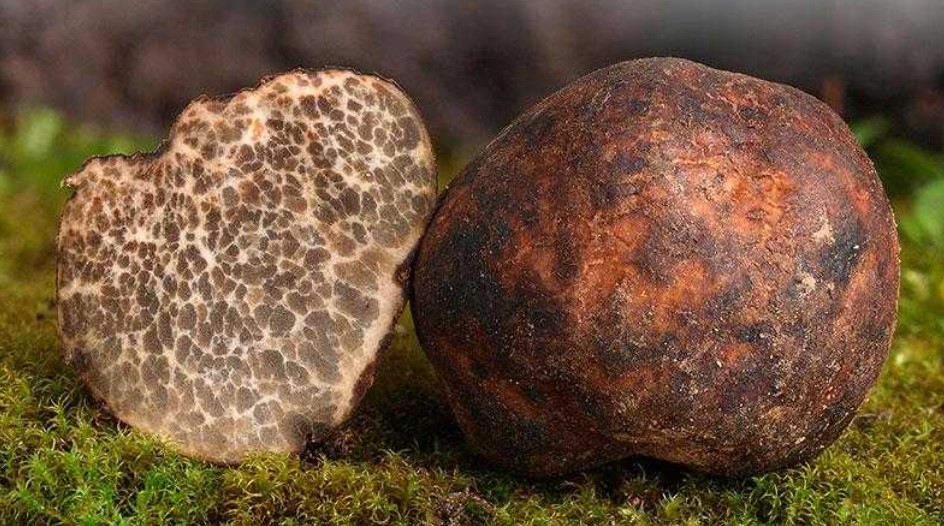
A spherical truffle, approximately 5 cm in diameter, brown in color, darkening when pressed. The flesh is porous, with hollows; in mature mushrooms, almost only the shell remains. The aroma is fruity. The mushroom is eaten raw. Common in Spain.
Photo of a soft-bodied truffle
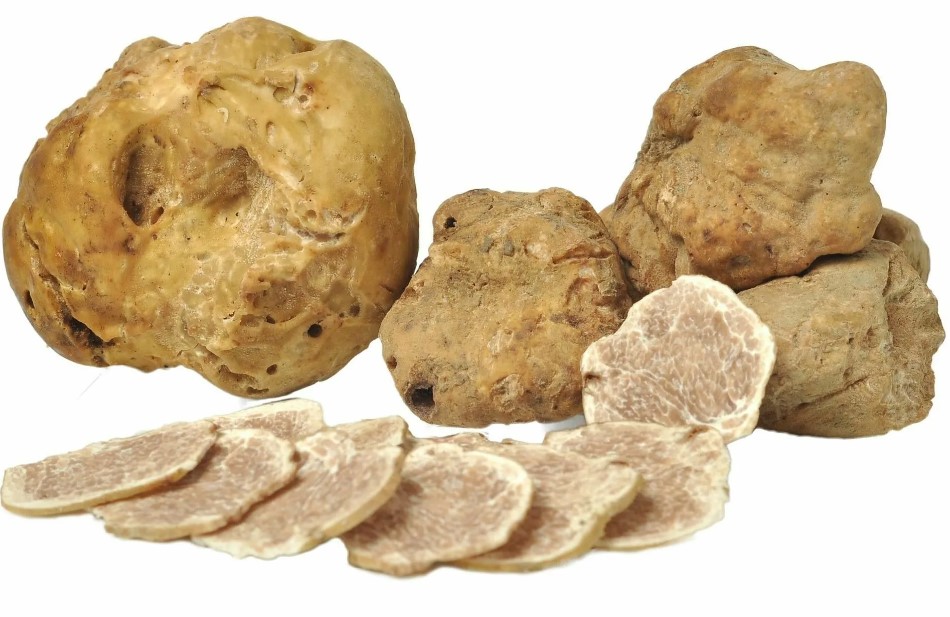
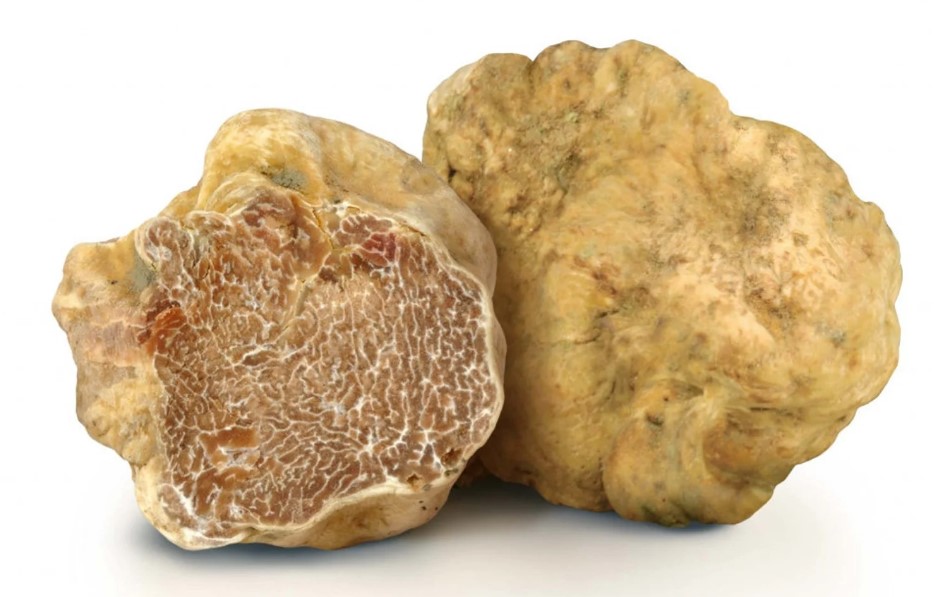
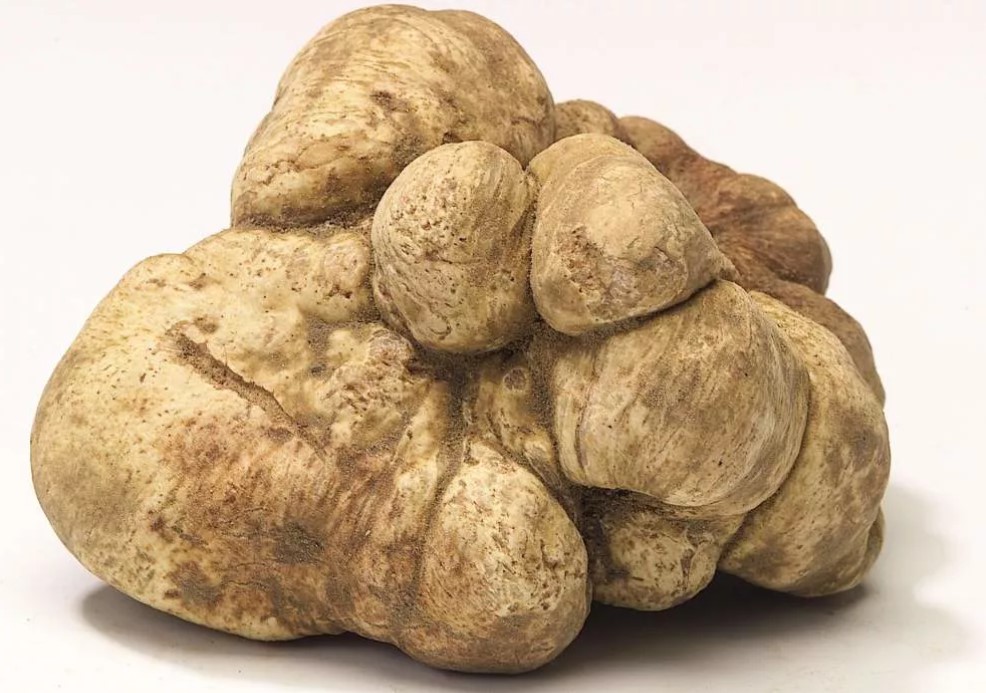
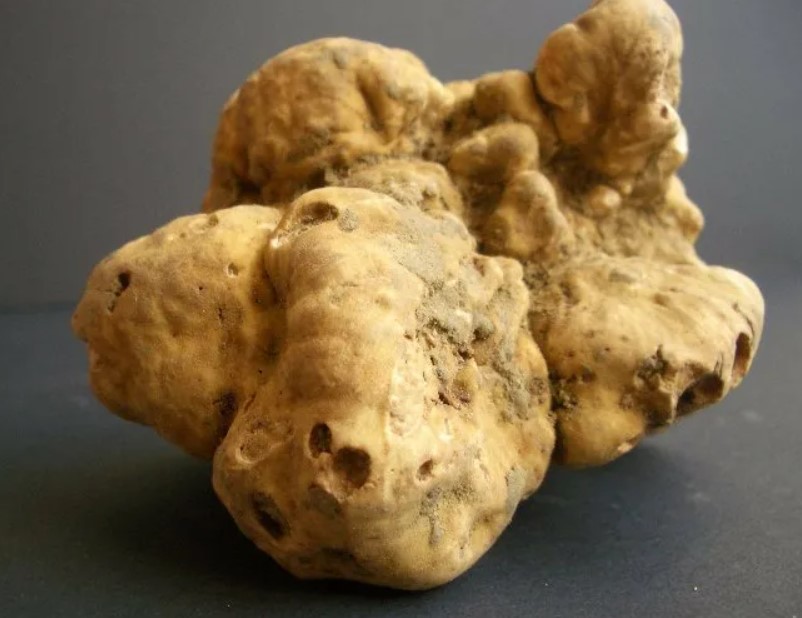
Italian truffle (Tuber magnatum)
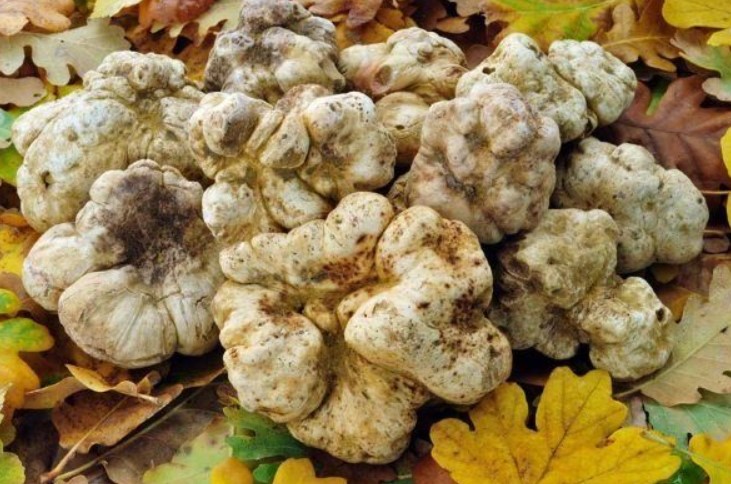
The fruiting body is irregularly shaped, reaching 12 cm in diameter and weighing up to 300 g. The color is grayish-white, the flesh is off-white, but can have a creamy or even reddish tint. It is most commonly found in France and Italy.
Photo gallery of Italian truffles
Bianchetto truffle, white March truffle ((Tuber borchii)
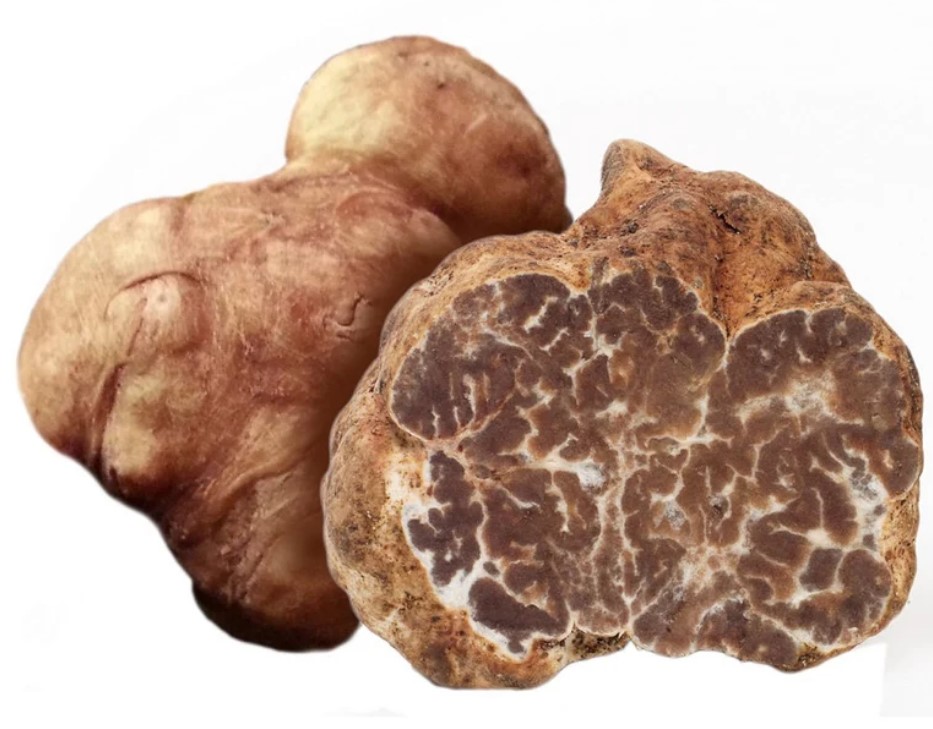
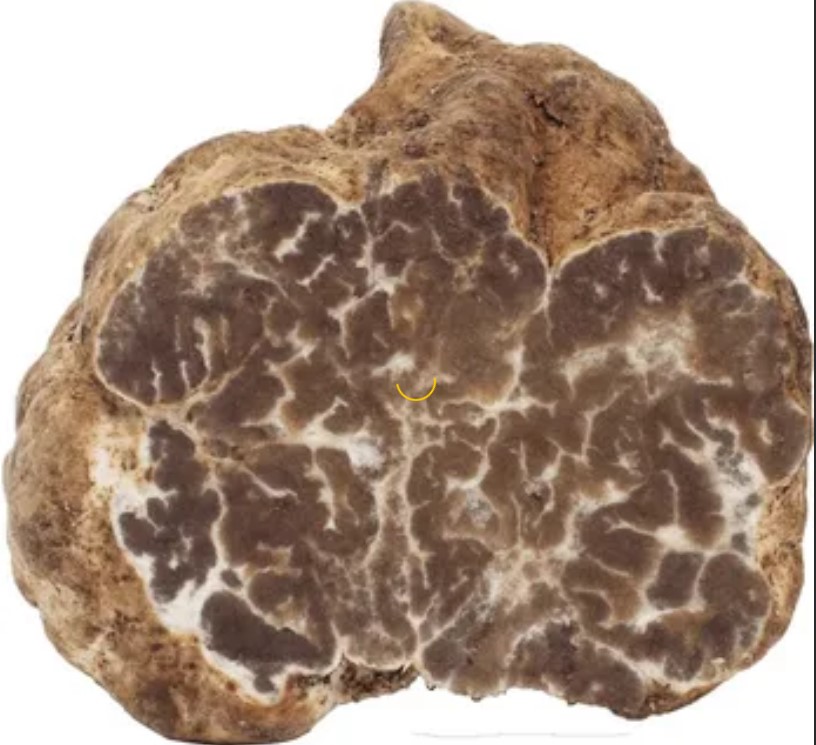
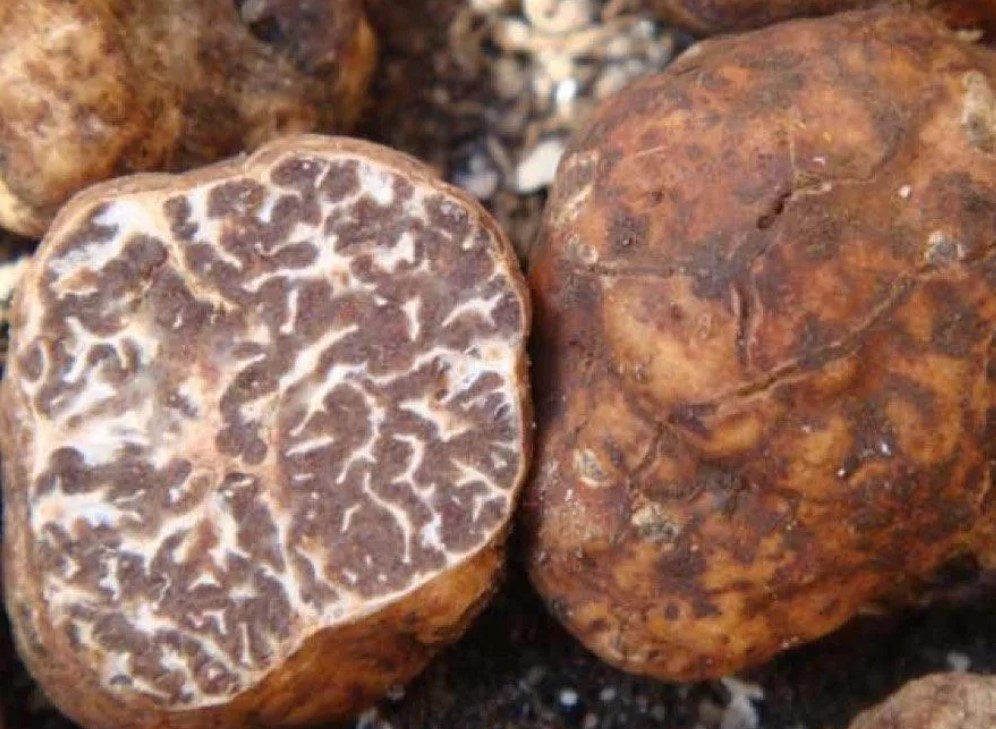
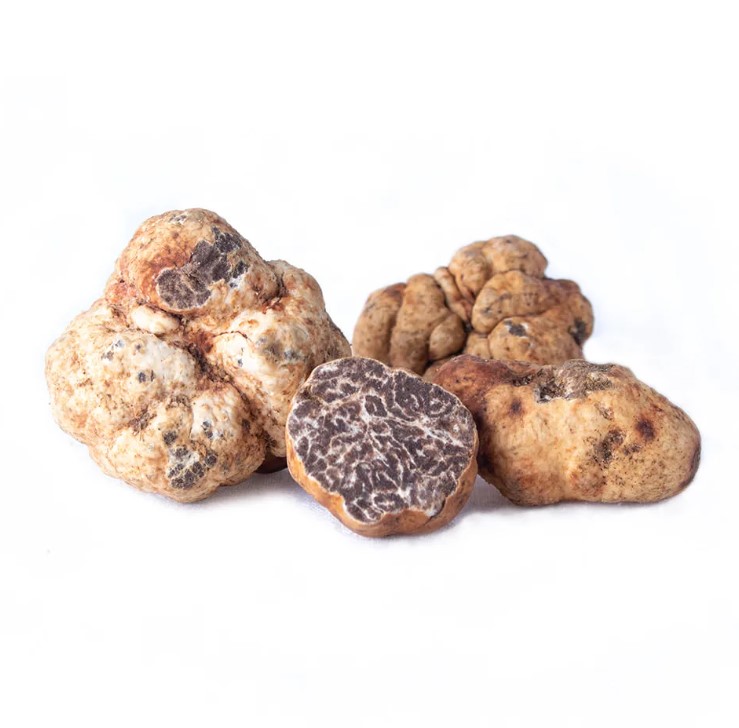
The fruiting body diameter ranges from 2 to 6 cm, and the color is white, turning reddish-brown over time. It grows in European countries. In Russia, it is found in broadleaf and coniferous forests of Crimea. Harvest period: December–April.
Photo gallery of Bianchetto truffles
White Duron truffle (Tuber excavatum)
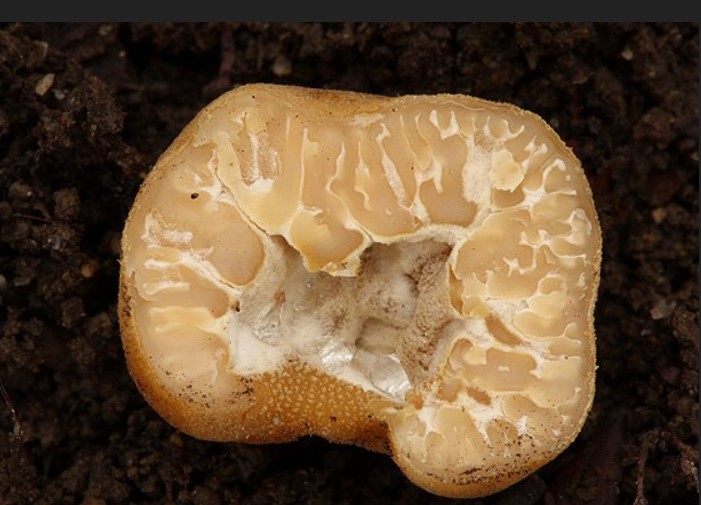
The fruiting body is small, no more than 4 cm in diameter. The color is light cream, the flesh is firm, and the aroma is tangy and sweet. It ripens from September to November. It grows in Europe and the European part of Russia.
Photo gallery of the Duron white truffle
White variegated truffle (Tuber maculatum)
It is distinguished by its very modest size—no more than 2 cm in diameter and a maximum weight of about 200 g. The flesh is dense and slightly bitter, and the mushroom is used to make oil. It ripens from June to September.
Photo of a white variegated truffle
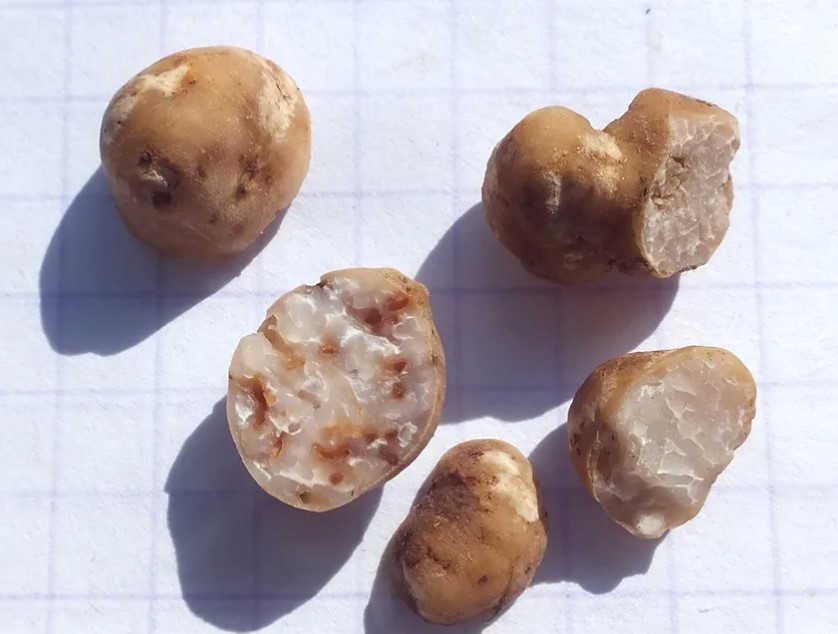
White truffle (Tuber puberulum)
A common type of truffle with no commercial value. Its diameter ranges from 0.5 to 2 cm, and it weighs from 3 to 20 g. Its flavor and aroma are mediocre.
Photo of a white truffle
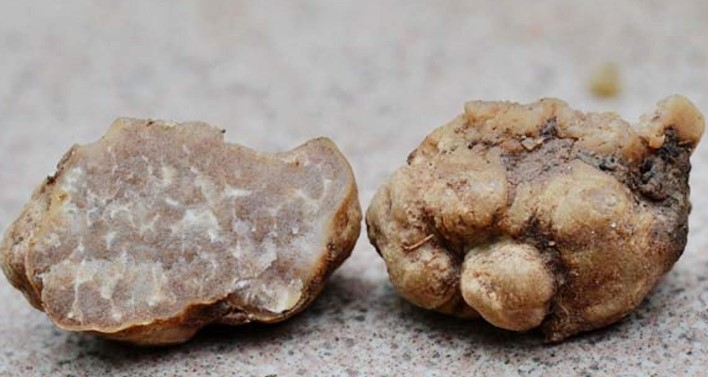
3 Inedible White Truffle Lookalikes + Photos
The white truffle, like any other mushroom, has false look-alikes.
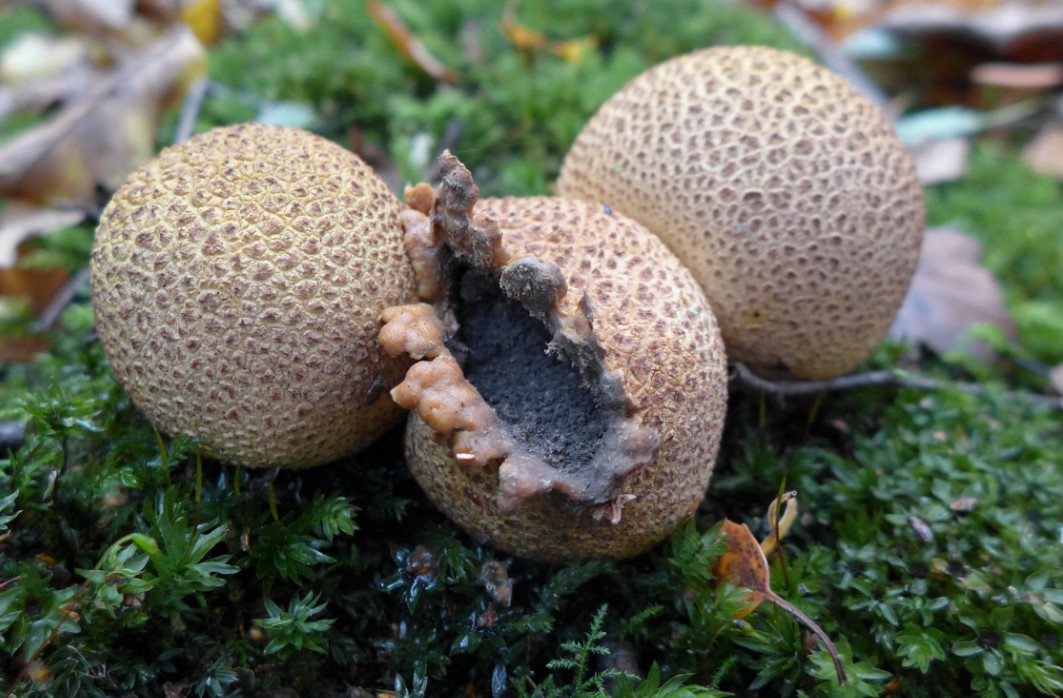
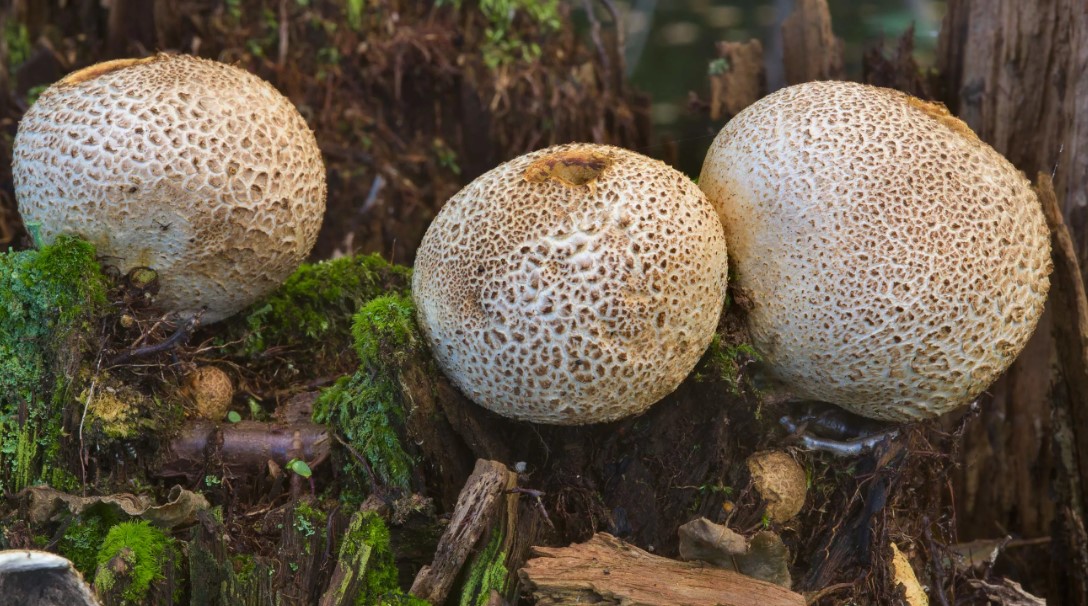
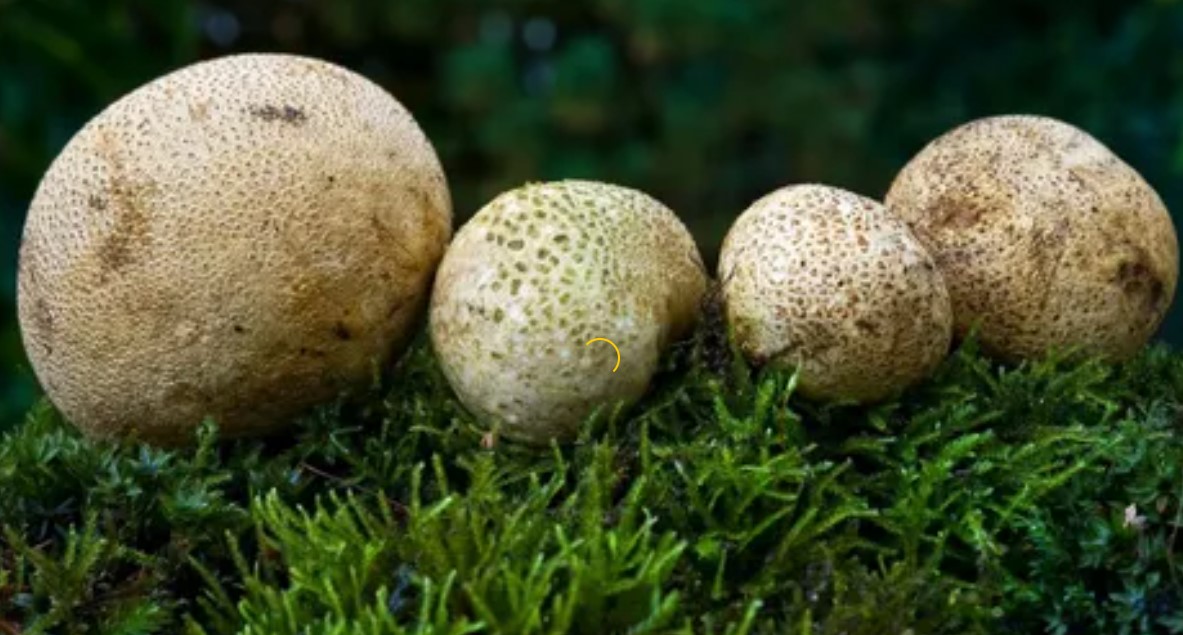
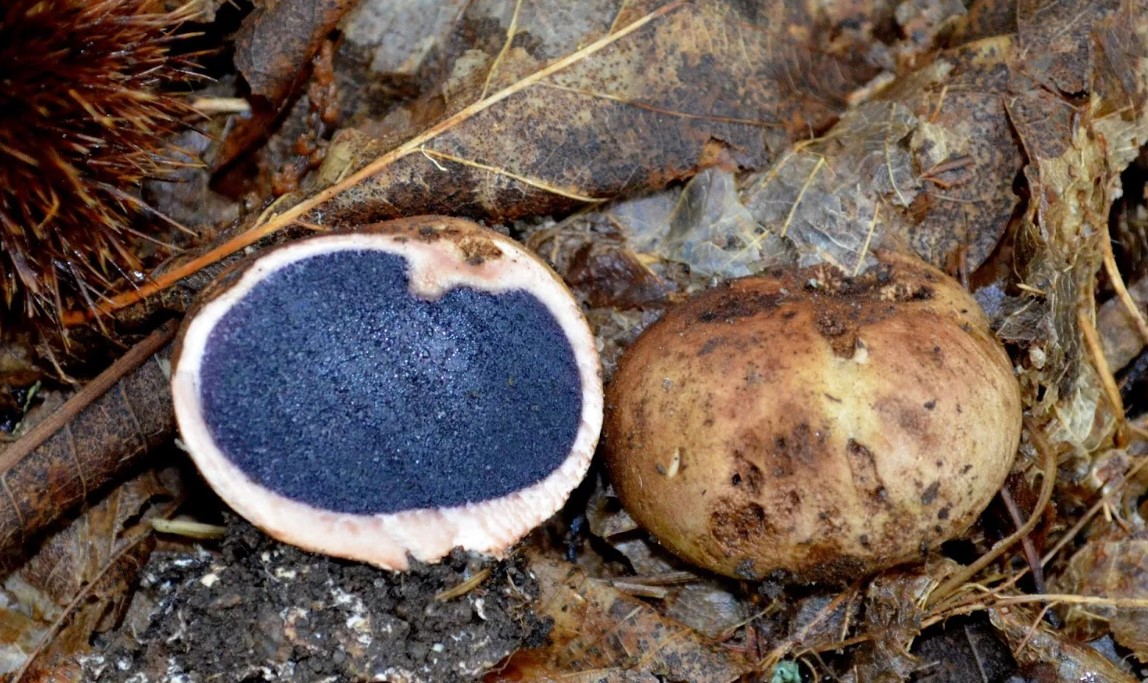
Common puffball (Scleroderma citrinum)
The fruiting body is tuberous, up to 6 cm in diameter. The color is brown or dirty yellow, the surface is warty, and the skin is relatively thick – up to 4 mm. The flesh is initially light, but later turns purple-black. The aroma is similar to fresh potatoes.
Photo gallery of the common false puffball
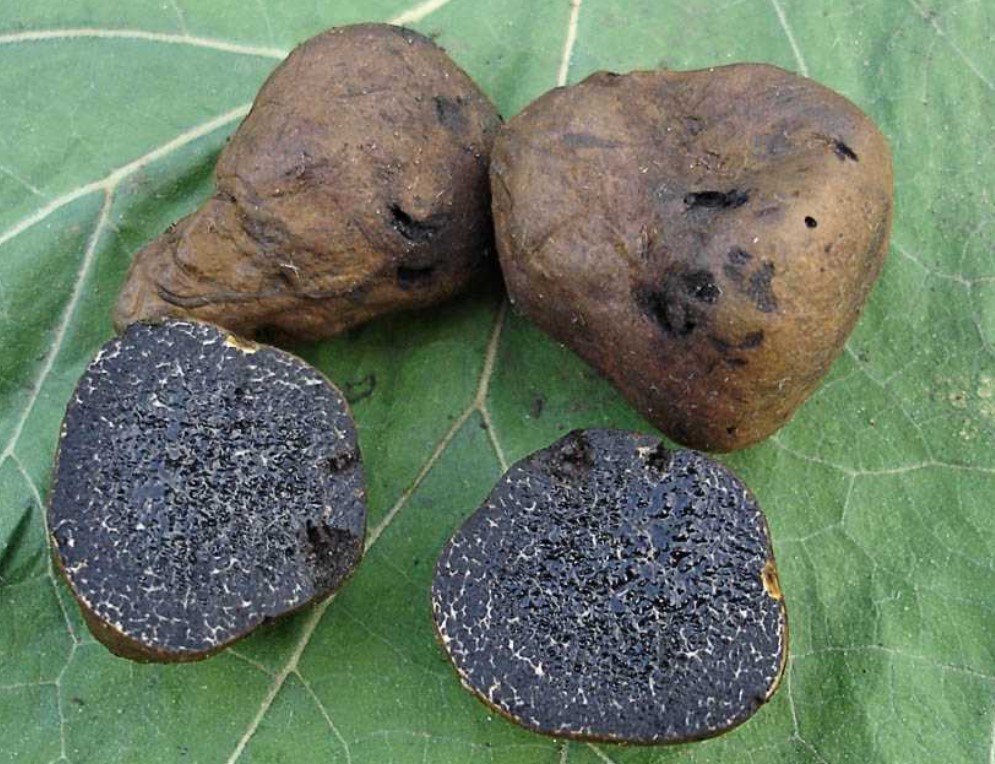
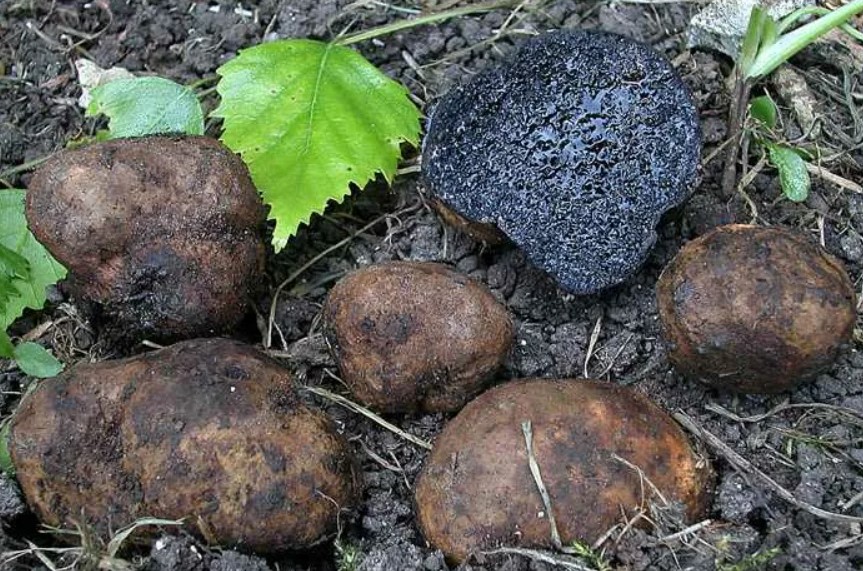
Melanogaster broomeanus
The fruiting body is spherical or tuberous, up to 8 cm in diameter. The color changes from yellowish-brown to dark brown as it grows. The flesh has a gelatinous texture.
Photo gallery of Melanogaster Bruma
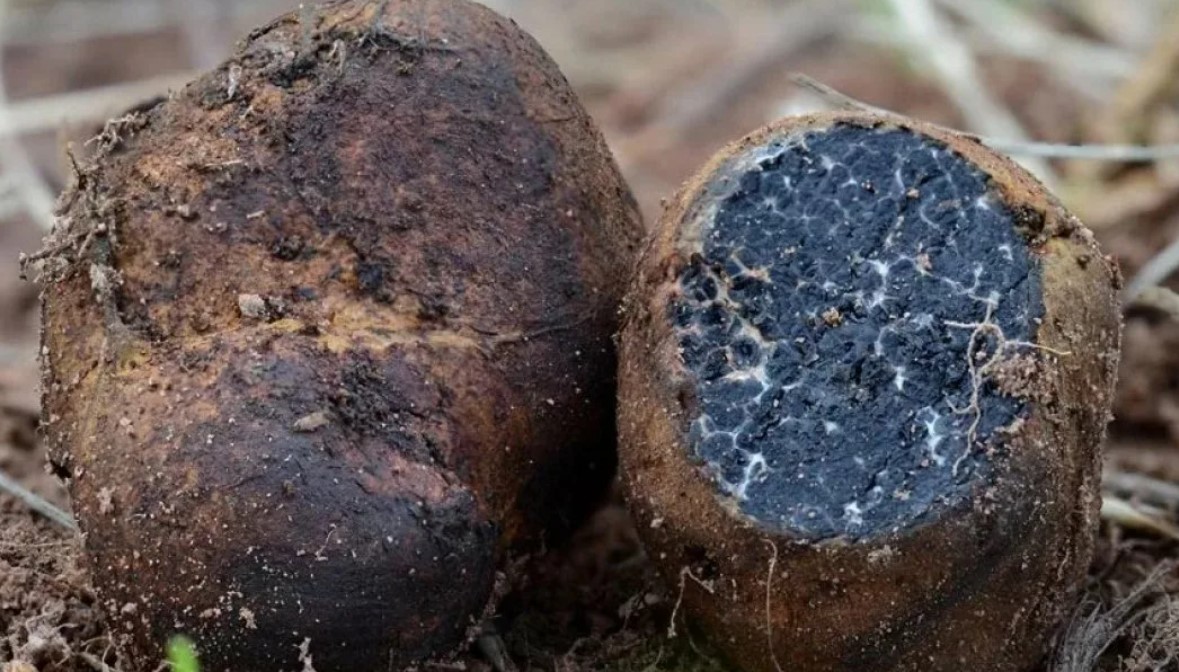
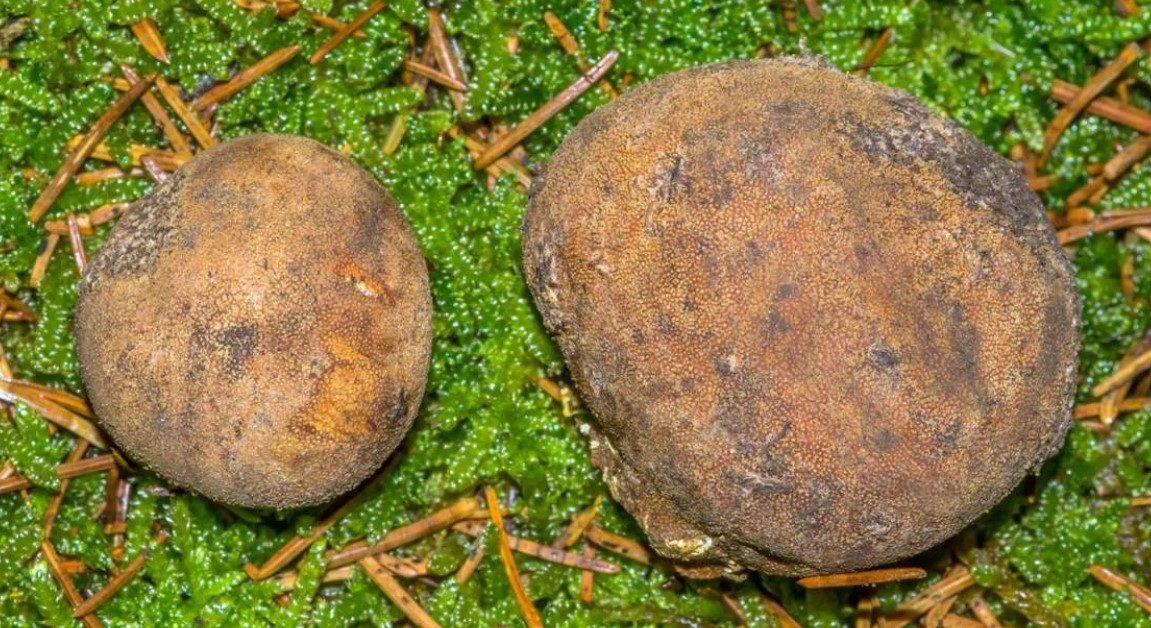
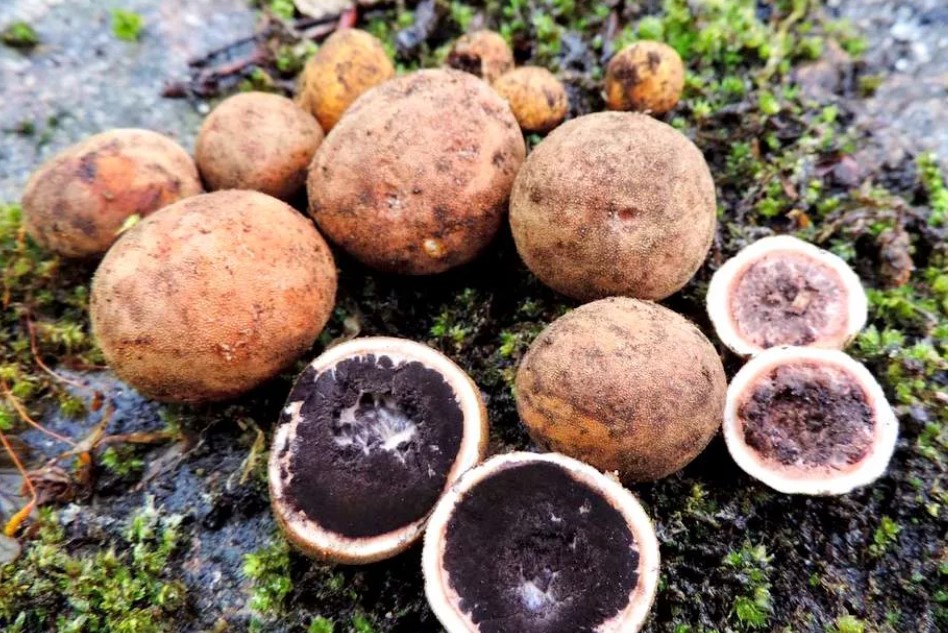
Deer truffle (Elaphomyces granulatus)
The mushroom is spherical, up to 4 cm in diameter, and has a warty surface. The flesh darkens as the mushroom matures, and the skin is white, turning pinkish when cut. It is up to 2 mm thick.
Photo gallery of deer truffles
Read more about the different types of truffles in the articleTruffles: photos, 18 species, where they grow, when to collect them, descriptions in tables, and applications.
Culinary evaluation of the White Truffle
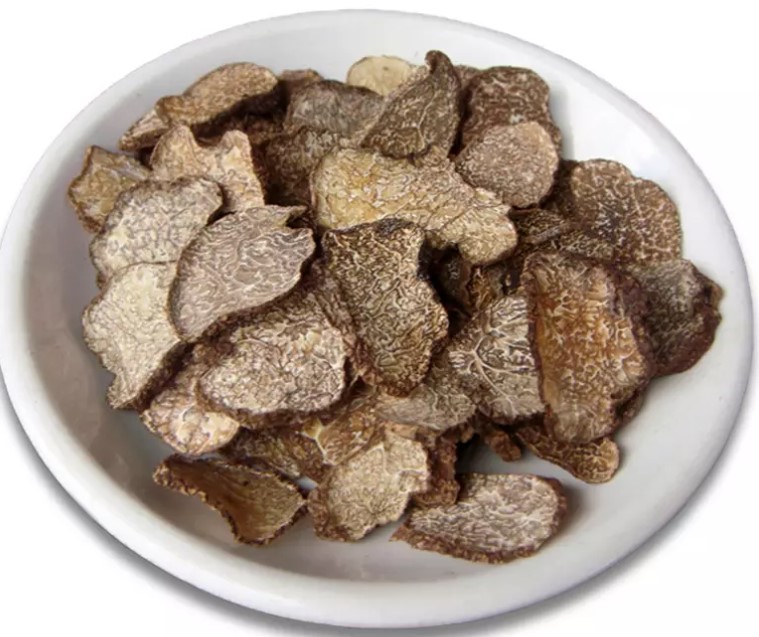
White truffle belongs to IV A class of mushrooms. It is edible, but is not prepared as a separate dish. The truffle is added to spice mixtures, butter, and certain dishes. A unique feature of the white truffle is that it does not require cooking before serving. It is eaten dried or fresh.
Fresh truffles can be stored in a cool place for several days. To prolong their freshness, they can be preserved in oil or dried.
Calorie content and benefits of white truffle
100 g of fresh product contains 51 kcal, 6 g of protein, 5 g of carbohydrates and a very small amount of fat.
White truffles are considered very healthy due to the vitamins they contain. Eating this mushroom helps strengthen the immune system and bone health. Furthermore, truffles are renowned for their antioxidant properties, so eating them can help prolong your youth.
How to buy Russian truffles and their price
Russian truffles are not a cheap treat for connoisseurs. They can be purchased online or from private sellers, with prices starting at 70,000 rubles per kilogram.
What is interesting about the White Truffle?
- In Russia, the white truffle has another interesting name: cow bread. This is because the mushroom emits a pleasant aroma to animals, and grazing cows often find truffles and happily feast on them, bypassing their owners.
- If you place a fresh mushroom in a container of water, after a while the liquid will acquire the taste of soy sauce.
- In terms of chemical composition, truffles are no different from the most common edible mushrooms, despite their exotic nature and exorbitant cost.
White truffle in medicine and cosmetology
Due to its high vitamin content, particularly B vitamins, white truffle is widely used in medicine and cosmetology.
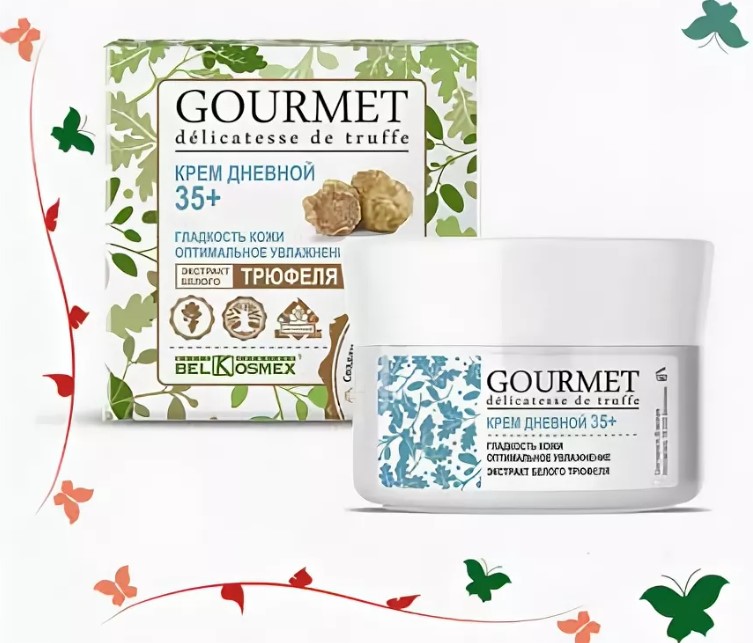
Truffles can be found in cosmetic oils, creams, and masks. They have antioxidant, firming, and rejuvenating properties, helping combat wrinkles and age spots.
Sometimes white truffle is included in some dietary supplements due to its easily digestible forms of vitamins.
How and what to cook with white truffles
White truffles are widely used in haute cuisine. They are rarely served as a stand-alone dish; they are most often added to side dishes, sauces, pastas, and the like.
Primary processing of white truffles
Before cooking, it is necessary to prepare the truffle:
- The fruiting body is thoroughly washed to remove sand, dirt and other organic impurities.
- The truffle is placed in a deep saucepan, covered with running water and soaked for several hours.
- After the required time has passed, the mushrooms are washed again and cooking begins.
White truffle sauce
White truffles are most often used to enhance the flavor and aroma of sauces. There are two ways to prepare the sauce:
- With butter. Soften 250 g of good-quality butter, add 40 g of grated truffle, a tablespoon each of finely chopped dill, parsley, and green onions, season with 1 teaspoon of Provencal herbs, and salt. The resulting mixture can be rolled into a sausage shape, wrapped in cling film, and frozen to extend its shelf life. A little butter can also be added to any sauce, giving it a rich truffle flavor and aroma.
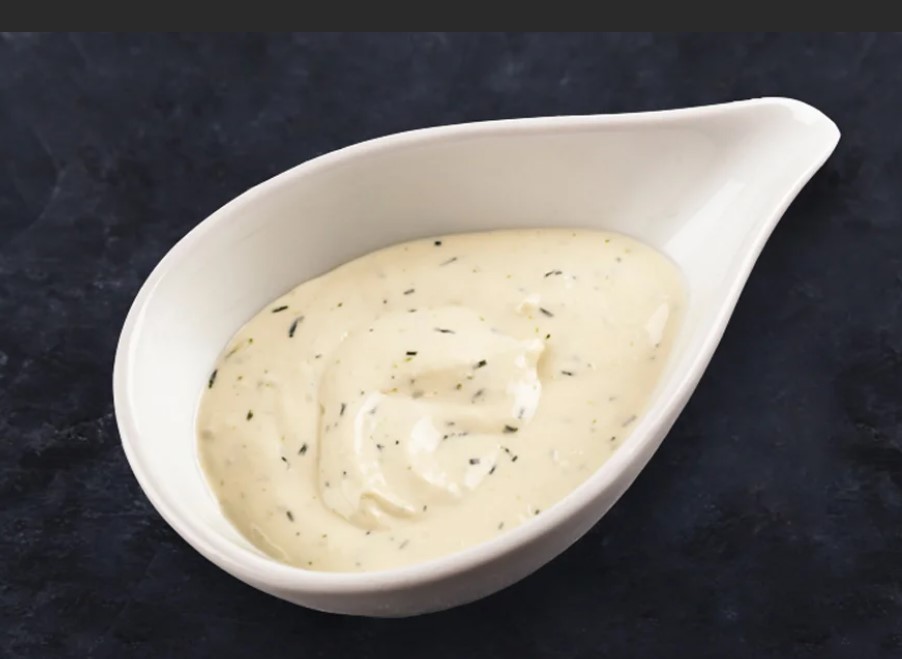
- A classic truffle with sour cream. Finely chop 10 grams of white truffle. Add 4-5 tablespoons of low-fat sour cream, herbs, and nutmeg. Blend the mixture until smooth.
Dried white truffle
The washed truffles are dried with a towel, cut into thin slices with a sharp knife, laid out on parchment paper, and placed in an oven preheated to 80 degrees Celsius (176 degrees Fahrenheit). The truffles are ready when they become crispy and brittle. The finished mushrooms can be ground into a seasoning or stored whole in jars in a dark, warm place.
Marinated white truffle
For marinating truffles, it's recommended to use small jars. It's best to avoid classic recipes for these mushrooms; more sophisticated marinades are best:
- Mix 250 g of homemade vinegar and a glass of dry red wine.
- Place 500 g of washed truffles in small ceramic pots and add salt.
- Pour the mixture over the mushrooms and place them in a hot oven for several hours, then remove them and keep them in a warm place. Repeat this process every day for four days, after which the pots can be opened, filled with boiled water, and stirred.
- After this, the liquid is poured into a saucepan and brought to a boil.
- The mushrooms are placed in jars and filled with boiling liquid.
- Add a small amount of oil on top and seal tightly.
- Store in a cool, dark place.
Recommendations and contraindications for the consumption of white truffles
Despite its benefits, truffles have a number of contraindications:
- Children under 10 years of age.
- The presence of gastrointestinal diseases, cardiovascular problems, diabetes.
When consuming truffles, please follow these guidelines:
- It is best to eat mushrooms in the first half of the day.
- You can't drink cold water with truffles.
- The first time, the mushroom should be eaten in small portions to check for allergic reactions.
How to grow white truffles yourself
White truffles grow only in natural conditions. If you create a natural habitat in your garden, you might even be able to grow a real truffle.
For this, the presence of three main factors is important:
- A tree with which the truffle forms a symbiosis.
- Suitable weather conditions in the region
- Nutrient soil
Truffle cultivation is carried out according to the following scheme:
- Mycelium is purchased and planted into hazel shoots.
- The infected shoot is placed in sterile conditions for 2 weeks to allow the mycelium to establish in a new location.
- In winter, the shoots after infection continue to be grown in the nursery
- After a year, the mycelium will form, but the harvest can be expected only in the 3rd or 4th year.
During the growing process, NPK fertilizers can be added to the soil. Mandatory procedures include weed removal and watering.
What else do you need to know about the White Truffle?
- White truffle is a powerful aphrodisiac, so it is widely used in the production of specialized supplements.
- Truffles are searched for at night, as this is when animals' sense of smell is heightened.
- Overripe truffles contain the psychotropic substance anandamide.
White Truffle Reviews and Finding
I found Choiromyces meandriformis in the Moscow region once. By accident. I was digging in my garden and accidentally dug up some "tubers." They were marbled inside and smelled of mushrooms and dampness. A real truffle.
It was a long time ago, about 15-17 years ago. The garden was near the village of Ryazantsevo, before reaching Sergiev Posad. It was on the edge of a mixed forest, on a western slope. The soil was clayey.
I don't remember the smell exactly. It was distinctly mushroomy, sort of "wet."
P.S. There's no point in training a dog to eat olive oil. The truffles are completely different, and the smell of olive oil is different. He'll start stealing olives from the store...
I found a strange find under a tree. It was half-emerging from the ground. I didn't take a photo because it was raining. I washed it at home, cut off a piece, and there was no doubt about it: it was a truffle.
I didn't even really understand, there are hazel trees, fir trees, aspen nearby... I often come to this forest, a little later I'll study the biotope)
Its aroma speaks for itself! It smells like Parmesan cheese, plus nutty notes. The raw truffle tastes nutty with a slight spiciness.
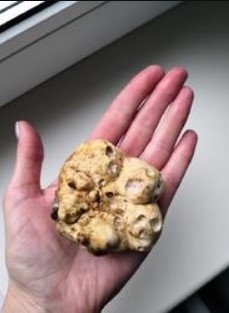
Everyone knows that our people, like trained dogs, can find truffles in no time, and for free, too. After all, all our restaurants stock truffles collected in the Chekhov forests. And in our forum members' reports, baskets full of truffles constantly appear, especially photos of the black summer truffle, and, a little less frequently, the white Russian (golden truffle). After all, the sense of smell of some of our mushroom pickers is far superior to that of a dog or a pig.
Of course, you might say that truffles are easy to spot by the characteristic columns of swirls of mushroom flies. That's absolutely true, because in our forests from September to November, especially if the autumn is dry, there are tens, if not hundreds, of thousands of these swirls. The flies hover over all the myceliums of all the mushrooms; the mushrooms haven't even broken through the hard, dry soil, but the mushroom flies are already laying their young in them.
You say, well, what about the mounds, the small mounds of cracked earth above the truffles.
Yes, but such bumps only appear if the truffle or truffles are no deeper than 10 cm from the surface. Sometimes, if the truffle is deeper and the bump is still there, you're likely just lucky and there's a whole mushroom tuber there, or (very rarely) just a large truffle. The most interesting thing is how you'll see this bump under a layer of rotting last year's leaves and a layer of fresh fallen leaves.
You might say, "What about the slight gray-ashy coating that sometimes appears on the ground above old truffles and slightly wilted grass?" Yes, you'd be right about that, too, except that this ashy coating is usually also found under the leaves at this time, and there's already plenty of wilting grass in the autumn forest.
And a few more little cherries on the cake: the truffles I know grow in alkaline soils (in the Rostov region, Bulgaria, and Romania); I don't know about other regions, sorry. Ninety percent of the truffles sold in Russia are of Chinese origin. And the majority of truffles are collected using animals (dogs and pigs; I even saw a goat looking for them).
Please forgive me for my sarcasm, I lost my temper.