In many countries, yellow milk mushrooms are considered inedible and are not eaten. However, in Russia, milk mushrooms are eagerly collected and used to prepare a variety of delicious dishes. And in some regions, pickled milk mushrooms are considered a true delicacy.
Content
- 1 Description of the yellow milk mushroom
- 2 Other names for the yellow milk mushroom
- 3 Where and when to pick yellow milk mushrooms
- 4 Rules for collecting yellow milk mushrooms
- 5 Mushrooms similar to the yellow milk cap
- 6 What are the differences between a yellow milk mushroom and a pig mushroom?
- 7 The benefits and harms of yellow milk mushrooms
- 8 Yellow milk mushroom taste, uses and preparation, recipes
- 9 Reviews of yellow milk mushrooms
Description of the yellow milk mushroom
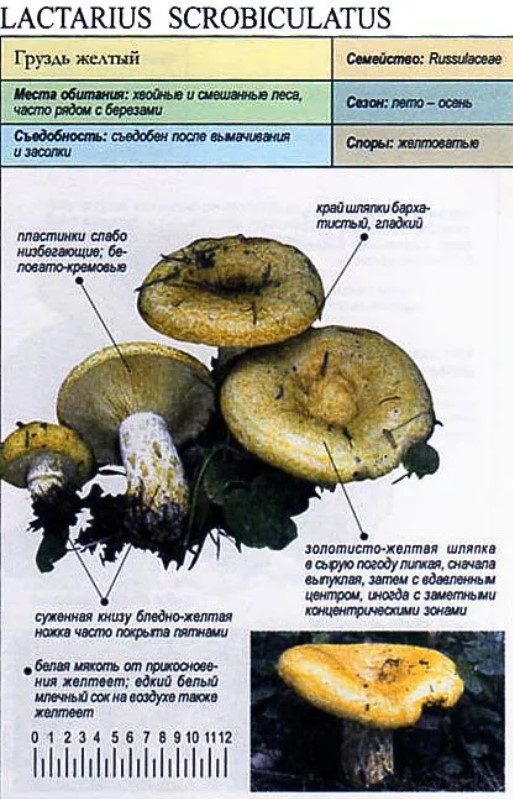
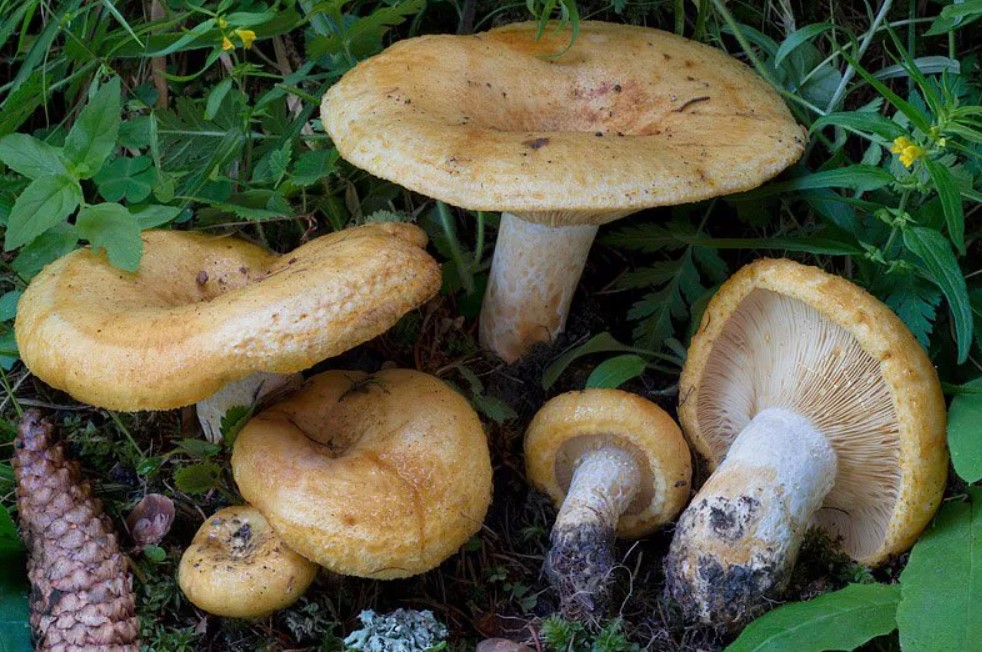
Yellow milk mushrooms are considered conditionally edible. They belong to the Russulaceae family, genus Lactarius. They can be recognized by their distinctive appearance.
hat
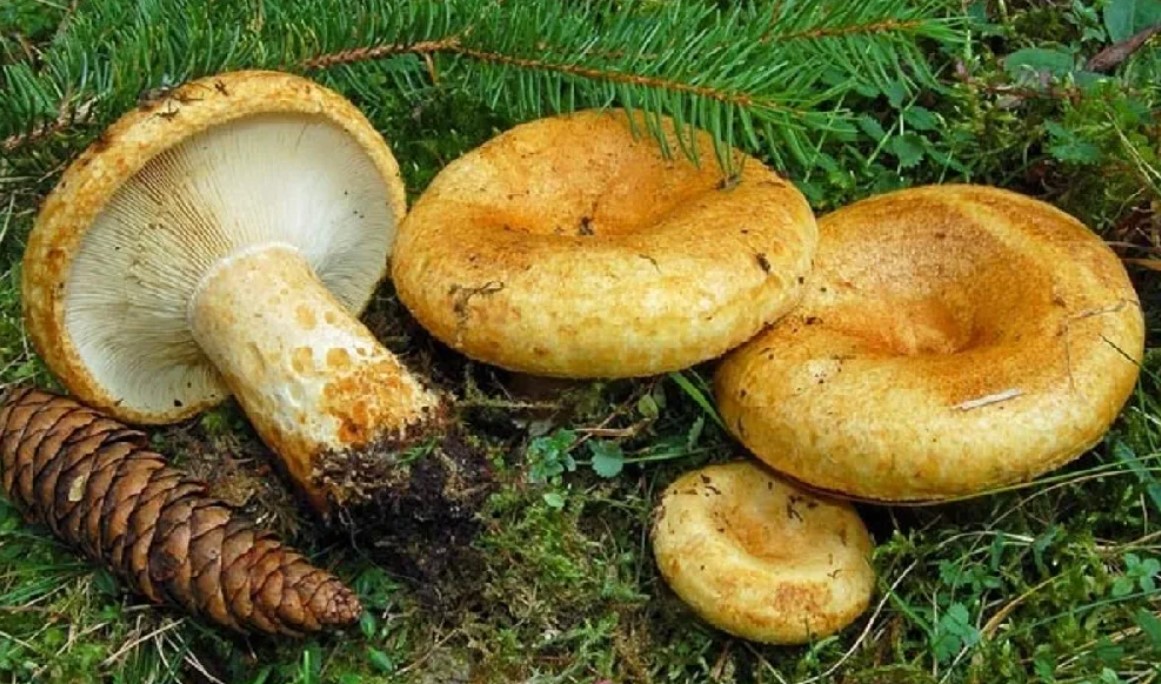
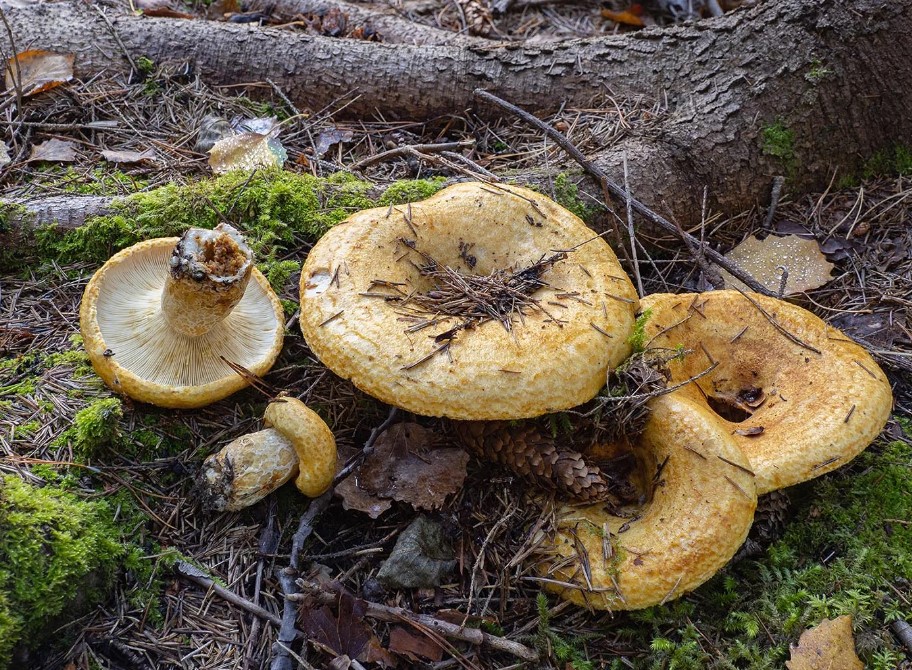
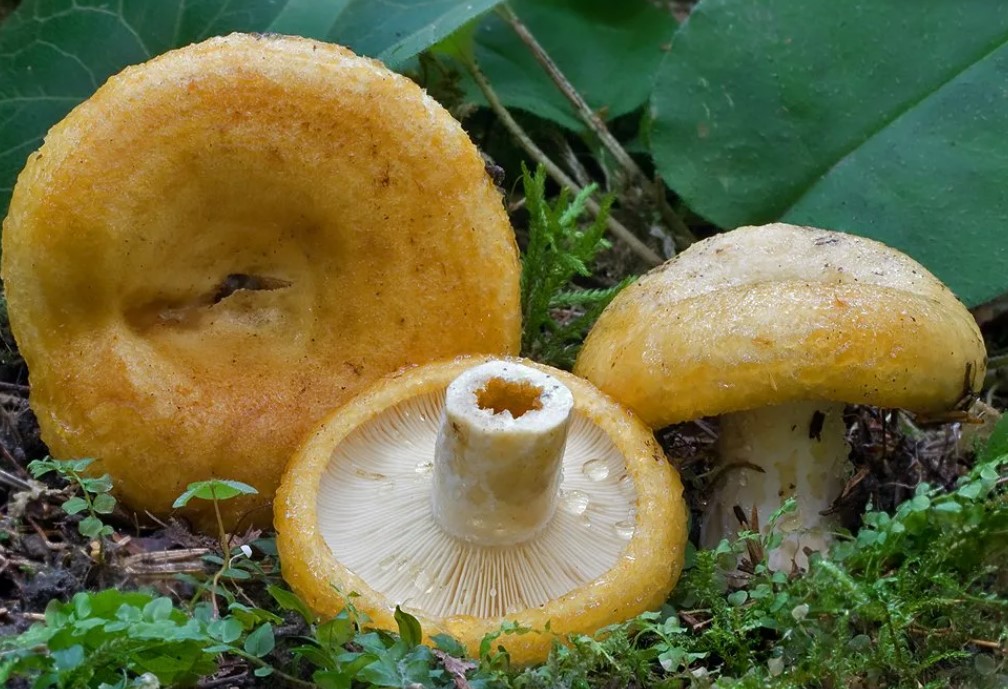
The caps are 10-15 cm in diameter. Initially, their shape is convex, but as the mushrooms mature, it becomes straight and even funnel-shaped. Young mushrooms have pubescent cap margins that curl inward. In damp weather, the skin becomes sticky. The color is yellow-brown or golden-olive, with concentric circles visible on the surface.
Leg
The stem is strong and small, up to 6 cm long and 3 cm in diameter. It contains a cavity. The surface is light-colored, with dark brown spots and notches.
Pulp
The flesh is white and fleshy. If pressed, it turns yellow. When cut, the color will remain the same in wet weather, but may turn yellowish in dry weather.
Records
The plates are frequent, flexible, and medium-sized.
Spore powder
Young mushrooms are distinguished by a white spore powder; in mature specimens it becomes creamy or yellowish.
Other names for the yellow milk mushroom
Yellow milk cap is the mushroom's scientific name. However, it also has more familiar names:
- scraper;
- pitted milk cap;
- yellow wave.
Where and when to pick yellow milk mushrooms
Milk mushrooms grow in coniferous forests, often found under spruce trees. They prefer loamy soil. For a long time, milk mushrooms were the only mushrooms in Siberia and the Urals, which is why they were called the "king of mushrooms."
They begin to be harvested in August, with mass ripening occurring at the end of summer and lasting until the first frosts in October-November.
Rules for collecting yellow milk mushrooms
To harvest mushrooms, use a sharp knife and cut the stem as close to the base as possible. Pulling milk mushrooms out of the ground can damage the mycelium, which will die.
Mushrooms similar to the yellow milk cap
Yellow milk mushrooms have lookalikes that, at first glance, appear very similar. But upon closer inspection, the differences become apparent.
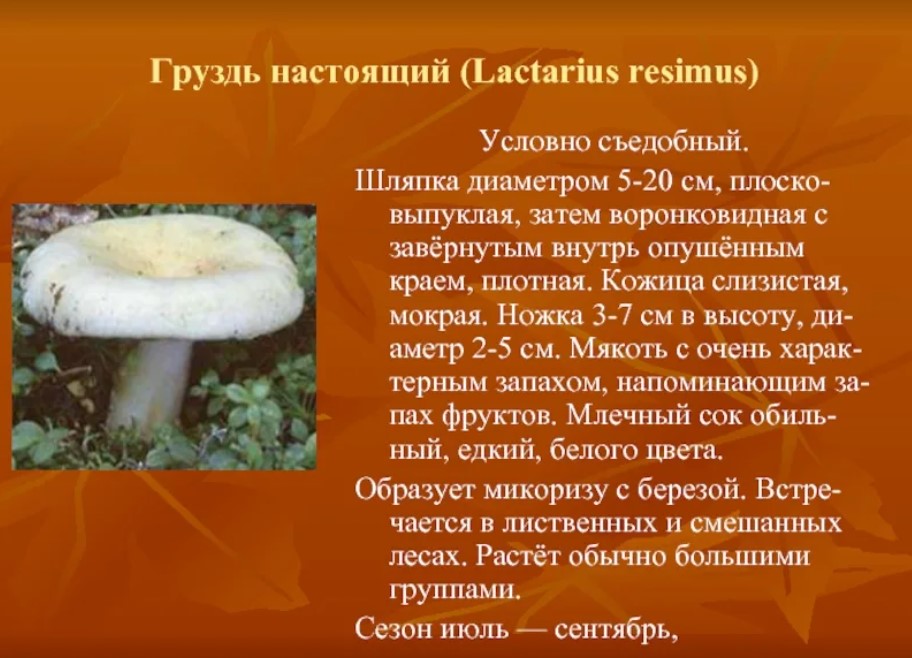
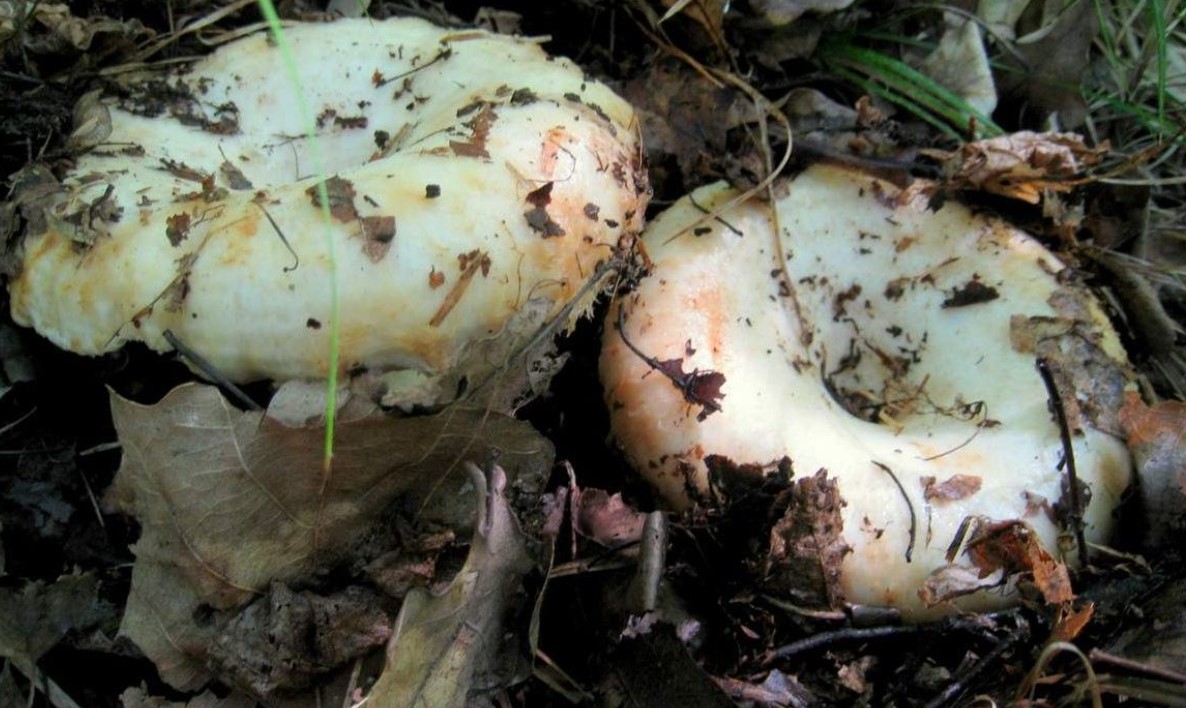
Milk mushroom (Lactarius resimus)
The main difference of this mushroom is the color of the cap and stem.
| Description | Edibility | Distribution, harvest season | Differences from yellow |
|
The cap diameter is 5-10 cm, the surface is slimy, the color is milky white, there are watery concentric zones. The stem is up to 7 cm tall, white, and hollow. Yellowish spots or pits may be present on the surface. The milky sap is white and turns yellow when exposed to air. |
Conditionally edible. | It grows in large clumps in northern Russia. It prefers linden, birch, or mixed forests. It bears fruit from August to September. | The cap is white, not yellow-brown. |
Photo gallery of real milk mushrooms
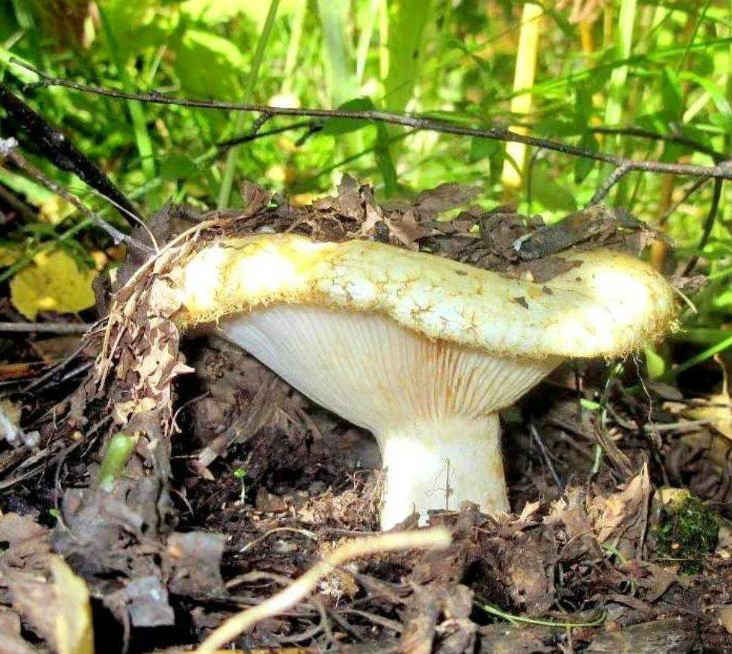
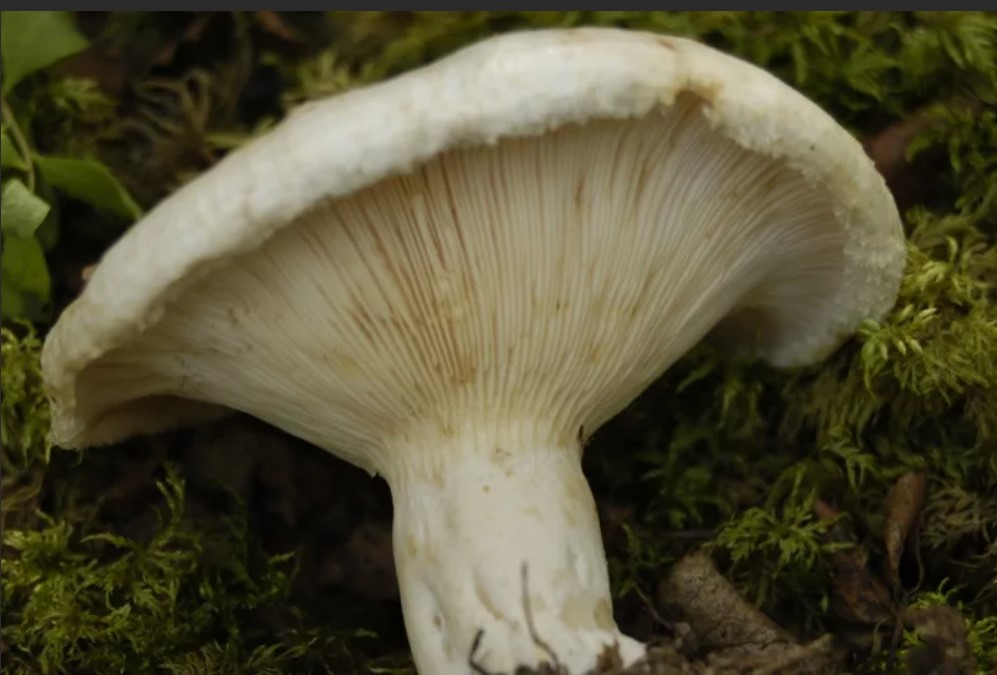
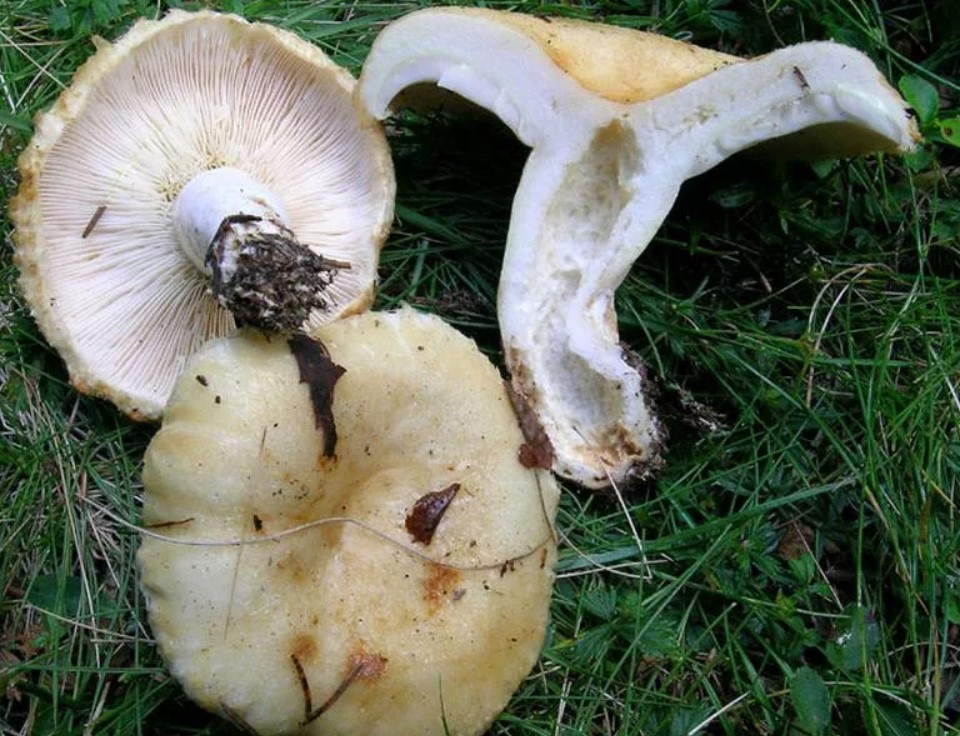
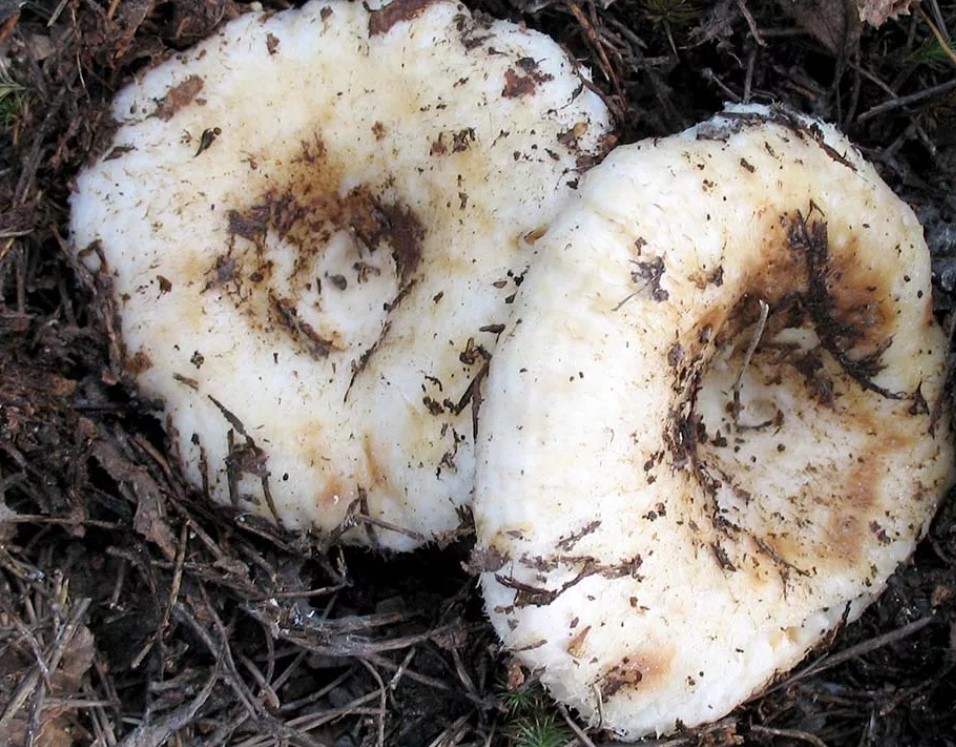
Blue breast (Lactarius repraesentaneus)
Milk mushrooms are not used for cooking, they are suitable only for pickling.
| Description | Edibility | Distribution, harvest season | Differences from yellow |
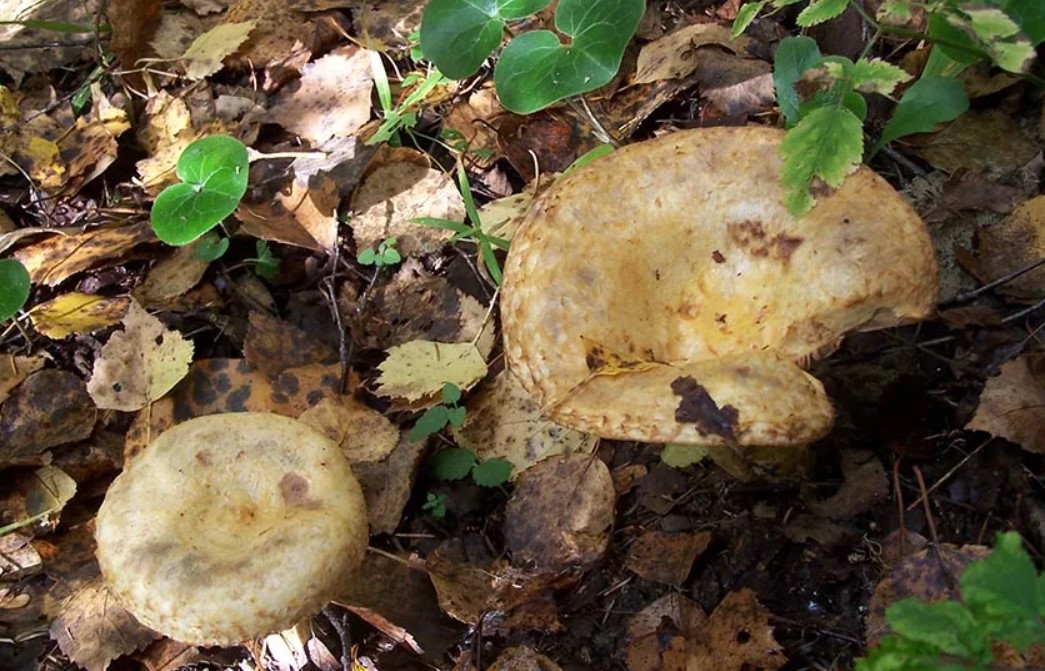
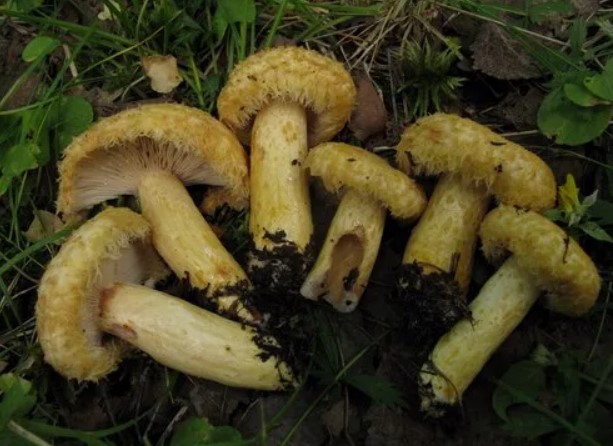
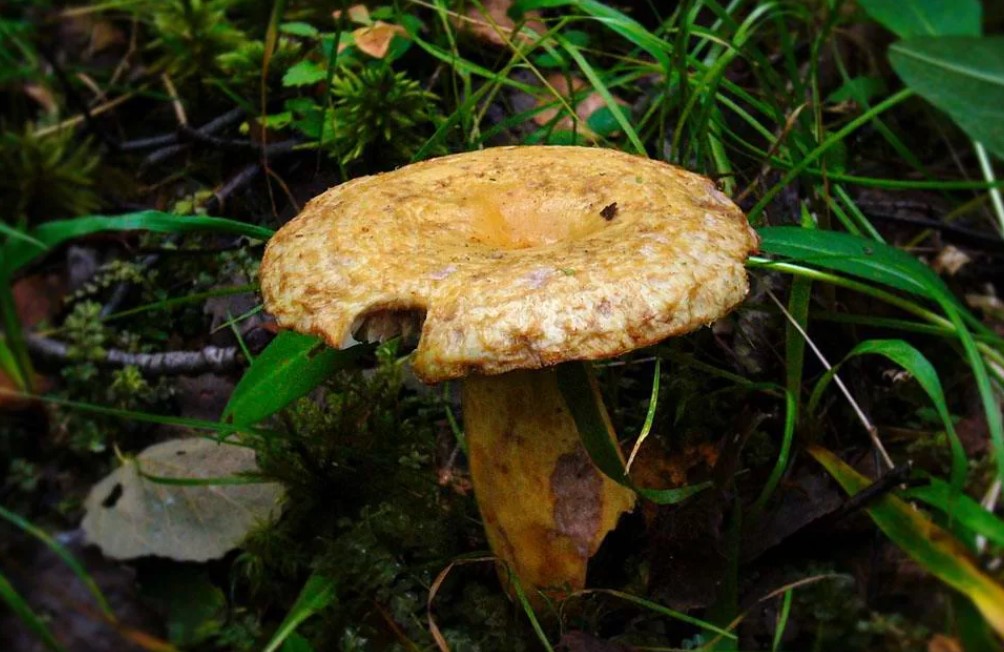
| The cap diameter ranges from 6 to 14 cm, with a convex to funnel-shaped shape. The color is yellowish, and the skin is sticky. The stem is lighter than the cap, loose, and sticky in damp weather. It grows up to 10 cm tall. The milky sap turns blue-purple when exposed to air. | Conditionally edible. | It grows in mixed and deciduous forests near willows, birches, and spruces. The harvest season lasts from late August to September. | When broken, the flesh turns bluish-purple. |
Photo gallery of the blue milk mushroom
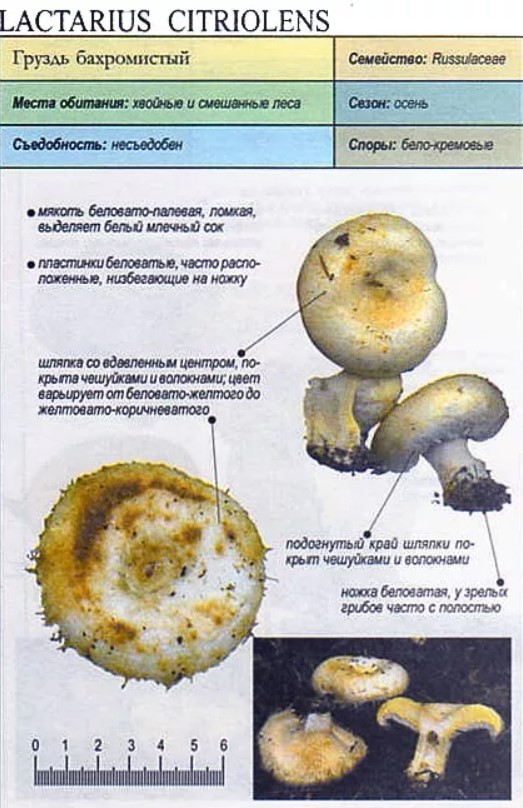
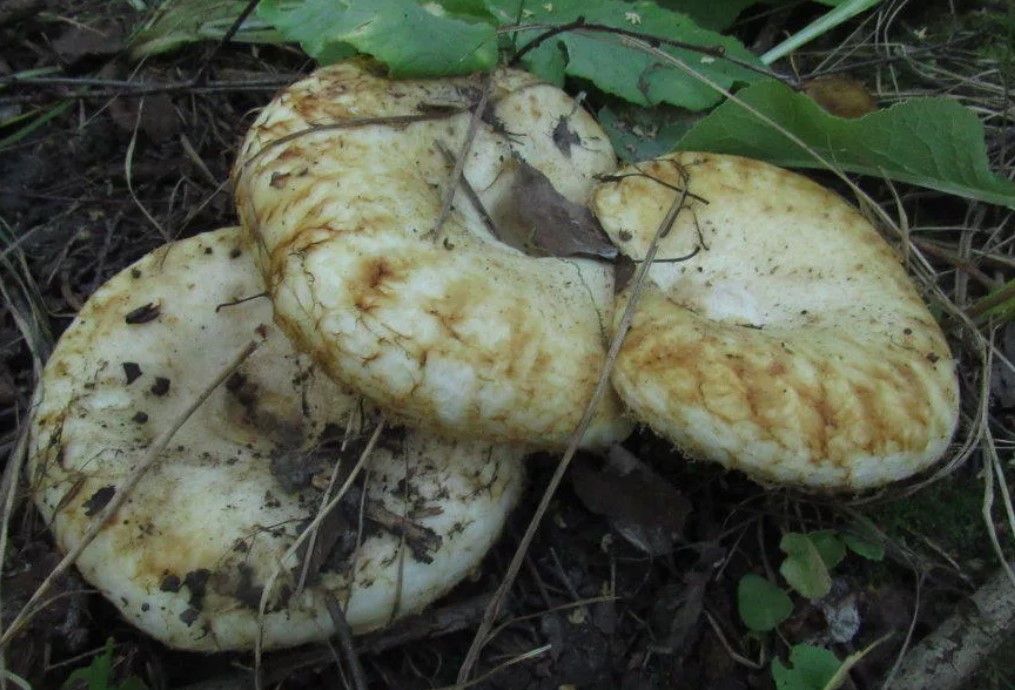
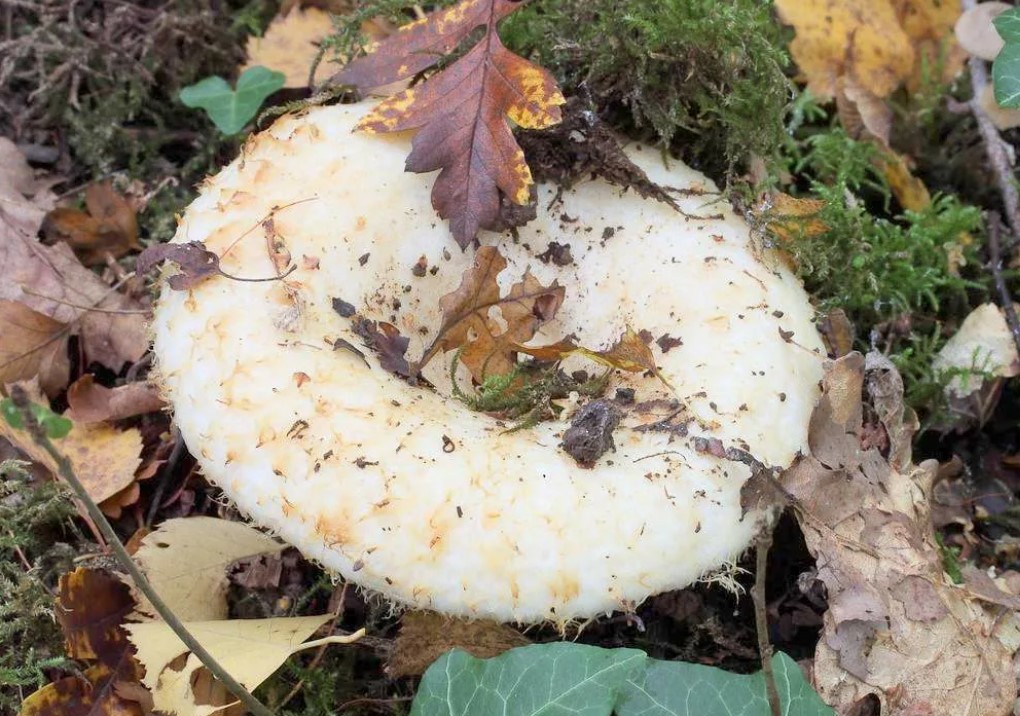
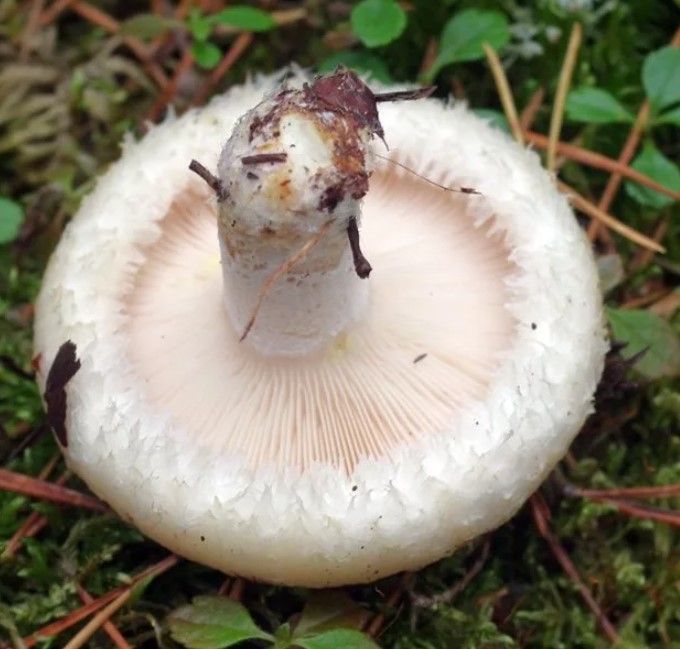
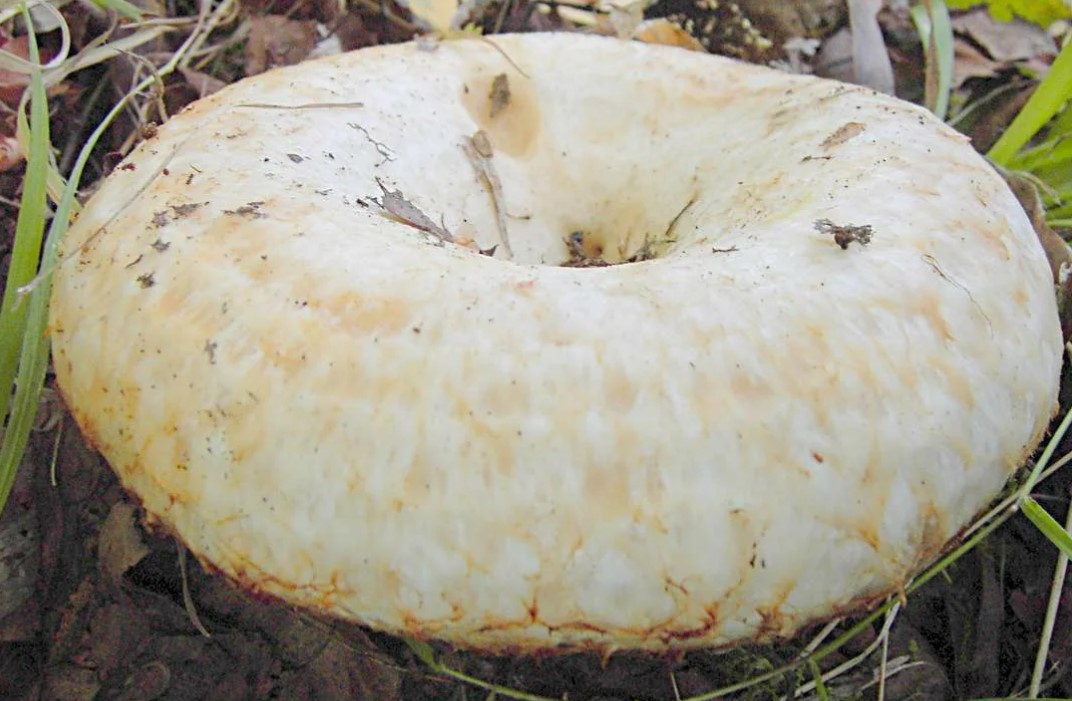
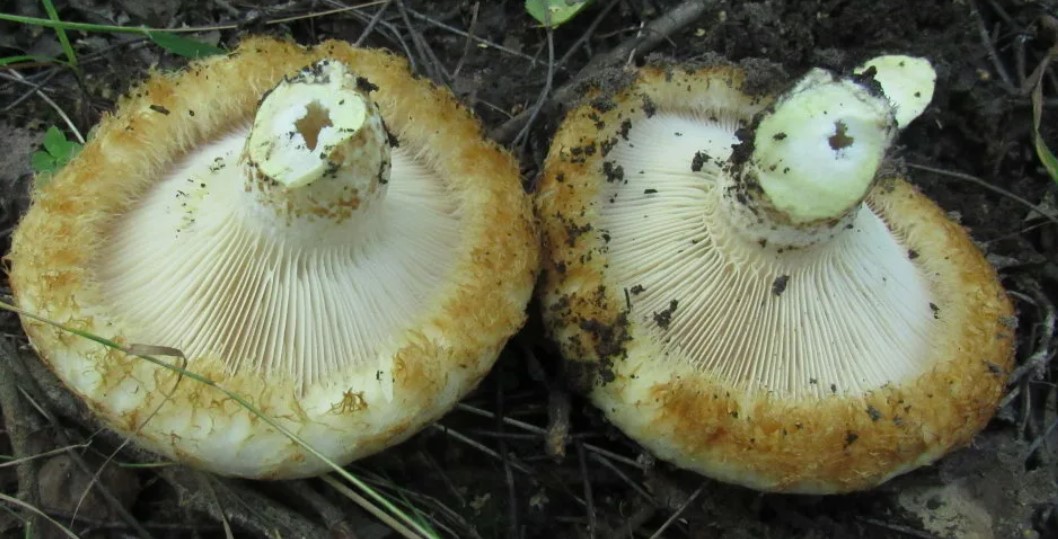
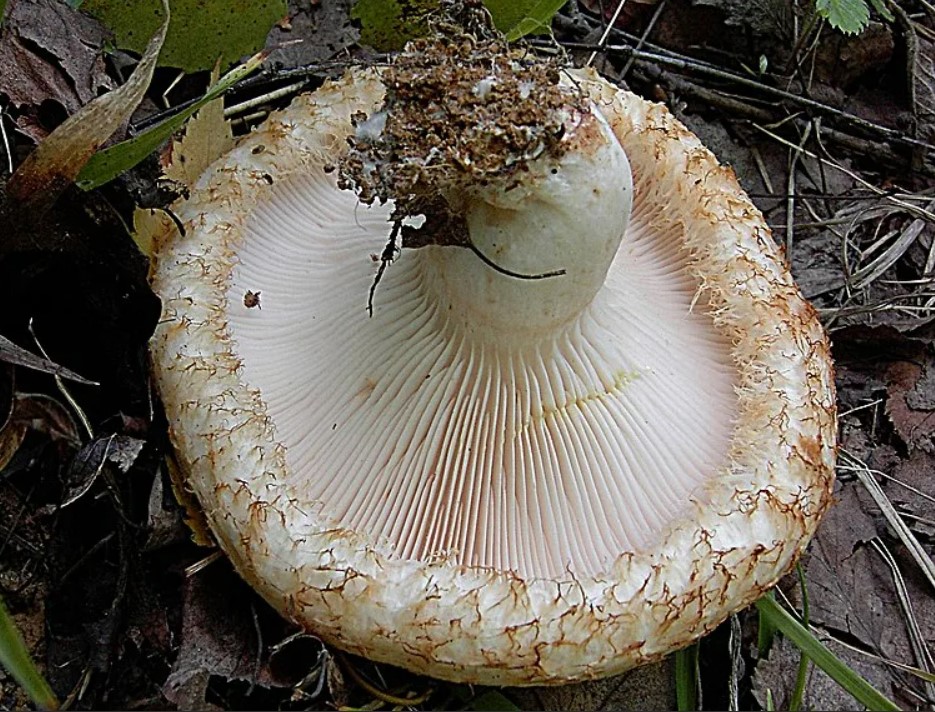
Fringed milk cap (Lactarius citriolens)
The mushroom got its name from the abundant fringe that first appears on the cap and, as the mushroom grows, covers the stem.
| Description | Edibility | Distribution, harvest season | Differences from yellow |
| The cap diameter is 10-20 cm, with fringes up to 1 cm long scattered across the entire surface. The skin is yellowish or ochre-yellow. The stem is up to 8 cm long and up to 4.5 cm in diameter. | Conditionally edible or inedible. | A rare mushroom that bears fruit from August to September. It grows near birch, beech, oak, hazel, and hornbeam. | The presence of fibers on the surface, forming a fringe. The absence of notches on the stem. |
Photo gallery of the fringed milk cap
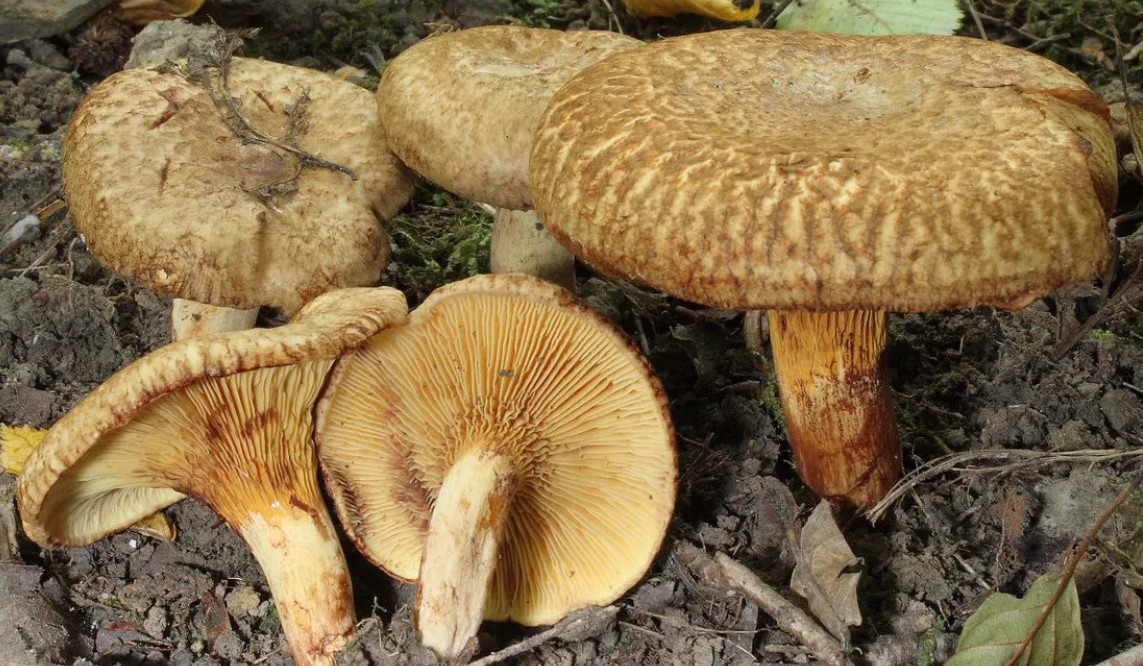
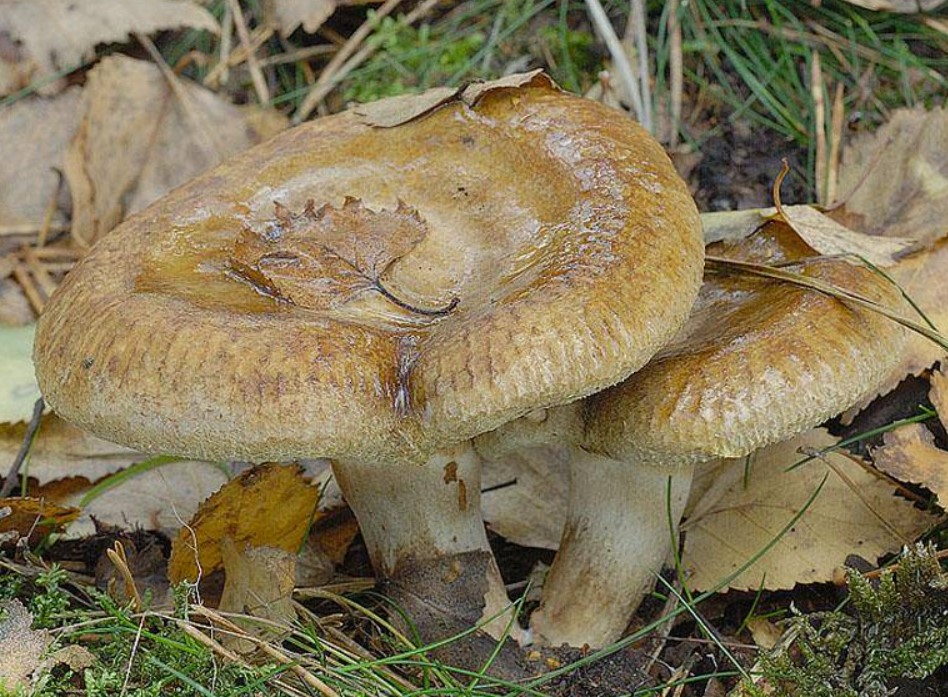
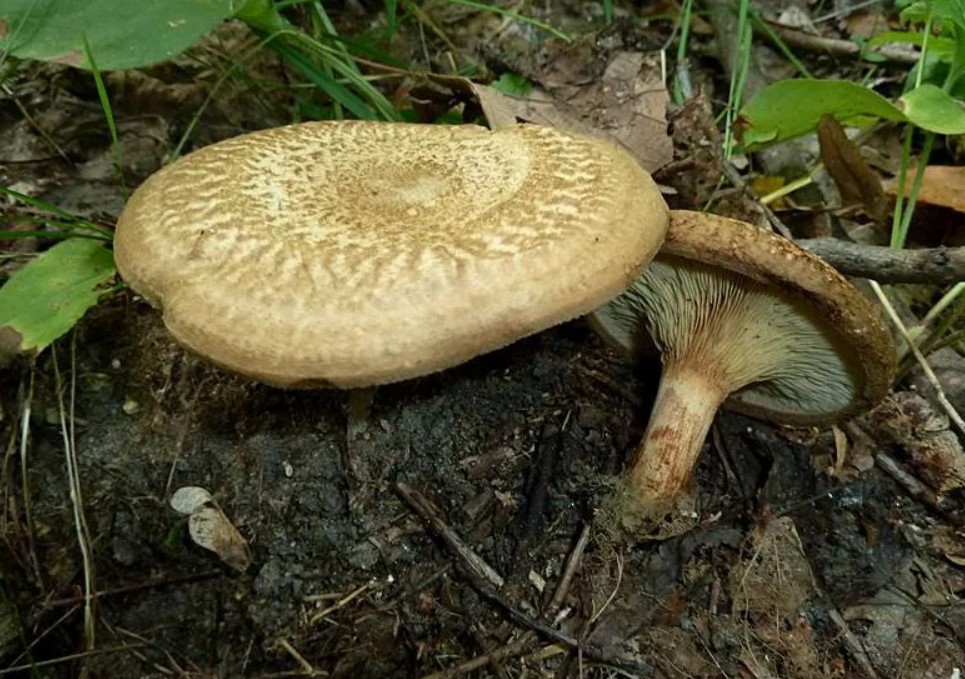
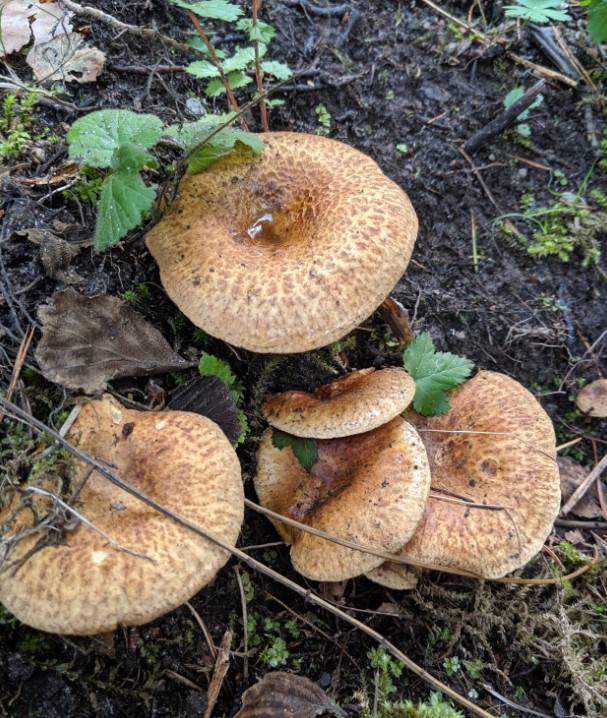
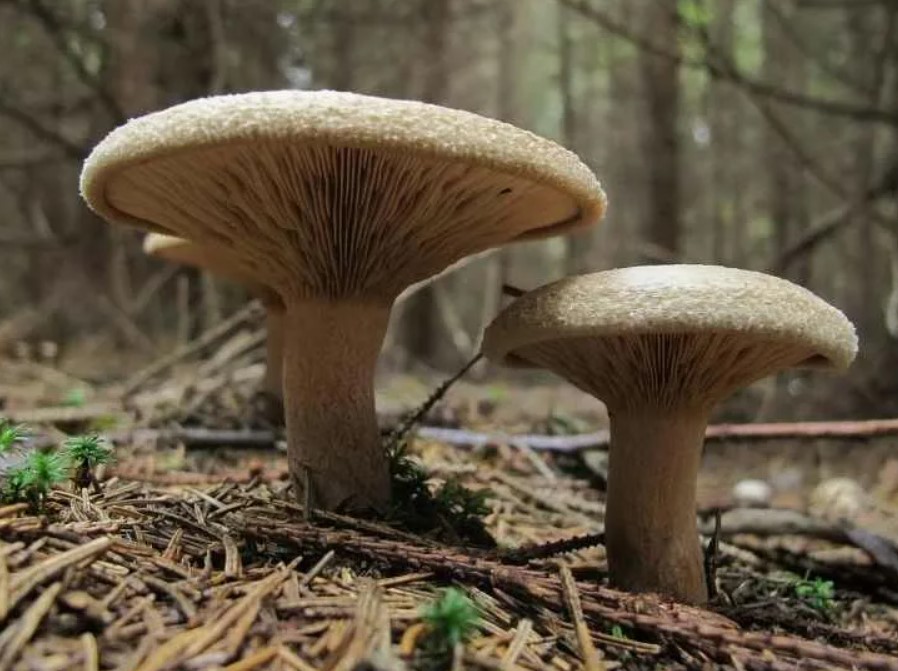
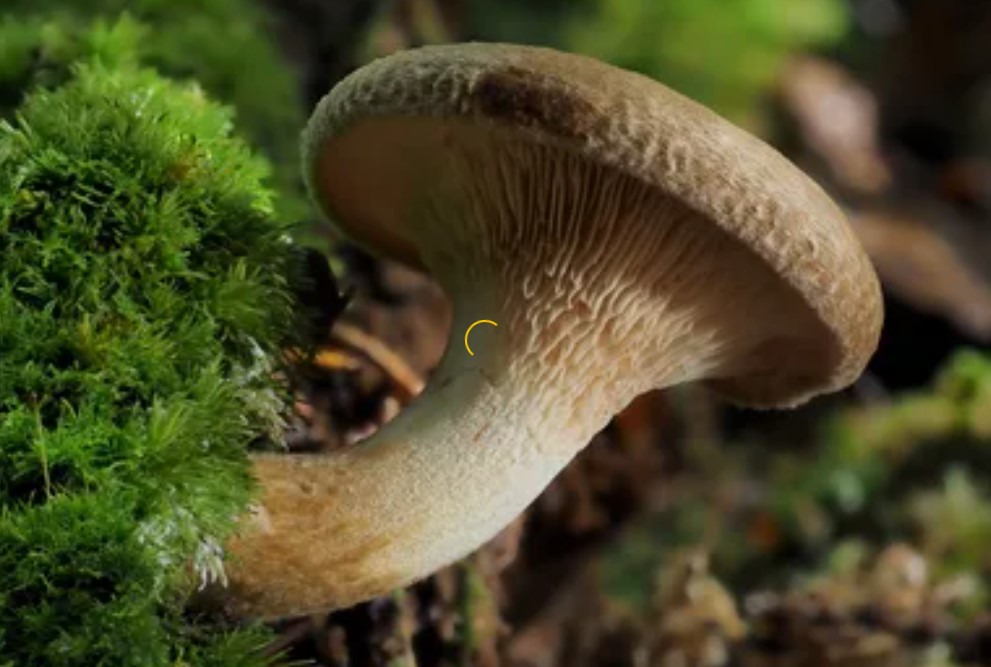
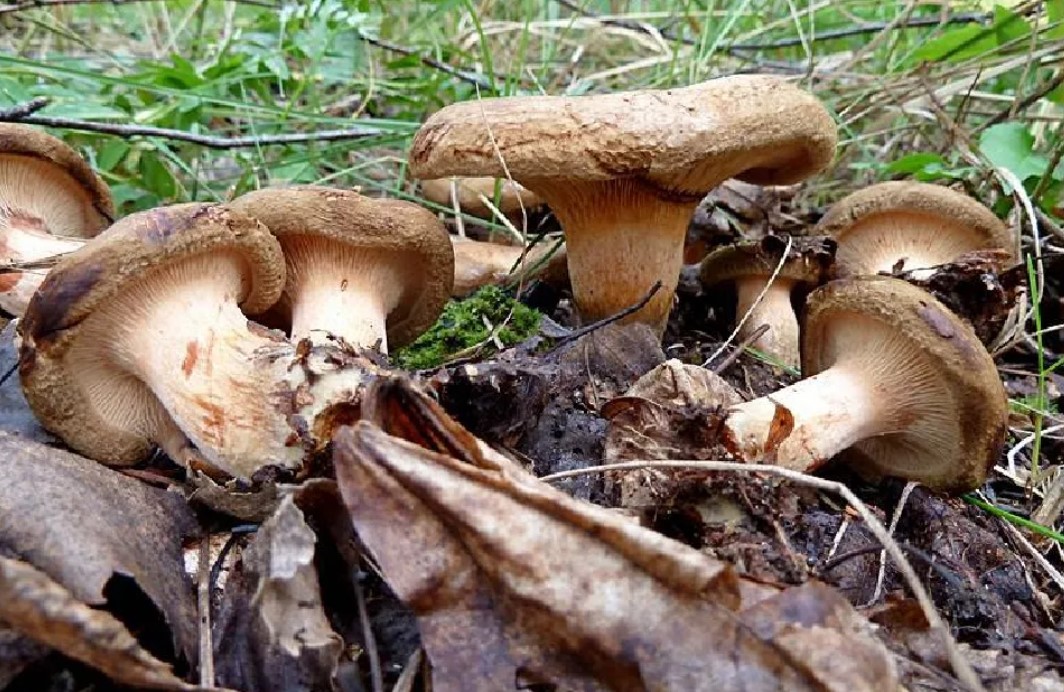
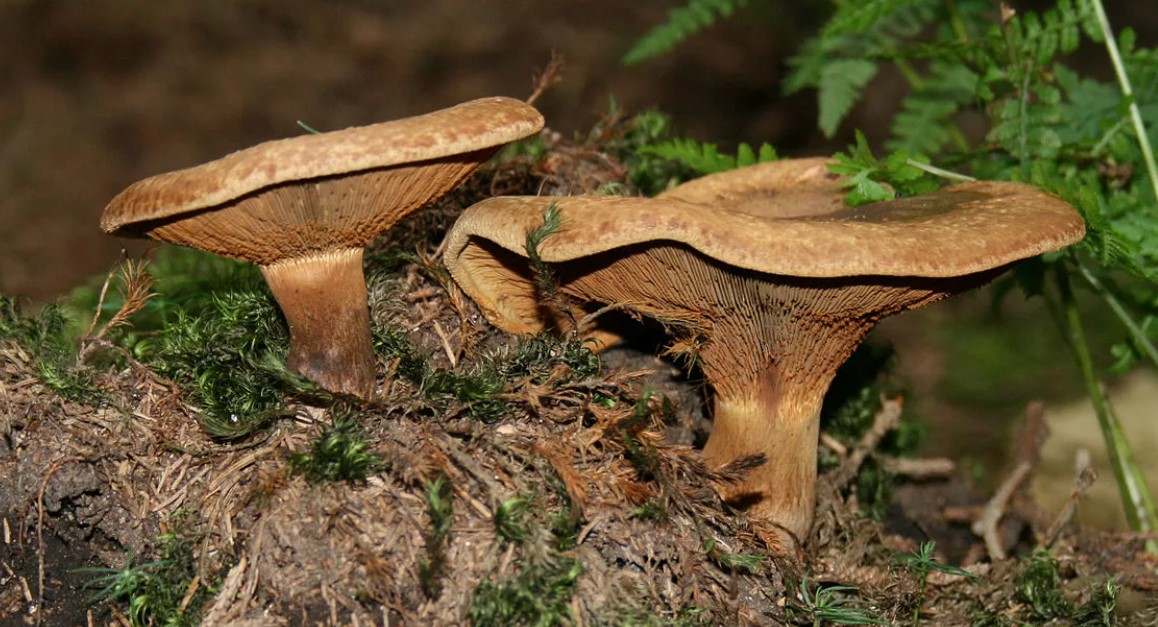
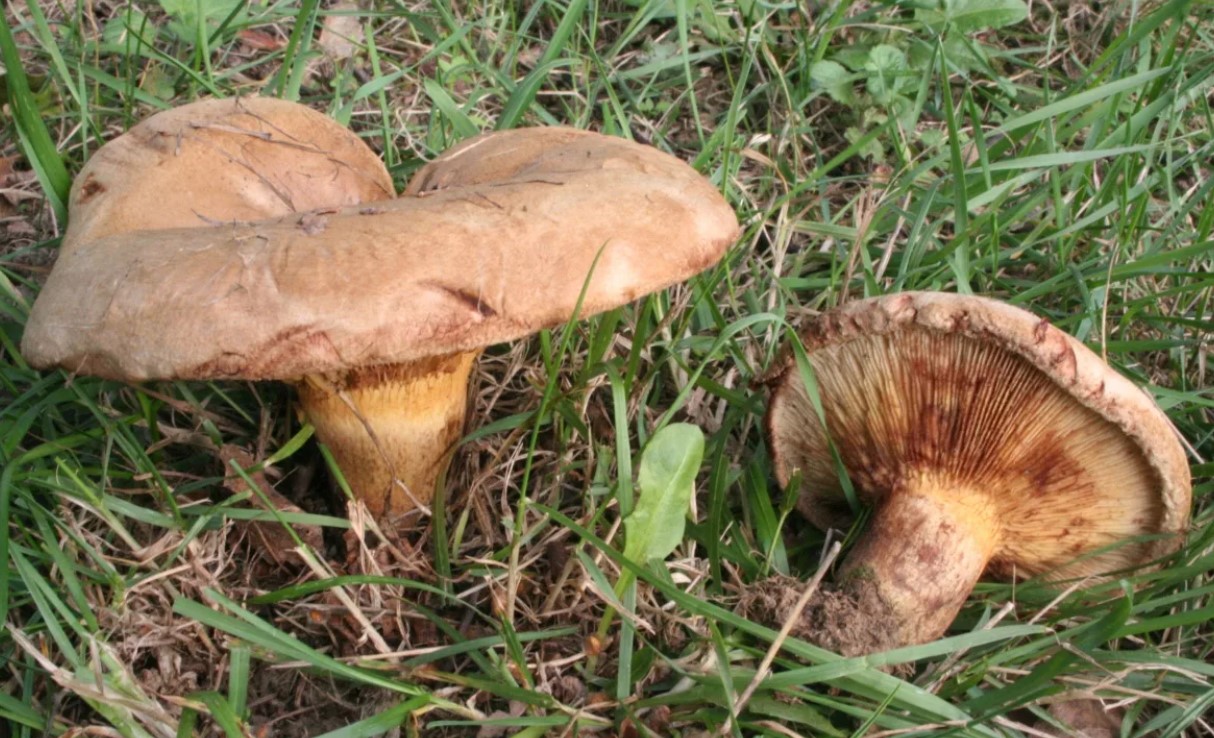
Pig (Paxillus)
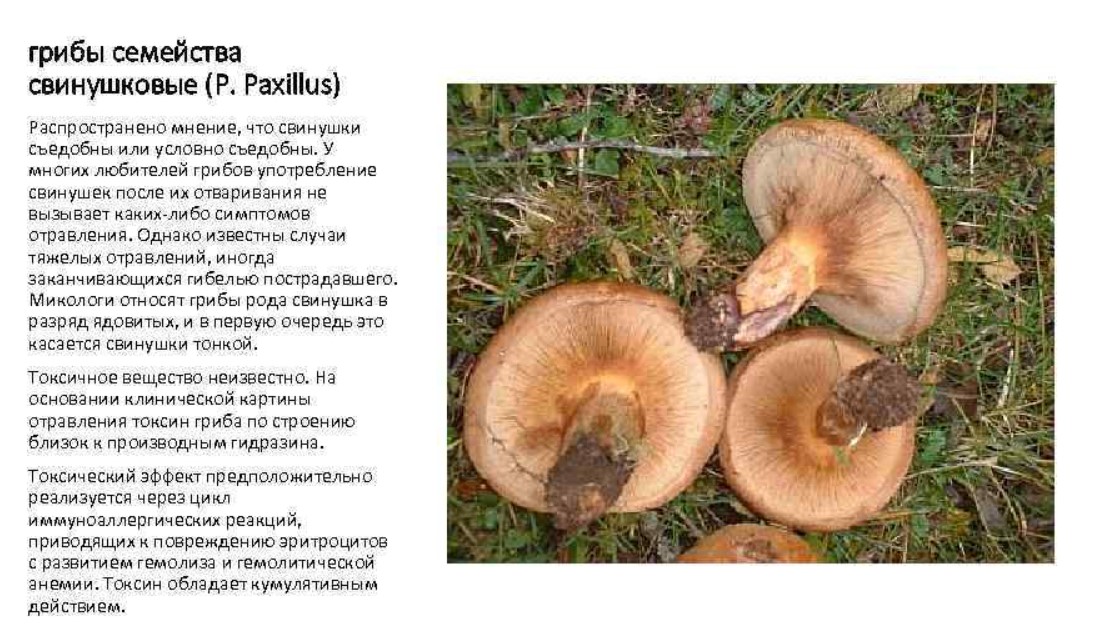
A controversial mushroom, long considered conditionally edible. However, toxicology tests revealed the presence of deadly substances, so the mushroom was classified as inedible. However, some continue to collect and process pig mushrooms to this day.
| Description | Edibility | Distribution, harvest season | Differences from yellow |
| The cap diameter is 12 to 15 cm, with wavy, drooping edges. When young, the mushroom is olive-brown, becoming rusty brown as it matures. The flesh darkens where cut. The cap surface is fluffy and dry, becoming sticky in rainy weather. The stem is up to 9 cm tall and matte. | Inedible. | It prefers moist, shaded forests and is found on tree trunks. It grows from June to October. | Dark cap, flesh darkens instantly when cut. |
Photo gallery of the pig
Read about other milk mushrooms in the articles:
Black Milk Mushroom: 22 Photos, Description, Edible or Not, What It Looks Like, and Where to Find It;
Aspen Milk Cap: Description, 60+ Photos, Edible, 10 Similar Mushrooms.
What are the differences between a yellow milk mushroom and a pig mushroom?
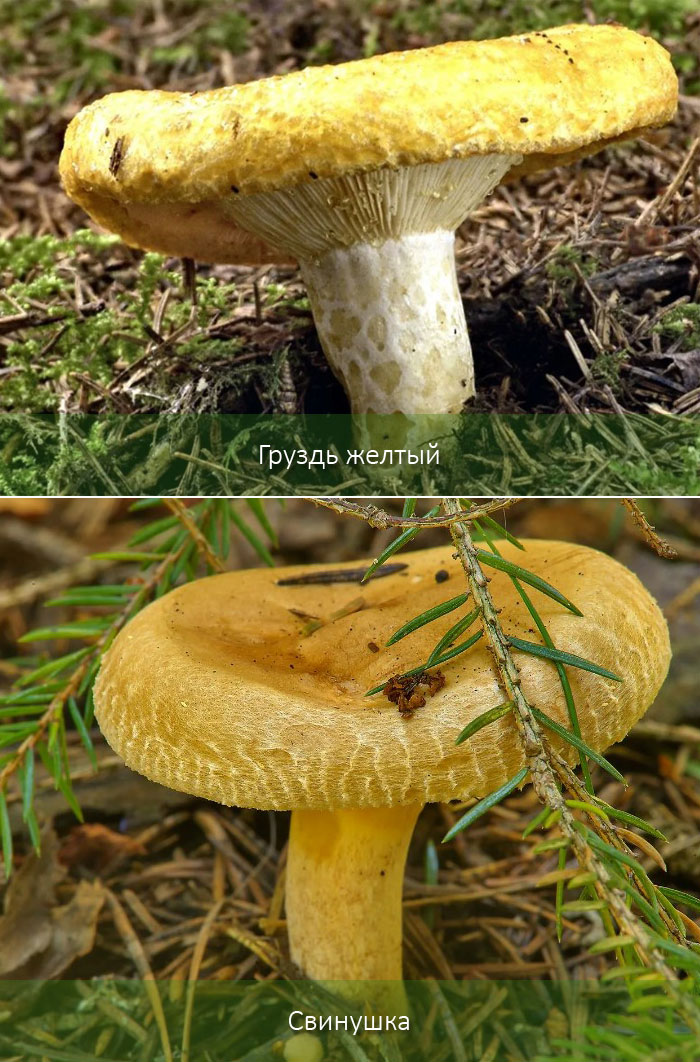
The pig mushroom is often confused with the milk mushroom, especially by novice mushroom pickers. This mistake can lead to severe poisoning, as the pig mushroom contains dangerous substances. There are several signs that can help distinguish the pig mushroom from the yellow milk mushroom:
- The cap of the pig mushroom is yellowish-brown or brownish, very large (from 17 cm and above).
- The flesh is light, but immediately darkens when cut.
- The plates are easily separated from the cap.
- The skin of the stem is smooth, matte, and slightly lighter in color than the cap.
Read the article to learn about pig mushrooms, whether they are edible or not, and reviews from experienced mushroom pickers.Pig's-head mushrooms: 38 photos, description, where and when they grow, benefits and harms, calorie content, symptoms of poisoning.
The benefits and harms of yellow milk mushrooms
Yellow milk mushrooms contain a large number of useful substances that have a beneficial effect on the body's functioning.
- The protein content is no less than in meat, so mushrooms are ideal for vegetarian menus and help replenish nutritional deficiencies.
- Calcium strengthens bone structure.
- Vitamin D actively participates in all vital processes.
- Vitamin B normalizes the functioning of the nervous system.
- Fiber helps cleanse the intestines and remove toxins.
The main principle when eating mushrooms is not to overeat. Milk mushrooms are difficult to digest, and eating too many can cause discomfort and indigestion.
Milk mushrooms are also contraindicated:
- children under 12 years of age;
- pregnant and lactating women;
- persons with chronic gastrointestinal and kidney diseases.
People with high blood pressure should take mushrooms with caution.
Yellow milk mushroom taste, uses and preparation, recipes
Fresh yellow milk mushrooms have a bitter, milky juice, so they shouldn't be eaten raw. However, when properly prepared, they offer an unrivaled flavor when pickled or salted.
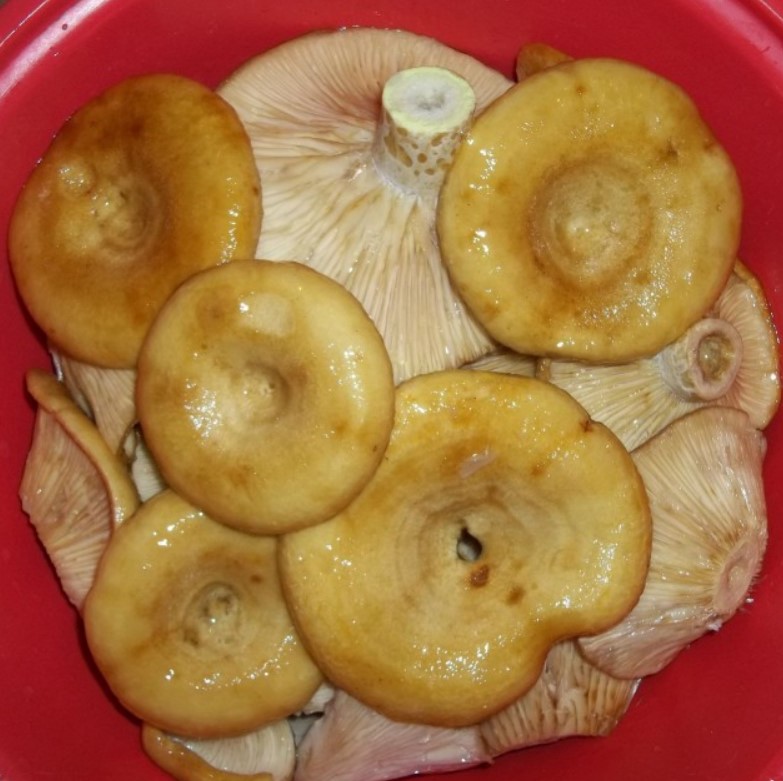
Milk mushrooms can be prepared in different ways:
- cooking;
- extinguishing;
- frying;
- baking;
- salting;
- pickling.
Before preparing them, preparation is required:
- mushrooms are poured with cold water;
- placed in a dark place for 2-3 days;
- The water is changed to fresh water twice a day.
Some housewives, instead of soaking, boil milk mushrooms for 30-40 minutes, after which they rinse thoroughly.
Pickling
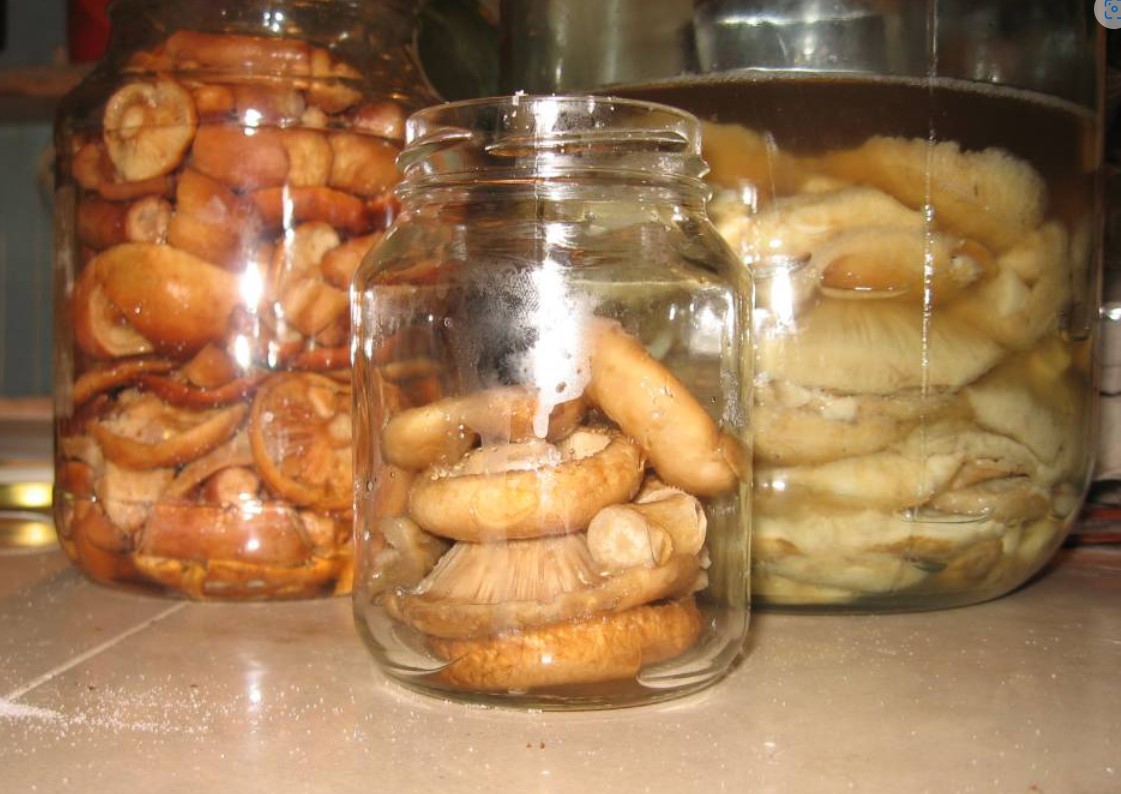
The most popular dish is salted milk mushrooms. However, keep in mind that the flesh will turn greenish, and the mushroom itself will turn yellowish-gray.
Every homemaker has their own favorite pickling recipe. Some use just salt and dill, while others add horseradish, currant, or cherry leaves. The preparation method is simple:
- The bottom of the container is lined with horseradish or currant leaves.
- A sprig of dill is added.
- The milk mushrooms are laid out with their caps facing down.
- Cover with salt.
Next, alternate the layers, after which the mushrooms are covered with water, covered with leaves, and placed under pressure for 7 days. Typically, 50 grams of salt is used per 1 kg of milk mushrooms. However, if the mushrooms are oversalted, they can be soaked in cold water for 2-3 hours before eating.
Pickling
Pickling milk mushrooms begins after they've been thoroughly prepared. It's best to use small mushrooms; larger ones will need to be cut into several pieces. They are peeled, scalloped, and simmered over medium heat for 20 minutes. Then, rinse and simmer again for 30 minutes in fresh water.
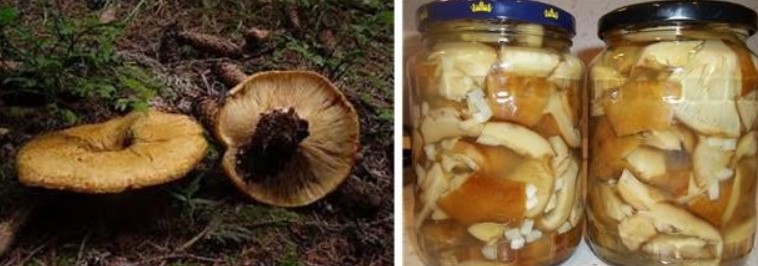
The recipe for the perfect marinade is simple. For 1 liter of water you need:
- 1 tbsp salt (not iodized);
- 3 tbsp sugar;
- 1 bay leaf;
- 1 clove;
- 1 piece of allspice;
- 10 hot peppers;
- 1 tbsp vinegar essence.
Combine all ingredients, adding only the vinegar after the marinade has boiled. Remove the bay leaf after cooking. Place the prepared mushrooms in jars lined with finely chopped garlic, pour the hot marinade over them, and seal.
Boiling, stewing, frying
Only pre-soaked and boiled milk mushrooms can be baked, fried, or added to salads. Long-term heat treatment is not required:
- stewing – 20 minutes;
- baking – 15 minutes;
- frying – 10-15 minutes.
Reviews of yellow milk mushrooms
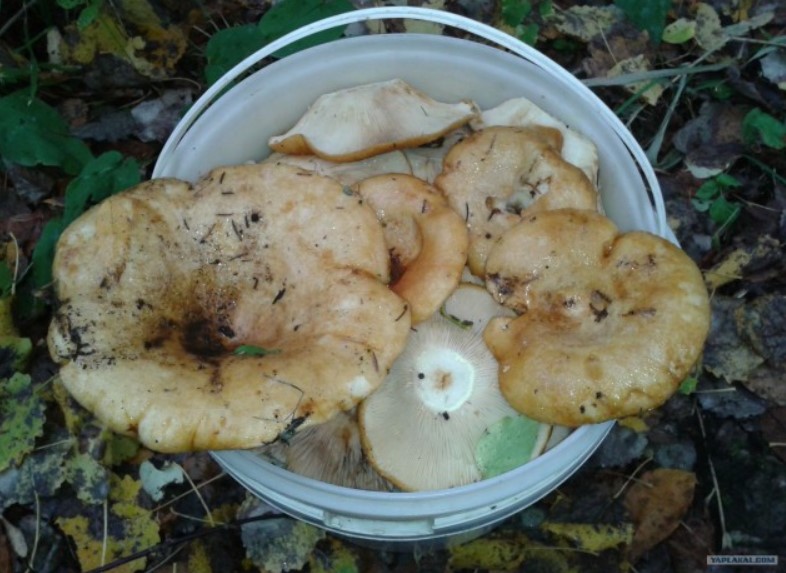
Today we finally got out into the forest to pick milk mushrooms, and it turned out we were too late! It was completely quiet in a prime spot where mushrooms had previously been hard to find. The white milk mushrooms had all disappeared, apparently at least a week ago. Occasionally, I found some russula, mostly overgrown, and the saffron milk caps were also almost all old and wormy. But luck didn't desert me, and I somehow miraculously found three families of yellow milk caps. They're firm, meaty, and for me, second only to saffron milk caps in terms of flavor.
I poured the yellow milk mushrooms into a bathtub of water to remove any dirt and leaves, then rinsed each mushroom. I like them clean. If you can't scrub them by hand, you can use a cloth or dishcloth.
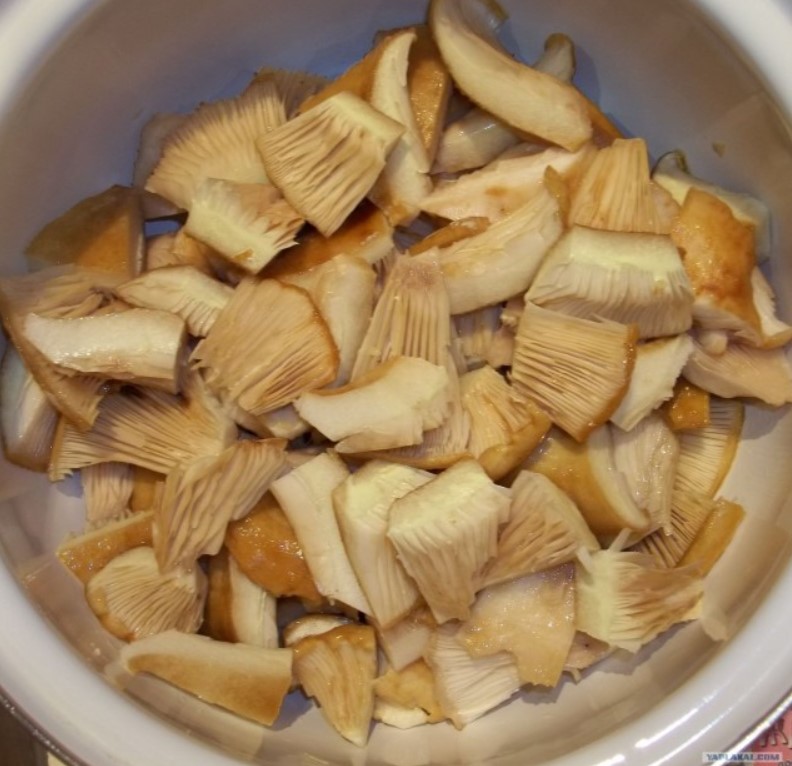
Then we clean and cut.
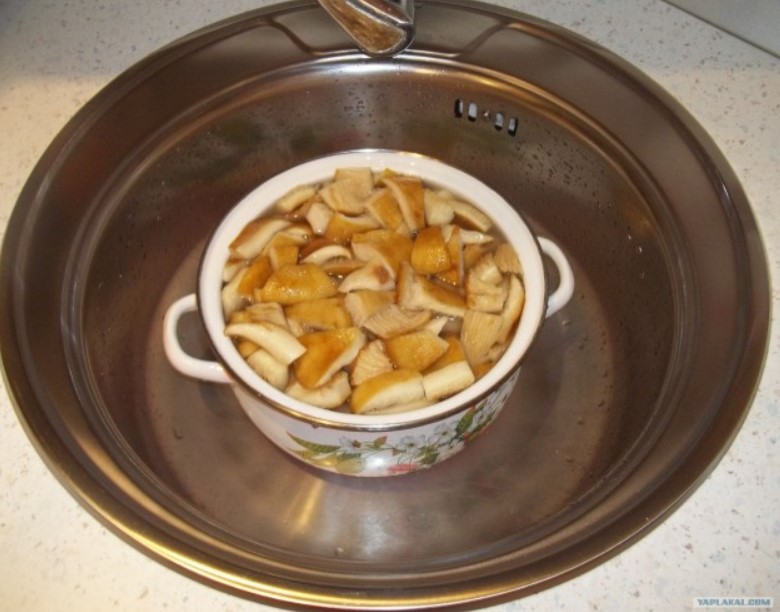
Once again, I rinse thoroughly, repeatedly, adding and draining cold water. To be on the safe side, you can soak the seeds for a couple of days, changing the water several times.
Now I'm starting to shock you. I warn you again, the faint of heart should stay away! I'm getting the spices ready!
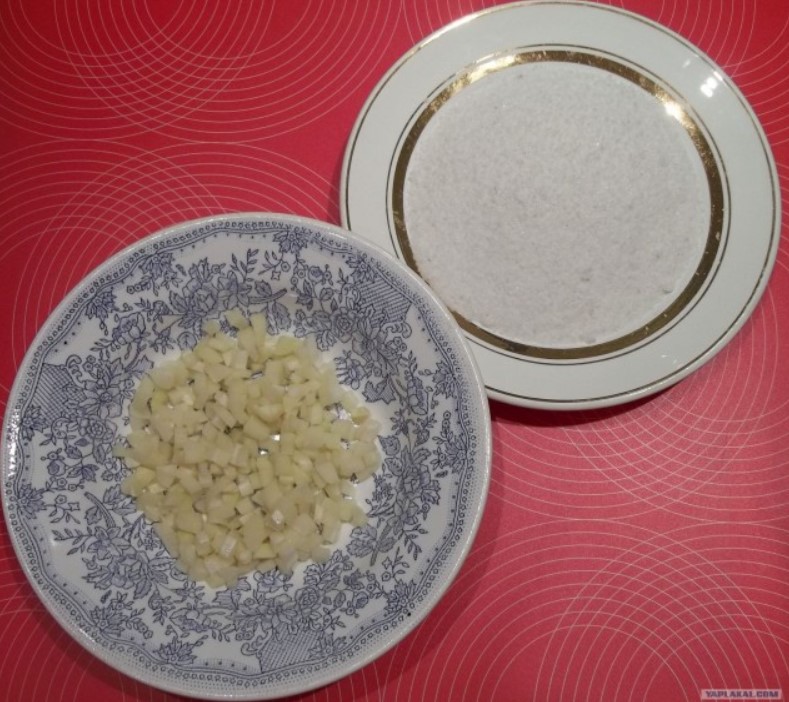
Yes, rock salt, minced garlic, and nothing else. I used to pickle mushrooms the classic way, using cucumbers, dill, horseradish, currants, and so on, until I tried this version. Sure, I might make a jar of herbs for variety, but after trying it again, I'm convinced that mushrooms don't need anything extra! What's more, all my friends and acquaintances, having tried it once, have switched to my pickling method and say it's the best. I don't even remember where I learned it from.
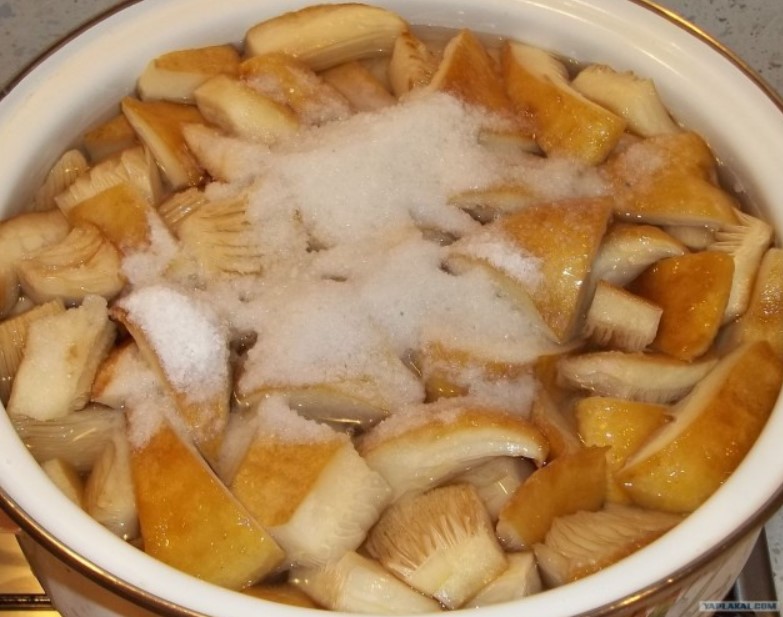
So, put the washed mushrooms on the stove and add salt. I have no idea how much, mushrooms are such a unique thing that it's hard to determine the exact amount. The main thing is that the water isn't too salty, like in soup.
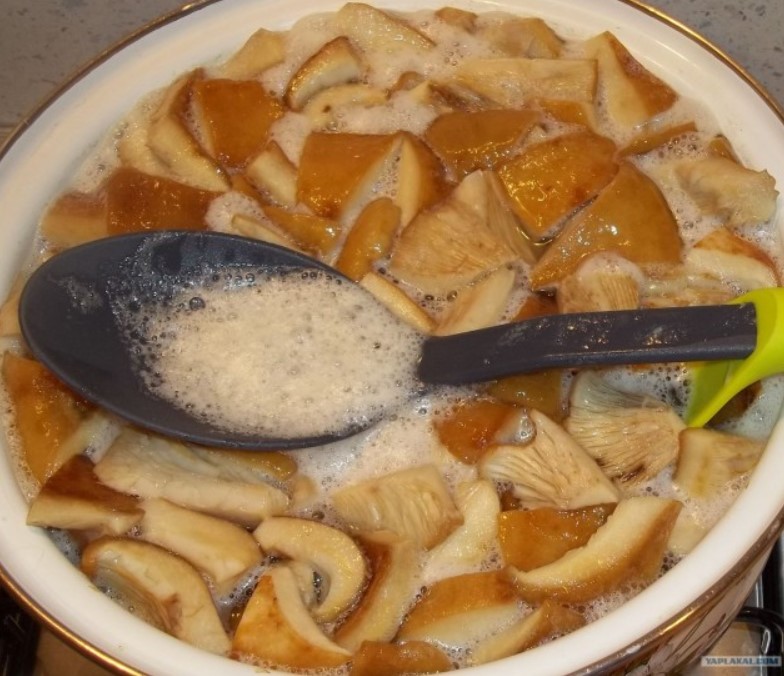
When foaming begins, remove with a spoon.
Now comes the second shock! Milk mushrooms and red russula don't need to be boiled for 40 minutes, drained twice, and all that. I boil them for 4-5 minutes and no more. No one has ever complained to me about them, and there have been no cases of poisoning or illness. I do recommend everyone eat them at least five days afterward, but some impatient people gobble them up with potatoes the next day without any ill effects.
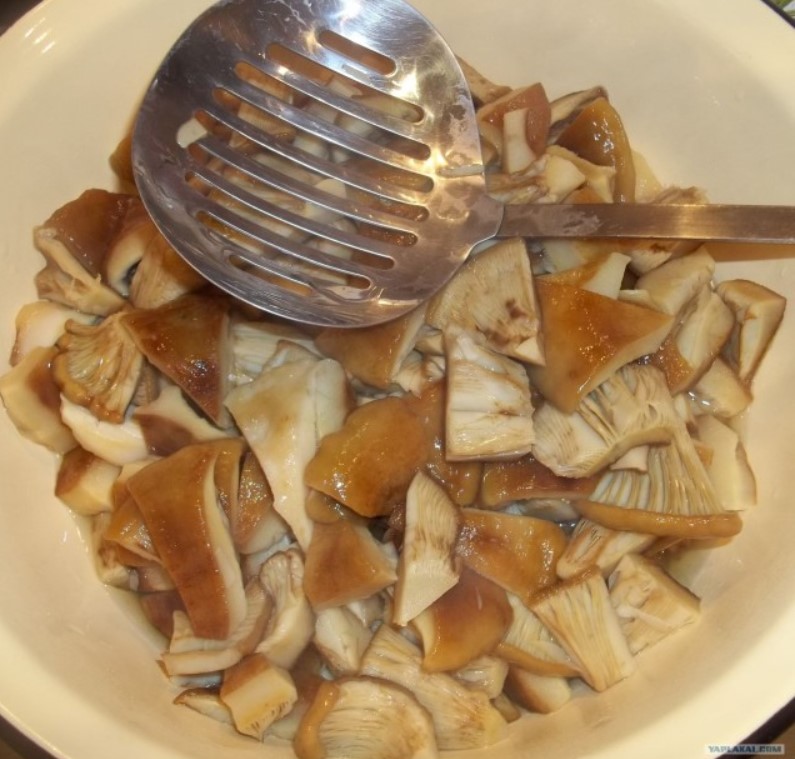
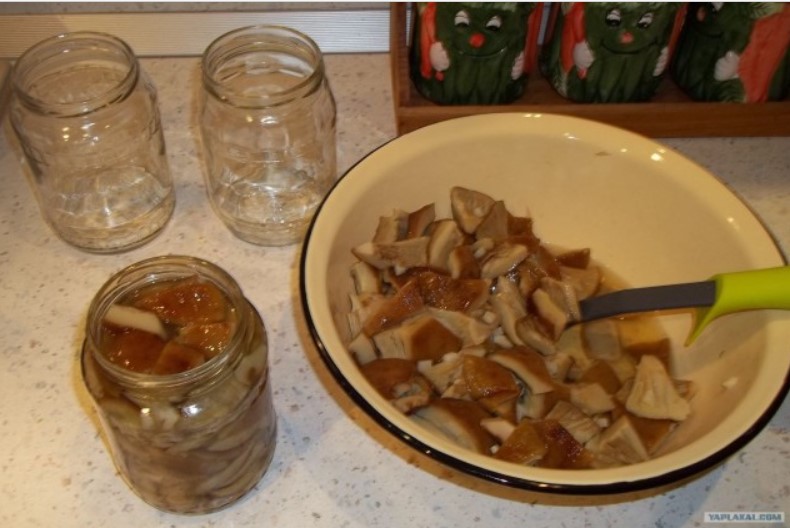
After 5 minutes, remove the mushrooms with a slotted spoon.
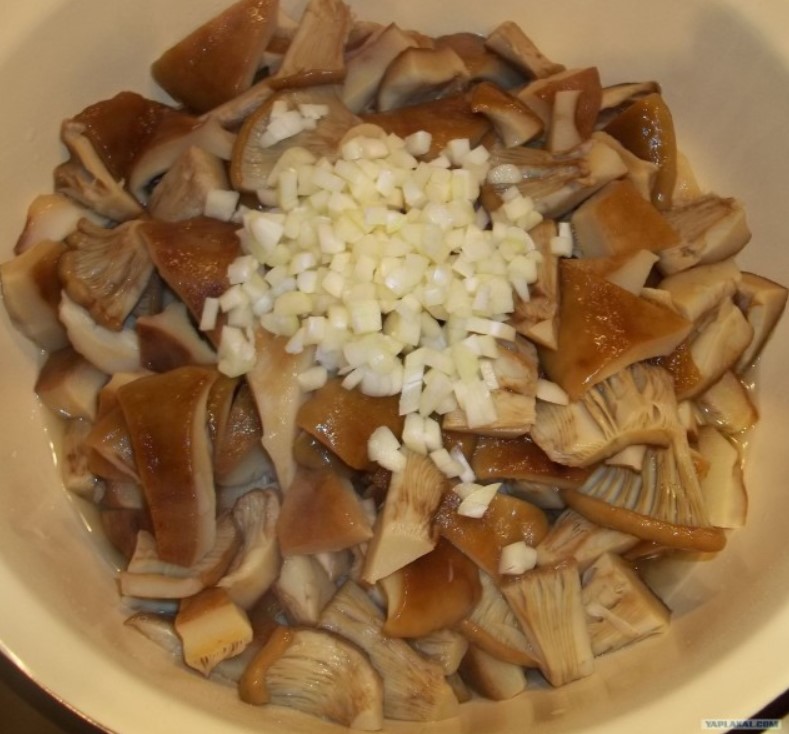
Add garlic and mix gently.
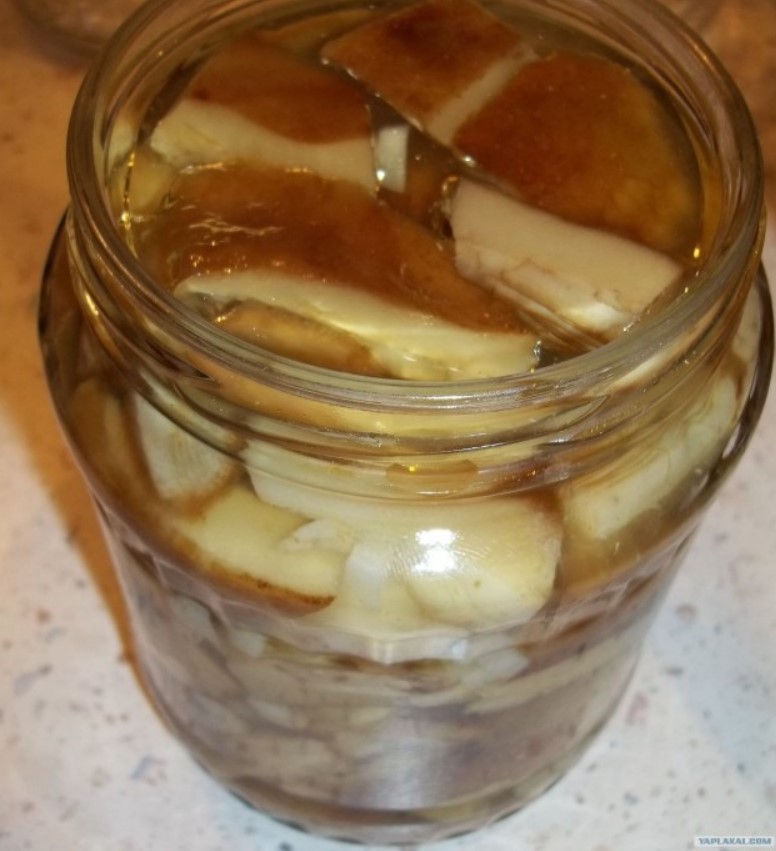
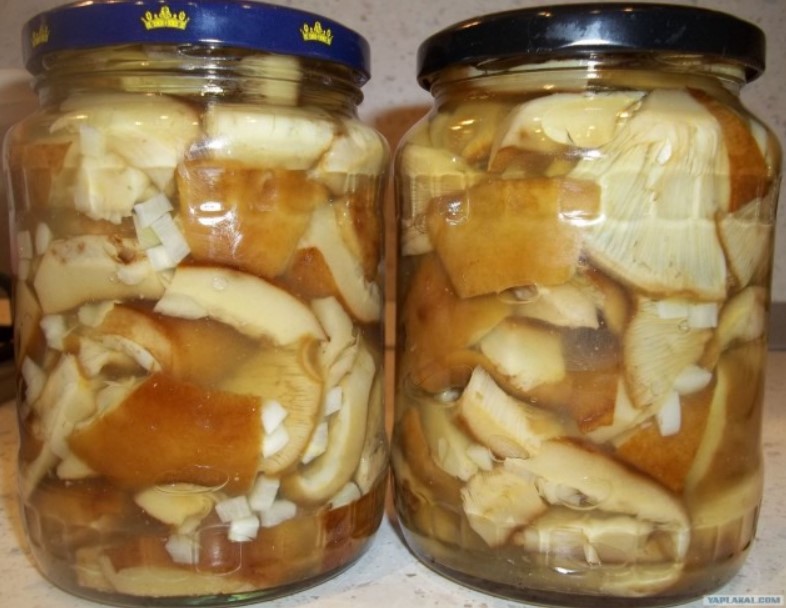
We put it into jars. I use ones with screw-on lids. I wash it thoroughly, but don't sterilize it. It keeps well in a cold place (caisson, refrigerator).
Don't pack the mushrooms too hard, as you want some brine to remain. They haven't had time to absorb the salt during the short cooking time and will be ready in a couple of days. I pour a layer of baking soda on top to form a film on the surface and block the air flow.
I let the cooked mushrooms cool, then put them in the refrigerator. I have a few jars of milk mushrooms left over from last year—I collected about 12 buckets in two trips, plus my wife got a few more. We tried some recently, and they all held up perfectly. That's all I have.
Thank you so much for the recipe. A couple of weeks ago I was going crazy from the amount of milk mushrooms I had collected and the lack of a recipe for how to cook them (my mother passed away, and with her came a lot of family, cozy, and warm things, including advice and experiences on preparing mushrooms. We don't really understand it). There seem to be plenty of recipes online, but I trust Japanese more.
In general, I made all 4 buckets almost like you... I boiled them in a little salt... and jars of garlic (I remember how my mother did it and she also loved the tough mushrooms... bun mushrooms, saffron milk caps, snotty milk mushrooms, all usually went for drying or frying...)
While they're still standing... naturally, we've already tried them... so delicious... I'm dreaming of pies with thin dough with potatoes and these mushrooms in the winter...
About two years ago, we held a tasting of milk mushrooms: saffron milk caps, red russulas, yellow milk mushrooms, and aspen (crossed out) pepper milk mushrooms. That time, we confused the aspen milk mushrooms with pepper milk mushrooms, whose milky sap turns green in the air and whose gills are white. This year, we pickled the aspen milk mushrooms and already devoured the entire three-liter jar.
— salted aspen milk mushrooms are not much inferior to real milk mushrooms in taste.
I will partially quote with edits:
Two weeks ago we salted the milk mushroom part of the harvest, and now it’s time to try it.
They salted them specifically for tasting—different types of milk mushrooms in different jars. Red milk mushrooms, yellow milk mushrooms, volnushki (white-headed milk mushrooms), and saffron milk mushrooms were salted raw, while aspen (crossed out) peppery milk mushrooms were boiled, as they are the most bitter in the world, and some of this bitterness remains in the salt.
For some reason, all the books say that milk caps must be boiled before using them, as they're very bitter. Well, firstly, all milk caps are bitter to varying degrees, and secondly, we've tried boiled, pickled, and salted milk caps at friends' houses... So, what are they? They're bitter, crispy little things with no particular smell or flavor?
Saffron milk caps are...saffron milk caps! They can (and should) be eaten raw, but when lightly salted, they're ready in just a day. Saffron milk cap deliciousness!
That's why we love them. The most delicious are lightly salted saffron milk caps, ready three days after pickling.We stocked up a whole three-liter jar of salted red milk mushrooms! We tried them both at the very beginning and two weeks later. They have such an interesting flavor—spicy, I'd say. Well, you have to try it; it's hard to describe the taste.
As I already mentioned, we took the risk of pickling the milk mushrooms like regular milk mushrooms, without boiling them. Not only did they retain their beautiful color during pickling, but they also turned out very tasty, slightly tart, and completely devoid of bitterness—unlike boiled ones.
But! It's best to eat salted milk cap mushrooms within the first six months; after that, they become incredibly sour and tasteless.
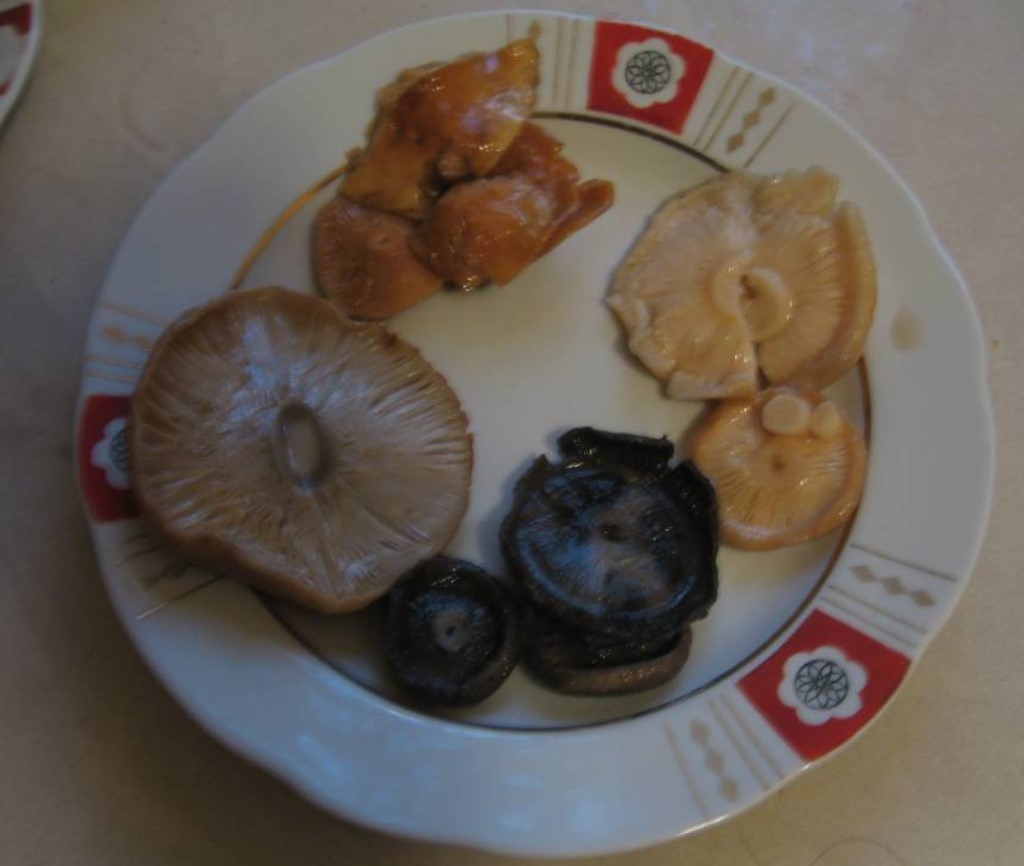
Yellow milk mushrooms. We had a small quantity this time, as we found them in a clearing rather than a mushroom patch, so they fit into a small jar—perfect for sampling. We also tried them after two weeks of pickling. The salted milk mushrooms were delicious, with a slight bitterness; we used them as a benchmark for the other mushrooms.
Most likely, they had not yet had time to fully salt in two weeks, and the bitterness would have disappeared after forty days of salting and their special milk mushroom flavor would have remained.Aspen (crossed out) peppery milk mushrooms should be boiled in any case, as my husband tried pickling them raw: they have a bitter, natural bitterness. After boiling, the bitterness disappears, but they're not good when pickled. I can say they're crunchy and salty.
As a result of the tasting, the places were distributed as follows:
1st place – saffron milk cap and red milk cap. I can't choose; they're both delicious in their own way.
2nd place – milk caps. Maybe it's because I wasn't used to them, but they seemed tastier than yellow milk caps.
3rd place – yellow milk mushrooms. Delicious, but after pickling they turned an unsightly dark greenish color.
It was decided not to give space to the aspen (crossed out) peppers
And I will continue.
The aspen milk cap grows in poplar and aspen trees, has creamy-pink gills, and its milky sap doesn't change color when exposed to air, unlike the pepper milk cap. Concentric zones on the cap distinguish it from the unpalatable milk cap. When pickled, it has a pleasant milk cap-like flavor, slightly inferior to the true milk cap. However, in our opinion, the aspen milk cap surpasses the black milk cap in flavor and aroma.
The real, or raw (as it's also called), milk mushroom is truly the cream of the crop. Pickled, it's incredibly aromatic! You take it out of the jar and can't stop inhaling its pungent aroma. And the taste! You can devour it by the handful! And this milk mushroom doesn't need any seasoning!
We didn't like the black milk mushrooms when pickled. They lacked any distinctive flavor. Yes, they're crunchy, yes, they're a bit salty, yes, they stay firm for two or three years. But that's all there is to this milk mushroom. They have no spiciness, no sourness—nothing! Even the peppery milk mushroom, with its "unappetizing taste," somehow stands out.
And as a result, the places for salted milk mushrooms were distributed a little differently:
1. Saffron milk caps - when lightly salted, they have no equal.
2. Real milk mushrooms—it's a shame we don't see them often. We've already eaten a jar of salted ones this year. Yellow milk mushrooms can be added to pickles along with the real ones. They look very similar, and taste good too, if you leave them for the right amount of time.
3. Red milk mushrooms - they remained tasty, but after trying real milk mushrooms, the red ones lost some of their flavor.
4. Aspen milk mushrooms have their own unique flavor.
5. Volnushki mushrooms - if eaten in the first six months, then they give way to black milk mushrooms.
6. Black milk mushrooms.