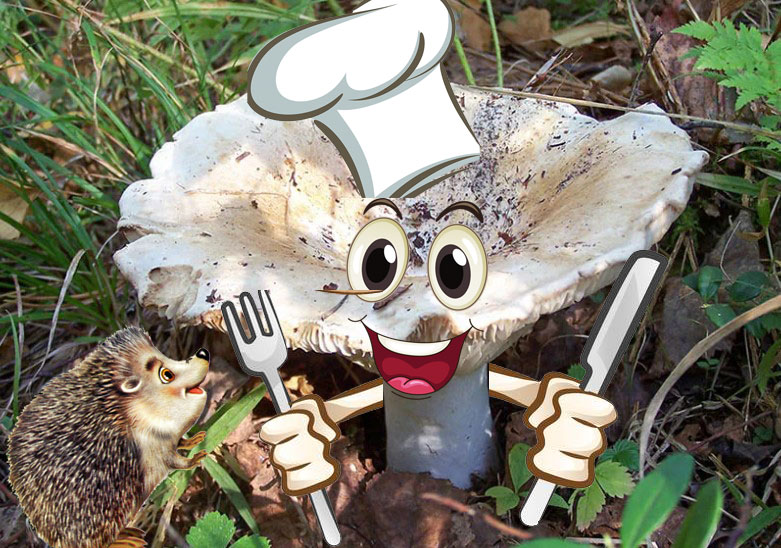
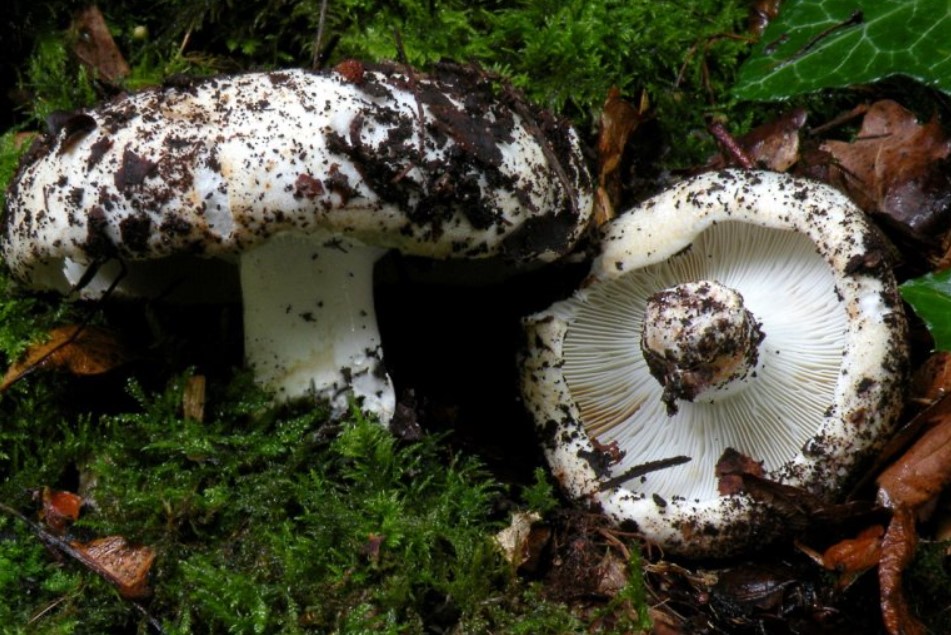
The more common name for the dried milk cap is the white milk cap. It belongs to the Russulaceae family. In appearance, it resembles the common milk cap, with one difference: its cap is completely dry.
Content
- 1 Description of the Dry Milk Mushroom or White Milk Mushroom (Russula delica)
- 2 Other names for dried milk mushroom
- 3 Where and when does dry milk mushroom grow?
- 4 Mushrooms similar to dry milk mushrooms
- 5 The benefits and harms of dried milk mushrooms
- 6 The taste of dried milk mushrooms, preparation, and recipes
- 7 Tips for housewives from Top.tomathouse.com
- 8 Reviews of white milk mushrooms or dried milk mushrooms
Description of the Dry Milk Mushroom or White Milk Mushroom (Russula delica)
The milk cap is considered a very large mushroom; its color changes as it matures.
hat
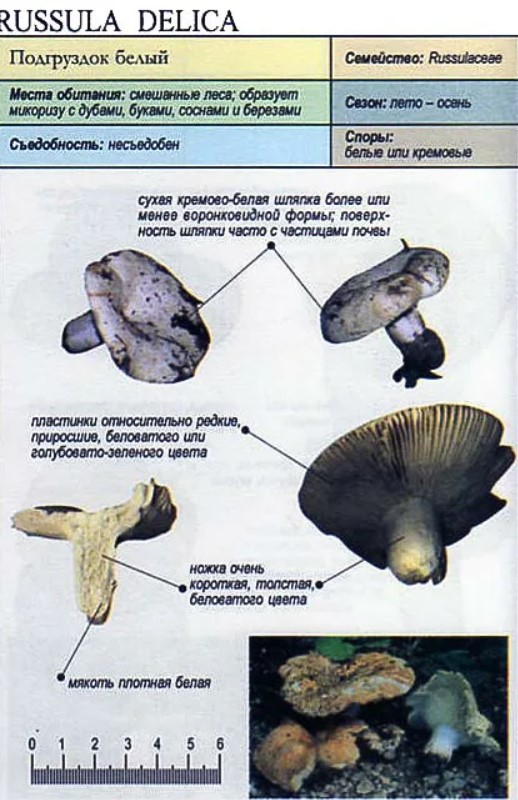
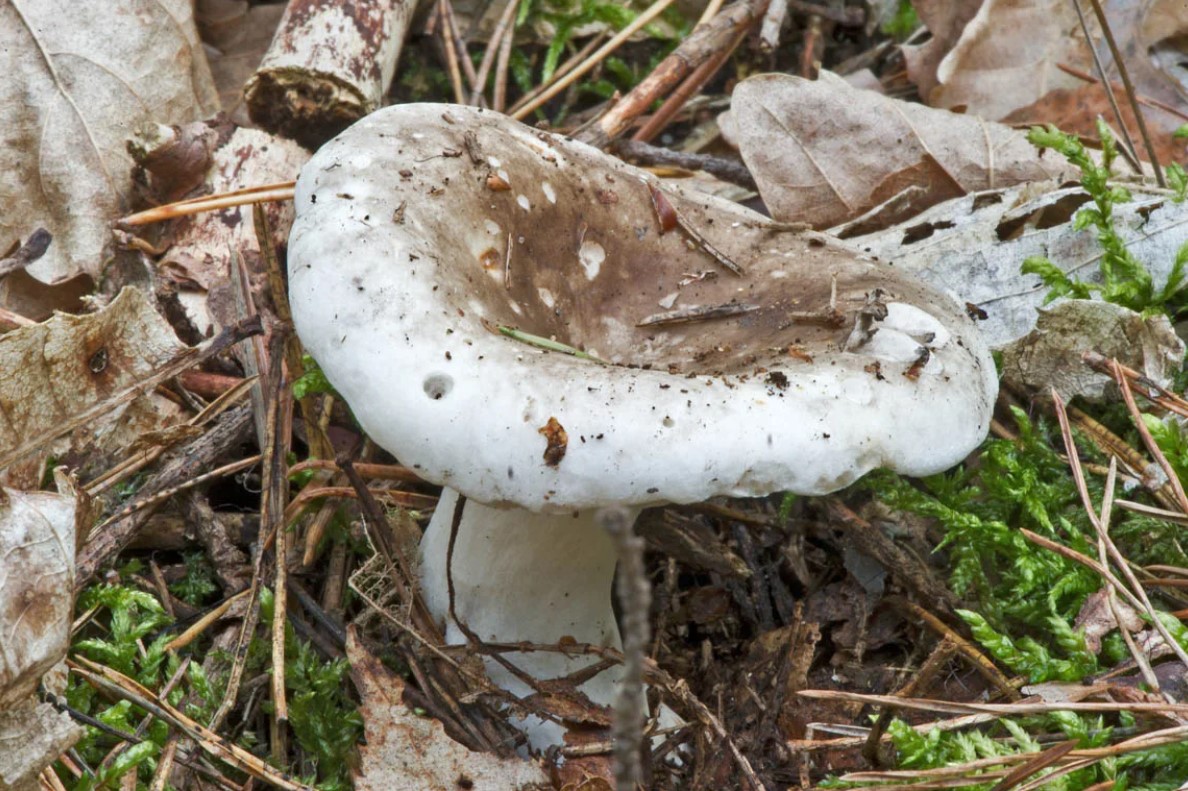
The cap can reach up to 30 cm in diameter, flattened and convex with a small dimple in the center. The edges are slightly curved. Young mushrooms are white, but with age, they turn brown, with a rusty coat appearing on the surface. The surface is dry.
Leg
The milk mushroom's stem is white, with elongated brown spots visible on its surface. It is cylindrical in shape, widening at the base.
Pulp
The flesh is white, fleshy, and juicy. The aroma is pleasant and strong.
Records
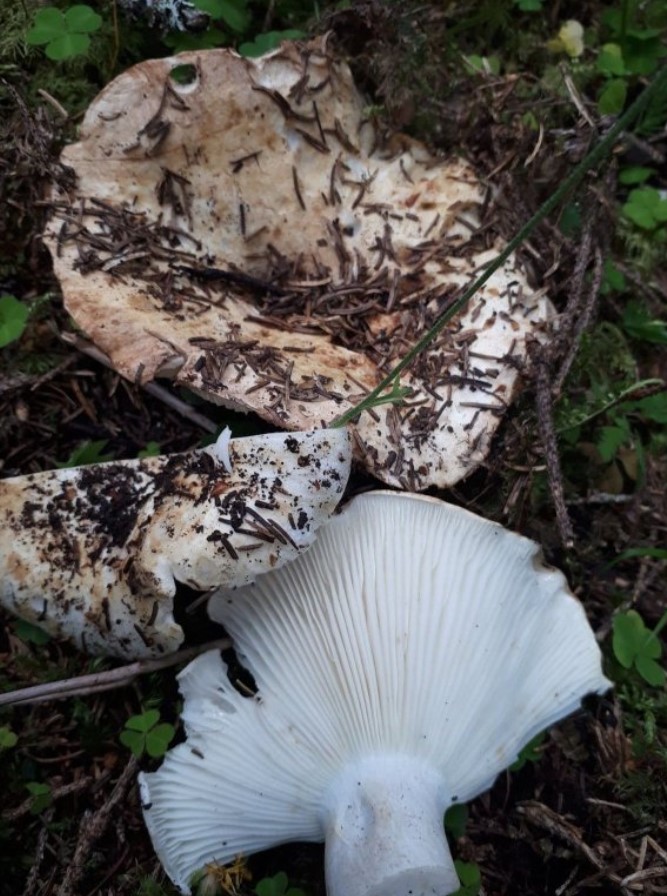
The plates are white, fairly narrow and thin. In some cases, they may have a greenish-blue or turquoise tint.
Spore powder
The spore powder may be cream or white.
Other names for dried milk mushroom
The dried milk mushroom has several other names by which it is known to mushroom pickers:
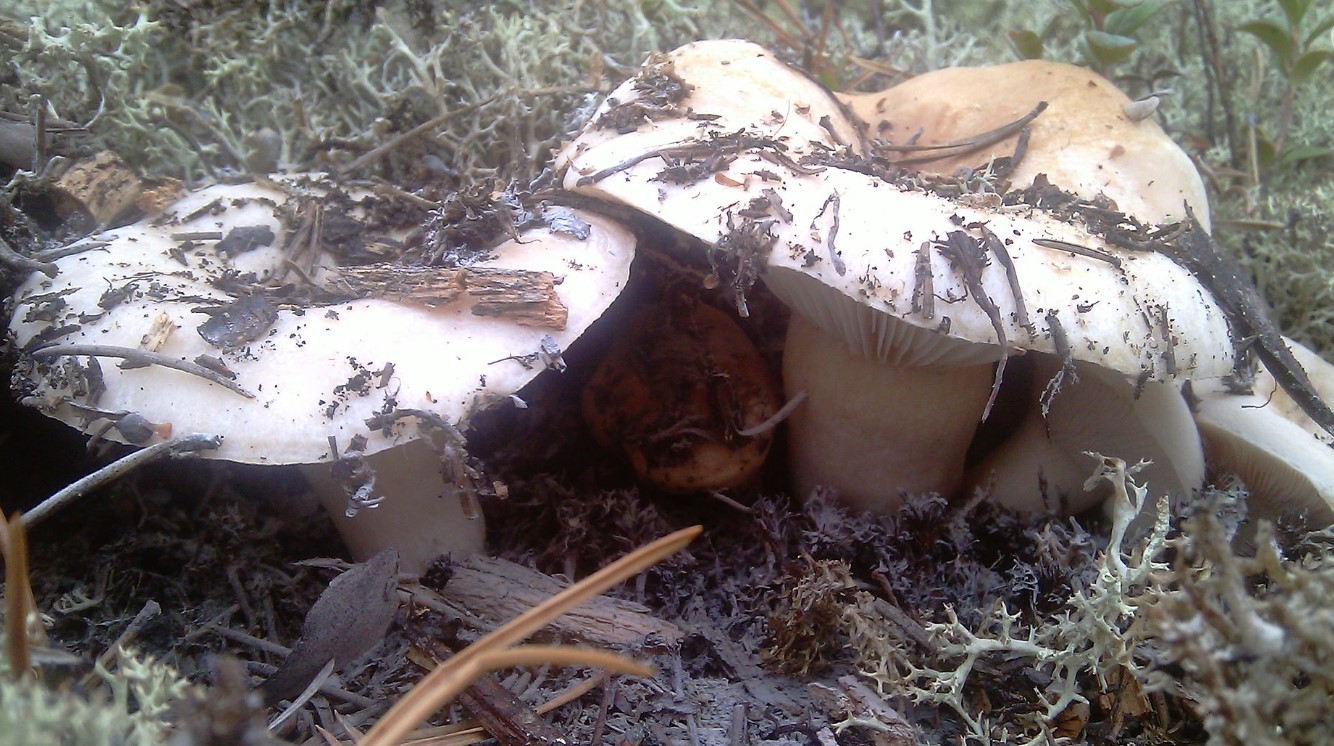
- Rusk.
- The russula is excellent.
- Dry milk mushroom.
- The russula is pleasant.
Where and when does dry milk mushroom grow?
The dried milk mushroom can be found in almost any forest, but is most often found in deciduous or mixed forests. It grows throughout the country, preferring forest edges, clearings, and roadsides, alongside aspen and birch trees, and less commonly, pine and spruce.
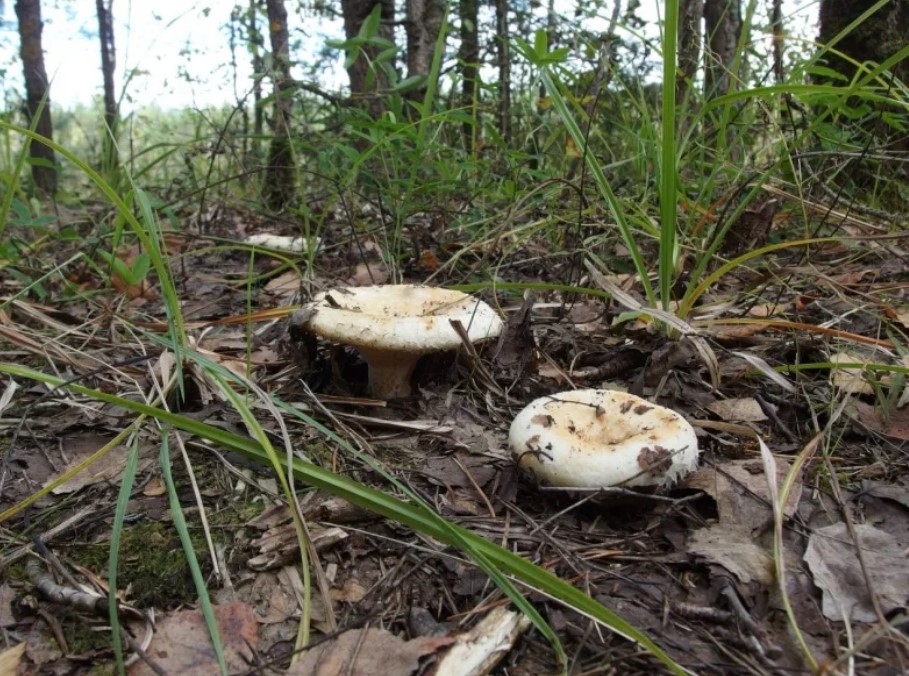
Mushrooms similar to dry milk mushrooms
Dried milk mushrooms can be found in the forest, but lookalikes are common. Almost all of them are conditionally edible, so confusing them won't be a big deal. However, it's still best to know their main characteristics and distinguishing features.
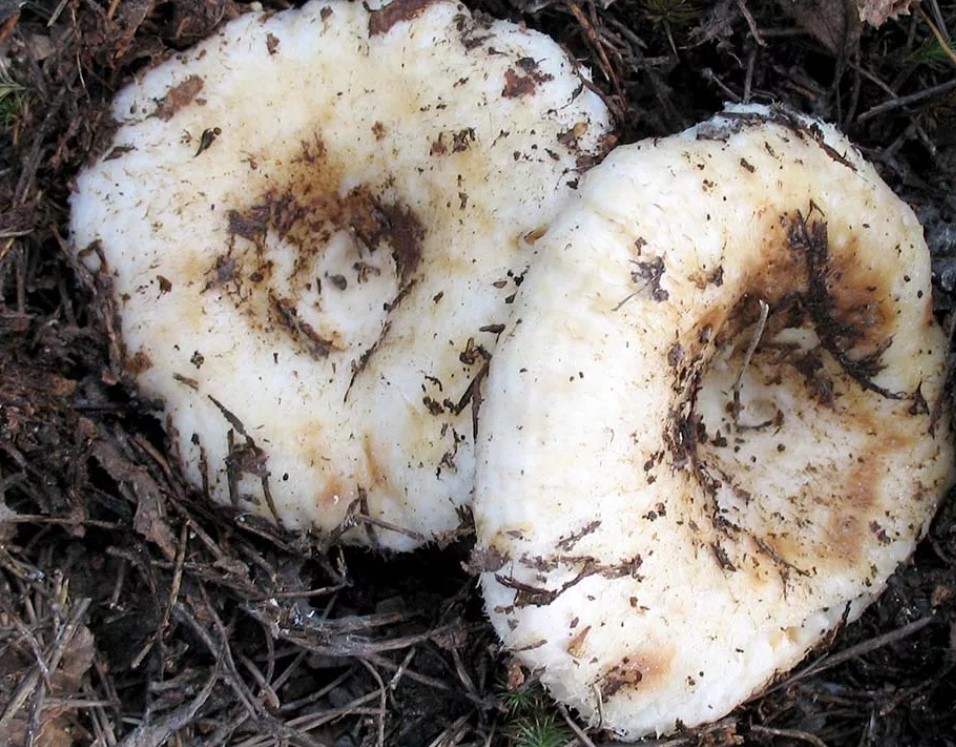
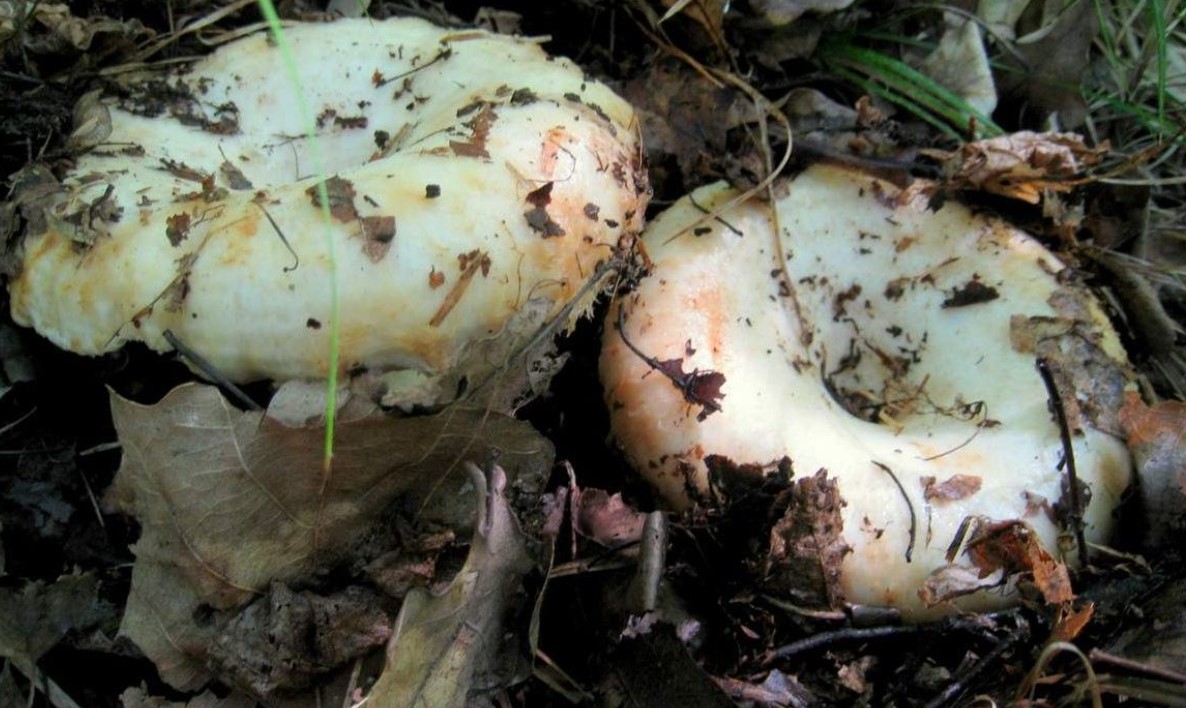
Milk mushroom (Lactarius resimus)
A classic variety of milk mushrooms. Ideal for pickling and salting, their crisp flavor remains even after prolonged soaking and boiling.
| Description | Edibility | Distribution, harvest season | Differences from dry |
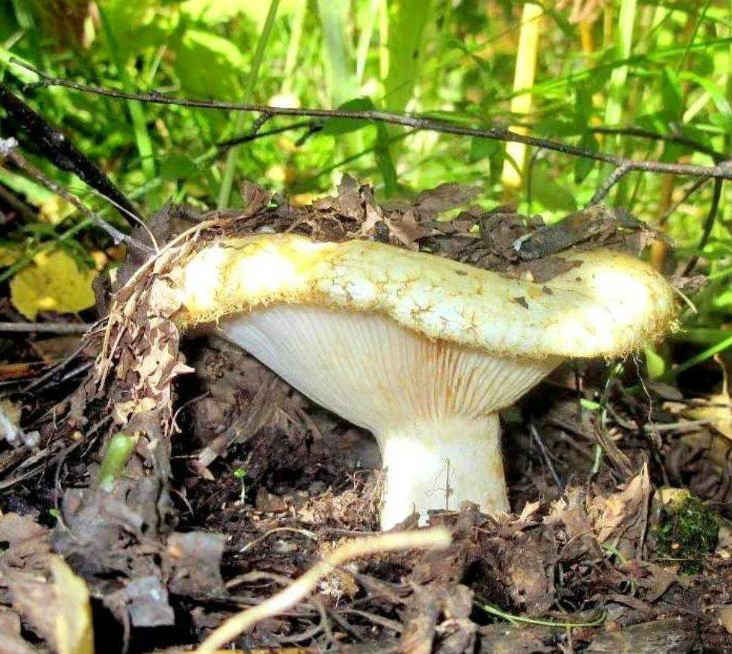
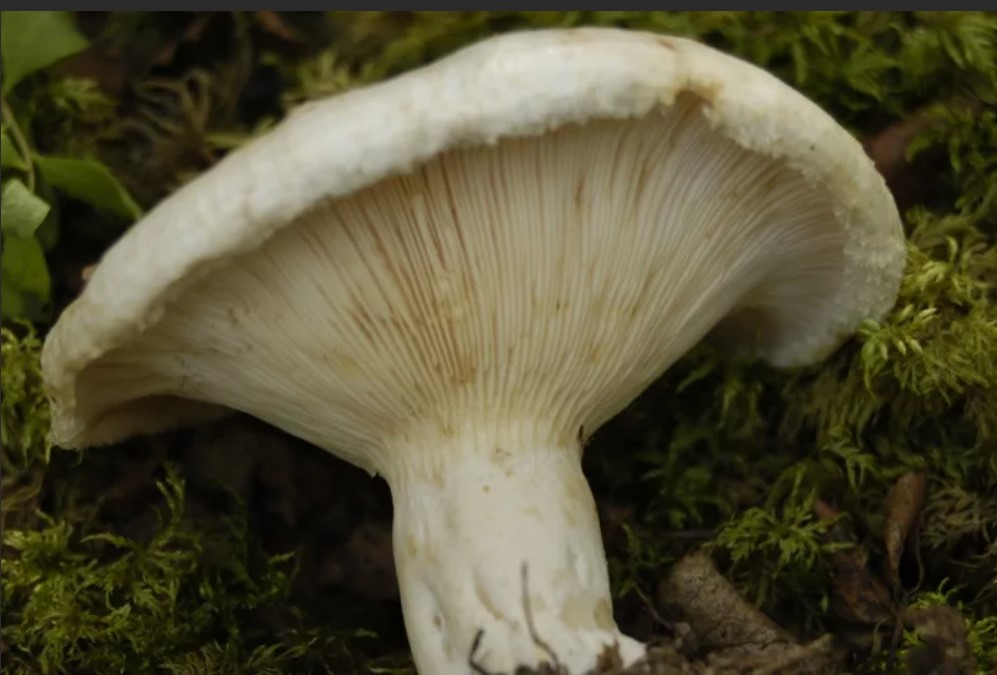
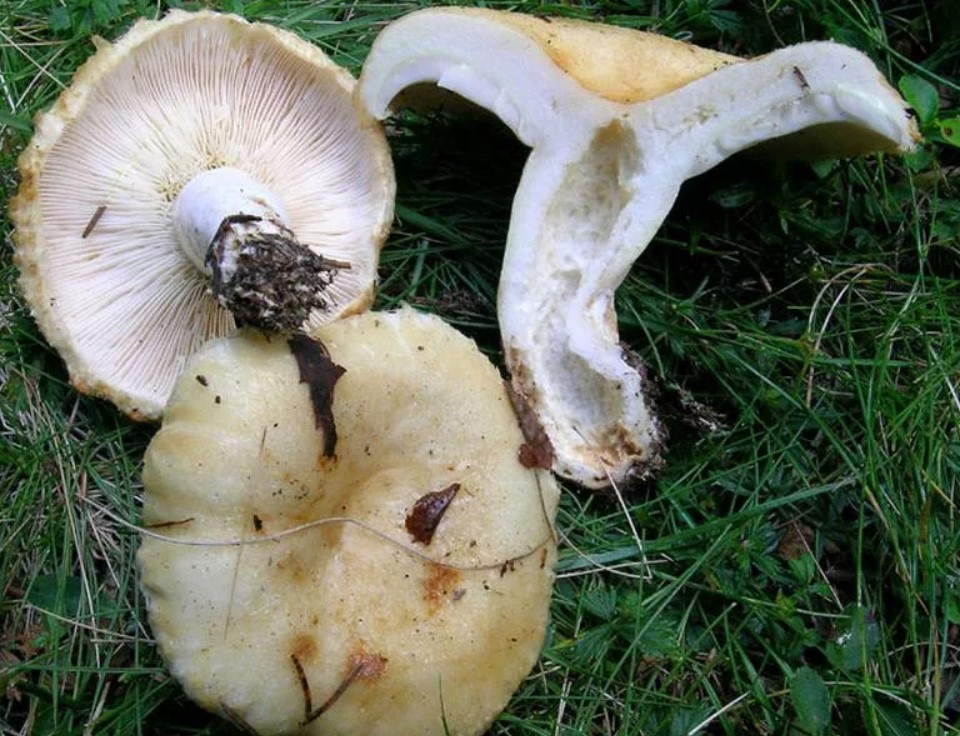
| The cap diameter ranges from 5 to 20 cm, the skin is moist, yellowish or milky white. The surface has concentric zones. The stem is up to 7 cm high and yellowish in color. | Conditionally edible | Prefers deciduous or mixed forests with birch and linden undergrowth. Fruiting occurs from July to September. | The main difference is the wet skin and the absence of milky juice. |
Photo gallery of real milk mushrooms
Read about other milk mushrooms in the articles:
Black Milk Mushroom: 22 Photos, Description, Edible or Not, What It Looks Like, and Where to Find It;
Aspen milk cap (poplar): description, 60+ photos, is it edible, 10 similar mushrooms.
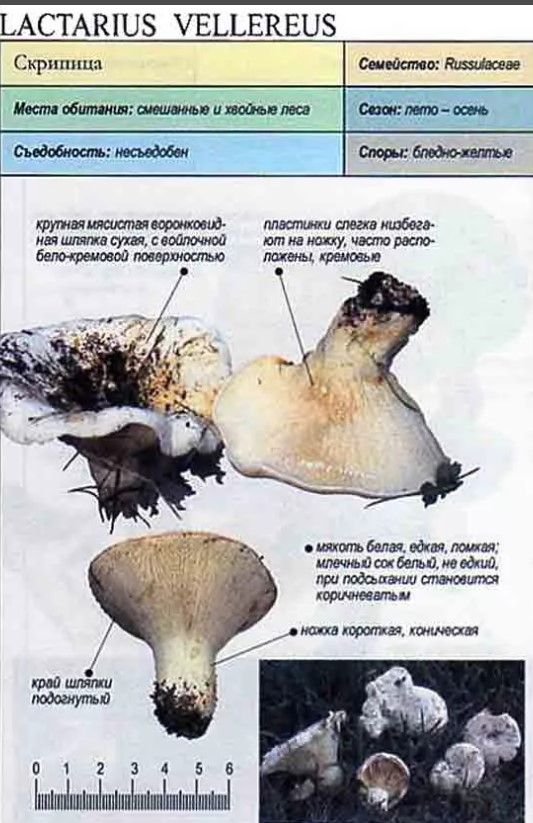
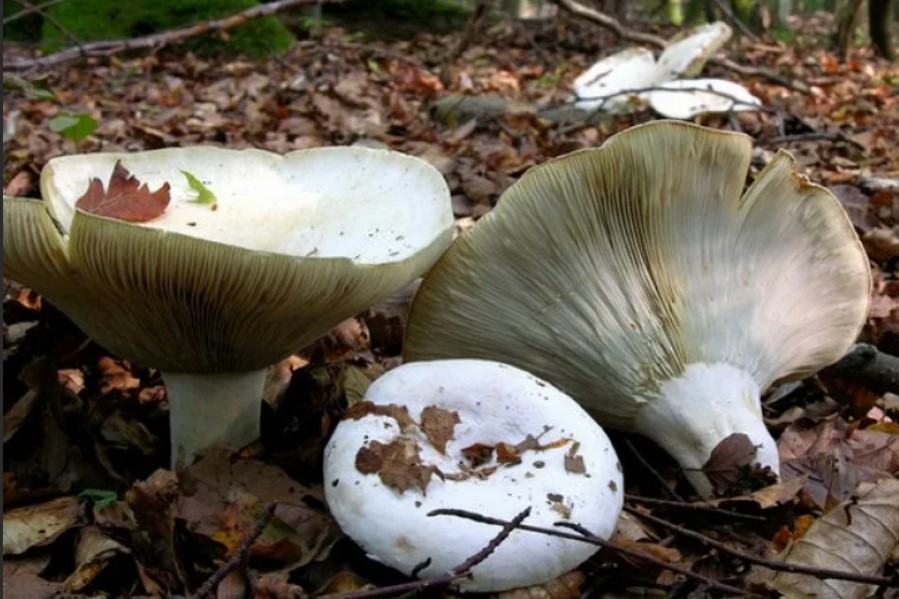
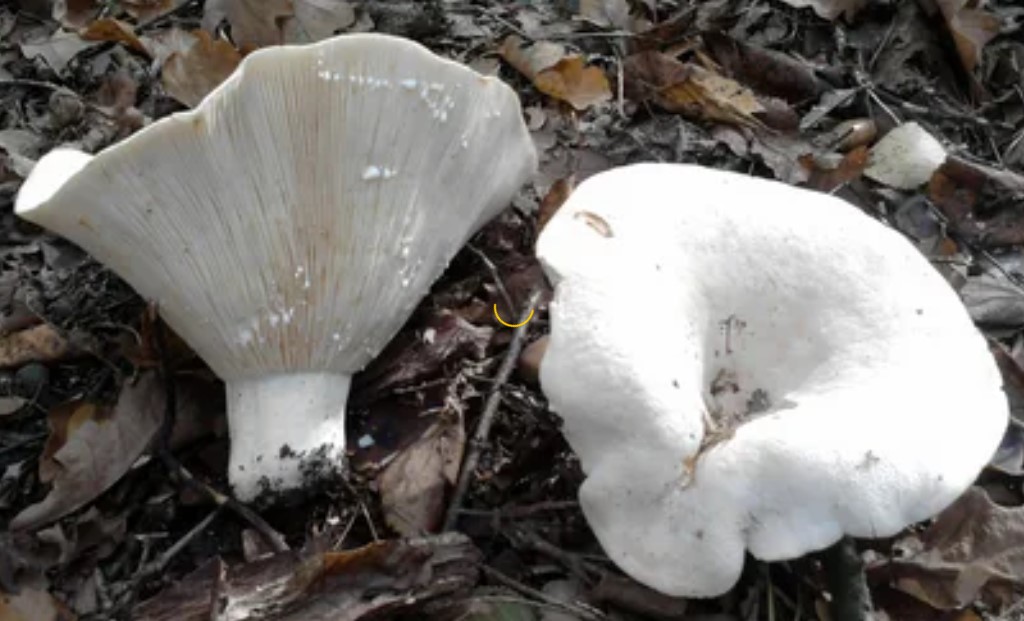
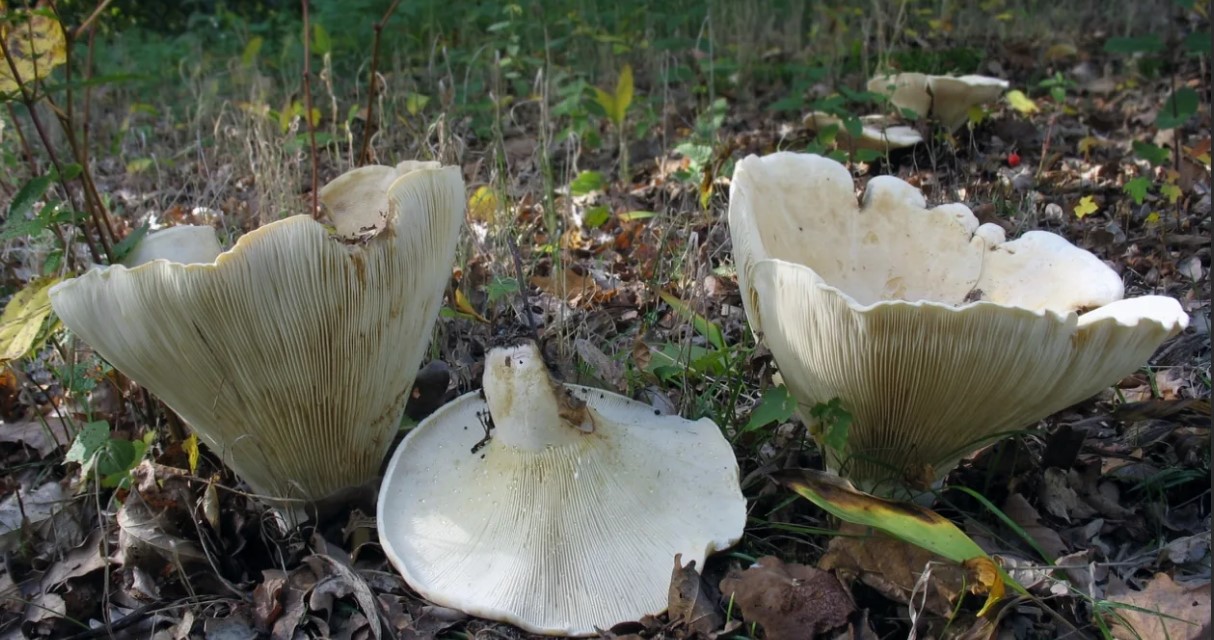
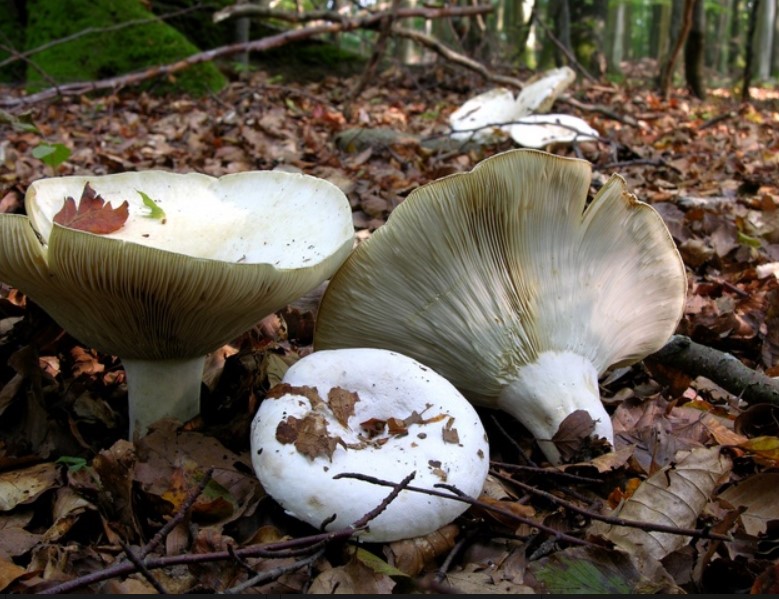
Violin mushroom (Lactarius vellereus)
The mushroom grows in groups in both coniferous and deciduous forests.
| Description | Edibility | Distribution, harvest season | Differences from dry |
| The cap diameter is up to 26 cm, and its shape ranges from convex to funnel-shaped. The skin is white, and the surface is pubescent. The color can be yellowish or reddish-brown with ochre spots. | Conditionally edible, used for food after soaking | It grows in coniferous and deciduous forests, the fruiting period lasts from mid-July to September. | The cap color varies; the gills have a greenish or yellow tint. |
Photo gallery of the violin
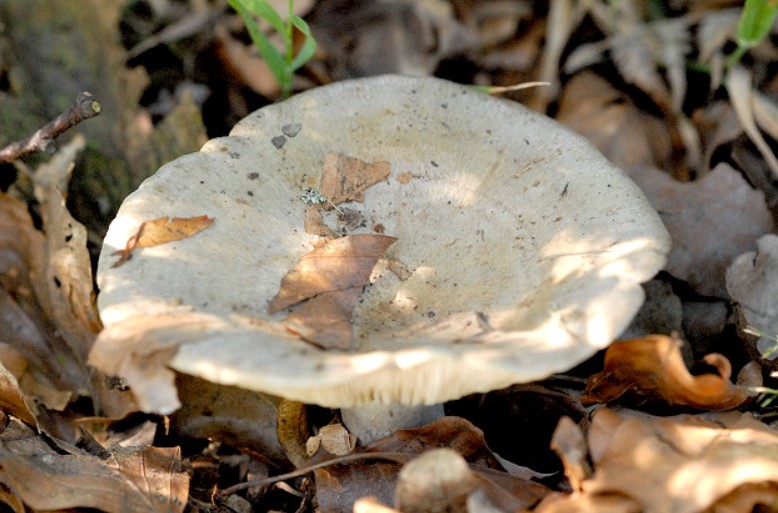
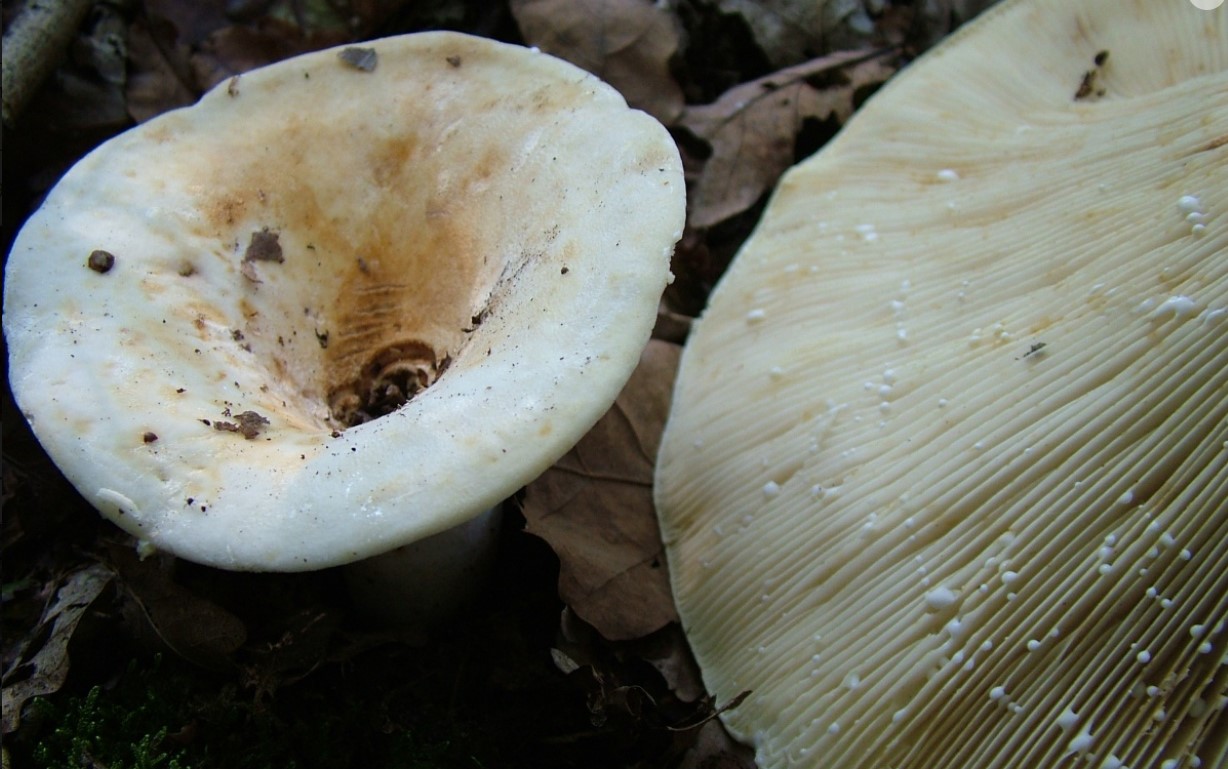
Green-laminated milk cap (Russula chloroides)
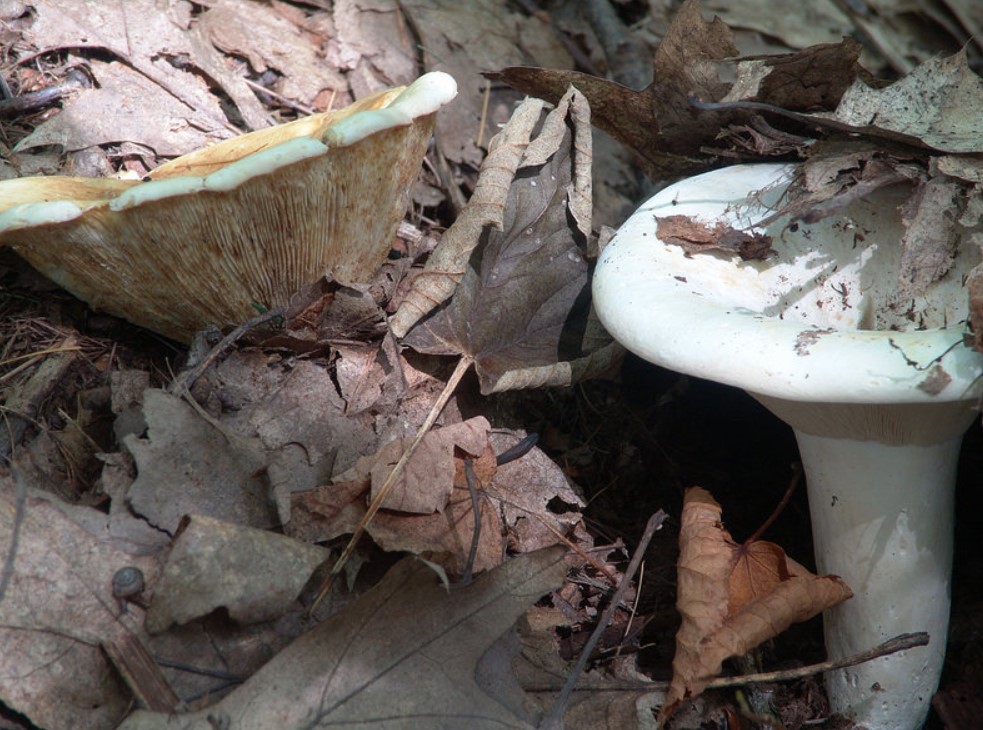
An edible mushroom widely used in cooking. Its distinctive feature is the greenish color of its gills.
| Description | Edibility | Distribution, harvest season | Differences from dry |
| The cap is 5 to 15 cm in diameter, ochre in color, and develops rusty spots over time. The skin is dry. The stem is up to 7 cm long, white, and may have a greenish tint. | Edible | Widely distributed in mixed and deciduous forests, it prefers shady areas. It grows from July to September. | The gills on the back of the cap may have a greenish tint. |
Photo gallery of the greenish-plain milk cap
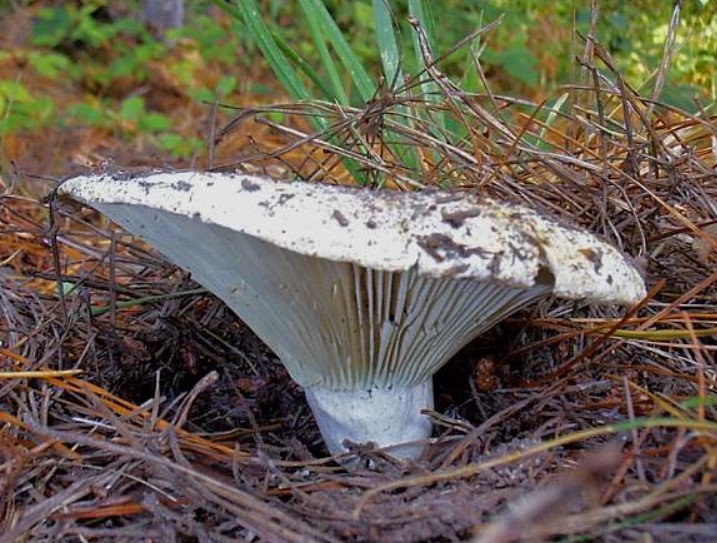
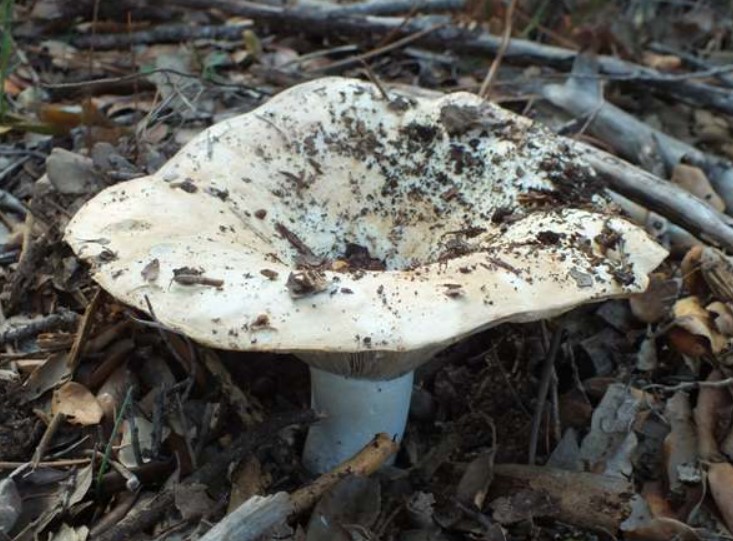
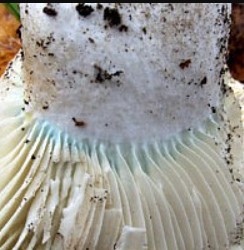
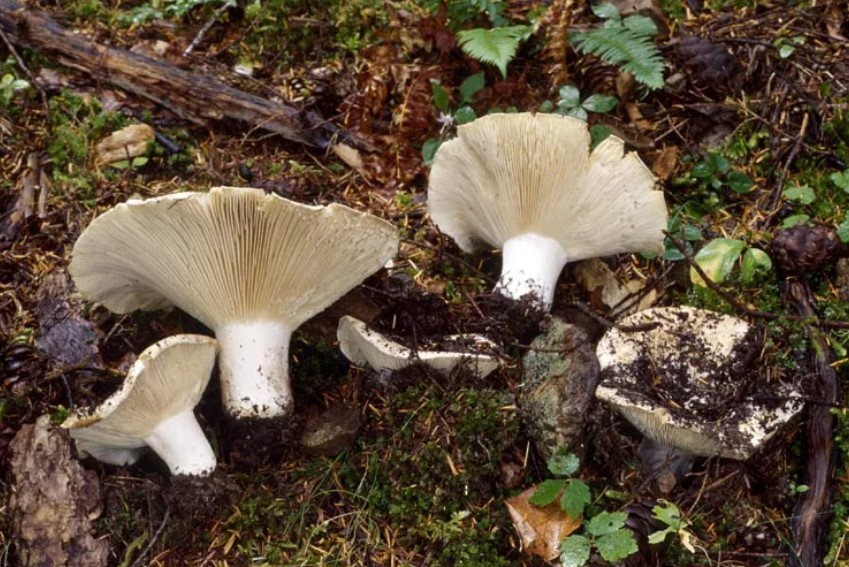
Russula brevipes
The mushroom prefers to grow in warm forests and is rarely found in Russia.
| Description | Edibility | Distribution, harvest season | Differences from dry |
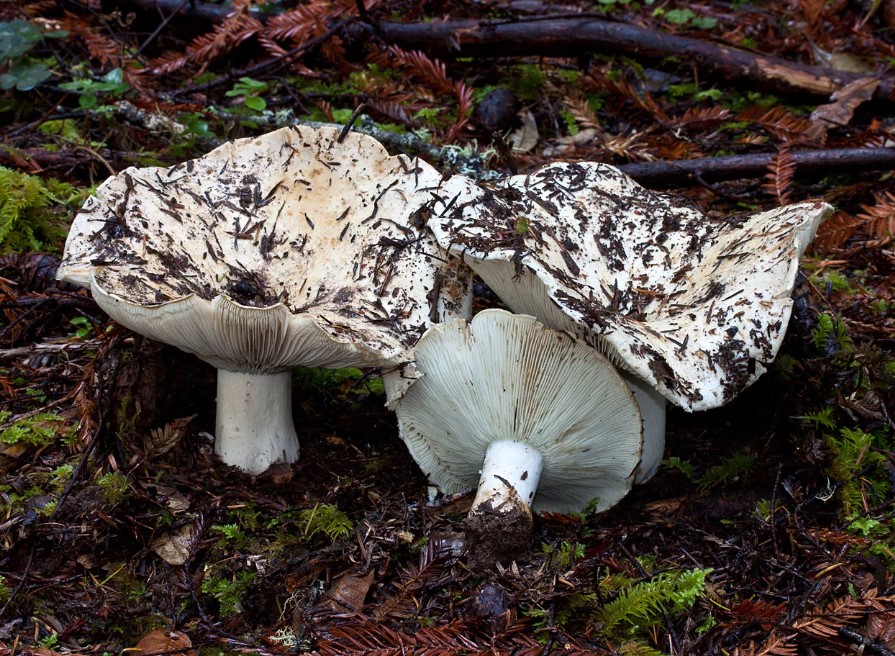
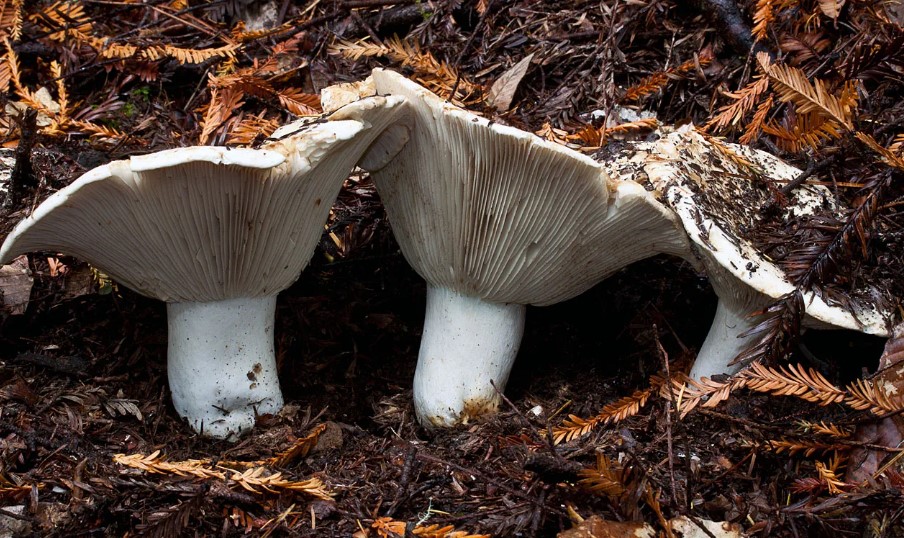
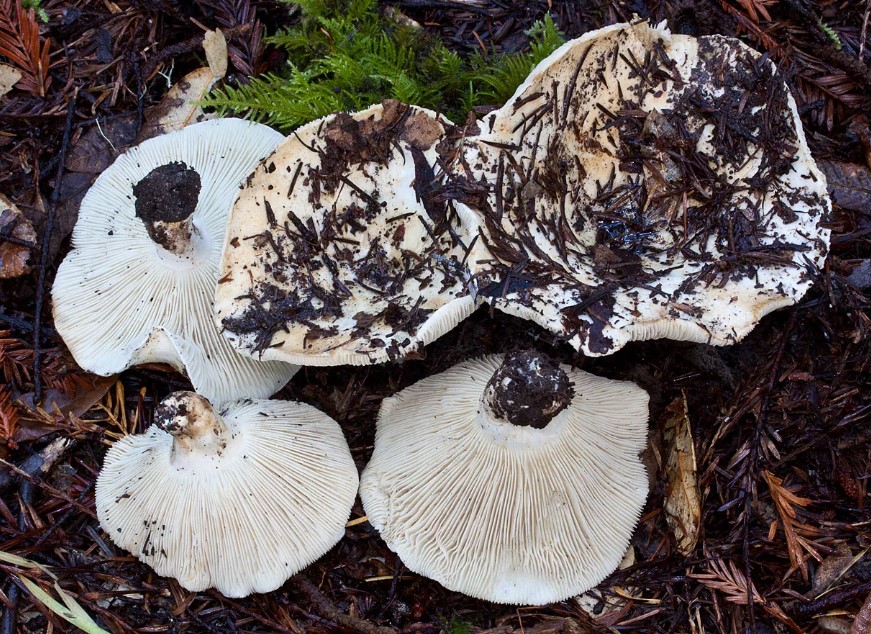
| The cap diameter ranges from 7 to 30 cm, white in color, turning yellowish-brown with age. The stem is 3 to 8 cm long. | Edible, suitable for pickling. | Prefers humid forests of the European part, growing next to coniferous trees. | Found in coniferous forests, it has a very short stem. |
Photo gallery of Russula brevis
Read about different types of russula and their edibility in the articles:
30 types of edible and inedible russula mushrooms + 8 poisonous look-alikes, lots of photos;
Russula: 37 species with 253 photos and descriptions, where and when they grow, benefits and harms.
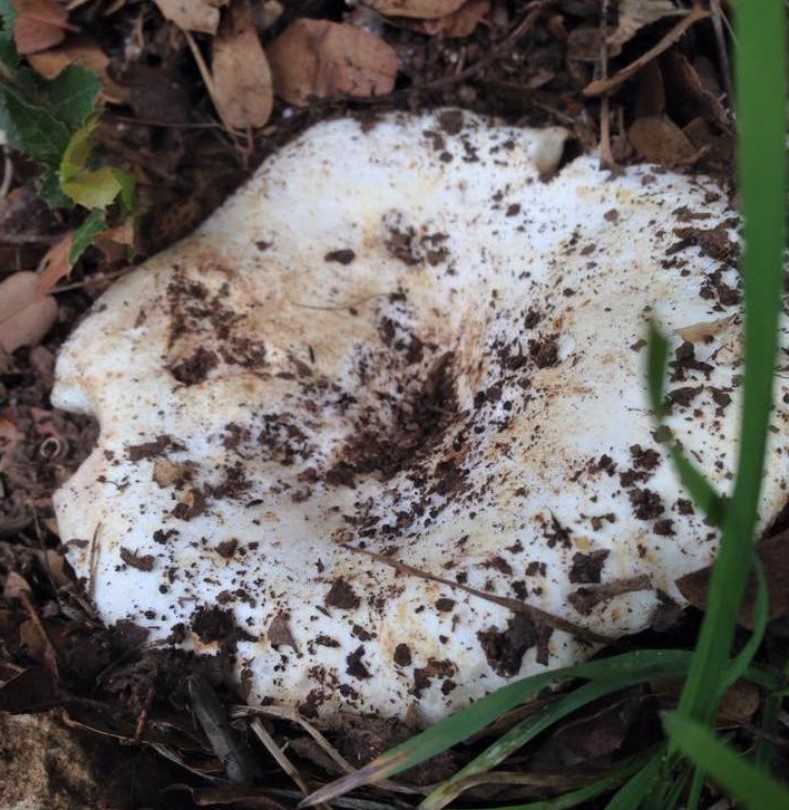
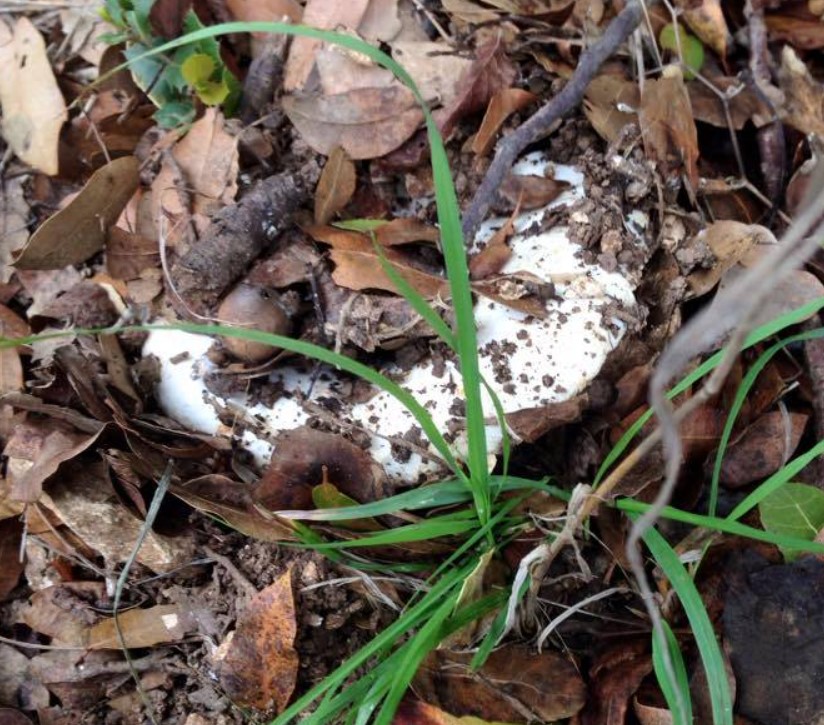
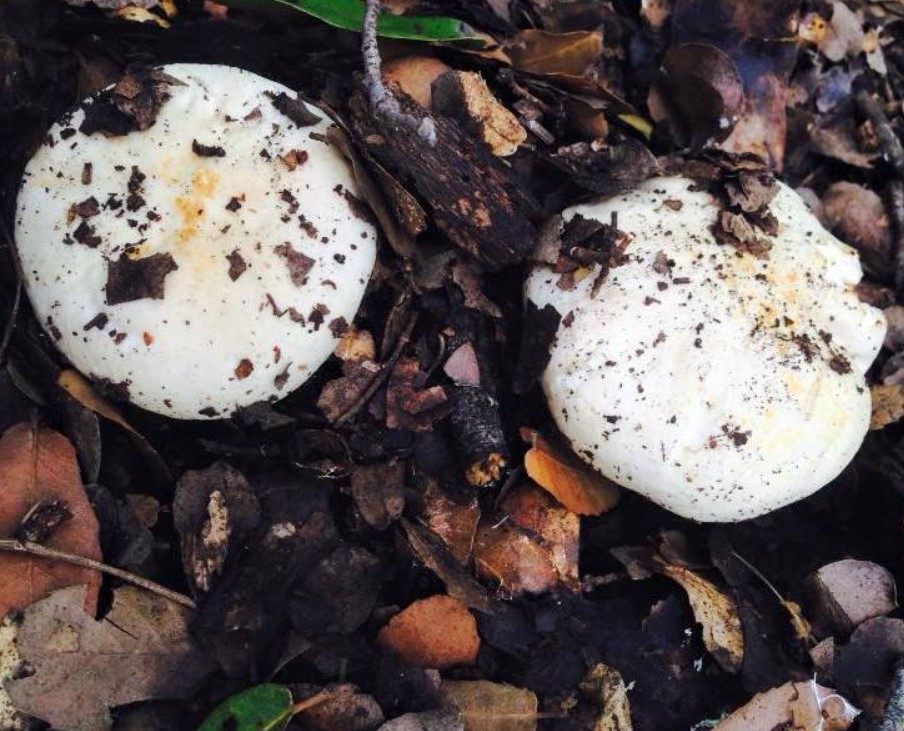
White false milk cap (Russula pseudodelica)
The mushroom tolerates frost very well, so it is often found in forests even after the onset of cold weather.
| Description | Edibility | Distribution, harvest season | Differences from dry |
| The fleshy cap is up to 14 cm in diameter; when young, the surface is slimy, but becomes dry as the mushroom matures. The color is yellowish-white. The stem, up to 6 cm high, is white and smooth. | Conditionally edible, can only be consumed after boiling. | Rarely encountered in November–December, preferring oak groves. | Young mushrooms have a damp cap, different fruiting time. |
Photo gallery of the white false milk cap
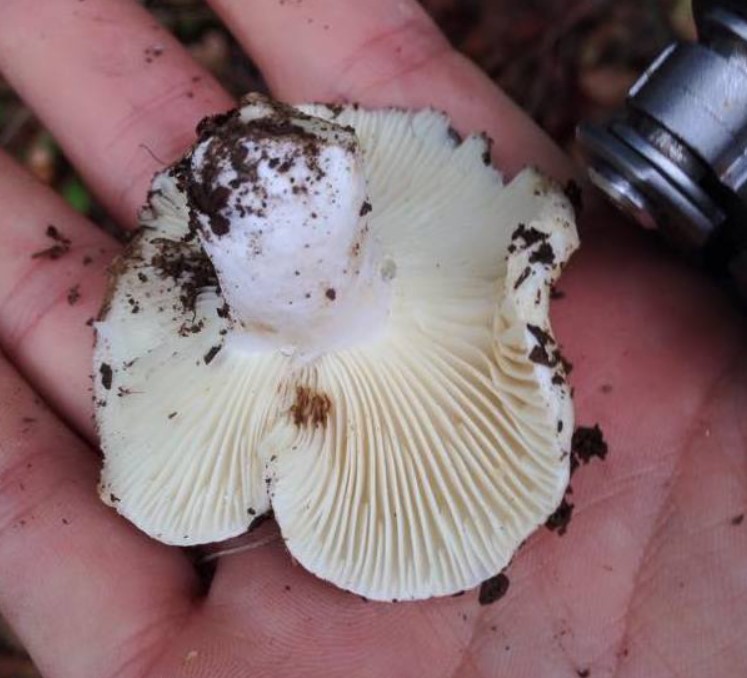
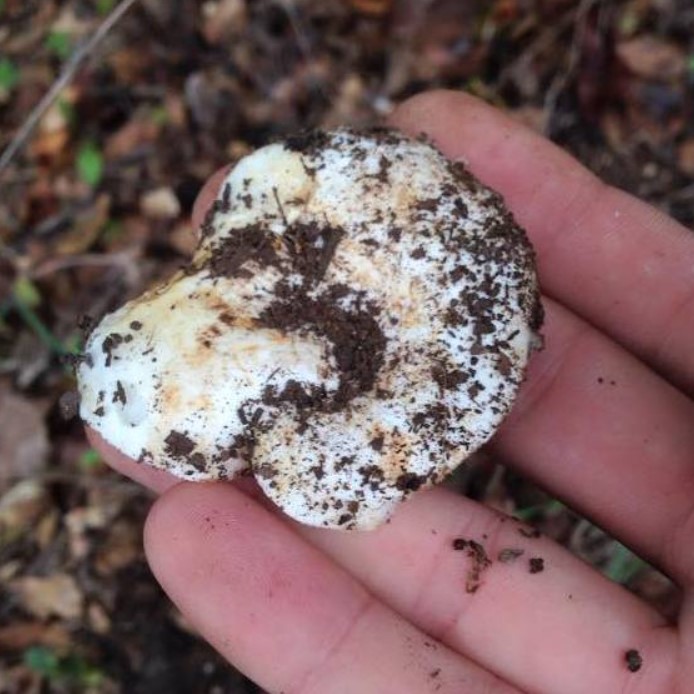
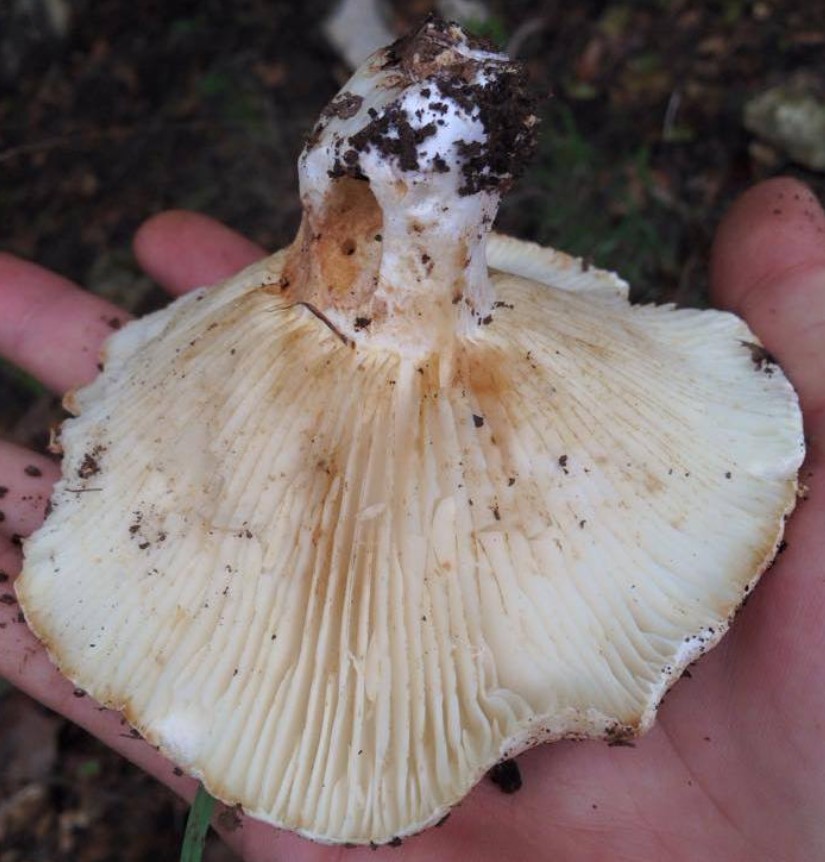
White volnushka (Lactarius pubescens)
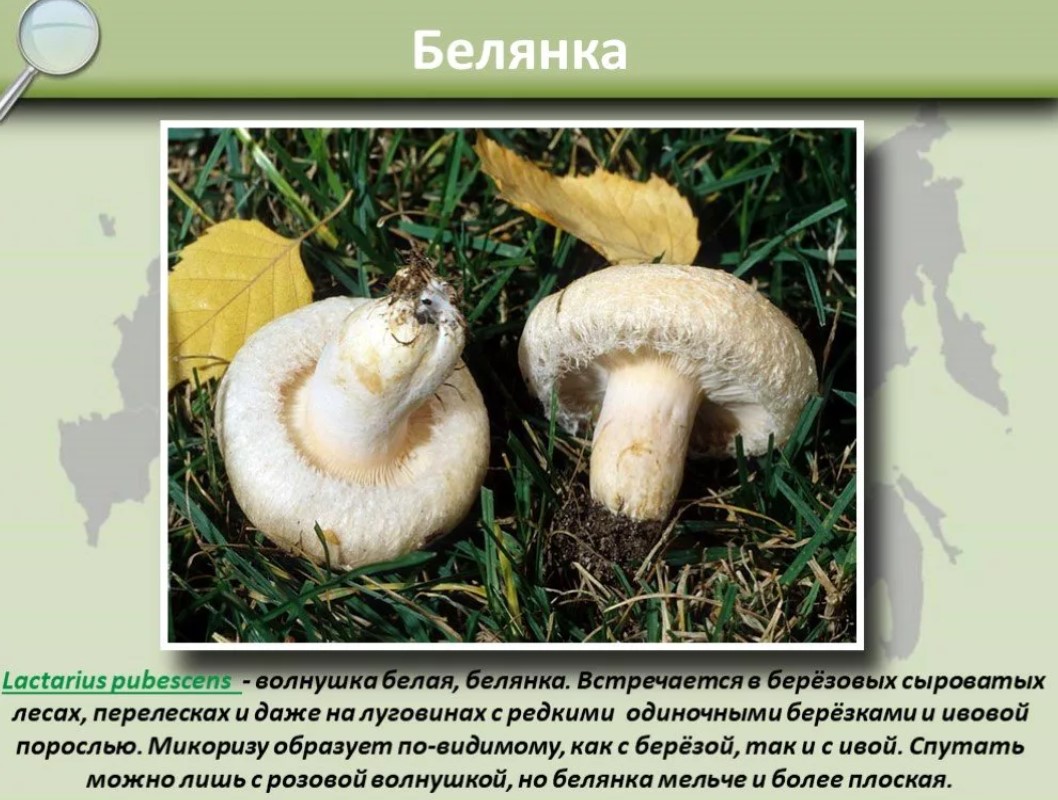
This mushroom can be easily identified by the presence of villi on its surface, which can cover not only the cap, but also the stem.
| Description | Edibility | Distribution, harvest season | Differences from dry |
| The cap is up to 8 cm in diameter, with a shape that ranges from prostrate to funnel-shaped. The edges are lighter than the center and are white. The surface is pubescent. The stem is up to 4 cm tall, smooth, and the same color as the cap. | Conditionally edible. After pickling, the color turns brown. | It grows in deciduous or mixed forests near birch trees. Fruiting occurs from August to September. | Slimy skin with dense fluff on the surface |
Photo gallery of the white milk cap
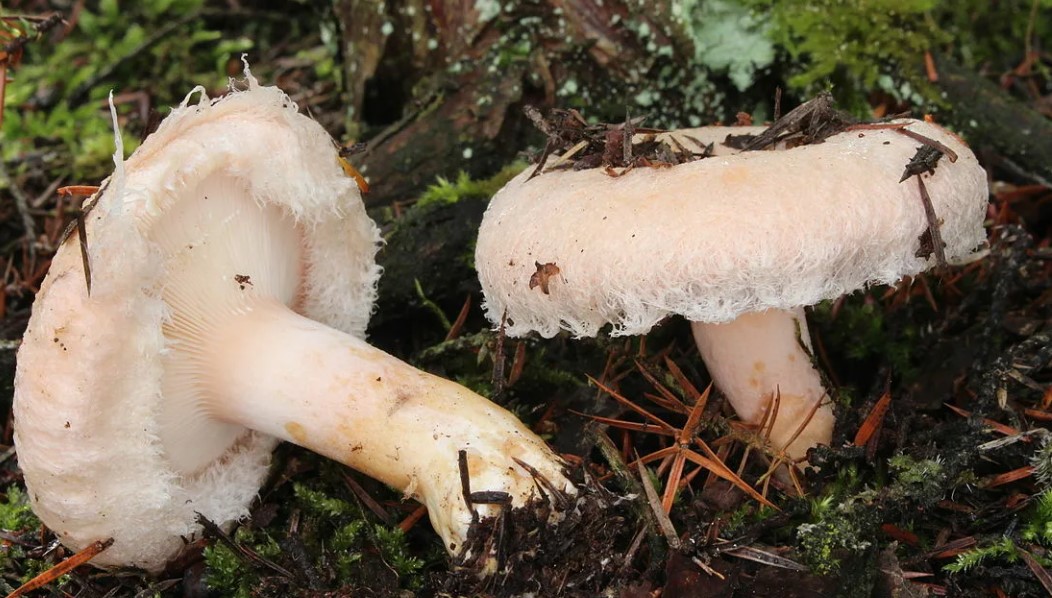
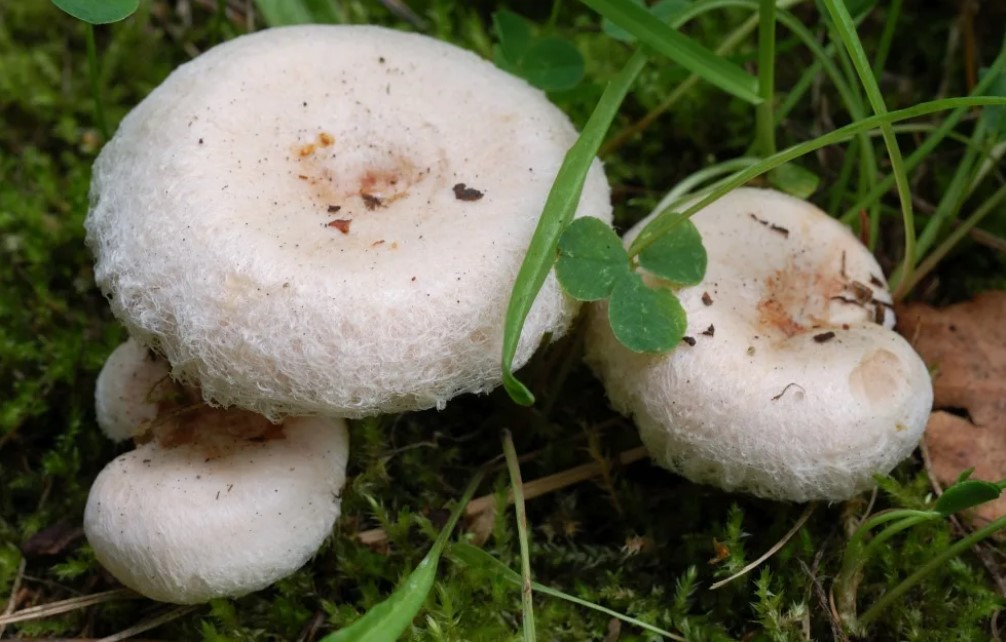
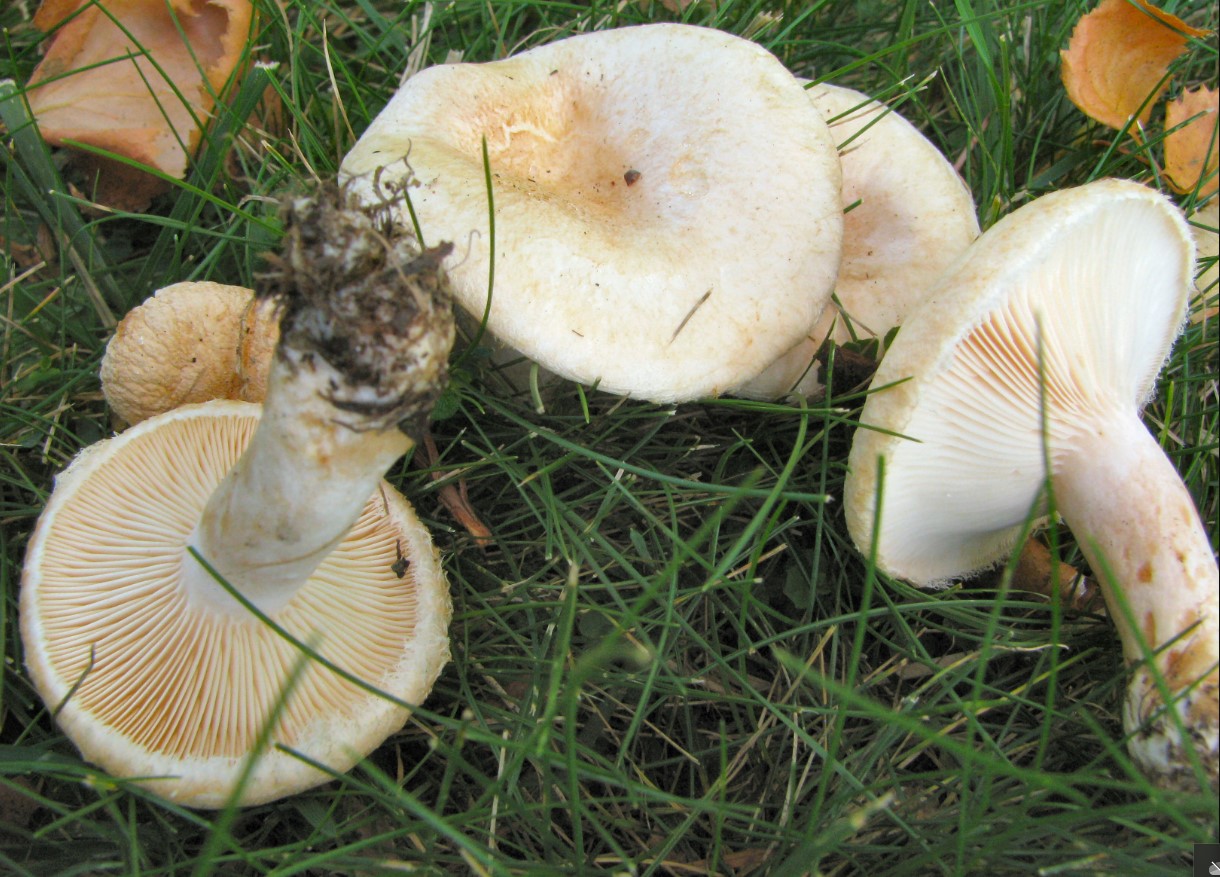
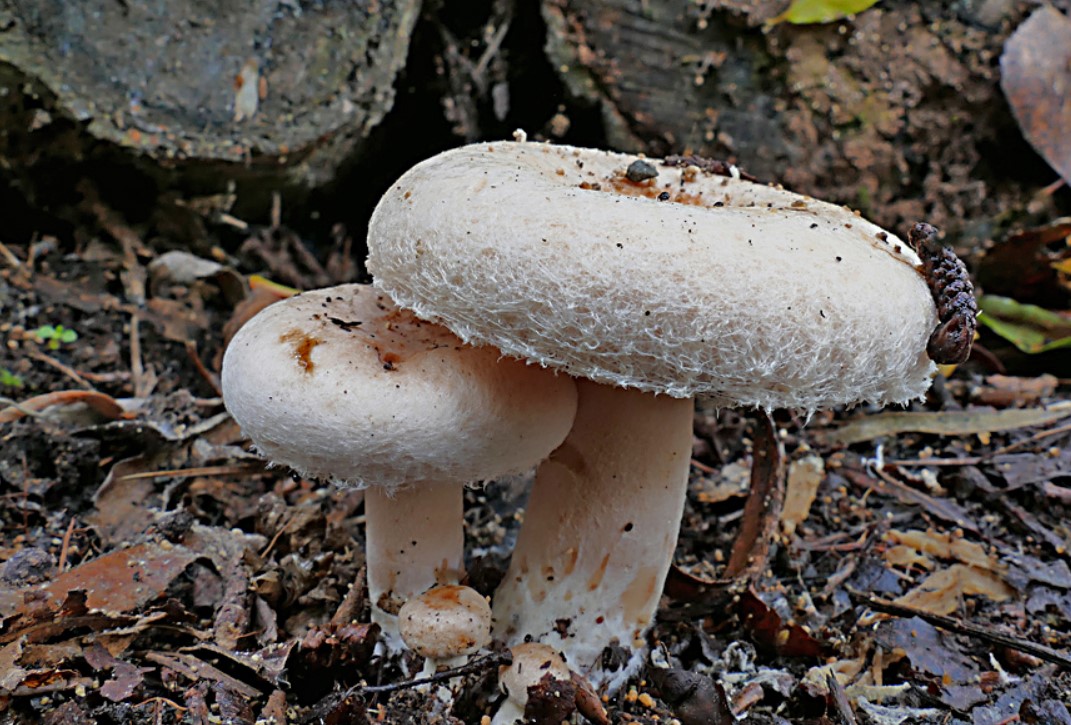
The benefits and harms of dried milk mushrooms
Dry milk mushrooms contain a large number of useful micro- and macroelements:
- amino acids;
- proteins;
- vitamins.
Due to their low calorie content, mushrooms can be used in dietary nutrition. However, it's important to remember that milk mushrooms, like any other mushrooms, are difficult to digest. Therefore, they should be consumed in moderation to avoid indigestion.
Mushrooms are also not recommended for nursing and pregnant women, children under 12 years of age, and people with chronic gastrointestinal diseases.
The taste of dried milk mushrooms, preparation, and recipes
Despite their pleasant aroma and juicy flesh, dried milk mushrooms lack a distinctive flavor. Therefore, they are used as a standalone dish, either salted or pickled.
Primary processing
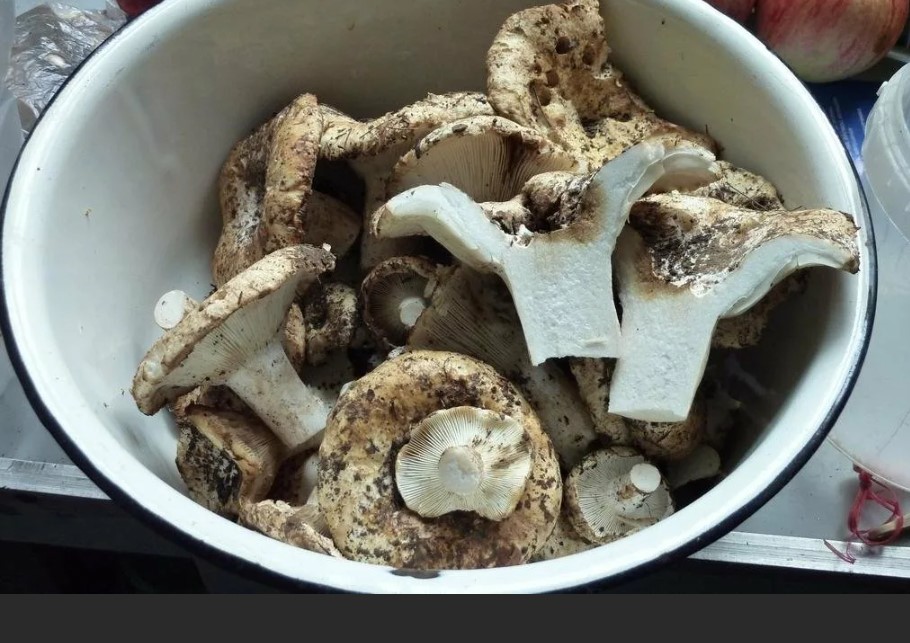
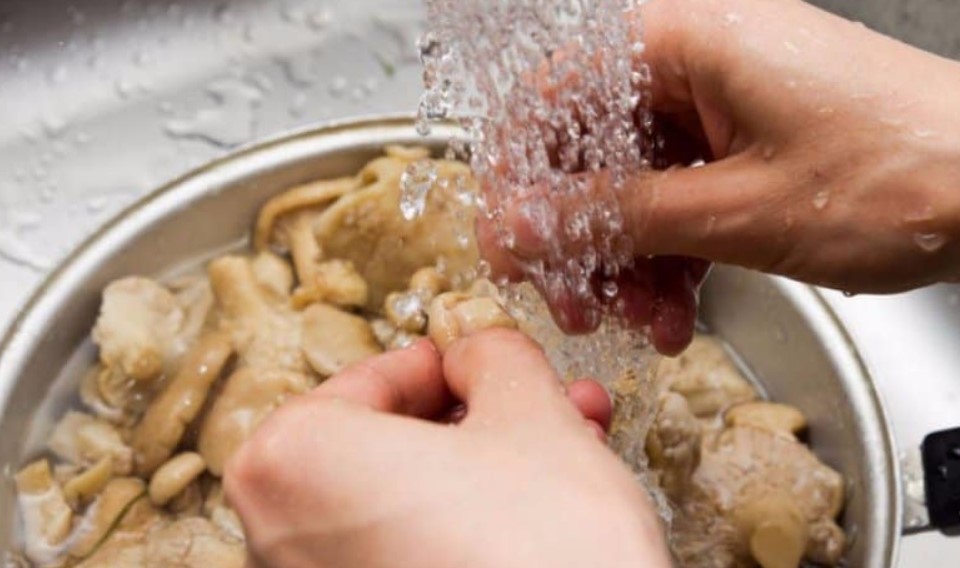
Before cooking dried milk mushrooms, they need to be processed. First, remove any forest debris from the surface with a sponge and brush. Next, rinse the mushrooms under running water and boil for 20 minutes. Some mushroom pickers recommend soaking them for three days, changing the water twice a day.
How to cook dried milk mushrooms
Place the washed mushrooms in a saucepan with cold water and heat over medium heat. Add salt and spices if desired. In this form, the dried milk mushrooms can be used in further dishes: salads, soups, side dishes, and even pies.
How to fry dried milk mushrooms
Place the prepared milk mushrooms in a well-heated frying pan and fry for a few minutes over high heat, stirring constantly. Next, add the onion and fry for a few more minutes. Finally, add the soy sauce or sour cream and simmer for 5-7 minutes.
How to pickle dried milk mushrooms
The main secret of pickling is a successful marinade. To prepare it, you'll need:
- 2 liters of water;
- 250 ml vinegar;
- 50 g salt;
- 40 g sugar;
- 4 bay leaves;
- 5 cloves;
- 5-6 peppercorns.
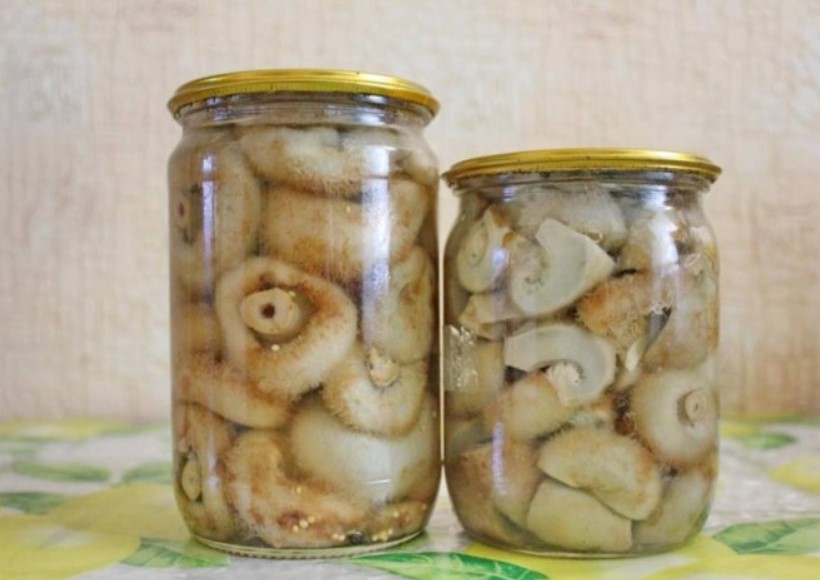
Mix all ingredients together and bring to a boil. Add the mushrooms and simmer for 15 minutes. Place the dried milk mushrooms in jars and seal with lids.
How to pickle dried milk mushrooms
Dried milk mushrooms can be salted in two main ways:
- Long-term. Prepared mushrooms are laid cap-side down in a prepared container, covered with salt, and arranged in alternating rows. Water is then added until the last layer is completely covered. After this, the container is placed in a warm place, where the fermentation process begins. After the foam has subsided, the milk mushrooms are rinsed, placed in jars, and covered with a solution at a rate of 40 grams of salt per liter of water.
- Quick. Take any spices (garlic, black peppercorns, dill, horseradish, currant leaves, etc.), add them to a liter of water, and add 40 grams of salt. Pour the resulting solution over young, pre-boiled milk mushrooms for 20 minutes.
Preserving dried milk mushrooms
To preserve dried milk mushrooms, first boil them in lightly salted water. Next, prepare the marinade:
- 1 liter of water;
- 25 g salt;
- 20 g sugar;
- 60 ml vinegar.
All ingredients are mixed and simmered for about 15 minutes.
The mushrooms are placed in sterilized jars, covered with hot marinade, and sealed tightly. The finished jars are turned upside down, covered with a warm blanket, and can be refrigerated after 5 days.
How to dry milk mushrooms
Milk mushrooms should be thoroughly cleaned for drying; there's no need to wash them. Removing all the debris from the mushrooms' surface is difficult; a toothbrush is best for this task. Afterwards, the clean mushrooms are strung on a string and hung outdoors.
Milk mushrooms contain almost no liquid, so they dry relatively quickly. However, you can speed up the process by using an oven. Lay the mushrooms out in a single layer and place them in an oven preheated to 50 degrees Celsius (122 degrees Fahrenheit), stirring occasionally.
Important! The oven door must always remain open!
How to freeze dried milk mushrooms
It's better to freeze already-cooked milk mushrooms; this way, they'll take up a little less space, and the cooking process after defrosting will be easier. Boil the mushrooms, cut them into pieces, place them in containers, and store them in the freezer.
Other recipes
Battered mushrooms. To prepare this dish, use mushroom caps. The milk mushrooms are pre-boiled. To prepare the batter:
- 2 eggs;
- 100 g flour;
- pepper, salt to taste.
Mix the eggs with flour and add the spices. Dip the mushrooms in the batter and place them in a hot frying pan with plenty of oil. Fry until golden brown. Remove with a slotted spoon to drain off excess fat.
Tips for housewives from Top.tomathouse.com
There are several tricks to preparing white milk mushrooms:
- If the mushrooms turn out to be oversalted, you can place them in cold water for 10 minutes to remove excess salt.
- You cannot wash white milk mushrooms in hot or warm water, otherwise they will turn black and become unsightly.
- Fresh mushrooms often have a slightly bitter taste, which disappears after boiling.
Reviews of white milk mushrooms or dried milk mushrooms
It seems to me that the reasons for his unpopularity are as follows:
1. The vast majority simply don’t know what kind of mushroom it is.
2. Delica initially grows underground, so when it is visible, in most cases it is already indecently old or wormy.
3. It's very dirty, and the hardest to clean. Even the aspen milk mushroom is much easier to clean.
4. The unusual metallic-fishy smell puts many people off.
5. It doesn't grow everywhere. You need to know the location. For example, I only encountered it in large quantities this year for the first time. It's never been to my usual haunts.
I always take it when I can find it. Salted podgruzdok is no worse than russula, and it's definitely crunchier.
Unfortunately, in places where porcini mushrooms, saffron milk caps, butter mushrooms, and other mushrooms are abundant, milk mushrooms are generally unavailable. And there's not enough time to make a special trip to pick them.
I pickled it for the first time this year, and half of it has already been eaten. Delicious.
My husband doesn't eat pickled noble mushrooms anymore (he's tired of them), Marusya (the cat) always gobbled up the podos (she won't eat them this year), and we always gobble up the salted milk mushrooms just like that.
I don't know why you so insist on podgruzdok being a salted mushroom. Fried ones are wonderful!
And so, since we're talking about gastronomy, I'd like to share with you some recipes for dishes using these mushrooms...
Naturally, I'll start with pickling, since these mushrooms are generally pickled in the same way as milk mushrooms. But there are some differences...Here is one expert's opinion:
QuoteSalted milk mushrooms.
Soak the mushrooms in cold water (or, best of all, rinse them under running water—if they've been floating in a mountain stream for 24 hours, there's no need to clean them). Clean them with a brush (a toothbrush is best for small mushrooms). Boil them for 10-15 minutes in salted water (when camping, we usually bring the mushrooms to a boil). Rinse, and cool in cold water (the mushrooms darken when cooled in hot water). There are two options:
Option 1. Pour in a pre-prepared cold brine (spices to taste + citric acid), let sit for a couple of hours, and the mushrooms are ready to eat.
Option 2. For long-term storage. Boil and rinse the mushrooms using the first method, place them in layers in a bucket (or barrel, depending on the quantity), sprinkle with salt, add a little water (to keep the mushrooms covered), and leave in a warm place for 1-3 days to ferment. Fermentation is complete when the foam stops forming. After this, rinse the mushrooms again, arrange them in jars (buckets, barrels), and pour the previously prepared cold brine over them. Store in a cool place.
A recipe for cold-curing milk mushrooms, meaning without pre-boiling, is quite common in literature. I'm not a fan of this method, firstly, because it mostly refers to pickling real milk mushrooms, and secondly, I've learned from personal experience that cold-curing is only suitable if the mushrooms are stored at a temperature between 0 and 3 degrees Celsius (32 to 36 degrees Fahrenheit). Otherwise, over time, they lose their crunchiness and become soft.
and I trust this opinion.
Therefore, I do salting using the hot method according to the second option.
Everything is just as the specialist recommended. The salt calculation is 40 grams per 1 kg of mushrooms. It's easy to calculate...
After fermentation, packaging into containers
The mushrooms are left to marinate for a week, after which they are ready to eat. This, by the way, is what distinguishes hot salting from cold salting.
But, milk mushrooms can be used for more than just pickling...I often hear: "Milk mushrooms are only salted. Fried ones are not tasty, boiled ones are useless."
As the saying goes, "Gentlemen, you don't like cats? You just don't know how to cook them!"
Here is an option for using milk mushrooms in a dish.
Sorry in advance for the blurry photo - I took it with a point-and-shoot camera, without flash (well, that's just how it turned out)...You will need:
- chicken
- a kilogram of boiled raw mushrooms (or 30 minutes of boiling raw mushrooms in salted water)
- onion
- 5 cloves of garlic
- 200 grams of sour cream
- salt, pepper, a couple of teaspoons of lemon juice, dill, parsley, vegetable oil
Let's start with mushrooms.
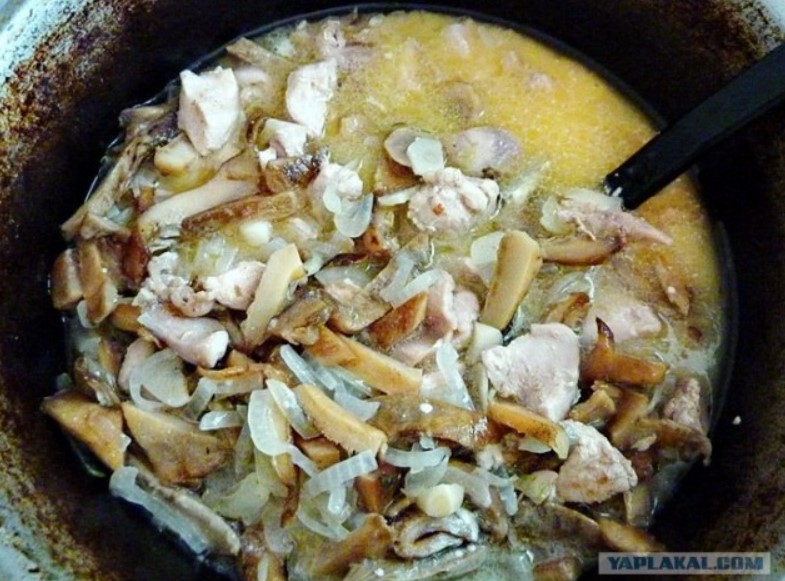
Chop the mushrooms into strips and place them in an open frying pan over hot oil. Heat on high.
The key to the mushrooms' flavor lies in a good roast. So, we first evaporate all the moisture from the milk mushrooms, then thoroughly fry them in oil until golden brown and chewy.Then add the onion, lightly fry and set the pan with the mushrooms aside.
Now the chicken.
Trim as much meat as possible from the chicken, remove the skin, and cut into pieces. Put any remaining meat in the pan; you can use the leftovers to make a broth for soup (well, that's for another episode).Place the meat in a cauldron with heated oil and fry until white and juicy (not necessarily until crisp, as it's still simmering). Once most of the moisture has evaporated, add chopped (or minced/crushed, whichever you prefer) garlic and pepper.
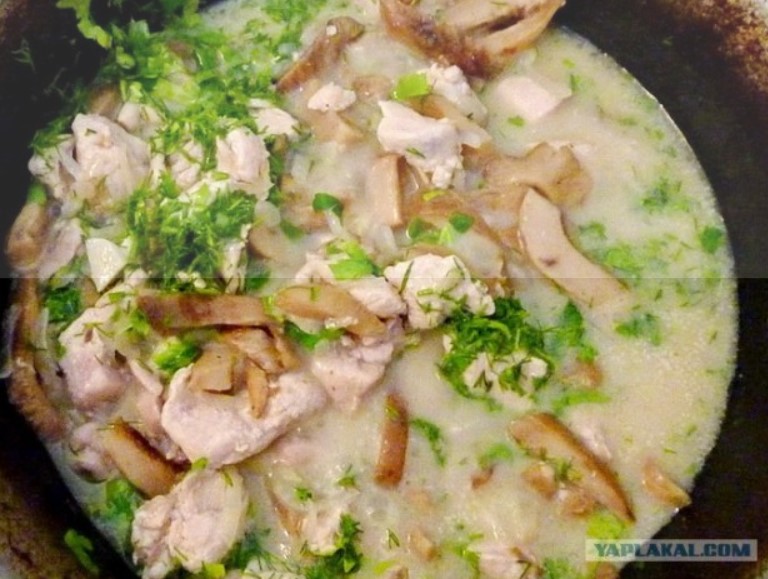
Stir and fry for another minute. Then, add the mushrooms and onions on top.Add water, sour cream, and lemon juice, add salt, bring to a boil, reduce heat to low, and cover with a lid. Simmer for another 30 minutes.
Five minutes before it’s ready, add some herbs (dill/parsley)
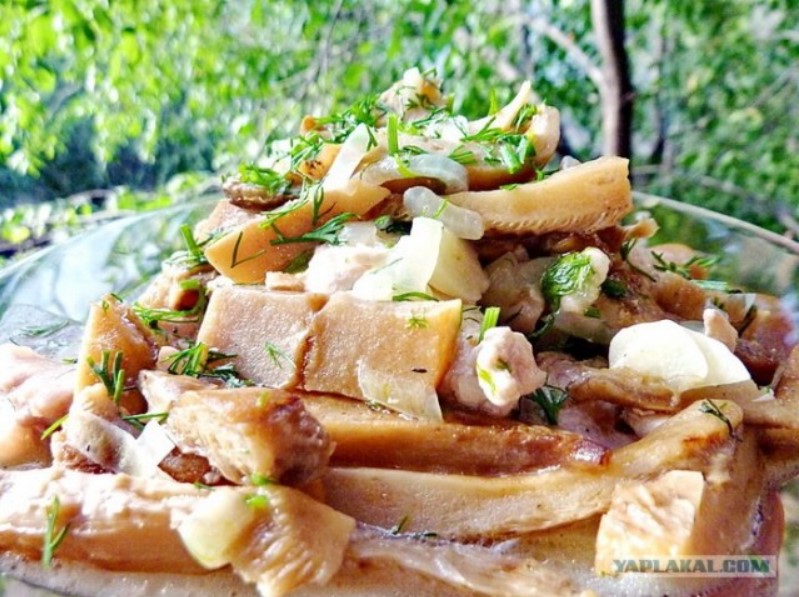
That's it, basically. Our dish is ready!You can eat it with a side dish, or just like that... Without a side dish, the mushrooms are more filling, soft and chewy, and full of flavor.
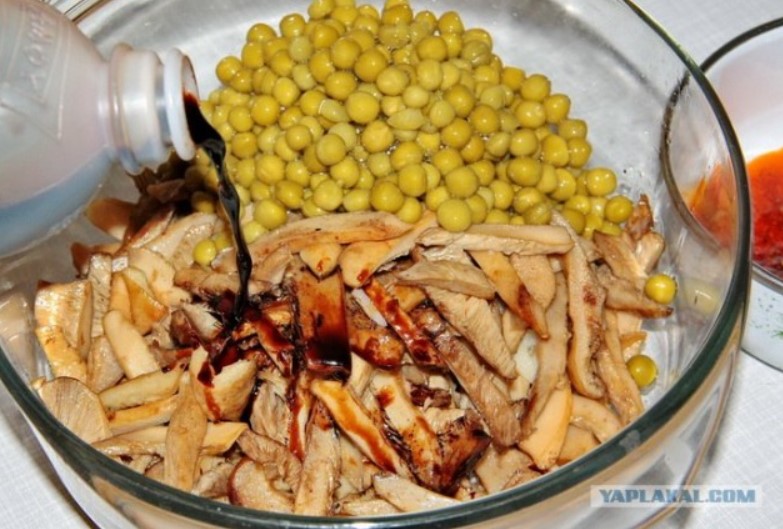
You can also experiment with mushrooms...Actually, the idea to make a mushroom dish with an Asian twist came from a bottle of soy sauce in the fridge. "Why not?" I said to myself as I dipped a boiled mushroom in soy sauce and crunched on a juicy milk cap...
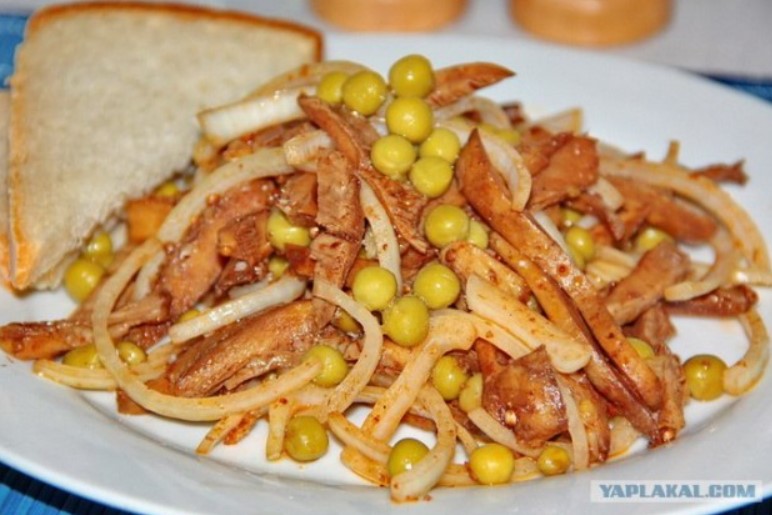
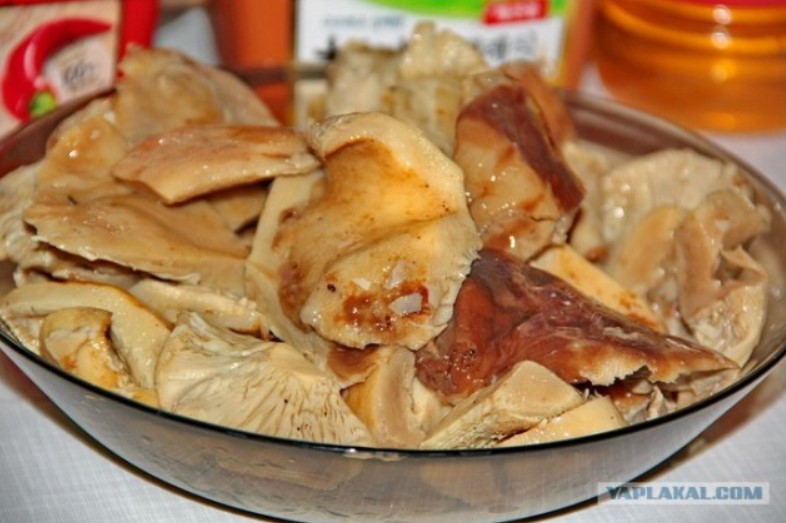
Having taken the previously boiled mushrooms out of the bins, the first thing I did was cut them “according to the standard” – into small cubes.
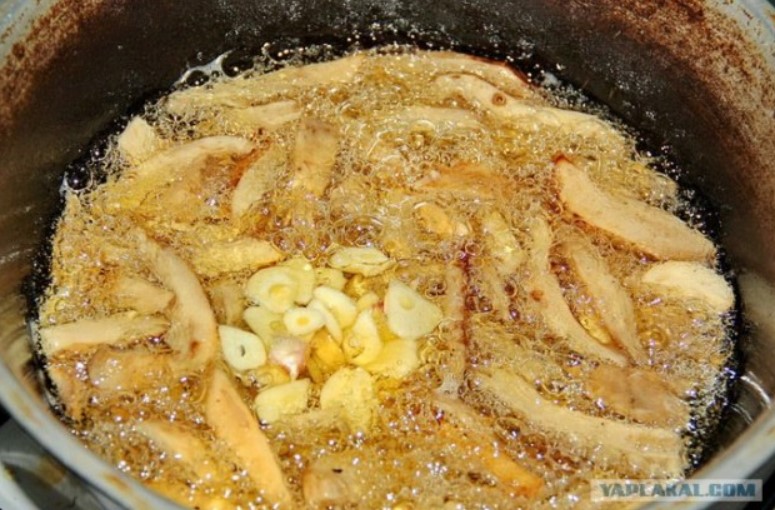
I've long since come to the conclusion that milk mushrooms and russula can be fried and eaten with pleasure. I also came to the conclusion that they should be fried in oil and that garlic is a must. So, we set a cauldron on the fire, heated up the oil, and mercilessly dumped our mushrooms in...
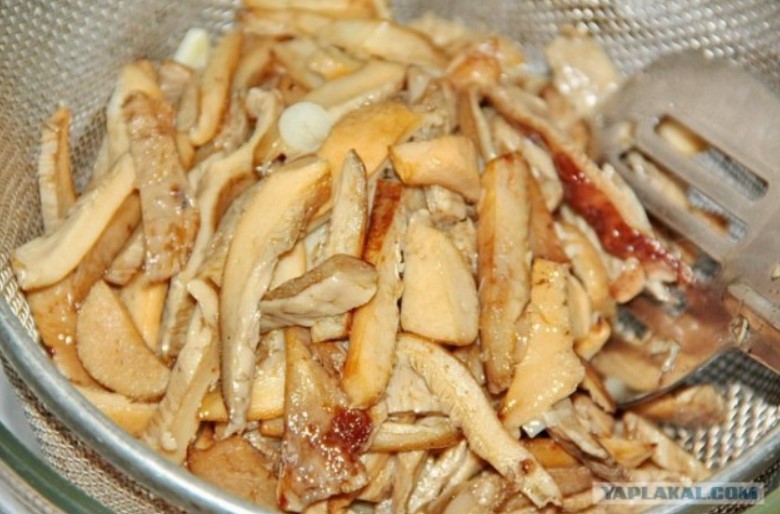
15 minutes of frying until my favorite "rubbery" state, and then unloading into a colander to drain off excess oil...
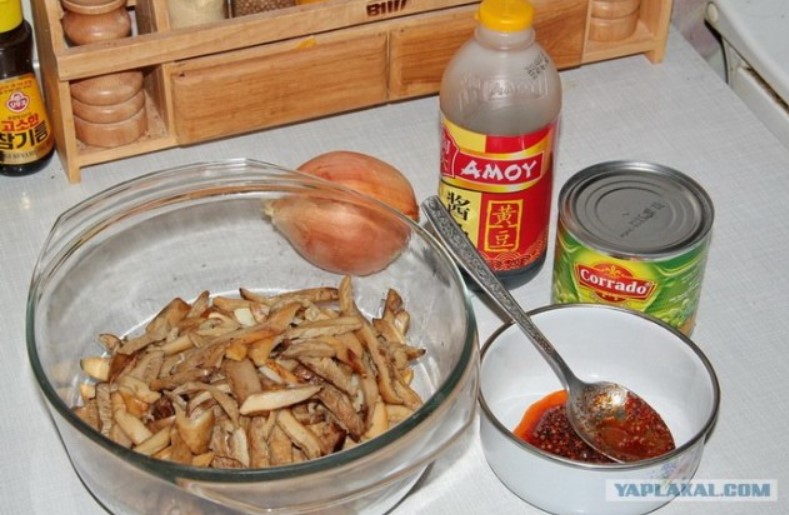
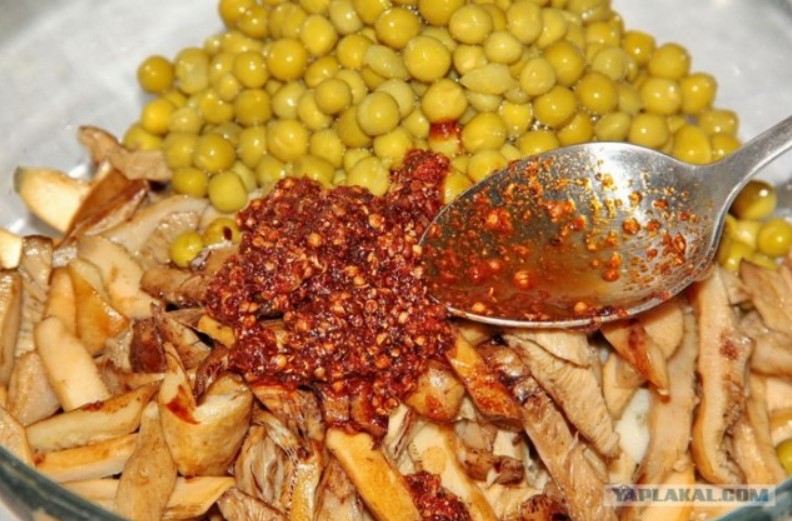
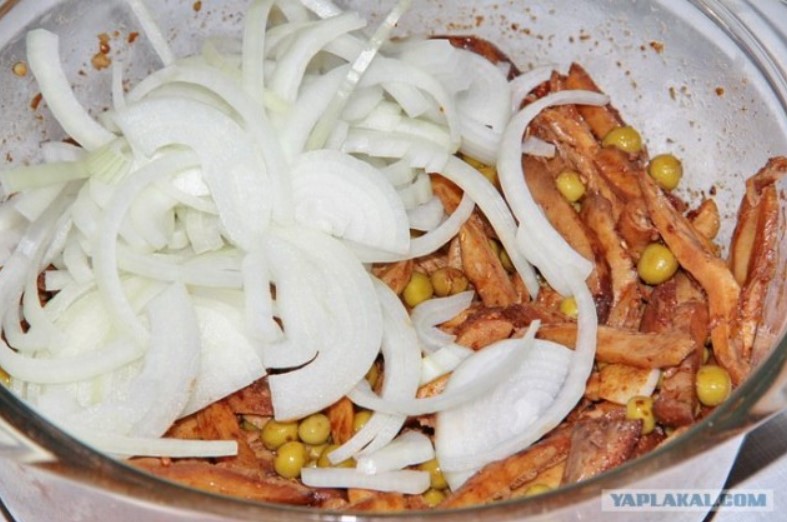
I recently noticed that green peas pair well with mushrooms. And no one would dispute the fresh onion flavor in mushrooms... And for an "Asian touch," I added a tablespoon of hot pepper paste and ground coriander, and, of course, soy sauce...
A couple of tablespoons of soy sauce...
Spicy paste…
Onion, in large rings...
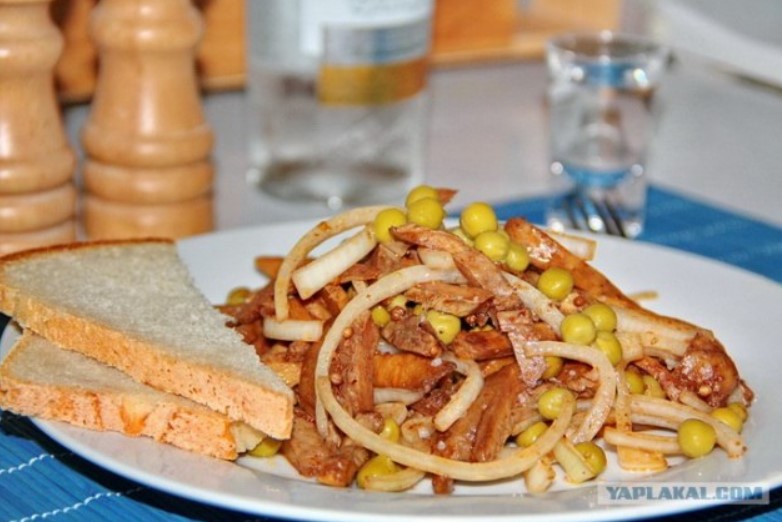
That's it, nothing more is needed...
Mix and serve quickly!
This is where I'll end the mushroom topic with milk mushrooms for now, but I'll be adding to it as much as possible... I hope this was helpful.
Bon appétit!
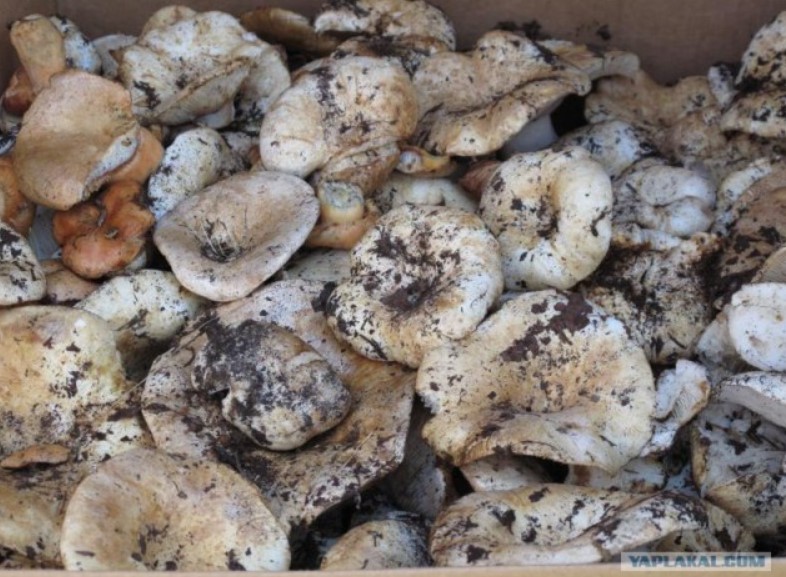
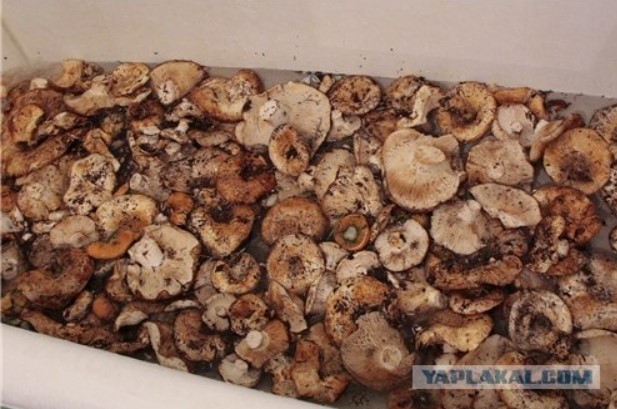
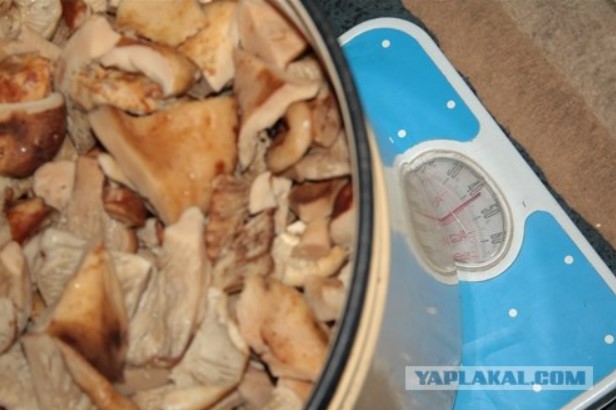
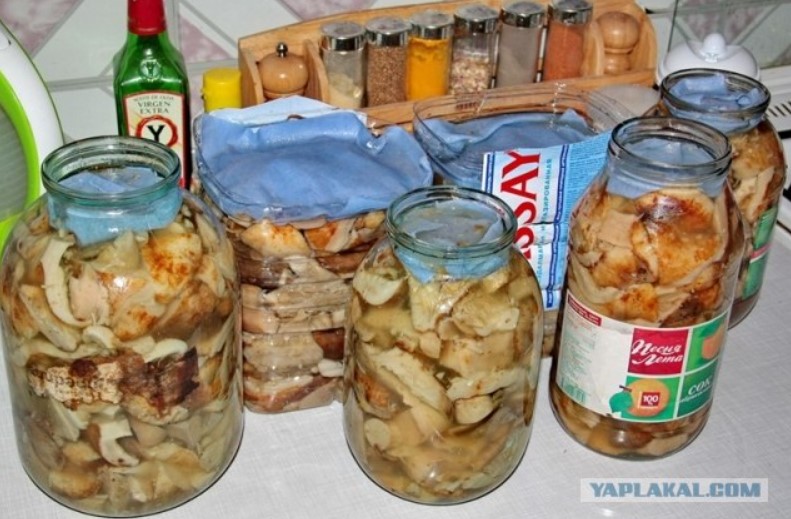
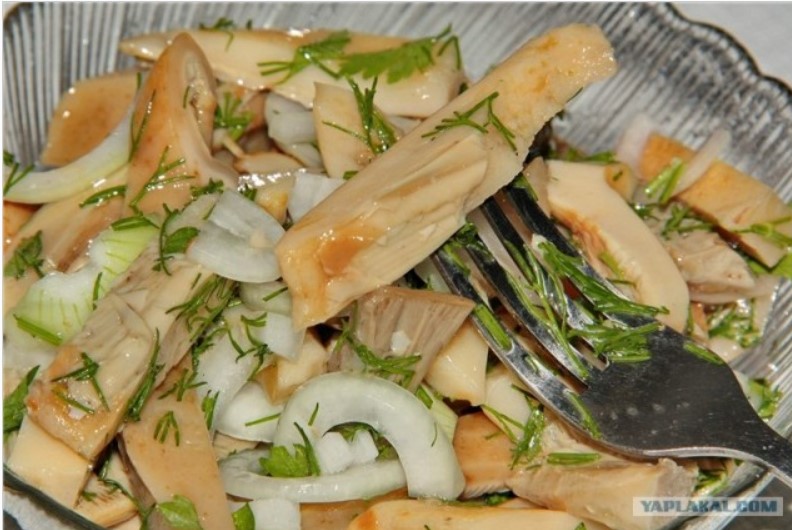
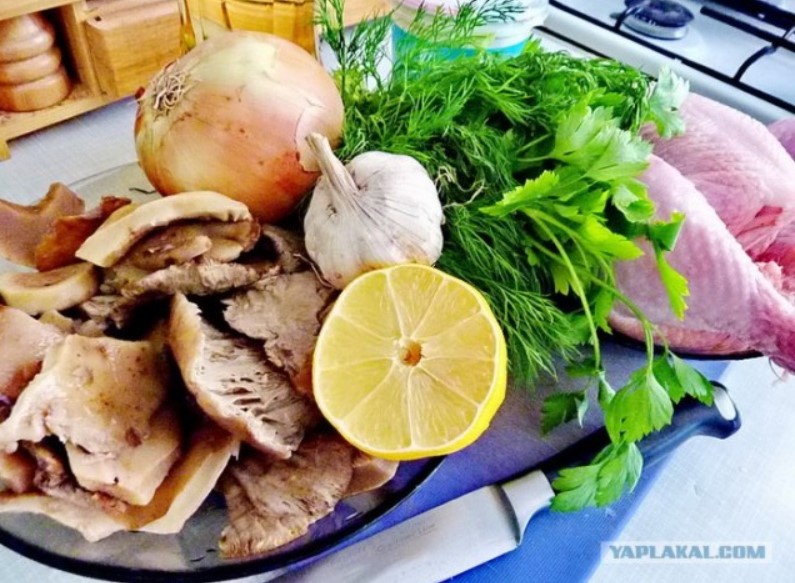
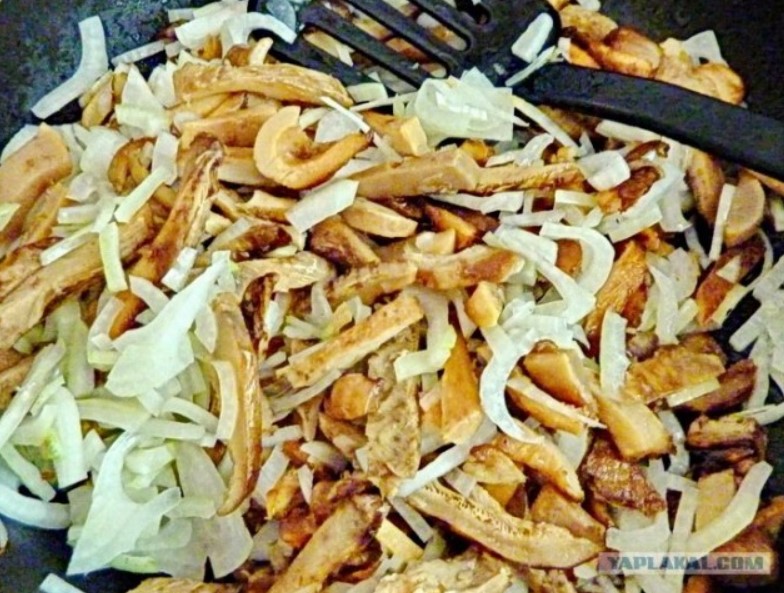
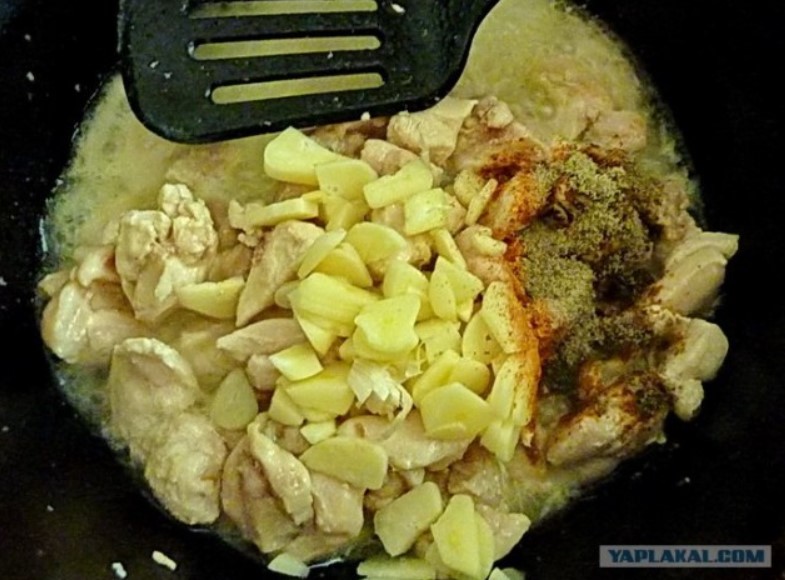
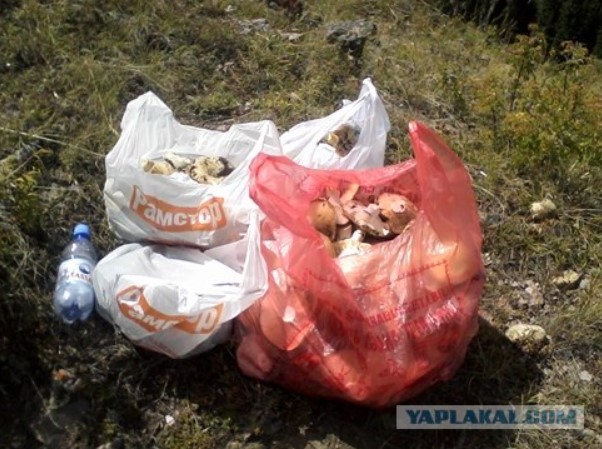
How to cook white milk mushrooms?
Abstract: Both on the previous mushroom forum and among personal acquaintances, there's constant confusion about how to handle the White Milk Cap. So, I decided to create a thread about it, especially since there are plenty of these mushrooms this season.First, a little useful trivia: the White Milk Cap is not related to the milk mushroom; it's not a milk cap; it's a Russula delica, or russula. Therefore, it should be handled just like any other russula. Or aspen mushrooms, birch boletes, or porcini mushrooms—just don't dry it.
Step-by-step recipe:
— First, you need to find them and distinguish them from the skripuns (violins). It's not easy to find: for example, north and east of Moscow, I've never encountered these mushrooms in commercial quantities in many years of exploration. But in the southern Moscow region, they're always available;
— then you need to clean it. It's not as difficult as it seems at first: all you need is a steel wool sponge and a knife to deal with a bucket of these homeless people crawling out from under the heating main to fight over rotten herring in 10-15 minutes. Yes, that's exactly what this mushroom looks like. A steel wool sponge is a must! "Heavy Metal Forever!" It scrapes off debris, removes excess yellowing, and allows you to scrape the soil out of the "heart." This is difficult to do with a regular sponge.
— No need to soak! No need for several days of "soaking" with water changes... That will only cause harm, never, under any circumstances, do that! Upon returning from the forest, simply throw it into a basin of water, change clothes, wash up, and get to cleaning.
— that's all there is to it. You should end up with a bowl of washed mushrooms, free of any dirt or debris (especially the "hearts"), and slightly yellowish in color. You can do whatever you like with them; they're versatile. Just don't rush into cutting them.==============
Milk mushroom soup
Cut immediately when adding to the pot. When boiled, milk mushrooms produce a beautiful, delicate yellow broth. It's about the same as porcini mushrooms. It's delicious and rich—unless, of course, you boil three mushrooms in a bucket of water. All that's left to do is add potatoes, carrots, noodles, onions, and seasonings—whatever you like, it's your choice. For me, the Perfect Mushroom Soup (regardless of the type of mushroom) is with pearl barley. It needs to be boiled separately, ahead of time, then rinsed, otherwise it will create an unwanted cloudiness; then added to the finished soup. The end result will be firm, crispy mushrooms in the soup and a fragrant liquid. Try it; you won't regret it!In the freezer
It couldn't be simpler and quicker! Boil for 5-10 minutes after boiling, adding salt, about half the amount you like. Then drain in a colander, rinse with cold tap water, and place in Zip-Lock bags. And then, in the freezer. Then, after defrosting, you can bet someone can tell these last year's mushrooms apart from the ones you just picked in the forest. This works not only with milk mushrooms but also with other mushrooms—for example, with the Purple Rowan, which you can expect to see very soon.Fried milk mushrooms
Cut them immediately when you add them to the pan. One of the best things about milk mushrooms is that they stay firm even after boiling. You can fry them without boiling them, but you have to somehow separate the mushrooms into those for frying, those for canning, and those for soup... No, for me, this approach is a no-no: I just boil them first (10 minutes after boiling is plenty), and then figure out what to do with them. And I recommend this to everyone, so you don't have to suffer until three in the morning.Cold salting (fermentation)
No need to boil, no need to cut! It's all very simple: layer the mushrooms, slices facing up, with a little salt and seasoning (of your choice), then another layer, and so on until you reach the top of the container you're going to pickle them in. Never add water! Find something to weigh them down and press firmly down. In two to three days (depending on the temperature; the higher the temperature, the faster), the mushrooms will release juice and noticeable bubbles. Once the bubbling stops, consider them ready. They can be transferred to individual jars. It's best to add a teaspoon of vegetable oil after transferring to prevent mold. Sterile jars and airtight lids are not necessary.Classic marinating
You need to cut them and simmer them in a minimal amount of water. Discard the first infusion (or use it for soup). From there, everything is standard, with an airtight lid. You'll end up with crispy mushrooms that are slightly better than even Marsh Russula. But where can you find such a quantity of firm, sealed Russula? If you know where, please let me know. I'd be grateful.Marinated in tomato
A very interesting method, suitable for all mushrooms, including autumn honey mushrooms, which are about to start blooming. A rich marinade is prepared using tomato paste. It should be quite thick, the consistency of thin sour cream or kefir. The second, final boiling is done in this marinade. Add the seasonings immediately to the saucepan. In short, everything is standard for marinating, except for the change of medium. Give it a try; it's worth it!Dried milk mushrooms
Don't even try! I tried it once, and it turned out crap. I won't go into detail—in short, it all went in the trash.Try it, experiment! Mushrooms are perfect for that.