Carnation is a genus of beautiful flowering plants in the Caryophyllaceae family. This beautiful herbaceous perennial flower is both a wildflower and a garden plant.
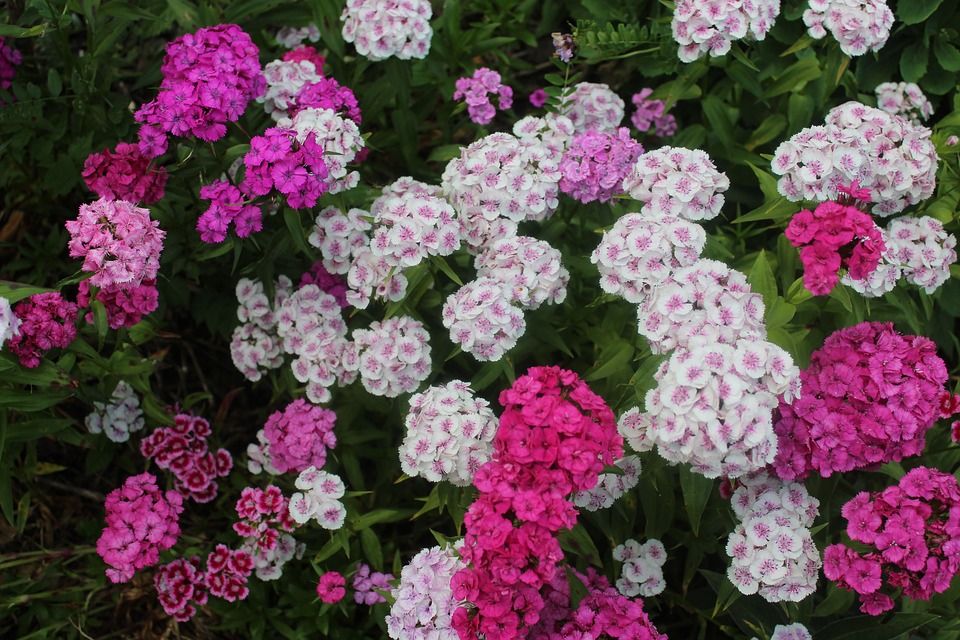
The name comes from two Greek words meaning deity and flower. In ancient Greek, it translates as "Divine Flower."
Content
Characteristics of carnations
The structure of roots directly depends on the plant species. They are divided into three taproot types:
- deep germination;
- ramified;
- fibrous.
This flower has the ability to develop both vegetative and flowering shoots simultaneously, with distinctive nodular thickenings visible on both. The leaves located on the stem can be of several types: linear, linear-lanceolate, and awl-shaped.
In older specimens of carnation, the so-called lignification of the lower parts of the stem is visible, which makes it look like a bush.
The stem bears a single flower consisting of five petals. The petal blade is horizontal, serrated, or with a fringed outer edge. However, there are varieties that break these rules. For example, they have several flowers gathered in inflorescences. The color varies, from red to lavender. Some varieties can have unusual shades, such as orange, green, and purple.
Almost all varieties of carnations have a base covered with fine, small hairs. This serves as a natural defense against pests.
There are unusual carnations, such as double and semi-double. They differ significantly from ordinary carnations in appearance.
Types and varieties of carnations
There are many species of this plant, each of which is divided into varieties, which in turn are almost 100% unique, having only a few similarities between themselves.
Alpine
Belongs to the perennial family. Stems reach up to 25 cm in height. As they grow, they form bushy, feathery shrubs. It is most popular in the mountainous regions of Austria. It has long, narrow leaves that are green.
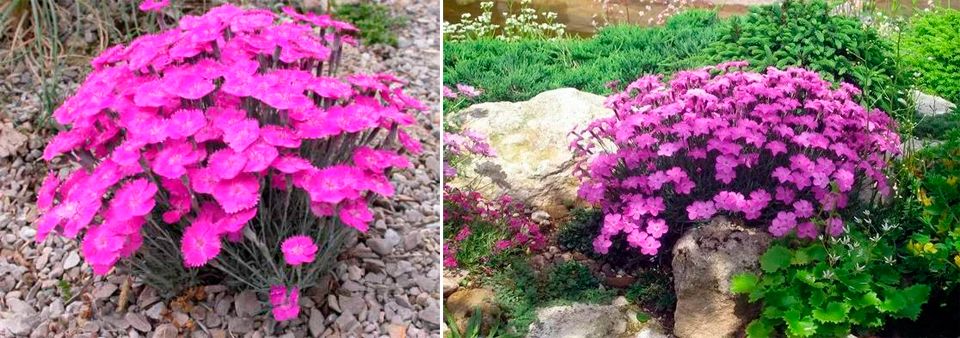
The flowers themselves are large and beautifully colored—lilac, purple, red, and crimson. The petals have jagged edges, and the surface has a corrugated texture. In the wild, flowering occurs in midsummer. Indoors, a second bloom can be achieved in late summer.
Armeria-like
The plant is herbaceous, with drooping stems that reach up to 50 cm in height. In the wild, this species can be found at forest edges. The leaves are elongated, green, and up to 10.6 cm long.
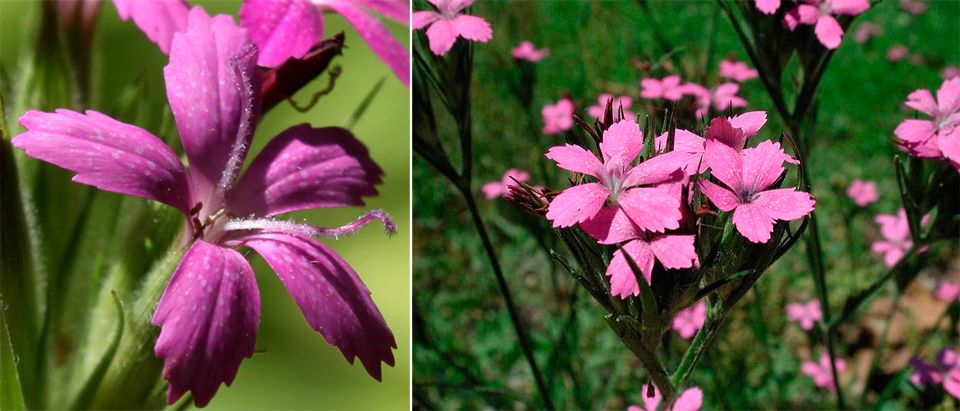
The flower consists of five pink petals, which are in turn covered with fine white dots. It occurs in two varieties: singly and in clusters. The most popular is used as an ornamental plant.
Capitate
A perennial, medium-sized plant, up to 50 cm in length. Most common in the European part of Russia, it is often found in Crimea.
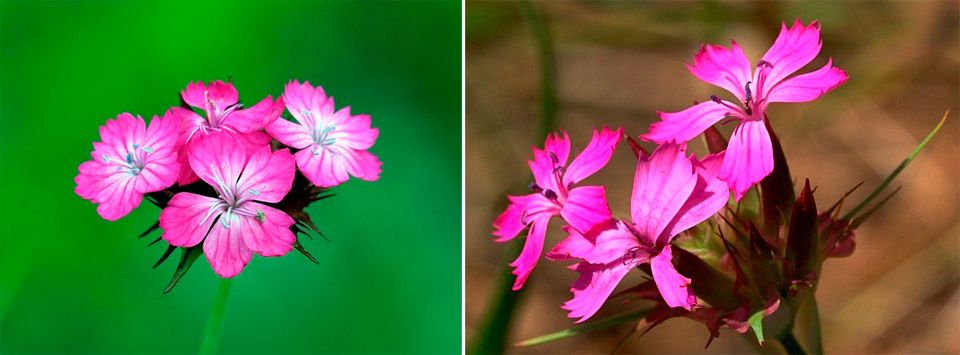
The stem is gray-green, with linear leaves. The flower is purple and delicately scented. This variety blooms in midsummer.
Grenadine
A popular garden carnation. It belongs to the perennial group. Profuse flowering occurs in the second year after planting.
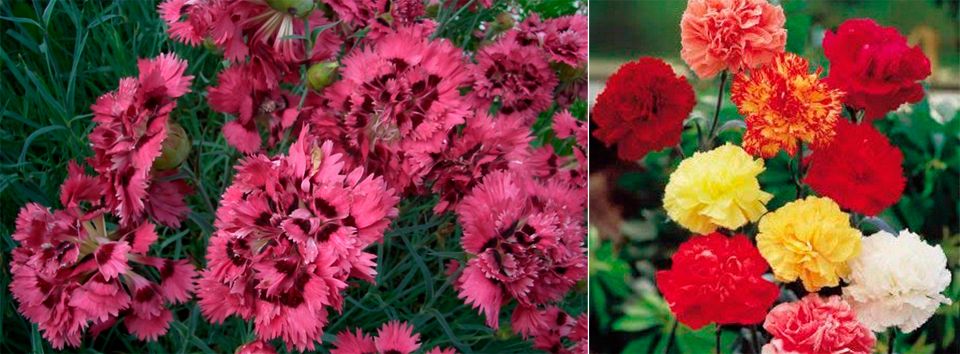
This species is further subdivided into two types based on flower shape: single and double. Both are no more than 6 cm in diameter. The leaves located on the stem are narrow and pinnate.
Prickly (acicular)
Flowers grow singly on a thin, tall stem, and can also gather in inflorescences of up to 4 pieces.
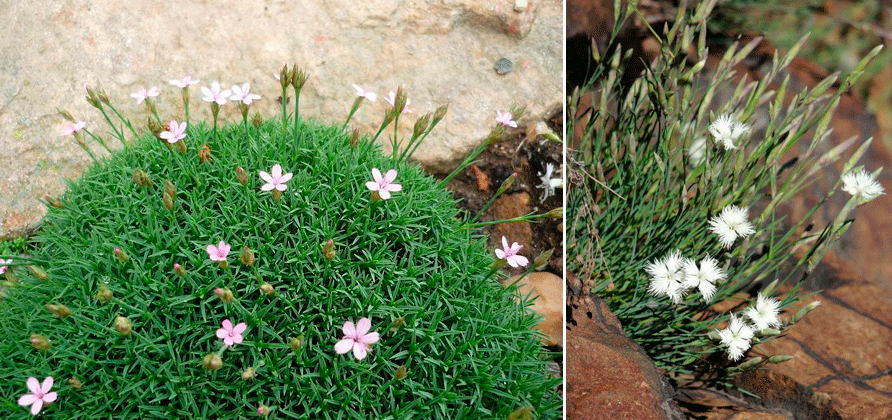
They have delicate white petals and get their name from the sharp, needle-like shape of their leaves.
Chinese
The shoot is knotty, with a minimum height of 15 cm and a maximum of 40 cm. The leaves are long and narrow, sometimes curled. The flowers also come in two types: double and single. They are purple in the center, turning white towards the tips of the petals, and starting from the center.
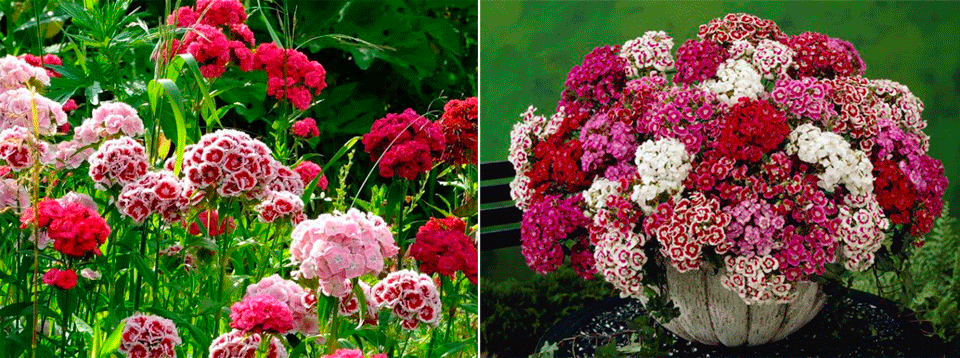
They have a very compact form. This characteristic makes them ideal for growing indoors or on balconies. A distinctive feature of this species is the almost complete absence of scent in the flowers. They are found singly or in clusters of four.
Knappa
A perennial shrub. A unique plant among carnations, with yellow flowers.
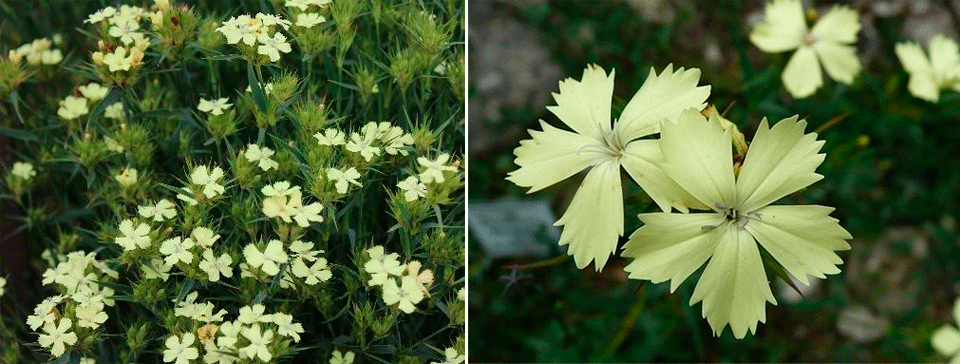
This is the most common type, but there are also those with white buds.
Sandy
It got its name from the habitat where it was first discovered. It prefers sandy soil. The shoots grow up to 40 cm long.
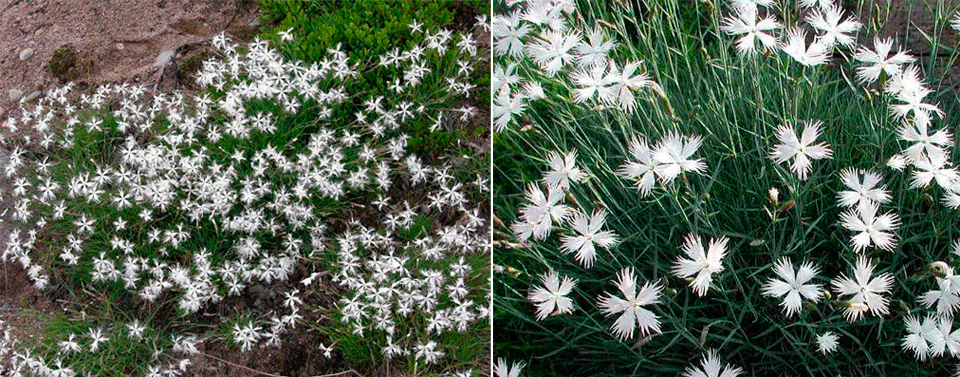
The flowers are a soft pink color, 3.5 cm in size. The edges of the buds are edged with an unusual fringe.
Lush
A fairly frost-hardy and undemanding flower, it prefers meadows and forest edges. It can also be found on seashores.
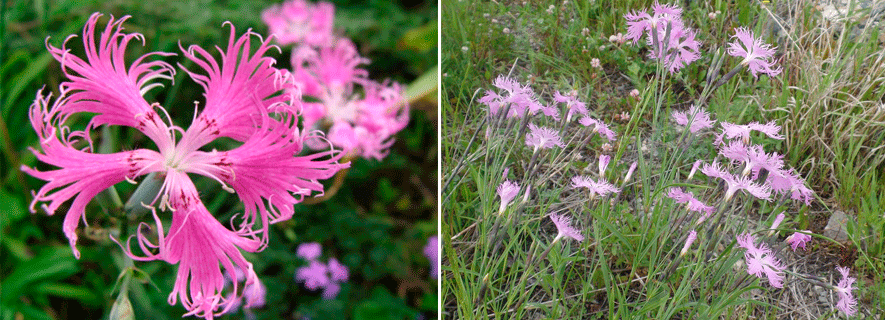
Individual specimens can easily reach 50 cm in height. As they grow, they form a loose bush with unusual, fragrant buds. They bloom twice a summer, once at the beginning and again at the end.
Garden
Best known as the Dutch variety, it has lush, fast-growing bushes. The flowers are large and stand on fairly long stalks.
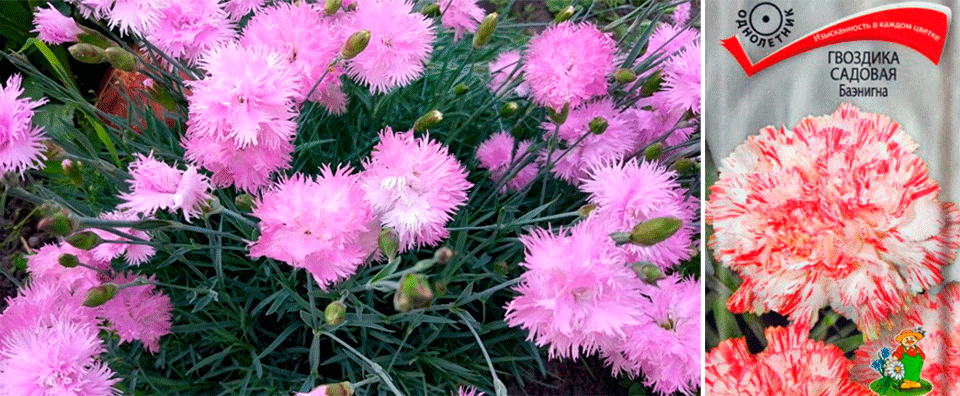
It occurs as a single plant or in clusters, most commonly the latter. A distinctive feature is that it can be grown year-round in pots indoors.
Grasshopper
The stem is very thin, of medium height - approximately 40 cm. The natural color of the flowers of this variety is pink, carmine.
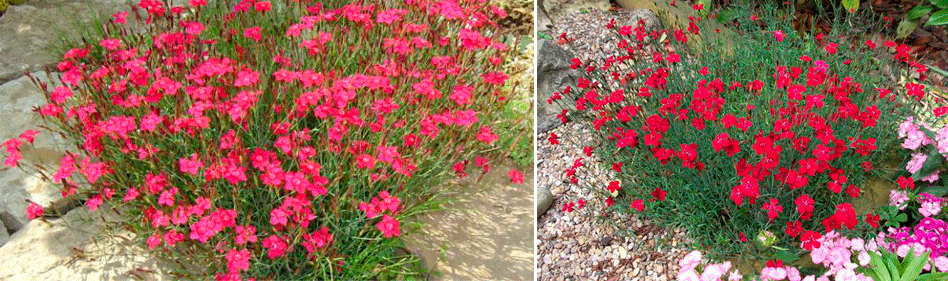
Sometimes they are found with white buds. Less commonly, they have patterns on the petals. These are considered very rare and are especially prized.
Turkish
The most widely cultivated flower species. It is a biennial. The shoots reach a height of 65 cm.
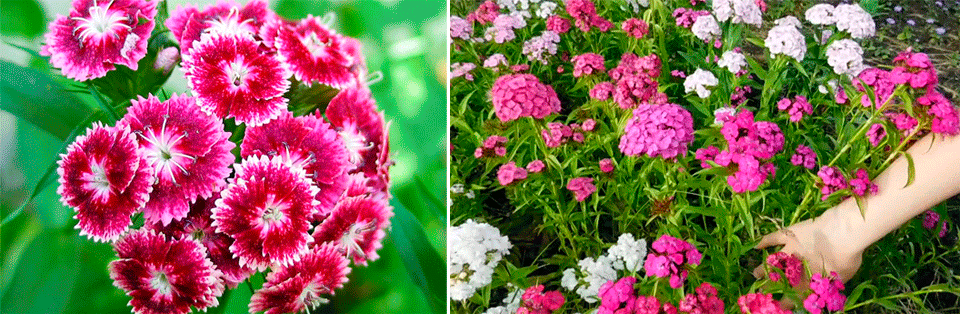
The corymbose inflorescences are a collection of beautiful flowers, which also have a wonderful aroma.
Shabo
There are also bush varieties of carnation, and this one is one of them. Its root system is much more developed than other varieties of this plant. The stem is knobby and can reach 60 cm in height. The flowers growing at the top are very large.
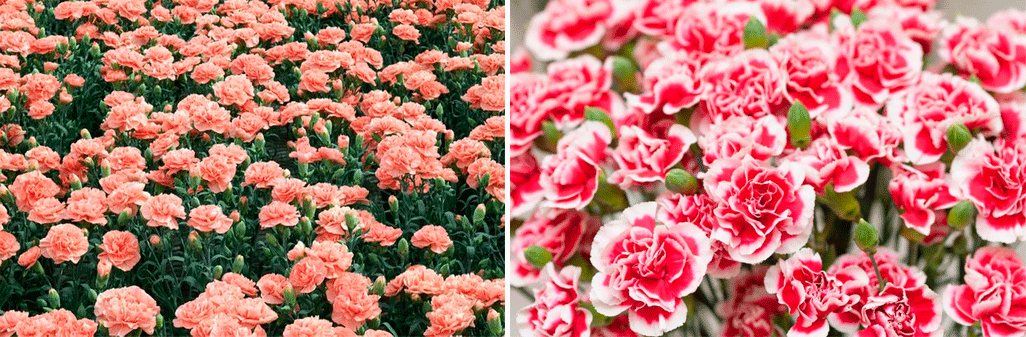
They can grow up to 7 cm in diameter and have a bright white color. Pink, yellow, and red specimens are also found.
Annual varieties are the most popular due to their low maintenance compared to perennials. Furthermore, these varieties require no winter shelter.
Features of caring for and growing carnations in open ground
Like all cultivated plants, carnations require regular weeding, watering, and fertilization. Deadheading is essential, leaving stems no longer than 10 cm. Varieties with thin, long stems should be tied to a support.
Care depends directly on the species being grown, its growing conditions, and the climate and geographical conditions. All varieties prefer sunny soil but also grow well in semi-dark conditions. However, this affects the size of the flower, the brightness and richness of the petal color; almost all species prefer slightly alkaline, moderately fertilized soil.
Soil moisture is also important, and it needs to be carefully monitored. Excessive moisture will negatively impact growth.
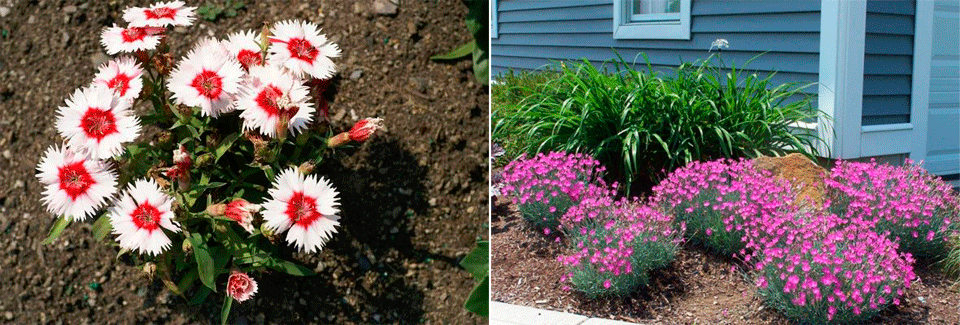
Species and varieties that are not immune to low temperatures and ground frosts need to be covered with cover in autumn. This is done as follows: Planks are placed around the plant, forming a tube with the plant inside. Next, sawdust, fallen leaves, and a makeshift blanket are placed inside to keep the plant warm during the winter. The structure is then covered with plastic film.
It responds well to fertilizing. Experienced gardeners recommend compost or manure as fertilizer.
After flowering, the stem should be cut. It's important to leave at least 15 cm between the ground and the cut. Immediately after this, fertilize, loosen, and water the surrounding soil. About a month after this, a new shoot will form, and re-flowering will begin.
Propagation and care of carnations at home
If all the nuances and features are observed, a carnation can easily live for 6 years, even at home.
Seed propagation is an excellent method for growing this plant indoors. It's the simplest and most common method. Furthermore, seedlings are completely unnecessary indoors, as the seeds can be planted directly in a flowerpot, where a beautiful, fragrant flower will grow.
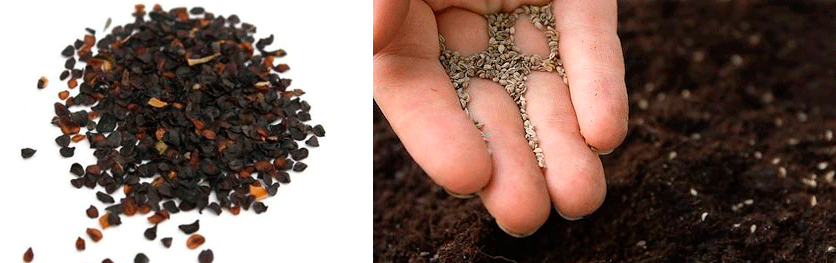
The best time to sow seeds is February-March, so that the first flowers appear closer to the beginning of summer. A special substrate is prepared for sowing, consisting of several components: turf, leaf mold, peat, and sand. All these components are mixed in a 2:1:1:1 ratio. To protect the plant from various diseases and pests, the prepared mixture is disinfected.
A hot solution of potassium permanganate is ideal for these purposes. Water the mixture with the solution beforehand. Place drainage material at the very bottom of the pot. This is because the plant absolutely does not tolerate stagnant soil moisture. The number of seeds to be planted depends on the type of container they will be placed in. If you plan to grow them in a pot, 2-3 seeds will be sufficient. If you plan to grow them in a container, you should reduce the density, ensuring at least 20 cm between the seeds.
The seeds are planted in the soil to a depth of approximately 0.3 mm. They are then watered, but only through a special spray nozzle. This is done to avoid burying the seeds in the soil and washing them away. To ensure growth, the container with the seeds is placed in a location where the temperature will not fall below or rise above 24°C. To achieve the desired temperature, cover the container.
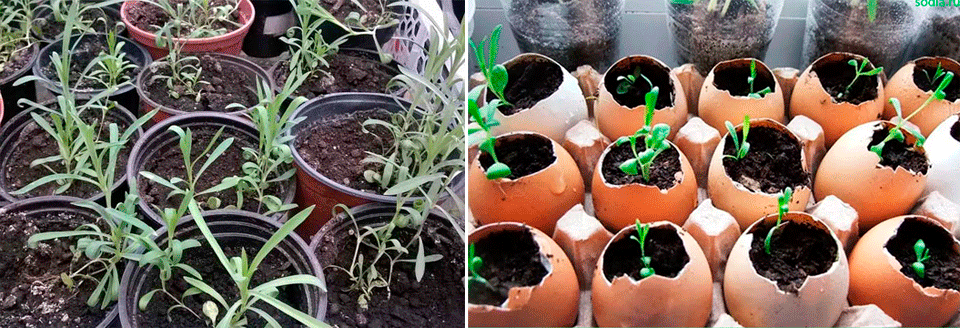
Caring for carnations grown indoors is much easier than caring for plants grown outdoors. The bare minimum is regular soil loosening, fertilizing, and pruning.
After the flowering period is over, the inflorescences are cut off along with the top of the stem. This will allow the carnation to bloom again in a short time, delighting its inhabitants with its graceful appearance.
Since this plant dislikes overwatering and dampness, it's not recommended to place pots in rooms with high humidity, such as a bathroom. Place the pot in a well-ventilated area. Water only when the top layer of soil, about 10 mm deep, has dried out. Avoid misting the plant, as this will negatively impact its growth.
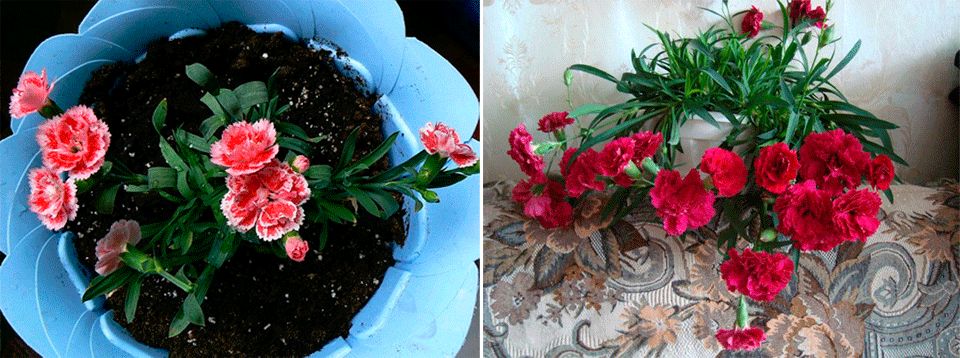
Fertilizing indoor carnations is also possible, as this will help the plant grow faster and stronger. The first feeding, via watering, should be done once the stem has reached a height of at least 9 cm. The second feeding should be done when buds form.
Carnations are primarily propagated by cuttings, which involves separating the flower from the bush. This method is universal and can be used to propagate almost all perennial carnations. Sand or perlite is required for planting. The planting process itself occurs in late spring or early summer. This is because the shoots become most visible during this period. After this time, they can no longer be confused with flower stalks.
The most suitable plant part for this method is the stems, which should be at least 5 cm long. The number of leaves on the stem is strictly observed—at least 3. Afterwards, the excess leaves are removed from the two lower nodes. Then, an incision is made just below the shoot. The depth of the incision is very important; it should be exactly 1/3 of the stem's diameter. Next, the cuttings are placed in the soil prepared for planting. This entire structure is uncovered in the summer.
However, the Turkish carnation, for example, can be easily propagated by dividing the bush. This should be done in early spring; if done correctly, flowering will begin in the summer.
Varieties with long shoots are recommended to be propagated by layering. This is done as follows: first, make a cut from the bottom of the stem upward, to a depth of approximately 1/3 of the stem. Then, pinch the cut portion to the soil, sprinkle sand on top, and water. When new growth appears, the plant should be separated and replanted.
Propagation by seeds is only relevant for annual varieties of this plant.
Carnations are best planted towards the end of spring. Pots filled with sand are ideal containers. The plant thrives in temperatures no higher than 20°C. Transplanting should be done only after four pairs of leaves have emerged.
Diseases and pests of carnations
Carnations suffer from diseases and pests. No flower has perfect immunity due to the constant development of fungi and viruses. Unfortunately, there's no universal cure for these ailments either. Even indoor carnations have a significant risk of developing diseases. One such disease is fungal root rot. To prevent this, preventative measures are essential. This includes regular and measured watering and proper drainage of the plant container.
If you can't prevent the disease, it's impossible to cure it. The only option is to uproot and destroy it. Then, the soil where the diseased plant was should be treated with a fungicide solution for gardening. This can be purchased at any specialty store.
Much less common than in open ground, but still present, is heterosporiosis. This is also a fungus, and also a mite-borne infection of the plant. Prevention and treatment are the same. The soil after uprooting should also be treated with a special solution.
Top.tomathouse.com recommends: Cloves - medicinal properties, application
Cloves have long been used in folk medicine. Their list of beneficial properties is extensive:
- antiseptic;
- antispasmodic property;
- antiviral property;
- diuretic effect;
- disinfection.
However, there are contraindications for the use of this plant. It should not be used on children under 2 years of age. It is strongly discouraged for those with high blood pressure, gastritis, or pregnant women. Avoid using it if you suffer from fatigue or tension.