Chamelacium (apple-flowered fir) is a plant in the Myrtaceae family. It is native to the arid regions of Australia.
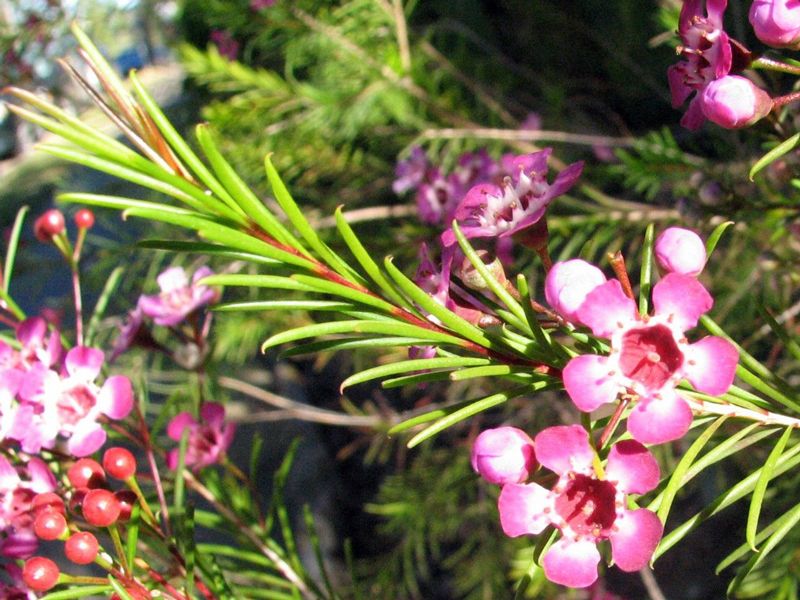
Description of Chamelacium
An evergreen shrub with a branched root system. It reaches a height of 30 cm to 3 m. Young branches are covered with gray-green skin, which transforms into light brown bark as the plant grows.
The needle-shaped leaves have a waxy coating that prevents moisture loss. They are 2.5-4 cm long and bright green in color.
Types and varieties of Chamelacium
The following varieties of Chamelacium can be grown indoors:
| Variety | Description | Flowers |
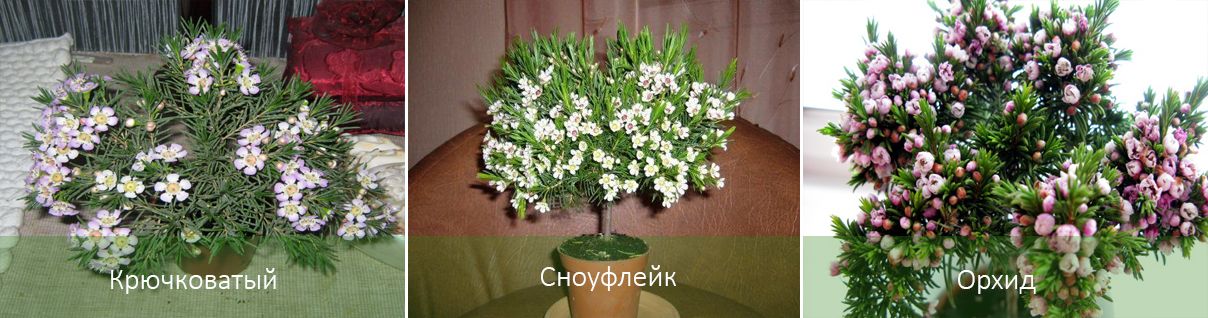
| Hooked myrtle (wax myrtle) | In the wild it reaches 2.5 m, indoors – up to 1.5 m. The leaves densely cover the trunk and grow up to 2.5-4 cm. | 1-2 cm in diameter, they form clusters or are borne singly. They are double and semi-double, yellow, white, or red. |
| Snowflake | Reaches 40 cm in height. Used for creating bouquets. | Pink and white, small. |
| Orchid | A low shrub with dense foliage. | Lilac and pink, beetroot center. |
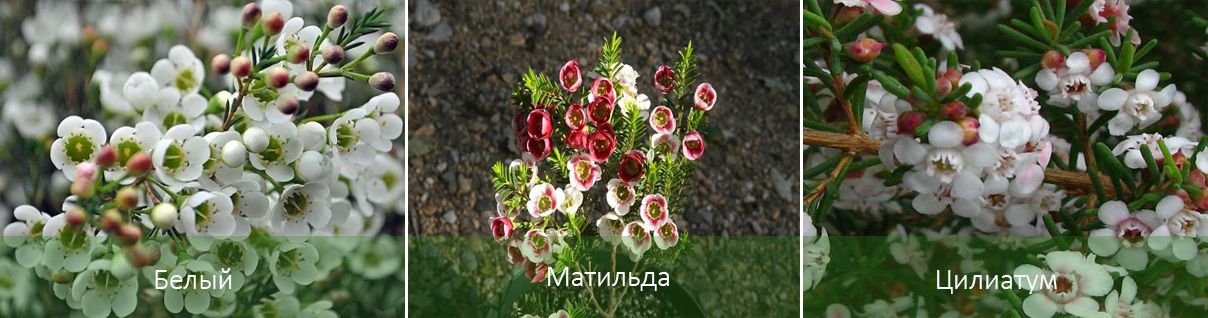
| White (blondie) | Grows up to 50 cm, leaves are elongated, bright green. | They are bell-shaped and white or light pink in color. |
| Matilda | A compact shrubby plant with a dense crown. | Small, white with a scarlet edge, they turn purple or garnet toward the end of flowering. |
| Ciliatum | A compact shrub used to create bonsai. | Large, light pink. |
Caring for Chamelacium at home
Home care for Chamelacium should be based on the season of the year:
| Factor | Spring/summer | Autumn/Winter |
| Location/lighting | It tolerates direct sunlight well. It can be placed on open loggias, in gardens, or on a south-facing window. | They are provided with additional lighting using phytolamps; daylight hours are 12-14 hours. |
| Temperature | +20…+25 °С. Temperature may rise to +30 °С. | +8…+15 °С. Minimum permissible temperature +5 °С. |
| Humidity | 50-65%. After each watering, drain the water from the tray. | 55-60%. |
| Watering | Regular and generous. Once every 2-3 days. Use soft water. | Once a week. |
| Top dressing | Once a month. Apply complex mineral fertilizers. | They are suspending. |
| Trimming | After flowering, the branches are shortened by 1/3 of their length. | Not carried out. |
Features of replanting and soil selection
Repotting Chamelacium is done only when necessary, when the roots no longer fit in the pot (on average, once every three years). The optimal time is spring.
Since the plant's roots are fragile, transplanting the plant into a new container is done by transshipment, without disturbing the soil ball. A drainage layer of pebbles and brick chips should be placed at the bottom of the container.
Before repotting, gardeners recommend creating a greenhouse effect for the plant by covering it and its pot with plastic wrap and keeping it on a cool, well-lit windowsill. Afterward, keep the Chamelacium in this environment for a few more days.
The soil should be slightly acidic, loose, and permeable to prevent waterlogging in the pot. When making your own soil, use the following components in equal proportions:
- leaf and sod soil;
- peat;
- coarse river sand;
- humus.
To retain moisture in the substrate, you can also add sphagnum.
Reproduction of Chamelacium
Chamelacium seeds have a low germination rate, so propagation by cuttings is preferred. To do this, apical shoots 5-7 cm long are cut between early spring and mid-autumn, then rooted in sterile soil, covered with plastic film, and placed in a greenhouse.
Rooting occurs within 2-3 weeks to 2 months. During this period, the plant is maintained at a temperature of 22 to 25°C. Once the seedlings have strengthened and grown, they are transplanted into separate containers.
Diseases and pests of Chamelacium
The plant is immune to all pests, as it produces essential oils that act as a natural insecticide. The only problem may be rot, which occurs due to excessive moisture. In this case, spray the flower with any strong fungicide.