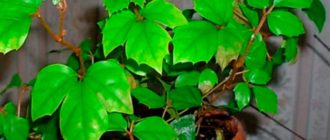
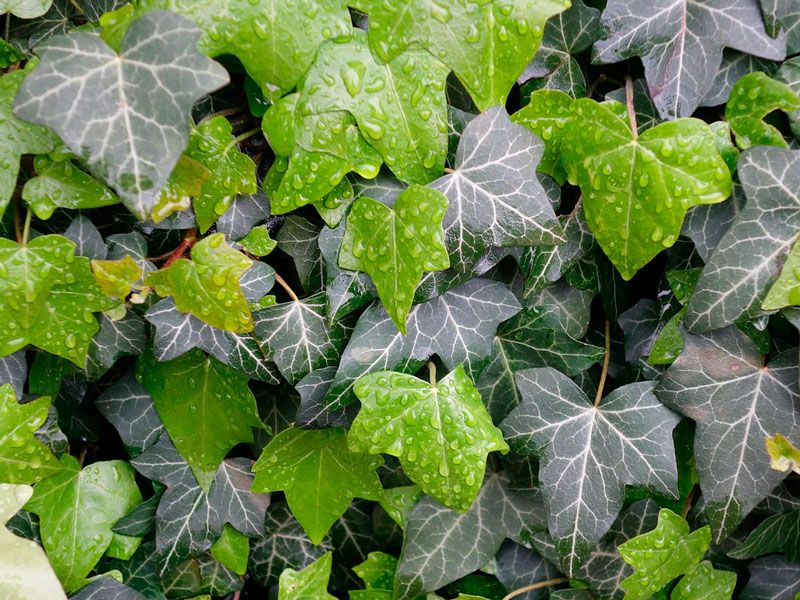
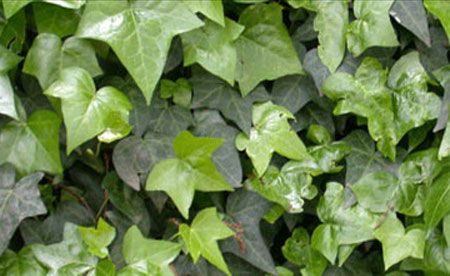
Indoor ivy is a trailing plant belonging to the Araliaceae family. It is an evergreen vine native to southwest Africa and the subtropics of Eurasia. You can see the appearance of this plant in the photo.
Description
It's a type of creeping shrub that clings to walls and trees with its adventitious roots. Its leaves have thick skin and come in two types:
- on branches without flowers there are angular-lobed foliage, dark green in color;
- On flowering branches the leaves are long and whole, light green in color.
Hedera flowers are quite small, clustered at the tops of the branches. The bract is small or completely absent, and the corolla consists of five petals. The fruits are small berries, black or yellowish in color. The seed has an elongated embryo.
Types for home
There are about fifteen species of ivy, but only the following can be grown indoors:
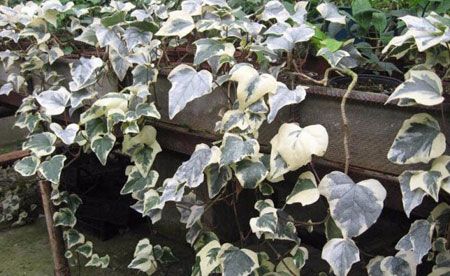
- Canary Island. Some sources call it Algerian. It is common in North Africa and Portugal. It has sturdy stems with rich green leaves with yellow spots. The plant spreads and can cover the ground in a dense carpet. The most common variety is Gloire de Morengo.
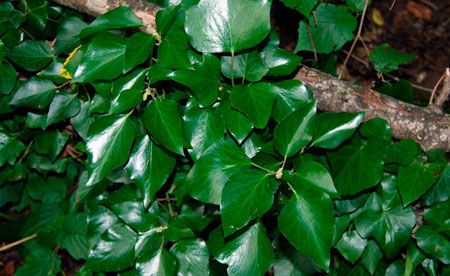
- Colchicum. Native to Iran and the Transcaucasus. An evergreen creeping vine with aerial roots reaching heights of up to thirty meters. The leaves are large, up to 25 centimeters long, entire, and have a nutmeg aroma. The flowers are small, forming umbel-shaped inflorescences.
- Pastukhov's ivy. Widely distributed throughout Dagestan. Its aerial roots are light brown and capable of clinging to any support. The leaves are entire and thin, reaching 10 centimeters in length and 6 centimeters in width. The upper leaflet is bright green, while the underside is paler. The inflorescences contain 5 to 20 flowers.
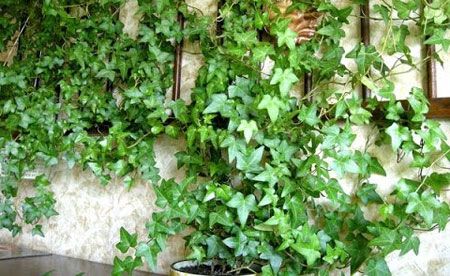
- Common ivy. The following species are distinguished: Hedera helix mix, white wonder, green ripple, and graham. It is native to southern and central Europe. It has glabrous and leathery leaves consisting of 3-5-lobed, dark green leaflets with light veins. The flowers are small, of both sexes, and are gathered in pale green, umbel-shaped inflorescences.
Home care
Gardeners consider ivy to be a fairly unpretentious flower, but when caring for it at home, you have to face certain difficulties.
| Watering | Top dressing | Temperature and lighting | Trimming |
| Maintain constant soil moisture, but avoid stagnant water. Watering frequency is directly related to the temperature. In summer, the plant requires watering two to three times a week. In winter, water once a week. | The plant requires frequent fertilizing, with intervals of 15-20 days between applications. Complex fertilizers containing high amounts of nitrogen and potassium are considered ideal. During the cold season, fertilizing should be limited, but not stopped. | Grows best at temperatures of 18-20 degrees Celsius. In winter, temperatures can be reduced to 12 degrees Celsius. Prefers moderate, indirect light. | During periods of intensive growth, shoots are pruned to encourage bushiness. In spring, a thorough pruning is performed, with all long stems cut back by 1/3. The pruned branches can be used as cuttings. |
Ivy is very hardy, so even without proper care it can continue to reproduce, but in this case, its appearance will be weakened. Using the plant as a decorative element is only possible with proper care.
Pot, soil, replanting
For germination, it's best to choose tall pots with support for the plant to climb. The soil should be light and loose. An ideal solution is a 1:1 mixture of turf, sand, and leaf mold. Vermiculite can be used instead of sand, if desired.
Repotting into a separate pot is done once the plant begins to actively grow. This is done every 2-3 years, increasing the pot size by a few centimeters each time.
Once the plant reaches maturity, the frequency of repotting can be reduced. The top layer of soil should be replaced annually.
Reproduction
There are several ways to propagate ivy:
- cuttings;
- shoots;
- layering.
Most often, cuttings are used for propagation; they are planted in pots with a diameter of at least 7 centimeters.
For propagation using the second method, take a shoot with 8-10 leaves and place it in sand with the leaves exposed. On the 10th day, underground roots will form from the aerial rootlets. The shoot is removed from the sand and cut so that it has one leaf and one root. The ivy is then planted in soil.
When propagating by layering, long shoots are buried, with cuts made at the bottom. They are secured in the soil with U-shaped staples. After the planted vines have rooted, they are carefully separated and replanted.
Mistakes when growing
Improper plant care can cause a number of unpleasant consequences.
| Signs | Cause |
| The tips of the leaves dry out or turn black. | Excessively high temperature, lack of moisture, dry air. |
| The leaves are turning yellow. | Excessive moisture, excessive amount of fertilizers. |
| The pattern typical of variegated varieties of bindweed disappears. | Poor lighting. |
If you notice that the lower leaves are falling off, this is normal and not a sign of poor plant care.
Diseases, pests
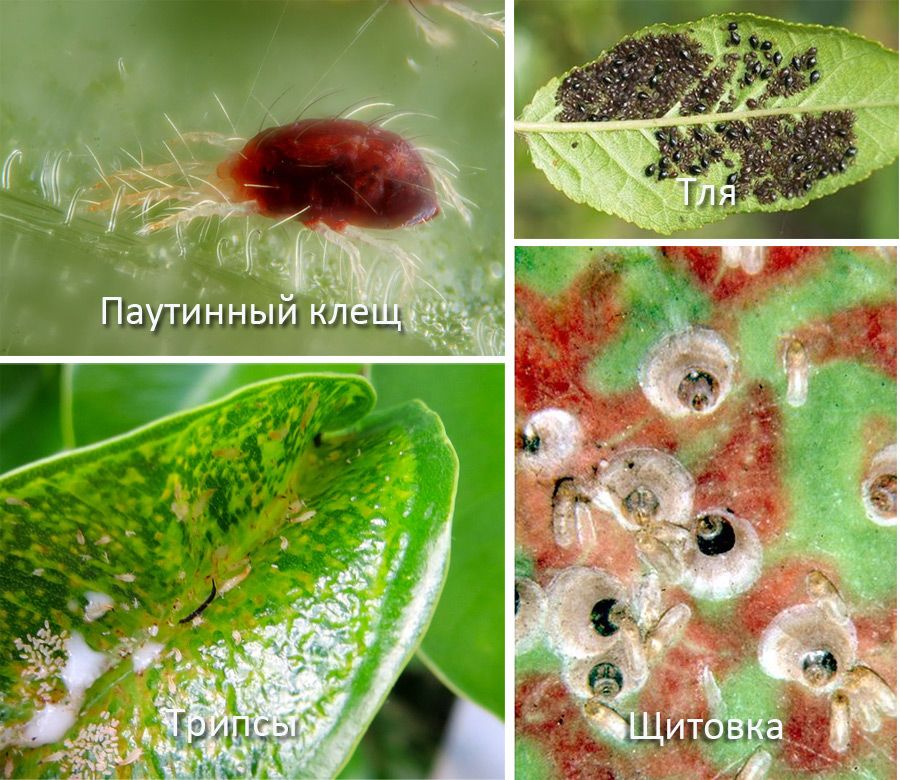
Although some varieties of ivy are poisonous, the plant still suffers from the negative effects of diseases and pests.
| Diseases | Pests |
| Indoor ivy is quite resistant to various diseases, with the exception of root rot, which occurs with excessive watering. |
|
Signs and superstitions, benefits and harms
There's a superstition that ivy drives other flowers out of the house and creates an atmosphere unfavorable for men. But in reality, this belief is unfounded, and the plant, on the contrary, brings many benefits to the home, purifying the air and enriching it with oxygen.
Helix is especially useful in homes where pets live, as the plant destroys fecal bacteria.
The flower's medicinal properties are also widely known. Ivy is used to combat fungi and bacteria and improves mucus removal, which is why the plant is added to many cough medicines.
Ivy leaves are used to create soothing gels, popular for treating skin conditions and in cosmetology. A decoction made from the plant's roots is used to make compresses for ulcers, boils, and burns.