Ipheion is a perennial plant in the bulbous subfamily with vibrant, star-shaped flowers. It grows in the subtropics and tropics of America. It serves as a decorative addition to gardens, rockeries, flowerbeds, and is grown indoors.
Description of Ipheion
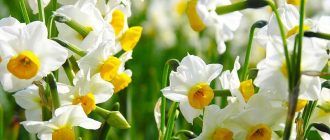
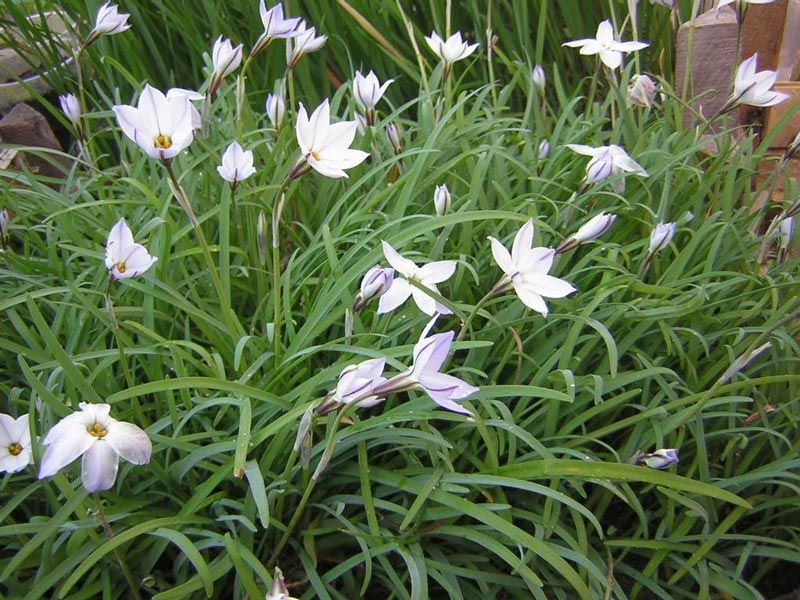
Ipheion is distinguished by its bulbous, oval tuber covered in a membranous sheath. It produces flat, narrow, glossy, linear leaves. Its flowers are large, 3 cm in diameter, arranged symmetrically, with a white tube and six petals in shades of blue, purple, and white, with brown stripes underneath. It blooms in spring and lasts for two months. The plant then enters a dormant period, growing to 15-20 cm.
Types and varieties of Ipheion
- Single-flowered – distinguished by emerald leaves, flowers of different colors – purple, pink, blue, dark blue.
- Recurviflorium is a low-growing plant with large petals reminiscent of a snowdrop.
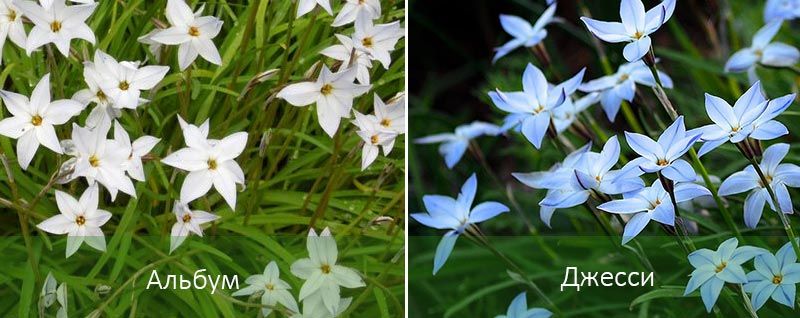
Several varieties have been developed from the single-flowered species:
| Varieties | Flowers |
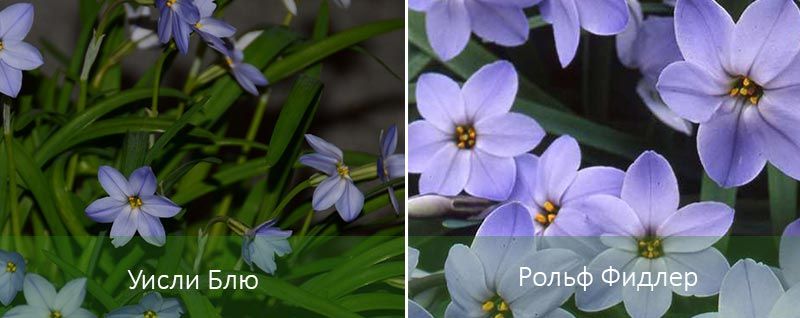
| Wesley Blue | Purple, blue. |
| Alberto Castillo | Large, white. |
| Rolf Fiedler | Bright, blue. |
| Jessie | Lilac. |
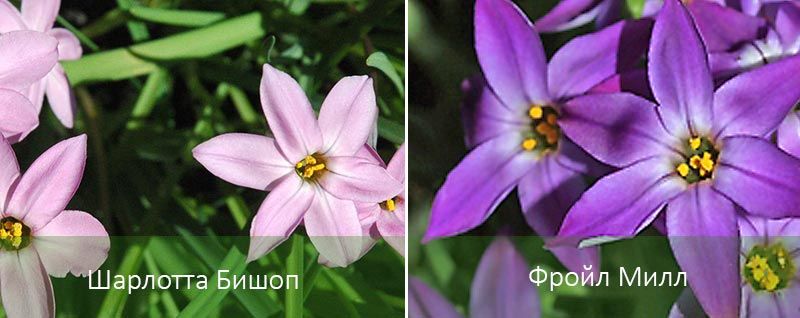
| Froil Mill | Rich blue color with a white eye. |
| Charlotte Bishop | Large, soft pink. |
| Album | White, purple at the edges. |
| White Star | Snow-white. |
Planting and replanting ipheion, choosing soil
For planting, buy bulbs from the store. The best time is late summer. Plant them immediately, planting them 3 cm deep. Planting several bulbs in one container will result in a fuller bush.
Use light soil with peat, sawdust, and shredded bark. Expanded clay or pebbles are added to the bottom of the container for drainage. The bulbs need about a month to root.
Repot the plant every two or three years, when the pot becomes too small for it. This is done before growth begins or after the leaves have dropped.
How to grow Ipheion at home
Keeping an Ipheion indoors is easy. Care consists of proper watering and fertilizing.
| Parameters | Growth period | State of rest |
| Lighting | Intense, diffused, without shading. | In a dark place. |
| Temperature | +20…25 °C. | +10…15 °C. |
| Watering | Frequent, not very abundant, after the soil has completely dried out with warm water. | Minimum, so that the plant does not dry out. |
| Humidity | Spray at temperatures above +22 °C with soft water. | Not required. |
| Top dressing | Fertilize twice a month with mixtures for bulbous plants only before flowering. | Not needed. |
| Trimming | Not required. | Cut off after drying. |
Growing Ipheion in open ground, wintering
Planting and care are similar to those for indoor cultivation. A warm climate is ideal. Choose a sunny, wind-free site with light, well-drained soil. Plant the bulbs 5-6 cm deep, up to 10 cm apart. Water regularly and apply mineral fertilizer until the plant blooms.
Ipheion tolerates low temperatures and can survive winters at -10°C. In cold regions, the plant is covered in late autumn with straw, sawdust, humus, and spruce branches. The top is covered with non-woven fabric.
Methods of propagation of Ipheion
The plant propagates by bulbils. These bulbils form from the mother plant and are separated during replanting and planted in new containers.
Ipheion is also propagated by seed. Sow shallowly in light soil. Place under glass or plastic. Set the temperature at 20°C. Seedlings appear in three weeks. Then transplant twice. Flowering does not occur until the third year.