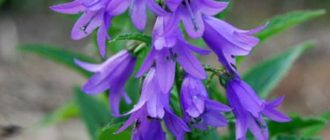
Morning glory is the largest flower in the Convolvulaceae family, which comprises over 1,000 species. The plant's name derives from Greek words meaning "worm" and "passerby," referring to the unique structure of its root system.
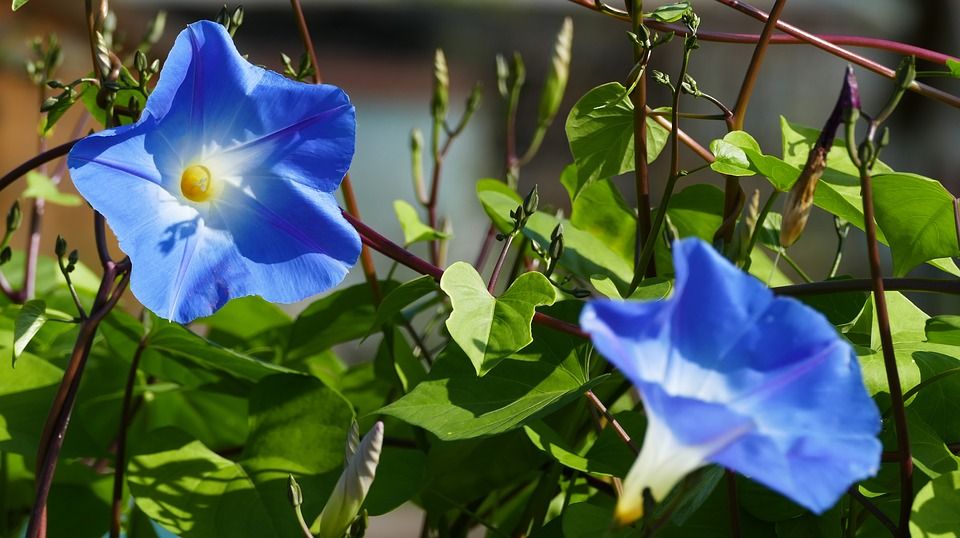
In ancient China, morning glory seeds were used as a laxative. The plant's distribution is not limited to specific regions, and it can be found virtually anywhere on the globe. However, as beautiful as its flowers may be, it's important to remember that they are poisonous.
Content
- 1 Description and characteristics of morning glory
- 2 Types and varieties of morning glory
- 3 Growing Morning Glory from Seeds
- 4 Planting seedlings in open ground
- 5 Caring for morning glory in the garden
- 6 Propagation of morning glory by cuttings
- 7 Diseases and pests of morning glory
- 8 Top.tomathouse.com informs: why isn't my morning glory blooming?
Description and characteristics of morning glory
A garden vine, it can sometimes grow up to 5 meters in length. The stems are covered with heart-shaped leaves. The buds are quite large and have a unique, subtle fragrance.
Types and varieties of morning glory
Morning glories come in a variety of colors, from white to blue, including pink and red. Flowering begins in June.
Purple
This is the most well-known species of this plant. Under suitable growing conditions, it can reach a height of 8 m. The plant's flowers are quite large, reaching 7 cm in height, and come in shades of red, pink, blue, and purple.
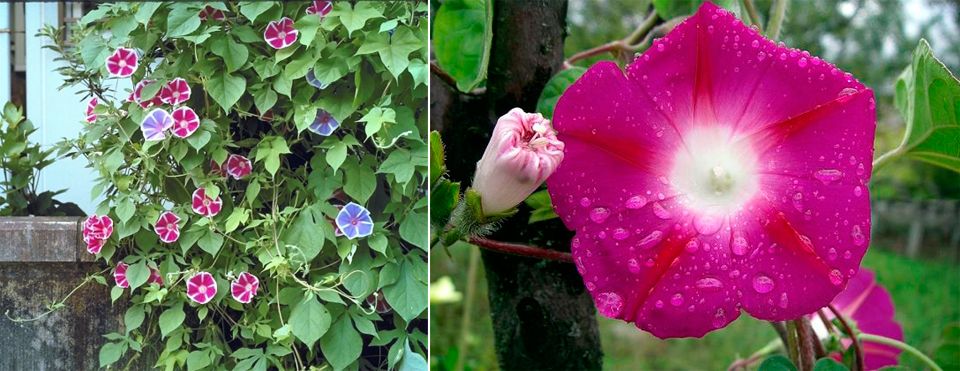
Flowers are divided into single and double. This profusely blooming plant is very heat-loving and enjoys sunlight.
Ivy-shaped
It can reach up to 3 m in length. Its leaves are trilobed, resembling flattened plates. The buds are medium-sized, about 5 cm in diameter.
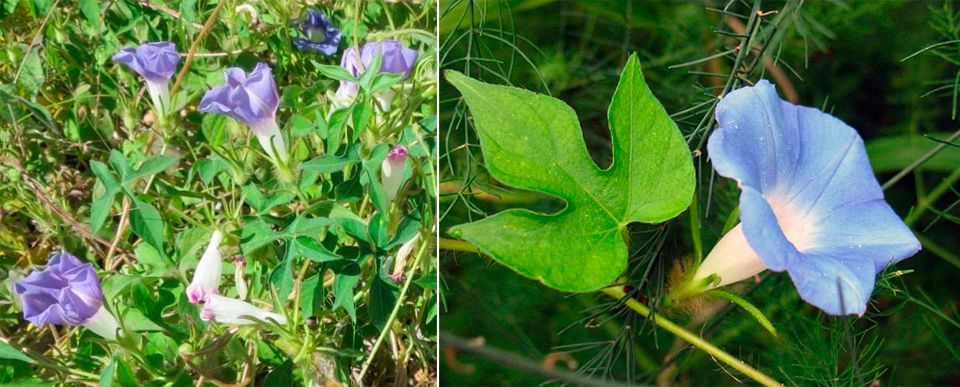
The predominant color is light blue. Pink is rare. Flowering occurs from midsummer to October.
Nile
Like the previous species, it grows up to 3 meters tall. They bloom from July and remain a delight until the second month of autumn. The buds are decorative, with a high-contrast color palette, including bright orange.
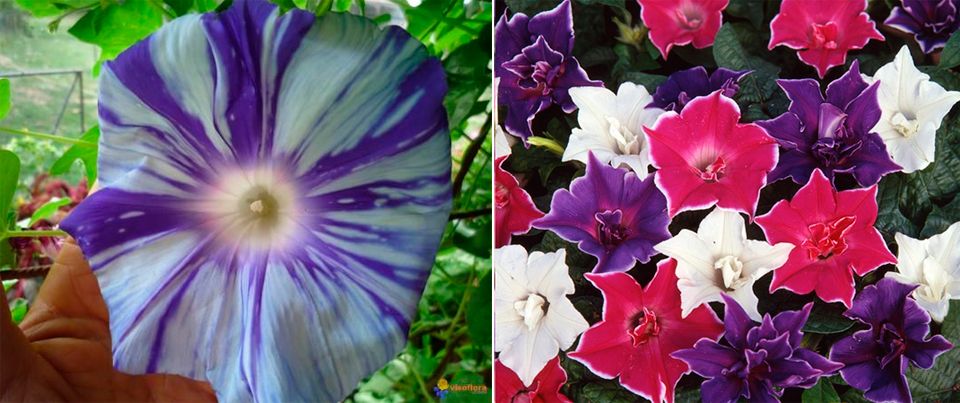
Most often, the shape of the bud is star-shaped, the edges have a terry structure, and the petals of the plant are rounded.
Quamoclit
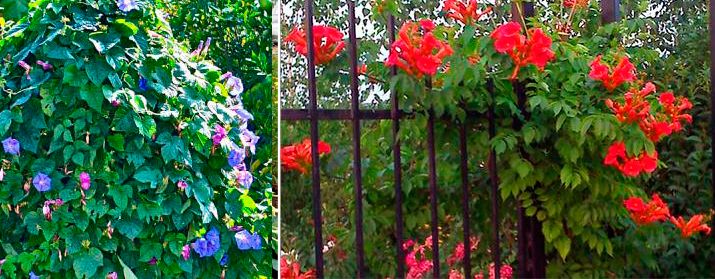
A rather unusual species compared to others. It stands out for its finely dissected, lacy foliage, and its flowers are shaped like small stars. The branches of this plant easily reach 5 meters in height.
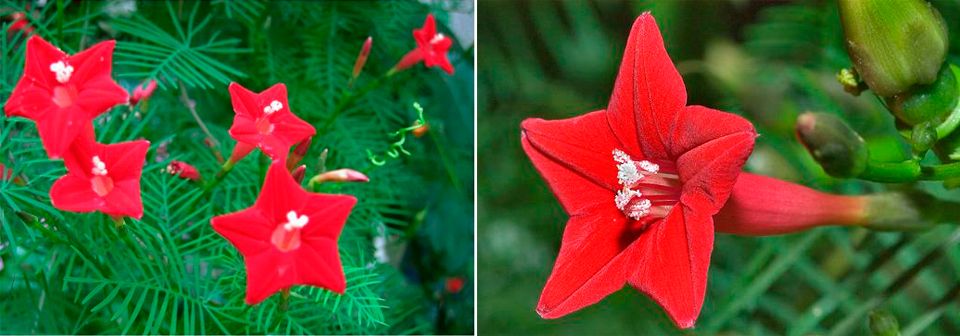
It's a striking, aesthetically pleasing plant in appearance. The foliage is rich green, and the buds are a vibrant red.
Blue
This species is popularly known as "glorious morning" due to the beautiful color of its flowers, which are bright blue, changing to light blue toward the center.
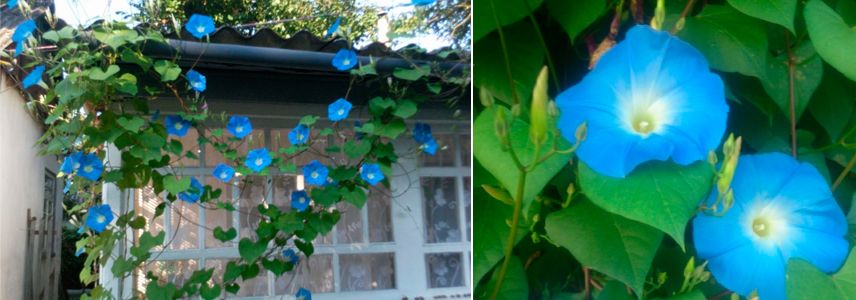
Flowering occurs in mid-summer and lasts until the first frosts. The buds themselves are large, up to 10 cm in diameter. The plant grows up to 2 m in height. It is a very heat-loving species.
Moonflowering
A plant species that blooms exclusively at night; at dawn, the buds close until the next period of darkness. The plant reaches a height of up to 3 m.
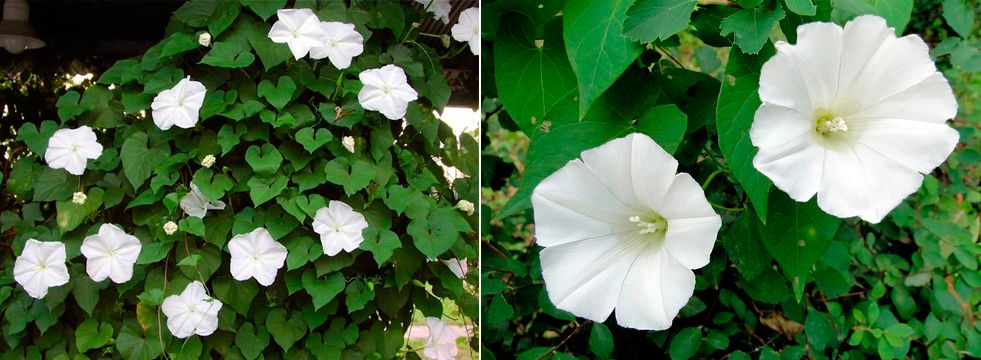
The flower is beautifully white and up to 10 cm in diameter. Blooming occurs in mid-July and continues until early October. Its distinctive scent is almond-like.
Tricolor
A perennial vine, it is used as an annual due to the climate of the treaty countries. The stem can grow up to 5 m.
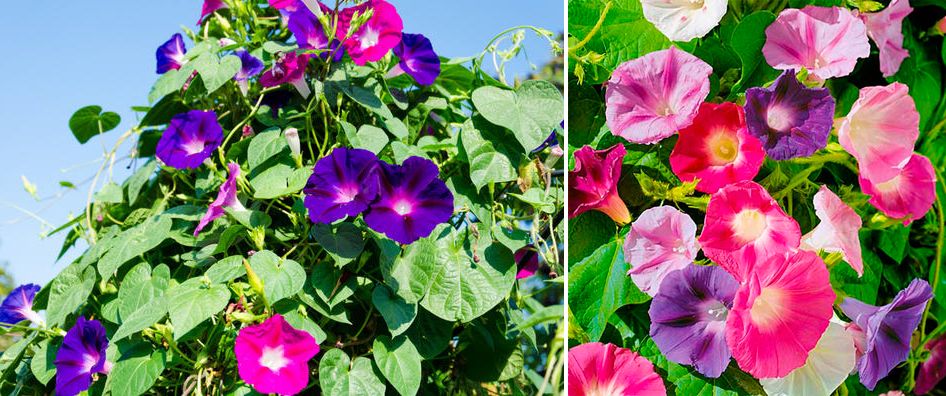
The buds are beautiful, 10 cm in circumference, and arranged in clusters of several. The buds are light blue, turning purple at the end.
Growing Morning Glory from Seeds
Since this flower has tropical roots, it is necessary to select an appropriate location for its cultivation; it is recommended to do this using seedlings.
Sowing seeds
Due to the climate in the CIS countries, sowing seeds is only done in late March. Before planting, soak the seeds in warm water for 24 hours to allow them to swell. If no change has occurred after this time, pierce the seed coat and place them in water. After this, sowing is ready. Sow a maximum of 3 seeds per pot, placing the seeds to a depth of no more than 2 cm.
The soil should be uniform and loose. After planting, water with room-temperature water. After watering, cover the pots and cups with plastic wrap.
Caring for seedlings
The optimal temperature at which seedlings will develop normally is +18…+23 °C.
It is necessary to provide sufficient, regular watering, the soil must be kept moist.
It will take a week for the first shoots to emerge. It's time to start thinking about how to support the plants.
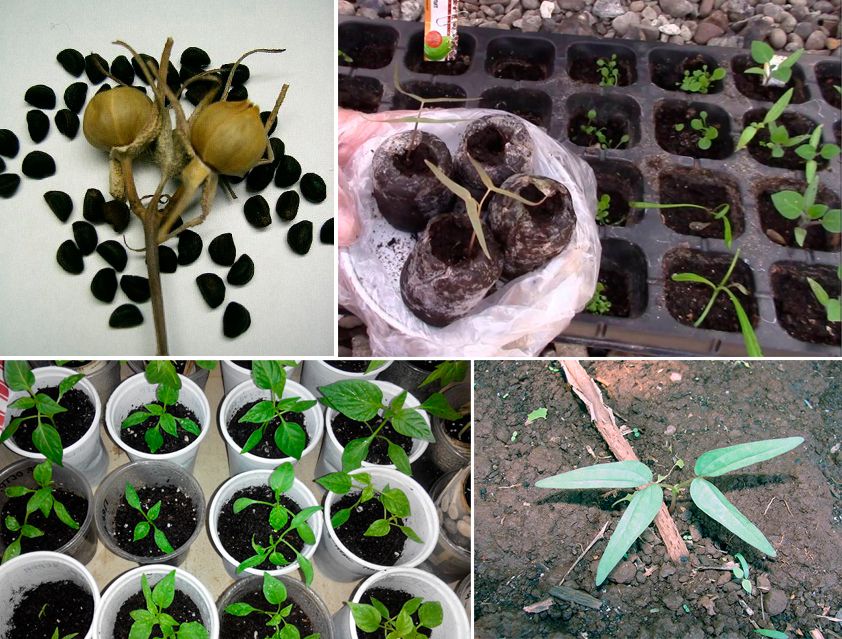
Before transplanting into open ground, ensure regular watering and carefully loosen the soil around the plants. If cloudy, dark weather prevails, the seedlings will require phytolamps. Once the shoots develop leaves, about five in total, pinch off the tops of the plants.
This will stimulate the formation of new stems. Seven days before planting outdoors, begin acclimating the plants to the outdoors.
Planting seedlings in open ground
This plant is heat-loving, so repotting is necessary when frosts have passed and only light, occasional frosts remain. Soil temperature is also crucial; it should be at least 10°C.
Depending on the region, planting takes place from the end of May to the beginning of June.
The advantage of southern regions is that seeds can be planted directly into open ground, skipping the seedling stage. However, it's still recommended to skip this development stage for large-flowered varieties.
Technology of planting morning glory in the ground
The process itself is quite easy. The plant's only finicky preference is its preference for loamy soil.
Choosing a site is crucial when planting. It should be sunny throughout the day and well sheltered from the wind, as it can easily break the plant's branches. It's also important to maintain an optimal distance between shoots, at least 20 cm.
Caring for morning glory in the garden
Care is simple and involves regular watering, loosening the surrounding soil, and removing weeds. Fertilizing, pruning, and pest and disease prevention are also essential. However, the most important factor is support.
If all the nuances are observed, but there is no garter, the plant simply will not grow to its maximum and may even die.
Watering
Morning glory requires regular, adequate moisture. It doesn't tolerate drought, but don't overwater.
The ideal medium is to keep the soil around the plant constantly moist. However, you need to ensure that the soil remains moist and not muddy.
If you neglect watering, the plant will gradually stop growing, but flowering may begin earlier. However, the color of the buds will be less intense and vibrant.
Once flowers begin to appear on the shoots, reduce watering, allowing the soil to dry out between sessions.
To minimize watering, mulch the soil around the plant. This will help it retain moisture longer, reducing the need for human intervention.
Top dressing
To ensure maximum growth and flowering, add fertilizer to the soil. Fertilizer should be applied for the first time during the growth phase.
Avoid excessive nitrogen input into the soil, as this will reduce flower production. Once buds have formed, phosphorus is recommended for feeding, and during peak flowering, a potassium-rich fertilizer should be added. To achieve this, use granular fertilizer, scattering it under the stems to a depth of at least 2 cm, and then watering. However, liquid fertilizer is more effective.
Trimmings
Annual species tend to die back at the top. This is destroyed. In southern regions, vines are left in the garden; in colder climates, special greenhouses are built for them. Pruning is done in September, removing part of the stem, infected, and broken leaves. The morning glory is then repotted and transported to a greenhouse. If the plant remains in the garden during frosts, it is covered with spruce branches to protect the roots from the cold.
Propagation of morning glory by cuttings
Although seed propagation is the most effective, some morning glory species and varieties require propagation by cuttings. To do this, the stems must be trimmed and cut. A key aspect of this process is the presence of two internodes, at least 15 cm long. The cut is made at an angle, 1.5 cm below the node. If the cuttings contain leaf blades, they are torn off and then placed in water. They should remain in this position for at least four days. During this time, roots will appear. Once they emerge, the cuttings can be planted in soil. In open ground, full rooting takes at least a week. Propagation by this method is carried out between April and early summer.
Diseases and pests of morning glory
Like all vines, morning glory is vulnerable to a number of diseases, despite its strong immunity. The most common are fungal infections. These include anthracnose and various types of rot—stem, black, white, and root. Viruses are also a possibility, of which there are a huge number, over 20 different types. Furthermore, there is a risk of a physiological disease called white edema.
Fungal diseases spread through the soil, which is a consequence of overwatering the plant and water stagnating in the soil.
Treatment involves cutting out the affected areas, then spraying the healthy remains with a fungicide solution. However, not all rots can be cured. Most rots are fatal to the plant. Viruses are also a serious problem for gardeners, as there are no 100% cures or treatments for them.
If affected by rot or a virus, the affected plants are simply dug out of the soil and then burned. Neighboring, healthy vines should be sprayed with a special solution.
Physiological disease is a slightly milder condition; it only affects plants grown indoors, that is, in a greenhouse. Low temperatures, high humidity, and overwatering are the triggers. The disease manifests itself as bumps and blisters on the leaves; these are yellow, or more commonly, green. As the disease progresses, the blisters turn brown. When the disease reaches its final stage, the leaves begin to yellow and then fall off. There is no cure for this disease, as it results from improper cultivation practices and disregard for instructions.
Top.tomathouse.com informs: why isn't my morning glory blooming?
There are many reasons for growth stagnation, all caused by different factors. However, if all is well and all the details are observed, flowering should begin in July. If flowering begins later or earlier than this, this is normal. Deviations in timing are normal, ranging from 10 to 15 days.
If the vines have been regularly inspected for diseases, viruses, and pests, and flowering begins to lag by more than half a month, you need to start looking for the cause of the problem.
- The first cause of stagnation may be nitrogen-containing fertilizer. It's important to use the right amount of fertilizer to ensure the soil maintains the optimal nitrogen content; too much or too little can easily lead to stagnation.
- The second reason is watering. The situation here is exactly the same. It's important to maintain optimal soil moisture; if the soil isn't sufficiently moist, the plant will wilt, which can lead to death. Excess moisture can also lead to a fungal disease, which can lead to the removal of most of the plant, and nearby plants can also become infected.
- The third reason is failure to follow the proper planting procedures for morning glory outdoors. If the plant is planted later than the required time, the growth and flowering process may be significantly delayed and may not be completed by the time frost sets in. This will lead to a waste of time, as the plant will likely die without ever blooming.
None of these causes are critical; at the first sign of growth stagnation, it's important to immediately identify the source. Once this happens, the situation can be easily corrected. Various indicators, available at specialized flower shops, can help with nitrogen overload or deficiency. Excess or insufficient moisture is also easily corrected. Depending on the growth stage, it's important to monitor soil moisture, keeping the top layer slightly moist at all times.
If planted late in the soil, there's no need to take any action. Especially not using any fertilizers that claim to significantly accelerate growth. This will only create another problem. Simply give the morning glory more time. If it doesn't bloom before the frost, transplant it into a separate pot and place it in a greenhouse. This will allow it to finish growing in favorable conditions, even if it's already mid-autumn outside.