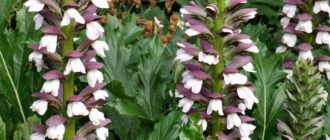
Sweet potato (Ipomoea batata) is a crop often used as an ornamental plant. Sweet potatoes have only recently become popular as indoor and garden crops.
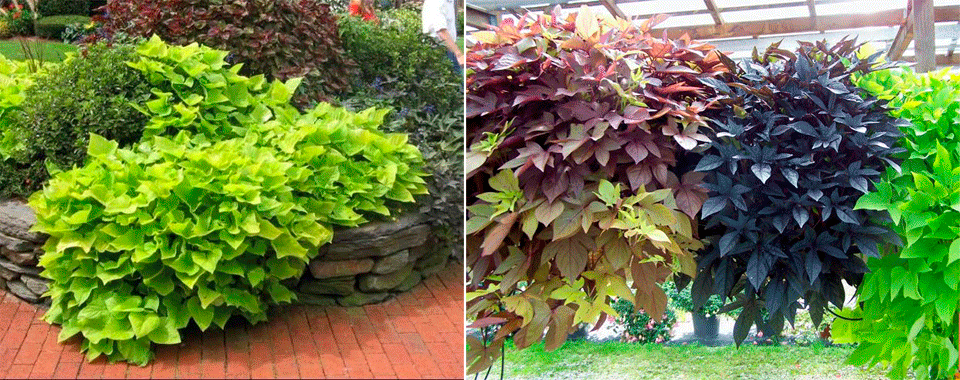
It's fairly low-maintenance, loving the outdoors and light. The morning glory's distinctive features are its vibrant color and the exotic shape of its leaf blades.
Content
- 1 Description of morning glory sweet potato
- 2 Varieties of morning glory sweet potato
- 3 Rules for planting morning glory sweet potatoes
- 4 Planting morning glory sweet potatoes in open ground
- 5 Caring for sweet potato morning glory
- 6 Propagation of sweet potato morning glory
- 7 Top.tomathouse.com recommends: the beneficial properties of sweet potato morning glory and its uses
Description of morning glory sweet potato
The plant belongs to the morning glory family. Locals value it for its flavor and nutritional value. This herbaceous plant is characterized by its low growth, reaching no more than 30 cm in height. The bush spreads 1.5-2 m in width.
Flowers come in light lilac, white, and pink. Their funnel-shaped form resembles a gramophone. Their diameter does not exceed 5 cm. The inflorescences are formed from several single buds. It should be noted that when cultivating domestic varieties of sweet potato morning glory, particular attention is paid to the decorative appearance of the leaves.
Distinctive features also include:
- spindle-shaped tuberous root system;
- liana-like shoot;
- Heart-shaped leaves with a pointed end, ranging from 3 to 14 cm in length;
- Elongated seeds (up to 6 mm). They are located in an angular woody capsule. Each seed is located in a separate chamber;
- purple, yellow or pink fruits.
Edible tubers form on lateral roots. Flowering begins in mid-July.
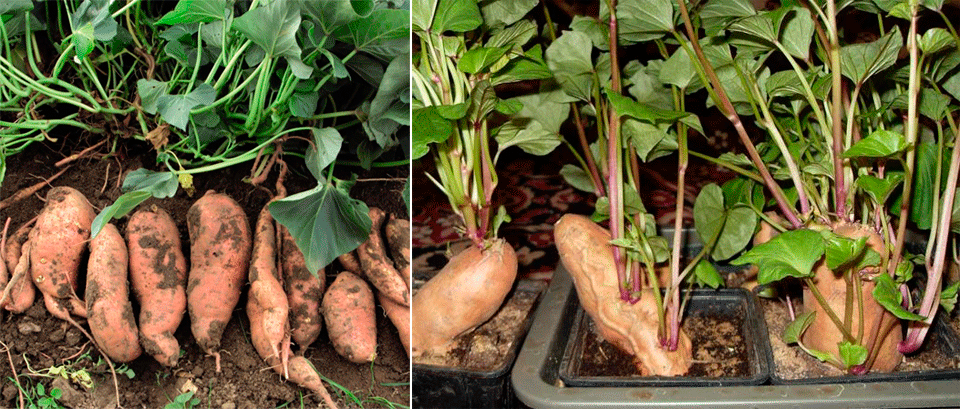
Sweet potato morning glory grows to a height of no more than 30 cm. Recently developed varieties do not form inflorescences. Ornamental varieties often have leaf blades up to 15 cm long. Their coloring can be either variegated or solid. Mature tubers are small. Under favorable conditions, it grows rapidly. It is often used as a groundcover.
Varieties of morning glory sweet potato
There are quite a few varieties of this crop. They are classified based on their growing location.
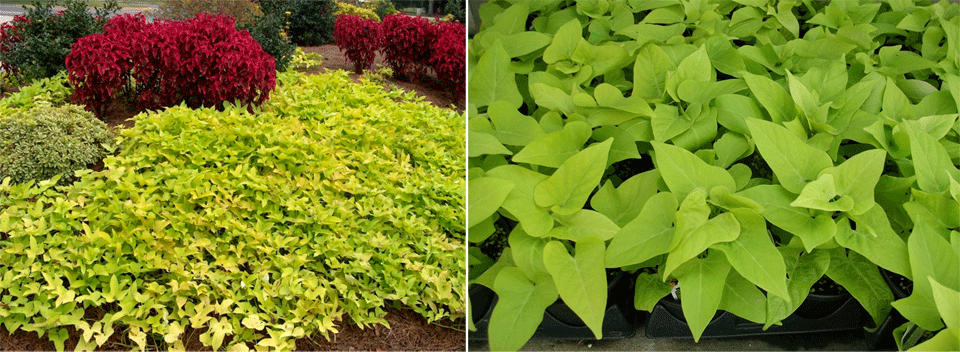
The Margarita variety can be planted in open ground. In this case, the foliage reaches 30 cm, with a stem length of 2 m. It produces no flowers, but gardeners value this variety for its decorative foliage. In unstable climates, sweet potato morning glory is grown as an annual. To promote rapid growth, the trailing plant should be pinched during the growing season.
The purple variety differs from other cultivars in its disease resistance and hairy stems, which reach up to 8 m in length. The dark green leaves have a smooth surface. Double flowers appear in early summer. They can be pure white, soft pink, purple, or red.
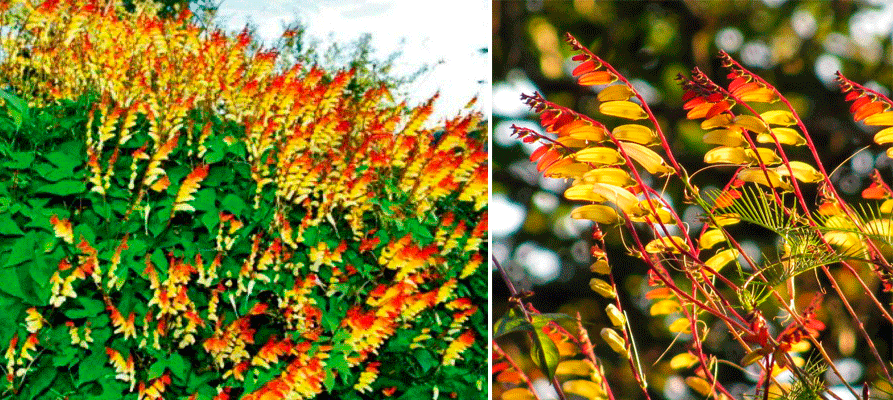
The annual variety Mina Lobata can be added to the list. This densely growing plant produces flexible shoots. The stem is adorned with dark green leaf blades, which are distinguished by their three-lobed stems.
Unusual inflorescences appear in the axils. Initially, the spike-shaped racemes are bright red, then acquire a hue ranging from orange to snow-white.
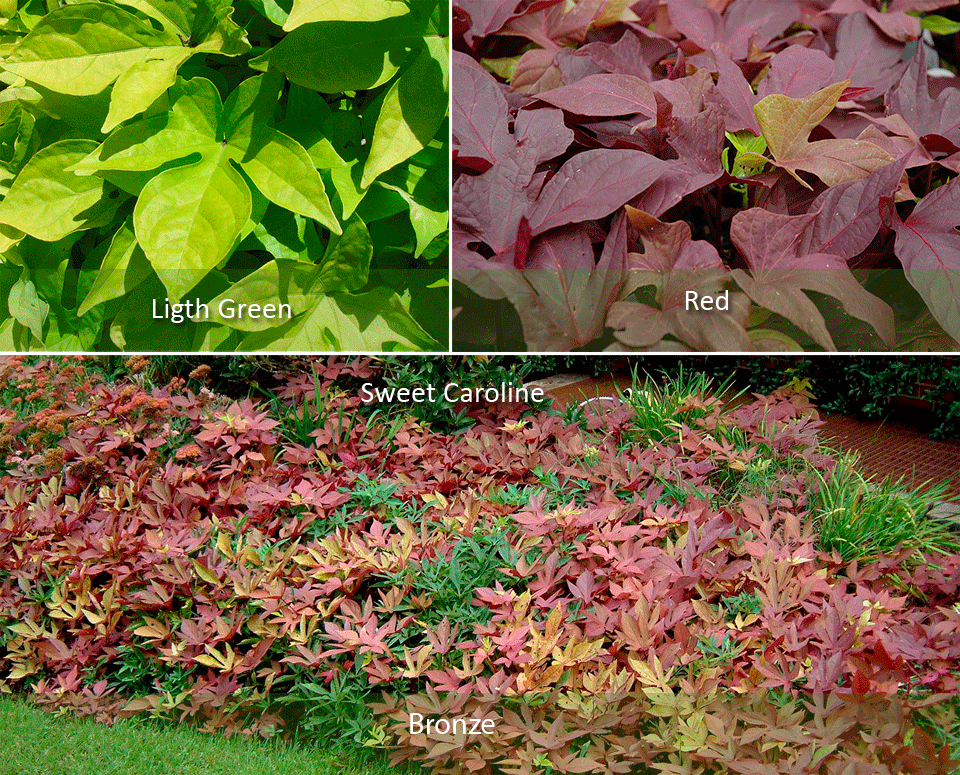
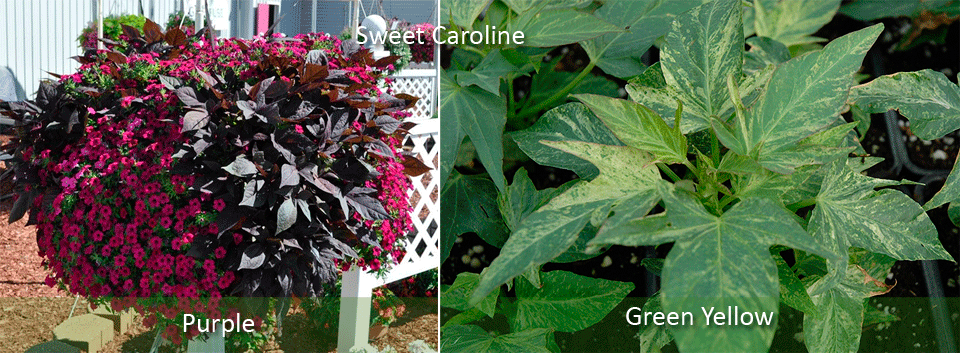
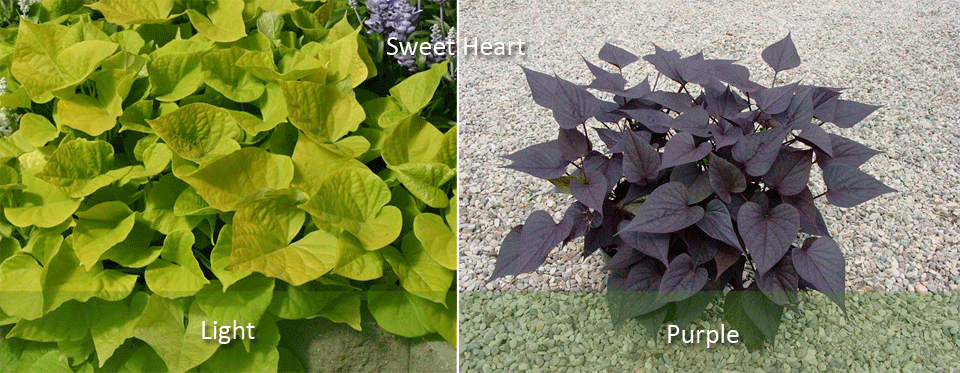
The list of ornamental varieties of sweet potato morning glory is quite extensive.
| Variety | Sheet | ||
| Series | Subseries | Color | |
| Sweet | Caroline | Bronze | Bronze, similar in appearance to maple. |
| Purple | Violet-purple, five-lobed. | ||
| Light Green | Light green, maple shaped. | ||
| Red | Five-lobed, reddish. | ||
| Raven | Strongly dissected, purple. | ||
| Bewitched | Unusual, bronze. | ||
| Green Yellow | Variegated, narrow. Decorated with light spots, golden and white strokes. | ||
| Sweetheart | Red | Coloration varies with age. Mature plants have purple-green foliage, while young plants have soft green foliage. | |
| Purple | Undivided, grey-green. | ||
| Light Green | Lobular and whole, golden-green. Young ones are adorned with a bright purple border. | ||
| Heart | Light | Heart-shaped, light green in color. | |
| Purple | Purple, heart-shaped. | ||
| Illusion | Midnight Lace | Lobular, deeply dissected, black-green. | |
| Garnet Lace | Light bronze, cut, decorated with purple veins. | ||
| Emerald Lace | Pale green, lanceolate. | ||
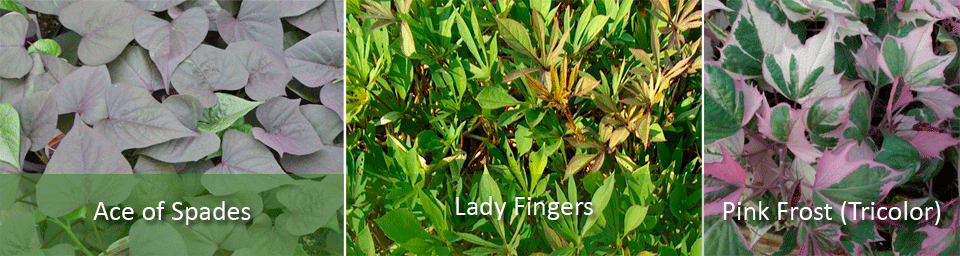
| Lady Fingers | Green, dissected, pierced with purple veins. | ||
| Pink Frost (Tricolor) | Solid, decorated with light strokes and pink edging. | ||
| Ace of Spades | Black, small size. | ||

All hybrids are divided into three categories:
- dessert;
- feed;
- vegetable.
The first group includes the following varieties: Chestnut, Amish Red, and Korean Purple. The following varieties have excellent flavor: Amish Red, Beuregarde, Japanese, and California Gold. Forage varieties include Brazilian and White Bouquet. Dessert varieties are distinguished by their piquant flavor.
They taste like carrots, melons, bananas, and pumpkins. They are often used to make wine and jam. Sweet potatoes are often used as a substitute for potatoes.

Quite a few varieties can be grown indoors. Kumara Red loves warmth and light. Additional sources are used to provide the latter. This variety produces yellow oval tubers. The stems are large and bushy.
Burgundy is one of the earliest varieties. The tubers are red, and the leaves are quite large. The bright inflorescences exude a pleasant aroma.
Rules for planting morning glory sweet potatoes
Sweet potato morning glory is a plant that doesn't have any particular requirements for its location. Plants are transplanted outdoors toward the end of the last month of spring. The containers should be placed on windowsills facing south or southeast. Lighting is crucial at this stage. Also, pay attention to protection from drafts. Failure to do so will negatively impact the seedlings.
Soil requirements
It should have a neutral pH and be well-drained and aerated. Experienced gardeners prefer loamy and sandy loam soils. If the acidity is too high, it is stabilized with lime. Before planting, create a substrate containing humus, sand, and turf. Garden soil is useless in this case, as it contains too few nutrients. Using such soil increases the risk of pest infestations and diseases.
Preparing seeds and growing seedlings
Pre-sowing preparation is quite simple. The seeds are soaked in a potassium permanganate solution. They are then placed in the soil to a depth of 1.5-2 cm.
To save time, the seeds can be placed directly into large pots and hanging baskets. To create favorable conditions, cover the containers with transparent film. Ventilate the plants daily to prevent condensation. This should be removed after two weeks.
The air temperature in the room should vary from +18 to +25 °C.
Planting morning glory sweet potatoes in open ground
The timing depends on climate conditions. Planting usually occurs at the end of May.
The soil is prepared in the fall. The selected area should be dug over and fertilized with humus. When choosing fertilizer mixtures, consider the initial soil condition. To improve it, use superphosphate and potassium fertilizers. In the spring, loosen the soil and fertilize it with ammonium nitrate.
Before planting, the soil is watered with a light pink solution of potassium permanganate. The seedlings are placed in holes approximately 15 cm deep, leaving 30-35 cm between each sprout. After planting, the soil is compacted and watered with warm water. The seedlings are covered with transparent containers. They are removed after new leaves emerge.
Caring for sweet potato morning glory
Every crop requires regular agricultural care. Maintaining a healthy temperature is the primary requirement. Morning glory is considered a heat-loving plant. It should be watered moderately but regularly. The appearance of white blisters on the leaf blades indicates overwatering. Immediately after moistening the soil, mulch and loosen the soil. Prune diseased, weak, or dried shoots. Perennial plants should be carefully inspected after winter. Shoots removed during cultivation can be used as cuttings.
Top dressing and fertilization
To ensure the plant receives adequate nutrition, mineral and organic mixtures must be added to the soil. Wood ash is considered a universal fertilizer. Only 1 cup of the main ingredient is required per 10 liters of liquid. When using the complex, follow the instructions provided. Experts do not recommend using nitrogen-containing mixtures during the flowering period.
Wintering of sweet potato morning glory
In autumn, the plant should be kept in a warm room. The air temperature should not fall below 25°C. Supplemental lighting becomes necessary. Autumn pruning is performed before wintering. Leaving the plant outdoors is strictly prohibited.
Propagation of sweet potato morning glory
Ipomoea Sweet Potato can be obtained through:
- Seeds. This method is only suitable for experienced gardeners. The germination rate is unlikely to be high, which is why it is considered too complicated. It is most often used by plant breeders;
- tubers. Planting is carried out after the root crops have sprouted;
- Cuttings. The shoot should have at least two internodes. After separation, the cutting is placed in water. Roots will appear in 5-7 days. At the next stage, you can begin planting the morning glory.
Top.tomathouse.com recommends: the beneficial properties of sweet potato morning glory and its uses
The plant contains many beneficial substances. Vitamins, proteins, carbohydrates, micro- and macroelements—the list is quite extensive. The starch obtained during processing is often used in medicine. It can help with gastrointestinal and immune system disorders. Forage varieties of sweet potato morning glory are popular in cooking and livestock farming.
Tubers and other edible parts should not be consumed by pregnant or nursing women. The same applies to people with digestive ailments. Sweet potato morning glory can be planted next to petunias, ornamental grasses, europhobes, purslane, and lobularia. This plant can be used to decorate garden paths and arbors. Morning glory care is quick and easy.