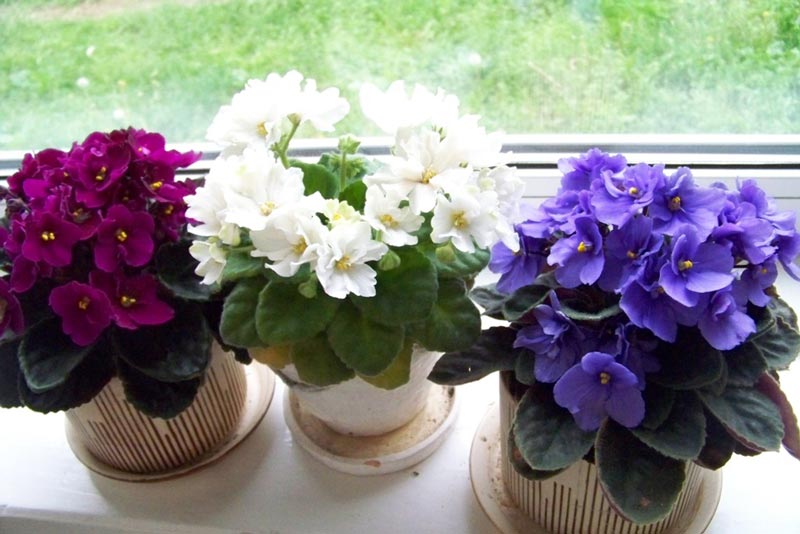
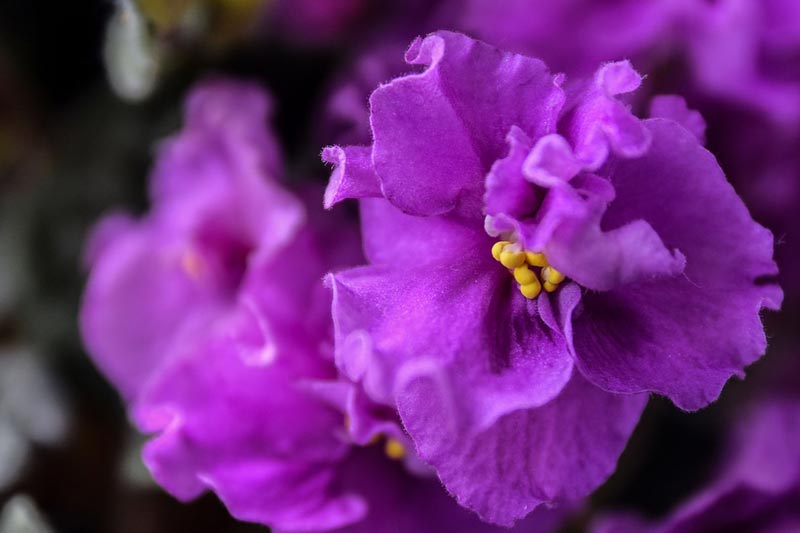
The violet (Saintpaulia) is a perennial plant native to Africa. Its stems are short, its leaves form a rosette, and its flowers come in a variety of shapes, sizes, and colors: blue, purple, snow-white, pink, wine, and lilac. These plants are very demanding, and to enjoy their beautiful blooms, proper care is required.
Content
Requirements for violets to bloom
Without proper care, Saintpaulias will not bloom, become susceptible to fungal infections, and may even die. They are very demanding when it comes to watering, which differs from other houseplants, as well as light, container, soil, and temperature. They must be regularly fed, pruned, and repotted only in new soil.
Genetic component
When choosing an indoor Saintpaulia, consider the variety. Breeders have developed many varieties, including trailing varieties with small, medium, or large flowers. Some violets have five petals, while others have many more, with no visible stamens. Also, some varieties produce only three buds and won't bloom profusely. You can wait several months or up to 1.5 years for violets to bloom. The blooming period also varies depending on the variety.
Selecting the right container
A pot 5-7 cm in diameter is suitable for a small Saintpaulia, while a 10-12 cm pot is suitable for a mature plant. Generally, you should look at the size of the rosette and choose a container half the diameter. The height should be no more than 10 cm.
The bottom of the container should have drainage holes. Ceramic is best, but plastic is also acceptable.
The right soil
Saintpaulias require slightly acidic soil. Purchase special soil from a flower shop. Creating the right soil is easy: use leaf mold, peat, charcoal, and moss (1:2:1/2:1/2). Alternatively, sift garden soil, combine it with sand, and bake it in the oven. Add expanded clay and small pebbles to the bottom. Repotting is required once a year, using fresh soil.
Location
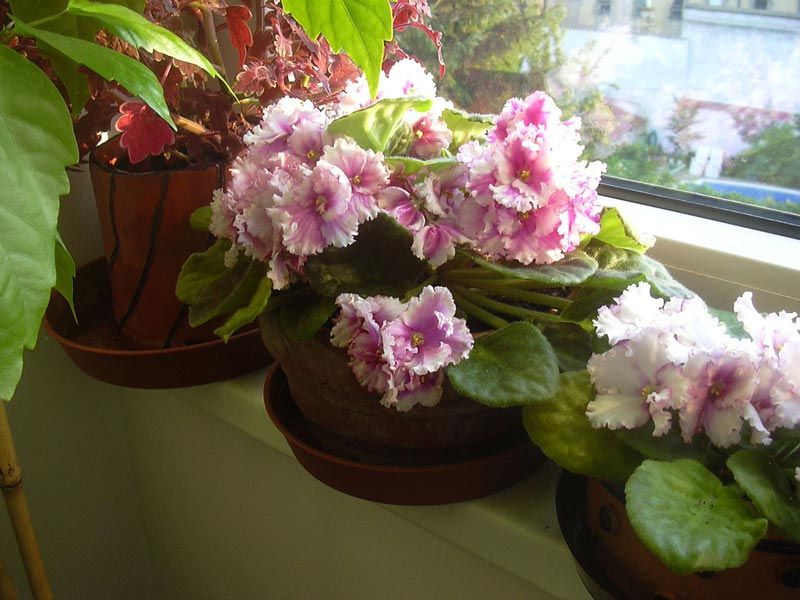
Saintpaulias are planted on the west or east side. In winter, a north-facing windowsill may not get enough light, and in summer, a south-facing window may get too much sun. Therefore, the violet should be shaded or relocated. To prevent the roots from becoming chilled during winter, place the plant in a pot on a shelf, table, planter, or on a wooden stand.
Lighting
Violets prefer a minimum of 10 hours of daylight, with diffused light and shade from direct sunlight. Varieties with thick, dark leaves require more bright light than those with curly leaves. If the flower is stretching, the foliage is curling, and the color is pale, it's not getting enough light; if the center of the rosette is compacted, it's getting too much light. When the leaf blades are bright, rich in color and the plant has many buds, the light is adequate.
During the winter, phytolamps are used, usually installed in November and removed in February. Remember to rotate the pot to ensure symmetrical growth.
Temperature conditions
The plant thrives in warm temperatures. From early spring to autumn, flowers need temperatures of 20 to 22°C. In winter, temperatures should not fall below 18 to 20°C. In summer, when temperatures reach 30°C, the flower becomes dull and smaller. Therefore, the room should be ventilated, using an air conditioner or split-system unit. Drafts should be avoided.
Air humidity
Violets require high humidity, 50-60%. It's best to remove the pot from the windowsill for the winter if there's a heating system nearby. Mist the air around the flower, avoiding the blossoms. Place the container on a tray filled with damp expanded clay or pebbles. Lower humidity slows the buds' development.
You should not spray the leaves of Saintpaulia to avoid the risk of fungal infections.
Watering methods
There are some secrets to watering Saintpaulias. Use lukewarm, settled water. Water as the soil dries, avoiding liquid from getting on the leaf blades and growing points.
Through the pallet
Water at room temperature, left to settle for 24 hours, is poured into the tray to a depth of ¼ of the pot's height. Half an hour is usually enough for the plant to absorb the moisture, as the soil will indicate. Then, drain the remaining water.
Drip
For this, use a watering can with a narrow spout or a bulb syringe. If you don't have anything else, a plastic bottle with a hole in the lid and a tube inserted will do. When water begins to flow out of the drain, stop watering and then drain it. If any moisture gets on the leaves, blot them with a dry cloth.
Immersion
If it's too hot, immerse the flower in a container of settled water for an hour. Then let it drain and return it to its original location.
Wick
During the summer, when you need to leave and there is no one to take care of the flowers, this method is suitable.
Place a thin string (household string, acrylic thread, or shoe string) in the pot. One end extends through the drainage hole, and the other end is folded into a ring in the center of the soil. Place the pot on top of a lidded container of water. Lower the wick, allowing the soil to absorb the desired amount of liquid.
Top dressing
Two months after planting in store-bought soil, the flowers are fertilized. For this purpose, buy a complete fertilizer. Dilute it with water according to the instructions, but in larger quantities than indicated, and water under the leaves, being careful not to spill liquid on them, or through the tray. First, moisten the soil.
Young flowers require nitrogen fertilizers, while flowering requires potassium-phosphorus fertilizers. Fertilize twice a month during flowering and once a month during resting periods.
Diseases and pests
Fungal infections, diseases and pests often affect flowers.
|
Disease/pest |
Manifestation/Causes |
Elimination measures |
| Gray mold | A grey, fluffy coating appears on the leaves and petioles. Temperature fluctuations, abundant and frequent watering with cold water. |
Treat with fungicides (Fitosporin, Agat, Thiram). |
| Fusarium | The roots rot, the violet does not bloom, the leaves turn gray and then fall off.
Water abundantly with cold water. |
Benomyl and Fundazol are used. |
| Rust | Yellow spots on the outer surface of the leaves. Lack of sun in winter. | Infected parts are removed and Baktofit and Topaz are used. |
| Powdery mildew | White coating on the plant.
Lack of light, low room temperature, dust. |
Treated with Benlat. |
| Spider mite | Red dots. Dry air. |
Apollo and Neoron are used. At the first stage, folk remedies include onion peel decoction and vodka. |
| Cyclamen mite |
There are yellow, round spots on the leaves. High humidity. |
|
| Aphid | Green insects, they drink the juice from the plant. Taking the plant outside or into contaminated soil. |
Mospilan and Intavir are used. |
| Mealybugs | There are small red spots on the violet.
Dry air. |
Spray with soap solution, Fitoverm. |
| Scale insect | The leaves are red-brown below and yellow above. Infected from a new plant. |
Young violets sometimes have to be destroyed, while adults can be helped with insecticides (Karbofos, Akthar). |
| Thrips | Light brown pollen on the plant.
Airing, another flower. |
Treated with Fitoverm. |
Rest period
Saintpaulias don't have a pronounced dormant period. Many varieties bloom year-round. However, some require a winter rest period. To achieve this, stop fertilizing in late autumn, remove flower stalks, and reduce watering.
Top.tomathouse.com recommends: tips for determining the cause of violets not blooming
To ensure plants bloom from early spring until autumn, the following is recommended in different cases:
- No buds are forming, but there are many shoots – the container is too big for the violet.
- Judging from the outside, the flower appears healthy, but there is a white coating on the soil – the soil is depleted, and the plant needs to be replanted into new, light soil.
- Flower stalks form slowly, leaves curl – excessive watering or acidic soil.
- Light spots appearing on the foliage indicate either very cold or hot water or sunburn. To prevent sunburn, water the plant after sunset in summer.
- Saintpaulia won't bloom if it's under- or over-fertilized. The plant needs phosphorus and potassium; too much nitrogen is undesirable.
- If the flower is mature, more than 3 years old, it is replanted.
- Avoid exposure to direct sunlight.
- The leaves are cleaned with a soft, slightly damp cloth, but not wetted with water.
- The soil should not dry out or be too wet.
- Do not allow temperature changes.
By following all the recommendations, even an inexperienced gardener can achieve a blooming violet appearance.