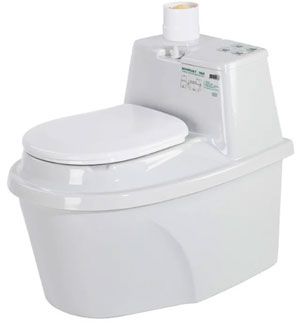
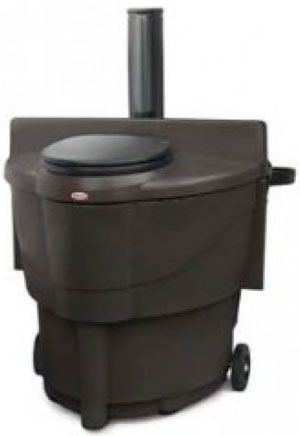
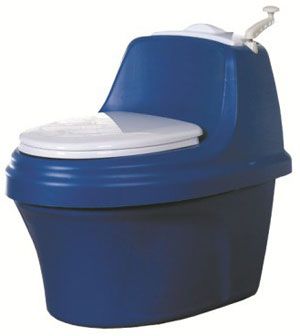
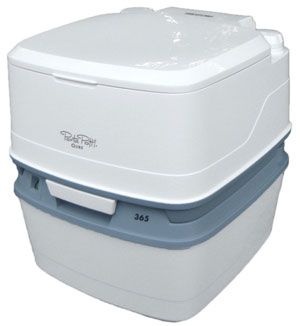
A composting toilet is a portable bathroom unit used when there is no access to a central sewer system. For most summer residents, this alternative provides a comfortable stay and relaxation outside the city.
Today, the technological advancements of bio-toilets, their ease of use, and cost are pushing cesspools into the background.
Criteria for choosing a dry closet for a summer house
In order to choose the right biotoilet, you need to take several aspects into account.
- The purpose of purchasing the device. This could be to enhance the comfort of living at the dacha, or for a one-time use during a picnic.
- The site conditions and location of the composting toilet. Different models with specific characteristics are designed for outdoor and indoor use. For example, a device installed indoors should have better technical features than one installed outdoors. This is because more advanced composting toilets are better at containing unpleasant odors, which is especially important for indoor use.
- Waste collection tank capacity. It's important to consider how many people will use the toilet daily. For example, with an average capacity of 10-12 liters, a family of three can use the toilet for about three days, after which the tank will need to be emptied and the toilet will need to be cleaned after 23-25 uses. A larger capacity of 20 liters will fill the toilet in one week, and cleaning will not be necessary after more than 50 uses.
- The weight of the composting toilet. When choosing a model, keep in mind that cleaning and other maintenance are the responsibility of the owner. Therefore, it's not recommended to purchase heavy units with numerous unnecessary technical features. It's much better to choose a simple, convenient, lightweight toilet that's easy to operate and doesn't require a lot of time to clean. For example, a 12-liter unit weighs approximately 14-16 kg, while a 20-liter tank weighs 25-30 kg. So, when choosing, it's important to carefully consider your strength.
- Composting toilet height. Standard or small units, ranging in height from 20-25 cm to 32 cm, are not a good choice. It's better to choose units with mid-range dimensions, designed for a wide range of consumers: their dimensions exceed 40-45 cm. If you have a child, these dimensions will be too large. This problem can be easily solved by purchasing a composting toilet with an additional child seat.
- Toilet operating principle. Some devices are very noisy and are better suited for outdoor use than indoor use. Others are unable to provide complete disinfection; this must be done manually several times a week, which can be inconvenient. Many composting toilets are unable to eliminate odors, and some models are not suitable for outdoor use due to their technical specifications.
- The complexity of installation and the overall compactness of the composting toilet. Large models are not recommended if the unit will be frequently moved. Toilets with side carrying handles are also much more convenient. The toilet's external dimensions—its width and length—should correspond to the area in which it will be located. For outdoor composting toilets, this criterion is not particularly important. However, when choosing a unit for use in a country house, the appropriate placement options must be taken into account.
Thus, we can distinguish three groups of main aspects when choosing a bio-toilet for a summer house:
- Height and dimensions of the device.
- Volume of waste storage tank.
- Operating principle and technical characteristics.
Requirements for a bio-toilet
To ensure proper functioning and long-term service, a composting toilet must meet certain requirements. These units can be portable or stationary. A portable model must have:
- handles for carrying and operation;
- water fill and level indicators;
- double flush;
- a locking function that prevents the spread of unpleasant odors;
- light weight and compact size;
- electric pump.
The stationary model has virtually no different requirements. Its technical capabilities will significantly exceed those of portable models, but the weight and dimensions of the device will increase.
The unit needs:
- It should be positioned securely on a flat surface, and its installation should not be too complicated or energy-consuming. This should be taken into account when choosing a model.
- Cleaning the composting toilet should be easy and not require much time or effort. Complex toilets do not meet this requirement. The need for a thorough cleaning should occur no more than once a week.
- Eliminates unpleasant odors and prevents their spread throughout the room. To perform this function, the device must have the appropriate technical specifications. Some models offer dual benefits: first, they serve as an alternative to a toilet, eliminating waste, and second, they provide the soil with fertilizer, such as peat.
- If the portable toilet will be used by both adults and children or people with disabilities, it is necessary that the device have all the necessary additional equipment: child seats, handrails and footrests.
- Design safety. Many models, such as electric ones, are equipped with special devices that can fail due to poor manufacturing or improper use, so it's important to pay attention to the manufacturer and materials, and carefully read the operating instructions. The composition of the materials used in the seat's construction must also meet requirements and not cause skin irritation or rashes. The low cost of some models can lead to greater damage due to poor assembly and the use of inferior materials.
- Equipment Serviceability. When purchasing a composting toilet, ensure it is in excellent condition and ready for use.
Classification of bio-toilets, their pros and cons
Composting toilets are categorized into several types, depending on their technical features, design, external characteristics, and the requirements for proper operation. Each type has its own advantages and disadvantages, and also varies in price. However, expensive models don't always meet the owner's needs and can create unnecessary difficulties with installation and operation. Therefore, it's important to research all types of devices and choose the right one.
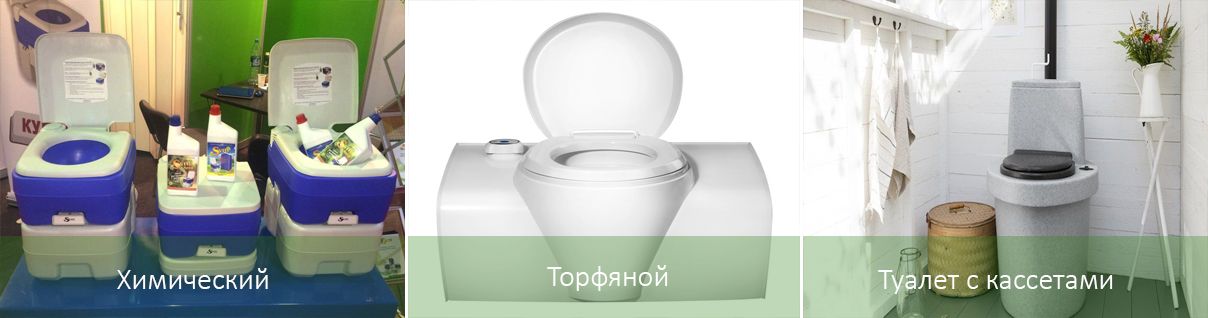
Chemicals
This type of waste disposal system typically uses chemical reagents as the primary means of waste disposal. Another name, liquid-based, fully captures the device's essence: a special solution is poured into a dedicated compartment, usually located at the bottom of the housing (depending on the model). When waste enters this liquid, the odor is completely eliminated at the molecular level: the reagent breaks down the gas particles.
The contents of the compartment are combined into a homogeneous, odorless substance, which is removed by the owner once the container is completely filled. A special indicator located on the unit's lid should indicate this. The chemical solution has a specified shelf life, during which it remains active. After the allotted time has elapsed, new liquid is added to the compartment; this typically lasts 1-2 weeks, depending on the quality of the reagent.
The main advantage is the complete elimination of unpleasant odors and the relatively simple maintenance, installation, and cleaning processes. Also significant are the drainless flush and the optional ventilation if the toilet is located indoors. The main disadvantage is the cost of the chemical solutions and the short shelf life. While this option is not budget-friendly, it is quite practical.
Peat
This type is the most environmentally friendly of all the options presented. Its operating principle is quite simple and consists of mixing dry peat sand into the waste compartment. These composting toilets use special peat-based mixtures containing organic raw materials and active reagents that promote the fastest possible breakdown of waste. There is no need for additional flushing or running water, as all processes occur automatically and require no constant external intervention.
This unit is suitable for outdoor use (in small outbuildings), as it does not require any additional technical support and functions only through the timely addition of peat mixture.
Through the interaction of active components, all waste is converted into compost, which can then be used to fertilize the garden. This type doesn't take up much space, and cleaning is quick and easy.
However, there's a significant drawback that prevents many gardeners from purchasing this device: peat doesn't neutralize unpleasant odors. If a composting toilet of this type is placed indoors, such as in a country house, additional ventilation or manual odor removal with air fresheners will be necessary. However, if the location is chosen correctly, namely outdoors, this problem will not arise.
Toilet with cassettes
The operating principle of a cassette composting toilet is based on the autonomous flow of waste into a dedicated compartment—the cassette—from which it is subsequently removed manually. This type of device resembles a standard toilet, but it can be connected to a central sewer system. The standard capacity of the tank is approximately 20-25 liters. The container is easily removed and replaced if damaged, greatly simplifying cleaning and maintenance. However, if waste remains stagnant for long periods, cleaning the compartment becomes difficult, which is a significant drawback.
Most models feature a 180° rotating top and a special full indicator, which helps ensure the tank is emptied promptly. Unpleasant odors are also completely eliminated, allowing the cassette toilet to be installed indoors without additional ventilation. Thanks to these advantages, this type has become very popular among gardeners, although it lacks the capacity of some other types. Other disadvantages include the complexity of installation and the need for additional consumables to be used in case of breakdowns or malfunctions.
Electric
This type of composting toilet is the most technologically advanced and versatile. Its operation is entirely dependent on power, making it difficult to install outdoors. However, when used properly, an electric composting toilet is one of the best options indoors.
The operating principle is based on the design of the internal waste tank. It is divided into two sections, each responsible for a specific type of waste: liquid and solid.
In other words, the first compartment houses a specialized drainage system for urine, and the second for feces. This separation facilitates separate waste disposal via different routes. For example, the liquid compartment requires a direct connection to the central sewer system, which is quite problematic in a summer cottage, or a connection to a drainage system.
Solid waste is dried by electric compressors placed at the bottom of the bin and then removed manually. This only partially eliminates the unpleasant odor, as no additional chemicals are used during disposal. To completely eliminate the odor, the room should be well-ventilated and equipped with air fresheners. Cleaning these devices is also quite simple and mostly involves simply disposing of the contents of the compartments promptly.
Which portable toilet is best for a summer house: TOP 12
Let's look at 12 of the most popular models of portable toilets, which, according to user reviews, have excellent technical characteristics and a good price-quality ratio.
To enlarge a model's photo, click on it.
| Type | Model | Description | Cost (rubles) |
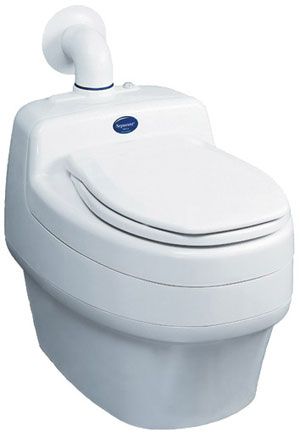
| Electric. | Separett Villa 9011
|
A special compact compress for drying waste is included. Cleaning is required every two months. | 34800 |
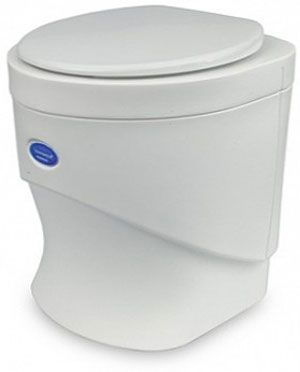
| Separett Weekend 7011
|
The main body material is polyethylene. It is equipped with a waste separation function. | 17980 | |
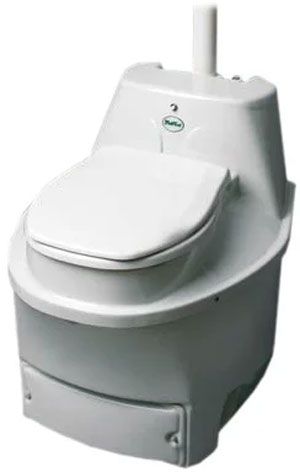
| BioLet 25
|
It features accelerated solid waste composting. Cleaning and maintenance are required only once a year. | 95800 | |
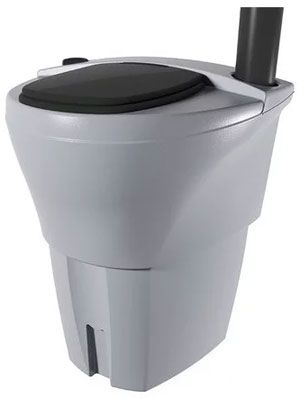
| Peat. | Kekkila Termotoilet
|
Tank capacity: 230 l, manual addition of peat mixture, standard seat height: 42 cm. Weight: 24 kg. | 38650 |
| Tandem Compact-Eco
|
There is a special fan, the tank volume is 60 l, weight is 12 kg. | 7784 | |
| Biolan Populett 200
|
Weight: 50 kg, wheels, 200 liter waste container. The seat is located 48 cm from the ground. | 65000 | |
| Piteco 201
|
One of the best models, with a tank capacity of 45-77 liters. Easy to clean, no unpleasant odors. The main material is frost-resistant polyethylene. | 8989 | |
| Chemical. | Thetford Porta Potti Qube 365
|
There is a piston pump designed for draining sewage, weight - 4 kg. | 7325 |
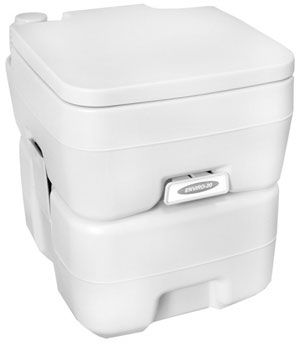
| Enviro 20
|
There's a drain and carrying handles. The upper tank holds 10 liters, while the lower tank holds 20 liters. | 4809 | |
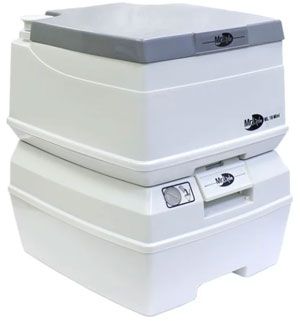
| Sanitation Equipment Limited Mr. Little Ideal 24
|
The upper tank has a capacity of 15 liters, the lower one - 24 liters. There are fill indicators, compact, weight - 4.5 kg. | 7189 | |
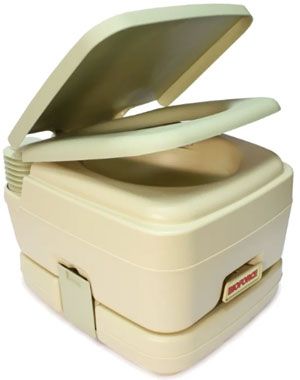
| Bioforce Compact WC 12-10
|
A portable, convenient model that can hold up to 120 kg. The upper tank holds 12 liters, while the lower tank holds 10 liters. | 4550 | |
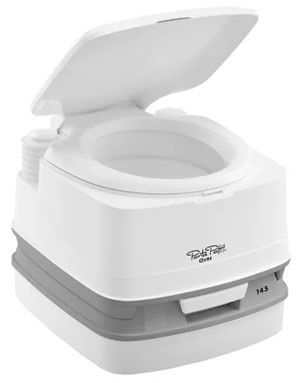
| Thetford Porta Potti Qube 145
|
Weight: 3.6 kg. Tank capacity: 12 liters. Compact and easy to transport. | 4090 |