In terms of nutritional value, beans are among the top ten most nutritious crops grown by humans. They are 75% digestible, a treasure trove of biological building blocks, and a rich source of energy. This plant has a centuries-old history. Nutritious beans store well and are rich in protein and amino acids. In recent years, selected asparagus varieties have become popular; they grow well outdoors in many climates.
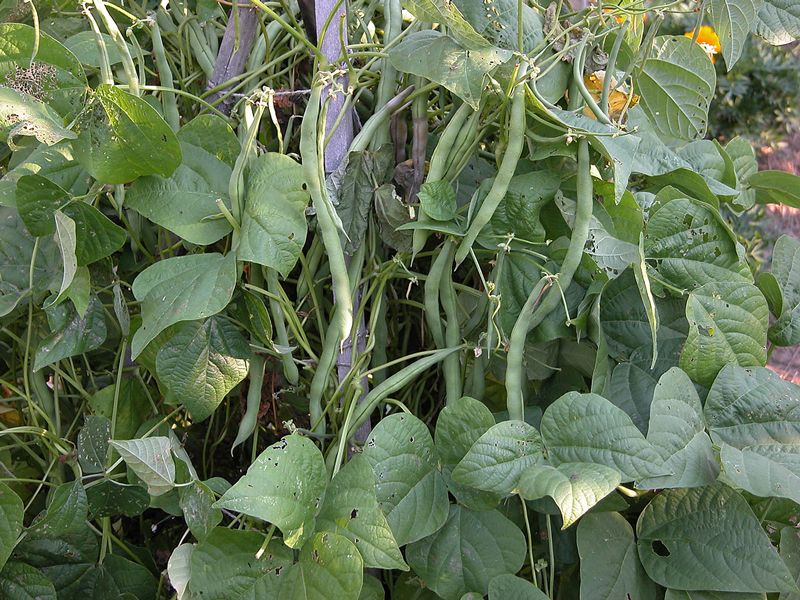
Beans are often grown on balconies and loggias for decorative purposes. This heat-loving crop adapts well to transplanting; in the Urals and Siberia, it is grown from seedlings. Early-ripening varieties ripen even in cool summers. The beneficial properties of this crop are recognized in folk medicine. It is recommended for dietary nutrition for many ailments.
Content
Biological description of beans
An annual climbing plant of the legume family, the common bean has approximately 90 species. Common beans naturally grow in warm regions of Europe, Asia, and North and South America. The plant's stem is branched and sparsely pubescent, with deep green, trifoliate leaves attached to the trunk by long stalks. Flower stalks grow from the leaf axils to the upper two-thirds of the trunk. The flowers are irregularly shaped, with 2 to 6 flowers per raceme. Varieties with milky-white, cream, varying shades of pink, lilac, purple, and violet petals are found.
Beans are cultivated in many countries worldwide, exported, and considered a strategically important crop. The name translates from Greek as "boat." The fruits and young pods are eaten, and they range in length from 5 to 25 cm. Beans of different varieties differ in:
- by color, there are red, white, gray, yellowish, variegated, black;
- by shape: they can be cylindrical, uneven oval, curved, or crescent-shaped.
Inside the pod, the beans are separated by small, incomplete partitions. There are two varieties of beans:
- The common climbing variety reaches 3 meters in height, while the bush variety grows up to 50 cm. It produces large pods with hard, slightly pubescent valves, which contain 3 to 8 ripening fruits.
- Asparagus, or sugar bean, has long, narrow pods that are consumed during the milky stage of ripeness. The pods taste similar to asparagus spears.
In garden plots and loggias, beans are grown as a vegetable and flower crop.
Open-ground cultivation technology
When planting beans in the garden, it's important to remember that they require both light and heat. Growth stops when temperatures drop below 10°C. Prolonged cold spells can kill the shoots. Choose fertile soil, but not too rich in organic matter. Excess nitrogen reduces yield, as the plant devotes all its energy to green growth. Like other legumes, beans require phosphorus, potassium, and calcium. Climbing varieties are grown on trellises and are often used as hedges, arched coverings, and to decorate gazebos and seating areas.
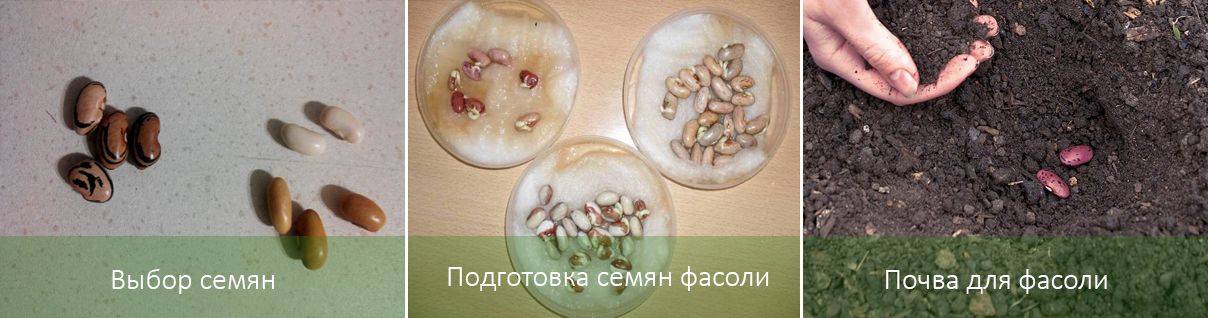
Selecting seeds
Growing green beans is not possible in all regions, due to the different growing seasons of the varieties:
- early maturing, vegetation period of 50 days (Cinderella, Tatyana ripen earlier than all, Saxa, Melodiya, Karamel, Inga, Bona are not susceptible to fungal and viral diseases, Maslyany Korol is distinguished by beans with yellowish oily pulp);
- mid-season varieties require 70 warm days and nights (Nagano, Deer Root, Nota, Zhuravushka, Panther are cultivated for freezing, Purple Queen amazes with the purple color of its pods);
- Late-ripening varieties require up to 90 days to grow; these are large-fruited varieties for peeling, long-term storage, and fully ripen in southern latitudes.
Early ripening varieties are not suitable for freezing; they are consumed fresh or for canning.
Preparing bean seeds
Pre-planting preparation involves sorting the seed. Damaged, pitted, diseased, or discolored beans are discarded, as they will not produce a viable plant. The selected beans are tested for firmness by immersing them in a salt solution. Empty beans will float, while others sink to the bottom when stirred. After the salt bath, the seeds are washed and dried.
Home-harvested beans are usually planted the following year. When purchasing seeds in stores or online, be sure to check the harvest date. Long-term storage causes beans to dry out, reducing yield. The optimal seed storage period is no more than two years.
Pre-sowing preparation of seed material includes:
- Preventative disinfection of beans. To do this, they are immersed in a manganese solution for 30 minutes. If left in water for too long, the beans will turn sour.
- Hardening is done to adapt to nighttime cold snaps. Wet seeds are placed in a refrigerator or other cool place at 4°C for 5–6 hours, then dried.
- To activate growth, 2 hours before planting, beans are immersed in a solution of biostimulants.
Pre-planting preparation of seed material allows for the production of uniform, strong shoots.
Location and soil for beans
Choose a well-lit area sheltered from strong winds for planting. Preferred predecessors include nightshades, melons, peppers, root vegetables, onions, and garlic. Beans can become diseased if planted after other legumes. The soil should be loose, light, and rich in potassium and phosphorus.
Planting dates
Early-ripening varieties can be sown when the threat of frost has passed and the nighttime temperature reaches 10°C. The optimal growth temperature is 18°C. Gardeners typically use cherry trees as a guide: after the flowers bloom, they plant seedlings or seeds. For seedlings, beans are sown in peat pots in early May, following the lunar calendar. They are pre-soaked, and the water is changed twice daily to prevent souring. When the bean swells, the skin bursts, and a sprout emerges. The bean is planted flat, 3–4 cm deep, and roots and a trunk simultaneously emerge from the sprout. The bean itself serves as a growing medium.
Planting and care
The beans are planted at a depth of 2 cm, with larger ones being planted up to 4 cm deeper to create a strong root ball capable of supporting the plant and its fruit. The distance between the holes is 15–20 cm. To avoid bare spots in the plantings, two or three beans are placed in each hole. Once the shoots have sprouted, one is left, choosing the strongest one. The remaining beans can be carefully transplanted to another location.
The seedlings are transferred to the holes after pre-hardening and planted using the transshipment method, without damaging the root ball. To maintain the root ball's density, the plants are allowed to dry before planting, then watered 15 minutes before planting. In sunny weather, the plantings are shaded. Strings or trellises are immediately installed to prevent damage to the roots.
Home growing technology
Beans can be planted in a pot or a flowerpot. They thrive on an open balcony or in a glassed-in loggia. A north-facing exposure is not recommended; in this case, supplemental lighting will be required to ensure proper growth. This climbing plant will be a beautiful addition to a winter garden or indoor greenhouse. With proper care, it can yield a good harvest.
Selection of varieties
Low-growing, bushy hybrid or self-pollinating varieties are suitable for indoor and balcony growing. Early-ripening asparagus produces compact bushes that are easy to care for. Varieties with different flower bud colors are typically selected, and several varieties are planted together. In addition to industrial varieties, ornamental bean varieties are also being bred.
They resemble thickets of vines. The seeds are not particularly tasty and rarely ripen, but the lush blooms delight for a long time. Popular varieties: Violetta, Krapinka, and Rumba are resistant to diseases and pests.
Planting and care
The cultivation techniques for indoor growing are the same as for gardening. For an aesthetically pleasing balcony, it is recommended to plant seedlings in stages at weekly intervals. The plant requires at least 12 hours of light; in winter, indoor seedlings for balconies and loggias are provided with supplemental lighting. The optimal time for sowing seeds is mid-May. For early flowers and fruit, beans are planted in early April. Then, gradually acclimate the plants to balcony conditions: first, they are brought outside for 20 minutes, then brought in only at night, and once the weather warms up, they are left outdoors.
Fertilize every month; you can use complex preparations for flowers with a low nitrogen content.
Fertilizers are applied during watering. The fertilizer is diluted according to the instructions, then the water volume is doubled. Seedlings and bushes prefer evening misting; a lot of dust settles on the leaves, and natural airflow and dew formation are absent in an apartment or balcony. It's important to monitor the condition of the trellises. The weight of the fruit causes the thin threads and ties to break periodically.
Top.tomathouse.com informs: Proper harvesting of beans
Beans for shelling are harvested after the beans have hardened and the pods have turned yellowish. The pods are usually picked from the uprooted, drying plant. The beans are dried, then shelled, and placed in canvas bags for storage. Planting material is collected in a similar manner.
Asparagus pods are harvested in a special way. They reach commercial maturity 7-10 days after the ovule sets. The pod size is no larger than the diameter of a barley grain. In a dry summer, all the fruits reach the required size in a couple of weeks; new flower stalks are not formed due to high temperatures, and the pollen is sterilized. With cool nights and regular watering, the harvest extends into late summer. The pods must be cut every 4-6 days to ensure the plant continues to bloom.
All crooked and defective pods are removed to prevent the beans from wasting energy on them. Harvesting is done in the morning or evening, when the air temperature is cooler. At +20°C, the nutritional properties of the beans and pods are quickly lost, so the finished product is quickly cooled or frozen for long-term storage. Beans are not eaten raw, as the glycoside phasin, which is harmful to the digestive tract, is destroyed when heated to +80°C. They are boiled for 30–40 minutes.