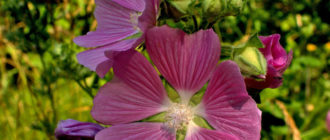
This elegant perennial flower will brighten any garden. However, if you want it to thrive and delight you with its vibrant colors, you need to care for it properly. The key to success is proper planting of hydrangeas in open ground.
When working with this plant, care must be taken as it is toxic. If ingested, hydrangea can cause poisoning or an allergic reaction. The plant is especially dangerous for small children and pets. Gardening gloves should be worn when handling it.
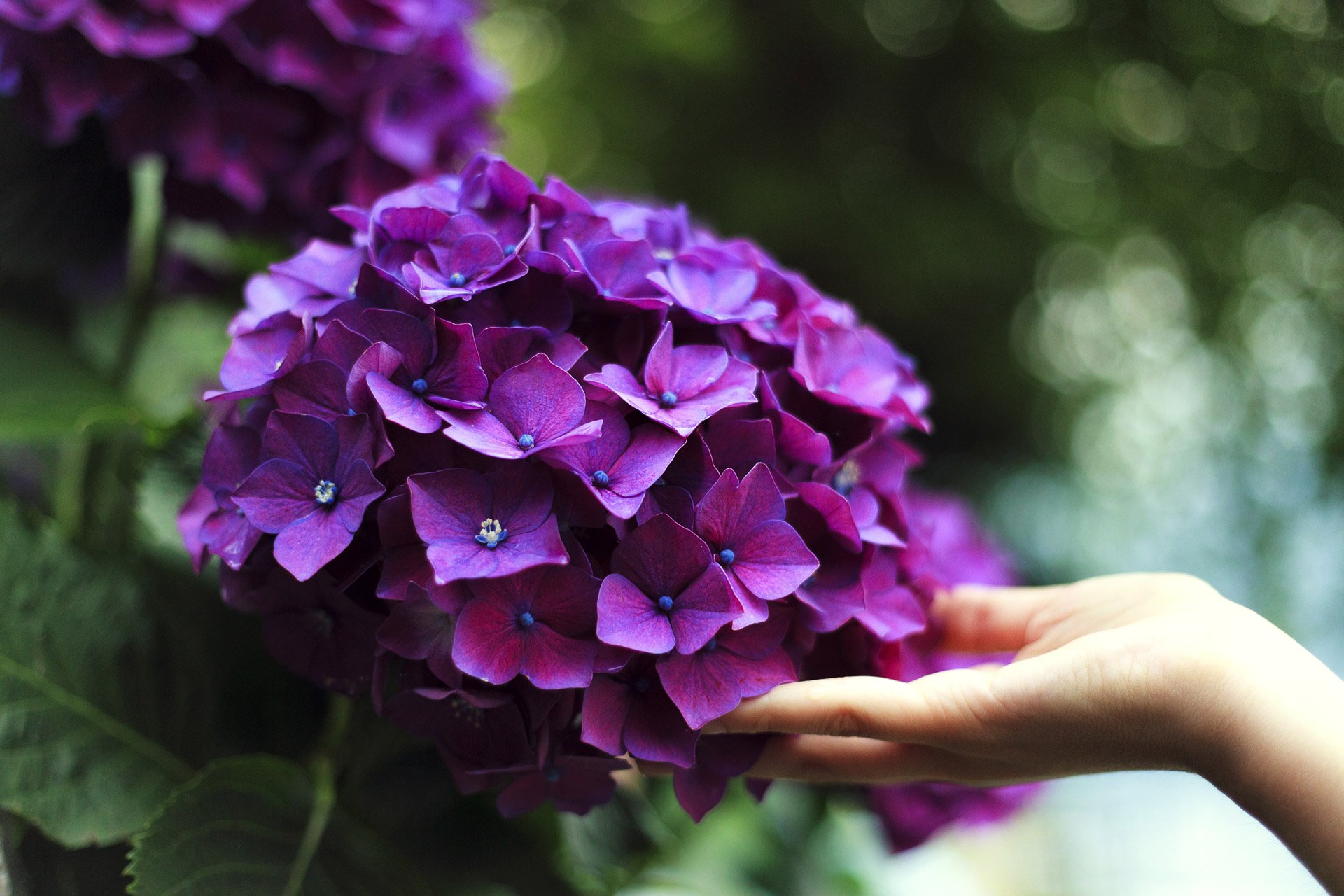
Content
- 1 Autumn planting of hydrangeas: advantages and disadvantages
- 2 Spring planting of hydrangeas - advantages and disadvantages
- 3 Timing for planting hydrangeas
- 4 Varieties and types of hydrangea for planting
- 5 Choosing a hydrangea seedling for planting
- 6 Step-by-step instructions for planting hydrangeas in autumn and spring
- 7 Planting Features of Different Types of Hydrangea
- 8 What to do with hydrangeas after fall and spring planting
- 9 Hydrangea care in autumn: table
- 10 Preparing hydrangeas for winter
- 11 How to properly transplant hydrangea in the fall
- 12 Top.tomathouse.com recommends: How to propagate hydrangea in the fall
Autumn planting of hydrangeas: advantages and disadvantages
A common question among beginning gardeners is when is it better to plant hydrangeas, in the fall or spring? It can be done in either season. However, planting in the fall offers the following advantages:
- If the root system develops well, you will be able to admire the flowers as early as next season.
- There is no frost yet and the ground is warm, so preparation will not require much effort.
- The activity of pests and pathogens has already passed, so the plant is safe.
- Fall planting saves time at the beginning of the season, when every minute counts.
But there are also disadvantages that should be taken into account:
- It's important to strictly adhere to the timing, otherwise there's a high risk of plant death. At least four weeks should remain before the first frost. Therefore, spring planting is preferable if you're unsure of your region's climate.
- You cannot neglect covering and mulching; these measures will protect the flower, which is vulnerable after planting.
- If the weather becomes rainy and cold, hydrangea may suffer from fungus.
Spring planting of hydrangeas - advantages and disadvantages
Although it's possible to plant hydrangeas in the fall, gardeners prefer to do so in the spring. The advantages of spring planting:
- Favorable weather allows the young plant to better take root in a new location.
- In spring, hydrangea cuttings may take root.
Cons:
- It is difficult to provide the flower with sufficient humidity.
- Young plants need shade from the scorching sun.
Timing for planting hydrangeas
Planting is always stressful for a plant. To speed up rooting and allow the shrub to recover, timing is key. The golden rule is to allow at least three weeks between planting and the first frost, and then wait until the last frost has passed in the spring.
By region
Hydrangea planting times vary depending on the region. In the southern regions, fall planting is preferred, while in the northern regions, spring planting is recommended.
- For the Central Belt (including Moscow and the Moscow region), the optimal time is: mid-to-late May or the first half of September.
- Residents of the northern regions, Siberia, the Leningrad region, and the Urals can plant hydrangeas no earlier than the end of May and no later than the end of August or the beginning of September.
- In the southern regions, this procedure can be carried out: in spring: throughout April, in autumn: throughout October.
According to the lunar calendar of 2024

If you pay attention to the lunar calendar when doing gardening, then adhere to the following dates:
| Month | Favorable and the most favorable days | Unfavorable, prohibited days |
| April | 1 (from 07:04) - 3 (until 12:07), 5 (from 14:12)-7 (until 14:24),9 (from 14:22)-11 (until 15:57), 13 (from 20:44)-16 (until 05:24), 18 (from 5:09 p.m.) - 22, 25, 28 (from 12:37 pm)-30 (until 18:20 pm) | 3 (from 12:07 pm) -5 (until 14:12 pm), 7 (from 9:20 p.m.),8, 9 (until 21:20), 23, 24, 30 (from 18:20) |
| May | 2 (from 21:52)-4 (until 23:40), 11 (from 06:12 pm) - 13 (until 13:35 pm), 16-22 (until 16:52), 25 (from 18:36)-27, 30 (from 03:32)-31 | 1-2 (until 21:52), 7 (from 06:22), 8, 9 (until 06:22), 22 (from 16:52), 23, 24 (until 16:22), 28-30 (until 03:32) |
| June | 3 (from 08:54 a.m.) -5 (until 11:36 a.m.), 7 (from 15:40)-9 (until 22:27), 12 (from 08:39 a.m.)-19 (until 19:32 p.m.), 23 (from 04:07 a.m.) - 24 (until 06:14 a.m.), 26 (from 09:07 a.m.) - 28 (until 11:51 a.m.), 30 (from 15:01 a.m.) | 5 (from 15:37), 6, 7 (until 15:37), 21 (from 04:07), 22, 23 (until 04:07), 24 (from 06:14)-26 (until 09:07) |
| August | 1-3 (until 14:08), 6-13 (until 13:00), 15 (from 20:51)-17, 20 (from 21:25)-21, 24-26 (until 06:04), 28 (from 11:47)-30 (until 20:08) | 3 (from 14:13), 4, 5 (until 14:13), 18, 19, 20 (until 21:25) |
| September | 4 (from 04:55) - 9 (until 20:25), 12 (from 05:36 a.m.) -14 (until 10:52 a.m.), 16 (from 12:39 p.m.), 20 (from 12:02 pm)-22 (until 1:23 pm), 24 (from 17:49 pm)-26, 29 (from 12:42 pm)-30 | 2 (from 04:55), 3, 4 (until 04:55), 14 (from 10:52 a.m.)-16 (until 12:39 p.m.), 17 (from 05:34), 18, 19 (until 05:34) |
| October | 1 (until 21:49),3 (from 21:49)-6, 9 (from 12:38 pm) - 11 (until 19:31 pm), 13 (from 22:55) - 15, 18 (from 14:26)-19, 22-24 (08:24), 26 (from 18:47)-31 (until 15:46) | 1 (from 21:49), 2, 3 (until 21:49), 11 (from 19:31 pm)-13 (until 22:55 pm), 16 (from 14:26), 17, 18 (until 14:26) |
When planting in the fall, carefully inspect the seedlings. Only plants with fully developed roots should be planted; otherwise, the hydrangea won't have time to establish itself properly before the cold weather sets in.
Varieties and types of hydrangea for planting
Hydrangea was brought to Russia from England and France. Initially, only red and white varieties existed. However, breeders worked diligently and developed many other varieties.
| View | Detailed description | The most popular varieties |
|
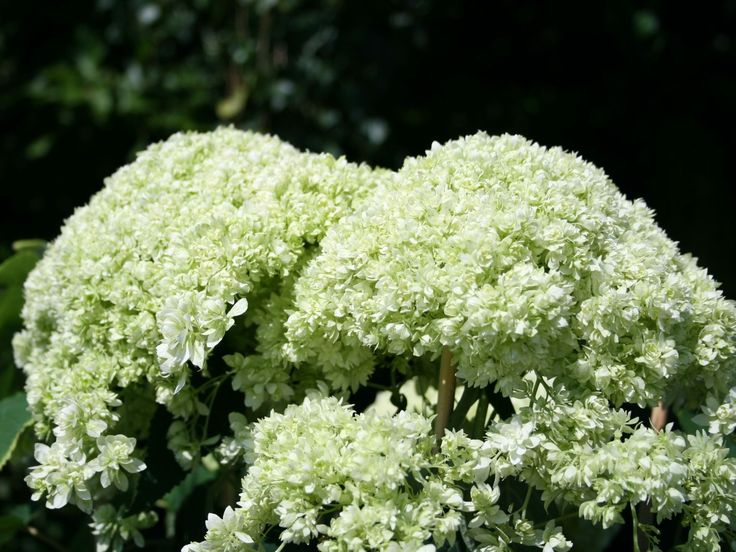
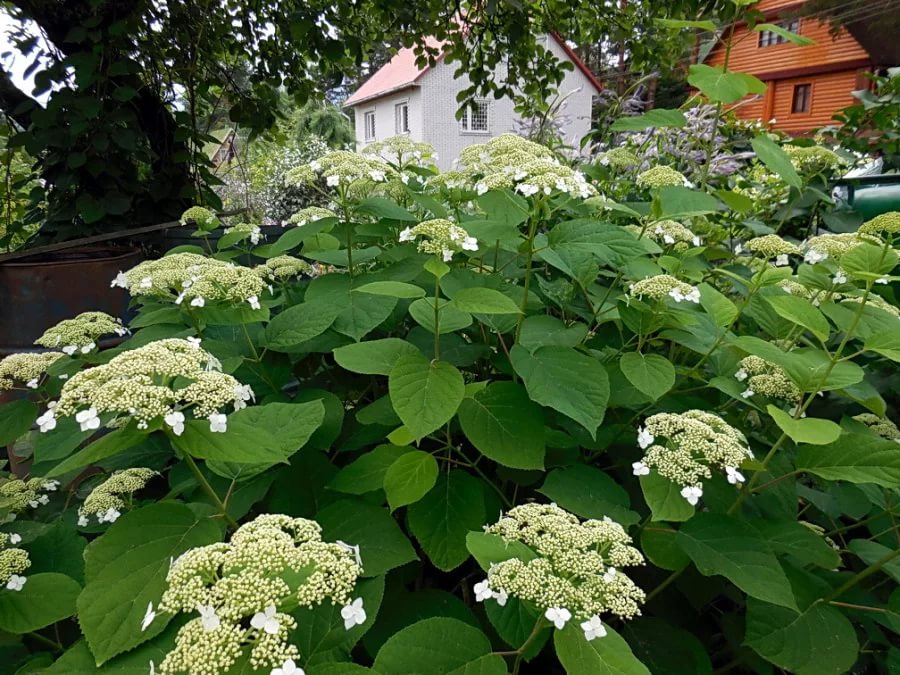
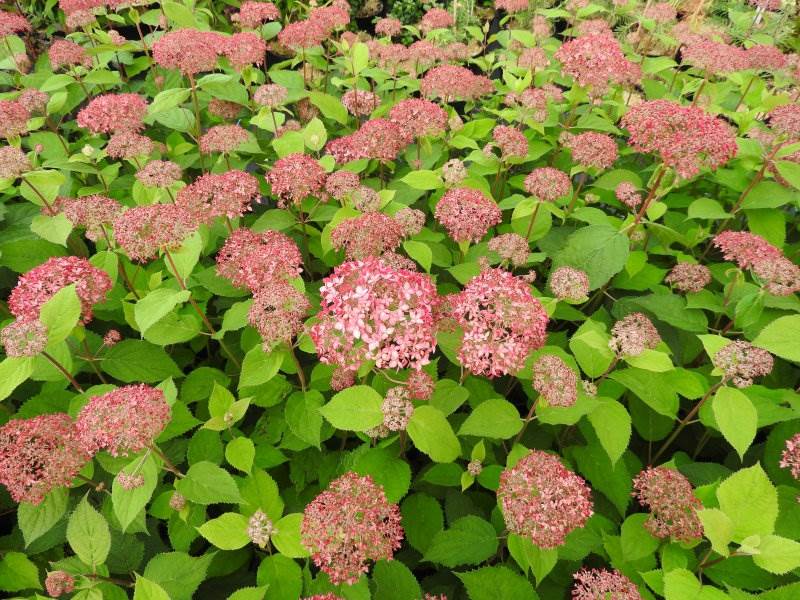
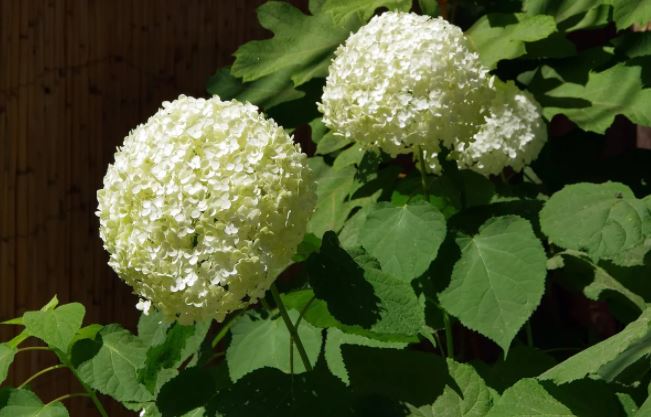
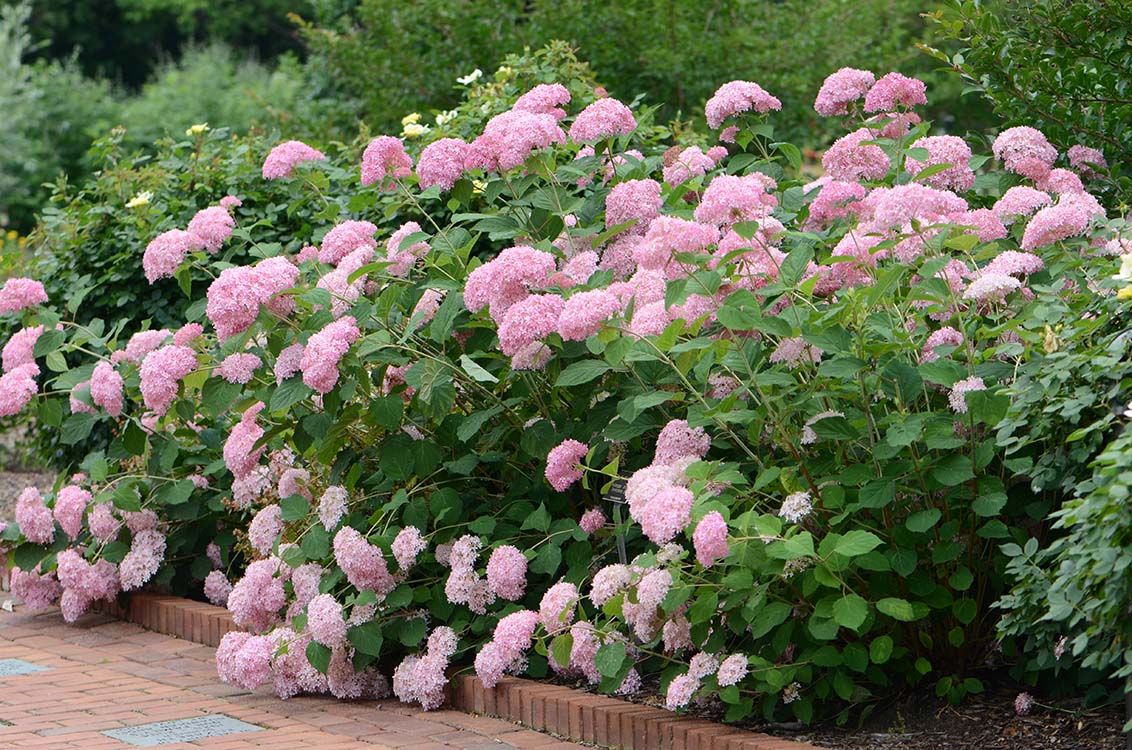
Hydrangea arborescens 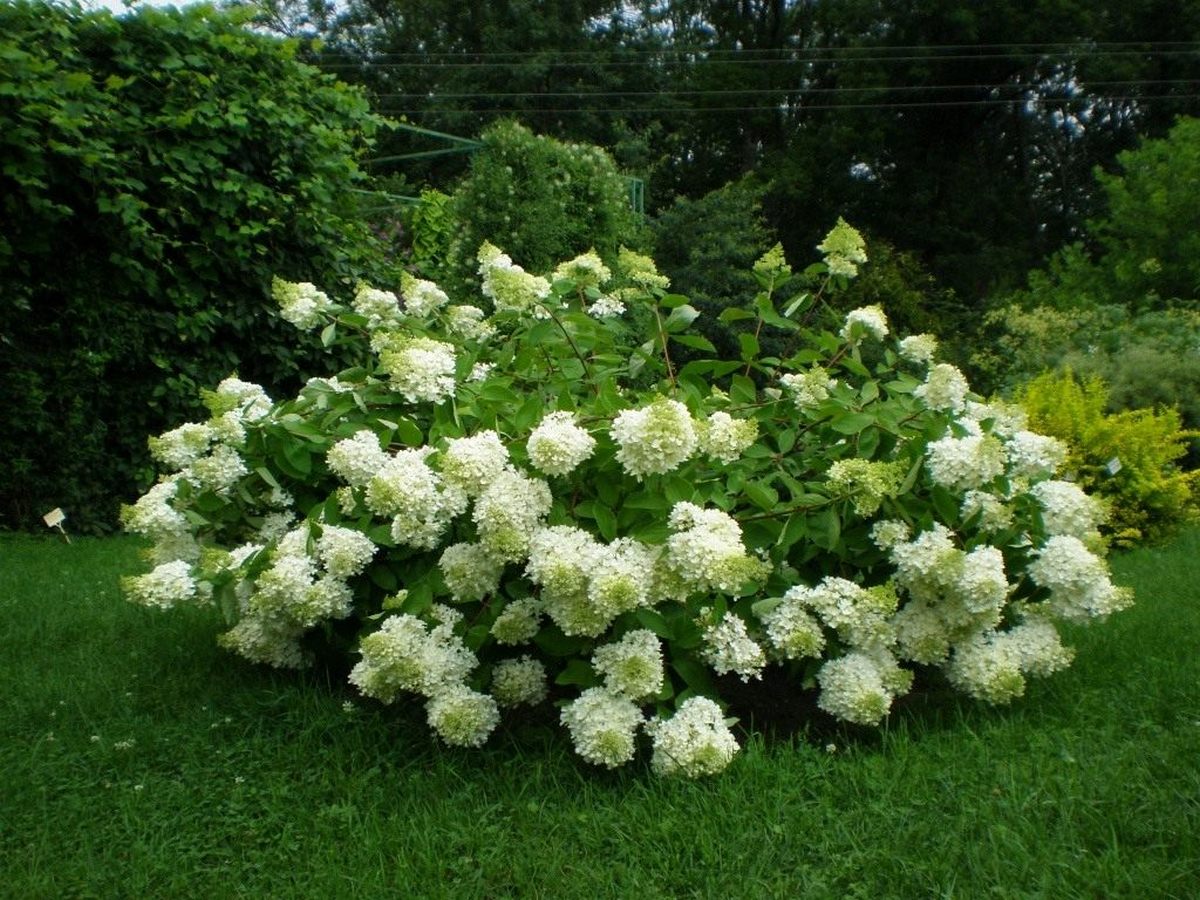
|
A fairly tall bush. Indoors, it grows up to 1.5 m, and in its natural habitat (North America), up to 3 m.
The leaves are oval-shaped and arranged on long petioles. The upper surface is green, while the lower surface has a bluish tint. The inflorescences are large, ranging from 12 to 20 cm in diameter, and are usually flat or spherical in shape. Fully bloomed flowers are white or cream-colored. The plant is shade-tolerant and survives winter well. However, shoots that don't have time to harden are susceptible to frost. |
Annabelle — a distinctive feature is the large crown. Sterilis, having white inflorescences. Grandiflora — a bush with cream-colored flowers. Hayes Starburst— is distinguished by its double flowers. White Dome — has a crown diameter of 2-3 m. Flowering occurs from June to September. The fruiting buds are creamy, while the marginal buds are snow-white. The inflorescences reach 25 cm in diameter. Pink Percussion — At the beginning of flowering, the buds are pink. They then turn snow-white or lilac-pink. The variety thrives in a shady spot, protected from strong gusts of wind. Incredible The underside of the leaves is a glaucous-blue, while the upper surface is a rich green. The flowers are gathered in spherical inflorescences reaching 30-40 cm. The petals' hue changes throughout the growing season. Initially, they are yellow-green, then milky, and toward the end of flowering, they become lemon-colored. Invincibelle Spirit This variety was brought to Russia relatively recently. It is distinguished by excellent winter hardiness and disease resistance. During flowering, the bush produces numerous pink inflorescences, reaching 20 cm in circumference. |
|
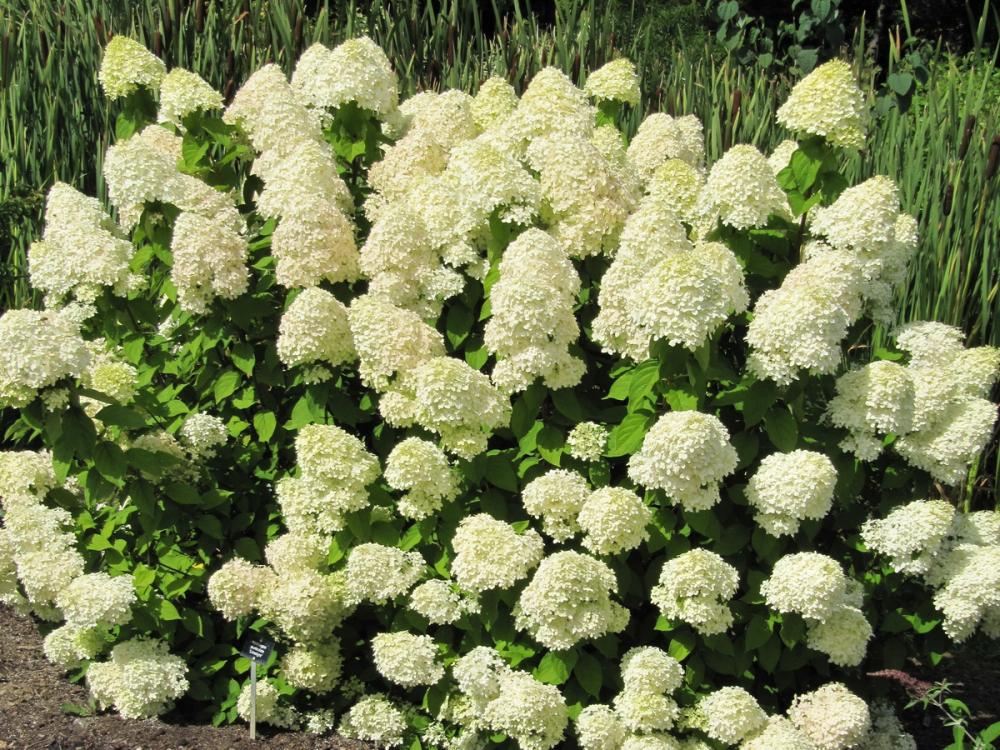
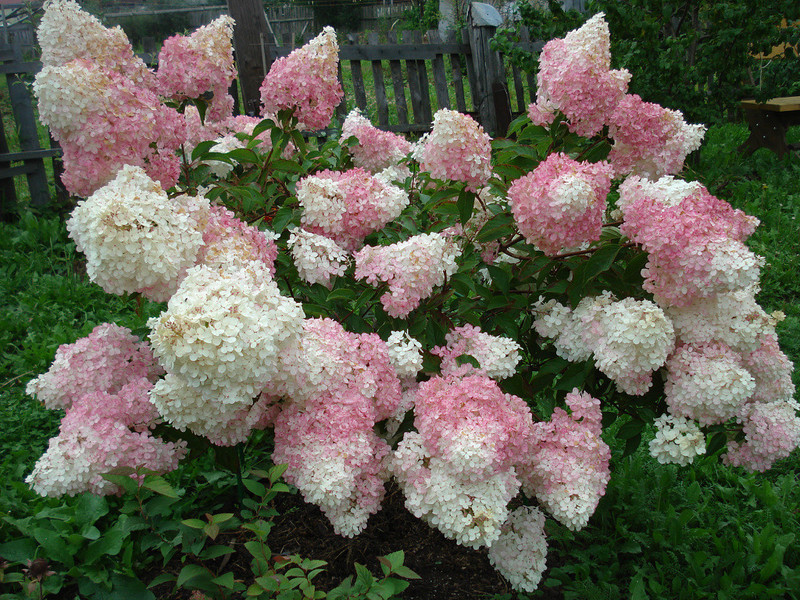
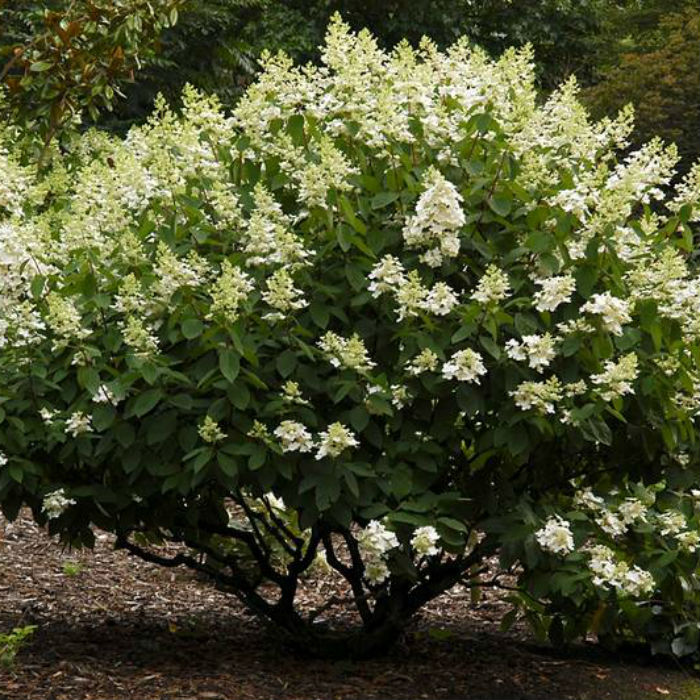
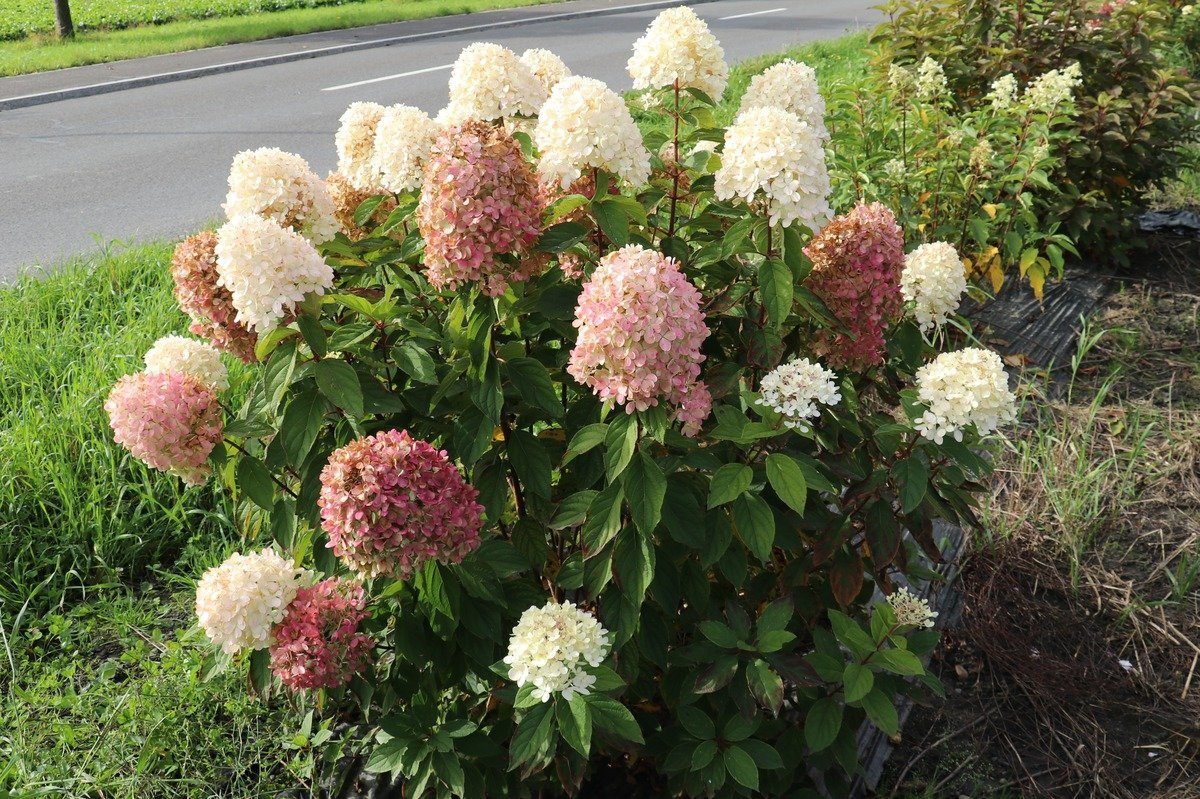
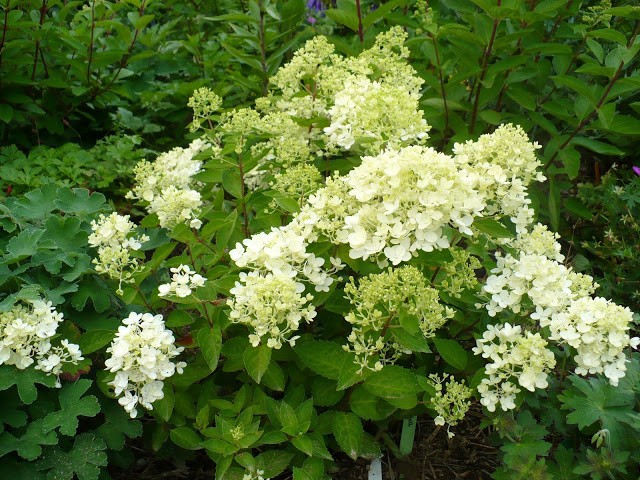
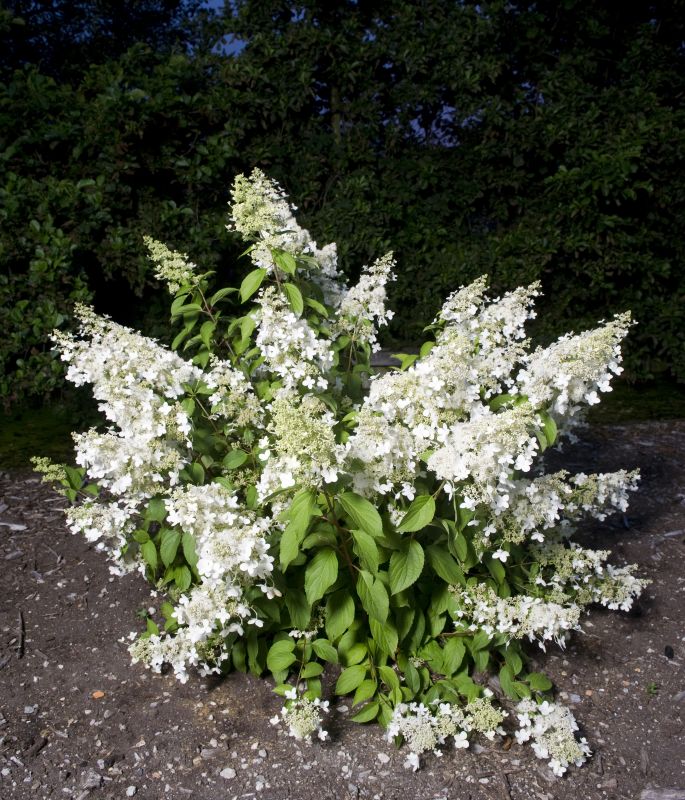
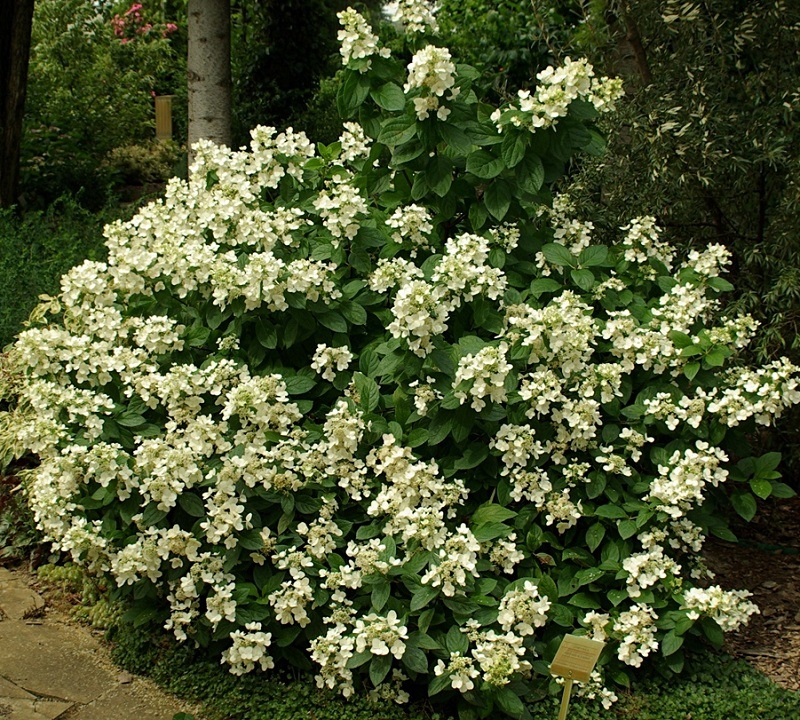
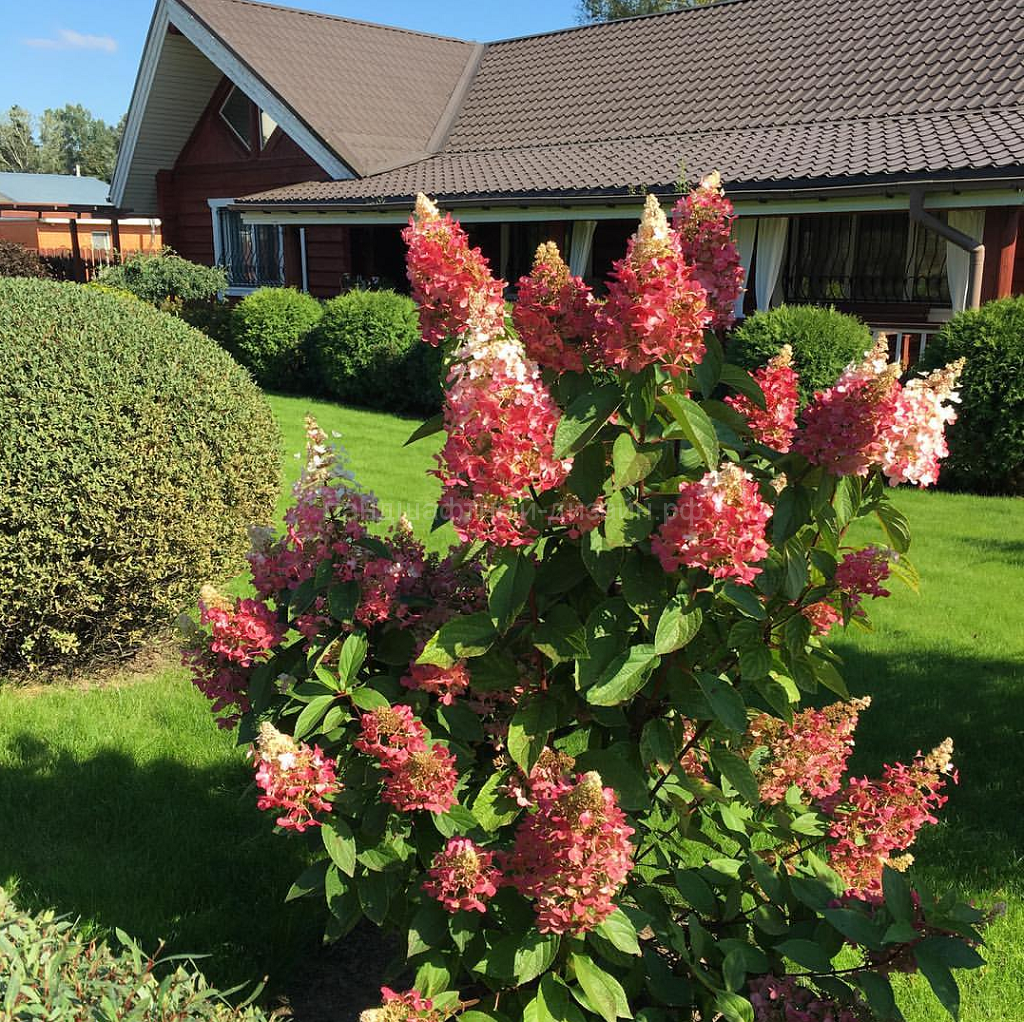
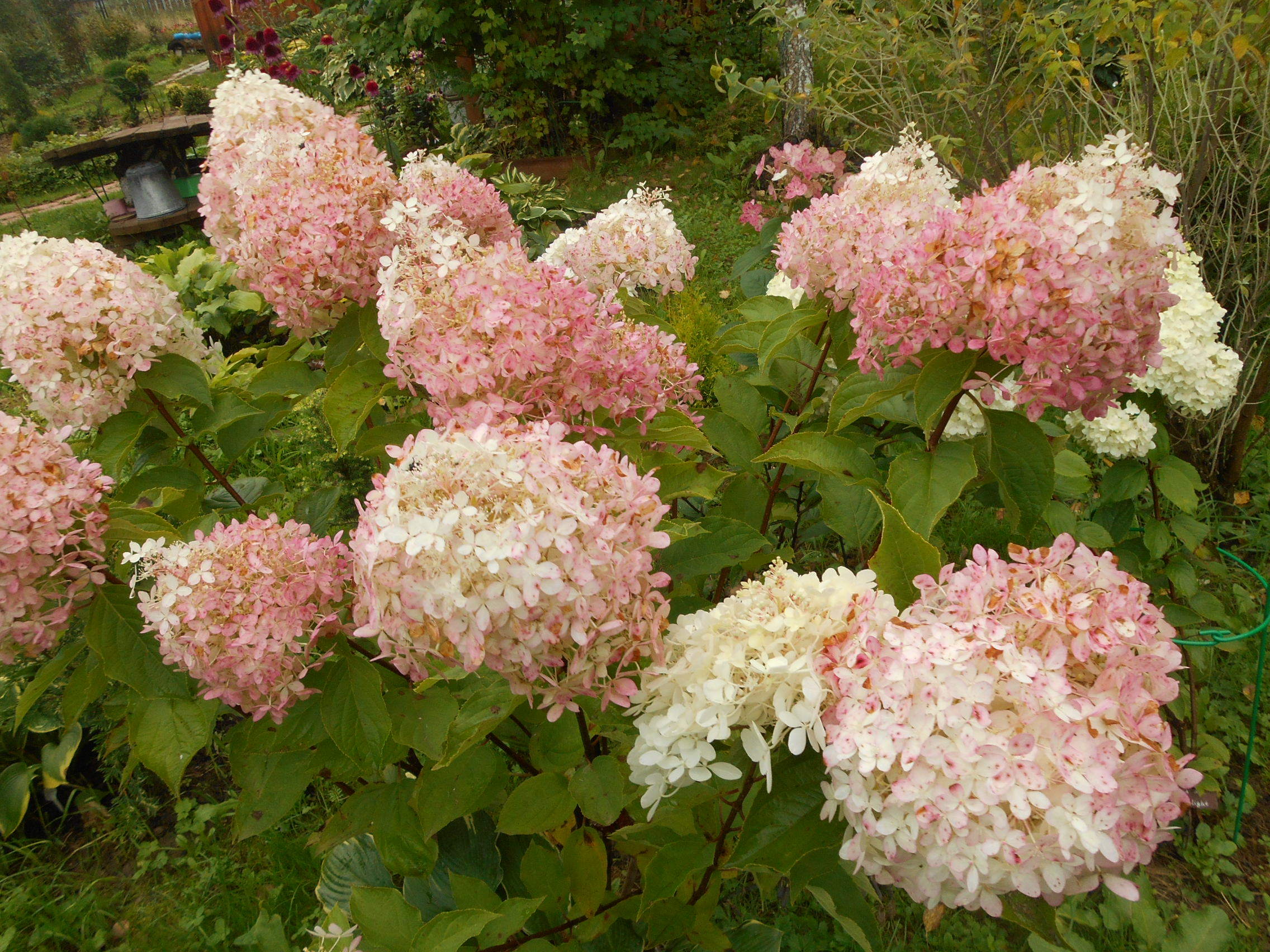
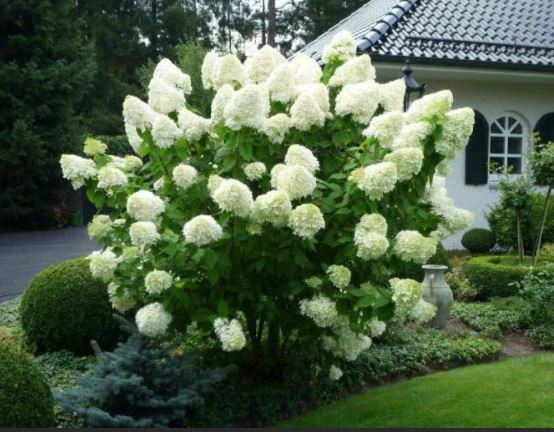
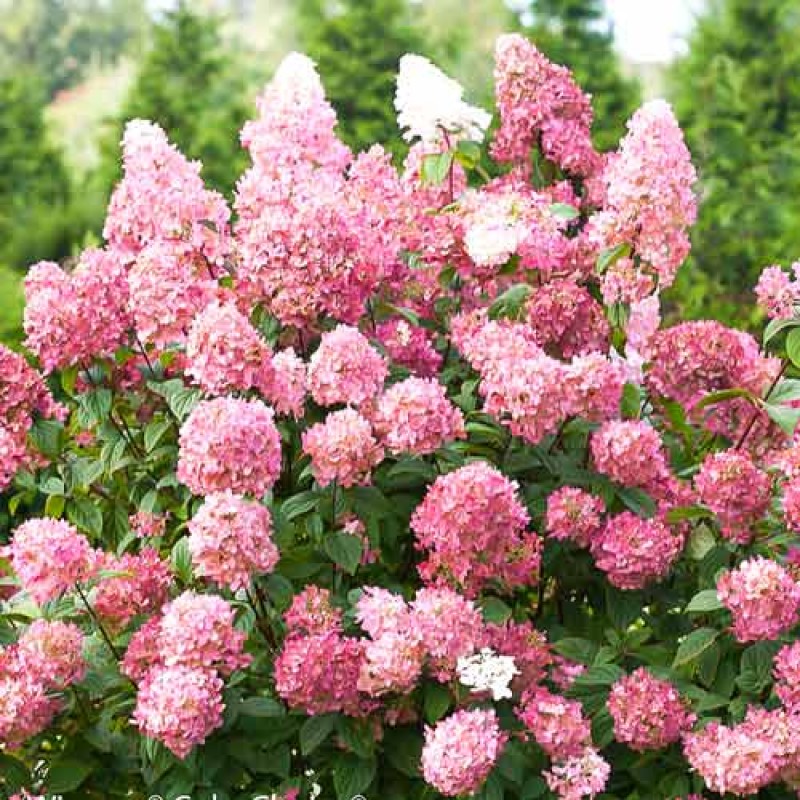
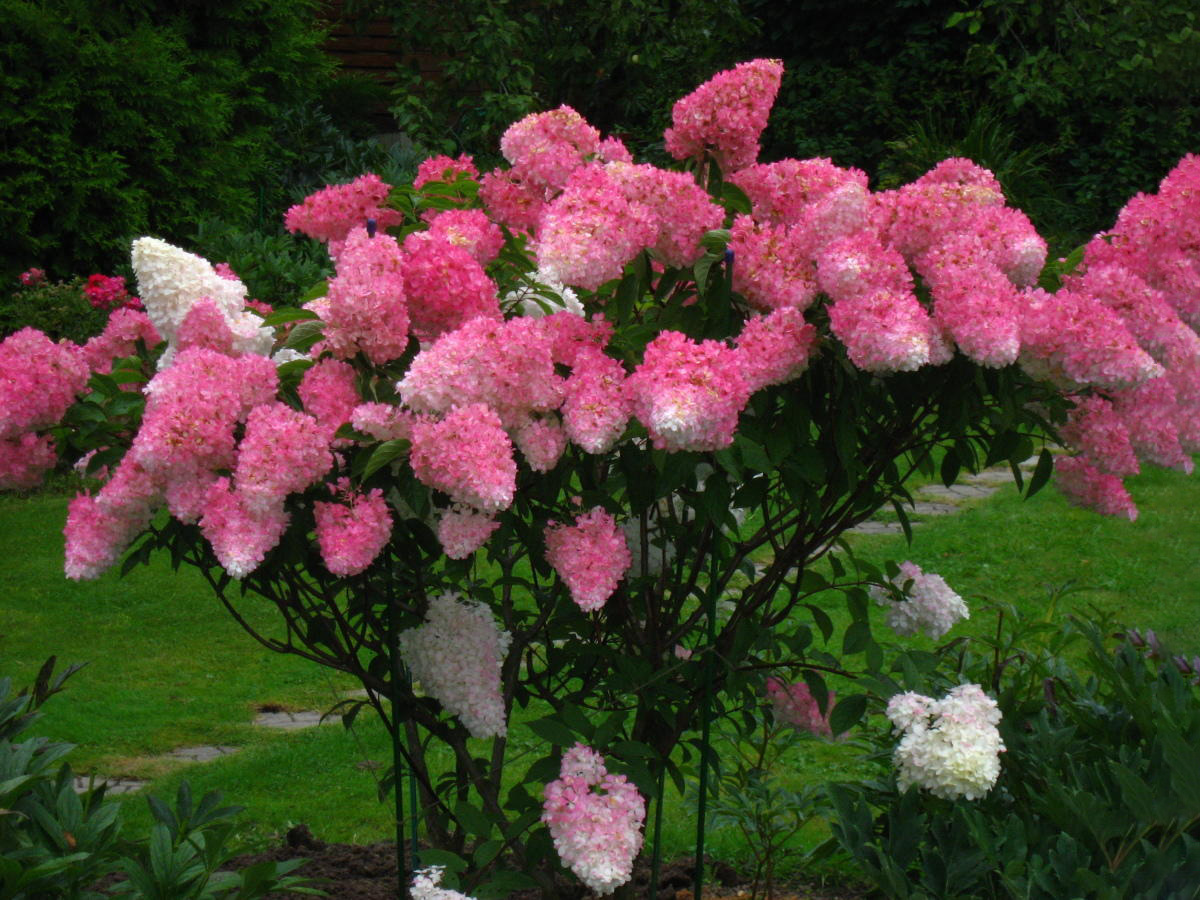
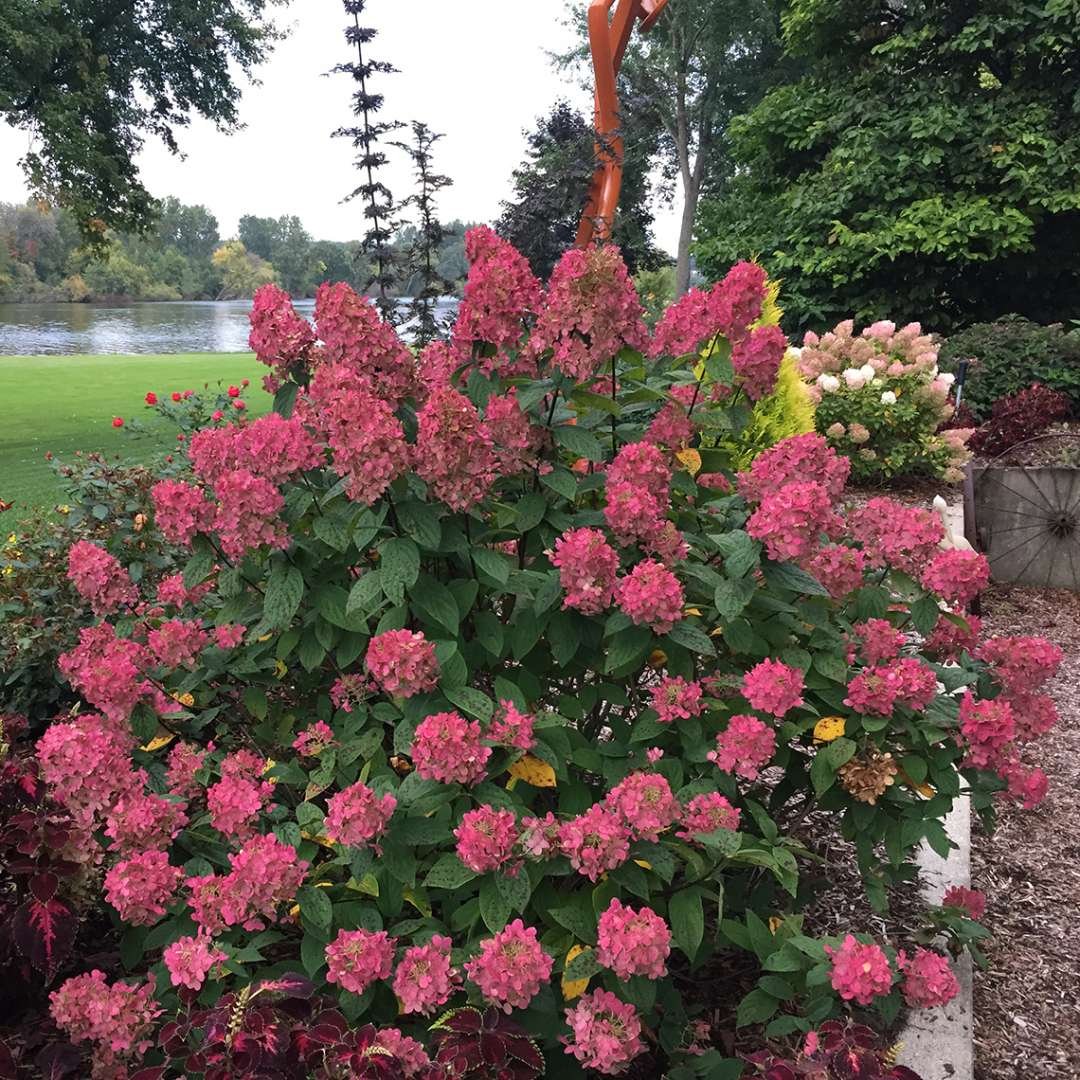
Hydrangea paniculata 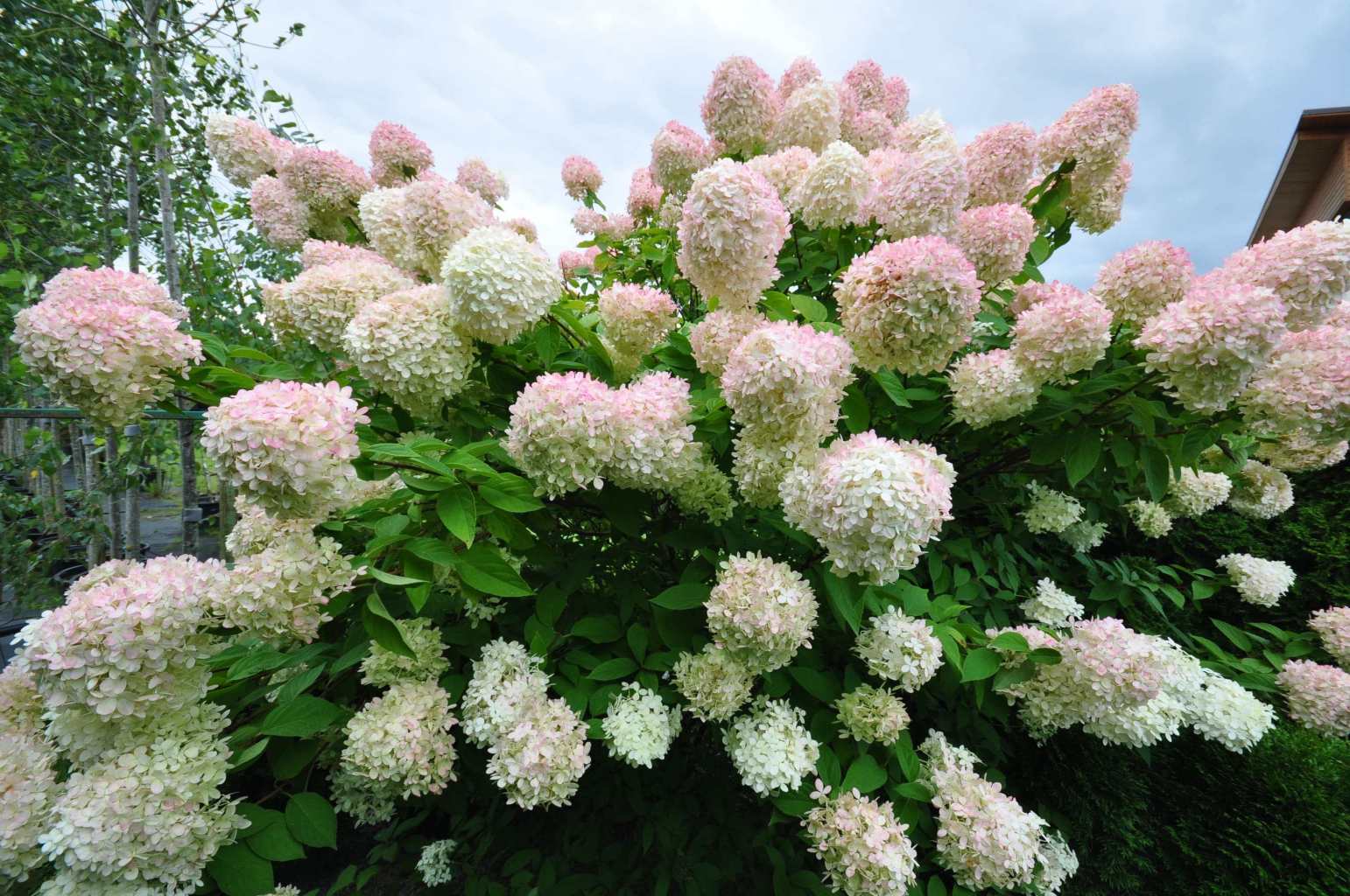
|
In natural conditions, these are shrubs or trees reaching a height of 10 m.
The distinctive feature of the species is its inflorescences, collected in broadly pyramidal, densely hairy panicles. The main advantages of the shrub are ease of care and resistance to low temperatures. The leaves are oblong and oppositely arranged. The inflorescences resemble pyramids. Flowering begins in June. |
Grandiflora- a popular variety with flowers that begin to turn pink with the onset of autumn. Limelight — This variety features large flowers that form voluminous, fluffy clusters. In late summer, the color turns slightly greenish. Vanille Fraize (Vanilla or Vanilla Fraize or Fraize) — begins blooming quite late. The inflorescences have an attractive white-pink color. Kyushu — a winter-hardy variety with beautiful white flowers. Bobo — a dwarf variety with delicate pink flowers. Bombshell — is distinguished by good frost resistance, making it suitable for cultivation even in northern regions. The shrub reaches a height of 0.8 m. The inflorescences form a pyramid up to 16 cm long and up to 12 cm wide. The flowers are cream or greenish-white. Brussels Lace — grows up to 2.5 m. Creamy-white flowers, 3-5 cm in circumference. Lifespan is 30 years. The variety easily tolerates temperatures down to -25 degrees Celsius. Dart's Little Dot — a small shrub 80-120 cm tall. Flowering occurs in July-August. During this period, flat, snow-white inflorescences form, which eventually turn pink. Pinky Winky — a variety with excellent decorative qualities. Small flowers are complemented by rather large ones. A gradual color change is characteristic—from white to bright purple by early autumn. The panicle blooms gradually, starting with the lower flowers, and the color changes as well. Phantom — tolerates temperatures down to -25°C. Recovers quickly from frosty winters. The pyramidal inflorescences can reach 30 cm in height. Initially light green, they later turn a soft pink. Polar Bear Snow-white inflorescences densely cover the shoots, giving the plant an airy appearance. They form pyramids reaching 40 cm in length. The petals have the ability to change color: initially pistachio-colored, then white, and by the end of flowering, they acquire a pinkish hue. Pink Diamond A distinctive feature of this variety is that it begins to bloom only after reaching four years of age. The reddish-brown shoots form a rounded bush that retains its shape even after heavy rain. Flowering is long, beginning in early June and ending in late September. Fraise Melba This variety quickly adapts to any environmental conditions, withstanding temperatures down to -30°C and -35°C. Even if the temperature drops below this level, the plant will survive if covered with non-woven fabric. The bush reaches a height of 2 m and requires no staking. Wim's Red The bush reaches only 1.5 meters in height, growing wider. The inflorescences are initially snow-white, then turn pink, and by the end of the growing season, they become a burgundy shade. They exude a distinctly sweet aroma with hints of honey. |
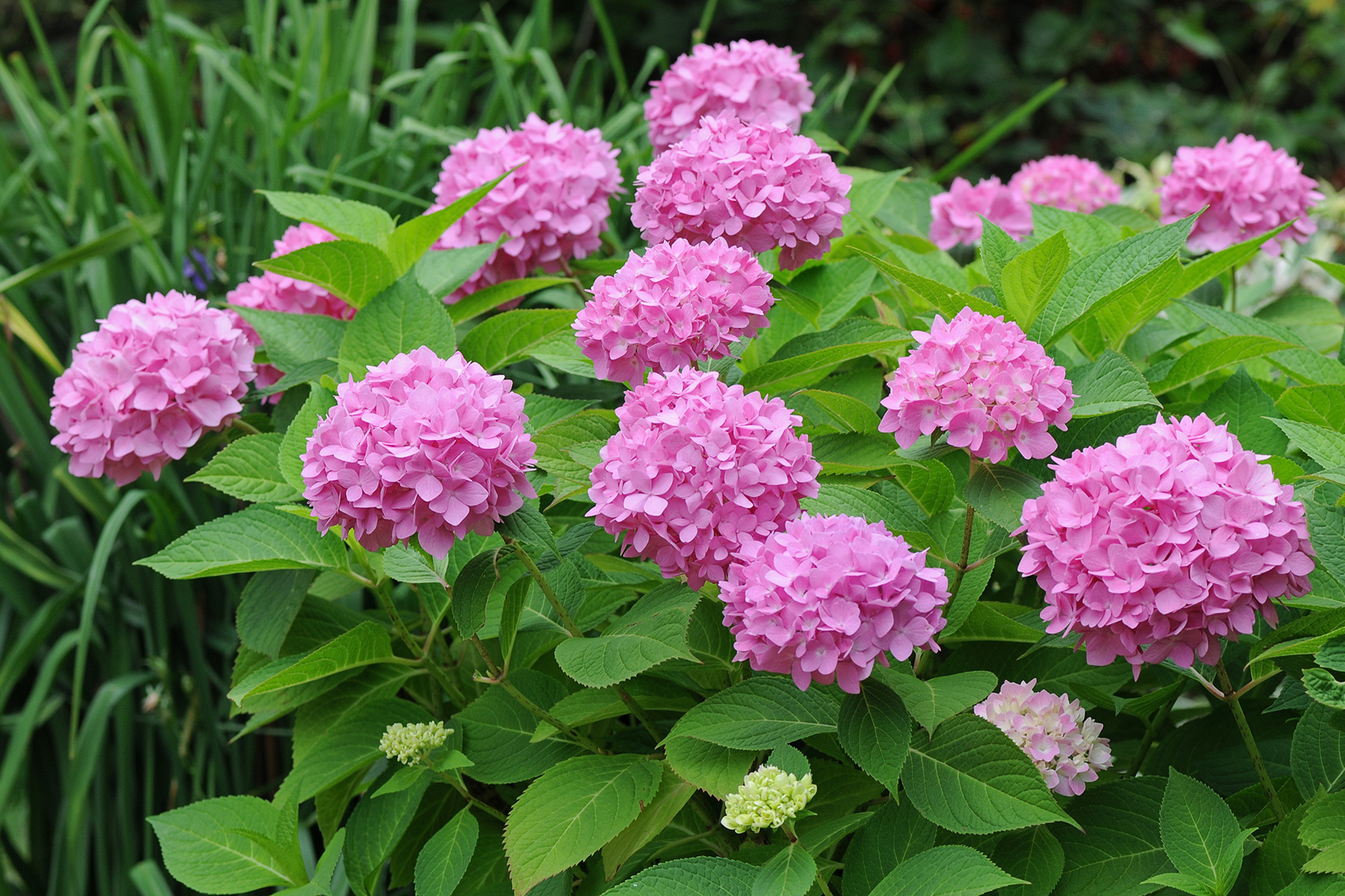
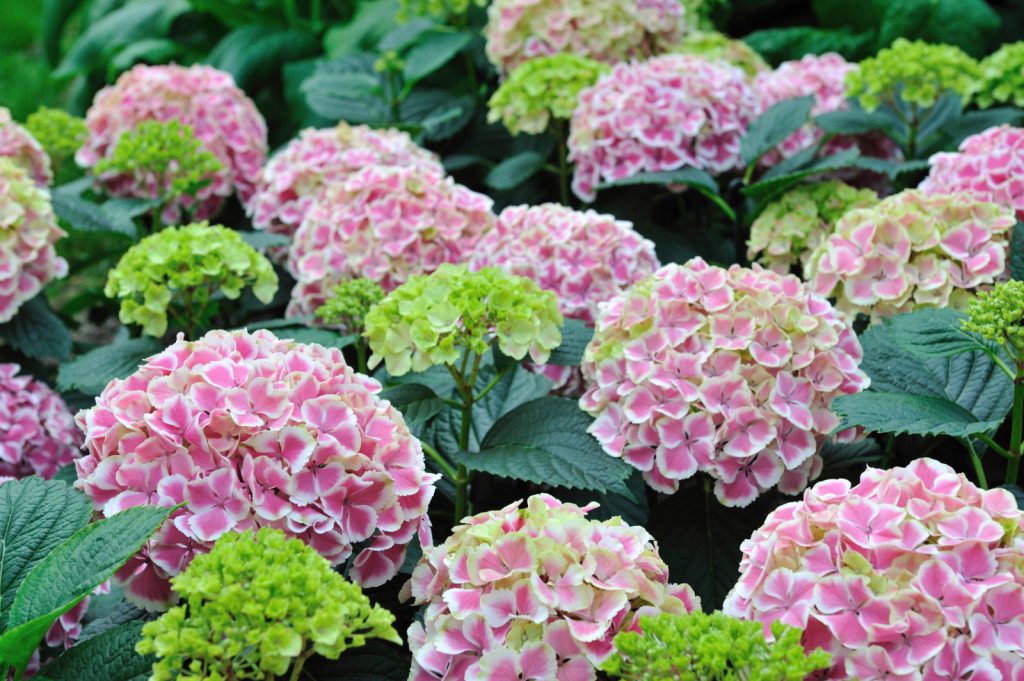
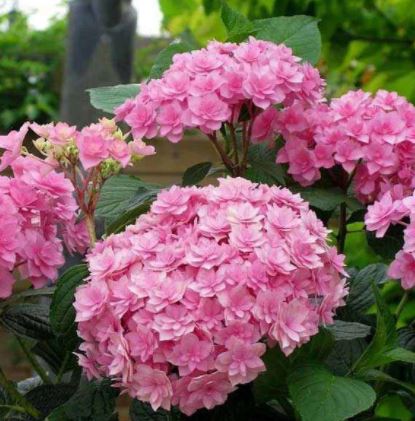
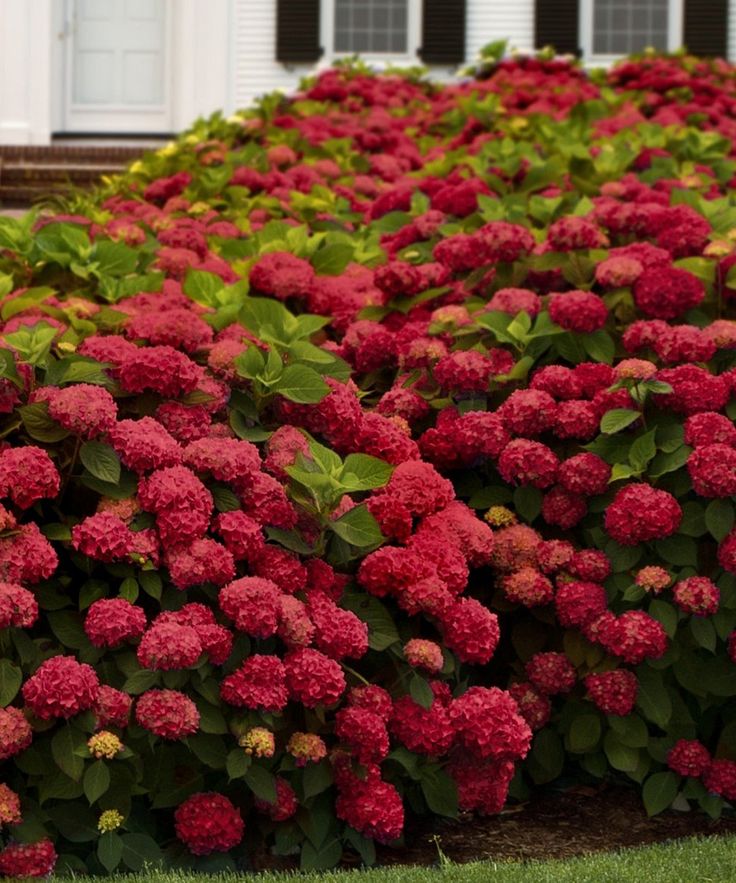
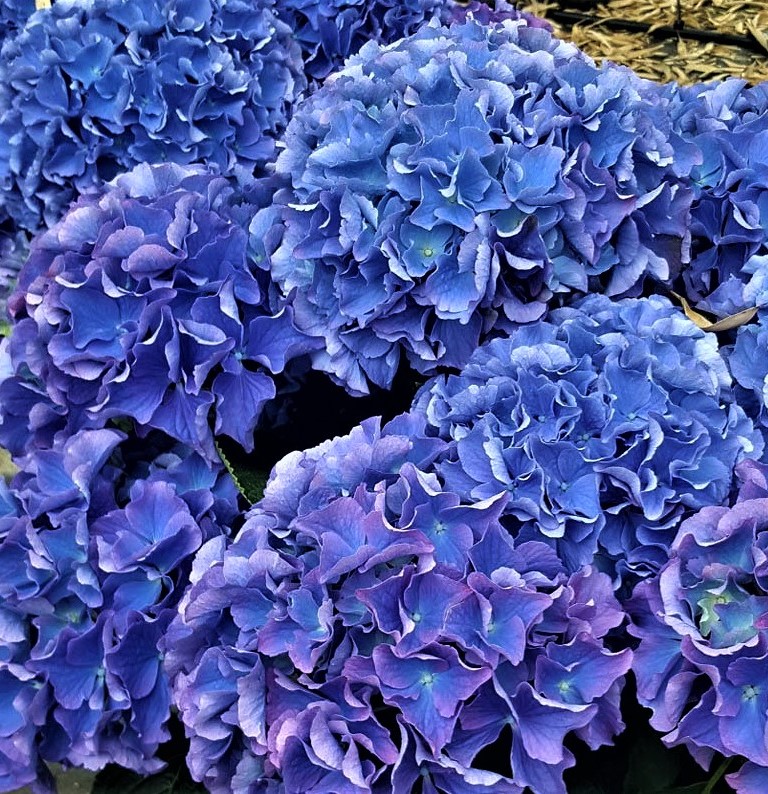
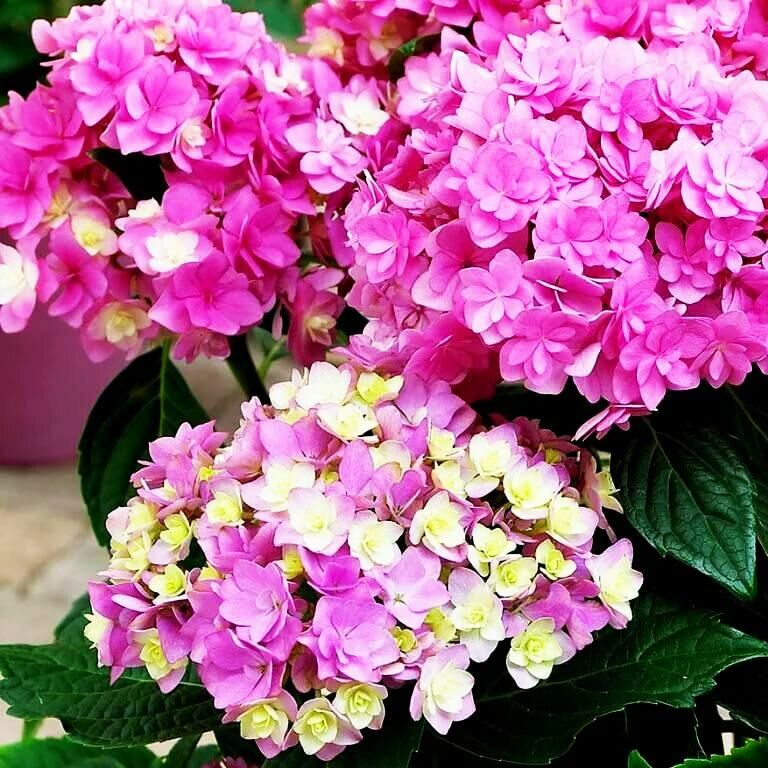
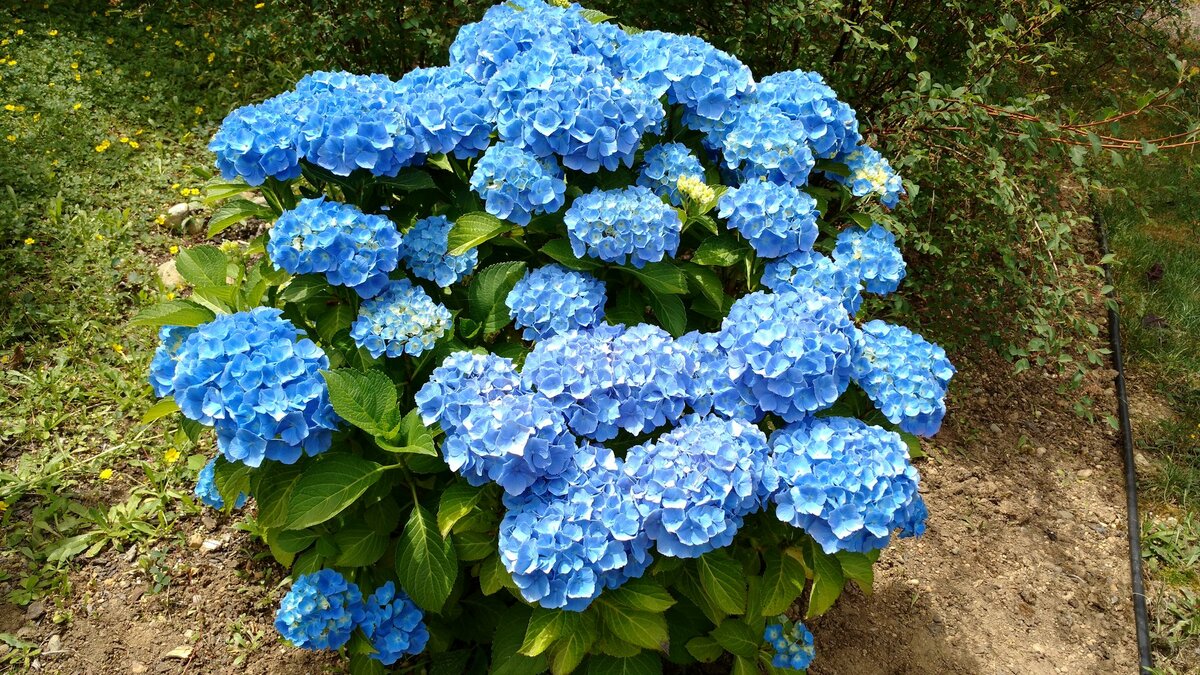
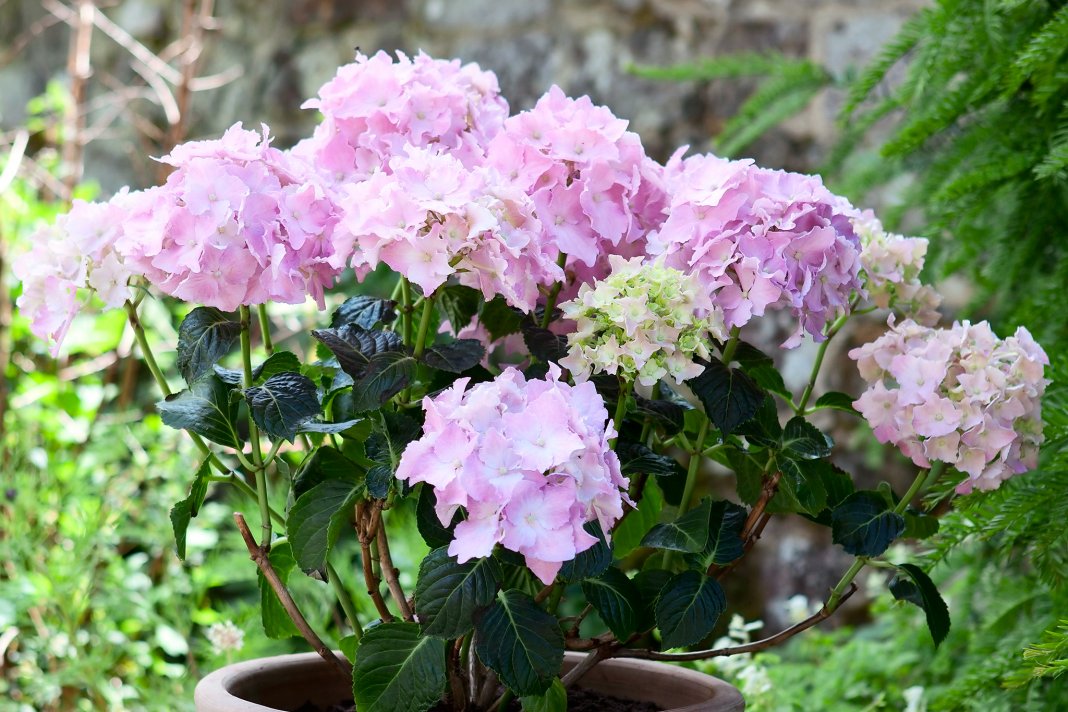
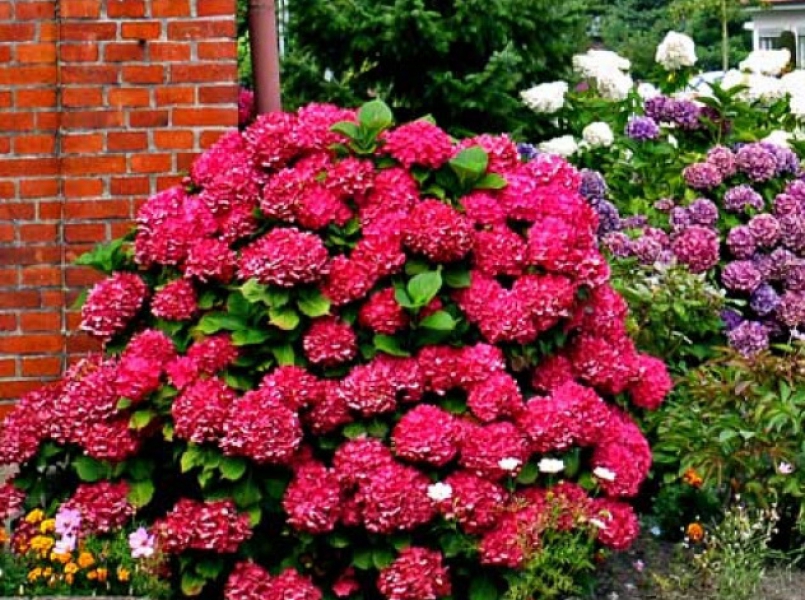
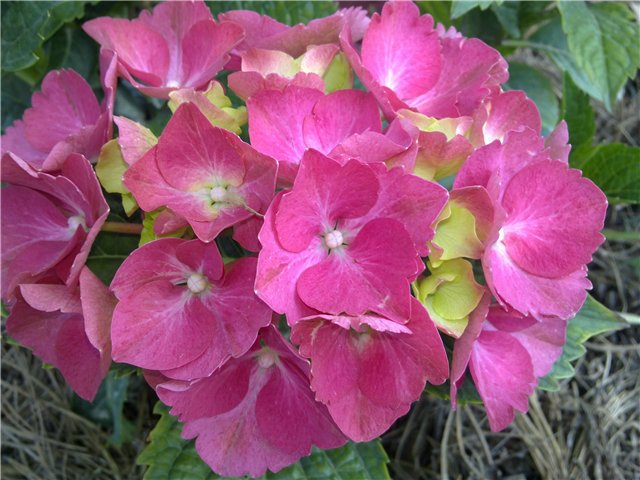
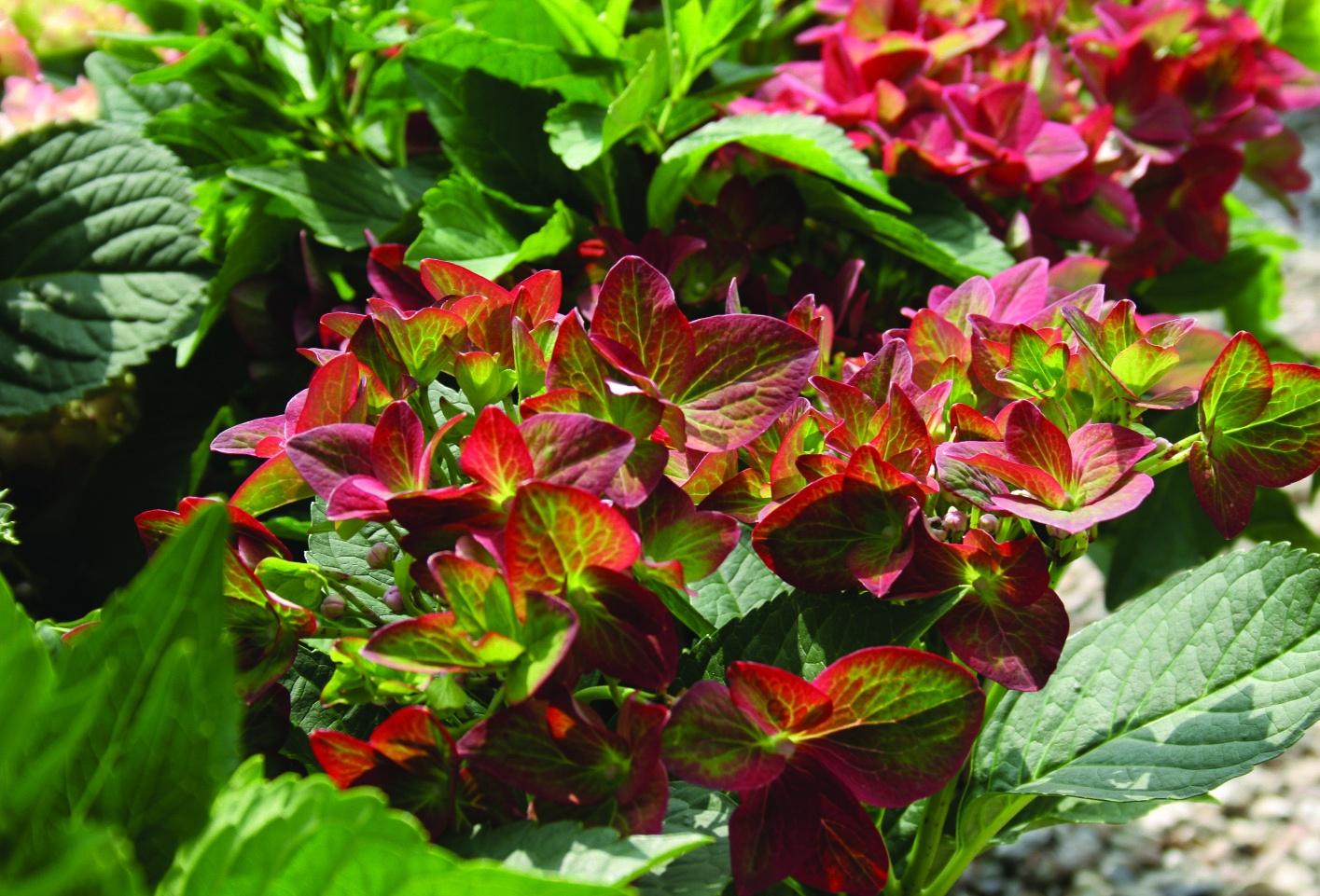
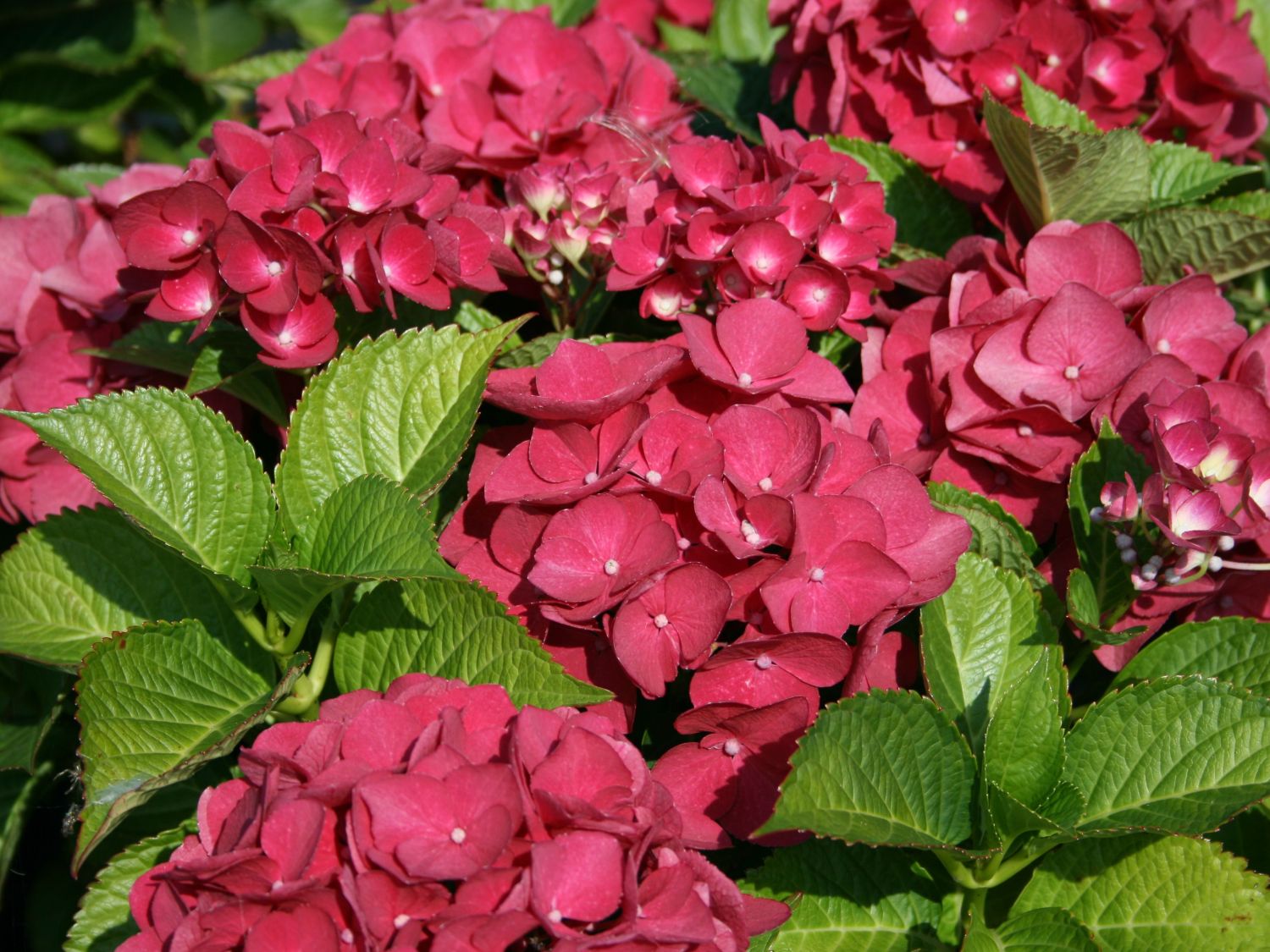
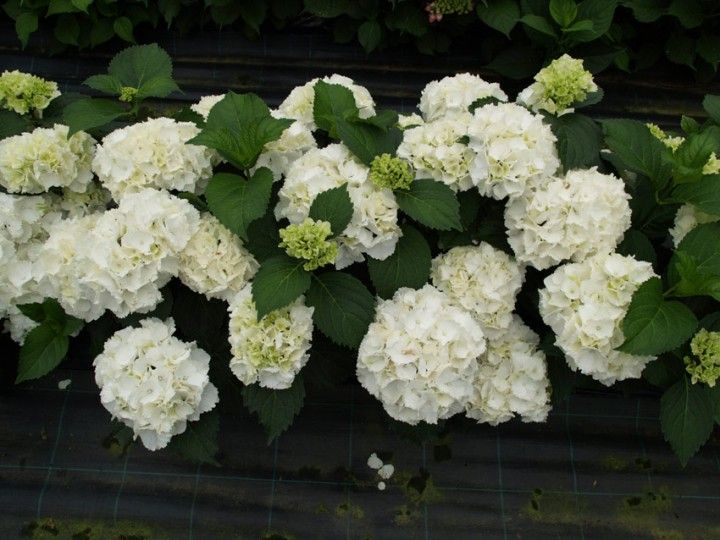
Large-leaved garden hydrangea (Hydrangea macrophyllа).
|
This plant can most often be found in the southern regions, but it can also be grown in the middle zone. This species is capricious and doesn't tolerate cold well, so it needs to be covered for the winter. To do this, cut the shoots to half a meter, then carefully bend them down and surround them with spruce or pine branches; fallen leaves will also work. Then cover with two layers of any thick plastic film. All the effort will be worth it when the hydrangea blooms. The varieties have simple ovoid leaves of a bright green color. The color palette is very diverse, from white to deep lilac. If the soil is acidic, blue hues will predominate. To achieve this, you can sprinkle the plant with peat or pine needles. Another option is to water the bush with a solution of ferrous sulfate, but this must be done sparingly, otherwise the root system will suffer. In late summer, the inflorescences take on a green tint. |
Expression — the bush reaches 80 cm, the flowers have a pink tint. Ever Peppermint grows up to 70 cm and delights gardeners with its two-colored inflorescences. Red Sensation — blooms twice, producing red inflorescences and growing up to 80 cm. Endless Summer This variety blooms twice during the growing season. The flowers are collected in umbels, reaching 20 cm in circumference. When growing in acidic soil, the petals are blue; if the pH is above 6, they turn pink. Nikko Blue The petal color varies depending on the soil acidity. In alkaline soil, they are a soft bluish color. In moderately acidic soil, they are a deep cornflower blue. In neutral soil, the flowers are pink. Freepon The flowers are gathered in large, rounded inflorescences, reaching 25 cm in circumference. The petals range from lilac-blue to dark cornflower blue. During the winter, the variety requires covering with film or non-woven material; otherwise, the bush will die at temperatures below -23°C. You and Me — forms compact bushes. They grow over a meter in height and reach 80 cm in circumference. The flowers are double and can be blue or purple, depending on the soil's chemical composition. Spike The shoots are erect, with large, spherical inflorescences forming at their ends. They reach 20-25 cm in circumference. A distinctive feature of this variety is its frost resistance. It should be covered at temperatures below -18°C. Alpengluhen — tolerates mild winters well, but requires shelter during severe frosts. This allows flowering to begin as early as early spring. The flowers are red and reach 2-3 cm in diameter. Kumiko (Kumiko) — characterized by a fast growth rate. It does not tolerate severe frosts well, so if the temperature drops below -18°C, cover is necessary. The petals of the buds change color depending on the soil acidity. This variety should not be grown in lime-rich soil. Green Shadows The main characteristic is that the inflorescences form on both last year's shoots and this year's stems. The petals are initially green, then turn dark red. Only the center remains greenish. The flowers are not fragrant. Red Baron This variety lacks a fragrance, making it hypoallergenic. It requires winter protection, and flowering lasts only a month (July-August). Schneeball — forms a compact, dense bush, reaching 1.2 m in height. The petals are serrated and snow-white at the start of flowering. They turn green over time. |
|
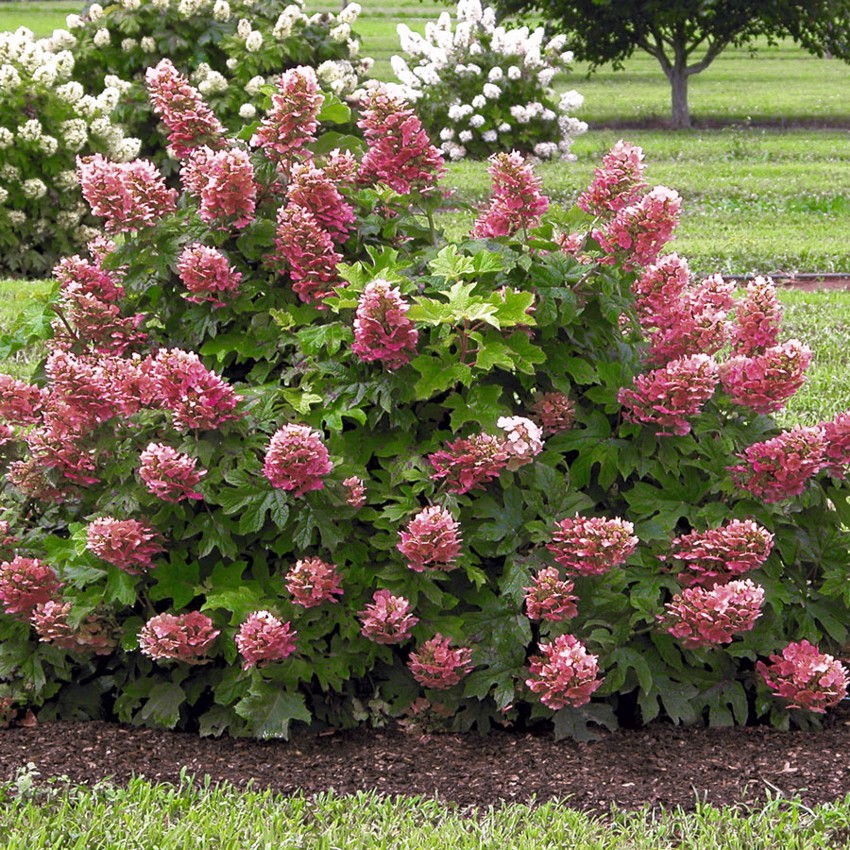
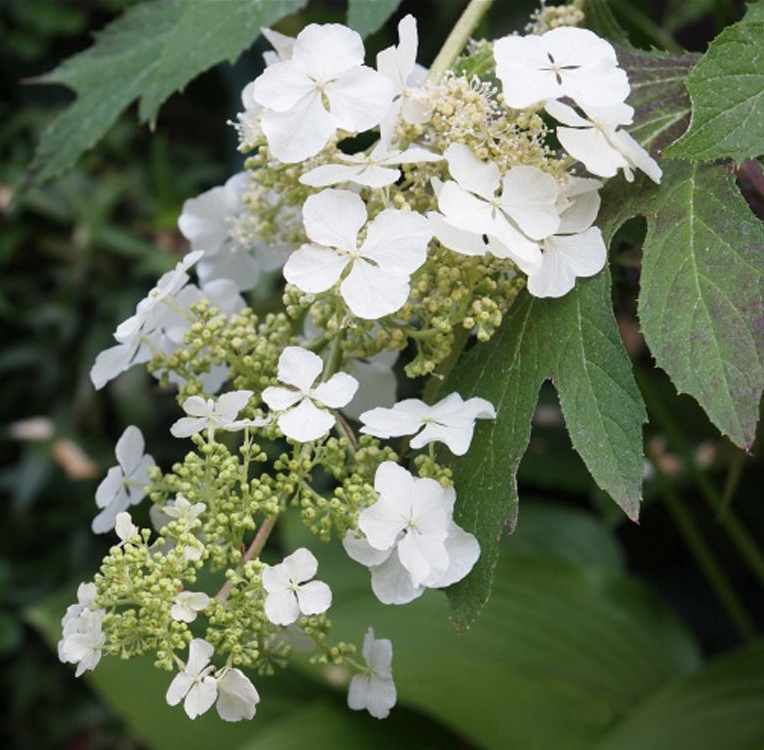
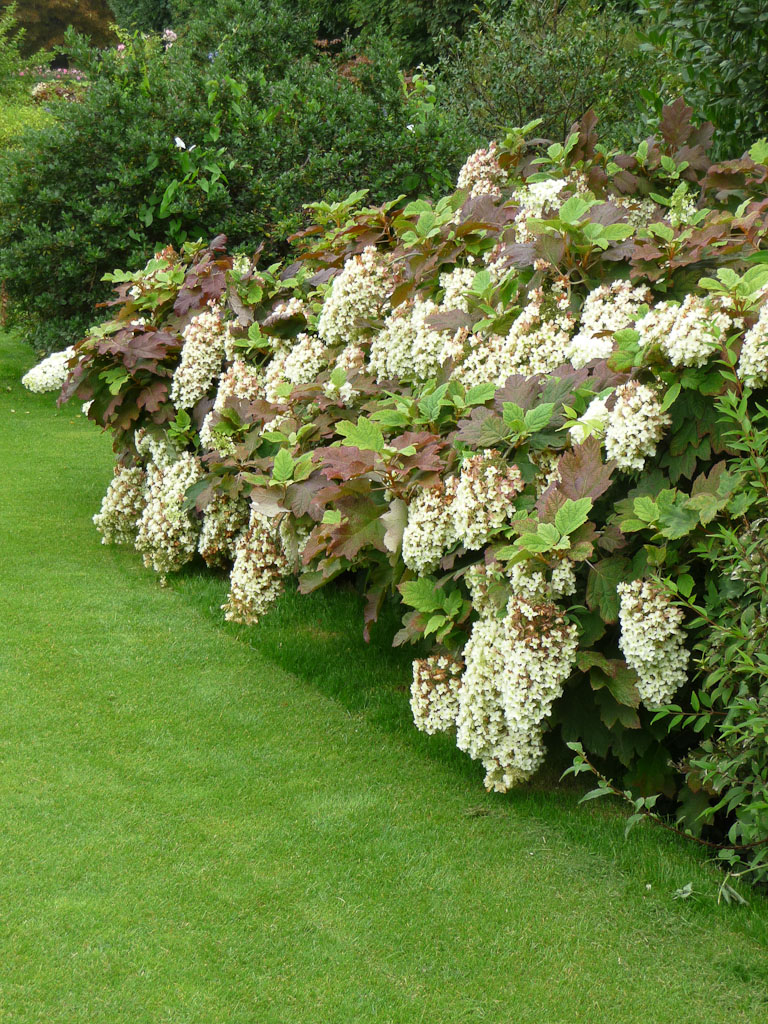
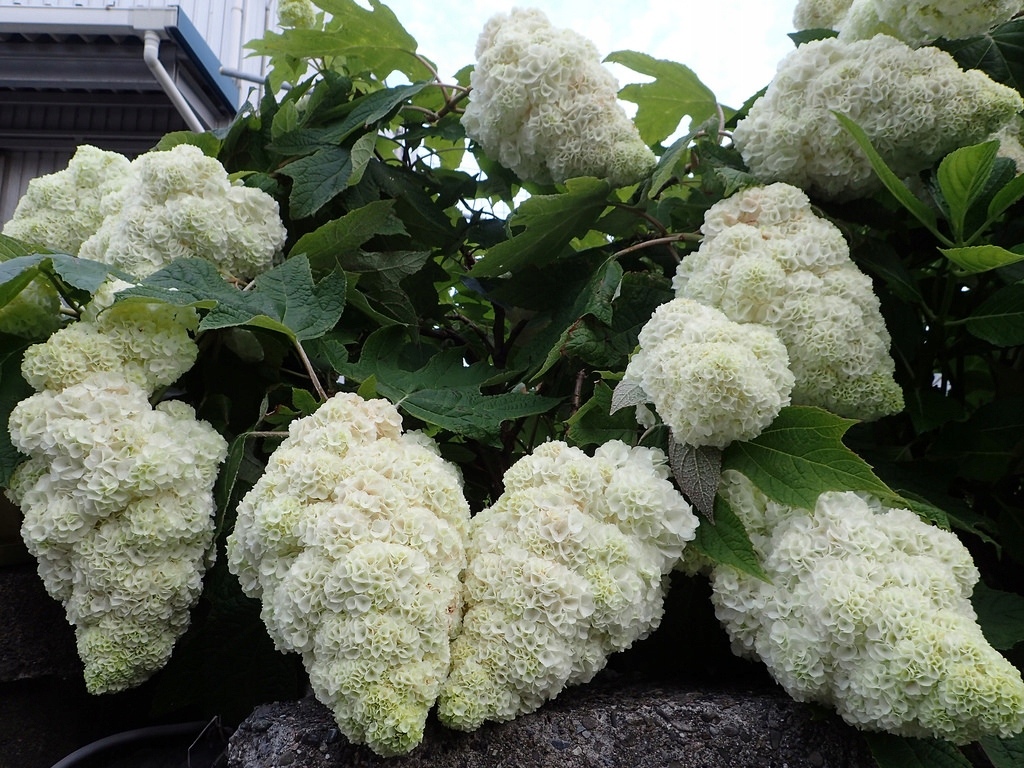
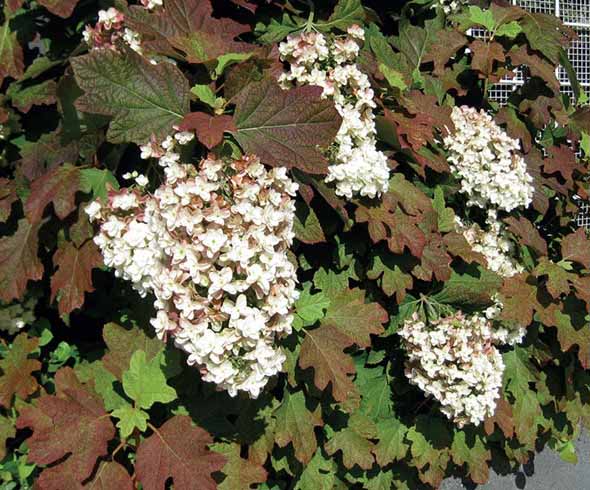
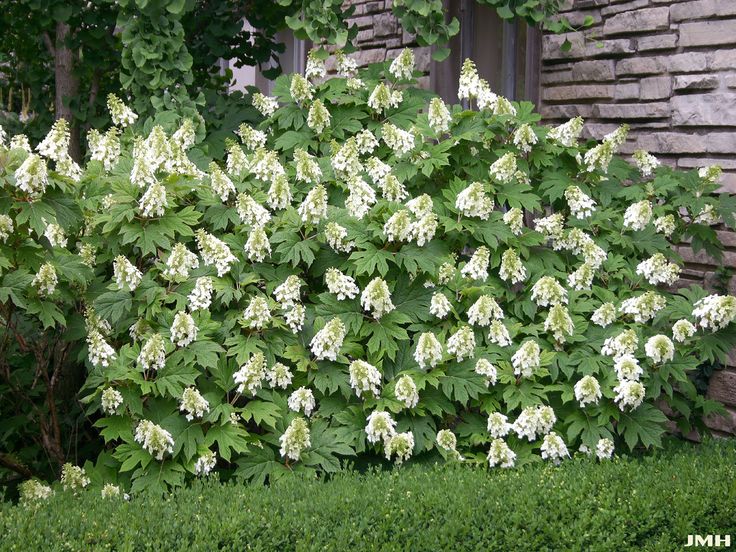
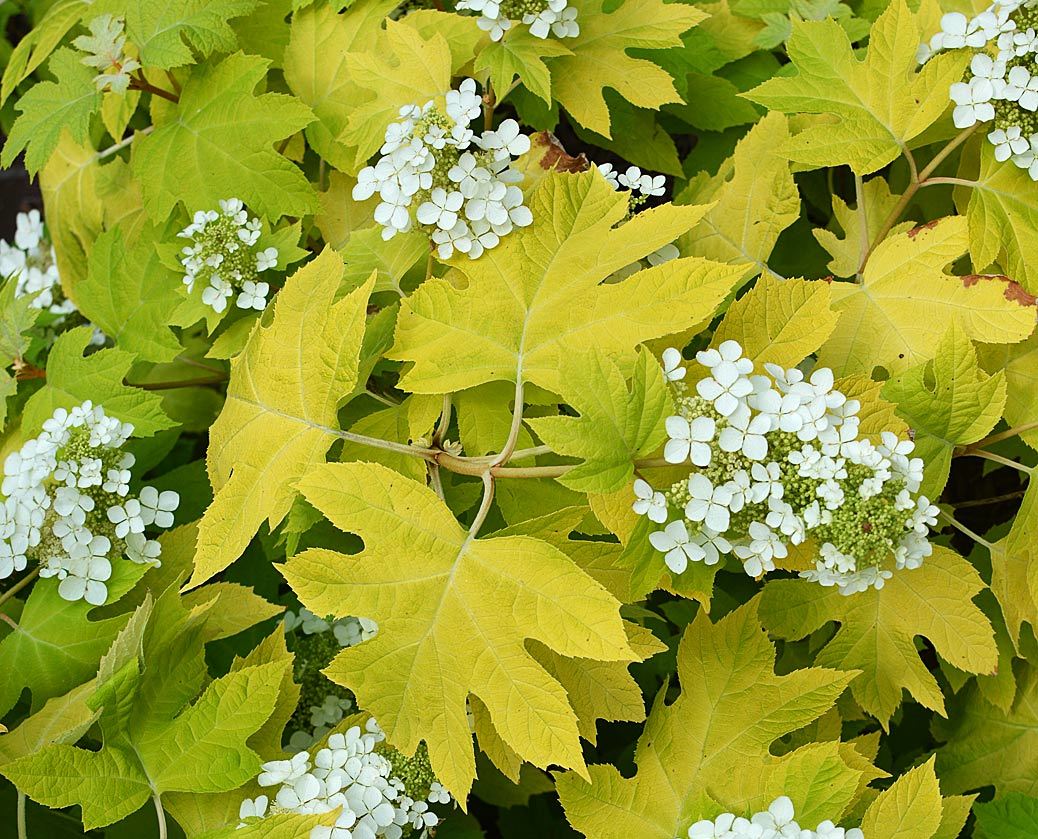
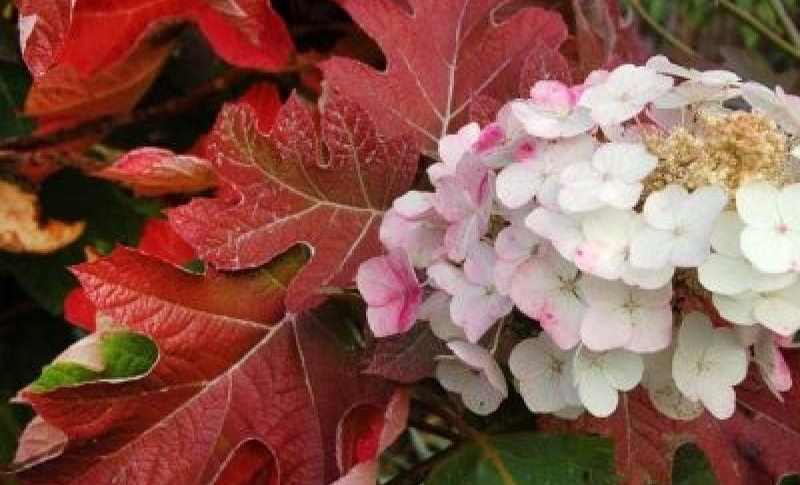
Oakleaf hydrangea (Hydrangea quercifolia) 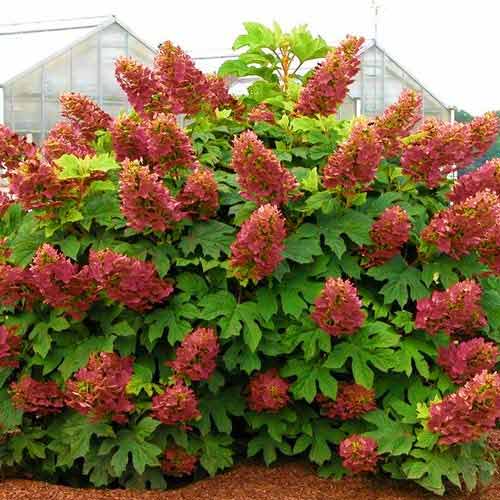
|
This species is the most spectacular. It is considered a large species, reaching a height of 2 meters.
The leaves are very long—up to 20 cm. The upper surface is dark green, while the lower surface is covered with light fluff. The leaf's appearance resembles oak leaves. By late summer, the leaves acquire an orange or red hue. The inflorescences are 22 cm long and cone-shaped. The flowers are white at first, then gradually turn pink. It adapts well to its environment. Despite its sensitivity to low temperatures, even a frozen bush will recover the following season. |
Amethyst The shrub reaches a height of 1.5-1.8 m. The leaves can have 3-7 lobes, reminiscent of oak foliage. The inflorescences are collected in panicles, reaching 20-25 cm. Initially, they are snow-white, but over time they acquire a dark red color. Harmony — has felt-like shoots with a reddish tint. The foliage is white and pubescent beneath. The leaves are dark emerald and smooth above. The petals are initially snow-white, then turn pink. Burgundy — grows up to one and a half meters and produces purple-lilac flowers. It can withstand winter temperatures down to -27°C. Snowflake — a shrub with large, double inflorescences. The flowers reach 3.5 cm in circumference. Young plants require protection from direct UV rays and drafts. Snow Queen This variety translates as "Snow Queen." It can withstand temperatures down to -30°C without shelter. The leaves are bright green during the growing season. As autumn approaches, they turn red or orange. Ruby Slippers This variety is distinguished by its racemose inflorescences. They can reach 23 cm in length and change color throughout the growing season. Ruby Slippers is recommended for planting in slightly acidic soil. Ice Crystal — reaches 200 cm in height. The leaves are divided into five lobes. Snow-white flowers are collected in racemes, reaching 10 cm in length. Little Honey — a dwarf shrub growing to 90-120 cm. In spring and summer, the leaves are golden. As autumn approaches, they acquire a raspberry-red hue. The inflorescences are collected in panicles. Black Porch — This variety isn't particularly fussy about growing conditions, only requiring some shade and protection from drafts. During the growing season, the foliage is green. By autumn, it turns a deep purple, almost black. |
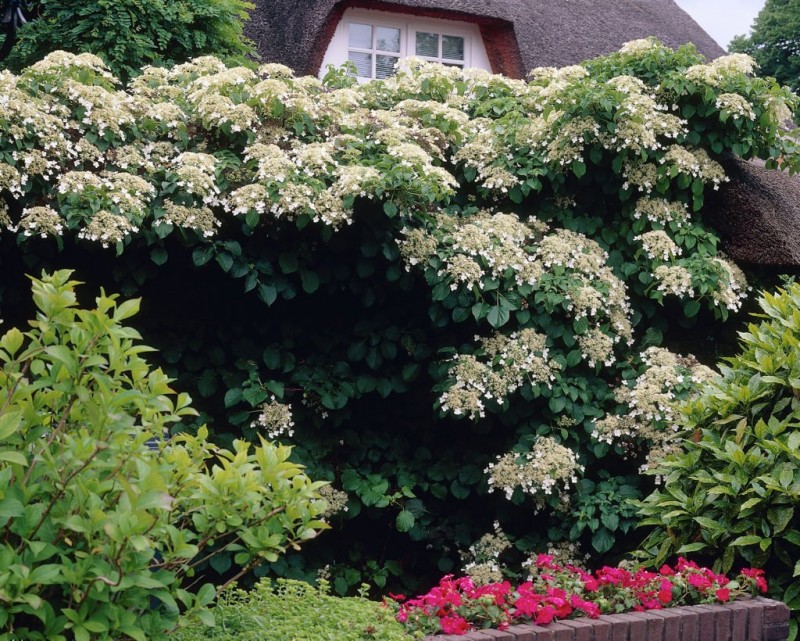
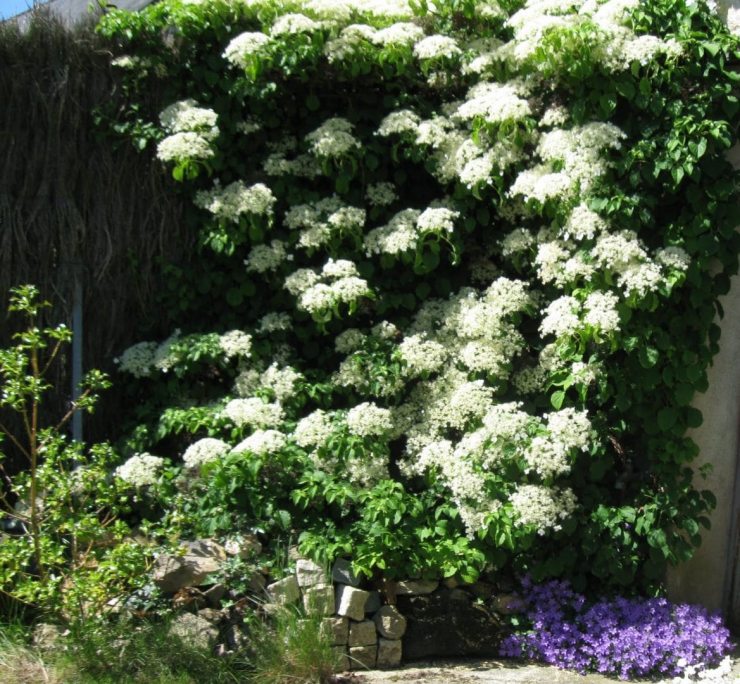
Hydrangea petiolaris
|
This species is also called a climbing vine, or twining liana, because its shoots resemble a climbing liana. It is used to decorate fences, arches, building facades, and other vertical surfaces, as well as gazebos and pergolas.
The leaves are wide, rounded with a pointed tip, dark green in color. The plant begins to bloom in June, with a palette ranging from snow-white to pink flowers. Young plants require quite a lot of time to develop, but this species is unpretentious in care. |
Mirranda This variety lacks a trunk but has aerial roots. It is frost-hardy and can withstand strong gusts of wind. The foliage is light green, with glossy, serrated blades. Cordifolia The vine grows to about 150 cm in length. The foliage is dense, bright emerald, and glossy. The flowers are snow-white and creamy, exuding a honey-like aroma. |
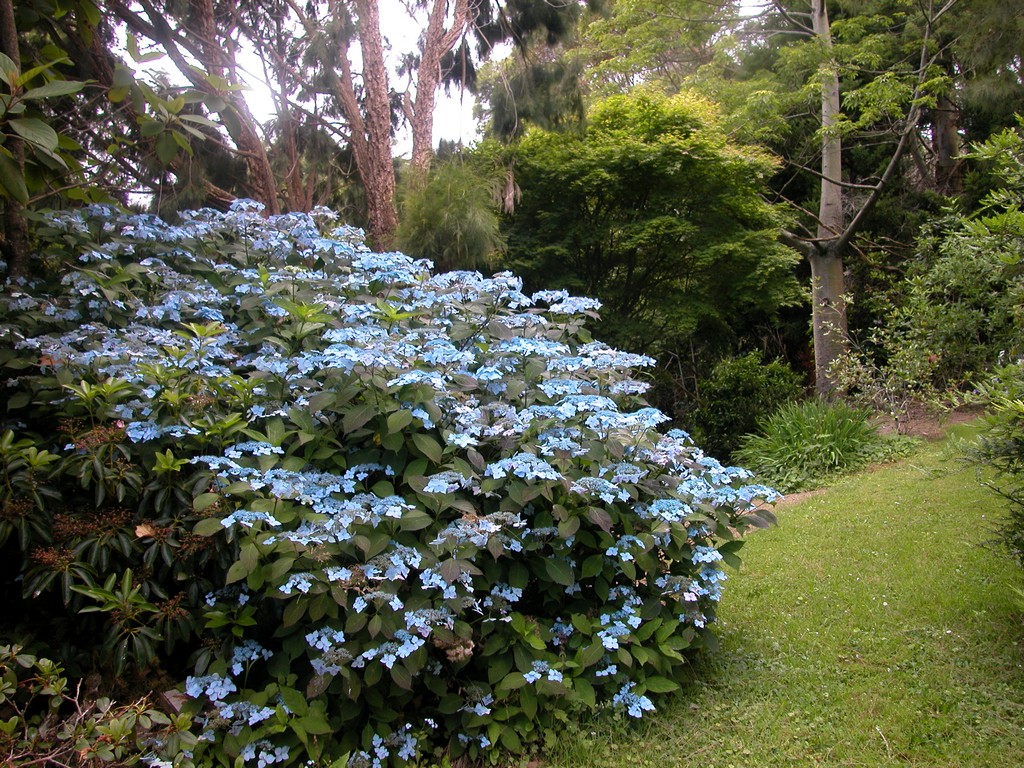
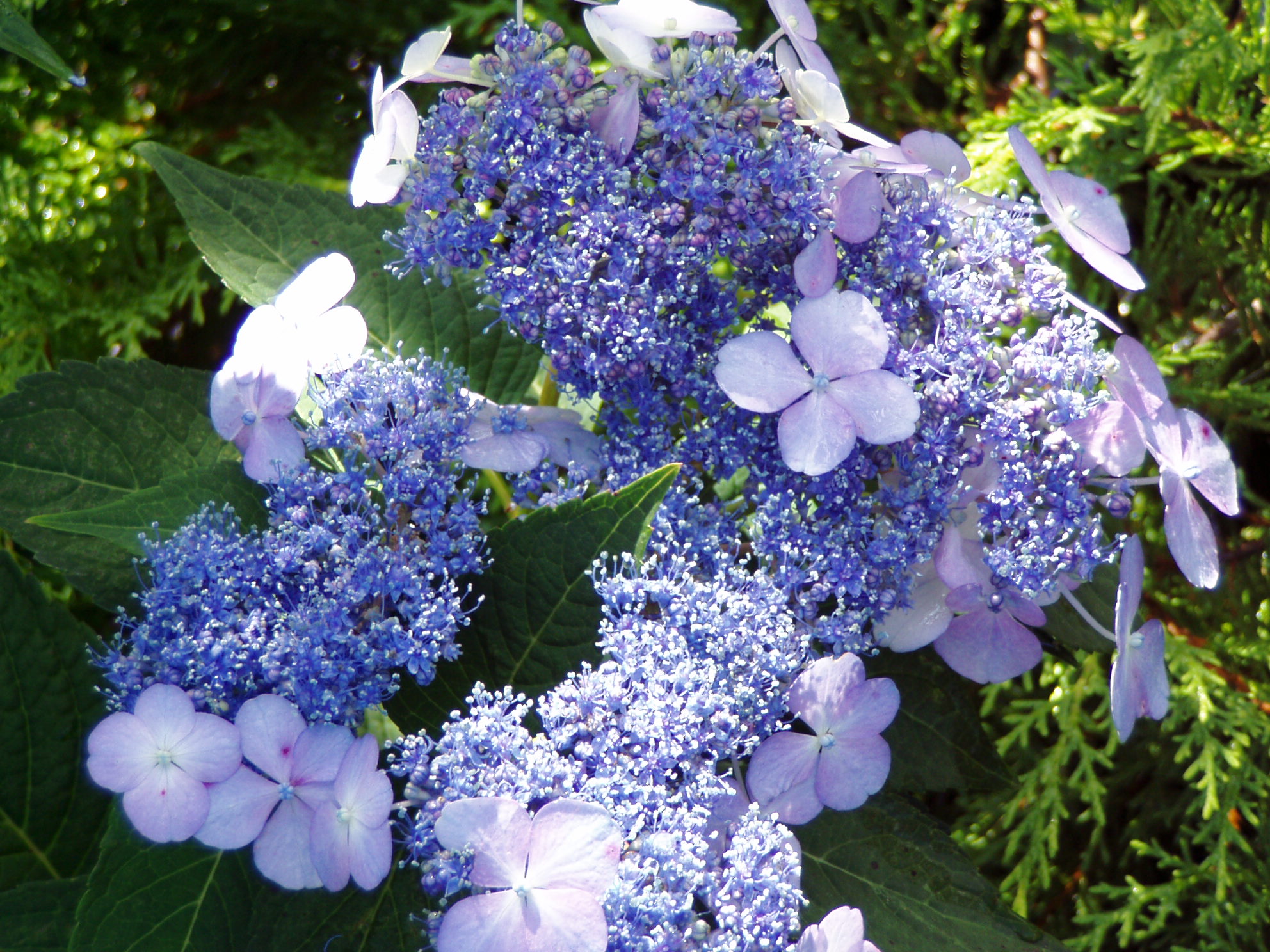
Hydrangea serrata
|
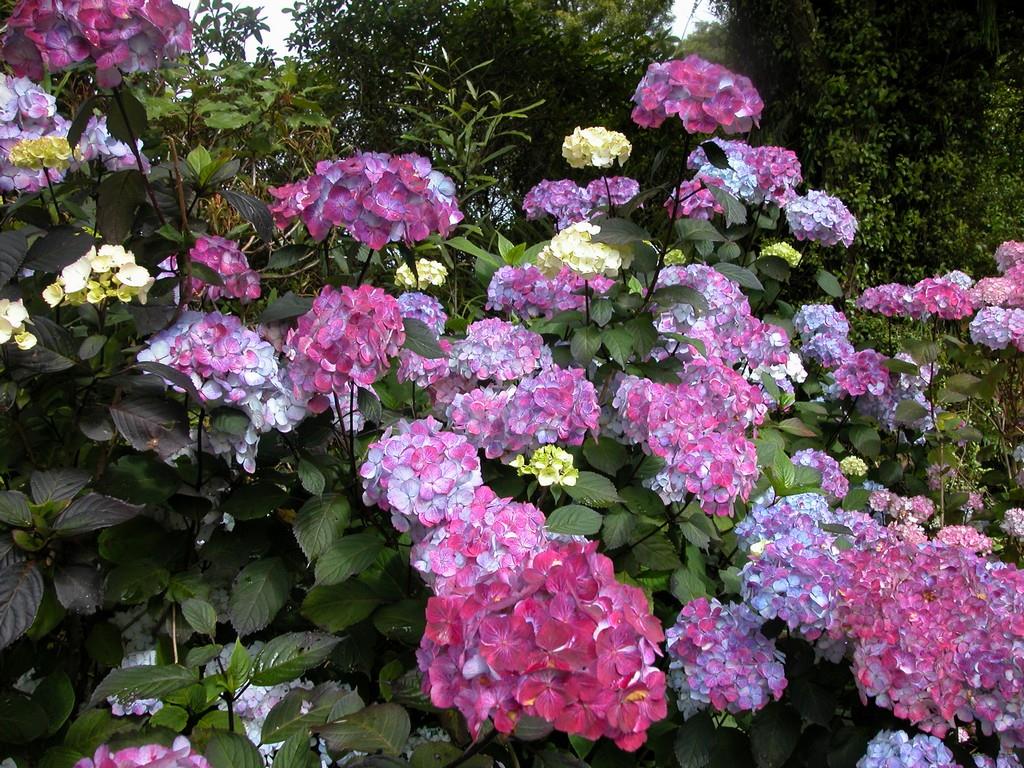
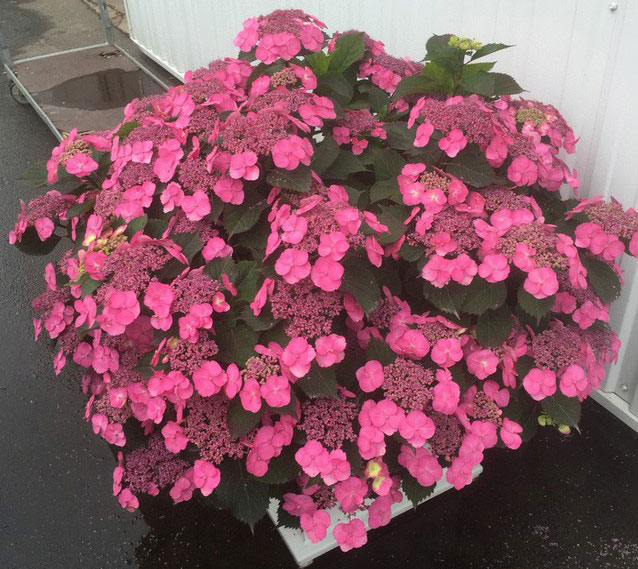
A deciduous ornamental shrub that grows up to 2 meters and has thin shoots.
A distinctive feature is the abundant, saw-shaped leaves. The flowers are large and vibrantly colored (blue or pink). They are gathered in a corymbose inflorescence that reaches 9 cm in diameter. If the soil is highly acidic, the color can be bright blue. The first flowering period occurs in early spring, the second closer to autumn. In September, the foliage changes color and becomes bright orange. The species' drawback is poor winter hardiness. The plant requires good frost protection. |
Blue Deckle For maximum decorative value, this variety should be planted in sunny or partially shaded areas. The bushes reach 100-120 cm in height and 90-100 cm in width. The blue flowers are collected in spherical inflorescences 15-20 cm in diameter. Bluebird — a shrub with a sturdy trunk, reaching a height of 1.2 m. Small, delicate sky-blue or light pink flowers are located in the center of the inflorescences. Larger buds with milky-pink or blue petals are located along the edges. Prezicosa — The foliage is bright green at the beginning of the growing season, and the petals are yellowish-green, eventually turning pink or blue. By autumn, the leaf blades turn burgundy, and the flowers purple or dark red. Cotton Candy — a compact variety, growing no more than 60-80 cm in height. It is distinguished by good frost resistance. Without shelter, the plant can withstand temperatures down to -25°C. |
Hydrangea heteromalla
|
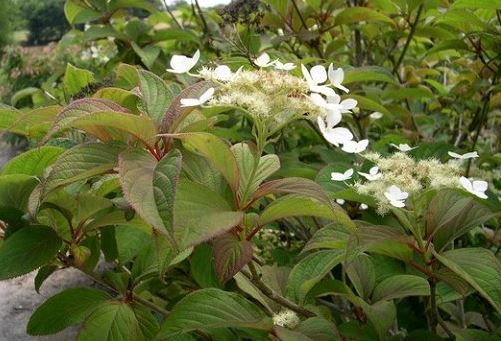
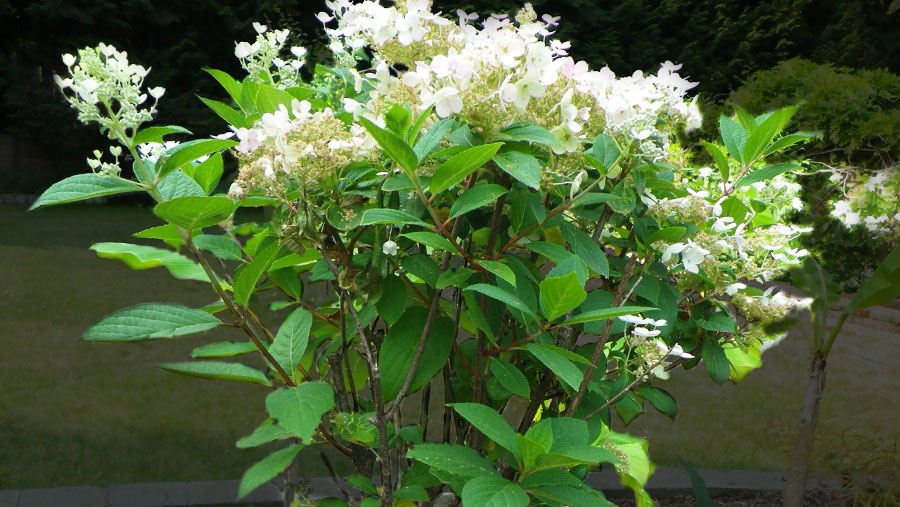
This shrub reaches over 2 meters in height. It can be grown as a neat tree. It looks impressive alone, in a solitary planting, and in groups of 3-5 specimens. It responds well to training and can be shaped like a small tree.
The leaves are large, the upper surface glossy, the lower surface white-feathered. The petioles are red. Inflorescences appear in June, and the flowers eventually acquire a beautiful pink color. |
Snowcap — flowers are collected in corymbose inflorescences. The leaf blades are large, can reach 20 cm. Jermyns Lace — characterized by long flowering, from June to September. It is recommended to grow in a sunny area, but partial shade is also possible. |
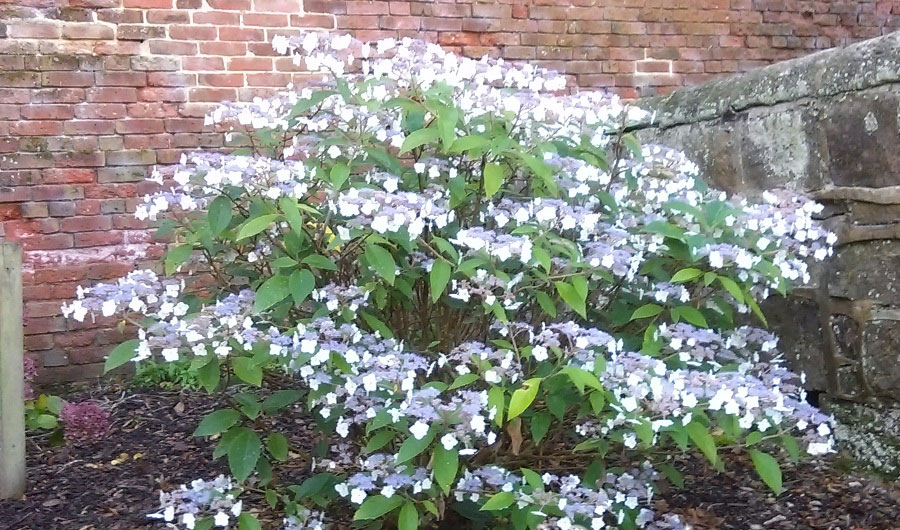
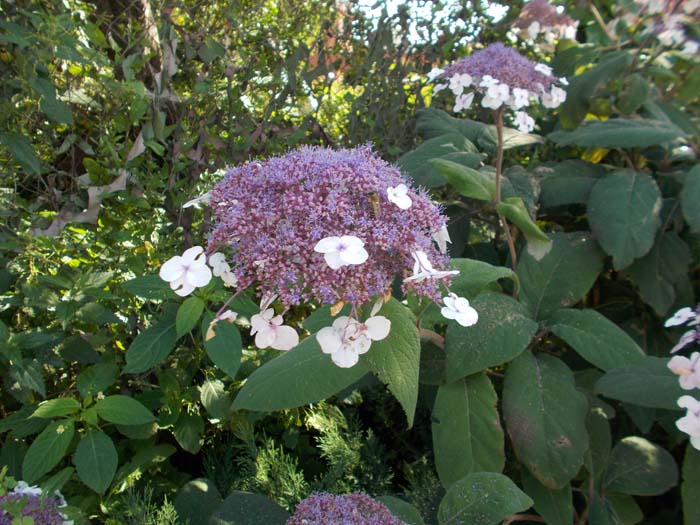
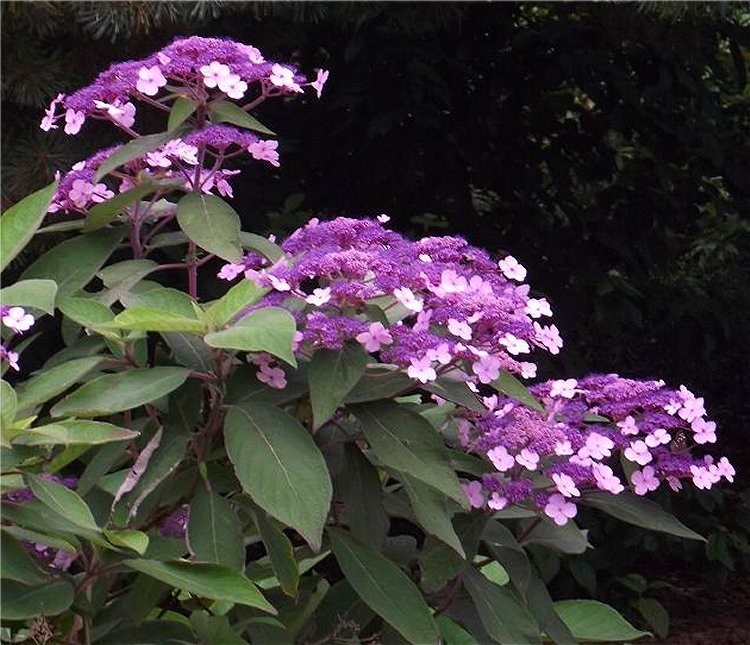
Hydrangea aspera
|
The inflorescences are approximately 25 cm in diameter. The plant grows as a tree up to 4 m tall or as a shrub. The stems are covered with fluff, and the flowers are arranged in a corymb.
The palette includes pink, blue, or white. The petals can be double. This variety is characterized by good resistance to several common diseases. The root system is sensitive to cold, so the plant requires winter protection. |
Peter Chapell The stems are heavily pubescent, with hairs clinging tightly to the shoots. The inflorescences are gathered in dense corymbs, reaching 25 cm. Antony Brillivant — is distinguished by the interesting shape of its flowers. They are fringed with serrated edges. Velvet Lace Despite its relatively good frost resistance, it is recommended to protect the root system up to snow level during the winter. The inflorescences are collected in corymbs and can reach 25 cm in diameter. |
| Ash hydrangea (Hydrangea cinerea)
|
The height of the bush reaches 1.8 m.
The leaves are rounded, serrated, and have a pointed tip. The underside of the leaf blade is pubescent. The flowers are arranged in a corymb, which can reach 17 cm in diameter. The white flowers appear in midsummer. It's best to cover it for the winter to ensure abundant flowering and new shoots the following season. The shrub can be used to create hedges. |
This species is now represented by a variety Sterilis, whose sterile flowers grow up to 10-15 cm in diameter. |
| Hydrangea radiata
|
The shoots of this species are covered with soft fluff, the leaves are dark green, and the edges are serrated.
It blooms in July, producing corymb-shaped inflorescences. The flowers reach 3 cm in diameter and are vibrantly colored. The bush freezes if the winter is cold, but actively recovers in the spring. |
— |
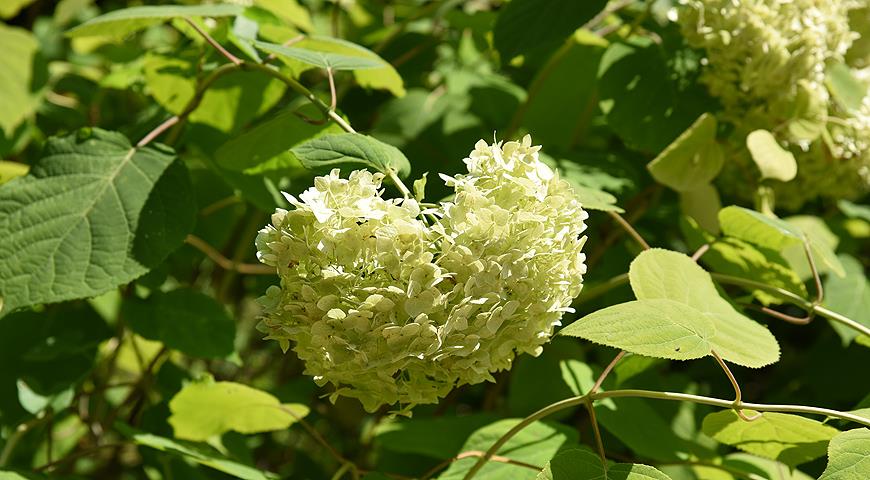
These are far from all the hydrangea varieties. There are 52 species in total, each with a huge number of cultivars. Here are only the most popular, which, with proper care, thrive in Russia's harsh climate and can be planted in the fall.
Choosing a hydrangea seedling for planting
The key to success in growing any crop is choosing the right seedling. Good planting material ensures that the plant will take root without problems, grow vigorously, and bloom beautifully. It's best to purchase seedlings from specialized nurseries or stores. Before purchasing, check reviews and the store's reputation.
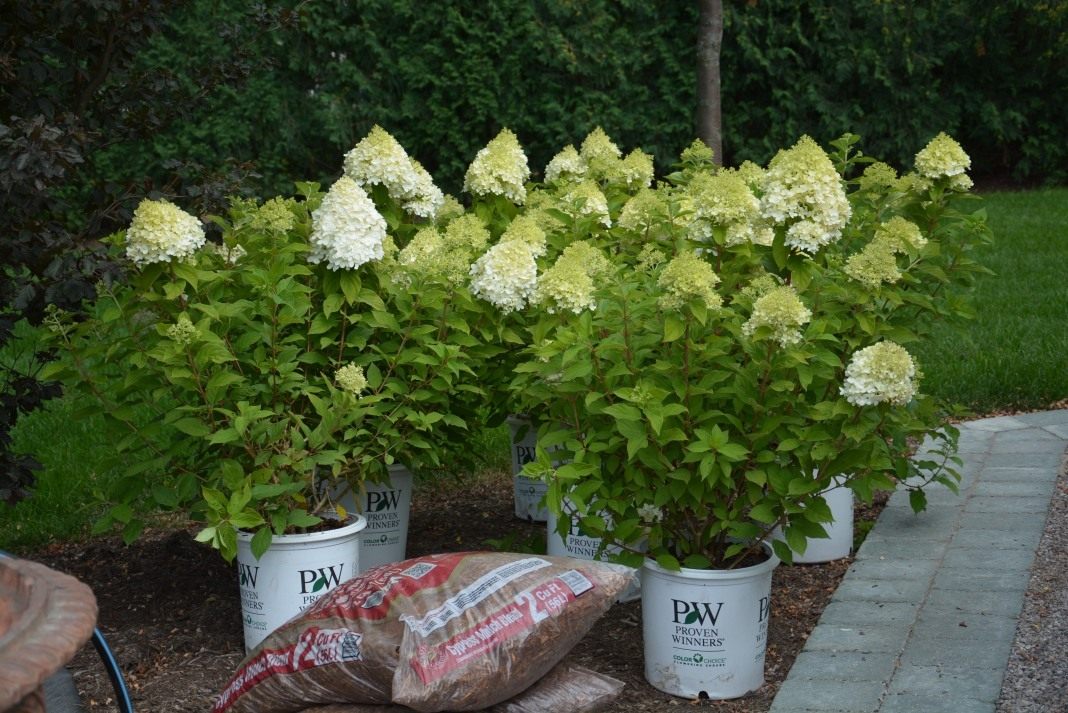
Most often you can find seedlings of two main types:
- Open-root system. The main advantage is that you can visually assess the condition of the roots. The price of such seedlings is lower.
- Closed-root system. These seedlings take root better and are easier to transport and plant, but they are usually more expensive.
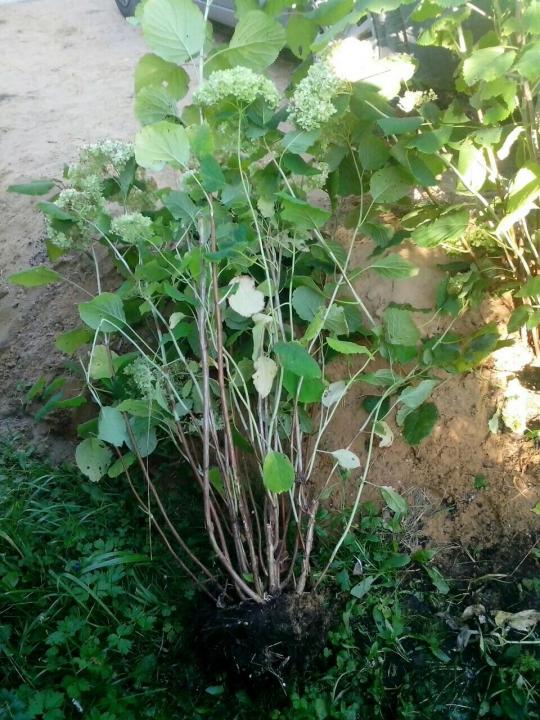
The main rules for choosing good planting material:
- The plant is not damaged, there are no signs of disease or cracks.
- The root system is well developed. If you're buying a seedling with a closed root system, remove it from the pot. The root ball should be evenly intertwined with roots. Another way to check is to see roots emerging from the drainage holes.
- There is no rot or mold on the roots. Even if there are no signs of such things, but you smell mold, you should avoid purchasing the seedling. The roots should not be dry.
- The trunk of a good seedling is healthy, and there are several other shoots besides it.
Step-by-step instructions for planting hydrangeas in autumn and spring
Following simple recommendations will guarantee beautiful flowering and healthy plants.
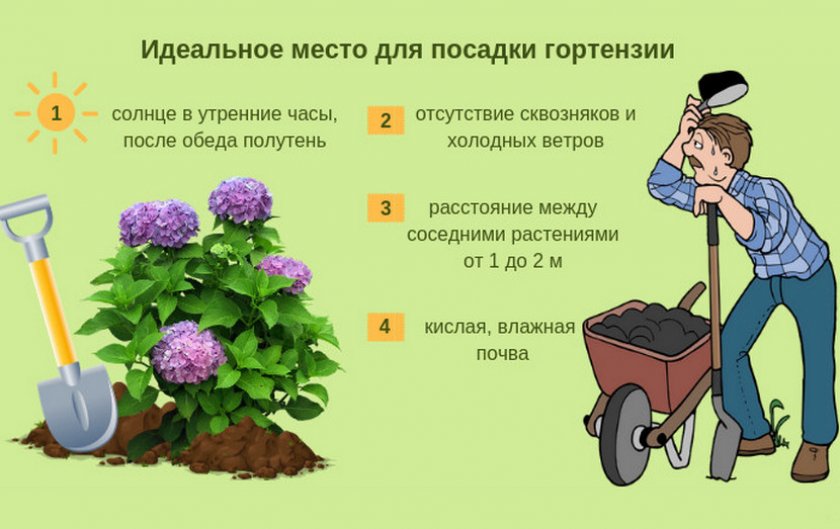
Choosing a location
Hydrangeas love plenty of light and warmth, so an open space protected from the wind is ideal. Another option is partial shade with filtered sunlight. Ideally, hydrangeas should be planted near a fence or in the center of a lawn. They are also suitable for an alpine garden.
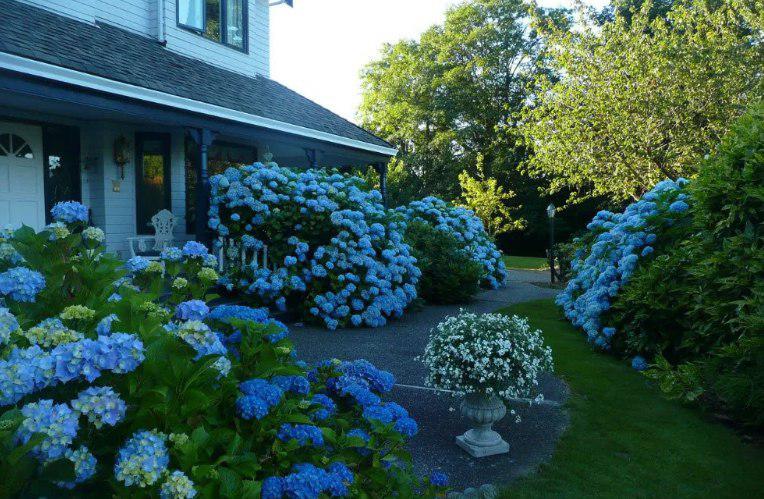
If you plan to plant the plant near the walls of your house, keep in mind that hydrangeas need to be approximately 1.5 m wide and at least 3 m tall. Avoid planting other plants nearby to avoid interference.
Optimal locations for different species:
- Paniculata - choose a slightly shaded location so that active sunlight does not interfere with flowering.
- The arborescent plant thrives in both sun and shade. However, in extremely hot weather, it should be provided with additional protection from the sun's scorching rays.
- Petiolate - plant it in the shade.
- Large-leaved - it will require maximum light in the morning and evening, and in the middle of the day it is better to shade it slightly.
- Oakleaf and serrated prefer shaded areas.
Additional information:
- Hydrangeas thrive on moisture, but not excessive amounts. Therefore, avoid planting in swampy areas or areas with high groundwater levels.
- The site should be protected from northern winds.
- It is necessary to leave some distance between the hydrangea and the paths, as the heavy inflorescences bend.
- Hydrangea growing under trees will experience a deficiency of beneficial microelements and moisture.
Neighbors for hydrangea
The plant is susceptible to the influence of nearby plants. It will not thrive if blackcurrants are grown nearby, as their essential oils negatively affect hydrangeas. Another undesirable neighbor is black locust. Its root system will suppress the hydrangea's roots, releasing toxic compounds. Also, avoid planting loosestrife, ostrich fern, or bulbous ryegrass near it.
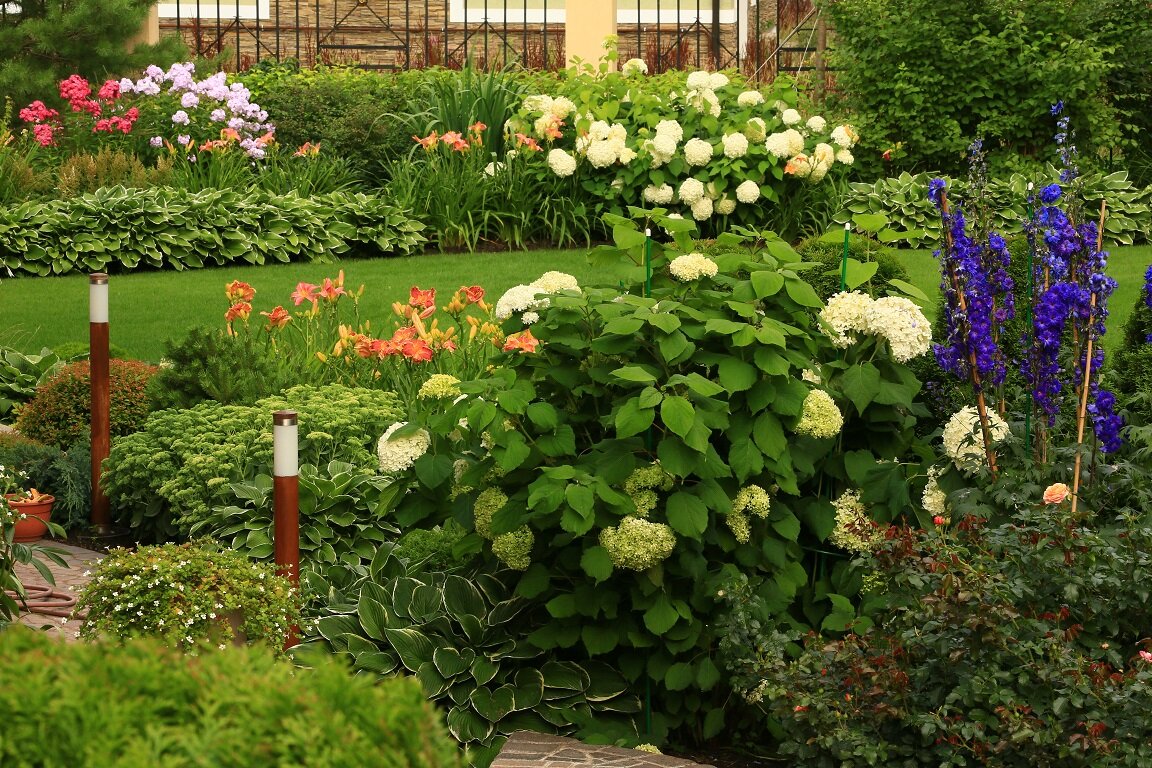
It is better to place hosta, mock orange, lilac, and boxwood near hydrangea.
There should be no spicy plants or garlic near hydrangeas; it is better to give preference to cucumbers and zucchini.
Soil for hydrangea
The soil should be slightly acidic, light, and nutritious to prevent excess moisture from stagnating. Before planting, you can add a mixture of turf, humus, red peat, and sand to the hole in a ratio of 2:2:1:1. You can easily boost its nutritional value by adding 1.5 tablespoons of urea, 5 tablespoons of superphosphate, and 2 tablespoons of potassium sulfate.
If the soil is alkaline, the plant's leaves will begin to turn yellow, and in neutral soil, growth and flowering will be limited. Therefore, adding ash or lime is highly discouraged. It's better to feed with pine needles or peat.
Preparing the planting hole
A month before planting, decide on a location. Then prepare a hole. It should be approximately half a meter wide and deep.
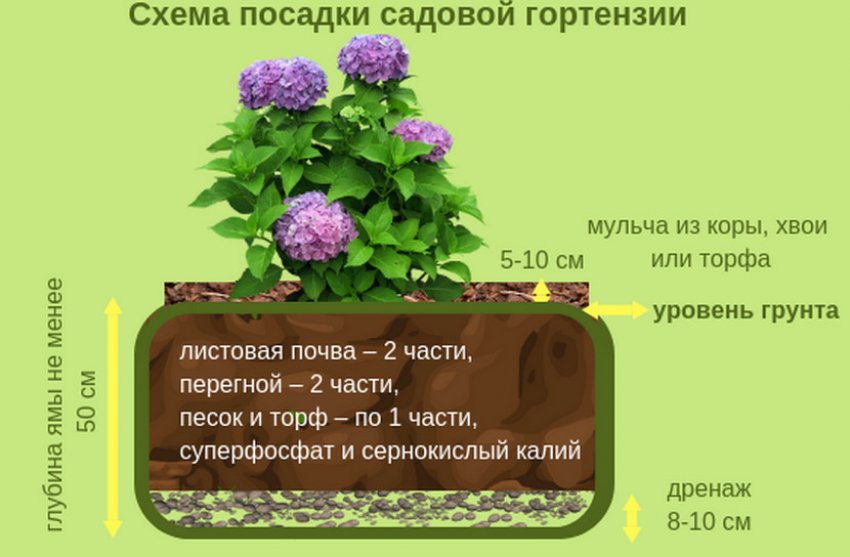
Place the top layer of soil separately. If you plan to plant several plants, space the holes at least 70 cm apart. This method is suitable for growing hedges. For decorative purposes, the distance between holes should be 1.5 to 3 meters. Fill the prepared holes with a nutrient mixture, water them, and leave them for 4 days.
The next step is fertilizing. There are several ways to best do this.
The optimal option.
- Place fallen pine needles at the bottom of the hole prepared for planting to increase the acidity of the soil.
- Place about 10 cm of soil on top.
- Fill the next two-thirds of the hole with a mixture of 2.5 kg each of compost and peat.
- The last layer is a handful of superphosphate.
Another way to fill:
- Prepare a mixture: one part each of humus, soil and acidic peat.
- Fill the cavity two-thirds full with this mixture and stir.
- Add 60 g of superphosphate and 25 g of potassium sulfate, mix again.
If the soil is heavy and predominantly clay, then the following option will do:
- Place pine needles or acidic peat at the bottom.
- Prepare a mixture: one part acidic peat, two parts compost or humus, and two parts turf soil. Fill the planting hole two-thirds full with this mixture.
The easiest option is to fill two-thirds of the hole with soil and peat in equal proportions.
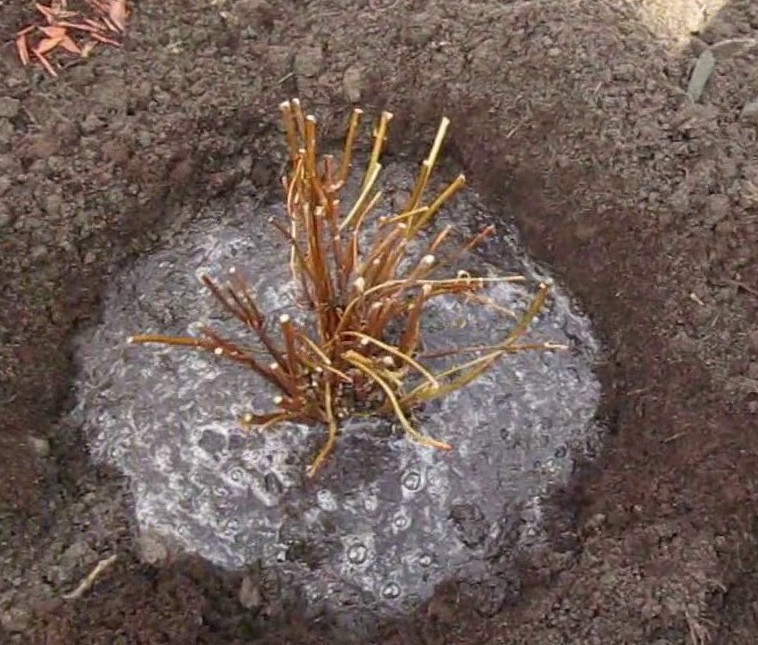
After preparing the hole, you need to water it generously so that the soil settles as much as possible.
Preparing the seedling for planting
To help the plant survive planting stress more easily and to help it take root and thrive faster, it is necessary to properly prepare the planting material.
If you've purchased a bare-root seedling, the best solution is to briefly soak it in a water solution of a special preparation. Kornevin or Heteroauxin are suitable.

A seedling with a closed root system requires less care. Lightly loosening the surface of the root ball will stimulate the roots.
Step-by-step instructions for planting hydrangeas
Rules to follow when planting a bare-root seedling.
- Water the hole generously and wait a few hours.
- Place a mound of a mixture of fertile soil and peat in equal proportions in the center of the hole.
- Place the bush in the center of the mound, spread out the roots, making sure that their tips do not point upwards.
- Cover the seedling with the same mixture from which the mound was made.
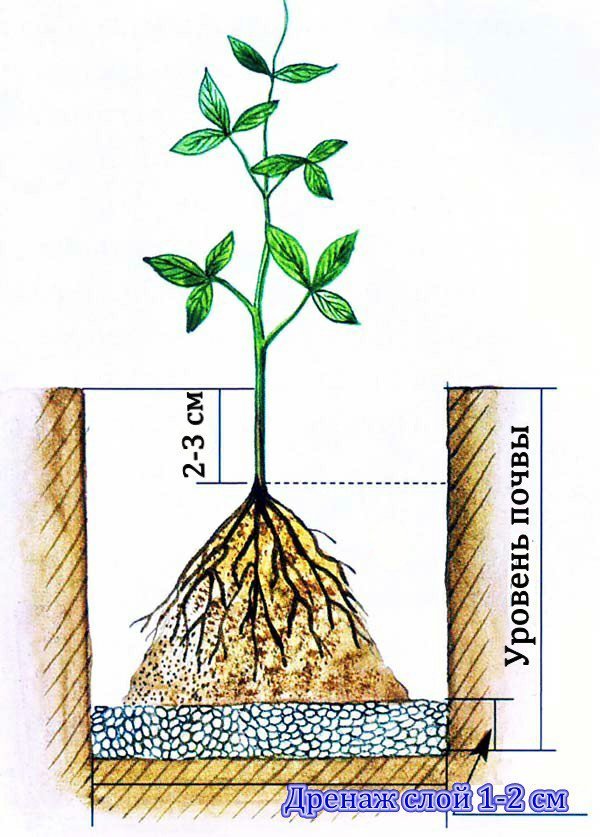
The root collar should be at ground level and should not be covered with soil to prevent rot.
- Lightly compact the soil with your hand.
- Pour 3 buckets of water under each seedling. You can dissolve Kornevin or Heteroauxin in it.
- If the soil has settled significantly after watering, add more soil to maintain the previous level. Check the level again after a few days.
When planting seedlings with closed roots, it's recommended to follow the same rules. The exception is that you don't need to make a mound; you can simply place the root ball in the hole.
Planting Features of Different Types of Hydrangea
Different types of culture require compliance with special rules.
Planting panicle hydrangea
The planting hole should be 40 cm deep and 50 cm in diameter. Leave approximately 1.5 m of space between the bushes. Before planting, prepare a nutrient mixture: two parts humus, one part each of compost, sand, and peat. Then, enrich the substrate with superphosphate (60 g per 10 kg of mixture) and potassium sulfate (20 g per 10 kg of mixture). Fill the prepared holes with this mixture and let it sit for a few days.
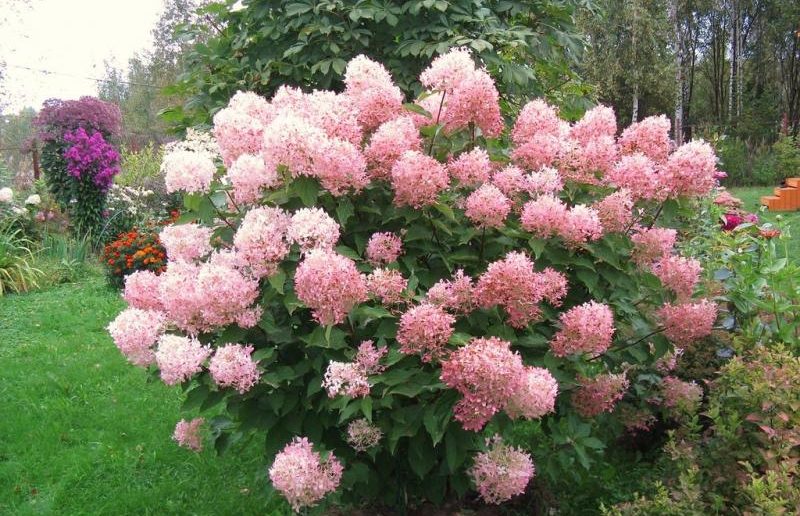
Then, make a small hole in the substrate and place the plant in it. Spread out the root system. Deepen the bush so that the root collar is above the soil. Cover the seedling with soil and compact it lightly. Then water and mulch with peat or pine needles.
After planting, water the plant generously. Growth stimulants can be dissolved in the water.
Planting hydrangea arborescens
Due to its large size, this plant requires a lot of space. Leave a clear radius of approximately two meters around the bush. The inflorescences of the arborescens hydrangea are amazingly decorative, their lush corymbs can reach up to 15 cm in diameter. You can enjoy the blooms from mid-summer to mid-fall.
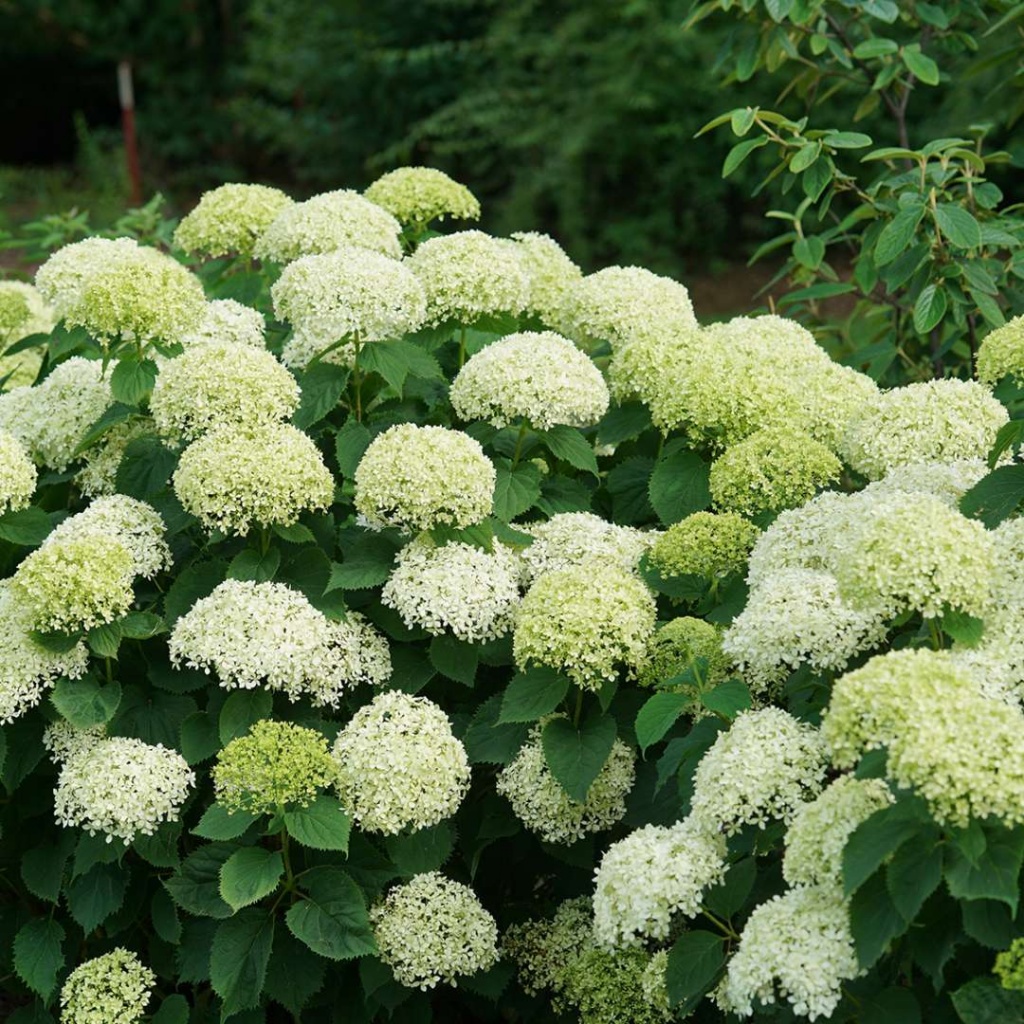
The site should be protected from drafts and well-drained. The optimal planting hole size is about half a meter in diameter and depth. It's best to root the bushes in a special mixture made of humus, acidic peat, and potassium-phosphorus fertilizer (about 50 g). When planting, it's important to carefully space the roots and not cover the root collar with soil.
What to do with hydrangeas after fall and spring planting
To ensure that the plant takes root well, the following rules must be observed:
- The first step after planting is mulching the soil. This will retain moisture and protect the roots from the damaging effects of cold. Fallen pine needles or acidic peat moss can be used for mulch. These will impart acidity to the soil, which hydrangeas prefer. The layer should be at least 7 cm thick. The mulch should be approximately 5 cm from the stems, otherwise rotting and rot may occur.

Mulching scheme 
An example of mulching 
Possible mulch - While the plant is actively rooting (on average, two weeks), water it generously and frequently. This is especially true during dry weather.
- In regions with freezing winters, it's important to protect the shrub from freezing. Winterization should proceed as follows: remove leaves and blossoms from the plant, and add sphagnum moss to the shrub as soon as the first frosts appear. Moss can be replaced with humus, peat, or rotted sawdust. After the first frosts, spread a layer of mulch approximately 20 cm thick around the trunk. Then tie all the shoots into a bundle with twine and wrap them in burlap or other material.
- When planting in spring, especially in the southern regions, it is necessary to shade the young plant.
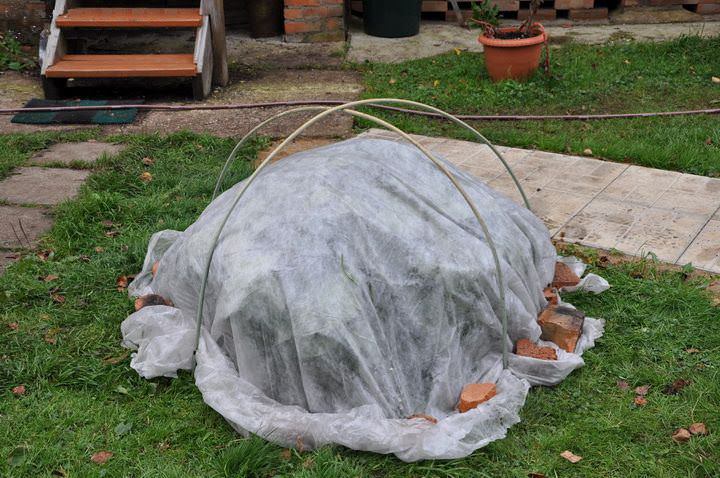
In the spring, remember to remove the protective devices as soon as the frost ends. Then replace the mulch.
Hydrangea care in autumn: table
| Moisturizing | Hydrangeas thrive in moisture, so they should be watered every three to four days if the weather is dry. Use rainwater or settled water. The recommended watering rate is 30-50 liters per plant. If the soil is mulched, water less frequently. Adding vinegar or lemon juice to the water can be helpful. This will prevent chlorosis. |
| Fertilizer | The last time this season, hydrangea should be fertilized is at the beginning of September, using a fertilizer based on potassium and phosphorus. |
| Disease prevention | In the fall, you can treat the shrub for pests or pathogens to prevent them from overwintering in the soil. After the leaves fall, spray the shrub with a 1% Bordeaux mixture solution. Another option is a commercially available Abiga-Peak. |
| Trimming |
There are two opposing schools of thought regarding pruning. Some believe it should be done in March, before the buds begin to actively develop. Others believe it's best to prune in October, when sap flow in the shoot slows. All hydrangea species can be roughly divided into two large groups. The first group includes shrubs whose flowers develop on older shoots. These include large-leaved, prickly, oakleaf, petiolate, vine-like, serrate, and Sargentiana hydrangeas. These hydrangeas require removal of old inflorescences and damaged branches. The second group includes plants that produce flowers on young shoots. Therefore, it's best to prune them at the end of the season. However, there are some nuances. Arborescens hydrangeas are pruned starting at age four. With paniculata hydrangeas, the skeletal branches are left intact. The main advantage of performing the procedure in the fall is that it stops sap flow. Any pruning can be likened to an open wound, and if done in the spring, there's a slight risk of the shoot bleeding. |
Preparing hydrangeas for winter
Hydrangea is a rather delicate plant, and winter brings it considerable discomfort. Therefore, it's important to carefully prepare for the onset of cold weather. As early as September, remove all the leaves from the panicle hydrangea, leaving only the top ones. Then, apply fertilizer containing potassium and phosphorus.
In warm regions, such as Crimea, hydrangeas can survive the winter by being earthed up high. In areas with frosty winters and little snow, preparations should be more careful. Smaller shrubs can be completely covered with peat, and the resulting shelter can be protected by wrapping them in plastic. Another option is to tie the bush with twine, pulling the branches together. Then, carefully pull it to the ground and secure it by tying the free end of the twine to a board. Cover the plant with spruce branches or sawdust, and then further protect it with spunbond.
Another excellent way to protect hydrangeas from severe frosts: line the area around the trunk with spruce branches, carefully tying the branches to the ground, radiating outward from the center. Then, fill the center of the bush with peat, and cover the branches laid on the ground with spruce branches. Cover the entire plant with lutrasil, weighing it down at the corners with heavy stones.
However, these options are suitable for young plants with flexible branches. If the shoots are already woody, they should be wrapped in lutrasil and secured with tape. Then, construct a protective shelter out of wire mesh, installing it around the plant. It should be 20 cm higher than the bush. Fill the entire space inside the mesh with dry leaves, and then wrap the structure further with plastic film.
These measures are especially important for young plants. The older the bush gets, the less susceptible it is to frost.
How to properly transplant hydrangea in the fall
The answer to this question depends on the plant species. Large-leafed varieties shouldn't be replanted at this time of year, as they don't take root well. The best options are tree-like and paniculate varieties. The plant should be prepared from the beginning of the season. To do this, dig a fairly wide trench around the trunk. It should be at least 30 cm deep and wide. Then fill this space with compost and water it frequently. This will encourage the shoot to send new roots into this area. The bush will be ready for replanting in September.
For ease of handling, first tie up the branches; otherwise, replanting will be difficult. Then carefully dig around the plant and remove it from the soil. Be careful to protect the young roots. Move the dug-up shrub to its new location and plant it in a hole prepared a few days in advance. After replanting, trim it slightly.
Top.tomathouse.com recommends: How to propagate hydrangea in the fall
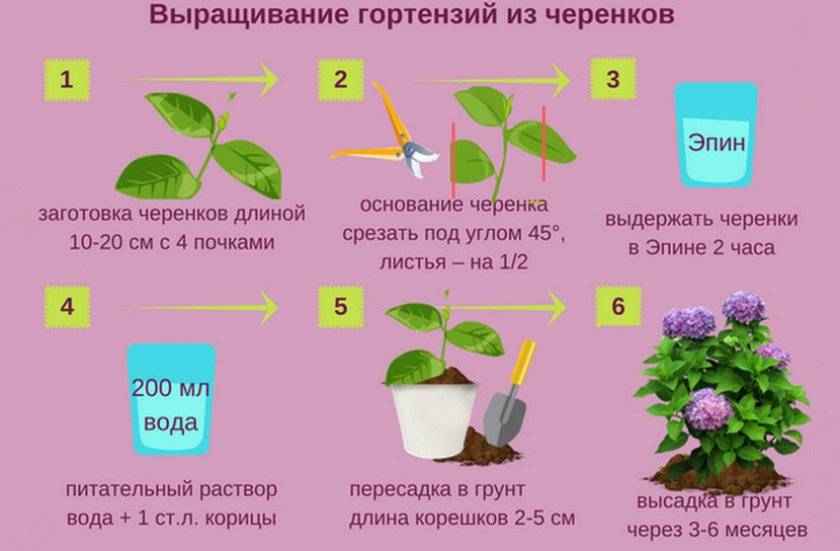
There are many methods: using cuttings, layering, division, or suckers. Another option is to bury the new seedling. However, our website http://top.tomathouse.com reminds you that there's one method that's not suitable for fall: cuttings; this procedure is best done in mid-July.
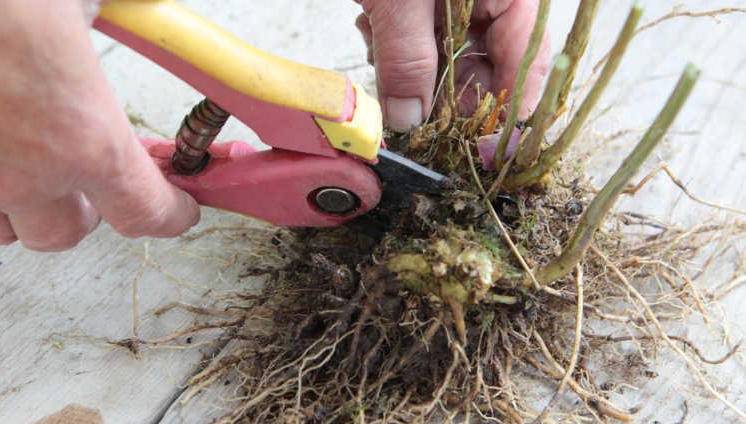
Dividing hydrangeas in autumn
This is especially convenient when replanting. The method applies to any species, except paniculate varieties. After removing the seedling from the soil, the root is divided into several sections, each containing both good roots and strong, healthy shoots. To promote healing, the cuts can be treated with crushed charcoal.
Propagation of hydrangea by layering in autumn
The main advantage of this method is its simplicity, but it also has a drawback: low productivity. First, you need to dig up the soil where the cutting will root. Then, make a trench no more than 15 cm deep, and place the cutting into it. Metal pins can be used to secure it. Then, fill the trench with soil. The top of the branch should remain exposed; the growing point on it should be removed. Before the onset of cold weather, the cutting should be covered with fallen leaves or spruce branches.
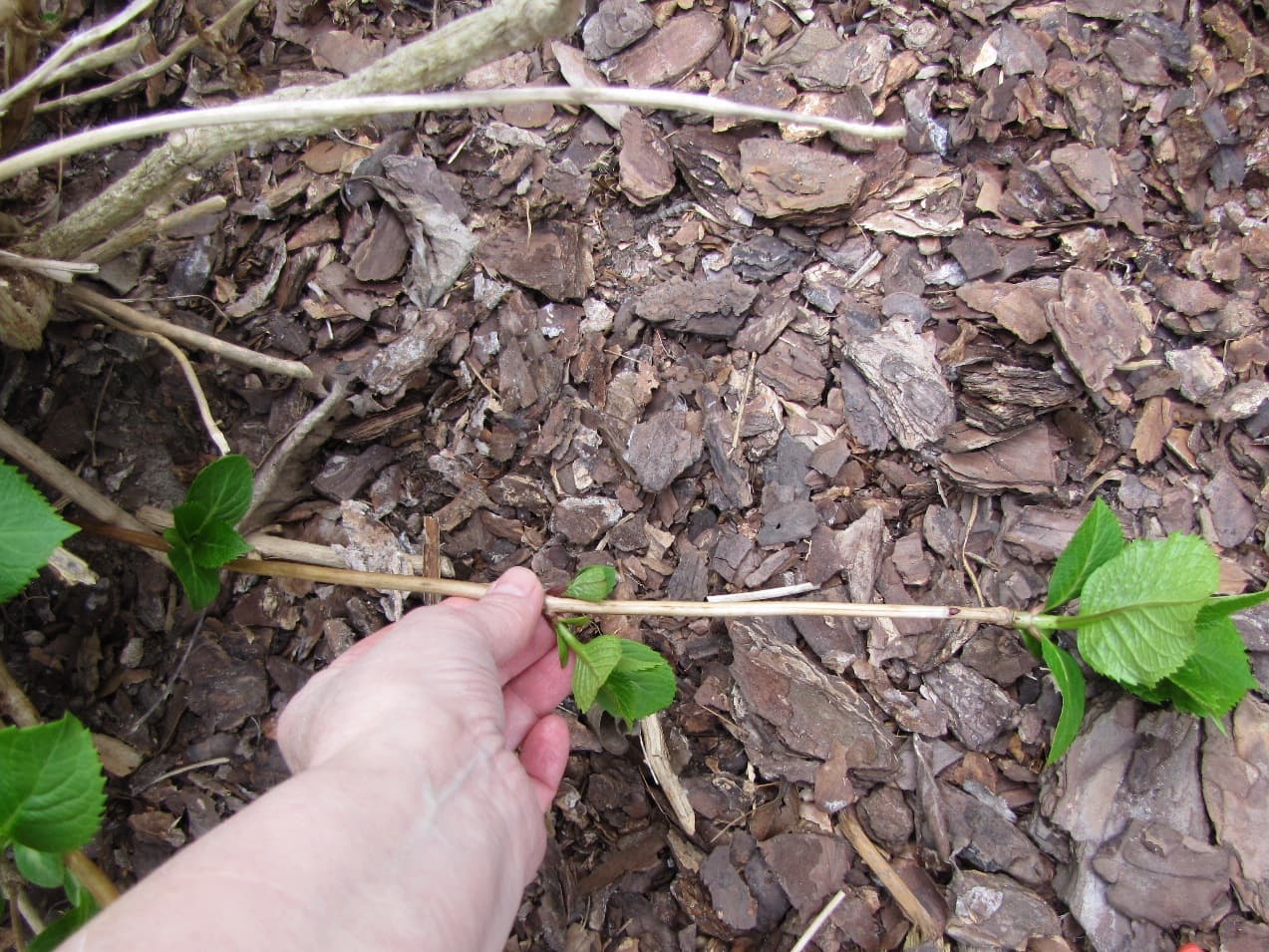
With the arrival of spring, young shoots will begin to emerge from the layer. When they reach 20-25 cm, they should be hilled. This procedure should be repeated every 10 cm of shoot growth. When the resulting mound reaches a height of 25 cm, the layer should be dug up, carefully cut away from the main bush, then the young shoots should be separated and planted in different locations.
Propagation of hydrangea by shoots in autumn
The top layer of soil should be removed, then the rootstock should be separated and transplanted to another location, where it will grow for about two years. After that, it can be moved to its permanent location.
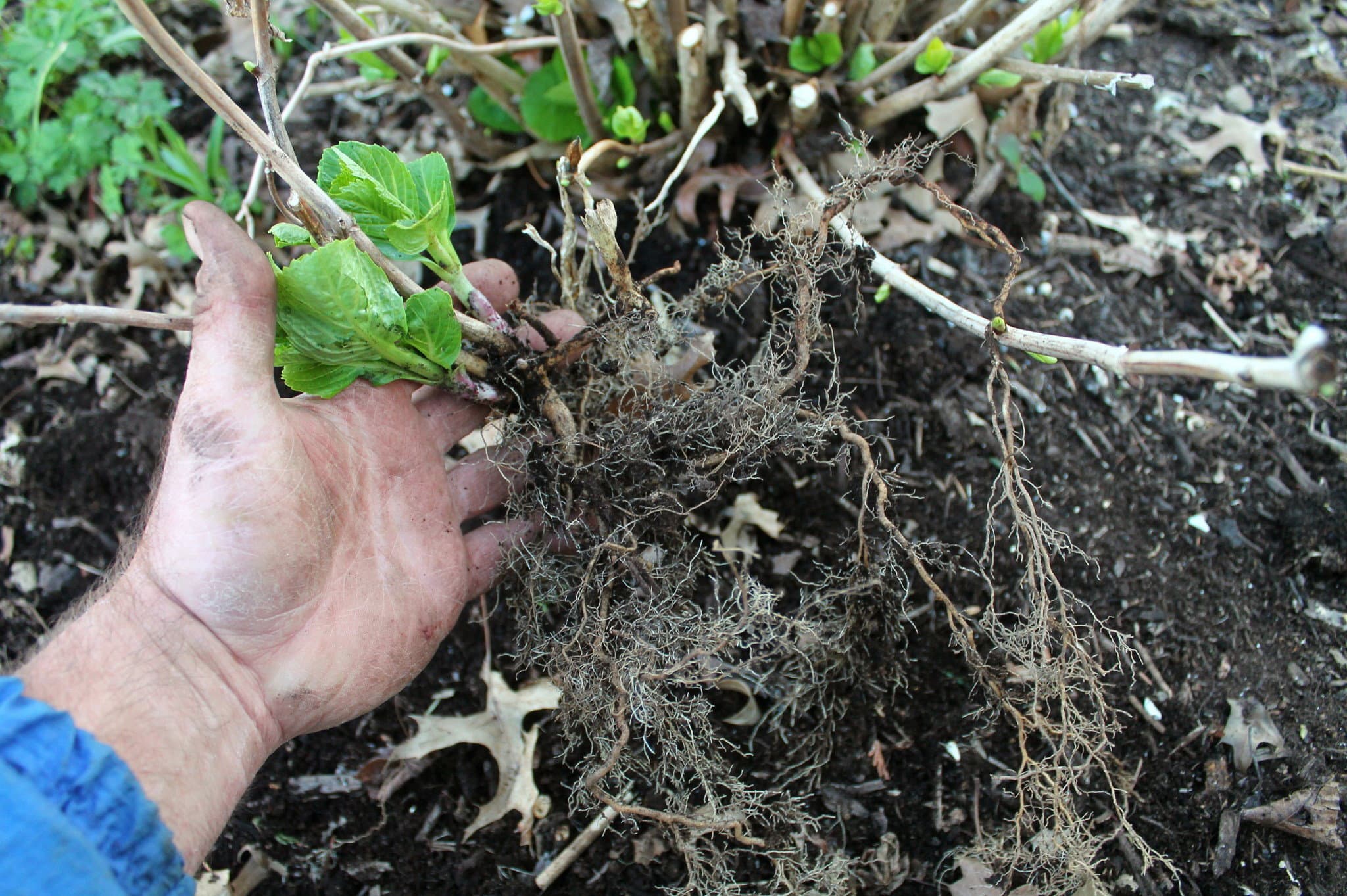
Propagation of hydrangea by burying the seedling
This is a relatively new technique, but it's already enjoying well-deserved popularity. It involves using a plant seedling as a cutting. All leaves and weak shoots are removed, then the plant is buried in a deep trench with a sloping bottom.
The seedling is placed in the trench, the roots are buried in the deepest part, and the soil is compacted. After this, all the shoots are arranged in a fan shape and covered with soil. After this, the entire area is covered with humus or peat.
With the arrival of spring, the buds will activate and begin to grow. At first, the seedling's roots will supply them with nutrients, and then they will develop their own root system. In this way, ten young hydrangeas can be produced from one plant.
We recommend a video on how to sow hydrangea seeds: