Calendula is a herbaceous annual plant of the Asteraceae family. It is native to Western Europe, the Mediterranean, and Southwest Asia.
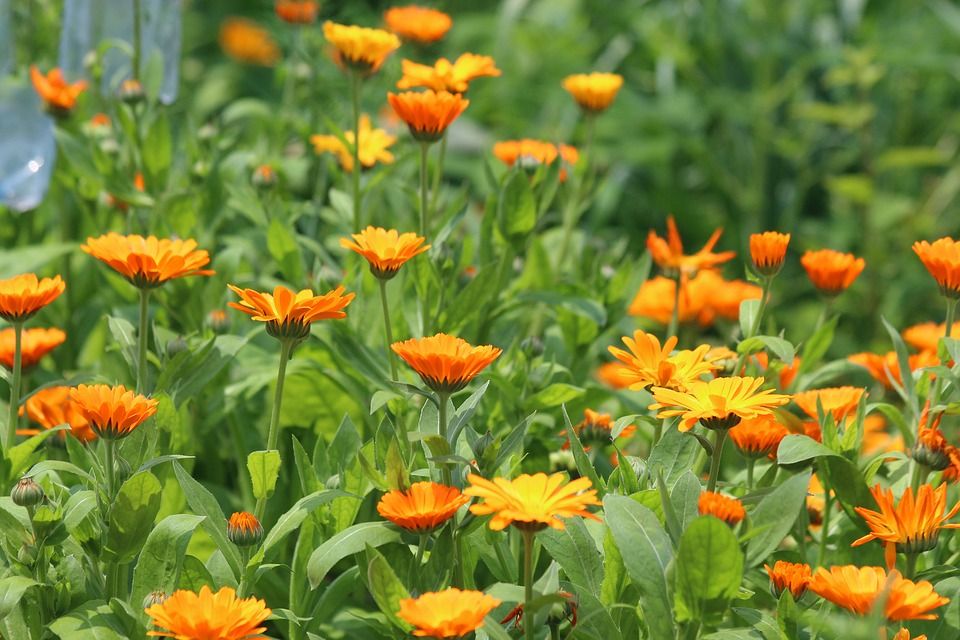
This is the official name of the well-known marigold. These unpretentious flowers symbolize love, longevity, and purity. Calendula is most often planted in mixed arrangements, adding yellow and orange hues to any garden.
Content
Description of calendula
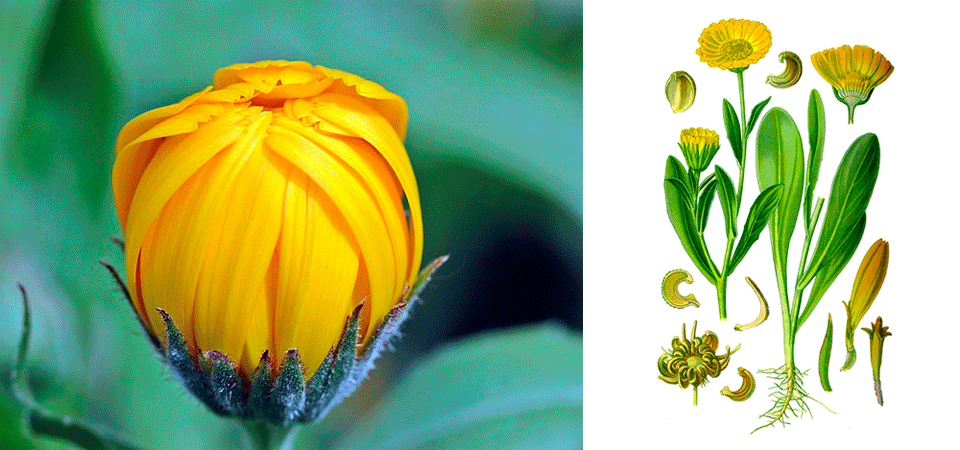
Calendula, when mature, is a spreading bush, reaching 70 cm in height, with flowers 4 cm in diameter (ornamental varieties are 8 cm). It can be cultivated both as a garden plant and as a wild plant. Distinguishing features include:
- apical multi-flowered baskets;
- the presence of one or two rows of elongated leaflets;
- outer corollas are pistillate and pseudoligulate, inner ones are bisexual and tubular;
- heteromorphic curved achenes;
- specific aroma;
- ability to repel pests.
The erect, ribbed stem is dark green. It is covered with spatulate leaf blades, each with short, stiff hairs. These give the plant a sticky texture. The arrangement of the corollas within the inflorescence directly depends on the sex of the plant. It thrives in sunny areas, as it loves light.
Marigolds begin blooming in June. This period ends in late autumn. Fruits form on female plants. Calendula blooms only in sunny weather. By observing the flower, you can predict the weather. Ripe seeds remain viable for 4-5 years. The plant bears fruit abundantly, so the yield will be quite high under favorable weather conditions.
Types and varieties of calendula
The genus includes approximately 20 species, most of which are annuals. In the wild, the most common are calendula arvense and calendula officinalis.
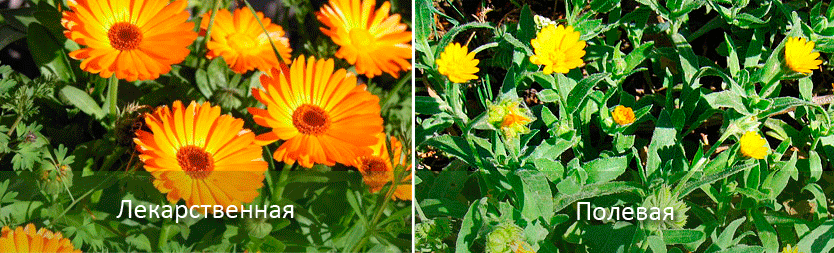
Garden forms were obtained as a result of selection of natural species.
Field
The field marigold is the most valuable ornamental plant. It has no medicinal properties, so it is not used for medicinal purposes. The stem is sparsely branched, and its height ranges from 10 to 30 cm. The obovate leaf blades are covered with glandular hairs. Ochre-yellow inflorescences form during the flowering period. Fruit appears in midsummer. The curved seeds are covered with spines. Field marigolds can be found in abandoned areas and wastelands. In the garden, this variety is grown in the same way as ornamental varieties.
Medicinal
This species is used medicinally. The plant's stems are broad and sparsely branched. The annual plant grows to a height of no more than 75 cm. Its distinctive features include sticky growth, a light green stem, and simple oval leaves. The bright orange inflorescence reaches 6 cm in diameter. The corollas emit a unique, refreshing scent.
Garden
When creating ornamental varieties, breeders focused on flowering time, plant height, and inflorescence shape and size. As a result, various cultivars of garden calendula were developed.
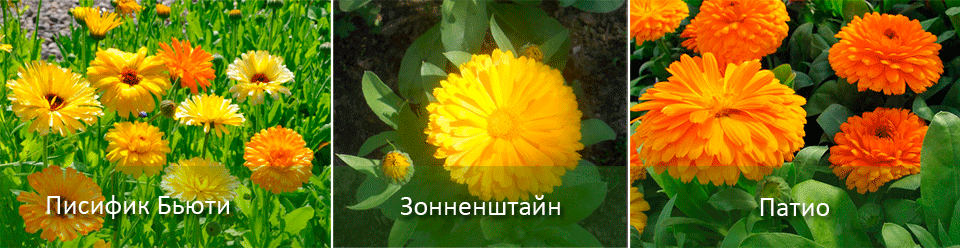
For example, marigolds from the Pacific Beauty group are most often grown for cutting, and Patio calendulas, due to their compact size, are planted in borders, beds, and rock gardens.
| Variety | Description |
| Radio | The branched shoots range from 35 to 45 cm in length. The hemispherical, double corollas are bright orange and 6-7 cm in diameter. The oval leaves are veined. The stem is stiff and ribbed. |
| Yuvel | A spherical bush, the diameter of the semi-double basket does not exceed 9 cm. The plant height is 40-50 cm. The stem is pentagonal, the inflorescences are formed by yellow tubular and salmon-orange corollas. |
| Sensation | A compact shrub, no more than 45 cm tall. Double flower heads are composed of bright orange ray flowers. The leaf blades are dark green. |
| Bonbon | Up to 30 cm. Densely double, imbricated corollas are orange in color. Their diameter is at least 8 cm. |
| Masterpiece | The bush is no higher than 45 cm. The diameter of the baskets is from 6 to 8 cm. Light brown and bright orange petals can be double or semi-double. |
| Sonnenstein | The plant grows to a maximum height of 50 cm. The light green shoots have a ribbed surface. The bright yellow flower head reaches 7.5 cm in diameter. The leaves are oblong. |
| Indian Prince | The shoots reach 75 cm. The inflorescences have a dark center, and the bronze-orange petals are decorated with burgundy lines. The double baskets are large, reaching 9 cm in diameter. The flowers are used in bouquets and garden decorations. |
The list of decorative varieties also includes such varieties as Golden Emperor, Orange Koenig, Calypso, and Tongues of Flame.

Features of growing calendula
The plant's appearance depends largely on the light level in the chosen location. The more sunlight, the larger and brighter the flower head. If calendula is planted in the shade, its stem will stretch considerably. This garden plant tolerates spring and fall frosts without any problems.
Another essential factor is fertile soil. Despite marigolds' low maintenance, their varietal characteristics are best expressed when planted in well-drained, loamy soil.
Calendula is not only highly decorative. It also has a disinfecting effect on the soil. This protects nearby crops from the negative effects of pathogens and harmful insects. These include butterflies, spider mites, and the Colorado potato beetle. Calendula care is relatively easy. To ensure it grows well and blooms vibrantly, gardeners need to follow a few simple rules.
Planting calendula with seeds and seedlings
Because calendula is an annual plant, it is grown from seed. Therefore, the first step is acquiring the seeds. Purchasing them is usually straightforward. The cost depends on the variety.
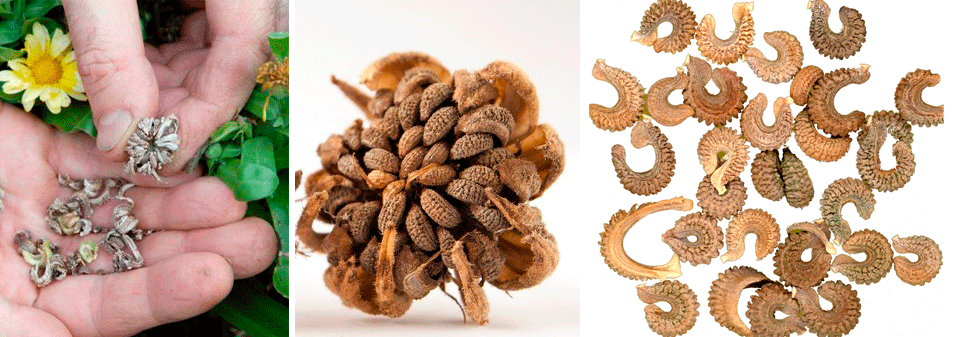
Both seeds and seedlings can be planted in open ground.
The first method is most often used when growing tall varieties. The second option requires much more effort. It is preferred by gardeners who want early flowering.
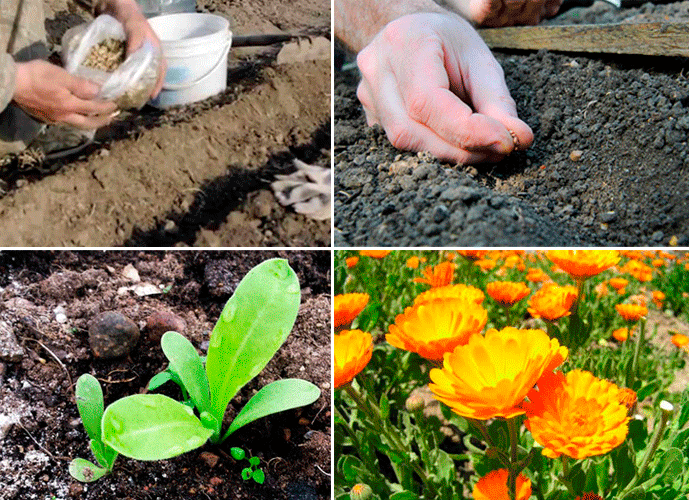
The planting time is determined by the gardener. Flowers usually bloom 2.5 months after the shoots emerge. To ensure consistent blooming, calendula is sown at different times (from March to November).
Calendula for cut flowers is planted in March-April. If the gardener's goal is to decorate borders and flowerbeds, the seeds are planted in the ground in February-March.
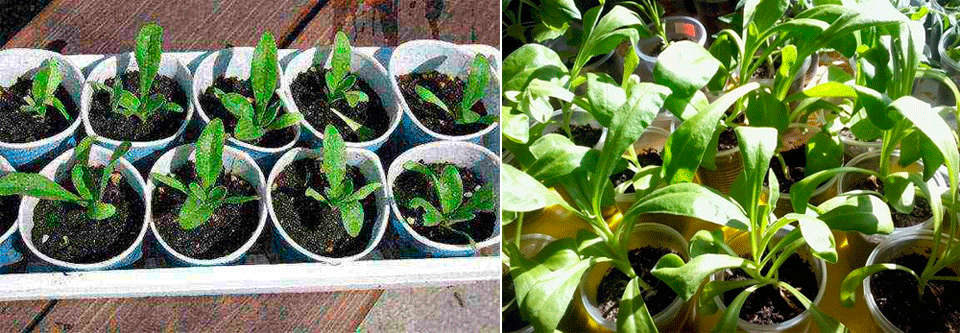
When growing seedlings, the seeds are placed in peat pots pre-filled with soil mixture. The prepared material is placed in furrows no more than 2 cm deep. The containers are then watered and covered with transparent film. This is necessary to achieve the appropriate temperature. During the first few days, it should not fall below 18ºC. Sprouts appear 7-10 days after planting. The next step is to remove the film.
The room temperature should not rise above 15ºC. Seedlings require regular watering, uniform lighting, and fertilizing. A complex mineral fertilizer should be added to the soil.
Planting calendula in open ground
To ensure abundant flowering, select seeds with a narrow, curved shape. The soil should be moist, loose, and fertilized. Protect from strong drafts is desirable. Repot after two true leaves appear.
The selected plot is dug over 1-2 weeks before planting. Fertilize it with minerals and humus. The mixture should contain ingredients such as sand, compost, and ash. The holes should be at least 2 cm deep. Leave 60 to 70 cm between seedlings. When growing calendula officinalis, the distance may be slightly closer.
When propagating by seed, the planting procedure is carried out in early spring. In this case, the seeds are planted in pre-prepared beds.
In this case, the following rules are observed:
- distance – from 30 to 40 cm;
- trench depth – from 2 to 4 cm.
Placing calendula too close can slow down its growth.
The seedlings are planted in their permanent location in May. Before being transferred to the ground, they need to be hardened off on a terrace or balcony. This period takes about a week.
Caring for calendula in the garden
Growing marigolds does not take much time and does not require much effort.
The key requirement is timely implementation of agricultural practices. These include watering, fertilizing, loosening the soil, and weeding.
If everything is done correctly, the calendula will bloom profusely until late autumn.
Watering
The intensity of this procedure depends on weather conditions. If the climate is too hot, a hard crust will form on the soil surface, which will impair gas exchange in the root system.
When watering, do not allow liquid to stagnate for a long time.
With regular watering, the plant will survive dry periods without any problems. Insufficient moisture will reduce the number of flowers.
Top dressing
The composition of the mixture directly depends on the initial soil characteristics. Calendula, due to its low maintenance, can grow even in poor soil. Once a month, marigolds are fertilized with nitrogen-containing complexes. It's important to adhere to the dosage. Excessive application is indicated by a sudden paleness of the inflorescences. Natural fertilizers are also used for additional feeding. These include nettle infusion, mullein solution, and bird droppings. Ideally, the complex should contain boron.
Pinching
This procedure can extend the flowering period. The procedure is quite simple. The corollas should be cut off before they fade. Pinching also refers to removing the tips of the flowers located above the growing point. This refers to the area where the leaf blade is located. This part of the plant should be removed with scissors. This will encourage the formation of new inflorescences and branches. The cut shoots and corollas are stored for drying.
Seed collection
Seeds are harvested only in clear weather. When cutting, remove the seed heads along with a portion of the flower stalk. They must be ripe. To prevent seed shedding and subsequent self-seeding, cover the plant with a gauze bag.
Diseases and pests
Calendulas are resistant to many diseases and pests. If the plant is overly wet, it may develop signs of powdery mildew and black spot. This problem can be controlled with fungicides, including Topsin, Skor, Fundazol, and Topaz. Regular thinning is the most effective preventative measure.
Calendula is resistant to most pests. The only exception might be aphids. These can be controlled with specialized medications, such as Antitlin, Fufanon, Biotlin, Karbofos, Actellic, and Akarin.
Top.tomathouse.com recommends: Calendula – a healer in the garden
The medicinal properties of calendula are explained by the presence of the following components:
- carotenoids – relieve inflammation;
- sterols – improve the functioning of the cardiac and circulatory systems;
- triterpenoids – normalize sugar levels;
- flavonoids – accelerate regeneration, cleanse the body of waste and toxins;
- Essential oils – strengthen the immune system;
- Coumarins – reduce the risk of blood clots;
- Calendula - heals wounds;
- Vitamins and minerals – eliminate infectious pathologies.
Additional benefits include increased vitality, stabilization of metabolism, and improved nervous system function. Before using calendula in alternative medicine or homeopathy, consult your doctor. Otherwise, negative consequences are inevitable.
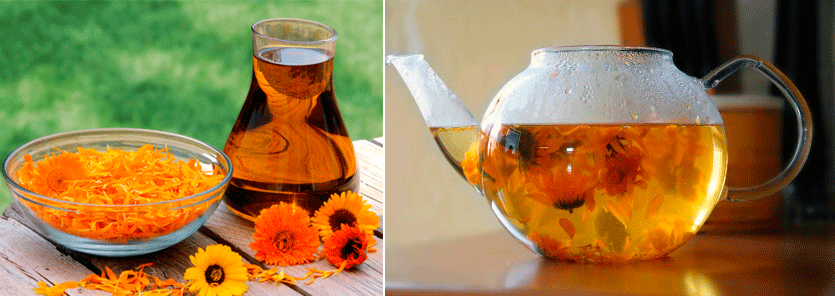
Calendula looks beautiful planted alone or in groups. Tall varieties are used to create a backdrop, while low-growing varieties are used to decorate garden paths, hedges, and borders. Yellow-orange marigolds pair well with purple, burgundy, and blue flowers.