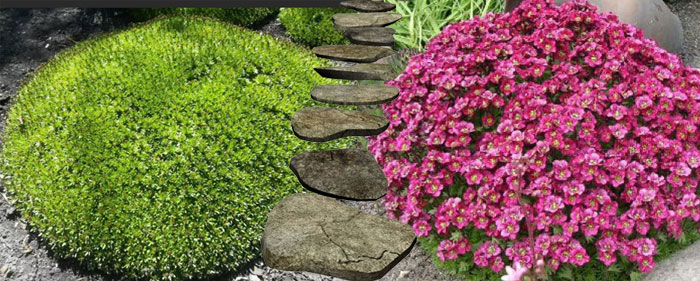
Saxifraga ahrendsii (Saxifrage) is an easy-to-grow and attractive plant that will enhance any landscape design. This plant requires little care, is frost-resistant, and is ideal for growing in Russia's harsh climates, including the northern regions of Siberia.
Content
- 1 Saxifraga ahrendsii description and photo
- 2 8 Popular Varieties of Arends Saxifraga
- 3 Growing Arends' Saxifraga from seeds at home
- 4 Transplanting Arends' saxifrage seedlings into open ground
- 5 Care features for Arends' saxifrage
- 6 Location and soil
- 7 Required temperature conditions
- 8 Watering and humidity
- 9 Fertilizers
- 10 Pests of Saxifraga Arends
- 11 Problems in growing Arends' saxifrage
- 12 Methods of propagation of Arends' saxifrage
- 13 Use in landscape design
- 14 Where to buy Saxifraga Arendsii seeds and their cost
- 15 Gardener reviews of Arends' saxifrage
Saxifraga ahrendsii description and photo
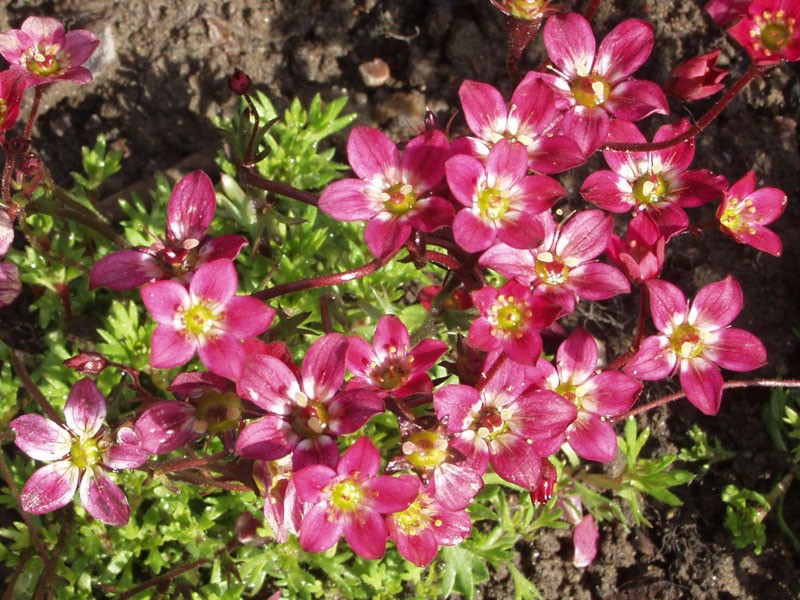
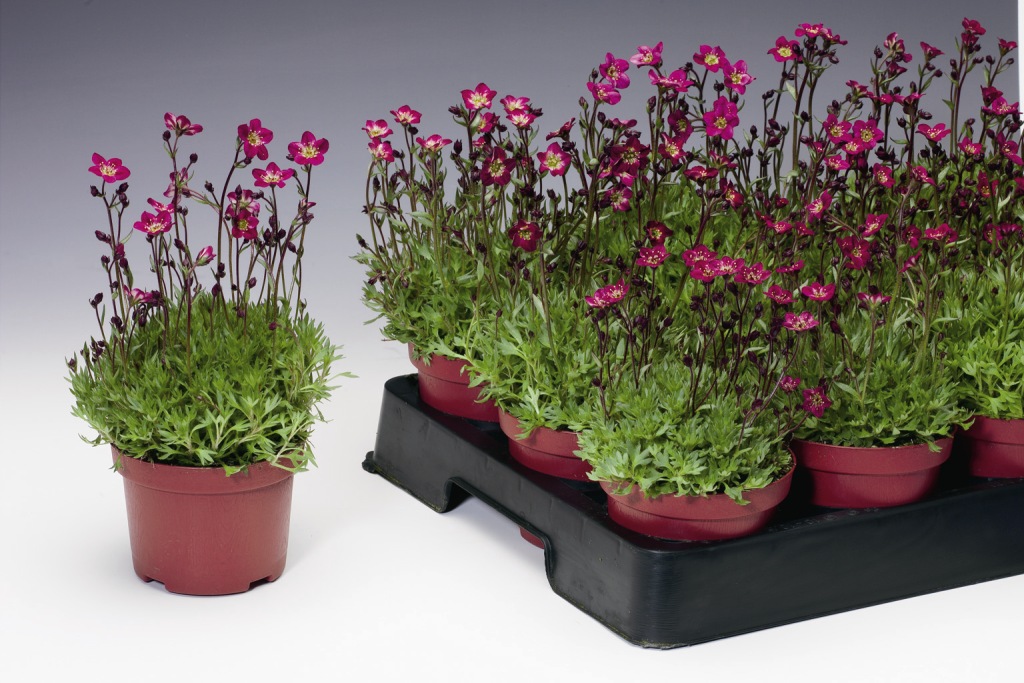
Saxifraga ahrendsii is a perennial herbaceous plant. It grows naturally in the Northern Hemisphere, preferring rocky soils. It thrives among rocks, in rock crevices, and on mountain slopes. This is where it got its name. This plant was first cultivated by the German plant breeder Georg Arends. The second word in the plant's name comes from his surname. Saxifraga ahrendsii includes a huge number of diverse cultivars, which differ in appearance, size, and flower color.
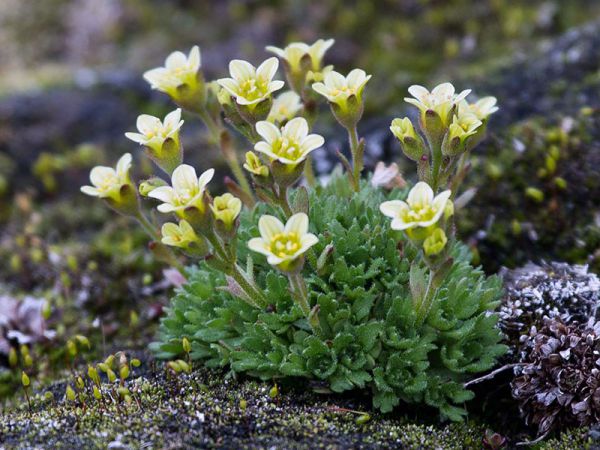
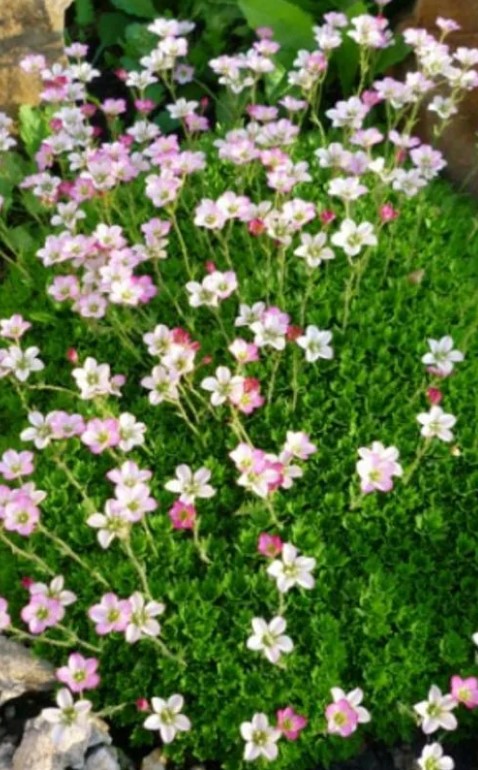
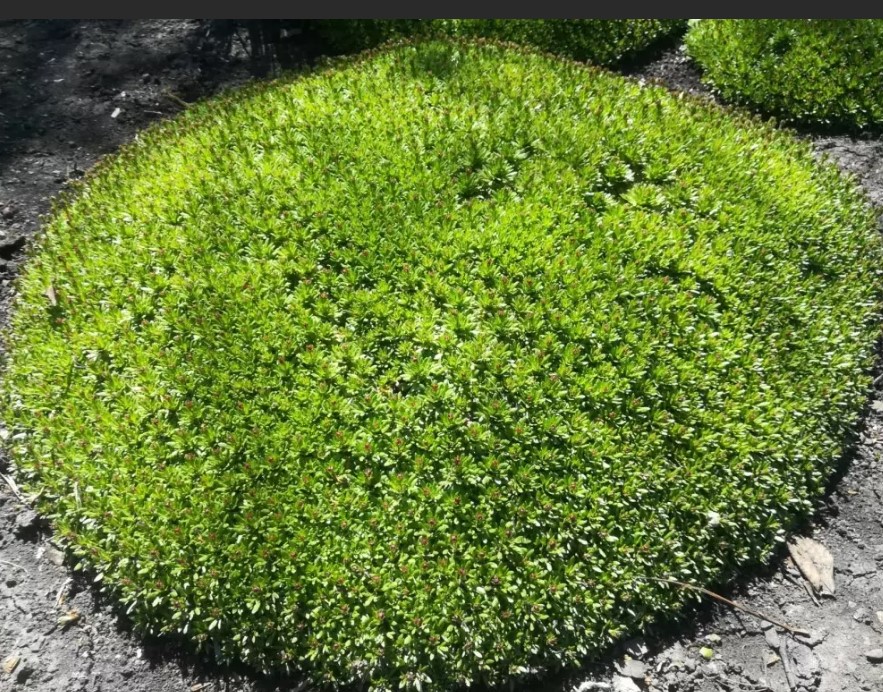
This plant forms an elegant carpet of small bushes with green foliage with a silvery sheen. The leaves are gathered at the base into small rosettes. The bushes can reach 20 cm in height and grow very quickly.
Visually, this plant resembles moss shoots. The leaves in the rosettes die off annually from the bottom, and new ones appear at the top. Therefore, the bushes are brown at the base and green at the top. You can see what they look like in the photo.
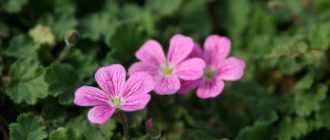
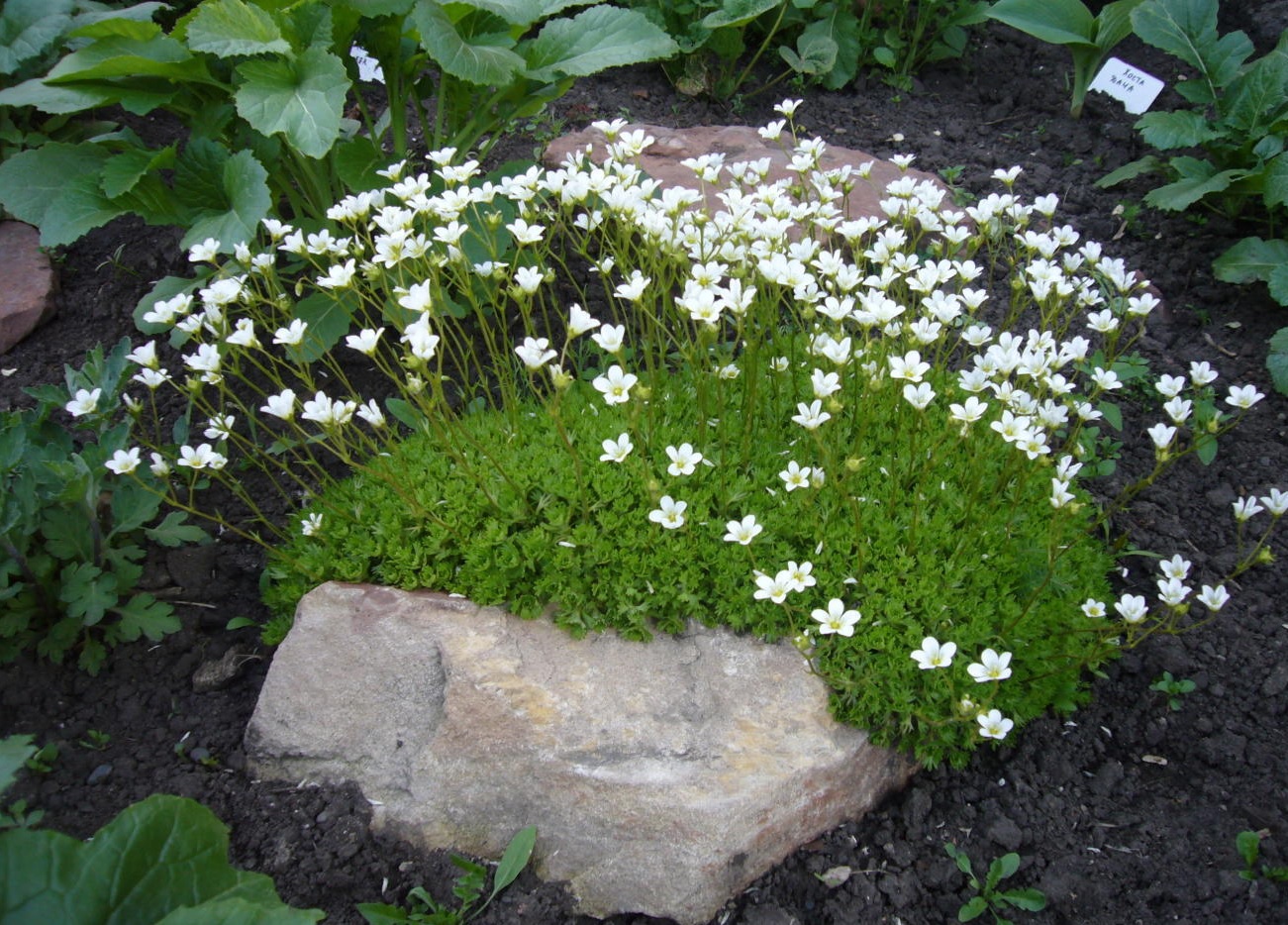
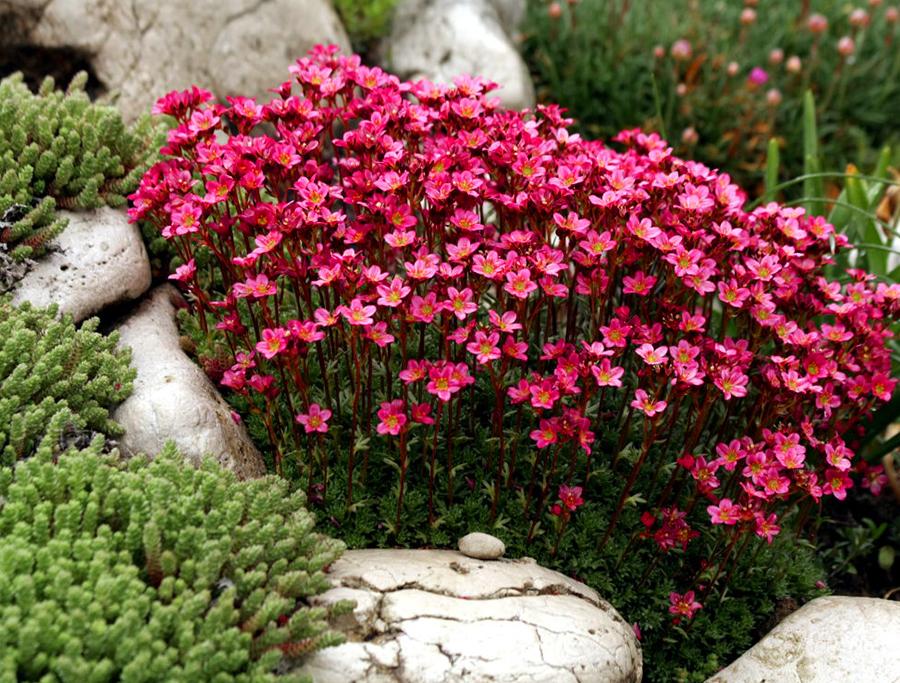
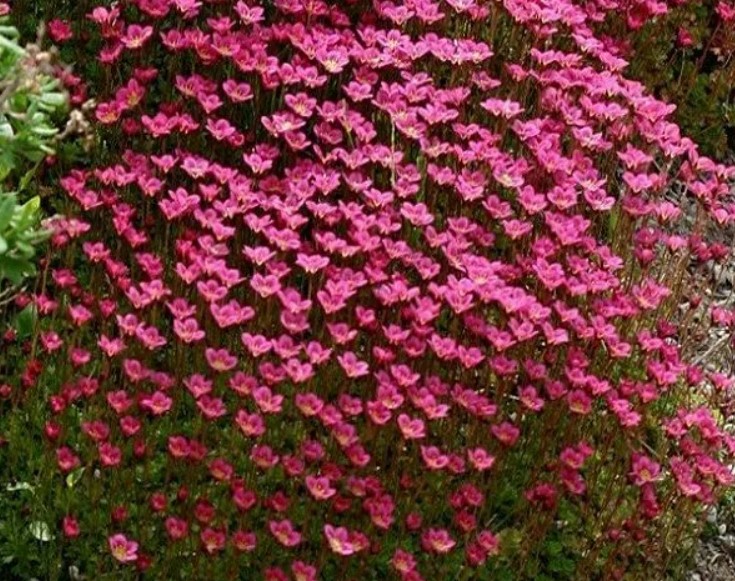
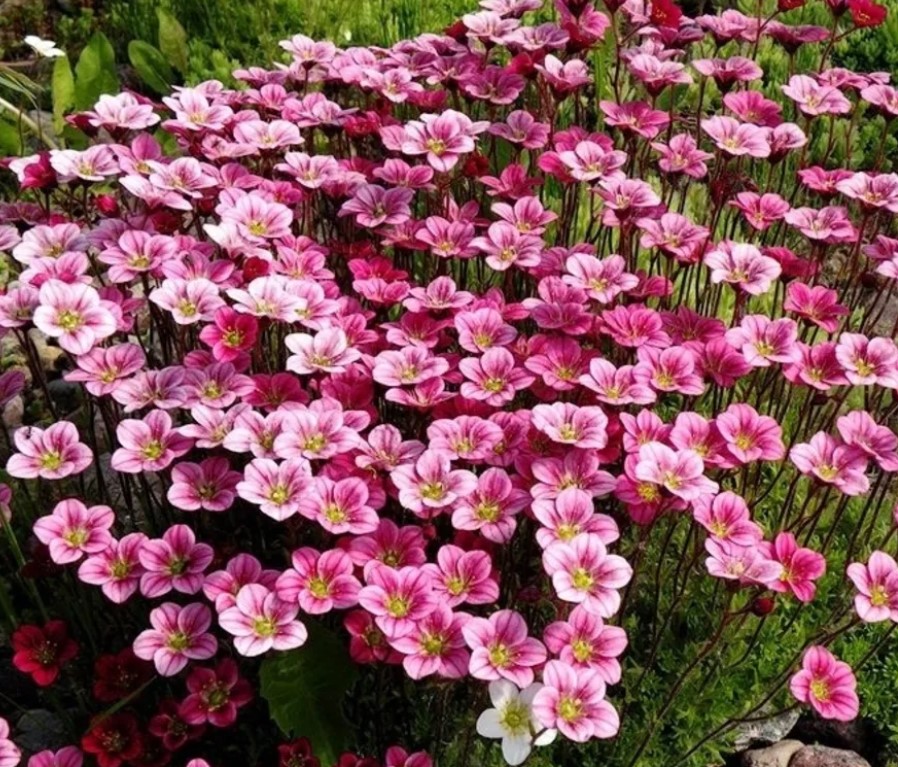
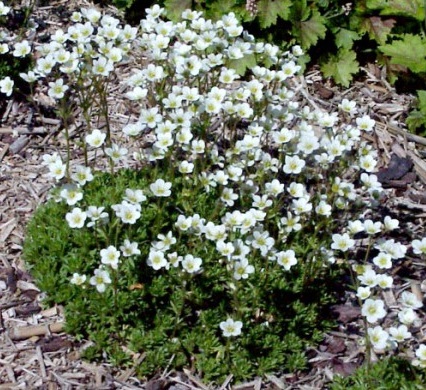
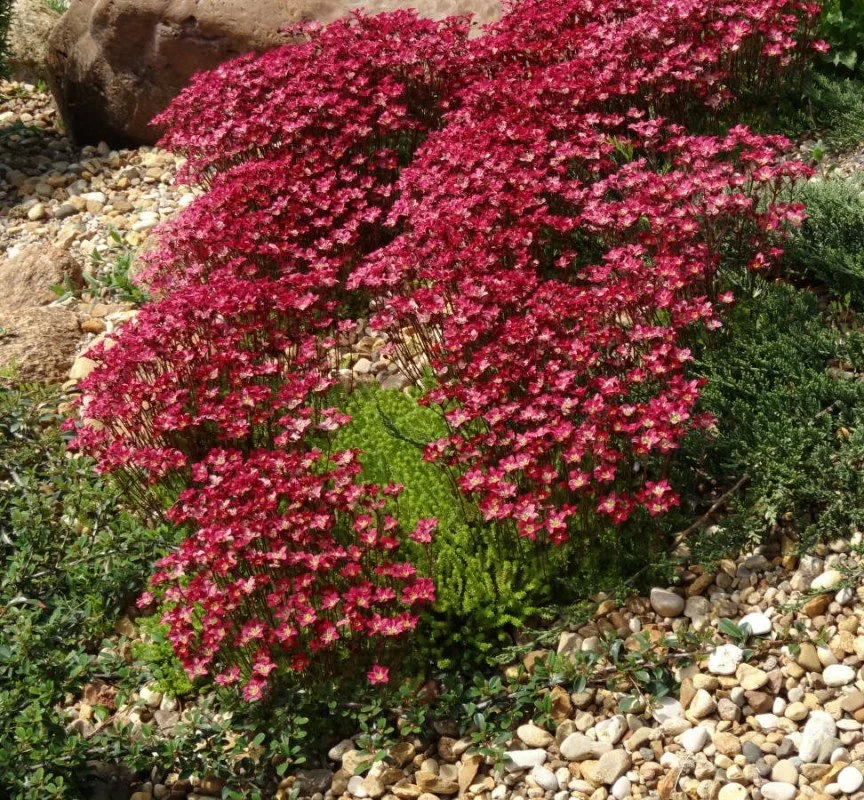
During the flowering period, which begins from May to August, depending on the variety, 20-centimeter-long flower stalks form, topped with five-petaled buds. The flowers come in a variety of shades—snow white, red, and pink. The buds are pollinated by insects.
Flowering lasts for about a month. Then, in place of the buds, fruits form. These are capsules containing numerous small black seeds.
8 Popular Varieties of Arends Saxifraga
Saxifraga arendsii belongs to the Saxifrage family, which includes approximately 450 species. There are many cultivars of this plant. The table below lists the most popular.
| Varieties | Saxifraga arendsii description | Peculiarities |
| Highlander red (Red carpet)
|
A perennial plant growing to 15 cm in height, it blooms from July to August. The flowers are distinguished by their red petals. | Prefers shade-loving areas. Can withstand temperatures down to -18°C without additional insulation. |
| Purpurteppich (Purple Carpet)
|
A groundcover perennial plant growing up to 20 cm tall. It blooms from May to June, producing purple-pinkish buds up to 1.5 cm in diameter. | It's recommended to plant in partial shade, but the variety also thrives in sunny areas. It exhibits low frost resistance, so it needs some shelter during the winter. |
| Blutenteppich (Bleeding Carpet)
|
Forms dense thickets of small rosettes. It reaches 10-15 cm in height. Flowering occurs in May-June. The buds are pinkish-red. | Best planted in partial shade. Thrives in a cool, humid climate. |
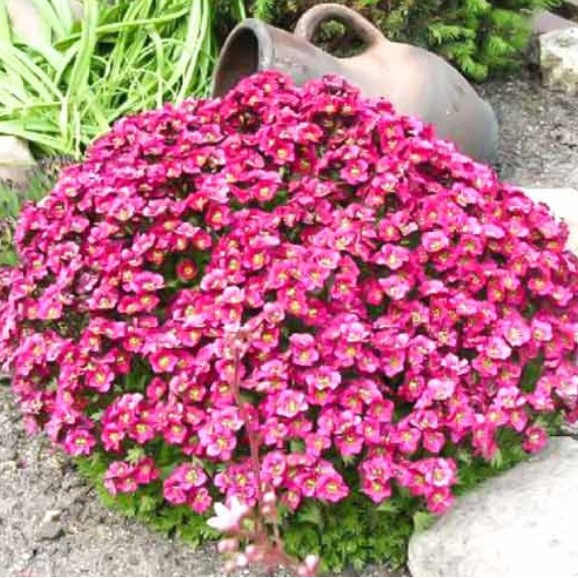
| Peter Pan (Pink Carpet)
|
It grows up to 15 cm and blooms from late spring for a month. The bushes are covered with large pink buds that grow very close to each other. |
It doesn't tolerate full sun well. Partial shade is preferred. Humus-rich soil is also required for planting. It is highly frost-resistant and can withstand temperatures as low as -24°C. |
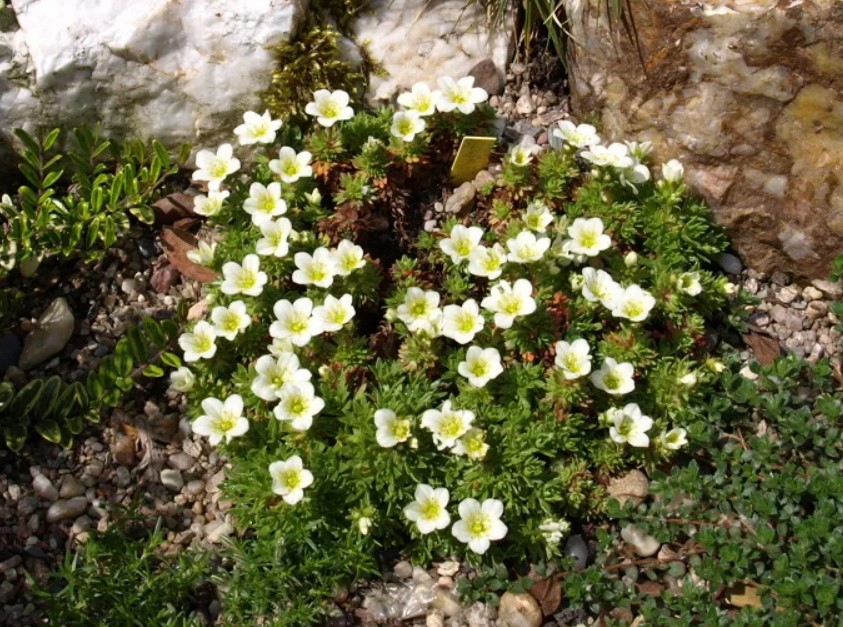
| Schneeteppich (White Carpet)
|
It stands out for its decorative, lacy foliage. Snow-white buds bloom in May and June. It reaches 15 cm in height. | Unlike many other varieties, it prefers sunny locations. Frost resistance down to -23°C. |
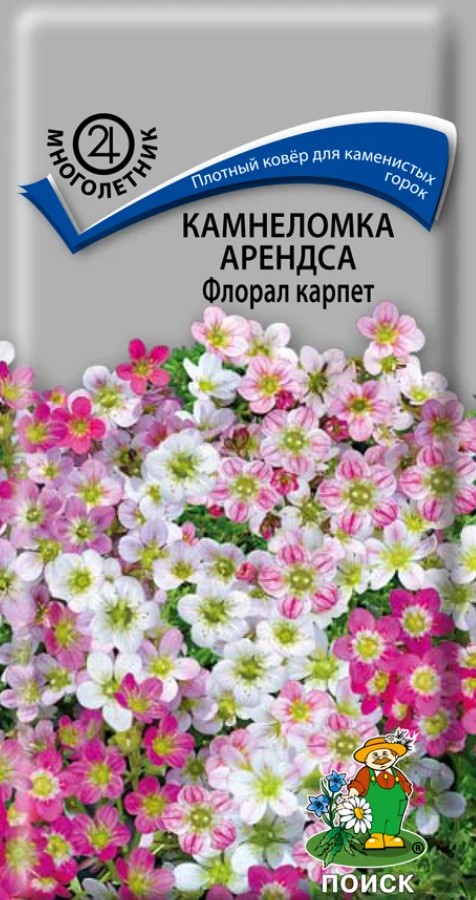
| Floral Carpet
|
Grows up to 20 cm. It produces multi-colored buds (mostly with snow-white and pink petals) that bloom from May to June. | Grows well in both partial shade and full sun. Prefers moist, nutritious soil. Can withstand temperatures down to -30°C. |
| Weisser Zwerg (Weisser Zwerg)
|
A compact hybrid growing up to 20 cm. It blooms from May to June, producing white buds. | Prefers partial shade. Planting in humus-rich soil with good moisture and air permeability is recommended. It tolerates temperatures down to -20°C. |
| Triumph
|
A perennial plant reaching 20 cm in height, it is often planted in rock gardens, rockeries, and borders. It produces small, star-shaped, ruby-colored flowers. Flowering occurs in May and June. | Prefers sunny areas. |
Growing Arends' Saxifraga from seeds at home
The plant is unpretentious. It is enough to provide it with suitable conditions. conditions It requires minimal care and development, so that a dense carpet becomes a beautiful addition to your property. Let's take a closer look at how to grow Arends' Saxifraga indoors as seedlings.
Proper preparation of Saxifraga Arendsii seeds
Before planting, seeds must be stratified. This process simulates the cold conditions plants encounter in their natural habitat. This will improve the germination rate of Saxifraga ahrendsii when grown from seed. The seeds will germinate faster, and the seedlings will emerge uniformly. Furthermore, the mature plants, if stratified, will have a stronger immune system.
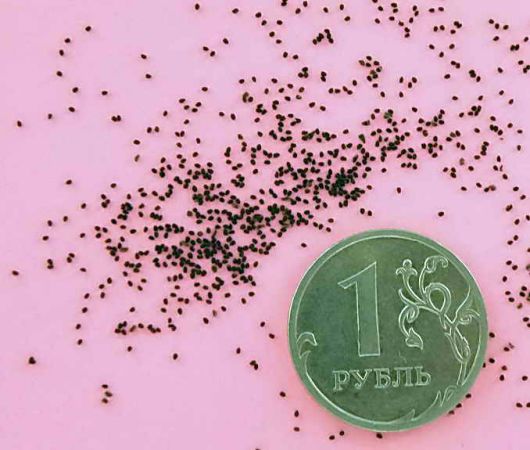
To treat the seeds with cold, keep them in a humid environment at a temperature of +2…+4°C for 2-4 weeks. The vegetable shelf in the refrigerator can be used for this purpose. It's important to ensure the seeds don't dry out; moisten them with a spray bottle if necessary.
Stratification can be carried out:
- Before sowing seeds in the soil, fill a saucer with clean, calcined river sand. Place the seeds in it. Moisten with a spray bottle, cover with a lid or plastic wrap, and refrigerate.
- After sowing in containers, plant the seeds in the containers where the plants will grow. Moisten, cover with a transparent lid or film, and place on a shelf in the refrigerator.
The second method is preferable, as after stratification, the seeds don't need to be sown. The container is simply moved to a warm place.
Sowing dates
Sowing takes place in late March or early April. With proper stratification, the first shoots appear fairly quickly.
Soil and container for sowing
It is best to sow seeds in seedling containers 10 cm deep. There must be drainage holes in the bottom.
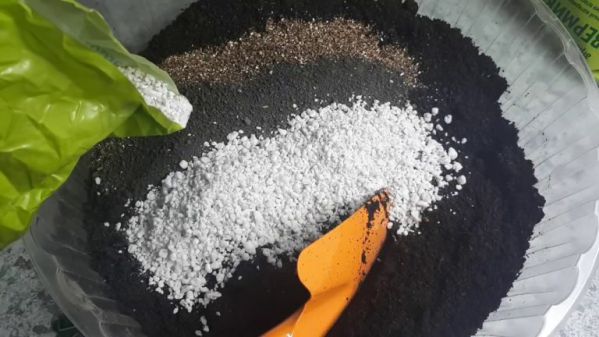
Choose nutritious and loose soil. You can make your own from garden soil, sand, and peat (mixed in equal parts). Disinfect the soil and pot beforehand by treating them with boiling water or a potassium permanganate solution.
How to sow Arends' saxifrage
Step by step actions:
- Pour soil into the container and moisten it.
- Scatter the seeds over the surface without burying them too deep.
- Sprinkle with soil on top (a layer of about 1 cm).
- Spray with a spray bottle and cover with glass or film.
If stratification wasn't performed before sowing, the container will need to be refrigerated. After 2-4 weeks, move it to a well-lit windowsill.
Caring for Saxifraga Arendsii seedlings
After stratification, the crops should be moved to a bright location with a temperature of 22°C. Remove the film or glass daily for ventilation, morning and evening. This will prevent mold and rot. Simply remove the lid for half an hour and wipe away any condensation with a dry cloth.
As a rule, watering is not necessary during seed germination, as the soil does not have time to dry out. If the soil becomes dry, you can moisten it with a spray bottle. Avoid allowing the seeds to dry out completely, as this will prevent the seeds from germinating. It's also important to avoid excessive moisture, which can lead to rot and death of the plants.
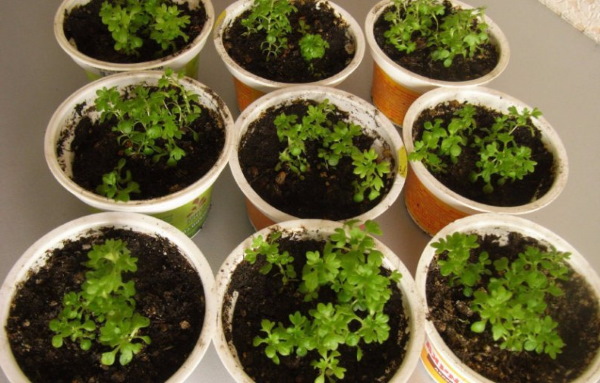
The first shoots usually appear within 1-2 weeks. After this, the cover is completely removed, but this should be done gradually:
- 1st day - remove the shelter for 2 hours in the morning and evening;
- 2nd - open the shoots for 4 hours;
- 3rd - remove the cover for the whole day, and cover it again at night;
- 4th - remove the lid or film completely.
Water as needed, once the top layer of soil has dried out. The water should be warm and settled. Drain any excess water from the tray 2-3 hours after watering.
Plants are transplanted at the 2-leaf stage into 250 ml cups. These cups must have drainage holes to prevent dampness, which is detrimental to the root system. The same soil can be used. Place one plant per cup. Step-by-step transplanting:
- Water the plants 2 hours before transplanting.
- Carefully remove one bush at a time. A wooden stick is helpful for this. Be careful to ensure the roots remain intact and free of soil.
- Place the plant in the center of the new cup. Spread the roots so they are straight and not bent.
For the first few days after transplanting, keep the plants in a room with diffused light, protected from direct sunlight. Otherwise, it can stress the plants, slowing rooting and causing leaf burn.
Transplanting Arends' saxifrage seedlings into open ground
Saxifraga ahrendsii (grown outdoors) is relatively easy to grow. Transplanting to a new location occurs in late May or early June. Two weeks before the intended planting date, the plants need to be hardened off. To do this, place them outside for an hour, then for 2-3 hours the following day, and so on, gradually increasing the time.
Planting scheme for Saxifraga Arendsii
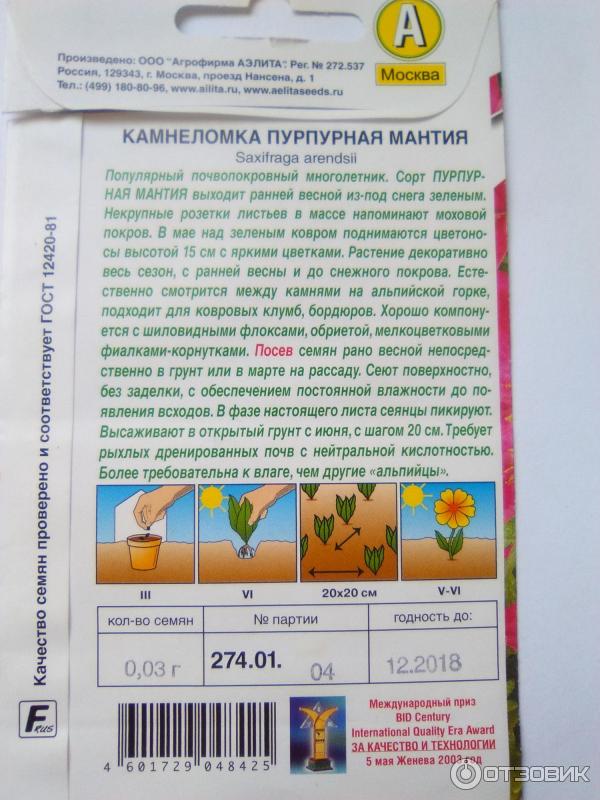
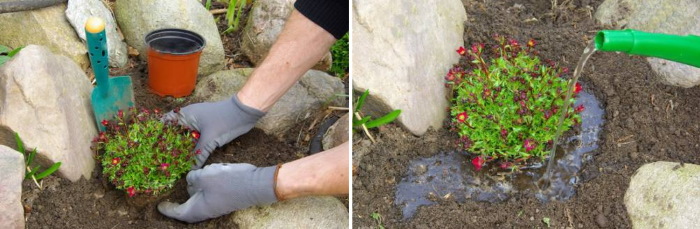
Saxifraga Arendsii - planting in open ground (diagram):
- In the garden, dig holes 5-10 cm deep, leaving a distance of 10 cm between them.
- Remove the seedlings from their containers. Without disturbing the root ball, place them in the center of the holes.
- Fill the voids with nutritious soil and compact it lightly.
- Moisten. Water should be poured along the edges of the holes.
Plants that have undergone preliminary stratification and hardening take root well in a new location.
Care features for Arends' saxifrage
Saxifraga Arendsii requires minimal care in open ground.
Location and soil
Most varieties don't tolerate direct sunlight, but shade isn't ideal for them either. Therefore, it's important to choose a semi-shaded spot on the plot, for example, on the east or west side. It's a good idea to have shrubs or trees growing near the flowerbed to provide partial shade at midday.
The plant doesn't have any particular soil fertility requirements. However, it's best planted in fertile soil containing limestone, fine gravel, sand, and peat.
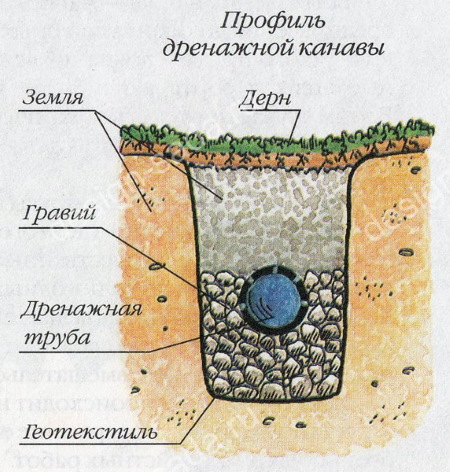
Saxifraga does not tolerate stagnant water around the roots, so sites with a close water table or low-lying areas are unsuitable. It is recommended to plant the plants on a slightly elevated site. The site must have good drainage. Crushed brick, fine crushed stone, or expanded clay can be used for this. The drainage layer should be 5-10 cm thick.
Required temperature conditions
Saxifraga is a fairly heat-loving plant. It grows best in temperatures ranging from 20 to 25°C. However, it also tolerates heat well, provided it is watered more frequently and misted regularly.
The plant is also winter-hardy. Many varieties can withstand temperatures down to -30°C. However, if the winter is snowless, the saxifrage may die. Therefore, to be on the safe side, it is advisable to insulate it for the winter. For example, with fallen leaves, spruce branches, peat, or sawdust. The mulch layer should be up to 10 cm thick.
Watering and humidity
The plant thrives in high humidity. It is recommended to mist it daily with warm water, especially in hot weather. It's important to only sprinkle it early in the morning or in the evening, when the sun is out. Otherwise, the sun's rays will cause the droplets to act as a magnifying glass, causing leaf burn.
Watering should be done as the top 2-3 cm of soil dries out. Typically, 2-3 times a week is sufficient in summer. Reduce the frequency in spring and fall. However, this rule applies to mature plants. During the first year after planting, seedlings should be watered twice a day (morning and evening).
The recommended watering rate for mature plants is 5 liters of water per square meter. For young plants, reduce this by 1/3. Only warm water should be used.
Fertilizers
The first fertilizer application is made one week after planting in a permanent location. Subsequently, apply it twice a month until the end of summer. The following options are available for fertilizing:
- Liquid mineral fertilizers. They should contain a minimal amount of nitrogen. Kemira Lux, Pokon, and Fertika are suitable. It is recommended to use 1/2 the dosage indicated on the manufacturer's packaging. Superphosphate and potassium sulfate can also be used.
- Organics. A bone meal solution is the best organic fertilizer. To prepare it, dissolve 250 g of the substance in 5 liters of water and let it steep for 7 days. After this time, dilute the concentrated solution with water at a ratio of 1:20 and use it for watering. This fertilizer can be used once during the growing season.
Important! Apply any fertilizer only after thorough watering. Otherwise, it can burn the root system.
Pests of Saxifraga Arends
The following insects pose a danger among pests:
| Name | Signs | Methods of control |
| Spider mites | These are small insects that are difficult to see with the naked eye. They can be identified by the thin white webbing that appears on the above-ground parts of the plant. |
|
| Mealybugs | These are small insects that appear as white, fluffy growths on plants. As they feed, they leave behind a waxy, cotton-like coating. | Pests should be removed manually with tweezers. After collecting the insects, treat the bushes with a garlic or horsetail solution. In severe cases, Aktara, Confidor, or Fitoverm may be necessary. |
| Thrips | Small insects that, when they appear, cause colorless spots on leaf blades. | Spray with tobacco or wormwood infusion. If there are numerous insects, use Aktara or Perimor. |
| Aphid | The insect can be detected by its sticky dark coating. | For small infestations, treatment with a soap solution or garlic infusion will help. In more severe cases, Fufan, Rogor, or Actellic will be needed. |
Important! When working with chemical insecticides, be sure to wear personal protective equipment (PPE), including goggles, a respirator, and gloves. Treatment should be carried out in cloudy, windless weather in the morning or evening.
Diseases of Arends' saxifrage
Saxifraga has a strong immune system, but it still requires care. Improper care increases the risk of the following diseases:
| Infection | Causes and signs | Treatment methods |
| Powdery mildew | It develops in high humidity. The disease can be identified by the characteristic powdery coating on the leaf blades. |
|
| Septoria | This is a fungal infection that develops when there's too much nitrogen. When infected, brown spots with a dark border appear. | Treatment with copper sulfate. |
| Rust | A fungal disease that develops in conditions of high humidity and low temperatures. Dirty red growths appear on the leaves and shoots. |
In the early stages of the disease, removal of affected areas and treatment with a soapy solution can be effective. Severe infestations may require treatment with copper sulfate, Bordeaux mixture, Fitosporin, or Topaz. |
Yellowing and drying out
In most cases, this occurs due to insufficient humidity. To address the problem, increase watering and spray more frequently.
Another possible cause is that the plant needs repotting. It can thrive in one location for 5-7 years, after which it begins to turn yellow. In this case, it's necessary to divide the bush and repot it.
Problems in growing Arends' saxifrage
Although Arends's saxifrage (Purple Carpet and other varieties) doesn't have any special requirements for planting and care, serious mistakes in agricultural practices can lead to the following problems:
- The foliage has lost its vibrancy and richness of color. This indicates too much light.
- The buds and leaves have faded. This indicates insufficient light.
- The leaves are becoming spotted and drying out from the tips. This indicates that the roots are rotting due to damp soil.
- There's no flowering and the shoots are stretching. This indicates a nutrient deficiency and requires fertilizing.
- Dark spots have appeared on the leaves. These are traces of sunburn. They usually occur when watering is done under scorching sun.
To correct the situation, you need to eliminate the cause that led to the problems.
Methods of propagation of Arends' saxifrage
Saxifraga is most often propagated by division and rosettes. These are the simplest methods, easily mastered even by a novice gardener.
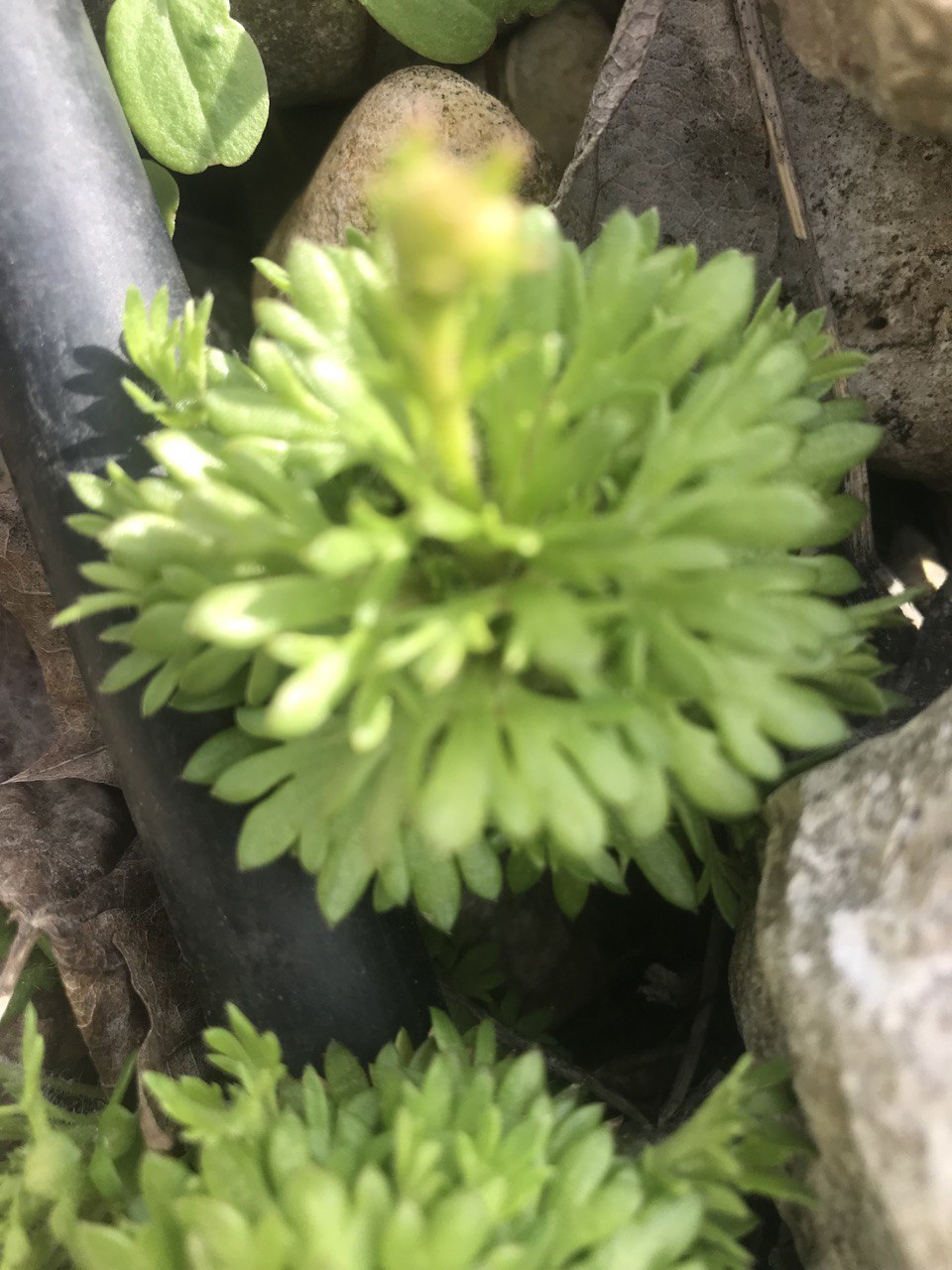
Step-by-step propagation by rosettes:
- At the end of June - beginning of July, when the saxifrage has completely finished blooming, select the strongest side clumps.
- Separate them from the mother plant.
- Plant them in a container with good drainage, cover with glass and place in a shady spot in a greenhouse or hotbed.
For normal root formation, the soil should always be kept slightly moist (water carefully).

Propagation by division is performed on mature plants in June-July after flowering. Step-by-step instructions:
- Prepare a temporary flower bed in a shaded area.
- Dig shallow holes and place a drainage layer at the bottom.
- Mix the removed soil with limestone, compost, and sand. This will be used later.
- Water mature bushes generously and dig them up together with the root ball.
- Rinse the roots under a gentle stream of water. Divide them into several sections with a sharp, disinfected tool. Each section should have a well-formed rosette with a sufficient number of roots and above-ground shoots.
- Plant each part in a separate hole. Fill with prepared soil and water.
Before wintering, young bushes should be covered with non-woven material, spruce branches, or fallen leaves. In the spring, transplant the plants to their permanent location.
Use in landscape design
The highly decorative qualities and low maintenance nature of Arends's Saxifraga make it a sought-after plant in landscape design. It looks spectacular:
- in rock gardens;
- on artificial embankments;
- in curbs;
- in design solutions that imitate rocky slopes.
This perennial is placed on the lower tiers of flower arrangements. It can also be placed near a pond.
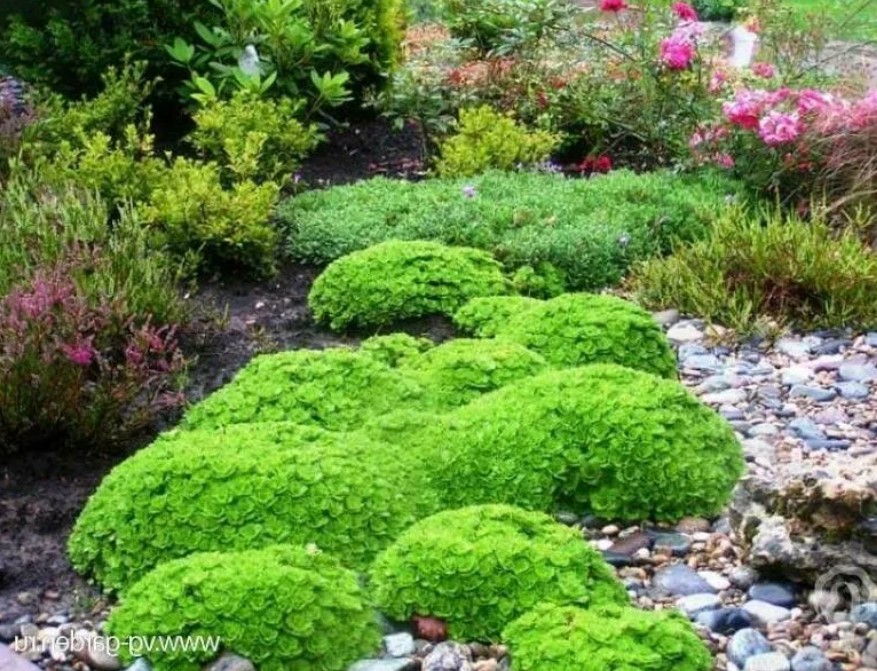
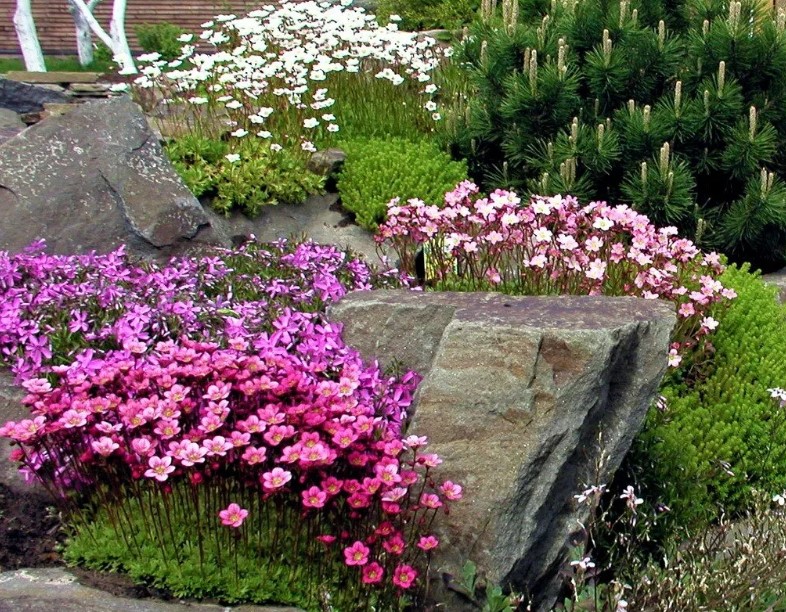
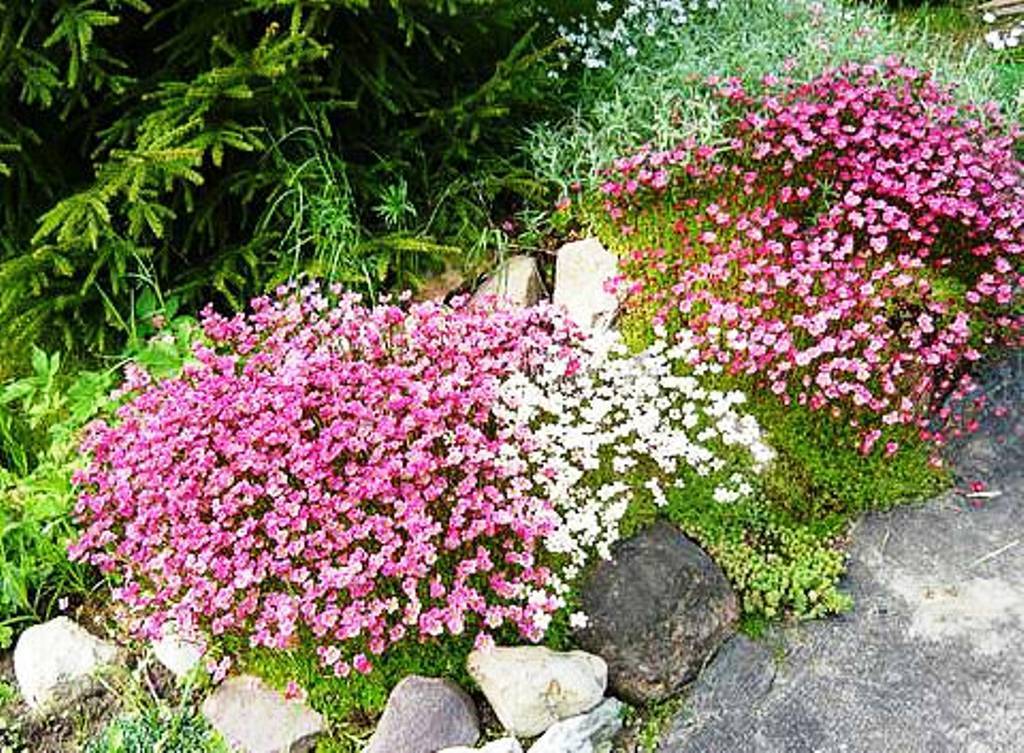
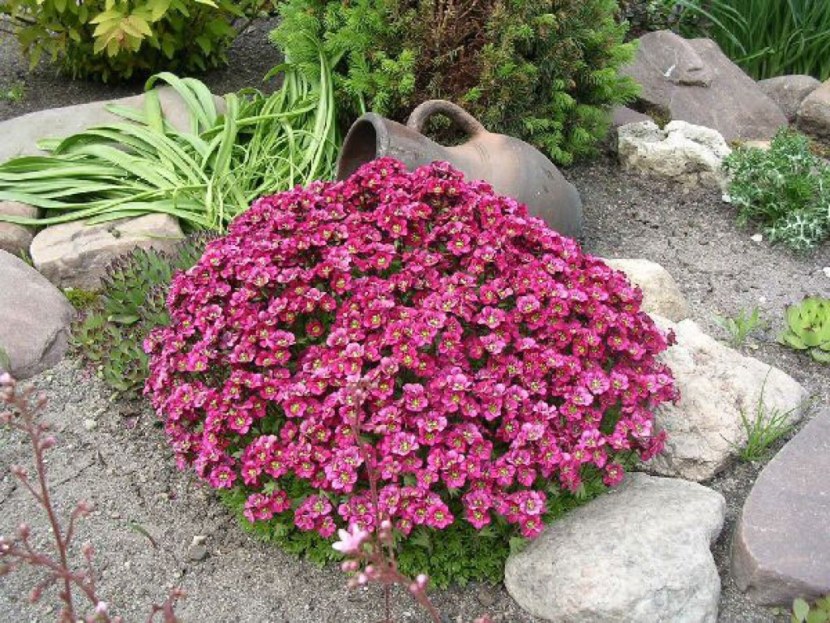
With its lush foliage and vibrant flowers, saxifrage will brighten up an empty garden space. It pairs beautifully with other plants, such as muscari, irises, and other low-growing flowers. Saxifrage also looks great with gentian, conifers, and lingonberries.
Where to buy Saxifraga Arendsii seeds and their cost
You can purchase saxifrage seeds and seedlings at garden centers or through specialized websites (read product reviews first):
| Manufacturer | Variety | Price |
| House of Seeds | Perennial Cassia alba
|
172 rubles
(250 seeds) |
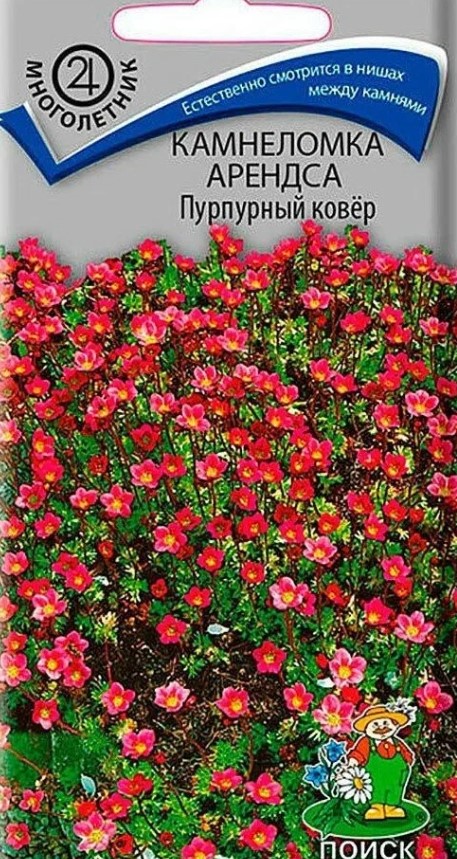
| "Search" | Purple carpet
|
36 rubles
(0.01 g) |
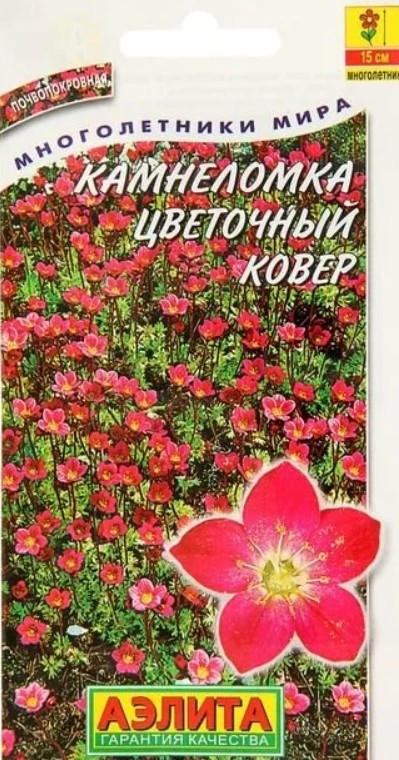
| Agrofirm "Aelita" | Flower Carpet
|
40 rubles
(0.02 g) |
| "Search" | Floral carpet
|
from 17 rubles
(0.01 g) |
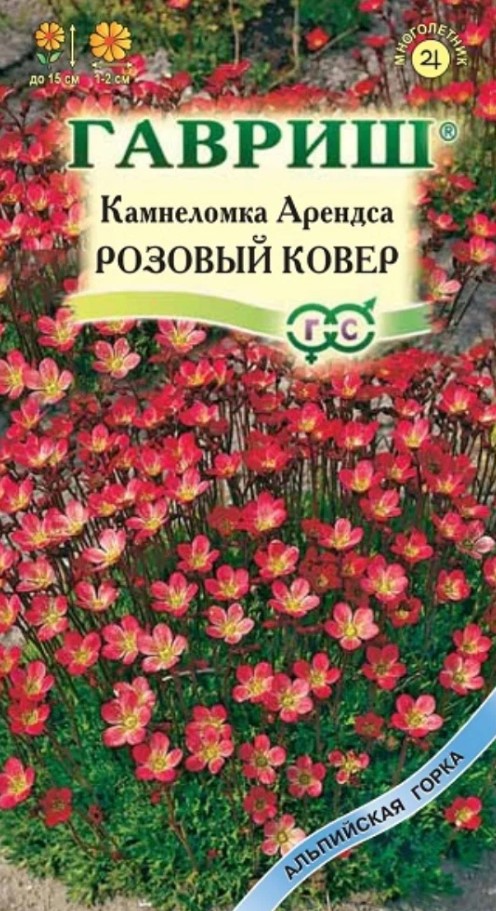
| Gavrish | Pink carpet
|
from 15 rubles
(0.01 g) |
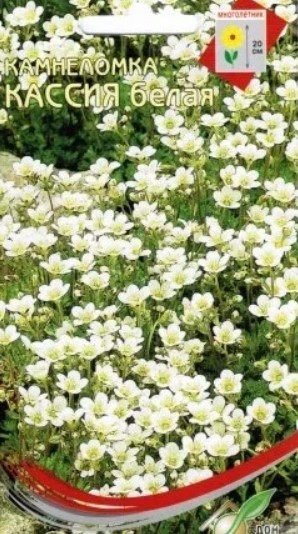
Saxifraga Arendsii seedlings cost approximately 200 rubles.
Gardener reviews of Arends' saxifrage
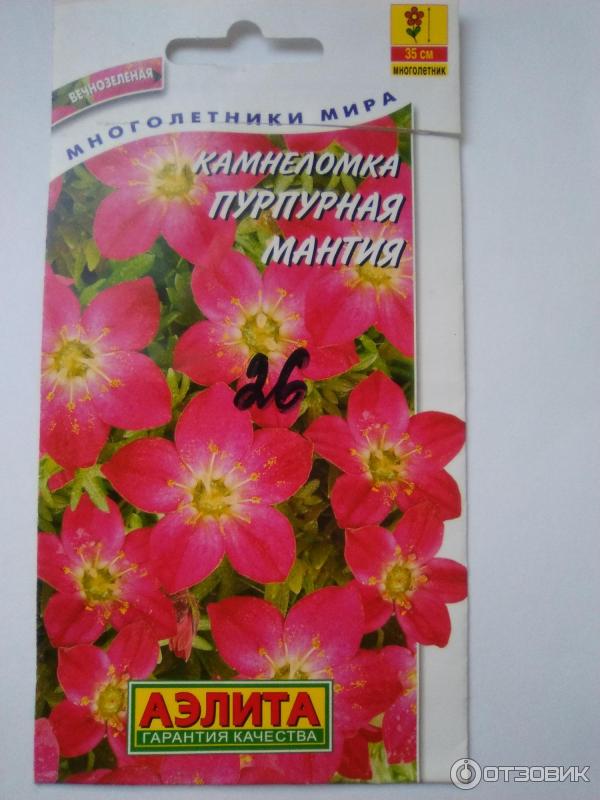
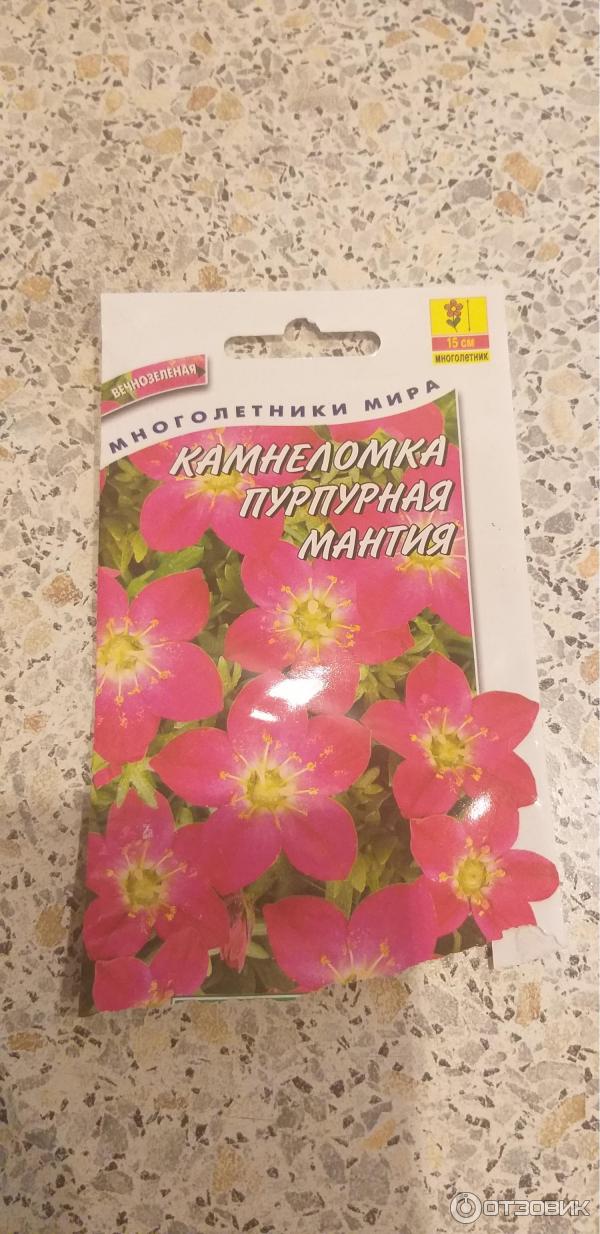
Several years ago, I grew saxifrage from store-bought seeds. Its flowers were white. This year, I decided to grow a different-colored saxifrage. I found a packet of 'Purple Mantle' saxifrage seeds from the Aelita agrofirm, part of the "Perennials of the World" series.
The picture on the seed packet is eye-catching. It's hard to miss on the seed racks. Large, bright red star-shaped flowers with yellow centers stand out against a backdrop of green leaves. The packet itself is made of glossy paper.
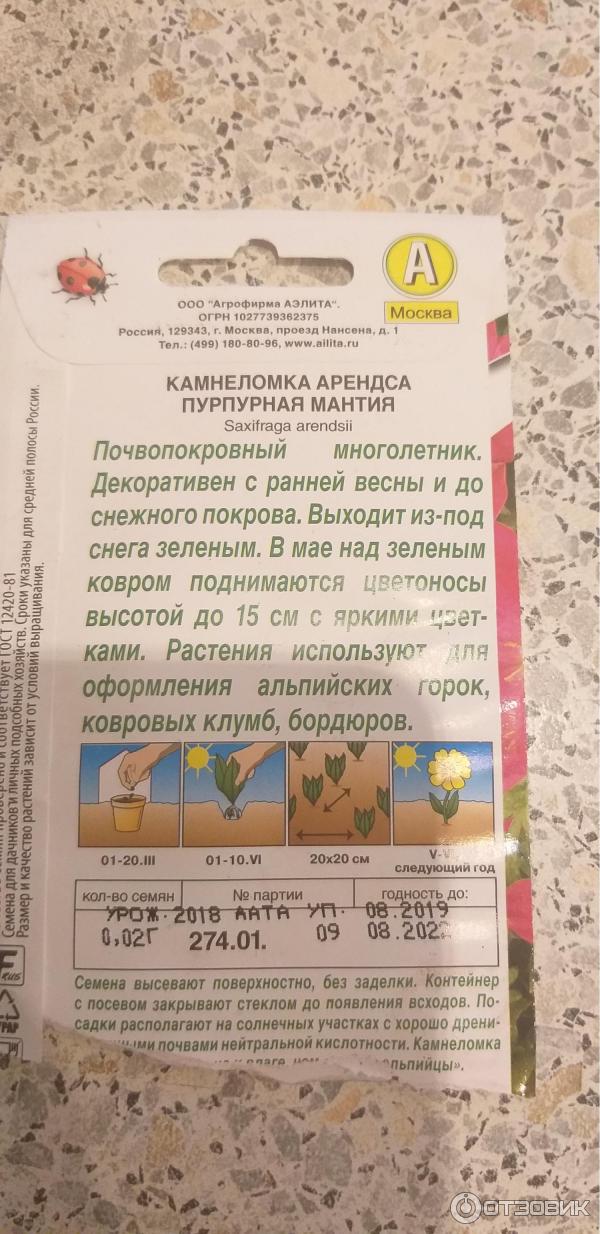
The reverse side contains all the necessary information about the Aelita agrofirm, including its address and phone number, the saxifrage plant itself, and instructions for sowing its seeds. The quantity of seeds, lot number, and expiration date are also listed.
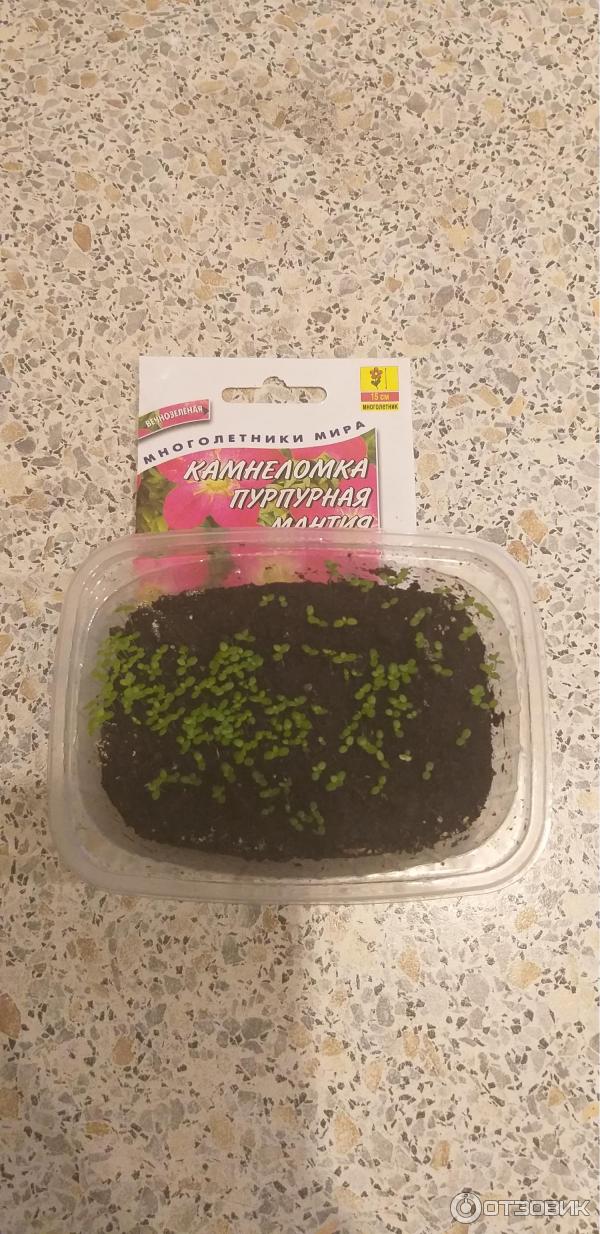
There were a huge number of saxifrage seeds in this packet. I planted them shallowly in a container with store-bought soil and covered them with a transparent lid. Seedlings emerged in about ten days. They sprouted very densely. The seedlings themselves are very small, but they continue to grow slowly. I won't transplant them and will soon, in June, transplant them in small groups into open ground. I hope my seedlings will soon grow into mature plants and delight me with their vibrant flowers. Saxifraga arendsii is a perennial, evergreen groundcover. It is decorative year-round, even covering itself in green cushions in winter and emerging green from under the snow in spring. The plant resembles moss. It blooms in May and June with small, star-shaped flowers. Saxifraga requires virtually no care other than watering, weeding, and timely removal of dead shoots. Saxifraga is very well suited for an alpine slide.
Good afternoon!!!!
I bought Saxifrage flower seeds last year.
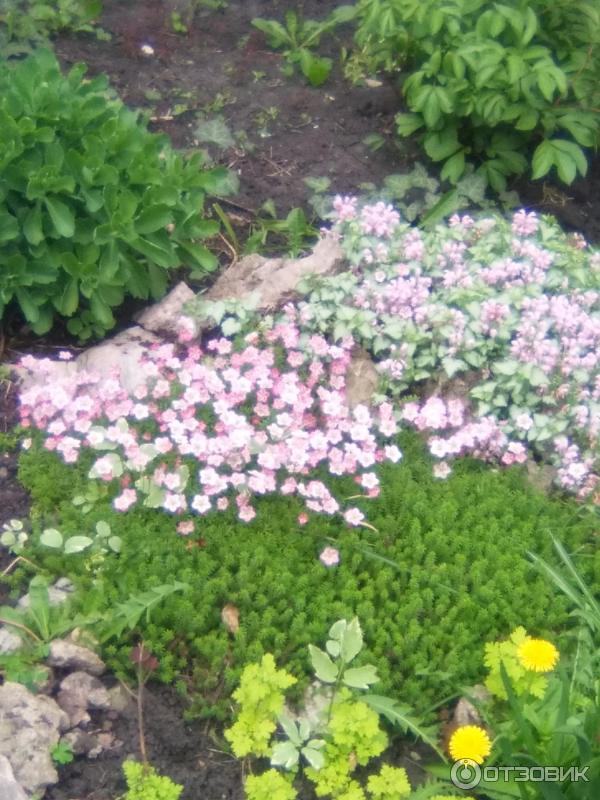
What attracts me to it is that it's a perennial plant and looks beautiful in an alpine garden all season long. It blooms with a veritable carpet of small, delicate pink flowers.
I sowed it in a jar using the superficial method, without covering it with soil, in a chaotic manner.
The sprouts appeared after ten days.
They need to be checked constantly.
I didn't pick the seedlings, but planted them straight into the ground and covered them with a cake jar, and they grew like that for a month.
Then I removed the jar and the Saxifrage grew simply in open ground, even in a shaded place.
The soil should be loose and not acidic.
I didn’t cover it for the winter, it survived the frosts well, all the sprouts were preserved.
The first buds appeared at the beginning of May and now it is blooming.