Capsicum translates from Latin as "bag." It was named for the shape of its fruit. This unusual plant belongs to the Solanaceae family. Although it is called a capsicum or vegetable pepper, it is not related to the Pepper family.
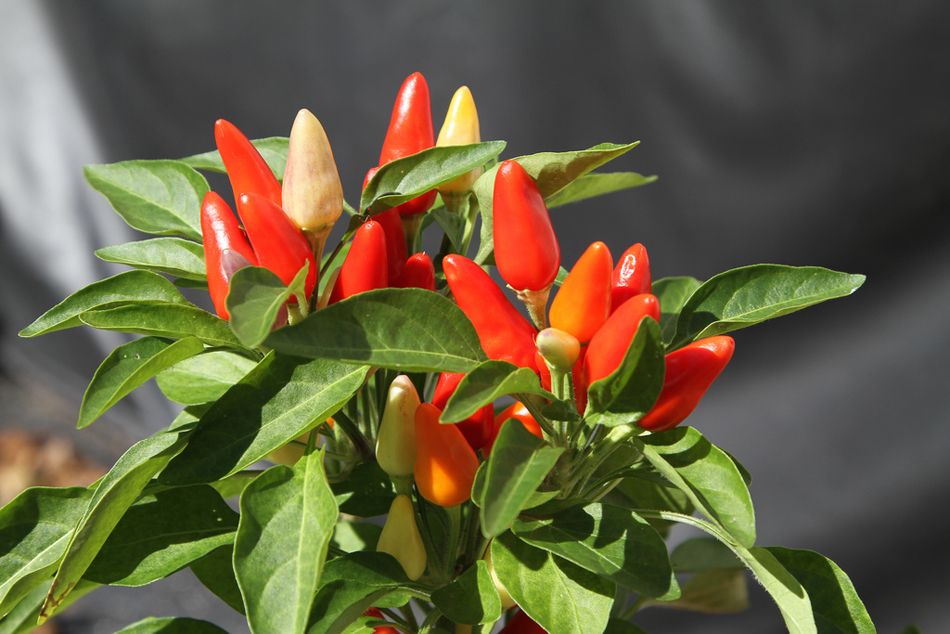
Native to the subtropics of South and Central America, it was used as a seasoning by the ancient Mayans and Aztecs, replacing salt, which was then unknown.
Description of Capsicum
The plant is an annual or perennial small shrub with vibrant fruits ranging from green to deep red, even black. White and purple flowers appear in summer (approximately 3 cm in size). The leaves are glossy, rich green. Their contrast with the vibrant fruits gives the shrub a unique and decorative appearance.
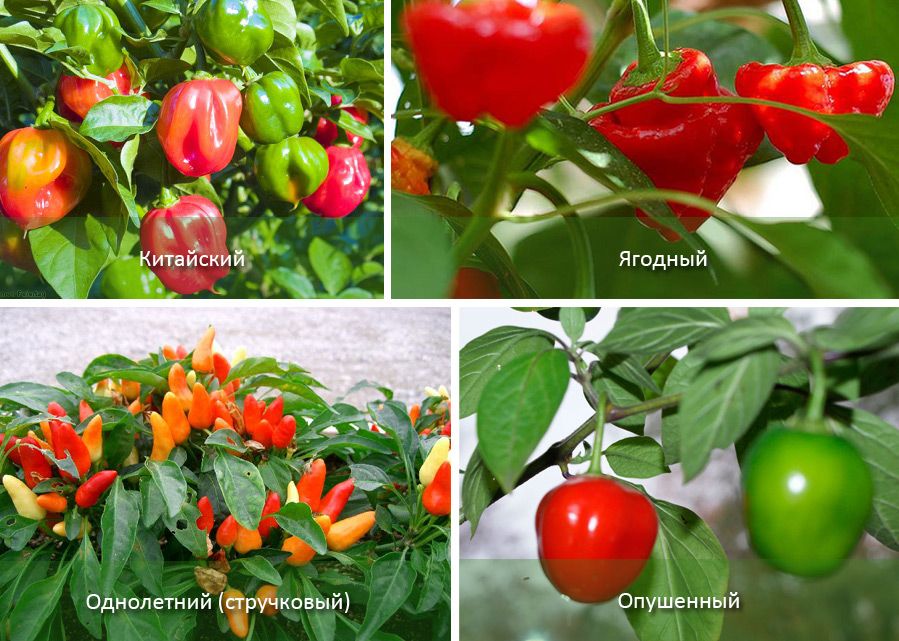
Types of Capsicum
There are approximately 30 varieties of capsicum. They differ in size, shape, color, and even the edibility of their fruits.
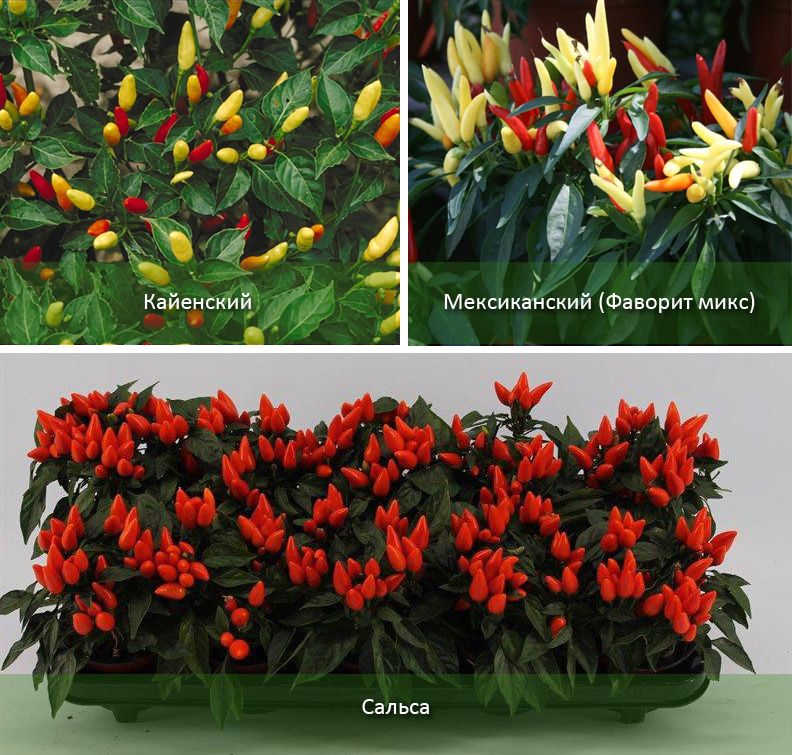
The most popular groups of varieties for growing at home:
| View | Description, height | Leaves | Fruit Taste |
| Annual (legume) | The most popular. 1.5 m. |
Conical, green. | From yellow to red, spherical or elongated. Sweet or hot. |
| Cayenne | Perennial. 30 cm - 1.2 m. |
Shiny bottle-green, elliptical. | White, scarlet, purple, small in size (no more than 5 cm), elongated. Burning. |
| Chinese | No more than 50 cm. | Ovoid, light green. | Various colors and sizes.
Burning. |
| Pubescent | Approximately 4 m. Becomes tree-like with age. | Dark green, elongated oval. | Blunt, shortened. From golden to brown.
Spicy. |
| Berry | Perennial.
2 m. |
Various colors. Grow vertically.
Burning. |
|
| Mexican (Favorite Mix) | Compact 30-50 cm. Regardless of the time of year, it produces flowers and fruits of varying degrees of ripeness. | From lemon to bright red.
High degree of spiciness. |
|
| Salsa | Perennial.
50 cm. |
Yellow, purple, red. Miniature.
Not fit for consumption. |
Caring for capsicum at home
When caring for shrubs, it is important to follow some rules.
| Parameter | Content | |
| Spring/summer | Autumn/Winter | |
| Location/lighting | It thrives in south- and southwest-facing windows. Protect it from harsh sun with a translucent material. | |
| Temperature | +22…+25 °C. | +16…+20 °C. Below +12 °C is fatal. |
| Humidity/Watering | Do not allow the soil to dry out. Spray daily. Use settled water at room temperature. | |
| Abundant, placed in a tray with wet expanded clay. | In the absence of additional lighting, moderate. | |
| Soil | Equal parts: garden soil, leaf soil, turf soil, sand. | |
| Top dressing | Complex mineral fertilizers are used. | |
| 2 in 30 days. | 1 time during the same period. No need for backlight. |
|
Transfer
Capsicum doesn't like being disturbed, but every spring it should be repotted into a larger pot to redirect its energy toward root development rather than stem elongation. This is best done in the spring. Fertilize after three days.
Trimming
To promote growth and form a beautiful bush, capsicum is pruned, but not more than halfway. To increase the number of fruits, young leaves are pinched.
Reproduction
Capsicum is propagated by cuttings and seeds.
The seeds are germinated in late winter-early spring using the following technology:
- Soak for 2 hours in a solution of epin or potassium permanganate.
- Place in a container and cover with film.
- They are dived after 2-3 leaves appear.
- Provide good lighting, +20…+25 °C.
- They expect to bear fruit in 2-3 years.
The plant is propagated by cuttings in spring or summer. Initially, a mixture of perlite or peat with damp sand (1:1) is used. After roots appear, plant in a substrate of turf, humus, and sand (1:2:1). Pinch the plant several times to encourage growth.
Potential difficulties in caring for capsicum, diseases and pests
Very often the flower is attacked by insects and gets sick due to improper care.
| Manifestation | Cause | Elimination measures |
| Aphids, spider mites. | Dry air, poor ventilation. | Treat with insecticides (Aktara, Actellik). |
| Mealybug | High humidity. | |
| Fruit wrinkling, flower falling, foliage wilting. | Lack of hydration. | Increase the number of sprays and water more often. |
| Shedding leaves in winter. | Lack of light. | Use additional lighting. |
| Cessation of growth. | Insufficient power supply or lighting. | Feed or provide good lighting. |
Top.tomathouse.com informs: capsicum is a useful and beautiful shrub
This vegetable is used as a culinary spice and in pharmaceuticals. It is used to make products to improve digestion and increase appetite. Capsaicin, a component of hot pepper, burns fat, making it a popular weight loss aid. The plant is also widely used in homeopathy to treat the effects of acute and chronic otitis. An extract of capsicum, oleoresin, is used as a defensive aerosol.