Dwarf birch (Betula nana, low-growing birch, dwarf birch; birch; slate; dwarf; er), being a representative of the genus Betula, order Bukotsvetnye, is a low-growing, dense, lush shrub.
Botanical properties and habitat
Its homeland is generally considered to be the wooded areas of Europe and Western Siberia, but today the dwarf birch can be found in North America, the Alps, northwestern Asia, and even the Arctic. This tree species, unique in its appearance and beneficial properties, has found a home in the tundra, mountains, mossy bogs, and acidic peatlands everywhere: northerners use the birch's leaves and buds as medicine, animal feed, and its wood for fuel.
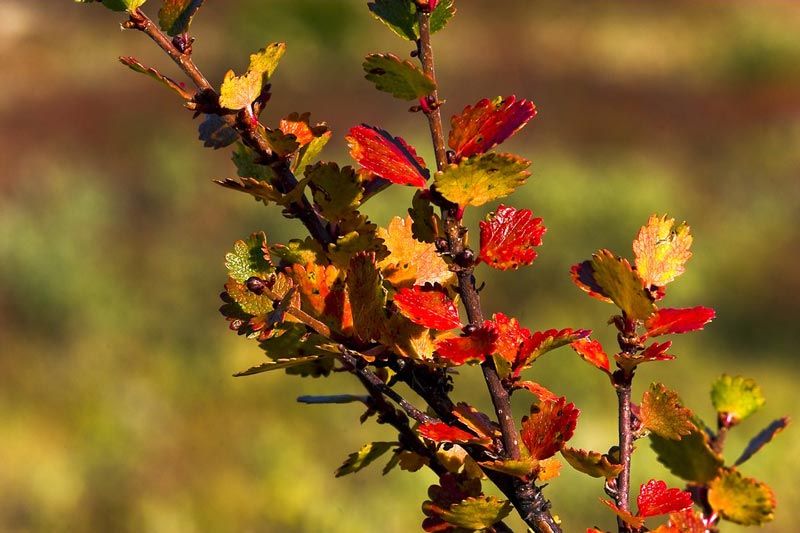
The dwarf birch has spreading, drooping branches. The bark is rough, dark brown or reddish-brown. The leaf blades are small, green (up to 15 mm), rounded, and serrated. In autumn, their color ranges from yellow to red. In winter, the leaves fall. Young growth is velvety and sticky. The petioles are short (about 5 mm). The leaflets are arranged alternately.
The inflorescences are unisexual, small, and catkin-shaped. The fruit is an elliptical nut with narrow membranous lobes on the sides (approximately 1.5 mm in diameter), formed from April to June.
The plant is slow-growing and propagates by seeds and cuttings. It lives up to 120 years.
Popular varieties
Based on the classification presented in the Great Soviet Encyclopedia, the following types of dwarf birches are distinguished:
- low;
- skinny;
- round-leaved;
- etc.
In the modern interpretation, and among the most popular decorative varieties of dwarf birch, the following two are considered.
Golden treasure
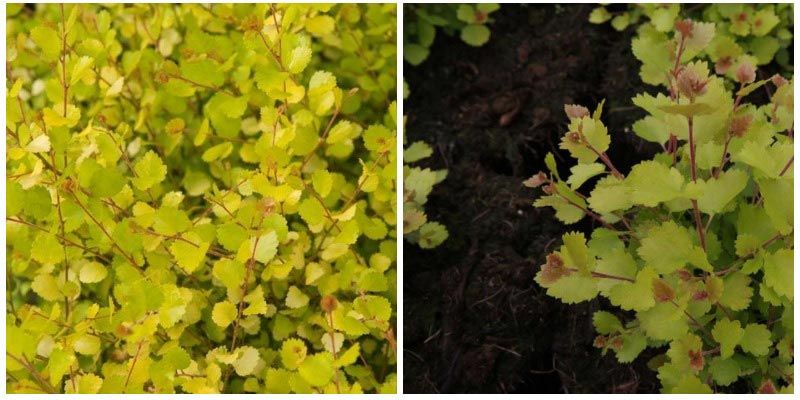
Golden Treasure is a variety of birch growing up to 80 cm tall and with a crown approximately 2 m wide. The bark is dark brown. The leaves are toothed and ovoid. The color changes depending on maturity: from crimson to gold shades, and in autumn, it reaches red.
cabin boy
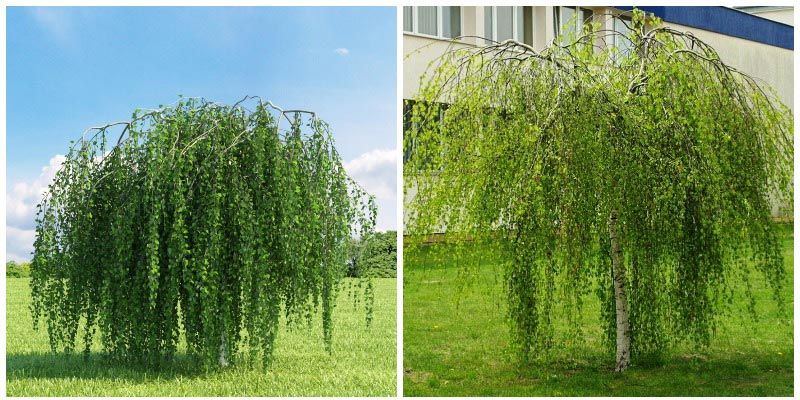
Youngii is a weeping birch. The plant grows up to 4 m tall with a spherical crown of drooping branches about 2 m wide. The bark is typical: white with black horizontal stripes. The leaf blades are serrated at the edges and diamond-shaped. The leaf color is light green, turning yellow in autumn.
Planting and growing dwarf birch
When planting dwarf birch, you should consider the following nuances:
- The most favorable period for planting is autumn.
- The soil should be acidic or slightly acidic. A mixture of regular garden soil with peat and sand is ideal. Adding small amounts of humus and gravel is also helpful. Loam is also suitable.
- The hole is small. After placing the rhizome, carefully straighten out its branches.
- Sprinkle some soil on top well.
- Finish the process with generous watering.
Care instructions:
- The plant loves the light, but also tolerates shade.
- In case of drought, it would not be a bad idea to spray and water additionally (including during the first period after planting).
- Fertilizer is applied twice a year: in the summer - nitrogen-containing (mullein, ammonium nitrate), and in the fall - nitroammophoska or complex.
- Avoid loosening the soil to avoid damaging the roots.
- It will be useful to mulch the soil surface around the tree trunk to protect it from overheating and intense moisture evaporation.
- The plant is frost-resistant and does not require winter cover.
- Pruning occurs in the second year after planting. Damaged branches are removed and the crown is shaped in early spring.
- Requires monthly treatment with a broad-spectrum insecticide and fungicide to prevent fungal diseases and infections. The most dangerous pests are the cockchafer and cutworm.
Top.tomathouse.com recommends: dwarf birch in garden design
Ornamental dwarf birch is perfect for both creating hedges and landscaping open spaces such as parks, squares, and gardens. It also looks stunning in exotic or Japanese-style gardens, with artificial ponds, and paired with creeping or polar willow. It's an excellent choice for landscaping or gazebos.
Ideal for mixed borders and rock gardens in addition to gentians and saxifrages.
Combined with cranberry bushes, ferns, and moss lawns, it can beautifully recreate the enchanting natural beauty of the tundra. And planted in a shallow flowerpot, it can easily be transformed into a stunningly beautiful golden bonsai.