Catalpa is a beautiful tree found in some countries such as China, Japan, North America, East India, and belongs to the genus Bignoniaceae.
The plant is a deciduous ornamental plant. Its leaves are green year-round, leading to its popular nickname, "evergreen."
Content
Description of the catalpa tree
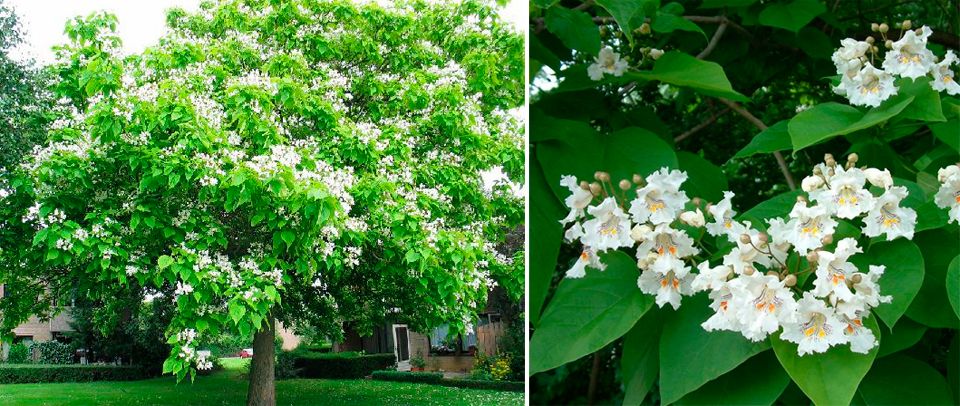
It grows up to 30 m, with a trunk diameter ranging from 15-25 cm. The funnel-shaped flowers exude a wonderful scent. The buds are creamy in color, with small dark spots.
The inflorescences are erect and pyramidal. The tree's fruits can grow up to 40 cm long, shaped like pods. The seeds mature within them. Flowering begins in July. However, the tree's fruits can remain hanging year-round, unaffected by cold.
Varieties of Catalpa
Since the plant grows in a wide range of countries with very different climates, it has several species and numerous cultivars. Not all possible variations are grown for ornamental purposes, as preference is given to the most aesthetically pleasing specimens. Let's look at the most popular, frost-resistant ones that thrive in temperate climates.
Beautiful (magnificent)
It is rightfully considered one of the tallest species of this tree. It can grow up to 30 meters in length. The trunk is straight and slender. The crown is shaped like a wide pyramid, and the bark is thin-lamellar and grayish in color.
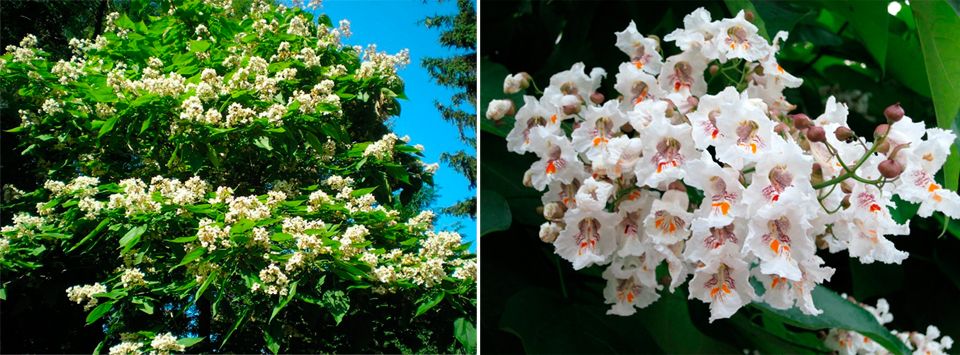
It can withstand temperatures down to -28°C. The plant's leaves are beautiful, glossy green. They grow up to 30 cm long and up to 15 cm wide, retaining their color until frost. The buds growing on this tree are a beautiful, delicate white, with purple speckles in some places. They have a pleasant scent.
Ordinary (bignonioidea)
The spreading crown of this species grows up to 20 meters in length and is rounded in shape. The bark is thin-lamellar and light brown in color.
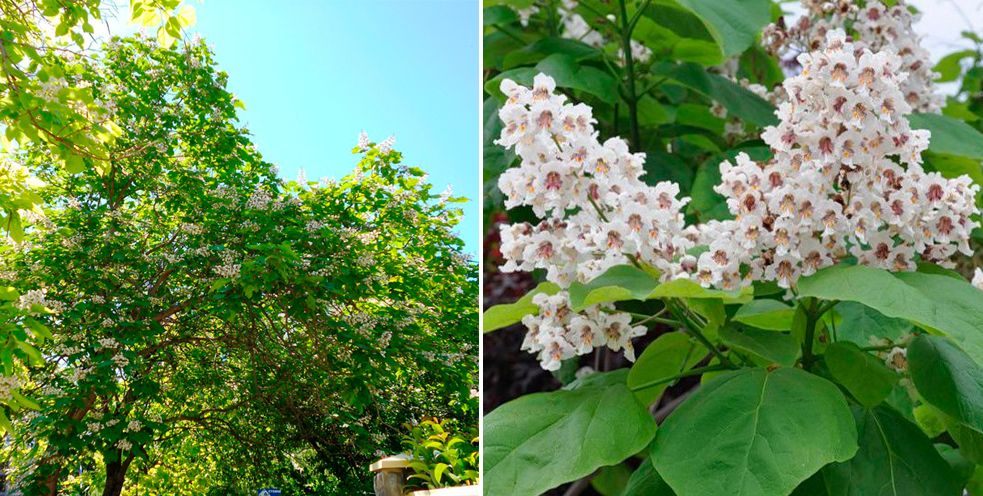
The leaves resemble lilacs, but are much larger. They are a rich green color, up to 20 cm long and up to 15 cm wide.
This variety's buds are snow-white, with occasional red and brown speckles on the petals. They have a pleasant aroma and are borne in clusters. The flowers themselves are approximately 30 cm long and 20 cm wide.
The total flowering period is 20 days, it begins in mid-July.
Varieties:
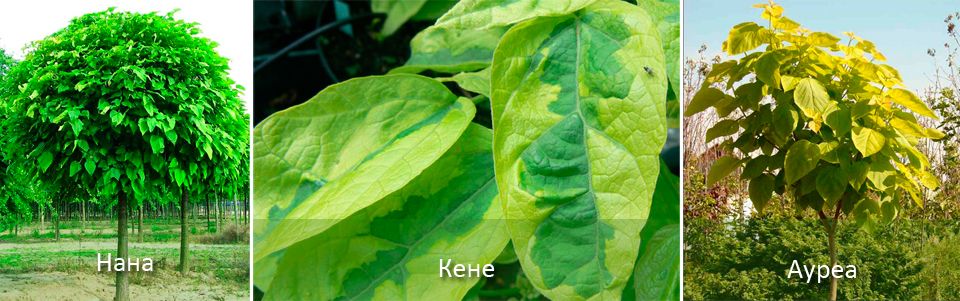
- Aurea - distinguished by its golden foliage.
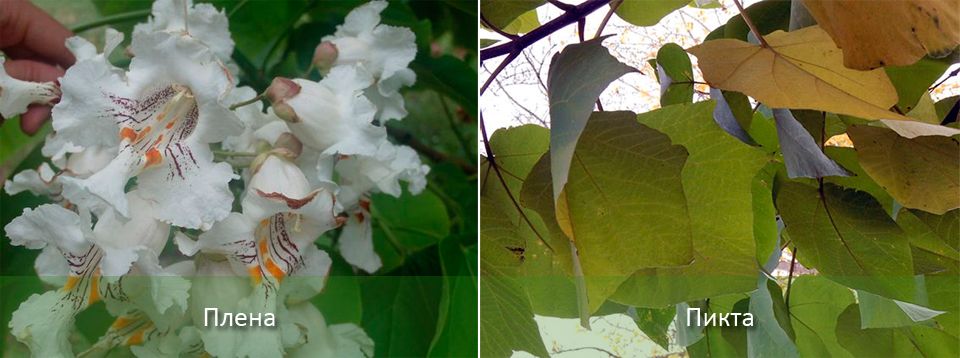
- Picta - the presence of variegated leaves.
- Nana is a small, spherical variety that does not have flowers.
- Plena - having double flowers.
- Kene - unusual yellow leaves with a bright dark green spot in the middle, from which veins of the same color extend.
Ovoid
A low-growing species, it grows to about 10 m, but only 4 m in a plot or garden. The crown is wide and tent-shaped. The flowers, like those of the previous species, are a light crème brûlée color with a purple tint. Its distinctive three-lobed leaves make it stand out from other trees.
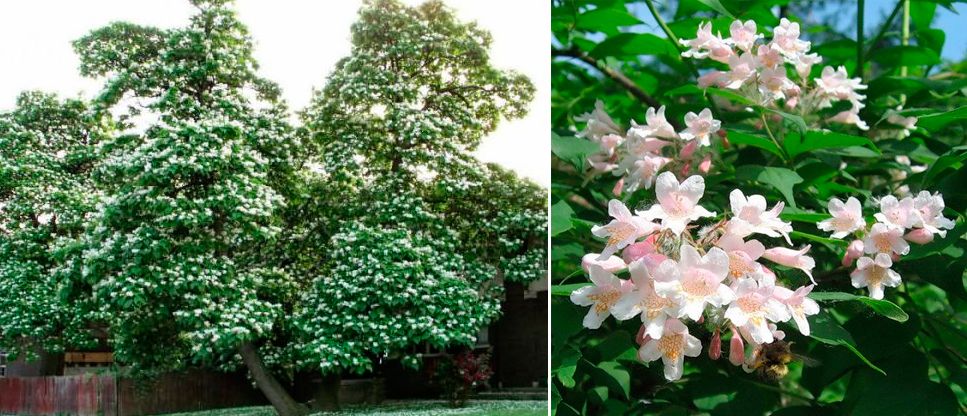
They are dark green in color and measure 30 cm by 15 cm. The fruits are also pod-shaped, 45 cm long. Catalpa ovata is quite fussy in terms of care and soil selection, and also loves sunlight.
Fargeza
More demanding of cool temperatures, it can be grown in southern Russia. It is a medium-sized species, reaching 20 m in length. The leaves growing on the tree are simple in shape and structure, and have a dark green hue.
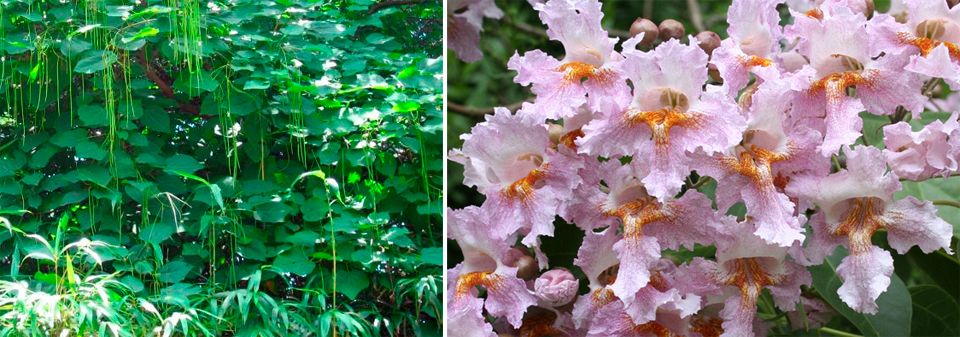
This plant's flowers are pink, sometimes pinkish-purple. It's very popular with gardeners due to its medium height, beautiful flowers, and overall aesthetic appeal. Furthermore, it blooms much earlier than its relatives.
Hybrid
It was created by crossing the common and ovate catalpas. The result is a fairly winter-hardy variety, making it widely used in temperate climates. It falls somewhere between the dwarf and medium-sized tree types.
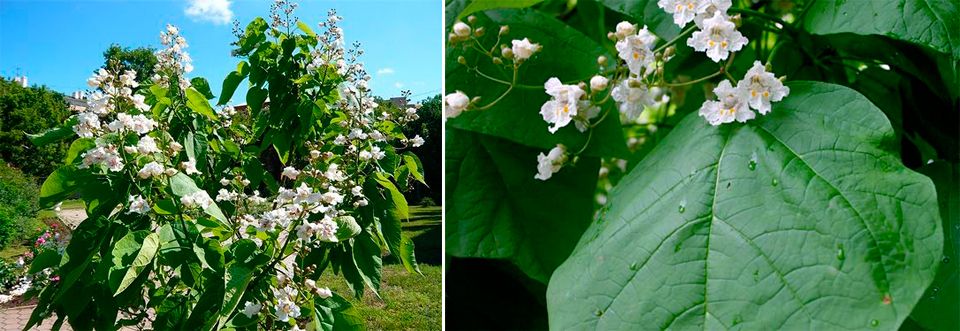
The maximum height is 16 m. The crown grows in a distinctive hemisphere. The leaves are light green. The growing flowers are collected in inflorescences. It is also highly prized for creating an original landscape design.
Planting catalpa in open ground
Since Catalpa is an ornamental tree, it requires a special approach to cultivation. The basics of planting are the same as for most plants. It's important to carefully select the right, good soil for this tree and plant it. Once shoots emerge, regular, consistent watering is essential for young shoots.
The use of various fertilizers and dressings is not prohibited, but care must be taken to ensure that they do not contain too much phosphorus.
All seedlings are divided into two types: annual and biennial. Regardless of the type, planting and care are essentially the same. Planting should be done in the spring, but can also be done in the fall, but only after the leaves have finished falling.
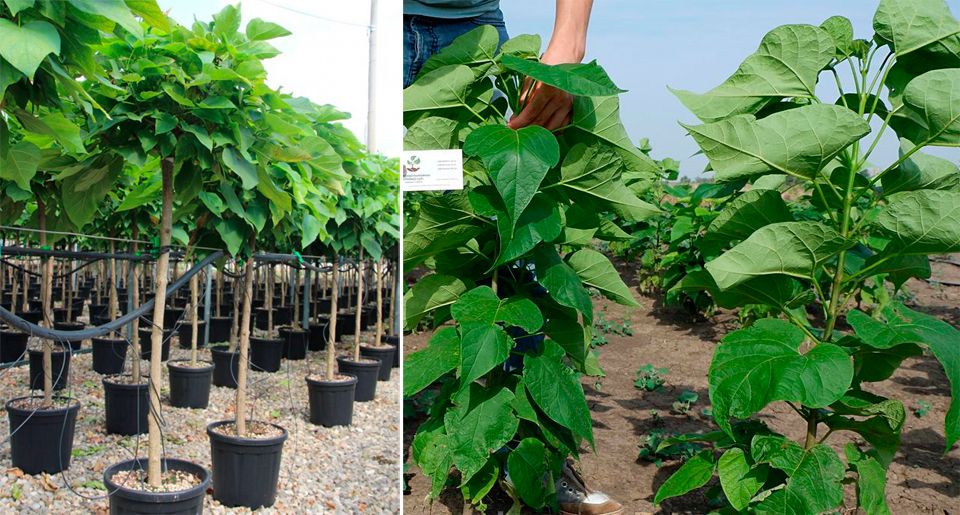
For planting, a site well-lit by natural light—the sun—is required. It should also be well-protected from the wind. This is because Catalpa is a fragile plant by nature, especially during the developmental stage, and is very easily damaged.
When planting more than one tree, or near other plants, it's important to maintain a distance of at least 4 meters between them. This is because the sapling loves space, and once it grows, it will spread quite widely. The root system also doesn't extend completely downwards, but rather spreads widely along the soil.
Forming the planting hole should begin with ensuring the required depth—at least 100 cm—and its width should be at least 70 cm. Next, prepare a special mixture. This consists of humus, sand, peat, and leaf mold. Combine all of this with wood ash, and add about 50 g of rock phosphate. Place the resulting mixture into the prepared hole.
However, before this, at the very bottom it is necessary to make a so-called drainage layer, its thickness varies from 12 cm to 15 cm, but in no case should it be less than 12 cm.
The drainage layer consists of crushed stone or pre-broken brick. Once the drainage layer is ready, the hole is filled with potting soil. Only then can the plant's root system be planted. The soil is then lightly tamped down and compacted. Once this is complete, the seedling needs to be watered.
Immediately after watering, it is necessary to mulch the soil; peat is excellent for this role.
Caring for Catalpa in the Garden
Catalpa is known for its love of moisture.
When growing this beautiful tree in the garden, it should be watered at least once a week. Remember, each plant requires at least two buckets of water.
There are exceptions to watering frequency. These include cloudy, rainy weather. If the region receives a lot of precipitation, watering can be reduced to three times a month. If, on the contrary, the region is arid, then the frequency of watering should be increased to twice a week. After each watering, thoroughly loosen the soil around the trunk, remembering to remove any weeds that appear.
The tree responds adequately, even with some enthusiasm, to fertilizing and various fertilizers. Regular application of additional nutrients to the soil is also essential. A fertilization schedule should be established, with each application scheduled and not too much time between applications.
For example, in autumn, the plant requires fertilizers with increased potassium and phosphorus content. However, during this period, phosphorus-containing fertilizers should be avoided.
To give the plant its most aesthetically pleasing appearance, it needs to be pruned regularly. Spring is an excellent time for this, as the buds have not yet fully formed and swelled. Pruning involves removing frost-damaged branches, as well as dry, diseased, and damaged (broken) ones.
It's also recommended to remove any branches that are growing incorrectly, as they spoil the overall appearance of the plant. Spring is the time to shape the crown to achieve the desired, attractive form.
Young seedlings not only require protection from the wind but also shelter during the winter, even frost-hardy varieties. As they mature, winter-hardy varieties don't need this.
Reproduction of catalpa
It's recommended to plant seeds for seedlings in late February or early March. Before planting, thoroughly soak the seeds in water for 12 hours. If planting in the fall, there's no need to soak the seeds.
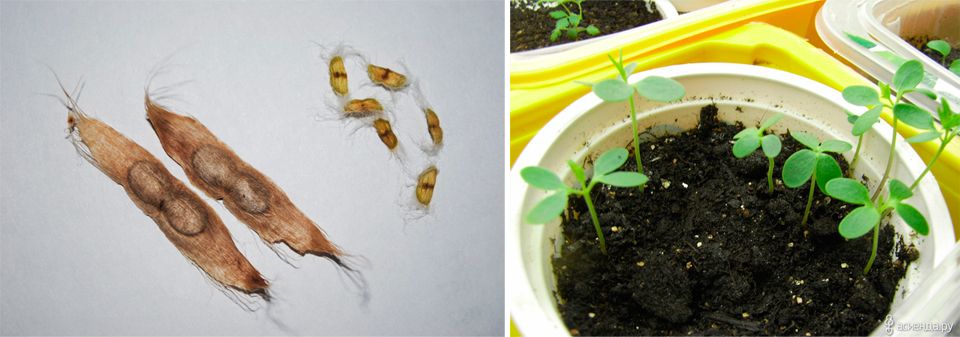
Seed germination technology:
- In pre-prepared containers with the required soil, make specific furrows into which the seeds will be distributed.
- Then cover the seeds with soil and water them, but not too much. Overdoing it can ruin them.
- After watering, the containers are covered with plastic film or glass to create a greenhouse effect. The containers are placed in a room where the temperature is maintained at 22°C. The cover is removed for 10 minutes every day to allow the plant to air out slightly.
- The room with the seedlings must be provided with sufficient light, but care must be taken to ensure that the seedlings are not exposed to direct ultraviolet rays, as this will have a negative effect on the sprouts.
- They also monitor watering, doing it regularly and in measured doses.
Planting in open ground becomes possible only in mid-May.
In addition to seeds, this plant can also be propagated by cuttings. Cuttings are prepared for this purpose around August. They are cut at least 8 cm long, with fully formed, viable buds. The cuttings are immediately planted in a substrate consisting of sand and peat. Plastic bottles are used to create a greenhouse effect. Care for cuttings is the same as for seedlings. Water regularly, and remove the bottles for 10 minutes daily to allow the sprouts to air out. Planting in open ground is done, as with seedlings, towards the end of May.
Pests and diseases of catalpa
Although the plant is primarily ornamental, it nevertheless has a strong immune system that allows it to resist most common diseases. However, this immunity is directly related to proper care. If any nuances are neglected, even the most minor illness can easily affect this beautiful tree. And as often happens, these illnesses may not respond to treatment, and the only solution is removal.
Spanish flies are one such dangerous pest. If they appear, or are suspected of being present, the plant should be treated with pest control products as soon as possible. These products are readily available at gardening stores.
A more dangerous problem is the horntail beetle. They lay their larvae in the tree's bark, which in turn causes significant damage. As a result, the plant begins to rapidly decline. There is no specific solution to this problem; larval infestation means death for the plant. However, it is possible to protect the tree by taking certain preventative measures and regularly treating it with insecticides.
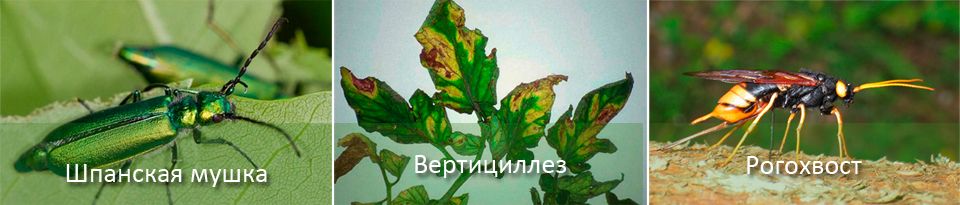
Verticillium wilt is just as dangerous for Catalpa as pests. Signs of this disease include yellowing leaves and leaf drop. Treatment is only available in the initial stages, using specialized medications such as Fundazol. Once the disease has progressed, complete removal of the plant is the only cure.
The tree can also be susceptible to powdery mildew.
Top.tomathouse.com recommends: catalpa uses and benefits
Like all plants, flowers, and trees, Catalpa has its own set of uses. For example, its seeds have long been used to create a special oil. It's a quick-drying oil, widely used in paint and varnish production and industry.
Beekeepers also plant this tree for its honey production. Catalpa is widely used to create unique landscape designs, landscaping city parks and squares, and various garden areas.
The plant has found its use in folk medicine. Wound-healing ointments and painkillers are made from the leaves and bark of this tree. Furthermore, preparations made from this plant have antibacterial properties.