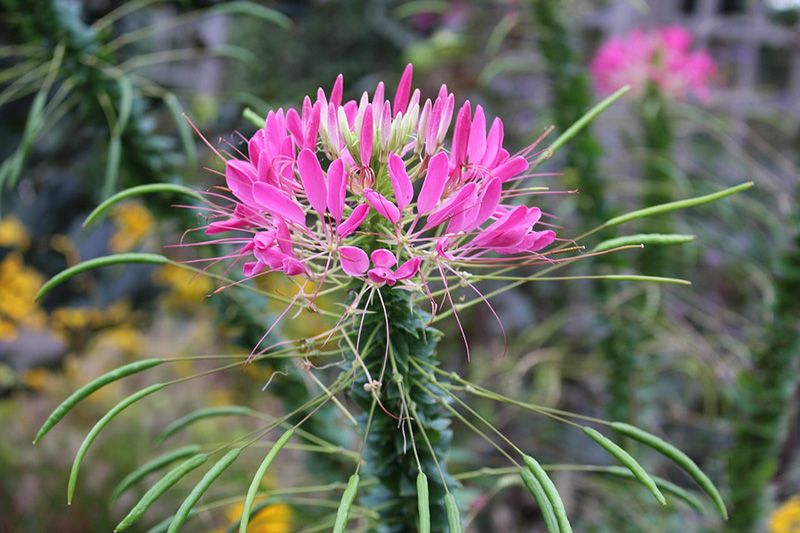
Cleome belongs to the Cleomeaceae family of the Brassicales order. It is popularly known as the spider plant due to the interesting structure of its flower buds. It grows in warm and temperate climates throughout the planet. The genus comprises over 200 species. However, only a few are used in landscape design.
Content
Description and characteristics of cleome
This is an annual or perennial herbaceous plant or subshrub up to 1.5 m in height. The rhizome and stems are robust. The shoots are branched and covered with short glandular hairs.
Light malachite-colored leaves are arranged alternately along the stem. They can be simple or compound, with entire margins, long, or linear. Five to seven leaves grow on a single shoot. The greenery at the top is entire and small. Some varieties have spines on the underside of the foliage.
The flowers are perfectly shaped, gathered in racemes at the tops of tall stems. They have elongated stamens reminiscent of spider legs. The petals come in a variety of shades: snow-white, purple, sunny, or lilac. Blooms can be seen throughout the summer.
The buds exude a distinctive aroma. It's not floral and is disliked by humans. However, outdoors, it's virtually undetectable. This scent, however, repels pests and attracts natural pollinators—pygmy bats. After flowering, a single-locular, pod-like, polyachene, up to 3 mm long, begins to form.
Types and varieties of cleome
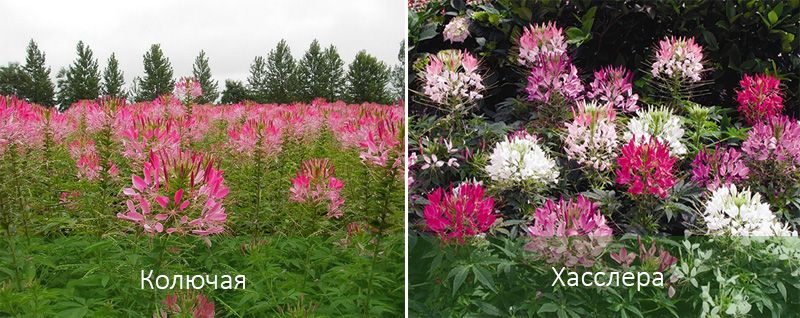
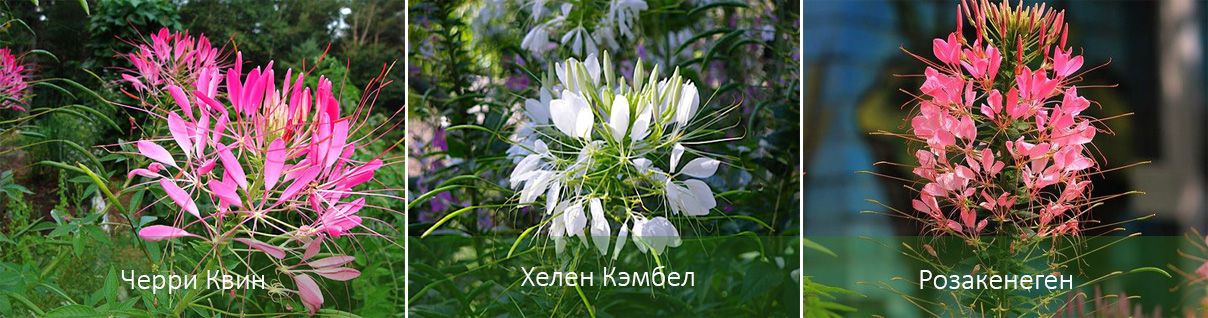
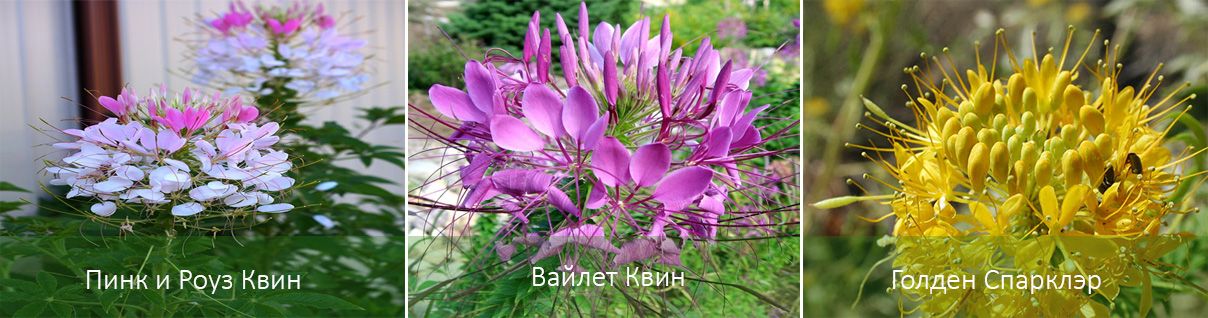
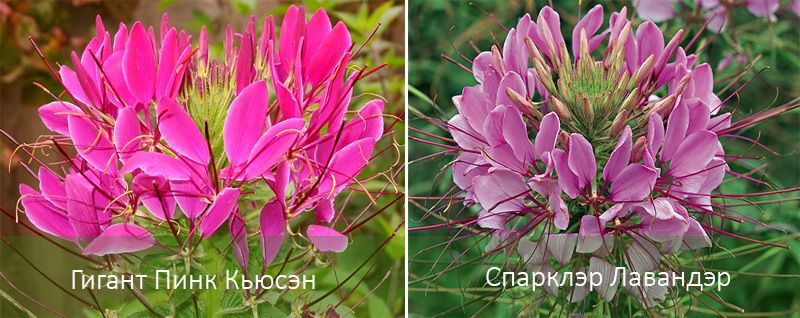
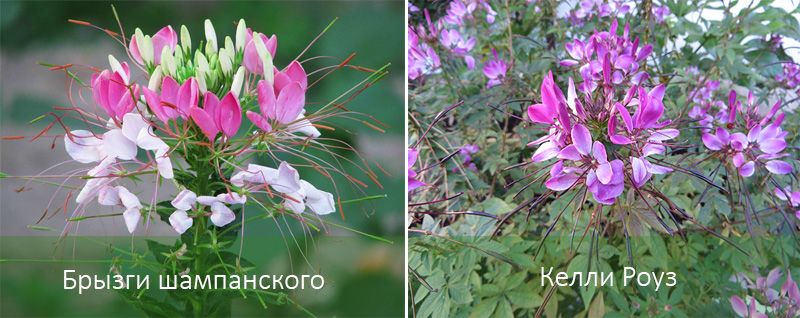
Two varieties are cultivated: Hassler and Prickly. In the wild, they grow in the tropical regions of South America. Many hybrids with attractive, long-blooming flowers have been developed from these varieties. They differ only in petal color. The most beautiful varieties are:
| Variety | Varieties | Color of buds |
| Prickly | Cherry Queen | Purple or lilac. |
| Helen Campbell | Snowy | |
| Rosakenegen | Pudding | |
| Pink and Rose Queen | All shades of pink. | |
| Violet Queen | Lilac-ink. | |
| Golden Sparkler | Lemon-golden | |
| Giant Pink Kyusan | Dirty pink | |
| Sparkler Lavender | Light purple | |
| Hassler | Champagne splashes | Light purple or pearl. |
| Kelly Rose | Pinkish-lilac |
Growing Cleome
Propagation is from seed only. They can be sown directly in the garden or grown as seedlings. The latter method is preferable, as flowering can be observed earlier.
Sowing cleome
Sowing work for seedlings is carried out in late winter and early spring:
- Wrap the seed in a damp cloth and place it in a growth accelerator for half a day. For example, Epin or Heteroauxin (a couple of drops of the product per 300 ml of water).
- Fill containers with humus, garden soil, and sand (2:2:1). Peat containers can also be used.
- Scatter the seeds over the soil mixture.
- Sprinkle the remaining soil on top (1.5 cm).
- Cover with glass or plastic to create greenhouse conditions.
- Remove the cover daily to allow for ventilation and to moisten the soil with a spray bottle.
- The sprouts emerge after 14-20 days.
Caring for seedlings
After the seedlings emerge, remove the cover completely and move the container to the brightest area indoors. After sunset, provide additional lighting with phytolamps. Water infrequently but thoroughly. Make sure the top layer of soil does not dry out.
Once the bushes have established themselves, add a small amount of potassium permanganate solution to the soil. Increase the watering volume and remove supplemental lighting.
Once a pair of true leaf blades have formed, transplant the seedlings into small peat-humus pots, burying them in the soil mixture until the first leaves emerge from the seed. Ten to fourteen days after transplanting, apply a complete mineral fertilizer. This can be purchased at any flower shop. Use half the recommended dose on the package. Periodically rotate the pot to ensure sunlight reaches all the seedlings and promotes even growth.
Planting cleome in open ground
Before transplanting to their permanent location, harden off the shoots: a week before planting, begin by placing them outside for 30-60 minutes, gradually increasing the time. This will strengthen the bushes' immunity and reduce their risk of disease.
Planting dates
Planting in open ground occurs after the soil has warmed completely and the risk of night frost has passed. In the central part of our country, this occurs in late spring or early summer.
Planting technology
Choose a sunny location, sheltered from cold winds. The bushes will grow best in nutritious, moist soil with a moderate pH. If the soil is infertile, dig it in with organic matter (1 bucket per square meter) and granular garden flower fertilizer (2 tablespoons per square meter).
Planting step by step:
- Spray the seedlings with Epin-Extra and Cytovit according to the instructions.
- Place the shoots in planting holes along with peat-humus pots.
- Leave a distance of 0.5-0.7 m between bushes. This is necessary to prevent them from forming overly dense thickets, to prevent diseases and pests from affecting them, and to ensure colorful flowering.
- Pour humate under the base.
Caring for Cleome
Planting and caring for the flower is not difficult; you just need to follow a few rules and growing tips:
| Criterion | Recommendations |
| Watering | Excess moisture can kill the bushes. Therefore, water generously, but infrequently, only during extreme heat. Mulching the plant will ensure the required humidity level. |
| Top dressing |
|
| Other care | Weed and loosen the soil regularly if the bushes were not mulched when planting. 1-2 times a month water with a solution of potassium permanganate to prevent gray (root) rot. |
Cleome after flowering
Since propagation occurs only by seed, after the flowers fade, it is necessary to collect the seeds for spring sowing. This should be done in the fall, when they are ripe.
It's easy to tell when the seeds are ready. They turn yellow or brown, become round, and reach 15 mm in diameter.
Once ripe, the seed pods burst and the contents spill out. To avoid missing this crucial moment, it's recommended to tie the multi-seeded pods with gauze. This way, the seeds won't end up on the ground, but in a bag, without having to be collected.
The seeds can be planted 15 mm deep in the soil mixture in December and covered with spruce branches until spring. This will allow the seeds to undergo natural cold stratification. This will strengthen the plant's immunity.
In our country, cleome is usually grown as an annual. Therefore, after the growing season is over, the bush is disposed of.
Diseases and pests
Due to its distinctive aroma, the flower is resistant to harmful insects. Cleome rarely gets sick. This is most often due to care errors: planting it too close to water, overwatering, handling with non-sterile tools, etc. If properly grown, the bush will be resistant to various diseases.
Very rarely, aphids may appear on bushes. They can be easily detected by the following signs:
- greenish or dark moving dots;
- punctures on the leaves;
- sticky coating;
- curling and yellowing of leaves;
- lack of flowering or early wilting of buds.
The following will help in the fight against insect pests:
- Laundry soap solution: grate a 150-300g bar of soap and add 10 liters of hot water. Mix thoroughly and make sure there are no solid particles in the liquid, as they can burn the greens.
- Garlic tincture: mince the plant. Mix with equal parts water. Place in a warm place for several weeks. Dilute with water (50 ml per 10 liters) and apply to the above-ground parts.
- Natural enemies: their larvae can be purchased in specialized stores (for example, ladybugs, lacewings, some types of wasps).
- Poisonous drugs: Entobacterin, Fitoverm, Biotlin and others.
If the bush is overwatered, it can become susceptible to root rot. This disease causes the rhizome and cuttings to turn black and eventually rot. It is also characterized by the following:
- lodging of stems;
- drying out of greenery, formation of constrictions on it;
- wilting of leaves, the appearance of brown spots on them, which over time become black and solid;
- developmental delay.
If the infestation is severe, the bush cannot be saved and must be destroyed to prevent infection of other plants. If the disease has only just begun to develop, the affected areas should be cut off and burned. Afterward, treat the bush with Trichovit, Fundazol, Topaz, or other poisonous agents.
Top.tomathouse.com informs: Cleome in the landscape
The flower looks beautiful both planted individually and in a variety of flower arrangements. Cleome can be combined with:
- fragrant tobacco;
- lavatera;
- lilies;
- marigolds and other annuals.
Tall bushes are used to create hedges or to accent the background of flower beds. With proper care, cleome will adorn the garden with its blooms from June to September.