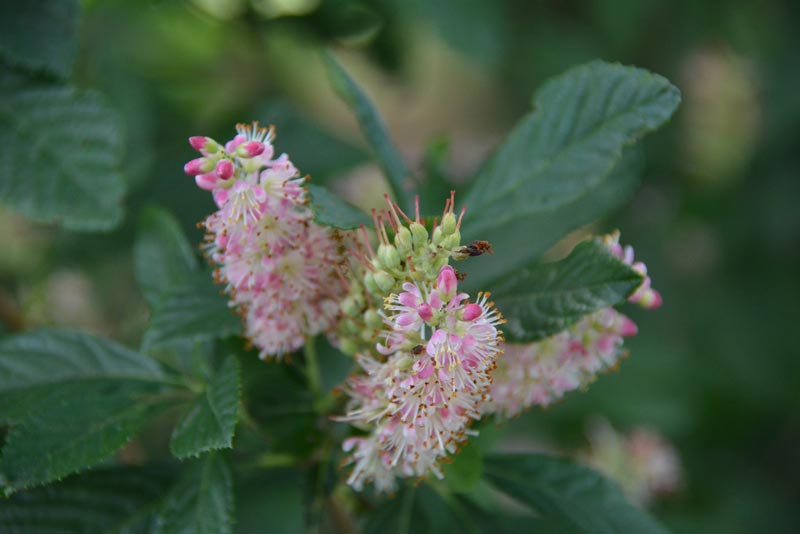
Clethra grows near a variety of bodies of water. It belongs to the family of the same name and has about 80 species. One of the most common is Clethra alnifolia. Gardeners grow several of its varieties in their gardens.
Content
Description of Clethra alnifolia
Clethra resembles a shrub in appearance, which can grow up to 2 m, be short, or be dwarfed. Height varies depending on the species. It is native to eastern North America.
The roots have numerous branches protruding above the surface. The stems are pubescent. The leaves are alternately arranged and 10 cm long. They are shaped like an egg, with their apex attached to the trunk. They have serrated edges. The inflorescences are erect, gathered in panicles or racemes. In appearance, they resemble a pyramid or bird cherry. They have a pleasant scent. Flowering begins in late summer or early fall. The seeds ripen inside the capsule. Propagation is by cuttings or seeds.
In landscape design, it's used as a hedge or to decorate rock gardens. It's also suitable for landscaping in the fall. Swampy areas in the garden where other plants can't grow are suitable for planting Clethra. Growing this plant in the Moscow region is possible, provided it's protected from frost.
Clethra alder-leaved varieties
Among the cultivated representatives of this species, there are several common varieties.
| Variety | Inflorescences |
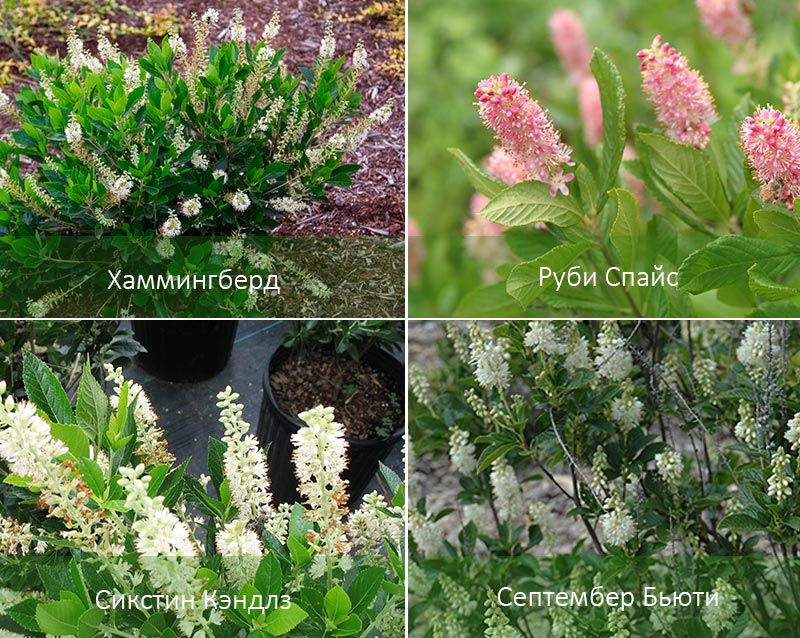
| September Beauty | Snow-white. Late variety. Blooms in early September. |
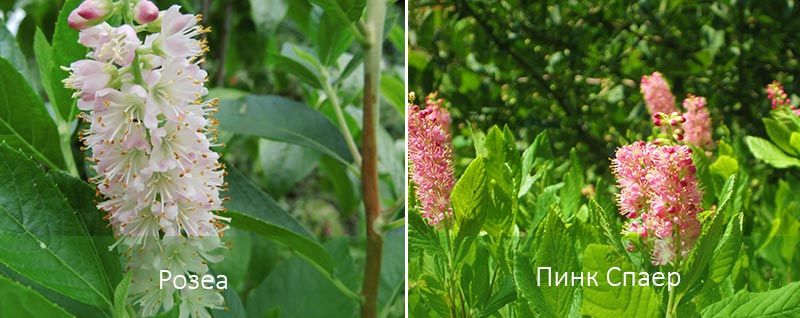
| Rosea | Pale pink. |
| Ruby Spice | Short, light cherry-colored, they stand out like stars against the dark foliage. |
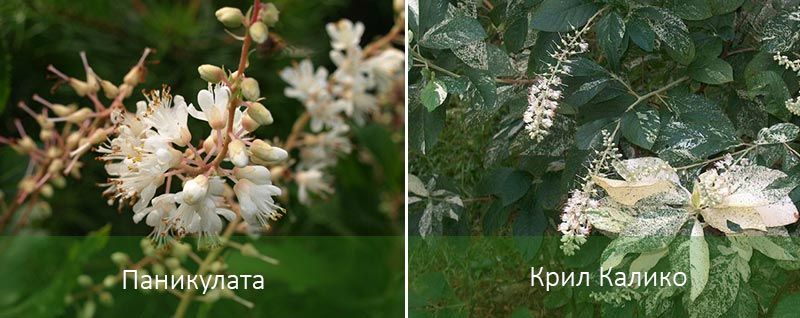
| Calico Krill | Bright yellow or golden. |
| Sistine Candles | Creamy white. Tiny varieties, up to 1 m tall. |
| Hummingbird | |
| Paniculata | The white inflorescences are larger than those of the main species. The branches are arched. |
| Pink Spire | Purple, candle-like in appearance. Strong, pleasant scent. |
Planting Clethra in open ground
When choosing a site for this plant, choose one that is protected from direct sunlight, with slightly acidic soil (pH 4.6-5.3), and good drainage. A mixture of sand and humus is ideal, as highly nutrient-rich and alkaline soils are unsuitable for this plant.
The best time to plant Clethra is in May. To do this, dig a hole 0.5 m deep with 15 cm of drainage underneath. Then place the seedling and gently spread its roots. Fill the remaining space around the trunk with the prepared mixture. It should contain peat, rotted pine needles, and sand in a ratio of 3:1:1. It's advisable to add sawdust and sulfur (one or two tablespoons).
Prepare a solution of 6% vinegar (0.1 kg per 10 liters) and water the planting area. Be sure to compact the soil after it has absorbed all the water.
Caring for clethra in open ground
Planting and care are accompanied by standard procedures, as for all plants:
- watering;
- loosening;
- weeding;
- topping;
- additional nutrition;
- crown formation;
- pruning lateral shoots;
- protection from pests and diseases;
- shelter for the winter.
To make caring for the cella easier, sawdust or wood chips are placed around the trunk.
Watering
The plant does not tolerate drought well, so it needs frequent and generous watering. This is especially important if the summer heat persists for long periods. The soil around the trunk should be kept moist at all times. Water should be prepared in advance: fill special containers, place them in a sunny spot to warm them, and leave them for 24 hours. It's best to water in the evening or early morning, being careful not to let the water get on the plant itself.
Top dressing
No additional fertilizing is required during the first year after planting. Subsequently, watering with a complex fertilizer solution before flowering will increase the number of blooms produced.
Trimming
Crown formation is carried out in the fall after flowering has finished. In the spring, before the sap begins to flow, damaged branches (broken, diseased, or frostbitten) are removed. This procedure is necessary to ensure the formation of inflorescences, which do not form on older shoots.
Wintering
Clethra is frost-resistant. Mature plants in temperate climates tolerate winter cold well, so they don't require any additional measures. First-year plants are best protected by covering them with spruce branches or dry leaves.
Diseases and pests
Following all the growing conditions will ensure you have a beautiful, fragrant plant in your garden. Failure to do so can lead to disease or pest infestation.
| Problem | Cause | Elimination measures |
| There are grey spots on the leaves and the trunks are rotting. | Late blight. Damp weather and high humidity. | Prune diseased plant parts and treat with chemicals at least three times. |
| A white coating is visible on the shoots and leaf blades. | Powdery mildew. Prolonged rains. Sudden temperature changes. Dense plantings. | Spray with sulfur-containing preparations. Thin out the plantings. |
| The color of shoots and flowers has changed. | Viral infection. | If there are only a few diseased plants, the affected parts are cut out. If the disease progresses further, the bushes are dug up and burned. |
| Presence of spots, curling of leaves. Delayed development. | Scale insects are sucking insects. They feed on cell sap. | Use a soap solution or special preparations. |
Reproduction of Clethra
Clethra is a beautiful plant, but propagating it yourself in a garden plot is quite difficult. This is because seeds can only be obtained in years with long-lasting warm autumn weather. Like other members of this species, cuttings root poorly. This process can only be improved by treating them with stimulants.
Clethra can be propagated by dividing the root suckers and the central plant. Quite a few shoots form, but separation is only done the following spring. They are planted directly in open ground. Alternatively, they can be repotted and kept in a pot for another year. This method yields a fairly high percentage of surviving plants.
Top.tomathouse.com recommends: using clethra in the landscape
In landscape gardening, Clethra is used in marshy areas. It thrives here, even in full sunlight. It can be combined in compositions with rhododendrons, azaleas, and kalmia.
Their growing conditions are virtually identical, but this arrangement is advantageous because the plants have different flowering periods. Clethra blooms after its neighbors have finished blooming.
Its leaves appear later than other plants, around the end of May, but they last quite a long time into the fall. To reap all the benefits of Clethra, choose a planting site that receives the right amount of light. This ensures full flowering and long-lasting leaves into the fall.