Coleus is a plant belonging to the large Lamiaceae (labiate) family. It is found in the wild in Africa and tropical Asia, where there are over 150 species.
General description of the Black Dragon coleus variety
The stem is tetrahedral, ribbed, not pubescent, woody at the base.
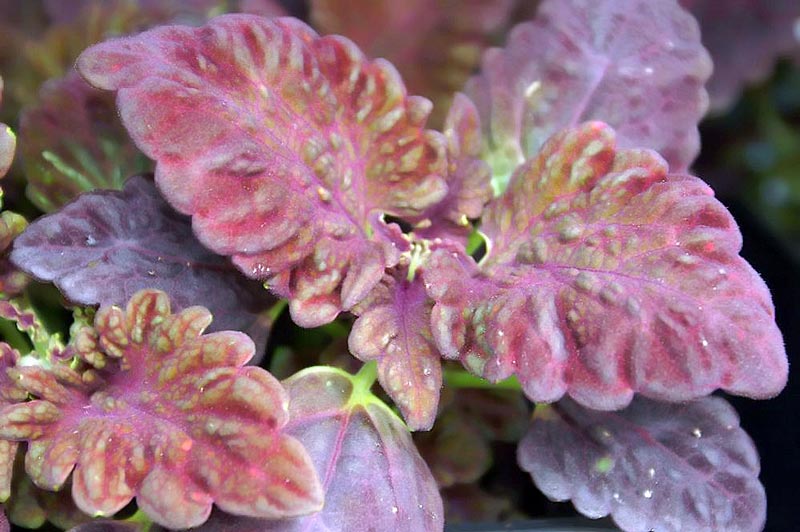
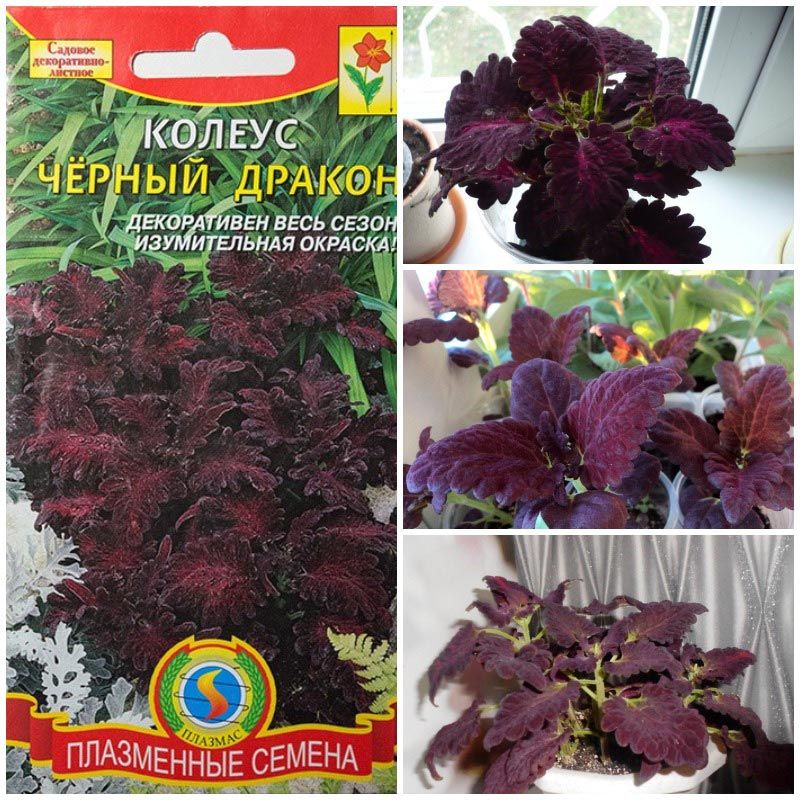
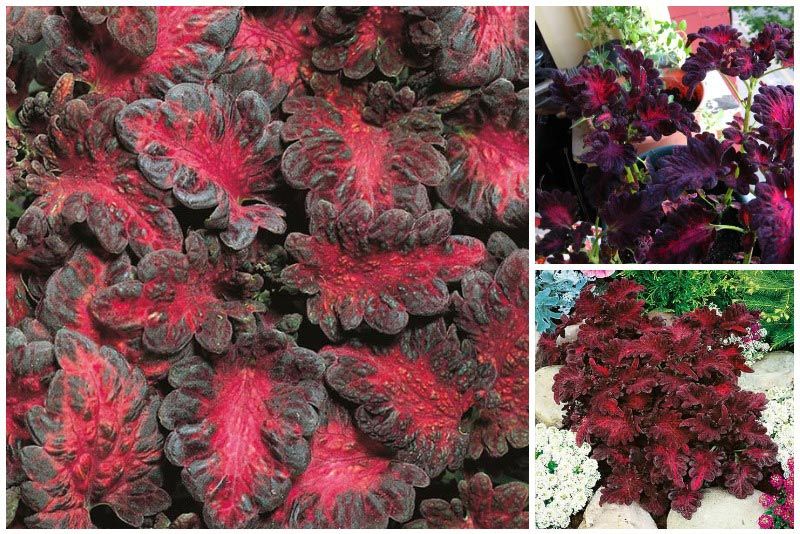
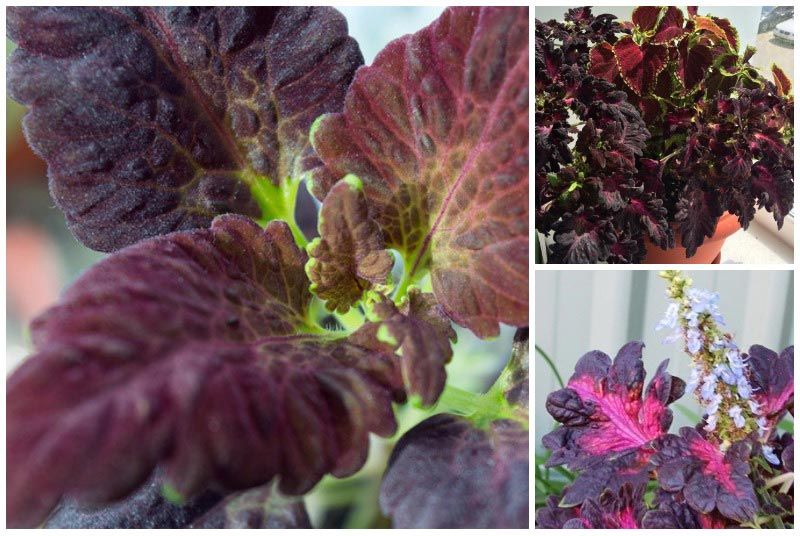
The leaf surface is velvety with reticulated veins. Some reach 15 cm in size. The leaf structure is very similar to that of nettles. Their distinguishing feature from other varieties is their oval shape with large, rounded teeth along the edges. They have a beautiful reddish-burgundy color. Sometimes the outer surface veers to a brownish hue. Because of the depth and richness of the color, the variety is called Black Dragon.
The bush grows small but has a very lush crown. It reaches a height of 30-36 cm and a width of 25-30 cm.
The flowers are small, light blue, and clustered in inflorescences. The pistil, with fused stamens, resembles a sheath, which is how the name "Coleus" is translated. The seed is small.
Caring for Black Dragon Coleus at Home
Despite its southern origins, it thrives in our climate and is easy to care for. You just need to carefully monitor the plant and create comfortable conditions for its growth and development.
What to do after purchase
When purchasing, follow simple recommendations, here are some of them:
- A careful inspection is required; there should be no signs of disease or pests on the leaves and stems.
- It is better to make a purchase in the spring, this will help with adaptation.
- It is not recommended to purchase a coleus in bloom. A sudden change in conditions can negatively impact its future growth.
- Choose a plant with several shoots, not just one, and a bushy crown. These are sure signs of a developed root system.
- Find out about transportation. If it arrived from abroad, it will need repotting, as some types of soil are not suitable for long-term cultivation.
A new coleus needs to adapt, a process that takes about two weeks. During this time, it should be protected from drafts and bright sunlight, and, if possible, not moved.
When repotting, keep the original container, provided it's the right size. This can be easily determined by the roots; they shouldn't be visible through the drainage holes.
Conditions for growing coleus at home
Growing Black Dragon Coleus at home is easy; the key is to adhere to the optimal growth and development parameters listed in the table:
|
Factor |
Conditions | |
| Summer |
Winter |
|
| Lighting | Sun-loving, but intolerant of direct sunlight, which can cause burns. Provide shade on south-facing windows. Southwest and east-facing windows are ideal. Rotate the pot to ensure even foliage color. | It needs to be illuminated; if there is not enough light, it will fade and stretch out in height. |
| Temperature | +22… +25 °C. | +16…+18 °C. |
| Watering | Regular, every other day, in the morning until midday. | Twice a week. Avoid over-watering the soil. |
| Air humidity | Optimum value: 70-90%. It is necessary to spray the leaves once every 4 days, in the evening with water at room temperature. | Move away from heating appliances. It is advisable to purchase a humidifier. |
| Priming | A nutritious, loose soil made from leaf mold or turf, sand, and peat. A drainage layer at the bottom of the pot is essential. Take sand, turf and humus in a ratio of 1:1:2. Disinfection with potassium permanganate is required. |
|
| Top dressing | Apply organic complex and potassium fertilizers once a week. Be careful with nitrogen, as too much will dull the vibrant leaf color. | The concentration is reduced by half and applied once a month. Fertilizing is not necessary. |
Planting the Black Dragon at home and in the garden
At home, coleus can be planted in two ways: by seeds or cuttings.
The first is well suited for spring. First, prepare the soil: neutral or slightly acidic, pH 5.4-7.0; if the pH is too high, add ash. If the soil is not store-bought, it must be disinfected. Preheat in the oven at 200°C or pour boiling water over it.
Moisten the soil and spread out the planting material, spacing the seeds 2-3 cm apart. Sprinkle a light layer of sand on top. Cover the container with plastic wrap or glass. Place in a warm location, with an optimal temperature of 20 to 22°C.
After the first shoots emerge, 15-20 days later, monitor the substrate's moisture level and regularly ventilate the seedlings. Remove the film for 2 minutes at a time, gradually increasing the time. When a pair of true leaves appears, transplant. Small plants will need to be repotted 2-3 more times, using increasingly larger containers.
Water carefully every two days, being careful not to spill liquid on the leaves. When the plants reach a height of 15-20 cm, transplant them into permanent pots.
It's best to plant seedlings outdoors in mid-spring, when the soil has warmed up and the plants are established and able to withstand temperature fluctuations. It's important to protect the seedlings from drafts and direct sunlight.
Another method is propagation by cuttings. The best time is late winter, in February. Root cuttings without flowers or buds. The cuttings should have at least two pairs of leaves, and the length of the cut portion should be at least 15 cm.
After cutting, place the cutting in water. You can add a rooting solution, such as Kornevin or Humisol, following the instructions. Change the water every 2-3 days.
After 1.5 months, when roots appear, transplant into the soil. The soil should be deepened to the first pair of leaves.
Repotting and pruning coleus
Coleus is replanted in the spring; for some plants growing at home, it is enough to replant once every 2 years.
Here are some rules for planting:
- When choosing a container, make sure that the old pot fits into the new one.
- The plant should be transplanted with a small lump of soil, this will prevent damage to the roots.
- The new substrate should contain peat and humus. A layer of broken roof tiles or expanded clay is essential at the bottom.
- After replanting, coleus needs to be watered generously and fertilized.
In spring, the bush needs to be shaped, which is achieved by pruning. For mature plants, this procedure is rejuvenating. Dry and dead branches are removed, which stimulates the growth of new shoots from the root.
If you want a tall plant, remove the side shoots. To give the bush a spherical shape, pinch off the tops, and to create a fuller appearance, remove the inflorescences.
Without severe pruning, it can grow into a lush carpet in a flowerbed.
Particularly tall and bushy specimens, whether growing indoors or in the garden, are best tied to supports. This allows for adjustment of the bush's tilt and direction.
Possible mistakes when growing coleus
Coleus is susceptible to certain diseases and pests. The information in the table below will help you identify the cause and find a solution:
| Disease/pest | Signs |
Elimination |
| Root and stem rot. | Root rot, stem softens, becomes watery. | Repot the plant in new soil, increase the drainage layer, and reduce watering. Some plants can be saved by cuttings. |
| Lack of light. | Loss of foliage, strong upward growth. | Move to a brighter window; illuminate with a lamp during the cold season. |
| Lack of humidity and high air temperature. | Wilted, drooping foliage with brown spots. | Buy a humidifier and mist it. Place a container of moistened expanded clay or sand next to the pot. |
| Lack of nutrients in the soil. | The coloring is pale, the lower tiers of the crown are falling off. Numerous flowers appear. | Apply organic fertilizer. Regularly prune overgrown bushes. |
| Spider mite. | Loss of leaf shine. Diseased appearance of the plant. | Diluted soap. Ammonia solution – 30 ml per 10 liters of water. Garlic decoction in boiling water: 50 g per 10 liters. |
| Mealybug. | The leaf blades are yellowed and wrinkled. | Insecticide treatments, such as Zubr or Aktofit, are used. Spraying with lemon or orange peel infusion (50 g per 1 liter of boiling water) is also recommended. Wiping pest infestations with rubbing alcohol is recommended. |
| Whitefly. | Treatment with a solution of tar or laundry soap in a ratio of 1:6. | |
| Aphid. | Reduced growth, general depressed state. | Mix 300g of soap solution per 10 liters of water. Sprinkle the affected leaves and soil with ash. |
Top.tomathouse.com recommends: Black Dragon Coleus – a natural healer
In addition to its decorative properties, coleus also offers benefits as a natural remedy. This is due to the plant's chemical composition and the compound forskolin it contains.
At home, use the coleus root, which is thoroughly washed, dried, and ground into powder. After preparation, transfer it to a container and add it to food. This dietary supplement has a positive effect on all body systems:
- It affects the functioning of the thyroid gland and is involved in the burning of fat cells.
- Lowers blood pressure.
- Helps absorb vitamins and minerals.
- Promotes improved digestion.
- It has a general tonic effect.
The amazing Black Dragon coleus variety has unusually colored leaves that will look stunning in a garden bed or as a windowsill decoration. Furthermore, its beneficial properties will appeal to any fan of traditional medicine.