Kolkwitzia amabilis, named after botanist Professor Richard Kolkwitz, is a deciduous shrub and beautiful flowering tree. Botanists classify this magnificent plant as a member of the honeysuckle family, and gardeners dream of planting this Chinese wonder in their gardens. Central China is the natural habitat of this plant. Landscape designers in many temperate countries actively utilize the ornamental properties of this plant to enhance their gardens.
Content
Description of Kolkwitzia
In its natural habitat, Kolkwitzia grows up to three meters tall, but in the European part of Russia, it grows no more than two meters. It is classified as a shrub. The branches grow with large growth and densely drooping hairs. The bark of older trunks is reddish-brown and peels off like that of honeysuckle. The bright green, oval-shaped leaves (opposite-paired, 3.5-8 cm long) turn yellow in autumn.
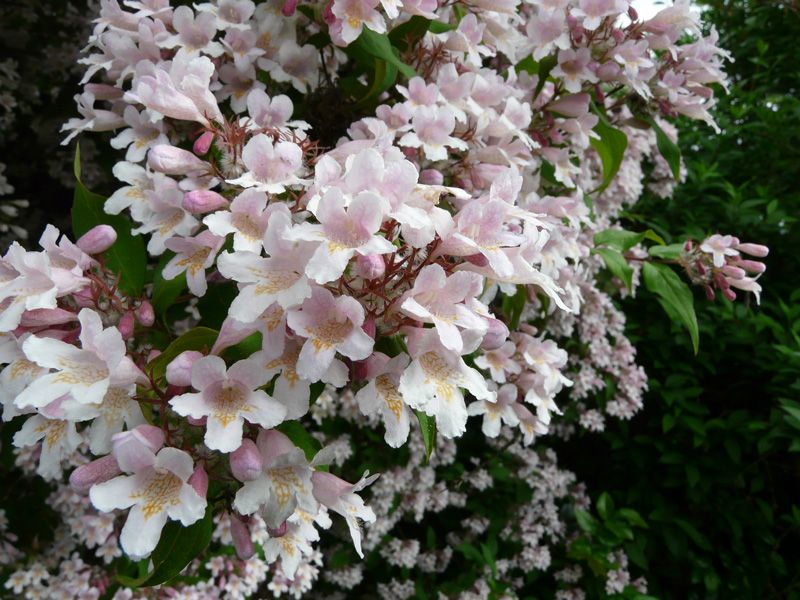
It blooms profusely, covering the entire bush in a ball-shaped ball with pinkish, five-petaled, bell-shaped inflorescences. The buds are very attractive and command attention. With such a lush bloom, even the foliage is impossible to discern, and this philharmonic continues throughout the spring and into the summer.
Kolkwitzia varieties
In the Russian zone, only two species are known:
- Rosea;
- Pink Cloud.
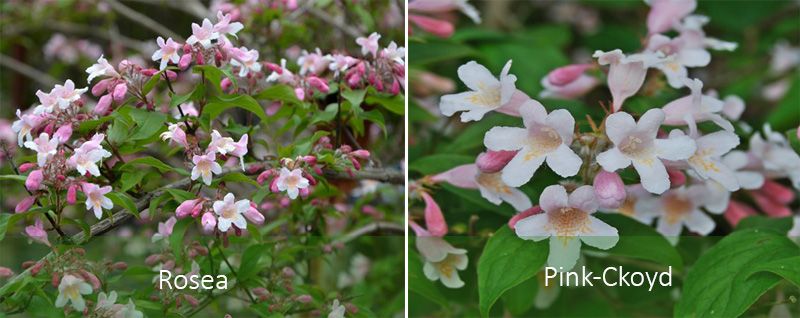
Rosea is the most popular variety among gardeners. The flower stalks are a vibrant pink when they first bloom, but as they mature, the inflorescences turn white. They look stunning in compositions with bushes of rich emerald green leaves. In autumn, the foliage turns a vibrant orange. The flower throat has an orange-yellow stripe. This shrub requires careful care and crown shaping.
Pink Cloud (Pink-Ckoyd) literally translates as pink clouds. When grown in warm southern climates, it grows up to 1.5 meters in both height and diameter in temperate zones. One of the most common varieties in Russia, Pink Clouds is resistant to both drought and frost. The shoots branch well and are easy to shape.
There aren't many differences between the plants in terms of the characteristics of each variety. They differ primarily in the richness of their color palette and petal size. Throughout the first half of June, when all other ornamental shrubs have already stopped blooming, this plant continues to produce fragrance and bloom.
Planting Kolkwitzia in open ground
When choosing a location for planting in the ground, it's important to keep in mind that the plant loves light, although it will tolerate some shade. Fertile soil with moderate moisture is what Kolkwitzia needs for growth and development. The site where the bush will grow should be protected from cold winds. Although the plant can withstand temperatures down to -30°C, very cold winters can sometimes damage young shoots.
Planting in open ground should be done in spring in well-warmed soil, after the threat of frost has passed. If the area is exposed to water for long periods during the spring, it is absolutely not suitable for this plant.
It's best to prepare the planting hole about 14 days before planting outdoors, so the soil will compact and settle. The hole should be at least 40 cm deep and 50 to 60 cm wide. Prepare the soil mixture as follows: sand, turf, and humus in a ratio of 1:2:2. Fill the hole with the thoroughly mixed mixture, and after 14 days, add 80-130 g of complex fertilizer or half a bucket of ash to the soil, and plant the seedling.
The age of the bush should be one or two years old for successful establishment. Water generously immediately after planting and cover with mulch, preferably coconut shavings.
The bush may bloom for the first time already in the second year after planting in open ground.
Caring for Kolkwitzia in the Garden
Successful growth and flowering depend on proper care. It's always important to maintain soil moisture around the tree's trunk, and water only with warm water.
For good growth and development, the plant needs to be fed. This can be done with fresh manure infusions at a ratio of 1:10, or in early summer, add double superphosphate at a rate of 30-50 g per 10 liters of water per plant.
Once flowering ends, stop fertilizing the Kolkwitzia to prevent new shoots from growing, as they won't have time to mature. At this time, perform formative pruning. Trimming the bush is essential after the fruit has fully ripened, removing all new growth.
In early spring, perform a sanitary pruning, removing all branches and stems damaged by frost and pests. If the bush needs to be replanted, survival rates are highest at this time. In the fall, to prepare the bush for winter, mulch it thoroughly again and cover it with pine branches to protect it from rodents.
Reproduction of Kolkwitzia
The plant is propagated as follows:
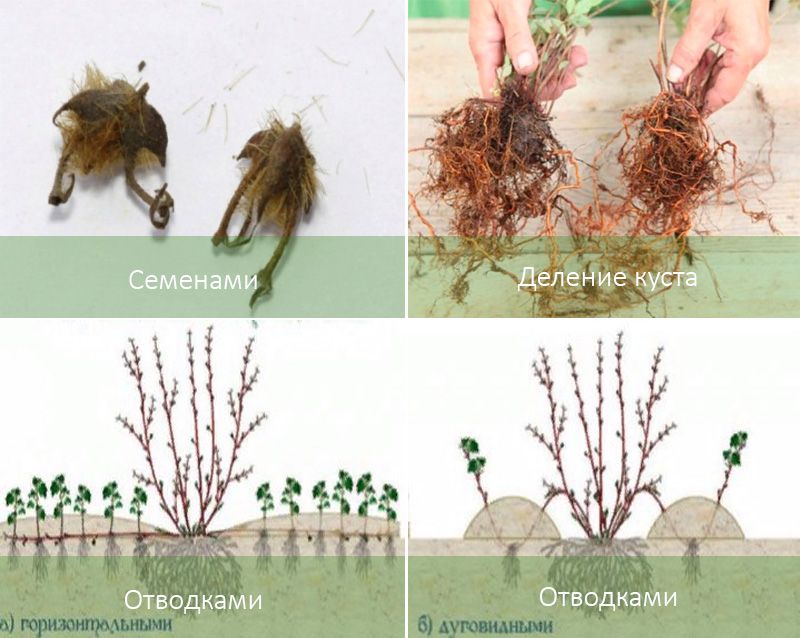
- Generative method (seeds);
- Vegetative propagation (layering, cuttings, dividing the bush).
Generative method
The process is lengthy and not always successful. Seed germination is poor, hampered by a hard seed coat with rigid protrusions. To break this down, thoroughly rub the seeds with sand or soak them in concentrated sulfuric acid for a few minutes. To improve germination, they must be stratified in the refrigerator on a shelf where vegetables are stored for three months. After this time, in April, they are sown in long containers with a good substrate: peat, sand, turf, or humus. The seeds are not very large and are not recommended for deep planting. Temperatures of 20–22°C are ideal for germination. The Kolkwitzia pot is watered generously, covered with plastic wrap, and kept warm. Indoors, it will grow until the following spring.
Propagation by layering
The most effective and reliable method. After selecting the desired shoot, bend it into the dug trench, make a small cut, treat it with Kornevin to stimulate root growth, and cover with soil. After rooting, transplant it into the prepared holes the following spring.
Cuttings
Propagation is done in both spring and fall. However, the fall method is generally of higher quality. Selected cuttings are cut and wrapped in plastic, then stored in a basement until spring, or coated with Kornevin and planted in a greenhouse or in pots for indoor germination. After two years, they can be planted outdoors. Cuttings wrapped in a plastic bag can also be stored in the refrigerator on the vegetable shelf until germination.
Dividing the bush
You can use division as a propagation method by replanting the entire seedling. The bush is removed from the ground and inspected, removing any rotted roots. It is then divided into sections, ensuring each section has a strong root and a well-developed stem. The cuts should be sealed with charcoal to prevent microbes from entering and root rot. The prepared bushes are planted in trenches or holes.
During the first few years after planting, while the plants are still young and their branches are not yet fully matured, the bark is susceptible to the damaging effects of frost. It is essential to cover the trees for the winter with spunbond or lutrasil.
Diseases and pests
Kolkwitzia is fairly resistant to various pests. However, it can be susceptible to attack in hot weather.
Honeysuckle aphids can cause significant damage to plants, causing young leaves and shoots to dry out and fall off. If these pests are detected, they should be immediately controlled with products such as Aktara, Actellik, or Fufanon. Spraying should be repeated two or three times, spaced seven days apart. Since the first treatment kills the adult insects but leaves the eggs unharmed, subsequent treatments will also kill them.
However, not only aphids, but also the berry-eating caterpillar and leaf-eating beetle can damage the plant's decorative appearance.
If the pest infestation is small, they can be removed by hand. If the damage is severe, spray with Biotkin, Gerold, or any other effective product. Scale insects can cause the most damage, as they can completely destroy the shrub.
Viruses and fungi can cause irreparable damage to Kolkwitzia. If the disease is bacterial, the plant cannot be treated. It is dug up and burned.
If these are simply microscopic fungi that damage the foliage and appear as various spots that fall from the branches, then this condition—chlorosis—is treatable. Fosporin and copper sulfate will successfully address this problem.
Top.tomathouse.com informs about the specifics of planting Kolkwitzia in the Moscow region.
Kolkwitzia seedlings also thrive in the temperate climate of the Moscow region. Soil certainly plays a significant role in the development of the bush. Loose, nutritious soil is the key to vigorous growth and flower stalk formation. During dry periods, the soil is moistened, and to retain moisture, a thick layer of mulch is applied—ideally, peat and compost, topped with pine bark.
After watering, the bark will become saturated with moisture, and if a dry period occurs, it will prevent the roots from drying out. In the Moscow region, it's essential to protect the bush from severe frosts so that during cold, snowless winters, the plant is as sheltered as possible, directly touching the young seedlings. It's important to cover not only the crown but also the root system, which is especially important during snowless winters.
Kolkwitzia amabilis is a delight in its airy, pink-cloud-like beauty. With proper care, after 6-7 years, it will form a beautiful, lush tree with spreading, spherical branches.
By planting this beautiful bush in your country house, you can count on its luxurious flowering and summer aroma with brightly colored autumn foliage at your dacha.