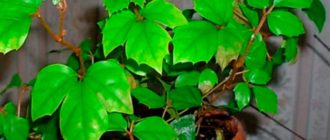
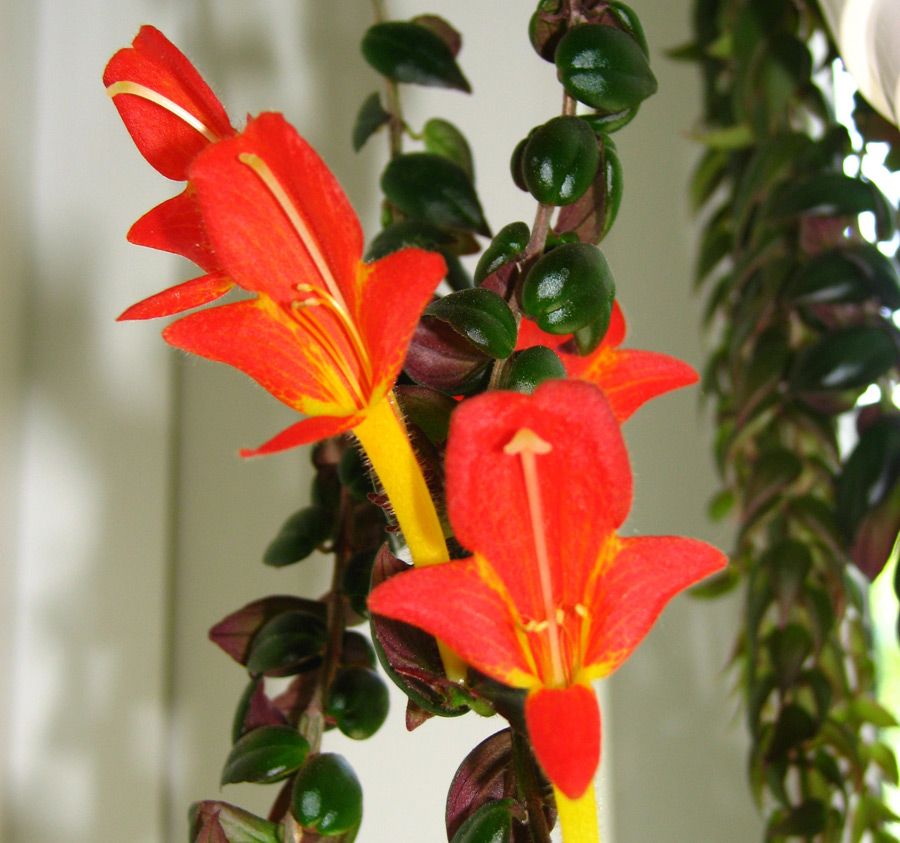
Columnea is a perennial epiphyte with vibrant flowers. It is native to the tropical South American region. In its natural habitat, Columnea grows on rotten tree trunks and in rock crevices, using them as support to form beautiful inflorescences. The stems are firm and succulent, reaching 1-2 meters in height. The leaves are densely arranged, oval or heart-shaped, sometimes oblong. The flowers come in a variety of colors, resembling fish or butterflies.
In the house it looks spectacular in flowerpots and hanging pots.
Content
Types
There are approximately 200 species of this flower in the wild. Only a few are suitable for growing at home:
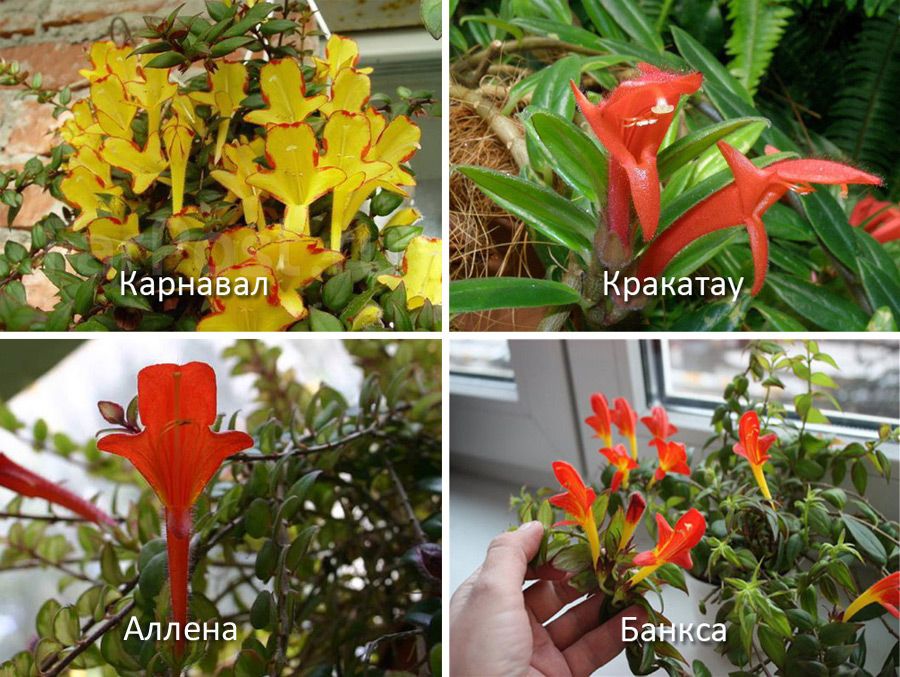
- Allena has long, slender stems reaching seven meters. Scarlet flowers stand out from the lanceolate leaves.
- Banksa is a small, trailing vine with small, light green leaves and yellow-orange, six-centimeter flowers.
- Carnival is a vine covered in beautiful yellow buds with a red edge, reminiscent of a carnival, and small dark green leaves. This variety blooms almost year-round.
- Krakatoa - named after the volcano because its fiery flowers erupt from its dark green, spiky leaves.
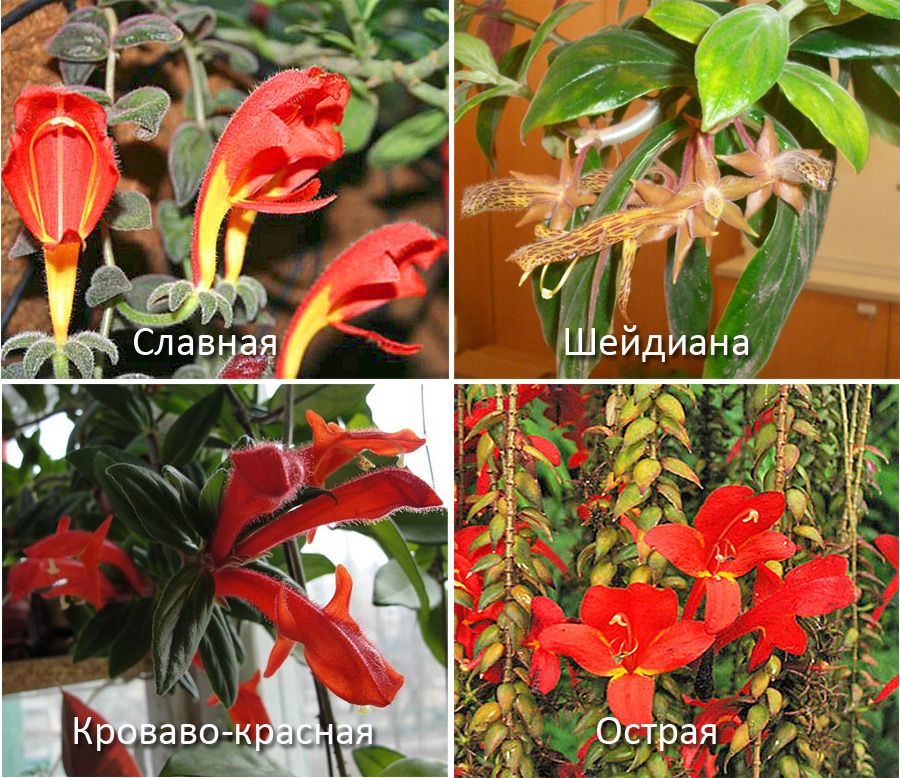
- Blood-Red is a subshrub variety with long, thickened shoots and rough, oblong leaves. It is distinguished by the presence of red spots on the underside of the leaf. It blooms for a long time and produces profuse red buds.
- Acute—a variety for experienced gardeners. Thick shoots lie or droop, and the leaves are small and pointed. The color is orange-red with yellow flecks at the base.
- Glorious - stems are strewn with dark green oblong leaves and red-orange flowers.
- Shida or Sheidiana is a fleshy vine that can reach 1.5 meters in length, with the characteristic red hairs on the stems and leaves. Numerous yellow flowers with reddish spots are located throughout the vine, in the leaf axils.
The photo shows some types of Columnea.
Home care
The Columnea houseplant is unpretentious and easy to grow if you follow a few rules:
- Carefully select a location, maintain certain temperature, humidity and lighting, depending on the season;
- Choose the right soil composition and pot;
- Fertilize;
- Observe the watering regime;
- Trim the bush in time.
Location in the house, lighting, temperature, air humidity
| Time of year | Location | Temperature | Lighting | Humidity |
| Spring | A bright, warm place, protected from direct sunlight. | +18-+22ºС. | Bright, but diffused. | Daily spraying with warm water +25-+30ºС. |
| Summer | A window facing west or east. | +20-+27ºС. | From all sides, but not straight. | High humidity is essential. A good place to place the plant is near a fountain or aquarium. Give it a shower once a week. |
| Autumn (October-November) | Cool, no drafts. | Daytime temperature: +16ºС, nighttime temperature: +8-+12ºС | Bright, diffused. | Spray once a week. |
| Winter | South windows. | +15ºС for a month or 50 days, then an increase in temperature. | Provide light for twelve hours using a phytolamp for plants. | Spray once a week. During flowering, avoid spraying the flowers. |
Soil, container for planting
The plant requires nutritious soil. Its composition:
- leaf humus - two parts;
- turf soil - four parts;
- compost - one part (you can use peat with vermiculite for looseness);
- fine sawdust (charcoal), sphagnum moss - one part.
You can also use ready-made substrates: soil for Saintpaulias (epiphytes), soil for flowering plants.
The container should be shallow but wide, with good drainage. For example, a hanging basket or planter.
Fertilizer
Fertilizing is very important:
- In the spring and summer period - every two weeks with mineral fertilizer for flowering indoor plants, diluted with water;
- In autumn/winter – once a month is enough;
- At the end of winter - once a week.
It is good to use: “Kemira Lux”, “Buiskie Fertilizers”, “AVA”, “Fertika Lux”.
The fertilizer must be diluted using a dose half that stated in the instructions.
Watering
Use filtered water, as the lime content in running water is harmful to the columnea. Temperature: 20-25ºC.
Water generously, but don't allow standing water to remain in the soil. To avoid this, loosen the soil and allow it to dry out.
Watering frequency: in autumn/winter – careful; in summer/spring – frequent.
Trimming
To rejuvenate the plant, prune it annually after flowering. Shoots are cut back to half their length (or slightly less). It's also important to regularly remove dried parts (flowers, leaves, shoots).
Transfer
After purchasing a flower, after two to three weeks, once it has adapted, it should be replanted in nutritious soil. To do this:
- Take a pot that is 2-3 cm larger and place expanded clay or small stones on the bottom for drainage;
- The soil is poured in, leaving one or two centimeters from the edge;
- The vines are cut to a length of approximately 15 centimeters, a little less (the cut shoots are used as propagation material);
- The flower is freed from soil, the roots are washed with a stream of water at room temperature;
- The roots are examined, and any defective ones are removed. The wounds are treated with brilliant green;
- Poke holes in the edges of the container, pull the vine shoots through them, and fill with soil. It's a good idea to plant two or three seedlings in one pot to ensure a bushier plant;
- They are watering.
Reproduction
There are two ways to propagate indoor columnea:
- by cuttings;
- seeds.
Cuttings
A simple and convenient method. After pruning the plant, the resulting shoots with two or three pairs of leaves are used as propagation material. The cuttings are rooted in water or nutrient-rich peat. The seedlings are kept in a bright, room-temperature location. Water daily without overwatering. To retain moisture and warmth, it's a good idea to keep them under a glass dome. If new leaves appear, the plant has rooted and can be repotted.
Propagation from seeds
A difficult, rarely successful method, used by experienced breeders. Seeds are planted in sandy-peat soil, covered with a glass or plastic cover, placed in a warm room with constant temperature and humidity, ventilated, and watered. After a week or three, when seedlings appear, the containers are placed in light but protected from direct sunlight. Once several pairs of leaves have grown, transplant the seedlings into small pots.
Diseases, pests
If water stagnates, gray mold may develop on the roots and shoots. It's important to promptly remove the diseased areas, treat the cuts with a fungicide, and replant the plant. If the disease is advanced, healthy shoots can be used as cuttings.
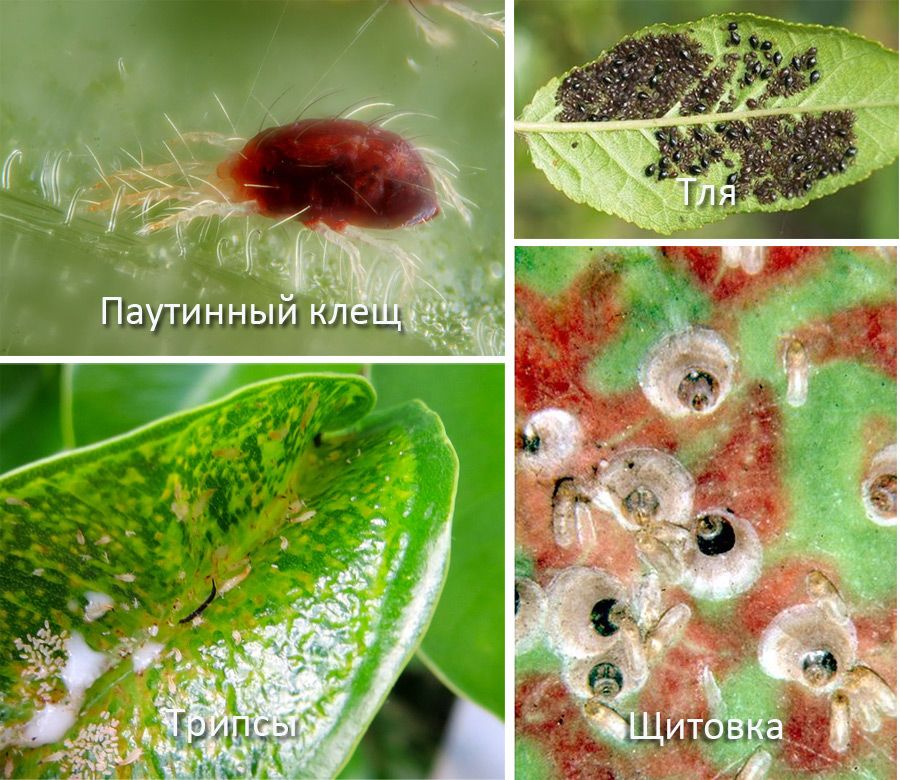
Columnea pests can include aphids, scale insects, thrips, and spider mites. To control them, spray the plant with insecticides.
Errors and their correction
| Visible damage | Cause | Correction |
| The appearance of yellow, curled leaves that fall off. | Dry air, insufficient humidification. | Maintain sufficient humidity at all times; place a humidifier nearby. |
| The leaves turn yellow and fall off. | Insufficient or too much watering. | Water only when the soil in the container is dry. |
| Formation of stains. | Cold water. | Moisten with water of at least +20ºС. |
| Baring of stems. | Poor lighting. | Place in a bright place; in winter, illuminate with additional lamps. |
| The tops are withering. | In the heat the soil is dry. | Increase watering and humidification. |
| No flowering. | During bud formation, the temperature is incorrect (+15ºС, not higher than +18ºС). | At night, reduce the temperature and limit watering. |
| Flowers wither and fall off. | Exposure of flowers to large amounts of moisture. | Be careful. |