Gerbera is a member of the Asteraceae family. The flower was discovered by the Dutch scientist Jan Gronovius in 1717. There are over 70 species, most of which grow in Africa, and some in tropical Asia.
Content
Description of indoor gerbera
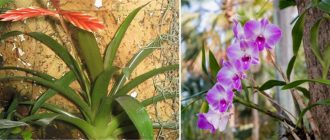
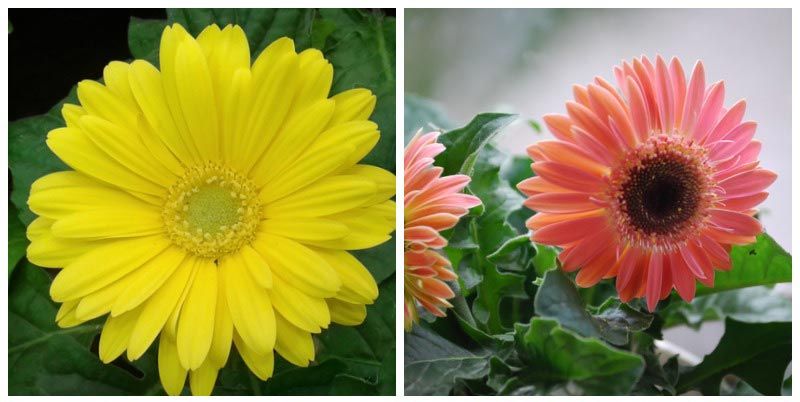
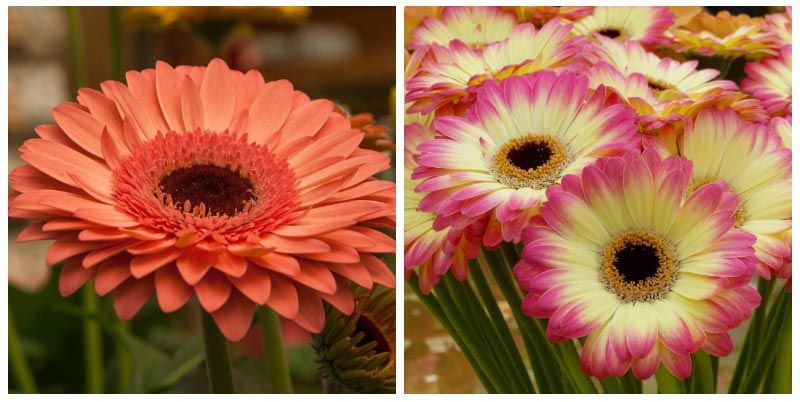
The plant reaches 25-55 cm in height. Maximum growth occurs during the flowering period, due to the formation of a flower stalk from a rosette of leaves. At its apex, a flower head no larger than 14 cm in diameter blooms. During flowering, the petals can be any color. There are varieties with pink, white, burgundy, and other shades.
The leaves are arranged in several tiers on short petioles. They are pinnately dissected, with the central portion being more elongated. The leaves are dark green. Sometimes the petioles are covered with dense, soft hairs.
Gerbera classification
Two popular varieties of this plant are Jameson and Greenleaf. Most indoor varieties have been bred from the former.
| Type, petals | Inflorescences | Variety, flowers |
| Small-flowered, narrow | Small flowers up to 9 cm in diameter. | Aldebaran is pink in color. Alkar is a shade of ripe cherry. |
| Large-flowered, narrow | Reach 13 cm. |
Vega - orange. Jupiter - bright yellow. Algol is a ripe cherry. |
| Large-flowered, medium-sized | Medium diameter. | Mars - red. |
| Large-flowered, wide | Large up to 15 cm. | Delios, Markal - sunny color. |
| Terry, narrow | Medium size up to 11 cm. | Kalinka – yellow shades. Viola is a rich pink. Sonya - red tones. |
| Terry, wide | Large. | Spark - bright, deep red |
Caring for gerberas at home
This plant, native to South Africa, requires conditions roughly similar to its natural habitat. By following these guidelines, you can extend the flowering period.
| Factor | Spring/Summer | Winter | Autumn |
| Location |
Place the room on a window sill facing east or west. The room should be ventilated daily. In summer, they are moved outside or transplanted into open ground. |
||
| Lighting | They are removed to a shaded place. | Fluorescent or phytolamps are used to provide the plant with light. | |
| Temperature | Does not tolerate heat above +30…+32 °C. Leaves wither. | At 12 to 14°C, the plant enters dormancy, preventing flowering during this period. However, temperatures below this level can kill the plant. | The normal temperature is +20…+24 °C. |
| Humidity | It requires 70-80% humidity, so in summer the area around it is sprayed. | ||
| Watering | Moderate watering, as the top layer of soil dries out. Use room-temperature water (20–22°C). If necessary (in summer, if planted near a radiator), mist the area around the plant or place a humidifier nearby. | ||
| Top dressing | Nitrogen fertilizer is suitable in February and July-August, and potassium fertilizer is suitable during flowering. The solution is first diluted with water and watered sparingly. | ||
Planting, replanting, soil for gerberas
Repotting begins with choosing a pot. It should be clay, as this allows the gerbera's roots to breathe and maintain the desired soil temperature.
You can repot the flower two weeks after purchasing it. This allows the plant to acclimate to the new conditions.
Experienced gardeners also recommend:
- choose a pot twice the size of the old one;
- treat the container with boiling water;
- replace all the soil and shake off the roots;
- If the plant is young, fertilize every 5-7 days.
For planting, use light, slightly acidic soil. You can make your own (2:1:1):
- deciduous soil;
- peat;
- sand.
Expanded clay or pine bark as filler.
Repot during the dormant period, when the gerbera is not blooming. Leave the basal rosette protruding 1-2 cm from the soil.
Gerbera propagation
Experts distinguish two methods of propagating indoor flowers: using seeds or dividing the bush.
Using seeds
Suitable for gardeners who want to grow a new variety or propagate gerberas. Seeds can be purchased in a store or collected during flowering. For propagation, you will need:
- fill the pot with soil (a mixture of turf and sand) to a depth of 1-2 cm;
- lay out the seeds and sprinkle them with soil, but no more than 5 cm;
- cover with film and moisten the soil with a sprayer;
- leave in a warm, lighted place;
- until the first leaves appear, constantly ventilate and moisten;
- After 3-4 leaves appear, divide into small pots.
Dividing the bush
This method is suitable for plants older than two years; in this case, they can be replanted. After dividing, water the gerbera and move it to a location out of direct sunlight and maintain a moderate temperature.
Step by step:
- remove the plant from the pot and shake off the soil from the roots;
- divide into 3-4 bushes, leaving two points for growth;
- trim the roots by 10 cm;
- plant the plants in pots and sprinkle with soil;
- The rosettes should be 1 cm above the soil.
Mistakes in care, diseases and pests
Gardeners often make mistakes when caring for gerberas, which leads to their deterioration. However, if this process is caught early, it's possible to correct the errors and restore the plant to its original appearance.
Common mistakes in care
| Manifestations | Cause | Elimination measures |
| Yellow leaves | Incorrect watering, too much or too little. | The water should be at room temperature and watering should be moderate. |
| Withering leaves | Lack of water, dry air. | Spray the plant and water more often. |
| Darkening or fading petals | Lack of light. | Move the pot with the gerbera to the sunny side. |
| Dried leaves | Incorrectly selected fertilizer or its deficiency. | Purchase nitrogen substrate. |
| Yellow spots on leaves | Sunburn. | Move the plant into the shade and spray not the plant itself, but the area around it, so that water does not get on the leaves. |
| It doesn't bloom | Incorrectly selected pot, soil or location. | Repot the gerbera into a larger container. Move it to a less sunny spot and change the soil to one with a lower nitrogen content. |
| Blackening stem | Low temperature, abundant watering. | Water the soil less frequently. Move the plant indoors to a warmer location. |
Pests and diseases
In addition to the mistakes gardeners make, plants can also be susceptible to various diseases and pests. However, improper care is often the cause.
| Type of disease or pest | Symptoms | Control measures |
| Powdery mildew | A greyish-white coating on the leaves, which over time becomes denser and changes colour to brown. |
If you spot the problem right away, you can use a folk remedy. Mix dry mustard with water (50 g per 10 liters) and apply it to the plant 2-3 times every 3 days. If this method is ineffective, remove all infected leaves. Replace the top layer of soil with fresh soil. Treat with fungicides (Topaz, Vitaros). |
| Gray mold | Brown spots on the leaves and stems. They gradually rot and become covered with a thick white coating. |
For preventive purposes, the preparation Barrier is added to the soil. If infected, reduce watering to a minimum, cut out all affected stems and leaves, and sprinkle these areas with activated charcoal. Treat the gerbera with Fundazol, repeating the treatment in 2 weeks. |
| Late blight | Brown spots appear on the plant's leaves, which eventually turn black and rot. The disease also affects the root system, weakening it. |
As a preventative measure, the roots are placed in a fungicide solution, such as Alirin-B. The soil is treated with a garlic infusion by spraying it. Treatment begins with the removal of affected areas and also includes treating the gerbera and soil with Fundazol. |
| Fusarium | The stems dry out and become thinner. The leaves wilt and become covered with yellow spots. Pink or white mold appears on the affected parts of the plant. |
Gerberas cannot be cured of this disease. Cuttings can be used for propagation, but care must be taken to ensure the cuts are clean. To prevent the plant from dying, preventative measures should be taken, such as watering with a light solution of potassium permanganate. When repotting, use Maxima or Skora. |
| Scale insect | Brown or beige formations on leaves and stems. | To combat them, coat the scale insects' shells with kerosene or machine oil and leave for 2-3 hours. Then, wipe the leaves with soapy water and treat with Aktara and Fufanon. |
| Aphid | Small insects that attack buds and young leaves of gerberas, causing parts of the plant to dry out. | Use of insecticides, such as Tanrek, Admiral, Iskra-Bio. |