The medlar (loquat) Sesek, or Eriobotrya scaena, is an evergreen subtropical fruit tree belonging to the Rosaceae family, subfamily Malaceae. Introduced to Russia in the 19th century, it naturally grows on mountain slopes. Its distribution includes Southeast Asia, the Himalayas, the Mediterranean, the Caucasus, Crimea, China, Japan, and Europe. Its fruits are spherical, pear-shaped, and have a flavor reminiscent of apple, apricot, or strawberry. They are eaten raw and used to make jams and jellies. They have a short shelf life and are not suitable for export.
Content
Description and characteristics of medlar
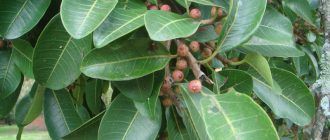
The medlar grows up to 8 m in the wild, 3 m in gardens, and 1.5 m indoors. Its flowers are white or cream-colored, with pleasantly fragrant inflorescences that remain pleasing to the eye for a long time. The trunk is covered with a rough crown, and the shoots are thorny in the wild, but not in cultivated varieties. The root system is extensive and located close to the soil. The leaves are up to 12 cm long and 6 cm wide, pointed, oblong, and thick with short petioles and dark veins. They are pubescent below and glossy and dark green above.
Its juicy fruits (containing 3-5 seeds) are prized, gathered in plum-sized clusters. Depending on their ripeness, they taste sweet or sweet-tart, and appear in the spring. The tree lives for 40 years or more. The medlar also grows indoors in large flower pots, winter gardens, and greenhouses.
Types of medlar
There are only three species. Two are used in horticulture: Japanese and German (Caucasian).
Japanese
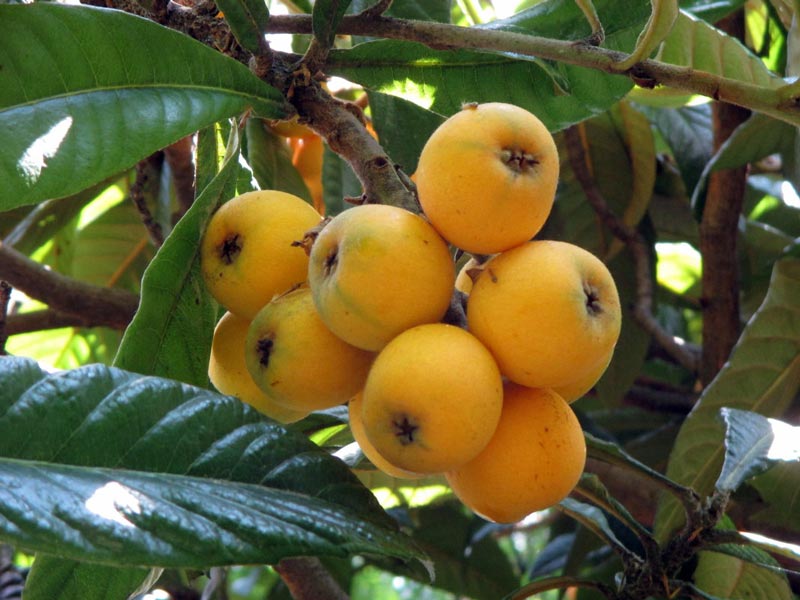
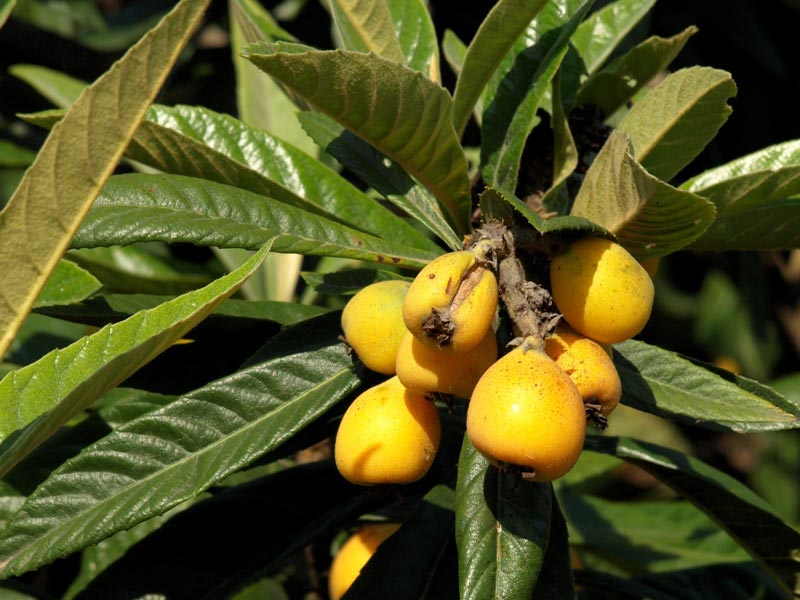
Evergreen, with velvety leaves, it blooms in October-November on the current year's shoots, producing a harvest in May-June. The fruits are eaten immediately. The sweet, crumbly flesh of the fruit contains a single seed, and the skin is soft and delicate orange. It is frost-tolerant.
Caucasian
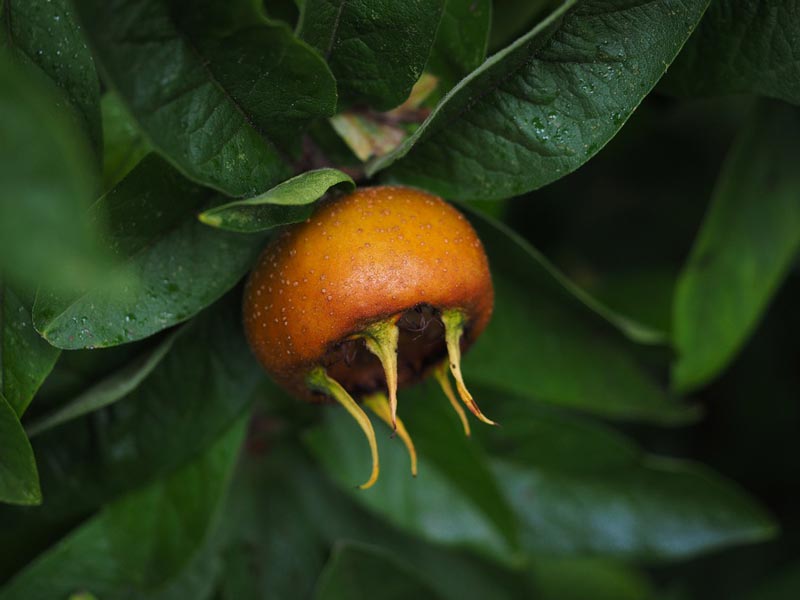
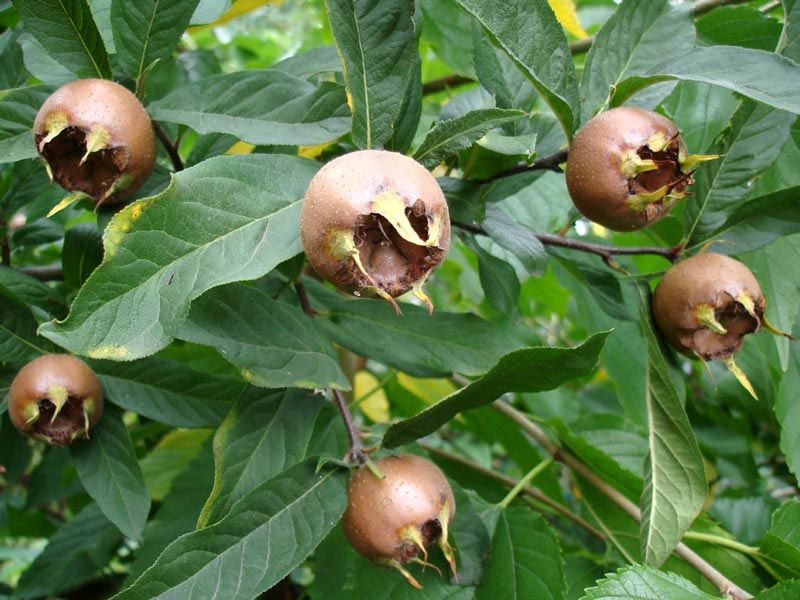
Deciduous, branches spreading, forming a wide crown, trunk diameter 15 cm, waxy shiny leaves on top, blooms in May-June, sourish brown fruits with dense pulp appear in autumn.
The peculiarity of this species is that it blooms on last year’s shoots.
Frost-tolerant. Fruits are eaten after freezing.
Breeders have developed seedless varieties:
- Apyrene - with small fruits.
- Enormous Evreinova – fruits 8 cm in diameter.
Sterna (grayish)
A deciduous shrub with snow-white flowers and fruits that resemble small red apples.
Varieties of medlar for indoor growing
For growing medlar indoors, the following varieties are used: Japanese:
- Morozko – yellow, bright, aromatic fruits.
- Tanaka is a sweet and sour fruit, pear-shaped, orange in color and pink inside.
- Champagne - pubescent with creamy flesh, dark yellow.
- Premier - orange-yellow.
- Siles – with apricot flavor.
- Victor – bright yellow fruits.
- Komunar - round, with a matte skin.
Growing medlar at home
You can also get a fruit-bearing tree indoors if you follow the rules.
Medlar loves light and can be placed on south- or east-facing windowsills, in greenhouses, or in conservatories. During flowering, it requires artificial lighting for up to 12 hours. Temperatures range from 18 to 20°C, and from 5°C in winter.
The soil mixture should be slightly acidic, neutral, made up of equal parts of peat, humus and leaf soil.
Water the plant along the edge of the container or into the tray. Once the soil has dried, loosen the top layer of soil. Do not overwater; keep the soil moderately moist to prevent root rot. Reduce watering in winter. Use settled water that is two degrees warmer than room temperature. Remove dead, damaged branches in the spring, prune the plant by half for the first two to three years, and shape the crown.
From spring to late fall, the plant is fertilized with mineral and organic mixtures. During fruit formation, the plant is fed with 2 liters of water, 200 g of manure, and 20 g of ash. Phosphorus fertilizers are needed during flowering, and potassium fertilizers are needed during active growth.
Young trees are fertilized once a month, mature trees once a season. This is not done during dormancy.
Young plants are repotted annually, and those older than 5 years are repotted every 4 years. The top layer of soil is removed down to the roots and replaced with new soil.
Medlar blooms in October-November. Seeds produce flowers in the fourth or fifth year, and cuttings produce three. The flowers are white or cream-colored and clustered in clusters. The fruits ripen only in summer; it's recommended to leave 10-15 in the first year.
Propagation of medlar
Medlar reproduces in several ways:
- Seeds: Soak the seeds for 24 hours at 18–20°C. Discard any that float to the surface. After this, place them in the refrigerator for several months (stratification), then in Kornevin for 8 hours. Sow at a depth of 2–3 cm in a container with 2 cm of drainage and potting soil. Cover with plastic wrap and ventilate. Seedlings usually appear within 1.5 months. When 2–3 leaves appear, transplant. Seeds can also be sown outdoors.
- Layering: Bend healthy branches to the ground (after making a cut in the bark above a bud) and secure them. Add Kornevin for better strengthening. Separate after root growth and replant.
- Cuttings: Prune branches by 15-20 cm during flowering. Treat the cut areas with crushed charcoal. Trim the leaves by three-quarters. Plant in a separate container, create a greenhouse effect, water, and root within a month.
- Grafting is a method used by experienced gardeners. Pear, quince, and hawthorn are used as rootstocks.
Pests and diseases of medlar, difficulties of care
Medlars are rarely susceptible to diseases and pests when properly cared for. However, inexperienced gardeners may encounter some difficulties:
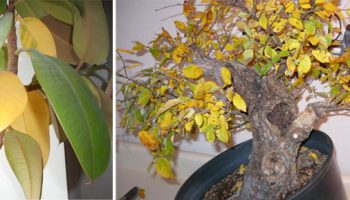
- When the leaves dry out at the edges, then completely, moisten the dry air.
- Black spots are caused by fungal diseases. Reduce watering and spraying.
- If the leaves lose elasticity, water more often.
- Root rot – reduce watering, treat with a fungicide (Fitolavin).
- If the plant doesn't bloom or bear fruit, it's not in its winter dormancy period. Stop watering and fertilizing.
- Blooms poorly - increase lighting, prune.
- Aphids, spider mites - spray with a solution of laundry soap or calendula tincture with water.
- Scale insects are treated with Actofit.
- Caterpillars are fumigated with tobacco smoke.
For prevention, in early spring, spray the trunk, branches, and soil with 3% Bordeaux mixture.
Top.tomathouse.com recommends: Medlar – beneficial properties and contraindications
Medlar contains sugar, fiber, tannins, vitamins B, A, and E, trace elements, iron, sodium, phosphorus, zinc, selenium, potassium, proteins, and carbohydrates. The bark, leaves, and seeds of the plant are valuable. It contains organic acids: malic, tartaric, and citric. The caloric value of the fruit is 42 kcal.
The plant has many medicinal properties:
- Normalizes digestion, cleanses the body.
- Strengthens the immune system and the body's resistance to infections.
- Rich in folic acid and iodine.
- The leaves treat sore throat.
- Relieves renal colic and pain due to bladder stones.
- Lowers cholesterol and removes heavy metal salts.
- It has expectorant properties.
- Lowers blood pressure.
- Useful for people with diabetes (helps produce insulin).
Medlar leaves reduce sweet cravings and appetite. Vitamin A promotes good vision. The plant is widely used in skin care products.
The fruit is contraindicated for those with allergies, gastritis, stomach ulcers, or cholecystitis. The leaves contain cyanide glycosides, so the plant can be both beneficial and harmful.