Indoor roses differ from garden roses in their diminutive size and ability to bloom year-round. However, to ensure the flower continues to delight with its beauty year-round, it's important to understand its characteristics and care for it properly.
Content
- 1 The origin of the indoor rose and its characteristics
- 2 Popular types and varieties of indoor roses for the home
- 3 Selecting and acclimatizing indoor roses
- 4 Caring for a home rose
- 5 How to grow an indoor rose from a bouquet
- 6 Mistakes in caring for indoor roses
- 7 Diseases and pests of indoor roses, control measures
The origin of the indoor rose and its characteristics
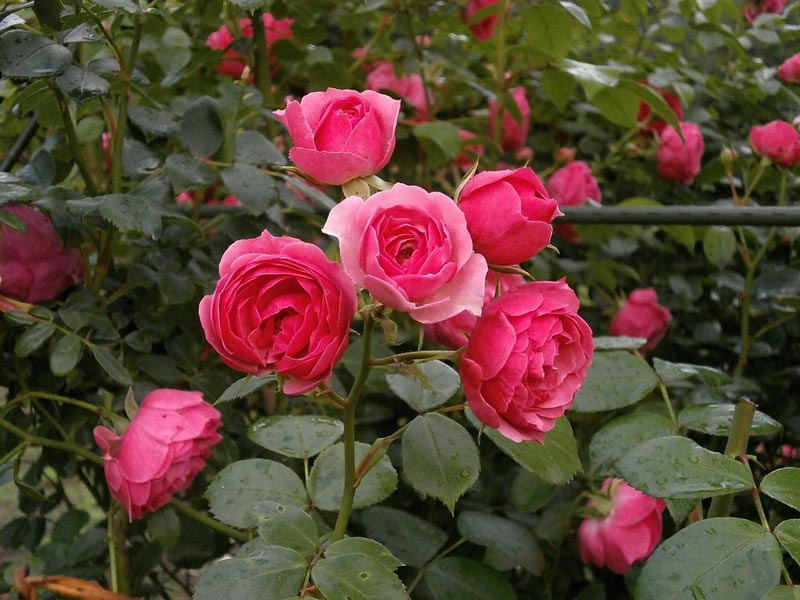
This small plant is indistinguishable in appearance from its garden counterpart, except for its compact size. It belongs to the Rosaceae family.
Mini roses rarely grow taller than 50 cm. Small leaves are located on a sturdy, dense, thorny stem. They can be glossy or matte, but always have serrated edges.
The size of the flower itself depends on the species: standard, climbing, groundcover, or bush. The latter are most often used for indoor cultivation. The flower can come in a wide variety of colors, from pure white to deep burgundy.
Usually, several varieties of indoor roses are grown at the same time in the house, which bloom, replacing each other, all year round.
With proper care, the plant's lifespan is up to 25 years.
The miniature rose is considered to have originated in China, so although some theorize its origins in Southeast Asia or even Europe, it is called the Chinese rose. The rich aroma of tea has given it another name—tea rose.
Popular types and varieties of indoor roses for the home
| View | Description |
| Bengal | Reaching no more than 20 cm in height, it features small, serrated leaves and large buds. They can be any color, but red shades are most common. Double varieties are also available. They bloom year-round. They are easy to care for and require no pruning. The fragrance is subtle and not overpowering, so a potted rose like this can be placed in a bedroom. Popular varieties are Katerina Violet, Hemti Demti, Baby Carnival. |
| Remontant |
It reaches a height of 30 cm. It has small leaves and medium-sized buds, reminiscent of a goblet with their elongated shape. It is easy to care for, and can be encouraged to bloom continuously, but this usually occurs no more than twice a year. It is quite cold-hardy. Popular varieties of this species include Etienne Levet, Frau Karl Druschki, Ulrich Brunner fis. |
| Polyanthus | This dwarf rose also grows no more than 30 cm tall. It was created through years of breeding, crossing the multi-flowered Japanese and Chinese tea roses. It has many subspecies, including those with double or semi-double flowers, raceme-shaped buds, and paniculate inflorescences. It blooms from early summer to mid-winter. Due to its high frost resistance, it is often used for borders and terraces. The most popular varieties are Orange Triumph, Clotilde Super, and Miniature. |
| Hybrid tea |
It is believed that this species originated in India and was obtained by selectively breeding Bengal and garden roses. Different cultivars of tea roses vary in height, from 20 cm to 2 m for the climbing variety. The flowers are small, typically in delicate shades and with a subtle, refined fragrance. The leaves are small and a soft light green. They bloom year-round, but do not tolerate high humidity and low temperatures well. The most popular varieties are Peer Gynt, Gloria D, Apricot Silk, Prima Ballerina. |
| Mix Danika | It is distinguished by its small height (up to 30 cm) and medium-sized buds in a variety of shades. It prefers full sunlight and abundant, but infrequent, watering. The leaves are small and rich green.
The most famous varieties: Cornada, Parade, Mini mix, Favorite, Beau Monde. |
| Miniature |
Developed by crossing two other varieties—a hybrid tea and a polyanthus. The small buds have a delicate fragrance and are gathered in large inflorescences. The leaves are medium-sized and light green. They are easy to care for and usually bloom seasonally. Popular varieties include Amulet, Green Ice, Apricot, and Sunblaze. |
| Ground cover |
Developed from similar varietal garden roses, they offer a variety of shapes, shades, and sizes of flowers and leaves, as well as varying flowering periods and frost resistance. Their distinctive features include creeping stems and low maintenance. Well-known indoor varieties: Alba, Magic, Fairy. |
There are currently around 300 varieties of Chinese rose in the world, and amateur breeders develop new ones every year.
Popular varieties of domestic roses:
| Variety | Flower | Leaves | Peculiarities |
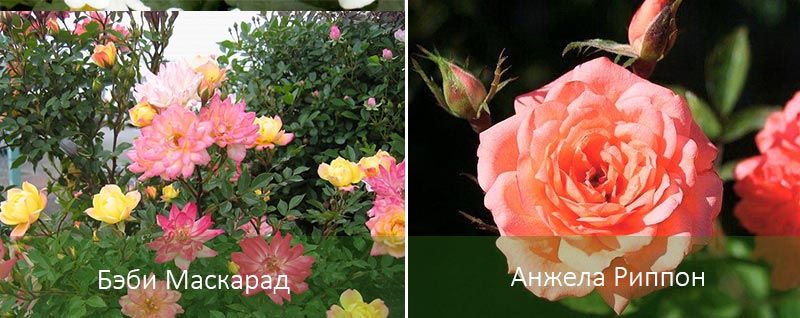
| Baby Masquerade | Up to 3-4 cm in diameter, this chameleon-like flower changes color several times during flowering, typically from lemon to pink and crimson. It has a delicate scent. | Dark green, glossy surface, small in size. | The bush grows up to 30 cm tall and is almost thornless. It's easy to care for and highly resistant to pests. |
| Angela Rippon | The flowers reach 3-4 cm in size and have a sharp but pleasant aroma. Each inflorescence contains up to 5 buds. | Small, dense texture, dark green. | The bush grows up to 40 cm tall and is heavily branched. It requires treatment against powdery mildew and black spot, but can be grown without pruning. Fertilize frequently, in small amounts. |
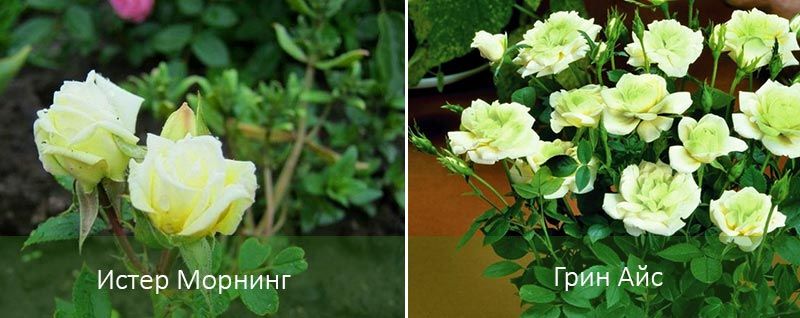
| Easter Morning | Creamy white. Double. Inflorescences contain up to 25 flowers. Large size – up to 4 cm in diameter. | Hard, glossy, dark green. | Resistant to diseases, especially fungal ones. Blooms year-round. |
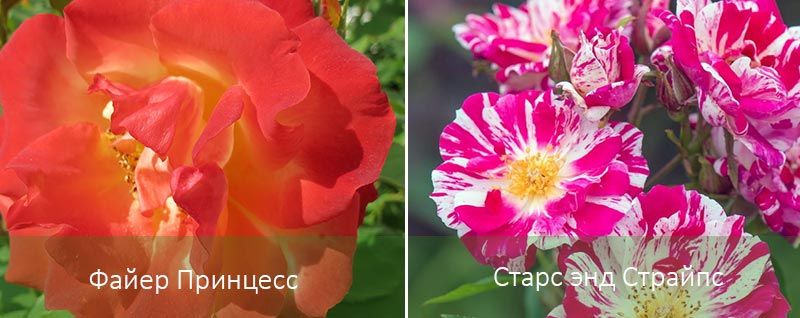
| Fire Princess | There are 3-5 flowers per inflorescence. Double. Color: orange-red. | Small, dark green, shiny, with jagged edges. | The bush grows up to 40 cm tall and has a branched shoot structure. It is susceptible to powdery mildew and black spot. |
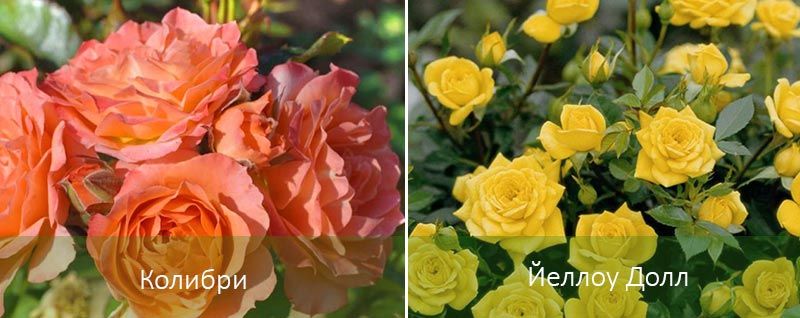
| Hummingbird | Double, up to 5 cm in diameter, with up to 25 petals per bud. Color ranges from orange-yellow tones to deep apricot. It has a delicate tea rose scent. Each inflorescence consists of 3-5 petals. | Quite large, dense texture, glossy. | The maximum height of the bush is 35 cm. It blooms several times a year. |
| Yellow Doll | The color ranges from pale lemon to deep yellow. Double, with up to 50 petals per bud. | Dark, thick and small. | Up to 30 cm in height. |
| Stars and Stripes | The diameter is up to 4 cm, the stripes on the petals alternate between white and crimson. There are up to 5 flowers per inflorescence. | Shiny, medium sized, light green. | The first striped variety, bred in the USA in 1975. Many new varieties have developed from it. The bush grows up to 50 cm tall. Branching is minimal, and thorns are virtually absent. Highly disease-resistant. Blooms year-round. |
| Green Ice | The buds are pink. The open flower is white with a green tint. Double. There are 3-5 flowers per inflorescence. | Medium size, rich green color. | The bushes are large—up to 60 cm tall and 80 cm wide. They are highly disease resistant. Flowering is wavy and year-round. |
Selecting and acclimatizing indoor roses
The first thing you need to do to ensure your indoor rose brings you joy for many years is to choose a healthy plant.
The quality of a mini rose is determined by two characteristics:
- Appearance. Avoid purchasing a rose if the foliage shows signs of dryness, discoloration, or yellowing. The soil should also be assessed; it shouldn't be dry or coated with a white film. If pest damage is visible on the underside of a leaf, avoid purchasing the plant. Also, inquire about how long the rose has been on the market; the longer it's been on the market, the worse its overall condition.
- Flowering. If all the flowers are fully bloomed, the plant will have a hard time repotting and adapting. It's better to choose a bush with buds.
Acclimatization of mini-roses in indoor conditions includes the following steps:
- Repotting. You'll need a pot with holes and drainage. It's best to use rose potting soil. The process itself is done by transshipment.
- Pruning. Before replanting, remove all flower buds to preserve the plant's strength and help it take root more easily.
- Quarantine. The mini rose pot should be placed in a location well protected from direct sunlight. Good ventilation and isolation from other houseplants are essential.
- Spraying. This is done with a weak insecticide solution to prevent diseases and pests. You can also use any growth stimulant, such as Epin.
Caring for a home rose
An indoor rose is a plant that requires careful and high-quality care. This is the only way to ensure year-round or seasonal blooms.
Home care must be carried out taking into account the following requirements:
| Indicator | Summer | Winter |
| Location | It is better to take the flower pot out onto the balcony or plant the rose in open ground in the garden. | The best placement is near east- or southeast-facing windows. Shade is required. |
| Lighting | It doesn't like shaded areas, but doesn't tolerate direct sunlight. Turn it periodically. | |
| Temperature conditions | +16…+25 °C | +15…+17 °C |
| Humidity | Slightly above normal, not below 40%. To maintain high humidity, regularly mist the plant and the area around it. You can place the flower pot in a special tray filled with damp expanded clay. | Below 40%. |
| Regularity of watering | Water liberally, at the roots, regularly, as the soil dries out, up to twice a day. Water should be cool. Pour out any excess water from the tray. | Moderate and rare. |
| Fertilizers | Once a week, alternating mineral and organic. | Fertilization is rare or absent. |
| Priming | Use a special rose compost or a mixture of humus, turf, and sand. The soil should be neutral in pH. | |
| Frequency of transfers | Depends on soil depletion and root system development. Transplantation is recommended, as miniature roses have fragile roots. | |
How to grow an indoor rose from a bouquet
You can grow a house rose from a flower in a bouquet. But to do so, you need to follow a few rules.
Variety
Only domestic miniature roses are suitable for this purpose, with preference given to those with red or pink flowers—they take root most easily. The stems should be thick and strong, with vibrant leaves and buds.
Period
Cuttings are acceptable from late spring to mid-autumn. Change the water in the vase containing the bouquet daily.
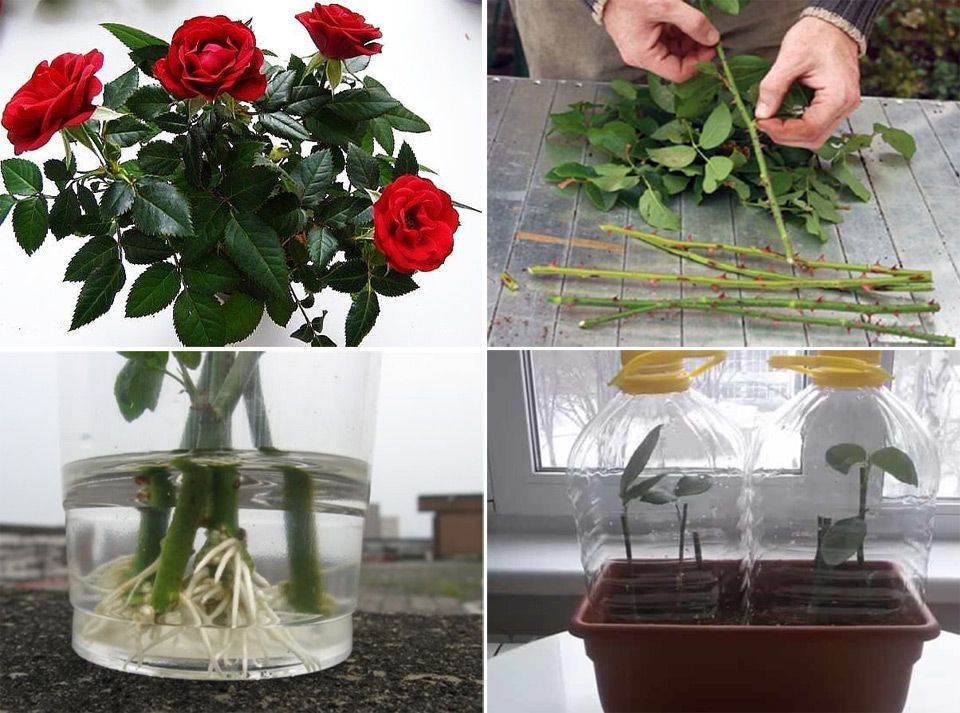
At night, the stems are lowered completely into clean liquid, buds down.
Cuttings
The pruning shears are disinfected beforehand. The shoot is cut into 10-15 cm long cuttings. A minimum of three buds are allowed. Make a diagonal cut 1.5 cm from the bottom bud, and a straight cut at the same distance from the top bud.
The leaves should also be preserved; they are also usually cut off by one third.
In extreme cases, it is permissible to use a cutting half as short with one bud.
Rooting in water
A biological growth stimulator, such as Epin or Kornevin, is added to warm water.
You can use honey (1 teaspoon per glass of water) or aloe vera juice (up to 20 drops) instead. Place one-third of the planting material in the solution and soak for up to three weeks. Change the water every five days.
The first small roots usually appear by the end of the second week. During the third, they grow a little.
Rooting in the ground
If the roots have grown by 2-3 cm, you can plant the young shoot in the ground.
To do this, take small cups (up to 300 ml) filled with a mixture containing rose potting soil. Add a 1.5 cm layer of sand or small shells to the bottom for drainage.
Cover the container with the planted cuttings with something to create a greenhouse effect. A glass jar or a cut-off plastic bottle will do.
At +25 °C, high air humidity and optimal soil, the plant quickly takes root.
Rooting in potatoes
This method gives 90% result.
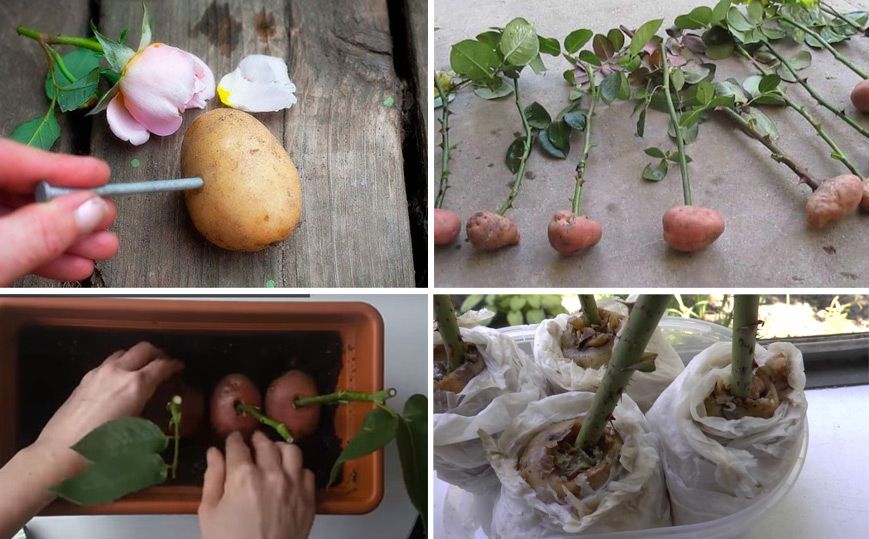
- Take large potatoes, wash them, and remove the eyes.
- Place in a solution of potassium permanganate for several minutes, remove and dry.
- Using a sharp, disinfected knife, make a depression in the tuber at an angle of 45 degrees.
- Take cuttings soaked in Kornevin and insert them into the potato.
- The tubers are placed in a container with soil, deepening them by 15 cm, sprinkled with soil, leaving the upper buds above the soil.
- Cover with transparent film or a jar.
- Periodically water with a nutrient mixture (1 teaspoon of sugar per 1 liter of water).
- The sprouts are released from the greenhouse after 2 weeks.
Rooting using the Burrito method
This is a very unusual method. Rose cuttings are soaked in water, then wrapped in wet paper and placed in a bag. The packaging is periodically opened, aired, inspected, and any rotten cuttings removed, and the newspaper is changed. After roots appear, the cuttings are trimmed to no more than four buds and planted in soil.
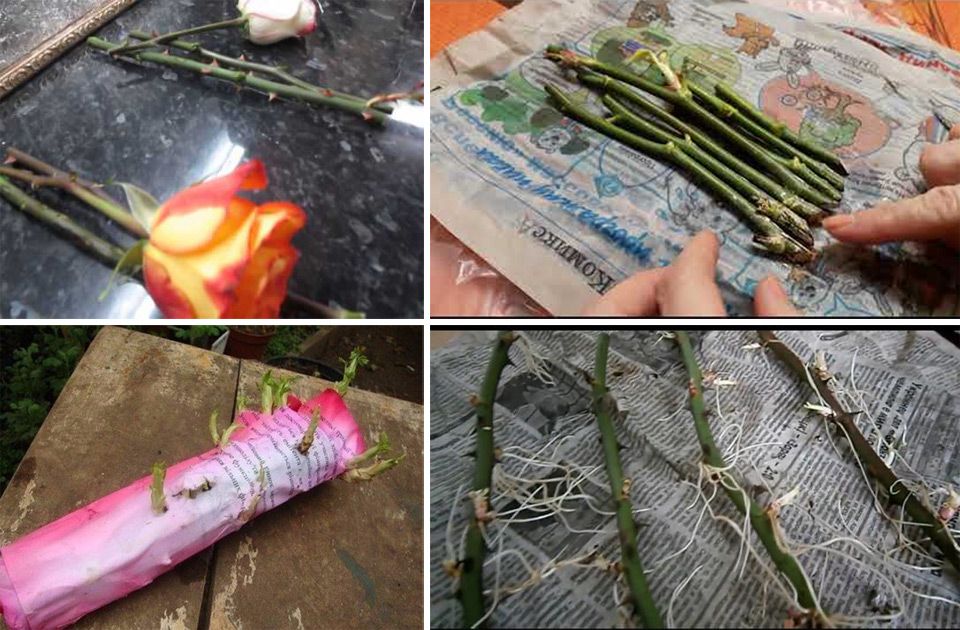
Young plants need to develop a root system, so emerging buds should be removed during the first year. Propagation by cuttings in the fall allows you to grow a full-blown flowering indoor rose bush by the following season.
Mistakes in caring for indoor roses
Choosing a healthy flower from a store or growing it from a cutting is not enough; it is necessary to protect the plant from diseases and pests and avoid care mistakes.
| Symptom | Cause |
| Lack of flowering. |
|
| Yellowing or loss of leaf density. |
|
| Dying of leaves or their parts. | Incorrect treatment with insecticides - chemical burn. |
| Drying and falling off of leaves. |
|
| Active growth of shoots without flowering. | Excessive use of mineral and organic fertilizers. |
| Falling off of buds before flowering. |
|
Diseases and pests of indoor roses, control measures
It's important to detect plant diseases early, so mini roses should be inspected regularly. Diseases that can be easily identified are described in the table.
| Disease | Main features |
Therapy |
| Powdery mildew | Powdery coating on leaves and stems, loss of leaf turgor, stem wilting. | Remove diseased shoots and spray with a special product, such as Topaz, according to the instructions. |
| False dew | Light bloom on the underside of the leaf. Purple spots on the top. | Affected shoots are removed with pruning shears. The bush is sprayed with alternating different preparations. |
| Spotting | Spots of different colors appear on the outer side of the leaf. | Remove affected leaves and shoots. Reduce excessive humidity. Ventilate the room frequently. Spray with special copper-containing products. |
| Black spot | There are black spots on the leaf. Drying up and falling off. | Affected areas are cut off along with the shoots. The plant is repotted in a new pot and soil. Spray with special preparations. |
| Rust | Rusty or brown growths appear on the underside of the leaf, and similar spots appear on the top. | Remove all affected leaves. Spray with a treatment product, such as Topaz. |
| Mold | It can appear on the ground, trunks, and leaves. The root system rots. | Reduce the frequency and volume of watering. Ventilate the room. Spray with the necessary products. |
| Bacterial cancer | There are yellow spots on the leaves. They dry up and fall off. | Trim all affected shoots with pruning shears down to healthy tissue. Replant in a new pot and soil. Spray with plant protection products. |
Parasitic insects can be just as damaging to indoor roses as diseases. The main types and methods of control are listed in the table.
| Pest type | Symptoms of damage |
Elimination |
| Rose aphid | The shoots curl up, and a sticky secretion appears on them. The affected areas "discolor." Growth stops, and the leaves fall off. |
The affected shoots are cut off with pruning shears. The plant is washed at least three times with soapy water and sprayed with a special product such as Actellic. |
| Spider mite | Light specks appear on the leaves, which then develop into whitish spots. Eventually, they curl up and fall off. The plant becomes covered in a fine web. | Wash the bush with soapy water and treat it. Spray with Actellic, Fitoverm, and Vermitek, alternating between the two. |
| Thrips | Silvery streaks appear on the leaves, which then fade. Pollen falls from the flowers, and damaged areas—holes—can be found in the petals. |
The bush is thoroughly washed using tar or green soap. Affected leaves are removed. Root watering and spraying are carried out with special agents, for example, Aktara and Confidor. |
| Rose sawfly | The leaves dry out, curl, and become deformed, with chewed-out pieces appearing on them. The rose stops growing. | The plant is thoroughly washed with soap and sprayed with special preparations, for example, Fufanol. |
| Scale insect | Brown plaques appear on the leaves, which easily fall off. The plant stops growing and loses leaves. | Wash with soap solution and spray with insecticides. |
| Rose leafhopper | Small whitish spots appear on the leaves, which then develop a marbled pattern and yellowing. They often fall off. In the spring, white larvae of the parasite can be found on the underside of the leaves. | The bush is thoroughly washed and treated with special agents. |
| Spittlebug | The rose wilts, liquid appears in the leaf, which comes out in the form of foamy secretions. | Rinse the bush thoroughly in the shower, preferably with a soapy solution. Then spray with products such as Actellic or Aktara. |
Diseased and pest-infested plants should not be kept near healthy ones. A separate location should be found that will serve as an isolation area for the entire treatment period.