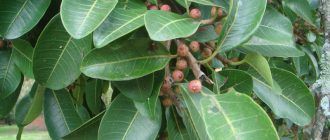
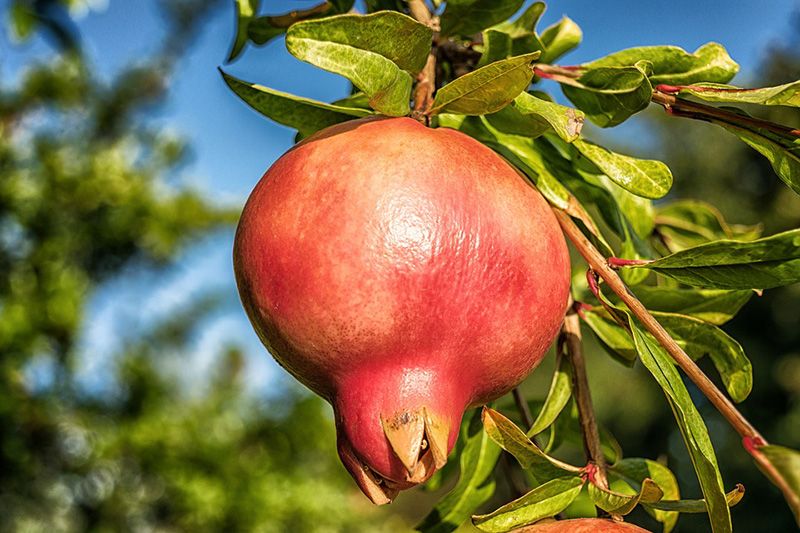
The pomegranate belongs to the genus Lythraceae. It is a low tree or shrub native to Asia Minor and Iran. There are two species of the plant: the common pomegranate and the Socotran pomegranate. Only the common pomegranate is grown indoors. With proper care, the tree begins to bloom and produces tasty, grainy fruits.
Content
Description
The shrub's shoots are covered with gray-brown wood. The leaves are opposite and whorled. The blades are wavy, with smooth edges. The outer leaf surface is glossy, while the inner surface is matte. It blooms with funnel-shaped scarlet buds on shortened peduncles. Fruit forms only in the place of the pitcher-like flowers. Pomegranates bloom year-round.
The common pomegranate is suitable for growing indoors. In the wild, it grows to a height of 5-10 meters, with fruit diameters reaching 8-18 cm. Breeders have developed a huge variety of forms and cultivars of this species. Dwarf pomegranates are commonly grown indoors. They grow no taller than one meter, have small leaves, and produce fruit no larger than 3 cm.
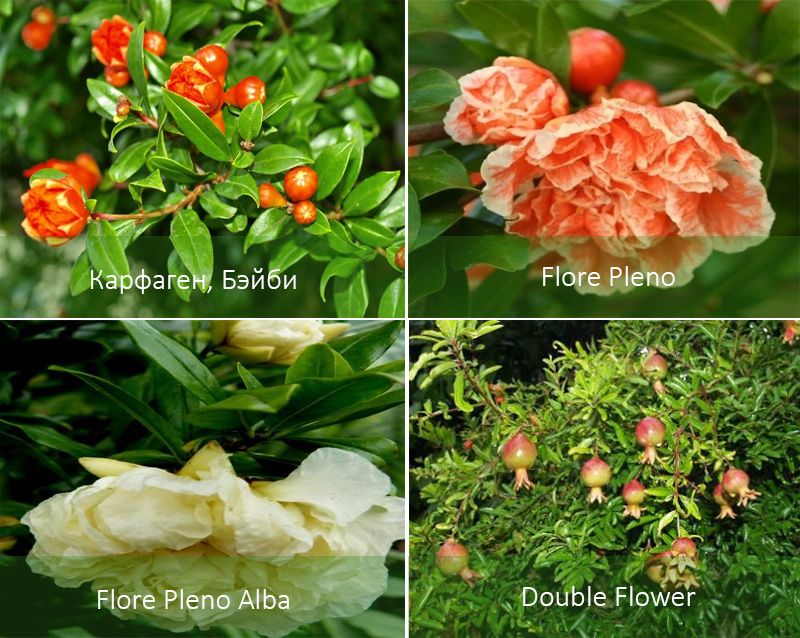
Popular varieties of pomegranate for the home
| Name | Description |
| Carthage, Baby | No more than a meter in height. They resemble the common pomegranate, but are smaller. They are grown for ornamental purposes; the fruit is not eaten. |
| Flore Pleno | It grows in Persia and produces no fruit. It grows up to three to four meters tall. The bright scarlet flowers resemble carnations. |
| Flore Pleno Alba | Similar to Flore Pleno, but produces pure white flowers. |
| Double Flower | A single inflorescence contains petals of various shades: reddish, pinkish, snow-white. They can be solid-colored or striped or speckled. |
The Socotra pomegranate grows wild and is not kept as a home garden plant. The shrub is native to the island of Socotra. The plant has abundant branches, small pink flowers, small fruits, and rounded leaves.
Home care
Pomegranate is easy to care for, and growing it at home rarely presents any difficulties.
Lighting
For vigorous growth and year-round flowering, the shrub requires plenty of light. During the warmer months, it's recommended to keep it on a balcony or outdoors. Mature specimens thrive in full sun. Young plants should be kept outdoors for two to three hours at a time initially, then moved to partial shade during the afternoon to prevent UV rays from burning the foliage.
Pots should not be placed on north-facing windowsills. During periods of intense sun exposure, the bushes should be protected from ultraviolet rays.
If lighting is insufficient, it is recommended to place the plant under phytolamps. In the dark, it will stop flowering and lose its leaves. In winter, daylight hours are extended to twelve hours.
Ambient air temperature
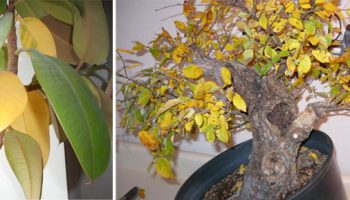
The optimal temperature is 25 to 30°C. If these temperatures rise, the tree should be moved to a cooler location. The plant's room should be regularly ventilated, and the shrub should be misted with cool, soft water. In stifling conditions, the pomegranate loses its foliage and buds, and its growth slows.
The shrub doesn't tolerate low temperatures. If the plant pot is outdoors, it should be brought indoors at 15°C. At sub-zero temperatures, the pomegranate dies.
Watering
The shrub requires moderate watering from the last month of spring until September. This is done when the surface layer of soil dries out.
If a 5-6-year-old tree is dormant, water it once every four weeks. Young trees should be watered once every seven days. Pomegranates emerge from dormancy in the last month of winter and require ample watering until flowering begins.
In nature, the shrub thrives in drought and heat; excess moisture will cause bud drop and cracked fruit. However, too little moisture will also have undesirable consequences, causing petals to fall off.
Air humidity
In dry air, mist the plant and the surrounding area. Place a bowl of cold water nearby, wipe the leaves daily with a damp cloth, and wet-clean the room.
Excessive humidity is not recommended. Daily ventilation of the room will help reduce it. Drafts should be avoided.
Soil
The pomegranate tree requires loose, well-drained soil with moderate acidity. You can use a substrate suitable for begonias and rose bushes. A drainage layer of expanded clay or broken brick should be placed at the bottom of the pot.
Top dressing
From February to June, the pomegranate prepares for its growing season. During this period, it requires nitrogen and phosphorus fertilizers twice a month. In the fall, the tree is switched to a potassium-rich mixture.
Fertilizers are applied to moist soil. The best time is the day after watering. To prevent root burn, it's best to apply fertilizer in the morning or evening.
When growing pomegranates for consumption, fertilizing the bush should be done with caution. It's best to replace mineral fertilizers (nitrogen, phosphorus, potassium) with organic fertilizers (such as manure or ash) to prevent nitrate accumulation in the fruit. Furthermore, excessive nitrogen fertilization can result in a lack of flowering. If you purchase fertilizers from a store, it's recommended to choose fruit and berry mixtures.
Trimming
To ensure a beautiful indoor pomegranate tree blooms profusely and produces fruit, it requires pruning. The shrub grows rapidly. Without pruning, it can grow several times larger in a year. Moreover, the shoots create a chaotic crown, causing the plant to lose its appearance.
The first pruning is done at the beginning of the growing season. If the plant was dormant in a dark place during the winter, it needs to be pruned after awakening. To improve branching, the bush is pruned above a visible bud, leaving only five internodes.
It's important to remember that flowers only appear on strong, one-year-old shoots. Therefore, when pruning, be careful not to damage them.
Pomegranate can be grown as a bush with three to five main branches. If the basal shoots are pruned, the result is a tree with four skeletal branches and a low trunk.
During the summer growing season, pruning of unnecessary branches is also done; this will not cause any harm. After flowering, if the branches do not bear fruit, they are cut off. Thin, weak shoots are also removed.
Transfer
It's not recommended to repot young bushes for two to three years. Once they've strengthened and grown, and the root system has completely encased the root ball, repotting is done by transferring them to a pot 2-3 centimeters wider. This is best done in March.
- Drainage is laid out and a small amount of a substrate made of turf, humus, leaf mold, and sand in equal quantities. The bush with a lump of soil is placed in the center of the new pot.
- Fill the remaining space with soil, ensuring there are no air pockets in the pot.
Every spring, transplant the pomegranate into a larger pot. When the bush reaches six years of age, it can be repotted (if necessary) into a pot of the same diameter. For a mature pomegranate, only the top layer of soil can be changed.
A suitable pot
The shrub's roots spread along the surface, so choose a wide but shallow pot. When grown indoors, the plant prefers tight containers. Pomegranates bloom more profusely in such a container. A 5-liter pot is sufficient for a mature shrub. It should have holes in the bottom for drainage.
Propagation of pomegranate tree
Pomegranate is propagated:
- seeds;
- with bones;
- cuttings;
- vaccination.
Propagation by seeds
When propagating by seed, keep in mind that only pomegranate varieties are suitable for planting. These varieties do not retain the characteristics of the parent plant. Seeds are collected from a flowering tree or purchased in stores.
Planting is done as follows:
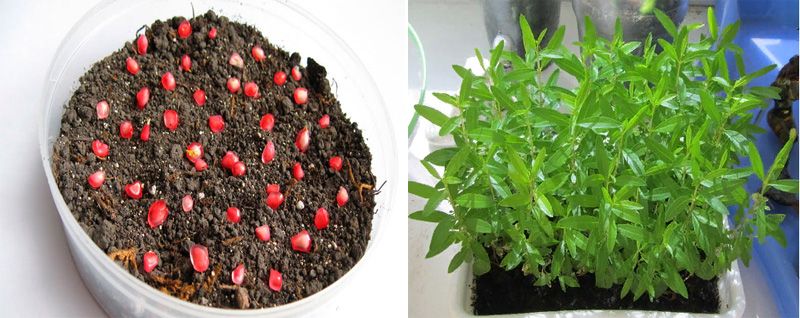
- The seeds are soaked for 24 hours in Kornevin.
- The planting material is dried and sown in a container with loose, breathable soil.
- The seedlings are covered with plastic or glass, and the container is placed in a bright spot in the greenhouse. The seeds are aired daily.
- When the soil dries out, spray it with warm, settled water. The first shoots appear after two to three weeks.
- The shoots are transplanted into separate pots when three leaves appear on them.
Bushes grown from seeds bloom and produce fruit only after five to eight years.
Propagation by seeds
Seeds for propagation are taken from large, ripe fruits. Selecting them is easy: they are cream-colored and firm. Green and soft seeds are not suitable for propagation. Planting is recommended in April:
- The seeds are de-powdered, rinsed in cool water (optionally with potassium permanganate), and thoroughly dried. This treatment prevents rotting, and the planting material remains viable for up to six months.
- Before planting, soak the seeds for half a day in a solution containing two to three drops of Zircon or Epin. They should not be completely submerged in water; they require oxygen.
- Plant in a substrate at a depth of 0.5-1 cm in a pot with drainage.
- Place the container in a warm, well-lit location. As the surface layer of the soil dries, moisten it with warm, soft water.
- When two or three leaves appear on the seedlings, they are moved into permanent pots with a circumference of up to six centimeters.
- Shoots of ten centimeters, each with three pairs of leaves, are pinched to improve branching.
With this growing method, flowering occurs only after 6-9 years. Furthermore, the bush becomes large and may not fit into an apartment.
Propagation by cuttings
This method is most suitable for indoor growing due to its high germination rate and the preservation of the varietal characteristics of the mother plant. When planting in summer, use mature, semi-woody shoots 10-15 cm long, with four to five buds. In winter, the same planting material is used, but the germination rate decreases, and rooting takes longer. Planting is done as follows:
- The cuttings are treated with Kornevin.
- The two lower buds are removed from the planting material.
- The cuttings are placed in a loose, nutrient-rich substrate at an angle, 3 cm deep. Cover with plastic wrap or glass. Ventilate daily, mist, and water as needed.
- Rooting occurs within two to three months. Keep in mind that some shoots will die. Once fully rooted, the bushes can be replanted.
Flowering will begin as early as next year. The pomegranate will bear fruit in two seasons.
Graft
A varietal scion is grafted onto the rootstock. It is taken from a healthy, fruit-bearing bush. Grafting can be done in a variety of ways. If the scion takes root, flowering will begin in three to four years.
Top.tomathouse.com explains: Pomegranate hibernation
Winter dormancy is necessary if warm conditions and adequate lighting are not possible during the cold season. The dormant period lasts from late autumn to February. The plant is moved to a cool room, watered sparingly, and not fertilized.
At room temperature and good lighting, dormancy is not necessary. You can extend daylight hours with a grow light. This will ensure flowering and fruiting even in winter.
Diseases and pests
Indoor pomegranate is susceptible to diseases:
| Disease/pest | Symptoms/Causes | Method of getting rid of |
| Powdery mildew | A white coating with dark brown plaques appears on the greenery. The pathological condition is caused by fungi. They begin to synthesize due to lack of ventilation, sudden temperature changes, and inappropriate humidity. |
A solution of 5 g of soda, 1 liter of water, and 5-10 g of soap will help. |
| Branch cancer | The wood on the branches cracks, and spongy swellings are observed at the edges of the damage. The cause of the disease lies in mechanical damage, frostbite. |
Affected branches are cut off, the cut site is disinfected and treated with garden pitch. |
| Leaf spot | Spots of various colors form on the greenery. This occurs when there is excess moisture in the soil. | The bush is replanted in a new container with fresh soil. If root rot is observed, the affected areas are cut off. |
| Whitefly and aphids | Insects eat the leaves and the bush becomes weak. | If pests are few in number, they are removed manually. If the infestation is severe, the plant is treated with chemicals such as Fitoverm, Iskra, Karbofos, and others. |