A lemon tree on a windowsill is a true home decoration. In addition to its beautiful, glossy, dark green foliage and spreading crown, it's a delight to the eye, and it also boasts excellent fruit production indoors.
Freshly picked indoor lemons are much tastier and healthier than store-bought ones, so this plant offers double benefits – both aesthetic and practical.
Content
Lemon varieties growing at home
However, not all lemon varieties are suitable for home growing. To ensure the tree thrives, blooms, and bears fruit, choose one of the following specially bred varieties:
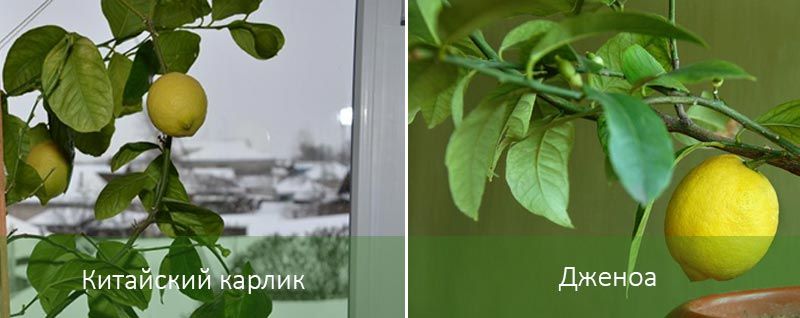
- Meyer, Meyer, or Chinese Dwarf is the most common and easy-to-grow variety. It is distinguished by its small stature (up to 1 m), dense, attractive foliage, and small, yet sweet and juicy, round fruits.
- Novogruzinsky and Kursky are tall (up to 2 m) varieties. They require more careful attention and care. They bear fruit more frequently. The fruits are large and aromatic.
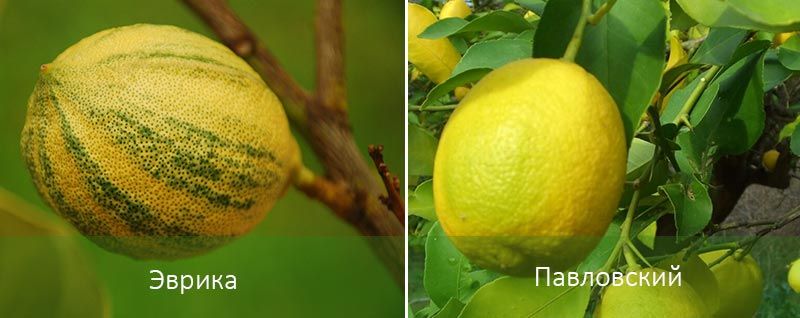
- Pavlovsky is an unpretentious bush-like plant of medium height (about 1.5 m) with several trunks.
- Maikopsky is a medium-sized (1.5 m) variety with thin-skinned, elongated fruits.
- Eureka is a fast-growing variety that produces thick-skinned fruit with a very tart flavor.
- Genoa is a dwarf, high-yielding variety. It is distinguished by its tender flesh and aromatic, non-bitter zest.
Optimal conditions for good growth of indoor lemon
The ideal location for sun-loving citrus trees is on southwest- and southeast-facing windowsills. Elsewhere, it's advisable to compensate for the lack of sunlight with phytolamps. Lemons also grow well on glassed-in balconies and loggias, provided the temperature is controlled and there are no drafts.
Caring for lemon at home
Overall, lemon is not a particularly demanding plant. It can be grown in a fairly wide range of temperatures. However, to ensure flowering and fruiting, it requires somewhat stricter care.
Lighting
Like many plants, lemon prefers bright but filtered sunlight. If the pot is on a windowsill, it should be shaded or moved indoors during summer to avoid sunburn.
In winter, you can make up for the lack of light with ultraviolet lamps.
The plant dislikes changes in light direction, especially during flowering, and may react by dropping flowers and buds. Therefore, it is not recommended to frequently rotate the pot or move it to a different location.
Temperature conditions
Indoor lemon trees aren't particularly demanding when it comes to room temperature—the main thing is that it stays within the range of 15 to 27°C. In winter, the plant can be kept in a cooler room, but not below 5°C. Under these conditions, the tree enters a state of suspended animation, keeping its leaves.
The main requirement is avoiding sudden temperature fluctuations. Lemons don't tolerate them and may lose all their leaves.
Not recommended:
- thoroughly ventilate the room by opening the window, exposing the plant to a draft;
- move the pot from a warm room to a cool one or vice versa;
- with the first autumn cold, immediately bring it inside from the street;
- If you buy a plant from a store in winter, you'll have to carry it in the cold.
Excessive heat is also harmful to the tree in the spring, when it's preparing to bloom. During this period, the optimal air temperature is 14–18°C; otherwise, flowering may not occur, or the buds that have already formed risk falling off.
Air humidity
Citrus trees thrive on moisture. For healthy growth, they require a humidity level of at least 60%. A room humidifier, a decorative fountain, or simply a layer of water-soaked expanded clay on the pot tray can help provide this. Care must be taken to ensure that water does not stagnate and cause root rot.
Watering
Citrus trees require abundant and timely watering during the active growth period—spring and summer. In fall and winter, reduce the frequency, monitoring the soil condition.
If the plant is dormant during the winter, water it only occasionally with small amounts of water to prevent the soil from drying out completely. For this purpose, use settled or filtered water slightly warmer than room temperature. Cold water can cause root rot. Meltwater or rainwater will also benefit the plant.
Top dressing
Fertilizing begins in March, after the plant emerges from dormancy and enters its active growth phase. To do this, alternate organic and mineral fertilizers, adding them to the water approximately every two weeks. Fertilizing ceases in November; the plant doesn't need it during the winter.
Features of transplantation
During the first few years of its life, young lemon trees are repotted annually. Mature plants only need to be repotted once every three to four years, provided the topsoil is replaced annually.
The optimal time is early spring, before flowering, or autumn.
When choosing a pot, remember that it shouldn't be too large—if there's too much space, the plant will focus its energy on root growth rather than flowering. Furthermore, the risk of rot is higher in larger containers.
Repotting is done using the transshipment method: carefully remove the roots along with the root ball without damaging it, and place them in a new pot with a drainage layer (such as expanded clay) at the bottom. The trunk is not buried—the soil level should remain the same. The remaining space is filled with fresh soil.
soil mixture
Lemons require light, neutral, or slightly acidic soil. A citrus potting mix meets these characteristics.
If desired, you can mix it yourself: take two parts of turf soil, one part each of humus and leaf mold, and one part each of sand and peat.
Crown formation
To ensure the tree's branches grow evenly in all directions, it's recommended to rotate the pot by about 30 degrees every few days. Avoid this if buds are appearing on the plant, as changing the light direction can cause them to fall off.
Crown formation begins when the lemon tree is one year old. To do this, the tree's top is cut off with sharp pruning shears, leaving a 20 cm tall trunk. Lateral shoots then appear. These are also pruned after another year to encourage more branching.
Pruning not only improves the plant's appearance but also promotes good fruiting. However, gardeners recommend not allowing the tree to bloom until the crown has fully formed.
In mature fruit-bearing plants, it is advisable to remove the shoot from which the fruit was picked – it will no longer branch.
Flowering and pollination
The flowering process takes a lot of energy from a plant. To help it successfully begin bearing fruit, it needs careful care during this time.
One of the conditions is to reduce the number of flowers on the tree. The younger the tree, the fewer fruits it can produce. Therefore, during the first bloom, it should not be allowed to produce more than four ovaries; the rest should be removed. With each subsequent bloom, the number of fruits can be increased by two.
Pollination is a process necessary for fruit set. In nature, it occurs with the help of insects. At home, it can be easily accomplished with a simple brush, carefully transferring pollen from flower to flower.
Rules for growing lemon fruits
The development and ripening of lemon tree fruit takes 7 to 9 months. During this period, several rules must be observed:
- avoid temperature changes;
- do not turn or move the flower pot unnecessarily;
- do not cut stems and leaves.
The tree's foliage plays a crucial role in the ripening of lemons. It provides them with carbon dioxide and nutrients. It's believed that at this time, there should be at least ten leaves per lemon on the plant.
Ripe lemons are picked one and a half to two months after they've formed. If they're not harvested on time, the skin will become thick and rough, and the flesh will become dry.

Propagation of indoor lemon
Indoor lemon trees are propagated by seeds and cuttings. Both methods are quite successful, but sowing is more labor-intensive.
Regardless of the variety you're growing, you can use the seeds of regular store-bought lemons. Choose the largest ones. Then follow these instructions:
- Immediately after removal, soak the seeds for several hours in a growth stimulator solution.
- Prepare small containers with holes in the bottom and a drainage layer.
- Fill the containers with soil – the same as for adult plants.
- Plant one seed in each pot, burying them 2 cm deep.
- Cover with film or cut plastic bottles and place in a warm place (not below +18 °C).
- Ventilate and spray occasionally. Water only when the soil shows signs of drying out.
Keep in mind that not all seedlings will sprout. Germination can take two to four weeks after planting. When the sprouts have four leaves, they can be repotted.
When propagated from seed, plants lose all varietal characteristics and will not bear fruit. To develop them into full-fledged fruit trees, they must be grafted from a fruiting lemon tree.
An easier way is to propagate a mature tree from cuttings. These can be obtained from gardeners growing lemon trees at home, or ordered by mail from an online store.
A suitable cutting is 8-12 cm long and has at least three buds. The cut should be at an angle of 45 degrees. The bottom leaf should be removed, and the remaining leaves should be trimmed in half.
Planting is carried out step by step:
- Prepare a pot of the required size with drainage holes, but put a layer of expanded clay on the bottom and fill it with soil.
- The cutting cut is treated with a growth stimulator.
- Place the seedling vertically in soil of a standard composition for citrus fruits, deepening the stem by 1-1.5 cm.
- Place in a warm place and mist regularly. Water only when the soil dries out.
Rooting of cuttings is usually completed within a month or a month and a half.
Pests and diseases of indoor lemon
The downside of citrus trees is their susceptibility to a large number of diseases, some of which are useless to combat.
| Disease | Signs | Treatment |
| Sheet mosaic | Leaf curling, light spots, stunted growth. | Isolate from other plants, provide proper care and feeding. If the infestation is severe, destroy the plant. |
| Citrus cancer | Deformation and dark spots on leaves and fruits, growth retardation. | Destroy the plant. The disease is incurable. |
| Tristeza | Unexplained leaf fall, brown spots on the trunk and branches. | |
| Melseco | Drying, starting from the tips of the leaves and spreading to the branches. Leaf fall. Redness on the cut branches. | |
| Gomoz | Oblong dark spots on the trunk and branches, often covered with cracks from which a yellow resinous substance is released. | Remove affected areas and treat with a fungicide. Repeat treatment until the spots disappear completely. |
| Anthracnose | Leaves turn pale and fall off. Reddish spots on fruits. | Remove all affected parts, treat the plant with Fitosporin or Bordeaux mixture. |
| Scab | Yellow spots on leaves, which later swell and turn pinkish. Orange spots on fruits. | |
| Root rot | Leaf fall, rotten smell, darkening and softening of roots. | Perform an unscheduled repotting. Clear the root system of soil, trim away damaged roots, and treat with crushed activated charcoal. Replace the soil completely. |
Sometimes the reason for a plant's poor health is a pest attack.
| Pest | Signs | Treatment |
| Scale insect | Brown bumps on leaves and stems, sticky coating, wilting. | Treat the plant with a soapy solution and rinse in the shower. Repeat after a few days. |
| Aphid | Deformation of leaves, sticky coating, visible accumulations of insects. | Cut off affected leaves. If stems are infected, treat them with garlic infusion. In severe cases, treat with insecticides. |
| Root aphid | Stunted growth, wilting and yellowing of foliage. | Remove the roots from the pot, treat with garlic infusion or insecticide, and replant in new soil. |
| Spider mite | Thin sticky web on young shoots. | Spray the plant with a boric acid solution every five days. |
To prevent lemon trees from becoming infested with pests and diseases, you need to maintain proper temperature conditions, maintain the required humidity level, regularly fertilize the soil, and avoid over- or under-watering.