The large-flowered pelargonium is a selectively bred species whose ancestors were brought to Europe in the 18th century from the tropics of South Africa. Through constant crossbreeding, scientists succeeded in developing the Regal Geranium. It differs from other species by its large flowers, which form a cap over the foliage, and its delicate fragrance. It requires careful care.
Content
- 1 Description of the royal geranium
- 2 Varieties and types of royal geranium
- 3 Unusual varieties of regal geranium
- 4 Basic rules for home care
- 5 Features of summer care at home
- 6 Features of winter care at home
- 7 Landing of the Royal Beauty
- 8 Reproduction
- 9 Top.tomathouse.com warns of potential problems when growing regal geraniums.
Description of the royal geranium
The royal pelargonium is considered one of the most beautiful hybrids of this flower. Its native land is the Cape region of southwest Africa. The bush grows no more than 50 cm tall, with flowers borne at foliage level.
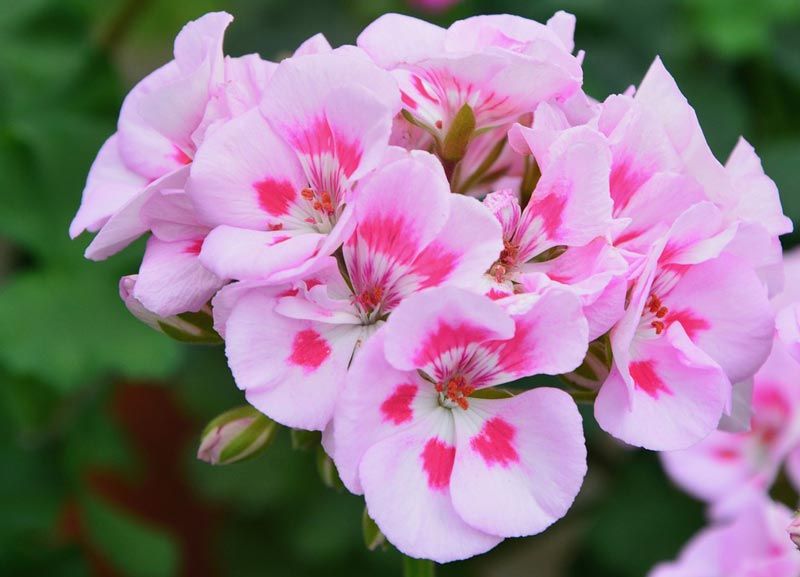
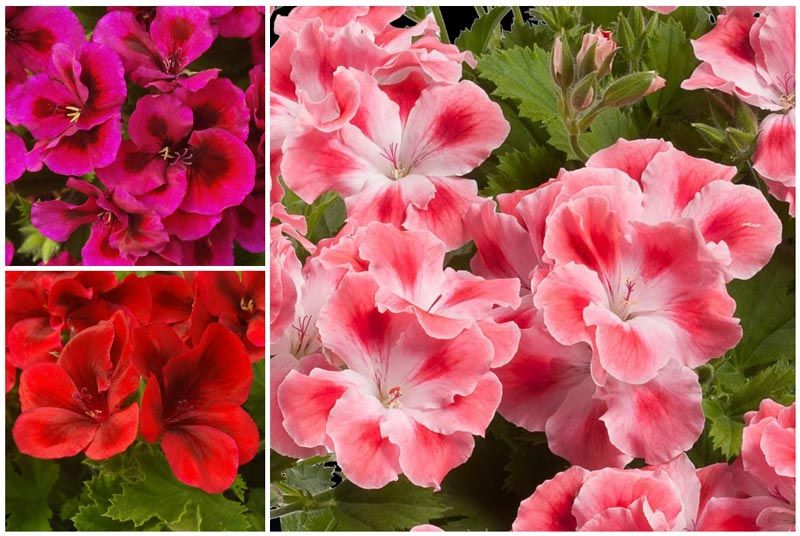
The inflorescences can reach 15 cm in diameter. Color ranges from white to dark, almost black. Scarlet shades are predominant. The petals are arranged in two, sometimes three, rows. The top petal is a vibrant, saturated shade, often with a spotted pattern or veins. The petals resemble pansies in appearance.
The leaves are dense, velvety, with wavy edges, sometimes finely toothed. They are arranged alternately on the petioles. Their color is green. The stem is erect and dormant. The root system consists of adventitious roots.
Varieties and types of royal geranium
German scientists have developed over a thousand varieties. Two types are most popular among gardeners: Candy Flowers and Angels. Both have lush blooms and are easy to care for.
| View | Description | Application | Varieties, inflorescences |
| Candy Flowers | A selective hybrid of pelargonium with the Angel variety. | Planted in open ground, similar to the parent group (Angels) in terms of growing and maintenance conditions, does not require wintering, blooms even in extreme heat. | It is distinguished by its large flowers.
|
| Angels | They have no wintering period, bloom profusely but briefly (one month, August), and some varieties have richly fragrant foliage, thanks to the inclusion of crispa pelargonium in their hybridization. The trunk's shape allows for a trailing appearance. | Used in breeding the Candy Flowers variety. | Small flowers on a low stem, similar to pansies.
|
Unusual varieties of regal geranium
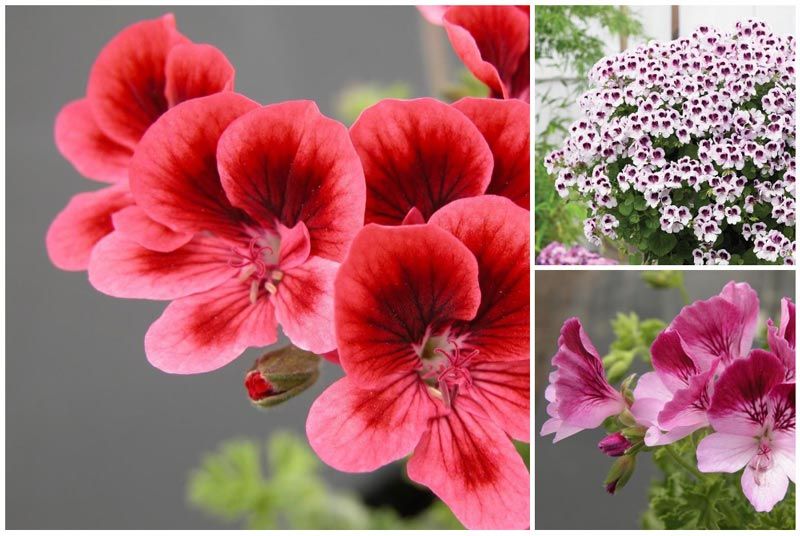
Among the hybrids, scientists managed to obtain varieties with an unusual structure and bright, colorful flowers.
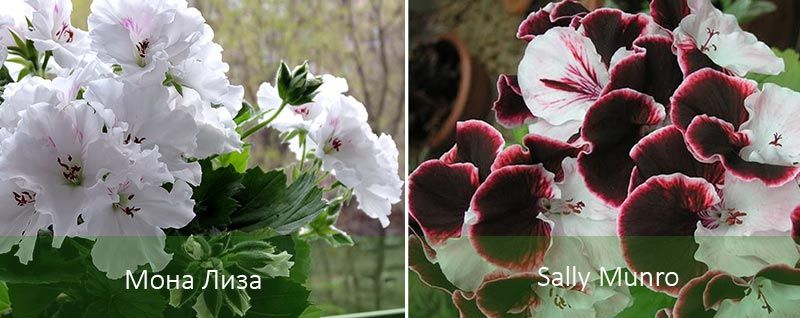
| Variety | Flowers | Peculiarities |
| Sally Munro | The top is a rich red, the bottom is pale pink. | They bloom several times per season. |
| Mona Lisa | White. | It stands out for its lush flowering among varieties with snow-colored flowers. |
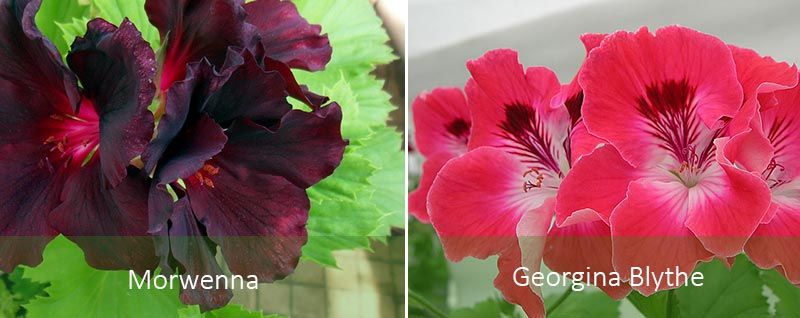
| Georgina Blythe | Orange with a scarlet tint, whitish wavy edges and center. | Does not exceed 35 cm in height. |
| Morwenna | Rich dark burgundy shade. | The tone is close to black. |
Basic rules for home care
Growing regal geraniums indoors requires special care. The gardener must put in the effort to ensure the plant grows and blooms.
| Factor | Conditions | |
| Spring/Summer | Winter | |
| Location | Place it on the windowsill on the sunny side. | Place in a cool place, away from heating devices. |
| Temperature | +20…+25 °C | +17…+19 °C |
| Lighting | Avoid direct sunlight. In this case, shade the plant. | Use phytolamps for additional light. |
| Humidity | Increased, depending on the room temperature. In dry air, misting can be used, but not excessively. | |
| Pot | Choose a narrow, shallow pot. Regal geraniums thrive in close quarters and don't tolerate frequent repotting. The potting material is unglazed ceramic. | |
| Watering | Twice a day, 50 ml per plant, using a tray. Allow the water to settle and keep it in the same room as the plant to maintain room temperature. Use boiled or rainwater. Do not spray. | Reduce, water once a day when the top layer of the soil dries out. |
| Top dressing | Apply mineral fertilizers once a week. Two to three months before flowering, begin adding fertilizers containing phosphorus and potassium. For young plants, use special complexes. Organic fertilizers are not recommended. | Does not require additional feeding. |
| Trimming | They don't. | It is carried out after flowering has ended, in the fall, in two stages, with an interval of 45-50 days between them. |
Features of summer care at home
Pelargoniums bloom in summer. They only require watering and fertilizing. If they're outdoors, carefully monitor their temperature. Reduce watering when temperatures drop below 22°C to 24°C. Check regularly for uniform soil drainage when temperatures drop below 10°C. Excessive moisture can lead to root rot and mold. Watering is recommended early in the morning before the heat sets in, or in the evening when the sun has calmed down and is setting.
For feeding, use fertilizers with minimal or no nitrogen content.
Pelargoniums are regularly checked for pests outdoors. If any are found, they are immediately treated with an insecticide to prevent disease and death. When choosing a location, avoid direct sunlight.
Sunlight can leave burn marks on the foliage or cause it to turn scarlet. Regal geraniums don't tolerate changes in location well, so it's recommended not to plant them in open ground or to do so in a pot to protect the rhizome from insect attacks.
Features of winter care at home
During winter, geraniums enter a dormant period. The pots are stored in a cool place with temperatures between 10 and 14°C, watering is reduced, and fertilizing is completely avoided. Before this, pruning is done to ensure more lush and longer blooms next season. The stem is shortened by one-third, then all dead branches, buds, and foliage are removed. During the dormant period, new shoots are pinched.
Landing of the Royal Beauty
Frequent repotting can be stressful for the Royal Geranium, so it should only be done after the root system has completely filled the space in the pot.
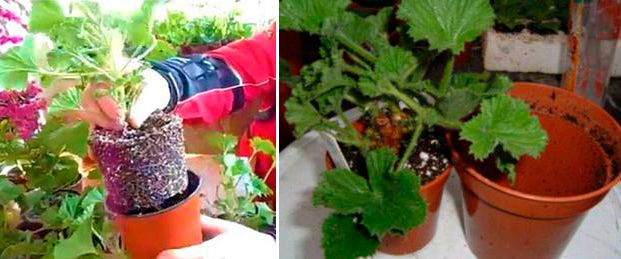
The optimal time is late winter to early spring, before flowering. Choose a container 1.5-2 cm larger in diameter. Place drainage material on the bottom and cover it with a layer of cotton cloth. This will help retain the soil. You can purchase a substrate at the store. Make sure it does not contain any moisture-retaining components. When preparing your own, use peat, humus, and sand in a 1:1:1 ratio. Add ash to improve quality and create a slightly alkaline environment. The soil should be nutritious and loose in consistency.
If the flower was purchased in a store, you should wait until it finishes blooming and allow it time to adapt to its new location. Only then should you proceed with repotting.
The process begins with generous watering, then the plant, along with the moistened root ball, is placed in a prepared container. The empty space is filled with fresh soil.
Reproduction
There are two ways to propagate: by cuttings and by seeds. The former is easier, but the latter results in longer flowering and a more developed and robust root system.
Cuttings
For planting, use the top shoots, 7-10 cm long, with 2-3 nodes each, obtained during spring pruning. Dry them for two hours after cutting.
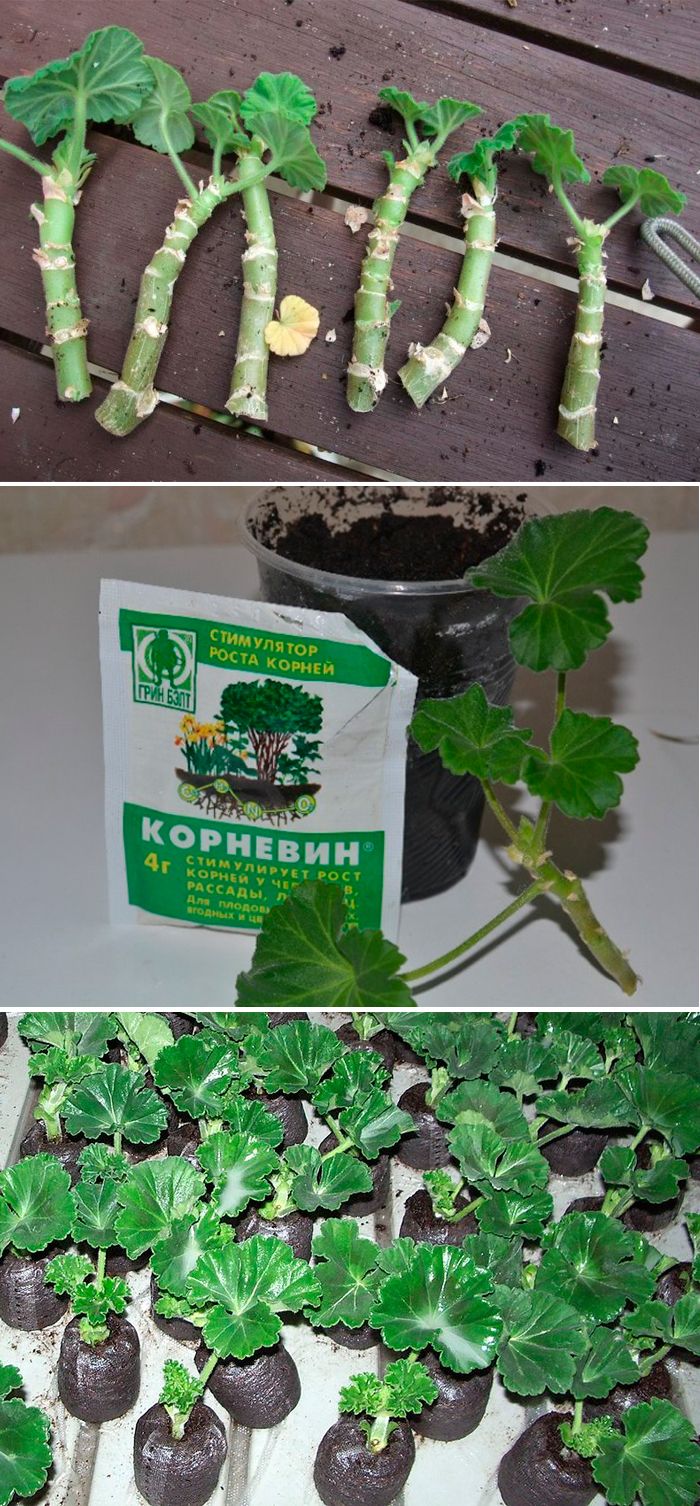
The resulting material is planted in soil, not in water, where it could rot and prevent rooting. The soil for planting is prepared in advance. To do this:
- prepare a mixture of perlite and soil (1:1);
- the resulting substrate is disinfected in the oven or using a solution of potassium permanganate;
- defend it for two days.
Before planting, sprinkle the base of the shoot with Kornevin, then plant it in a prepared container, burying it 2 cm deep in soil. Leave it in dim light at a temperature of 14 to 16 °C. Water through the tray to prevent root rot from excess moisture.
The planted cutting will take root within a week, after which it can be repotted. Once the cuttings are planted in prepared soil, they are not covered with plastic, creating a greenhouse effect. To strengthen the rhizome, emerging leaves are pinched off to prevent the plant from wasting energy on them.
To simplify the process of planting the cutting, use a peat tablet. Place the tray on a windowsill, shielded from direct sunlight. Scald the tablet with boiled water that has been left to stand for three days to disinfect. Once the moisture has been absorbed, drain off any excess. Dip the cutting in a root growth promoter, a necessary step for Royal Pelargonium. Then, plant it in the center of the tablet, one-third of the way down. Press the substrate firmly to remove excess water. Do not create a greenhouse or spray, as this is contraindicated. After roots appear, carefully make cuts along the sides with scissors and remove the tablet. Leave the areas where the roots have grown into it intact. The seedlings are placed in plastic cups, where they continue to grow.
Propagation by seeds
Propagation material is purchased from a store. Sow in late February, before flowering. The substrate is prepared from peat and sand (1:1), with ash added. Disinfect by calcination or with a potassium permanganate solution. The seeds are small and elongated. They are planted 5 mm deep in the soil. Cover the seedlings with plastic wrap, creating a greenhouse effect, and place them in a warm place with bright, diffused light and a temperature of 21 to 25 °C.
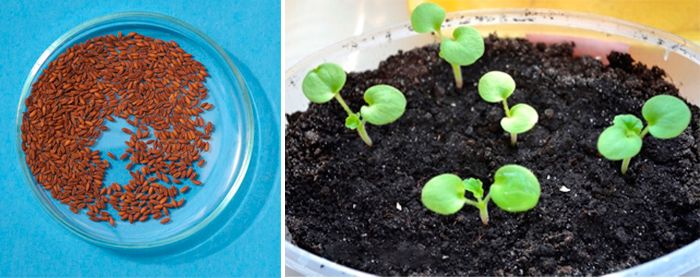
The first shoots will appear in a month. As soon as they have two leaves, they are pricked out into separate pots, 10 cm in diameter and 14 cm deep, with a layer of drainage material placed at the bottom. After the fifth leaf appears, pinching begins to shape the plants and encourage more side shoots for a fuller bush.
Top.tomathouse.com warns of potential problems when growing regal geraniums.
Large-flowered geraniums have their own care nuances. If they aren't followed, you may encounter plant diseases, changes in appearance, and failure to bloom.
| Problem | Cause | Elimination |
| The trunk is rotting (black leg disease) | Low temperature, excessive or incorrect watering. | The plant and soil are affected and must be disposed of. The windowsill and pot must be treated with chlorine bleach. |
| Spider mites, weevils, aphids, whiteflies | Parasite infestation. | Rub the back of the leaves with chamomile infusion and leave for a couple of hours, then rinse. If the infusion doesn't help, apply an insecticide. |
| Lack of flowering | Low temperature, dry air, insufficient lighting, improper pruning, large pot, soil oversaturated with nutrients, containing nitrogen, unsuitable fertilizer or lack of it. | Correct any shortcomings in care and create comfortable conditions. |
| The leaves are yellow and falling off, the stem grows but does not bloom. | Not enough light. | Add light using phytolamps. |
| Green, but wilted, watery pads have formed. | Overwatering can lead to the disease gray mold, in which case the affected leaves are removed and the plant is treated with preparations. | Reduce watering. |
| The ends are turning yellow | Lack of moisture. | Increase the volume of incoming moisture. |
| Scarlet hue | Low temperature, drafts. | Move to a warm place with optimal parameters. |