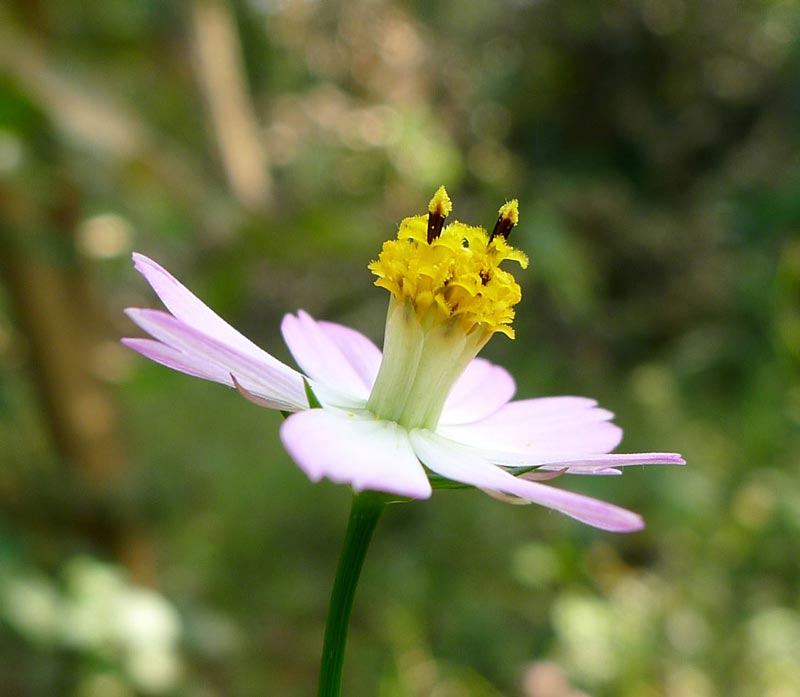
Cosmos, also known as "Mexican aster," "beauty," or "cosmos," is a green herbaceous plant with dazzling petals. It belongs to the Asteraceae or Compositae family. It was first discovered in South and Central America. Translated from Greek, the name means "decoration." Today, it is popular worldwide for its low maintenance and decorative qualities. Its easy maintenance makes it ideal for beginners.
Content
- 1 Description of cosmos
- 2 Types and varieties of cosmos
- 3 Varietal mixtures
- 4 Growing cosmos
- 5 Planting cosmos in open ground
- 6 Caring for cosmos in open ground
- 7 Cosmos after flowering
- 8 How and when to harvest cosmos seeds
- 9 Perennial cosmos in winter
- 10 Diseases, pests
- 11 Top.tomathouse.com informs: reasons why cosmos plants don't bloom
Description of cosmos
Flowering begins and ends in one (annual) or several (perennial) growing seasons. Its stems are slender and elastic, mostly upright, reaching 50-150 cm in height. The leaves, arranged in pairs at each node, are dissected and expanded, creating a magnificent appearance. The inflorescences are 12 cm in diameter, and their color ranges from white to purple-red. It resembles chamomile in appearance.
Types and varieties of cosmos
There are more than 20 varieties of this plant, let's look at the most common ones.
Double-pinnate
The most famous annual herb, native to Mexico, grows up to 1.5 m tall. Its leaves are divided into thread-like lobes, reminiscent of dill. The inflorescence diameter is approximately 7-10 cm. The flower heads come in pink, white, purple, and red. The following varieties are distinguished:
|
Variety |
Description |
| Low-growing varieties | Sonata series. Flowers are pink with a red areole in the center. |
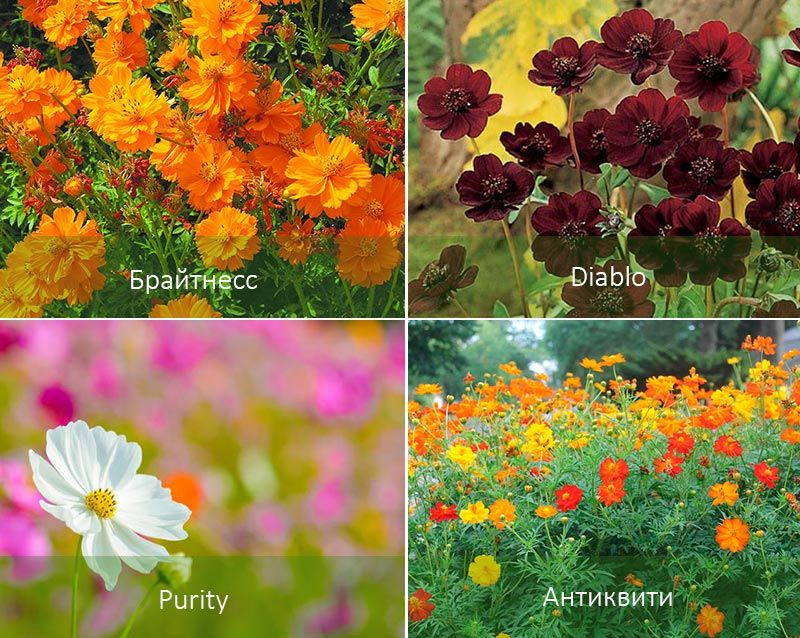
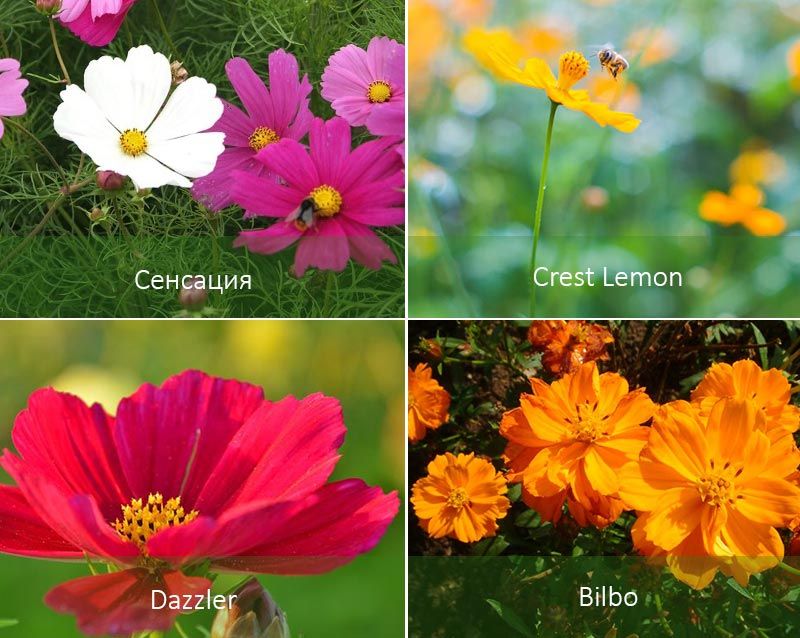
| Dazzler | Raspberry-colored petals. |
| Purity | With white baskets and elastic stems. |
Sulphur yellow
It grows in the vicinity of Latin America. It is considered an annual plant and loves warmth. The flower heads are orange or golden yellow.
|
Variety |
Description |
| Diablo | Fiery red. |
| Bilbo | Orange. |
| Crest Lemon | Lemon yellow. |
Chocolate
Another name for it is blood-red or black. It is a perennial plant. Its flowers are burgundy in color and smell like chocolate. It loves warmth and is usually kept in pots.
However, it can also be grown in open ground, and when cold weather sets in, covered or moved indoors.
Terry varieties are in great demand.
The most famous varieties:
|
Variety |
Description |
| Antiquity | At first the baskets are a rich ruby-red colour, and then change to a coral golden-brown. |
| Double click rose bon-bon | Pink. May not resume growth for a long time after pruning. |
| Brightness | It is characterized by splendor and richness. |
Terry
The petals are arranged in several rows, giving the flower a full, distinctive beauty. They can be sunny yellow, burgundy, or orange.
Varietal mixtures
These are varieties that include flowers of the same type, but differing in color scheme.
Sensation
A mixture of cosmos varieties, reaching 1-1.5 m in height, with flower baskets in shades of white, pink and red.
Rainbow shimmers
It delights the eye with its harmonious variety of tones, including pink, red, white, and crimson. They grow up to 1.2 m.
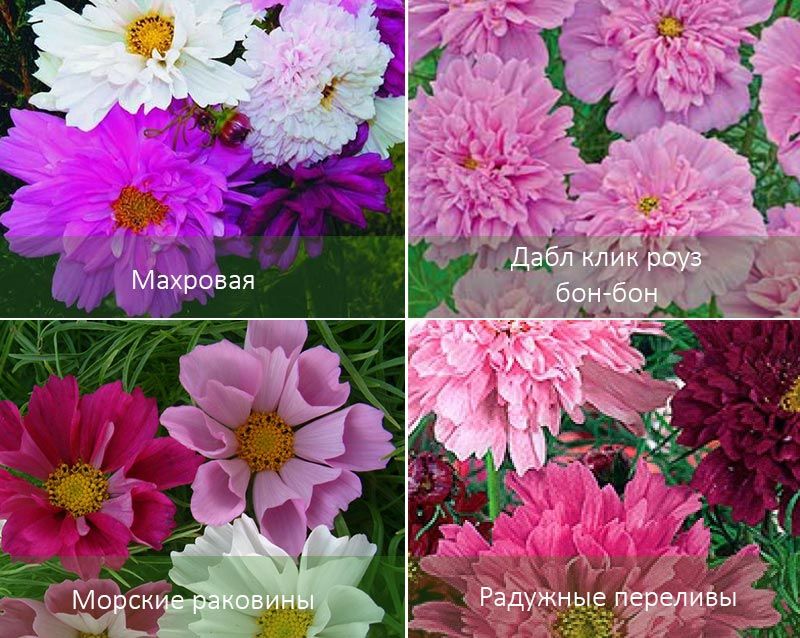
Sea shells
The most interesting species is characterized by ligulate inflorescences, connected into a tube, branching and resembling shells in appearance.
Growing cosmos
A popular method of propagation is by seed. For this reason, in temperate climates, this perennial is grown as an annual. There are two methods of cultivation: seedlings and seeds.
- The first method for obtaining young plants involves planting seeds in small boxes filled with soil (preferably a sand-peat mixture) in early spring, pressing them lightly into the soil and placing them in a sunny room at a temperature of 18 to 20°C. Seedlings are expected to appear within 7-14 days. Once they reach a certain size, transplant them into a larger container, maintaining a distance of 10-15 cm between them. The temperature should then be increased to 16 to 18°C. The first flowers are expected in early June.
- The second method involves planting the seeds outdoors in the soil. First, dig a small hole 10 mm deep (after the snow melts). Then, plant the seedlings in groups of 3-4, keeping a distance of 30-40 cm between them, and water them carefully to prevent the seeds from washing away. Subsequently, care for them as for adult plants. Flowering can be observed in late July.
Planting cosmos in open ground
Plant in late May or early June, after the last light morning frosts have passed. Choose a windless, sunny location. Prepare the soil beforehand: it should be moderately fertile, with a pH between 5.1 and 5.5, and well-drained. When the seedlings reach 60 mm in height, they are placed in dug holes measuring 30 x 30 cm and filled with water. Then, they are covered with soil and watered again.
For tall plants, insert sticks nearby so they can be tied up later if needed. When the bush reaches 50 cm in height, pinch off the tops of the stems. This will ensure the cosmos grows bushier and more graceful.
Caring for cosmos in open ground
Newly emerging seedlings require constant weeding and loosening of the soil after rain or watering. As they grow, this need disappears.
It is undemanding in relation to water and will easily endure a slight drought, but it is still better not to allow this to happen in order to avoid its loss.
Cosmos after flowering
When the flowers begin to fade, they are cut off to allow the plant to continue producing its fragrance. It is recommended to leave only those that will be used for future planting.
How and when to harvest cosmos seeds
The flower's maturity is determined by its appearance: if it has become dry and brown, it's safe to pick. Store the collected seeds in a small bag (paper or cloth) in a dry, dark, well-ventilated place.
The period of use is limited: maximum 3 years.
Perennial cosmos in winter
It requires preliminary preparation. After the plant has finished flowering, its stems are cut back, leaving a length of 10-15 cm. It's best to cover the soil around the flower with organic or inorganic materials, or mulch. Fallen leaves or spruce branches can be used for this process.
Diseases, pests
It's relatively resistant to diseases and pests, but can be attacked during the early growth stages. If snails or slugs are found on the leaves, they should be collected by hand and destroyed. A good option is to set out a beer trap, which will significantly reduce the number of pests; however, it's essential to check them regularly and replace the bait.
Top.tomathouse.com informs: reasons why cosmos plants don't bloom
The following can be highlighted:
- Late planting. If you don't plant it on time, the flower may not have time to open.
- Overfertilizing the plant. Because the soil in which the plant grows is excessively fertile, all its energy is devoted to increasing green mass: tall, thick stems, large leaves. To avoid this, control the timing and amount of fertilizer application.
- Failure to follow care instructions (overwatering, placing in the shade) may result in poor flower opening.