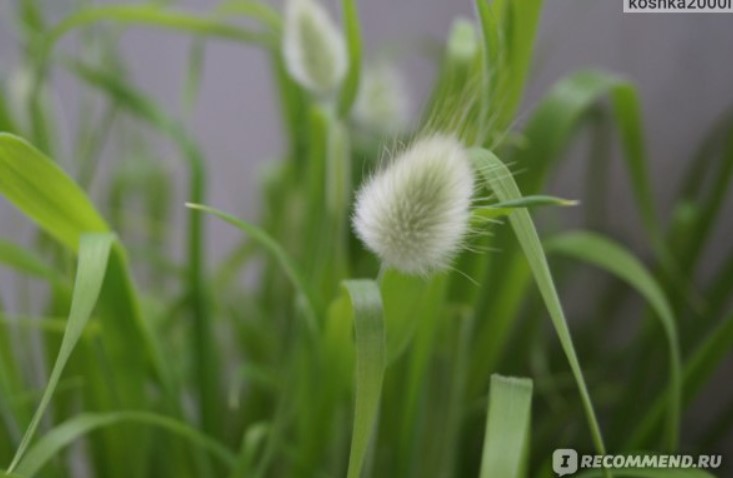
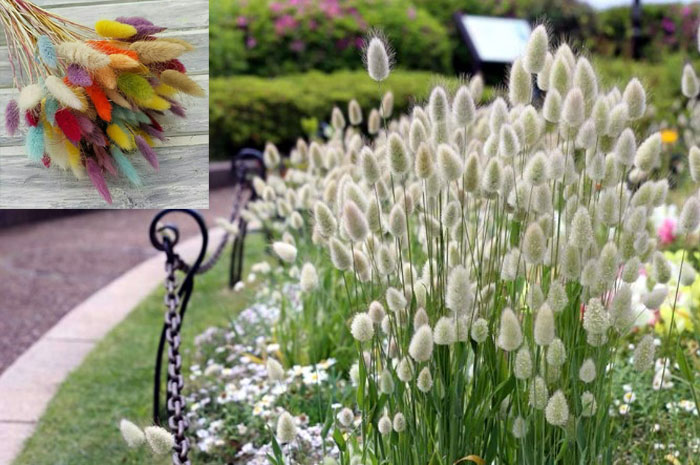
The diversity of plants in the modern world offers ample opportunities for landscape design in private and public spaces, as well as for floristry. Most often, spectacular yet low-maintenance flowers are chosen. Among these is the lagurus, or hare's tail. That's why it's so popular among gardeners today.
Content
- 1 The origin of lagurus
- 2 Description of Lagurus
- 3 Types and varieties of lagurus
- 4 Planting lagurus in open ground
- 5 Caring for lagurus in open ground
- 6 Hare's tail bloom
- 7 Reproduction of Lagurus
- 8 Possible difficulties in caring for lagurus and their solutions
- 9 Advantages and disadvantages of the haretail
- 10 Growing Lagurus in a Pot
- 11 Use of Lagurus in the landscape
- 12 The use of hare's tail in floristry
- 13 How to dye a hare's tail at home
- 14 Reviews of Lagurus from gardeners
The origin of lagurus
According to historical records, the plant was first discovered in the 18th century by the Swedish botanist Carl Linnaeus. At that time, lagurus was not considered a noble plant, but rather a weed. The 20th century saw the development of landscape design. lagurus became one of the plants used in flowerbed and lawn compositions.
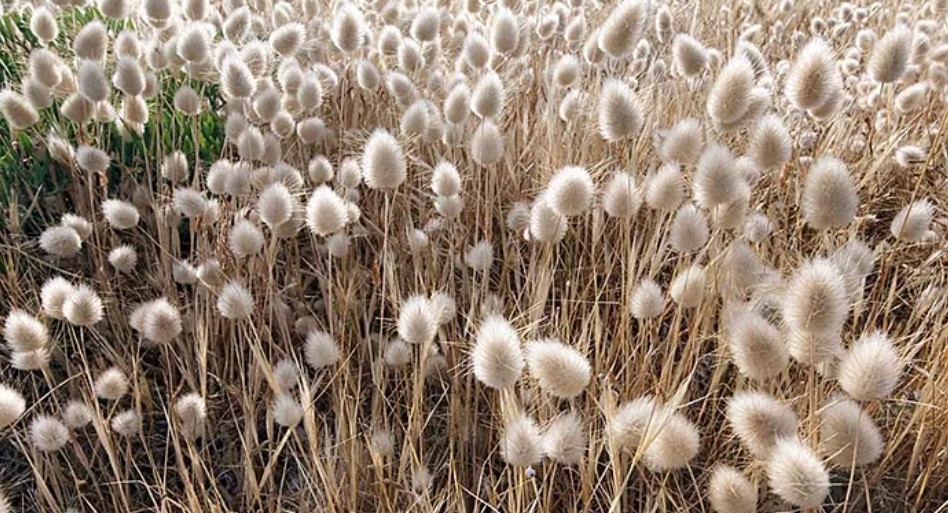
Interesting fact! The word "lagurus" has Greek roots and translates as "hare's tail." That's why it's called that.
Description of Lagurus
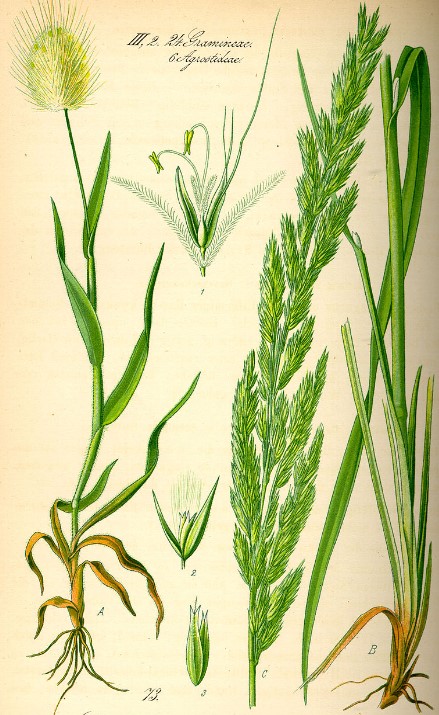
| Family | Cereals |
| Genus | Hare's tail |
| Application | They are grown in flowerbeds and used to make bouquets. |
| Botanical characteristics | The plant is an annual. |
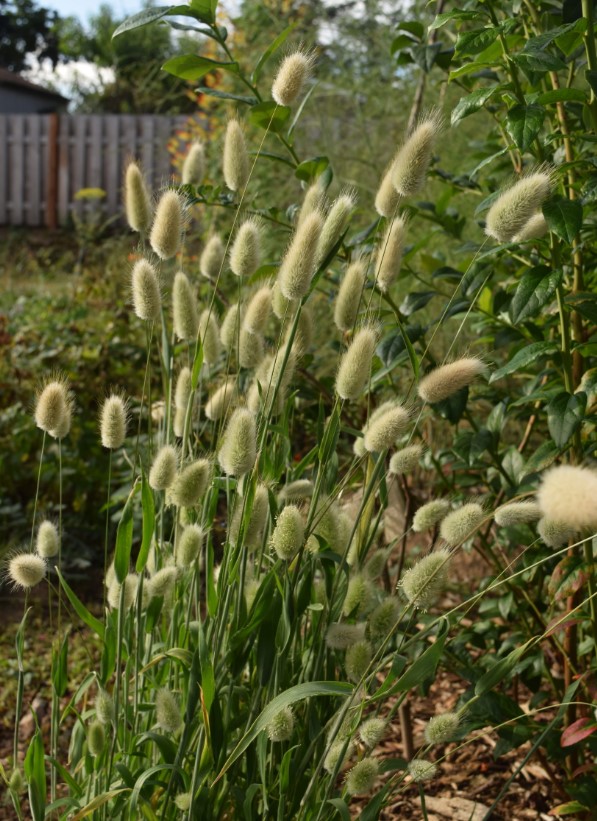
| Stems | They are dark green in color and grow up to 90 cm in length. |
| Leaves | They have a bright green hue and are about 20 cm long. They are covered with fine, fluffy hairs. |
| Roots | They have a branched structure with adventitious roots that spread into the upper layers of the soil. |
| Flowers | It blooms with panicle-shaped inflorescences that form at the top of the stems. |
| Seeds | Yellow, gray-white, or brown in color. Length is 3 mm. |
| Spikelets | Simple type of inflorescence. |
Types and varieties of lagurus
Lagurus has one species, the ovoid haretail (Lagurus ovatus).
|
Name of the variety |
Description |
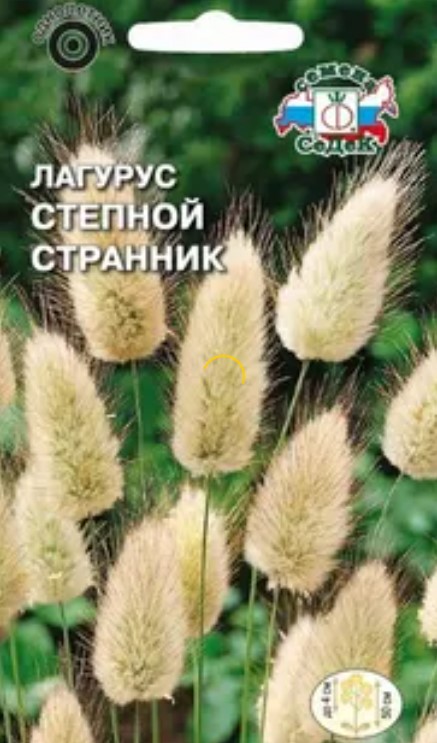
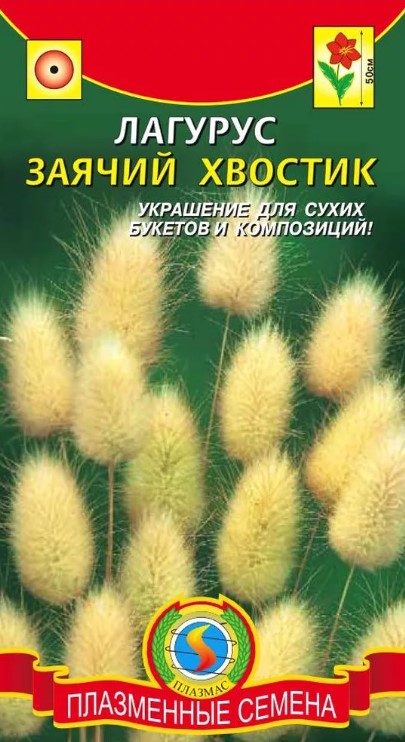
| Steppe Wanderer
|
It reaches 50 cm in height and blooms in July and August. The inflorescences are elongated and 3 cm long. Their color can vary from light green to white. This variety tolerates frost well. |
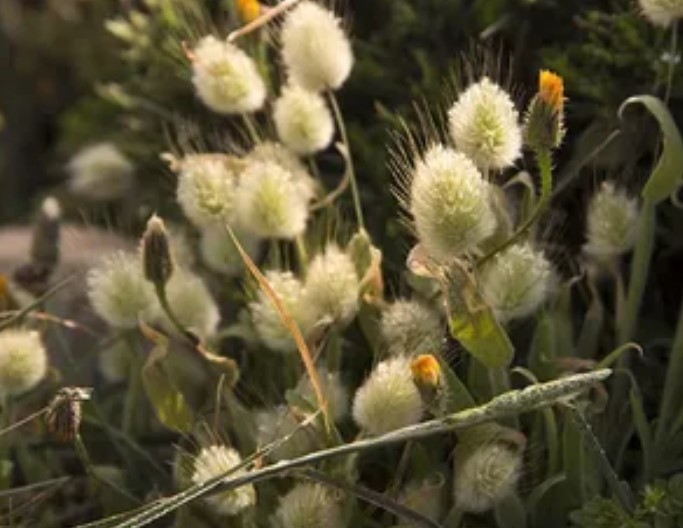
| Bunny tail
|
It features long inflorescences of about 5 cm. The panicles are ovoid and grayish-white. Flowering occurs from June to August. They grow to no more than 30 cm in height, making them ideal for decorating sidewalks. |
| Nanus
|
They have round inflorescences measuring 2-3 cm and grow to a height of no more than 20 cm. The inflorescences are yellow, cream, or gray-white. Flowering occurs from July to September. |
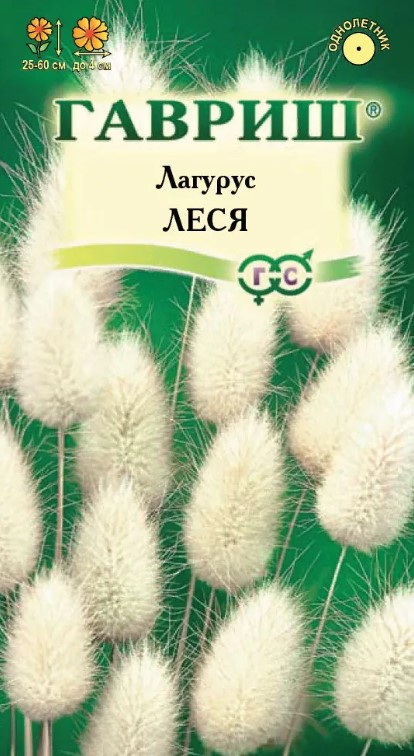
| Lesya
|
It has a bushy shape with numerous stems. It reaches a height of about 30 cm. Flowering occurs from May to July. The inflorescences are pinkish or cream-colored. |
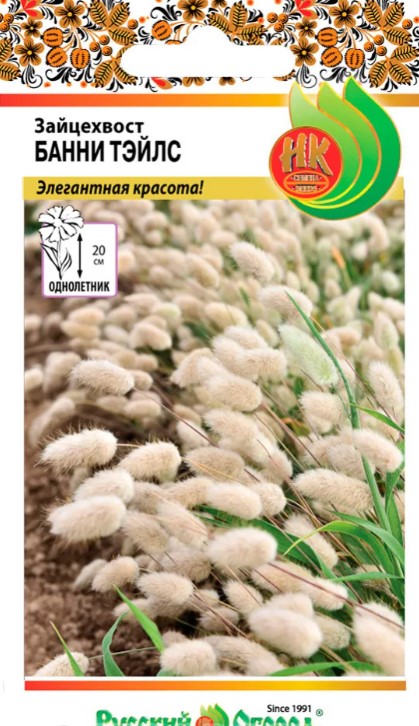
| Bunny Tails
|
A low-growing variety, not exceeding 20 cm. The heads are fluffy and dense, the foliage is pale green. |
Planting lagurus in open ground
Planting and growing lagurus in open ground is quite simple.
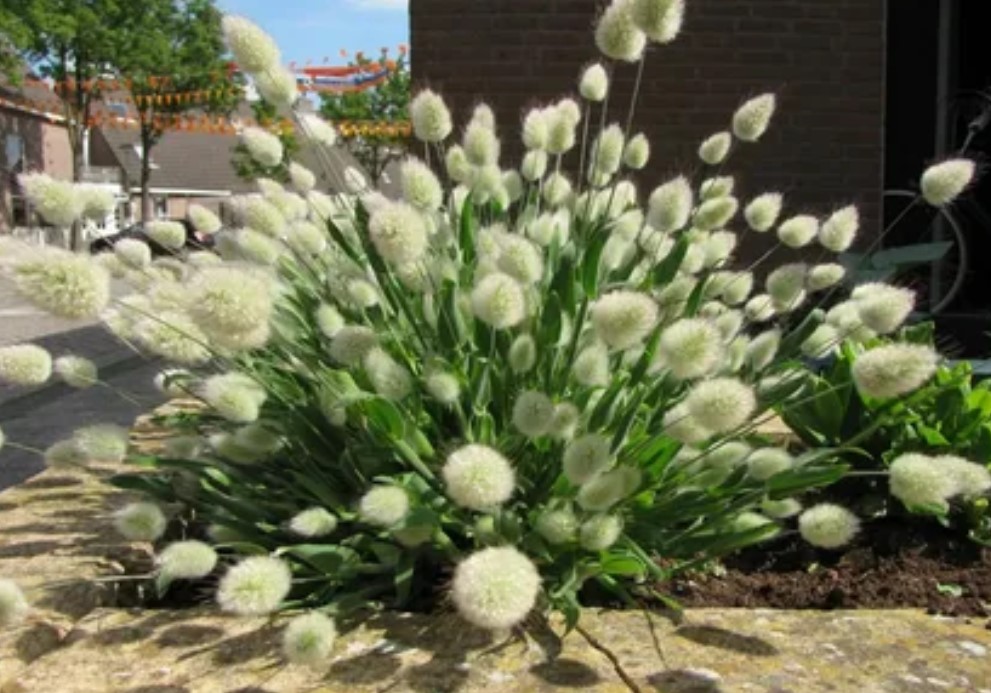
Location
The plant is easy to grow. It thrives in full sun and doesn't like excessive moisture.
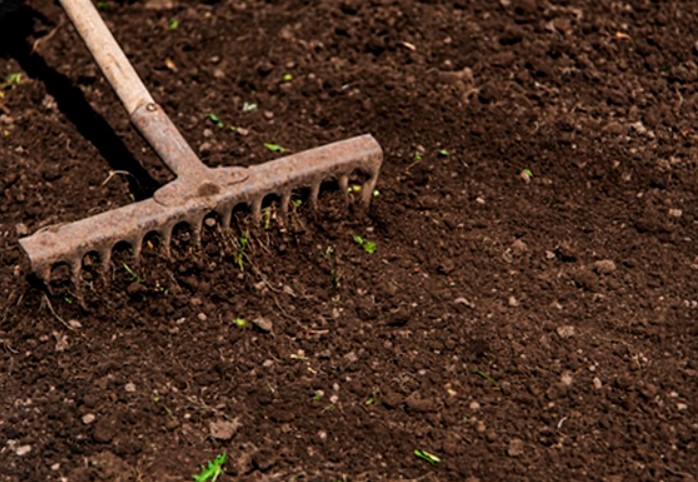
Site preparation
It's best to prepare the planting site in the fall. To do this, dig it up and add humus. If the soil is heavy, it's best to add sand in the spring.
Types of planting
There are two ways to plant a plant in open ground: seeds and seedlings.
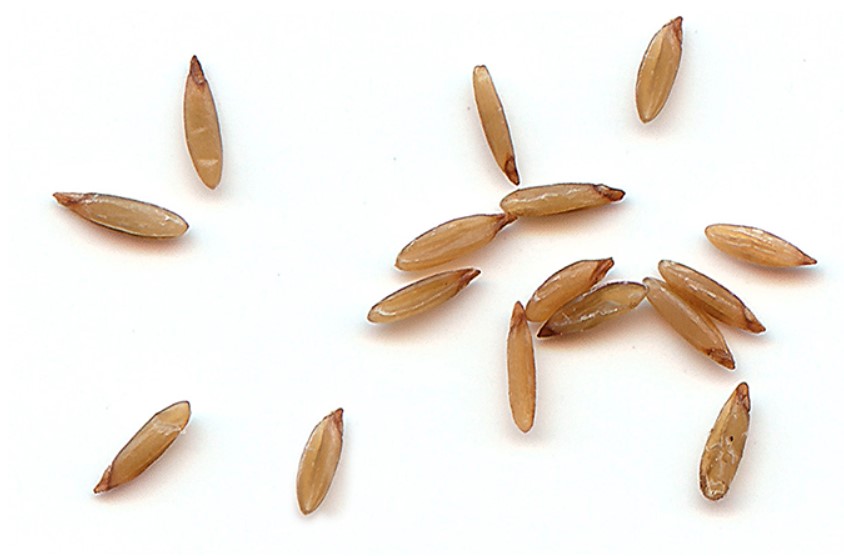
Timing of sowing seeds
May is considered the ideal time for sowing seeds.
Sowing
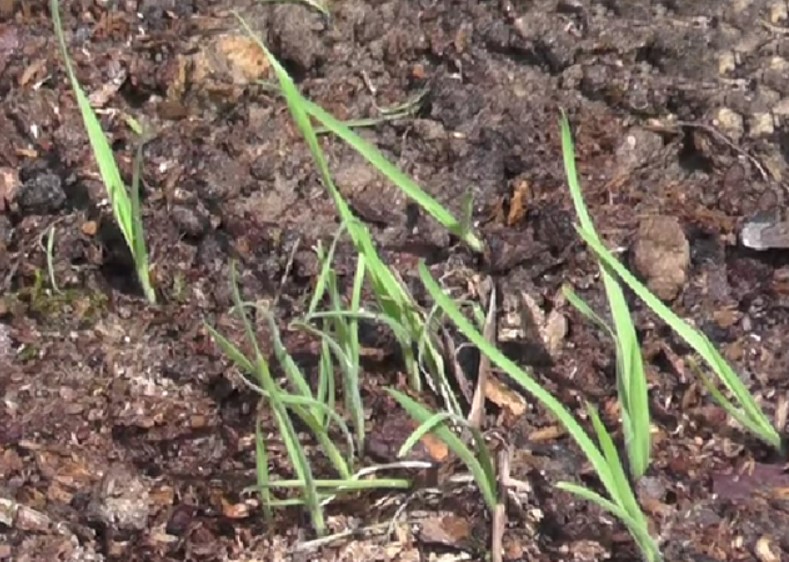
Before sowing, mark out the flowerbed with furrows spaced 10 cm apart. The furrows should be about 1 cm deep. Mix the seeds with sand and sprinkle the mixture into the furrows. Then, fill the bed with soil and water. The mound should be approximately 50 mm thick. The first shoots should appear within two weeks.
Timing of planting seedlings
For seedlings, seeds must be planted in March-April.
Planting seedlings
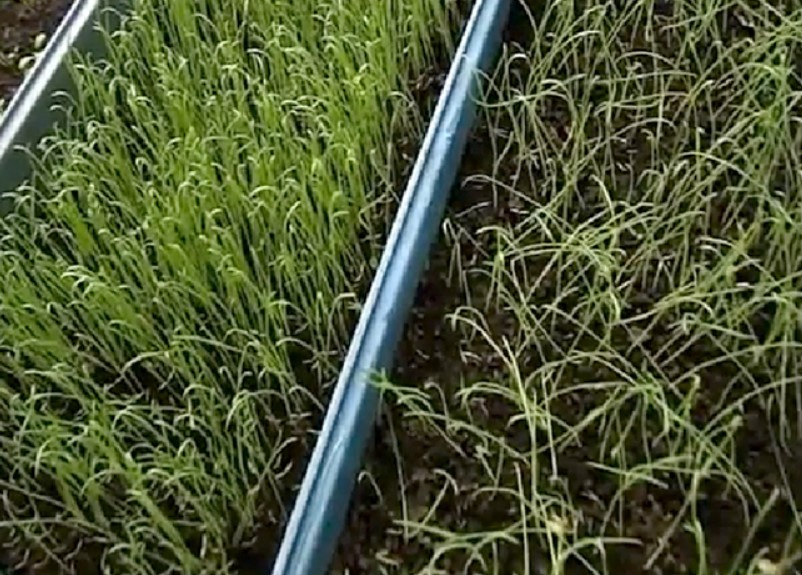
Seedlings should be grown in plastic containers. A mixture of garden soil and sand can be used as soil. Seeds are planted at a depth of 5 mm and spaced 3 cm apart. After watering, cover the seeds with plastic wrap. Ventilation should be provided daily.
Caring for lagurus in open ground
The plant doesn't like being repotted because its root system is difficult to establish. Caring for the lagurus involves watering, weeding, and fertilizing.
Care by seasons
| Winter | The plant is annual, so it does not require care in winter. |
| Spring | Sowing seeds. Transplanting seedlings into open ground. Weeding. Watering during drought. Adding fertilizer. |
| Summer | Watering during drought. Weeding. Adding fertilizer. Picking flowers. |
| Autumn | Collecting seeds for seedlings. |
Temperature conditions
Recommended temperature range is +18 …+27 degrees.
Air humidity
The plant prefers air humidity of 50%.
Watering
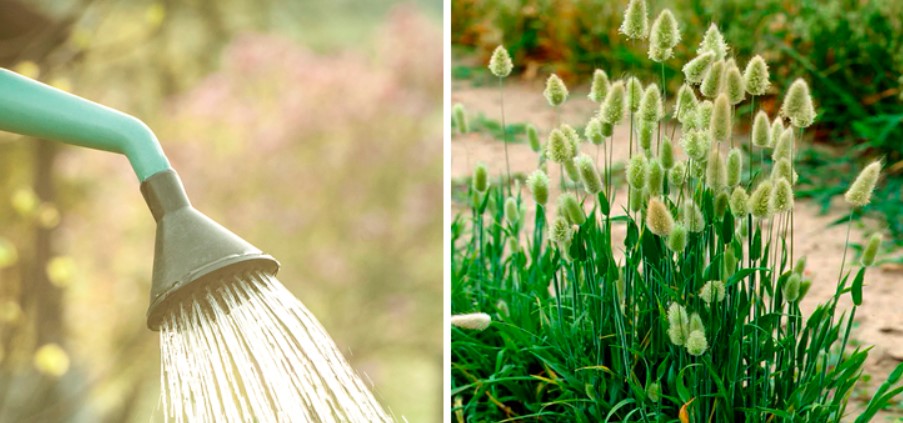
The plant can easily survive several days without water. However, if there is no rain for an extended period, water the lagurus twice a week.
Top dressing
In spring, before the flowering period, lagurus should be fertilized with liquid nitrogen fertilizers once every 10 days.
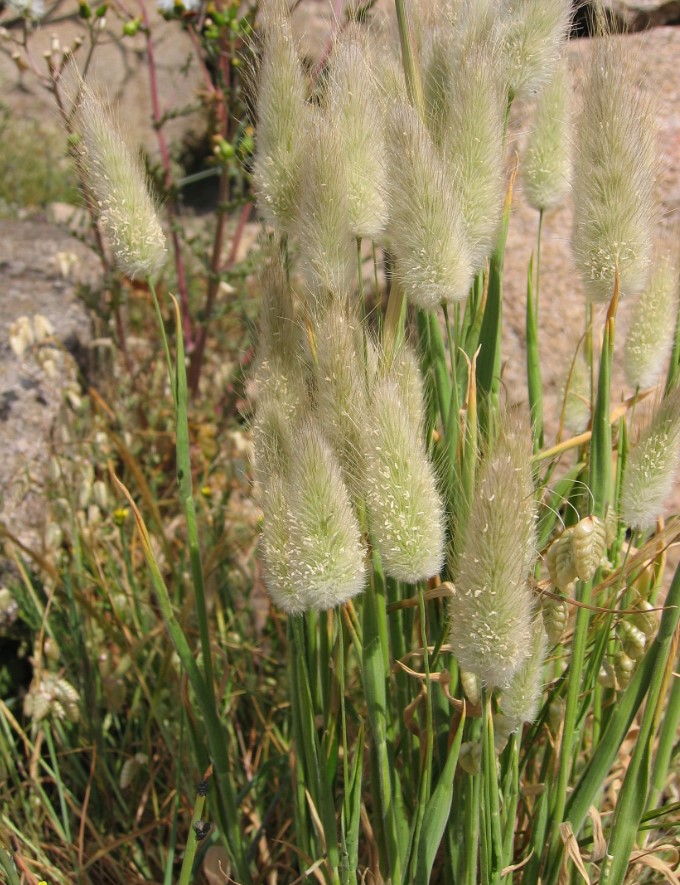
When the plant is in bloom, you can fertilize it with mineral fertilizers.
Weeding
Weeding should be done several times per season as they grow.
Hare's tail bloom
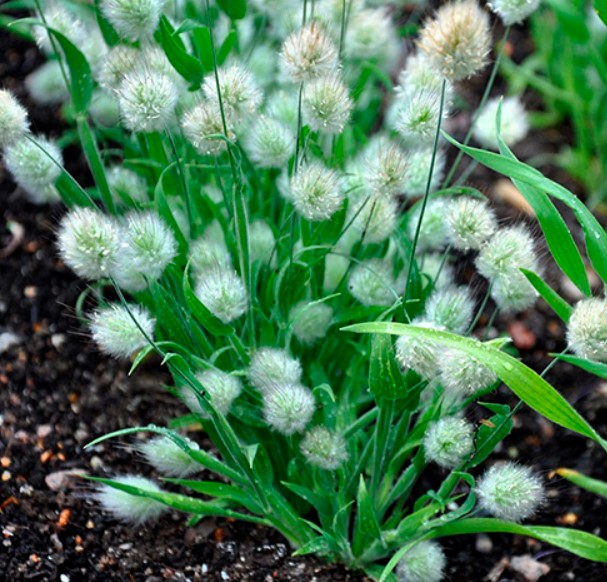
The plant can bloom throughout the summer. However, the exact timing depends on the species, region, and planting method.
Pruning and drying
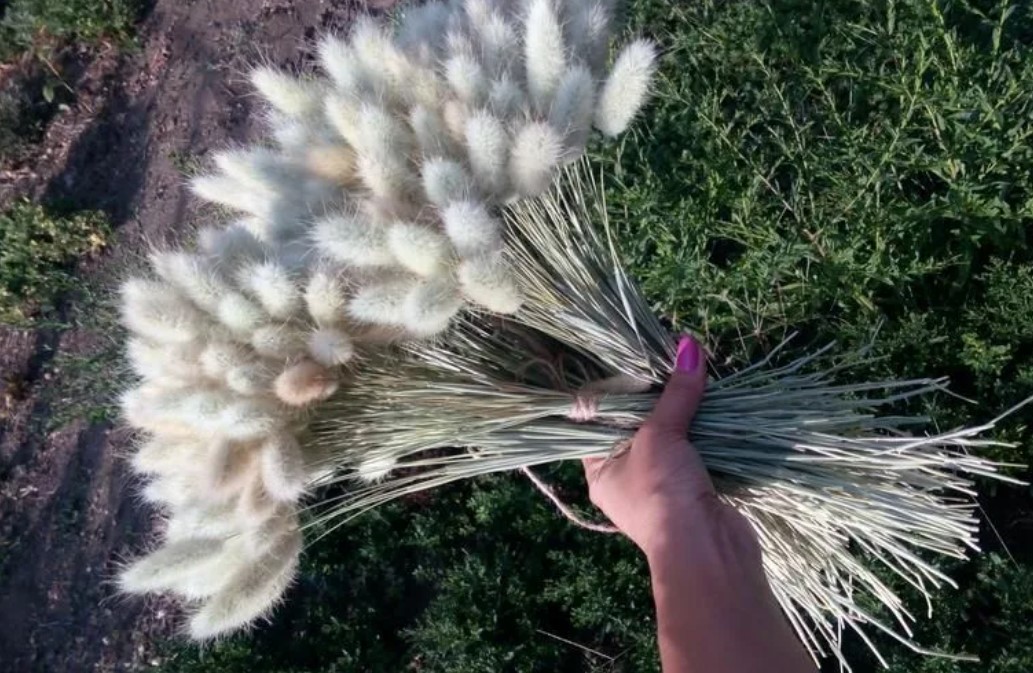
Lagurus panicles are cut only for bouquets. This should be done in July-August. After harvesting, the panicles are gathered into bunches and hung to dry in a dark, well-ventilated place.
Reproduction of Lagurus
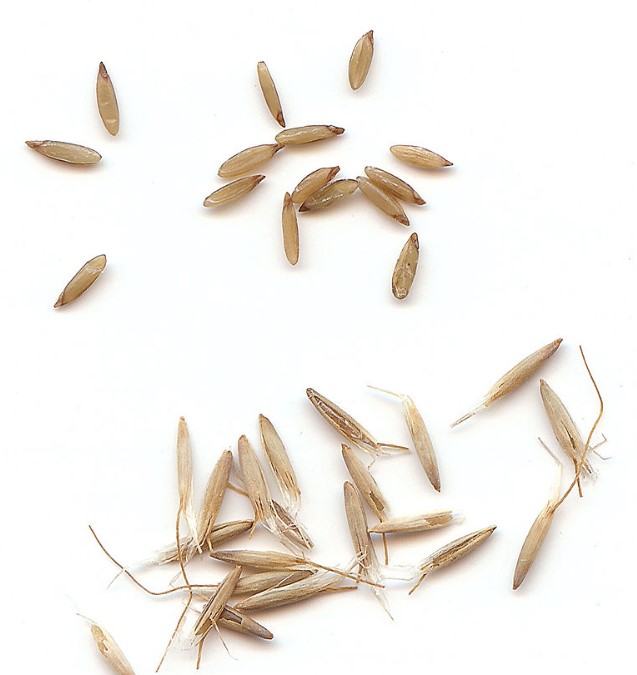
The only way to propagate Lagurus is by growing it from seed. Dividing the plant will only result in its death.
Possible difficulties in caring for lagurus and their solutions
| Difficulties | Reason for appearance | Solution |
| The stems began to break and the leaves darkened and lost their brightness. | Oversaturation with nitrogen fertilizers | Strictly adhere to the dosage of nitrogen fertilizers |
| The roots began to rot | A large amount of water accumulates around the roots | It is necessary to follow a watering schedule for flowers. |
| The leaves are covered with yellowish spots | Exposure to sunlight | Do not water flowers in strong sunlight, but do it in the morning or evening. |
Advantages and disadvantages of the haretail
| Advantages | Flaws |
| Beautiful appearance; Rarely affected by diseases; Grows well; Various planting methods; Both adults and children like it. |
Annual; Does not tolerate frost well; May cause allergies. |
Growing Lagurus in a Pot
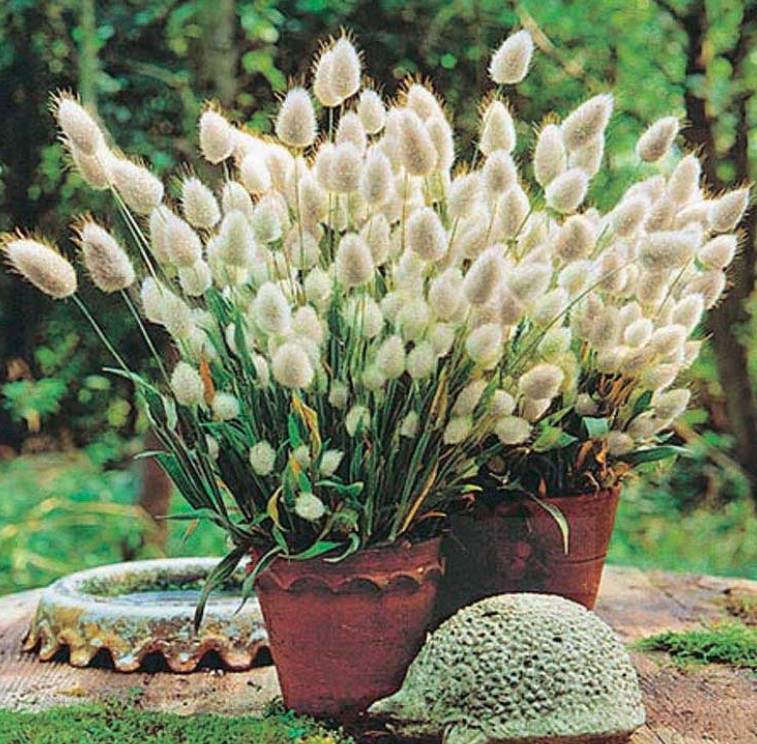
For growing this plant indoors, it's best to choose pots with a capacity of 3-5 liters. First, lay out drainage, then add soil, plant, and water.
Use of Lagurus in the landscape
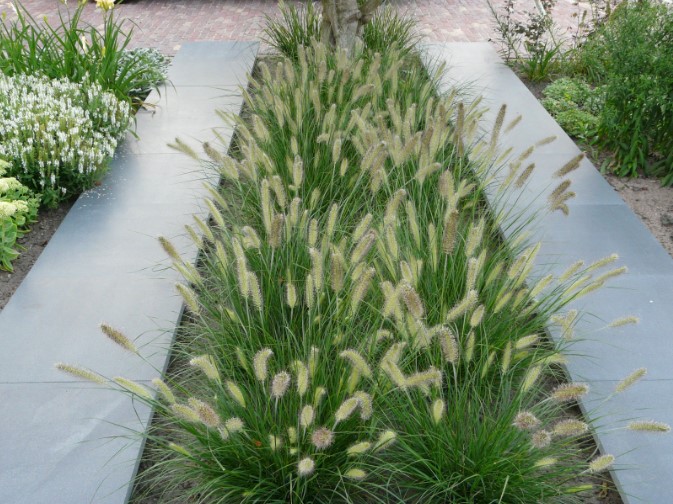
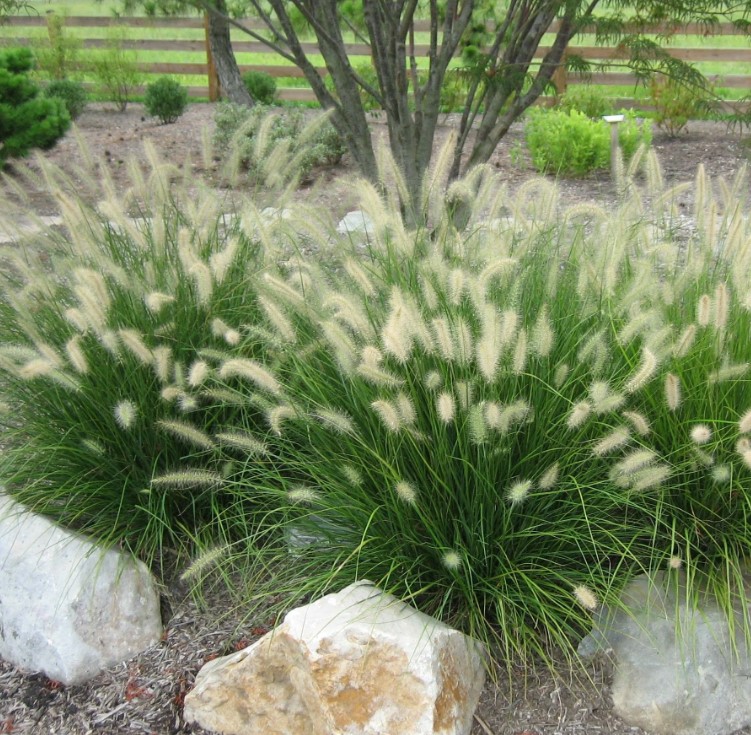
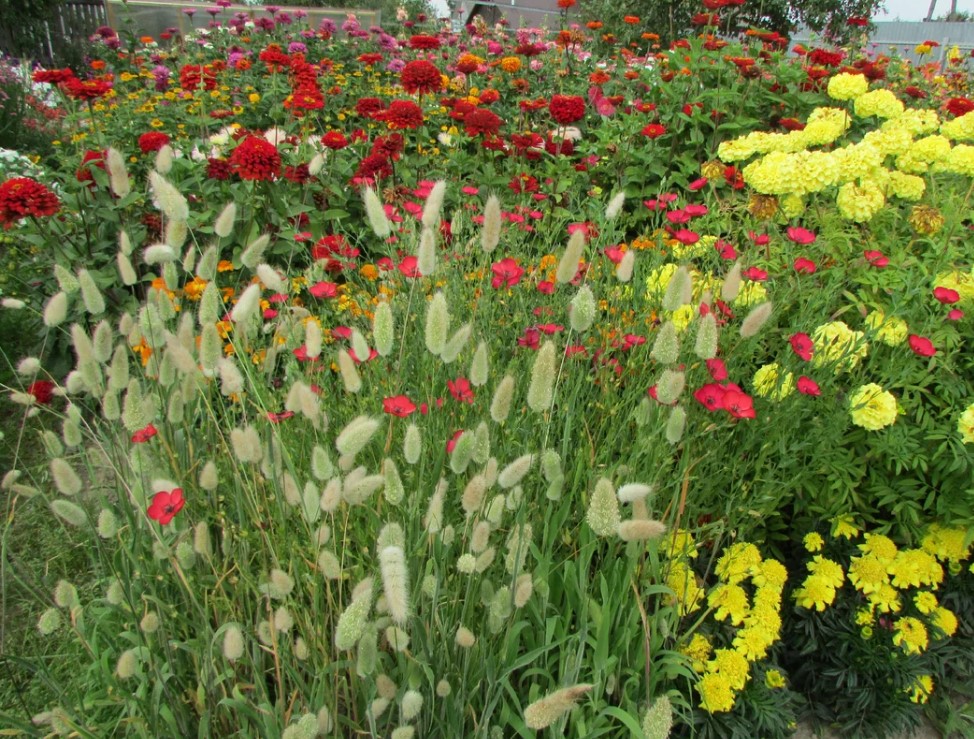
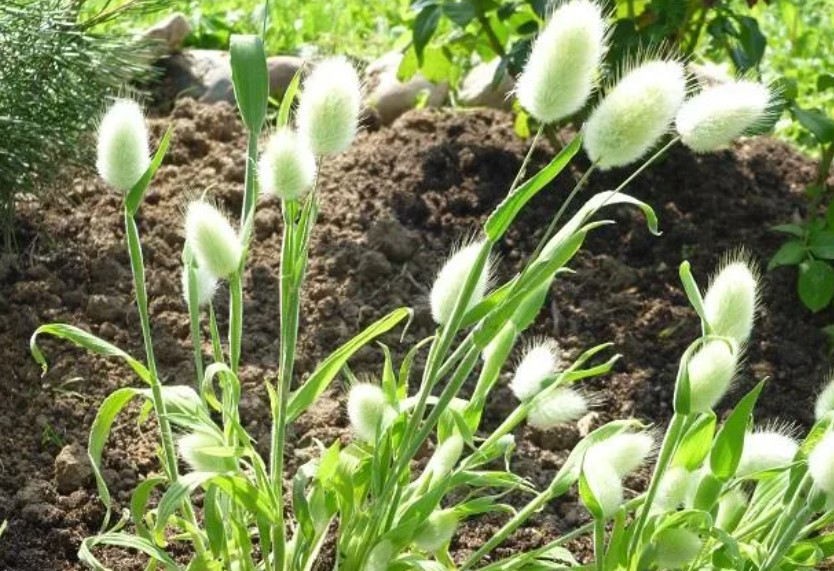
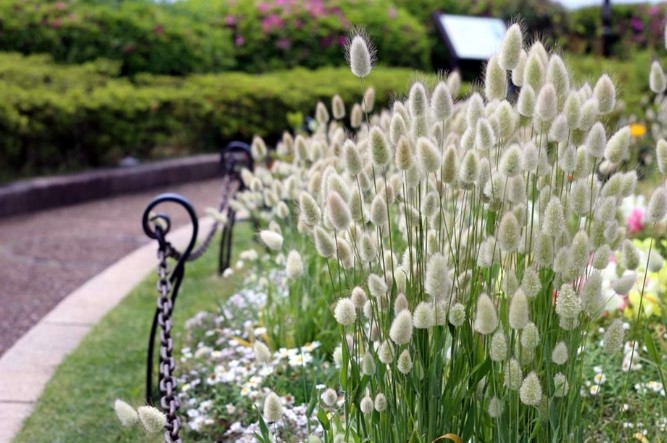
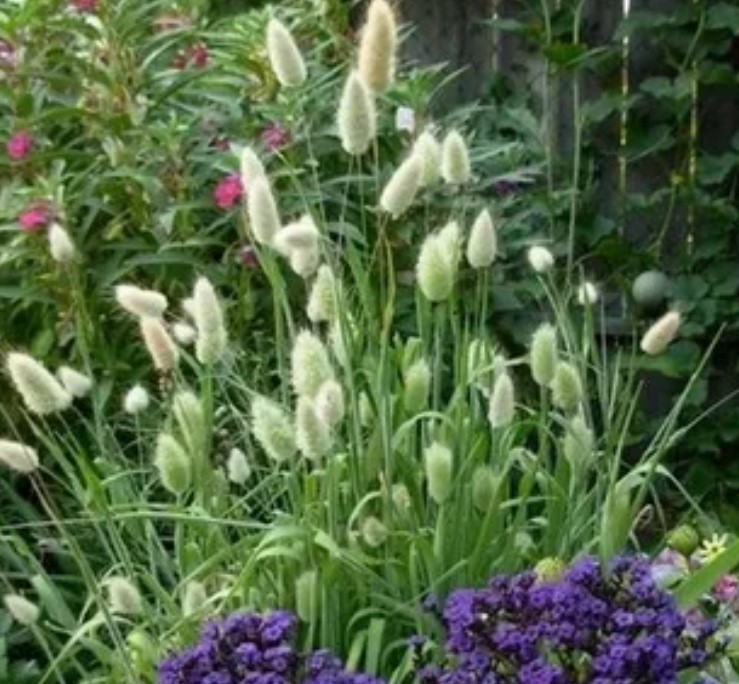
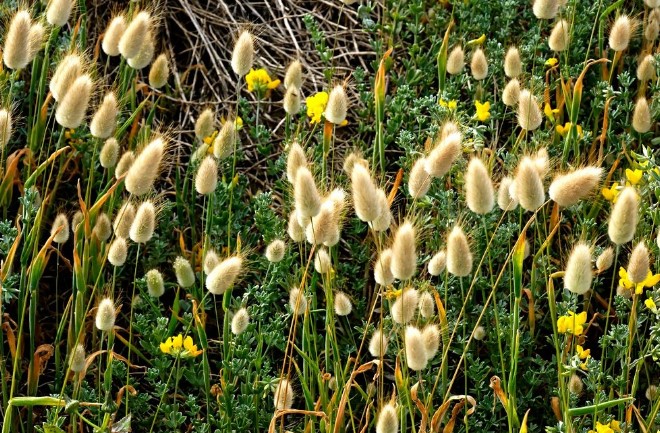
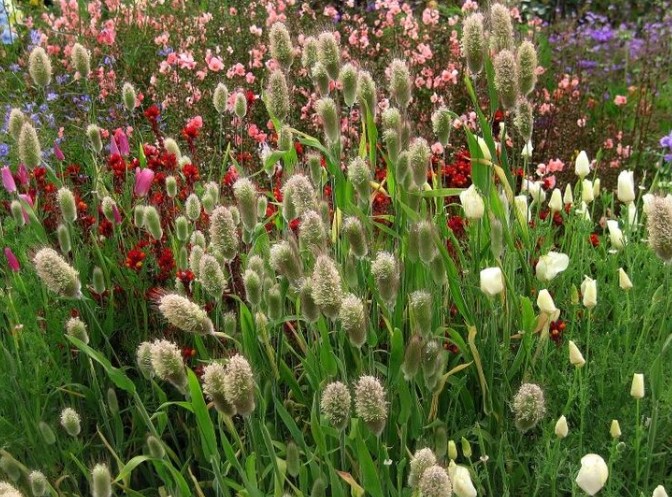
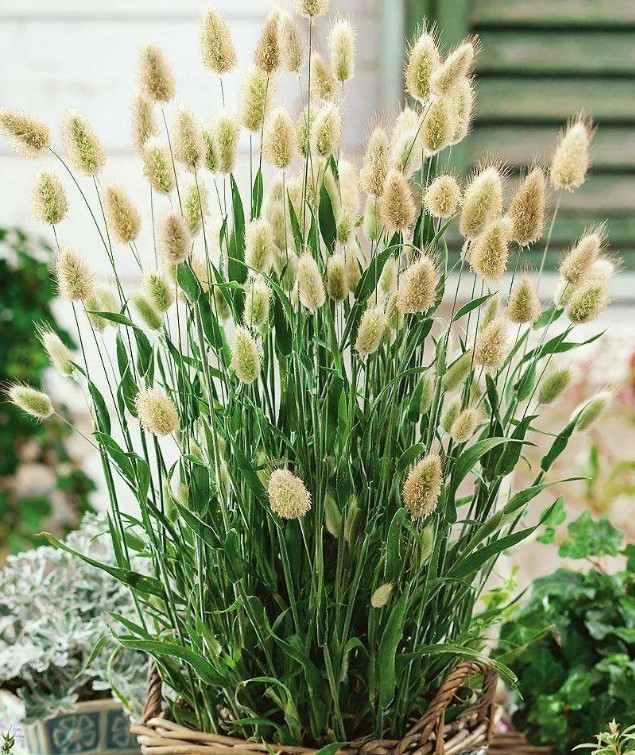
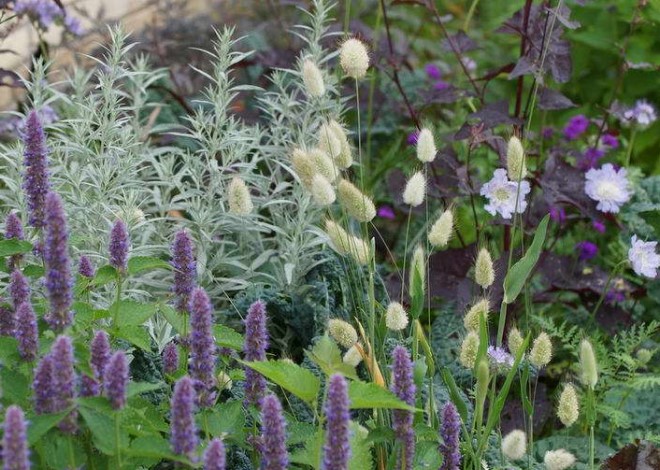
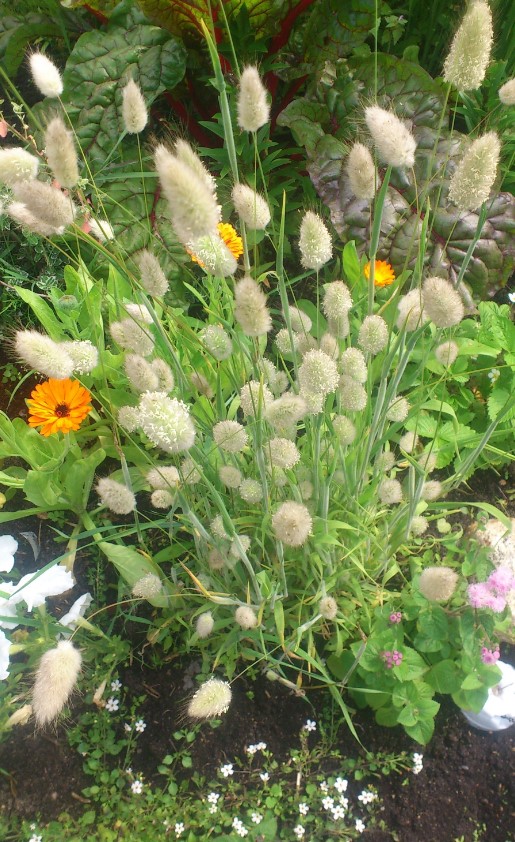
Lagurus is used to decorate flowerbeds, borders, and rock gardens. The plants are often planted as part of a lawn composition.
Hare's tail looks especially beautiful in the center of flowerbeds. This placement highlights the beauty of its blooms.
Photo gallery of haretail in the landscape
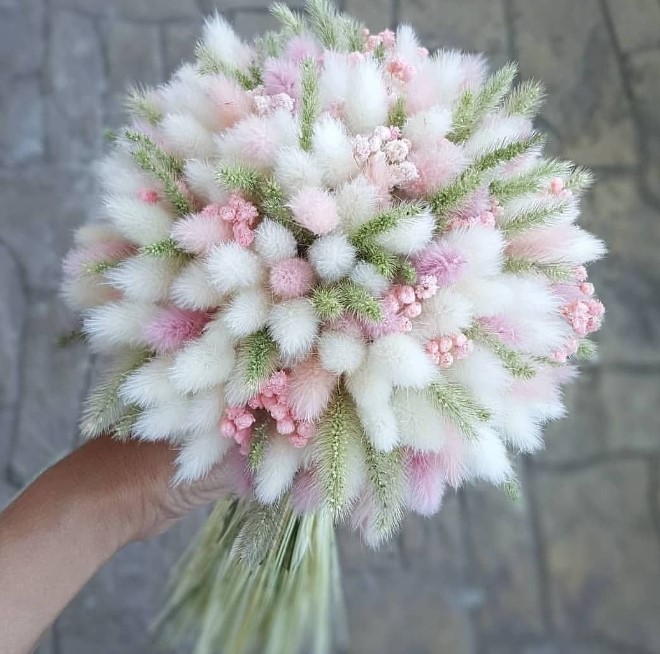
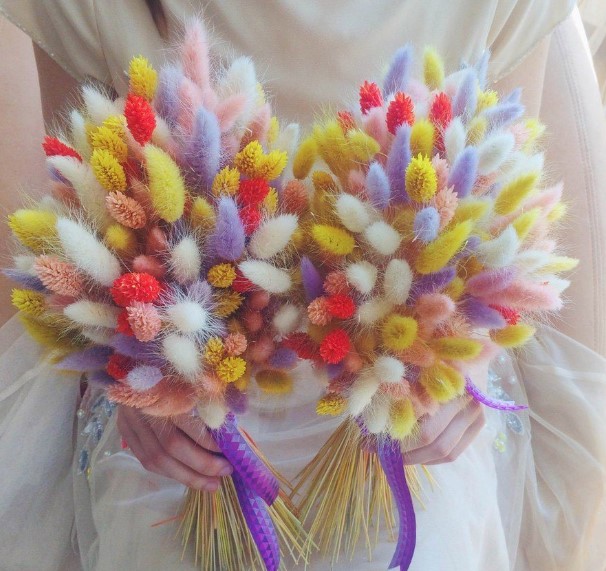
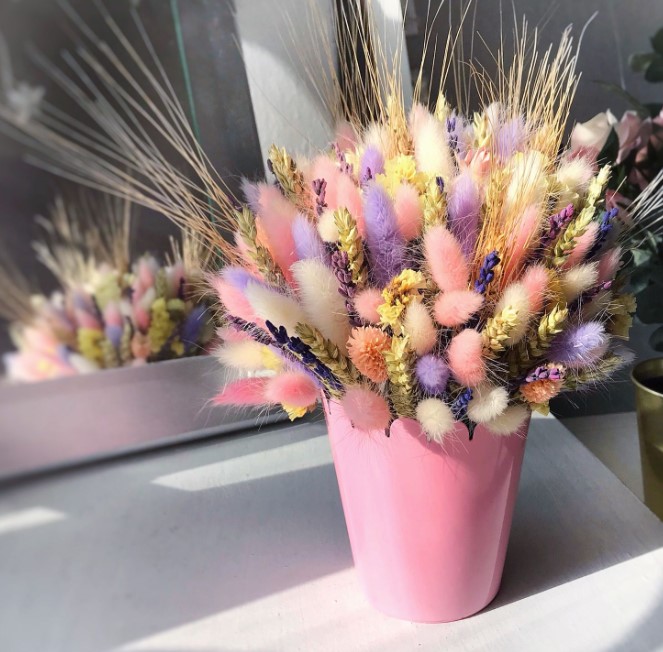
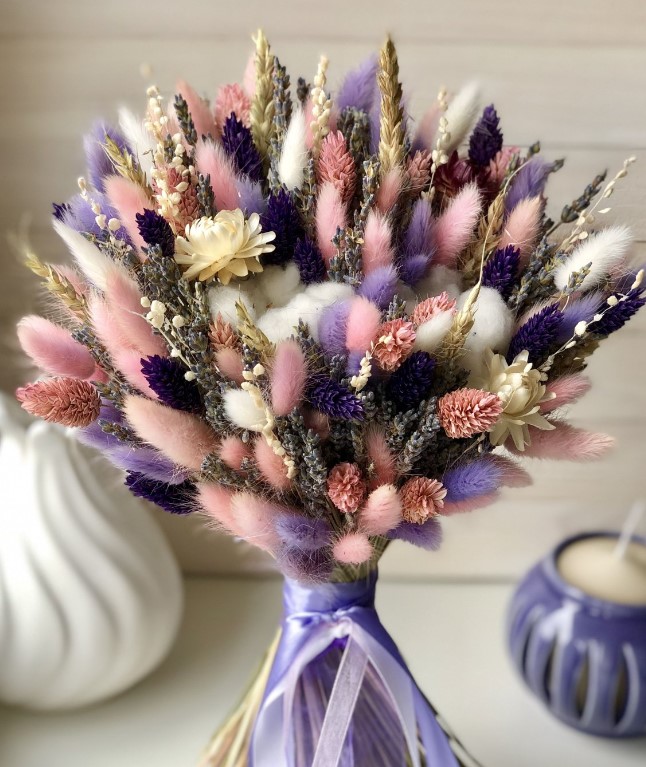
The use of hare's tail in floristry
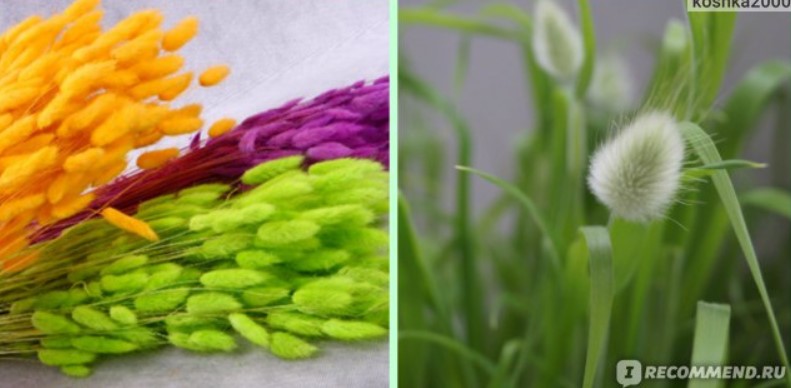
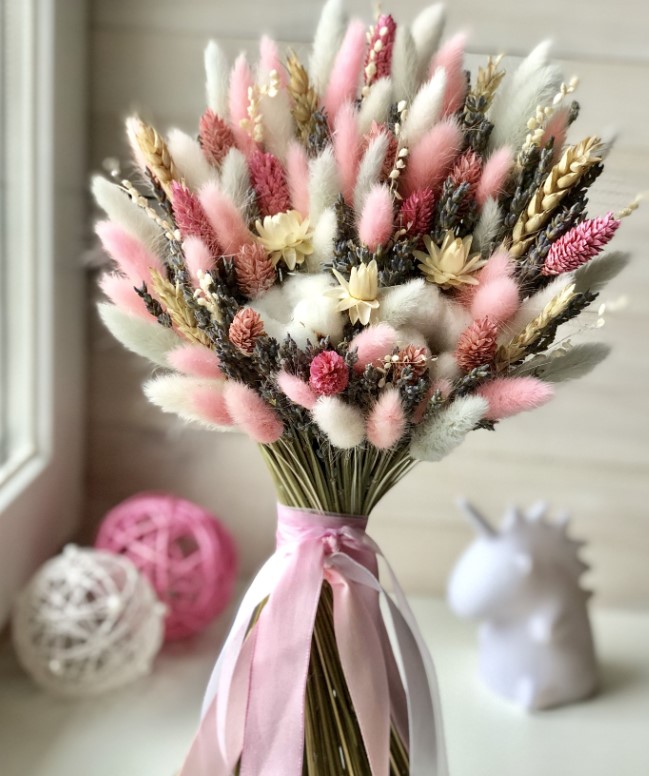
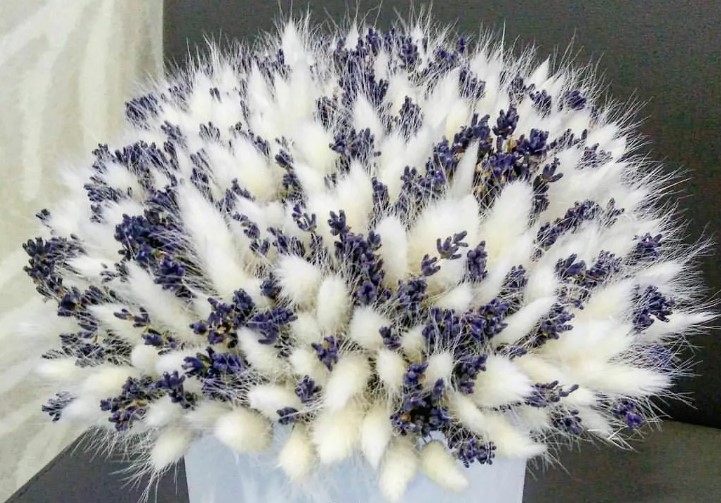
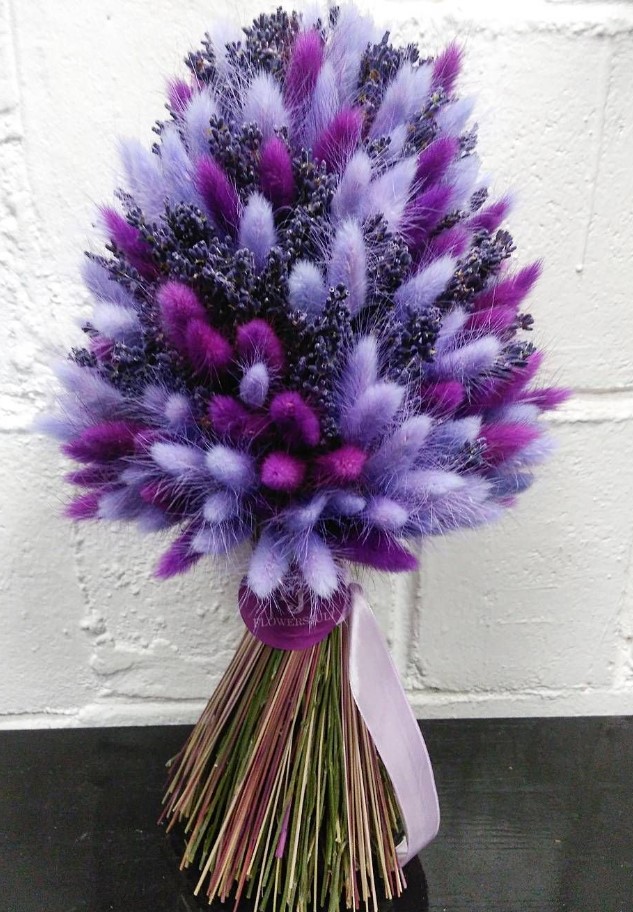
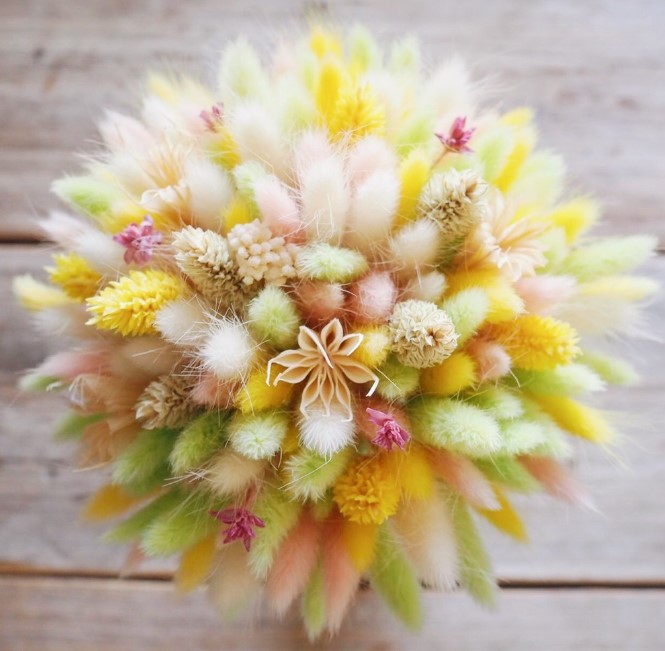
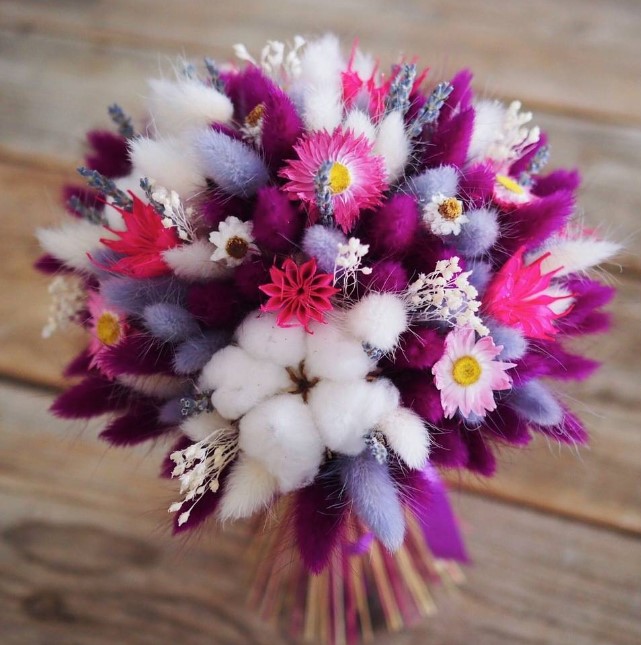
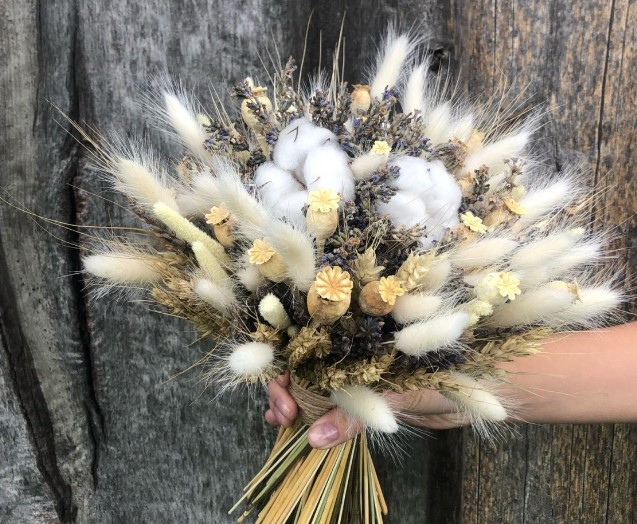
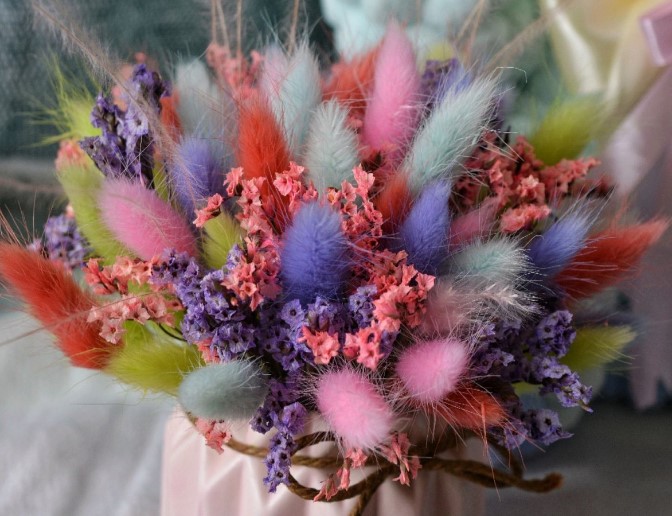
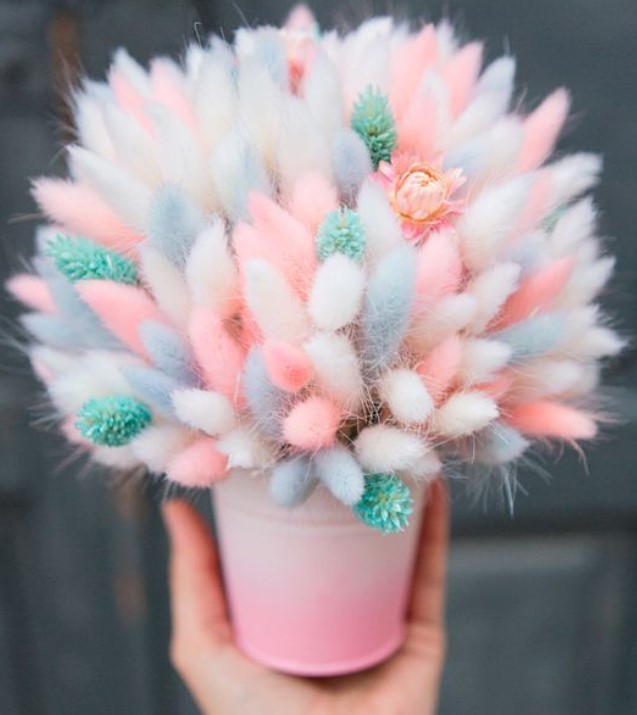
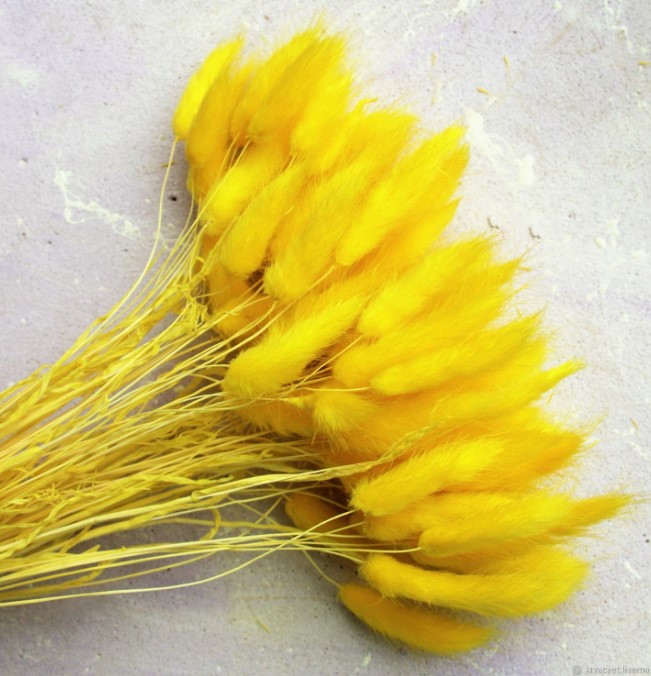
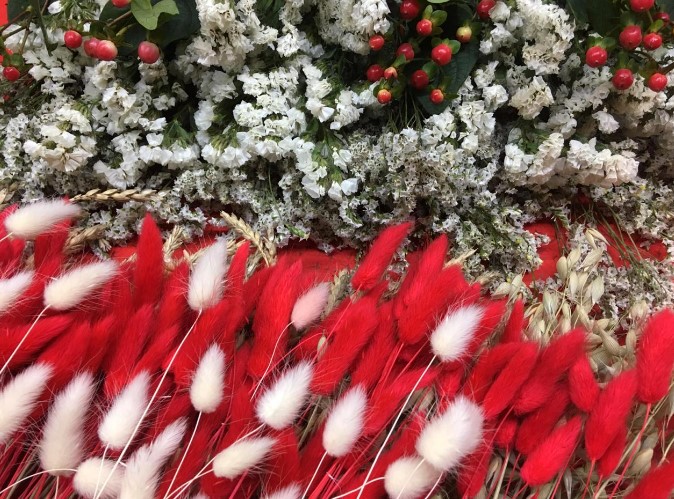
The spikelets are cut and dried for floral purposes. They can then be dyed any color. Lagurus can be used as a stand-alone arrangement or fits perfectly into any bouquet.
Photo gallery of lagurus used in bouquets
How to dye a hare's tail at home
You can paint the flowers using a special spray for floristry. Alternatively, you can use a less expensive option and paint the flowers with a regular spray bottle.
Lagurus is a favorite among florists and landscape designers. It can be stored for quite a long time and painted any color.
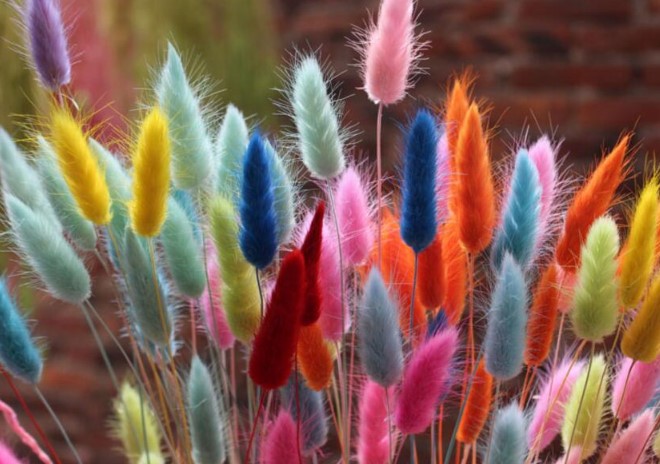
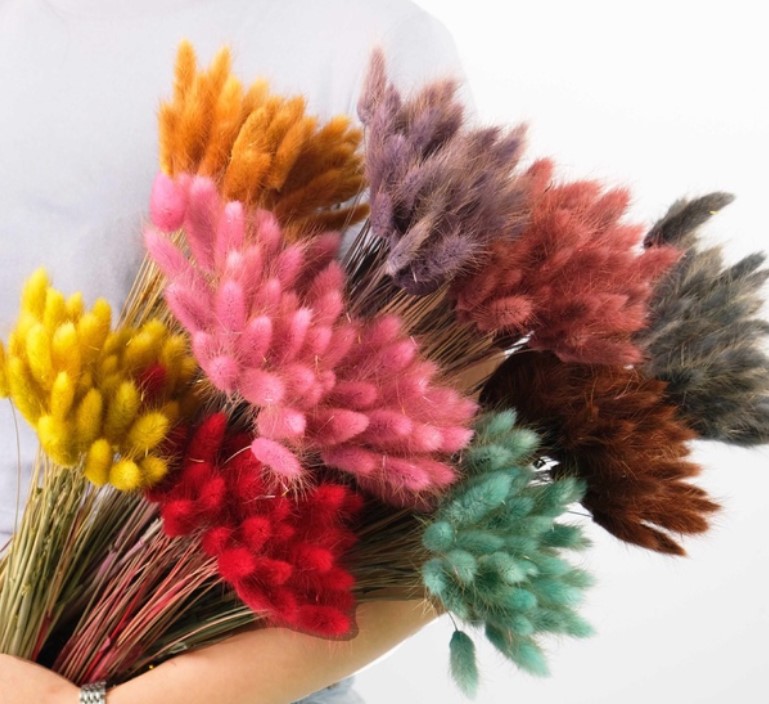
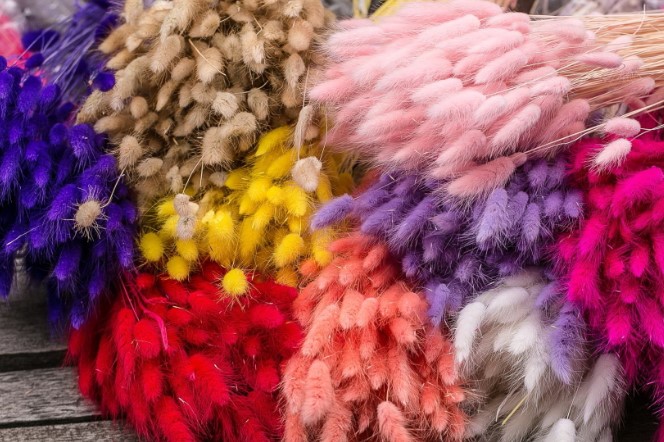
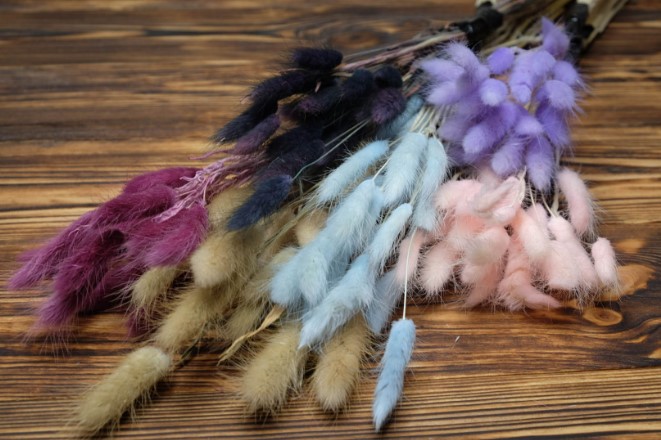
Photo gallery of painted haretails
Reviews of Lagurus from gardeners
This is a miracle of nature! Hare's tail or hare's tail grows in my garden and at home. A favorite dried flower of florists and children!
Greetings, dear readers! I'd like to tell you about the most unusual plant in my garden. The cutest bunny tails, which delight both adults and children. These soft, fluffy, decorative fluffy plants will captivate anyone who sees them for the first time. And with simple food coloring, they'll turn into a stunning, vibrant decoration.
Hare's tail is an absolutely undemanding plant, with a 100% germination rate. Sow seeds directly into the ground in May, and seedlings appear within two weeks. It can easily be grown in pots or indoors. I grow it in garden beds, pots, and ceramic pots.
The tails are not demanding in terms of conditions, but if you want to grow large specimens, you need to periodically feed the plants with flower fertilizer.Flowering begins in June, and the stems should be cut when they're greenish. They'll simply fall off later. Dry in bunches in a dark room, and after about two to three weeks, they're ready to decorate.
Lagurus can be colored with regular food coloring. Let it dry for two days after coloring, and the bright tails are ready.
This is a wonderful dried flower for children's crafts, floral decorations, and simply the cutest decoration. Most importantly, it's always readily available, and the seeds are available in many gardening stores. I immediately bought several packs of haretail seeds to decorate my flowerbed.The delicate, silky leaves don't handle heavy, prolonged rain well. They begin to droop, but with the sun, they become beautiful and decorative again.
Hare's tail is an annual dried flower, but it is so beautiful that you want to buy it again and again. I recommend purchasing such beauty; you will definitely not remain indifferent.
Thank you for reading my review, I hope it was helpful. I know flower reviews are rarely looked at, but I really wanted to share a little beauty.
Advantages
Decorative
Unpretentious
Good germination
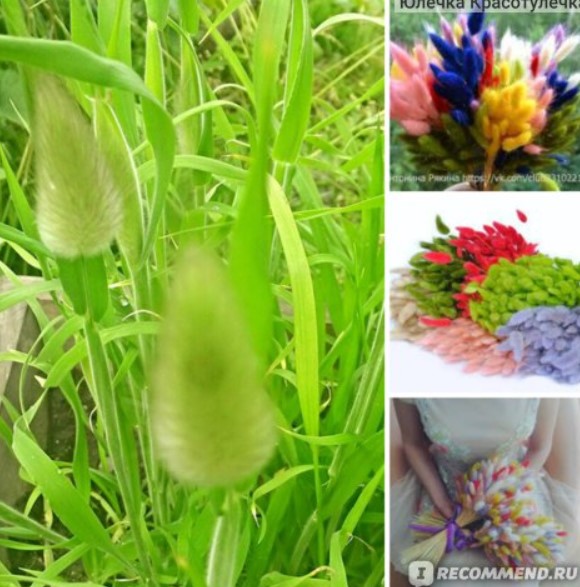
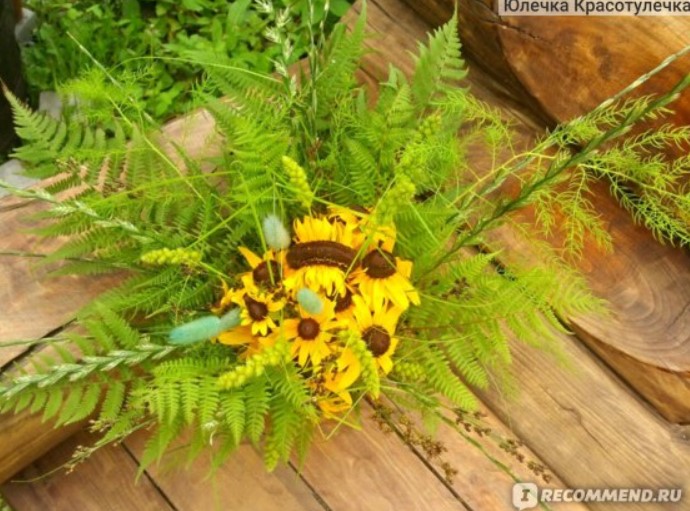
Review: Sedek Seeds "Lagurus Steppe Wanderer" - The Sweetest Dried Flower
ADVANTAGES:
Inexpensive, beautiful fluffy thing
FLAWS:
It's hard to find
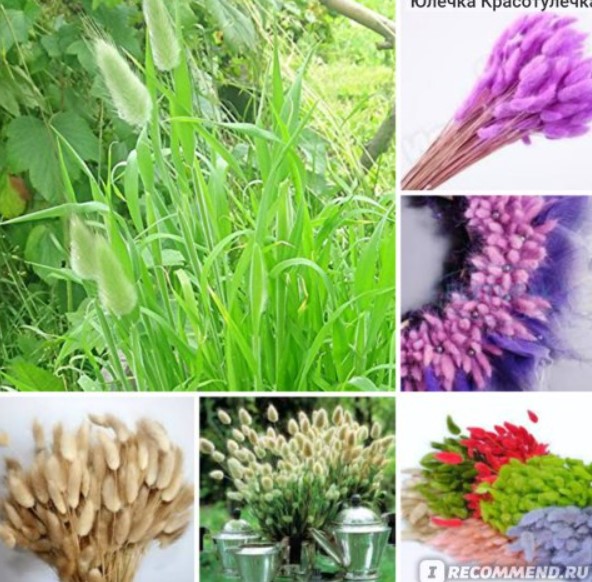
Lately, delicate bouquets of fluffy pink, blue, or white flowers have become increasingly common in flower shops. These bouquets and arrangements are typically sold in cylindrical cardboard boxes.This plant is a lagurus, commonly known as hare's tail or rabbit's tail. I started growing it before it became so fashionable. In my opinion, this charming fluffy plant pairs beautifully with many other flowers in the garden and is a great addition to dried flower arrangements (helichrysum, statice, echinops, etc.).
I tried sowing lagurus from different manufacturers, but the best results were achieved with seeds from Sedek.
Unfortunately, it's constantly out of stock on the manufacturer's website. I had to visit quite a few gardening stores to find the particular Lagurus 'Steppe Wanderer' that once performed so well. I found it expired at a wholesale warehouse.
The germination rate was very high, even with seeds that had been sitting in the store for a while. I grew them using seedlings with artificial lighting. At first, the seedlings seemed very weak, more like thin sedge. After planting them in open ground, they quickly gained strength. I planted the hare's tail in bunches. By midsummer, fluffy spikelets appeared.
I didn't wait for it to fully ripen and cut off most of it to dry.
I hung my spikelets upside down in a dark room. The shape set well after 4-5 days. I didn't bleach or dye them. I love the natural beauty of lagurus.
If you come across the "Steppe Wanderer," be sure to grab him and run off to sow your own hare tails!
Grow beauty and give it to your loved ones!
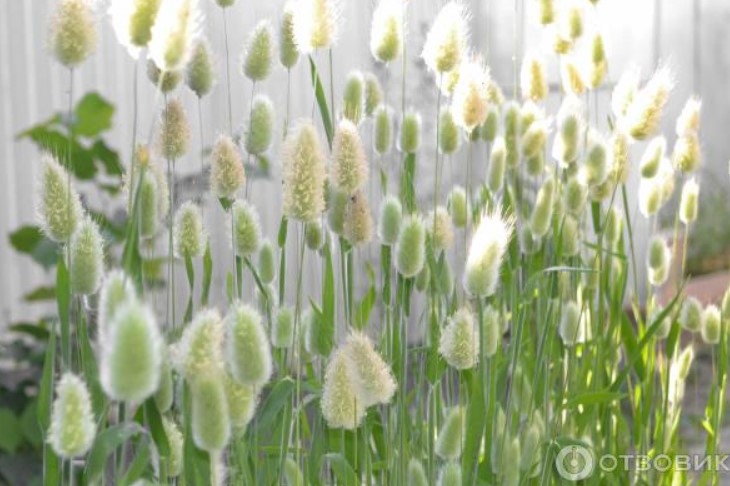
Review: Sedek Seeds "Lagurus Steppe Wanderer" — I've seen them many times, but I didn't know they were lagurus. Now I'm growing hare's tails.
ADVANTAGES:
decorative, beautiful
FLAWS:
No
Good day to all, dear readers)Today I will tell you about my latest balcony experience.
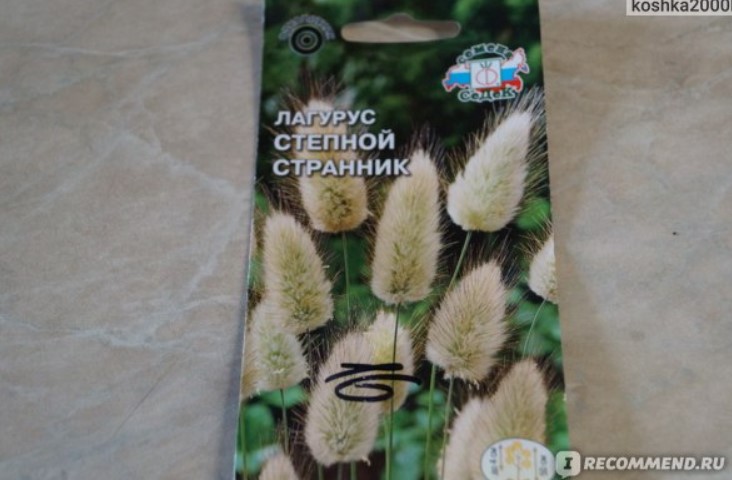
This time I grew a herb called Lagurs. It's also known as hare's tail.I bought the seeds in the spring. I fell in love with the picture I saw in the store. And I thought—whatever! I'll give it a try!
Until now, I'd seen these fluffy spikes in flower shops where they make bouquets and add lagurus. I'd also seen them from grandmothers at the market who sell flowers from their dachas and gardens.Dried lagurus plays a decorative role. Even in winter, it can stand in a vase at home without being disturbed.
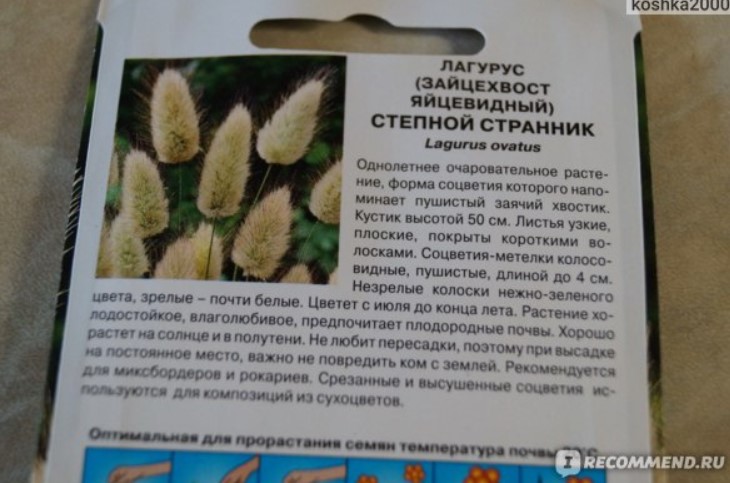
You can see information about the plant by clicking on the image below.
Now let's see what I ended up with.
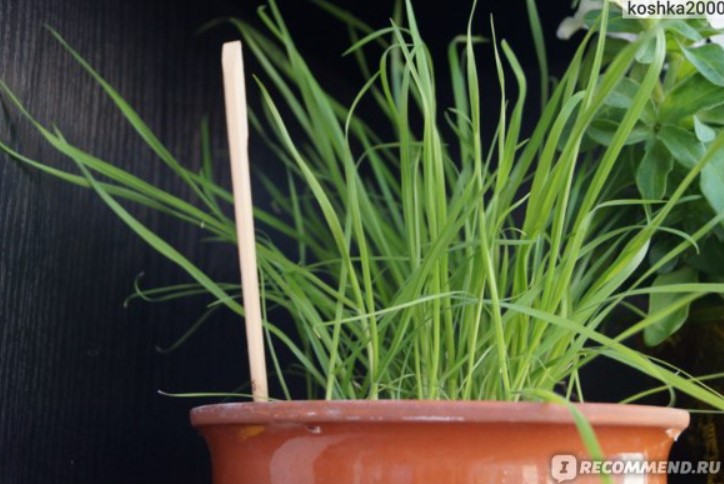
I planted the seeds at the end of April—I barely made it on time. I was too late, as they say. But the grass turned out to be responsive—it sprouted into such thin blades of grass, weightless—I would even say.But it was dark at home, even near the window, even in the east window. And it hadn't been warm outside for a long time this year. What a summer! She'd spent the entire summer wearing a jacket, minus two days.
So, I brought my grass out onto the balcony. But only when the nights stopped being so cold.
She liked it there better and the blades of grass began to grow wider, and not like at home - thin needles.
The blades of grass are so delicate, you're afraid to touch them with your hand, but my cat uses his paw, then his tooth, then his belly. He found a clearing.
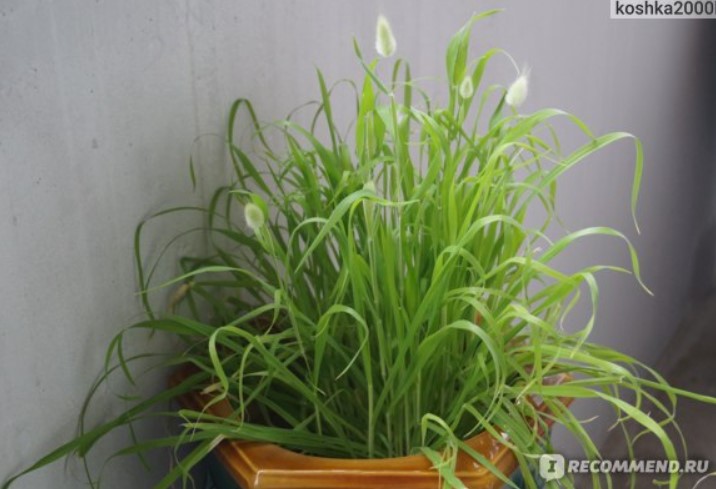
I barely saved my garden from these whiskered claws))) And just recently, this is what it all looked like on my balcony:
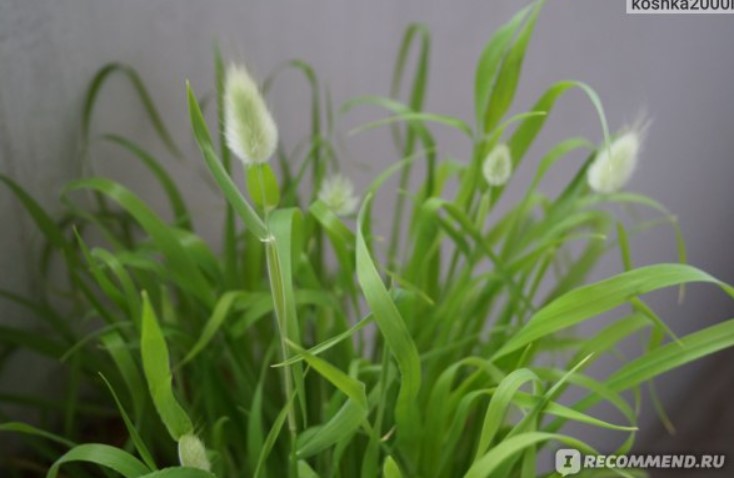
And at the end of July, as they say, the ears began to sprout.
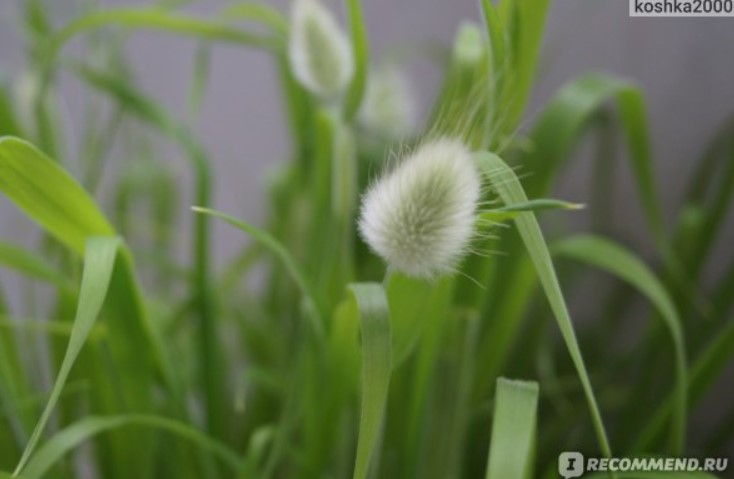
One by one, the tails began to appear)
I'll show you some of the first ones in the photo.
The cutest tails) Really?
They never reached 60 cm in height. Perhaps I'm cutting them back too early. I'm afraid I'll miss the opportunity and not cut them back in time. What if they start to turn yellow? You need to cut them while the stems are still green.
I've put a few stems out to dry for now. And new ones keep appearing in the pots day after day. But they're still not very tall.
Price.
The seeds cost me 16 rubles. They were all poured into a pot with soil, just on the surface. The seeds looked very delicate. I was afraid that if I covered them with soil, they wouldn't have enough strength to break through into the light of day.Germination.
It's hard to keep track. How many seeds were there, and how many sprouted? The seeds are so small that counting them is pointless.
The plant is annual, although it is said that in warmer climates it can be biennial. But that's not the case for us.
In this regard - ABOUT REPRODUCTION:It will be possible to look for the same seeds on sale, but for now I have not been able to find at least another pack.
The second option is to let a few ears of corn ripen and collect the seeds from them, which is probably what I will do.With that, I'll say goodbye. I'll just add a review from last year about how I grew ornamental beans on the same balcony.
If you're interested, take a look and see what's grown there.
And with that, I bid you farewell. I wish everyone's dreams come true! And be happy, dear readers!
Bye!
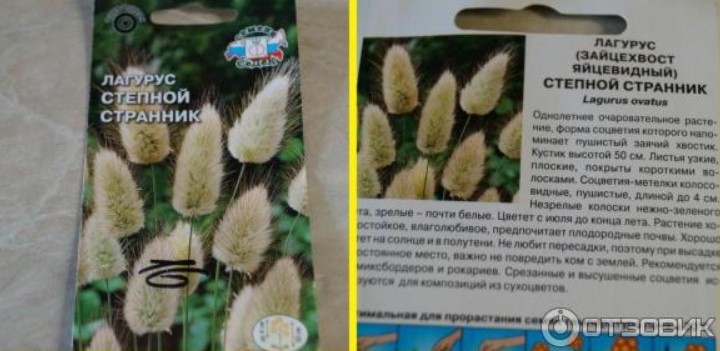
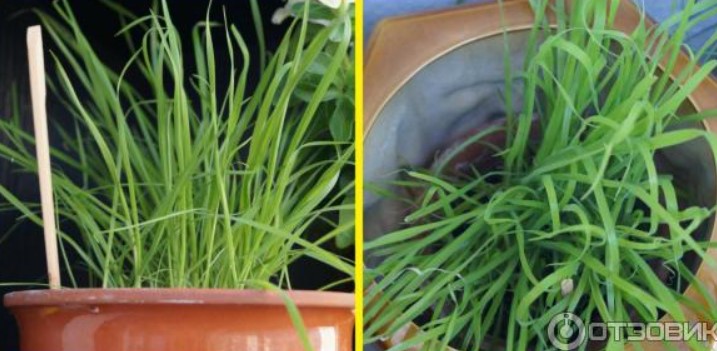
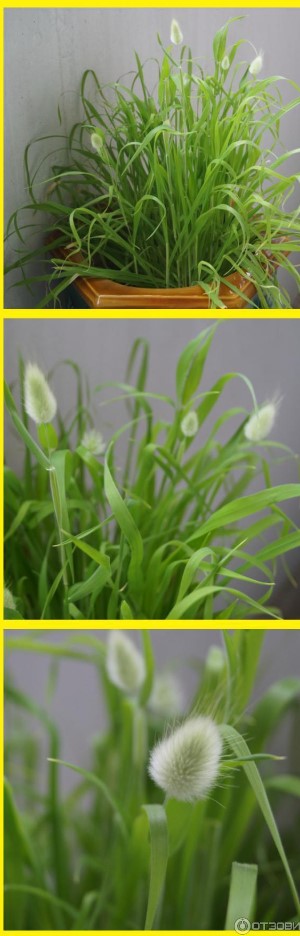
Fluffy creatures called hare tails. Lagurus on my balcony!
Price: 16 rubles
Good day, dear readers, gardeners and flower growers – amateurs)Today I'll tell you how I grew Lagurus on my balcony.
I saw a pack of seeds in the store and bought them without hesitation. I decided to try growing them.
You can figure out the price yourself - 16 rubles! Only!!!!
I sowed it in the spring at home in a clay pot.
The puny shoots appeared about a week later and were trampled by a cat.
I resuscitated him as best I could.
But the spring was cold, and there wasn't enough light at home for this herb. When I moved the pot out onto the balcony at the first sign of warmth, the herb perked up a bit.
Now I need to grow it to the right size and wait for it to become beautiful. But I have a mischievous cat who treats any grass in the house as food or play. We'll see if I can save the hare's tails...
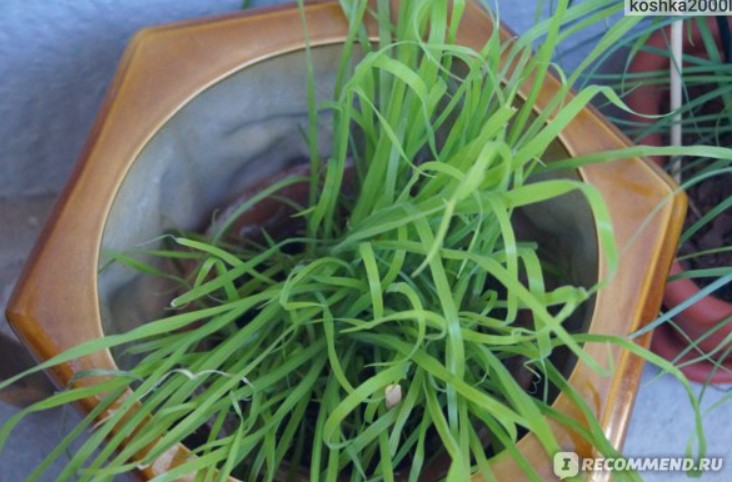
The grass on the balcony is finally starting to grow stronger. There's more light, but still no warmth. A day of sunshine, two showers of rain, and cool spells.
I'm still trying to save the cat. He's getting my grass.I'm putting it inside a ceramic planter and will even put it on a stand a little later. In the next photo, it's standing on the floor.
However, at the end of July, when I was away, my husband told me by phone that 6 fluffy creatures had appeared in a pot on the balcony)
And when I arrived, I found this cutest painting!
My potty is on a stand. The intentions, again, are noble: to keep the cat out of reach and to let in more light than if the potty were left on the floor.
I want my stems to grow and then, even when cut, to delight me at home throughout the winter.
At first there were 6 of them) I’m a gardener - I go and count them, the next day I look - there are already 11.
But the height is small - 20 - 30 centimeters.
I started looking on the Internet to find out how exactly it should be.
Under favorable conditions, the stems of this cereal grow up to 60 cm in height, and the lush, slightly elongated spikelets are 2-3 cm long. The spikelets are pubescent (2.5-4 cm) and lightly colored. The long, flat leaves are attached to the stem at the base, reach 20 cm, and are covered with fine hairs. The foliage is silvery-green.
To achieve maximum spikelet height for use in flower arrangements, lagurus requires optimal growing conditions. The soil should be fertile and loose; sand can be added. Nitrogen fertilizer is applied every 10 days before flowering, along with watering. After spikelet formation, fertilize twice with a complex fertilizer. Access to light for 12-14 hours is essential.
I've never paid attention to what my friends and friends of friends planted before. We don't have a dacha, so I'm saying this. Maybe some of them grew Lagurus in normal conditions, I don't remember. Out of curiosity, I had to use my balcony. It's my playground.
Turns out:
The Mediterranean coast is considered the lagurus's homeland, so it prefers dry, rocky areas. In mild climates, it grows as a biennial, delighting with its spikes in spring, but in colder regions, it doesn't survive the winter. As an annual, it blooms in July-August; in warmer climates, the spikes appear in early May.
And we happen to be in a cold region—Karelia. So July and August are the perfect time for the blooms on my balcony.
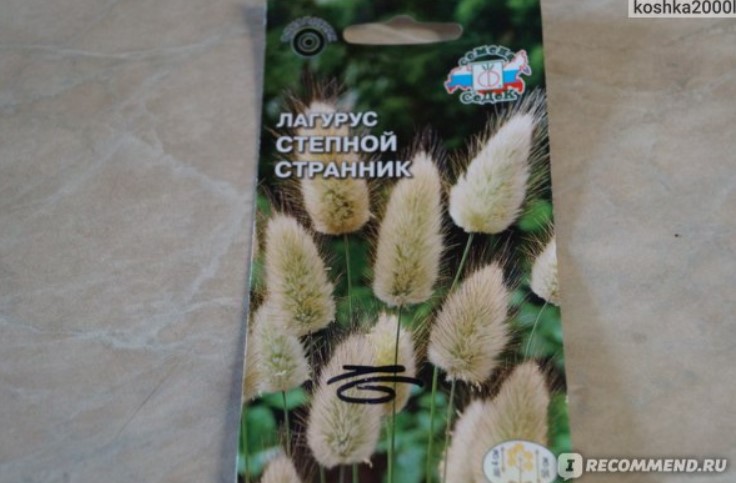
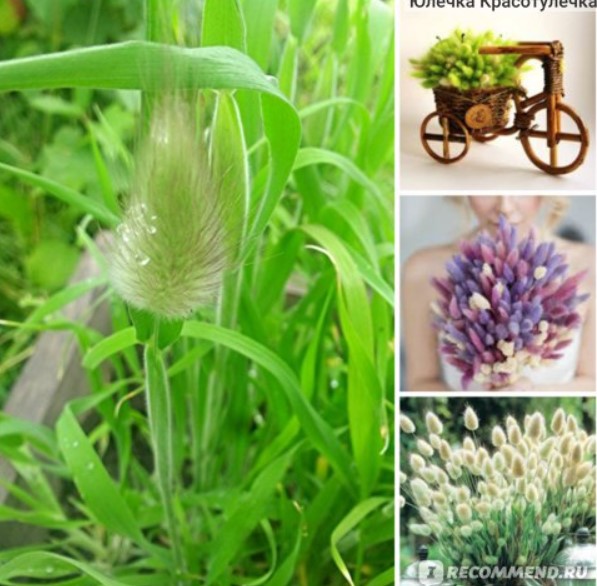
In the photo we see on the packaging, the hare tails, which is what Lagurus is popularly called, are light-colored, but mine are still greenish.
I'll cut mine off later.
Flower heads for bouquets are cut before they begin to turn yellow. This will prevent them from shedding and will preserve their attractive appearance for a long time. Wait until the dew has dried before cutting, meaning cutting is done around midday or early evening.
It's too early for me to cut it, but I definitely will. I want this grass to be in our home both in the fall and winter, pleasing to the eye and creating a cozy atmosphere, reminding us of summer.
The stalks can then be dyed and used in bouquets or on their own. I'll likely leave them in their natural state. See below how vibrant they can look with dye.
I think my experiment, though only half successful, was successful. The second part will be realized when I cut off the fluffy stalks and try drying them.
Well, the third will happen when I leave some of the ears of corn for seeds and try to plant them next year.
I recommend you try growing hare's tails! I think many will agree that this is a rather cute plant, suitable for decorating both fresh and dried.
Thank you all for your attention to the review and see you again.
Advantages
Decorative
Unpretentious
Good germination