Lilies of the valley are rare flowers, listed in the Red Book. There are several interesting facts about them. It has been established that the Egyptians grew them year-round as early as 2,000 years ago. They began to be cultivated in Europe in the 16th century, and in Russia in the 18th. Before that, they were collected exclusively for medicinal purposes (treating fevers and epilepsy). During World War I, they were used as an antidote to gas attacks. Finland has chosen this flower as its national symbol.
Herbaceous perennials are common in the temperate zone and grow in shaded areas.
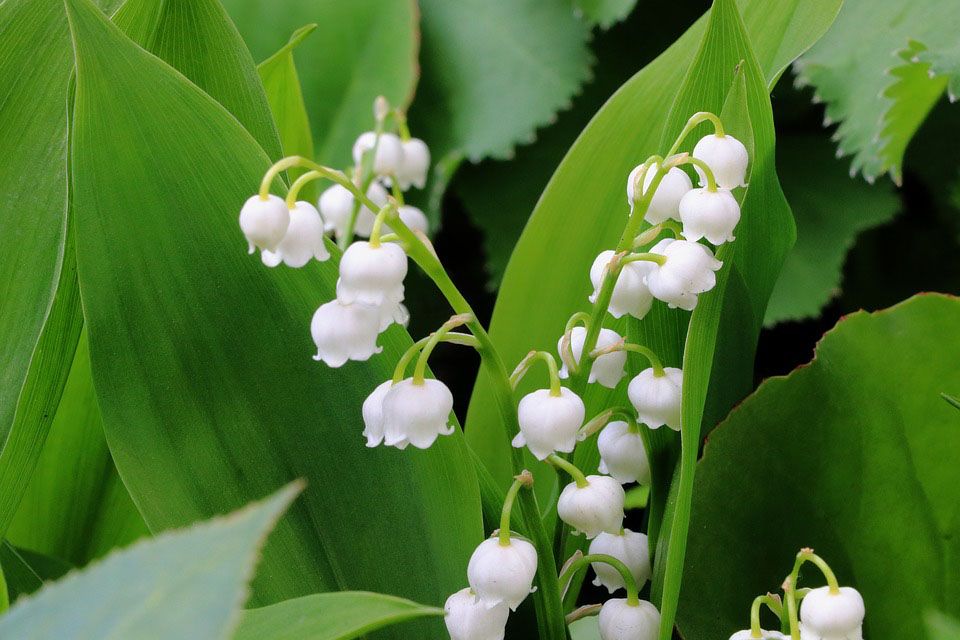
If the soil is well-moistened, they form entire meadows. Once in such a place, you can't help but be captivated by the unusual beauty and wonderful aroma. Because of their small buds and slender stems, lilies of the valley are often called forest bellflowers, May Day flowers, and rejuvenating flowers.
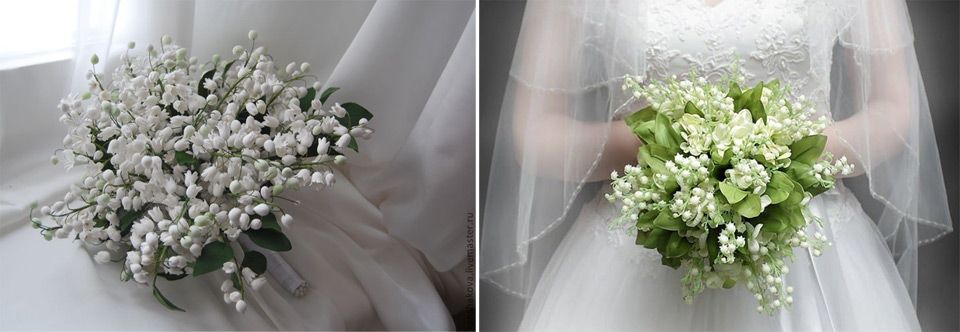
Bouquets of these delicate flowers symbolize affection, love and gratitude.
Content
Description of lily of the valley, what it looks like, photo
Lily of the valley is classified in the Nolinaceae subfamily. The precise classification remains controversial. Contrary to popular belief, several varieties exist. They have minor differences and many similarities.
The root system is quite well developed. Numerous small branches provide the plant with essential micronutrients and water. The rhizome contains nodes from which the leaves emerge. They resemble small olive and dark purple scales.
The first pair of leaves forms from the root apex. Flowering occurs once every 2-3 years. Corollas appear on plants that are at least 7 years old. The flower stalk develops over several years. The root system then divides into several parts, resulting in the formation of young plants.
The perennial typically grows no more than 30 cm tall. Its above-ground shoots are not particularly long. The stem grows from the corner of the lowest-lying leaf.
A raceme of small, snow-white corollas is located on the inflorescence. A single plant can bear between 6 and 20 bell-shaped flowers. They are oriented in the same direction. Additional characteristics include curved peduncles and teeth on the corolla.
The fruits are orange, round berries that appear after the plant has finished flowering (in the first months of summer). Inside the capsule are one or two seeds.
New plants are produced using seeds and rhizomes. Ornamental varieties differ from wild varieties in their larger corollas. The rhizome in both cases is creeping. The flowers are drooping, with short stamens nestled within the bells.
Lilies of the valley are poisonous, so extreme caution must be exercised when using them for various purposes.
Types and varieties of lily of the valley: May and others
Researchers often argue about which category lilies of the valley belong to.
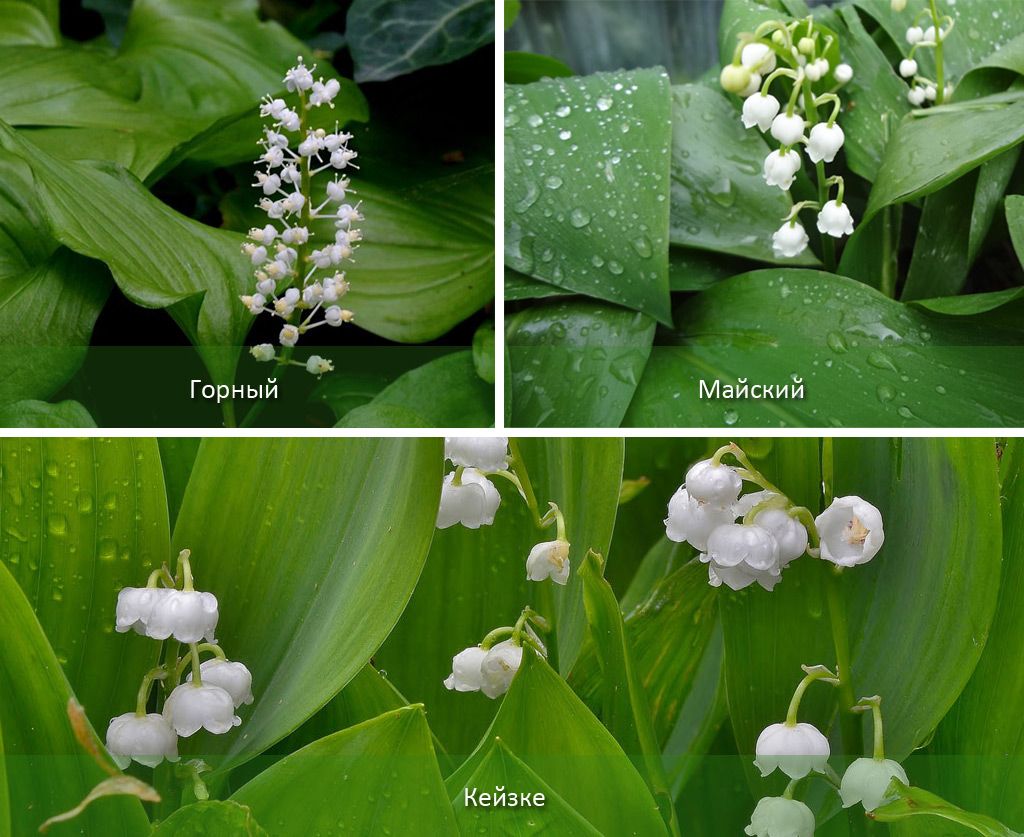
Some consider it a single plant. Others believe it can be divided into several varieties based on differences in structure and habitat. The classification system is as follows.
| View | Description | Leaves | Flowers |
| May | It grows on forest edges. The root system is horizontal. Height: 30 cm. Lilies of the valley emit a very pleasant fragrance. Reddish-brown fruits appear in the fall, no larger than 9 mm. Flowering begins in May. These plants can be found in Europe, the Caucasus, and Russia. | Sharp. | They are located on the footrest. There are teeth. The color of the corolla is white. |
| Mountain | It grows in the mountainous regions of North America. It has a short stem and a branching rhizome. The fruits are reddish-orange in color and measure 9 mm in diameter. | Length – 40 cm width – about 4 cm. |
The inflorescence consists of 5-15 broadly bell-shaped flowers. |
| Keizke | Its distribution includes North America, Siberia, and Sakhalin. The plant has a short brown stem (about 20 cm) and a developed fibrous rhizome. | Length – 15 cm. | Large buds, maximum number – 10 corollas. |
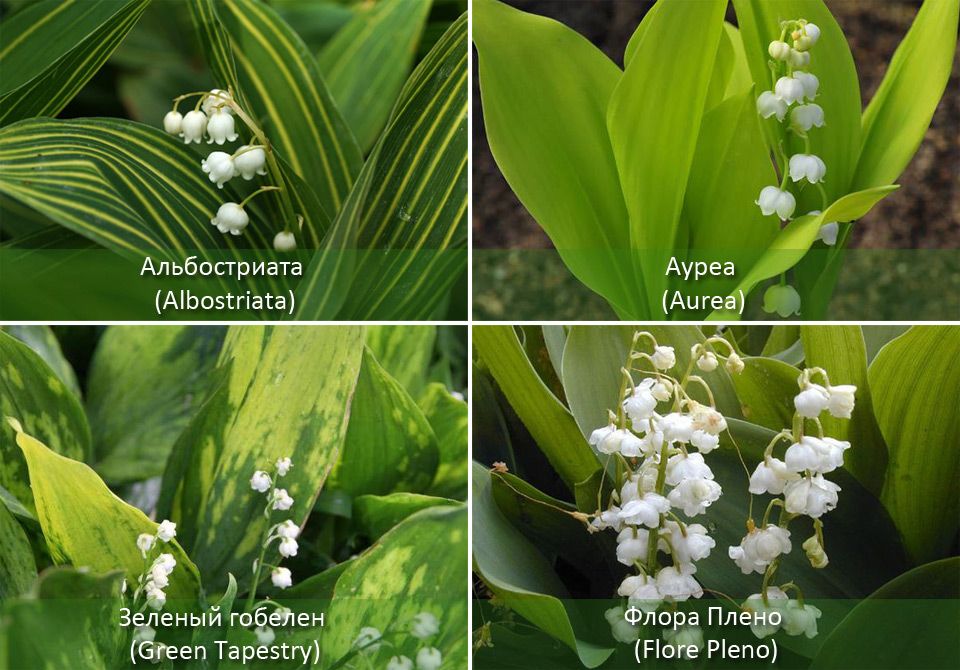
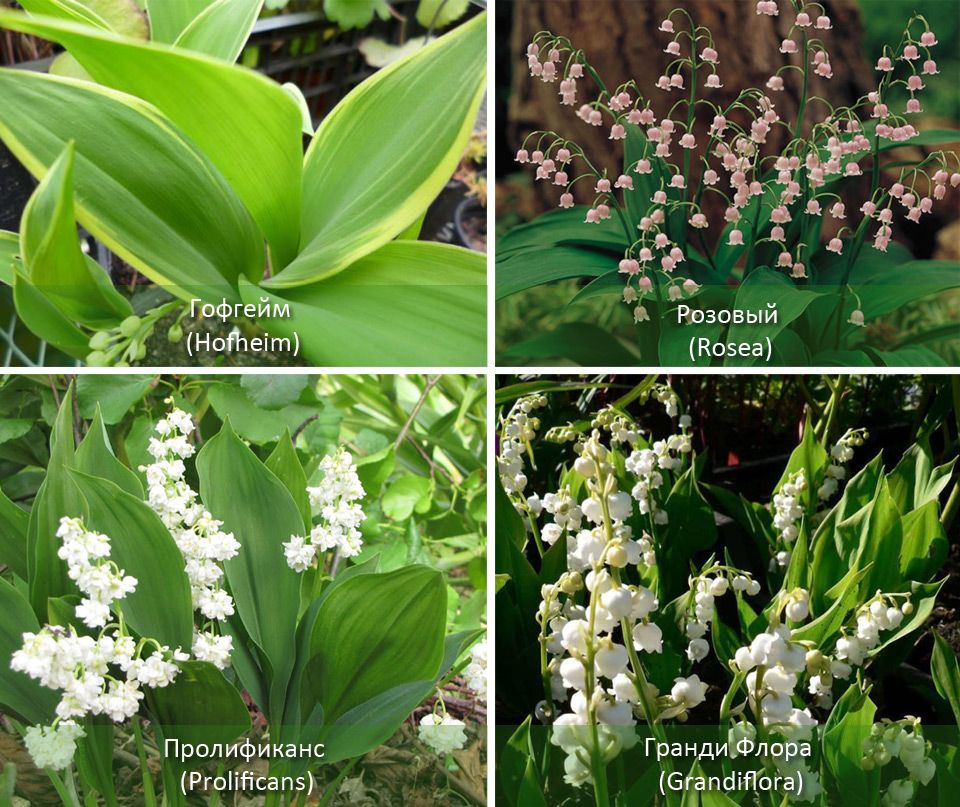
Based on the above varieties, breeders have created the following cultivars:
| Variety | Peculiarities |
| Albostriata | The leaves have decorative beige stripes. |
| Aurea | Yellow leaf blades. |
| Flora Pleno | The height of the plant is 30 cm, there are 12 large ones on the stem double corollas. The inflorescences are white. |
| Grandi Flora | Characterized by the presence of large leaves. Emits an enticing aroma. |
| Green Tapestry | Leaf blades are light green in color. |
| Hofheim | The leaves of this variety have a pale brown edge. The inflorescences have a dazzling white hue. |
| Prolificans | The flowering period lasts 60 days. Each flower contains numerous small corollas. The plant is characterized by low growth. |
| Pink (Rosea) | Characterized by an unusual, delicate pink color, the cluster contains 12 to 14 buds. |
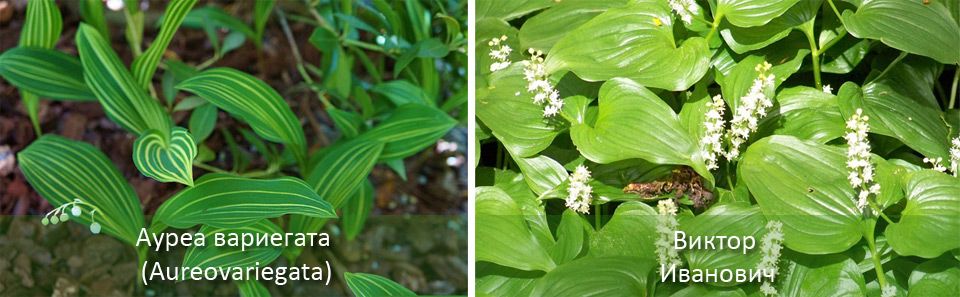
| Aurea variegata | Longitudinal sand stripes on the leaves. |
| Victor Ivanovich | The plant grows to 50 cm tall. The inflorescence consists of large corollas. Nine to 19 white buds can be found on the stem. After the flowering period (about 20 days), bright red berries appear. |
Planting and propagation of lily of the valley
To plant a flower, you don’t need any special skills.
Location
The first step is choosing a site. The soil should be neutral and fertile. Lilies of the valley thrive in shade, so choose a site protected from direct sunlight.
The soil must first be plowed and organic and mineral fertilizers added to it.
Planting times and methods for obtaining new lilies of the valley
Planting in open ground occurs during the first two autumn months. Propagation is accomplished using rudiments or rhizomes with buds.
The prepared crop is planted in rows. A space of at least 9 cm must be left between plants.
The seeds are planted in the soil in the spring. The bed is watered regularly. The emerging sprouts are covered with soil. The layer should be no more than 2 cm thick.
Forcing
This is done with garden varieties of lily-of-the-valley. This ensures their off-season flowering. It is not recommended to experiment with field varieties. Stems harvested in the fall are placed in containers filled with sand. The plant parts are then positioned vertically. During winter, the containers should be insulated, for example, with straw.
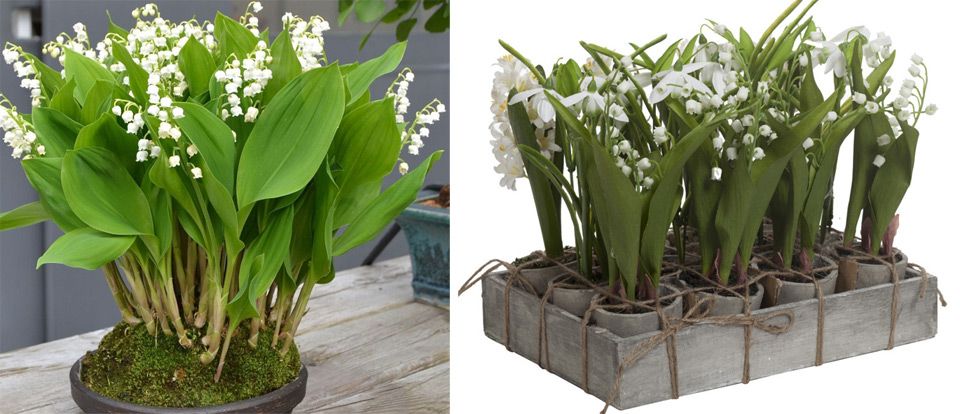
A mandatory step is treating lily-of-the-valley plants. This is done using wet cultures. For three weeks, the sprouts are kept at a temperature of 0°C (+/- 1°C). On the 22nd day, they are placed in warm water.
When forcing wild (field) grass, add soil to the box with organic fertilizer. The buds should remain on the surface. After adding warm water, cover the soil with moss.
Top.tomathouse.com informs: the beneficial properties of lily of the valley
Lily of the valley is widely used in medicine and cosmetology.
Medicine
The healing properties of these flowers are due to their composition. The plants contain cardiac glycosides, organic acids, and micro- and macroelements. Medicines made from the extract have a positive effect on the liver, thyroid gland, central nervous system, and gastrointestinal tract.
When used correctly, the medications improve heart function, stabilize the general condition, eliminate pain and spasms, and normalize water balance.
Lily of the valley is used to treat viral and cold-related illnesses. The above-ground parts of the plant are used in the preparation of the medicine.
It should be noted that the berries, rhizomes, modified shoots and seeds are poisonous.
Application in cosmetology
Lily of the valley oil is used to create cosmetic products, through which:
- fight against congestion;
- improve skin tone;
- strengthen the walls of blood vessels;
- stabilize microcirculation;
- cleanse pores.
With regular use, skin becomes smooth and nourished, and hair becomes shiny and elastic. Essential oils are used to make toners, creams, and hair and face masks. This list can be supplemented with perfume compositions. They are characterized by their softness, sophistication, and freshness.
Contraindications
The list of absolute restrictions includes the following pathologies:
- liver and kidney dysfunction;
- heart failure;
- gastric ulcer and duodenal ulcer;
- gastritis;
- cardiosclerosis;
- endocarditis.
A significant reason to refuse medications and cosmetics based on lily of the valley may be hypersensitivity to the extract, exacerbation of chronic illnesses, childhood, lactation, and pregnancy.
Self-medication is strictly prohibited.