Cinquefoil is a subshrub plant belonging to the Rosaceae family. It is native to northern regions with temperate climates.
Description of Potentilla
An annual or perennial plant, it has an erect, creeping or spreading stem. The foliage is multi-lobed and green-gray. Shrub varieties are about 50 cm long and 1 m wide.
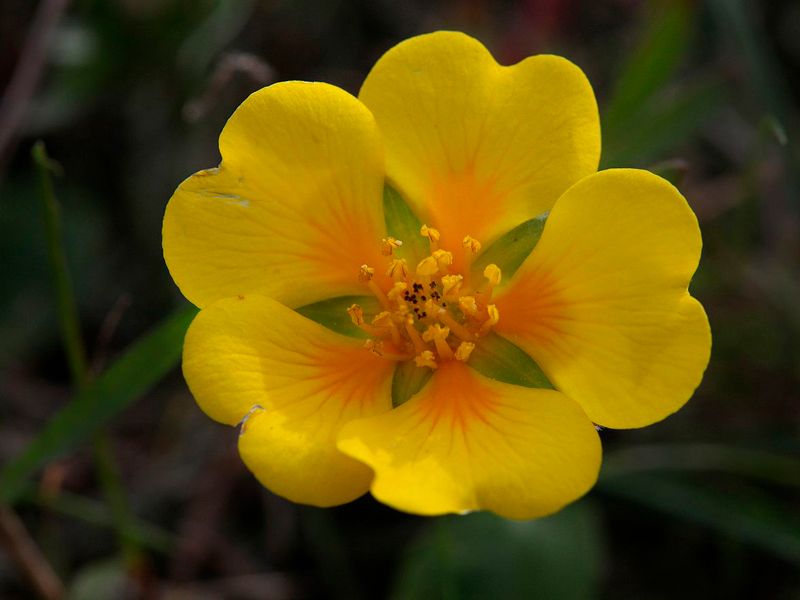
The inflorescences are corymbose-paniculate, occasionally solitary. The corolla color ranges from beige to red.
Flowering lasts from March to early autumn. The fruits are naked and contain up to 80 seeds.
Potentilla alba, erect, shrubby and other species
There are 320 varieties of cinquefoil in total, but only the following species are suitable for home cultivation:
| View | Description | Leaves | Flowers |
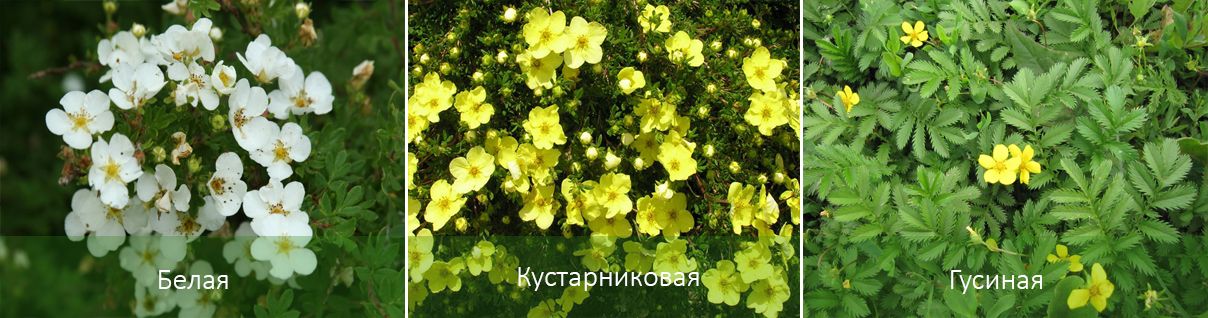
| White | A herbaceous plant reaching 8-25 cm. Flowering period is from late spring to early summer. | Elongated, ascending, five-fingered. Color – bluish-green. | Single, white. |
| Shrub | A frost-hardy species native to western Europe and Central Asia, the shrub reaches 1.5 m in height and about 1 m in width. The trunk is covered with brown-gray bark. | They have up to 7 segments, are lanceolate in shape, and have entire margins. They are pale green with a silvery sheen. | Single, golden-colored. Bud diameter up to 2 cm. |
| Goose | A perennial with a creeping trunk, reaching 80 cm. | Pinnately dissected, lacy. Densely pubescent on the inside. Light green. | Single, yellow. Peduncles up to 15 cm long. |
| Upright | A perennial shrub. The root system is cylindrical and woody. The trunk is erect and branched. Flowering lasts from late spring to early fall. | Five-fingered, have wedge-shaped lobes. | Single, golden in color. |
| Silvery | A herbaceous plant with a stem 30 cm high. Flowering period is the first half of summer. | Thickened, the inside is covered with silvery-white pile. | The inflorescences are corymbose and have small light yellow buds. |
| Nepalese | A perennial with a stem up to 50 cm tall. Native to the Himalayas and Nepal. The trunk is significantly branched. | Palmate, rich green in color. | Single, large, with obovate or heart-shaped petals, the flowers come in various shades of pink. |
Potentilla varieties: description and photos
Among the presented types of cinquefoil, there are varieties that have also gained popularity for home cultivation:
| Variety | Description | Leaves | Flowers |
| Abbotswood | A cushion-shaped shrub plant, the stem reaches 1 m. | Pale green. | Inflorescences are racemose, buds are white. |
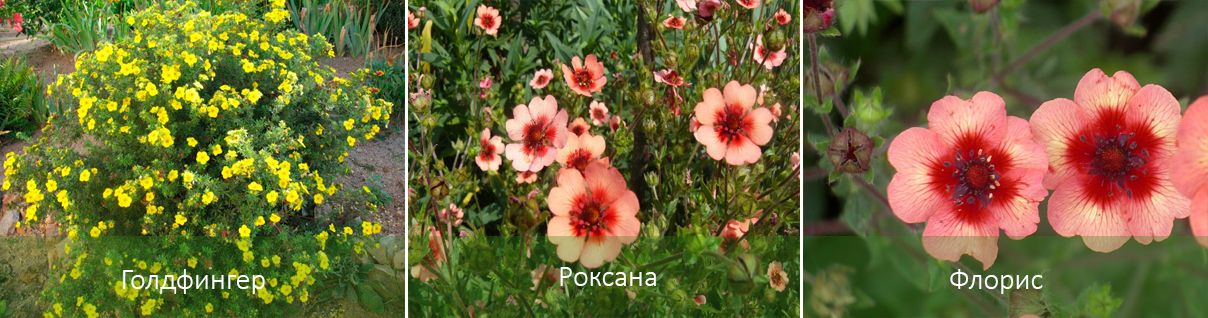
| Goldfinger | A creeping shrub that grows up to 1.5 m. Flowering lasts from early summer until October. | Lanceolate. Color: glaucous-green. | Large, rich yellow. |
| Roxana | A variety of Nepalese cinquefoil. It has a straight trunk, up to 50 cm tall. | Finger-shaped, dark green. | Salmon-orange, covered with thin dark stripes. |
| Floris | A shrub growing up to 50 cm. | Color – deep green. Shape – palmate. | The edges are coral, the core is dark burgundy. |
Planting cinquefoil in open ground
The flower is planted in partial shade, in dry sandstone soil. The soil is dug and leveled beforehand.
Seeds are often sown before frost sets in, allowing for natural stratification and simultaneous germination in the spring. The selected site is thoroughly loosened, adding humus, and this is done well in advance to allow the soil to settle. The soil is carefully leveled with a rake, the seedlings are scattered over the surface, and the soil is worked in.
Once the seedlings emerge, they are pricked out at a distance of about 10 cm and cleared of weeds. Once established, the bushes are spaced 20-40 cm apart.
To avoid damaging the planting material, seedlings are often used. In this case, seeds are used in March:
- prepare boxes and fill them with a mixture of peat and sand, taken in equal proportions;
- the soil is moistened;
- seeds are placed on the surface;
- the crops are covered with polyethylene;
- provide a temperature of +15…+18 °C;
- After the formation of two permanent leaves, the cinquefoil is transplanted into different containers.
They are placed in open ground at the end of the summer season.
The choice of location depends on the variety. There are both fussy and easy-to-grow species. For example, the glossy cinquefoil is placed in dry sandstone on the south side of the plot, while the white cinquefoil is planted in partial shade.
When planting seedlings in the ground, it is recommended to follow this plan:
- Make a hole. Place a layer of gravel at the very bottom, then fill the hole halfway with a mixture of leaf mold, humus, and sand (2:2:1).
- The rhizome neck is positioned so that it is above the trench. Empty spaces are filled with garden soil, compacted, and watered.
- For a month after planting, the soil is regularly moistened, preventing moisture stagnation.
- To prevent the soil from drying out quickly, mulch the area around the bush with sawdust, bark and straw.
Reproduction of cinquefoil
Flower propagation is carried out using three methods:
- dividing a bush;
- layering;
- cuttings.
It is recommended to divide the root system starting at four years of age. The bush is removed from the ground and, using a sharp, disinfected knife, divided into sections. Each new flower should have two to three growth buds. The rhizome is treated with a growth stimulant and the cinquefoil is placed in the soil. Space the seedlings 20-40 cm apart.
Propagation by layering is the easiest method. Select shoots growing from the bottom and make a cut along their outer surface. The cinquefoil is bent down, placed with the injured part in a previously dug trench, and covered with soil. By autumn, a rhizome appears, which is separated from the mother plant and transplanted to a new location.
For cuttings, prepare apical shoots about 10 cm long, removing any buds. Root them in a container filled with slightly damp perlite, or in soil, covered with a container. Mist the plants twice a day. Remove any emerging buds. After rooting, transplant the cuttings to another location and care for them as if they were mature plants.
Caring for Potentilla
Plant care involves weeding, loosening the soil, watering, fertilizing, and removing faded flower buds. Watering is only done if there is no rain. Every two weeks, add a bucket of warm water under each plant.
When mulching the area with peat and sawdust in the spring, the frequency of weeding and loosening the soil is reduced. Mulch is added several times during the summer.
Fertilize the plant three times per season with a mineral fertilizer designed for flowering plants. Purchase this at a specialized gardening store. During extremely hot summers, occasional misting is recommended.
Top.tomathouse.com warns of diseases and pests
The shrub has a strong immune system and is rarely affected by insects and diseases. However, there are a number of diseases that do affect cinquefoil:
- rust;
- spotting;
- powdery mildew.
If an annual is affected, no action is taken. The bush is discarded in September anyway, and its summer beauty will remain unaffected. If perennials are affected, they are treated with fungicides. Colloidal sulfur or Bordeaux mixture work well. Cutworms are occasionally a pest. These can be controlled using Decis and Fitoverm insecticides.
White cinquefoil: beneficial properties and contraindications
White cinquefoil is widely used in folk medicine, as its beneficial properties help combat the following pathologies:
- Problems with the endocrine system. It is used to treat thyroid disorders and dysfunction. Cinquefoil helps remove nodes and eliminate toxins from the body.
- Gynecological conditions. Decoctions of the plant normalize the menstrual cycle and resolve uterine cysts and tumors (even malignant ones).
- High blood pressure. Helps lower it and normalize heart and vascular function.
- Obesity. Used to improve metabolic processes.
- Stress. Medicinal products containing the plant have a positive effect on the central nervous system. They alleviate mental disorders, help cope with emotional distress of varying intensity, and relieve depression.
- Abscess. All inflammatory skin conditions or mechanical injuries heal more quickly if treated with white cinquefoil tincture.
- Gastritis. Medicines containing this plant have a positive effect on stomach acidity, relieve acute pain, and provide relief.
- Diarrhea. Cinquefoil contains tannins that quickly alleviate this problem.
However, despite all the positive properties of the plant, there are also contraindications to the use of preparations based on it:
- low blood pressure;
- colitis that accompanies atomic constipation;
- urolithiasis (the plant provokes the movement of stones, which get stuck in the ureter and cause an inflammatory process in the organ);
- bearing a baby (bleeding occurs, which negatively affects the baby’s condition);
- lactation (the effect of the flower on the child through mother's milk has not been studied, so experts do not recommend taking risks).
If you consider all the contraindications to using cinquefoil, the plant can relieve many conditions. And with proper care, it will delight you with its long-lasting blooms.