Lavender is a shrubby wildflower belonging to the Lamiaceae family. Its name comes from the Latin word "lava," meaning "to wash." It is one of the oldest plants, grown not only for ornamental purposes but also used in folk medicine since ancient times.
Content
- 1 Description of lavender
- 2 Lavender Planting and Care Chart
- 3 Types and varieties of lavender
- 4 Growing lavender from seeds
- 5 Care in open ground
- 6 Methods of propagating lavender
- 7 Infections and pests
- 8 Cultivation in the Central Region
- 9 Lavender in landscape design
- 10 What benefits and harm can it bring?
- 11 Contraindications
- 12 Reviews from lavender growers
Description of lavender
In its natural habitat, the plant grows in the Canary Islands, mountains, southern Europe, and Arabia. It is cultivated throughout the world, including in the colder regions of our country.
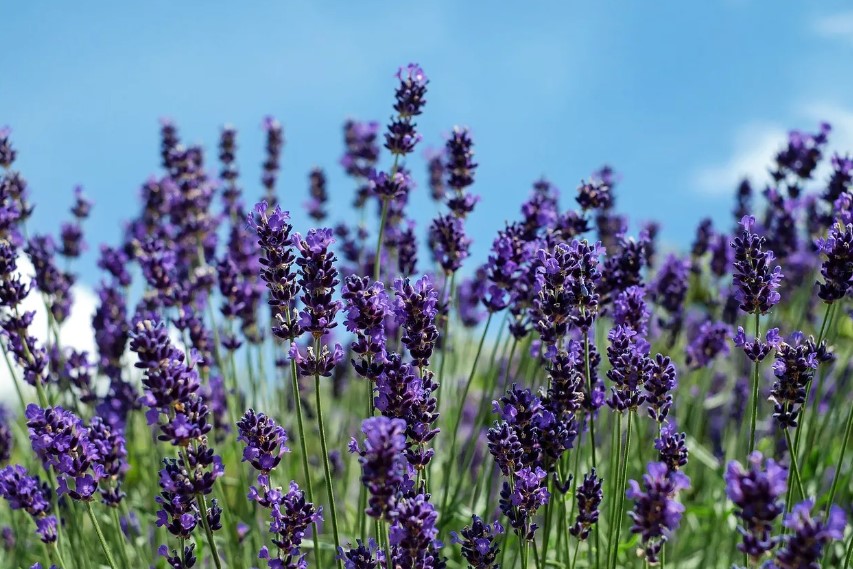
The flower is renowned for its medicinal properties. It is also used for culinary purposes, to repel insect pests from the garden, and to attract bees. Its decorative qualities and amazing aroma are also worth mentioning. The plant has a remarkable lifespan of about 10 years. And that's far from the limit. With proper care, lavender can live even longer.
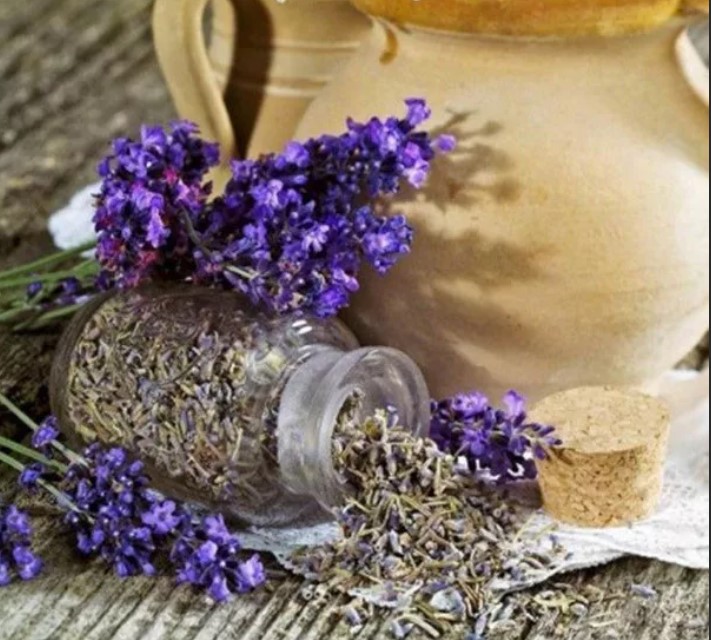
The bushes reach a height of 1 m. The taproot is highly branched at the top. The leaves are opposite, green or grayish-green, and up to 6 cm long. During flowering, which lasts from July until autumn, it forms spike-shaped inflorescences of varying shades (depending on the species). After flowering, fruits form in the form of four nutlets.
Lavender Planting and Care Chart
| Parameter | Conditions |
| Planting dates | Spring, late summer, autumn. |
| Priming | Planting is possible in black soil, sandy, infertile, and rocky soil. The main thing is to create a drainage layer. |
| Lighting | Open sunny areas are best, but can also grow in partial shade. |
| Bloom | It starts in midsummer and ends in autumn. |
| Watering | Moderate, avoid waterlogging. During drought, increase watering. |
| Top dressing | This is done twice during the growing season. In the spring, complex mineral fertilizers with a high nitrogen content are applied. In the fall, phosphorus-potassium fertilizers are applied. |
| Hilling | The procedure is performed on old plants in spring and autumn. |
| Trimming | After flowering has finished, you need to remove the faded inflorescences, but do not cut them too much, otherwise the bush may die. |
| Reproduction | By seeds, cuttings, layering, dividing the bush. |
| Pests and diseases | Leafhoppers, rainbow beetles, aphids, gray mold. |
| Wintering | When grown in regions with harsh climates, it requires winter protection with spruce branches. It is also recommended to grow lavender in special containers, which can be brought indoors in late autumn. In this case, watering during the winter should be kept to a minimum. |
Types and varieties of lavender
Lavender is most commonly grown in gardens, but other varieties also exist.
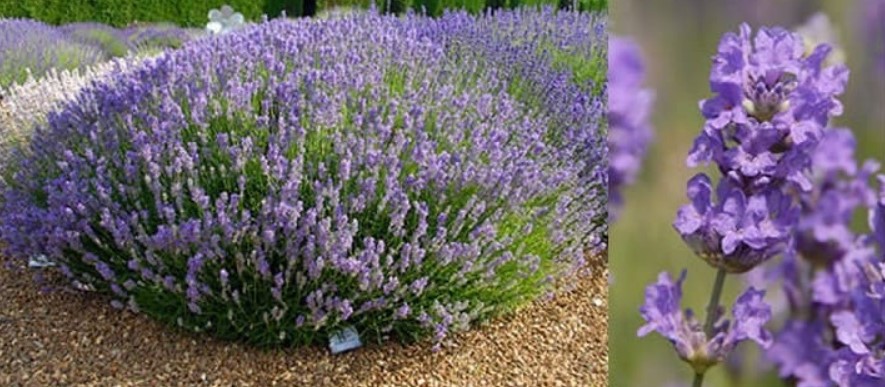
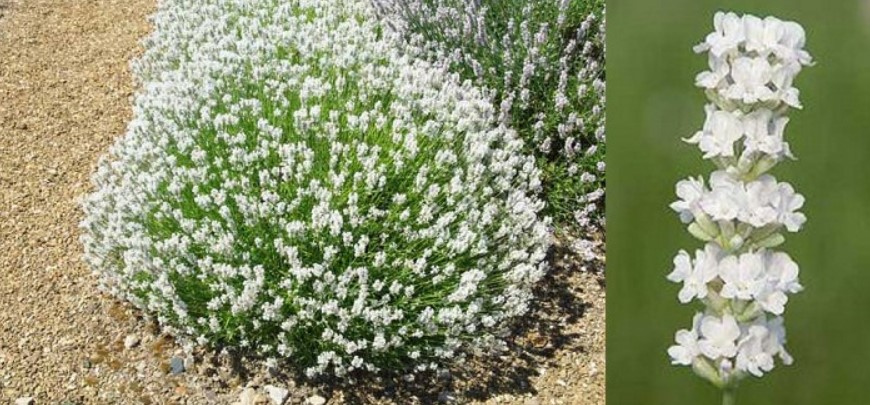
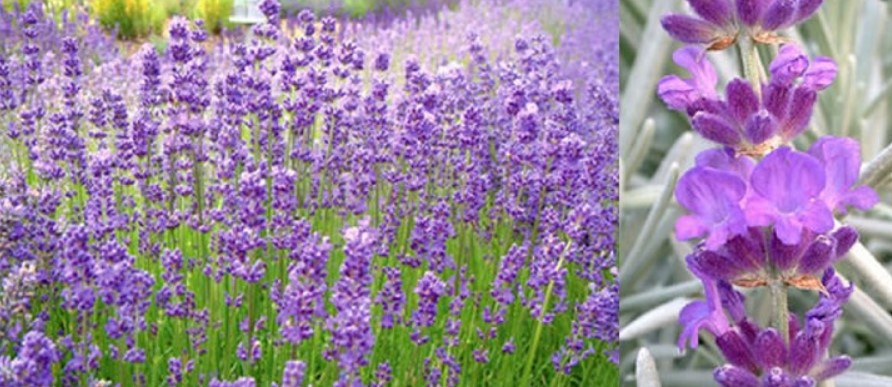
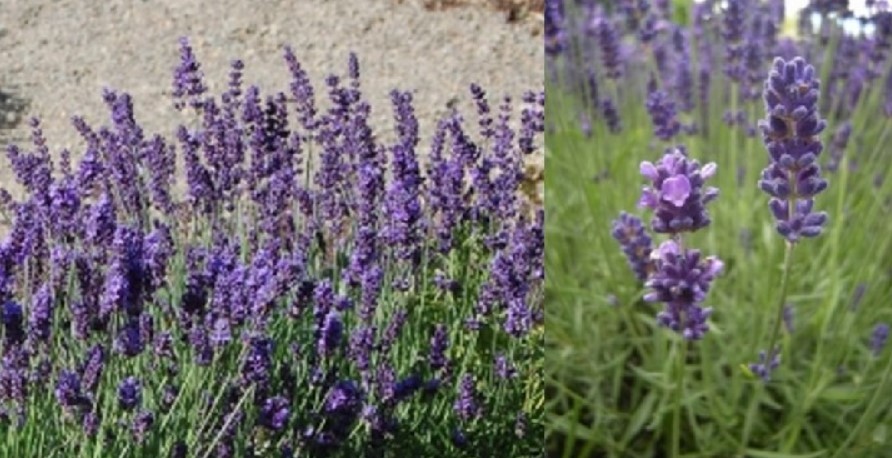
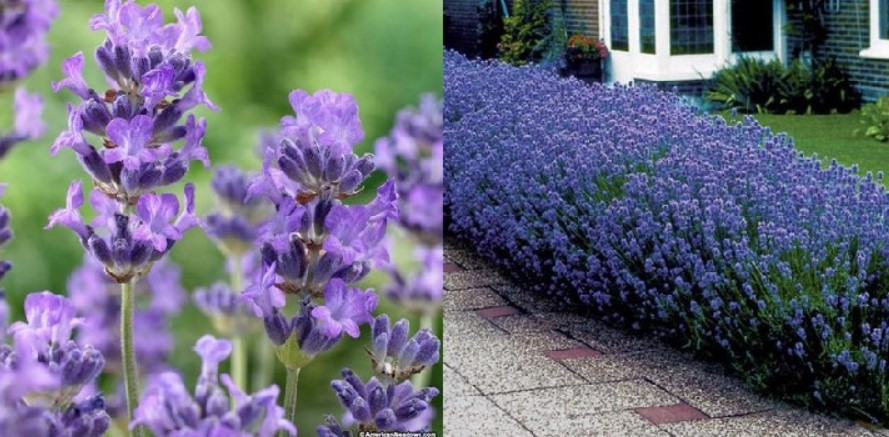
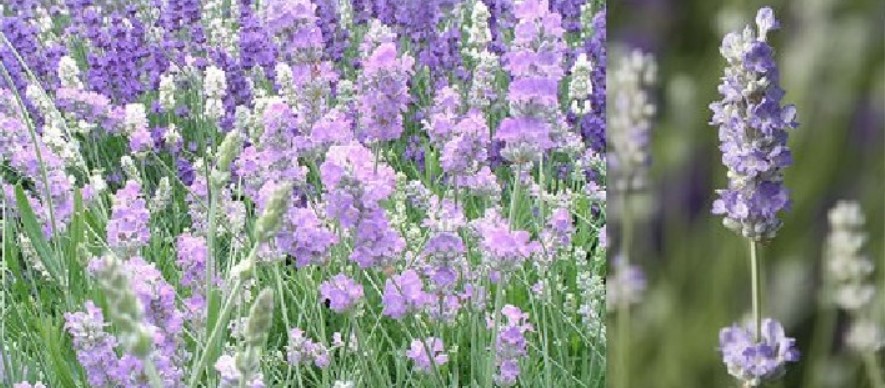
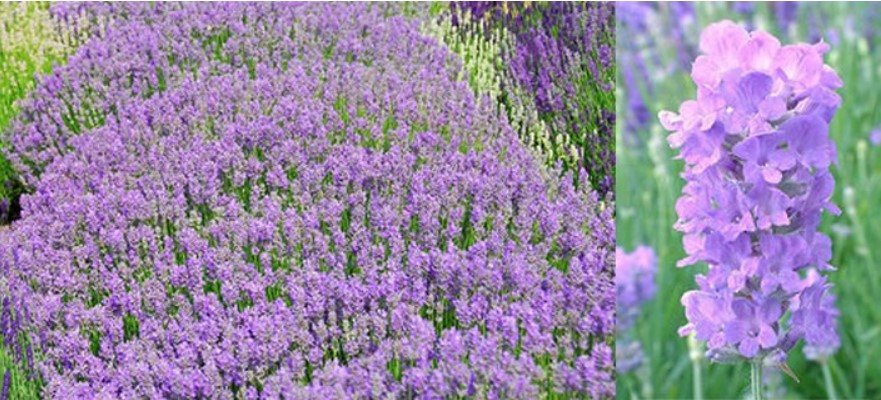
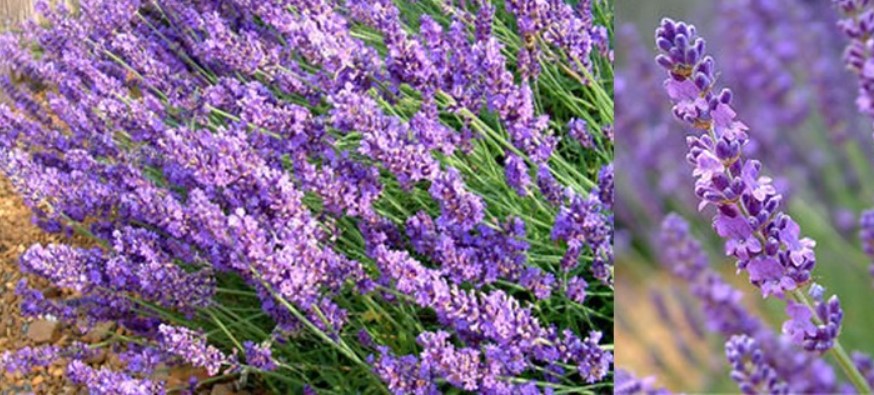
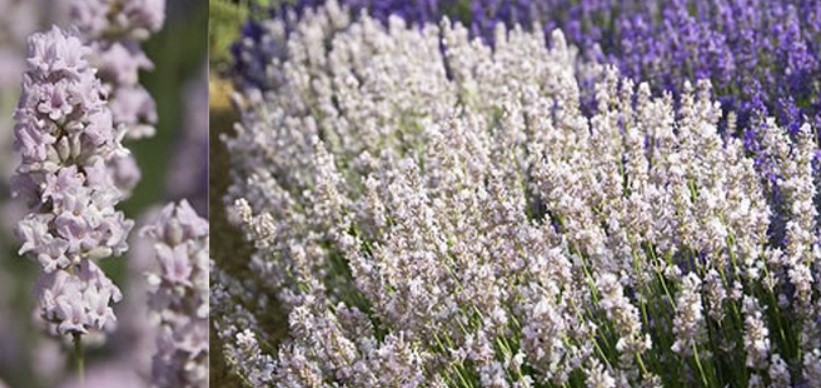
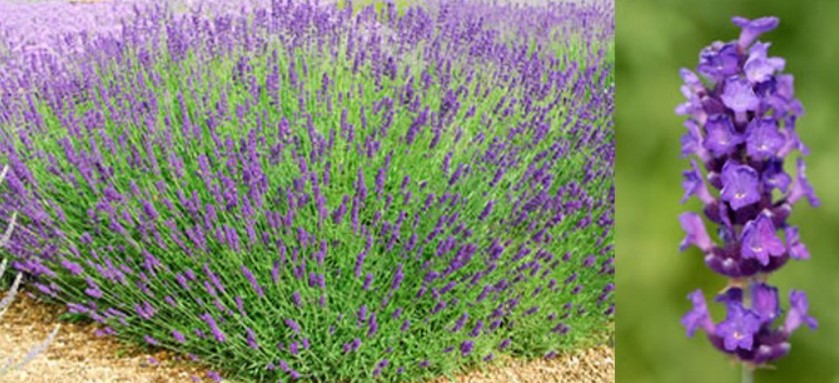
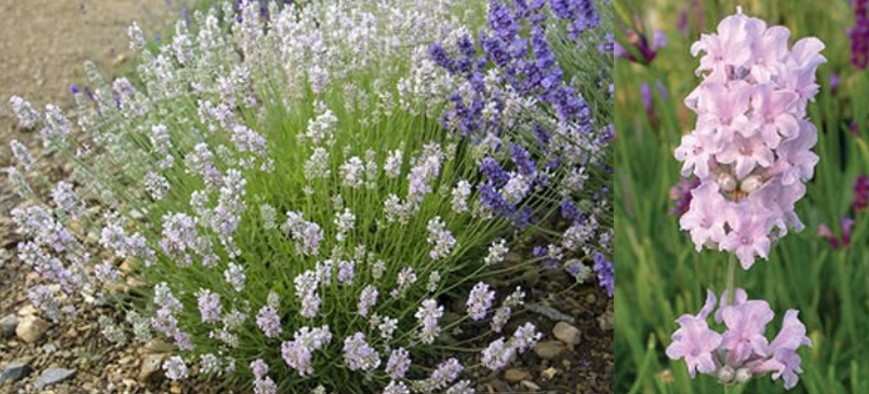
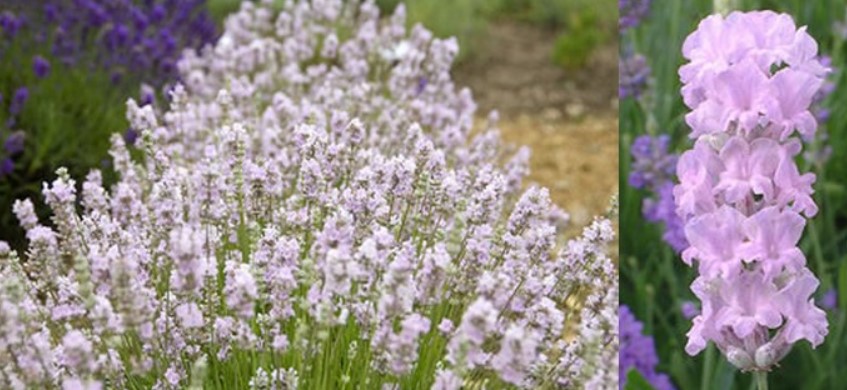
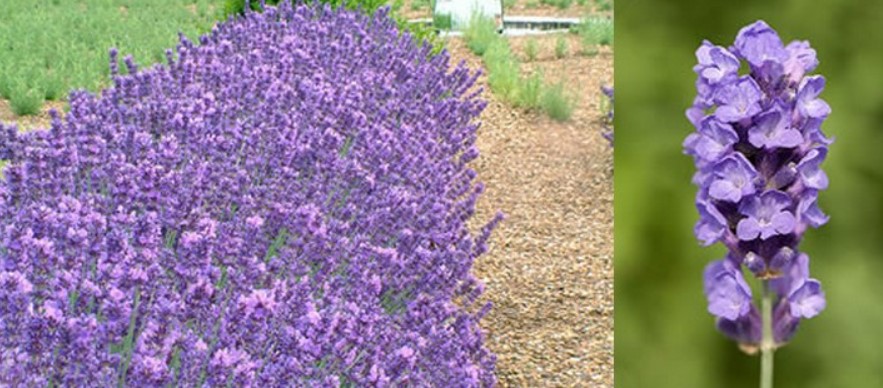
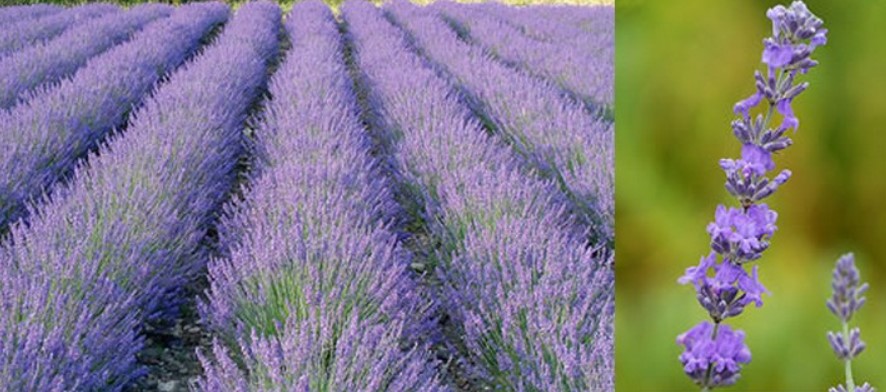
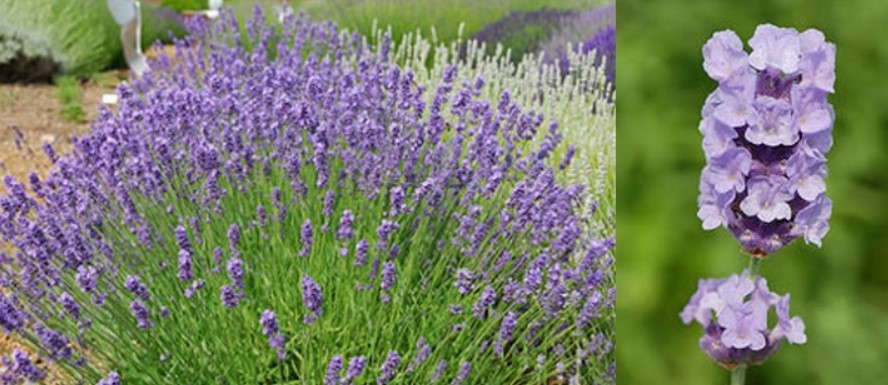
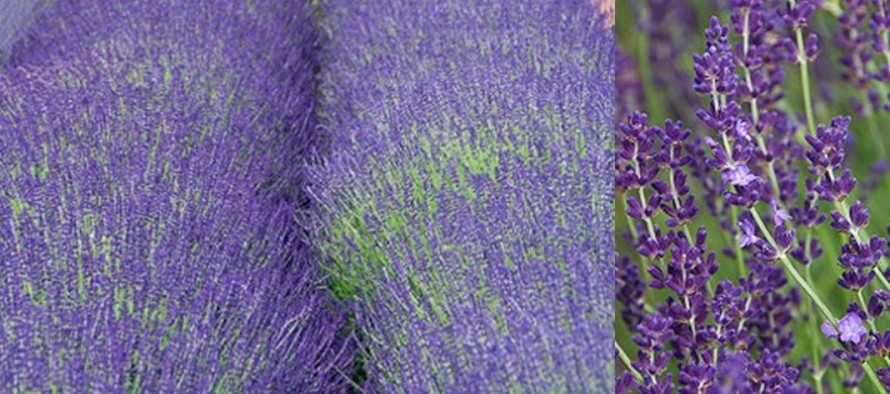
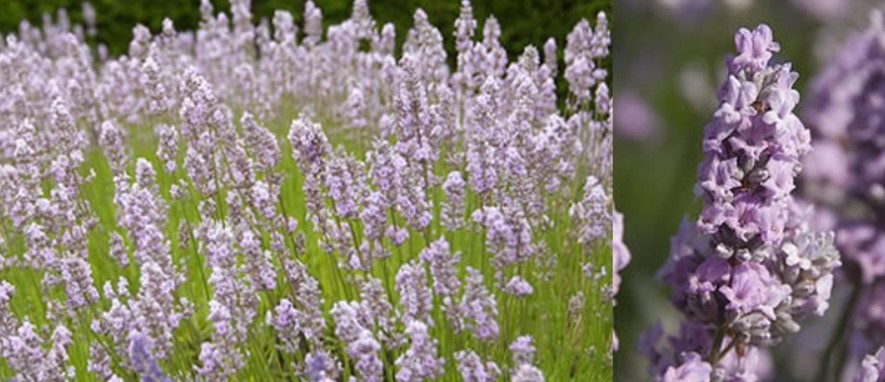
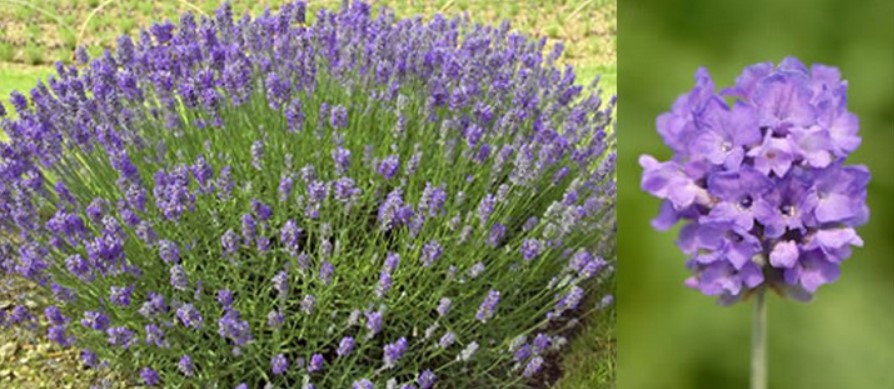
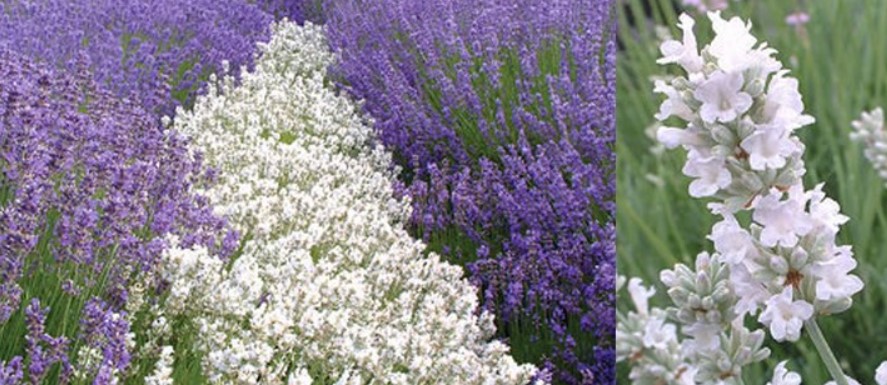
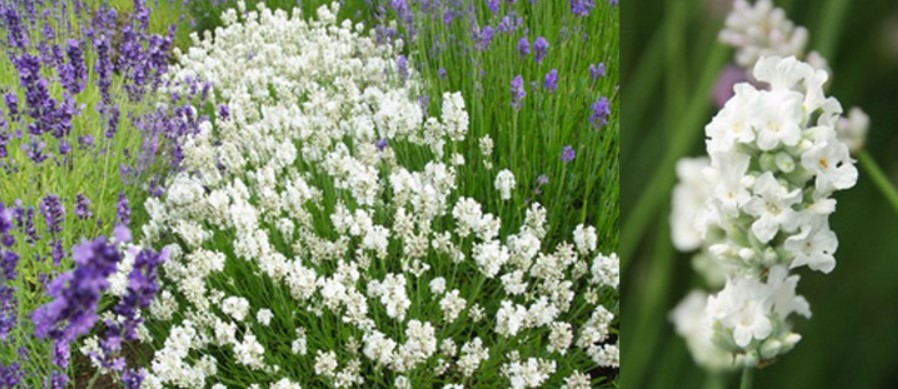
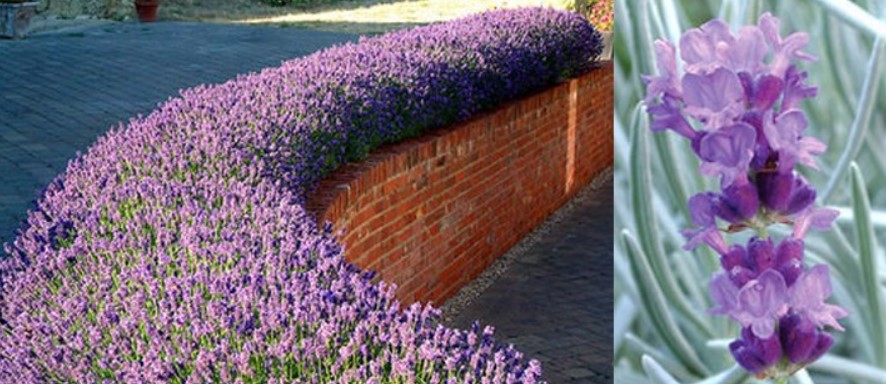
Lavandula angustifolia (true lavender)
An evergreen subshrub with grayish pubescence, reaching a height of 30-60 cm (rarely reaching 100 cm). Originally native to the French and Spanish Mediterranean coasts, it has now become naturalized in Europe, North Africa, and North America. In Russia, it is found along the Black Sea.
The most popular varieties of narrow-leaved lavender:
| Name | Flowers | Height (cm) |
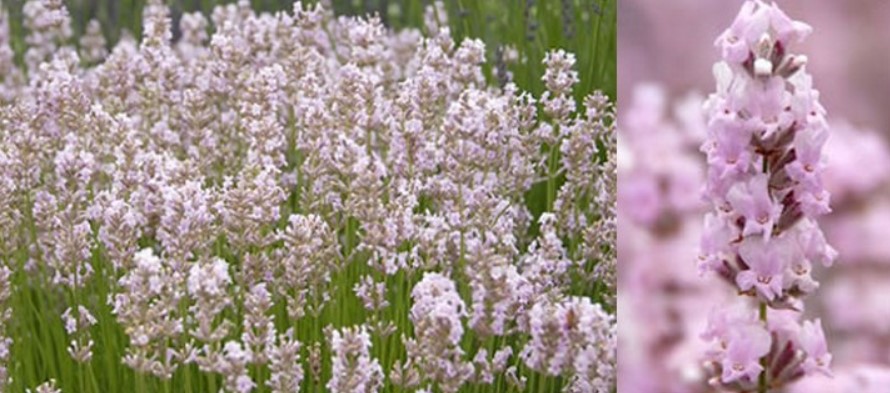
| Ashdown Forest
|
Pale purple | Up to 50 |
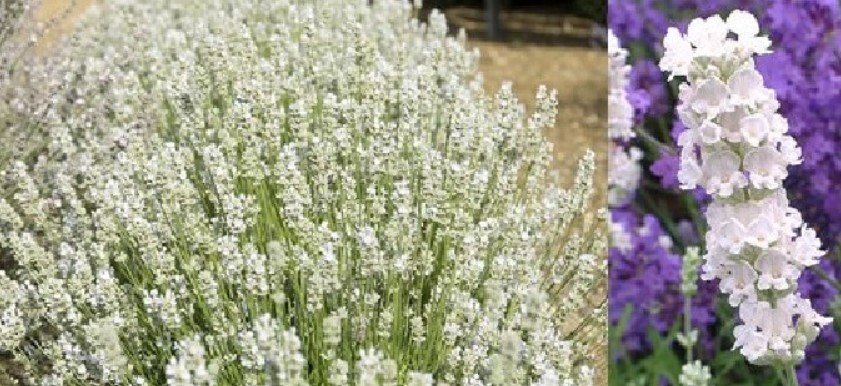
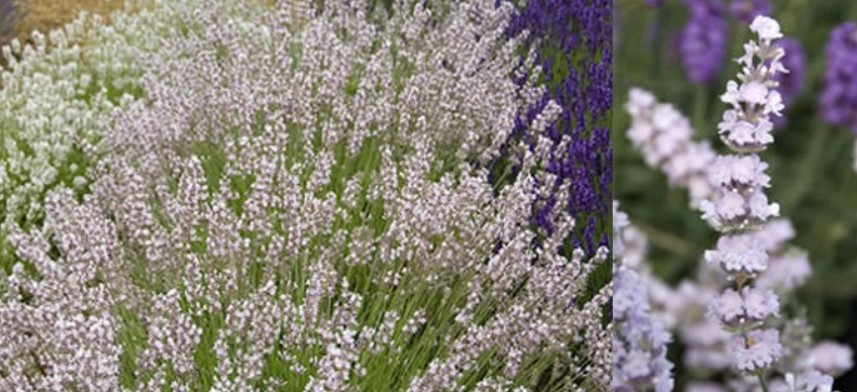
| Arctic Show
|
Whites | 60 |
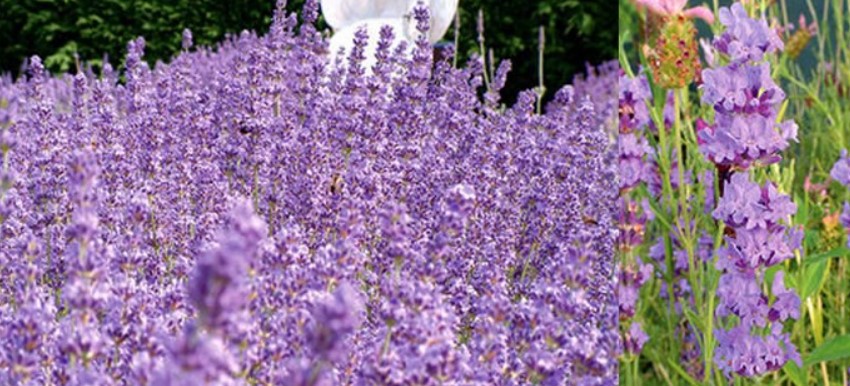
| Backhouse Purple
|
Dark purple | Up to 50 |
| Beechwood Blue
|
Violet-blue | Up to 60 |
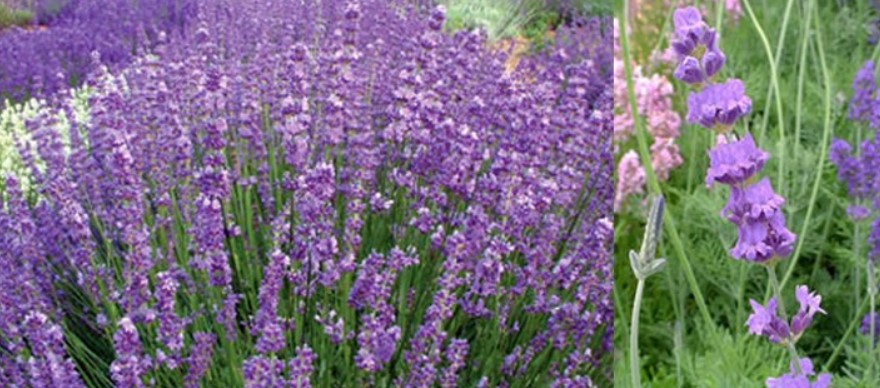
| Hidcote
|
Lavender | Up to 60 |
| Munstead
|
Deep blue | Up to 40 |
| Blue Ice
|
Soft lilac | Up to 60 |
| Blue Mountain White
|
Snow-white | Up to 60 |
| Cedar Blue
|
Delicate, purple | 50-60 |
| Elizabeth
|
Large, dark purple in color | Up to 75 |
| Hidcote Pink
|
Soft pink | Up to 50 |
| Imperial Gem
|
Soft lavender | Up to 60 |
| Lady Ann
|
Pale pinkish | Maximum |
| Little Lottie
|
Light pink | Up to 40 |
| Loddon Blue
|
Characteristic lavender color | Up to 45 |
| Maillette
|
Purple with a silvery sheen | Up to 60 |
| Melissa Lilac (Melissa Lilac)
|
Large, eye-catching, lavender | 40-60 |
| Miss Dawnderry
|
Dark purple, closer to blue | Up to 60 |
| Miss Katherine
|
Pinkish-lilac | Up to 60 |
| Miss Muffet
|
White, purple, blue | No more than 30 |
| Nana Alba (White Nana)
|
Snow-white | 40 |
| Purity
|
Pure white | About 50 |
| Peter Pan
|
Dark purple | 45 |
| Rosea (Rose)
|
Soft pink | Up to 60 |
| St. Jean (Saint-Jean)
|
Various shades of pink | 60 |
| Twickel Purple
|
Purple | 75 |
| Royal Purple
|
Dark lilac with a bluish tint | 75 |
| Royal Velvet
|
Dark, bluish-violet | Up to 60 |
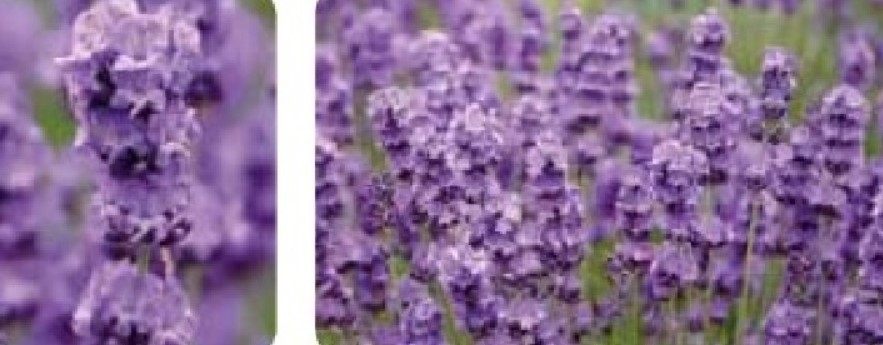
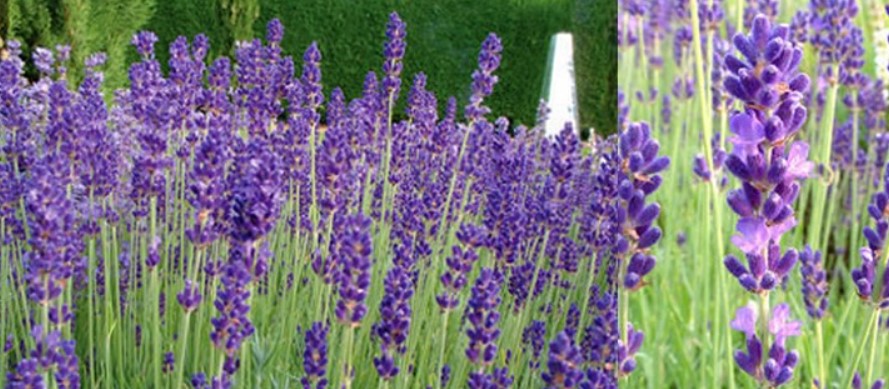
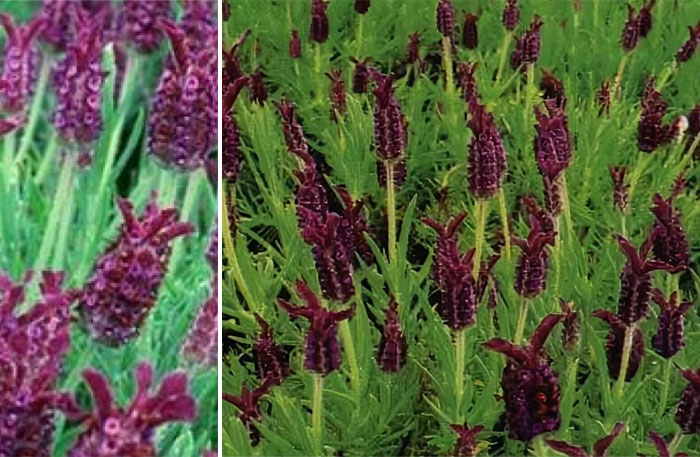
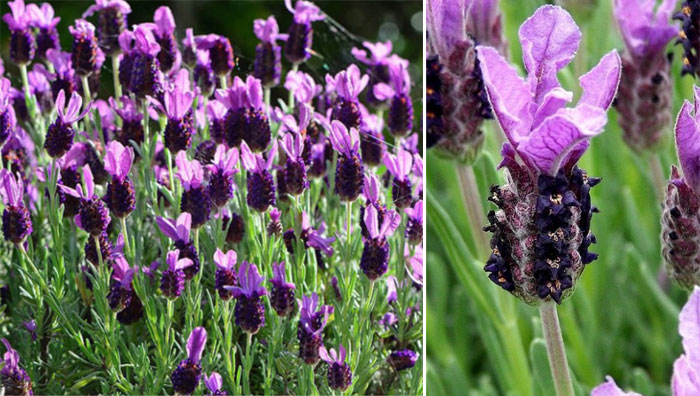
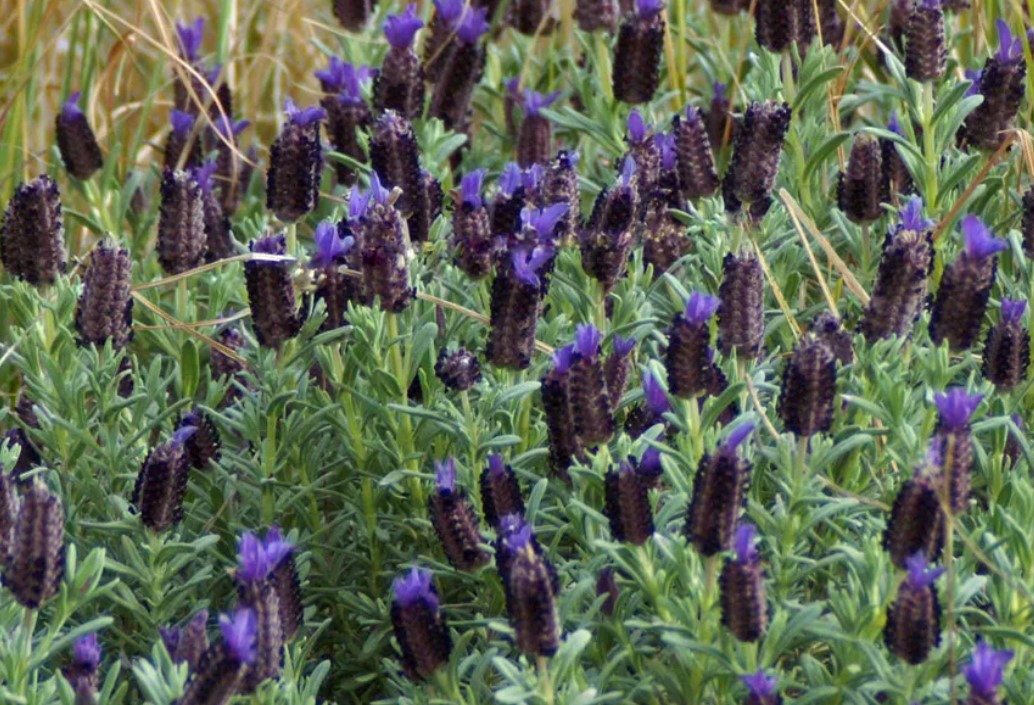
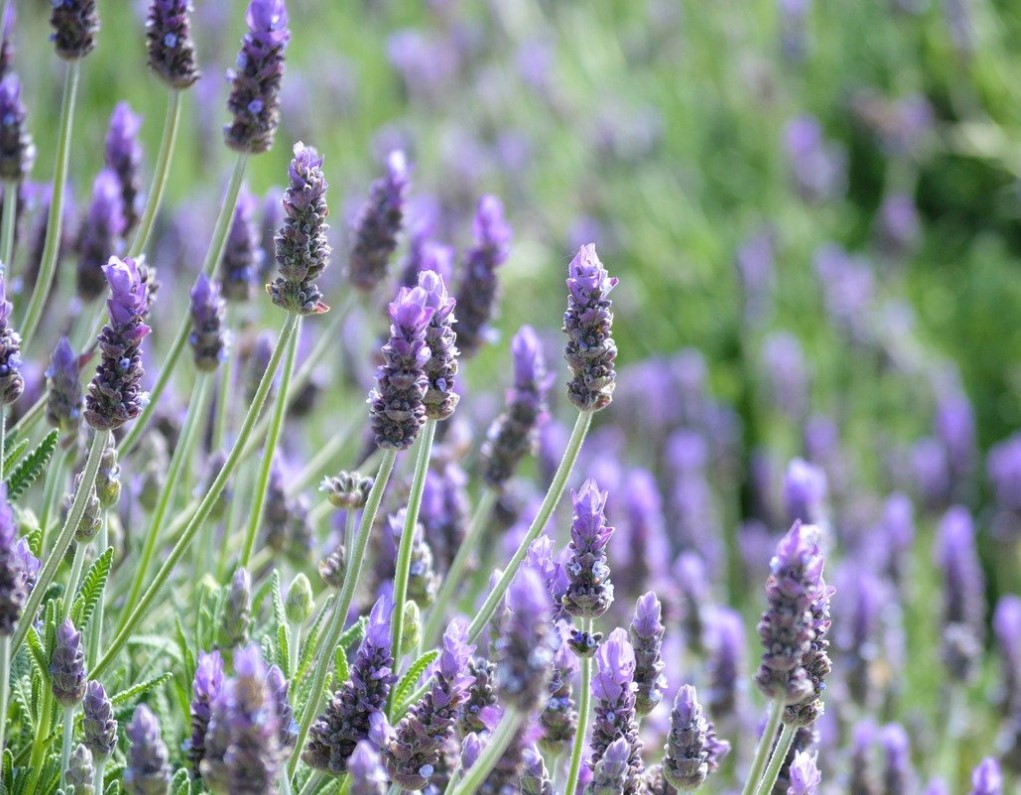
Lavender (Lavandula latifolia)
Flowering occurs in August, and fruiting occurs in September-October. This species is widespread in its natural habitat. Lavender is very fragrant, with notes of camphor, but the scent is not as refined as that of narrow-leaved lavender. It requires winter protection.
Popular varieties:
| Name | Flowers | Height (cm) |
| Winter Lace
|
Plum-purple | 50 |
| Princess
|
Hot pink | 50 |
| Pedunculata (Pedunculata, Pedicel)
|
Lilac-burgundy | 50 |
| Helmsdale
|
Wine red | 60 |
| Dark Royalty
|
Bright purple | 50 |
| Blue Star
|
Purple-lilac | 60 |
| Castilliano (Castilliano)
|
Violet-blue | 70 |
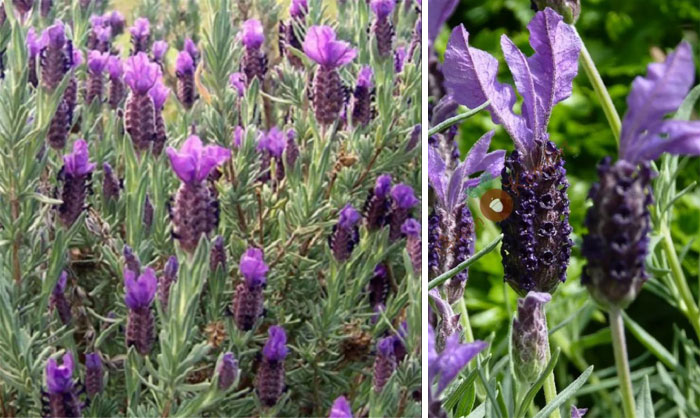
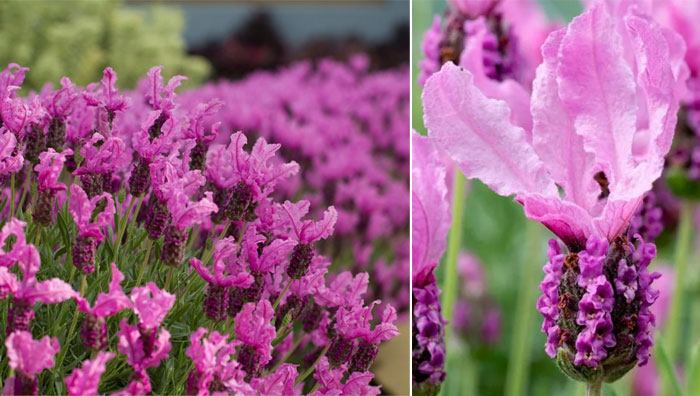
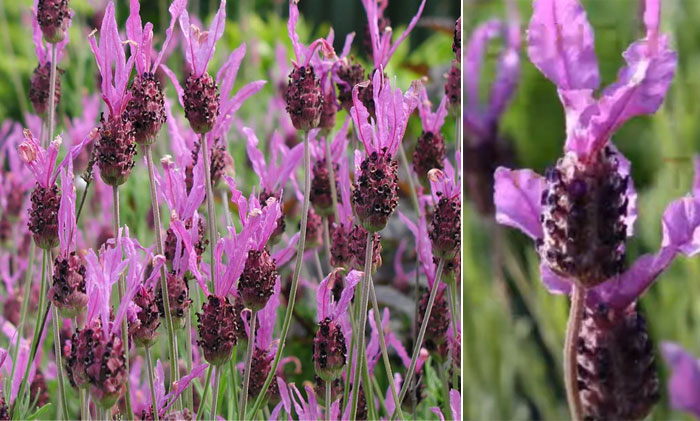
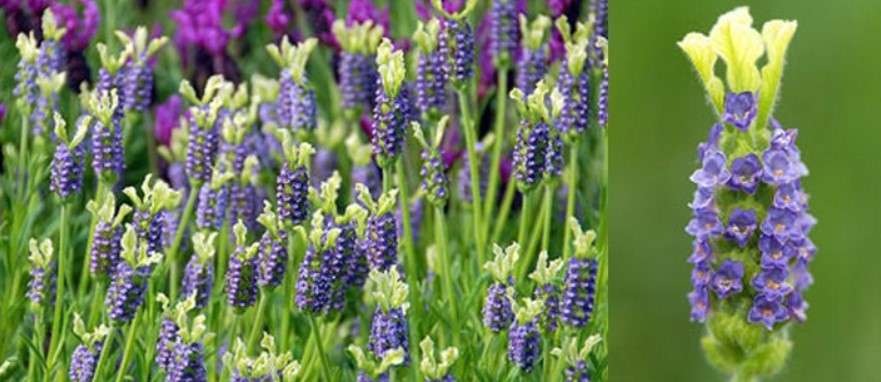
Lavender dentata
In its beauty, it is comparable to narrow-leaved and broadleaf lavender. It is native to the Atlantic islands, the Western Mediterranean, and the Arabian Peninsula. It is grown as a houseplant.
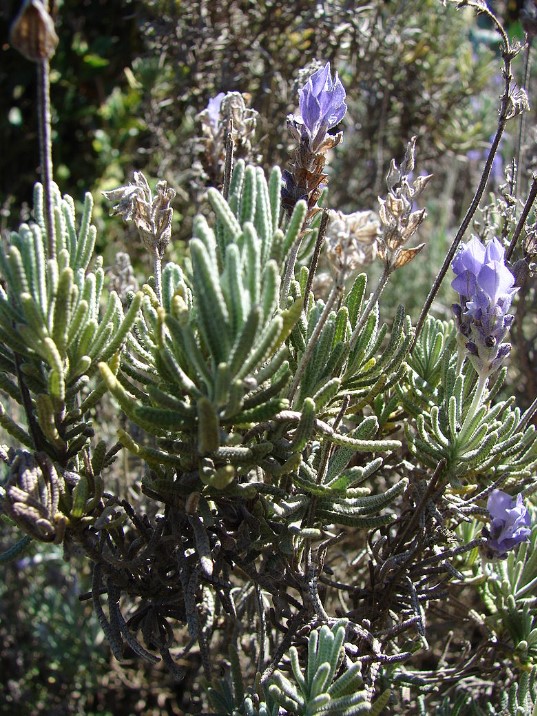
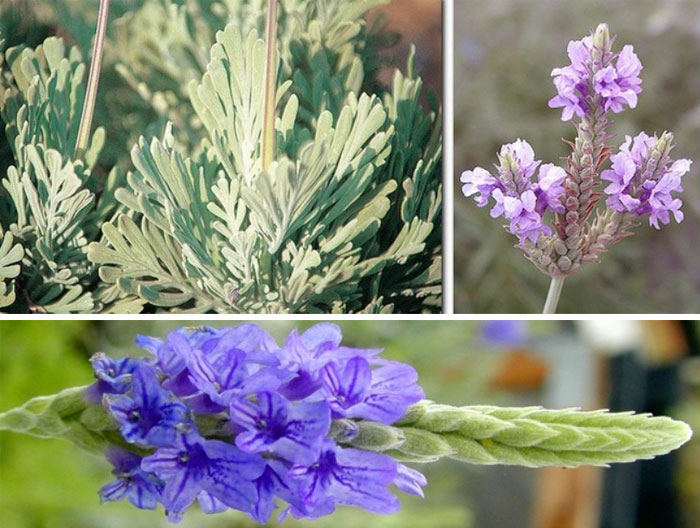
Lavender feathery
It's sought after for its unusually shaped leaves. They are pinnately dissected and elongated. It reaches a height of 50-60 cm. It stands out among lavenders for its bright blue color.
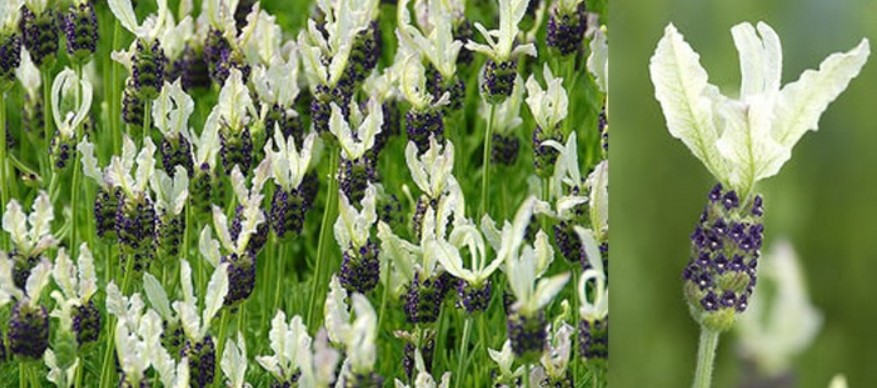
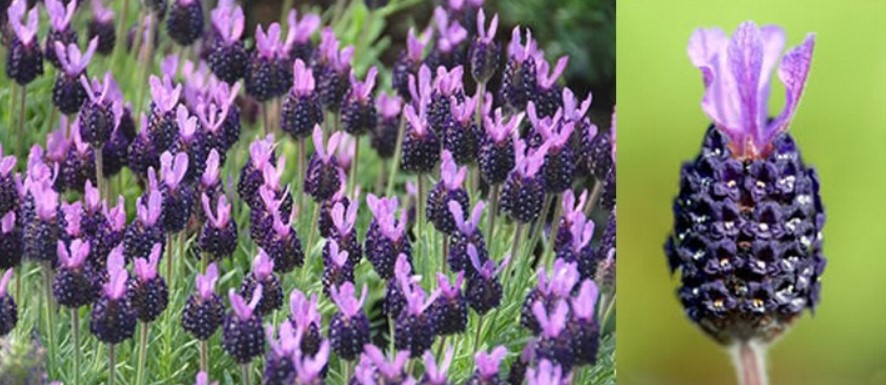
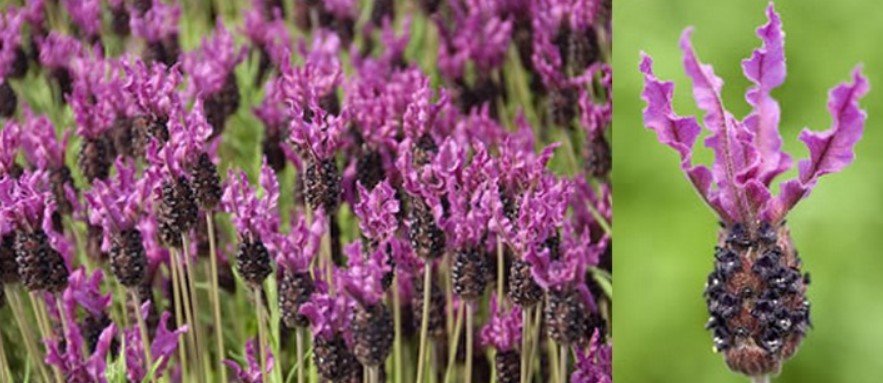
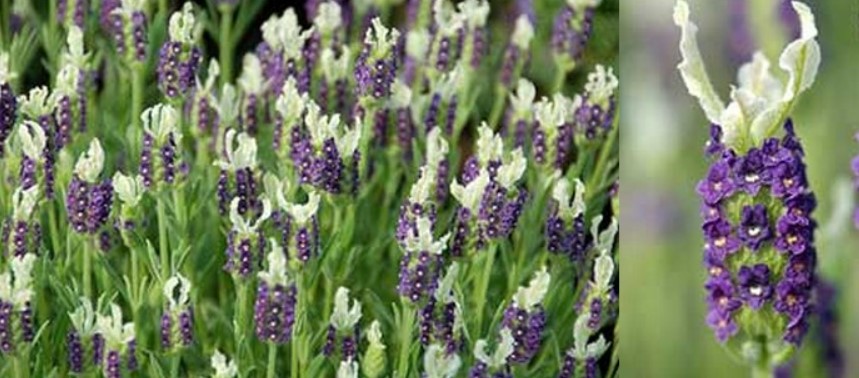
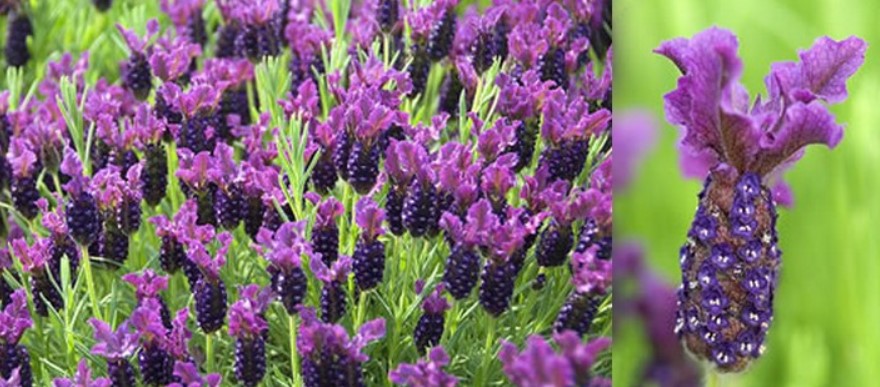
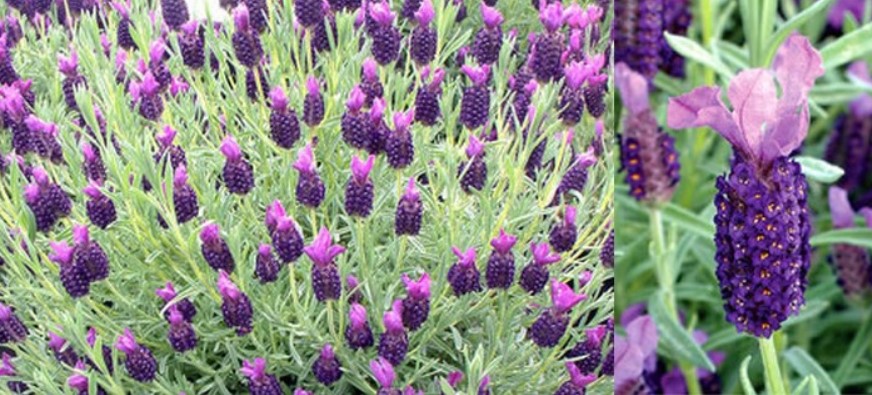
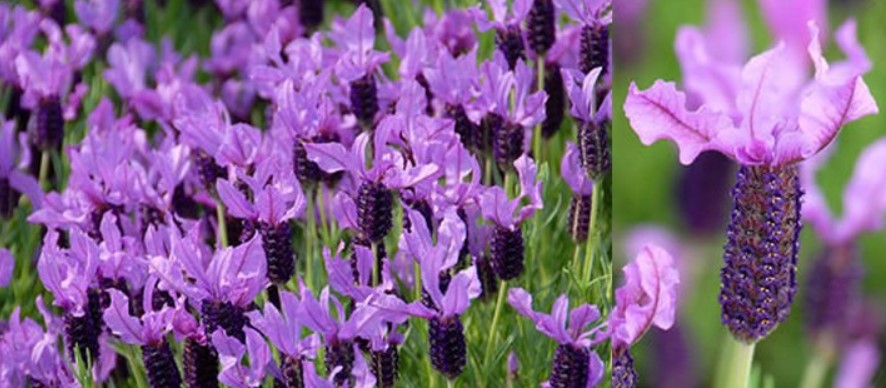
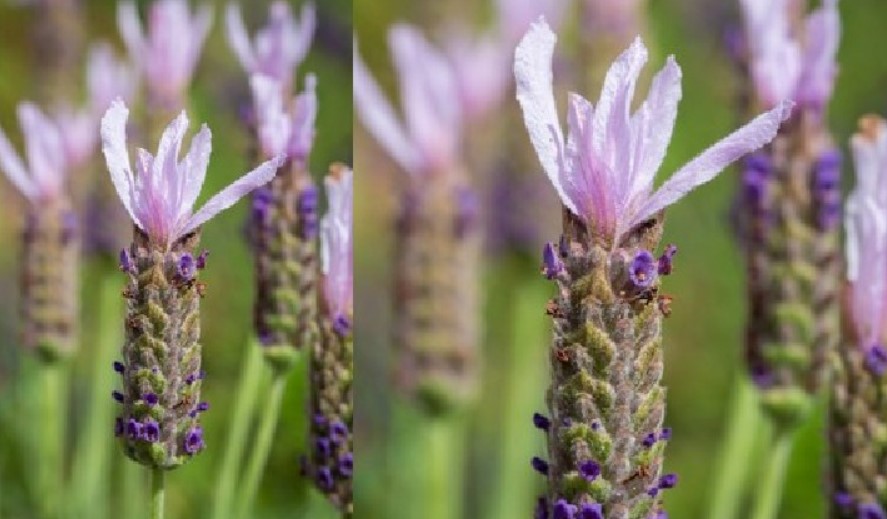
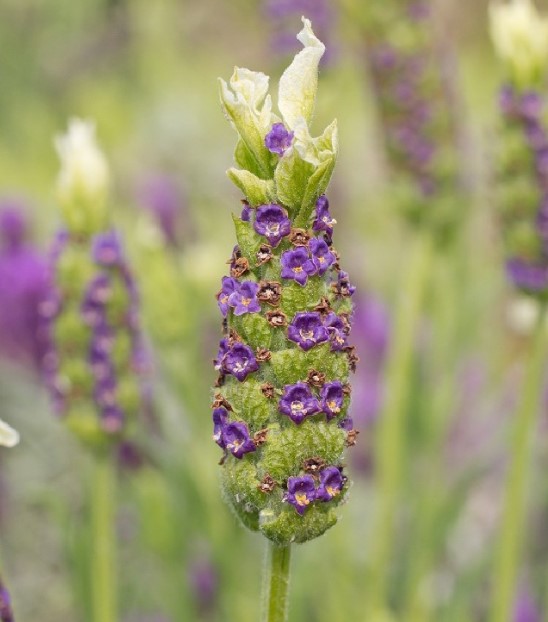
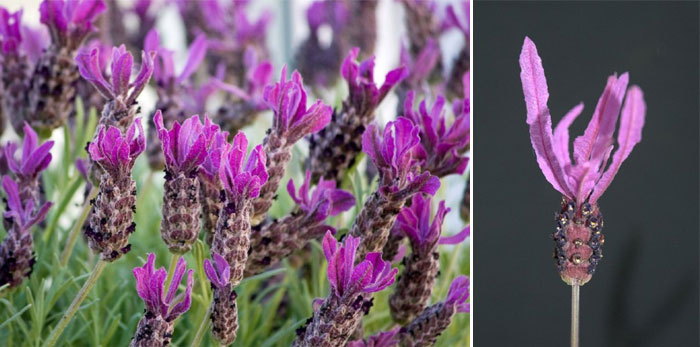
Lavender stehada
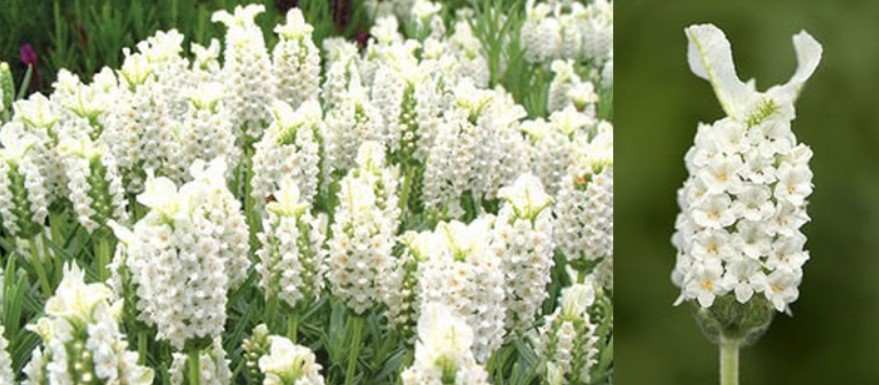
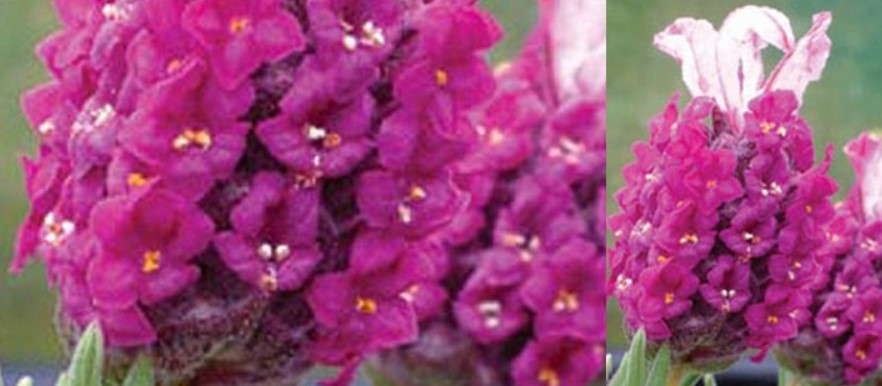
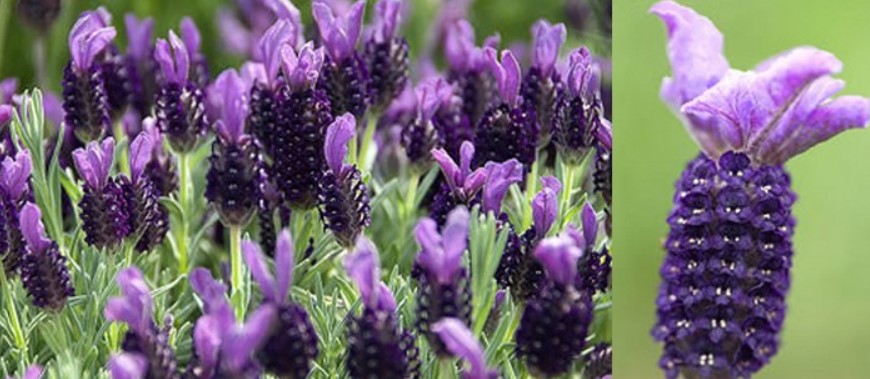
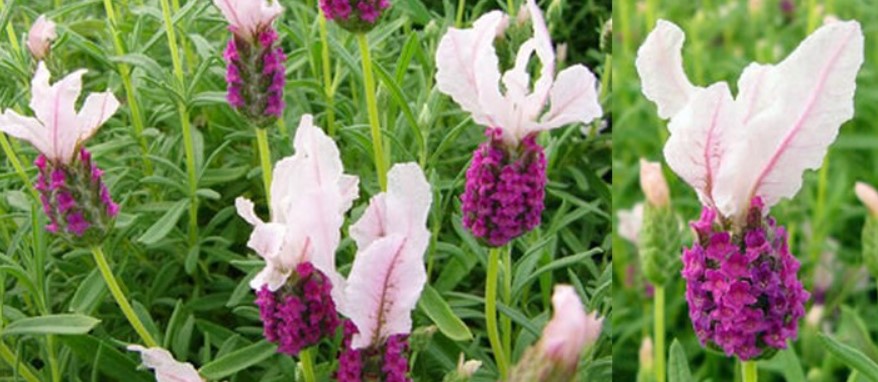
It grows in France, Spain, Portugal, Greece, Western Asia, and North Africa. It was introduced to Australia and New Zealand. Initially cultivated in these countries, it later began growing in the wild. In warmer regions, flowering begins as early as March.
Let's look at the most popular varieties:
| Name | Flowers | Height (cm) |
| Ballerina
|
Purple, with "white ears" that turn pinkish as they age | 60 |
| Fathead
|
Dark purple | 45 |
| Petit Rouge (Little Red)
|
Red-crimson | 45-60 |
| Pretty Polly
|
Purple, with whitish-yellow "ears" | 60 |
| Regal Splendor
|
Velvety lilac | 60 |
| Stoechas subsp
|
Purple, "with ears", located on shortened peduncles | 45 |
| Leucantha (Leucantha)
|
Snow-white | 45 |
| Kew Red
|
Crimson, with pinkish "ears" | 40 |
| Night of Passion
|
Dark purple | 45 |
| With Love
|
Lavender | 45 |
| Van Gogh
|
Sky-blue | 60 |
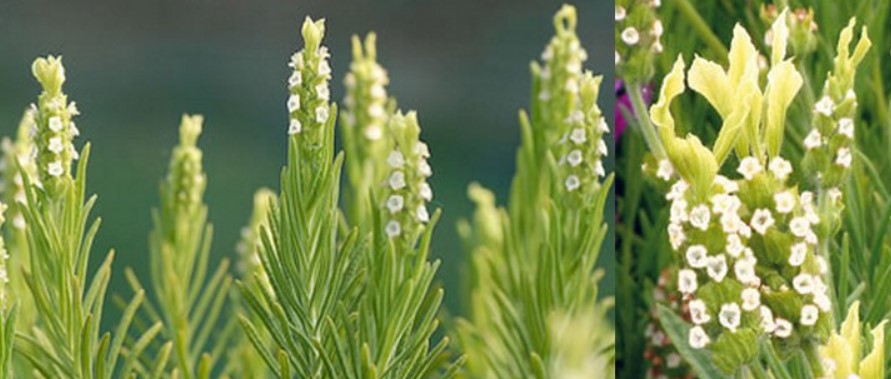
| Viridis (Viridis)
|
Yellowish-green, with a distinct lemon aroma | 50-60 |
| Willow Vale
|
The petals are purple, with light purple "ears" | 60 |
| Lucy Pink
|
Soft purple | Maximum 60 |
| Tiara
|
Blue-violet, with creamy-white bracts | 50 |
| Papillon (Butterfly)
|
Reddish-purple | 45-60 |
Growing lavender from seeds
Seeds can be planted directly in the garden or grown as seedlings first. Let's look at the specifics of each method.
Sowing directly into open ground
Please note that this sowing method is only suitable in regions with mild winters. The seeds are sown directly into the garden before winter—in October. However, the seeds must be prepared well in advance. Before sowing, they require stratification at 5°C. This is done for two months, which significantly increases germination. The seeds are mixed with damp sand and placed in the refrigerator on the vegetable shelf.
The seeding area should be prepared in advance. Dig it over, adding peat moss at the same time. If the weather has been rainy and the soil is very wet, add sand or gravel to ensure good drainage. Place the seed 3-4 cm deep, then compact the soil. If natural precipitation is low, water the seedlings moderately. After snowfall, pile it on top of the seedlings to create a small mound to protect them from the elements.
Growing through seedlings
This is done in February-March. Before this, cold treatment should also be carried out for two months.
A drainage layer is first added to the planting containers, then they are filled with soil consisting of coarse river sand and humus (1:2). The resulting mixture is sifted to ensure it is free of lumps. It should also be disinfected by soaking it in a potassium permanganate solution or baking it in the oven.
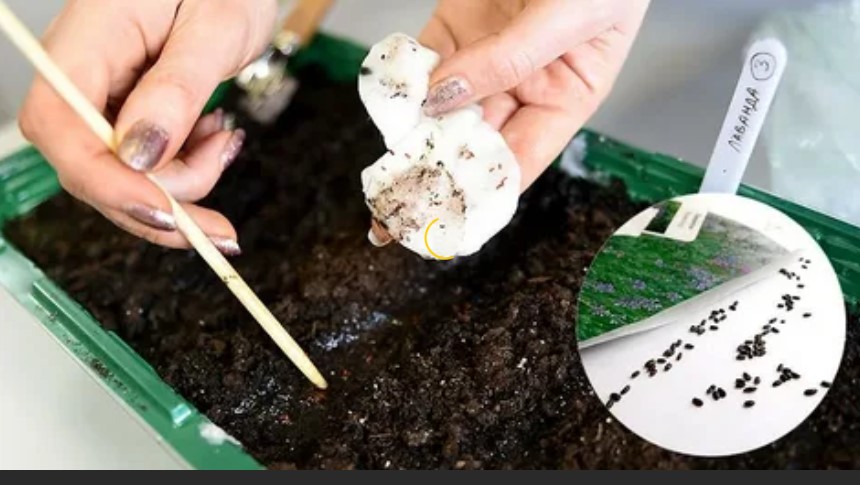
Scatter the seeds evenly over the soil surface and cover with sand (3 mm thick). Spray the seeds with water and cover with plastic wrap or glass.
Seedlings should be placed in the brightest location at a temperature of +15…+22 °C. Remove the film or glass daily for ventilation.
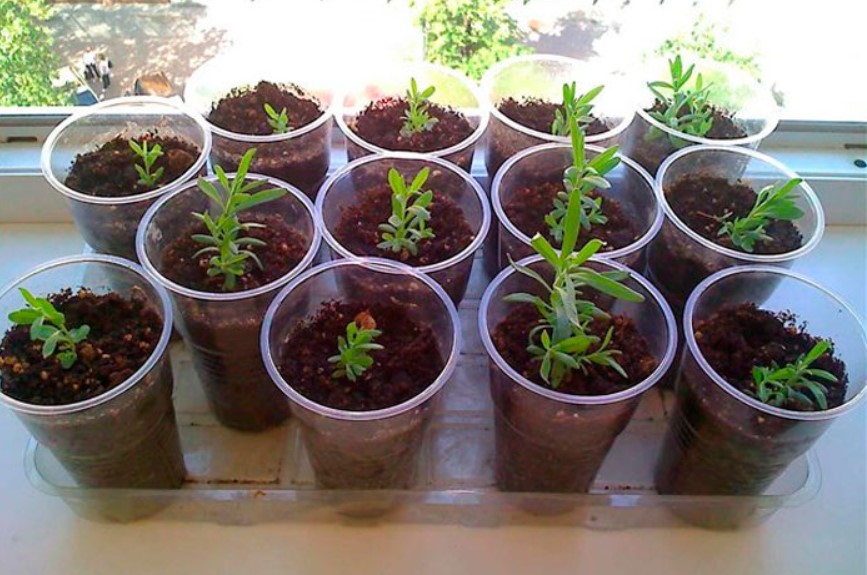
Young seedlings require additional lighting to prevent them from stretching. However, they should be gradually acclimated to the new conditions. Initially, remove the cover for half an hour, increasing this time daily. Once the seedlings have adapted, remove the cover completely. After a while, transplant them into larger containers, leaving at least 5 cm between each seedling.
Planting seedlings in open ground
Transplanting outdoors occurs at the end of May. Lavender thrives best in open, sunny locations. However, the groundwater level should not be too close to the surface, as the plant does not tolerate excessive moisture.
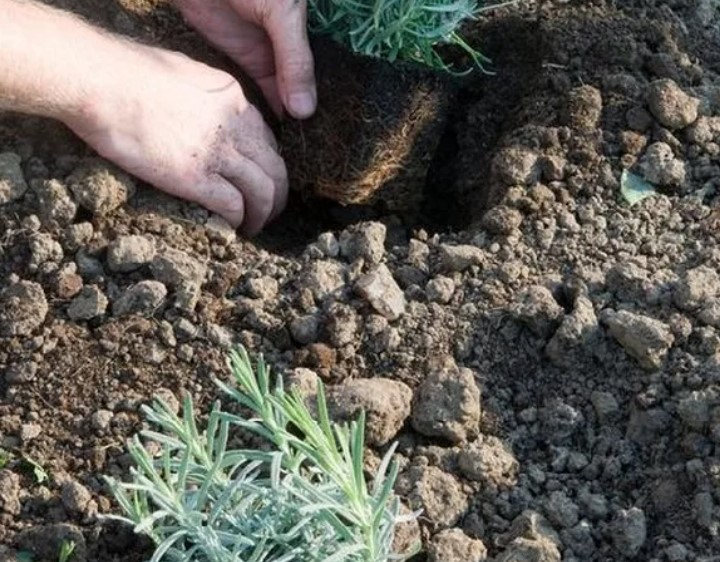
Lavender thrives in sandy loam or well-drained loam. The soil pH should be between 6.5 and 7.5. If it's too acidic, you can add crushed limestone to reduce the acidity.
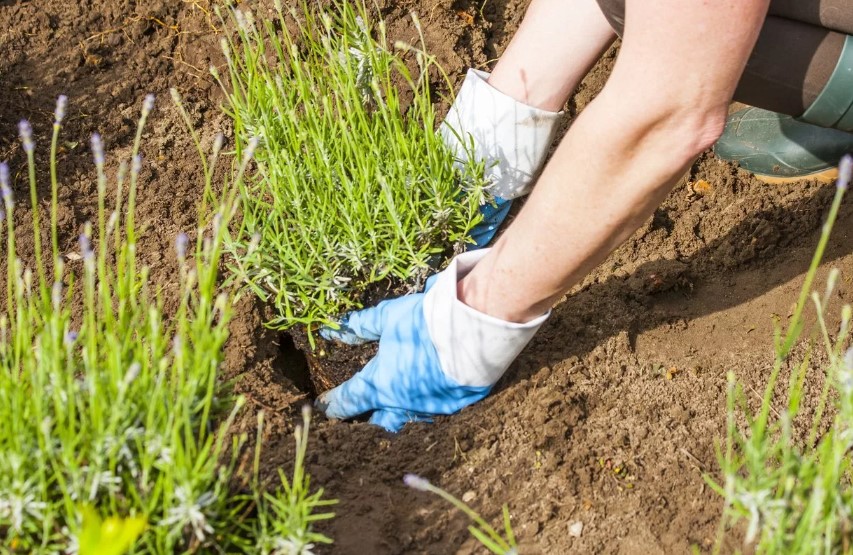
Before planting, the area should be dug and loosened to a depth of 20 cm, adding compost or peat. The distance between plants should be 60-90 cm. For tall varieties, leave a wider gap—120 cm. The size of the planting hole will depend on the roots. They should fit completely. Before planting, trim the roots slightly, then place the plant in the hole and backfill with soil. The root collar should be buried 4-6 cm deep. The plants should be watered generously with warm water.
Care in open ground
Lavender is an unpretentious plant and is easy to care for.
Location
Lavender requires sufficient light, so choose sunny locations. It won't die in the shade, of course, but its flowering won't last as long or last as long. If you have to plant it in marshy areas or areas with a shallow water table, you can create a raised bed and plant the flowers there, after providing a drainage layer.
If you're unsure how acidic your soil is, it's best to err on the side of caution and add a small amount of lime or wood ash when digging. Add compost to improve soil porosity. Lavender will thrive in this type of soil.
Watering
Watering should be abundant and systematic. In hot weather, the frequency of watering should be increased.
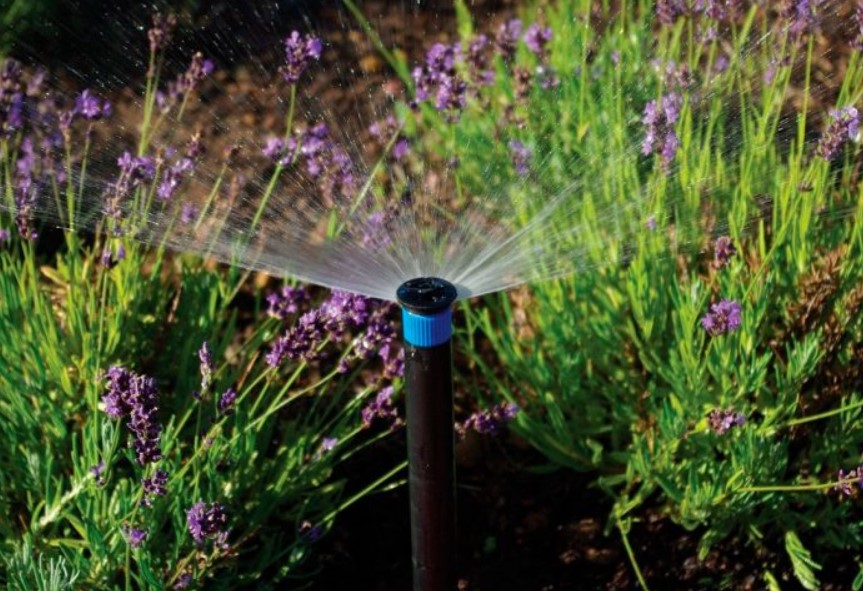
After watering, the bushes should be hilled, while removing weeds. Mulching is also helpful; it will retain moisture longer, prevent weeds, and protect the roots from adverse factors.
Okuchka
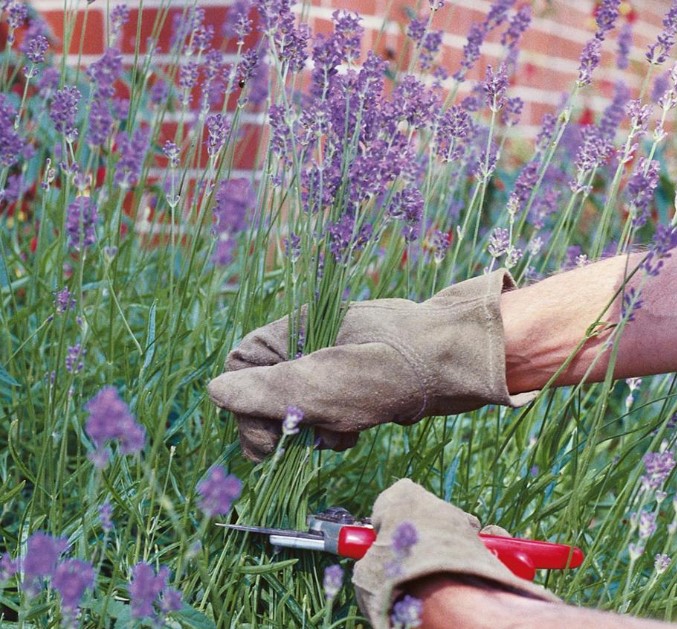
Old plants require this procedure in spring and fall. It will help them begin to form new shoots.
Trimming
It is performed annually.
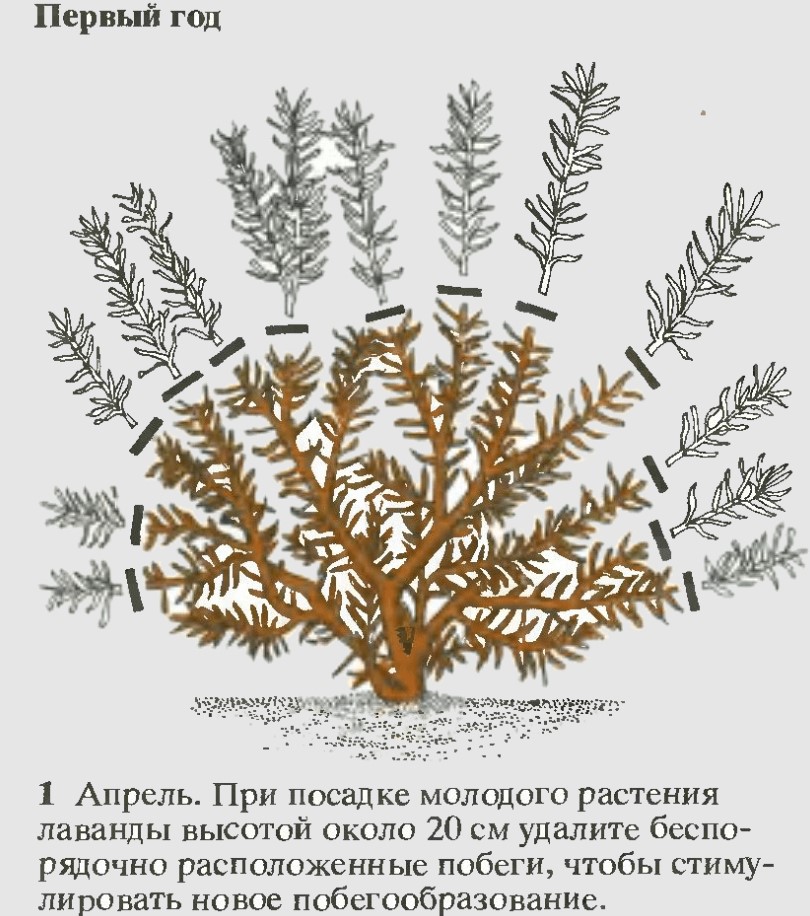
After flowering, the flower stalks are cut back. In the fall, all shoots are shortened to give the bush a neat and orderly shape. Avoid allowing it to grow too tall, as gusts of wind can cause the stems to break or bend, rendering the plant unsightly.
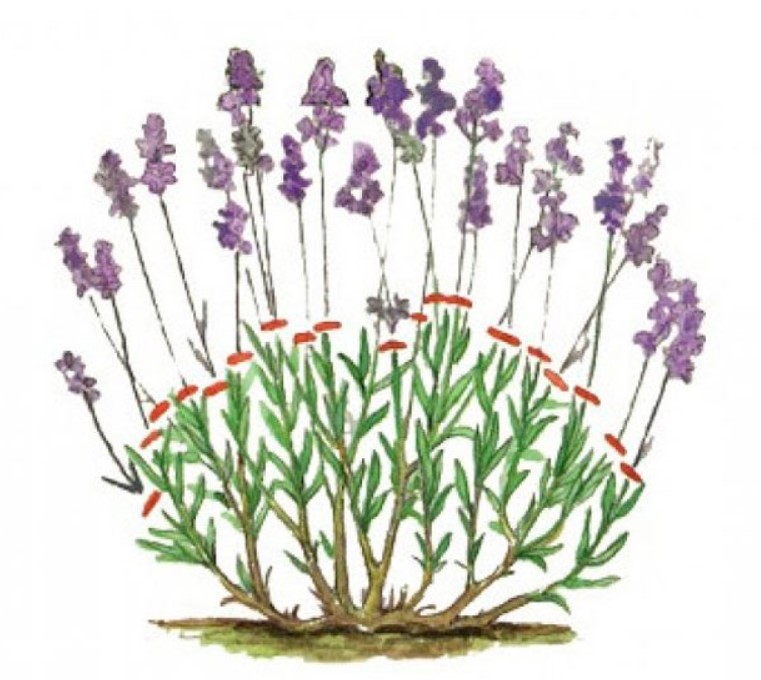
After reaching ten years of age, rejuvenation pruning is recommended. This involves shortening all branches to 5 cm. This pruning can also be performed on young bushes if they are not blooming or blooming sparingly.
Wintering
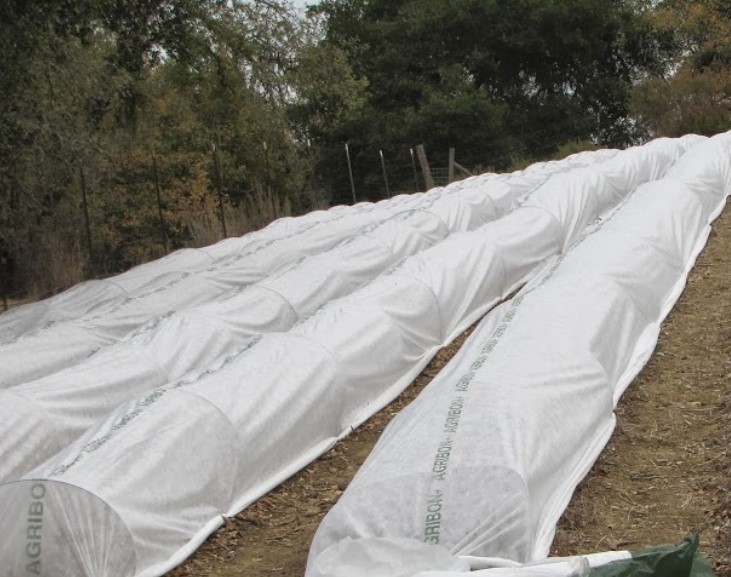
Winter shelter is required if temperatures drop below -25°C. Constructing a shelter from fallen leaves is not recommended, as this can lead to rot. It's best to prune the lavender and then cover it with spruce branches. In warmer regions, the plant doesn't need insulation.
Methods of propagating lavender
The plant can be propagated in several ways.
cuttings
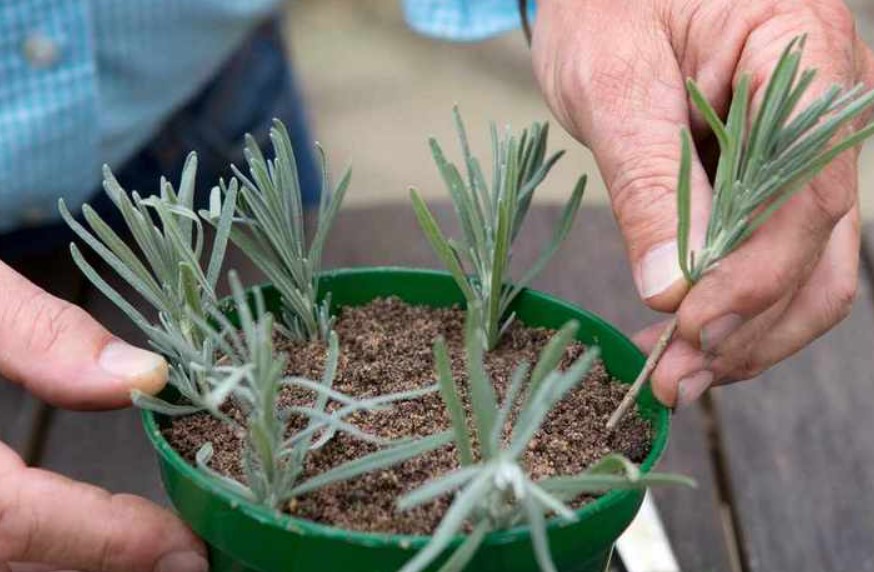
This method is suitable if lavender is already growing in the area, or if lignified, one-year-old shoots are available. They are divided into 0.8-1 cm pieces and placed in loose, moist soil, with the lower cut buried 2-3 cm deep. Cover the shoots with a sheet of glass, which can be removed once roots appear.
Layers
In the spring, select several strong shoots, bend them down to the ground, and place them in 3-4 cm deep grooves dug in advance near the bush. Secure the stems in place, perhaps with staples, then cover with soil and water thoroughly. Keep the soil constantly moist, but not soggy. Separate the rooted shoot and replant it in a separate location only the following spring.
Dividing the bush
A mature, strong bush is suitable for division. In the fall, after flowering has finished, it should be cut back to a height of 10 cm and earthed up high, filling all the empty spaces between the stems. Repeat this procedure in the spring. After a while, dense shoots will begin to grow. In the fall, the bush is lifted and divided into several sections. Each section should have well-developed roots and an above-ground part. Each new section is planted in a separate hole.
Infections and pests
Lavender is susceptible to gray mold, rainbow beetles, and leafhoppers. If insects are detected, they should be removed by hand and the mulch replaced, as it may contain larvae.
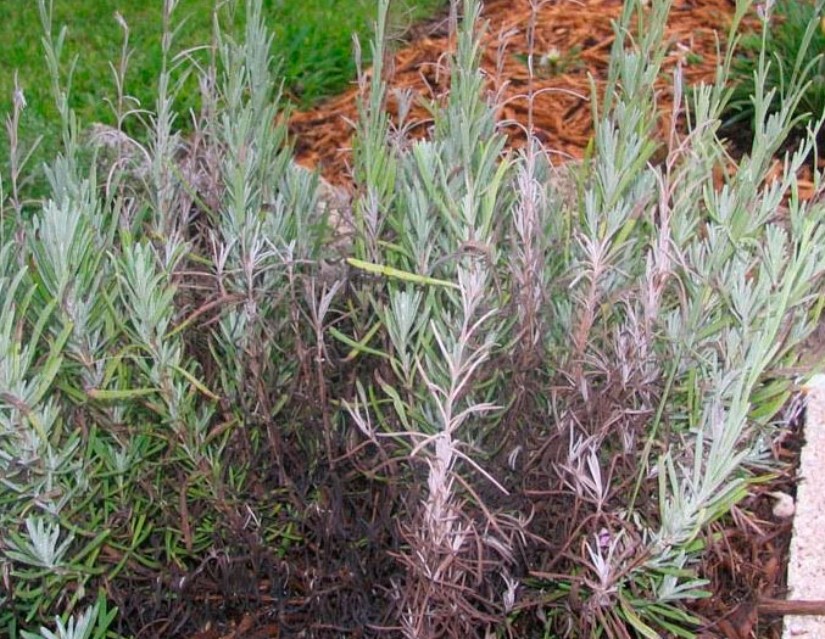
Gray mold develops as a result of excess moisture in the soil. It is untreatable. The affected plant must be dug up and destroyed. If the infection is not severe, you can try to save the plant by cutting off all the affected areas, replanting it, and adjusting its watering schedule.
Cultivation in the Central Region
Lavender angustifolia thrives in these regions. Plants can be planted outdoors starting in the second half of May, once the risk of frost has passed. In Moscow and the Moscow region, it is recommended to grow lavender from seedlings, as sowing outdoors before winter can cause the plant to die.
Lavender in landscape design
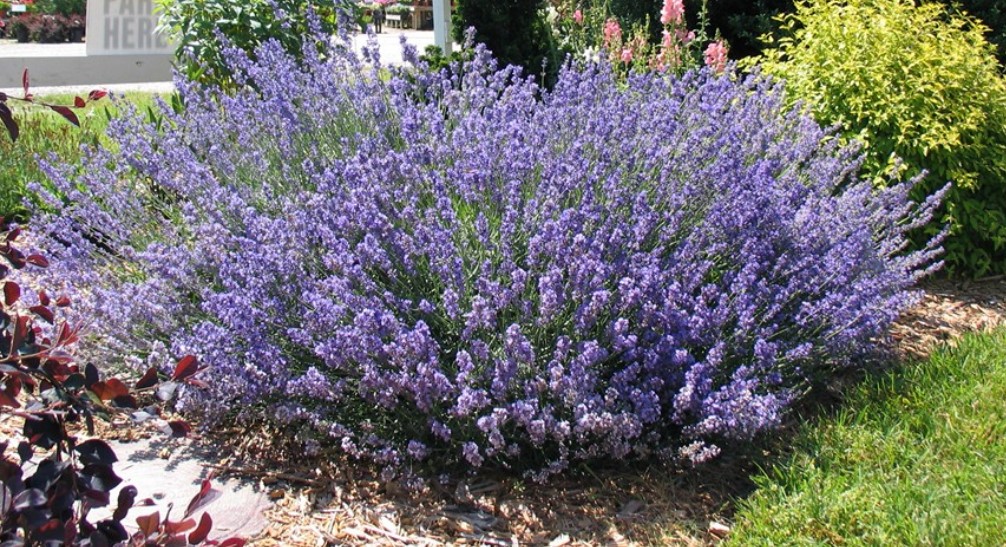
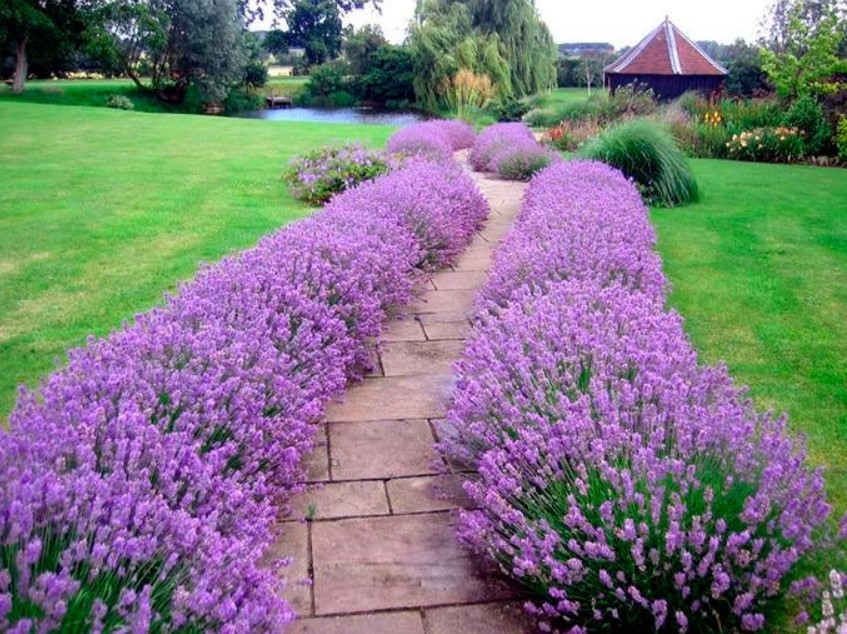
The flower is often used in landscape design due to its attractive appearance and pleasant fragrance. It looks great in mixed borders and rock gardens.
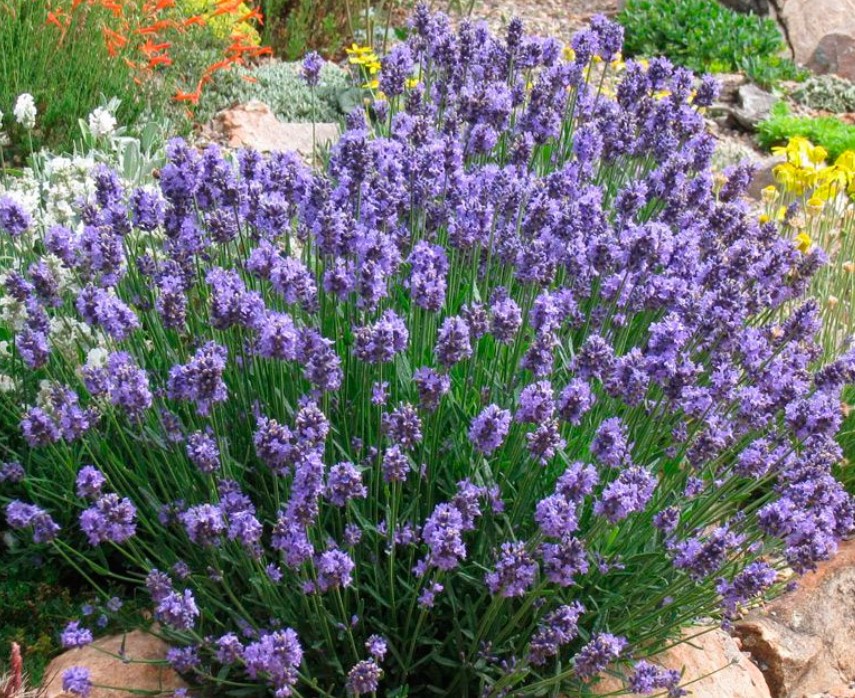
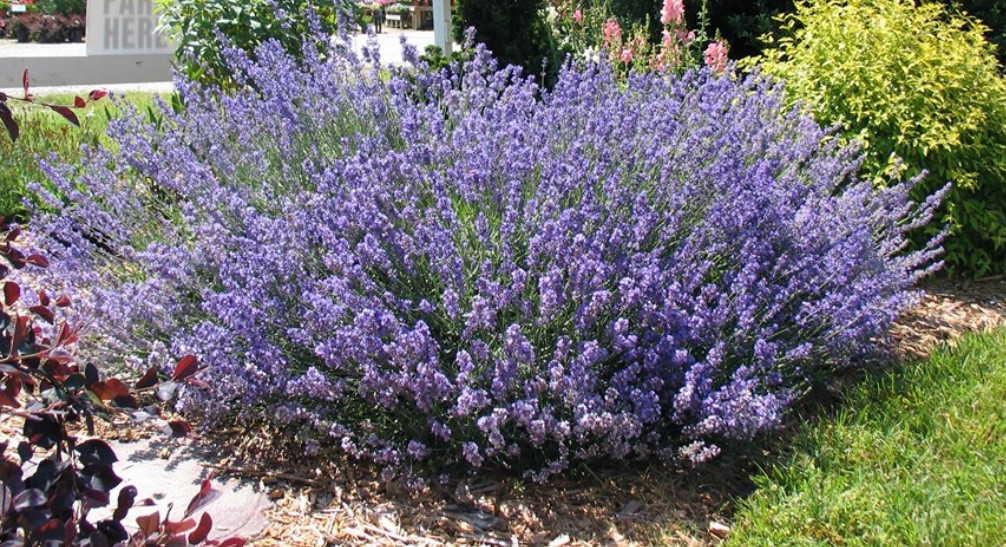
The plant is often used to create hedges. For this purpose, several varieties are typically blended, each with a different flower color and leaf shape. However, it's important to keep in mind that a hedge requires constant care, including regular pruning. Lavender can also be combined with other plants, such as standard roses.
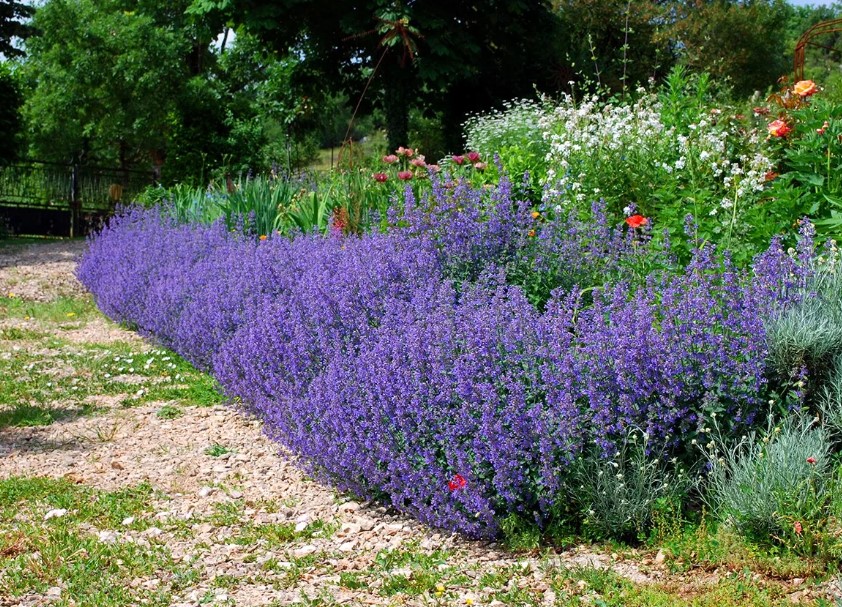
In the UK, lavender is used to create a flowering carpet. You just need to decide in advance how tall you want it to be. After planting, the plant needs to be regularly trimmed to the desired height.
What benefits and harm can it bring?
The plant can be used not only as an ornamental plant, but also as a medicinal plant.
Healing properties
Lavender's beneficial properties stem from its high essential oil content. This oil contains a wealth of nutrients that have a beneficial effect on the human body:
- treats burns and bruises;
- improves the condition in cases of cerebral vascular diseases, seizures, and paralysis after a stroke;
- eliminates dizziness and migraines;
- relieves toothache;
- has a diuretic effect;
- eliminates discomfort and spasms in the gastrointestinal tract
- helps with melancholy, excessive irritability, and neurasthenia.
Since ancient times, lavender has been used to treat many diseases – bronchitis, cystitis, rheumatism and others.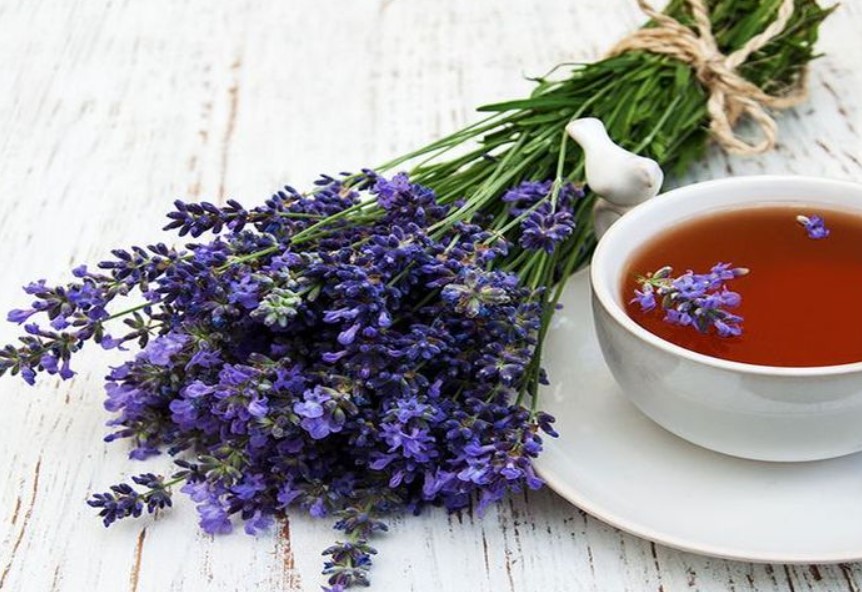
Lavender flowers are used to brew tea. There are a huge number of recipes used around the world.
In Hungary, there are lavender fields in the northern part of Lake Balaton. The plants harvested from these fields are used to make ice cream.
Lavender coffee has recently appeared in Russia and is rapidly gaining popularity among coffee lovers.
Contraindications
Despite its numerous beneficial properties, lavender is not always suitable for use. It is contraindicated in the following cases:
- during pregnancy – especially in the first trimester, as the plant stimulates uterine contractions;
- after an abortion – may cause bleeding;
- when taking medications that contain iodine or iron;
- individual intolerance or allergic reaction to the plant.
It's also important to note that lavender-based products should not be consumed over long periods of time. This can cause depression and gastrointestinal irritation. In any case, consult a specialist before using the plant, even if there are no obvious contraindications.
Reviews from lavender growers
Good day, friends!
An idiot's dream came true! I found some lavender seeds and tried growing them from seed. I'd previously read that it was entirely possible, but there were some difficulties.
Honestly, I've never encountered seeds being kept in a cold place, like a refrigerator, before sowing. Lavender seeds, however, need to be kept in the cold for 40-50 days. That's quite unexpected. And since I bought the seeds in March of this year, I didn't have time to refrigerate them.
I decided to plant them in the ground and germinate them right away. And another surprise. It turns out the seeds take two months to germinate.
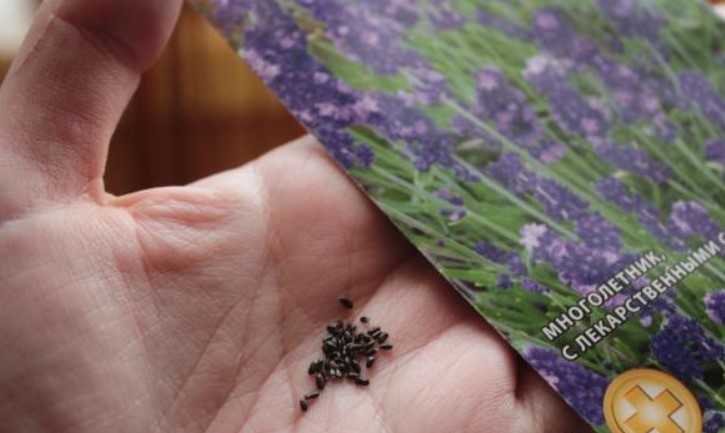
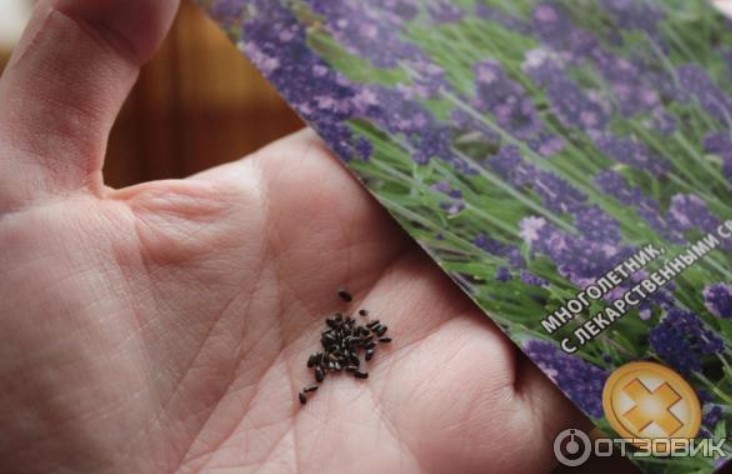
Let's take a look at what lavender seeds look like. I've never seen them before. They smell like lavender!
The seeds all seem to be the same. You'll understand later why I'm focusing on this.
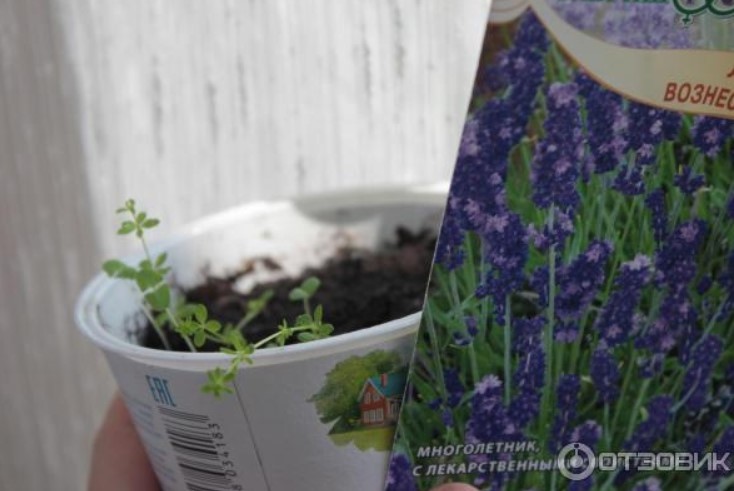
The first shoots appeared quickly, certainly not after two months. Perhaps 10-14 days after sowing.
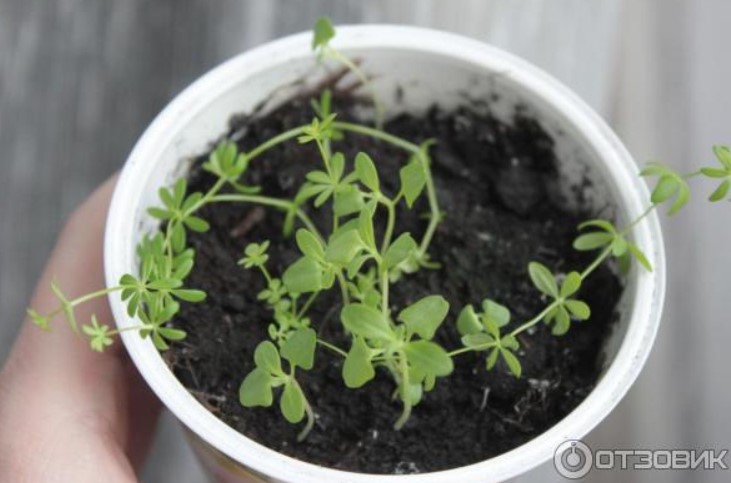
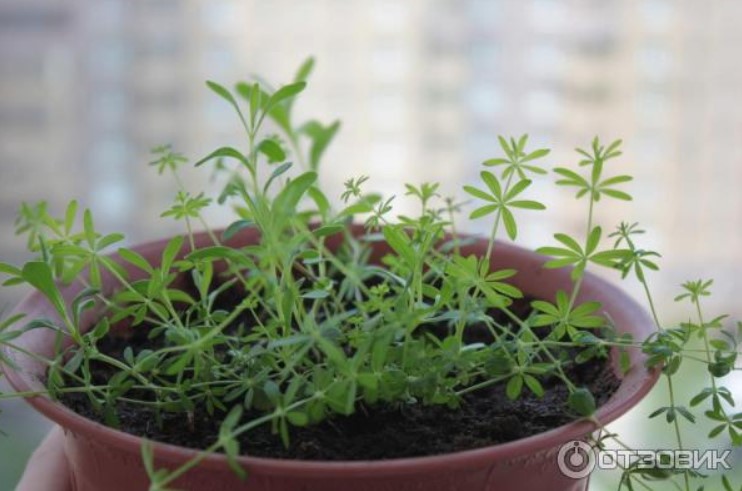
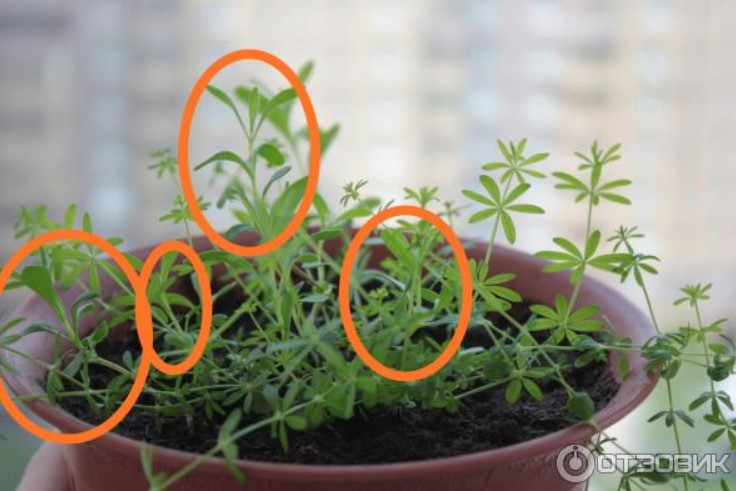
These little branches started to rise above the ground. As I realized later, it wasn't lavender at all, but some kind of creeping plant. Where did it come from? Maybe it was intentionally designed for decorative purposes? I doubt it.
Lavender itself appeared much later. In the photo below, you can see three lavender bushes. The rest is some kind of climbing grass.
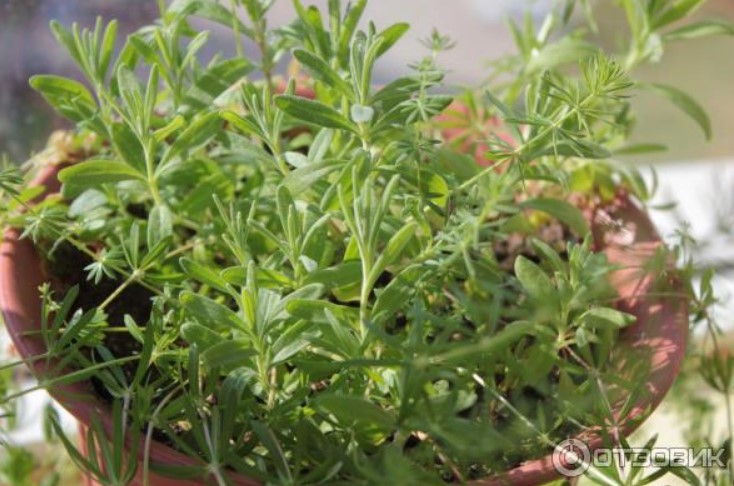
Look how much grass has grown. And there's not much lavender. But it's already fragrant! Just touch the leaves.
Unfortunately, I didn't see any flowers this year. I planted some of the lavender in the ground. I don't even know if it will survive this winter. I left the rest in the pot. I'll try to save it.
Perhaps it is worth summing up.
The seeds turned out to be a surprise. It turns out they need to be cooled for a long time, then wait a long time for germination, and then found in some unknown herb.
There was germination and the scent of lavender. I haven't seen any flowers yet. Or maybe I should have chilled the seeds in the refrigerator for a month and a half? But then I wouldn't have seen any sprouts this year. I should have bought these seeds last fall. But now I know...
If my lavender ever blooms, I'll definitely update this review. It was an interesting experience.
That's all I have for now. Thank you for your attention.
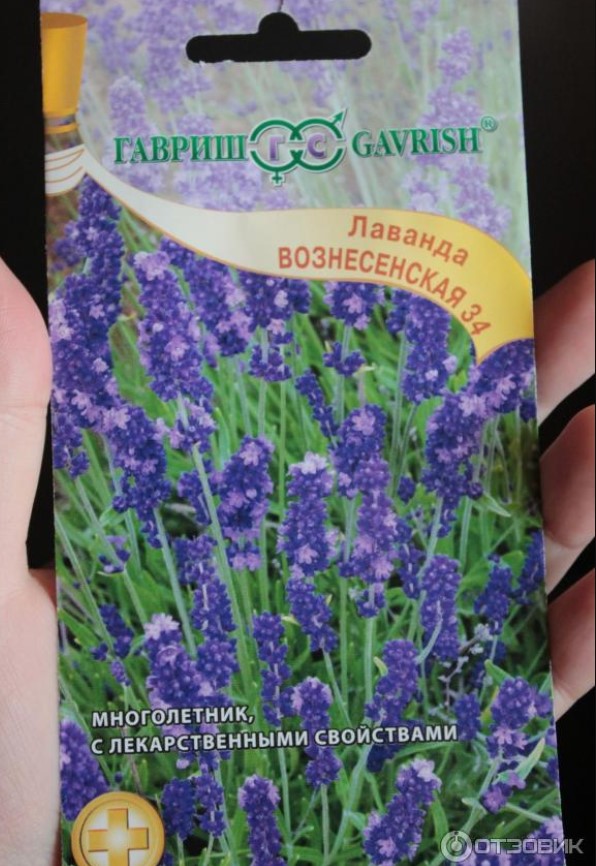
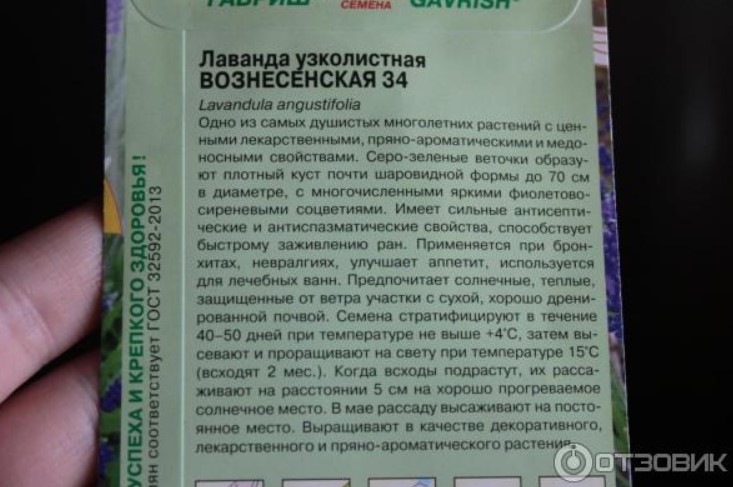
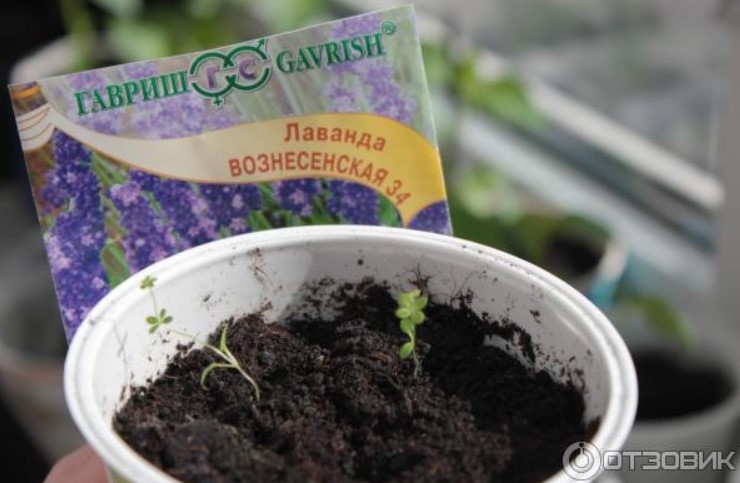
Gavrish Seeds "Lavender Narrow-leaved Voznesenskaya 34"
"Lavender, mountain lavender, the blue flowers of our meetings, lavender, "Gavrisha" lavender, we sow at the dacha, you and I..."
I've long dreamed of growing lavender at my dacha. I adore its scent and love Sofia Rotaru's song "Lavender."
And if you have a dream, you must make it come true. So three years ago, I bought a pack of Gavrish brand "Lavender Angustifolia" seeds.
Over the years, the package is empty and even the photo of the packaging has been lost, but the lavender remains at my dacha.
Despite the fact that our rainy and cool climate in the Leningrad region probably doesn't suit it very well, the lavender bush has nevertheless taken root and is gradually growing at my dacha, which makes me very happy.
And what's especially dear to my heart is that I was finally able to grow lavender from tiny seeds. It took a bit of effort, of course, but I'm richly rewarded for my efforts with blue flowers and a vibrant aroma.
The reason for the hassle is because the lavender seeds first needed to be stratified for 40 to 50 days. Of course, I didn't keep the seeds in the refrigerator for that long; I was pressed for time, so I sowed lavender seeds that had been in the refrigerator for a week in a bowl. Incidentally, even the seeds have the scent of blooming lavender.
The seeds took a long time to germinate, and I thought they wouldn't because I hadn't stratified them well enough. But they did, little green squiggles. It turns out lavender always takes a long time to germinate.
The first year, I planted my little lavenders at my dacha, not in the ground (we have cold, marshy, acidic soil), but in a pot. I filled it with good soil, and raised it up off the ground, and for the winter, the pot was easy to bring into the shed and wrap it up.
At first, it was just a few branches, but so tender, beautiful, and fragrant. The bush was still very small, and weeds, sometimes dandelions, sometimes other grasses, would creep in.
Gradually, the bush grew. I noticed that my lavender was often visited by beautiful bumblebees. They probably also love its unique aroma.
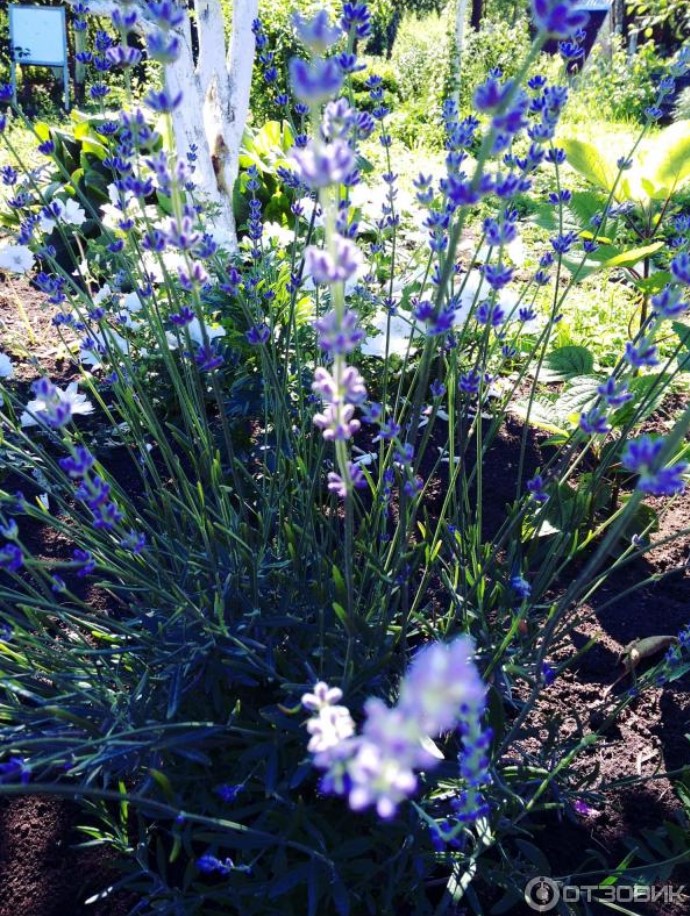
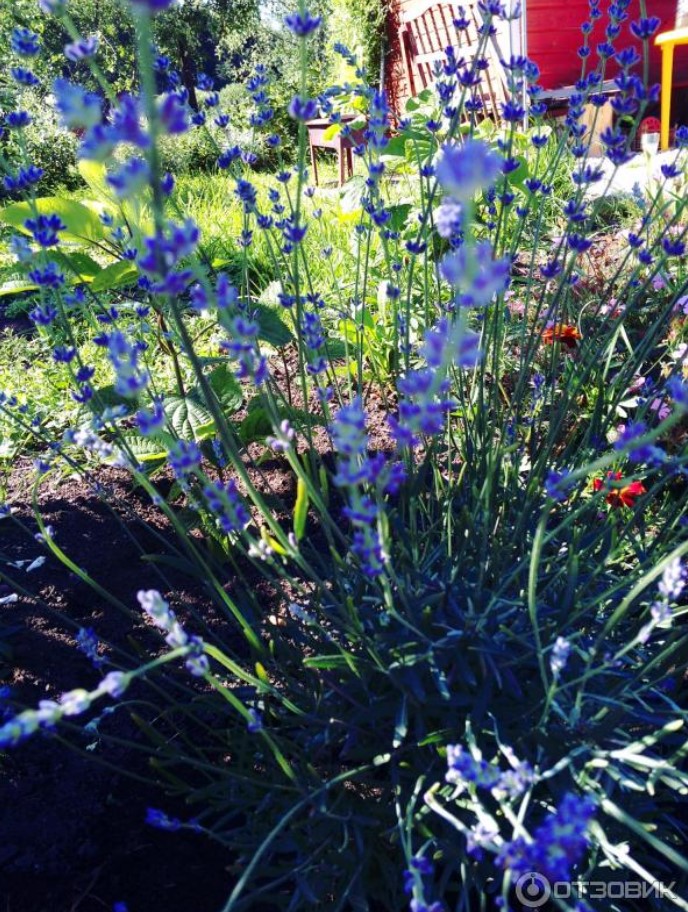
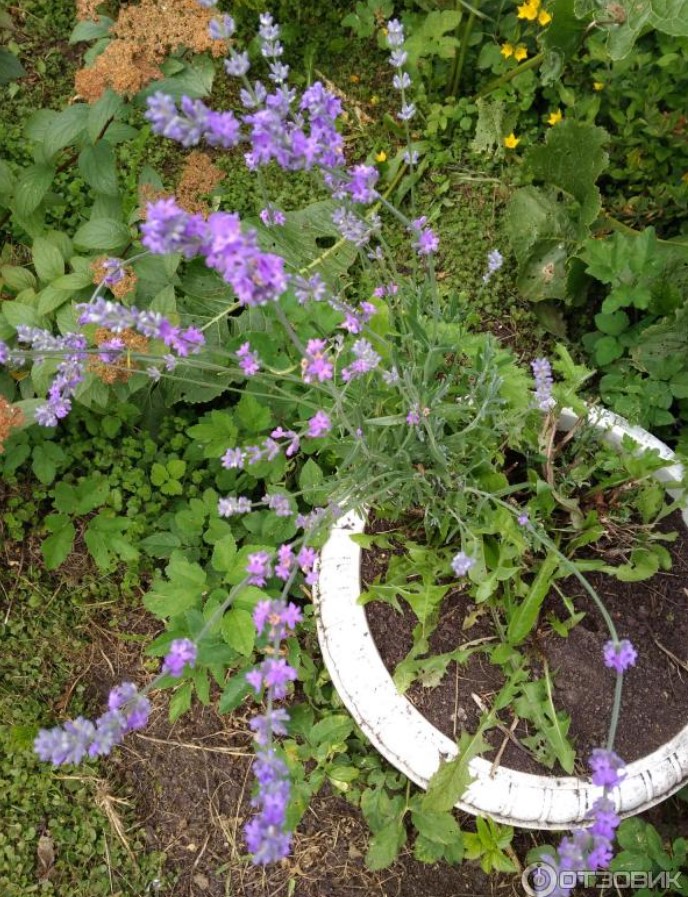
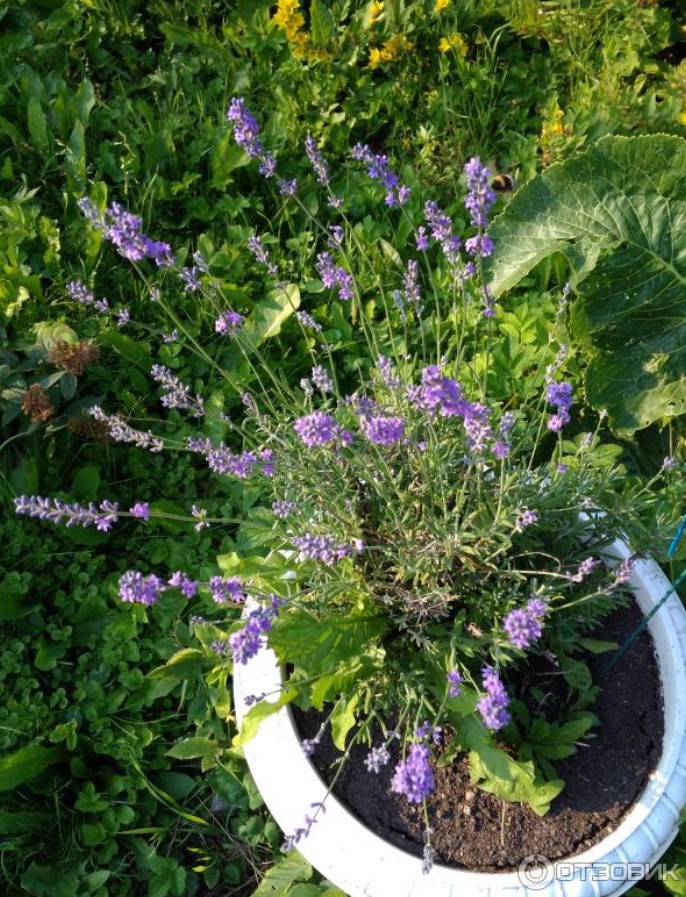
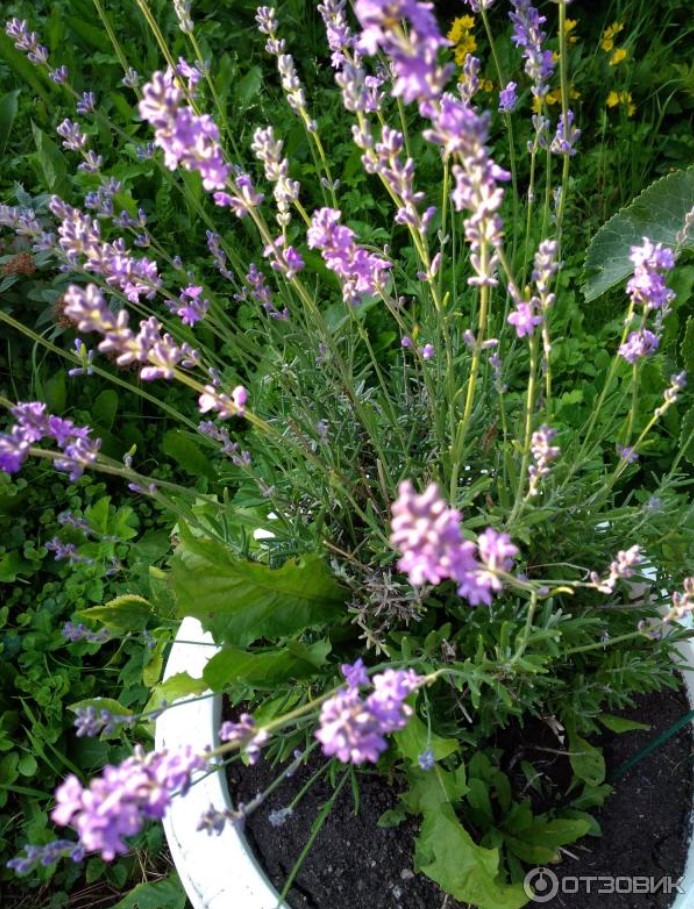
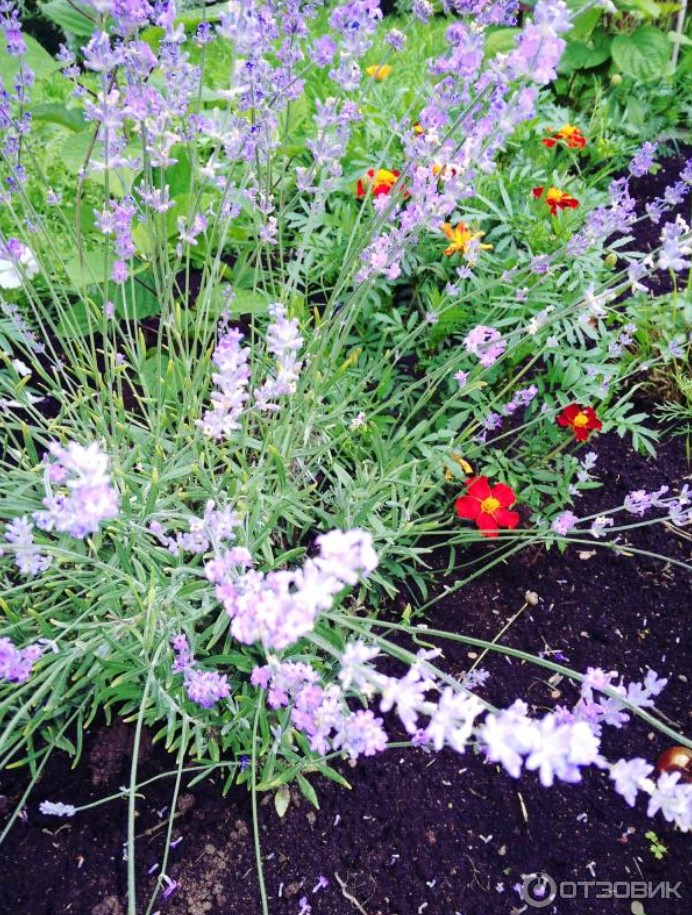
These are such beautiful blue-violet lavender flowering branches.
The lavender overwintered in my lawn under cover in the shed. And the following year, in mid-May, I planted this lavender bush directly in the ground in my flowerbed. Lavender loves sunny spots and doesn't like stagnant water. Little by little, my bush is growing.
Lavender is even a medicinal plant, it heals wounds well and is generally a powerful antiseptic.
And it's incredibly beautiful, especially once it's grown. Now I simply cover this lavender bush with a little peat for the winter, and the lavender overwinters just fine, even here in the Northwest.
I've already dug up some of this bush and even planted it in another flowerbed. It's already the end of September, the autumn crocuses have started to emerge, and some lavender sprigs are still blooming at their very tips.
Lavender's scent is also a great moth repellent. I dry lavender sprigs and put them in my closet for the winter. It smells wonderful in the closet, and moths aren't afraid of my fur coat. Moths are especially afraid of the scent of lavender.
So, I highly recommend lavender seeds. If it grows in our rainy region, it will grow even faster in warmer areas. A lilac-purple, fragrant beauty!
It blooms all summer long. I walk past it at the dacha, admiring its beauty and singing:
"Lavender, mountain lavender...
Blue flowers of our meetings.
Lavender, mountain lavender…
“How many years have passed, but you and I remember…”
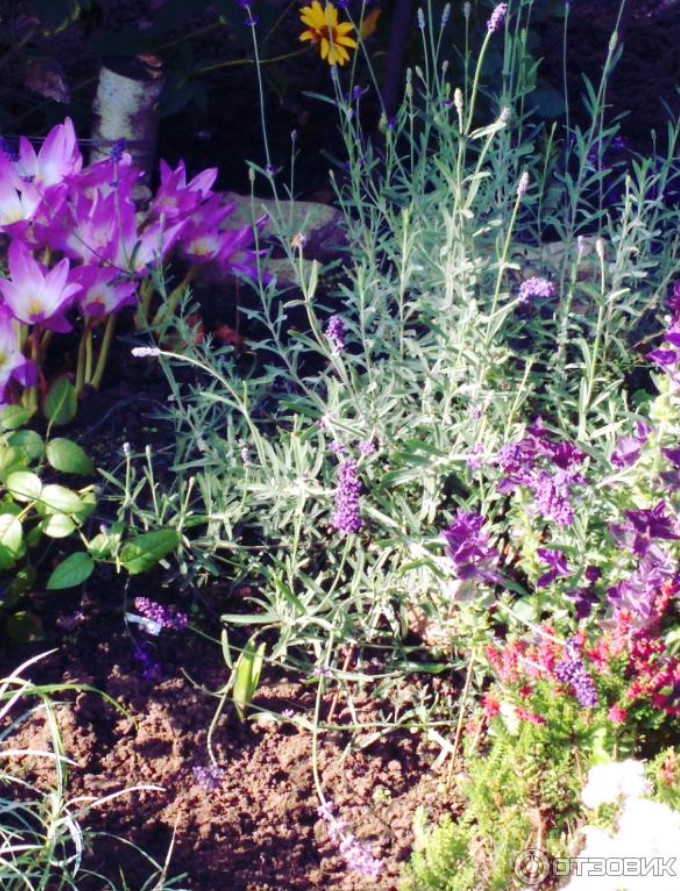
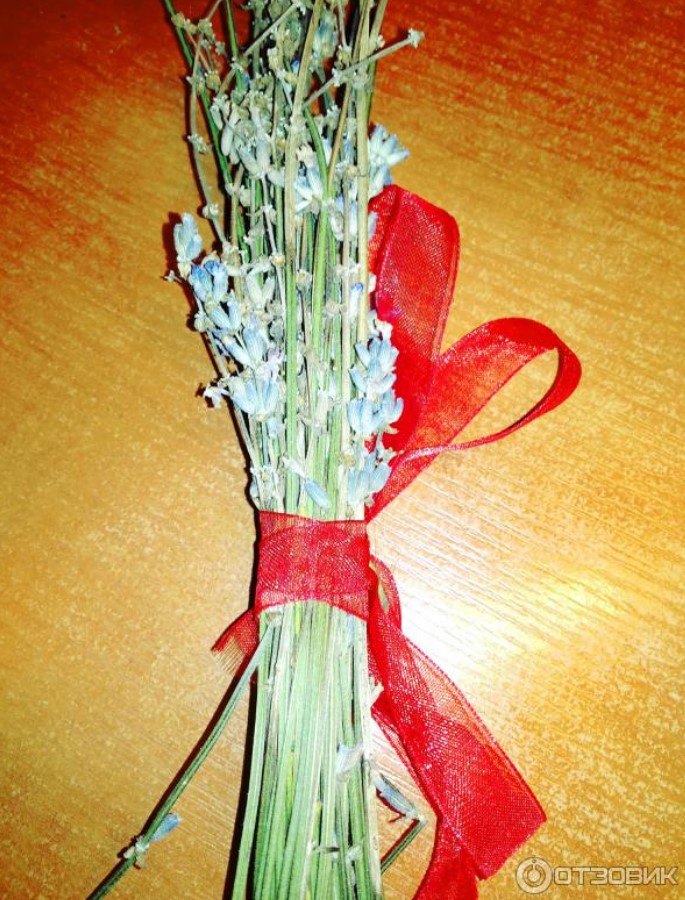
Ladies, if you've been growing lavender for a while, could you share your observations about which species is the most resilient in northern regions? I've reread the thread. So far, only the narrow-leaved variety is clear; it seems to be resilient.
I've had my narrow-leaved lavender for several years, I can't even remember how long. No other lavender has survived. It either doesn't survive the winter or dies in the spring. But I still haven't lost hope. I gave it another try this year—I'll see what happens.
Girls (and boys), has anyone managed to grow French lavender and get it to bloom? I tried growing it last season, but it was immediately obvious it was fussy. Three "bushes" made it to summer, and only one made it to fall. A month ago, it dried up too. I really like it, but it's not working out :(. If I buy a large, blooming bush, will it at least bloom in summer?
English seems to be working out without any particular problems.