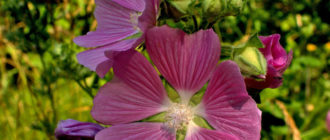
Lavatera came to our country from Asia and quickly gained popularity among gardeners. Breeders have refined the Lavatera's characteristics, and most of its varieties now thrive in central Russia.
Content
- 1 Description of Lavatera annua
- 2 Lavatera annua (three-month): 15 varieties with photos and descriptions in the table
- 3
- 4 Methods for planting Lavatera annua
- 5 Planting annual Lavatera seedlings
- 6 Caring for Lavatera annua
- 7 Diseases and pests of Lavatera annua
- 8 Lavatera annua in landscape design
- 9 Reviews of annual lavatera from gardeners
Description of Lavatera annua
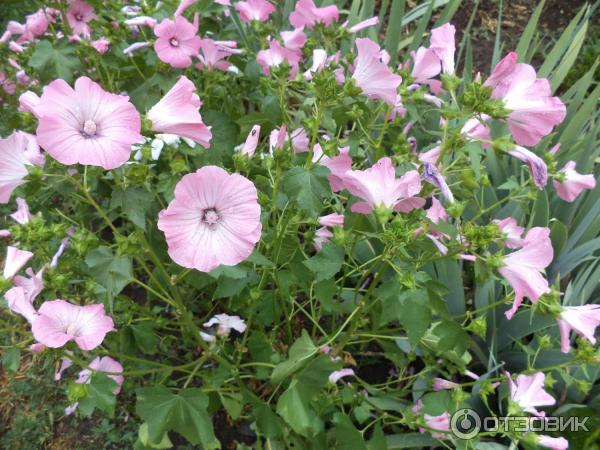
The plant belongs to the Malvaceae family. The height of the bush depends on the cultivar and ranges from 50 to 150 cm. The central stem is strong, the shoots are branched, and the leaves are a rich green, resembling maple leaves due to their three lobes.
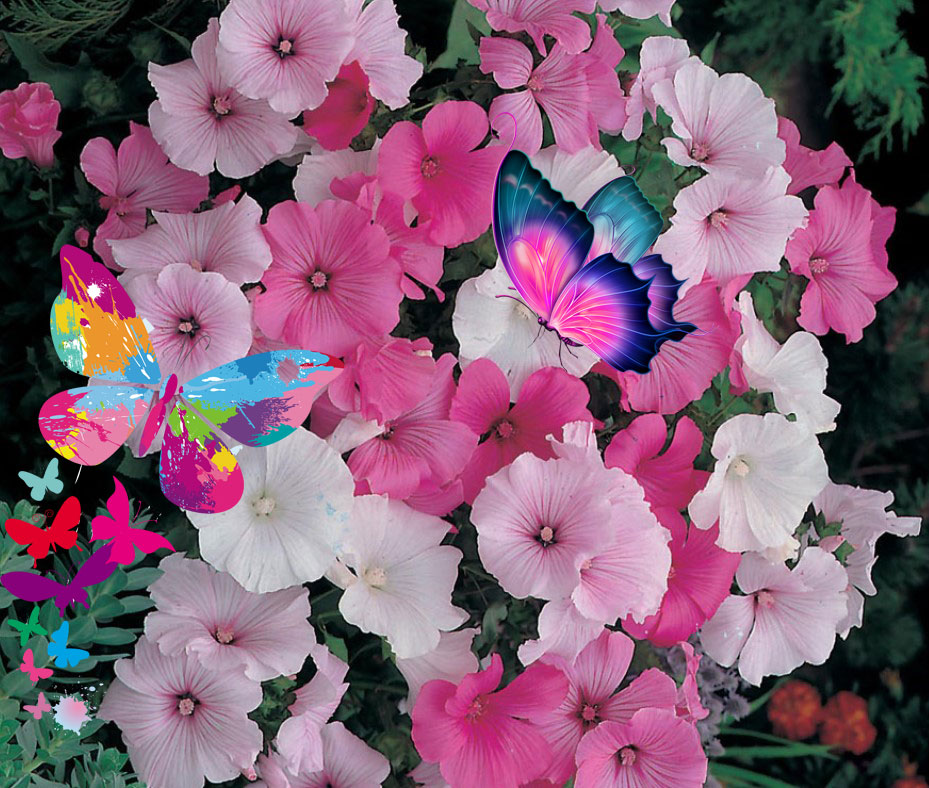
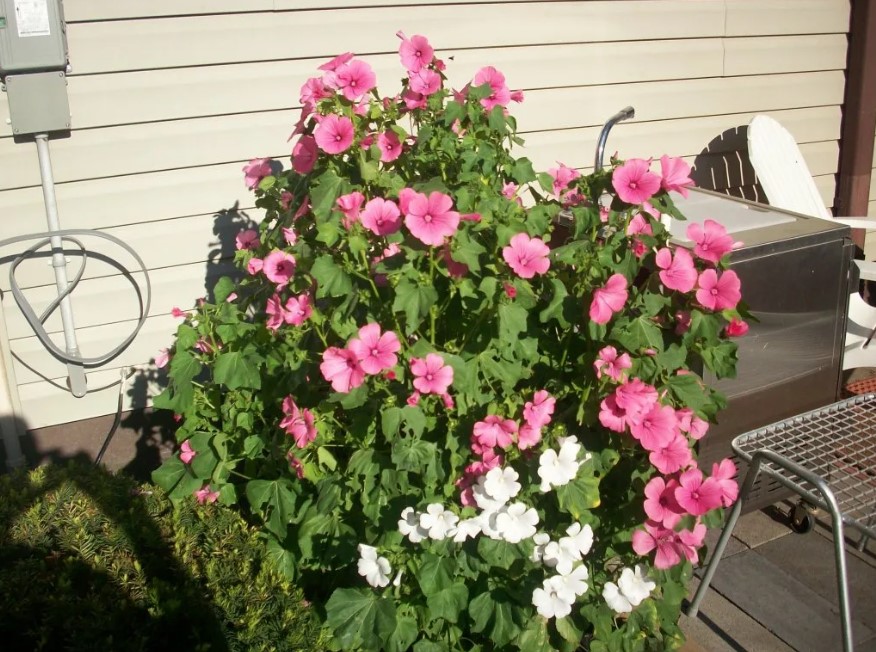
The first flowers appear as early as June and continue to bloom until autumn. They are shaped like small gramophones, about 10 cm in diameter, and come in a variety of colors.
Lavatera annua (three-month): 15 varieties with photos and descriptions in the table
Lavatera trimonthis is an annual plant. It is adapted to most regional conditions. In open ground, shoots can reach 120 cm in height. The flowers range in color from white, pinkish, or purple. The flowers reach 5-12 cm in diameter.
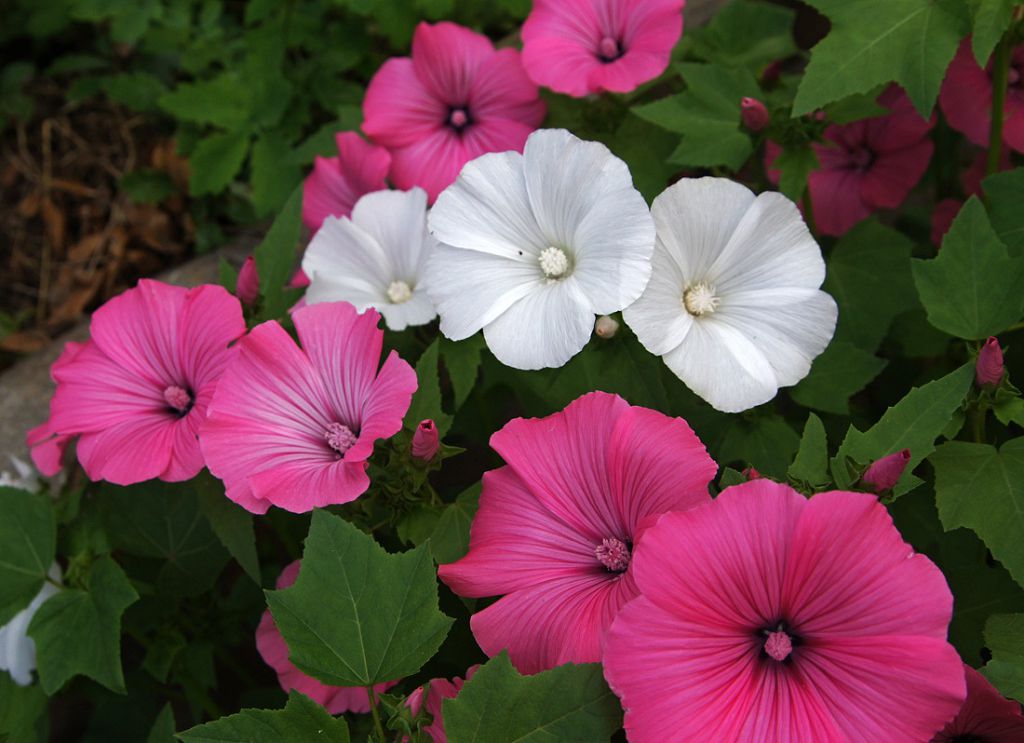
The most popular mixtures and varieties from different manufacturers are the following:
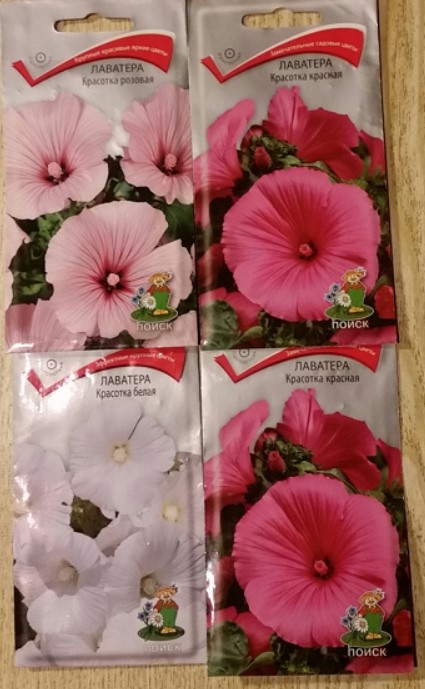
| Variety | Lavatera the Beauty |
| Bush height | The bush grows up to 75 cm |
| Flower color and diameter | Flowers are pink, purple, or white. Diameter varies from 6 to 10 cm. |
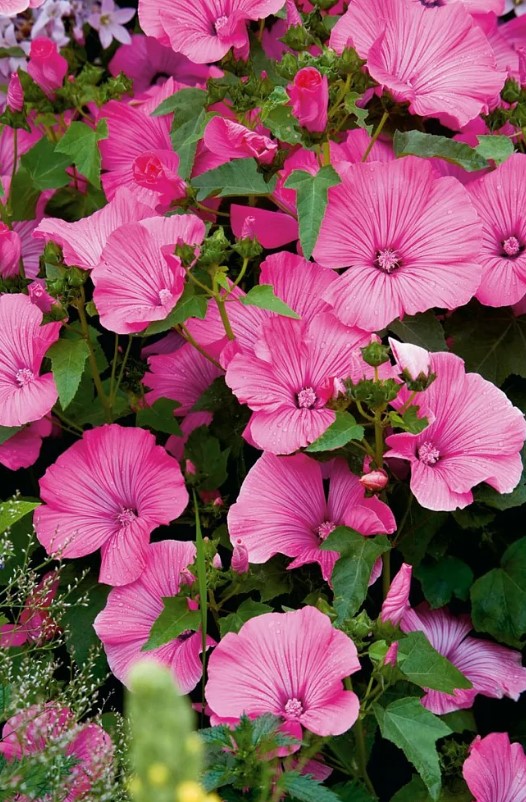
| Variety | Lavatera Lovelines |
| Bush height | Up to 100 cm |
| Flower color and diameter | The soft pink flowers are funnel-shaped and 5 cm in diameter. |
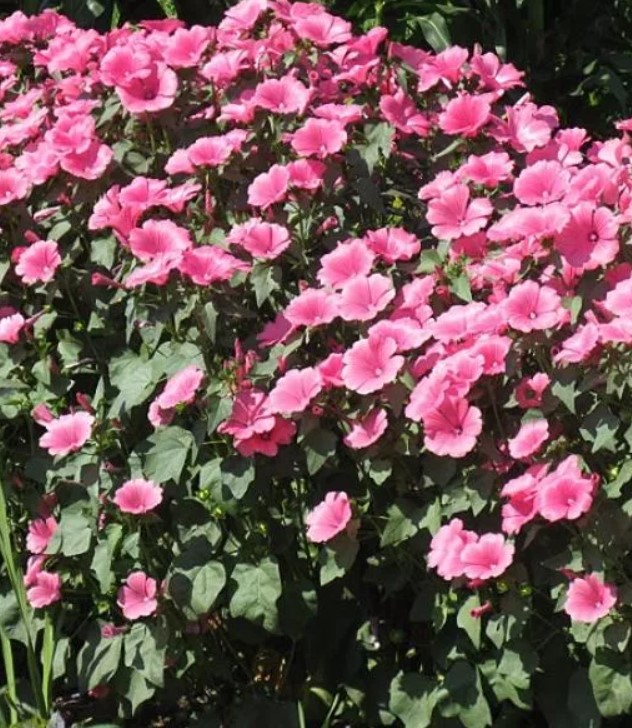
| Variety | Lavatera Moonlight |
| Bush height | Up to 125 cm |
| Flower color and diameter | The flowers are soft pink with a silvery tint and reach 10 cm in diameter. |
| Variety | Lavatera Melange |
| Bush height | Up to 90 cm |
| Flower color and diameter | The color can be white, red, or pink. The diameter is up to 9 cm. |
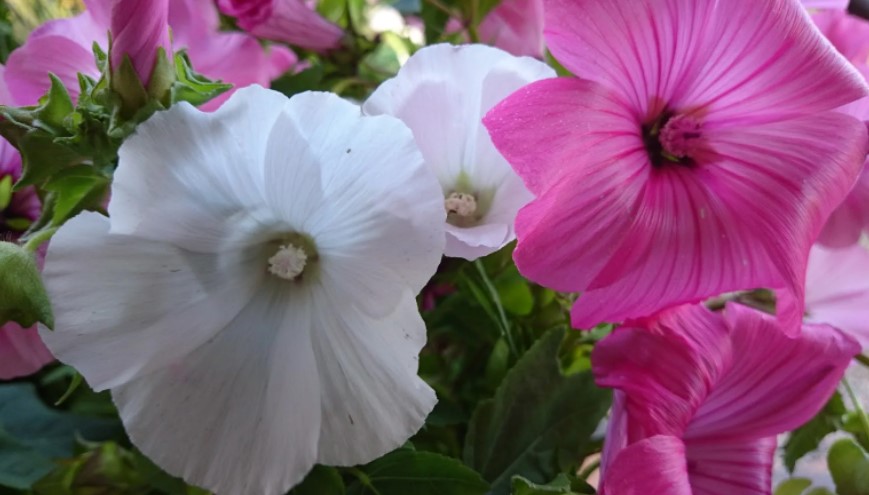
| Variety | Lavatera Mont Blanc |
| Bush height | Up to 75 cm |
| Flower color and diameter | Flowers are white, up to 11 cm in diameter. |
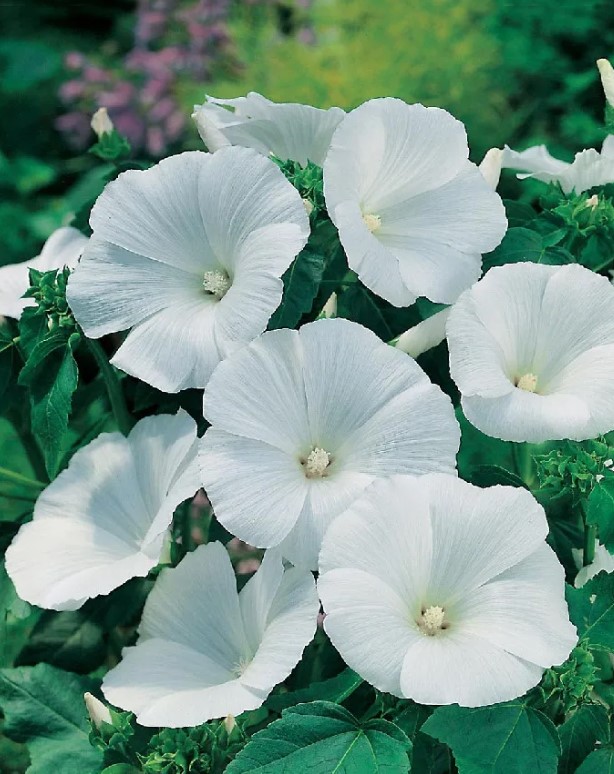
| Variety | Lavatera the Bride |
| Bush height | Up to 70 cm |
| Flower color and diameter | Flowers are white, up to 8 cm in diameter. |
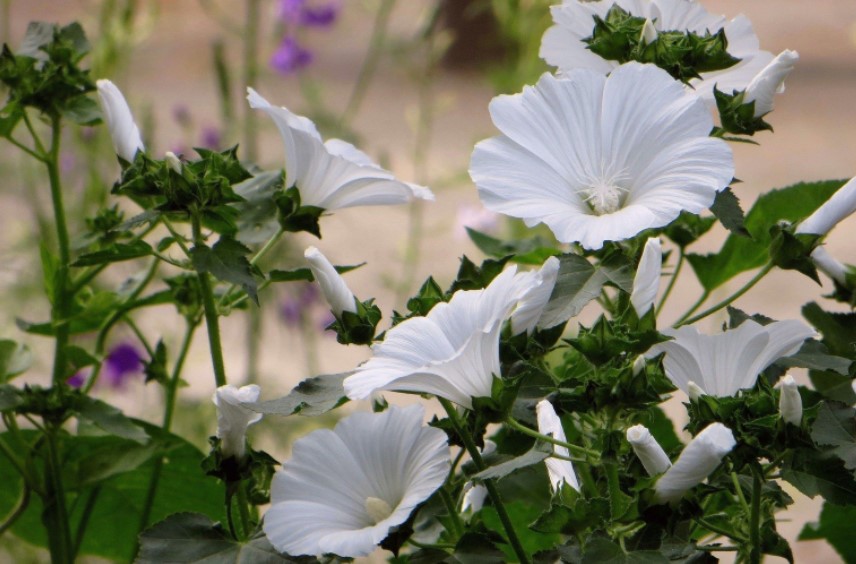
| Variety | Lavatera Novella |
| Bush height | In open ground it grows up to 60 cm, in a pot – up to 20 cm. |
| Flower color and diameter | Early flowering, pink color, flower diameter up to 12 cm. |
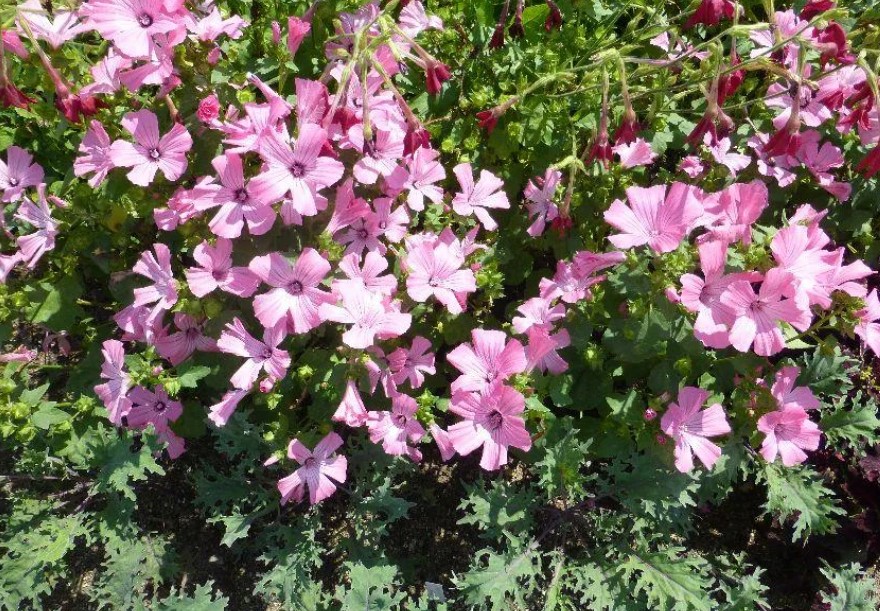
| Variety | Lavatera New World |
| Bush height | Up to 120 cm |
| Flower color and diameter | Flowers are white, crimson, or salmon-colored. Diameter up to 10 cm. |
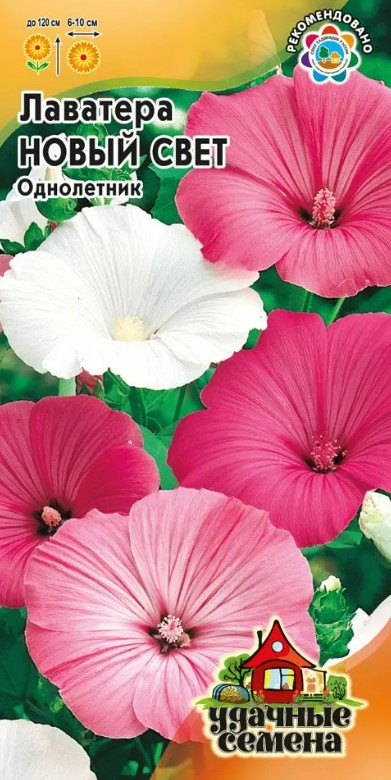
| Variety | Lavatera Parade |
| Bush height | Up to 75 cm |
| Flower color and diameter | Flowers in all shades of soft pink and white, up to 9 cm in diameter. |
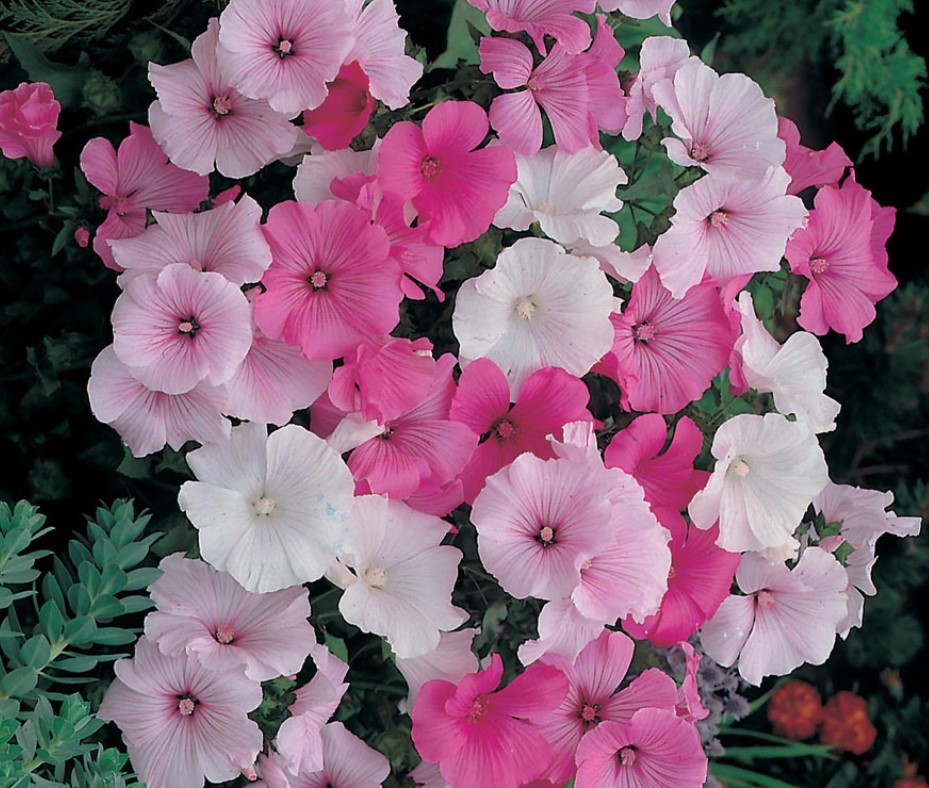
| Variety | Lavatera Podruzhka |
| Bush height | Up to 100 cm |
| Flower color and diameter | The flowers are white, salmon, or pearlescent. The diameter reaches 10 cm. |
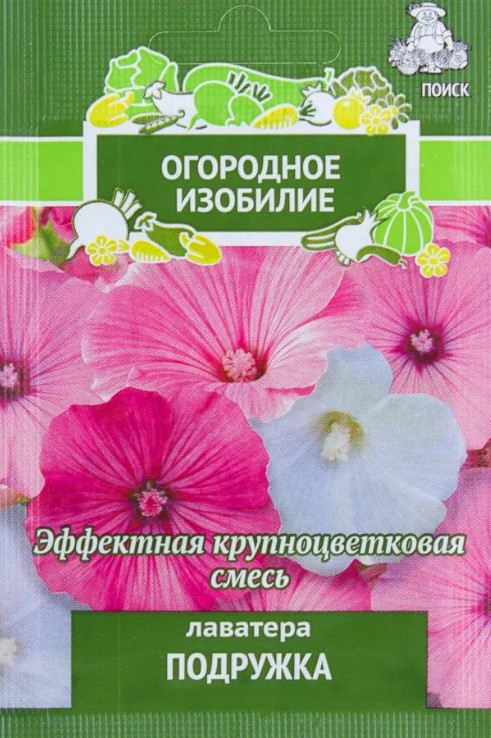
| Variety | Lavatera Rubin |
| Bush height | Up to 100 cm |
| Flower color and diameter | Flowers are ruby-colored, diameter is 10 cm. |
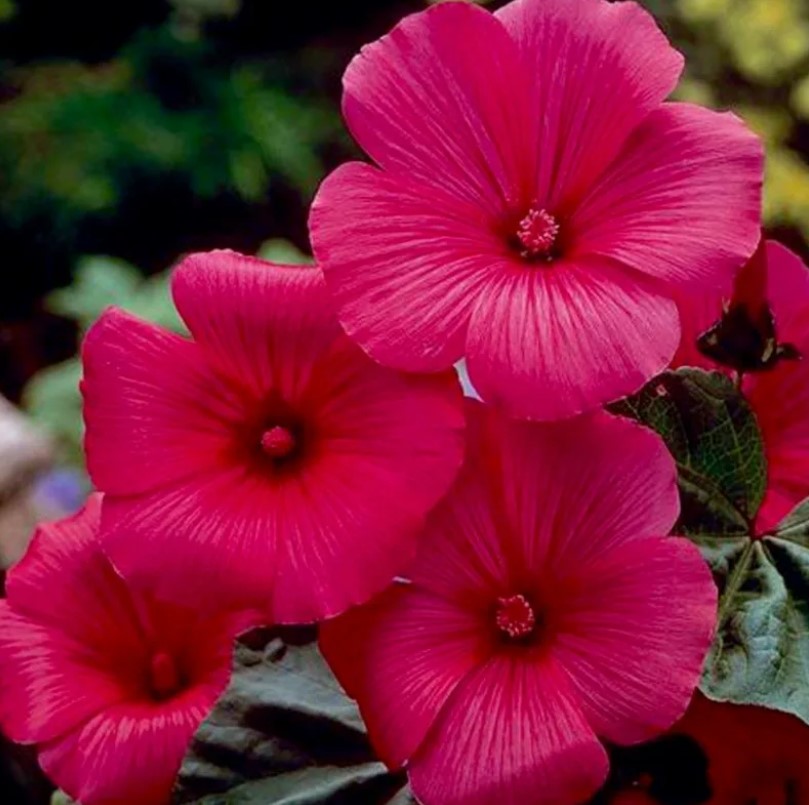
| Variety | Lavatera Ruby Carpet |
| Bush height | Up to 120 cm |
| Flower color and diameter | The flowers are ruby-colored, large, reaching 10-12 cm in diameter. |
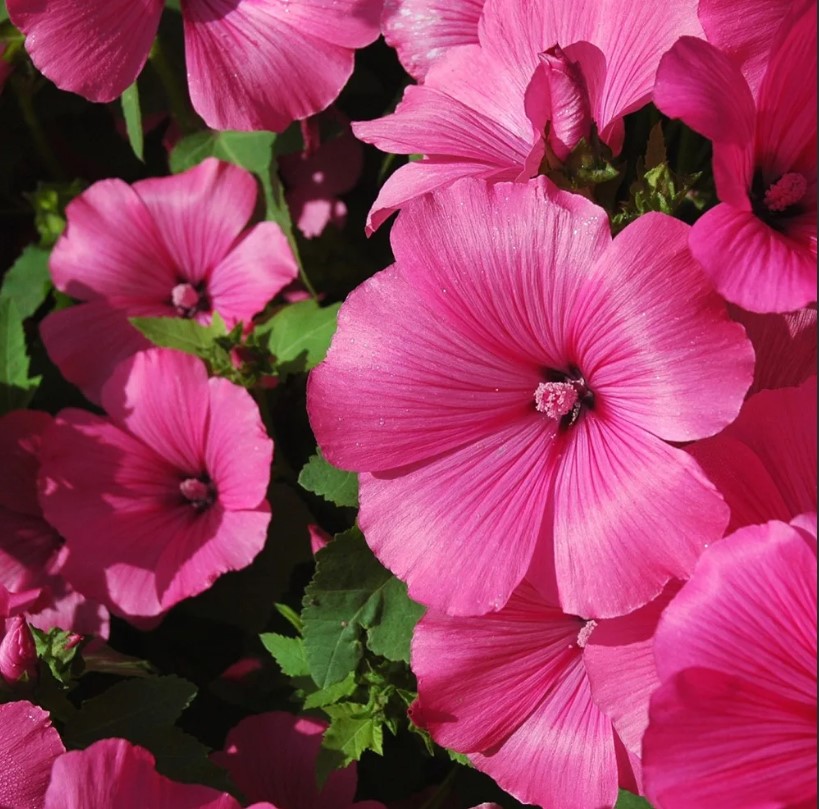
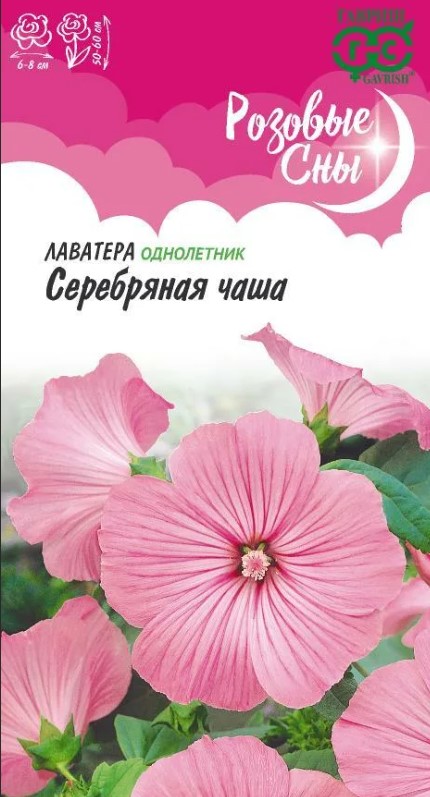
| Variety | Lavatera Silver Bowl |
| Bush height | Up to 70 cm |
| Flower color and diameter | Flowers are salmon-colored, 9-10 cm in diameter. |
| Variety | Lavatera Tangara |
| Bush height | Up to 100 cm |
| Flower color and diameter | The color is deep pink, diameter up to 10 cm. |
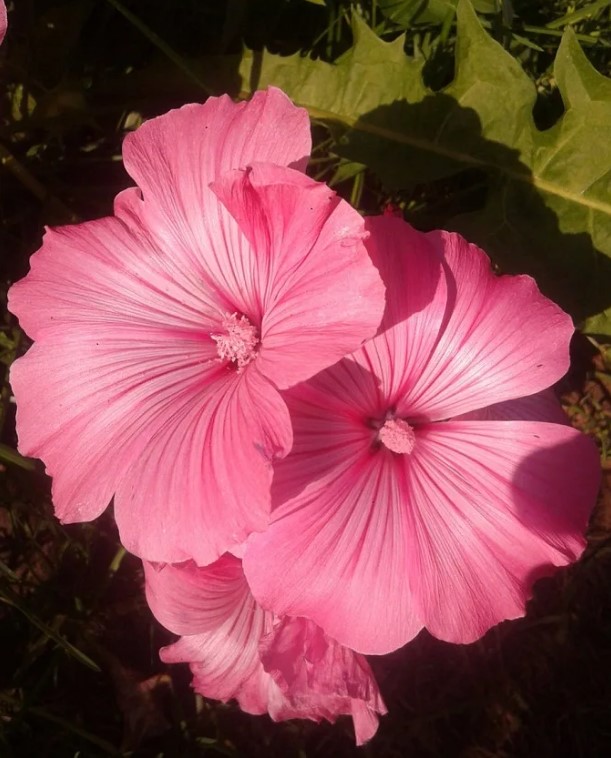
| Variety | Lavatera the Enchantress |
| Bush height | Up to 100 cm |
| Flower color and diameter | The petals can be crimson, pink, or white. The diameter is 6 cm. |
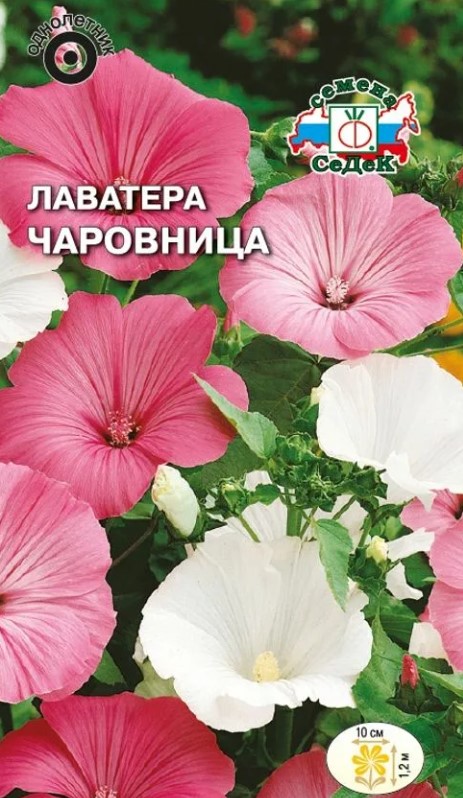
As you can see, annual Lavatera can vary only in color: white, pink, purple, ruby—basically, they are similar.
Methods for planting Lavatera annua
There are two ways to grow Lavatera:
- seeds;
- seedlings.
It is important to note that flowers planted using seedlings bloom much earlier and have a higher germination rate.
Growing Lavatera annua from seeds
When growing Lavatera from seeds, it is very important to choose high-quality planting material.
Shelf life of Lavatera annua seeds
Lavatera seeds can be collected independently after the flowering period has ended. They can be stored for up to three years. However, the closer they get to the expiration date, the lower the germination rate.
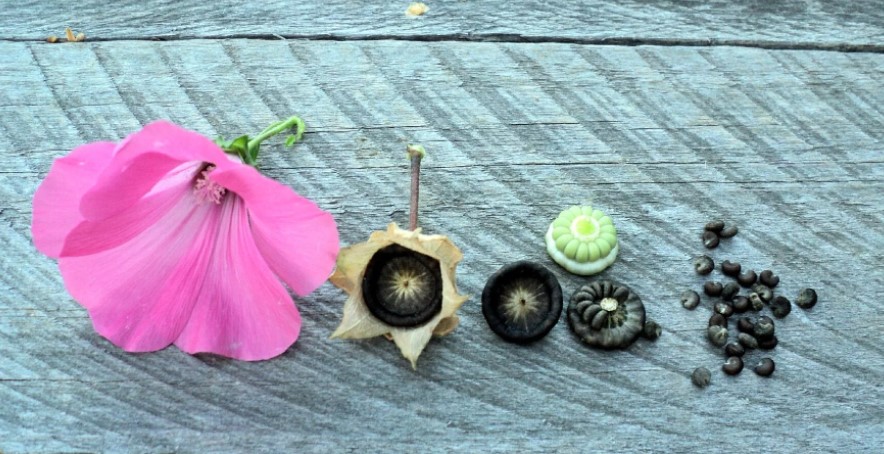
Sowing seeds in open ground
Before planting seeds outdoors, it's important to perform special seed preparation. This involves disinfecting the seeds with a weak solution of potassium permanganate and treating them with a stimulating solution. This will help speed up the germination process.
You can plant the seeds in the soil when the temperature reaches 18 degrees Celsius. The bed should be in a dry place to prevent standing water.
Before planting, the flowerbed is dug over with humus or peat, and then watered. Dig 4-cm-deep holes in the soil at intervals of 25 cm. Place two seeds in each hole. Once the seedlings emerge, only the strongest shoot can be left.
If there is a threat of recurrent frosts, it is better to cover the bed with a special material at night.
The first shoots appear in about 2 weeks.
Sowing annual Lavatera for seedlings
Seeds for seedlings are sown in March. A soil mixture of equal parts soil, sand, peat, and humus is prepared. This mixture is then filled into a chosen container with pre-drilled drainage holes. Lavatera does not tolerate overwatering. It's best to start with individual pots, which will avoid the need to transplant them once the first leaves emerge.
When planting in furrows, the depth should be no more than 1 cm, and the distance between rows should be at least 5 cm. Then, the seedlings are covered with film and placed in a warm place.
As soon as the first shoots appear on the soil surface, the covering can be removed.
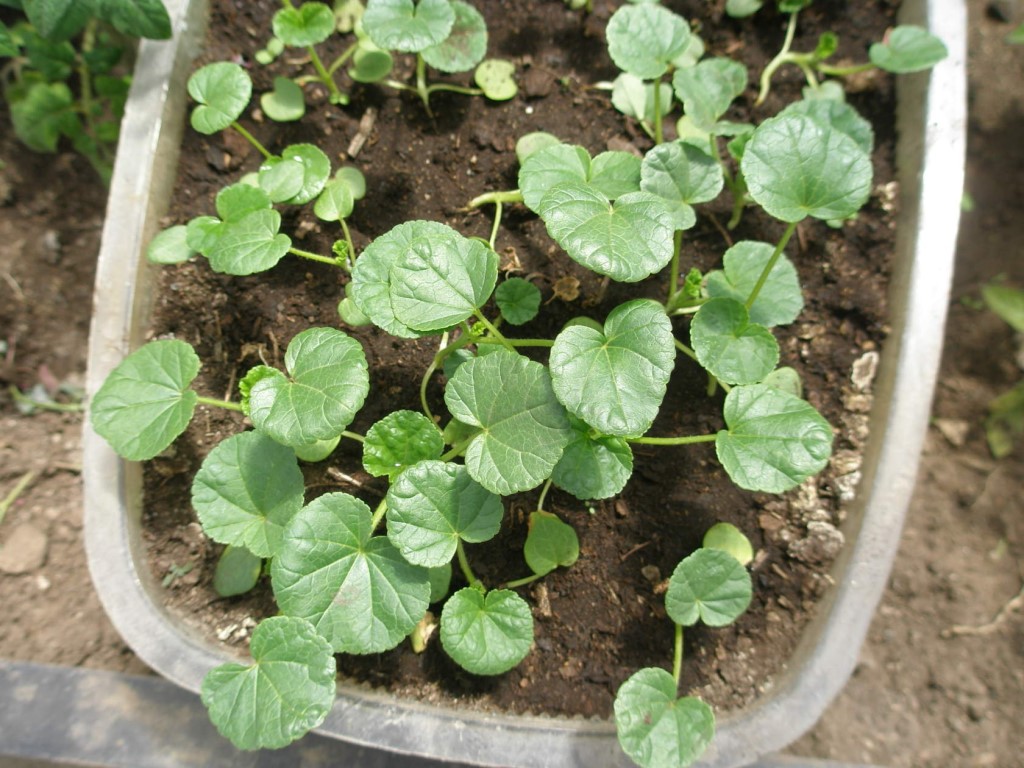
Caring for seedlings
Lavatera is an easy-to-grow plant. After the first shoots emerge, thin the plantings, leaving only the strongest seedlings.
As the soil dries out, water it; plants don't like stagnant water at the roots, so it's important not to overdo it.
If the shoots don't get enough sunlight, they will begin to stretch and become weak. To prevent this, you can illuminate them with a special grow light.
Pricking out seedlings is optional. If the weather is still cool and the seedlings are already large enough, you can transplant them into separate containers to prevent root entanglement.
Planting annual Lavatera seedlings
Let's look at all the intricacies of planting lavartera seedlings.
When to plant Lavatera
The planting date for Lavatera varies by region. If spring is early, planting can begin in late April. In temperate climates, Lavatera can be planted starting in late May, once the risk of frost has passed. A sunny location with adequate drainage is recommended.
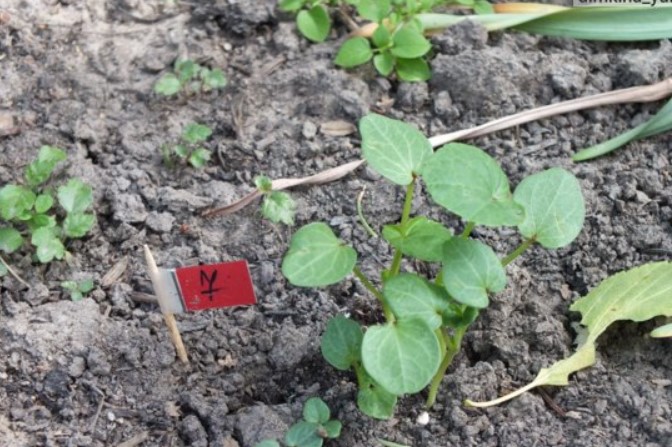
How to plant Lavatera
The recommended planting pattern for Lavatera is 20x25 cm. This spacing is sufficient to create a lush planting without causing excessive crowding.
You can add a small amount of fertilizer to each hole, mixing it with the soil first. The seedlings are transferred to the hole along with the soil ball. If the variety is tall, you can bury one end of a rope under the root. The other end can then be tied to the support and will hold the stem.
The surface of the flower bed can be mulched to reduce the number of weeds.
Caring for Lavatera annua
Caring for Lavatera comes down to timely watering, fertilizing and weeding of plants.
- The flower does not tolerate excess moisture at the roots, so watering is recommended after the surface of the bed has completely dried out.
- As weeds appear, weed and loosen the flowerbed. This will help reduce the risk of pests and improve root aeration.
- Fertilizer should only be applied if no fertilizers were added to the soil during planting.
- To ensure that flowering continues for as long as possible, you can remove faded buds from the bush.
Diseases and pests of Lavatera annua
Lavatera has a strong immune system and is rarely affected by disease. Under adverse weather conditions, rust may appear on the bushes. It is identified by brownish spots on the leaves. If the infestation is minor, you can remove the damaged parts and spray the plantings with Bordeaux mixture. If the infestation is extensive, the entire bush will need to be removed.
Sometimes, aphids plague plantings. Colonies can be seen on the underside of leaves. If the pest infestation is low, the leaves are removed and the plantings are sprayed with an ash-soap solution.
Lavatera annua in landscape design
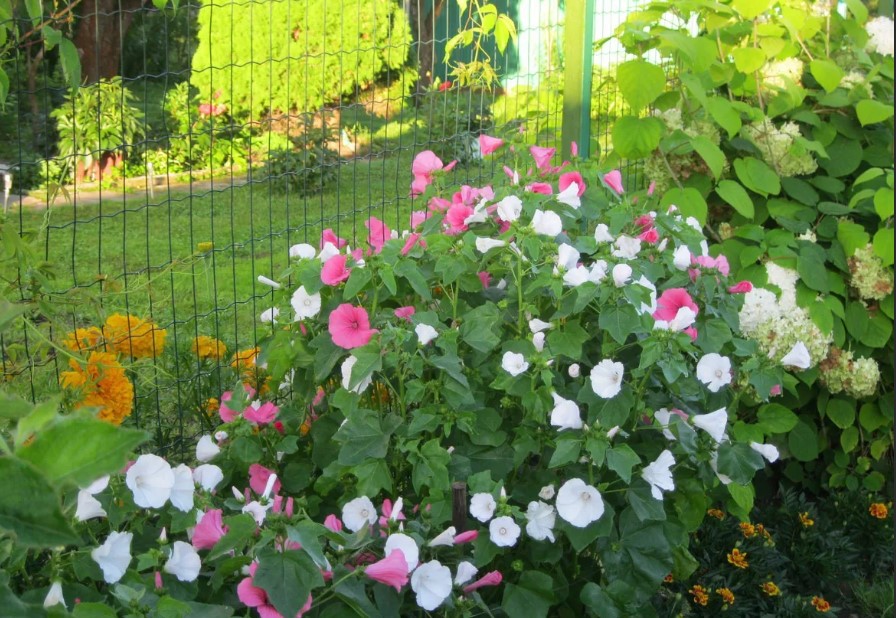
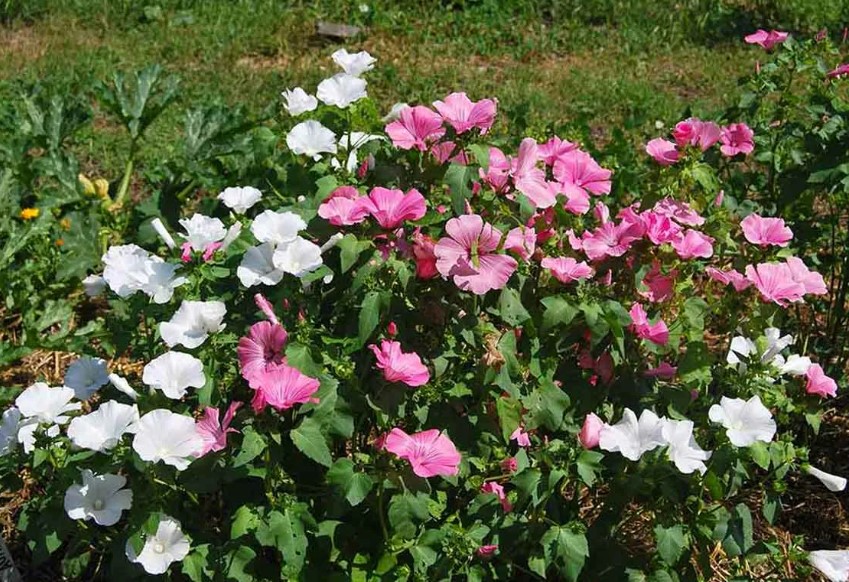
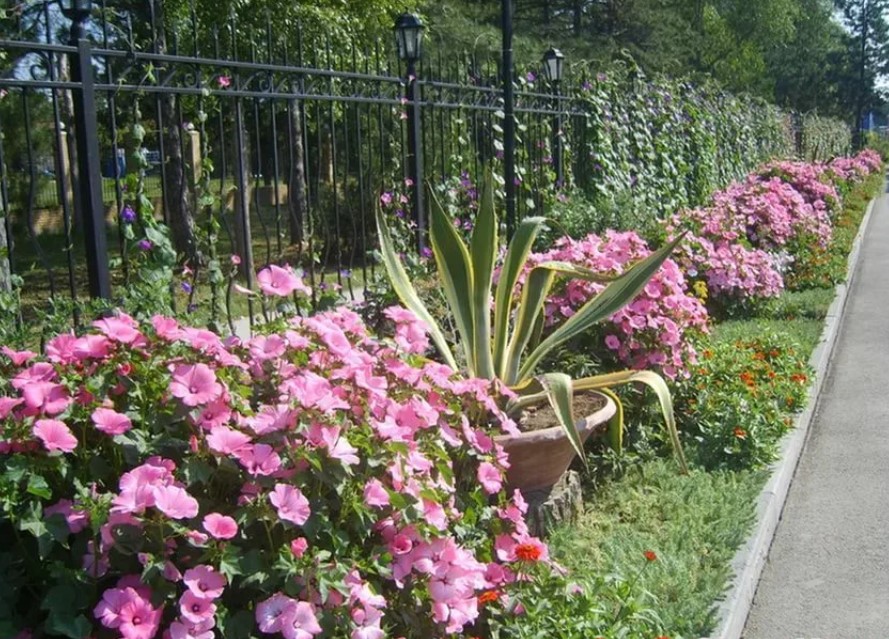
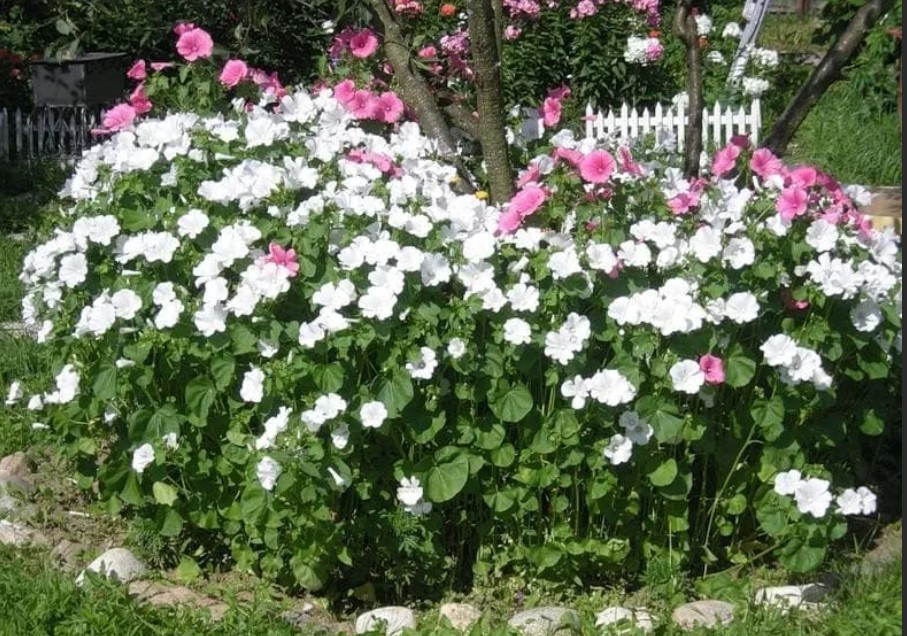
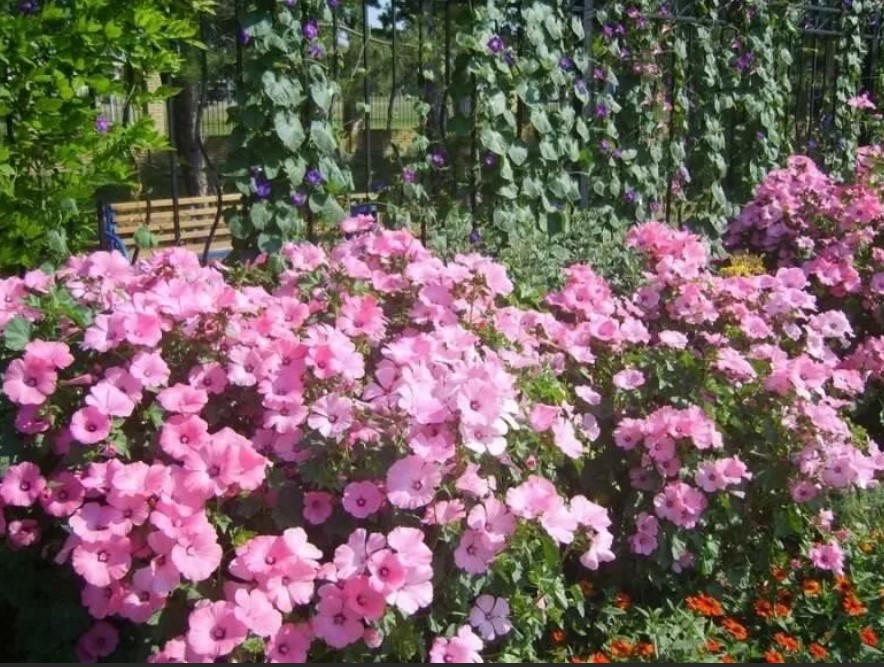
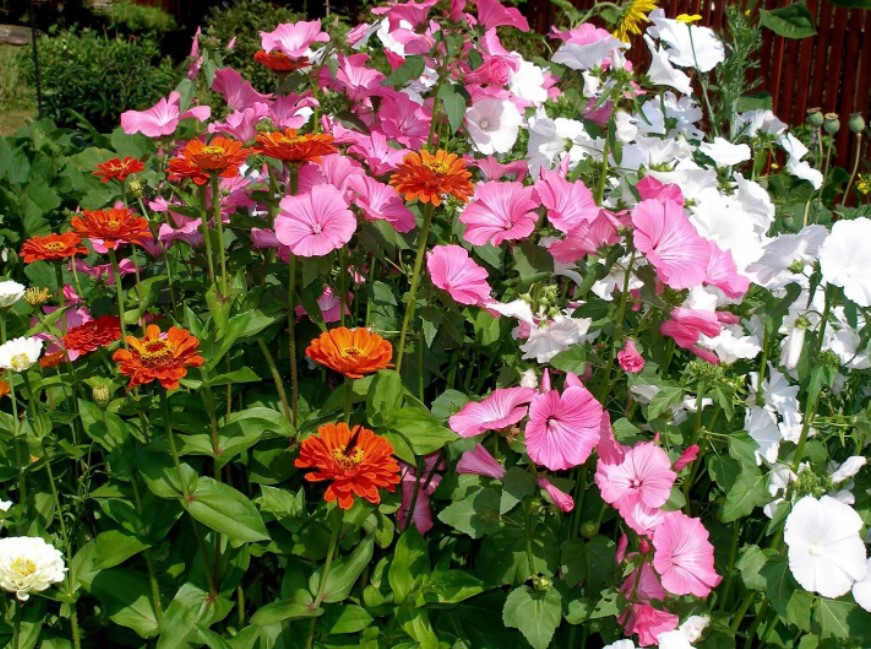
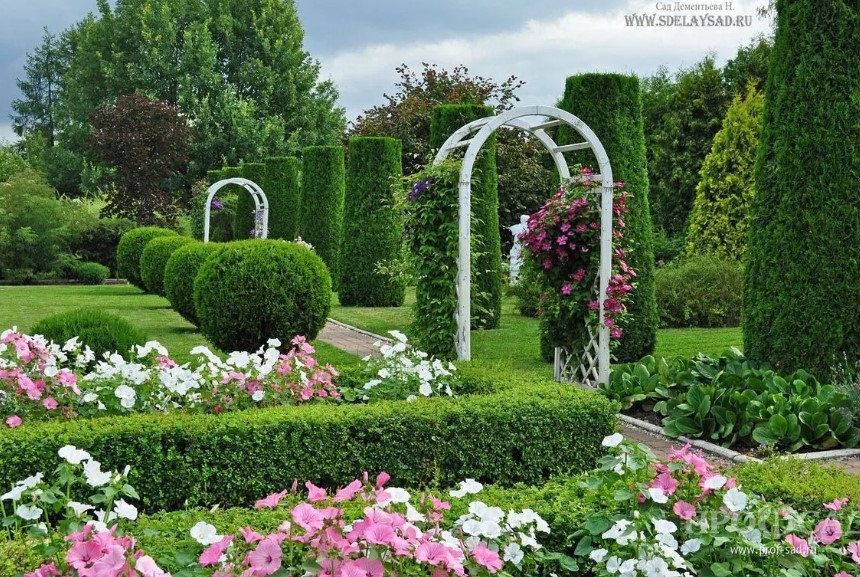
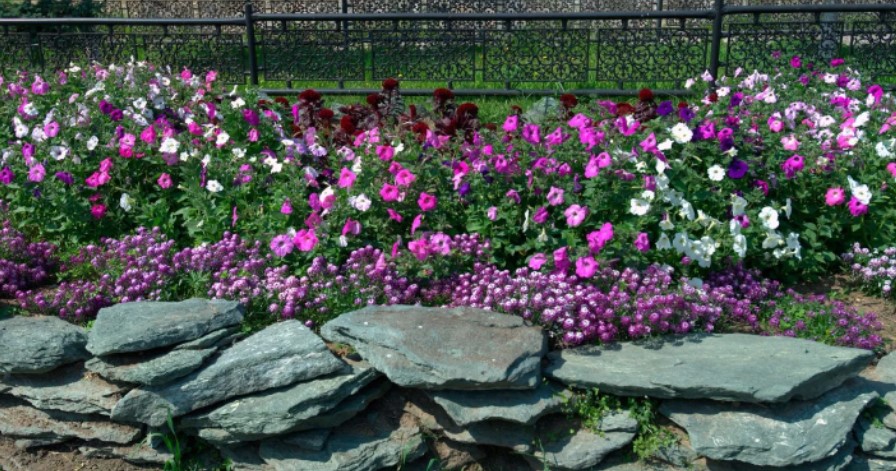
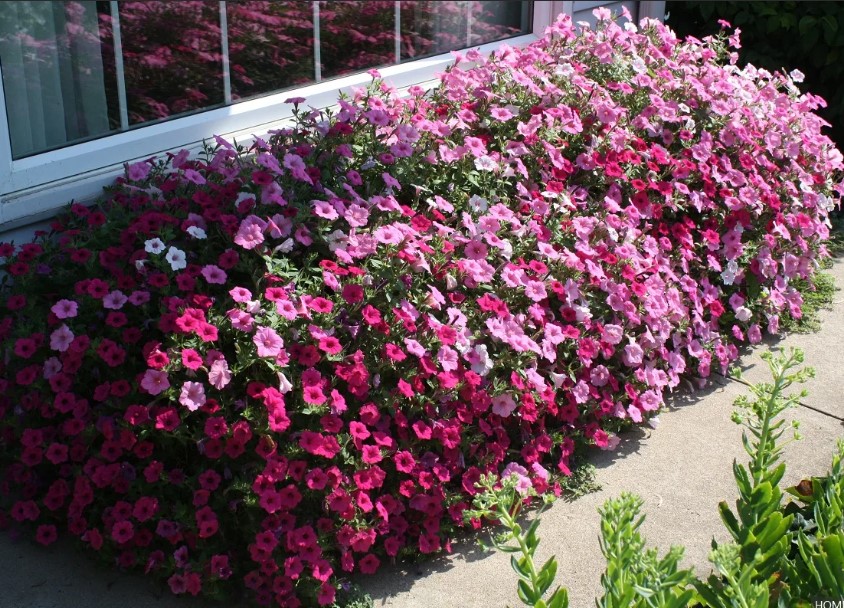
Thanks to its diverse range of shades, Lavatera is used for both single flowerbeds and complex mixed borders. This flower is often planted as a hedge. Low-growing varieties can be used to line paths and act as borders. Some gardeners use Lavatera to cover shed walls and fences.
Reviews of annual lavatera from gardeners
In my last review, I talked about the beautiful, easy-to-grow annual nasturtium. I'll continue with a review of another incredibly easy-to-plant, easy-to-care-for, and very low-maintenance plant. It's called Lavatera, also known as Lavatera or Wild Rose.
They say it's a flower for the lazy. And indeed, Lavatera doesn't require much attention. I planted it before, when we had our own house and garden, planted it last year in the front garden under the windows, and plan to plant it again this spring.Lavatera is a tall plant, reaching a height of about a meter. It's quite powerful and strong. I remember there was a heavy downpour, and all the plants fell. The Lavatera also fell, but the next day it was up and blooming as if nothing had happened.
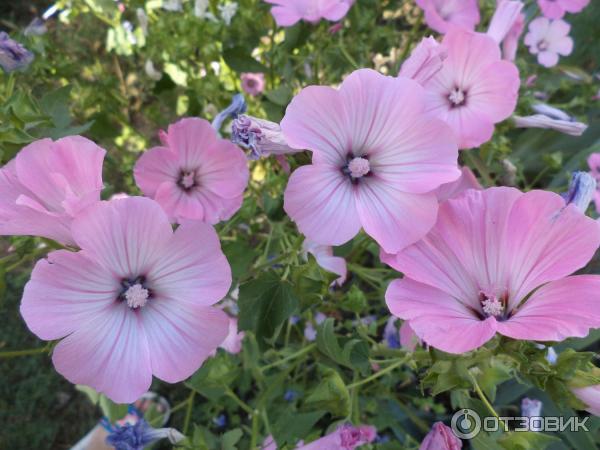
Lavatera flowers grow singly or in clusters of several, depending on the variety. They are quite large, very beautiful, and delicate, and come in shades of white, pink, and crimson. They bloom all summer, until the end of September. New flowers grow in place of faded and fallen flowers.
Lavatera is drought-resistant and wind-resistant. It only needs watering once or twice a week. I don't use any fertilizers or supplements.
Lavatera can be used in bouquets. It looks quite impressive. Moreover, the flowers last a long time.Lavatera can be sown directly into open ground in mid-May. Sow shallowly. The first shoots appear in about 7-10 days. A week later, the plant will delight you with flowers.
Among the most well-known varieties, I recommend Lavatera 'Goddess of the Sun,' 'Mont Blanc,' and 'Krasotka.' I buy seeds from SeDek; they always have excellent germination rates.
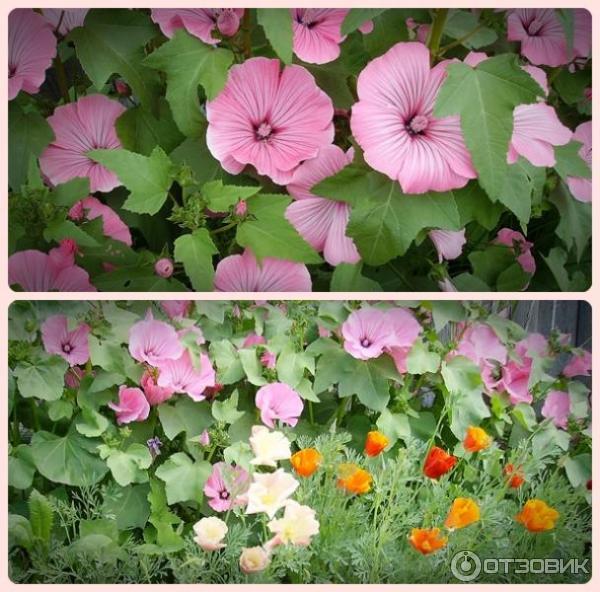
Lavatera looks great in the background of large flowerbeds, pairs well with snapdragons, California poppy, and cosmos, and is also excellent for single-planting. This vibrant, luxurious plant will enhance any garden or cottage.
I recommend it.
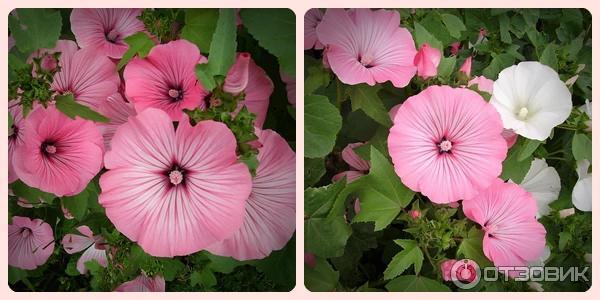
I have only one wish for flowers: they should be unpretentious. And there are plenty of such flowers. Flowers adorn my garden plot, beginning in early spring and continuing until late fall.
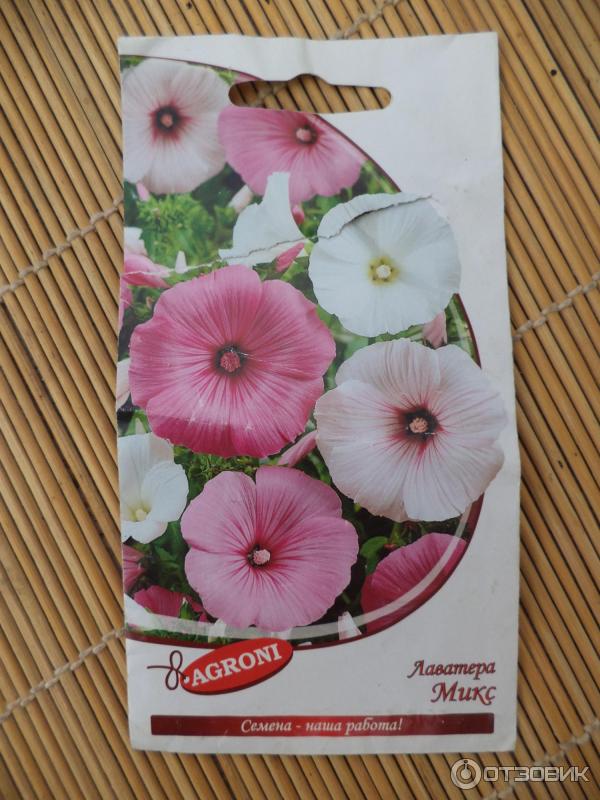
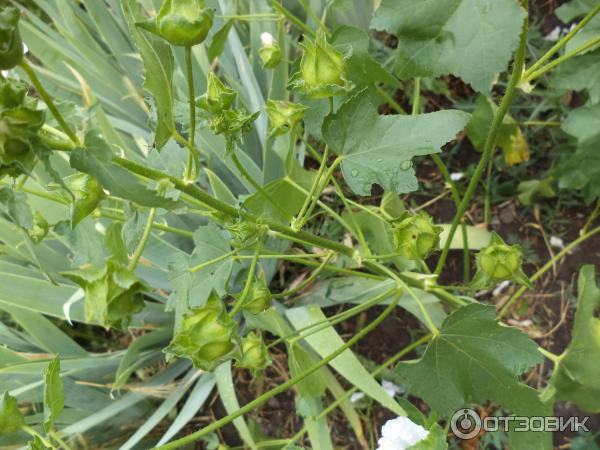
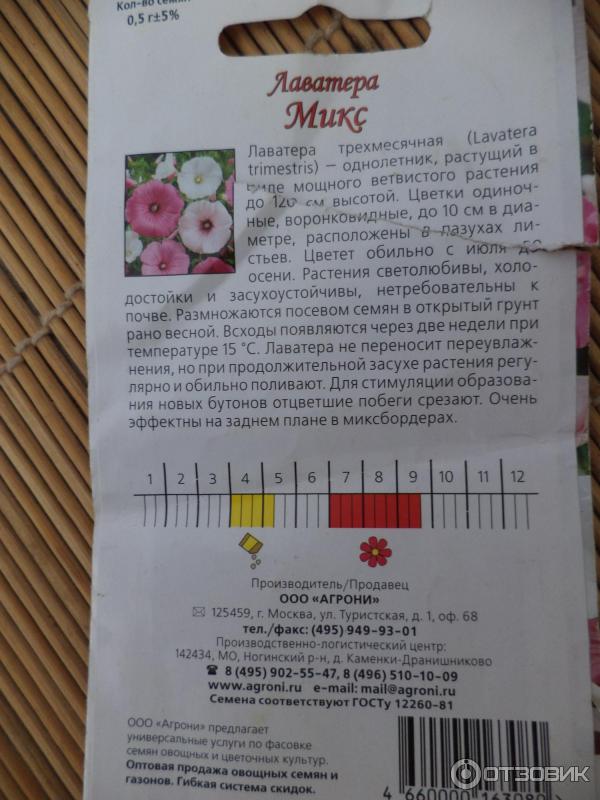
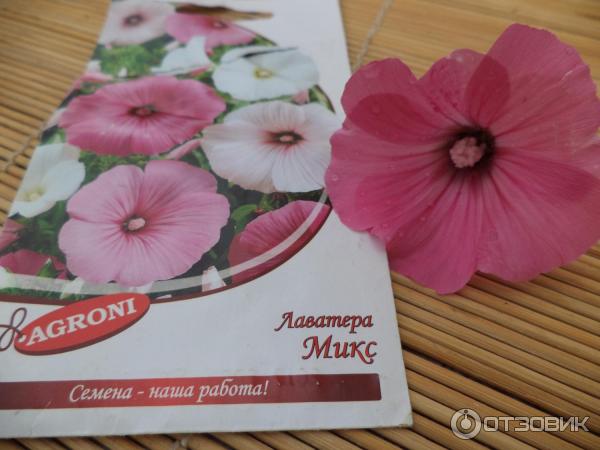
I didn't want to buy these seeds. For some reason, I thought the flowers would close during the day in the sun. However, after reading that they're undemanding and drought-resistant, I bought a packet of seeds. Mine bloomed starting in June, but in early August they started setting seeds and losing their appeal.
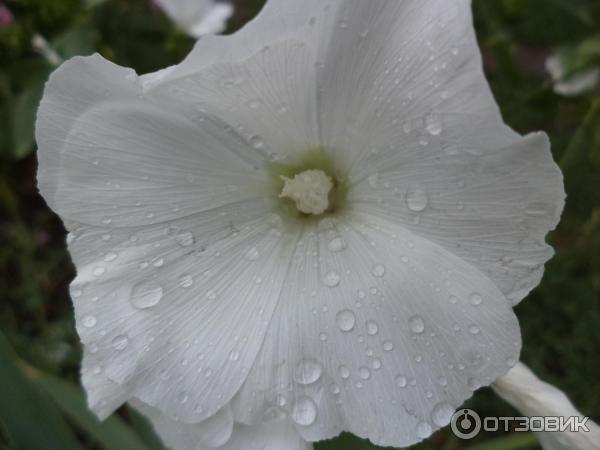
The plant is tall, so you need to decide on a planting location right away. The seeds are sown in open ground. My flowers were planted in the sunniest spot, but the pink ones didn't fade, and the white ones were absolutely snow-white. The photos are overexposed and don't accurately convey the color.
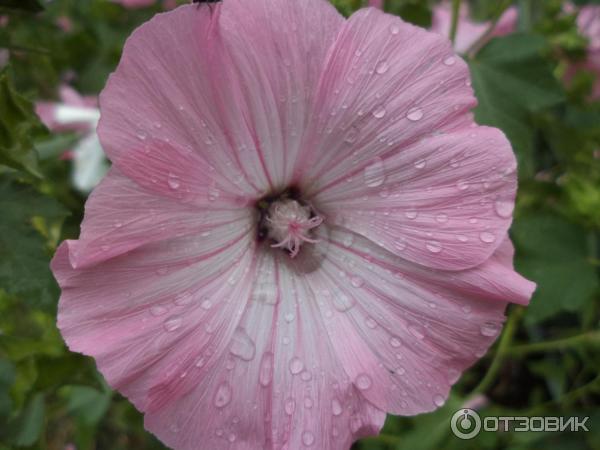
And my beauty even endured the heavy rain and wind with fortitude.
The Lavatera flower will definitely be welcome in my garden. I recommend this flower for its low maintenance, lush blooms, resistance to inclement weather, and beautiful flowers.