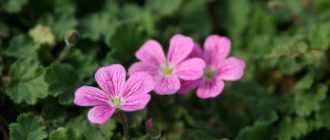
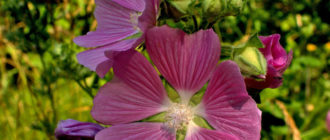
The wood violet, or Viola (from the Latin Viola), is a modest, delicate, and beautiful flower native to northern latitudes. Various sources describe between 500 and 700 species of this wild plant in the Violet family. They grow primarily in the Northern Hemisphere in regions with moderately cold climates.
The plant's native land is East Africa. Viola was first shown at an exhibition in 1893. Since then, the cultivation of this flower has begun.
Most species are found in North America and Japan. However, wild violets also grow in the Andes, Australia, and New Zealand. In Russia, cultivated varieties—pansies—are more common.
The herb of individual wild violets has medicinal properties.
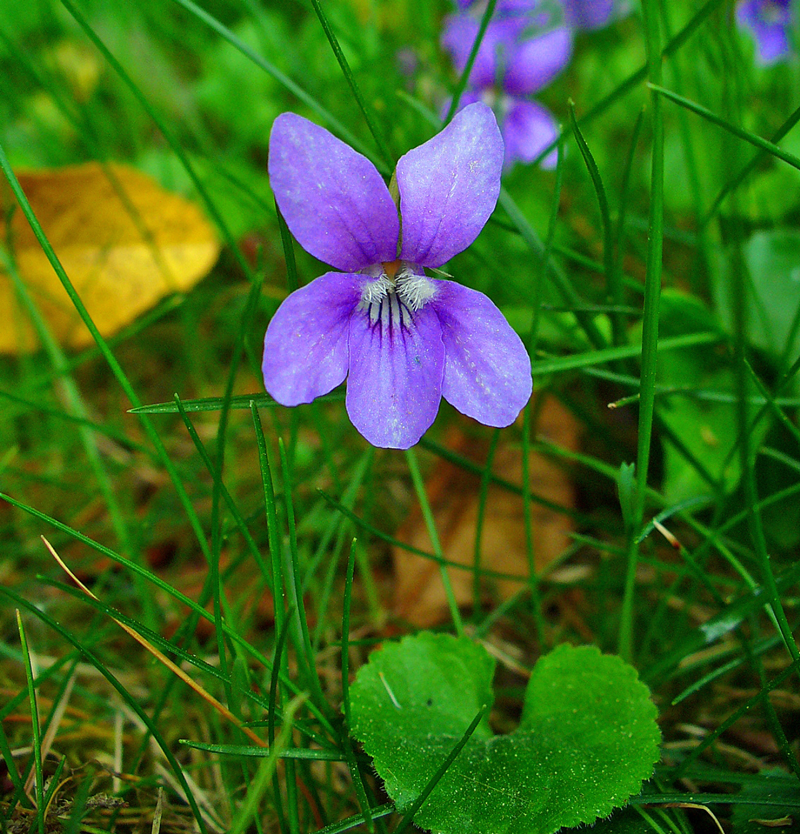
Description of the forest violet
The plant is a perennial, low-growing, creeping plant. The compact bushes grow up to 15 cm tall. Branched rhizomes produce new shoots each year, which form rosettes of young leaves. A single specimen can grow to cover an area of 1 m in two years.2.
The violet has no stem; its leaves range from small to large, round, and heart-shaped, depending on the species, and are arranged in a rosette. The lower tier of leaves is noticeably larger than the upper tier. The leaves do not die back in winter, but rather overwinter under the snow. Their dense pubescence helps them cope with frost.
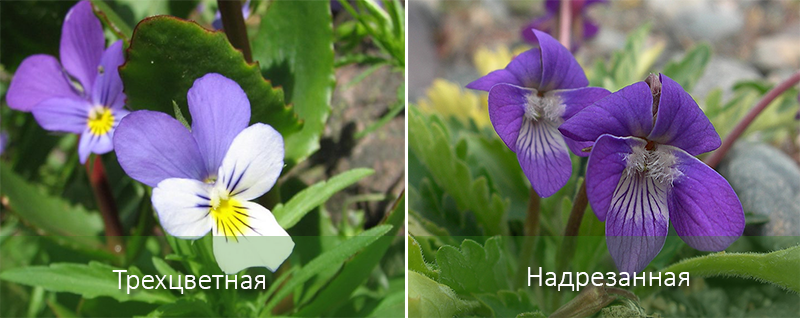
The five-petaled flowers are multicolored and very beautiful. They are small—up to 1.5 cm in diameter. Some have a pleasant, subtle, sweet aroma. The scent is stronger in the morning and evening hours. In hot weather, the scent is almost completely gone.
The color ranges from soft blue and light blue to violet and lilac. The heartwood is predominantly yellow, bordering on white.
The woodland violet blooms as early as April, before the new leaves have emerged. Flowering continues until September. Wild violas are a honey plant but do not require pollination. They reproduce vegetatively.
In autumn, a capsule-shaped fruit with small, moist brown seeds ripens.
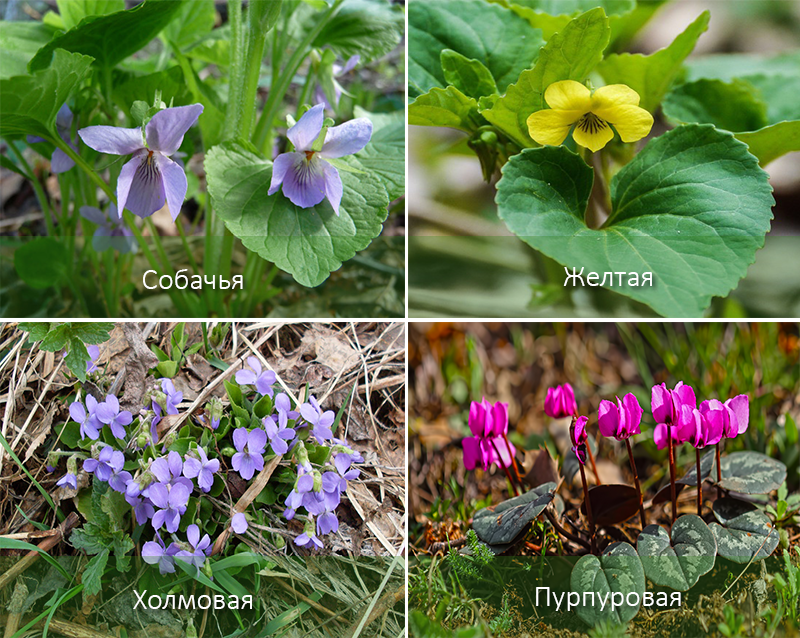
Types of forest violets
In Russia, about 20 species are found in natural conditions:
| Name | Growing | Description of flowers | Flowering period |
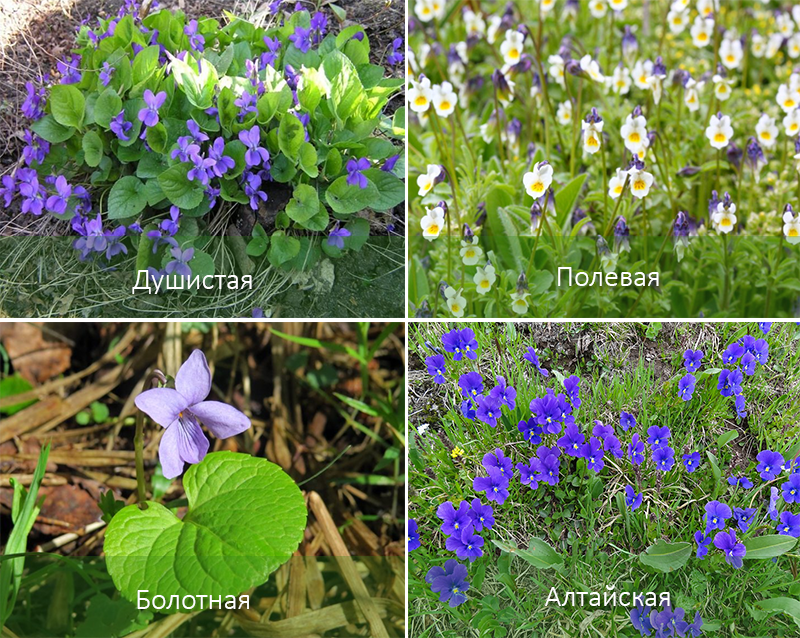
| Tricolor (Pansy) | In the forest and countryside - in fields, in vegetable gardens, like weeds. | The two upper petals are blue, the three lower ones are white, the center is yellow. | May – September |
| Dog | On forest edges, in sparse young growth and in the field. | Small, even blue color. | May |
| Swamp | Damp places include not only swamps, but also mossy forests and floodplain meadows. | Light blue, almost white with dark veins. | May – August |
| Field | Fields, forest glades, forest edges, roadside verges. | Similar to the Tricolor, but white, miniature with a bright yellow aperture. Height up to 30 cm. | April – September |
| Fragrant | Forest | Purple, bright blue, with a pleasant sweet aroma. | April – May. |
| Altai | Mountain slopes. | Violet-blue with a yellow center. Height up to 20 cm. | From the end of April for 40-45 days. Repeat in September until the first snow. |
| Yellow | Fertile soils of sparse, well-ventilated forests. | Yellow-green, bright. Purple veins on the back of the petals. | June – July. |
| Hilly | In light forests, on open slopes, under bushes. | Light blue, occasionally lilac, fragrant. Large, on a long peduncle. | May – June. |
| Notched | Endemic to Siberia. Not found in other regions. | Bright purple, graceful, and raised above the bush, their shape resembles cyclamen. | June – July. |
| Aetolian | Sunny places, loose soil, rocky ledges. | The upper petals are yellow, the lower ones are orange. | From May and all summer. |
| Dubravnaya (mountain) | In the European part of Russia, at the foot of the Caucasus Mountains, in the south of Siberia. | Light blue, similar to the flowers of the dog violet, but larger, and the stem is higher – up to 25 cm. | May – July. |
| Peach-leaved (pond) | Rarely found in central and some regions of Siberia. | Long peduncles, small flowers of a characteristic milky white color with a blue tint. | May – June. |
| Purple | A rare species that grows only in the Caucasus Mountains. | It blooms profusely with small purple flowers, gathered in a spike-like inflorescence of 20. It has a pleasant, but not very strong, scent. | Twice – in spring and autumn. |
Sowing seeds and caring for wood violets
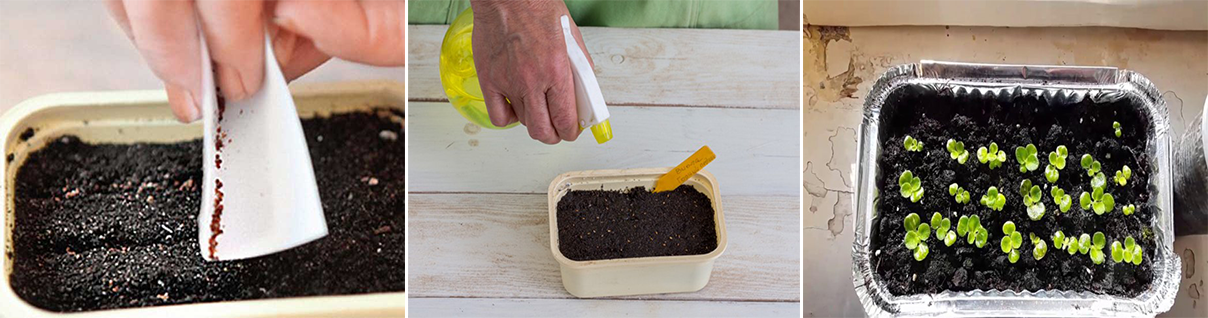
Seeds germinate three weeks after planting. They can be sown in spring, summer, and fall. Only freshly harvested seeds should be used, as they lose their viability the following year.
You can also grow seeds from seedlings. To do this, take regular leaf mold soil and add sand, peat, and a little humus. Spread the small seeds over the loosened soil and lightly cover. Then, moisten the area and cover with plastic wrap.
The only thing that will be required after the seeds are in the ground is daily watering and ventilation until the seedlings appear.
Wild violets are easily propagated by seed. It's easier and quicker to propagate wild violets by digging up the budding rosettes of leaves. This is done after spring flowering. In the fall, the plants may not have time to establish before frost.
Dig up a mature bush and select young rosettes with roots, which will serve as planting material. Larger bushes are planted singly, while smaller bushes are planted in pairs. Space the seedlings 20-30 cm apart.
Thus, already in the second year, the forest violet will bloom in the garden or under the window.
The plant's advantage is that it doesn't require constant, meticulous care. Wild violets easily overwinter without cover and are drought-resistant. They prefer shaded areas of the garden, but can also grow in sunny clearings, as long as they're watered regularly.
Viola also reproduces well by self-seeding. Garden ants help it do this by dispersing the seeds throughout the garden.
Feed with a regular humus infusion or a complex fertilizer for flowering plants. However, it's better to underfeed this plant than overfeed it. For better rooting, mulch the young shoots with light humus.
In shady areas, viola flowers are paler, but bloom longer. It doesn't like stagnant soil, as it can become diseased. Therefore, it's best not to grow it in low-lying areas.
The creeping nature of the shoots is advantageous on gentle slopes and alpine hills, where forest violets, growing, form a flowering carpet.
Be prepared for the plant to overgrow its intended area. In such cases, you'll need to remove shoots by pinching or trimming them, like runners on a strawberry plant.
Diseases of the wood violet
The worst enemy of violets is disease.
| Disease, pests | Signs | Causes, pathogens. |
| Root rot | The roots rot, then the stem and leaves. The plant dies. | Pathogenic fungi that can remain dormant in the soil for long periods of time. This fungal disease occurs at low temperatures and high humidity. An acidic soil environment contributes to this. |
| Gray mold | A grey fluffy coating on the upper parts – peduncles and seed pods. | |
| Powdery mildew | A white, powdery coating on leaves and flowers. It usually appears in early summer. | |
| Rust, spotting | Brown spots on green parts of plants. Drying out. | |
| Smut | Blistering blisters on petioles and leaves filled with dark liquid. | |
| Blackleg | A disease of seedlings and transplants. The base of the stems darkens, and the leaves droop. Death occurs within 3-4 days. | |
| Phytophthora | Penetrates through the pistil or thin roots. | |
| Variegation | The leaves become variegated and marbled, dry out and die. | Virus. Transmitted by aphids. |
| Ring mosaic | Dark green rings on leaves followed by necrosis. | |
| Clover moth (fritillary) | The tips of the leaves are eaten away. Develops from May to July during the larval feeding period. | The moth larvae have a wingspan of no more than 4.5 cm. They are orange with black spots, and the back of the wings are silvery-pearlescent. |
| Nematode | Depending on the parasite species, the above-ground parts or roots are affected. Plants are stunted, their growth is stunted, and their ornamental appearance is compromised. | Parasites – aerial and ground nematodes (strawberry, root-knot). |
Controlling wild violet diseases is very difficult. Often, the entire plantation dies. If the species is rare and restoration is not possible, an attempt should still be made to save the plant.
Diseased parts are removed, and affected plants are destroyed. Surviving plants are sprayed with special antifungal agents and fertilized with potassium and phosphorus.
Use in folk medicine
The plant contains large quantities of essential oils, flavonoids, vitamins A, C, and E, fats, and carotene. Due to the alkaloids it contains, it is poisonous. Therefore, it should be used with caution in home remedies. It is best to consult a doctor.
Wild violet helps in the treatment of many diseases using folk remedies:
- Febrifuge.
- The decoction is used to gargle the throat when it is inflamed.
- Promotes the separation of phlegm from the respiratory tract.
- Treats headaches.
- It has a diuretic effect.
- It has disinfectant properties.
- Hemostatic – for women with complications after childbirth and during menopause.
- Anti-allergic, helps with diathesis in children.
- Antirheumatic (in the form of compresses)
In aromatherapy, the scent of violets calms the nerves and even helps with anxiety, hysteria, and seizures. It also boosts vitality and immunity.
In cosmetology, violet oil smooths wrinkles and heals chapped and chapped lips. In high concentrations, violet extract is toxic. Therefore, violet-based products should be used with caution and kept out of the reach of children.