Liatris (specata) belongs to the genus Asteraceae, blooms for several years in a row, that is, it is a perennial.
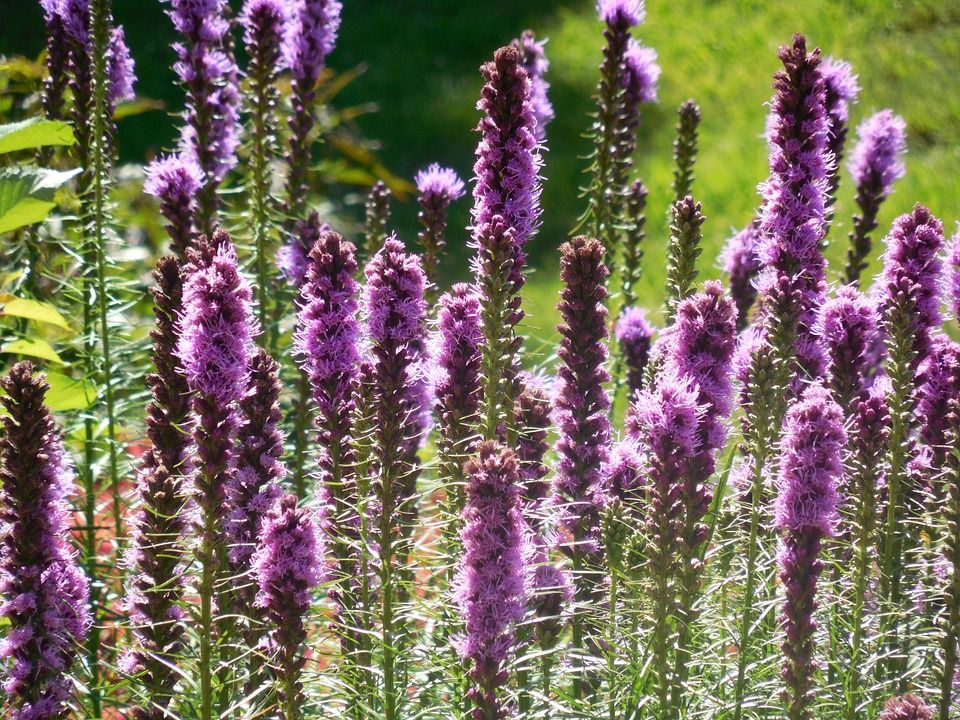
It was first discovered in America and Mexico and is easy to plant and care for.
Content
Description of Liatris
It has a branched or simple stem with pointed leaves. The roots are bulblets connected to form a root system.
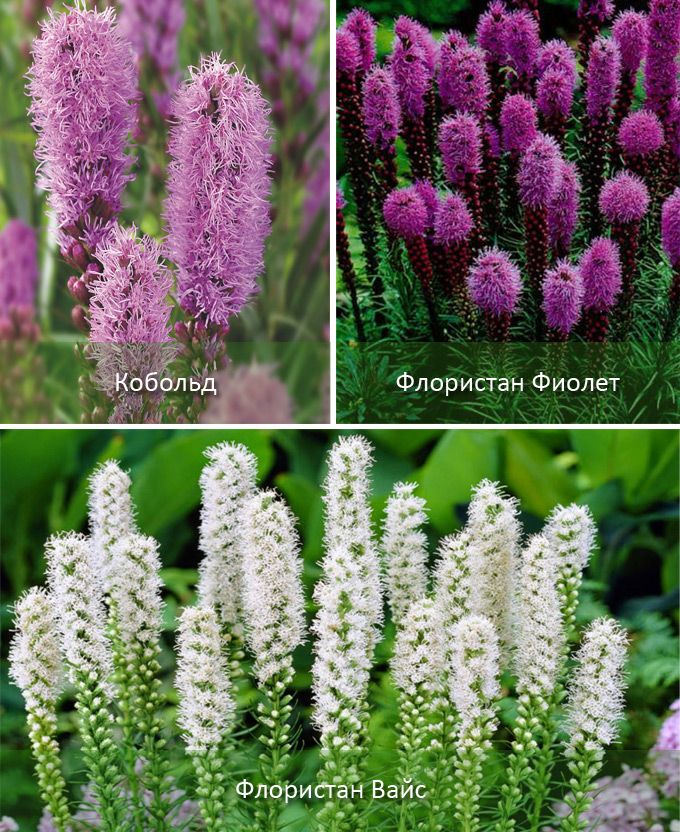
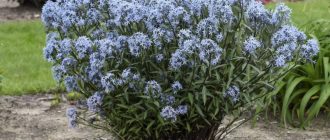
When grown in a favorable climate and cared for, the flower can reach a height of up to two meters. The inflorescences themselves can reach 50 cm, and the flowers come in a variety of colors, from white to red.
Liatris blooms in summer. The seeds, which emerge in autumn and are needed for propagation, are oblong and covered in hairs.
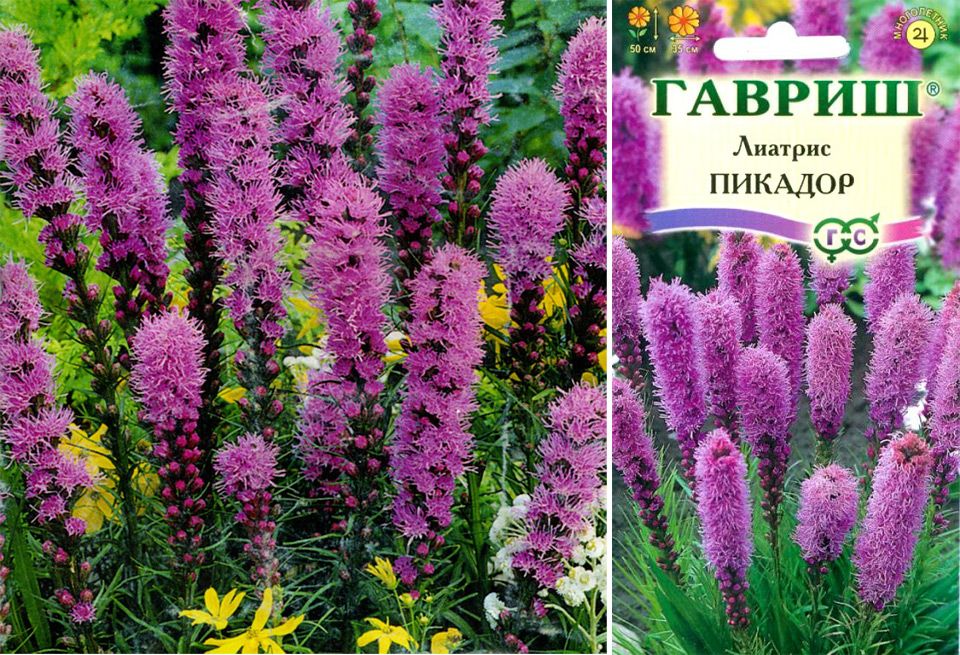
In landscape design, they serve as the dominant plant, surrounded by majestic verbena or gypsophila. When cut, the plant can last up to 10 days. Dried flowers are used to create stunning bouquets.
Types and varieties of Liatris: spikelet and others
Today, there are three species and a large number of varieties of this perennial.
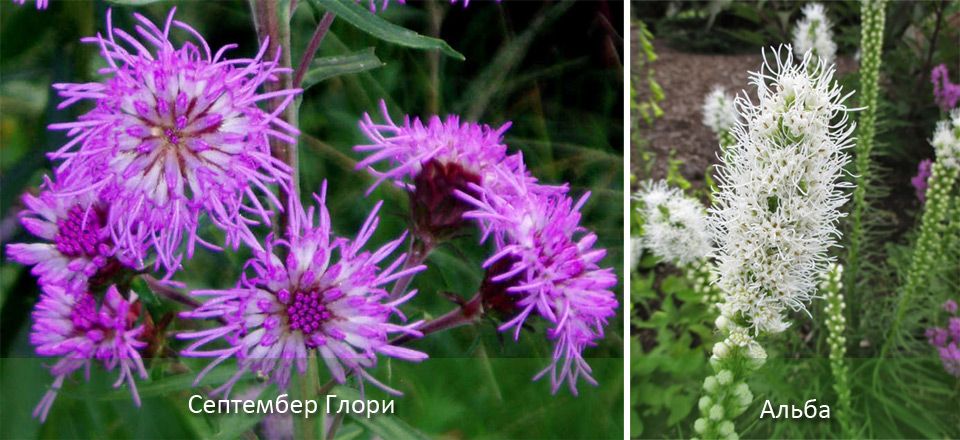
Their main differences are:
| View | Description
Leaves |
Flowers | Varieties |
| Spicate | Shoots can reach a height of up to 50 cm.
Linear. |
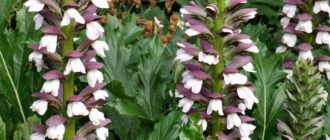
They are represented by a basket of 9-12 flowers. The inflorescences reach a height of up to 40 cm. Blooming begins in June or July, lasting up to 40 days. |
|
| Rough | It is not a popular species.
Glossy. |
Lush inflorescences of pinkish color. |
|
| Filmy | It is distinguished by its leaves, which are more extensive than those of the others.
Wide plates (about 3 cm). |
White or pink in color, up to 1 m in height. |
|
Reproduction of Liatris
Several ways:
- seeds - directly into the soil and seedlings;
- tubers;
- by dividing the rhizome.
Growing from seeds
A distinctive feature of liatris is its unpretentiousness, so most gardeners believe that there is little point in bothering with seedlings and prefer seeds.
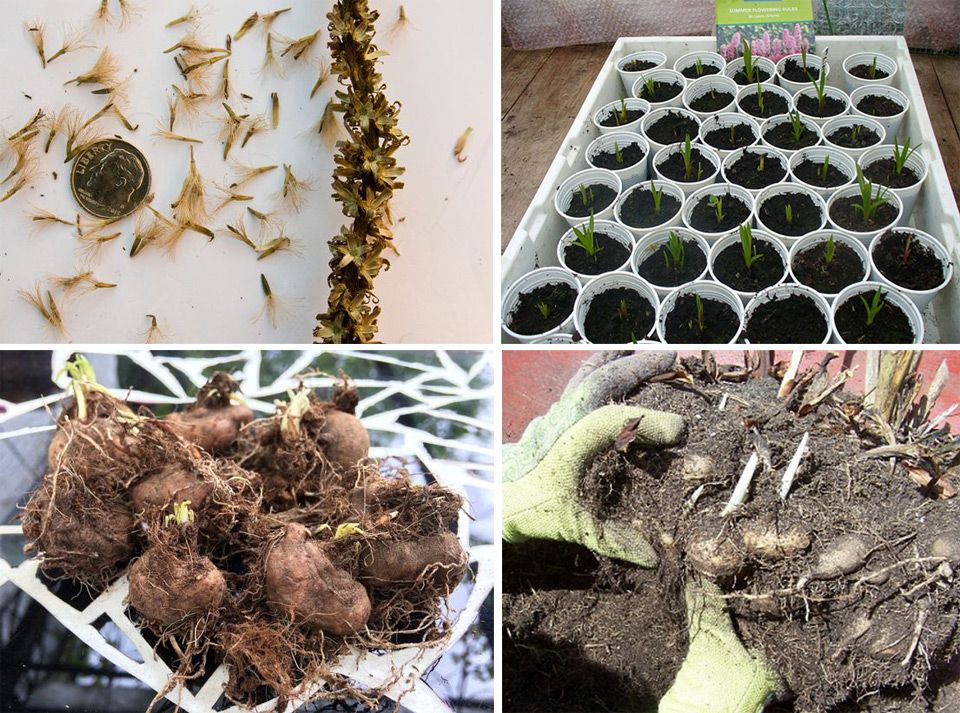
They are planted in the soil in early spring or closer to December. This ensures that frost won't destroy the root system. Before planting, the seeds are soaked in humate (0.5 g per liter of water) for half a day. The soil is also prepared by digging it in with organic matter (a bucket of humus per square meter). For sowing, make holes 1 cm deep.
Once the soil is prepared, planting material is added, covered with soil and watered generously.
It is worth noting that when planted from seed, liatris will only reach its height in the third year.
In the first spring after planting, care consists of thinning the seedlings.
Tubers
This method is more complicated than sowing seeds. Before starting, select a site. It should preferably be well-drained. The soil should be nutritious and loose. Planting seedlings in marshy areas is not recommended, as water will cause root rot. Pot-based planting can be done before or after winter.
The planting depth of the tubers depends on their size and can be up to 10 cm. Leave 18-20 cm between the tubers. Once the liatris is planted, it is watered and fertilized with compost.
Dividing the bush
If the gardener already has this plant, at the end of the summer period the tuber can be divided into several parts to obtain planting material.
Otherwise, the bush is purchased at a specialized market.
Liatris care
Liatris does not require special care.
Watering
Watering depends on the summer season. In hot weather, water as soon as the soil becomes dry. Many gardeners don't water liatris at all, as it thrives on rainfall.
Excessive moisture will cause the root system to rot.
Trimming
The plant typically finishes blooming in August. To prevent seeds from spreading throughout the soil, the inflorescences are carefully cut off. In late autumn, the stems are completely removed and covered with fallen leaves. The covering should be at least 10 cm thick. This is due to the effect of severe frosts on the root system.
Top dressing
During the entire season, the plant is fed three times:
- Early spring before flowering (nitrogen).
- In summer at the beginning of flowering (phosphorus-potassium).
- During the formation of numerous inflorescences (Rainbow or others for flowering ones).
If the liatris leaves have become somewhat pale, a nitrogen fertilizer should be added. No other fertilizer is needed. Simply spread the fertilizer over the soil surface. To increase the number of inflorescences, spread 5 cm of compost around the plant.
Loosening
Weeding should be done carefully, as the roots are near the surface. Experts recommend mulching.
Preparing for winter
With the onset of late autumn, the leaves turn yellow and fall off. The above-ground portion should be cut off. Mulch the exposed soil with a layer of leaves. It's best not to use straw, as it harbors rodents that can harm the liatris.
If the winter is mild, without severe frosts, the flower does not need to be covered.
Diseases and pests of Liatris
This perennial is virtually disease-resistant. However, it can be damaged by mole crickets and other garden insects. Voles often eat the plant's root system. Therefore, it is recommended to take all necessary preventative measures beforehand. Experts note that in some cases, liatris can be infected by neighboring infected plants.
The use of liatris in landscape design
Yellow evening primrose, or flame daylily, pairs well with white liatris. Lush hostas also look great with this plant.
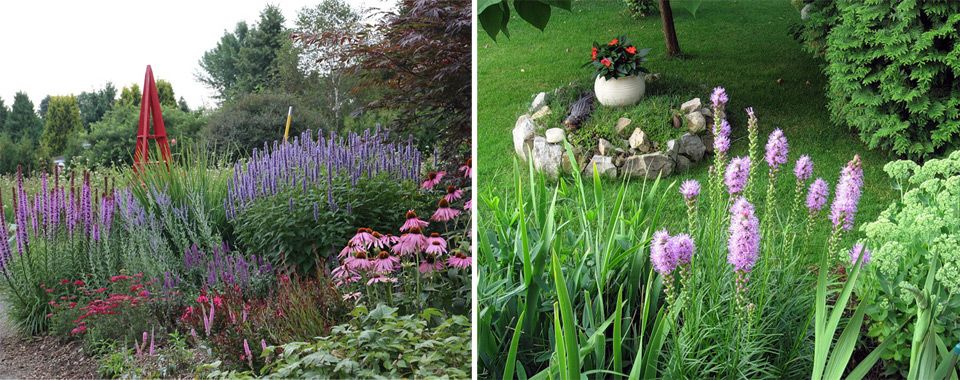
If a flowerbed contains a large number of flowers, white liatris will complement cherry yarrow or red monarda beautifully. It's worth noting that this species rarely grows into a lush bush, so it's best not to plant it too close to other flowers, as it will become overshadowed.
Low-growing varieties look good surrounded by sturdy boulders. They can be planted along flowerbeds or fences.
Top.tomathouse.com recommends: Liatris – a healer in the garden
This perennial plant has numerous beneficial properties. A decoction made from the leaves is used as a gargle, which is effective for sore throats. When crushed, they help combat itching and inflammation from mosquito or wasp bites.
Root poultices are effective for restoring damaged skin. A decoction is used for kidney disease. The plant's flowers and stems have diuretic, antiseptic, and astringent properties.